
-
Columns

Guest Editorial | Issue 18
For those who don’t know me, allow me to introduce myself: I am the Rt. Hon. Gold Bastard, supreme leader of Critic’s four editorial goldfish. My days start unpredictably. I drive my harem to go nuts when the first of our giant pet nematodes walks in, but they’re good at ignoring us despite the amount of splashing and obnoxious bubbling that the team courageously whips up. Four days out of seven they will feed us; despite how concerning this may seem, it’s actually perfect. I keep telling the others that they need to avoid carbs on the weekend no matter how gone they are from a heavy night or two on oxygen weed, and it helps if they’re not tempted. What’s great about our home is that at most angles the walls act as mirrors, and damn am I good looking. I’m about twice the size of the others – I never miss tail day at the gym – and I can keep a careful eye on all the goings-on no matter what direction I’m facing or what I’m doing. My bugle-eyed and dark-scaled sidekick Steve, for example, is astoundingly lazy despite being a great lad. Most of his time is taken up chilling underneath one of our expensive imported Chinese-made plants. At first I was concerned for his health – he never works out except to race me for food – but as time passed I realised that, actually, he was quite endearing and I should stop hitting him. The bruises all seem to have cleared up now. Then there are the twins – Gyarados and What. Just as Steve and I were settling into our honeymoon period, the Government’s lack of generosity forced us to share our home with two fish not much bigger than shrimps. They are frighteningly similar and just a little bit boring, but if I’m honest they look absolutely brilliant. Steve and I soon acclimatised and, once again, it turned out that they weren’t such a bad addition after all. Despite all this captivating action in our own home, the true joy of our lives is watching our ginormous pets – the same ones I mentioned feeding us – going about their own day-to-day lives. They must be exceptionally bored. They spend the entire day just sitting, staring at a box of illumination similar to how a moth takes to light. This may not sound fun to observe, but it’s the anticipation of what’s to come next that keeps us watching. Once fully energised by their boxes they tend to completely lose their shit, embracing one another, drinking special water that only adds to this resolve, and generally oscillating between loving life and being complete assholes. I wish there was some sort of tranquiliser we could give them. Lots of love and support ‘til next time, The Rt. Hon. General Gold Bastard Critic Supreme Leader
-
News

Stolen design by Scarfie favourites
Critic has discovered that the “original artwork” designed for the Starters Bar O-Week tee-shirts by local company Moodie Tuesday is actually the work of well-known American freelance artist Curtis Jinkins. The design, which portrays a Mexican-inspired skull motif and bears the words “Starters Bar” and “The Last Bar Standing,” was printed on hundreds of tee-shirts and singlets and sold at Starters during O-Week. The design is almost identical to Jinkins’, even down to the font and layout. Moodie Tuesday is a Dunedin clothing company run by Jon Thom and Chris Brun. They sell shirts, art prints and dog wear, all bearing what they claim to be original designs. Moodie Tuesday was also commissioned to design this year’s limited edition Orientation Week tee-shirt, which was greeted unenthusiastically, as reported by Critic in issue one this year. Their philosophy is to “do the basics well,” as stated on their website. “Growing up in rural Central Otago we had particular ideas and values instilled in us; to do things to the best of our abilities … the quality of our work speaks volumes about our character. We have taken these philosophies and made them the basis of the Moodie Tuesday label.” The Print Room, a screen-printing company also run by Thom and Brun, printed the apparel. The Print Room’s website states: “Our strength is in design, with a history in the fashion industry. This knowledge, mixed with your ideas, allows us to create designs that will be worn while meeting your marketing needs.” Critic got in touch with Jinkins, a freelance artist based in Austin, Texas, who runs art company The Neighbourhood Studio. He created the skull design in November 2010 and was unaware of Moodie Tuesday’s plagiarism until we contacted him. “It’s disappointing to see artists like Jon Thom completely lift imagery from other working artists,” he said. “There is actually very little I can do when small companies assume my artwork.” Jinkins has been involved in copyright infringement before; he’s previously taken designers to court over stealing one of his designs, with the judge ruling in his favour and requiring the defendant to pay him compensation. However, Jinkins is unlikely to be hassling Moodie Tuesday over the plagiarism this time around. “My resolve has weakened over the years when it comes to tracking these individuals down … I don’t get any enjoyment out of sending guys like Jon an email telling him that I think he’s a hack.” However, Jinkins did note that “[Thom’s] version of the artwork is one of the more egregious as he has done very little (maybe nothing?) to alter the artwork from my original.” At the time Critic went to print, The Print Room website still displayed the Starters tee-shirt design, with the description including the phrase “We had the privilege of designing the tee shirt shown to the side.” Critic managed to get in touch with Thom, who told us in no uncertain terms that he “came up with it.” “We just had an initial concept … the design was to be ‘the last bar standing,’ so it’s sort of a take-off of a gravestone.” When we brought up Jinkins’ almost identical work he backtracked, stating that “it might be similar to what someone else has done but, um … yeah. I don’t really know what to say, to be honest.” After speaking with Thom, Critic contacted Starters Bar owner, Janice Turoa. The tee-shirts and singlets were sold at Starters throughout O-Week for $10 and included a free drink, which Critic notes is a great deal. At the time of print, the tee-shirts are still the uniform for Starters staff. Turoa described Thom and Brun as “really good guys” and was unaware of their plagiarism until we told her. She doubted that they intentionally copied the artwork, telling us, “I don’t think they would ever have done anything to hurt anyone else. “They’re just guys looking out for themselves, working their butts off … it’s just good to see young guys out there doing it for themselves,” she said. However, Moodie Tuesday co-founder Chris Brun told Critic a different story. “[Starters] didn’t really have a budget in terms of design, so to do an original artwork would’ve been far outside the budget,” he said. “We just came across this design and we changed it slightly and just ran with that … it was just a way for us to come up with a quick easy design that would suit the aesthetic of what [Starters] were going for.” When the issue of copyright was brought up, he claimed that they didn’t know it was copyrighted at the time, “otherwise we wouldn’t have used it. “We didn’t set out to copy someone’s [copyrighted] work, it’s not something that we do.” Critic notes that it clearly is something they do, at least in this case, even if their intentions were wholesome. Interestingly, Moodie Tuesday weren’t the first to use Jinkins’ skull emblem without his permission. Clothing brands Stussy and Deus Ex Machina, sunglasses brand Electric Sunglasses, a recording artist represented by the record label Sub Pop, UK band Ivy Lab, “and many more” have used the design, according to Jinkins. “Some companies (like Ivy Lab) own up to it when made aware of the infringement and settle up. Deus Ex Machina has actually become a great client of mine after discovering that the freelance designer they had hired had lifted the graphic, as is most common in the majority of these situations.” Jinkins, however, continued to say, “For what it’s worth, Jon Thom using that image doesn’t take anything away from me, really. I would not have ever seen business from that establishment and had you not pointed it out, I never would have known of it. “I don’t agree with his practices and he definitely deserves a slap on the wrist, but I don’t want to ruin his ability to provide for himself … in the local marketplace. “I have a feeling that he’s probably a good kid who just used some lazy/sloppy judgment.”
-
News

Execrable | Issue 18
Former Finance Officer Nick Tenci handed over his report for the second quarter at last week’s OUSA Executive meeting. He made the report “mostly as a handover document” because, he justified, “it took a while to find my feet in the role and I’d hate Paul to go through the same thing.” The recently elected Finance Officer Paul Hunt had not yet read the report so a small portion of the meeting was finance chat between the two finance buffs. As OUSA President Ruby Sycamore-Smith tried to end the awkward one-on-one chat, she exclaimed, “You two must be really excited to talk finance.” Campaigns Officer Hamish Barker also presented his goals, which were a part of his second quarter report. He aims to focus on the upcoming elections, with a focus on increasing the amount of election information available to students. He also plans to implement TedX talks in Dunedin and to ensure the Mental Health Awareness campaign goes ahead again this year. Former International Officer Kamil Saifuddin considered the idea of hiring a cleaner after there were complaints made about the state of OUSA Recreation Centre’s kitchen following the International Food Festival. He said, “I made it clear that we were very disappointed with their actions.” The Executive also discussed the possibility of having the event at the stadium in future. Administrative Vice President Ryan Edgar discussed OUSA’s policy regarding charity donations. He suggested OUSA only make commitments of time and advertising to charitable organisations, but that a $1,000 donations side pot be put aside that may be used for exceptional circumstances. In regard to OUSA’s annual $100 membership fee to the Volunteer Services Abroad program, Ryan said, “I don’t want to be paying for students to go on a bit of a holiday” and was “certainly not” in favour of renewing the membership. The Executive unanimously agreed with him. Further discussion from the policy committee was brought to the Executive as Ruby and Ryan had opposing views on whether Executive members could nominate and support candidates for future Executive roles. Ryan believed an Executive member should be able to “take off their hat” and nominate someone during elections. Education Officer Laura Harris agreed with Ryan, as she felt as an Executive member, “we are in the best position to say who is best for the Exec.” Ruby’s belief was that Executive members signed up for a governance and representational role and should not be nominating or endorsing anyone. She said Executive members are recognised around campus as a representative of OUSA so you cannot step out of that role to nominate someone. Paul pointed out “the bigger issue here [is] whether you can get [the executive member] to campaign for you.” There was resounding agreement that Francisco Hernandez had openly supported Ruby’s placement last year but Ruby pointed out “this is about this year, not last year. We’re in the position to put a policy in place now.” Two years ago the Returning Officer ruled that an Executive nomination was an endorsement by OUSA and one vote was deducted from the candidate’s total vote. It was agreed that the decision over this debate would be put to referendum. Speaking of referendums, the topic of allocating an “abstain from voting” box was brought up again. Postgrad Officer Kurt Purdon noted that the constitution already required it, saying there must be an abstain option but this had been missed in the last election. The Executive discussed what to do about the lack of an International Officer. Ryan pointed out that there had been a previous case where an officer worked on a contractual basis as required for the rest of the year but said, “that’s a bit naughty naughty according to policy.” It was decided the general election for 2015 positions and the by-election for an International Officer would be run in parallel, “to avoid voter burnout,” as Ryan put it. Recreation Officer Henri Faulkner agreed to “turn up to international cultural committee meetings but not much else” to cover some of the work required by the vacant position. The election nominations will open on 8 September 2014 and close at 4pm on 11 September 2014. The voting will run from 22 September to 4pm on 25 September 2014. The Executive have also organised a meet and greet with the Vice Chancellor, Harlene Hayne. The Executive will also be having a “catch up” session with the students at Studholme. There was discussion over whether to have dinner with them but it was decided that they would meet in the common room instead because “we appear more intimidating if we eat,” said Colleges Officer Jess McLean. Welfare Officer Payal Ramritu discussed her upcoming work on Women’s Week, Hump Day Help and No Strings Niceness. Critic chose not to ask any questions, as it’s much more fun to speculate what these entail.
-
News

Dunedin Craft Beer Fest First Brewery Announcement
In the early stages of its second year, the Dunedin Craft Beer and Food Festival is already set to have more breweries signed up than last year. In its latest media release, the event promises to be “bigger and better than anything Dunedin has seen before.” “We’re absolutely stoked to have such a wide range of breweries, from start-ups to Kiwi classics, plus a Wellington contingent will add that cherry on the top of a great day!” said Dan Hendra, OUSA Events and Communications Manager. “It’s a chance for Dunedinites to meet and talk with brewers from their favourite breweries, and try beers that aren’t available in Dunedin.” There will be a focus on Dunedin and Otago breweries, with Emerson’s, Green Man, Velvet Worm, and McDuff’s all attending the festival. The festival will also provide a platform for emerging breweries and will have Wanaka’s Maverick Craft Beer and Oamaru’s Craftwork Brewery in attendance, along with the possibility of one or two breweries that have not yet opened their doors. Auckland’s Steam Brewery and Wellington breweries Funk Estate and Garage Project will be making the trip to Dunedin to attend the festival. The Nelson Tasman region will also be represented with Hop Federation making the journey to Dunedin as well. Hendra points out that the reason so many breweries are making the trip is because of the success last year. He says, “We’re lucky our last festival made waves to attract these breweries, and for us Garage Project is extra special as they have Otago University Alumni in their team.” Along with Kiwi breweries, the festival has attracted New Zealand’s most well-known importer of North American Craft Beer, Beer Without Borders, who will be making the trip from Wellington “armed with fresh kegs of their latest imports.” Hendra said, “It’s the first time Beer Without Borders have travelled this far south for a festival, and they’re here to make a good impression with the freshest and best range of international beer Dunedin will see this year.” The festival is to be held at Forsyth Barr Stadium on 4 October from 12.00pm to 7.00pm. OUSA did struggle to find a suitable date but 4 October was eventually decided on as a result of having to balance the academic dates of the semester, pushing the festival as close to summer as possible and holding it on a date available at the stadium. “It’s going to be a day with great food, great beers and a great time for Dunedin to have fun together!” said Hendra. Tickets are on sale now from Ticket Direct across New Zealand.
-
News

OUSA opens new role – Projects Officer
After a month of planning, OUSA have advertised for the new role of Projects Officer. The role is available to students, as well as the general public. OUSA President Ruby Sycamore-Smith said, “It is a role for someone who wants to be a key logistics coordinator in the OUSA election drive.” Ruby said, “It’s for someone who has a good knowledge of politics but is non-partisan.” OUSA will specifically be looking for individuals with “experience in running events and making ideas come to life.” The role will involve “organising the day to day election push,” which will be running for the next couple of months. The Projects Officer will be a part time role, involving 20 hours of work per week. Ruby explained, “because this is a staff role, [the Projects Officer] will report to Donna Jones, who is the Secretary of OUSA.” She said, “[Jones] also has a clear understanding of the Executive Roles.” The SEEK advertisement for the role states that the new employee shall also work with the OUSA President on a day-to-day basis. The Projects Officer will have four key projects to support. These include: “Every student votes – student enrolment for the general election;” building faculty club capacity; the OUSA identity and engagement project; and the Policy review. OUSA have reportedly been “mulling over [releasing the job] for a while.” According to Ruby, “Many people neglect the importance of the student vote in Dunedin.” She said, “This year [OUSA] wants to rally all the students together and ensure that they get out there and enrol to vote and take control of their future. With such a dense election plan, it would be ignorant to not get as many people involved as possible.” The new employee will not be taking on the work of the current Executive officers. “The Executive have a vision for the students as they are elected by the students; we would never compromise that.” The job is currently advertised on SEEK, as well as the OUSA website. It will also be available on Student Job Search in the near future. Ruby commented, “There is likely to be more roles in the future that will pop up at OUSA in a range of areas that will help students get real experience and get them some extra money in their pocket.”
-
News
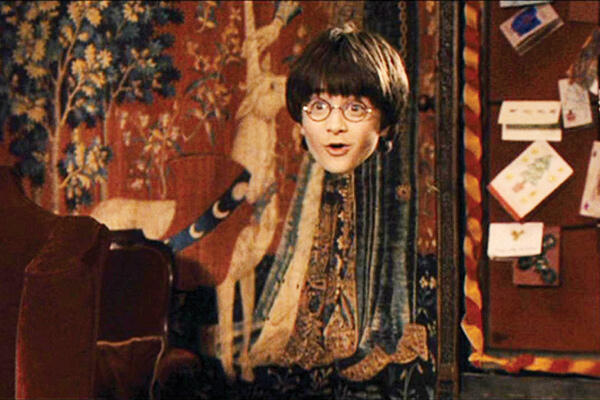
Invisibility cloak: magic is still cooler than maths
Dr Robert Thompson from the Department of Mathematics and Statistics may not look like a magician, but his research on the concept of invisibility “cloaking” sounds like something straight out of Hogwarts. The postdoctoral research fellow, who began his research at the University of Otago in 2009, has worked closely with the mathematical theory behind the science of invisibility. However, Thompson is quick to dispel any misconceptions about his research. “It’s not magic. It’s not science fiction,” he says. The science is called “transformation optics,” a science concerned largely with the behaviour and perception of light. Utilising the latest in transformation optics, Thompson’s research could place New Zealand on the map of this emerging science. In theory, an invisibility “cloak” uses a device called a “split-ring resonator,” made of a “meta-material,” to bend light around an object. The cloaking device acts like a lens, “taking the light that’s coming from one direction and diverting it around some central region,” explains Thompson, “and then sending it on its way as if nothing was there. No shadow, no reflection.” He says, “the idea is you want to open up some kind of hole where the light can’t get into.” It is the use of “meta-materials,” ultimately man-made, engineered materials, which offers the ability to manipulate light. “You have total control over the behaviour of light as it passes through your meta-material,” states Thompson. “This gives you total control of the light and allows you to do some bizarre things that you wouldn’t find in nature.” By specifying the orientation of the meta-material antennae, a person can manipulate the straight lines of light found naturally, and, at least in theory, move light around an object – thus rendering the object “invisible.” Thompson stresses the importance of these meta-materials as the “future of electronics. “We’re at the forefront of this technology … we’re at the brink of a technological revolution.” “I think we’re going to see meta-materials popping up in all kinds of electronic devices,” furthers Thompson, “and so transformation optics [becomes] a really important design tool in taking those meta-materials and figuring out what to do with them.” Thompson is continuing work on the concept and has been working in collaboration with researchers from Duke University in the United States, receiving $345,000 over three years under the Marsden Fund Fast-Start grant scheme.
-
News
$45,000 prize for innovative business idea
The ANZ Flying Start Business Plan Competition is looking for an original business idea, and the supreme winner will be set up with $45,000 worth of prizes to get the winner’s idea off the ground. Existing small businesses are eligible to enter so long as the idea is innovative and able to sustain revenue. The plan also needs to contribute positively to the local, national or global economy. The top five applicants will travel to Wellington to present their business plan to a panel of experts, with a $5,000 cash prize for second and third places, and $1,000 going to each of the 10 regional winners. The competition is run by the Ministry of Business, Innovation and Employment, in an effort to kick-start promising business ventures or to give existing small businesses an opportunity to grow. Kim Truscott, the Acting Manager of business.govt.nz, said last week, “The competition is not just about the prizes and recognition for the winners; it’s about getting businesses across New Zealand to take a proper look at their business plan and see where they are and what opportunities they have. We’re also encouraging businesses to get on to the business.govt.nz site and use our tools and resources to realise their full potential.” The supreme prize package includes a cash prize of $30,000 provided by ANZ, $5,000 worth of marketing consultation, training or development from The Market Bureau, $5,000 of advertising in NZBusiness Magazine and $5,000 worth of legal advice from Lane Neave Lawyers. In the first stage of applications, individuals are to complete a business plan template, which is available on the website. If selected, applicants then have to complete a more detailed plan for the second stage. The top five from stage two will then travel to Wellington for judging. The ANZ Flying start Business Plan Competition is now in its fourth year, with Otago’s Horse NZ International placing in the finals last year and receiving the Otago regional prize of $1,000. CHIA won the top prize last year and said that the prize was “invaluable” to the growth of their business. ANZ are also offering free workshops to assist with applicants’ business plans and entries. The competition closes on 12 August and the entry form is available at business.govt.nz/business-plan-competition
-
Columns
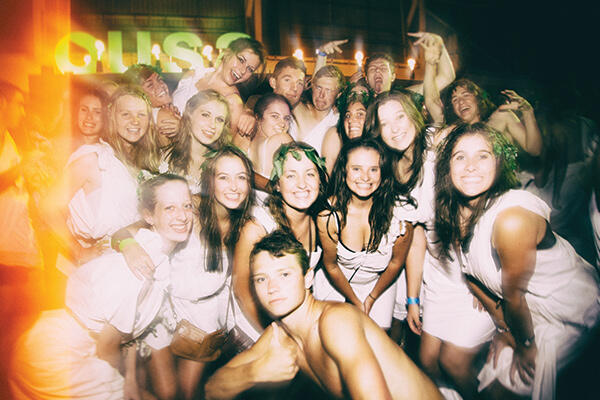
Bouncing off the halls | Issue 18
It’s been a while, but Critic has decided to return with a full lowdown of shenanigans going on at your favourite Halls of Residence. To kick off, a Senior Resident at Selwyn has lost his job after beginning relations with a fresher. The 24-year-old was given an ultimatum to either break off the relationship with the 18-year-old student or to leave Selwyn, but love triumphed and the Senior Resident moved out to a flat over the road. A kitchen staff member at Selwyn is also regularly keeping students updated with her Tinder dates, described as “a different one each time.” Cumberland is sticking with its tradition of filthy bedtime stories. Two students slept together at the start of their Cumby life this year and the guy in the incident wet himself. In their heavily intoxicated states, neither woke up and they continued to sleep in the wet patch. In a more recent incident, one student has persisted with spreading faeces across the bathroom floors and the door handles. The College is yet to discover who the filthy prankster is. At Cumberland Courts a Ron Weasley lookalike, while under the influence of alcohol, attempted to superman his way through a closed door, leaving a costly human-sized hole behind. Also, mysterious images of Ainsley Harriet have appeared on various windows throughout the Courts. In a heavily intoxicated state, a student attempted to break into a pharmacy thinking it was his flat. Following his failed attempts, the student proceeded to sleep in a flax bush. At Unicol two students have been kicked out of the hall as a result of drug use and possession. Marijuana was found in the students’ drawers, which were searched whilst they were away on holiday. When they returned, the students were told to leave the hall. As per college conditions, the University has now adopted a “zero tolerance” policy in respect of the possession, use or distribution of illegal drugs by members of its Colleges. At the Knox Christmas dinner, students recently got “shitfaced off eggnog,” according to the hall’s Facebook page. Arana students also appear to be having a good time, with reports that a number of students have been receiving various forms of pleasure in the Starters Bar toilets. Two frisky couples, presumably from the Hall of South Dunedin (“Locals”) have been attempting to get it on outside the Critic and OUSA offices. In the last fortnight, one couple was caught on the balcony and another caught making out on the picnic table. Critic has a telephoto lens at hand but we were persuaded not to publish the images. Stay classy, Dunedin.
-
News
Cars for the taking for everyone for anywhere
Shyft, a new carshare initiative, will soon be making its way to Dunedin. Kate Beecroft of Shyft told Critic, “We’re looking to have the Wellington operation up and running in September. We’ll concentrate on proving the concept here and then we’ll be looking for interested parties to help us expand to Dunedin and Christchurch next year.” Shyft works using a magnetic card system. Once you have signed up, which is free of charge, you are given a card. The card gives you access to a car by swiping the card on the windscreen. Cars are pre-booked using the Shyft app. Cars are parked throughout the city and have an hourly use rate of $15, with administration and petrol costs included. Beecroft said Shyft intends to use the 2014 Prius C for the project. She said, “They have pretty amazing fuel economy at 3.9L/100k and are smooth and silent to drive. We chose them because they’re sustainable little beauties, high tech and great city cars.” The environment plays a major role in why the team at Shyft saw a need for the project. Adam Campbell, who is set to work on Otago’s branch of Shyft, said, “The converse of this is that people are driving less.” He said, “Carsharing cars tend to be cleaner, which explains how the emissions of individuals using carsharing schemes have been shown to be reduced by up to 70 per cent.” A great deal of effort has gone into ensuring the success of Shyft. Beecroft said the group took part in the Smart Energy Challenge, which was facilitated by the Wellington City Council and Enspiral (a social enterprise hub). The group also attended numerous workshops, which would aid smooth running of the business, “for example [workshops on] pitching to community outreach.” Beecroft said they have been “gathering the support of Wellingtonians, as well as organising all the back-end technology to run carshare.” Although it is fairly new in New Zealand, carsharing is a familiar concept across the globe. Campbell said, “Carsharing is an idea that has taken off around the world, with around a thousand cities now boasting schemes.” Tom Pettit of Shyft added, “I’ve been a member of three or four carshare schemes when living elsewhere in the world. So after three years in Wellington of waiting and hoping, why not give it a try ourselves?” Campbell said, “Overseas data shows that availability of carsharing cars reduces the size of the private vehicle fleet as people switch to using shared cars. Up to 32 private vehicles can be replaced for every carsharing car.” He said, “What’s more, the first private vehicles to go are often the oldest, most smoke-spluttering crapheaps. This also means there’s more urban space freed up from parking, which can be used to promote liveable cities.” In regards to how the initiative will benefit Otago students, Campbell said, “The genius of carsharing is that it meets a huge and obvious need. Most students in Dunedin don’t own cars, but they would like to be able to use one every now and again.” Campbell believes that “a Shyft car in Dunedin would be perfect for picking up heavy groceries for the flat, dropping a flattie at the airport, heading out to the Peninsula to enjoy the beaches, brunch at Portobello or a starlit date night.” Campbell said that feedback for the idea has been extremely positive so far. “Wellingtonians love it, and want it.” He said, “The millennial generation are a bit fed up with the idea that you have to own all sorts of costly stuff. All over the world people are using the sharing economy as a way to escape the shackles of ownership and use things like cars only when they need them.” Beecroft said Shyft are currently running a design competition for all members of the public, with the winning artwork set to completely cover the outside of two cars. Applications can be submitted on the Shyft website, www.shyft.co.nz.
-
News
North D. unhappy with “look and feel” Of South D.
In the Dunedin City Council’s 2014 Residents’ Opinion Survey, 58 per cent of those who responded were satisfied or very satisfied with the DCC’s progress. Approximately 2,000 Dunedin residents completed the survey from 4,500 randomly selected individuals off the electoral roll. Increases in satisfaction were seen with the DCC’s customer service (up nine per cent from 2013 to 88 per cent satisfaction) and communication (up seven per cent to 77 per cent). Rises also occurred from areas of high importance, such as the retention of business and jobs (up six per cent to 22 per cent) and the road network suitability for cyclists (up seven per cent to 29 per cent). Drops in satisfaction were found in areas such as the Dunedin Ice Stadium (down by 10 per cent to 71 per cent) and the look and feel of the South Dunedin retail area (down by six per cent to 25 per cent). Dunedin Major Dave Cull gave Critic his view on the survey statistics, citing possible reasons for the increases and decreases. Cull acknowledged that all decreases in satisfaction were of a concern. In response to satisfaction around the Ice Stadium, Cull attributes the decrease to the turmoil in management that the Ice Stadium has gone through in the last year. Reece Aiken from the Ice Stadium Dunedin said that although numbers of visitors have actually increased in the last year, most people are unaware that there is an ice rink in Dunedin. Otherwise, Aiken was unsure of any other reasons behind the drop. Satisfaction around the “look and feel” of South Dunedin has decreased, however, Cull stated that the majority of this dissatisfaction did not actually come from South Dunedin. “The interesting thing was if they lived and shopped in South Dunedin, they were generally very satisfied with the look and feel.” The Dunedin cycle way is a recurring issue for Dunedin, with the council receiving hundreds of submissions to improve safety and access for cyclists. Cull recognised that the current 29 per cent satisfaction rate is not good enough. Claire Hodge, an advocate for active transport, discussed the changes that have occurred to the cycle network. “As far as I’m aware, not much work was actually done last year to improve cycle lanes in Dunedin City. This is despite the fact that the work on the South Dunedin Cycle Network was meant to commence June 2013.” Hodge attributes the rise in satisfaction to the increased discussion of urban cycling. Some of the cycle developments the DCC are planning are a network of cycle ways in South Dunedin, a cycle way from Aromoana to Taiaroa Head, and possible separate cycle ways on Cumberland Street and Great King Street. “This would vastly improve cycle safety on what is currently a pretty unsafe stretch of road,” said Hodge.
-
News
Medicine and dentistry learning tool wins CALT Award
A University of Otago medicine and dentistry online learning tool has won the Committee for the Advancement of Learning and Teaching (CALT) Award for Enhancing Teaching and Learning with Technology. Dr Steve Gallagher of psychological medicine won first prize through the establishment of an online video-based system to develop communication and self-reflection skills in medical and dental students. The tool enables students and tutors to critique patient interviews by being able to pause the interview at specific times to leave comments online at different time codes. Gallagher spoke to Critic about the learning tool, crediting its development to Dunedin-based company Siliconcoach. Gallagher worked on Siliconcoach’s online product, Bracken Learning, to adapt the tool for medicine. “It was about trying to find a way to increase opportunity for students to reflect on what they have done, and also finding a system that decreased reliance on the aging technology of DVDs,” he said. The tool is currently used in fourth-year medicine and has been piloted in a postgraduate dentistry course. Gallagher noted that students’ opinions varied, “Some didn’t like it because, in essence, they felt it took a bit more time and effort. But I was okay with that, because some of the effort we have seen from some students in this area has been a bit sparse. There was quite a lot of positive feedback relating to the flexibility that being able to review online gave the students, meaning they could review their videos when it suited them. There was also feedback suggesting that students gained more specific feedback from their tutor using this approach.” The tool cuts down the time used for the student and tutor watching the video together, and instead allows more time for reflection and coaching. Gallagher is hoping to put his first prize of $5,000 towards a teaching and learning conference in the United Kingdom. The second place prize was awarded to Hesham Al-Sallami of pharmacy for using coagulation simulation software to learn a complex dose-response relationship. Third place was awarded to “Clinical anatomy e-cases: a useful supplement to medical teaching,” by Vivek Perumal. The CALT Awards were created in 2013 so that staff at Otago were recognised for the technology they were using and implementing in their teaching. CALT aims to promote excellence and innovation at Otago through the effective use of information technologies and in the development of teaching and learning.
-
News
Clean sweep for Otago rowers
The University of Otago Women’s Senior Rowing Eight have much to celebrate following the International Universities Regatta in China, winning all three regattas of the series. “The wins here in China are huge for this crew and Otago University Rowing,” says Otago University Rowing Club (OURC) CEO Glen Sinclair. The win extends Otago Women’s winning streak to nine wins over the last two years. The crew has remained undefeated since 2012, when they narrowly lost to Washington University. Sinclair believed Otago’s competition was “really high,” noting that the crew from France included four Under-23 National Representatives. The team’s first race in Xinjin City saw the team beat Paris University by nine seconds. Turin University from Italy came in third place and Yale University came fourth. The second race, taking place in Wuhan City, saw the Otago team claim yet another victory; this time they won in 42 degree heat. According the team, the final race saw them take an “extremely strong start.” The team maintained their control throughout the race, sliding easily over the finish line and into victory. The final regatta was broadcast live on China Television (CCTV) with an estimated audience of over 100 million people, according to Sinclair. All three regattas required athletes to perform in extremely hot temperatures. The city of Wuhan, in which the women raced to their second victory, is often dubbed the “oven” of China, as noted by Sinclair. “[The oven] was certainly set too high for racing.” In preparation for the intense heat and humidity of the racing conditions, the women spent time working in the University of Otago’s Environmental Chamber, a strategy that Sinclair says to be an “extremely important” component of the team’s training regime. In addition, the women used ice packs to remain cool before races. Otago captain Lisa Owen says the victories ensure she ends her time with OURC on a positive note. “It is special to share this success with the team and I am very proud of how we worked together up until this point,” she says. Owen will now continue to represent New Zealand at the World University Rowing Championships in Gravelines, France for the Women’s Lightweight Single in September. The team were able to compete in the International Universities Regatta with the financial assistance of OUSA and one of the Vice Chancellor’s special grants.
-
News
Gentlemen, start your conspiracy theory engines ...
This week’s report comes from the motorsports desk, with the Formula One season having just reached its halfway point allowing a well-deserved break for the drivers and their crews. Mercedes are the on-form team of the season so far, having won nine of the eleven races, and with their drivers Nico Rosberg and Lewis Hamilton separated by only 11 points at the top of the table. Hamilton has suffered more reliability issues so far compared to Rosberg, leading many people to speculate about a so-called “German team” sabotaging an Englishman’s car to favour their German driver. The team is branded “AMG Mercedes” but is still located in leafy Northamptonshire, England, and has English technical directors and a majority British staff, so I don’t think there is much basis for a conspiracy theory that paints Lewis as the lone plucky Brit in a team of traitorous, xenophobic Germans still bitter about the outcome of the war. Saying that Mercedes is a German team is like saying you are drinking a beer craft-brewed in accordance with Bavarian purity laws only to read the label and find that it is mass produced in Auckland’s beautiful Onehunga. Formula One has been on the receiving end of a lot of criticism over the past 15 years for its boring, predictable races and two spells of German dominance (Schumacher from 2000 - 04 and Vettel from 2010 - 13). This has led to several gimmicky rules and regulations around tyres, aerodynamics and engines being introduced over the last few years in an attempt to make the races more exciting to watch. The unlikely sexual innuendo of Formula One tyres and aerodynamics ... Grooved tyres replaced slicks in 1998, which caused a big reduction in mechanical grip available to the drivers. This led to the teams relying on increasingly complicated aerodynamics to generate sufficient down-force to keep the cars on the track. After 10 years of this madness the FIA relented and reintroduced those black, 13-inch, slick and sexy tyres in 2009. Part-time soft pornographers Pirelli are now the sole supplier of rubber that tears and falls apart after getting pounded by a few laps of hot, hard and heavy use, often resulting in premature pit stops. If you know what I mean ... The revised aerodynamic regulations appear slightly at odds with the crash safety standards and has made for some very awkward-looking front ends of late with many of the 2014 cars now sporting what can only be described as a massive dildo protruding from the nose of the car. The Lotus team has taken the phallic look even further, fitting their E22 with an unevenly sized double-dong shocker option that has a definite “two in the pink ...” kind of look. If you know what I mean ... Another recent aero innovation to increase the on-track spectacle has been the DRS “drag reduction system.” This is a driver-controlled moveable rear wing which spreads wide open when flat-out down the straights, making the car much more slippery. This allows the drivers to accelerate harder and faster from behind, fighting through the dirty air before hitting the sweet spot and going deep on the brakes, hopefully shooting between the walls and coming up the inside of the next curve. If you know what I mean ... Decrease the revs and lose some cylinders and you can have your turbos back ... In a vain attempt to cut costs and appease left wing eco-mentalist Green voters by increasing fuel economy, the FIA has slowly been neutering the potency of Formula One engines. Over the last decade we have seen the fire-breathing 20,000 rpm 1000 horsepower 3.0 litre V10 engines downsized first to a 2.4 litre V8 in 2006 until this season which saw a return to forced induction with a 3.5 bar turbocharged 1.6 litre V6, limited to 15,000 rpm. They are now fitted with a hybrid energy recovery system that captures energy generated by the rear wheels under braking and stores it using some flywheel and battery witchcraft so that the extra power boost can be deployed later in the lap to either defend against or aid overtaking. The latest engine specifications have again drawn criticism from the forever fickle Formula One fans, first for lacking the iconic high pitched, ear piercing engine note which prompted Mercedes to test a ridiculous megaphone exhaust extension. The Mercedes engine has also enjoyed a noticeable horsepower advantage over the Renault and is a big factor in reigning champion Sebastian Vettel and his Red Bull team struggling in 2014 after dominating for the last four seasons. Bond villain Bernie and his quasi-political global piggy bank ... Bernie Ecclestone, the seemingly immortal, corrupt and grotesque Formula One boss who is hell-bent on world domination, has pushed for the construction of new multi-billion dollar circuits in a sparsely populated area of South Korea and in impoverished parts of India and Turkey that don’t exactly have much of a motorsport pedigree. He then moaned about the poor attendance and refused to stage any more races at the venues unless they paid more than double the previously agreed hosting fee. That old trick. With a Russian Grand Prix set to take place in Sochi this October and a street race planned in Baku, Azerbaijan for 2016 it seems as though Ecclestone sees former Soviet Socialist Republics as the growth market for Formula One. The race in Baku is scheduled to be held under the prestigious banner of the “European Grand Prix” (typically held in Germany or Spain, you know ... in Europe), which seems to defy geographic logic as the Azeris’ lack of EU membership, a majority Muslim population and a rather long land border with Iran suggests that they are not really going to be racing in Europe. Understandably the “Transcaucasian Grand Prix” doesn’t have quite the same cachet ... Finally, one of the most controversial decisions has been to award double points at this season’s finale in Abu Dhabi. With 50 points on offer for a single race win, this is more than many past drivers scored in an entire season to win the title. The intent is obviously to keep the championship alive until the very last race as the Emirati Sheiks don’t want to host another dead rubber, but I think it is a rather contrived scheme to artificially generate the action and excitement. Hopefully we don’t see a repeat of 2010 when Sebastian Vettel who, despite never leading the championship throughout the year, undeservedly won his first title owing to some fortuitous events at the final race. This double points rule has a distinctly high-octane whiff of deus ex machina about it. If you know what I mean ...
-
News
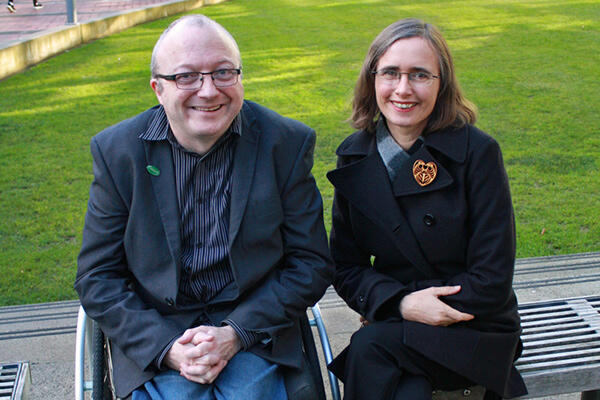
Critic tackles election year | Issue 18
Disability rights are not often talked about at university. Given that almost one in four New Zealanders are disabled in some way, it is definitely a topic that should make more waves at Otago. I spoke to Mojo Mathers of the Green Party, who is the first profoundly deaf New Zealand MP, and Chris Ford, a Greens list candidate, disabled, and strongly involved with disability advocacy. The issues that disabled people face are as much social as they are monetary, a concept Chris explained to me as “the social model of disability.” He and Mojo both argued the most disabling part of being disabled is the way they’re treated, and a lot of work needs to be done to change the way employers and the public considers disabilities. You’ve both done a lot of work in the disabled community. What is one of the main things that the government needs to change in how they support disabilities and disabled people? Mojo: Well, New Zealand has signed the Convention on the Rights of Persons with Disabilities, but the government really needs to step up and give full effect to implementing the convention. That covers all areas of life from accessible buildings, to employment, to access to information. The overarching principle is that disabled people have the right to full participation in society on an equal basis with other people. Chris: I think that that’s quite a fair summation from Mojo. I feel that the UN convention is something that we, as disabled people, have fought for internationally for a long time. And now that it’s there, we should utilise it as a tool to create the equality that we as disabled people seek. So I’ve seen you do some work with making sure Christchurch is rebuilt fully accessible; is that one of the main issues you’re pushing for? Mojo: It’s definitely one of them. To ensure that the Christchurch rebuild is fully accessible will require that the building code and standards are updated, so it will have the nation-wide implication that progressively all new buildings will become accessible. And they should be, in the 21st century. Chris: And also the other concern that Mojo has been campaigning on too has been earthquake-prone buildings legislation, and that is a real concern because what the government is proposing is to decouple the present requirement that when buildings are earthquake strengthened or fire strengthened, that they are also made fully compliable with current building access standards. Now, to decouple that requirement means that a lot of our buildings, including heritage buildings, will not be able to be made accessible, and therefore that will deprive not only disabled people but also older people, also parents pushing strollers, and so forth, of the right to full access to public buildings. Mojo: Absolutely, because it’s the only mechanism we currently have in law for updating older buildings to modern accessible standards. If we take it out of the Earthquake-prone Buildings Amendment, then we’ve missed an opportunity for upgrading and modernising older buildings. What is the government currently doing? Mojo: The earthquake disability leadership in Christchurch organised a petition, which I launched with them, signed by over six thousand people. It was handed over to the government last year, so the government has done a review of the building code act and they have come up with a list of recommendations for action. But that won’t be presented until after the election to the minister. The next area I want to talk about is regarding disabled students. Because it’s not something I often hear about, and I was just wondering what in particular you’d like to see happen support-wise? Mojo: The different universities have different levels of support for students with disabilities. So I know that at Victoria University they’ve really led the way in ensuring a lot of support is available for students to pursue their studies. It’s incredibly important that disabled people have the ability to continue to up-skill and access further education, particularly because there are so many barriers to entering employment as it is, so they need to have the opportunity to gain these skills. So there’s a lot that universities could do to be more accessible; I’ve had students approach me about things like accessible information, or things like showing videos without captions, which makes it very hard for deaf or hearing impaired students, things like providing documents in accessible formats, and then, of course, some university campuses are very difficult to get around for students in wheelchairs, so there’s a lot that needs to be done. Chris: And I know from being a graduate with a disability about the various barriers that I encountered back in the 1990s here at Otago; they were far more surmountable than they are today. I think that in terms of relative comparisons that Otago performs well in its support for disabled students. But there is a lot more yet to do. I do know that the legacy of the late Donna-Rose McKay is very well felt here, and I think that her legacy needs to be built on and that includes the students around New Zealand as well. And also the other thing, and even though it may veer slightly off the question, is the issue of employment for disabled graduates. That is a really big issue. I’ve found that myself at various times that getting employment has been a real difficulty for me because of the attitudes of employers. That’s a real issue for a lot of disabled graduates. They see, as I’ve seen, their peers go ahead and get jobs whereas disabled graduates find it more difficult to access employment. And I think, really, the realisation of the UN convention is just one way in which disabled people and disabled graduates will be able to realise their dreams of being able to land jobs just as quickly as their non-disabled peers. Mojo: Touching on employment, one of the things that really comes up time and time again is the importance of employers focusing on the skills of disabled people; rather than what they can’t do, what they can do and what they can bring to the job. Because very often we can work around barriers. We have the concept of “reasonable accommodation,” which means sometimes maybe slight modifications of the job description, or not requiring a driver’s license if driving isn’t part of the job. These sorts of things. Is there anything currently in place to support disabled graduates? Chris: It’s the same sort of employment packages that are available for other people. But I think that more needs to be done to ensure disabled graduates are able to land appropriate jobs that utilise their skills to the fullest. And I think that will require government funding and support. And I think that that’s quite a crucial thing. Mojo: There are support agencies, but there is a lot more that can be done. I think recently there has been an initiative to work with employers across the country to educate them about disability, and because there are often a lot of assumptions they hold; that disabled people just can’t do certain jobs. The same applies to me; there was the assumption by a lot of people that a deaf person could not possibly be a Member of Parliament, and could not possible do the job, and I often got questioned on that. How could you be an MP? How can you do that? So the negative attitudes and assumptions will often put disabled people in a box and people have very low expectations about what they can achieve and what they’re capable of achieving. So there are a lot of strategies that can be employed to help out the way people view disabled people and the way that we support people in achieving their ambitions? Chris: That’s right. And also, I think that the Greens are showing, with Mojo, myself, Chris Perley, and Rachael Goldsmith, that disabled people are politically active, that we are able to be candidates. I think the Greens are very committed to improving the representation of disabled people on the list, in particular. And I think that’s a good start. Mojo: Absolutely, because actually to help create change and be part of a changing nation, we need to see disabled people widen their representation; it’s very important that we are able to stand for local government, central government, and be part of that change. Instead of having decisions made for us. One last thing, which is about animal welfare, because that’s your other big “thing,” Mojo. So a lot of noise has been made about animal testing, especially around cosmetics at the moment, and I believe you introduced that amendment before – ‘cause I know it’s a recent Labour policy – am I right in thinking you introduced the amendment? Mojo: Yup. I currently have an amendment to the Animal Welfare Amendment Bill that would ban the animal testing of cosmetics in New Zealand. I put it up at the select committee stage and we had a lot of discussion about it, and in the end the National Party MPs voted against it. But they said “oh, we support the intent, but we need more time to consider it because of possible unintended consequences.” So that was quite frustrating, but there is still an opportunity for the National Party to change its mind and vote for it at the next stage of the bill. Just for a lot of curious people out there, does that involve no animal testing IN New Zealand? Or does it involve banning products that have been tested on animals OUTSIDE of New Zealand? Mojo: To ban the sale of cosmetics [that have been tested on animals] would require a separate bill, because the Animal Welfare Bill only covers New Zealand. So it still needs support. Obviously it’s always been our policy as well, to oppose cosmetics being tested on animals wherever they come from, so we were really delighted that Labour had stepped up and agreed to that policy as well.
-
News
Politweets | Issue 18
Reporter Laura McQuillan provides evidence for the Greatest Shit. National MP inadvertently used the Greens’ hashtag #LoveNZ. More than once. Awkward. As you do. Thanks, fake Gerry.
-
News
Greatest hits / Greatest shits | Issue 18
Greatest HitAnother week brings us another hilarious parody website. This one is making fun of Colin Craig; by going to colincraig.co.nz you’re treated to a number of fake press releases, like: “Perhaps choosing the Conservative Party as a name was a bad choice, as we are constantly mistaken to be the Conservation Party,” said Conservative Party leader Colin Craig, while lying coyly in a field of grass. And if you hang around long enough, a giant picture of his face slides onto the screen. According to 3 News, Colin is “tremendously flattered” at being the subject of a parody site, but has, of course, threatened defamation. Greatest ShitNew Zealand First is lucky to have a number of strange MPs, and Asenati Lole-Taylor is decidedly one of them. When asked a few questions by the press, Asenati pulled the classic “my phone is ringing” to try and field off some of the reporters. One of them asked her to “stop pretending.” In retaliation, Asenati thrust her phone to his ear, in order to prove the legitimacy of her phone call. There was no one there.
-
Columns

ODT Watch | Issue 18
This article begs the question: WHY, ODT, WHY!? Taking pointless and ridiculous reporting to a new level, the article describes how an intoxicated Irish woman broke into an apartment, where she then locked herself in a cupboard and proceeded to urinate throughout. Adding insult to injury after New Zealand’s triathletes were unable to place in the Commonwealth Games. Harsh, ODT, harsh. For full in-depth sport analysis you can’t get much better than this. We think the ODT needs to put a brake on their witty headline attempts. The World News section of the ODT is arguably their best section (perhaps because ODT staff don’t actually write any of the articles). Of all the interesting, remarkable and stimulating international news happening every day the ODT chooses to include this piece of non-factual infotainment. Situated right next to reports of even more innocent children being killed in Gaza, the article describes how the Beibs apparently used a wheelchair to queue jump at Disneyworld.
-
News

What would it cost them now?
In an article by Spook Magazine, Ellena Savage figured out exactly how much an education would cost for Australian Cabinet Ministers should their degrees have been undertaken today. It was written amongst the discourse about how Tony Abbott intends to deregulate university fees, a frightening act of Americanisation that thankfully hasn’t yet made it across the ditch. As our generation has grown up, we’ve had the luxury of watching tertiary education transform from being a right to a privilege, and we’ve seen it become progressively more expensive. Thankfully, our loans are still interest-free, and the government has explicitly promised they’d stay that way. But the way the government interacts with education is changing, and even though these changes seem incremental at the moment, when you add them all up the contrast is stark. Critic decided to perform the same analysis on few of our own politics’ nearest and dearest - or, more specifically, those who’ve had something to do with education. So, how much would their degrees cost today? Steven Joyce Could we begin anywhere else? The loveable (see: insufferable) loaf that is the authority on tertiary education for the National Party, Steven Joyce has consistently made it just that little bit harder for us for a while now. So much so, that in 2012 he got the title of “Cunt of the Year” for Critic’s yearly roundup. Joyce went to Massey, where he began attempting to be a vet. It didn’t quite work out, so he ended up with a degree in zoology. Critic wonders if he’s ever used it. Prior to 1989, university in New Zealand didn’t have any tuition fees. That’s right – it was totally and utterly free to skip your shitty marketing lecture and fail POLS101. Students also received a living allowance, making it outrageously affordable to live the life of a student for a few years. In 1989, the Education Act changed this, introducing fees. Old mate Steven went to Massey before this increase, meaning when he went to university he paid pretty much nothing, and was free to distribute his dulcet tones to the radio-listening Palmerston North public (he later continued to do this in New Plymouth). Now, his degree would cost a grand total of $19,954.50. This estimate has been calculated through adding three years of BSc fees to the various miscellaneous Massey admin costs. If we make a couple of outrageous assumptions about Joyce’s personal life and include a living costs loan (x3 years, not including summer school) and course-related costs loans (x3 years for obvious non-course-related usage), then his total loan comes to $43,013.94 or the equivalent of around 42 toupees. Maryan Street If we head over to the red team, we find Maryan Street as Labour’s Spokesperson for Tertiary Education. Maryan Street has been thoroughly involved in social policy-type work since graduating, working in housing, unions, and ACC. Her Labour profile lists her as an academic, quite the status given how much it costs to become one these days. She was also the President of the Labour Party for a couple of years in the 1990s. According to Labour’s website, Maryan has a BA(Hons) in English from Vic and a Masters in Philosophy from Auckland. Juicy. The English degree leaves us with approximately $23,488 in fees and admin costs, while a Masters in Auckland costs roughly $8,117. Add that to five years of living costs and course-related costs? It adds up to a shocking $70,037.40. Shit. That equates to 1,167 blazers from Glassons. David Clendon David Clendon is the Green MP with the tertiary education portfolio, even though we hear more from Holly Walker and Gareth Hughes on the youth policy front. David is a born-and-raised North Islander, with a penchant for community initiatives and a serious dedication to that province all the way up North that has all those seagulls. Like Maryan, David has a couple of degrees. He has a BA in Education and Politics, and a Masters in Human Resources. The Greens website doesn’t specify where David went to university, so I’ve made the executive decision to base his course costs on those provided by the Auckland University website. His BA equates to $19,569, while his Masters perhaps would cost $7,397. Added to the loan costs that have lovingly been distributed? A total of $57,711.92, or 1,924 pairs of gumboots from Number One Shoes. New Zealand First The New Zealand First spokesperson for tertiary education, Tracey Martin, doesn’t have a university degree (according to the New Zealand First website). While there’s nothing wrong with that, it makes this article less fun. So we’ve gone for Barbara Stewart, another New Zealand First MP, who is “inextricably bound to the Waikato area.” Much of her CV involves personnel management, business, and other company-related terms. She has also been heavily involved in education, having taught at both the primary and the secondary level. Barbara has a Bachelor of Education and a Diploma of Teaching from Waikato University. When that is all added together with student loans in the same slightly dodgy manner as with our other participants, that reaches a total of $55,683.92. What is that the equivalent of? 1,856 people getting a return bus ride from Auckland to Hamilton on election day. ACT The ACT website doesn’t reveal who is the spokesperson for tertiary education, so I texted my new best friend David Seymour to enquire. He said they don’t officially have one, but to use him instead. David holds a Bachelor of Arts and a Bachelor of Engineering, both from Auckland, and attended for five years between 2001 and 2006. When he attended, “it was about $640 for BE and $480 for Arts,” according to his text anecdote. Now, however, all that fancy education adds up to $42,321.25; add on the imaginary living costs and you get a terrifying $80,753.65, or enough to buy thirteen super high-quality video cameras for his next YouTube extravaganza. Maori Party The Maori Party’s website annoys me as there’s no “search” function, and I had to go trawling through all three of the candidate profiles to hunt out exactly who takes care of tertiary education. Tariana Turia is the tertiary education spokesperson, but her biography doesn’t say whether or not she holds a degree, so I went to Te Ururoa Flavell. He deals with Maori education, so it sort of fits. Holding a Bachelor of Arts in Maori Studies and Anthropology from Auckland and a Master of Arts in Maori from Waikato means his fees would also be pretty up there. It’s those pesky postgrad degrees. All of that and a loan equates to roughly $64,714.72, or 593 Baby-G watches from Fishpond, so he can turn up to his interviews on time. Conservatives The Conservative Party’s website isn’t particularly conducive to figuring out exactly what candidate stands for what. I guess they all just stand for something. By default, I went to Colin Craig to figure out exactly what he’d be paying for if he attended university now. For regular readers of Critic’s politics section, you’ll know he was interviewed early this year; and you’ll know that aside from his outrageously ridiculous views, he’s actually a pretty nice guy (please don’t sue me for defamation, Colin). A Christian from Howick, the majority of Colin’s education took place in Auckland. He has a double degree in Arts and Commerce, and has done “post-graduate study at Massey University,” according to his Wikipedia page. Given how unspecific that was, and given how well Colin has done in the business sphere, I went with commerce. Overall? $64,831.42. That’s enough to buy 150 photo shoots comprising six images. Photoshop included. Internet Party The spokesperson for tertiary education within the Internet Party is Miriam Pierard. As she is not a known figure in NZ politics and doesn’t have a Wikipedia page, hunting out her tertiary qualifications involved finding her LinkedIn profile – something I normally prefer not to do, as the website notifies the owner of the profile each time someone views it, and it makes me look a bit like a stalker. An Aucklander through and through, Miriam once attended Epsom Girls Grammar and taught at St Cuthbert’s. She also attended university in Auckland, having obtained a BA in history and politics and a Graduate Diploma in teaching. She also has a language course degree from somewhere in Colombia, but we won’t go into that. Adding up all that education gives us $46,214.92, or 51 years of Slingshot Internet. Overall? Just for fun, I’ve gone and added up all those fees. For just eight people to attend university, a tool that helped them achieve their wildest dreams (assuming NZ politics is the pinnacle of dreams), something that would have cost most of them absolutely nothing, now would cost $482,961.89. Which is, incidentally, still not enough to buy a house in Auckland. But that’s another issue.
-
Features

Welcome to the gun show
Standing in the kitchen of my flat, I turn to my flatmates and ask them how many firearms there are in New Zealand. One replies, “80,000.” Another - deciding to push his guess - replies, “about 100,000.” When I tell them that there are, in fact, approximately 1.1 million firearms in New Zealand they each react with surprise. With 230,000 licensed firearms owners, that’s almost five guns per owner. And that’s just the above board figures - the number of weapons that are either being made or imported illegally is difficult to determine. “We have more guns in private hands than are available to the New Zealand army and police combined,” Professor Kevin Clements - the Director of the New Zealand National Centre for Peace and Conflict Studies - tells me. “If there was a desire to have an armed revolution in New Zealand, then there’s certainly the weaponry available.” Alongside this vast quantity of weaponry, the law regulating firearm use is permissive rather than restrictive. “In a New Zealand context, we register gun owners but we don’t register guns, although we used to,” Clements explains. “As long as gun owners are registered they can buy as many guns as they like. They can purchase high velocity air rifles, for example, which have killed policemen in the past or very high-powered rifles. There are bans on assault weapons, which is a step forward. But we don’t know how many of those weapons have already come in to the country.” While people can’t get gun licenses if they have protection orders against them or criminal convictions or show signs of mental instability, if they can satisfy the safety requirements and agree to keep their weapons under lock and key they are likely to be awarded a licence. Having got a licence, there’s nothing stopping them from going out and purchasing a gun - or several guns and as much ammunition as they like. Somewhat surprisingly, this has not yet resulted in a rise in the numbers of homicides using guns. In 2013, for example, New Zealand saw a total of 83 homicides but only 8 were by gun. This is a strong contrast to the situation in the United States where there is a very high correlation between guns and murder rates. This does not, however, mean that guns are safe. “Those who are on the verge of some sort of mental breakdown or psychotic break could - if they satisfied the minimal licence requirements - go and purchase a high powered rifle - or borrow and steal one from friends.” Before talking to Clements I didn’t consider the fact that we should be concerned about our gun culture - but early on in our conversation, I began to realise otherwise. By no means wanting to encourage a community of fear or create a sensationalist piece, an awareness of the number of guns in Otago made me contemplate some worst-case scenarios for the University of Otago campus. For example, unstable students who focused on gun incidents in the United States could get ideas that might create mayhem on the campus. According to Everytown for Gun Safety there are now 1.37 school shootings per week in the United States. This figure is due to a range of factors, such as pro-gun activists’ constant reliance on the Constitutional right to bear arms as dictated by the second amendment. One of the most recent shootings was at the University of California in Santa Barbara where Clements has friends. In this case, the extreme anti-feminist advocate Elliot Rodger first stabbed three men to death in his apartment before driving to a sorority house and shooting at four people inside. The rampage continued when Rodger drove to a deli and killed another student. After fleeing in his car through Isla Vista he committed suicide from a self-inflicted gunshot. In the end, Rodger killed seven people and wounded thirteen more. “Santa Barbara is a completely tranquil, slightly alternative campus in California. It’s the last place you’d expect to have a campus shooting,” Clements reflects. “The quality of campus life and the quality of the university is really not of any great consequence. The critical thing is whether there are any individuals around who have such a deep sense of grievance or such a deep sense of humiliation or distress that they will act out their feelings violently.” Such individuals exist everywhere and Dunedin has been home to a disturbing number of them. The Aramoana massacre in 1990 was one of the deadliest shooting sprees in New Zealand’s history. Thirty-three year old David Gray - unemployed and known to be a loner since primary school - killed thirteen people with a semi-automatic after a triggering argument with his next-door neighbour. Four years later, five members of the Bain family were murdered by gun in Andersons Bay. This year, despite two alleged breaches of protection orders against his estranged wife, Edward Livingstone, a Department of Corrections employee, shot his two children and then committed suicide in Saint Leonard’s. While crime statistics show do not show that Dunedin’s level of crime is particularly high when compared to other centers throughout New Zealand, and domestic-related shooting can sadly occur throughout the nation, these Dunedin cases received a high profile by the media, drawing the nation’s attention to our small University town. “There is a gothic side to Dunedin,” Clements states as we discuss these cases. The reports on these tragedies frequently discuss loner qualities and social issues as central aspects of these crimes, but Clements suggests that “there may be a range of other dynamics at play as well. Dunedin’s weather could have a negative impact on people with depressive or aggressive personalities” (although past news reports do not mention this as a central contributing factor). “The weather can work both ways. Cold weather can generate a very creative interiority, but for people that are subject to bipolar disorders or psychotic breaks I can imagine that the weather might be the final straw and that they would either direct their sadness towards themselves or, alternatively, play their internal depression outwards and cause serious harm to themselves and others.” These incidents aren’t aided by the fact that Otago has one of the highest rates of gun ownership in the country in terms of registered gun owners. “There is a fascination with guns in Otago,” Clements states. “When you couple that fascination with pathology - that’s when it becomes potentially lethal.” Hypermasculinity and a residual Barry Crump notion of New Zealand male identity does nothing to aid the dark side of this gun culture. “It’s much less now than it used to be, but the notion of the New Zealand male being a good keen man who can thrive in the outdoors and take his fishing rod and gun and survive in adverse conditions persists,” Clements tells me. “These old stereotypes generate a sense that guns are a part of New Zealand’s concepts of masculinity. If that New Zealand male has just had a painful divorce or has been upset by a woman or whatever it might be,” think Livingstone for example, “then we could have a situation where you get Aramoana or the Bain murders.” This prospect is not that remote. The other night I was sitting outside Refuel with my friends, watching people walk by. Out of nowhere, a group of shirt-clad boys approached a more alternatively dressed group who were talking and smoking outside the bar. Most likely, none of the individuals in the two groups knew each other. If there was any provocative comment made it was minimal. But suddenly fights were breaking out everywhere. At one point a person threw a punch that knocked another person to the ground - it was only luck that his resulting head injury wasn’t more critical. Shaken at the intensity and velocity of the violence I wondered what might have happened had one of those individuals had a gun? What would happen if - spurred on by the constant reports of campus shootings in the States as well as Dunedin’s own history - a person in ownership of several guns was to have a psychotic break on our own campus? Any bystander involved could turn to the University’s emergency flip-chart, that hangs in every lecture theatre and throughout the campus. However, in an emergency like this, it is unlikely that anyone would have the time to turn to the flipchart. Even if they did, instructions like, “Remove yourself and others from immediate danger if possible and it is safe to do so,” and “If you feel unsafe at any time immediately CALL 111,” are hopefully common sense. In terms of the University’s emergency plan, if an incident like this was to happen then the Vice-Chancellor - on deciding that the incident was a valid emergency - would declare a State of Campus Emergency. The Incident Controller (usually the Proctor unless otherwise delegated) then decides operational priorities and allocates resources during the initial response, with an immediate focus on saving life and property. The Incident Management Team gathers at the Emergency Operations Centre, a centralised facility, where the team assumes their roles. There is also a Wide Area Emergency Broadcast System, which sends real time or prerecorded broadcasts to the units with the blue lights throughout campus. Notably, Otago was the first New Zealand university to adopt this response system. Of course, if such an emergency were to occur external agencies like the Police, who regularly train for armed situations, have their own protocols and plans for dealing with armed incidents. However, after talking to University staff about the emergency procedures for a threat like this, it became clear that there were minimal preventative measures for incidents of shootings. Instead, most of the protocols in place were reactionary. Understandably, issues like campus shootings or attacks are much lower down on the agenda at annual meetings on emergency procedures. “Normally when you are trying to evaluate the significance of these kinds of things you are looking at lethality and probability,” Clements explains the lack of in-depth discussion of gun threat scenarios on campus. “If somebody is habituated to guns and has access to them then there is a better than zero probability that they might be used. It’s not an absolute or inevitable probability but it will remain a probability that could have devastating consequences.” Another issue in these emergency situations is the lack of immediate action of bystanders observing this kind of violence. “The worrying dimension of a mass shooting on campus is that it would be so alien to most people’s expectations it would take a while to realise what was happening,” Clements tells me. “It’s a frightening scenario. You can’t do anything to prevent this situation. But what you do need to think about is a culture of prevention so you make it less probable – we shouldn’t, for example, reinforce notions of hypermasculinity or have any tolerance for weapons on campus. People need to be at least aware of the problem so that if the unimaginable happened people could react in a timely fashion.” But Clements doesn’t agree with the way American universities are going, either: “I’ve worked in American universities. There they have armed police on campus and they also have people walking through metal detectors. Both of these factors generate an unhealthy anxiety about weapons.” Nationally, Clements believes one positive step would be to require gun owners to register their guns. “We also need to have much more proactive mechanisms to ensure the police keep guns out of the hands of those who might use them for nefarious purposes. Police also need to be more vigilant in ensuring that weapons do not fall into the hands of those with protection orders against them. For example, in the recent Saint Leonard’s shootings, Livingstone had a protection order against him and shouldn’t have had access to guns. There should have been much closer monitoring of their availability for him.” However, groups like Sporting Hunters Outdoors Trust firmly oppose this idea, with spokesperson Laurie Collins stating in response to the Livingstone murders earlier this year that “A gun registry will not prevent one death or one crime” and that the incident was “not a ‘firearms issue,’ but a tragedy involving the systemic failings of the Justice Department, mental health ‘professionals’ and the police themselves who failed to protect the victims in this case.” In terms of what the University could do, Clements believes actively declaring the Campus gun-free would be a step in the right direction: “Just like a smoke-free environment I think it would be good for the University to declare this a gun-free environment. It is also important that we do not exaggerate the risk and probability of an armed attack on campus. On the other hand, I think it’s important that there is some awareness that it’s a possible scenario - you can’t rule it out as 100 per cent unlikely. The presence of guns, a masculinist culture and phobic attitudes towards those who might have hurt you can generate conditions in which gun violence might be considered. I would hope that there are enough formal and informal controls in place to prevent a worst-case scenario. But you can never be sure. We should work on best-case assumptions rather than worst-case assumptions. I don’t think we need to operate on the most pessimistic scenarios, but on the other hand we shouldn’t be oblivious to the probable consequences of a low probability event.”
-
Features
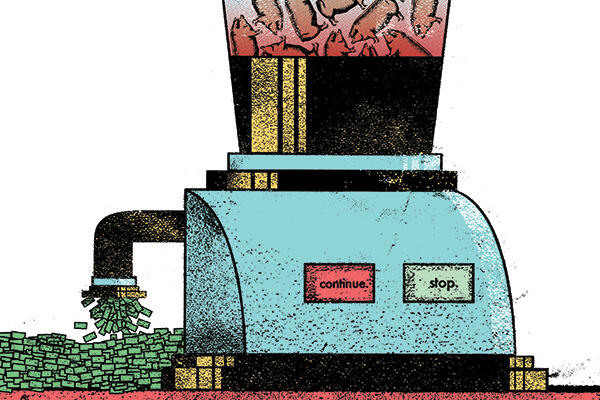
A case for animal rights
It is easy to assume that “clean, green New Zealand” is a better place to be a farmed animal than in other countries. But the hidden camera footage recently released by Farmwatch from three New Zealand pig farms is as bad as a nightmare or a horror movie. In one farm, a sow lies on her side, alive but immobile, while a farm worker circles her with a gun. He fires a shot into her head, but it clearly doesn’t kill her. She is still breathing. So instead of using another bullet, he picks up a hammer and bludgeons her in the head. He walks away for some time, returns, and hits her again. He leaves again and returns to hit her again several times over the course of an hour. It takes her over an hour to die. In more footage from the same farm, piglets are seen being herded and squashed up a loading ramp and into the back of a truck, while workers punch, kick, and stamp on them. One piglet is crushed under the others, and, maimed or dead, is picked up by a hind leg and swung out of sight. On another farm, pigs are crammed side-to-side in a holding pen while literally dozens of rats swarm over their backs. On a third farm, there is a shot of severed piglet tails dangling from a filthy supermarket trolley like macabre decorations. However bad we thought the factory farming of pigs was in New Zealand, surely we didn’t expect it to be this bad. Animal rights organisation S.A.F.E. (Save Animals From Exploitation) says that around 800,000 pigs are killed every year in New Zealand. They have often been raised in dark, overcrowded, concrete pens, only seeing the sun when they are led off to slaughter. Under these conditions they are so stressed and bored they bite each other’s tails off. Rather than improving the living conditions of the pigs, farmers cut the piglet’s tails off without anaesthetic so they cannot be bitten. Sows, the mother pigs, are artificially impregnated, and when they are ready to give birth, are moved to cramped metal “farrowing crates.” These are used in 67 per cent of New Zealand farms, and are barely bigger than the sows’ bodies. There they are separated from their piglets by metal bars that the piglets can feed through. After four weeks of this torture they are moved back to the sow stalls and impregnated again. After five years the sow is considered useless and she is sent to slaughter. I spoke to animal rights activist Carl Scott from Farmwatch about the conditions seen in the pig farms and whether they should be considered typical. He replied: “All these industries, whenever we expose them, they say, ‘look, it’s an isolated farm, they’re letting the rest of us down.’ It’s not like that. The footage was from three randomly chosen farms. The Pork Board has got no comeback to that now. That’s only three – we know there’s other stuff happening out there. We have footage of some of it. [On farm inspections] the farmer knows the inspector is coming, tidies stuff away, everything’s all shiny and it gets the tick.” When it comes to animal rights, Carl is about as dedicated as you can get. He explains his motivation: “I read a thing called “anonymous memoir of a battery-caged chicken” and it was as though a hen was describing her life in a cage, and it just did my fucking head in. I just thought it can’t be that bad, can it? Then I thought if it’s half that bad, that is horrific and unacceptable. I’d look at a battery farm and think this thing is happening there. That’s fucked. I’ve got to do something about that.” And he did do something. In 2011, to protest the conditions of battery chickens, Carl spent an entire month locked in a cage on the side of State Highway 1, north of Dunedin. The cage was small and open, and Carl could lie down in it but not much else. Apart from a couple of brief instances where he had absolutely no choice, he didn’t leave the cage; not even for toilet breaks. In 2012 he was part of an activist team that blockaded Mainland Poultry in Waikouaiti – New Zealand’s largest battery farm - with metal tripods with people suspended from the apexes. And this year Carl helped with a campaign which successfully re-homed 3,000 ex-battery hens. I asked Carl whether he thinks people are getting too used to hearing about conditions for animals in factory farms, and whether we have become desensitised to the word “abuse” to describe mistreatment of animals. He said: “The hidden camera stuff – I used the word ‘brutalised.’ Those animals were being brutalised. They were being kicked and punched and stomped on, crushed under the weight of other animals. That little piglet died, presumably. The piglet was carried off by the foot. That sow who took a whole hour to die. In the unedited footage you see them – smack, smack, smack – brutalised is an understatement. And that’s presumably happening not just on one farm but others.” We should put an end to any illusion we have that farmers are typically compassionate and humane carers for farm animals. The market doesn’t allow for that. In a capitalist growth economy, with a free market, competitive ideology, it becomes this giant race to the bottom. If you don’t cut your standards and overheads, you don’t sell product. Farmers have to pay the lowest possible wages in an industry no one wants to work in. Carl believes this is half the problem, as: “They attract these young men who can’t get jobs anywhere else, perhaps they’ve done prison time or whatever, they’re angry, they hate the world, they hate themselves. They hate life and they take it out on the animals. Everyone’s a loser and no one gets prizes. It’s just a failure all round.” Carl believes we should stick graphic images on the pork packets, like on cigarettes, of farrowing crates and fattening pens, to discourage people from buying it. He says, “The consumer can’t make informed choices if they’re not informed. And we’re not informed. It’s deliberately kept behind closed doors and we’re fed spin. It’s a scam. It’s a mess. It’s a horrible failed experiment, factory farming.” Why do we love some animals and stick our forks into others? Many people call themselves “animals lovers” because they love their pets. But many of these same people, by their purchasing choices, support keeping animals in conditions which you would have to be a psychopath to wish on your cat or dog. Imagine if your cat was diagnosed with an illness with which she could only survive by having her tail cut off without anaesthetic, then being put permanently in a cage so small she couldn’t turn around, and kept in a dark shed where she will never see the sun. Imagine seeing her panic, cry, pull her fur out, harm herself on the bars, and become covered in her own filth because she has no way of cleaning herself or getting away from it. Imagine watching as the pain and psychological suffering drove her insane. How would that make you feel? Now imagine if someone was doing this to her not for her own health, but for their own pleasure. This is what we are doing to factory-farmed animals. To quote from a pamphlet given to me by VARS (Veganism and Animal Rights Society): “The overwhelming portion of our animal use – just about all of it – cannot be justified by anything other than pleasure, amusement, convenience, or habit.” I spoke to Lisandru Grigorut of VARS about the strangely different attitudes we have to the suffering of different non-human animals. He said, “Pigs are highly intelligent – biologically more intelligent than dogs are (SAFE says as intelligent as a three-year-old human child) – but we treat dogs really, really well. We’re so shocked when people are cruel to dogs, but we have the right to be cruel to pigs. In fact it’s worse because a passive acceptance, it’s not even an active participation. Most people wouldn’t want to actively participate in killing a pig. And that’s fine because who would want to? The values we learn growing up are to be nice, to be nice to animals. There are so many people who love their pets and also love their meat and their eggs. They can’t make the connection because our society isn’t letting us make the connection. We have milk cartons with happy cows on them. That’s not the reality – they’re not happy, they’re not there for us to use.” Some people have the idea that meat, eggs, and milk are a kind of “payment” that animals “give” us for feeding and housing them. But you can’t call something a reciprocal agreement if one party has no choice in whether to participate or not. Lisandru says, “You’d be so shocked by how many people ask me what’s wrong with dairy, and I say, you have to forcibly impregnate a cow and then take her baby, and they don’t know that. They think that there’s no baby involved, that the cow just magically produces milk and if you don’t milk the cow she will die. They don’t have to be milked. And if they do, it’s because their baby is gone.” You may have seen Kendall Jones, the cheerleader/hunter from Texas getting a lot of hate on Facebook recently for posing for photos with animals she has killed. Lisandru says, “I don’t feel much when I see Kendall Jones. Everyone is hating her and hating her and hating her, but they are such hypocrites because they do exactly what she does, just in a more passive way and to different animals, which is arbitrary, really.” I remember a friend who had two much-adored Alsatians as pets commenting on seeing a video of dogs being slaughtered in a country where they are farmed for meat. He said, “They had dead Alsatians strung up like sheep.” But what, really, is the difference between a dog and a sheep other than our particular arbitrary social attitude to them? Minimising suffering is the basis of all moral decision making. Any belief in superior rights due to higher intelligence means nothing when it comes to suffering. Carl says, “Our so-called superiority, if it even exists, does not give us the ‘right’ to dominate those who are innocent and vulnerable. It merely gives us the ability. We have decided ourselves that we have the ‘right’ to exploit them. Isn’t that convenient?” Even if psychological torment is experienced differently by different species (or members of the same species), we are so biologically similar to other animals that to deny or minimise belief in their physical and mental suffering is nonsensical. If you enjoy eating meat, is that a good reason to kill animals? If you like diamonds, is that reason enough to torture, murder, and steal so that you can have them? A group called Animal Agenda Aotearoa is trying to make animal issues an election topic. They sent an agenda to all the major parties with ten points of what they would like to see happen for animals. One of them is to have a commissioner for animals, and one of them is to stop factory farming by the end of 2017. Four parties agreed, and said, “Yes we would support that:” NZ Greens (who have always supported a ban of factory farming); Mana; the Internet Party; and, surprisingly, Labour. This is a recent development, as Carl says: “We didn’t expect that. But now they’ve made it a public statement, those of us in the movement, we applaud that, and we will stand behind them if they stick to their guns and not backtrack. I think there is public support for it.” SAFE says that 77 per cent of New Zealanders are against pig factory farming. Carl believes New Zealand is ready for the change. He says, “We feel now is the time to talk about the stop of factory farming. People are disgusted.” He adds that as well as pigs and chickens, other animals suffering right now in New Zealand factory farms include ducks, turkeys, fish (intensive fish-farming is hideous), and, increasingly, cows. We are actually seeing more factory farming, not less. Tradition has a lot to answer for. Just because something is old it doesn’t mean it is good. Racism and sexism are old. Being an agricultural country, New Zealand is very attached to meat and other animal products. It is in our culture, and a large part of our economy depends on it. And, Carl says, “There’s also this myth that persists that we need meat for protein and iron, we need eggs and dairy for calcium. That myth is very prevalent. People can’t get past what it is to live without meat. And I can understand that. I was reluctant to go vegan to start with, thinking I’d miss the Sunday roasts and bacon. But then you do it and you realise it’s not that hard. There are alternatives, and a whole new range of new possibilities opens up in front of you. People focus on what they have to give up, rather than the new things they will discover. The alternatives are not as scary as you think.” Carl and Lisandru both have a vision of total animal liberation in a vegan world. Carl says “I know that seems strange to most people, but what you’ve got to remember is when the abolitionists first proposed to abolish slavery, rather than just make slaves comfortable, everyone thought they were absurd. ‘You can’t do that, the economy depends on it, it’s God’s will, we’re superior to them.’ Blah, blah, blah.” The same can be said for early advocates of women’s rights or LGBT rights and marriage equality. But animals can’t speak for themselves – we need to speak and act on behalf of them. One misconception is that animal rights activists want the same rights for non-human animals that humans have. Lisandru explains: “When talking about animal rights we’re not saying give pigs the right to drive or cows the right to vote. They simply need recognition that they’re breathing and feeling, and there’s no justification for what we’re doing to them.” While factory farming is the most prolific vessel for extreme animal suffering, reform may not be enough. Lisandru says, “‘Better conditions’ are always marginal. The chicken has a little bit more room to flap her arms or whatever, but really that’s a marginal thing and not really indicative of any sort of actual liberation. It’s not indicative of us considering non-human animals to be moral creatures, or feeling creatures.” But, for now, we can try to eliminate the worst extremes of animal suffering. Factory farming still happens because we allow it to. Before I left Carl he said, “People need to realise that these animals don’t feel minor discomfort under these conditions. Their lives are a living hell.” It is important to remember that, whatever your views on animal rights are, animals are living, breathing, feeling beings with bodies like ours. An animal is somebody. When you eat a leg of lamb, you are eating somebody’s leg. When you buy leather, you are buying somebody’s skin. When you drink milk, you are drinking somebody’s stolen breast milk, who has had her baby taken off her. Each battery egg you eat is the result of a whole day in hell for somebody. We humans are remarkable in our ability to understand and distinguish between morality and immorality. As Lisandru says, “It’s amazing that we can recognise that sentient beings deserve protection. It’s amazing how we can look at someone who we don’t know and treat it as a given that they deserve life and their life should be protected. But it’s confusing how we might have those same feelings towards animals but still be supportive of industries that exploit and kill them.”
-
Features

Cyber-chondria
Imagine yourself sitting on a cold, metallic, fold-up chair. One of the chair legs is off-balance and the air in the room you’re sitting in is crisp. There are other people in this room, eight of them, to be precise. All eight are perched uncomfortably on chairs that are equally as cold and metallic as your own. Everyone, you included, is seated in a circle. Everyone, you included, wear matching white robes – except for one. You squint to read this man’s nametag: ‘Hello, my name is Dr. Saneti,’ it reads. Dr. Saneti is wearing black trousers and a blue jumper. He stands up and clears his throat. “Alright everyone,” he starts, “you’re all here for the same reason.” You nervously scan the people seated around you. They look completely normal. You start to panic, and think that maybe there’s been some sort of mistake because clearly there’s nothing wrong with you, unless you’ve been diagnosed with some sort of hideous brain-degrading disease and … Dr. Saneti interrupts your train of thought with another cough. Has he got the flu? “I would like you to please raise your hand if you have ever used Google, a similar search engine, or the website known as WebMD, to conduct a self-diagnosis of your health.” For those who aren’t aware, the medical condition hypochondriasis, more commonly called hypochondria, occurs when a person exhibits significant distress over an imagined illness. A large cohort of exaggerated, and often insignificant, symptoms usually accompany this distress. Most people have likely had their own experiences with a sore throat they assumed was tonsillitis, or a rash they feared could be the onset of leprosy, but these concerns are soon ignored and seen as a harmless, quirky, character trait. For hypochondriacs, however, this cute neuroticism quickly becomes a dangerous obsession. There are many people, sceptics you could say, who claim that hypochondriacs are merely pretending to be ill in order to gain attention. “That’s nonsense,” said Dr. Blake, a physician at Dunedin Hospital who was kind enough to spare ten minutes for an interview, “The thing about patients with hypochondria is that they are genuinely feeling serious distress over whatever they’re talking about.” He went on to describe that the main issue physicians have to express to their patients is that normal, completely healthy people have symptoms. “To a regular, level-headed individual, a headache could mean dehydration, or exhaustion, but to a hypochondriac, the same headache could only mean a brain tumour.” In today’s society, in the Age of the Internet, becoming a hypochondriac is far easier than it once was. The condition, in combination with access to online information sources, has even garnered its own snazzy nickname – cyberchondria. Dr. Brian Fallon of Columbia University, a psychiatrist and leading researcher on hypochondria has said that cyberchondriacs are, “… hypochondriacs who have a strong, obsessive compulsive focus to their symptoms.” How many times have you “genuinely thought” that you were dying after a night out on the town? How many conversations have you had with your flatmates discussing that “seriously weird” bump on your head that you’re damn sure has something to do with a blood clot or possible concussion? Have you ever found an odd-looking rash on your ribcage and feared the onset of a pigmentation-changing skin disease? If any of these situations sound even slightly familiar to you, then without a doubt you took your medical concerns to the most infamous of information sources: Dr. Google. During a survey of 20 seemingly regular and level-headed individuals seated in Union Hall, 17 of them described how searching for basic medical information on the Internet had led to further investigation of a far more serious condition. This was an interesting discovery, as none of the 20 surveyed individuals defined themselves as having extreme health concerns, yet almost all of them had displayed cyberchondriac-like behaviour. One student spoke of a time when she had Googled how to calm an upset stomach, and ended up halfway convinced that she had pancreatic cancer. Fortunately, she didn’t. Believe it or not, (you can try this yourself), one of the first suggestions that appears when typing “cyberchondria” into Google is, in fact, “cyberchondria symptoms.” Fitting. “I’ve been a hypochondriac going on cyberchondriac for pretty much the entirety of my pathetically healthy life,” began Annie, a 25-year-old from Auckland. “When I was eight I discovered my auntie’s medical encyclopaedia. That’s where it all began, I think.” She discussed how the Internet is without a doubt, a hypochondriac’s best nightmare. “When I was 14 I had my first run-in with multiple sclerosis, but that turned out to be nothing more than a slight numbness caused by sleeping on my arm weirdly.” After a few minutes of light-hearted banter, things suddenly turned serious, “Honestly though, I’m dead certain that I’m experiencing an early onset of menopause. Not even joking. I’ve been having serious hot flushes and WebMD has this whole list of other symptoms and I mean ... like I don’t think I want kids, so that’s okay but, yeah.” Annie seemed at peace with her apparent condition. Are you going to get yourself checked out by a doctor? “No,” she said, “I’ve wasted so much time and money on medical tests that turned out to be unnecessary in the past, so I think I’ll just tackle this one on my own.” From examining some of Dr. Fallon’s research on hypo/cyberchondria, it becomes evident that hypochondriacs are not necessarily all too careful about where they get their information. In the Age of the Internet, access to vast and unregulated medical information is just a few mouse-clicks away. Dr. Google will always have the answers. “For hypochondriacs, the Internet has absolutely changed things for the worse,” says Dr. Fallon. According to Annie, there are few things in life she finds more enticing than new symptoms. “There’s nothing quite like watching a Grey’s Anatomy episode and finding out that the weird twitch I’ve been experiencing in my knee could be a sign that one of my vital organs is about to expire.” To most people, TV shows and stories told by your hairdresser about her sister’s best friend’s niece belong in the realm of fiction, but to hypochondriacs, such information is deemed somewhat reliable. After tracking down another known hypochondriac, the stories he told me were eerily similar to those told by Annie. Thomas, a 22-year-old from Christchurch, discussed with enthusiasm the time when he was convinced that he was suffering from two terminal illnesses at the same time. “I’d had this horrible pain in my belly region for a few days, and all signs pointed to stomach cancer. I have a family history of cancer, so it was pretty scary. A few days after that, I developed a funny little twitch in my elbow that was dead-on with motor neuron disease.” He makes it clear that although he can laugh about it now, the few weeks he felt this way were absolutely terrifying. “I was told by my doctor that if researching my symptoms is just going to make me upset, I should just try not to do it.” Excellent advice, mystery doctor from Christchurch. Have you ever worried about an illness that you really just couldn’t possibly have? Thomas looked down, “Yeah, well, it’s a bit embarrassing, but there was this one time I had a fever and I was hot and cold and hot and all the symptoms matched up but … I would say that I thought about it for a lot longer than any male in his 20s ever should.” The elusive “it,” Thomas referred to was, of course, menopause. The arrival of the Internet has completely revolutionised the collection and distribution of healthcare-related information. This has changed the traditional doctor-patient relationship significantly. Traditionally speaking, it has always been that the doctor is the one who has all the knowledge regarding a patient’s diagnosis and subsequent treatment, but in this information-rich era, patients seek to inform themselves. Where there are some physicians who dislike this pattern due to the often-incorrect and unreliable information that patients ingest, there are others who have found that smarter patients are better patients. Groups of medical professionals of the latter kind find more often than not that patients who use the Internet to research their health before coming to consultations ask more informed questions, and are more likely to comply with recommended treatments. Hypochondria and cyberchondria are both dangerous and distress-causing conditions, but the penultimate of imagined and delusional diseases is Morgellons. Morgellons is a condition wherein sufferers are under the paranoid belief that their bodies are infested with disease-causing agents such as insects, parasites, or fibres under their skin, when in reality no such things are present. Morgellons patients tend to self-diagnose using information available on the Internet, particularly forums and threads filled with the opinions and experiences of other sufferers. Although there is undeniable proof that people with Morgellons are not suffering from an infestation of disease-causing agents, they do exhibit a number of skin-related symptoms such as biting and stinging sensations, or rashes and sores from patients’ own scratching and rubbing habits. It is a controversial disease, treated with extreme caution by professional psychiatrists, psychologists, and even the mainstream media. One of the strangest things about Morgellons is that it seems very few people can read about or hear about the disease without feeling itchy themselves, which certainly tells you something about people and their apparent need to always assume the worst. It was at a time when people were already starting to show a lot more interest in public health matters when the Internet first appeared. As general and scientific education increased worldwide, so did public interest in health issues. All around the globe, televised debates on topics involving public health concerns, magazines devoted to fitness and general well-being along with “doctor” columns in newspapers became the norm. If we were to go back 50 years ago, it was generally considered taboo to discuss personal health problems with anyone besides your doctor, but those beliefs began to fade away quickly with the arrival of the Internet. For most regular, level-headed people, the Internet and its endless troves of information is seen more as a helpful hint than an unquestionable truth when it comes to understanding medical conditions. But for hypochondriacs, seeking information online can lead to serious anxiety. With the power of the Internet, nearly anything can be purchased online: your groceries; your clothes; and even your prescription medication – no prescription necessary. The sale of medication online raises many concerns around product safety and control. When a person goes to a consultation with their physician and is prescribed a medication, they will be informed of any potential side effects and dangers associated with taking each specific treatment. The same does not occur over the Internet. People can purchase the most dangerous of mind-altering drugs and not be aware of the damage they may cause. For severe hypochondriacs who feel as though a physician will not take their concerns seriously, online acquirement can often be seen as their only option. This behaviour will more often than not do far more harm than it will good. So, you’ve gone out to dinner with friends, gorged yourself on a huge meal, and now you’re experiencing terrible cramping pains in your chest. You ask Dr. Google what he thinks and the first thing that springs to his mind is a heart attack. You check WebMD and there are other symptoms of heart attacks that match your own. Anxiety is building; you have so much to live for, you’re so young and now it’s all over and … no. You’re not having a heart attack, you’re experiencing the phenomenon known as cyberchondria. Stop it. In the Age of the Internet, it comes as no surprise that the World Wide Web will continue to play a large role in the distribution of health problems. Hypochondriacs and cyberchondriacs alike will always demand more and more information about all manner of medical conditions, and where physicians don’t have the answers, Dr. Google does. However, as the mysterious doctor from Christchurch told Thomas when he nearly died from a double-disease fiasco, if researching your illnesses and ailments is just going to make you upset – don’t do it. There you are, sitting on that now-slightly-warmer metallic fold-up chair, looking up at Dr. Saneti. He looks around the circle kindly, and raises his own hand. “I once caught a splinter under my fingernail, and Dr. Google told me I would contract a fungal disease. But let me tell you all now, I didn’t.” You look down at your hands, and thinking back to high school when you told your mother that you’d most definitely contracted bacterial meningitis, you raised your hand. “Well done,” says Dr. Saneti, “Everything will be okay.”
-
Features
That one time I got a Tinder date to rescue me from another Tinder date.
People always ask, “aren’t you afraid you’ll meet creeps or douche-bags on Tinder?” To which I always say, “I haven’t so far and I’ve been on more Tinder dates than I care to remember.” My time had clearly come. Remember when your parents told you to forget about people’s feelings and your own inhibitions when it comes to your own personal safety, and when you need to get out, you get out by any means? Here is a story that will make my parents proud. Let’s call him James. Because that was his name. So James had a great face. Not going to lie, his Tinder profile suggested he had a great bod too (not that I care much about what’s below the brain, or anything). His text chat was reasonable and he seemed like a nice guy. He had a psychology degree after all; he couldn’t be too stupid. We arranged to go out for dessert one Saturday night. Here is basically a guide on what not to do on a Tinder date. He starts off by being half an hour late. Then he tells me he is a minute away from my house and asks me to wait outside, warning me his car is kind of noisy. So I go outside in the pouring rain. Five minutes later he turns up in the most obnoxiously loud car and insists on tooting even though I am standing right there. Come on, dude. I live in suburbia – kids and cats are trying to sleep here. I should have gotten out of the car straight away. Behind the wheel of this ridiculous vehicle he is sitting there with a beer in hand (to calm the nerves, apparently). I tried to inform him that this was an illegal activity. He was like, “nah, I’m all sweet,” (as he fails to keep within the road markings). Our car conversation consisted of him telling me how after studying psychology he decided to just stop thinking. As if the empty stubbie of Heineken wasn’t enough of a warning sign. At 27, this was his second ever date. Like, ever. Apparently the first date didn’t go so well – he got too drunk (seriously, where were my warning bells?). We got to our destination and as we walked to the place he tells me that he occasionally smokes and asks if this would be okay. Assuming he meant occasionally when he drank, I said no, not at all. Next thing I know he disappears outside to light up, for which he gets told off as it was a non-smoking area. Then, rather than ordering ice cream, he gets a beer. Dude, aren’t you, like, driving? His response being, “nah, I’m under the limit.” We sit down briefly. He throws his oversized puffer jacket on the ground, which the waitress then picks off the walkway. It was embarrassing considering we were in a rather nice Saint Heliers establishment. He then felt the need to inform me that he has had a DUI and that drink driving used to be a thing he did, but not anymore. He now only drinks enough so that he is just under the limit. The idea of him losing control of his gas guzzling noise machine, especially in this slippery weather, taking out another car and potentially killing someone, doesn’t seem to occur to him. Apparently that would never happen because he would “drive real slow.” Face-palm. We walk along the waterfront. I stare intently, focused on my ice cream. He lights up again. He informs me that he doesn’t have an addictive personality and that if you quit smoking by the age of 30 you’ll be sweet: “your lungs will be pink again.” I choked on a spoonful of ice cream at this point. Apparently smoking and drinking isn’t bad for you. Face-palm. We continue to walk along in the dark. He asks if I would mind if he jumped behind a tree to pee (instead of using the public toilets 200 metres away). Quite bluntly I informed him that I did mind and that if he did that I would be forced to write a piece about him. He laughed (not realising that I was totally serious). The generic Tinder chat continued. His hobbies included drinking, getting drunk, going to the gym and eating lots of meat. He reassured me that he wasn’t one of those drunk dicks that get into fights. Well, in that case ... I really didn’t believe him when he told me he hadn’t been drinking prior to picking me up. As we walked I randomly got sent a picture of this other guy I met on Tinder (who I had dated a couple of times and who had recently been too busy to text me) with his cat. I don’t know why I did what I did but it was somewhat instinctive. I was a good 20-minute drive from home and it was raining. I called for help. Ignore the terrible spelling. I was panic texting. Whist I was frantically stealth texting this guy, James decided that we should sit down and get another beer (I am currently on dry July so this activity did not excite me in the least). I really just cannot communicate to you how bad some of the things that were coming out of his mouth were. You know when you see an attractive person but with each word they say you wish they would close their mouth? Even if I was in a bar, totally wasted, I still never would have chatted to him as long as I did. I kind of wish I was wasted, it would have made the whole experience less painful. It was now that I was certain that I had made the right decision in asking for a rescue, especially as his glass became progressively emptier. It was when my rescuer’s Beemer pulled up just outside the place we were sitting that I abruptly got up. I hadn’t given this guy any warning of my intended departure. His poor face didn’t know what was happening. I told him the truth. I told him that I wasn’t comfortable being with him or with him driving me home and that I really needed to go. And then I left. Leaving the poor guy with a two-kilometre walk in the rain away to his car. I jumped into the Beemer like I had just robbed a bank. The fact that I was in a car with a guy who had otherwise ignored me for the last two weeks was the least of my worries. I was just thankful to be out and safely on my way home. The potential awkwardness was just a minor afterthought 20 minutes later I was home. Not surprisingly, the 20 minutes of chat in the car was the best I’d had all night. Intelligence really is way more attractive. Kind of gutted he had places to be. My respect for my rescuer increased significantly that night. I had written him off as a guy who suffered from a severe case of “only child syndrome” (or “arrogant dick disease” or “Remuera prick phenomenon”) who stopped texting me because I didn’t want to take my pants off. But a guy who will go out of his way at 10.30pm on a Saturday to make sure a woman gets home safe reassures me that chivalry isn’t dead after all. I am just gutted I wasted a perfectly good cake-baking night on this loser. I have learnt a valuable lesson about meeting strangers, and will balance my interest and curiosity in engaging with this “sex” I have heard so much about, with the requisite caution in the future.
-
Culture

New York style soft pretzels
The other Saturday i woke up. Well, i say “woke up” – in reality I was barely conscious and still a bit drunk from the night before. I felt like death. After a few more hours of remaining in the horizontal position, I dragged my tragic ass out of bed, put in my contacts and on some pants and took off to get some food to soak up the previous night’s bad life decisions. (Oh so many bad life decisions.) Now most people seek Maccas in their times of need. Not me – I seek salty and carby goodness in the form of fresh, chewy pretzels. Sitting on the bonnet of my car, in the sunshine with the remnants of last night’s makeup still on my face, munching down on the biggest, saltiest pretzel I can find, can definitely soak up the sins of the night before and wipe my slate clean in time for the afternoon. Making pretzels is so easy. Ok, probably not the easiest when you are finding standing up straight a challenge, but on a normal day-to-day basis, they are a cinch. All you need is simple bread dough ingredients – nothing flash, basically just flour. I recommend you cheat the rising process and warm your oven up to 100 degrees then turn it off, leaving your dough to rise in the residual warm air. Nothing much will happen if you leave your dough to rise on your icy flat kitchen bench. IngredientsMakes 8 pretzels 3 cups plain flour 2 packets of instant yeast 2 teaspoons white sugar 1 teaspoon salt 1 cup warm water 35g softened butter 2 tablespoons baking soda 2 teaspoons sugar a medium sized saucepan with 15cm worth of boiling water in the base 1 egg, beaten rock salt MethodMix together the flour, yeast, sugar and salt. Rub the butter into the dry mix with your fingertips. Pour in the warm water and mix together until it forms dough. Knead on a floured bench for 15 minutes until the dough becomes smooth. Place the dough in a large bowl covered in glad wrap and leave to rise for one to two hours in a warm place until it has doubled in size. Roll the dough into a sausage and slice into eight pieces. Roll each piece into a long sausage about 30cm long. Bring the ends together, twist around each other twice then flip the ends back onto the main loop of the pretzel and secure by pinching the ends with the loop. Preheat the oven to 220 degrees. Dissolve the sugar and baking soda in the boiling water. Boil each pretzel for a minute then leave to drain on a wire rack while you boil the others Once the pretzels are reasonably dry, brush over lightly with the beaten egg and sprinkle with rock salt. Bake for 15 minutes until a golden brown. Enjoy!
-
Culture
Michael Parekowhai
Dunedin Public Art Gallery Exhibited until 9 November 2014 Michael Parekowhai (born Porirua, 1968) is one of New Zealand’s most important contemporary artists. Parekowhai acquired his BFA (1990) and his MFA (2000) from Elam School of Fine Arts, University of Auckland. In 2001 Michael was awarded an Arts Foundation of New Zealand Laureate and since then, while still exhibiting, Parekowhai has been an Associate Professor in Fine Arts at the University of Auckland. His exhibition history spans almost two decades. Creating a broad range of work across a range of media, including sculpture, installation and photography, Parekowhai’s work plays with space and theme in a quirky, subtle and humorous, yet still challenging, manner. I have been a fan of Parekowhai’s work since I first saw the images of his two inflatable bunnies (Jim McMurty and Cosmo) in New Zealand art collectors Jim and Mary Barr’s book, Reboot, which is a reflective compilation of their personal collection from a range of renowned contemporary New Zealand artists. I purchased my copy for only $20 at the DPAG, and I really rate it as a simple, but significant, art read. Initially the bunnies were designed for the three- month-long 2002 Scape: Art and Industry Urban Arts Biennial, where Parekowhai suggested that he turn Cathedral Square in Christchurch into a playground for the bunny and its partner (Cosmo) – but the proposal was ill-fated, as was the consent process, so it took a little longer and they never quite made it into Cathedral Square. However, Jim McMurty and Cosmo have been well travelled-since, and now in 2014, the bunnies have been exhibited in places as far as Korea, Canada and Lithuania. Now, finally, Jim McMurty is here at the Dunedin Public Art Gallery – just filling space snoozing and looking cute. I am thrilled to have been able to see Jim McMurty in real life. The inflatable Jim McMurty is characteristically large in scale, and sprawls itself flat on its back across the gallery floor, at 12 metres long and 4.5 metres wide. With limp whiskers and a bushy tail, one eye is closed, and the tongue hangs lifelessly out one side of its mouth, as if stars should be circling the rabbit’s head. Aesthetically, the piece is comical and cartoonish and it reminds me of Bugs Bunny or Peter Rabbit. In a word, it’s quite charming. Even its size isn’t uncomfortably confrontational, demonstrating how Parekowhai cleverly maintains subtlety with what I would call super-scale objects, as a real life bunny would probably be smaller than Jim McMurty tongue. There has been controversy surrounding the significance of the bunny/bunnies, with people questioning: What does it represent? What does it mean? How is it art? But for me, that is the whole point of it. It shows that art cannot be defined by one set of rules or expectations. The bunny for one person is cute and childish and adorable, and for another it is a weird oversize representation of a colossal pest. For some it is a symbol of colonialism, and for others, a mere mascot of popular culture. I was talking to someone who was at the Dunedin Public Art Gallery who shared the same passionate interest in Parekowhai as I do, and they mentioned they had encountered a visitor who had viewed the piece and didn’t “get it” because it “didn’t look like art at all.” The mere fact that the piece exists as an aesthetic object in a gallery I think is what constitutes it as “art” for the general public, but on a more profound artistic level, it is important to understand when looking at art (particularly Jim McMurty), that the object is not confined by any (nonexistent) “rules” or any specific identity, or any specific anything, for that matter – it merely exists as an open possibility of meaning. Walter Pater (my favourite aesthetic theorist) once wrote that what makes it art is that some mood of passion or insight or intellectual excitement becomes irresistibly real and attractive and fun for us for only that moment when we look at the object; and that’s why I like Parekowhai’s bunny so damn much. It brings together memories of childhood, moods of creative impulse, and little moments of intellectual reflection. The second version of the bunny, Cosmo (not on display) is part of the National Gallery of Victoria Collection and that’s my next Parekowhai stop. On loan for an extended duration, the bunny will be resting in the DPAG for a while longer, and it shouldn’t be left unseen.
-
Culture
Quai D'Orsay (The French Minister)
Rating: A- The French Minster joins other works such as the US TV show Veep that have clearly taken their inspiration from the popular UKTV series The Thick of It. These shows and films all portray important government figures through a satirical lens, which simultaneously undermines many democratic practices while also highlighting their importance to our modern world. The French Minister follows a young bureaucrat, Arthur, as he becomes the speechwriter for the right wing Foreign Affairs Minister of France. However, very quickly the film becomes less about Arthur and more about the inner workings of this government body and the emergencies that they must deal with. Though this may sound dry, the satirical perspective makes the performances superbly engaging, and often hilarious. Despite The French Minister’s similarities to other works, the French culture keeps the film feeling fresh. The jokes and performances have the arrogant wit and snap that the French are famous for, and the direction has a camp quality that is wholly unique. In almost every way The French Minister is just as successful in its execution as Veep and The Thick of It. The trouble is that the movie is too much like its inspirations, in that it is structured and often feels like three episodes of a satirical TV show put together and published as a film. I found myself wishing that it was a TV show, so that the characters had a whole season to breathe and develop, instead of being jammed into a two-hour film where they could never be as fully realised. The movie also had a structure-less quality, constantly moving from one emergency to another, which would have been far more successful in the TV format. I walked away from The French Minister feeling unsatisfied, not because the film was bad, but on the contrary, because I wanted to spend more time with it. In this generation where TV is quickly becoming as respected as film, creators need to think carefully about what medium their story would do best in. I think Tavernier simply picked wrong.
-
Culture
Sex Tape
Rating: C+ I have never come so close to walking out of a movie as I did in Sex Tape. A likable cast and an interesting premise were enticing enough to attend, but after sitting through an hour of the blandest humour imaginable, I just about lost it. Jason Segel and Cameron Diaz play a bored married couple that, in order to rekindle their sex life, decide to get sloshed and make a sex tape which they film on an iPad. They soon realise that their sinful smut has been uploaded onto the cloud that is attached to several other pre-owned iPads they have handed out to their friends and colleagues who can now view the video. And so begins a quest of dumb proportions to retrieve the iPads. Jason Segel, whom I normally love, really did not have enough room to stretch his wings, which I blame on a poorly written script. Almost every joke falls flat, and the few laughs you do get are from a small number of funny scenes that are few and far between. But even those are drawn out and milked dry until you are begging for the story to progress. The most memorable scene was with Jack Black as the owner of YouPorn, but even his unique brand of comedy didn’t bring about much more than a chuckle. Possibly the most impressive thing about this film was Jason Segel’s weight loss; he’s no longer the funny chubby guy from Forgetting Sarah Marshall and he looks not too far from what you could expect the husband of Cameron Diaz to look like. Some may be pleased to know that Cameron Diaz has a decidedly large amount of flesh on display, but side boobs and butts just don’t cut the metaphorical cheese of humour for anyone over the age of 12. Also, at the start of the film they were panicking because the mailman has one of the iPads, but then they never retouched that plot thread. Whoever wrote the film may need a holiday.
-
Culture
A Promise
Rating: B+ Have you ever had one of those love affairs that was spine-tinglingly perfect in every way – except, perhaps, for that tiny, insignificant detail, that one of you is not technically “available?” Maybe the other person was married to your boss? Then has Patrice Leconte got a film for you! A Promise is a romantic drama based on the novel Journey into the Past by Stefan Zweig. Set in the 1910s, it features a wealthy German industrial tycoon (Alan Rickman, total man-crush, obviously) training his brilliant protégé, Friedrich (Richard Madden; you know him as Robb Stark), without realising that the young lad has been coveting his wife, Charlotte (Rebecca Hall). The film proceeds in the manner of the worst TV soap opera love triangles, with contrived situations partnered with banal dialogue, intended to throw the characters into as many precarious positions as possible in the running time. Frankly, I wished the characters would all, please, shut up. Just shut up. Shut. Up. It was simply awful to listen to. The characters worked in the book, but did not translate well onto screen. The dialogue was also all in British English, which is notably strange as the story takes place entirely in Germany. The price one pays when one uses English-speaking actors, one supposes. With these two distracting dialogue frustrations painfully gnawing at me, I almost missed the absolutely spectacular part of the experience: the images on the screen. If they had made this film differently, as some kind of opera-esque novelty that had no dialogue at all, just letting the evocative score, artistic characterisations of the three leads, and exquisite cinematography carry each story point as slowly, delightfully, artfully, lustfully, and effectively as the memorable few times we explore Charlotte’s delicate neckline through Friedrich’s lingering gaze, thus revealing the boundless inner world of his desire for her, it could have been something really special. So, in the end, I can recommend you at least get the DVD to play on mute the next time you need to set the mood for your couch date with that special someone.
-
Culture
Jacob's Ladder
Cult Film To call Jacob’s Ladder a horror movie would be selling it short. It doesn’t only rely on frightening images, it also gets inside your head. Tim Robbins plays Jacob Singer, a soldier who returns from Vietnam and begins to experience terrifying demonic visions. His girlfriend (Elizabeth Peña) believes he is suffering from post-traumatic stress, but Jacob starts to suspect that he died in Vietnam and is now in hell. The grimy concrete jungle that is New York City (subtext alert) suddenly adopts an even more sinister presence. Jacob starts to move between different realities, and his world becomes unnerving in subtle ways. Like him, we are unsure of what is real. Some of what we see may only be the projection of his mind. This was Robbins’ first leading role, and he’s an ideal casting choice, because he just seems like a regular guy. If the film had cast a brooding, swaggering type of actor with movie-star gravi- tas, it would give the audience some distance. As it is, we are kept all the more invested when it’s a relatable character being inexplicably sucked into a maelstrom of hellish insanity. This is one of those films that keeps the viewer strongly drawn in on both an intellectual and an emotional level. For some viewers, the film’s WTF factor might crowd out everything else, but there’s plenty of subtext in there. It’s a film about life and death; it is also full of biblical allusions. But what I found to be the most engaging thread of the movie was its exploration of what happens when your own mind turns on you. It’s established that Jacob is abnormally intelligent, and his mind may have been kicked into overdrive by an external agent. Some reviewers have noted that the film might be an allegory for schizophrenia; I believe it could be an allegory for mental illness in general. Beyond the tangible experiences like hallucinations, the film captures the feeling of becoming afraid of one’s own mind; not knowing what is real or what to trust. Definitely requires multiple viewings.
-
Culture
Cap Bocage
New Caledonia is one of the world’s richest sources of the metal nickel, making it a target for mining companies. In the early ‘70s the Ballande mining group procured much of the New Caledonian indigenous land to begin mining the precious metal. In 2008, mismanagement of mining sites and heavy rain caused a large landslide that dumped hundreds of tons of toxic sludge into the fishing waters of the local Kanak tribe. Jim Marbrook’s documentary Cap Bocage follows the Kanak tribe’s fight to have the Ballande group clean up the spill. That description was a tad dry, right? That was just to give you a taste of what Cap Bocage has to offer, because although the source material is interesting, this film is often overwhelmingly informative rather than entertaining. However, for those prepared for something as dry as a Weetbix, there are a lot of fascinating stories and thematic concepts to analyse. The film naturally delivers many perspectives on concepts such as colonisation and capitalism, as the movie develops into the fight of the indigenous people versus the capitalist giants. The incident itself explores concepts of environmentalism, and investigates the idea of environmental responsibility, as Ballande attempts to argue that Mother Nature will remedy their mistakes. The film primarily follows Florent Eurisouké, the president of the Kanak’s environmental society. Florent is an impressively passionate man, who often appears as David did before Goliath. There were many moments that I thought this film was worth watching just for the fascinating character study that is following this man. Cap Bocage is a heavy documentary that often feels more like a chronicle of the events than an investigation of them; however, interesting characters, locations and thematic concepts still make this a movie worth highlighting in your International Film Festival Guide. Cap BocageM/em> is screening at Rialto Cinemas: 6:15pm Friday 8 August and 3:45pm Saturday 9 August
-
Culture
At Berkeley
At Berkeley is an in-depth, atmospheric documentary study of what life is like at the University of California, one of the most prestigious universities in the world today. Any movie that examines a famous academic institution with amazing facilities, scarily intelligent students, and incredible sporting and arts programmes is worth a watch, but At Berkeley adds a new dimension of curiosity by taking place during Berkeley’s financial kerfuffle (to put it lightly). In 2010, the University was hit with a budget crisis that forced them slash job roles and send waves of fear across students already paying monster fees. This is the undercurrent of At Berkeley, but the film is much more than economic panic. At Berkeleytakes on the ambitious task of portraying what life is like not only for students, but for lecturers, academics and administrators. This film is a fascinating watch for us here at Otago because it presents the familiar, but also that which is completely bizarre for our own University. The class discussions are everything from heated, to awkward, to downright offensive, and there’s something painfully familiar about the sympathetic applause given during the amateur theatre performances. Just when you’ve had enough cringing at that which is too close to home, At Berkeley throws something at you that would only happen at one of America’s highest ranking schools: hundred-piece marching bands; footballers running through theatrical smoke to get onto the field; thousands of students protesting, wearing good old-fashioned berets and portable microphones ... It’s all so stereotypical it’s hard to believe it’s real. That’s the beauty of this film: it puts some myths to rest and qualifies others. Frederick Wiseman’s technique to really let the atmosphere of the school sink in is to present very long scenes without narration, giving one the feeling that they are a fly on the wall, or even better, a student in the room. This method is extremely successful but it does come at a price; At Berkeley is over four hours long. So, bring snacks, don’t drink any coffee prior, and sink in to experience what it is truly like At Berkeley. At Berkely is screening at Rialto Cinemas: 1:30pm Thursday 7 August
-
Culture

Divinity: Original Sin
Rating: B- There are so many gaming arguments that I am sick to death of hearing about, but more than any other, I am tired of people whining about games not being hard enough anymore. Not because I think it is a completely baseless complaint, but because people don’t understand the difference between something being challenging and difficult. I can absolutely appreciate nostalgia for NES generation games and their challenging platforming, but lo and behold, there are lots of games such as Super Meat Boy being released that satiate that very desire. This means that the people whining are not looking for challenging games, but games that are difficult. My problem with this is that these people, in my experience, are nostalgic for badly designed games, which as kids they trudged through, and now feel like they are “superior” gamers for having managed to complete something not difficult through design, but difficult through poor design. Now, unfortunately due to this perspective, games are being made which have purposefully bad design to attract these nostalgic fools. Divinity: Original Sin is, I’m afraid, one of those games, which is overwhelmingly disappointing to me, considering the potential it has locked behind these faults. The bad design that Divinity emulates, is the directionless story and world design that the market was populated with during the ‘80s and ‘90s. During this time, this was often a ploy implemented to elongate a player’s experience within a world, which was often much smaller than the RPG worlds we enjoy today. Players would aimlessly wander around a world, clicking on every object with the hope of stumbling upon the item or person that would progress the story. Like a terrible blast from the past, this is the way that Divinity plays. The real shame of this is that the story, though in many ways a generic Germanic fantasy RPG, is often unique and engaging in both its story and tone. The game begins with a mundane recycled fantasy trope where there is a magical source and it is your quest to control blah blah blah. However, once you progress through the drudgery, there are quite a few unique quests, including an integral murder mystery in the first town. On top of this, many of the characters have intriguing and engaging personalities and eccentricities that make dialogue fascinating and oftentimes hilarious. Yet, your opportunities to immerse yourself in this world, or enjoy the story, are impeded at every turn by the game’s stubborn insistence of not creating a fluid narrative experience. Now, before you claim that this is just my personal preference, let me illustrate to you why, despite yours or my feelings towards this lack of “hand-holding,” it is inarguably bad design. Take for example an adventure game, where the proffered challenge comes from hunting down clues and items to progress the story. This challenge is contained within an environment, which means that you are always somewhat assured that the answers lay somewhere in front of you. Whereas, in a game such as Divinity, the difficulty comes from dropping clues and progression items throughout a large open world, like dropping a few coins in the ocean during a storm, and expecting gamers to devote disgusting amounts of time trawling just to progress. Then, on top of this, Divinity is purposefully vague and unhelpful in its hints so that you can never feel assured or confident that you are even searching in the right place. This arrogance extends to the combat as well. Divinity boasts one of the most impressive turn-based RPG combat systems that have been created in a long while. Unfortunately, like the story, your ability to enjoy this system is impeded by Larion’s refusal to implement a properly designed progression. The combat combines many factors depending on the class you choose. Fighters obviously use melee weapons, and rangers’ daggers and/or bows. However, it is the magic classes that truly hold the power, due to the impressive and clever elemental design. The elements interact, so that you can cleverly use them to either enhance your previous spell, or disrupt those of your enemy. However, pick the wrong class, or use your skills wrong and several hours in you may find that you have handicapped yourself in the first five minutes due to the developers’ refusal to help you. This is exacerbated further by the fact that the enemies are levelled and it is impossible to know in which direction enemies you will actually have a chance of winning against are in, because the quests do not illustrate levels of difficulty. Divinity could have been an amazing game, but intentionally terrible design choices stopped it from reaching its potential. This stands as a lesson to gamers: think about those things you are nostalgic for and ask yourself if you really want them in your modern games. If you are really honest, 99 per cent of the time the answer should be NO!
-
Culture
New this week / Singles in review
Weezer - Back to the Shack Not many bands face such loathing from their own fan base. Since their apparent fall from glory around the new millennium, the group have remained prolific. However, every album seems to breed a sense of, “oh no, you’re just making it worse, guys.” “Back To The Shack” is the first single from the band’s upcoming album, Everything Will Be Alright In The End. It seems to be a trip down nostalgia lane, a band trying to reclaim what they seem to have lost: the magic of their early days, which seems to have slipped away since their initial capture of fame and success. The shack referenced in the title of the song refers to the house where the original members of Weezer once lived and where the band recorded their first demos. “Take me back to the shack, with my Strat with the thunderbolt strap,” Cuomo sings. It’s a good, catchy power-pop track, but trying so hard to be what you used to be is kind of weird. Things change, be the band you are now. But I guess, who am I to say what kind of band they are? Iceage - The Lord's Favorite Iceage is a four-piece punk band from Copenhagen in Denmark. With two full-length records under their belt, including the well received You’re Nothing from 2013, the group return with a new single, “The Lord’s Favorite.” This track, however, is miles away from their visceral, sonically militant sound. It seems the band want to try something new, and have ended up sounding more like The Pogues than The Birthday Party. Taking on issues related to race and gender, Iceage take a long sardonic look at a disturbing part of today’s society, and seem to have a lot of fun doing so. Porches - Townie Blunt Guts Porches are a New York-based project that have been quite prolific over the past few years. “Townie Blunt Guts” is taken from their split with fellow New York band LVL Up, released on cassette by Birdtapes and also available as a name-your-price download on their bandcamp. Combining the swirling, fuzzed out instrumentation of 90’s luminaries such as Built To Spill and the laid back drawl of slacker, alt-country rock. “Townie Blunt Guts” feels like one step in the past and another in a small, quiet, country town. Spoon - Inside Out Britt Daniel and company have been slowly teasing their upcoming album with a slew of singles and videos. They’ve taken their sweet time so far – their previous album Transference having been released four years ago – so I guess it would be hard for them to break the habit now. “Inside Out” is the latest single to be dropped from the Austin, Texas five-piece. It’s a slower paced one, yet the groove is still there. Daniels’ voice is as croony as ever, whining charmingly across a bed of luscious instrumentation. It also includes a sweet harp solo. Avi Buffalo - So What? Avi Buffalo are a group from Long Beach, California, who burst into the hype radar in 2010 with their self-titled debut album back. Predominantly part of the lo-fi, indie-pop trend, which is possibly still happening, the group’s new track “So What?” follows a similar vein, except with a small step up in production. After being silent for almost four years now, the band has announced their sophomore album, At Best Cuckold. “So What?” is a breezy, catchy tune highlighted by a repetitive chorus hook. They are indeed treading familiar ground, but fans should be excited for another great summer record.
-
Culture
NZ Download of the Week: Dinosaur Sanctuary
Dinosaur Sanctuary is a Dunedin four- piece made up of Kane Strang, Joshua Hunter, Rassani Tolovaa and Isaac Hickey. Together they make sort of sonic, stoner rock. A kind of Black Sabbath fused with Queens of the Stone Age, plus a dash of Arctic Monkeys. You can download their album from dinosaursanctuary.bandcamp.com.
-
Culture

Radiator Hospital - Torch Song
Rating: A- Radiator hospital is a self-described DIY band based in Philadelphia and centres around the twitchy, heartfelt, pop-punk songwriting of frontman Sam Cook-Parrott. Clocking in at just over 30 minutes, this spry collection of 15 songs is upbeat. Well, you know, as upbeat as any 15 songs about heartbreak and loss could possibly hope to be. At face value it is a joyous record, but it is a joy that stems from the euphoria of acceptance rather than any sort of optimistic upturn in lifestyle. Torch Song often feels like a tired, weary smile, finally beaten out of someone after they’ve spent several months with their soul in a vice. Cook-Parrott, of course, describes it best in a statement released on the band’s website. “This is a record about the relationships you encounter throughout your life. It’s about how sometimes you find the perfect person and the circumstances of your lives keep you apart. It’s about how long and weird and crazy life can be, how sometimes it feels like it never ends and you never learn anything new.” In terms of the overall sound of the record, it has consistent ramshackle aesthetic. Even so, the record is still a warm, effortless listen from start to finish. This is largely due to great sequencing, and a nice variety of blitzkrieg pop-punk, mellow melodic-pop and slower acoustic numbers. The contributions from additional vocalists, Katie and Allison Crutchfield and Maryn Jones from All Dogs, also help keep things from getting too monotonous. Cook-Parrott’s songwriting remains relatively strong throughout. Highlights include: “Cut Your Bangs,” which is an infectious melodic pop tune with a killer chorus; “Fireworks,” which is a heartfelt acoustic tune; and “Honeymoon Phase” is another fast paced, infectious track with great dual vocal work. I’ll finish by telling you one more great thing about Torch Song by Radiator Hospital: it’s available for free download from their Bandcamp page at radiatorhospital.bandcamp.com.
-
Culture
Shamir - Northtown EP
Rating: A- Shamir Bailey is a nineteen-year-old musician from Las Vegas, USA. The Northtown EP is his debut release, and it is definitely a promising one. The first thing that becomes immediately apparent is Bailey’s voice. It is silky smooth, and seems to sit at quite a unique register. Almost a falsetto, but not quite. Childlike may be a more apt description. This is combined with an array of almost minimal, lo-fi beats and rough, dirty production. The songs are intrinsically a mixture of soul and pop. One way to describe this record could be a lo-fi Michael Jackson, or a hip-hop Whitney Houston. The EP spans five songs and sits at around 20 minutes. “If It Wasn’t True,” “I Know It’s A Good Thing” and “Sometimes a Man” are the more upbeat, dance floor fillers, with simple but infectious hooks. “I’ll Never Be Able To Love” is a swooping, heartbreaking ballad, which actually kind of steals the show. The final track, “Lived and Died Alone,” takes a detour and features Bailey alone with just an acoustic guitar covering a Lindi Ortega song. Overall, the Northtown EP is as solid an EP as any other. It showcases Bailey’s range, promise and really is just a bunch of good songs.
-
Culture

Drowning City
Other reviews i’ve read of Ben Atkins’ first novel Drowning City tended to sound something like: “ZOMG this teenager wrote a book when he was like 17 and then it was published when he was 19 ZOMG and it sounds just like a real person wrote it, this is incredible!” The problem with this is that his age isn’t impressive. At all. Any teenager with a reasonable lack of social life can write a book. And all it takes for a teenager to get a book published is for them to have written an acceptable facsimile of any common genre, since publishers know that they can market it with “ZOMG the infant can spell” and adults will buy it and go, “My word, who knew that teenagers were capable of anything even semi-rational, ZOMG indeed.” And yes, Atkins is a New Zealander, so there seems to be some patriotism going on. But, come on, he lives in Auckland, which we all know is the primary New Zealand way of being a terrible person. Plus his book isn’t set in New Zealand, so his Kiwiosity is all kinds of irrelevant. Drowning City is a hard-boiled noirish crime novel set in LA during prohibition. It’s about, and narrated by, a bootlegger name Fontana. Now, the personality of a first-person narrator can make or break a book. Fontana is a judgemental asshole who thinks he’s better than his fellow criminals, the police, ordinary people, and people who talk. This attitude is unjustified, because Fontana isn’t better than other people; he’s an incredibly self-centred dickhead who can’t shut up. If Fontana is so quiet, (and trust me, he brings up his quietness, and how much he dislikes con- versation, a lot) why the hell is he rabbiting on to me about everything that crosses his mind and every person who crosses his path? There are some qualities a first-person narrator cannot convincingly have. This book is terribly over-written. The first 70 pages are arguably completely unnecessary and seemed to me completely uninteresting. 70 pages in I finally learnt what the conflict was, and about a hundred pages in it got tolerably readable in a “hey, something’s happening I can half-care about” way. That’s a lot of not caring to go through. In the interests of full disclosure and reviewer integrity, I must acknowledge that this book is often praised for its atmospheric atmosphere and evocative setting (the setting evokes where it is set, I assume). I am naturally impervious to both these qualities and have no capacity to evaluate them. I’ll notice if a setting is too wobbly to make the slightest sense, but I don’t care about places or respond to them, and so I’ll only notice a setting if it isn’t doing its job. But apparently Atkins does a fantastic job of making his imaginary LA in the ‘40s seem like a real place, or like the real place, or whatever it is that people who like settings like about settings. Shrug. If you have heard of this mysterious hardboiled genre and want to know what its deal is, then you should pick up some Raymond Chandler. If you want something written by someone genuinely young enough for it to be a talking point, I suggest Axe Cop. If you are already familiar with the hard-boiled genre and/ or crime writing in general, Drowning City is possibly worth a read, or at least an attempt thereof. However, don’t expect to be blown away, unless you’re, like, super awed by the sheer astounding astonishingness of teenagers who can string together whole sentences.
-
Columns
Defending the Kingdom | Issue 18
Last month the University of Otago’s Veganism and Animal Rights Society hosted a screening of Earthlings, a 2005 film exploring shocking displays of speciesism in industries built on pets, food, clothing, entertainment and science. Standard practise exploits animals without regard for their wellbeing. Recently released videos show similarly horrific farming practises in New Zealand. The truth is that maximising profit comes before giving a shit about the imminently replaceable animals that people make money from. However, outrage erupted over the footage of pork farms. The Labour, Green and Internet Mana Parties have all committed to eradicating factory farming by 2017, and on Saturday 26 July rallies for pigs were staged around the country with hundreds of people turning out in every major city to protest against factory farming. These good folk are actively trying to change how animals are treated in New Zealand. There are many more who do not think the animals that wind up in food should be subjected to intensive farming. However, like buying clothing despite knowing it was probably made in a sweat shop, most of us turn a blind eye in our day-to-day lives when it comes to uniting our ethical beliefs with the reality of our choices. It is not expensive, unenjoyable or difficult to avoid factory-farmed meat; or slave-made clothing, for that matter. Anyone can eat meat just once a week, or go vegetarian or vegan – if they can be bothered. It starts out as something you do because it’s “the right thing,” but over time becomes second nature, like wearing clean underwear. The strange thing is that so many people who know that the meat they eat is a result of incredible suffering in reality don’t think twice before buying a pack of sausages or ordering something because it has bacon. The main reason used to justify eating meat is deliciousness. But equally delicious is living a life according to what you believe is right and wrong. Perhaps you don’t actually care that billions of animals suffer for human benefit, or you think there’s no point in changing your lifestyle if the suffering will continue regardless. But you wouldn’t want to witness first-hand a piglet having its tail hacked off with no anaesthetic, or a metal crate stuffed with hens too tightly packed to exhibit their most basic behaviours. These things happen daily, on a mass scale, to serve us food. The fact that our most liberal parties have a target as far away as 2017 to rid New Zealand of these practises shows how big a U-turn needs to be made to fix the industry; you as an individual, just by eating more ethically, won’t cause the big shift that is required. However, at the very least you can eat the food on your plate knowing an animal did not suffer to produce it.
-
Columns
Science, Bitches | Issue 18
OK, so how many of you have joked about sleeping with your textbook under your pillow? How many have actually tried? In moments of desperation before tests and exams, we’ve all hoped for some kind of overnight understanding. Well, it turns out that this kind of wishful thinking isn’t worth ruling out just yet. Recently there has been tons of research in the fields of sleep and memory, so lets have a look at what we can do to boost your study. While you can’t learn something brand new while you sleep, there are a number of memory hacks you can do to consolidate your memory and accelerate your study. And all while you sleep! It’s been known for decades that your brain processes your recent experiences while you sleep – this is why your dreams can often be associated with things you did or saw the previous day. Mulling these things over during a good night’s sleep can strengthen the connections between the brain cells associated with these memories. Smell is strongly associated with memory. You may have noticed that certain smells can evoke old memories – be it a stranger wearing your ex’s perfume, or other smells you associate with people, places and events. Scientists have put smell (and taste) to the test, to see if smell could help your memory at night. They had participants perform memory tests then measured their subjects’ brainwaves while wafting certain scents that they had been exposed to earlier. They saw that there was brain activity between different parts of the brain, indicating that there was memory formation going on during sleep. You can hack this memory and smell/taste system while you’re awake, too. Try chewing the same flavour gum in an exam as you do while you study. You’ll find that it can be easier to recall your notes, just by the association of the study to the taste! Scientists also looked into the effect of sound on memory and sleep. They found that if you played a frequency that matches your brainwaves, it would encourage memory consolidation. Now I assume that most of you don’t have the medical equipment just lying around the house to measure your sleeping brainwaves, but the technology to measure and mimic your brainwaves could be just around the corner. All in all, the one memory hack that beats all is really quite simple: a good night’s sleep. With or without memory sleep hacks, your brain does a pretty good job of this on its own. It’s pretty important to make sure you don’t all but move in to the library. Let your brain get a break, let sleep work for you. I don’t know about you, but I sure love my sleep. If I can take advantage of my learning when I’m asleep, you bet I’m going to take the opportunity. Unfortunately, this doesn’t mean that you can rely on sleep alone for study – you have to put the hard yards in and actually read the material. However this could help you study smarter, not harder, and get above and beyond those Cs that get degrees. Instead of studying day and night, put that textbook aside, and let your sleeping brain do half the work for you!
-
Columns

Queer Eye | Issue 18
The other week there was a piece in The Press about the homophobia faced by a young man called Jay Claydon when he was playing semi-professional rugby. Jay’s story, and others’ like his, highlights the entrenched issues we have in our society in relation to masculinity, sexuality and gender identity. When Jay was 18 he began coming out to his closest mates who were supportive of him. He didn’t feel comfortable coming out to his rugby team, as he knew how homophobic they were. However, Christchurch is a relatively small place where news can travel fast. According to Jay “at training one night, people were looking at me funny. Somehow they’d found out.” Unfortunately Jay’s fears were realised when, “I got a call from my coach saying the players had taken a vote at a meeting behind my back and they weren’t comfortable having me in the team any more. He said, ‘they don’t want you to come back.’” And so a lovely young man is kicked out of his rugby team just because of his sexual orientation, this in a country which is meant to be socially liberal and values freedom! Recently swimming legend Ian Thorpe came out as “not straight” following months of depression and problems with alcohol, which he links to having to live in the closet. He said that he had only recently been able to admit his sexual orientation to his closest friends and family after years of speculation. Only two years ago he wrote in his autobiography, “For the record, I am not gay and all of my sexual experiences have been straight. I’m attracted to women, I love children, and aspire to have a family one day.” This highlights how big the lie can get when you are in the closet and how hard it then is to admit your true identity. It also reinforces how the sporting community is perceived to be an unsafe place for queer people. Ian Thorpe adds to a growing list of current and former elite athletes who are coming out. They have been from a variety of codes: in the NBA (Jason Collins); the English Premier League (former German international Thomas Hitzlsperger); the Welsh rugby team (Gareth Thomas); Olympians (British diver Tom Daley); and the NFL (Michael Sam). But there has yet to be a high-profile rugby player in this country. Ryan Sanders played for some provincial rugby teams in the NPC and then professionally for Edinburgh from the early to mid 2000s. He describes his time in the closet playing rugby in New Zealand as “suffocating and emotionally draining” and found that he had to have “fake girlfriends” in order to hide his sexuality. Sanders believes that attitudes in New Zealand rugby will only shift if an All Black comes out. Sanders told the Herald on Sunday, “We are making a lot of steps forward in terms of sexual equality and, with rugby being New Zealand’s number-one sport, it is the last hurdle that we need to take.” Sanders feels that there has “definitely” been a gay All Black at some stage, though no one has ever come out publicly. “I can honestly say that would have made a massive difference to me. For me, it would have been huge if I was young and growing up and an All Black had come out as gay.” Whether or not having a gay All Black would significantly shift people’s homophobic attitudes is anyone’s guess, but there is no doubt that it would help break down some people’s prejudice and misconceptions.
-
Columns

Too Much Screens | Issue 18
Before Mystery Incorporated, the Scooby-Doo franchise had the dubious honour of being much loved, but without any real examples of greatness. The previous series had a lot to love about them, but they firmly existed in an episodic world, designed to keep kids entertained on a parent’s bleary Saturday morning. The most recent incarnation, however, takes all the best things about the series — its long history, fun mysteries, cartoon logic, and familiar characters — and roots them in a world you can actually get invested in. Let it be clear, this is the very best version of Scooby- Doo we’re going to get. It’s hilarious, frequently subversive, and uses the world it’s created to its fullest advantage. Building on the franchise’s legacy in satisfying ways while constructing a rich world like a Hanna-Barbera cartoon never could, Scooby-Doo! Mystery Incorporated is very much the Golden Age of Television version of Scooby-Doo. Audiences these days, even (or perhaps, given that we live in a world where Adventure Time is a smash hit, especially) the audiences of children’s shows, expect a degree of serialisation and character development, which Mystery Incorporated delivers surprisingly well. To a degree, the show even presaged live-action drama’s move towards filler-busting limited series with definite end-points like Fargo and True Detective, by signing up to make 52 episodes to be aired over two seasons. This allowed the show runners to tell an overarching story, pace it properly, and not have to tread water too much. The writing of the show is great fun, with smart, silly gags everywhere. But what’s really impressive is the show’s structure, which mixes stand-alone episodes, “myth-arc” episodes, and stand-alone-episodes-which-turn-out- to-be-myth-arc-episodes to great effect. Over the course of the two seasons, the show establishes the personalities and relationships of the main cast (who now have families we get to know, and romantic relationships between them), builds a strong cast of side characters, many of whom have their own well-defined arcs, and establishes the show’s setting (the mystery-filled town of Crystal Cove). It does all this while constructing a fun, surprisingly deep mythology, planting countless hints in early episodes, and eventually paying it all off in a perfectly whacked-out endgame. Basically, whoever decided to instigate this revival loved Lost, and wanted to tell a story as ambitious as that within the Scooby-Doo universe, while trying to avoid the pitfalls that earlier show could occasionally fall prey to. Don’t let my enthusiasm mislead you, Scooby-Doo! Mystery Incorporated is, unsurprisingly, not perfect. The most disappointing thing about the series is that it eventually gives up the idea that everything that happens can be explained by a very liberal idea of what science might be capable of, an idea which really helps ground the show near the beginning, and is a nice reference to the fact that just about every episode of the classic series ends with what seems to be a supernatural beast ending up to be a nefarious guy in a suit.
-
Columns

Love is Blind | Issue 18
Critic’s infamous blind date column brings you weekly shutdowns, hilariously mismatched pairs, and the occasional hookup. Each week, we lure two singletons to Di Lusso, ply them with food and alcohol, then wait for their reports to arrive in our inbox. If this sounds like you, email critic@critic.co.nz. But be warned – if you dine on the free food and dash without sending us a writeup, a Critic writer will write one under your name. And that won’t end well for you. RobertIt was 6 o'clock and I sat in my lounge eating cheese for no other reason than that's all I had. When all of a sudden, my handsome flatmate came running in to ask me about my date tonight, of which I had no idea was on. A quick check of my messages would reveal it was. I rampantly got ready, having to wear a wet shirt, as I had only just done my laundry (thanks for the heads up, guys). I cruised on down to the bar, wet shirt and all, to meet my date. As I waited, I started the tab – as any cheapskate is wont to do. And as I waited, I contemplated the worst: what if she saw me and left? Or – and it’s barely worth thinking about – what if she was fat? Meh, I’ll just have a whale of a time, I thought as I chuckled to myself. Five minutes later a gorgeous girl came through the door and, thankfully, she did not run away. She was tall and brunette with a nice body and face to match. There were two things I needed to take note of if I were to impress her: one, I would be shooting far above my weight, and; two, I suspected she was a lesbian – a muff diver from way back. Despite this, I was keen to have a good night. We had the usual small talk, where she talked about feminism, coming from the hood and shoving ecstasy up your ass, and my conversation was only just as weird. It was strangely one of the better dates I’ve had (which is kind of sad). The date was drawing to an end and I had to drink with friends and she had some place to go. So we hopped into a taxi, dropped her off at hers, I got her number and I was happily on my way to get sophisticatedly trashed and meet my friends who would give me shit for not sleeping with her. KristenTurning up far too sober, I expected the worst. There he was, already at the bar, eagerly awaiting my arrival. He was tall , blonde and handsome - dapper in a nice white shirt, with a face and all four limbs. Much better than expected. We drank, ate and chatted for a couple of hours about everything from family to shelving pills. He was totally Prince Charming but I didn’t fit the glass slipper, as my feminist chat obviously amused and shocked him to the core. An hour or so in, the topic of sex came up. He told me that he “wouldn’t want to bonk a girl who was willing to do so on the first date.” Ouch. I tried not to take it personally. I would have loved to write about some absolutely outrageous sex and been able to use the words “pulsating” and “dripping.” As banging my date’s brains out was out of the question, it was time to scour the landscape for new meat. As if Fate was on my side, a super sexy guy appeared from the mist (door), which led to the most orgasmic eye fucking session that Di Lusso has ever witnessed. I figured it wouldn’t be kosher to ditch so I did my best to be the perfect date, listening attentively and giggling when appropriate. We shared a taxi home together with the date finishing outside my flat. He took my digits and went in for a cheeky kiss and a finger-bang, but I don’t kiss on the first date. All in all I had a pretty good time. He was an absolute gentleman, had decent chat and delicate fingers with tidy nails. Much too innocent for me, but he’s a catch for those ladies that are looking for an old–fashioned, straight-laced handy-man. Eventually, it was time to ditch so I could hit town for my nightly cock hunt. Cheers to my date for being an absolute Prince Charming – sorry I couldn’t be your Cinderella.


