-
Columns

Guest Editorial | Issue 17
Buried in 15-year-old documents, receipts and eccentric handwritten art proposals, I try and identify the junk from the historical documents at the Blue Oyster Art Project Space. I have been going through these archival documents for two months. At times it feels repetitive but, more often than not, piecing together an important part of Dunedin’s contemporary art scene is fascinating. There is so much significant New Zealand history in the boxes: handwritten notes by Steve Carr; a decorated exhibition invite by Kim Pieters; an artist agreement signed by Julian Dashper; the 2005 Graduate Exhibition plan that included the increasingly admired artist Kushana Bush. As someone who comes from a family that constantly exposed me to art as I grew up, looking through these archival documents causes me to quietly nerd out in the Blue Oyster safe (it’s literally a safe, my key has a whistle in case I get locked inside) where I work. My nerding-out is only exemplified by the numerous clippings from Critic over the years that either feature reviews of Blue Oyster shows or interviews when there have been changes to the directorship. Not only is it great to see writing and art – two of my favourite things – merge together, but these various clippings also make me reflect on the importance of a continuing dialogue on Dunedin’s art scene by local publications. Whether people “get” the art or not (there are always going to be exhibitions that raise eyebrows for the wrong reasons), this relationship between publications and galleries is vital to maintaining awareness of art practices in Dunedin and throughout New Zealand. It’s also vital as a way of documenting art practices and artists in New Zealand’s history. This relationship is especially important when other entities like the University of Otago have proven to have a contrasting and unhelpful disassociation with these spaces and emerging artists. The fact that various artworks put on display for the collaborative event Art on Campus in 2012 are still hanging around the University, with no payments yet made to purchase the artists’ works, means that this dissociation is undeniable. Sure, the University is a huge organisation and this may be an administrative mistake. But with its very own Art History department, a significant New Zealand art school right next door and the myriad spaces for emerging artists throughout Dunedin, the University should be excited and active in their relationship with the Dunedin art scene rather than let these works gather dust. Like the handfuls of students involved in each issue of Critic – many of whom with aspirations of being some sort of writer or reporter – emerging artists and project spaces need environments where they feel that they can begin and develop their creative endeavours. Open minds and frequent exposure are essential. Artists, writers and admirers of either, all have to begin doing what they do somewhere. Like all beginnings, things aren’t going to always work out. There are mistakes. But it is my hope that students (and the University) do more for these support networks. It’s as simple as checking out an exhibition on Dowling Street on the way to the gym. Sure, anyone could dismiss art but how much more interesting (for literally everyone) is it to try and give a fuck? Alongside the weekly art page, two of this week’s Critic features are art themed, in conjunction with OUSA’s Art Week. Furthermore, with the centenary of the First World War falling on the publication date of this issue, Dr Sandy Callister’s piece on photography in the War holds a two-fold relevance. Loulou Callister-Baker Critic Features Editor
-
News

Applied Sciences locks out students
The University of Otago’s Department of Applied Sciences has received backlash from undergraduate design students because of a new rule denying student access to facilities after 5pm. The rule applies to use of the Applied Sciences stone building, which is currently shared with the Department of Food Science. Jason Williscroft, a third-year student studying design, told Critic, “Locking the doors down at 5pm doesn’t just affect those who put work off until the last minute, it impacts on groups of us who want to meet up and work on a project; and those who like to stay in late to get things done.” The design computers also use a different account system to the rest of the University, “so when meeting up elsewhere you don’t have access to your previous work, or the software required to keep working.” Williscroft believes his grades will suffer as a result of the rule change. “This change impacts all of us and limits the amount of time we can spend working on assignments.” Williscroft told Critic, “The Department’s resources don’t just benefit studies, their use is often required to complete assignments. Nearing the end of assignments, some of the resources are often booked out or being used for the entire daytime, so I’ve personally found it essential to come in afterhours and get things done.” Working on assignments is also extremely difficult for students to complete on their personal computers. Williscroft said, “The software we use is all industry standard.” Students require access to programs such Adobe Photoshop, Illustrator and CAD (Computer-Aided Design). A student license for such programs can cost around $170 per year. Williscroft said, “It’s not just computers that we need as well. Most of our work involves working as groups, using the printers and other materials.” In regards to the reasoning behind the new rule, Professor Raechel Laing, HOD of Applied Sciences, told Critic, “We need to ensure health and safety for students and staff, security of premises and student access to specialist software required for their courses.” She said, “Particularly given the building is shared with another department.” Laing assured Critic that “during the second semester, labs are largely free of scheduled classes. This enables students the freedom to operate as needed during normal working hours and ensures they can take advantage of the teaching and learning support of specialist staff.” In regards to how student grades will be affected, she believes “Increased interaction with staff should positively affect the studies of our students.” However, design students have argued that it is extremely difficult to fit in time to complete assignments before 5pm, due to an already hectic timetable. “Doing four papers in a semester can fill up your timetable, or leave you with awkward gaps and clashes,” said a student. “Based on the number of others who I also see at all hours of the night working in there, it is obvious that they struggle as well,” he said. Due to the vast number of student complaints, Applied Sciences staff met with students this past Monday to decide on an alternative. “We have voiced our opinion, and [Professor Laing] is deliberating on how to formulate a solution,” Richard Rishanghan, class representative for DESN201 told Critic. “Current solutions around allowing one computer lab to be opened, with a terms of use agreement signing are being looked at.” Regarding the meeting, Laing told Critic, “The issue of hours of access to the Applied Sciences stone building for undergraduate students taking papers in Design for Technology is under discussion.” She said, “Several options are now being considered, including the current opening hours and an extension of these ... Use of facilities and the facilities themselves are under review much of the time: the goal is always how best to provide for students and staff.” Specialist software is also expected to be available 24/7 at West Cal lab in the near future.
-
News

“Official Spokesbird for Conservation” will be famous
A documentary about New Zealand’s “Official Spokesbird for Conservation” has been selected as one of three finalists in the Newcomer section of WildScreen, one of the world’s most prestigious wildlife and environmental film festivals. The film, From Dud to Stud, was directed by Otago film graduate Ashwika Kapur and focuses on Sirocco the kakapo, the only bird in the world to hold an official government position. Kapur made the documentary as part of her Postgraduate Diploma in Natural History Film-Making and Communication at Otago’s Centre for Science Communication. Sirocco, one of only 125 kakapo alive, was hand-raised after catching a respiratory illness as a chick. As a result, he seems to think he is a human and for several years he has taken part in conservation awareness efforts. In 2010, he was named New Zealand’s Official Spokesbird for Conservation. Critic spoke to Kapur, who described the kakapo as an “absolute character.” Her aim in directing nature documentaries is to “educate and entertain,” and in trying to strike that balance, she came across Sirocco. “I chose to tell his life story in the form of a rags-to-riches tale, through which audiences learn about this very unique species at large,” she says. Understandably, it was never dull to work in close contact with such an unusual bird. Kapur describes Sirocco as looking like a cross between a parrot and a teddy bear. “To start with, I was perpetually fighting the urge to just abandon the camera and hug him!” she says. Filming took place in several locations, which meant Ash and Sirocco did a bit of travelling. She said, “Plane rides with a superstar bird are pretty odd! I got to carry him in his VIP box from Dunedin to Nelson. He got his own seat on the airplane, including a seat belt, and the captain made an official announcement that New Zealand’s Spokesbird was on board.” Kapur is currently working as an Associate Producer for NHNZ’s new India series. Her From Dud to Stud success follows on from a long history of WildScreen finalists produced by the Centre for Science Communication. Students from the Centre have made the Newcomer category finals in four of the last five festivals, and one took the top award in 2006. From Dud to Stud will premiere at the WildScreen festival, which will be held in Bristol, England and will run from 19–24 October.
-
News

Government chomps dentistry school funding
The Government has refused to assist the University of Otago with its $650 million building programme. The University will now have to fund the entirety of the proposed renovations itself, including an extension of the dental school programme. Tertiary Education Minister Steven Joyce told the Otago Daily Times that the bid for funding made by the Tertiary Education Union was “unrealistic and unnecessary.” TEU’s call came after Joyce granted Lincoln University up to $107.5 million in capital funding. Extra funding has been given to Christchurch institutions, says Joyce, due to the multiple earthquakes, which have affected student numbers and damaged assets. Joyce further stated that granting the bid would be effectively “throwing money at everything,” pointing to the University’s “strong balance sheet” as evidence that it could fund the project on its own. Joyce conceded that while the University had asked for funding to extend and renovate the dental school, it had not made any bids for extra funding for the wider building programme. Critic spoke to TEU’s University of Otago spokesperson, Shaun Scott, who believes the Government should be obliged to assist the University’s “huge investment” in the dental school programme. “[The Dental School] is a specific programme serving a national need,” urges Scott. “[It is] ultimately a public health delivery service, and a really crucial part of New Zealand’s health workforce.” Scott does not believe the lack of governmental assistance will cause budget or staff cuts, as the University does make “judgment calls” when it comes to the allocation of funding. However, Scott stresses that the lack of support may cause other projects to take longer, as the dental school remains a “high priority.” Dunedin Mayor David Cull, who sits on the University Council, has previously stressed the importance of government funding for the development of University facilities. He told the ODT, ‘’If the Government expects tertiary institutions to invest in more infrastructure, then they have got to fund them in a way that allows them to build up the funding to do that.” The University declined to give comment to Critic, stating that they will only enter discussion with the Government directly. However, Vice-Chancellor Harlene Hayne has previously stated that the University had accepted that it would need to fund the dental school renovations itself after repeated rejections of bids for government funding over the last ten years.
-
News

Apathetic student voters just don't give a fuck
Voter enrolment statistics as at 20 July 2014 reveal that Dunedin North is one of the worst electorates in terms of 18-24-year-old voter enrolments. With just 51.35 per cent of the young population enrolled, Dunedin North is only better than the 35.47 per cent of Auckland Central. National enrolment is currently at 68.86 per cent. Given the density of 18-24-year-olds in the Dunedin North area, the lack of voter enrolment could point to two issues. Dunedin North MP David Clark highlights the first, “a lot of students have chosen to enrol at parents’ addresses. For many, it is their most stable contact point for ‘official’ mail during their student years.” This in itself poses problems for voter turnout on Election Day, as it could mean these students are unable to vote in Dunedin North when they arrive at the polling booth to do so. This year’s election takes place during the semester, making it especially important that students are enrolled in Dunedin North. Second, this statistic could be indicative of a larger youth engagement problem. Despite numerous campaigns to push for enrolment of university students, such as RockEnrol, Get Out and Vote, Vote Maori Vote, and the official government enrolment campaign, youth enrolments still appear low. The Internet Party has also pushed for voter turnout, with its “Party Party” tour framed as “one big party inspired by getting the youth out to VOTE!” The diversity of the strategies employed to engage voters shows the urgency of their message. Clark considers it “a real shame” that enrolment overall is low. He says that the age group is “at a life-stage when many people are actively thinking about big issues and are likely to bring a thoughtful view to the ballot box.” This could point to disconnect between the voter engagement groups and the voter. It raises questions about whether or not the number of groups has diluted the strength of the message, and if the importance of enrolling to vote has descended into nothing more than background noise. With regards to the way media and advertising is targeted, Clark suggests “voters are bombarded with publications and advertising that is laden with assumptions not necessarily shared by the student population. This can lead to a feeling that ‘politics’ is about someone else.” If the numerous campaigns are to be effective, there is an argument to be made for streamlining the messaging. “The decisions made by politicians will affect this age bracket longer than any other age at the ballot,” Clark argues. Irrespective of cause, the statistics are a worrying indication of the extent to which Otago students are not connecting with the political dialogue that has been had so far.
-
News
OUSA Art Week to happen
OUSA’s annual Art Week is set to commence on 28 July, running through until 1 August. Rachel Enright, OUSA’s Senior Events Coordinator, told Critic, “All events are open to the public, [and] we especially encourage the public to come along to the Exhibition and Sale as well as getting involved with the City Gallery Crawl.” She said, “It’s great to bring some colour and life to the campus for the week for the students and public that pass through.” This year will see the 26th student art exhibition take place in the Union Hall. 213 pieces by 58 student artists will be displayed during the week, all of which will be up for sale to students and the general public. OUSA takes no commission for any of the work sold, so the artists have full access to all profits. Enright said, “For many students the exhibition is a space to display their work and sell for the first time.” OUSA, in association with Blue Oyster Art Project Space, will also be holding an artist-writer speed-dating event in the University’s Main Common Room. Running from 6–7.30pm, the event gives students the opportunity to meet with other artists, writers and creative minds from all over the Dunedin area. Enright told Critic that the event is almost at capacity and will be double the size from last year. “It’s great to see such a quirky and fun event growing,” she said. As spaces are filling up quickly, registrations for this event are essential. Thursday 31 July will see the City Gallery Crawl take place throughout the Dunedin CBD. Enright told Critic, “This year [OUSA] have teamed up with the Hocken Library, who will host the official start [at] 5pm, 31 July.” This year OUSA will provide refreshments, nibbles and a free shuttle from 5.30–6.30pm, which will travel to the city. Enright said, “The City Gallery Crawl is always a popular event for students and public, helping to celebrate the local arts community. We have five new galleries involved this year.” Maps for the galleries are available from the OUSA main office, 640 Cumberland Street. Alternatively, take a look at artweek.ousa.org.nz. Although OUSA has not added any additional events to this year’s Art Week, Enright said, “there is always room for new ideas and projects in the coming years.” She said, “Every year the works are always new and original; it’s like Christmas when all the works are delivered to the hall for installation!”
-
News

Physio pool patrons probably pissed
Dunedin’s only physiotherapy pool is facing closure and dismayed pool users are vowing to fight the decision. The Southern District Health Board currently maintains the Otago Therapeutic Pool, which was built in 1946 and listed as a category-two heritage building. However, the board have recently announced that the pool will close in December 2014, as it is too expensive to run and is in need of an upgrade. The estimated cost of the upgrade is up to $1 million. The SDHB currently contributes $100,000 a year to the running of the pool; this is similar to the pool’s annual operating shortfall. The running cost of the pool is $150,000 per annum. The pool is used by more than 20 organisations, including patients of the SDHB, and receives roughly 40,000 visits per year. It is heated to a temperature of 35°C and is used primarily by people with disabilities to assist in their rehabilitation. However, many older swimmers frequent it as the warmer water gives relief for some conditions, such as arthritis. “The therapeutic pool has been instrumental in assisting individuals to recover the ability to walk and move [after an injury],” Dunedin physiotherapists Mark Shirley and Andrea Mosley told the ODT in a joint statement. “It is a key Dunedin health facility and an important part of the rehabilitation facilities that are required in the Otago area.” The SDHB postponed yearly maintenance over the December–January period this year as it was concerned that the work would cause structural issues. Yearly maintenance cannot be deferred again and the SDHB does not have the money to upgrade the building or keep up with the current running costs. Pool Trust secretary-treasurer Neville Martin has stated, “The nub of the problem is who’s going to pay the $100,000 [shortfall]? If the board isn’t then who is?” Mr Martin has said that the trust will appeal to the SDHB to reconsider on account of the wide health and amenity benefits it provides to the Dunedin community. The ODT have reported that the pool’s patrons were outraged about the decision. Local swimmer Donna Watson believes the public needs to get involved in the fight to save the pool, as it did to save the neurosurgery service in 2010. She believes the pool to be unique in New Zealand. Swimmer Bev Allan told the ODT that she thought the pool was a Dunedin institution and a haven for swimmers who wanted privacy. “No-one stares at you here,” she said.
-
News
Bank of England slams economics textbooks
A recent Bank of England Quarterly Bulletin claims that the information written in widely used economics textbooks is incorrect. The false information in question teaches the Credit Creation Model, which explains how money is created. This method is taught at the University of Otago in BSNS104, The Principles of Economics, and ECON112, The Principles of Economics 2. Michael McLeay, Amar Radia and Ryland Thomas of the Bank’s Monetary Analysis Directorate wrote the piece, “Money Creation in the Modern Economy.” The basis of the article was the issue that “how money is created differs from the story found in some economics text books.” It stated, “The Central Bank does not in practice choose the amount of money in circulation. Nor is the Central Bank money ‘multiplied up’ into more loans and deposits.” Instead, “The Bank of England implements monetary policy, which is set to be consistent with low and stable inflation, by setting the interest rate on central bank reserves.” Critic spoke with the University’s Dr. Dan Farhat, who specialises in computational economics. Dr. Farhat said, “The issue you might come across is that in every economy, money is created very differently. If you’re thinking of how the central bank makes money for the economy, different central banks have different sorts of strategies.” Dr. Farhat said that most of the textbooks printed generally tend to adopt an American approach to economics. He stated, “When I teach it to my students, I adjust it so that it’s the New Zealand approach.” He said he does not teach what’s directly in the textbook for this particular topic, instead focusing on “the basics that all students should know about the New Zealand Monetary Policy.” Dr. Farhat said, “At the principles level, [the economics department] relies on a textbook that was made in New Zealand, which has the New Zealand money creation policy in it.” The textbook used in BSNS104 is a University of Otago custom edition, which focuses on teaching economics in a way that relates to the New Zealand economy. The textbook has been pulled from a world-renowned economist, Gregory Mankiw. Mankiw wrote a series of economic textbooks which are used worldwide. Dr. Farhat said, “What happens is people in other countries pull pieces from his [Mankiw’s] textbook, then add their own pieces which relate to their own economy.”
-
News

Proctology | Issue 17
After a long break since our last catch-up with the Proctor, he had plenty to fill Critic in on. He even forgot to mention that students should try to pull red cards without the alcohol. There have been reports of boys flashing their “gear” in the library “and waving it about.” The Proctor would like any witnesses to call or text Campus Watch with a full description “of the baddie” as soon as the event happens, “as subtly as possibly so as not to scare him off.” They would like to catch him in the act. One student has been caught already and is currently going through the processes with the Court, “probably for indecent exposure.” The last reported “baddie” was called “a sick bugger” by the reporter, which the Proctor explains may have scared him away before Campus Watch arrived. He says, “If someone goes ‘eek, eek’ in a library, they are going to get noticed.” Other than that, he says it has been too cold for any more dramas in the library; “too cold for flashes too, but that doesn’t seem to stop them.” The Ice Challenge is being noticed on the Botanical Gardens’ CCTV camera. The Proctor noted that “dousing the body in ice then filling it up with alcohol can be fatal.” Although he understands that this is probably not as likely in young students, he adds, “it’s not smart, because how many students have had their heart health checked?” He said that students are welcome to do the Ice Challenge, but “don’t bother with the alcohol.” Some students have been putting coloured dye in the pool of the Botanical Gardens’ Mediterranean Garden. The Proctor says “It does look like fun,” but points out that staff are not sure what kind of dye is being used, so they have to treat it like it is toxic and pump everything out. The pools have to be fully drained and cleaned by the staff in case it kills all of the fish. Noise control is getting stricter and “very expensive.” A few flats have been stung with the $500 fine that now comes if the noise control officers have to return to flats a second time in one night. If anything is repossessed, there is now a $80 retrieving fee, a $25 fee for each day of storage, plus a $500 fine. “That’s tear-worthy for most students,” says the Proctor. A student has been caught stealing from a University retail outlet. The Proctor explained that he “couldn’t possibly comment” on details of the case as it is going through court processes, but he assures Critic that the theft is “only a small part of a much bigger problem with this individual.” He adds that there had been another student expelled for theft last semester and that she has had to return to her home country. The Proctor advises “stealing from any outlet in the University is a dumb idea because they are all covered in CCTV.”
-
News

$12 Shuttle beats 30km hitch-hike
OUSA and Airport Shuttles Dunedin’s student service has proven very successful this year. OUSA has seen over 4,500 students taking advantage of the cheaper fares between January and June 2014. OUSA President Ruby Sycamore-Smith said, “We’re astounded by the success of the shuttles and we’re rapt that it’s made travel much easier and affordable for students.” “The trial run in 2013 gave us a good idea of what we needed to do to make it run successfully, and now we’ve worked to tweak it with Airport Shuttles Dunedin it’s just getting more and more popular,” Ruby said. Transport to and from Dunedin Airport has been an expensive issue for students. The price for a shuttle is usually around $20 per trip, with discounts allocated for big groups. Wellington Airport has a bus with particular stops from the airport to the city for only $9, with a further 20 per cent discount for those with Snapper cards, the local ticketing card. In the past, the local shuttle services in Dunedin have offered student prices, but these discounts have not been permanent. OUSA worked alongside Airport Shuttles Dunedin to ensure the student fares remained at $12 to the airport and $15 from the airport to the city. As expected, the service is used much more so over the mid-term and semester breaks, with approximately 1,000 students using the service for each break period. Ruby attributes the success of the student shuttles to the business relationship OUSA formed with the company: “Because the OUSA sticks to its core business it gives us the freedom to facilitate commercial opportunities with trusted partners for the benefit of students without a conflict of interest due to our own activities.” Through directly advertising the low fares to students via OUSA, Airport Shuttles Dunedin has benefitted. Ruby also noted that these types of relationships between OUSA and local businesses are of huge benefit to both students and the community. She said, “It’s great that as we grow our networks we’re having the chance to work with some amazing Dunedin people; from small businesses to large organisations that are really having an impact on the services we can provide to our students.” All tertiary students can use the OUSA online booking service at studentshuttles.co.nz'
-
News
Otago global exchange week
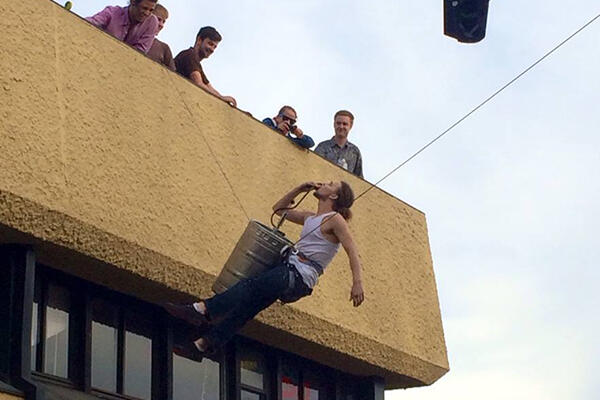
This week, 28 August – 1 September, is the University of Otago’s Global Exchange Week. Amongst other events, the week will feature seminars on exchange destinations and information on the finer details, such as funding and accommodation, and meet-and-greets with returned exchange students. A full calendar of events can be found at facebook.com/OtagoGlobalStudentExchange/events In light of the week, Critic heard the experiences of two recently returned Otago exchange students. A tale of naked, foamy foesIt should come as no surprise that going on an exchange throws you out of your comfort zone. Especially when you head to one of the most liberal, free loving places on the planet: Berkeley, California. There you’ll discover stuff like “almond milk,” cooperative housing and realise there are way more vegans than you thought. But beside those natural curiosities, you’ll also end up in some pretty weird situations. Let me walk you through one of mine. I lived in a house of 125, a beautiful mess by the name of Casa Zimbabwe. There lived a hot tub and at the hot tub was a habit of nudity. One particular weekend, the house had a party called “Day Rave.” The California sun was out and the hot tub was pumping. To honour the occasion, bubble bath had even been added, coating the buoyant breasts and genitalia of those within. I made the classic mistake of getting within someone’s line of sight and before long I had nine naked, foamy foes chanting for me to strip down and get in the tub. I don’t know about you, but I’d never been in that kind of situation before. Suffice to say I had no idea how to react. Should I expose my wiener to the world or should I join Mitt Romney on team conservative? So I took a deep breath, stood up straight and I said: “fuck that.” I just couldn’t break free from that comfort-zone barrier we call clothing. But the story doesn’t quite end there. You see, even though I turned down the chance to get naked with a bunch of my housemates, the experience stirred something in me. Come the end of the semester, I ran stark naked through the library in front of hundreds of on-lookers. So if there’s anything to take away from this great parable, it’s this: get naked and get in the hot tub. And if you can’t, find a way to break that discomfort when the next opportunity comes calling. After all, no one likes the conservatives. Sam Hall-McMaster UC Berkeley, California Four months in the home of maple syrupA chilled semester, with plenty of free time and Fridays off, was what I was after, and it is what I got. I arrived in Vancouver on a quiet Saturday afternoon and instantly felt at home. I lived on campus in a residence (hall) called Fairview and paid an upfront per-term fee that was around NZ$150 a week and included unlimited power (heating!) and super fast Internet of up to 1gb per day. The residence was over 50 per cent exchange students so there were plenty of pot luck dinners, poker nights, parties and movie nights – Thursday, Friday and Saturday. Wednesday night was free entry and cheap drinks at one of the student pubs, so it was always a big night. If you love skiing, consider spending a semester at UBC in Vancouver. It is only a two-hour bus trip from Whistler, which was bigger and better than I could ever imagine. As well as this, there are three local mountains – Grousse, Cypress and Seymour – which are less than an hour’s-drive from campus. One of the most memorable moments I have was getting off the chairlift at Mount Seymour during a night of skiing and looking out over the city of Vancouver all lit up. British Columbia has so much more than just skiing, though. From hiking in Lynn Canyon and Bowen Island, to walks on the beaches, to deer, elk, bear and moose watching in the breath taking Canadian Rockies. If you are an outdoors enthusiast, British Columbia has it all! For the classes themselves, I took three – International Marketing, Market Research and Project Management, and they all gave me awesome opportunities to get involved and meet people. In the Project Management course our entire semester’s marks were from organising, planning and executing an event. We organised two charity Yoga sessions and raised just short of $500 for the Canadian Mental Health Association. In the Market Research class we were allocated real clients and our group was fortunate enough to work on our project with senior management at one of Canada’s biggest telecommunications companies – a casual 13.5 million customers. One day in our International Marketing course we had a guest speaker who I will never forget. Now, when we get a guest speaker at Otago we would be stoked if they were a New Zealand manager. This guest speaker was the World Brand Manager for FIFA at EA Games. At the conclusion of his presentation he hands out around 30 free games. These experiences themselves made exchange worthwhile. Sarah Robertson University of British Columbia, Vancouver
-
News
Where did all the Newcastle supporters come from?
To the “it’s not soccer, it’s football” desk and there are reports of a bumper day for Dunedin black and white face paint retailers as the “Football United” tour kicked off in Dunedin last Tuesday with English Premier League side Newcastle United taking on Australian also-rans, Sydney F.C. Despite a large number of the supporters donning the classic black and white stripes of Newcastle, the team decided to turn out in a boring and depressing all-grey kit, much to the disappointment of several members of the 10,000-strong crowd. I have seen plenty of Arsenal, Liverpool and Manchester United shirts being worn around Dunedin but never a Newcastle shirt until game night. Where have they been hiding? However, despite being stood up by my date I still joined the surprisingly large crowd filing down both sides of Union St towards the concrete, steel and tetrafluoroethylene engineering marvel that is Forsyth Barr Stadium. This is where we pick up the diarised story of an introverted Critic sports reporter’s night at the football ... 7:30pm - The rowdy Toon Army manage to stay quiet for 50-odd seconds of the minute’s silence for the two Newcastle fans, John Alder and Liam Sweeney, who were victims of the Malaysian Airlines crash while en route to Dunedin. KICK OFF! - Sydney control the ball well in the opening few minutes. Halfback passes to center, back to wing, back to center! Center holds it! Holds it!! HOLDS IT!!! 6 mins - The remainder of the Toon Army show up, much to the delight of the others. Incoherent chanting ensues and a bottle is thrown. 10 mins - I am shocked by the amount of football mis-information being imparted to the ladies behind me by an older guy wearing a suspiciously new-looking Newcastle shirt. However, I don’t feel the need for the ego boost that would come from correcting him. 15 mins – Late-comers seem to think our row is a thoroughfare. I make it as difficult as possible for them, falsely claiming poor leg mobility because of a knee injury. 19 mins - GOAL! - The Sydney keeper makes a complete mess of things and is punished by the new United signing, Siem de Jong. The “dodgy keeper” is then made to endure about a minute’s worth of the classic chant, “You fucked up! You fucked up!” A family of likely Colin Craig supporters a few rows in front of us seems disgusted with the foul language. 26 mins - GOAL! - Another new signing scores; this time it’s Emmanuel Riviere and it’s 2 - 0. Quickly followed up with chants of “Sydney are wankers!” alternating with “Who likes fucking Sydney?!” Maybe the couple in their blue Del Piero Number 10 shirts? 29 mins - A round of applause around the stadium as a remembrance for supporter Liam Sweeney, a long time volunteer steward for the club. 33 mins - GOAL! - Pretty unlucky for Sydney here, actually, as Yanga-Mbiwa’s ambitious shot takes a big deflection off a Sydney defender and into the top corner making it 3 - 0. HALF TIME - The entertainment has arrived! Unfortunately for the captive audience at Forsyth Barr it is barely even a band as two young kids set up their drums and guitar and start singing Neil Diamond’s classic “Sweet Caroline.” I hope for the sprinklers to come on but they don’t oblige. T-shirts are then shot into the crowd. An old dude in an Arsenal hat fumbles but regathers admirably. 45 mins - Newcastle goalkeeper Rob Elliot takes up his goal in front of the Zoo. I make a note to mock his offensively fluorescent “health and safety” kit that would see him welcomed onto any building site. 48 mins - Sydney are being pressed very deep into their own half for long periods. Another old dude is well prepared for this with his cheap-looking binoculars making an appearance. 55 mins - I am now cold and wondering why I actually give a shit about archaic English sports. Did I turn my heater on before I left home? 60 mins - Another big round of applause, this time for deceased fan John Alder who only missed one home game at St. James Park since 1973. Can’t be a more devoted supporter than that. 64 mins - I realise that people are probably judging me and thinking I am a right loser for taking notes at a pre-season football match. I know this isn’t a lecture. This is the glamorous world of amateur sports journalism and these articles don’t write themselves. 68 mins - Action on the sidelines as plenty of substitutions are made. I am happy to see Sammy Ameobi come on as I like his haircut, although I am resigned to the fact that I am too white to pull it off myself. 79 mins - A close-up shot of the silver-haired Newcastle manager Alan Pardew on the big screen gets some cheers and a few wolf-whistles from the Toon Army. He is a handsome man. 81 mins - An ill-placed but well received “Otaaaaaagggggoooooooooo!” chant rings out. 85 mins - GOAL! - Substitute striker Adam Armstrong makes it 4 - 0 after some slick build-up passing with Adam Campbell. “Who likes fucking Sydney?! Who likes fucking Sydney?!” starts up again. 88 mins - Sydney have their best chance of the game with a powerful long distance strike going just wide. The Toon Army tries but fails to get a Mexican Wave going. 90 mins - The Toon Army starts a chant of “We want five! We want five!” Newcastle can’t deliver another goal but the timekeeper obliges and five minutes of extra time is added. 9:30pm - FULL TIME - Final round of applause for the Newcastle lads who look like they appreciate the support. Everyone starts to leave and the intoxicated Toon Army heads back to their barely inhabitable flat on Clyde Street for a “lock in.” In Dane’s room, apparently. I decline the offer and keep on walking through campus. 10:00pm - I arrive home to find I had remembered to turn my heater on, made a greasy steak sandwich, and retired to bed with a mug of red wine to start writing this article.
-
News

Critic tackles election year | Issue 17
This week’s interview was much more successful than Te Ururoa’s. I spoke to David Seymour, the ACT candidate for Epsom, about everything from student loans to shades of yellow. The most notable discussion topic? His fascination with NZ First MP Tracey Martin, about whom he regaled me with stories after the interview finished. To be honest, I don’t blame him. I’m pretty fascinated by Tracey myself. So I have read the tertiary section of the ACT website - funnily enough, I do try to research. It doesn’t really say anything about whether you’re supportive of the weekly student allowance and the weekly student loan? So I mean, first of all, when you look at policy for students, I’m not really into making policy for a life phase. It’s a little bit like having policy for midlife crises and policy for menopause. The truth is that we make policy for people who go through different periods, so as far as “are we in favour of a universal student allowance,” no. Basically because if you look at it from your whole life’s equation, why would you want to pay a whole lot more tax later in your career, remember you’re going to be in the workforce for forty years, and a student for four, when there’s actually, you know, clearly most people can actually pay back their living costs. Okay, I see you. It does say you’ll add interest onto student loans. Is it for everything? Yeah, it’s for student loans, and again, you have to put this into context … The question is, do you want to invest in your own education and pay it back with some sort of real cost basis involved, or do you want to put all of this funding into a massive pool and fund a whole lot of bad choices of other people? That’s really the choice for people when they look at their whole career with tertiary education being only a small part of it at the beginning. But if you’re adding this interest scheme onto the student loans and then saying you’re going to deregulate the market, similar to what we’ve just seen happen in Australia, how can you guarantee people are going to have the amount of money to be able to pay that back? Well at the moment a lot of people don’t. There is a hard tail of people who are not paying back their student loans. So we’re not arguing about whether or not there’s going to be people like that, there always will be. What we’re arguing about is do we want the highest quality education possible? And you’re not going to get that if you put an arbitrary cap on the fees, because it means that you’re basically trading quality for quantity, and that’s actually bad for students. But then doesn’t it incentivise only those who are in the highest bracket to go into education? Or are you saying that student loans will still cover fees completely, exclusive of the cost? Yeah, but I’m not saying you should have higher up-front fees. I don’t believe that. The rationale for having a government student loan scheme is this: you can’t sell yourself or your future income as a guarantee, and so actually there is a missing market for private lenders. Therefore there’s a justification for the government to intervene and loan you the money up-front. So it’s kind of a … tweak of the way we view it. ‘Cause there’s sometimes the assumption that high-interest student loans will lead to a system that we’ve got in America where people can never pay off their student loans, and are just chipping away at the interest rather than the actual loan. But that’s happening here, too. The difference is they’re a country that has, what is it, three of the top five universities and most of the top fifty. What we’ve done is chosen to have high quantity, low quality education by regulating fees, and everybody has to go along and do it, because if they don’t, it’s assumed that you weren’t even good enough to do that. It’s actually making us worse off to have subsidised and price controlled, low quality education. So would you say there should be some government education that’s of a lower quality and in addition have the free market education? Or are you saying we should get rid of it altogether? I just think we shouldn’t try and control the prices. Okay. Let’s turn to Epsom. Now, do you think you, the ACT Party, will reach the five per cent threshold? I think it will be a huge challenge for ACT. It is still possible, anything can happen in the last six weeks of an election campaign, when the focus really goes on. But if ACT is only able to succeed in one electorate, one electorate that’s in Auckland, why not simply stand for a seat on the Auckland Council? Why bring the whole country into having the ACT Party as one of the parties in government if you’re only representing a tiny, tiny minority? Well that’s how elections work around the world. It’s often voters and a few marginal seats that decide the result. If you don’t like the fact that the majority decides and it’s always a few people at the edge who decide which way to jump and where the majority is, then you should be opposed to having government doing so many things: charging so much tax, running so many services, regulating so much of your life. Okay. I mean, it has been recommended that we get rid of the coat tailing rule altogether, so yeah. I’m kind - All electoral systems are imperfect; I have never been to or heard of a country where people love their electoral system. The truth is that the best feature of an electoral system you can have is consistency, because then people can organise to try and get the policies they want under the system that exists, rather than having the goalpost moving. That’s actually undemocratic. Do you believe climate change is anthropogenic? Yeah. And do you believe we, the New Zealand government, should do anything in the form of mitigation or should we stick to adaptation? Well, I’m not sure that the New Zealand government is in a position where it can do much about this challenge. One of the possible things it could do, well, it could introduce some sort of tax or trading scheme as it already has on carbon but to the extent that doing that starts to push industry offshore and European consumers start choosing Danish butter off the shelves instead of New Zealand butter, bearing in mind that their cows live in stalls and consume huge amounts of energy while ours kind of just walk around on the grass and are very efficient, then we could actually make global emissions worse. Secondly, it is true that we’re such a tiny fraction of global emissions. Our contribution is negligible; the main contribution we make is we actually set an example. And so what example are we going to set? If we tax our industries offshore, and there’s serious economic and political repercussions for doing so, then the message New Zealand could end up sending the world is “don’t do this, you’ll get voted out.” Would I support a carbon tax that was revenue neutral and in line with what other countries are doing? Possibly. But until that time, I’d far rather bet on the creativity of free people arranging their affairs to deal with the upcoming challenge than trying to get the world’s governments together to agree on a scheme, and I think that’s the practical reality. So are you supportive of Climate Voter? Yeah, I’ve come across these groups, and I think they have really let their cause down. I find them to have quite an exclusionary sort of attitude. In most of my dealings … I’m not pointing my finger at these particular folks, but I tend to get the feeling that they’re trying to drive other arrows. For example, they want to make you use public transport, well you know, I’m not necessarily sure that that’s the best way to adapt. It may be that the cost and the time lag in trying to reshape cities to a high enough density that public transport becomes viable for a large number of people, actually, is an inefficient way of getting to the same goal, when private vehicle transport is becoming more efficient every single year. So you’d prefer to push for those sorts of initiatives in more rural areas than the move towards public transport? ‘Cause Auckland’s obviously really dense compared to the rest of the country. Yeah, but what matters is compared to the level at which the kind of public transport that, say, Generation Zero are advocating. I’ve been to three cities where public transport appears to work: New York, Tokyo, and London. Auckland’s not that dense. I’m just saying that my general impression of those guys is that actually they tend to bundle climate advocacy with other causes that I don’t necessarily agree with, and I think they do themselves a disservice and the whole theme a disservice. Shoot, shag, marry: Tracey Martin, Clare Curran, Paula Bennett. Fuck … Um, I think I’d have to get to know them on a personal level first. What if we say: reject one from parliament, re-elect one into parliament at the election, or realign one to a different party. Oh, reject Tracey Martin. I mean … wow. She’s an inspiration. I wish I were as clever as she thinks she is. But sadly not many people can be. I’d re-elect Paula Bennett. I think, and I’m serious, when the history of this period is written … Paula Bennett will probably be the most remembered minister, because she has fundamentally renegotiated the terms of the welfare state from being open-ended entitlement to a system of mutual obligation. And that is an extraordinary change. It has taken forty years to get there, and I think one of the reasons that Jacinda Ardern’s attacks on her are so flaccid is that Labour knows that what she’s doing is fundamentally right. So Paula Bennett should absolutely be re-elected. And Clare Curran, she seems nice enough, so let’s realign her, see if we can make her an ACT MP. What’s your favourite shade of yellow? Mustard. Isn’t the ACT colour canary? It varies according to focus groups.
-
News
Politweets | Issue 17
We love you too? The novelty account of #TeamKey A few MPs got into this hashtag. It’s just common sense. Ba-dum-tish.
-
News
Greatest hits / Greatest shits | Issue 17
Greatest Hit This week’s Greatest Hit is an easy one. Just hop onto labour08.co.nz, refresh a few times, and you’ll see why. Perhaps campaign-year-specific websites aren’t the best idea if you’re not going to maintain them. Greatest Shit Normally I stick to New Zealand politics with these sorts of gaffes, but sometimes it’s necessary to move beyond our cosy bubble. I don’t doubt you’ve heard that Israel is bombing the shit out of Palestine, and you’ve probably seen posters around the University for the Free Gaza rally that took place a couple of weekends ago. What you might not have seen, even though it went viral, is that an Israeli soldier took it upon himself to Instagram a Palestinian child in the crosshairs of a sniper rifle. That’s not just shit-worthy, that’s disgusting.
-
Columns

ODT Watch | Issue 17
Poor Dent students, their beloved Medical Library is being moved to make way for animal testing facilities! Hang on a minute … is it just us, or is anyone else concerned about how animal testing is deemed a lesser concern than dentistry students missing out on a study space that isn’t even theirs? Damn it, did some kid take a crap in the pool again? ODT provides some progressive tips for a lasting and affectionate marriage: separate televisions and decoders, and “knowing when to speak and when to shut up.” Though according to the pictured couple, this is just the trick as they celebrate their 65th wedding anniversary. It must be easy to settle in when ODT respectfully refers to immigrants as human beings and not objects … The battle to combat obesity has come to its climax: if you can’t beat it, embrace it. Props to the burger place for their great customer service; not all fast food joints cater to the needs of their more frequent patrons. Great article on Kate Middleton doing a general mother-related act. Perhaps next time ODT will engage us with an article on her diaper changing adventures or breast-feeding exploits.
-
News
World War One Centenary 2014 – 2018
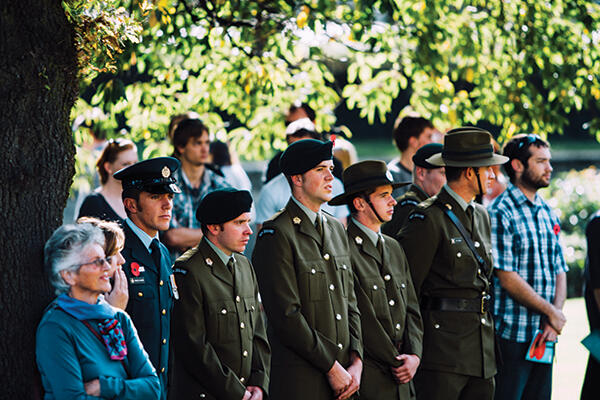
The 28th of July marks the beginning of the First World War Centenary, which will last until 2018. $17 million in lottery funding has been allocated by the Lottery Grants Board to commemorate next year’s centenary of ANZAC landings at Gallipoli. The University plans to mark the 100 years since WWI next year with University-wide commemorations on that Anzac Day. As part of discussion over commemorations of WWI, there continues to be opposing opinions on the use of red poppies and white poppies during the Anzac period. The White Poppy Appeal was controversial, with Veterans’ Affairs Minister Judith Collins stating to The Dominion Post in 2011 that the appeal was “incredibly disrespectful to those who served their country” and “Peace Movement Aotearoa should be ashamed of themselves.” The red poppy is worn in many countries to serve as a remembrance of battlefield deaths since the time of WWI. The plant was one of the first to grow in the soils of Flanders Fields on the Western Front. New Zealand’s Returned and Services’ Association (RSA) began making their own red poppies in 1931, with disabled former servicemen in Auckland and Christchurch making them. In 2012 most New Zealand poppies were made in China and assembled in Australia. Don McIver, President of the RSA, said all of the money raised by the Red Poppy Appeal is “committed to the care and support of veterans and service people and their families.” $1.7 million was raised in April 2014 by the Red Poppy Appeal. He says that none of the funds raised go to the national office, which is funded by capitation and merchandising of products. “The money should not be used for anything other than welfare,” he says. The white poppy is used as a symbol of peace, remembering the civilian casualties as well as those who fought. They were first produced by the Co-operative Women’s Guild in Britain in 1933, and later the Peace Pledge Union took over their annual distribution. White poppies later spread to other countries around the globe and the white poppy became an international symbol of remembrance (for civilians and armed forces) and for peace. In New Zealand, the annual white poppy appeal was run as a fundraiser for the Campaign for Nuclear Disarmament in Wellington around the time of Hiroshima Day in August. Responsibility for organising the annual appeal was transferred to Peace Movement Aotearoa, as part of the Campaign for Nuclear Disarmament’s closing down process in 2008. This was on the understanding that the use of the white poppy would revert from August to April, around the time of Anzac Day. In a statement by Peace Movement Aotearoa, they said, “This was in response to requests from Peace Movement Aotearoa members and member organisations over the years to change the time of the appeal to be more in keeping with the original message of white poppies and [that] it would be a national appeal from 2009 with the proceeds going to the White Poppy Peace Scholarships.” White Poppy Peace Scholarships are available to tertiary students studying in New Zealand. Each grant is a minimum of $1,000 – one is for a Maori or Moriori student, with the others open to any student with New Zealand citizenship or permanent residency. The scholarships are to assist with the costs of research into: the impacts of militarism, militarisation and warfare; alternatives to militarism, militarisation and warfare; or media coverage of militarism, militarisation, military deployment and/or armed conflict. In regards to the use of the White Poppies, McIver of RSA says, “it is wrong to suggest that the RSA is promoting war and violence.” He says, “We are the people who have been there and we don’t want to see it again.” He disagrees with the White Poppy Appeal being used at the same time as the Red Poppy Appeal and says, “I question whether there is a need for [the White Poppy Appeal] at all.” He says that he has received feedback from the public expressing concerns about the White Poppy Appeal, believing the sale of them is “not appropriate.” He says, “Some people will express it far more strongly than I.” Roger McElwain, Deputy Chairman of the WWI Governance Committee, said there will be commemorations in Dunedin City to remember the 100 years it has been since the first group of soldiers left Otago on 22 September 1914. In regards to the White Poppy Appeal and the Red Poppy Appeal, McElwain says that he “does not see it as white versus red.” He explains that it is just a difference in perspective. McElwain says, “A lot of people wear red, some wear white and others don’t wear either. I believe in both.” He does not have a problem with the White Poppy Appeal because he says, “some people see the red poppies as commemorative of WWI. Others say we should view WWI as a terrible event, which it is, and so we should put our focus into peace. The white poppy symbolises that.” Professor Tom Brooking, from the University’s Department of History and Art History and a member of Dunedin Council WW100 committee, says it is “perfectly valid” to have the White Poppy Appeal running at the same, highly relevant time. He explains “it is important to commemorate all the civilians in war.” He believes that the RSA has to “start figuring out how they can bring in younger people.” Most people who were old enough to fight in WWII will now be in their 80s, “at the youngest.” Brooking suggested the organisation is at a point where it has got to “rethink its functions.” No sense of historyBrooking from the WW100 committee discussed the “great efforts” that the committee were putting towards commemorating WWI. Toitū Otago Settlers Museum will start the commemorative events with the opening of their WWI exhibitions on 1 August 2014, almost exactly 100 years after WWI began. There will also be events in the first week of August and on 27 and 28 September to mark the first contingent of soldiers embarking from Otago and Southland. On Sunday 28 September the Museum will hold a range of other events, including a talk by historian Chris Pugsley. Brooking says the events are a week later than when they should be because “the Prime Minister has no sense of history,” meaning the events would have coincided with the 20 September 2014 elections. There will be a Memorial Run on the morning of Sunday 28 September at 9.30am, commencing from Tahuna Park. Behind the runners, cyclists will follow to commemorate the New Zealand Cyclist Corps, which was established in 1916. A WW100 Memorial Parade will follow from the Oval, commencing at 11 am. The WW100 committee plans on having a major event each year for the duration of the Centenary, with Gallipoli the focus in 2015, the Somme in 2016, Passchendaele in 2017 and the German Spring Offensive and the Hundred Days Offensive in 2018. Over the commemorations for the next few years, there will be additional events, essay competitions and talks. The Ministry of Culture and Heritage has dedicated $27 million to the organisation of commemorative events. Out of the 27 applications that have been approved nationwide, 25 of them were from Otago and Southland. Where is our Roll of Honour?Despite the commitment that the University shows towards remembering those who fought for our freedom, they have failed to establish a Roll of Honour – a list of names of people from the University who died serving in the war. 2010 Critic Editor Ben Thomson first brought attention to the missing commemoration in his eighth Critic editorial, yet action is yet to be taken. The University of Auckland has a Roll of Honour and, over the next three years, will be making it available online. Professor G.E. Thompson’s A History of the University of Otago, 1869–1919, written for the University’s golden jubilee, lists 552 students or former students, 21 staff members, and one member of the University Council who left New Zealand for active service in the First World War. The University has said that there may well be some who were missed from the list and at the time of print, were unable to locate a number for World War II either. In total, approximately 1,900 Dunedin men died in WWI. McIver of RSA believes that the Roll of Honour is important to have at the University because “it is a reminder of the sacrifice made.” He says, “We are especially concerned about having young people involved so a Roll of Honour is a way of progressing that understanding amongst younger people.” He explains that despite the commonly held belief of young people being apathetic, he says that since the Student Volunteer Army was formed in Christchurch following the earthquakes, “attitudes are changing.” RSA awarded the Student Volunteer Army with the Anzac of the Year award in 2012 and McIver believes the whole country was very positive about the reaction they saw from young people. “The majority of youth are great people.” Interestingly, it appears McIver is also aware of RSA’s need to adapt to a younger generation of people. In response to whether the University intends on introducing a Roll of Honour, Vice-Chancellor Professor Harlene Hayne said, “Otago is New Zealand’s oldest University — our students, our graduates, and our staff have made important contributions to this country for almost 150 years. I applaud any initiative that helps us to document those contributions — including a Roll of Honour that recognises those who paid the ultimate price to their country.” OUSA President Ruby Sycamore-Smith is equally enthusiastic about the idea, saying, “It is really great to honour those who fought for us. It would be a great opportunity to recognise previous students who were a part of important New Zealand history.” She hopes the introduction of a Roll of Honour could be a joint effort between OUSA and the University in the near future.
-
Features
Mourning [a] son
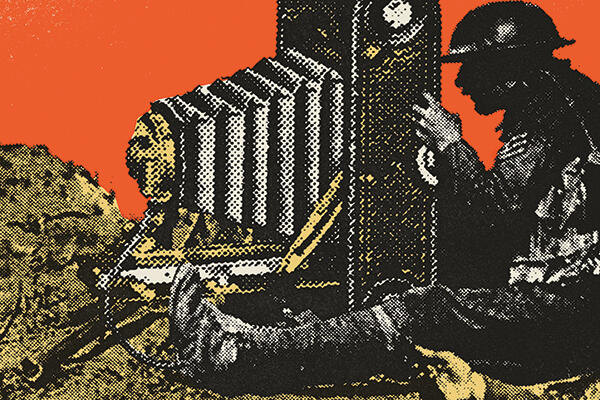
With both the 100-year anniversary of World War One and OUSA Art Week in mind, Dr Sandy Callister – author of The Face of War – looks at the haunting realities of war for New Zealand communities and the importance of photography to the ritual of remembering. Around 25,000 books and scholarly articles have been written on World War One. The arguments have been conducted with forensic intensity and unwavering moral passion. This fascination with the war, which exerts its grip most powerfully in the “Anglosphere” countries, is justified. At least 10 million men died in the conflict; more than twice that number were seriously injured. Those who bore mental scars for the remainder of their lives are uncounted, as are the civilians who died or who were damaged by bereavement or dislocation. For the first time, but not the last, the organisation and technology of sophisticated industrial societies were seamlessly and lethally joined. The war destroyed empires (some quickly, some more slowly); created fractious new nation-states, gave a sense of identity to the British dominions, forced America to become a world power and led directly to Soviet communism, the rise of Hitler, the Second World War and the Holocaust. The turmoil in the Middle East has its roots in the world it spawned. As Fritz Stern, a German-American historian, put it, the conflict was “the first calamity of the 20th century, the calamity from which all other calamities sprang.” Endlessly fascinating, hugely complex and charged with emotion, this is the catastrophe that shaped the modern world. We sent 100,000 men, some nine per cent of the population, over 40 per cent of all men of military age, to fight in the Middle East and on the Western Front. This war exodus was a historic first, a vast outflow of New Zealanders to the other side of the world over a concentrated period of time and for a purpose that New Zealanders understood to have imperial and national significance. So if you think about it some 100,000 men were potentially at risk of dying; and this is what played on the minds of those at home. In fact, between 1915 and 1918, some 18,166 New Zealand men were killed, an extraordinary number of deaths at a time when the country’s population was some 1,158,149. If we adjust the ratio to today’s total population over 72,000 New Zealanders would be dead. It’s incomprehensible. Virtually every person in New Zealand had a close relative or friend killed and wounded. Some families faced multiple bereavements. Unlike previous wars in which sickness exacted a huge toll on combatants, the majority of men who died in the Great War died violently, their bodies being subjected to mutilation and dismemberment. And yet the total number of dead at the end of the war obscures the way in which death was encountered by the home front community as-it-happened. Those at home had to struggle with both an imagined war taking place some 12,000 miles away in unfamiliar environments and with the arbitrariness of death itself. Death did not necessarily approach with a measured pace. During the Gallipoli campaign some 2,721 died within nine months. On the Western Front, the numbers spiked dramatically during key offensives. In the second phase of the Somme offensive of September 1916, 1,560 were killed. The New Zealanders’ participation in the Third Year’s offensive, beginning on 4 October 1917, while deemed a military success, incurred high casualties. Worse was to come. On one day, 12 October 1917, 845 men lay dead or dying at Passchendaele qualifying it as “a tragedy without equal in New Zealand history.” By February 1918 another 500 had been killed. Death came in waves, fits and starts in the casualty reports, leaving hopes that the worst was over, hopes that took years to come home. The mass death of young men also altered the natural order of death. It fell on parents and other older community members to mourn the death of young adults. Jay Winter, one of the foremost specialists on the impact of this war, has used the concept of “communities of mourning” to convey the sheer scale of mourning after the Great War. With some 10,000,000 combatants dead, he points out that the scale and magnitude of those who grieved is hard to imagine. Different but overlapping people mourned: frontline soldiers; widows; orphans; parents; friends; and neighbours. While Winter’s research focuses on Britain, in a smaller country such as New Zealand it is even more likely that people belonged to a number of overlapping “communities in mourning.” Mourning was further complicated by geography. Bodies did not come home to be buried by their kin. In many cases there were no bodies to mourn, since it was frequently impossible to locate or identify bodies. Trench warfare tore bodies apart. Relatives could not visit dying men. Men typically died alone, often in great anguish. An unrecorded number of New Zealand families experienced multiple bereavements - a point I will return to later. By the end of the war, some 16,697 New Zealanders were buried in foreign lands of which 5,325 had no known resting place. We keep photographs of parents, special people in our lives who have died. Photographs are the last visual traces of people we love. For many families and friends the photographs they had of these young men took on a deep significance as the last visual traces of the people they loved. On 16 May 1917 the Illustrated Otago Witness published the first in an intermittent series of photographs, which had as their subject matter families with sons overseas. In one image there are three people in front of a large two-storied house; in the other are two people in front of a small cottage. The captions tell us that both homes were located at Momona on the Taieri Plains, Otago. For the readers, the people in these photos would be identifiable figures. If the features of the humans remain indistinct in the two photos what we see in sharp focus is the difference in socio-economic status of the two families as reflected in the contrasting homes. The title uniting both images tells us that these are: “Typical Otago homes which some of our boys have left for King and Empire.” What we are being directed to see is that in spite of the perceived differences, there is “equality of sacrifice.” These images unite an audience in a shared imagining of absent sons. Ostensibly straightforward representations of waiting families, the photographs may well have conveyed a melancholy mood and an oppressive unease. The odds were against all of the sons returning unscathed. Not even the most optimistic reporting could hide the fact that the New Zealand casualty lists grew at an appalling rate on the Western Front from late 1916. It is the spectre of death which haunts these images and lends them their near palpable sense of foreboding. Thus in re-reading these representations we need to be mindful of the underlying cultural values that are being reaffirmed in the face of death. On August 29, 1917 the Otago Witness reproduced two lantern slide images for its readers. Both images had been taken on a cold winter’s day in Dunedin outside the First Church of Otago. The two groups of women, young children and babies were suitably clad to ward off the chill, but more important, they had dressed with a certain audience in mind. The array of stylish hats, many of them plumed, the brooches at their necks, the fur trim on their collars and cuffs, the occasional muff and flower corsage all suggest that each of these women had given some thought to how she might present herself to the camera. Everyone wanted to make a good impression. Still, regardless of intentions, there is a certain raggedness in the overall composition of both images. Inevitably, someone looked away just as the shutter clicked, heads were tilted at various angles and one or two looked apprehensive. There were few smiles. Individuals appeared unsure about how to pose for the camera. Perhaps the photographer was intent on processing as many group shots as possible or perhaps his instructions were unclear. It is even possible that an event such as this was sufficiently unusual to provoke nervousness on the part of the participants as to how, exactly, they wished to be seen. The caption published below the images reads: Groups of Mothers and Relatives of Otago Boys on Active Service – Reproduced from photographs taken by the Dunedin Photographic Society, with the object of providing Mr. Hughes, of the Y.M.C.A. with lantern slides for exhibition in the Y.M.C.A. hutments behind the firing line on the Western Front. These photographs were published in the Otago Witness on 29 August 1917. They were the last of a series of 26 group photographs of women and children appearing in the paper in May and June of that year. They have a common subject matter – women and children – although one also notes prams, dogs and the occasional male presence, presumably a father. These photographs belong to an even larger body of images, some 200 lantern slides of approximately 300 soldiers’ mothers and other near relatives, destined to be viewed by a very different audience: Otago soldiers serving on the Western Front. Different, yes; but certainly not unknown to the women who gaze out from the photographs. For these photographs framed three interrelated communities: “Mothers and Relatives,” “Boys on Active Service” and the readers of the Otago Witness. No doubt the readers of the Witness could have named individual women and made further connections. They could have distinguished between the women who were married to soldiers and those who had mothered soldiers; pointed out which amongst them had been long separated from their husbands, recently parted, or had more than one soldier son; perhaps even noted mothers who had lost sons already. Perhaps, too, there were other bonds that linked these women. A great deal of effort went into the project. The selection of mothers, wives and young children, largely to the exclusion of adult males, suggests that these photographs were intended for three distinct audiences. The women assembled for the photographs would have contemplated the circumstances in which their sons and loved ones might see the images; in turn the representations of these women must have evoked a complex set of responses for the soldier audience; and, finally, the caption of the photograph reproduced in the Witness asked readers to reflect on links between the soldiers and the women, thus extending out still further the community remembrance. The Dunedin Photographic Society’s lantern slides have not been transmitted to the future; in this sense, these slides have left less of a footprint in our history than some of the humblest photographs. The slides belong, along with the amputee and the facially wounded medical archive photographs, to a body of images that has been omitted from the iconography of this war. The project’s scale, its rarity and subject matter, mark its importance and challenge our conventional, battle-centred iconography of the Great War. Some nine decades later, the lantern slide project which had attempted to give both concrete form and centrality of place to “Groups of Mothers and Relatives of Otago Boys on Active Service,” has disappeared from view. For a contemporary audience, lantern slides as a photographic practice represent an unknown archive, one rarely exposed to view, whose emotional resonance is extraordinarily difficult to recapture. Partly this is because they are “intractable objects,” neither easy to view nor display. The historical dilemma is almost insuperable: the poignant example of the Dunedin lantern slides reminds us that as one technology of seeing is supplanted by another, an entire field of vision and the world it attempted to frame invariably disappears from view. We have only the reproduced newspaper images as the trace. The majority of these groups were posed outside churches. In these two images the background details indicate these women were parishioners of First Church and that these images were taken after the Sunday morning services. The wider First Church community consisted of some 500 families, from which 222 men and three nurses took part in the war. At the moment in time when the First Church women posed for their photographs they could not know that six of “their boys” would be killed at Passchendaele on 12 October 1917, and another would die soon after of the wounds sustained in the same battle. At the war’s end, five wives and 41 mothers would have lost their “Otago Boys.” Three years later, just metres away from where these women stood, the names of the dead would appear on the honour boards which still adorn the east wall of the church. None of these people knew what we now know, that Passchendaele would claim the all-time record for the most New Zealanders killed on a single day, and that the war would not be over until the end of 1918. On 29 August 1917, the photographs were published as part of an ambitious attempt to serve the living, not the soon-to-mourn. In the immediate aftermath of the war the Illustrated Otago Witness published photographs of Otago and Southland communities unveiling ANZAC memorials. The photographs of the unveiling ceremonies at Waiwera, Quarry Hills and Waikawa show women, but in these photographs they are a presence in a larger group commemorating the loss of specific communities. The Lovell’s Flat unveiling is exceptional in that the image shows two women alongside the memorial and the caption informs the readers that the woman on the extreme right, Mrs. Tweed, unveiled the memorial, having lost two sons in the war. By 1923, the two women depicted at the ANZAC ceremony at the Cenotaph in Wellington have, in the captioning, become typecast as those that grieve. The caption reads: “Tribute from the Mother of an ANZAC and from a sister, widow, or perhaps a sweetheart (?).” The women are relegated to smaller parts in a larger panorama. All too soon they disappear completely from the media coverage recording unveiling ceremonies and ANZAC commemorations. Death’s attendant meanings are constructed by a culture. All these images allow us to see how death, mourning and grief were negotiated by a particular cultural group in a historical moment. Thus these representations help us see how a community saw its place in history. We get a glimpse of overlapping communities: farming families of the Taieri Plains; the readers of the Illustrated Otago News; the member of First Church; the people of Tapanui. Perhaps the Great War memorials will be subject to ruin and decay. Nonetheless, they will not be forgotten. What is forgotten is the way in which a body of photographs published during and immediately after the Great War played a complex role in the public and private representation of death and loss.
-
Features

The four women at central library
Scarfie culture: it’s a beast that thrives in this fine province that people from all around New Zealand, and the world, come to. It pushes us to go crazy on Thursdays and Saturday nights, and challenges us to challenge the limits of our bodies and the limits of our laws. But when it comes to getting to know the person sitting next to you in the library on a Wednesday afternoon – that is somehow “ballsy,” “uncomfortable” or “it’s gotta be a prank.” It was time to swim against the current. EPISODE ONE: The coffee coat woman. When I went to the toilet for a break I made eye contact with a girl in a banging coat. I stopped to think of a plan to woo her. I decided to buy two coffees, one for me and one mochaccino for her. I had no idea if she even liked coffee, let alone what type, but there’s nothing like trying something for a little bit of excitement in the day. I tried to draw a little heart on the coffee but I fucked up the curved parts and turned it into a smiley face with a big chin instead. I walked up to her. “Hey, you ordered this coffee,” I pretended to turn away. She smiled. “Oh no, I didn’t.” “Oh ... but your smile did.” “Sorry, who?” All the suaveness I had built up dropped in an instant. “Your um ... um ... Yeah, you did haha.” Her face turned tense. “My mum? Sorry, I didn’t.” This was lame cheesepie. “Oh, okay.” I walked to the other side of the library to try get rid of it. “Hey you want this coffee? My friend couldn’t grab it off me so I need to get rid of it.” “Sorry I’m some non-gluten something-something.” “Oh, okay.” More like a life-depraved cabbage. “You should try the library staff.” You know what’s shit? Now I have to go along with her suggestion otherwise it’s like, “Well, why me but not them?” “Great idea ...” I walked up to the friendliest looking person on the I.T. help desk. “Hey, want to grab this coffee off me? I haven’t had a sip.” “No thanks, but try the rest of the team.” Please fucking kill me. “No, thanks.” *shakes head* “Try Gary.” Why thank you, Professor Oak. This carried on for another few minutes until I just dumped the coffee in a rubbish bin. When someone you had an interest in shuts you down, meaningfully or not, it puts you into a hot pot of emotions. Even when you or your friends say to yourself “many more fish in the sea” or “they weren’t worth it,” your brain doesn’t just automatically think that way. Then, when you go to bed and end up thinking of the best “fuck you” comebacks (like “well actually, girl-who-doesn’t-want-my-coffee, this was for your mum, because judging by your face it looks like the only way you were fed food was through a slingshot”). But imagined comebacks don’t help, because while they might help you win the battle, you still end up losing the war – that person you’re attracted to still doesn’t like you. You tell yourself that “they just didn’t know the real me.” So you try finding them again and saying something else, but that only makes you look needy. It turns out the best remedy is the hardest thing, which is to do nothing at all. EPISODE TWO: The woman who got up and left. She sat down next to me. But I wanted a better look at her face. I begun to turn 90 degrees to check her out, but ended up spinning around the whole 360 degrees on my chair just in case she noticed. It was a manoeuvre to play it casual – like “no I wasn’t checking you out, just having a look around the block.” Unfortunately I could only take a quick glance, otherwise all the glances when I did my spin in every direction wouldn’t be even and therefore be suspicious, so I followed up with another two spins. Once you go beyond three spins, I imagine that the voice in her head goes from “looks like he can’t spot his mate” to “looks like he missed his daily merry-go-round trip in the insanity ward.” Okay. So she was kind of cute. All right, now what to say? I made a list in my head with what to open conversation with. The key is to use the environment around you as a bridge to start the chat. “I like your Hello Kitty pencil case.” “These library computers take forever to log AYE??” [smile] “I like what you’re wearing.” “You type on the keyboard pretty fast, nice work.” [Naturally bump her keyboard with your mouse] “Sorry.” [Drop down really fast on the chair] “Woops! These chairs drop you like you’re getting the shits!” [Pull out lunch bag, begin eating] “Oh, want some?” Nothing sounded right. She eventually got up and left before I had said anything. I needed to say something that you could say or do to strangers to start a conversation that is so universal anyone would recognise it, yet not so well known it’d be cheesy. When it’s a friend of a friend, there’s always a piece of information you can go by, like a sport, a location, a “how do you know so-and-so?” But when it’s a stranger there’s just nothing. And for a lot of people they don’t like that. But to me the challenge made it exhilarating. When you get to know a friend of a friend, you’re more or less expanding your network of people you know. But when you get to know a stranger who has no connection with you, you have to learn a whole different network, a whole different way of being human. Sometimes you’ll know someone who seems to have meet so many new people – because he grew up in this town, went to the local school, there is always someone they recognise. But in another way they’ve never really met anyone. Since his school buddies and family friends and locals have always been there, there’s never been a need to know anyone else outside of that bubble. But when you start a relationship with a person who has a totally different identity, you discover another way of “being” human – and isn’t that what being Kiwi is really about? Fulfilling the desire to discover the unfamiliar? Isn’t that how all of us ended up in Aotearoa? You’d think after discovering the world there would be a greater focus for people to then discover each other. In some ways, the best way to discover yourself is through someone else, because the more different someone is, the more it gives you the chance to reflect and expand your own identity. A moment later, I figured out a unique way to break the ice. EPISODE THREE: The woman who I started to get somewhere with (but not really). She was busy typing away next to me. It looked like she was a hard-working person. But I was ready. I began my usual routine. First spin, second spin, third spin. I liked her scarf – she passed. I recovered from dizziness. Everything from there on was new territory. Remember not to overwhelm, look independent, I thought to myself. I logged in to the computer and looked as busy as possible for the first five minutes. I even developed a routine. Open two tabs. Right click something, copy, paste, hit keyboard letters a bit, hit backspace, stop, put hand on chin and look contemplative at the blank screen. Repeat. After five minutes I started my ultra secret move. I pulled out a piece of paper, drew a diagram, put down an “X” and passed it along to her. For a second she didn’t understand, then she smiled, drew an “O” on it and passed it back. But instead of doing something straight away I pretended to work away for another five minutes to make her think “yeah, this guy casually chats with people all the time.” But, really, I was like a duck swimming in a pond – I looked calm on the surface, but what no one else could see was that my legs (well, my entire being) were panicking underneath the surface. I also began to let off those small but anxious farts (the ones that no matter how many you drop another one is ready to take its place). Okay, okay – maybe I was playing it out to be a bigger deal than it was. I refocused myself and checked the paper. For a second it looked like the game was about to be over with neither of us getting a line. While it was a lot more exciting playing the game casually over time rather than giving it our full attention, I felt the tension was going to peak once it was over, and from then it’d get repetitive. But that’s when I noticed something had changed. Instead of her filling out the last possible spot she could have put her “O,” she had added extra horizontal and vertical lines, turning the game into a mega-sized naughts and crosses. I suddenly had an urge to match her creativity. Instead of drawing the usual “X,” I drew a number. She responded with a different letter in the place of her “O.” I begun responding quicker and quicker and suddenly we got carried away putting all sorts of images in the slots. We started to laugh at the absurd images we came up in response to each other. Then at one point it seemed she had to go. I wanted to say something. I was enjoying the moment so much, I began to panic because I didn’t want to let it end. I started thinking about how I could guarantee myself a way to experience it again. Her number? Her name? Would she like to grab some coffee? She stood up and turned to me. I just smiled. She smiled back. I never saw her again. When you think back on a time with someone you liked that went really well, you can fall into the trap of fantasising about them as The One: The One that you’d set up the most amazing afternoon with to blow them away; The One that would laugh their heart out at all your shit jokes; The One that you can do nothing with but feel like you’re doing everything. You can fantasise about it so much you no longer even want to try make it work, because your little fantasy becomes so precious you’d rather keep drawing comfort from it through your dreams than risk it burn in reality. Those who tell you that there is that one “special person” or “soul mate” out there will only reinforce this inaction, and you’ll soon stop trying altogether because you think “the right one will come along.” But the truth is by doing so you couldn’t have a better way of ending up lonely. Soon everyone fails to meet your criteria. Instead, I think, you’ve got to put it in your own hands and go out and try meet people. So what if you fuck up? You only end up getting better. EPISODE FOUR: The woman who was as good as oil. I was in the back row when two girls sat down on the chairs to my right. They were talking in another language to each other. I thought I should wait until the next time it was just one person, but suddenly they stopped talking and got back to their own work. Battle-hardened after my previous experiences, I was gaining confidence. I passed the piece of paper to her and she understood the game. When it got to the end I began adding things in, like the creative girl had that one time. It confused her so I ended up explaining how it was about making up your own rules. But the conversation went on to different things. Her name, how she ended up in Dunedin, what she was studying, her interest in psychology. I asked for her number, she wrote it down. I tried logging off my computer quickly, but since I had just logged in, it became the old-ass computer’s turn to become overwhelmed in that really bad way where it tells you nothing is responding, then the box dedicated to telling you that also becomes unresponsive. It was like I was the computer, hitting on me. I had to get out of here. Fuck it. I pretended to fiddle with the screen and be a techy by going through all those screen options all knowledgeably (although I don’t know what the fuck any of it means). I told her I had to go work, which actually meant “yeah, girl, you better qualify yourself in my schedule.” Actually I was just going home to replay “Holy Grail” on Spotify over and over again, while minimising and maximising the Facebook tab to check for notifications that I never receive (unless it’s a notification from Candy Crush or some random dude from Kenya adding me as a friend). It was three days later that I got the text. “Hey want to grab some coffee at Good As Oil at 4:30?” “Sure, see you then :)” I kept it minimalist and sweet because like hell I’d tell her how I actually felt.
-
Features

Modern art - A modern weapon
Russia and America. The U.S.A. and the U.S.S.R. They played on the same team during World War Two, but only because the captain of the opposition was the more immediate asshole. In the reconstructive, politically tumultuous post-war years, their distaste for each other solidified; the Cold War had begun. The Cold War was the struggle for dominance between Soviet Russia and the United States of America, so named because they never came to blows against one another; their mutual possession of nuclear weapons meant, if used, mutually assured destruction. Their hatred for each other was based on a clash of ideology: the Cold War was, basically, capitalism versus communism. They each believed their own way was so proper it was worth pushing for world dominance in Vietnam, Korea, Latin America, etc. However, while the U.S. military was out fighting for the American way in Greece, its government was perfecting more peaceful ways of asserting U.S. cultural superiority. It has hardly been kept a secret that Government-connected billionaires donated to burgeoning artists, but recent revelations of ex-CIA operatives put a clincher on the conspiracy: The Man funded modern art. In 1973, Max Kozloff wrote, “The most concerted accomplishments of American art occurred during precisely the same period as the burgeoning claims of American world hegemony." He didn’t realise that this was more than a mere co-incidence, but noted that the “naked, prepossessing self-confidence” of abstract impressionism paralleled the virtues of Truman’s patriotism. This wasn’t on purpose, but it was used as though it were. Abstract Expressionism and American modern art, what Nelson Rockefeller termed “free enterprise painting,” was a pillar of cultural symbolism: it was free-form, free-willed, and freedom of expression; it was America. This patriotic symbolism was lost on its creators. The bohemian artists who created the art we still celebrate tended to be leftist and hateful of bourgeoisie materialism. They rejected responsibility of their art once it had been produced, and their pieces often entered the marketplace whether or not their creators had intended for them to contribute to capitalism. On the other hand, Congress and much of the U.S. government hated dirty, lefty, Marxist artists, and didn’t want to approve acquisition of their works. “Freedom of expression” was, though, a strong ideological weapon in the U.S.’s armoury. The U.S. wasn’t the only culture realising the power to be attained by convincing the world of its cultural superiority. Where they had jazz and painting, the Russians had ballet and chess. Their dancers and dances were exacting and perfect, and reflected the uniformity of life in a totalitarian regime; the U.S.’s jazz was free flowing, impromptu, and the player decided the rules. It provided a stark contrast to the Soviet cultural landscape. Despite the tensions between the countries, there was some touring between them; and although the American public marvelled at the brains on a Russian chess whizz, they could ship a jazz tour right back. It was a two-way street from the beginning. In 1956, the Moiseyev Dance Company visited the U.S. from their Russian homeland. They made such an impression that soon afterward the Government decided to support an American tour overseas: the American Ballet Theatre, rich in quality and variety, was chosen. It was in the debate over their program that political motives were revealed: should the dances be traditional or contemporary? How should they convey American life through dance in a way it would appeal to the USSR? The dance wasn’t just performance, or art for art’s sake; it was a way of expressing cultural values. Art for art’s sake was something artists were for, not their patrons. Jackson Pollock, one of the most well-remembered and prominent members of the American modern art movement, created works that demonstrated just how little he cared about the culture in which they were created. “Jack the Dripper” spent the late 1940s flinging paints onto a canvas he rested on the floor, creating images without borders or subjects. It was just paint arranged prettily. He then ceased to name his pictures, instead numbering them. His wife once said of the numbered pieces, “they make people look at a picture for what it is – pure painting.” Reactions to his works demonstrate how open to interpretation much of modern art was: Physics researchers thought he “intuitively” knew Chaos Theory 10 years before its inception; newspapers rejected it as art and called it “a joke in bad taste;” and critics called it “action painting.” The many possible interpretations of work like Pollock’s was in complete juxtaposition with its contemporary works in the Soviet Union. In the early days of Communism, art in all its forms had been celebrated: freedom of expression was vital to fuelling a revolution. Poetry, abstract art, avant-garde; anything non-traditional was celebrated. This was officially censored in 1934, when Socialist realism became state policy under Stalin. Some members of the Communist party had criticised modern art forms, such as Cubism, for their association with “decadent” bourgeois culture. From 1934, there would be no decadence; no eroticism, religious, or surreal art; and no free form or nonsensical prose. The style of Soviet culture was pictures of leaders with children, and easy-to-understand propaganda. It’s been claimed that the CIA was a middleman between grumpy, conservative congress and the discontented creative youth. The Central Intelligence Agency was born just after WWII, and was made up of fresh Harvard and Yale graduates. They drank, smoked, wrote, and collected. It was a den of liberal-sympathisers, very different to Congress and co. They were intimately acquainted with modern culture, and were the perfect institution to engage with the filthy commies who made art in America. Art and culture have been intrinsic parts of the CIA’s modus operandi since its inception in 1947. “We wanted to unite all the people who were writers, who were musicians, who were artists,” Tom Braden explained of the plan, “to demonstrate that the West and the United States was devoted to freedom of expression and to intellectual achievement, without any rigid barriers … which was what was going on in the Soviet Union.” The first step in this strategy was to set up the Propaganda Assets Inventory, which influenced more than eight hundred newspapers, magazines, and public information organisations. Then there was the International Organisations Division. Agents from this division would infiltrate the publishing industry, the film business, and work for travel guides, and they organised subsidisation of the film Animal Farm, along with international jazz tours and the Boston Symphony Orchestra’s international tuition program. Even the famous tale of Dr Zhivago was not exempt from use by the U.S.: when Boris Pasternak managed to smuggle his manuscript into the hands of an Italian writing scout and get it published, it was the U.S. that organised for Russian-language copies to be distributed at the 1958 World Fair in Brussels. Once Soviet tourists found it, 9,000 miniature paperback copies were published, suitable for secretive distribution. They had the placements and the influence, but even getting artists to accept a patron was easier than convincing Congress the art was worth funding. In 1947, “Advancing American Art” was pulled before it could launch its international tour; because it was, apparently, crap. “If that’s art,” President Truman famously said, “then I’m a Hottentot.” Somewhat more concisely, another member of Congress called himself “a dumb American” for paying the taxes that funded the show. The paintings were sold as war surplus, and the Government decided it didn’t want anything to do with modern art; the folks at the CIA would have to push their liberal arts agendas on their own. The U.S. had hoped to move the international centre of culture from Paris to New York, but the distaste – from their own leaders – for this attempt at “cultural supremacy” stymied the effort. In 1956 they tried again, first with their “Sport in Art” show, shut down because right-wingers didn’t like the communist artists involved; and then with “100 American Artists,” censored then cancelled because 10 artists of the 100 were “social hazards.” Trying to convince masses of people modern art could change the world wasn’t working, so they decided to work within the corporate sphere of influence. Tom Braden was head of the International Organisations Division at the time, and he could see that the cultural dominance of the U.S. would be best received if it swung a little to the left; he believed the arts were the way to achieve this, but knew the Government would never approve. A strategy was devised: “We would go to somebody in New York who was a well-known rich person and we would say, 'We want to set up a foundation.' We would tell him what we were trying to do and pledge him to secrecy, and he would say, 'Of course I'll do it,' and then you would publish a letterhead and his name would be on it and there would be a foundation.” These foundations, which had virtually limitless pockets, could step in and fund things when governments wouldn’t. In 1958, “The New American Painting” was touring the world. The Tate Gallery in London desperately wanted it, but the tour didn’t have the funds to send it there. In stepped American millionaire and art enthusiast Julius Fleischmann, with the cash in hand for the move. He had vast stores of his own money, but this donation came from the Farfield Foundation, which he presided over. The Farfield Foundation, though, was a CIA cash conduit. One of the largest CIA fronts was The Congress of Cultural Freedom, which sponsored exhibitions of modern art, and published magazines with abstract-expressionist-friendly reviews. Overseas tours were imperative to the success of modern art as a weapon; most of the U.S. public was still coming around, but Europe saw only the intellectual freedom and adventurousness of Pollock, Motherwell, Rothko and co. Behind most of the international touring and popularisation of the art was what is still among the most influential institutions in art history: New York’s Museum of Modern Art. Abstract Expressionism was an expensive exercise, and required help from museums and their millionaires: multi-millionaires like Nelson Rockefeller. He was president of the MOMA, and one of the modern art movement’s biggest backers; he was also closely connected with the Congress of Cultural Freedom, and organised most of its shows. Arranging for the distribution of the art was one thing, but encouraging its production was another. "Matters of this sort could only have been done at two or three removes," Donald Jameson, a former case officer, explained, "so that there wouldn't be any question of having to clear Jackson Pollock, for example,” the artists could not know who their patrons really were. “It couldn't have been any closer, because most of them were people who had very little respect for the Government ... If you had to use people who considered themselves one way or another to be closer to Moscow than to Washington, well, so much the better perhaps." Pop art, although it is usually considered a postmodern art form, existed on the edge of modern art. Although they were organising fronts and swearing billionaires to secrecy, the actual goals of mole modern art pushers were never very hidden. John Hay Whitney, MOMA’s chairman in 1941 and an old member of the OSS (the CIA’s predecessor), said his hopes for modern art were that it would “educate, inspire, and strengthen the hearts and wills of free men in defence of their own freedom.” He believed it, too. The intent of MOMA’s tours was to display American cultural strength, but this wasn’t just a ploy by some spies; they actually believed in the truth of their mission. Jameson denied any conspiracies about the CIA “inventing” modern art, even for nefarious purposes: “I think that what we did really was to recognise the difference [between Abstract Expressionism and other art forms]” he explained, “it was the kind of art that made Socialist Realism look even more stylised and more rigid and confined than it was. “ This was a truth and a simple judgement of some art, and it was “exploited” – Jameson’s word – to demonstrate a growing American cultural dominance. Did it work? Braden believes so: “I think it was the most important division that the agency had, and I think that it played an enormous role in the Cold War." Although the end of the Cold War ultimately came down to the economic failure of the U.S.S.R., the perception of the United States as a progressive and liberated culture certainly helped it become less hate-able. Nothing is cooler than a bohemian, and the CIA used that well. The patronage of the CIA doesn’t have to mean the paintings are capitalist lies, nor does it mean they would never have achieved the eminence they’re viewed with today without this help. The CIA was uniquely placed halfway between Congress and the artists; they had to be twice removed from both directions. The artists hated the government, and the government hated the art. The CIA and their billionaire friends pulled off, in this enterprise, some brilliant intervention and forward thinking, perhaps justifying the coolness with which its agents are portrayed in film.
-
Culture

Paul Maseyk
Dunedin Public Art Gallery Exhibited until 30 November One Pot Wonder is literally a one-pot wonder, as there is one pot (it stands at about two metres tall), and it makes you wonder. Along with the rest of the survey exhibition, which is equally as wondrous. The exhibition as a whole is a retrospective of Maseyk’s work from the last 10 years and focuses heavily on the artist’s unique, personal and highly detailed ceramics, highlighting both the finely painted surfaces and the wide sculptural variations. Maseyk graduated from Wanganui Polytechnic in 1997 and since then, he has become renowned for his use of unique sculptural forms and representations of personal experiences and ideas through complex surface illustrations. He is represented in numerous public collections throughout New Zealand, including Te Papa Tongarewa, The Dowse Art Museum and the Auckland War Memorial Museum, and is currently in the running for the $15,000 National Contemporary Art Award. Maseyk is nationally renowned for producing ceramic works exploring numerous avenues in terms of style and form, but his signature style of work is significantly concerned with classical Greek forms, elaborated by his contemporary, marvellously surreal designs that animate the surface of each object. Maseyk has commented on his work, saying that a favourite part of his creative process “has been mimicking Greek amphorae, which had frieze work along the top of the vase and pictures depicting everyday life.” Such motifs of everyday life are exemplified in One Pot Wonder, including: images of crashing planes (corrupt America? He spent time there on scholarship); women; cows; corporate brand logos (Dole and Playboy); and food. The decorative elaboration on the larger standing works such as One Pot Wonder and Commando Maseyk versus the Zig-Zag Man, is so heavily detailed it is as though the surface is being treated as a canvas. Maseyk even uses liquid coloured clay as paint to do his drawings – I mean, #Mixedmediamaster. In terms of style and form, it is significant to note that although the ceramic medium offers a starting place, ultimately his work seems resistant to categorisation. His large-scale ceramics share many of sculpture’s concerns – staging a bodily encounter, actively interrupting the viewer’s experience of space, asserting their materiality and form – so, theoretically, I would feel inclined to call them “sculptures,” but sculptures naturally stress surface and form so severely that it almost feels as though calling his works “sculptures” would diminish the finer detailing found in each piece, which I think holds the most value both conceptually and aesthetically. They’re sort of like visual shrines for the artist’s emotions. Finally, I couldn’t help but recognise the fact that numerous vessels, particularly Big Yellow, Big Orange and Big Blue, which were commissioned specifically for this exhibition, look undeniably similar to certain forms of weed-smoking paraphernalia (a really brightly coloured and shiny bong). I wonder if Maseyk smokes pot – and whether this aids his surrealistic vision. Surely that kind of detailing doesn’t just stem out of sobriety? Either way, if you’re into pot(s) and brilliant illustrations – you should see this exhibition.
-
Culture

Pulled Pork Burgers
Here is my third addition to the growing tradition of Burger Sunday at my flat. Last Friday I had a sibling date with my brother. Basically I bribed him with free burgers in order to make me feel like less of a loner. We visited this new place in Ponsonby Central, Burger Burger, where I enveloped with my mouth the most delicious pulled pork burger. I felt like this wonder needed to be brought to the masses so here is my take on this mind-boggling burger. Add more pork if you wish, there is plenty of spice rub to go around, just make sure you add enough water to just reach the top piece of pork in the slow cooker. I made my barbecue sauce the night before as it gives it time for the flavour to develop as well as allowing it to thicken. Make your own buns if you’ve got the time or find some nice soft ones at the supermarket. IngredientsServes 6 Pulled pork: 1 kg pork shoulder chop, fat trimmed 2 large onions, sliced 6 cloves of garlic, minced 330ml beer 1 cup water 2 tablespoons brown sugar Bunch of coriander Spice rub (below) ½ cup Barbecue sauce (below) Spice rub: 2 tablespoons brown sugar 1 tablespoon each of ground coriander, ground cumin, paprika 1 ½ teaspoons each of: oregano, smoked paprika, salt ½ teaspoon black pepper Barbecue sauce: 1 splash olive oil 4 cloves of garlic, minced 2 teaspoons crushed chillies 1 onion, finely diced 1 tablespoon smoked paprika ½ teaspoon mustard powder ¼ cup malt/cider/white/red wine vinegar ¼ cup tomato paste 1 cup (or a large tin) of tomato sauce 2-3 tablespoons of Worcestershire sauce Salt to taste To serve: Shredded red cabbage Mayo (don’t skimp – make sure you invest in Best Foods) Fresh coriander Caramelised onions Buns: 420g high-grade flour 1 sachet of instant yeast (8g) 40g white sugar 1 teaspoon salt 170ml milk Juice of 1 lemon 1 egg, separated 30g butter, cubed, room temperature Egg white Sesame seeds or salt flakes to garnish Method To make the barbecue sauce, sauté the onion in the olive oil over a medium heat until translucent. Then add the garlic, chilli and spices. Cook for a few minutes before adding the tomato paste, stir, then add in the vinegar, tomato sauce, Worcestershire sauce and salt, and simmer while stirring for 15 minutes. Leave to cool then refrigerate. Start the pork just over nine hours before you want to serve it. Mix together the rub ingredients and rub into the pork chops. Heat a frying pan to a medium heat with a splash of oil and sear both sides of the meat pieces for about a minute each side. Place the onions and garlic in the bottom of the slow cooker. Place the pork over the top, sprinkle over the salt and sugar and any remaining spice rub. Pour over the beer and water and leave to cook on high for nine hours, stirring every couple if you are around. Once the meat starts falling off the bone, tear it apart with two forks and leave to cook until the sauce has thickened. At this point stir in the barbecue sauce and leave to cook for the remaining time that is left. To make the buns, mix together the flour, yeast, sugar and salt. Add the lemon juice to the milk and let it sit for five minutes so it curdles. Mix this into the dry mix followed by the egg white and then the yolk. Stir until the dough comes together. Add the butter in small pieces and knead it into the dough, only adding the next piece when the previous piece has been totally incorporated. Knead for around 15 minutes then leave to rise in a bowl covered in glad wrap in a warm place for a couple of hours. Once the dough has doubled in size, punch it down then split it into six (you will make more buns than patties). Gently form smooth balls and leave to rise a second time on a baking tray lined with baking paper for another hour. The other alternative is to warm your oven to 50 degrees then turn it off and leaving the buns to rise in the oven’s residual heat. Preheat the oven to 190 degrees, mix the egg white with a splash of water and brush liberally over the buns. Sprinkle the tops with salt flakes or sesame seeds then bake for 15–18 minutes until they are golden and make a hollow sound when tapped. Remove from the oven and leave to cool slightly before slicing open. To serve, spread the heel of the bun with barbecue sauce and caramelised onion followed by a spoonful of pork. Top with coriander and cabbage. Line the Crown of the bun with mayo and place it on the top of this king of all burgers.
-
Culture

Lolita
Lolita is Nabokov’s best-known novel. Written about 60 years ago, the novel now is being promoted in the Central Library’s showcases as a crucial modernist text. But what characterises modernist fiction? It appears, on the whole, that modernist authors explore styles and themes that engage in moral relativity, subjective distortions and ironic plots. Reality as a linear, predictable scenario is put into question. In the literature, modernists reproduced the alienation of the self and the depravation of society. Similarly, Nabokov reveals a new experience of fiction. The enigmatic writer, considered one of the greater novelists of the 20th Century, implicates the reader in a story where one’s inclinations and notions of good and bad get deeply intimate. Lolita is a story that questions ideas of perverseness and love corruption; it is definitely a striking and witty novel. A sense of a different written-tone and a new approach to the reader are some of the main characteristics of the novel: there is something completely exquisite in how the story is told. Written in first-person, the principal character is telling you the story all along, a voice that is constantly and disturbingly talking to you. You feel the description of his sensations: what he sees and how he sees it. The story revolves around Humbert Humbert, a man who is obsessively and passionately desirous of twelve-year-old Lolita. Which, of course, is a problem; most readers are repulsed by paedophilia. Yet this novel compels the reader to seriously consider child-love. That makes us uncomfortable. As we get to know Lolita – Lo, the childish girl – through the eyes of Humbert, we are made to understand his obsession with her, his Lolita. Could this be love? We don’t want to know. Regardless, as the story progresses, one can’t help but feel Humbert’s pain and frustration. You cannot escape his voice or, as Humbert can’t, ignore his sexual desire for Lolita. His sense of pain and erotic prohibition leads you into an intense personal exploration of what is depravation and common sense. At a certain point, the reader understands that you’re not going to find the author’s opinion on the matter. In Nabokov’s own words: “It is childish to study a work of fiction in order to gain information about […] a social class or about the author.” It seems that moral judgment may have to be put aside to fully immerse oneself in this novel – but will we allow ourselves to do that? Can we allow Humbert to be a maniac in love, or will we just condemn him as a monster? We probably all agree that, for Lolita, this story is a tragic one – that in her innocence and lack of agency she has been raped out of her childhood. But do we extend that recognition to Humbert? One thing is for sure: Nabokov will blow your senses; will play with your feelings and morals; will penetrate your mind with its characters and will embrace you in a deep swallow of fiction and desire. Lo, Lola, my Lolita: an immensely provocative, painfully and uncomfortably wonderful story.
-
Culture
Dawn of the Planet of the Apes
Rating: A I remember the first time I saw Gollum, and knew that there was something special happening. He was different to other CGI creations; there was something far more complex happening in his movements and expressions. Now, of course, we know that special element was the use of performance capture, a technique that I think could be the most important feature of our generation of blockbuster cinema. Dawn of the Planet of the Apes (DPA) proves that this technique can be for more than just peripheral characters, but an entire cast. DPA is the sequel to 2011’s Rise of the Planet of the Apes and picks up 10 years after the first instalment. The simian flu has decimated the planet, killing 90 per cent of the world’s population. Caesar and the rest of the intelligent apes have created an entire society and culture in the forest outside of San Francisco. These two societies have stayed isolated from each other for 10 years; DPA tells the story of their collision. The resultant story is perhaps the best piece of cinematic science-fiction since District 9. The film is full to the brim of insightful comments and ideas about the world we live in and the human condition in general. It is fascinating to watch the apes try to avoid the same pitfalls as the human race, but inevitably go down the same track. However, as with any good science-fiction film, it also finds ample opportunity for action, providing some extraordinarily unique, gripping, and intense sequences of fighting. Though every aspect of this movie is superbly executed, it is the performance that really makes DPA something special. In particular, the work of Andy Serkis and the other performance capture artists is sublimely engaging, and quite often breath-taking in its ability to express complex emotion and thought through facial and body expression. For those fed-up with the overuse of CGI in film, these performances stand as an example of when it is done absolutely right.
-
Culture
The Face of Love
Rating: B+ This movie is like combining American Beauty with Misery, and the plot from The Great Gatsby. With Robin Williams, too, as the same creep-next-door from One Hour Photo. Nikki (Annette Bening) is traumatically widowed when her husband of 30 happy years drowns beside her, but years later she meets his exact double, Tom (Ed Harris). She is unable to stop herself from pursuing him for all the wrong reasons, and becomes a pro-stalker, finding out that he is a painting tutor and enrolling in private tuition with him. Eventually, a relationship develops, and Nikki thinks that her years of repressing the happy memories of her husband are over, and they can be together again. The film starts with a sad story, but quickly gets very, very creepy. Like Jay Gatsby, Nikki finds herself trying to recreate the glorious past, by dressing Tom in the same clothes as her late husband and taking him to the same places. Our sorrow and sympathy for her quickly turns to wonder and frustration at her intransigence. When her shameful ploy is exposed, the question is, will Nikki willingly throw away her family, friends, sanity, self-respect, and ultimately, her life, in order to continue this grief-fuelled fantastical pursuit of her dead love, or will she move on, and dive back into the water again? The film is beautifully composed, with hints of people as they are imagined and held by others tucked into the corners via photographs, artworks, and flashbacks. Annette Bening, as with Carolyn in American Beauty (1999), does an incredible job of acting like somebody totally over the edge and yet still projecting an image of sanity, which is not easy to do. With all the photographs, chance-meetings, and confusing-the-pronouns blunders threatening to expose her mad charade at any moment, the audience is surprisingly on-edge, and anticipating the inevitable collapse of it all. And, of course, Tom might have a few bombshells of his own to drop on Nikki. Worth watching, worth remembering.
-
Culture
Words and Pictures
Rating: B- Like a lot of bad rom-coms, they really should have ditched the rom-com angle altogether and focused on the much more interesting subplots. Handsome English teacher Jack Marcus (Clive Owen) is having a pretty crummy time, having not been able to write anything worth publishing in many years, and turning to vodka for solace at inappropriate moments, and is about to lose his job. When a new art teacher, Dina Delsanto (Juliette Binoche), irks him at work by suggesting that words fail to capture the important things in life, he starts pushing his students and himself into grand literary pursuits to prove her and her art wrong, and vice-versa. This is, of course, a tired and banal rom-com plot that contrives to throw two superficially different people together with the least possible imagination. However, I did like that their back-and-forth war to prove the value of words or pictures was positively Socratic in tearing each other’s arguments to pieces. By the end of the film, everybody duly and inevitably became better people and decided that words and pictures are both important, and that they loved each other after all. Yawn. What were great about Words and Pictures were the subplots of personal struggle. While Clive Owen was not believable as a funny-man, he definitely has that twisted, demented vibe about him that made his descent into alcoholism and loss of his son’s respect very moving. I wish they had focused on this more, as it had potential to be up there with Flight (2012). Juliette Binoche, too, is great as a tormented artist, who has all the vision she needs to create masterpieces, but is losing control of her body due to rheumatoid arthritis. Those of us who live with chronic pain know all too well her insensible roars of frustration at simple tasks such as holding a paintbrush, and the pointless suffering along the road to finally realising that your gifts don’t merely come from your hands. Good on them for doing that well, at least.
-
Culture
Night of the Living Dead
Classic Film The mother of all zombie movies and, in my view, the most effective and terrifying, with the possible exception of 28 Days Later; NOTLD did a lot with a small budget, few special effects, few locations and a small cast. The grainy, shaky home-footage look gives it an immediacy that makes it all the more frightening, much like The Texas Chainsaw Massacre and later films like The Blair Witch Project. You feel like you’re right there with the protagonists. The zombies themselves are less elaborately made up than their counterparts in future films, but somehow scarier. Some of this comes down to good directing and storytelling. The first zombie appears minutes into the film with no prior setup, as our protagonists are visiting a graveyard. It is just a hazy figure in the distance, and all we can make out is a strange walk. The protagonists are at first amused, but become decidedly less so when it catches up with them, and the film then hits the ground running. The rest of the story takes place in a single location: an abandoned house in which a small group of survivors take refuge. We find out what has been going on in the rest of the world as the protagonists do, through chillingly realistic televised news bulletins. The film drew some criticism for its characterisation of the female lead, Barbra: she runs the gamut of being completely hysterical to being completely catatonic, all the while fairly useless and non-functioning. Meanwhile the male lead remains calm, resourceful and proactive. Sadly the same observation can be made of many films. In support of Barbra, I found her to be by far the easiest character to identify with. If a zombie outbreak was to happen in real life, I’m sure many of us would be completely overcome with panic, even if we’d like to picture ourselves becoming action heroes. Barbra’s reaction seems the most human one, and it hammers home the film’s realism. Ultimately the film is a haunting chiller that is still pretty damn terrifying today, thanks in no small part to said realism. I can only imagine how scary it must have been to audiences back in 1968.
-
Culture
Locke
I know what you are thinking. If the film is just Tom Hardy’s face as he drives and talks on hands-free, how interesting could it be? The answer: RIVETING. And, no, that’s not sarcasm. We follow Ivan Locke on a literal journey to a hospital one night, but more importantly on a figurative one from his old life towards an uncertain promise of a new one. On the eve of the biggest contract of his professional engineering career, a woman he can’t stand (but slept with) calls to tell him she is having his baby, it’s so premature it may die, and she needs him to be there, right now. So, Locke goes, but not alone. His wife is on the end of his phone, falling apart as he is forced to confess his adulterous crime, and his children beg him to come home while he is shamefully compelled to drive in the opposite direction, maybe never allowed to come home again. His boss is breathing fire down the wire at losing tomorrow’s $100,000,000 contract, and Locke must explain over the phone to the drunken Irish primate he left in charge how to finish the job. The expectant mother needs birthing advice and, to cap it all, the ghost of his dead-beat father is in the back seat, taunting and defying Locke at every mile to be a better parent for this unwanted impending infant than he was. Brother, you got problems! Not that the tragedy and comedy of putting out a dozen fires over the phone wasn’t great, but what I loved most was the allegory of Locke’s journey. Like him, we are all barrelling down a one-way highway, compelled forwards by the march of time and unable to undo the things behind us. We can only apologise and keep on driving towards the new-born, hoping that we are doing enough. Tom Hardy’s performance is simply astounding, and we wait anxiously for him to deliver every line. The director knows exactly how to make one character in a car into a captivating spectacle from start to finish. I highly recommend this film journey! Locke - screening at Rialto Cinemas: 8pm Saturday 2 August & 1:45pm Monday 4 August
-
Culture
52 Tuesdays
Wow. Words almost fail me. 52 Tuesdays was filmed over the course of one year, entirely on Tuesdays, to watch the mother-daughter relationship evolve, as Billie’s mother becomes James, her second father. Teen Billie is fairly naive to begin with, but gets totally derailed from herself when her mother starts the one-year process of transitioning from a female body to a male body. Naturally, when your mother wishes she was never a female, and thus could never have given birth to you, you start to get a teensy bit resentful. To be clear, this is a work of fiction, though James is played by Del Herbert-Jane, an actor who has chosen to be non-gender-conforming, thus making them perfect in this role. The story arc of the film is heart-breaking. When James needs time to adjust and decides to spend only six hours with Billie a week, on Tuesday nights, Billie begins to seek other thrills to make up for the unacknowledged pain she is feeling. She and her disenfranchised friends begin to experiment with sex, drugs and other delinquent behaviour, like many teenagers, but they take it to dangerous, even criminal, places that cause harm to many. Eventually she finds herself so desperately in need of being unique and noticed that she becomes the kind of bitch that punches their transitioning mother in their recent chest reconstruction surgery stitches. It’s tough to get a clearer symbolic act of emancipation than that. The presentation format is extremely scattered, and it’s clear we are watching a teenager’s one-year diary of moments of important meaning interspersed with a lot of unresolved misery, and yet we can barely identify which is which to her. We badly want Billie to realise the loving family she has around her, but she seems blind and attached to all the wrong things. This film successfully made me question the assumptions I make every day about people’s gender identities, and also how you could ever forge a meaningful life or relationship when you choose not to show up for it every day. I would recommend you come prepared for emotional turmoil, and leave with a fresh perspective. 52 Tuesdays - screening at Rialto Cinemas: 6:15pm Friday 1 August & 1:30pm Sunday 3 August
-
Culture
Valiant Hearts: The Great War
Rating: A This year marks the 100-year anniversary of WWI, making it a crucial moment in our generation’s cultural memory. With the last veteran of the Great War having passed away in 2012, our memorials of this event become increasingly about remembrance instead of respect. As time moves on, it will be easier for us to distance ourselves from the events of WWI and harder for us to understand or empathise with the people and events of this bloody period. This is why now more than ever it becomes the responsibility of artists to create evocative content that keeps the memory of these people and their experiences fresh in our minds. This was clearly the intention of Ubisoft Montpellier in creating Valiant Hearts: The Great War. They should be applauded for the initiative, but more so for how skilfully they managed to combine history and human experience into a thought provoking and emotionally evocative experience. Valiant Hearts is an adventure game set during WWI and follows a series of character experiences throughout the war. The primary characters are: Emile, a French countryman called into service by his country; Freddie, an American who joins the French army to seek revenge against the Germans; and Anna, a French nurse who seeks to save her father. Though the story revolves around real events and letters from WWI, these characters’ stories are all fiction. However, in doing so, Ubisoft Montpellier managed to create a much larger picture of the war as these characters move throughout some of the most interesting areas and events of the war. It also allowed for the developers to create a story that interweaves and pays off in that satisfying way that only a narrative can, and real life rarely does, while also providing insight into the real stories, experiences and suffering of the people surrounding the characters. A fascinating consequence of this game being made in the wake of this shift in how we memorialise WWI, is that it allowed the developers some freedom with how they portrayed the tone of their game. What I mean by this is that when content is made that is paying respect to the veterans, then you need to be as loyal to the tone and aesthetic as possible. However, when you are making content that is about remembrance, the focus becomes more about engaging your contemporary audience than it does about recreating events. This is what allowed Ubisoft Montpellier to create this stunning tale using the aesthetic and tone that they did, expressed through the gorgeous art style and narrative style. The art style is stunning to behold at every moment of the game, using a vivid cartoon style to represent the different areas of war torn France. The narrative style is that the characters never speak, but rather physically portray their emotions and relationships, while a narrator divulges the specific information about the war. These factors combine to create a wholly unique experience that is incredibly engrossing and not at all alienating to those who don’t like realistic depictions of war. Valiant Hearts pays respect to the suffering of the soldiers, while not glorifying the violence, as many modern depictions of war tend to do. Instead of glorifying violence, the game seeks to educate players on the realities of combat. This is introduced not only through the narrative, which often deals with the suffering caused by war, but also through fascinating and informative facts that are introduced at key moments in the game. Reading these facts is optional, but I couldn’t help but read them. Before I played this game, I thought I knew all about WWI, but turns out I had barely scratched the surface. Though the story is the key focus of the experience, it is grounded within classic adventure gameplay. As you progress throughout the side scrolling landscape you encounter puzzles and problems that you need to solve to progress. Like most adventure games, these typically require you to find certain objects in the environment and move them to the puzzle. Thankfully, Ubisoft Montpellier avoided the classic mistake of creating challenge through how difficult these objects are to find. The objects are always in clear sight, the challenge comes from solving problems that obstruct your ability to collect them. Truthfully, this is one of the easiest adventure games that I have ever played. The puzzles, though often quite cleverly designed, are never particularly difficult. However, I think that this is a very clever design choice, as the puzzles certainly keep the game engaging and interesting, while not impeding the pace or getting in the way of the game’s priority, which is to tell the story of events and characters of WWI. Valiant Hearts is not just a game you should play because it is incredibly fun and engaging, but a game you should play because it is so important, now more than ever, that we remember the people and events of our first world conflict.
-
Culture
New this week / Singles in review
Perfume Genius - Queen Perfume Genius is the moniker for Seattle musician Mike Hadreas. “Queen” is the lead single from his third album, Too Bright, set to be released in September later this year. A beautiful, sprawling ballad, “Queen” is grandiose and at the same time dangerous. From the massive drum sound to the anthemic synths. The music video is also equally as spectacular. Susanna / Jenny Hval - I Have Walked This Body Jenny Hval is a Norwegian musician who releases alternative pop music under the name rockettothesky. Susanna is a fellow Norwegian musician who releases alternative pop music. “I Have Walked This Body” is a haunting, gothic vocal, noise extravaganza. Layered wonderfully with coats of static, noise and beautiful, ethereal harmonies. Merchandise - Enemy Merchandise are a three piece formed in Florida around 2008. With two albums now under their belt, “Enemy” is the single from their upcoming record titled After The End. The track is built on an acoustic motif, which sounds like Cornershop covering the Rolling Stones’ “I Can’t Get No Satisfaction.” Carlson Cox’s croon is part Morrissey, part Brett Anderson. A smooth, psychedelic, brit-pop track. Radiator Hospital - Cut Your Bangs Radiator Hospital is a project centered around the talented Sam Cook-Parrott, who are set to release their second album titled Torch Song. “Cut Your Bangs” is a catchy power pop offering which revels in its own simplicity. The chorus is what indie immortality is made of.
-
Culture

A Sunny Day in Glasgow
Rating: A- A Sunny Day In Glasgow began as a recording project in 2006, between friends Ben Daniels and Ever Nalens. Since their inception the band has seen countless line-up changes, albeit always centered around the songwriting prowess of Ben Daniels. Sea When Absent is the group’s third full length release and their first since 2009’s Ashes Grammar. Retaining the noise, haze and echo that fans have come to expect, the band have also decided to make these new tracks even more drenched in discordant ambience. Though this constant static is in no way the type that stabs or pricks the eardrums. Instead, think of it more like a comforting fan heater, or a blowdryer someone forgot to turn off. The songs are intrinsically pop songs. Vocals are layered over one another, forming a swirling, saccharine wall of melody. This, however, can be overwhelming at times and does end up sounding like two tracks played side-by-side, yet out of sync. Lyrics are indistinguishable but the overall sound is mesmerising, immersive and charged with joy and emotion. Overall, A Sunny Day In Glasgow is a good shoegaze, dream-pop band and Sea When Absent is a strong indicator of that. If that’s all you’re looking for then you won’t be disappointed. Highlights for me include “Byebye, Big Ocean (The End)” and “In Love With Useless.”
-
Culture
Download of the Week: The River Jones - The River Jones (NZ)
The River Jones are a four-piece from Christchurch. Noisy, post-punk, emo. Reminds me of a combination of Sonic Youth and Slint. Their live shows are spectacular. You can get their album at a name-your-price download from theriverjones.bandcamp.com.
-
Culture

Strange Harvest
Dunedin cold-wave duo Strange Harvest have been busy finishing their third full-length album. A few weeks removed from the studio Justin Walshaw catches up with Critic’s Adrian Ng. Did both of you come from musical backgrounds? Was there a particular moment that made you want to do music? Skye Strange was in Rise of the City Cat Cult - legendary noise makers from up the hill a bit. There used to be a corner shop up there. People still ask about that shop. It’s still there but you can’t get milk anymore. The Cat Cult have some music out on Lttl Paisly records. It’s four women in cat-form. It’s good stuff. Even if you’re a dog person. My musical background is the taste of disinfectant on school recorders. And we used to have a piano growing up. I mean, the piano didn’t grow up, but it was there. I liked to play along to Beatles records and then the CD was invented. I got my first Walkman at age 11. I used to have this cassette by The Bangles. “Walk Like an Egyptian.” We decided we’d go to Europe. In London I saw Ronnie Wood. He was just buying some smokes. Not very interesting. We saw Gang Gang Dance play. That was the moment when we turned to each other and said “Let’s go, the tube shuts soon.” They blew up their synth. Not on purpose. But it was the moment. You’ve recently finished recording your third album. Describe the process. For this record we decided to do it as fast as possible, and most of it is the first takes. Skye had written all these songs and it felt live and a bit more raw. Luckily Tommy Thomas (the producer) was up for it, and we could use his studio. He works quick with cool microphones. We rehearsed the whole thing, played it a bit live and then recorded. It’s a keyboard-synth / drum-machine mash-up with a bit of water-damage. Were there any particular differences that set these songs apart from previous albums? It’s more ‘90s synth vibes. With the guitar low in the mix. The last album, I was listening to The Cure’s Disintegration album a lot, and that kinda leaks through. But in the last year leading up to the new record, we’d just listen to weird synth stuff. Like “Hot and Cold” and “Crash Course in Science.” And we accidentally created this failed futurism stuff. And we love old hip hop, so we wanted the drum machine to sound like Biggie Smalls - kinda wheezy. Any thoughts on a name for the record yet? I think we will call it The Best of John Lee Hooker. But for legal reasons we might call it Pattern Recognition or some nice vowel sounding pronouns. Your music is so cinematic. If you could replace the soundtrack of a movie with your music, which movie would it be? It would have to be Terminator 2, Judgement Day or Aliens. What’s the name of that film that’s basically those two films in the one film? Weekend at Bernies? Yeah, that’s the one. If you could take only one album to a desert island, what would it be and why? Skye Strange reckons Killah Priest - Heavy Mental - I truly recommend it. It’s very cool. And I think we’d want to take The Grateful Dead’s Europe ‘72 4 x vinyl LP Box Set, because the packaging folds out into a two person tent, and it’s usually dispatched within 24 hours. It’s probably edible too. Those pranksters thought of everything.
-
Columns
Science, Bitches | Issue 17
From the honeybee waggle-dance, to the moonwalking red-capped manikin, to your dad’s awkward shuffle, everyone loves a boogie now and again. It’s hard to resist tapping your feet when a groovy tune comes on, but what is it about certain songs that make them so danceable? Imagine, for a moment, a song where every note is played exactly on every beat – pretty boring, right? Now imagine a tune where the notes are played pretty much at random times; not a particularly enjoyable sound either. These are the two extremes of a phenomenon called syncopation; essentially, how offbeat a piece of music is. It turns out that there’s a sweet spot between these extremes, and this medium level of syncopation is found in songs that you can’t stop tapping your feet to – think “(Can’t Get No) Satisfaction” by The Rolling Stones. Of course, the sweet spot of syncopation varies between people, but something about a little bit of unpredictability makes people want to move their feet. So we like things a little offbeat, but why go to the effort of actually dancing? Well, dance can have a purpose other than just enjoyment of music. The honeybee takes music entirely out of the equation for its dances, which are all about communication. Having found a flower full of pollen, a worker bee will buzz back to the hive to tell everyone about it. But how does it describe the location? Directions are hard to give, even with complex language. So the bees do a “waggle-dance,” showing distance and direction relative to the sun with a choreographed shimmy. Humans, too, can communicate with dance. We’re pretty good at telling emotions, and even stories, but some ambitious scientists have gone so far as to describe their PhD theses with dance! The academic journal Science runs an annual competition called “Dance your PhD,” and the winners are seriously worth a watch – and hey, you might even learn something. But, of course, as anyone who’s ventured into Monkey Bar will attest, dancing is mostly about sex. Often birds perform the most flamboyant mating dances – those moonwalking red-capped manikins are just hilarious, as are the bizarre blue-lipped birds of paradise. Sexual selection has developed these extreme rituals, and since it’s always ladies’ choice, it is the blokes who grow intensely colourful plumage and master the most seductive moves. But before you laugh too much, you should have a read of “Male dance moves that catch a woman’s eye.” By measuring the variation, size, and speed of movement of various joints, they found that women are most attracted to both large and variable movements of the neck and torso, and fast knee movements. Heads up, guys; arm movements didn’t count for anything, so waving them in the air is unlikely to help your cause, no matter how much the songs tell you to. Now that you know the science of dance, why not put it into practice at the Science Ball this Friday? Check out the details on the SciCO Facebook page. Come have a boogie with us science bitches, bitches!
-
Columns

Too much screens | Issue 17
Hijinks ensue when six friends try to navigate the complicated world of relationships ... Happy Endings’ premise is not unique, but its execution is. Beginning with the breaking up of Alex and Dave’s wedding, Happy Endings follows them and their group of friends as they try to figure what comes next when life isn’t going to plan. The cast includes Alex’s sister Jane and her husband Brad, serial dater Penny, and Max, the least stereotypical gay character to ever appear on a sitcom. As shows like this tend to do, Happy Endings took most of the first season to really find its voice, but once it did, it became one of the most consistently funny shows on TV, until its run ended after its third season. Although it has all the trappings of a post-Friends romance-based sitcom, Happy Endings uses subversive details to carve out a niche for itself. The characters regularly delude themselves about where their lives are going, and it plays deliciously against the show’s laugh-a-minute tone. This is an unusually real enough place to take the characters of a breezy, laugh-a-minute sitcom, but it is especially notable for being a corrective to exactly the shows that Happy Endings descended from. But rather than just being all-out cynical, the show also knows how to use the warm, accepting glow of breezy sitcommery for social good. It subtly subverts expectations about gender, race, and sexuality through lived-in representation rather than tokenism, and avoids preachiness by having its characters navigate those areas like people, not symbols. Alex runs a fairly successful business, while Dave struggles to find the business acumen and motivation to get his food business going. Brad, who is black, does white-collar financial work, while his white-as-sour-cream wife Jane eventually becomes a car salesperson. Their marriage is primarily notable for the amount and quality of the sex they have, and their interactions are based around their individual personalities, not generalised social expectations about race, class or gender dynamics. Again, these are people, not just collections of relatable traits. The same cheery attitude towards nuanced identity is applied to Max and his “love life.” Although Max is gay, he’s not “sitcom gay.” Far from the usual shrill, uptight gay characters, Max is a schlubby weirdo. So many shows struggle to find an identity for their gay characters beyond played-out stereotypes, but Happy Endings’ Max is a unique, memorable character, and has more in common with It’s Always Sunny In Philadelphia’s Charlie than any of sitcom history’s (few) earlier gay sitcom characters like Will & Grace’s Jack or Modern Family’s Cameron. Happy Endings treats Max with the same sitcom glow as everyone else; his problems aren’t “gay problems,” they’re Max problems: regular old sitcom problems. He has less trouble finding a date than George Costanza, and it’s heartening to see the endless sitcom dating parade applied across the spectrum. So often on sitcoms, stories that involve characters from marginalised groups (usually guest stars, rather than main cast members) are consistently centred around particular challenges faced by that group, which leaves little space for a larger personal identity. On that score, Happy Endings is a welcome break.
-
Columns

Defending the kingdom | Issue 17
“BUT I BUY FREE-RANGE! LEAVE ME ALONE, YOU DIRTY STINKING HIPPY!” At some point in the near future, you may well find yourself saying this to some random in New World. He may or may not be wearing hemp pants. With the chia seeds and quinoa in his basket, he peers dubiously at the “free-range” eggs in your own. But it’s ok. You aren’t supporting a cruel industry. You are buying free-range eggs, and that means they came from happy hens, “free to roam in the natural shelter of trees.” Right? Unfortunately, no. Consumer concern at the appalling living conditions of cage egg-producing hens has lead many cafes and restaurants to start using free-range products (both eggs and meat). Even the South Island’s McDonald’s have made the switch from battery eggs. While this is indeed a kinder alternative to factory farmed, in reality there isn’t the enormous disparity in welfare standards that most people envisage. Ultimately, the term “free-range” has no legally sanctioned meaning in New Zealand. There are no legal standards for how much outside space a free-range hen must have, the size of flocks or the provision of grassy paddocks. According to SPCA chief executive Robyn McDonald, many free-range hens are in barns all their lives, eating only grain. Under current law, free-range farmers may supplement their flocks with hens that have spent their life in battery cages. And free-range chicks are bought from battery producers. Remember that the male chicks are killed when they are just a day old because they have no value as layers. And Woodlands, the biggest free-range brand, is owned by cage producer Mainland. This is another huge problem; even if you have no intention to do so, you are supporting the cage egg industry when you buy free-range eggs. Animal welfare campaigner Dr Michael Morris said feather-pecking, cannibalism and disease outbreaks are the biggest welfare problems on free-range farms. He said faced with crowded conditions, some farmers clip the birds’ beaks to stop them hurting one another. And, no, they don’t get anaesthetic. This isn’t what we imagine when we pay up to three times as much money for “free-range” eggs. But, we have to trust the SPCA, right? Even if we don’t trust business giants, most of us feel consoled when purchasing the eggs with “SPCA Approved” stamped on them. However, even the 30 per cent of free-range farmers who hold this qualification (meaning that their farms are audited and approved by SPCA inspectors) are allowed to clip their hens’ beaks. I know that a lot of Critic readers (myself included) love to bake. Fortunately, there are a number of cheap, healthy and delicious substitutes for eggs to help bind it together. I find that Orgran’s No Egg is particularly good in cake mixes. If you don’t want to go out and buy stuff, 1/3 of a cup of mashed banana will have the same effect. Or if you happen to have it, a tablespoon of flaxseed.
-
Culture

Profile: New Zealand Child Poverty 101
“Child poverty;” “vulnerability;” “income gap.” Buzz words, right? Phrases thrown around by the radical lefties? There are 285,000 children living in poverty in New Zealand, yet so many of us New Zealanders seem content to ignore the problem, or worse, to deny it altogether. Unfortunately “us New Zealanders” often includes students. When we launched Choose Kids, a student-run group working to advocate for solutions to child poverty, last year, we were ready for opposition. We particularly expected it to come from the middle-class, and the middle-aged — the groups paying the most taxes. What we weren’t ready for was students spouting the same poverty myths as their parents. New Zealand poverty is not real poverty. Blame the parents. Why should I care? The simple answer is this: we can’t afford not to care. The effects of child poverty cost New Zealand around $6–8 billion a year, a cost we all bear. With good reason, it’s an election hot-topic — recent polls indicate that voters see child poverty as about the third most important political issue of 2014. If you’re planning to vote, you can’t ignore child poverty. On that note, let’s start by addressing some of the key poverty myths clouding the debate. You’ve probably heard the phrase “poor parenting” as an excuse for doing nothing about child poverty. Colin Craig’s statement in Critic Issue 11 that children are going to school without lunch because “clearly [the parents] haven’t taken advantage of the support we can give” is a pretty typical response. Of course, that’s coming from the leader of the Conservative Party, but the general sentiment of “blame the parents” runs pretty deep through society. We’ve been led to believe in the stereotype: dole-bludging, alcoholic parents who gamble their money away. Likewise, we’re convinced that the working poor do earn enough money; they just don’t use it. Well, what if I told you they don’t have the money? Living Wage Aotearoa produced a report last year proving just that. The report is incredibly comprehensive: it draws on a mass of studies, mostly done by the University of Otago, and sets out the basic weekly costs for a New Zealand family. The report concludes that even with one parent working full time, and one working part-time, both on minimum wage, they still fall $110 short — even taking into account all the benefits and family tax credits they might receive. Not just $10 short, but $110 short. And that’s excluding Auckland, which throws things completely out of whack with its hugely inflated prices. Once we factor that in, the shortage is likely to be even greater, especially as so many poor families do live in Auckland. Regardless of where you stand on the whole debate, the figures just don’t add up. It’s hard to argue that people could make better choices with money they don’t have. Families have to balance rent, power and food; transport, clothing and medical expenses … Where would you make the cut? Child poverty is directly attributable to income inequality and poor wages; clearly we need to address the causes, as well as deal with the immediate effects. Sadly, poor parenting does cause problems — but it’s never as simple as that. Poverty and parenting are interconnected, and we need to address them together. Unfortunately, New Zealand seems to have divided people up into the “deserving” and the “undeserving” poor. As a student, you are part of the “deserving” pile: you choose to be poor to get a degree. Few will question your choice; in fact, the government gives you money. Society applauds you. Conversely, we condemn the unemployed and the poor. But what if things suddenly changed? What if students were treated as the “undeserving” poor? Many of us felt the effect of the recent cuts to post-graduate student allowances. We have a unique perspective that allows us to see how unjust the blame-game can be. For those who aren’t yet convinced, think about this: a child is innocent. Even if you think parents have a choice, children do not choose to be born into poverty. Why should we deny a child the right to be fed, or medicated, simply because we blame their parents? When the Mana Party’s “Feed the Kids” bill was introduced last year, people wrote it off as an easy cop-out for lazy parents. And when Government announced their own watered down solution to food in schools, the papers went crazy: “it is home responsibility;” “woefully bad use of taxpayer money;” “rewarding bad parenting.” The point is that these children are going to school hungry anyway. In some cases that may be due to poor parenting, but those sorts of arguments ignore the fact that it is the children who suffer. Telling parents we will not feed children in schools will not fix things. Notice there were no children writing in to the paper? Children are silent victims in all of this. Children can’t debate, or vote to change their situation. And their situation is pretty dire: 83,000 children in this country go to school hungry each day. Another common argument is the “Third World” comparison. We’re all used to seeing World Vision ads with doe-eyed African children staring up at the camera. We expect swollen bellies and protruding ribs. With this image of “true poverty” in mind, we often overlook what’s happening in our own country. As a friend of mine put it, “why should I care about a child missing out on lunch, when some families are only living on $2 a day?” It’s a pretty empty argument: pointing out the existence of one doesn’t deny the existence of the other; nor does it make the other okay. The fact that the United States has higher obesity rates than New Zealand (only just) doesn’t mean we don’t have an obesity problem. And the sad thing is, for many families in New Zealand, the situation isn’t all that removed from some “Third World” countries. New Zealand currently has the one of the highest rates in the OECD of “Third World” diseases. Children in poverty suffer from recurrent chest infections, bronchiectasis, pneumonia and rheumatic fever — direct results of poor housing and overcrowding. We may not have many people living on the streets, but we do have families of 14 crowding into damp three-bedroom houses. Again, it’s the children who suffer the most: a child sharing a room with adults is far more likely to pick up infections and diseases. Our lower class carries the burden of poor mental health, high infant mortality and high hospital admissions. Since 2007, hospital admissions for poverty-related diseases have risen by 21 per cent. But if the lower class is carrying the burden, then so are we. Even if we take the selfish approach, there’s still something in it for everyone. We currently spend millions treating these diseases: millions that could go towards treating the causes. The uncomfortable, undeniable truth is we are already paying for this. Big time. Yet according to many, it’s just something we can’t afford at the moment. Cue the Tui billboard … Yeah, right. So poverty, especially child poverty, makes us all poor. “I’m already a poor student!” I hear you cry. “Why should I care?” Time for some uncomfortable truths: when you’ve completed that Marketing degree, you too will be joining (hopefully) the world of the employed, where you’ll end up paying taxes along with the rest of our workforce. As things stand, a huge chunk of those taxes will go towards patching up the gaping hole in society that is child poverty. No new pretty sports grounds or public parks for you. The problem is so many New Zealanders don’t realise there’s a problem — or if they do, they deny the extent of it, or push blame on to the parents. Likewise, politicians spend far too much time denying the problem, rather than trying to come up with solutions. As with all politics, it’s all about what gets them votes. Children don’t vote — but we do. It’s up to us to let the parties know that this is a priority. In many ways, students are natural advocates for children: we are closest to them in age; we understand what it is like to be silenced. We can be the voice for the voiceless. And if university has taught us anything, it has taught us to question, to interrogate the so-called “facts.” We shouldn’t just blindly accept the poverty myths. Our generation has been labelled, somewhat crudely, the “selfish generation.” We care about partying, not politics. We sit up and take notice when a proposal has “student loans” attached to it; otherwise, we don’t care. At a push, we might advocate against climate change or global warming. “Clean and green” is a glamorous — and safe — stance to take. Child poverty, on the other hand, is complicated and unglamorous and dirty. Yet it affects us far more than we realise. What kind of country do you want your own children to live in? One that puts kids first? Or one that shunts them to the sidelines? So go to public lectures. Volunteer your time. Donate your old toys (seriously, a 20-year-old with a teddy bear?). Talk about child poverty. Use social media. Vote — and when you do, think about what various parties offer children in poverty. And challenge others when they spout the same old myths. Until these myths disappear, child poverty isn’t going anywhere. As Inside Child Poverty documentary maker Bryan Bruce points out, politicians often act like they are “short-term tenants” in their own country, when they should be acting as long-term investors. Some government initiatives are fantastic, such as the 2014 Budget announcement of free medical care for under-thirteens, but they are only the beginning. We need to put pressure on our politicians to deliver more. Child poverty isn’t going to be solved overnight, or even in the next ten years. There is no golden bullet or “One Solution.” Nor is this a task for one political party alone. What we need is a cross-party agreement, a common goal of eradicating child poverty. We need long-term solutions, rather than having the situation change every three years depending on who’s in power. And we need a student voice for children. But one thing is certain: we must act now. “Many things we need can wait. The child cannot. Now is the time his bones are formed, his mind developed. To him we cannot say tomorrow, his name is today.”-- Gabriela Mistral
-
Columns

Love Is Blind | Issue 17
Critic’s infamous blind date column brings you weekly shutdowns, hilariously mismatched pairs, and the occasional hookup. Each week, we lure two singletons to Di Lusso, ply them with food and alcohol, then wait for their reports to arrive in our inbox. If this sounds like you, email critic@critic.co.nz. But be warned – if you dine on the free food and dash without sending us a writeup, a Critic writer will write one under your name. And that won’t end well for you. TedAfter one and half years’ hard study, I finally landed my first date in Dunedin, through Critic, and on a chilly winter’s evening. Had no idea what to expect, but it turned out to be more than I expected … I got to Di Lusso at 7:15, figuring I needed some time to get myself familiar with the environment. The place is a cosy little bar, not too busy. After trying some different spots in the bar, I decided to sit next to the window where the table is big enough for food and drinks (might have been a sub-par idea, because I realised that I could have sat closer to my date on the couch after reading the last Love is Blind). After some time, don’t remember how long, in walks a young lady to the bar, and the staff pointed her my way. Then I had a good look at my date and was stunned; she was well dressed and beautiful. We introduced ourselves with a firm handshake (damn! should have hugged her). I followed her choice of drink and ordered some 80 proof drink (on the rocks) to get the evening started. My sweet date was a final year law student, graduating soon with a job offer in a big city (I could tell that she was studying law from her rigorous logic). So the game plan was to get her to drink more, hoping she would let her “lawyer guard” down and I’d have a chance. Turns out the alcohol got me faster, the conversation was unbelievably smooth, very interesting, and we covered a very wide range of subjects spontaneously. Helped by alcohol and delicious food, I fell in love with her very soon. With alcoholic courage, I grabbed her hands and asked her to marry me. Surprisingly enough, she said yes, to beat a relative of hers who is getting married in September, she suggested we aim for August. Never achieved so much in one evening! Will follow up on that. Thanks Critic for a gorgeous fiancée. JessI came into this with a little cognitive dissonance. Half of me said, “Shit, who the hell actually goes on these dates?!” (Meaning, obviously, “What kind of person am I about to meet?”) Whereas the other half said, “Well, you’re cool and you’re going – so presumably someone like you!” The former won out. I was expecting a fresher in 7/8th jeans and a cardigan studying first year law or health sci and taking a nice night off in their early few weeks of second semester. I was petrified. To fix that problem, I had a few drinks en route and a mild outfit crisis with my best friend. Turns out, my date was nothing like I imagined. While a solid decade my senior, he had recently finished his Masters and was awaiting the results for his PhD application. He was friendly, an excellent conversationalist, and had travelled the world – good chat was forthcoming. Somehow we segued into politics (one of those no-go date zones) and even that went smoothly! After introductions and a bit of a laugh about the whole blind date thing, we ordered drinks and settled into the menu. Unlike dates of late, we branched away from the platters – I ordered the pulled pork sliders (spectacular) and he ordered the classic Kiwi fish and chips. Things were looking good. Then, rookie mistake, my lovely date seconded my drinks order. I drink my liquor straight. Combine a generous bartender, “this doesn’t even taste like alcohol,” and a lightweight date and you’ve got a party. A party that ended in a spontaneous marriage proposal. Naturally I was thrilled; we had a great time, I was pretty drunk too, so YOLO?! I accepted his heartfelt offer and we’re looking to tie the knot in August. (After he left, I doubled back to clean up the bar tab and spent the rest of the night hooking up with some random at the Craic. Hey, Critic, a fiancé and a boy toy? I’m down.)


