More Culture from Issue 17
-
Paul Maseyk
Dunedin Public Art Gallery Exhibited until 30 November One Pot Wonder is literally a one-pot wonder, as there is one pot (it stands at about two metres tall), and it makes you wonder. Along with the rest of the survey exhibition, which is equally as wondrous. The exhibition as a whole is a retrospective of Maseyk’s work from the last 10 years and focuses heavily on the artist’s unique, personal and highly detailed ceramics, highlighting both the finely painted surfaces and the wide sculptural variations. Maseyk graduated from Wanganui Polytechnic in 1997 and since then, he has become renowned for his use of unique sculptural forms and representations of personal experiences and ideas through complex surface illustrations. He is represented in numerous public collections throughout New Zealand, including Te Papa Tongarewa, The Dowse Art Museum and the Auckland War Memorial Museum, and is currently in the running for the $15,000 National Contemporary Art Award. Maseyk is nationally renowned for producing ceramic works exploring numerous avenues in terms of style and form, but his signature style of work is significantly concerned with classical Greek forms, elaborated by his contemporary, marvellously surreal designs that animate the surface of each object. Maseyk has commented on his work, saying that a favourite part of his creative process “has been mimicking Greek amphorae, which had frieze work along the top of the vase and pictures depicting everyday life.” Such motifs of everyday life are exemplified in One Pot Wonder, including: images of crashing planes (corrupt America? He spent time there on scholarship); women; cows; corporate brand logos (Dole and Playboy); and food. The decorative elaboration on the larger standing works such as One Pot Wonder and Commando Maseyk versus the Zig-Zag Man, is so heavily detailed it is as though the surface is being treated as a canvas. Maseyk even uses liquid coloured clay as paint to do his drawings – I mean, #Mixedmediamaster. In terms of style and form, it is significant to note that although the ceramic medium offers a starting place, ultimately his work seems resistant to categorisation. His large-scale ceramics share many of sculpture’s concerns – staging a bodily encounter, actively interrupting the viewer’s experience of space, asserting their materiality and form – so, theoretically, I would feel inclined to call them “sculptures,” but sculptures naturally stress surface and form so severely that it almost feels as though calling his works “sculptures” would diminish the finer detailing found in each piece, which I think holds the most value both conceptually and aesthetically. They’re sort of like visual shrines for the artist’s emotions. Finally, I couldn’t help but recognise the fact that numerous vessels, particularly Big Yellow, Big Orange and Big Blue, which were commissioned specifically for this exhibition, look undeniably similar to certain forms of weed-smoking paraphernalia (a really brightly coloured and shiny bong). I wonder if Maseyk smokes pot – and whether this aids his surrealistic vision. Surely that kind of detailing doesn’t just stem out of sobriety? Either way, if you’re into pot(s) and brilliant illustrations – you should see this exhibition.
-
Pulled Pork Burgers
Here is my third addition to the growing tradition of Burger Sunday at my flat. Last Friday I had a sibling date with my brother. Basically I bribed him with free burgers in order to make me feel like less of a loner. We visited this new place in Ponsonby Central, Burger Burger, where I enveloped with my mouth the most delicious pulled pork burger. I felt like this wonder needed to be brought to the masses so here is my take on this mind-boggling burger. Add more pork if you wish, there is plenty of spice rub to go around, just make sure you add enough water to just reach the top piece of pork in the slow cooker. I made my barbecue sauce the night before as it gives it time for the flavour to develop as well as allowing it to thicken. Make your own buns if you’ve got the time or find some nice soft ones at the supermarket. IngredientsServes 6 Pulled pork: 1 kg pork shoulder chop, fat trimmed 2 large onions, sliced 6 cloves of garlic, minced 330ml beer 1 cup water 2 tablespoons brown sugar Bunch of coriander Spice rub (below) ½ cup Barbecue sauce (below) Spice rub: 2 tablespoons brown sugar 1 tablespoon each of ground coriander, ground cumin, paprika 1 ½ teaspoons each of: oregano, smoked paprika, salt ½ teaspoon black pepper Barbecue sauce: 1 splash olive oil 4 cloves of garlic, minced 2 teaspoons crushed chillies 1 onion, finely diced 1 tablespoon smoked paprika ½ teaspoon mustard powder ¼ cup malt/cider/white/red wine vinegar ¼ cup tomato paste 1 cup (or a large tin) of tomato sauce 2-3 tablespoons of Worcestershire sauce Salt to taste To serve: Shredded red cabbage Mayo (don’t skimp – make sure you invest in Best Foods) Fresh coriander Caramelised onions Buns: 420g high-grade flour 1 sachet of instant yeast (8g) 40g white sugar 1 teaspoon salt 170ml milk Juice of 1 lemon 1 egg, separated 30g butter, cubed, room temperature Egg white Sesame seeds or salt flakes to garnish Method To make the barbecue sauce, sauté the onion in the olive oil over a medium heat until translucent. Then add the garlic, chilli and spices. Cook for a few minutes before adding the tomato paste, stir, then add in the vinegar, tomato sauce, Worcestershire sauce and salt, and simmer while stirring for 15 minutes. Leave to cool then refrigerate. Start the pork just over nine hours before you want to serve it. Mix together the rub ingredients and rub into the pork chops. Heat a frying pan to a medium heat with a splash of oil and sear both sides of the meat pieces for about a minute each side. Place the onions and garlic in the bottom of the slow cooker. Place the pork over the top, sprinkle over the salt and sugar and any remaining spice rub. Pour over the beer and water and leave to cook on high for nine hours, stirring every couple if you are around. Once the meat starts falling off the bone, tear it apart with two forks and leave to cook until the sauce has thickened. At this point stir in the barbecue sauce and leave to cook for the remaining time that is left. To make the buns, mix together the flour, yeast, sugar and salt. Add the lemon juice to the milk and let it sit for five minutes so it curdles. Mix this into the dry mix followed by the egg white and then the yolk. Stir until the dough comes together. Add the butter in small pieces and knead it into the dough, only adding the next piece when the previous piece has been totally incorporated. Knead for around 15 minutes then leave to rise in a bowl covered in glad wrap in a warm place for a couple of hours. Once the dough has doubled in size, punch it down then split it into six (you will make more buns than patties). Gently form smooth balls and leave to rise a second time on a baking tray lined with baking paper for another hour. The other alternative is to warm your oven to 50 degrees then turn it off and leaving the buns to rise in the oven’s residual heat. Preheat the oven to 190 degrees, mix the egg white with a splash of water and brush liberally over the buns. Sprinkle the tops with salt flakes or sesame seeds then bake for 15–18 minutes until they are golden and make a hollow sound when tapped. Remove from the oven and leave to cool slightly before slicing open. To serve, spread the heel of the bun with barbecue sauce and caramelised onion followed by a spoonful of pork. Top with coriander and cabbage. Line the Crown of the bun with mayo and place it on the top of this king of all burgers.
-
Lolita
Lolita is Nabokov’s best-known novel. Written about 60 years ago, the novel now is being promoted in the Central Library’s showcases as a crucial modernist text. But what characterises modernist fiction? It appears, on the whole, that modernist authors explore styles and themes that engage in moral relativity, subjective distortions and ironic plots. Reality as a linear, predictable scenario is put into question. In the literature, modernists reproduced the alienation of the self and the depravation of society. Similarly, Nabokov reveals a new experience of fiction. The enigmatic writer, considered one of the greater novelists of the 20th Century, implicates the reader in a story where one’s inclinations and notions of good and bad get deeply intimate. Lolita is a story that questions ideas of perverseness and love corruption; it is definitely a striking and witty novel. A sense of a different written-tone and a new approach to the reader are some of the main characteristics of the novel: there is something completely exquisite in how the story is told. Written in first-person, the principal character is telling you the story all along, a voice that is constantly and disturbingly talking to you. You feel the description of his sensations: what he sees and how he sees it. The story revolves around Humbert Humbert, a man who is obsessively and passionately desirous of twelve-year-old Lolita. Which, of course, is a problem; most readers are repulsed by paedophilia. Yet this novel compels the reader to seriously consider child-love. That makes us uncomfortable. As we get to know Lolita – Lo, the childish girl – through the eyes of Humbert, we are made to understand his obsession with her, his Lolita. Could this be love? We don’t want to know. Regardless, as the story progresses, one can’t help but feel Humbert’s pain and frustration. You cannot escape his voice or, as Humbert can’t, ignore his sexual desire for Lolita. His sense of pain and erotic prohibition leads you into an intense personal exploration of what is depravation and common sense. At a certain point, the reader understands that you’re not going to find the author’s opinion on the matter. In Nabokov’s own words: “It is childish to study a work of fiction in order to gain information about […] a social class or about the author.” It seems that moral judgment may have to be put aside to fully immerse oneself in this novel – but will we allow ourselves to do that? Can we allow Humbert to be a maniac in love, or will we just condemn him as a monster? We probably all agree that, for Lolita, this story is a tragic one – that in her innocence and lack of agency she has been raped out of her childhood. But do we extend that recognition to Humbert? One thing is for sure: Nabokov will blow your senses; will play with your feelings and morals; will penetrate your mind with its characters and will embrace you in a deep swallow of fiction and desire. Lo, Lola, my Lolita: an immensely provocative, painfully and uncomfortably wonderful story.
-
Dawn of the Planet of the Apes
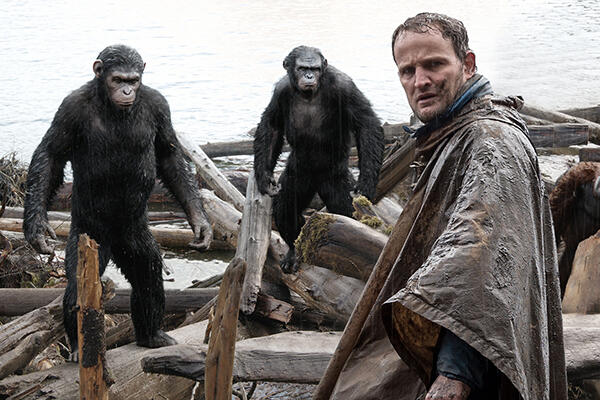
Rating: A I remember the first time I saw Gollum, and knew that there was something special happening. He was different to other CGI creations; there was something far more complex happening in his movements and expressions. Now, of course, we know that special element was the use of performance capture, a technique that I think could be the most important feature of our generation of blockbuster cinema. Dawn of the Planet of the Apes (DPA) proves that this technique can be for more than just peripheral characters, but an entire cast. DPA is the sequel to 2011’s Rise of the Planet of the Apes and picks up 10 years after the first instalment. The simian flu has decimated the planet, killing 90 per cent of the world’s population. Caesar and the rest of the intelligent apes have created an entire society and culture in the forest outside of San Francisco. These two societies have stayed isolated from each other for 10 years; DPA tells the story of their collision. The resultant story is perhaps the best piece of cinematic science-fiction since District 9. The film is full to the brim of insightful comments and ideas about the world we live in and the human condition in general. It is fascinating to watch the apes try to avoid the same pitfalls as the human race, but inevitably go down the same track. However, as with any good science-fiction film, it also finds ample opportunity for action, providing some extraordinarily unique, gripping, and intense sequences of fighting. Though every aspect of this movie is superbly executed, it is the performance that really makes DPA something special. In particular, the work of Andy Serkis and the other performance capture artists is sublimely engaging, and quite often breath-taking in its ability to express complex emotion and thought through facial and body expression. For those fed-up with the overuse of CGI in film, these performances stand as an example of when it is done absolutely right.
-
The Face of Love
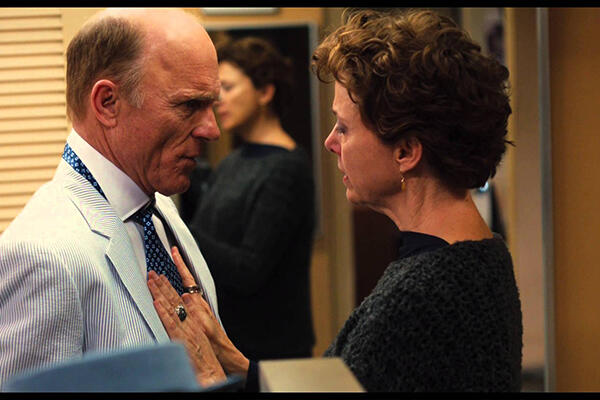
Rating: B+ This movie is like combining American Beauty with Misery, and the plot from The Great Gatsby. With Robin Williams, too, as the same creep-next-door from One Hour Photo. Nikki (Annette Bening) is traumatically widowed when her husband of 30 happy years drowns beside her, but years later she meets his exact double, Tom (Ed Harris). She is unable to stop herself from pursuing him for all the wrong reasons, and becomes a pro-stalker, finding out that he is a painting tutor and enrolling in private tuition with him. Eventually, a relationship develops, and Nikki thinks that her years of repressing the happy memories of her husband are over, and they can be together again. The film starts with a sad story, but quickly gets very, very creepy. Like Jay Gatsby, Nikki finds herself trying to recreate the glorious past, by dressing Tom in the same clothes as her late husband and taking him to the same places. Our sorrow and sympathy for her quickly turns to wonder and frustration at her intransigence. When her shameful ploy is exposed, the question is, will Nikki willingly throw away her family, friends, sanity, self-respect, and ultimately, her life, in order to continue this grief-fuelled fantastical pursuit of her dead love, or will she move on, and dive back into the water again? The film is beautifully composed, with hints of people as they are imagined and held by others tucked into the corners via photographs, artworks, and flashbacks. Annette Bening, as with Carolyn in American Beauty (1999), does an incredible job of acting like somebody totally over the edge and yet still projecting an image of sanity, which is not easy to do. With all the photographs, chance-meetings, and confusing-the-pronouns blunders threatening to expose her mad charade at any moment, the audience is surprisingly on-edge, and anticipating the inevitable collapse of it all. And, of course, Tom might have a few bombshells of his own to drop on Nikki. Worth watching, worth remembering.
-
Words and Pictures
Rating: B- Like a lot of bad rom-coms, they really should have ditched the rom-com angle altogether and focused on the much more interesting subplots. Handsome English teacher Jack Marcus (Clive Owen) is having a pretty crummy time, having not been able to write anything worth publishing in many years, and turning to vodka for solace at inappropriate moments, and is about to lose his job. When a new art teacher, Dina Delsanto (Juliette Binoche), irks him at work by suggesting that words fail to capture the important things in life, he starts pushing his students and himself into grand literary pursuits to prove her and her art wrong, and vice-versa. This is, of course, a tired and banal rom-com plot that contrives to throw two superficially different people together with the least possible imagination. However, I did like that their back-and-forth war to prove the value of words or pictures was positively Socratic in tearing each other’s arguments to pieces. By the end of the film, everybody duly and inevitably became better people and decided that words and pictures are both important, and that they loved each other after all. Yawn. What were great about Words and Pictures were the subplots of personal struggle. While Clive Owen was not believable as a funny-man, he definitely has that twisted, demented vibe about him that made his descent into alcoholism and loss of his son’s respect very moving. I wish they had focused on this more, as it had potential to be up there with Flight (2012). Juliette Binoche, too, is great as a tormented artist, who has all the vision she needs to create masterpieces, but is losing control of her body due to rheumatoid arthritis. Those of us who live with chronic pain know all too well her insensible roars of frustration at simple tasks such as holding a paintbrush, and the pointless suffering along the road to finally realising that your gifts don’t merely come from your hands. Good on them for doing that well, at least.
-
Night of the Living Dead
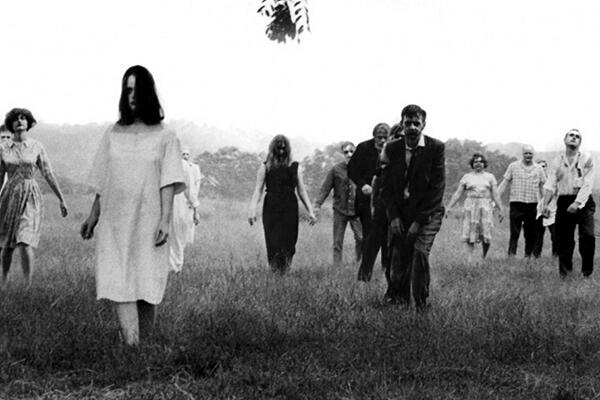
Classic Film The mother of all zombie movies and, in my view, the most effective and terrifying, with the possible exception of 28 Days Later; NOTLD did a lot with a small budget, few special effects, few locations and a small cast. The grainy, shaky home-footage look gives it an immediacy that makes it all the more frightening, much like The Texas Chainsaw Massacre and later films like The Blair Witch Project. You feel like you’re right there with the protagonists. The zombies themselves are less elaborately made up than their counterparts in future films, but somehow scarier. Some of this comes down to good directing and storytelling. The first zombie appears minutes into the film with no prior setup, as our protagonists are visiting a graveyard. It is just a hazy figure in the distance, and all we can make out is a strange walk. The protagonists are at first amused, but become decidedly less so when it catches up with them, and the film then hits the ground running. The rest of the story takes place in a single location: an abandoned house in which a small group of survivors take refuge. We find out what has been going on in the rest of the world as the protagonists do, through chillingly realistic televised news bulletins. The film drew some criticism for its characterisation of the female lead, Barbra: she runs the gamut of being completely hysterical to being completely catatonic, all the while fairly useless and non-functioning. Meanwhile the male lead remains calm, resourceful and proactive. Sadly the same observation can be made of many films. In support of Barbra, I found her to be by far the easiest character to identify with. If a zombie outbreak was to happen in real life, I’m sure many of us would be completely overcome with panic, even if we’d like to picture ourselves becoming action heroes. Barbra’s reaction seems the most human one, and it hammers home the film’s realism. Ultimately the film is a haunting chiller that is still pretty damn terrifying today, thanks in no small part to said realism. I can only imagine how scary it must have been to audiences back in 1968.
-
Locke
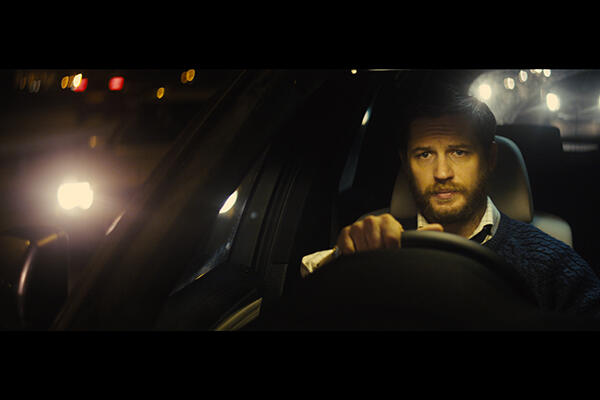
I know what you are thinking. If the film is just Tom Hardy’s face as he drives and talks on hands-free, how interesting could it be? The answer: RIVETING. And, no, that’s not sarcasm. We follow Ivan Locke on a literal journey to a hospital one night, but more importantly on a figurative one from his old life towards an uncertain promise of a new one. On the eve of the biggest contract of his professional engineering career, a woman he can’t stand (but slept with) calls to tell him she is having his baby, it’s so premature it may die, and she needs him to be there, right now. So, Locke goes, but not alone. His wife is on the end of his phone, falling apart as he is forced to confess his adulterous crime, and his children beg him to come home while he is shamefully compelled to drive in the opposite direction, maybe never allowed to come home again. His boss is breathing fire down the wire at losing tomorrow’s $100,000,000 contract, and Locke must explain over the phone to the drunken Irish primate he left in charge how to finish the job. The expectant mother needs birthing advice and, to cap it all, the ghost of his dead-beat father is in the back seat, taunting and defying Locke at every mile to be a better parent for this unwanted impending infant than he was. Brother, you got problems! Not that the tragedy and comedy of putting out a dozen fires over the phone wasn’t great, but what I loved most was the allegory of Locke’s journey. Like him, we are all barrelling down a one-way highway, compelled forwards by the march of time and unable to undo the things behind us. We can only apologise and keep on driving towards the new-born, hoping that we are doing enough. Tom Hardy’s performance is simply astounding, and we wait anxiously for him to deliver every line. The director knows exactly how to make one character in a car into a captivating spectacle from start to finish. I highly recommend this film journey! Locke - screening at Rialto Cinemas: 8pm Saturday 2 August & 1:45pm Monday 4 August
-
52 Tuesdays
Wow. Words almost fail me. 52 Tuesdays was filmed over the course of one year, entirely on Tuesdays, to watch the mother-daughter relationship evolve, as Billie’s mother becomes James, her second father. Teen Billie is fairly naive to begin with, but gets totally derailed from herself when her mother starts the one-year process of transitioning from a female body to a male body. Naturally, when your mother wishes she was never a female, and thus could never have given birth to you, you start to get a teensy bit resentful. To be clear, this is a work of fiction, though James is played by Del Herbert-Jane, an actor who has chosen to be non-gender-conforming, thus making them perfect in this role. The story arc of the film is heart-breaking. When James needs time to adjust and decides to spend only six hours with Billie a week, on Tuesday nights, Billie begins to seek other thrills to make up for the unacknowledged pain she is feeling. She and her disenfranchised friends begin to experiment with sex, drugs and other delinquent behaviour, like many teenagers, but they take it to dangerous, even criminal, places that cause harm to many. Eventually she finds herself so desperately in need of being unique and noticed that she becomes the kind of bitch that punches their transitioning mother in their recent chest reconstruction surgery stitches. It’s tough to get a clearer symbolic act of emancipation than that. The presentation format is extremely scattered, and it’s clear we are watching a teenager’s one-year diary of moments of important meaning interspersed with a lot of unresolved misery, and yet we can barely identify which is which to her. We badly want Billie to realise the loving family she has around her, but she seems blind and attached to all the wrong things. This film successfully made me question the assumptions I make every day about people’s gender identities, and also how you could ever forge a meaningful life or relationship when you choose not to show up for it every day. I would recommend you come prepared for emotional turmoil, and leave with a fresh perspective. 52 Tuesdays - screening at Rialto Cinemas: 6:15pm Friday 1 August & 1:30pm Sunday 3 August
-
Valiant Hearts: The Great War
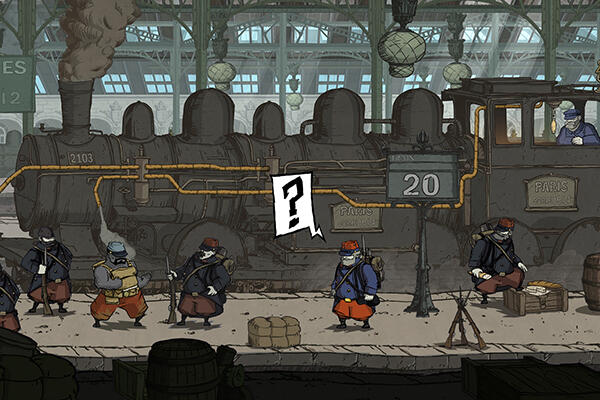
Rating: A This year marks the 100-year anniversary of WWI, making it a crucial moment in our generation’s cultural memory. With the last veteran of the Great War having passed away in 2012, our memorials of this event become increasingly about remembrance instead of respect. As time moves on, it will be easier for us to distance ourselves from the events of WWI and harder for us to understand or empathise with the people and events of this bloody period. This is why now more than ever it becomes the responsibility of artists to create evocative content that keeps the memory of these people and their experiences fresh in our minds. This was clearly the intention of Ubisoft Montpellier in creating Valiant Hearts: The Great War. They should be applauded for the initiative, but more so for how skilfully they managed to combine history and human experience into a thought provoking and emotionally evocative experience. Valiant Hearts is an adventure game set during WWI and follows a series of character experiences throughout the war. The primary characters are: Emile, a French countryman called into service by his country; Freddie, an American who joins the French army to seek revenge against the Germans; and Anna, a French nurse who seeks to save her father. Though the story revolves around real events and letters from WWI, these characters’ stories are all fiction. However, in doing so, Ubisoft Montpellier managed to create a much larger picture of the war as these characters move throughout some of the most interesting areas and events of the war. It also allowed for the developers to create a story that interweaves and pays off in that satisfying way that only a narrative can, and real life rarely does, while also providing insight into the real stories, experiences and suffering of the people surrounding the characters. A fascinating consequence of this game being made in the wake of this shift in how we memorialise WWI, is that it allowed the developers some freedom with how they portrayed the tone of their game. What I mean by this is that when content is made that is paying respect to the veterans, then you need to be as loyal to the tone and aesthetic as possible. However, when you are making content that is about remembrance, the focus becomes more about engaging your contemporary audience than it does about recreating events. This is what allowed Ubisoft Montpellier to create this stunning tale using the aesthetic and tone that they did, expressed through the gorgeous art style and narrative style. The art style is stunning to behold at every moment of the game, using a vivid cartoon style to represent the different areas of war torn France. The narrative style is that the characters never speak, but rather physically portray their emotions and relationships, while a narrator divulges the specific information about the war. These factors combine to create a wholly unique experience that is incredibly engrossing and not at all alienating to those who don’t like realistic depictions of war. Valiant Hearts pays respect to the suffering of the soldiers, while not glorifying the violence, as many modern depictions of war tend to do. Instead of glorifying violence, the game seeks to educate players on the realities of combat. This is introduced not only through the narrative, which often deals with the suffering caused by war, but also through fascinating and informative facts that are introduced at key moments in the game. Reading these facts is optional, but I couldn’t help but read them. Before I played this game, I thought I knew all about WWI, but turns out I had barely scratched the surface. Though the story is the key focus of the experience, it is grounded within classic adventure gameplay. As you progress throughout the side scrolling landscape you encounter puzzles and problems that you need to solve to progress. Like most adventure games, these typically require you to find certain objects in the environment and move them to the puzzle. Thankfully, Ubisoft Montpellier avoided the classic mistake of creating challenge through how difficult these objects are to find. The objects are always in clear sight, the challenge comes from solving problems that obstruct your ability to collect them. Truthfully, this is one of the easiest adventure games that I have ever played. The puzzles, though often quite cleverly designed, are never particularly difficult. However, I think that this is a very clever design choice, as the puzzles certainly keep the game engaging and interesting, while not impeding the pace or getting in the way of the game’s priority, which is to tell the story of events and characters of WWI. Valiant Hearts is not just a game you should play because it is incredibly fun and engaging, but a game you should play because it is so important, now more than ever, that we remember the people and events of our first world conflict.
-
New this week / Singles in review
Perfume Genius - Queen Perfume Genius is the moniker for Seattle musician Mike Hadreas. “Queen” is the lead single from his third album, Too Bright, set to be released in September later this year. A beautiful, sprawling ballad, “Queen” is grandiose and at the same time dangerous. From the massive drum sound to the anthemic synths. The music video is also equally as spectacular. Susanna / Jenny Hval - I Have Walked This Body Jenny Hval is a Norwegian musician who releases alternative pop music under the name rockettothesky. Susanna is a fellow Norwegian musician who releases alternative pop music. “I Have Walked This Body” is a haunting, gothic vocal, noise extravaganza. Layered wonderfully with coats of static, noise and beautiful, ethereal harmonies. Merchandise - Enemy Merchandise are a three piece formed in Florida around 2008. With two albums now under their belt, “Enemy” is the single from their upcoming record titled After The End. The track is built on an acoustic motif, which sounds like Cornershop covering the Rolling Stones’ “I Can’t Get No Satisfaction.” Carlson Cox’s croon is part Morrissey, part Brett Anderson. A smooth, psychedelic, brit-pop track. Radiator Hospital - Cut Your Bangs Radiator Hospital is a project centered around the talented Sam Cook-Parrott, who are set to release their second album titled Torch Song. “Cut Your Bangs” is a catchy power pop offering which revels in its own simplicity. The chorus is what indie immortality is made of.
-
A Sunny Day in Glasgow
Rating: A- A Sunny Day In Glasgow began as a recording project in 2006, between friends Ben Daniels and Ever Nalens. Since their inception the band has seen countless line-up changes, albeit always centered around the songwriting prowess of Ben Daniels. Sea When Absent is the group’s third full length release and their first since 2009’s Ashes Grammar. Retaining the noise, haze and echo that fans have come to expect, the band have also decided to make these new tracks even more drenched in discordant ambience. Though this constant static is in no way the type that stabs or pricks the eardrums. Instead, think of it more like a comforting fan heater, or a blowdryer someone forgot to turn off. The songs are intrinsically pop songs. Vocals are layered over one another, forming a swirling, saccharine wall of melody. This, however, can be overwhelming at times and does end up sounding like two tracks played side-by-side, yet out of sync. Lyrics are indistinguishable but the overall sound is mesmerising, immersive and charged with joy and emotion. Overall, A Sunny Day In Glasgow is a good shoegaze, dream-pop band and Sea When Absent is a strong indicator of that. If that’s all you’re looking for then you won’t be disappointed. Highlights for me include “Byebye, Big Ocean (The End)” and “In Love With Useless.”
-
Strange Harvest
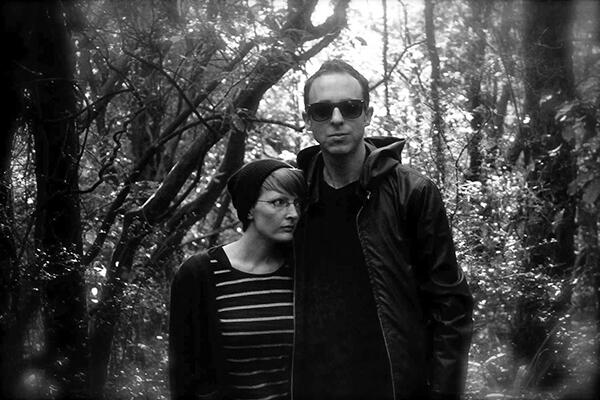
Dunedin cold-wave duo Strange Harvest have been busy finishing their third full-length album. A few weeks removed from the studio Justin Walshaw catches up with Critic’s Adrian Ng. Did both of you come from musical backgrounds? Was there a particular moment that made you want to do music? Skye Strange was in Rise of the City Cat Cult - legendary noise makers from up the hill a bit. There used to be a corner shop up there. People still ask about that shop. It’s still there but you can’t get milk anymore. The Cat Cult have some music out on Lttl Paisly records. It’s four women in cat-form. It’s good stuff. Even if you’re a dog person. My musical background is the taste of disinfectant on school recorders. And we used to have a piano growing up. I mean, the piano didn’t grow up, but it was there. I liked to play along to Beatles records and then the CD was invented. I got my first Walkman at age 11. I used to have this cassette by The Bangles. “Walk Like an Egyptian.” We decided we’d go to Europe. In London I saw Ronnie Wood. He was just buying some smokes. Not very interesting. We saw Gang Gang Dance play. That was the moment when we turned to each other and said “Let’s go, the tube shuts soon.” They blew up their synth. Not on purpose. But it was the moment. You’ve recently finished recording your third album. Describe the process. For this record we decided to do it as fast as possible, and most of it is the first takes. Skye had written all these songs and it felt live and a bit more raw. Luckily Tommy Thomas (the producer) was up for it, and we could use his studio. He works quick with cool microphones. We rehearsed the whole thing, played it a bit live and then recorded. It’s a keyboard-synth / drum-machine mash-up with a bit of water-damage. Were there any particular differences that set these songs apart from previous albums? It’s more ‘90s synth vibes. With the guitar low in the mix. The last album, I was listening to The Cure’s Disintegration album a lot, and that kinda leaks through. But in the last year leading up to the new record, we’d just listen to weird synth stuff. Like “Hot and Cold” and “Crash Course in Science.” And we accidentally created this failed futurism stuff. And we love old hip hop, so we wanted the drum machine to sound like Biggie Smalls - kinda wheezy. Any thoughts on a name for the record yet? I think we will call it The Best of John Lee Hooker. But for legal reasons we might call it Pattern Recognition or some nice vowel sounding pronouns. Your music is so cinematic. If you could replace the soundtrack of a movie with your music, which movie would it be? It would have to be Terminator 2, Judgement Day or Aliens. What’s the name of that film that’s basically those two films in the one film? Weekend at Bernies? Yeah, that’s the one. If you could take only one album to a desert island, what would it be and why? Skye Strange reckons Killah Priest - Heavy Mental - I truly recommend it. It’s very cool. And I think we’d want to take The Grateful Dead’s Europe ‘72 4 x vinyl LP Box Set, because the packaging folds out into a two person tent, and it’s usually dispatched within 24 hours. It’s probably edible too. Those pranksters thought of everything.
-
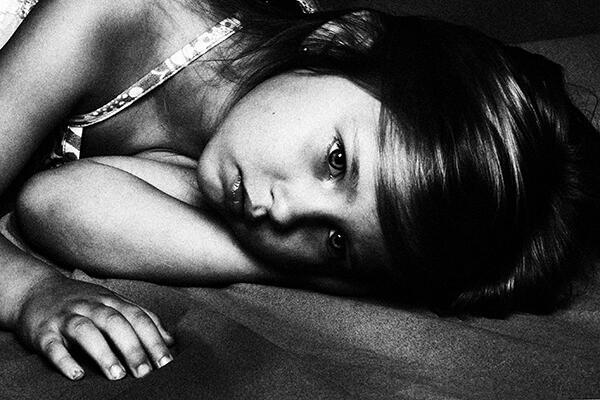
Profile: New Zealand Child Poverty 101
“Child poverty;” “vulnerability;” “income gap.” Buzz words, right? Phrases thrown around by the radical lefties? There are 285,000 children living in poverty in New Zealand, yet so many of us New Zealanders seem content to ignore the problem, or worse, to deny it altogether. Unfortunately “us New Zealanders” often includes students. When we launched Choose Kids, a student-run group working to advocate for solutions to child poverty, last year, we were ready for opposition. We particularly expected it to come from the middle-class, and the middle-aged — the groups paying the most taxes. What we weren’t ready for was students spouting the same poverty myths as their parents. New Zealand poverty is not real poverty. Blame the parents. Why should I care? The simple answer is this: we can’t afford not to care. The effects of child poverty cost New Zealand around $6–8 billion a year, a cost we all bear. With good reason, it’s an election hot-topic — recent polls indicate that voters see child poverty as about the third most important political issue of 2014. If you’re planning to vote, you can’t ignore child poverty. On that note, let’s start by addressing some of the key poverty myths clouding the debate. You’ve probably heard the phrase “poor parenting” as an excuse for doing nothing about child poverty. Colin Craig’s statement in Critic Issue 11 that children are going to school without lunch because “clearly [the parents] haven’t taken advantage of the support we can give” is a pretty typical response. Of course, that’s coming from the leader of the Conservative Party, but the general sentiment of “blame the parents” runs pretty deep through society. We’ve been led to believe in the stereotype: dole-bludging, alcoholic parents who gamble their money away. Likewise, we’re convinced that the working poor do earn enough money; they just don’t use it. Well, what if I told you they don’t have the money? Living Wage Aotearoa produced a report last year proving just that. The report is incredibly comprehensive: it draws on a mass of studies, mostly done by the University of Otago, and sets out the basic weekly costs for a New Zealand family. The report concludes that even with one parent working full time, and one working part-time, both on minimum wage, they still fall $110 short — even taking into account all the benefits and family tax credits they might receive. Not just $10 short, but $110 short. And that’s excluding Auckland, which throws things completely out of whack with its hugely inflated prices. Once we factor that in, the shortage is likely to be even greater, especially as so many poor families do live in Auckland. Regardless of where you stand on the whole debate, the figures just don’t add up. It’s hard to argue that people could make better choices with money they don’t have. Families have to balance rent, power and food; transport, clothing and medical expenses … Where would you make the cut? Child poverty is directly attributable to income inequality and poor wages; clearly we need to address the causes, as well as deal with the immediate effects. Sadly, poor parenting does cause problems — but it’s never as simple as that. Poverty and parenting are interconnected, and we need to address them together. Unfortunately, New Zealand seems to have divided people up into the “deserving” and the “undeserving” poor. As a student, you are part of the “deserving” pile: you choose to be poor to get a degree. Few will question your choice; in fact, the government gives you money. Society applauds you. Conversely, we condemn the unemployed and the poor. But what if things suddenly changed? What if students were treated as the “undeserving” poor? Many of us felt the effect of the recent cuts to post-graduate student allowances. We have a unique perspective that allows us to see how unjust the blame-game can be. For those who aren’t yet convinced, think about this: a child is innocent. Even if you think parents have a choice, children do not choose to be born into poverty. Why should we deny a child the right to be fed, or medicated, simply because we blame their parents? When the Mana Party’s “Feed the Kids” bill was introduced last year, people wrote it off as an easy cop-out for lazy parents. And when Government announced their own watered down solution to food in schools, the papers went crazy: “it is home responsibility;” “woefully bad use of taxpayer money;” “rewarding bad parenting.” The point is that these children are going to school hungry anyway. In some cases that may be due to poor parenting, but those sorts of arguments ignore the fact that it is the children who suffer. Telling parents we will not feed children in schools will not fix things. Notice there were no children writing in to the paper? Children are silent victims in all of this. Children can’t debate, or vote to change their situation. And their situation is pretty dire: 83,000 children in this country go to school hungry each day. Another common argument is the “Third World” comparison. We’re all used to seeing World Vision ads with doe-eyed African children staring up at the camera. We expect swollen bellies and protruding ribs. With this image of “true poverty” in mind, we often overlook what’s happening in our own country. As a friend of mine put it, “why should I care about a child missing out on lunch, when some families are only living on $2 a day?” It’s a pretty empty argument: pointing out the existence of one doesn’t deny the existence of the other; nor does it make the other okay. The fact that the United States has higher obesity rates than New Zealand (only just) doesn’t mean we don’t have an obesity problem. And the sad thing is, for many families in New Zealand, the situation isn’t all that removed from some “Third World” countries. New Zealand currently has the one of the highest rates in the OECD of “Third World” diseases. Children in poverty suffer from recurrent chest infections, bronchiectasis, pneumonia and rheumatic fever — direct results of poor housing and overcrowding. We may not have many people living on the streets, but we do have families of 14 crowding into damp three-bedroom houses. Again, it’s the children who suffer the most: a child sharing a room with adults is far more likely to pick up infections and diseases. Our lower class carries the burden of poor mental health, high infant mortality and high hospital admissions. Since 2007, hospital admissions for poverty-related diseases have risen by 21 per cent. But if the lower class is carrying the burden, then so are we. Even if we take the selfish approach, there’s still something in it for everyone. We currently spend millions treating these diseases: millions that could go towards treating the causes. The uncomfortable, undeniable truth is we are already paying for this. Big time. Yet according to many, it’s just something we can’t afford at the moment. Cue the Tui billboard … Yeah, right. So poverty, especially child poverty, makes us all poor. “I’m already a poor student!” I hear you cry. “Why should I care?” Time for some uncomfortable truths: when you’ve completed that Marketing degree, you too will be joining (hopefully) the world of the employed, where you’ll end up paying taxes along with the rest of our workforce. As things stand, a huge chunk of those taxes will go towards patching up the gaping hole in society that is child poverty. No new pretty sports grounds or public parks for you. The problem is so many New Zealanders don’t realise there’s a problem — or if they do, they deny the extent of it, or push blame on to the parents. Likewise, politicians spend far too much time denying the problem, rather than trying to come up with solutions. As with all politics, it’s all about what gets them votes. Children don’t vote — but we do. It’s up to us to let the parties know that this is a priority. In many ways, students are natural advocates for children: we are closest to them in age; we understand what it is like to be silenced. We can be the voice for the voiceless. And if university has taught us anything, it has taught us to question, to interrogate the so-called “facts.” We shouldn’t just blindly accept the poverty myths. Our generation has been labelled, somewhat crudely, the “selfish generation.” We care about partying, not politics. We sit up and take notice when a proposal has “student loans” attached to it; otherwise, we don’t care. At a push, we might advocate against climate change or global warming. “Clean and green” is a glamorous — and safe — stance to take. Child poverty, on the other hand, is complicated and unglamorous and dirty. Yet it affects us far more than we realise. What kind of country do you want your own children to live in? One that puts kids first? Or one that shunts them to the sidelines? So go to public lectures. Volunteer your time. Donate your old toys (seriously, a 20-year-old with a teddy bear?). Talk about child poverty. Use social media. Vote — and when you do, think about what various parties offer children in poverty. And challenge others when they spout the same old myths. Until these myths disappear, child poverty isn’t going anywhere. As Inside Child Poverty documentary maker Bryan Bruce points out, politicians often act like they are “short-term tenants” in their own country, when they should be acting as long-term investors. Some government initiatives are fantastic, such as the 2014 Budget announcement of free medical care for under-thirteens, but they are only the beginning. We need to put pressure on our politicians to deliver more. Child poverty isn’t going to be solved overnight, or even in the next ten years. There is no golden bullet or “One Solution.” Nor is this a task for one political party alone. What we need is a cross-party agreement, a common goal of eradicating child poverty. We need long-term solutions, rather than having the situation change every three years depending on who’s in power. And we need a student voice for children. But one thing is certain: we must act now. “Many things we need can wait. The child cannot. Now is the time his bones are formed, his mind developed. To him we cannot say tomorrow, his name is today.”-- Gabriela Mistral