-
Columns

Editorial | Issue 16
This week, Loulou Callister-Baker’s feature, “Right in the nutcracker” (page 18), proved quite a big surprise to me. While I fully expected the outcome to be a well-justified attack on what I thought was the cis-sexist, misogyny-driven annual Selwyn Ballet, the reality is far more complex. What Loulou uncovered was a long history of the empowerment found in such cross-dressing performances that blurred, in her words, “what I thought was a clear black and white situation into a mass of grey.” I feel that as it currently stands, the balance in this example does sit further to the negative side of the scale than the empowerment side. However, as people become more aware of gender issues, I hope that this interpretation will (if slowly) move with the times. Who knows – it could be amazing if in several years’ time the ballet is viewed as a celebration of how far people have come in terms of their interpretation and treatment of gender. It made me think of an episode of the web series High Maintenance, in which a family man and stay-at-home writer has an incredible day simply because he has the confidence to wear a dress when he has a visitor. If that sounds cliché then I’m not doing the show justice; it’s truly life affirming. Imagine if a Scarfie tradition could one day hold such a strong, positive message. The feature is a must-read. Another surprise this week wasn’t so positive. I had previously held the Maori Party with the esteem of being the ultimate protest vote. I figured that under Cunliffe’s leadership there would hardly be a soul overly keen for a left wing Government following this year’s election, all the while the country must surely be getting tired of the inherent sliminess of Key’s minions. The Maori Party fixed those problems – they likely wouldn’t be the key to a left wing Government (hence why the Greens don’t really work as a true protest); rather they would work with the Government on the issues that mattered to them while withholding their right to disagree on certain important issues. Perfect. Unfortunately, as Politics Editor Carys Goodwin has unearthed on page 12, it turns out that the relatively new Maori Party co-leader Te Ururoa Flavell is completely and utterly incompetent. Trust me – saying that doesn’t come lightly, I had real hopes for the party. But when your co-leader is almost half an hour late and literally reads his answers word-for-word from his party’s website (after searching for three and a half minutes), it’s hard to avoid this generalisation. To be fair, he did reiterate that “we recognise the fact that unless you’re at the table, you do not get anything,” which is the philosophy that has made me like the party, but it’s really quite tragic that the dynamic duo of Tariana Turia and Pita Sharples will in the next term be completely replaced by this shining uselessness. Those two were incredible. There was also a lot of discussion last week about the necessity of trigger warnings in lectures and tutorials, thanks to Michaela Corlet’s campaign for Welfare Officer. Although Michaela didn’t win, I hope this is a point that is taken up by the OUSA Executive this semester – it was by far the most important discussion brought up by any candidate. A lot of (most?) people are ignorant bigots when it comes to this issue – I have heard several cases where this was given as a deciding reason to vote against Michaela. I find that a disgusting justification. If a lecture must include a discussion of potential triggers such as rape, sexual harassment or anything similarly harmful – and I can see this justifiably being the case in many subjects, from law and media to medicine – then consideration for those it affects is vital. It’s infuriating that our society is backwards enough to even make this a discussion point. Besides, for what possible reason wouldn’t you want trigger warnings at the start of lectures? It wouldn’t even take half a minute; that’s hardly wasting your time. To the best of my understanding, it’s a safe bet that everyone in our society who doesn’t present as a hetero-cis-male (and, indeed, many who do) has at some stage been harassed, probably multiple times, on the basis of their gender. The number who have been physically harassed or assaulted is also insanely high. It is fair to say, then, that examples of rape or other gender-based grievances will be sure to trigger various reactions in most, if not all, class rooms. If you’re lucky enough that it hasn’t affected you personally, then sacrifice a smidgeon of your precious time, open your naive eyes, and help those for whom it has. Zane Pocock Critic Editor
-
News

Mufti cops join the party, albeit sober
New Zealand Police will now be stationing plain-clothed officers in local Dunedin bars. The new initiative came into play last month to ensure bars’ compliance with the regulations of the Sale and Supply of Liquor Act 2012, which came into effect late last year. The initiative began in Queenstown and will run throughout the Southland and Otago districts in the coming year. The project is part of an effort to target alcohol-related harm in these regions. Senior Sergeant Allan Grindell, Otago Rural Prevention Manager, told Critic, “With the new Sale and Supply of Alcohol Act, new responsibilities are placed on the community as a whole to manage alcohol more safely.” “Intoxication leads to alcohol-related harm in our communities and our aim is to reduce the impact of that harm by ensuring compliance with the new act,” says Grindell. He identified “assaults, family violence, wilful damage, and road crashes” as examples of the harm alcohol can cause. Grindell said that the plain-clothed officers would have “a particular focus on intoxication in bars but they would also note and observe activities surrounding host responsibility and security.” A media release from NZ Police outlined the initiative, saying that if an incident of intoxication were observed by officers as “likely to amount to an offence or escalate into an incident of disorder or violence,” then an intervention team would visit the premises and take appropriate action. The team would generally consist of police officers, local council licensing inspectors and representatives of Public Health South. Licensees will be provided with regular feedback about the behaviour occurring on the premises, as well as the way patrons and levels of intoxication were being managed. This includes positive feedback if the premises were doing a satisfactory job. Grindell said, “The benefits of this new strategy are that we will be able to observe the behaviours of patrons over a longer period of time and see how a licensee manages this behaviour.” He said licensees and managers would not be negatively affected, so long as they “run their premises within the law.” Grindell assured Critic that the public would not be affected “unless, of course, they are intoxicated and attempting to gain entry or are on a licensed premise.” He said, “The student population will face no closer scrutiny than anyone else.” In regards to whether the plain-clothed officers will be consuming alcohol in the premises they attend, Grindell told Critic “that is operational information which we do not intend to comment on.” Critic spoke with Ian Lindsay, owner of Suburbia Eatery & Nightlife, who said he had “no issues” with the new initiative. “In liquor licensing, there are a lot of rules and regulations, so it sort of keeps people from slacking off and it keeps us on our toes,” said Lindsay. He believes “when policemen have uniforms on, that probably causes more of a problem. People can become intimidated. All people want to do is go out and socialise and have a good time. If you’ve got 10 police officers walking in the door wearing a uniform, people can’t really relax, even if they’re not doing anything wrong.” Janice Turoa, owner of Starters Bar, told Critic “I’m in two minds about it.” She said, “I think it’s a waste of money, which is generally better spent on the streets.” However, she also said, “I welcome it, because we’re doing nothing wrong. They’re more than welcome to come into the bar and see that we actually have security on every night, as well as all bar staff who are always doing their job.” The new laws include limits to trading hours, further limits on supplying alcohol to a person under the age of 18 and new on-the-spot fines for the misuse of IDs. As per the previous law, people will also not be served and should be removed from the premises if they are intoxicated. The new law, however, clearly defines “intoxication” as displaying any kind of change in appearance or behaviour, which suggests intoxication.
-
News

The 1104 By-Election votes are in
Paul Hunt, Payal Ramritu and Jess McLean have been elected to positions on the OUSA Executive after almost five per cent of University of Otago students voted in last week’s by-election. The results were announced last Thursday 17 July. For the role of Finance Officer, Paul Hunt won with 64.49 per cent of the votes against Ricky Daniel-Nield (28.99 per cent) and No Confidence (6.52 per cent). Paul Hunt , a sixth year Law and Politics student, has said he wants a “diligent focus on day-to-day expenses,” as well as working on building revenue for OUSA in the future. He points out that the budget for the remainder of the year has already been set, but he says that he plans to focus on “the long term outlook of OUSA” and working on “diversifying OUSA’s income.” His favourite animal, as asked in the candidates’ forum last Monday, is the dog. With regard to winning the by-election, he used Facebook and chocolate bars to persuade people to vote for him. He did not meet Ricky, as he was not present at last week’s forum, but notes that Ricky’s absence “probably helped” his campaign. Ricky was “pretty gutted” at losing the campaign and says it was because he “definitely underestimated the number of people voting.” Clearly going for the role for all the right reasons, he said, “I guess I’ll have to find another way to fund the bevvies.” Payal Ramritu won the position of Welfare Officer with 48.20 per cent of the votes against Michaela Corlet (38.71 per cent) and No Confidence (13.09 per cent). Payal is a self-declared feminist and coordinator of the Tea Cup Club, a women’s support group at the University. Her main focus for the semester is to make the most of the Welfare Committee, as she believes the role of Welfare Officer and the Welfare Committee has been “underutilised.” She wants to make herself available for regular drop-in office hours and plans on adding additional members to the Welfare Committee, including a disabilities representative. She could not decide on her favourite animal, and Critic hopes she will show more decisive behaviour in her new role. Michaela Corlet, an eager protestor, hoped to “really focus on street harassment and boost awareness of it.” During last week’s forum she said harassment was “prominently white males” who did not realise the effect of their “drunken slurs.” Michaela also wanted to introduce gender-neutral bathrooms for the wellbeing of those students who would feel more comfortable with them. Jess McLean, a third year St Margaret’s resident, was “really excited” to win the position of Colleges Officer with 80.79 per cent of the votes against No Confidence (19.22 per cent). She plans on introducing a “what I wish I knew guide” for halls, similar to a project that Education Officer Laura Harris has talked about. She believes awareness of OUSA’s services should be promoted more to first year students. She also doesn’t think halls of residence have enough integration with the University life or knowledge of University events “due to so much focus on hall events.” She says that in her new role she wants to get the students “more involved in OUSA clubs and societies.” Her favourite animal is the cat.
-
News

University athletes take on Australia
The University of Otago has returned from competing in the Eastern Australian University Games in Newcastle, placing ninth out of the 26 teams. Otago teams were the only non-Australian teams to compete. They managed to finish with all three of their teams in the top ten. Their participation in the Eastern Australian Games was assisted by $20,000 worth of fundraising, numerous grants from OUSA and a grant from the University. The Mixed Touch team achieved a Gold award. OUSA President Ruby Sycamore-Smith said, “We were up against a stacked team of regional and national representative players, and the lead changed several times with the score against us three to four when there were two minutes to go. “Thankfully we scored to level at the end of regulation time forcing a move into extra time with a golden point and player drop-off situation,” Ruby said. The Mixed Touch team lost only one game in the competition, which led on to a riveting final that went into extra time. Team captain Naomi Ireland said, “We kept the intensity high all the way through the game, so it was great to come out with a win.” The two other competing teams were Otago’s top female and male basketball teams, who walked away with fifth and sixth place respectively. The Otago women’s team won their game against the Australian College of Education 48-17, and the men’s team won against the University of New South Wales 36-29. The Otago women’s basketball captain Grace Love said she was happy with the result, however she felt “we definitely could have gone on to win.” The team only lost one game throughout their time in Australia, often beating other teams by a mile. “We beat one team by 86-4,” she said. The games are usually for university and TAFE students from New South Wales and the Australian Capital Territory, but OUSA wanted some of Otago’s best athletes to be involved in the competition this year. The New Zealand University games are not being held until 2015, so the opportunity to compete internationally was quickly grasped. The Australian competitors welcomed the Otago teams, “I like that they had New Zealand teams coming over because they’re really good. Playing against a hard team makes for a good game,” said University of Technology Sydney captain Andrea Roditis.
-
News

Piece of Castle to become zone of peace
A Zone of Peace is to be declared covering the region from St David’s lecture theatre to the intersection of St David’s Street/Dundas Street. “It’s a voluntary initiative,” says Sung Yong Lee, lecturer at the National Peace and Conflict Centre at the University of Otago. There will be no repercussions for breaking the peace any more than breaking the peace in any other region of Dunedin “as we don’t have the power,” says Lee. However, he hopes the Zone will result in improved behaviour in the area. The project is in the early stages of development and the name “Zone of Peace” is tentative, but Lee explained that the concept has prevailed in many war-affected countries: “When you enter the zone, you should abandon your weapons.” Lee described that people who were victimised in war-torn countries had used the Zones of Peace. Non-government organisations (NGOs) had success using Zones of Peace to start positive initiatives and now wanted to use the same model to initiate peace in Castle Street. He said that the Zone of Peace has three key goals: to be environmentally friendly; mutually supportive; and to build a sense of community. He intends on the zone offering hot tea and coffee whilst people are out partying. Lee referenced a street in London, England, which had also used a similar model because of its high crime and violence rate. Once the peaceful zone was declared and offerings of hot drinks were made on the street instead of allowing alcohol, many people began to bond with their neighbours and the crime rate drastically decreased. “We want to hear from people who are interested in the cause,” says Lee. He has already had interest from the Dunedin City Council as well as the Centre for Sustainability, Selwyn Hall of Residence, the Maori Students’ Association and the Centre for Peace and Conflict Studies. He explains that the majority of people seeing the damaged area are young children from the childcare centre on Castle Street and young adults from Selwyn College. Lee said students had not shown much interest, but they were the ones being affected. “Just last week two young girls from Selwyn were harassed,” he says. “There shouldn’t be violence round here and young children shouldn’t see smashed bottles on the ground.” On 22 July, there will be a commencement party to declare the Zone of Peace at 520 Castle Street. No alcohol and no violence will be allowed, but soup and hot drinks will be served, as well as music from a blues band. Critic is aware that the hot liquids could be used as weapons, but we advocate peaceful and non-violent consumption.
-
News

"Discount to rule them all" now permanent
The Otago Regional Council has announced that the 25 per cent tertiary discount on bus fares will become permanent. The trial period for the discount ran from 17 February to 30 April 2014 and was negotiated by OUSA as part of their plan to get more students to use the bus service. OUSA President Ruby Sycamore-Smith said that the permanent discount was “awesome news for students, especially those who still live at home in Dunedin and those who choose to live further away from the University.” OUSA and the Otago Polytechnic Students’ Association (OPSA) have been lobbying the ORC for discounted student fares for the past decade. “The ORC made a smart move by giving the idea a trial period and pushing out free GO cards to students during Orientation Week,” said Sycamore-Smith. “We’d like to see the free GO cards repeated again next year with a new set of target markets,” she says. This year, free GO cards were given out to first-year students during Orientation Week. Sycamore-Smith hopes to have the promotion again next year, although she intends to target a different market such as locals or postgraduates. “For us it’s about helping those that need it most, but the idea of getting first-years to explore the city isn’t something that should be put on the chopping block altogether,” Sycamore-Smith said. The trial period came at a cost. OUSA and OPSA stepped up to shoulder the cost of the discount so that the council would not be out of pocket. According to Sycamore-Smith, it was “definitely worth it.” The discount will lead to more students using the bus services over time, “especially when combined with incoming improvements to routes and timetables,” she said. For students who take the bus regularly, the discount could save them $10–$15 a week; for those living in places like Mosgiel, or who have to take multiple buses to get to campus, it could save them significantly more. The 25 per cent discount is available to all GO cardholders with a current tertiary ID, meaning that Dunedin locals studying at other universities around the country could benefit from the discount when they are home for the holidays. “No matter the institution, this is one discount to rule them all!” said Sycamore-Smith.
-
News
Students trying to avoid a life of debt
Students are continuing to pursue more than just a degree whilst they spend time at the University of Otago. With an upcoming recruitment visit by the New Zealand Defence Force (NZDF) this week, Critic has spoken to a number of current and former students who have completed their studies whilst on board with the NZDF. Ricky Daniel-Nield is an Otago student who is completing his Commerce and Applied Science degrees through the NZDF Graduate Programme. He says he has an allowance, which “is pretty much the same as the StudyLink allowance,” on top of having his fees paid for. In return, he has to commit to a return of service of three years. He thinks it is unfortunate that more students do not take up the opportunity “because they view the military as running up and down hills firing guns all day, but that is only a small part of it.” Kate Mackintosh is training to be a Combat Medical Technician for the Territorial Force. She is currently studying a double degree in Law and Microbiology. She has higher demands, as she has to attend weekly training and exercises on weekends. She loves the challenge of learning new things during basic training, “it makes you feel confident in a lot of areas.” She joined for the “change to the usual student routine.” Kirsty Calman completed a Bachelor of Commerce, majoring in Accounting, at Otago before working as a Supply Officer in the Logistics branch of the Royal New Zealand Air Force. She notes that there are drawbacks, such as being deployed overseas at short notice, but she says, “In hindsight, they were great career development opportunities.” On deployments overseas in Australia, Samoa and Malaysia, she spends time “looking after people and equipment by sorting the movement of food, water, medical, accommodation, etc.” She believes one of the greatest benefits of joining the NZDF is the support given for participating in sports: “I was given time off work to travel and race in France on top of my annual leave, as well as a small grant to assist with finances.” Captain George Davies is a former student and now a Legal Officer for the NZDF. Following completion of his Bachelor of Laws and Bachelor of Arts in Economics and Politics, he now provides legal advice to commanders and decision makers regarding NZDF activities. He also began his career with the NZDF in the Army Reserve, spending his summer holidays at the headquarters in Wellington. He advises students that although the role will enable you to “develop both professionally and personally,” being a part of the NZDF “means to be immersed in an organisation to a far greater extent than those people who have an 8am–5pm vocation.” Relocating at short notice and the ability to settle anywhere can be difficult. The information evening will be held in the OUSA Recreation Centre at 12pm on Wednesday 23 July 2014.
-
News
Otago law students' life on the inside
Law for Change, a national group of over 350 young lawyers and law students, are donating their time to helping with rehabilitation at the Otago Correction Facility. The members are all volunteering their skills and time to work on projects that address the unmet legal needs of local communities. Their latest project in Dunedin involves Otago Law students spending time interacting with prisoners. The programme is aimed to assist prisoners in gaining various skills as well as providing prisoners with some interaction with the outside world. Law students also gain the experience of having interaction with inmates. Anna Goble, a law student at the University of Otago, spoke to Critic about her experiences with volunteering at Law for Change. “I got involved with Law for Change because I think it’s important that we, both as law students and citizens, are involved with and help those who are currently under-represented by [the law],” she said. The students interact with the inmates through the development of new skills by holding workshops in arts and craft, sports and music sessions. Goble’s experience in the music sessions had been positive, saying, “Most of the prisoners there are already musically talented, so it was a matter of rekindling their talents and fostering them. The prisoners I have interacted with so far have been incredibly pleasant, well mannered and light hearted. Not once have I felt uncomfortable.” The interaction the prisoners receive through community involvement is seen to be vital to their rehabilitation process. “I personally believe that rehabilitation is the backbone of the justice system. It is not often in life that we are given second chances,” says Goble. She said, “For the prisoners to have at their disposal the opportunity to interact with others, to learn new skills and have some continuity and familiarity in their lives, is a good stepping stone to rehabilitating them.” The Christchurch campus of the Otago Medical School has also had a programme involving the placement of students in prisons. They spent a week educating the youth unit in Christchurch Men’s Prison about safe sexual health behaviour. A fifth-year medical student spoke to Critic about the medical school programme, which is used as a way to implement a public health intervention. “We thought it was a great way to see parts of the community we don’t have much contact with normally and it felt like we were actually doing something useful,” she said. Goble encourages students to get involved with the project; she said, “I would advocate for more people to interact with [the prisoners] if given the opportunity, as it’s not only incredibly rewarding, but to see the justice system first hand is an incredible experience, especially for a law student.”
-
News
Te Roopu
Kia ora koutou katoa ngā tauira o Te Whare Wānanga o Otākou: Ko tēnei te wiki o te reo Māori. Kua tae ki te wā kia whai koe i tō reo Māori. Ko te kaupapa “Te Kupu O Te Wiki”. Engari, e hiahia ana ahau kia ako koutou he kupu hou i a rā mo tenei wiki. E hiahia ano ahau kia korerohia e koutou aua kupu i roto i o koutou korerorero o te rā. E pono ana ahau ki te whakakī koe i tō kete ki ngā kupu Māori ka tipu ake to mōhiotanga o te reo Māori. Mēnā e hiahia koe he āwhina, he tautoko rānei haere mai ki te whare o Te Roopū Māori. Hello everyone, all students of the University of Otago: This week is the Māori Language week. This is a chance for you to get involved in learning the Māori language. The theme for this year is “The word of the week.” However, I want you to learn a new word every day for this week. I also want you to choose words that you are able to use in everyday conversation. I believe that if you fill your bag with Māori words your understanding of the Māori language will grow. So if you need any assistance or support don’t hesitate to visit Te Roopū Māori house (523 Castle street). You can also find translations at www.maoridictionary.co.nz Here are a few words you can use every day: mahi – work; tari – office or department; ako – to learn or study; tauira – student; whakamātautau – examination or test. Te Roopū Māori have events running throughout the week. Come along and be involved: Monday: Kupu video competition begins. Tuesday: He Pō Reo 6-8pm at TRM Whare. Wednesday: Treasure Hunt 12pm at the TRM Whare. Thursday: A fundraiser - five dollar boil-up with rewana from 6pm at Te Tumu (purchase tickets from TRM Whare) and Prize Giving. There are many prizes up for grabs from vouchers to an iPad Mini. Check out Te Roopū Māori Facebook for more information or come into TRM whare. To wrap up: enjoy your week and enjoy learning and speaking Te Reo Māori with all of your peers. I will leave you with this well-known Māori proverb. “Nau te rourou, naku te rourou ka ora ai te iwi” With your food basket and my food basket the people will thrive. Mauri ora, Mariana Te Pou Tumuaki o Te Roopū Māori
-
News
OUSA Awards: Hypothermic students rejoice
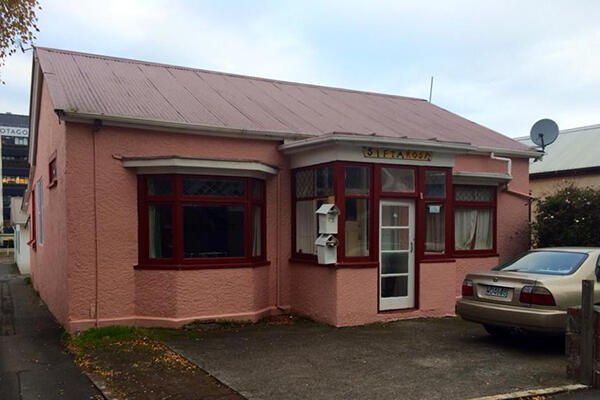
2014 is the second year OUSA has held the Landlord Awards, previously named the Best/Worst Flat Awards. The change in name is intended to “place pressure on landlords to provide quality rental accommodation,” whilst also “showcasing landlords who do a great job in promoting student wellbeing,” says Philippa Keaney, OUSA Advocate and Student Representative Coordinator. Critic spoke to Jeremy Spruyt of 75 Clyde Street, who is one of the “lucky winners” of the Worst Landlord category. The flat received a Velvet Burger feed and $200 towards a flat clean, alongside $5,000 worth of insulation through the Government’s Warm Up New Zealand: Healthy Homes programme. Their landlord was invited to lunch with OUSA Student Support, but unfortunately he declined the offer. The Best Landlord received a pamper pack and the tenants of the flat were also awarded with a Velvet Burger meal each and $200 towards their power bill. Spruyt is quick to stress that, despite the award, his flat is “definitely not the worst” on the Otago campus. “Students don’t feel secure enough to speak out against their landlord, [so] nothing ever gets fixed,” comments Spruyt. “I think that the programme has so much potential to help students; all they need to do is be vocal about it.” When judging the self-nominated entrants, OUSA’s criteria consists of a number of factors, including: external appearance; landlord responsiveness and communication; heating; quality of appliances/furnishings; security; overall condition of rooms; and the amount of mould and/or dampness, as is so often present in Dunedin flats. For students seeking refuge from the Dunedin winter, OUSA Student Support is happy to provide assistance. “[We] help the students fill out the applications and talk to their landlords,” says Keaney. “Student tenants need to have a Community Services card and evidence that insulation will benefit them in terms of their health,” she says. Students just have to see a nurse and they will be able to ask for a medical letter of support. Spruyt described OUSA’s support as “monumental,” making the installation of insulation an “absolute breeze.” We’re feeling the improvement already,” claims the happier tenant. She encourages other students seeking warmth to look to OUSA for support: “If we can fix the issues with our flat so easily, surely with the right backing, others can do the same.”
-
News
Medical library to make way for animal testing lab
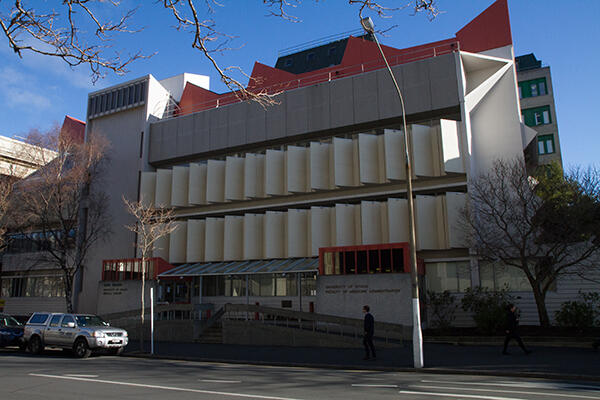
The University of Otago is planning to turn the Medical Library into an animal-testing laboratory. The decision follows after an outbreak of parasitic worms that occurred at the current animal-testing lab. The parasitic outbreak posed no health risk to researchers or other staff. A statement released on 11 July 2014 confirmed that the University is investigating moving the lab to the Sayers Building, where the library is now housed, but alternative study space will be organised. An advertisement for a fixed-term role to manage the relocation of the library to an interim site was also posted on the University website. An upgrade to the animal-testing lab is part of the University’s $650 million upgrade. The plan has irritated medical students over the potential loss of the only dedicated study space in the Health Sciences precinct. Critic spoke to a second-year medical student who said the plan was “completely inconsiderate.” The Otago University Medical Students’ Association (OUMSA) has also released a statement on the proposed move: “This decision jeopardises the ranking of the University of Otago as a world-class medical education institution. We feel that this decision undermines the ability of the school to provide quality medical graduates that will be serving the health needs of New Zealanders in the near future.” A survey conducted by the Health Sciences Library showed that around 1000 students use the facility every day. Medical Students should not be worried, however, because the University has said, “No change will happen without alternative study space being provided.” Despite advertising for a fixed-term manager for the relocation, the University has said that it is yet to make a final decision on the move. A University spokesperson said, “The role of libraries has changed because the electronic access to library resources has reduced the priority for allocating space to physical book storage, except for close reserve holdings, which would remain a priority. High-quality study space is now a key function of libraries.” The University has reiterated, “There is no intention that the Central Library would be designated as the alternate study space.” The planning includes looking at providing study space in or near the Health Sciences precinct.
-
News
Critic 2014 Football World Cup awards
To the black, red and yellow World Cup desk where, like a good holiday in Brazil, it is fun at the time but you’re always happy to get home and back to normal once it’s all over. The 2014 edition of the World Cup was very exciting with a record amount of goals scored and enough controversy and funny moments to give all the pundits and fans plenty to talk about. While your flatmate or your neighbour has probably now buried their Neymar or Messi shirt deep in their closet and is now probably saying, “I never gave Brazil a chance” and “ I thought Germany would win all along,” us here at Critic were bold enough to print our predictions months ago and can prove that we made a lot of the right calls. Perhaps Zane actually knew what he was doing when putting together his editorial team ... So until Russia 2018 rolls around, here are the coveted quadrennial Critic World Cup awards for 2014! Best Team: How could it not be Germany? The best team over the whole tournament with the core of the team having been together since winning the Under 21 Championship in 2009. They have stuck together and gone on to win what is arguably the most coveted prize there is in world sports. Also they became the first European team to win the cup in South America. I was eventually proved right after stating that: “Germany are my favourites to win.” Veteran striker Miroslav Klose will retire as a World Cup winner and the all-time highest World Cup goal-scorer with 16 goals from his four tournaments, many of which were scored with his head that has had more than a hint of a mullet at times. Best Player: James Rodriguez of Colombia ended the tournament as top scorer with six goals, two assists and 89 per cent strike accuracy. He gained equal amounts of press and praise for his skills and goals but also for having a giant grasshopper land on his arm after scoring a penalty against Brazil. FIFA seemed to disagree and awarded the FIFA Golden Ball for best player to Argentina’s Lionel Messi who is Adidas’ highest-paid footballer, earning big bucks to be their global poster boy for the sport. How he managed to win the Adidas-sponsored Golden Ball award I just can’t quite figure out ... Apart from a few fleeting moments of genius, a lot of the time he wasn’t even the best player in his own team. Best Coach: I have to give it to the triple-chinned Netherlands boss, Louis Van Gaal, who didn’t win the Cup but managed his squad perfectly to come within a penalty shootout of back-to-back final appearances. They were the only team to use all 23 of their squad members and bringing on Tim Krul for the shootout against Costa Rica proved to be a bit of tactical genius. Once again Critic was proved correct predicting that the Dutch were: “A very solid squad that should go through. They will be a threat in the knockout stages but won’t make it back to the final.” As he announced months ago, Van Gaal now steps down to take over at Manchester United. Don’t be surprised if a few of his loyal compatriots follow him to England. Most Shocking Moments: In terms of incidents, the Suarez bite will probably live on as the most infamous and memorable moment of the tournament, which Critic ominously foreshadowed months ago: “If Suarez continues his Premier League form and doesn’t intentionally handball, bite or racially abuse anyone then [Uruguay] should go through.” As far as shocking results go I would rank the Germans’ stereotypically clinical and efficient 7 – 1 demolition job on the hosts in the semi finals just a bit higher than the Netherlands 5 – 1 comeback against defending champions Spain. Biggest Surprises: Got to give it to the feisty Costa Ricans who surprised everyone by topping Group D and making a run to the quarter finals where they were so close to a semi final spot as they held the Dutch all the way through extra time to just miss out on penalties. One prediction we got horribly wrong saying: “They would have struggled in most groups and certainly [have] no chance here.” Defending champions Spain put in a surprisingly weak defence of their title. My prediction proved half correct but actually gave them way too much credit as they were knocked out after only two group games: “Are among the favourites but some tired old legs will catch up with them in a semi final loss to the eventual winner.” Biggest Disappointments: England were abysmal once again and even more so than most predicted. Germany, with 7 goals in their semi final, scored more goals in that single game than England have managed in their last two World Cups. We couldn’t have been more right by saying: “Hate to say it but they will probably make right twats of themselves once again.” Despite the lavish budget the opening ceremony had the lowest-looking production value and sound quality since my high school’s questionable rendition of Romeo and Juliet. It was only made worse by the loathsome Pitbull’s appearance in a fake-looking yellow Brazil shirt tucked over his potbelly into tight white pants that were rolled up at the bottom and paired, sockless, with matching white boat shoes. Best Game: The group stage was very open and attacking which dried up in the knockout stages as the teams were more cagey and defensive. Belgium vs. USA in the Round of 16 was one of the more exciting matches. There were 56 shots on goal and USA keeper Tim Howard set a new world record with the amount of saves he made. The game went to extra time and the Belgians survived a late rally by the Americans to just hold on for a 2 – 1 win. Best Goals: Best goal award also goes to our “Best Player” winner, Colombia’s James Rodriguez, who scored with a stunning volley in their knockout game against Uruguay. His goals also inspired his team to show some of the best goal celebration choreography ever seen at a World Cup. Runner up for best goal is “The Flying Dutchman” Robin Van Persie who did his best Superman impersonation against Spain with his stunning and elegant diving header that spawned many entertaining memes and gifs. Boy Who Cried Wolf Award: Goes to Brazil’s poster boy Neymar! Everyone was so used to seeing him diving and play acting that when he took a knee to the back against Colombia even the cameramen thought he was trying to have us on again so didn’t pay him much attention. Turns out he had actually received a fractured vertebrae and suffered temporary paralysis as a result of that very mild challenge. He wouldn’t last two minutes in a game of rugby.
-
News

Critic tackles election year | Issue 16
Since taking on the job of Critic’s Official Politics Nerd, I’ve been able to chat to a number of politicians. Normally, this results in a combination of great discussion and inappropriate questions (and answers). The opportunity to interview MPs and the like is not often awarded to students, and I enjoy being able to present student-related talk to the Otago populace. I take it seriously. This week, however, left me feeling a bit put out. I spoke to Te Ururoa Flavell, co-leader of the Maori Party, after he appeared on Vote Chat. It was disappointing. Disappointing because I truly value what the Maori Party brings to the table and was looking for some interesting discourse; disappointing because they’d requested the interview, not the other way around (the person I’d been in touch with was so enthusiastic about getting in touch and was truly grateful for the opportunity, so I feel bad that it turned out as it did); and disappointing because I’d given the topic areas in advance, so it wasn’t as though I sprung anything on Te Ururoa that he couldn’t have prepared for. He was 25 minutes late, first of all, and didn’t bother to inform me that he wouldn’t be on time (I texted the person who’d been in touch with me after 15 minutes, so I did find out he was still planning on coming along). Second, after I asked the first question, he requested that I stop the recording (I restarted it after about 10 seconds) while he shuffled incessantly through a number of thick paper-filled folders to gather the answer. It really wasn’t a difficult question. Third, when he finally found the sheet he was looking for (three and a half minutes after I asked the first question), the answer he read off was word for word what is on their website. Funnily enough, I’d thought to look up the Maori Party’s tertiary education policies in advance. As a result, I felt as though the whole affair wasn’t taken seriously; that it was just a student magazine, and Te Ururoa wasn’t particularly interested. I wasn’t impressed. Hence this write-up. In all honesty, it’s insulting to be dismissed as a disillusioned and “lost” sector of society when the very reason we’re disillusioned is due to a lack of engagement on the politicians’ part. It’s their job to capture our attention, and to appeal to us on both a personal and a political level; not taking us seriously is a dangerous step towards losing not just a vote for their party but a vote at all. The apathy is not inherent, and politicians shouldn’t treat it as such. It has been nurtured through being considered “just students” and having our political intelligence condensed down to a few buzz phrases that don’t capture just how important and formative these years are in figuring out what we value and what we ought to. With Te Ururoa sitting across from me reading policies off a list it became abundantly clear that this was not about engagement, it was about publicity. Students aren’t in the political sphere because we want to be used as examples of politicians embracing diversity or youthfulness, we’re here because we do actually care. It’s particularly ironic that Te Ururoa claimed the Maori Party wants to “hear our voices” given he couldn’t remember off the top of his head how he planned to do so. The meaningful dialogue I’ve been taught to crave for four years wasn’t there, leaving in its place what seemed like the assumption that a proper discussion wasn’t worth it. Perhaps he was tired, or perhaps his lateness left me bitter from the start; either way, I felt as though the whole scenario wasn’t worth it, and that thoroughly annoyed me. “Go hard or go home” is a mantra Scarfies swear by; a little piece of Hyde Street wisdom that commands the utmost respect. It shouldn’t just apply to Scarfies. So the first thing I wanted to talk about was general student education policy. I know the Maori Party is very pro-universal student allowance and all that sort of stuff. A lot of parties are. So I was just wondering what specifically would attract students to your party? [Shuffling through papers] I’m looking because there’s one that the students’ association put to us just recently. And it was about accommodation grants? National Students’ Association [referring to New Zealand Union of Students’ Associations]. Put it up by 40 bucks or something … Okay so the student allowance currently sits at around $175, well the loan does. The allowance for accommodation? Yeah we get what’s called living costs, which is a weekly allowance or loan, depending on your financial situation. So $40, did you say? No it was … that’s what I’m trying to blimmin’ get. [More shuffling] So is it something put to every party by the NZUSA? Or was it just the- I think it was, but everybody had to, um … So everybody either endorsed it or something like that. Okay, now I’m a bit closer. [Eureka moment] Well I’ll just go through some of those things ... [Next few minutes recited verbatim from the tertiary education section of their website maoriparty.org/our-policies-kawanatanga ] You mentioned increasing Māori representation on student councils and that sort of stuff: what about trying to engage students, specifically Maori students? I noticed there was something on the Vote Chat Twitter feed about the serious lack of engagement with Māori people in general, what about students? So one of the things we have is that we actually have two former presidents of the NZUSA in our offices at the moment … And so you can understand that we have a good lobbying voice on the part of students, so that’s the first point. Second point is that we’ve always tried to get in touch with and get next to student bodies to ensure that we do hear their voice, and of course social media has opened up the whole opportunity to engage with students and these young people. So I’m not the expert, but things like Twitter and Facebook and stuff that we’ve all opened up now to engage actively, so there’s that element, but also an open invitation to the national student body, which we hope has been passed on, to have direct access to us as MPs, so that we can get a better feel for what students’ issues are […] Do you support initiatives like Rockenrol? Are you going to do anything with them? Yup, we’ve already issued a number of press releases on Rockenrol and think they’re doing a great job. There’s Vote Māori Vote, a younger group who’ve gone out there voluntarily to try and encourage people to vote as well, so we’re right behind them. The fact of the matter is that young Māori, young people, generally, are not taking up the opportunity to get enrolled, secondly to vote, and in fact many people are taken off the roll as well. Because they’re moving, year to year, move from point to point, and therefore they send the papers out, they don’t get sent on, you leave it, and they get taken off the roll, and nobody’s any wiser. So when it comes to election time, that’s not as if it’s sort of taken up. We’re definitely after more people voting, absolutely. Yeah, we’ve got quite a big campaign around here for enrolling to vote, and I think you must’ve seen the big “enroll to vote” sign downstairs. Just to change topic a little bit, so coming into the next election, would you prefer to see a Labour/Greens coalition or a National government? Well that’s sort of out of our hands, ‘cause all we can do is … We’ve got to get in first, so our priority’s just to grow ourselves. And then everything else takes care of itself afterwards, so if the question is “will we work with one side or the other,” the answer is yes. Simply because we recognise the fact that unless you’re at the table, you do not get anything. That’s the plain cold hard facts of politics, so if by chance, and, well there’s a couple of things. First is the maximum we can get is seven seats. So therefore we’re relatively small players. We’ve got to get them, the next question is that we’ve got to be asked to join the coalition, so we mightn’t get asked, and when we do get asked, we’ve still got to negotiate the terms of that arrangement, so the terms of arrangement with the National Party at the moment is “relationship accords,” which is different from a coalition agreement, so that allows us to vote with the budget only, to agree to disagree, and to no surprises. So all we have to do is tell them we’re going to disagree with them and they say “yeah fine.” We’re in the best position because we can still implement the things we want to by way of our relationship accord because of the fact that we get ministerial appointments, we get policy hits, which are negotiated, and budget gains. So doesn’t matter, one way or another, we’ll see how it plays, but we are determined to make sure we’re part of the relationship. But where would you prefer? I know it’s cheeky of me to ask, but if you could choose, would you rather the left or the right? We don’t see it like that. It’s about what we can negotiate because we don’t get placed, we don’t believe that we’re left, we don’t believe that we’re right, we believe that we’re Māori and that gives a different response to how parties deal with us. We’ve had six years with National, we don’t know what it’s like to work with Labour and/or a Green coalition, we haven’t had any discussions with them, so we don’t know how it’s going to go.
-
News
Politweets | Issue 16
Fake Russel explains the new Green policy. There’s a parody account for everything these days, including POLS102.
-
News
Greatest Hits / Greatest Shits | Issue 16
Greatest HitsRecently Back Benches featured a number of youths. Hailing from Labour, National, Greens, NZ First, and ACT, these youths had a go at hashing out a few pressing issues. They also had a go at each other. This week’s Greatest Hit goes to an amazing call from ACT’s Louis Houlbrooke, who, fed up with the ‘70s-dressed Curwen Rolinson of NZ First, yelled “the only thing bigger than your tie is your ego.” Greatest ShitsIf I didn’t make it clear enough last week, I’m not exactly Cameron Slater, aka Whale Oil’s, biggest fan. I wasn’t particularly looking forward to his contribution to the Tania Billingsley chat, and lo and behold, he didn’t disappoint. First, he tried to argue the whole affair was a smear campaign by the left; second, he tried to say rape culture doesn’t exist in New Zealand, something even Paula Bennett disagrees with. Describing his coverage as insensitive and oblivious is pretty euphemistic.
-
Columns

ODT Watch | Issue 16
Heads up, Dave Cull! Has ODT got a deal for you: more shackles on sale! I’m sure there’s still some taxpayer money squirreled away that you could use to augment Dunedin’s growing collection of dirty, old handcuffs. These three articles, placed together in Tuesday’s newspaper, appear to be the start of a new ODT “cheating spouses” segment. These rather gruesome stories describe how several partners reacted after discovering that their significant other had cuckolded them. Retaliation included head-butting and hair-pulling, genital-yanking and threatening with a cross-bow. It doesn’t take a genius to guess what relationship problems the court reporter had on his mind when covering court hearings this week … The ODT have probed deep into the student world, discovering students are quite the pyromaniacs. The headline alludes to an apparent fanatic passion that consumes students and can only be released through the burning of couches. ODT’s judgement is palpable in this article, but we think that if ODT staff had to spend a night in a typical student flat, they too would be lighting furniture on fire in a desperate attempt to keep warm. Come on, ODT: I know you’re working hard to produce a high-quality newspaper but really, make the time for proof reading, especially for headlines. The placement of these articles (i.e. right next to one another) was rather unfortunate. In the first, Harlene Hayne breaks the news to University of Otago staff that tight times will continue, especially for Humanities and Commerce. Meanwhile, the adjacent article outlines the doubling in staff for the University Science Centre, along with ambitious plans to further develop the Centre. BAs and BComs aren’t real degrees, anyway.
-
News
Contraception: The Intra Uterine Device
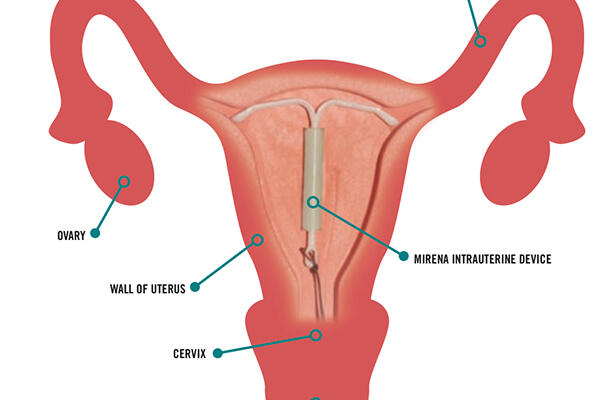
Women have a lot of options when it comes to contraception. Although condoms should be used for STI prevention, women have several other options in terms of extra contraception to avoid pregnancies. The options include the pill, the injection, the implant and the Intra Uterine Device. Critic investigated this last increasingly popular method, also known as the IUD. Dr. Christine Roke, National Medical Advisor for Family Planning, talked to Critic about the option of the IUD and the importance of safe sex. Well, safer sex, because as Dr. Roke suggests, “safe sex is not having sex at all.” Critic also spoke to Dr. Jennifer Ogilvy, GP at Dunedin’s Student Health Clinic. She believes it is important that women are made aware of all options available because “few 18–25-year-olds at university will be planning to start a family and an unplanned pregnancy can be devastating for young women and their partners. Any woman in a heterosexual relationship is potentially at risk of pregnancy, even if they are not having full penetrative sex.” In 2013, there were 14,073 abortions performed in New Zealand, with the highest abortion rate occurring in women aged 20 – 24 years. Although this is the lowest rate in New Zealand since 1995, it is still a significant number. With the right contraception methods used, this rate could certainly be decreased further. The IUD is a small device, available in two forms, which is placed inside the woman’s womb. At the end of the device are small nylon threads, which are required for removal. These threads come out of the cervix and curl up inside the vagina. Unless you are checking for threads, it is very unlikely that you can tell it is there. It is also very rare that during intercourse, a partner will be able to feel it. Tampons can still be used with the IUD. The Mirena IUD contains progestogen, a hormone that is slowly released over time, which stops the sperm from travelling towards the egg. There is also a copper IUD available, which has the same effect as the progestogen. In the rare case where the egg does become fertilised, both types of IUDs then stop the egg implanting into the womb. This is so effective that the copper IUD can also be used as a form of emergency contraception after unprotected intercourse has occurred. The IUD comes under the umbrella of the LARC (long acting reversible contraception) group, along with implants such as the Jadelle. Perhaps the greatest advantage is that “it is a fit and forget contraceptive,” says Dr. Roke. After insertion, the copper IUD begins working straight away, but the Mirena takes seven days to become effective. Both forms provide the woman with 99 per cent protection for the next five years. No further check-ups or maintenance is required. The failure rate for an IUD is less than one per cent per year. In terms of the insertion process, the IUD is fitted by a doctor or nurse and usually takes around five to ten minutes. Dr. Roke said that there is a little bit of discomfort when inserted, she described it as “a little like nasty period pains, but some people may find it a bit more painful.” In regards to how long the pain lasts, Dr. Roke said “the acute pain is just while it’s being put in, then it tends to get a bit niggly and crampy like a period pain for a day or two.” Spotting is also likely to occur. Family Planning Clinics are the most cost-effective option for young New Zealanders wanting to have an IUD put in, or to even enquire about other forms of contraception. If you are a New Zealand resident under the age of 22, a consultation with a doctor or nurse is free. For a New Zealand resident over the age of 22, a consultation with a Community Services Card is five dollars; without a card, it is $27. The copper IUD is completely subsidised, however the Mirena will cost $333. Contraceptive implants such as the Jadelle cost $17 for insertion. Other contraceptives are free, however a five-dollar prescription fee at a pharmacy may apply. Further information can be found at Family Planning, 95 Hanover Street Dunedin. With over 5,000 IUDs being put in through Family Planning during the 2013 calendar year, it is steadily becoming one of the more popular forms of contraception. Dr. Roke pinpoints this increase to two factors: “We’ve been talking about them more, but also partly because research has shown that the myths surrounding the IUD have been proved to be wrong.” It is commonly thought that people who have not had children yet should not use the IUD because it could cause infertility. Another myth is that they regularly cause infection. However, “it’s much clearer now that those ideas are not correct.” There is also no evidence that the IUD causes acne, headaches, breast tenderness, nausea, mood changes, a loss of libido or weight gain. Dr. Roke assured Critic that the IUD’s effect reverses as soon as it is taken out, so there are no long-term fertility problems. She did note, however, “If you catch a sexually transmitted infection you’re more likely to have problems with fertility.” On this note, she insisted the IUD “doesn’t protect you against sexually transmitted diseases or infections, so you need to use condoms if you are at risk.” As with any form of contraception, there are negative consequences to the IUD. There is a one per cent risk of infection when it is first put in. The two different types of IUD can also have different impacts on a woman’s menstrual cycle. Dr. Roke says the copper IUD tends to make periods a bit heavier, longer, and more painful. Spotting, light bleeding, heavier or prolonged bleeding is common for the first three to six months after insertion. The Mirena tends to reduce your periods, or even stop them completely. For the first three to six months, there may be light bleeding or spotting but after this period, it is common to have no bleeding at all. Although IUDs are effective at stopping pregnancies in the womb, they do not necessarily stop the ones that could have been settling into the tube pre-insertion, which Dr. Roke says “can be quite dangerous.” There is also a slight chance the IUDs can perforate the uterus or go out of the uterus and enter the stomach. In these cases surgery may be required. However, the chance of this is approximately one in every 1,000. There is also a five per cent chance that the IUD can completely come out, although “this is not dangerous, it just means you lose your contraception.” Copper IUDs can also cause an allergic reaction, but this is extremely rare. Dr Roke also advises that if women have symptoms of any infection, they should have treatment before an IUD is inserted. Dr. Roke said “[Family Planning] very much encourages IUDs as a contraception method. They work out [to be] much more effective as you don’t have to remember a pill or get out a condom, you also don’t have to remember to go back for an injection.” She also believes any form of preventative contraception is a safer option of birth control than continuous use of the Emergency Contraceptive Pill (ECP). It has been found that for women weighing 70 kilos or over, the ECP is much less likely to be effective. She says that women over 70kgs generally have to have a copper IUD put in to prevent that egg settling into the womb. “If you have a failure rate of a couple of per cent each cycle and each time you take the emergency pill, then over a year that equals to be quite a lot,” said Dr. Roke. Most women have thirteen menstrual cycles per year, so “that equals about 26 per cent chance of getting pregnant that year.” She says “[The ECP] is not a very good contraception method on-going, but it is wonderful on the odd occasion.” In regards to the student population, Dr. Roke says that it is extremely important for students to practice safe sex. “There are two parts to it: pregnancy and the threat of STIs.” She said that “each contraceptive suits a particular group” and recommends that people look through a list of the different forms of contraception and decide what would work best for their sexual relationships. In regards to contraception methods, Dr. Ogilvy at Student Health says condoms are effective for prevention of STIs, but not particularly effective as contraception. “The combined oral contraceptive pill, the injection, the implant and the IUD all offer very effective contraception but afford no protection against STIs. Generally we would advocate an effective method of contraception such as pills, injection, implant or IUD combined with using condoms.” Dr Ogilvy also recommends that both partners should have regular STI checks, then “if they are both clear and are only having sex with each other, then and only then, is it reasonable to think about not using condoms.” Dr. Ogilvy said “any of the doctors and nurses at Student Health are happy to suggest suitable methods of contraception for each individual. We try very hard to educate students around safe sex practices and help with informed decisions regarding contraception, use of condoms, regular cervical smears and STI checks.” “Queer or straight Student Health staff are here to help with information and advice around all aspects of sexual relationships – safe sex, potential abuse, contraception, STIs, etc. All consultations are confidential and non-judgmental,” says Dr. Ogilvy.
-
Features
Right in the Nutcracker
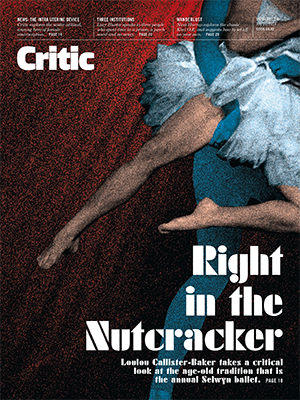
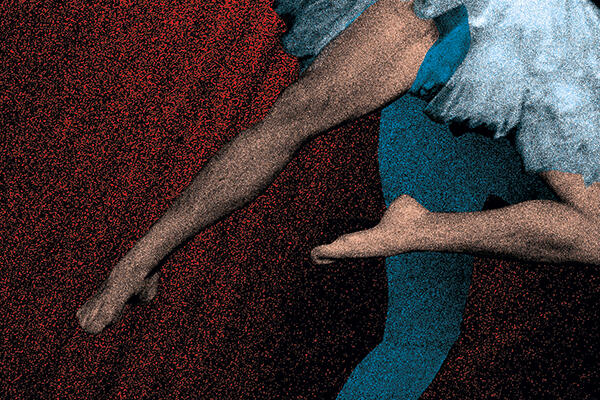
Loulou Callister-Baker takes a step back to look critically at the age-old tradition that is the annual Selwyn Ballet. An elegant foot brushes across the polished floor of the stage. Classical music fills the auditorium. Laughter teeters throughout the audience as a line of young, muscular men in flowing white dresses fill the stage. Several voices (mostly female) call out at the men: “Yeah, Sam,” “Yeah, Matt.” Soon, the stage is packed with the dancers who, on closer inspection, wear elaborate eye makeup and matching hairstyles. Despite the calls and the laughter, the dancers’ faces remain serious as they follow through with their rigorously practiced dance sequence. The music intensifies and the dance seems to become more complex. Nearer the end of the performance two male dancers – distinguished by their different outfits – perform a routine amongst the other dancers. For the grand finale, the entire troupe congregates on stage and the two lead dancers protrude, lifted by other dancers. High above everyone else they embrace each other with a long kiss, to the audience’s delight. And so ends the Selwyn Ballet for 2014. The Selwyn Ballet is an all-male ballet troupe made up of first year students from the Dunedin hall of residence Selwyn College. The tradition began in 1928 as a Capping Show skit intended to imitate popular London musicals. However, by 1937, the Ballet became more of a parody of classical ballet. A range of notable male New Zealanders have been a part of it, including former All Black captain David Kirk and former Black Cap skipper John Wright. This year, Zaak Widjeven, a second year Selwyn resident and the Internal Affairs Representative for the Selwyn College Student Association, organised the Ballet. His role included liaising with the Capping Show, booking the practice rooms, hiring the choreographer, looking over the maintenance of the tutus and applying for and receiving $750 of funding from the Division of Humanities for the purchasing of new tutus due to the increased number of Selwyn dancers. After trials, Zaak helped divide the first-year Selwyn boys into three groups: “the Signets,” which are the eight dancers who cross arms and jump in the line; “the twelve Giseles;” and the rest of the dancers, who are in “the Sex Panthers.” After five or six weeks training (which, for the choreographer and Zaak, consists of three-hour sessions each week) the troupe finally performed their skit in the Capping Show. But is this tradition really a simple and sincere story of hard practice and comedic entertainment? After four years of witnessing virtually the same performance each time at the Capping Show, I started to wonder what the deeper implications of the tradition were. I began to feel offended by the tradition and similar ones that involved cross-dressing, which I had witnessed in a range of contexts as a student. And, at first, when I began seeking answers, each person I talked to (coincidentally) felt similarly offended. One past resident of Selwyn viewed both the practice and the resulting performance of the tradition as “deeply transphobic and misogynist.” When I asked her why, she told me that her opinion was formed “for the simple reason that when you analyse why it is undertaken as a tradition it is mostly for the humour. To find it funny for men to be in dresses and ‘demean’ themselves in such a way discredits and undermines femininity.” The past Selwyn resident went on to claim that these traditions “seem to insist on maintaining gender divisions,” resulting in limitations on, or outright exclusion in, participation for female students. After experiencing first hand some of the socially backward traditions certain halls can desperately cling onto (I can already hear the “what’s your problem – it’s tradition! Just go back to the kitchen already” comments), I understood where this past Selwyn resident was coming from. But, when I then turned to the people who, in one way or the other, situate their career around gender politics and identities, I was surprised. The experts blurred what I thought was a clear black and white situation into a mass of grey. It turns out that the Selwyn Ballet has the potential to not be entirely offensive (although, as most non-Selwyn residents may claim, whether it’s that entertaining remains slightly more ambiguous). What immediately became apparent after talking to both Gender Studies Associate Professor Chris Brickell and OUSA Queer Support Coordinator Niell Ballantyne was the importance of intention and preceding interpretation. “What is complicated to get a handle on is that ‘drag’ has a whole lot of different meanings for different groups and it depends on the time and the context,” Chris Brickell explained. “There could well be a context where the way it’s enacted is a putdown of women and femininity and there are other moments where it could be seen as a parody of masculinity as well. It depends on what the intent is, who’s watching, how it’s played out, what jokes are made.” Brickell, the author of Mates and Lovers, which is the first book on gay male history in New Zealand, then provided me with a brief history of the practice of cross-dressing and performing: “If we want to look at even earlier historical roots we might want to think about pre-restoration theatre – pre Shakespeare’s time or even including it. At this point young women weren’t allowed to perform on stage so young men had to dress up and perform as young women. This came to an end in the 17th century, but the tradition of male actors dressing up as females continued on and never entirely died away.” “In the early part of the 20th century there were two forms of drag that were really popular – one was men dressing as women (and sometimes women dressing as men), the other was white people dressing in blackface, especially in minstrel shows.” Despite the popularity of blackface in New Zealand, this died out as “attitudes towards race relations changed over time. Blackface is mostly gone and most people now would find it really offensive, but it was the gender crossing that stayed.” Another example of cross-dressing and performing occurred during the wars at concert parties where men would often dress up as both men and women due to the lack of women around to play the female roles. “A number of men in that context would make careers for themselves as drag performers,” Brickell explained. “The soldiers would love it. The skill of it was to not be seen to be a man in a dress but to give the impression of a woman. To add another twist, often – certainly in New Zealand’s history – female impersonators were gay men who were bringing the drag tradition out of gay culture and putting it on the stage, but under the cover of the lack of women to play these roles. This could be seen by various people as an expression of cross-dressing theatre tradition and an expression of a gay subculture – particularly in the second world war – coexisting. These performances could be understood in different ways depending on who was doing the performing and who was doing the interpreting.” Reflecting on this tradition in relation to the Selwyn Ballet, Brickell added: “As a phenomenon, it’s really, really complex. It can be hard to work out what the true meaning of it is, and sometimes there isn’t even a ‘true’ meaning.” After being provided some historical contexts of cross-dressing in New Zealand, it became clear that while it was necessary to look at these traditions critically and create awareness of potential negative impacts, whether they actually perpetuated certain gender stereotypes or offended certain people remained very difficult to determine. Each time I asked whether a particular practice should be viewed negatively, Brickell felt it very much depended on what way I looked at it. “If I was wearing a historian’s hat I wouldn’t want to make a judgment call about whether the Ballet was negative or not,” he stated. “I would be more interested in the dynamics that were going on and why they are and what that has to say about contemporary meanings of masculinity and femininity.” Although there was a strong feminist critique – particularly in the 1980s – that suggested that men dressing in drag was a way of minimising femininity because of the way it appropriated women’s lives and identities, this view can’t apply in every situation. As Brickell added, “I would suspect that it could even be that the meaning and significance of something like the Selwyn Ballet has changed over time as ideas about gender have changed over time. Or maybe it’s possible that ideas about gender haven’t changed as much as we would have liked. But it’s difficult. This is when we would need a microphone in the audience in 1928 and a microphone in the audience now to get a sense of what the Ballet means to the people who are watching it. Then we would need to take the same microphone into the changing room and to see what conversations are being had to work out whether the inflections of the show have changed over time. For example the assertion of masculinity is newer, so there’s a newer dynamic there than there was in 1928. So something has changed in what it means to be a man in a tutu.” In terms of the Selwyn Ballet there could be something radical going on if is viewed as a way for men to get an insight into the way masculinity compels them to move and express themselves in particular ways. “Of course masculinity isn’t performed, it just is. So you’re not meant to ask too many questions,” Brickell explained. “When you look at masculinity as a thing it undermines masculinity’s claim to being inevitable and natural. It’s not meant to be named and it’s not meant to be dissected. But it’s not very helpful to not being able to talk about this.” Although Brickell provided me with interesting and useful insights into the history and potential gender politics of cross-dressing in performance, I wondered what someone who was actually involved in the Ballet thought. When I asked Zaak if anyone hesitated about performing in the Ballet he replied, “some of the guys are a bit reluctant to do it to start with because it’s a bit unmanly but they end up becoming addicted to the performances – especially after they hear people cheering.” In the same vein (and hinting at issues of gender politics) I then asked Zaak if he had heard of anyone being offended by the Ballet: “On the last nights the guys get a bit cheeky and do it nudie – but they’re still covered. It’s all in good humour – I don’t think anyone takes it too seriously. We perform it properly but on the last night we want to have some fun with it.” Later Zaak told me that some guys in the troupe “got a bit of shit for it from their mates – like calling them girls or a bit of a pussy for putting makeup on – but people respect that it’s tradition.” Yet, despite comments both by the Selwyn dancers and to them, Zaak still respected male dancers after appreciating the sheer physical strength needed to hold even the most basic of positions. Although Zaak and a majority of the Selwyn Ballet participants might not be aware of how the Ballet could negatively perpetuate stereotypes and cause issues for those who identify with different genders and sexualities, part of the problem is a lack of awareness due to minimal exposure to these ideas at school and even within certain courses at university. Furthermore, while there is room to perceive the Selwyn Ballet as an interesting tradition involving the exploration of gender identity (this is being optimistic), there exist other student cross-dressing traditions that are clearly offensive. The tradition of Miss Natural Justice at the University of Otago’s second-year Law Camp, for example, is wayward – not to mention scarring (unannounced flashings of testicles are almost never pleasant) if you’re not expecting it – well, even if you are, too. The year I [wish I hadn’t] witnessed Miss Natural Justice, involved a male being selected from each group, dressing up in feminine attire then stripping until completely naked. The sloppiness and the feeling that the “contestants” felt immense pressure to perform, and therefore were often intoxicated to the point of barely standing, made the entire experience mortifying. However, as a female, what was the most frustrating aspect of the experience was the fact that when a female student did a striptease as a part of the talent show (held at a different point during the weekend) instead of general congratulation (like the Miss Natural Justice contestants had received) people speculated whether she would ever be able to let that down – some believed she would have that reputation for the rest of her university years. When I brought this up with Brickell he agreed that these double standards make the interpretation or enjoyment of the performance quite tricky: “Images of maleness aren’t meant to be laughed at in a way that perhaps images of femaleness are seen as fair game. So I think there is a gender politics element in there. Even the double standard that men are meant to be sexual and women aren’t – men are allowed to be naked and women aren’t.” There remain countless reports of other cross-dressing performances in the student community that seem more problematic - such as a story my flatmate told me of a Carrington RA losing a bet and having to dress up in a “town dress” then read aloud a list of apparently “embarrassing” things (including “I am gay”). Whenever we look at these big- or small-scale performances it remains to be asked what the intentions of the people performing are and how is the audience interpreting it. During this process, it’s undeniable that there may be complications. There also may be no true meanings behind them all. But when a past popular tradition like blackface has become so obviously offensive now, it remains a question as to just what makes cross-dressing performances so ambiguous.
-
Features

Three Institutions
As citizens of New Zealand, most of us take our personal freedom for granted. Within the boundaries of the law we are largely free to go where we like, eat what we like, talk to whom we like, and do what we like. Even at work or school we have, at least in theory, the freedom to get up and walk out. I interviewed three New Zealand citizens who have, by three different institutions, had this basic freedom taken from them. All three were put into institutions involuntarily. I wanted to know how it felt for a person’s individuality to be made secondary to their function or service while in prison, a psych ward, and the army. The PrisonerIn 1990 George D. Henderson, songwriter of legendary Dunedin band The Puddle and former heroin addict, donned a lab coat as a cunning disguise that allowed him to gain access to a University of Otago lab and its intoxicating supply of ether. His plan was foiled when he fell asleep in a cupboard and was caught. George had the foresight to spill ether all over his lab coat so he could at least get high during his undignified removal from campus by police. George was let off on probation, but was later arrested when, with a “desperation and impulsive Pavlovian responses to the suggestion of drugs – i.e. stupidity,” he smashed the window of a chemist with the hope of finding something to dull his grief. He was sentenced to three months in prison in Invercargill in 1991. The prison is an old Victorian building. It is a closed environment, with a lot of concrete and stone and few windows or outdoor areas. I spoke to George about his experience in the institution. He said the hardest thing to adjust to was not being able to go and do what you want to do. He says: “Just the fact that you are going to prison, it’s usually because you’re quite a self-involved, self-centred person who feels free to do whatever they want. Then all of a sudden you can’t do anything you want. It wouldn’t be such a shock to someone who worked nine-to-five every day as what it is to the average person who goes about getting themselves into prison.” The other big thing George remembers about prison is the waiting: waiting for meals or roll calls, all in a “really boring situation.” He explains, “You know when you have to call the IRD and you have to wait on line for an hour or two? And you know how frustrating and pointless that is? Imagine that you had to do that two or three times every day. You had to stop whatever you were doing. You could be halfway through watching a film you’re really enjoying, or a game or conversation or whatever, and you have to stop that and just go and wait somewhere. There’s nothing you can do, you cannot get out of it.” George was also withdrawing from heroin and alcohol dependency when he went to remand. He was put in a room and assigned the top bunk bed. During his first night he sweated so much it soaked through the mattress and dripped onto his roommate below, who awoke with a yelp thinking he was being peed on. After that George got his own room. Without many usual methods for aiding his withdrawal, George found comfort in music from the local radio station, though got distressed with the repetition of certain hits, such as “It Takes Two, Baby” by Tina Turner and Rod Stewart. He said he “had to get up and turn the radio off whenever that came on. I did not want to hear that one more time.” He would also do exercises until he was exhausted enough to sleep. George didn’t witness any violence during his time inside, though he heard of some. His was a medium security unit. There was a real mixture of people in with him. He says, “There were a few straight kind of people that were in there for fraud type of things, some for violent crimes, the mass of people are there because they’re quite stupid (laughs); they did stupid things, which is why I was there.” But he says everyone was just trying to get along, trying to get through it, and it was easy to make friends. He felt pity for some people who were “so obviously unhinged that they were clearly going to end up back in prison. The longer they were out the more harm they were going to do to other people. Not the kind of harm that makes the news, but still stressful enough for the people they were stealing from or stalking or whatever they were going to do.” When asked whether he thought he should have been in prison George said: “I think what I did was pretty annoying. Yeah, I was a bit out of control.” I then asked how he felt when he got out. He replied : “It totally changed me. I kind of realised that the state wasn’t doing such a bad job, because it was able to take these people and look after them properly. It was quite a safe and healthy place to be, and I kind of thought if this political system we’ve got can treat its most unwanted people with that amount of fairness, it says something for it.” Incarceration is the worst possible punishment for criminals in our country. But New Zealand citizens can also be locked up “for their own good” in some cases of acute mental illness. I spoke to Elizabeth O’Connor* about her experiences in hospital during acute psychotic episodes. The PatientElizabeth had a couple of psychotic episodes in her teens that went undiagnosed, due to her ability to withdraw from socialising and keep her mental state hidden. However, in her early twenties, when attending contemporary dance school in Auckland, the symptoms were harder to hide. She remembers getting into her car and not knowing what she was meant to do to make it go, suddenly finding things like toasters and kettles “really baffling,” and struggling to understand words and sentences. She says: “I had this thing where I couldn’t eat or drink. If I had a coffee, I couldn’t see it as a liquid or a solid, I could see all of the crystalline structure of the thing, so I’d get confused about what to do with it. I wouldn’t know how to deal with the substance.” And she was acting “really strangely. I’d be at school and we were working on a big choreographic project and I’d just end up rolling on the floor laughing hysterically because everything was hilarious. Nothing made any sense, nothing anyone said made any sense.” Her best friend Sarah* took her for a mental health assessment where she couldn’t comprehend or answer the questions properly. From the assessment Elizabeth says the psychiatrist “ascertained that I’d looped the loop.” She was put into care at Greenlane Hospital in Auckland. Elizabeth was relieved to be somewhere peaceful away from her very social flat, but found the ward “creepy” because she didn’t really trust anyone. Elizabeth spent a lot of time wrapped in a blanket which she “traipsed around” in. She felt vulnerable under control of the staff, particularly because the sleeping pills they gave her put her into a “coma-like state” where she would have no recollection of the night when she woke up, something she found “really sinister.” She remembers having a strong reaction to one guy in particular. She says, “If you can imagine that you’re kind of in an altered state already, and there’s this no-nonsense patriarchal sort of bossy, slightly aggressive psych nurse or doctor or whatever. [Being patronised is] the least helpful thing for getting back on your feet. The fact that you’re a bit crackers, have had some sensory disillusion or whatever it is, it doesn’t mean you have no comprehension of your situation or have lost all your faculties.” The internal doors had no locks on them, so patients and staff had access to Elizabeth at all times. During a more recent stay in a psych ward one of the patients was a 400kg lady called “Teeny-Weeny.” Elizabeth says, “She used to bust into my room in the middle of the night. I’d wake up with her looking over my bed, over my face. I would scream my head off and no one would come, scream and scream, and scream, and then she’d start screaming.” She complained that it was inappropriate that there was so little supervision, and that Teeny Weeny could have been “smothering me with a pillow or sitting on my face or something. I’m totally sedated, I can hardly move, I’m a small person. That could be a guy coming in to rape me – that could be anything. That was unsettling, because on the one hand you’re supposed to be in this safe space where you can relax and have respite from your home environment, but on the other hand the environment itself can be stressful and you don’t know who you’re going to be in a space with, how cuckoo or what kind of cuckoo they are.” When I asked Elizabeth about coming out of hospital and social attitudes toward her she replied: “I’ve been released usually after about ten days, in all cases with ongoing medication. I haven’t really felt stigmatised about hospitalisations. What I find is that people are more interested and understanding when mental illness is ‘dramatic’ and ‘validated’ by hospital, especially since my turns don’t take a very obnoxious form towards others.” “Acute episodes are not a big problem. The real problem is living with chronic depression and anxiety, personality disorder stuff that doesn’t respond well to medication or therapy, and people don’t see why you can’t just snap out of it. They don’t know how much of a raging war is going on in my head most of the time because I look normal.” Involuntary incarceration for medical reasons seems justified in some cases, but what about if you are required to join an institution as a service to your country, rather than as your country’s service to you? I spoke to Samin Son, who, at age nineteen, endured two years compulsory service in the South Korean Army. The SoldierSamin Son was born in Seoul in South Korea, but moved to New Zealand when he was 13 and attended Hastings High School. After high school he began a fine arts degree in Wellington. But unlike other art students, Samin knew that at some point he would have to abandon his studies to perform his military services in Korea, something the sweet, sensitive art student says he would never have thought of doing if given the option. He received the letter when he was 19. He says, “I remember really dreading having to go. I was going to miss my friends a lot, everything really, going to art school. I was very depressed at the time, prior to the army.” Military service in the Republic of Korea Army (ROK Army) is compulsory for all the males of South Korea. After choosing the army over other disciplines, Samin was sent to a five-week boot camp. He describes it as “basically rehab – rehab from society. Not drugs, society. You’re cut off from music, TV, snacks, art, junk food, cigarettes, alcohol, friends, girlfriends. It does drive everybody crazy, but perversely you become extremely healthy. Your body starts working like a machine.” There was a 6am wakeup call. Samin explains how before the morning announcement the announcer would test the microphone by hitting it and it would make a “kind of beat-box noise. The officer would hit the mic twice, and we’d be out of bed between the first and the second hit.” The soldiers would do morning exercise and physical training. He remembers seeing a soldier limping and speaking up to a senior officer higher up, then getting hit in the head and told off for talking in the training session. Samin says: “When I was training I’d think, “I wish my body would break down right now. I wish my legs would break off right now,” because it hurts so much to train. But then you learn your body doesn’t break down easily.” They would sing the national anthem, and do rituals to the national flag expressing loyalty and pride to their country. I asked Samin if he felt pride, and he said, “At the time I think I did feel those feelings. A mixture of feelings. You’re so young, so easily changed. Sometimes you realise later that you’ve been brainwashed. In terms of feeling pride for Korea, I’ve always felt proud to be Korean, and I’ve always been proud to be a New Zealander.” Things got worse when Samin was sent to join the riot police. He says: “The first day I got placed in the riot police I got told that I was a son of a bitch. An officer came up to me and said, ‘Oy,’ which you answer with your name and your rank. He said ‘son of a bitch.’ I answered with my name and my rank and he said: ‘No, you are a son of a bitch. You are a son of a bitch. You have to eat like a son of a bitch, you have to drink like a son of a bitch, you have to train like a son of a bitch, you have to clean like a son of a bitch. You’re a son of a bitch. Oy.’ I answered, ‘I’m a son of a bitch.’ You start to gain a sort of pride in being a son of a bitch. You start to work really fast and really hard, become desensitised. It’s quite a fascinating and disgusting thing.” Samin’s feelings of loneliness sometimes became overwhelming. He said: “Twice in the army this feeling visited me of wanting to commit suicide. Those times came to me when for some reason or other accumulated incidents and happenings within the army had broken me down where I forgot about family and friends. When it hit that point I was so confused and lost that I was convinced that I was alone and nobody was on my side. You get told off so much, you get bullied so much, you get hit so much, to the point where you forget about everything else and you feel alone.” When I asked about privacy, Samin replied: “There is no privacy really. You sleep in the same room, you shower in the same room, you eat together and you train in the same field. But the times of privacy were if I were to run to the toilet cubicle secretly.” There he would re-read the letters his friends had sent him, or sometimes escape for brief moments with friends to share a mini chocolate bar or, once, a single segment of mandarin. He remembers some beautiful moments, like when the cook in the kitchen gave him headphones to listen to his favourite band at the time, Portishead, while he worked. But all the time he was desperately missing his old life. He says, “I was missing people, missing indulgence, parties, cigarettes, listening to music.” While these stories seem on the face of it quite diverse, spanning different times, situations, and countries, all were experienced by people currently alive in New Zealand. Though they were institutionalised for different reasons – for punishment, treatment, and service – all had their basic freedom as New Zealand citizens taken from them against their will, transforming George, Elizabeth, and Samin into a prisoner, a patient, and a soldier. The common thread running through all three interviews was an immense increase in appreciation for everyday things: friends; family; good food; relaxation; fun; and free movement.
-
Features

Wanderlust
Why is it that every young Kiwi wants to travel the world? Nina Harrap explores the concept of the O.E. and how you can go on yours as soon as possible. travelling the world as a young adult has always been an integral part of Kiwi culture; if you haven’t been away for at least six months by the time you’re 25 or so, people look at you oddly. Where’s your sense of adventure? Don’t you have any gumption? Round about the end of high school, every New Zealander starts fantasising about going out into the big wide world and exploring – it’s been that way for generations. Unfortunately, for most of us it stays a fantasy for quite a while – a crippling student debt isn’t exactly helpful for trip planning, and the fact that you have to pay interest on it if you’re out of the country for more than six months is a bit of a turn-off, too. Yet the idea of travel lures us as surely as Fatty Lane beckons to those on diets. Why? I trawled the Internet and libraries for weeks trying to find scientific reasons, but seeing as I couldn’t find any I’ll make up my own. The major one that comes to mind is that wanderlust is in our blood. Every single New Zealander is descended from immigrants, whether Maori, European, Polynesian, or whatever. All our ancestors travelled thousands of kilometres to get here; they were prepared to sail into the unknown in search of new experiences and a new life, which makes Kiwis a pretty adventurous bunch. Another important point is that New Zealand is pretty darn small. I’m not even 20 yet but I’ve seen a decent amount of the country – as have many of us. Who hasn’t taken family road trips in the summer holidays? After you’ve seen all the major centres and a few towns, that’s basically it. It’s a little under 2,000 kilometres from Kaitaia to Invercargill and if you really floored it you could probably drive the length of the country in two days flat. So it makes sense that, just as we all start to leave home and find our own paths, we decide that New Zealand just isn’t big enough for us any more. There isn’t enough variety – people in Auckland don’t speak a different language from those in Gore (although they’d like to think they do) – we barely even have regional accents. Contrast that with Europe, where 47 countries with almost as many official languages and diverse cultures are pressed cheek by jowl, and it’s not hard to see why so many of us are keen to explore. Besides having relatively little cultural diversity, New Zealand is also the most isolated first-world country on earth. When you grow up in an island nation and the nearest country is over 2,000 kilometres away across the Tasman Sea, it’d be pretty damn awesome to be able to step across a border into another country. We’re also one of the youngest first world countries. I went on a family holiday to the U.S. when I was in high school and while we were there we stayed a night in Rhode Island, in a little town called Newport. For dinner we went to a local Mexican restaurant, and when the waitress told us that the building was constructed before James Cook set foot in New Zealand, my mind nearly exploded. Of course, in Europe and South America there are pieces of architecture that are thousands of years old. Considering that 300 years ago Aotearoa was home to the Maori, a wide range of birds and not much else, the idea of seeing architecture built in the BC’s is pretty cool. Nowadays, there’s basically a standard formula for taking an O.E: you save and save and save, and then one summer you spend a month or two somewhere else – probably South East Asia – before coming back to uni or work or whatever. But it didn’t used to be that way. For our parents’ generation, going on an O.E. was something entirely different. In the mid-60s, if you wanted to get out of the country you bought a one-way ticket on a ship: 3 days to Australia, 4 weeks to the U.S, 6 weeks to Britain. Forget planes – a fare to the U.S. cost the equivalent of $50,000 in today’s money. International security was worse, too. In 1965 my dad sailed to America, lived and worked there and in Canada illegally for 5 years, and managed to come home with a clean record. An awesome O.E., but not a viable option nowadays. In the ‘80s, the normal thing to do was buy a one-way ticket to England. Fresh out of uni, young Kiwis would arrive in London with next to no money, find a flat and a job, and stay there for a couple of years on a student working visa. It was the days before terrorism and closed borders, so the dream was to travel home from England overland – driving through Europe, the Middle East, India and South East Asia before flying out of Singapore, and smoking weed all the way. Although that sounds absolutely epic, the war-zones in the Middle East means it’s not a common choice for an O.E. today, and the fact that you have to pay interest on a student loan after 6 months away means that it’s (sadly) pretty unusual to buy a one-way ticket at all. Taking an O.E. is such an integral part of young-adult New Zealand culture, it’s hard to imagine that other countries don’t view overseas travel in quite the same way. I was shocked to discover that in the U.S., for example, taking a gap year or even a few weeks to travel is often a black mark against your name and makes your future career prospects bleaker. My family runs a B&B in Wellington, and a couple of years ago we had an American girl in her mid-20s stay with us. She’d flown over for 3 weeks to attend a friend’s wedding in Australia, and was travelling around New Zealand as well before flying home. She told us that if she stepped off the career ladder to travel for 6 months it’d look bad on her C.V. and make employers less likely to offer her a job. I still remember sitting with her in our living room; “I envy young New Zealanders,” she said. “I wish America wouldn’t hold it against me that I want to see the world.” Similarly, while I was in Queenstown in the semester break, I met a 22-year-old girl named Amy from Salt Lake City. She’d finished a liberal arts degree at university (the equivalent of a BA) and then moved here earlier this year to work and investigate postgraduate study options. In the final weeks of her degree, many of her lecturers asked her what her post-uni plans were. When she told them she was going to travel, not one of them was happy for her. “Oh”, they said. “So, you’re giving up”. In the U.S., there’s a path you’re meant to follow – finish high school, finish uni, get a career, start a family. House with a white picket fence and all that – the American dream. Like our B&B guest, Amy was envious of the freedom to travel without negative repercussions that so many young Kiwis take for granted. So while we should be grateful that we live in a culture where everyone from our grandparents to our bosses say “On ya” when we decide to travel, that still doesn’t solve the problem of how we’re actually going to get out of the country or, rather, afford to. The most common method is what I’ve dubbed the “Save and go,” but there’s a whole heap of other ways to experience the world. The downside of saving up and going is that you probably won’t be gone for very long – not many of us can afford to spend the entire summer away, for example. Between the cost of travelling and the loss of summer earnings, it’s just not a feasible option for the average heavily-indebted student. So if you’ve been feeling the wanderlust lately but haven’t been able to figure out how you’ll get out of the country, I’ve got some options that you might find interesting. The first (and most obvious) one is going on an exchange. Every university in the country offers an exchange program, and Otago is no exception. Getting accepted into the exchange program here is surprisingly easy; as long as you’ve got a B+ average or higher, you shouldn’t have any trouble getting in. Once you’re in, you can go just about anywhere – Otago has nearly 100 exchange partners in 5 different continents. You can go for up to a year, you only have to pay Otago fees (rather than the ridiculously overpriced international student ones), the university will give you at least $1,000 for leaving (make of that what you will) and, best of all, you can still get Studylink while you’re away. I was recently accepted into the exchange program, and decided to go to the Sorbonne University in Paris. Even though rent in the city of lights is ridiculously expensive, groceries are much cheaper and when I did the math I realised I’d actually be paying less per week to live in Paris than I currently do living in Dunedin. Plus, once semester ended, I’d have six weeks to backpack around Europe. It’s the perfect cure for that yearning to travel. If you want to go on exchange, it’s pretty simple. You attend a one-hour seminar, fill out a form and write 300 words on why you want to go, and attend a short interview. After that, you browse your chosen university’s webpage and choose your courses, book your airfares, and you’re away laughing. Courses are cross-credited so you don’t even need to delay your graduation. Another option, and one which isn’t nearly as well-known as the first, is volunteering abroad. There are more opportunities to volunteer than you can count, in every country from Argentina to Zambia, in every field from reforestation to education. If you want to go abroad and you also want to make a difference in the world, volunteering is the way to do it. You could look after elephants in a sanctuary in Thailand, build a children’s hospital in Kenya, teach English to a family in Romania, track endangered animals in the Amazon, look after children at a summer camp in Canada, provide support and education to HIV/AIDS sufferers in Tanzania – the list goes on and on and on and ON. Volunteer placements range from a couple of weeks to a year, depending on the project and how much you’re willing to spend. Yes, spend – although scholarships are available, most volunteer abroad programs do cost quite a bit of money. As counterintuitive as that seems, it works out well – accommodation is included in the volunteer placement, and often meals are as well. And, of course, your project will need wood to build that school for impoverished children or food to feed those endangered orangutans, and that has to be bought with something. If you’re considering volunteering abroad for your O.E., make sure that you volunteer with a not-for-profit organisation. The last thing you want is for your hard-earned cash to benefit some businessman somewhere rather than the people, places and animals that need it most. A third possibility is to take a working holiday. It’s the best of both worlds – you get to travel over the summer without losing the income that you would’ve had at home. A working holiday could entail just buying a return ticket and a visa and trying to find work somewhere else, or you could do something a little more interesting. For example, during the summer numerous northern hemisphere ski areas offer paid internships to young internationals wanting to qualify as ski or snowboard instructors. You don’t even have to be a good skier or boarder to be accepted! And at the end of it, you’ll have an internationally recognised qualification. Alternatively, there are rich families all over the world who’ll pay good money to have a student-age international act as an au pair to their family – food, board and spending money included. If you look for them, there are all sorts of awesome opportunities you can take to work overseas – one of my friends spent the summer working on a mega-yacht, cruising the Mediterranean. A quick Google search of “working holiday programs” will throw up a whole heap of interesting and exciting choices. Taking an O.E. has been part of the Kiwi culture for generations, and with luck it’ll stay part of our culture for a long time to come. Even though the world is smaller now than it was in our parents’ and grandparents’ time, there’s still a hell of a lot of exploring to be done and heaps of different ways to do it. Whether we go on a uni exchange, volunteer or work abroad, or just save and go one summer, the vast majority of us will spend quite a bit of time out of the country within the next few years. Whether you’re planning a trip now or have decided to wait a while before venturing out into the world, I’m sure you’ll have an awesome time wherever you choose to go.
-
Culture
Feta & Pesto Burgers
So Sunday nights have become Burger Sundays. That’s when I make my flat (and whoever else turns up) burgers – all totally from scratch, including the buns. After a couple of texts last Sunday afternoon, our dinner for three turned into a dinner for seven. But that’s ok. The tag-alongs brought wine so the last minute notice was forgiven. This Sunday it was feta, pesto and beef burgers. You can buy the pesto but I prefer to make it myself. It’s much cheaper and has a much fresher taste. Keep the condiments to a minimum and don’t feel the need to fill this with vegetables, it is a burger after all (insert some comment about meat and buns here). I made the rookie move of buying regular over premium mince (hey, even us employed kids are poor sometimes). The patties end up shrinking to half the size and go swimming in a pan full of fat, which is kind of gross. Invest in some decent mince and do your body and your taste buds a favour. IngredientsServes 4-5 average stomachs (or 2 food comas) Patties: 500g beef mince 1 teaspoon salt Pesto: 4 cloves garlic ½ cup roasted, salted cashews ⅓ cup grated Parmesan Leaves of 1 bushy basil plant ½ cup olive oil Squeeze of lemon Salt and pepper Caramelised onions: 2 brown onions, sliced 2 tablespoons brown sugar 2 tablespoons balsamic vinegar Splash of oil A pinch of salt Crumbled feta Mesculin lettuce leaves Mayo Buns: 420g high-grade flour 1 sachet of instant yeast (8g) 40g white sugar 1 teaspoon salt 170ml milk Juice of 1 lemon 1 egg, separated 30g butter, cubed, room temperature Egg white Sesame seeds or salt flakes to garnish MethodTo make the buns, mix together the flour, yeast, sugar and salt. Add the lemon juice to the milk and let it sit for five minutes so it curdles. Mix this into the dry mix followed by the egg white and then the yolk. Stir until the dough comes together. Add the butter in small pieces and knead it into the dough, only adding the next piece when the previous piece has been totally incorporated. Knead for around 15 minutes then leave to rise in a bowl covered in glad wrap in a warm place for a couple of hours. Once the dough has doubled in size, punch it down then split it into six (you will make more buns than patties). Gently form smooth balls and leave to rise a second time on a baking tray lined with baking paper for another hour. The other alternative is to warm your oven to 50 degrees then turn it off and leaving the buns to rise in the oven’s residual heat. Preheat the oven to 190 degrees; mix the egg white with a splash of water and brush liberally over the buns. Sprinkle the tops with salt flakes or sesame seeds then bake for 15-18 minutes until they are golden and make a hollow sound when tapped. Remove from the oven and leave to cool before slicing open. In a food processor, whizz up the garlic then add the basil leaves and whizz until all chopped up. Add in the cashews and pulse until roughly chopped. Next throw in the parmesan and squeeze of lemon. With the motor running, slowly add the olive oil until you reach a consistency that you like. Store in an airtight container for up to two weeks. To make the onions, sauté the onion slices in a splash of oil until soft and translucent. Add in the sugar and vinegar and simmer until the liquid has reduced and a sticky sauce develops. To make the patties, mix in the sea salt flakes into the mince with your hands. Split the mince into four or five patties and shape into discs. In a frying pan over a medium heat, fry the patties for about four minutes either side (until they are cooked to a level of your preference). To assemble the buns, spread pesto over the base of the bun followed by the crumbed feta. Place a patty over the top and the caramelised onions on top of that. Finish off with the lettuce leaves and the crown of the bun smeared with mayo. Secure the burger with a skewer if need be. Serve with oven fries or wedges.
-
Culture
Calvary
Rating: A- Sometimes it can be hard to pick the genre of a movie before seeing it. You can be easily misled by the marketing or, as in this case, a cast comprising several prominent comedic actors such as Brendon Gleeson, Chris O’Dowd and Dylan Moran. The predominantly elderly audience and I all clearly expected a comedy. What we got instead was an overwhelmingly dark drama and, might I say, a damn good film! Calvary tells the story of a Catholic priest, Father James (Brendan Gleeson), in a small Irish village. It begins in a confession booth, where a parishioner divulges that a priest raped him as a boy. He explains that because the rapist has died he intends to get his revenge by killing Father James instead, in seven days. The film tells the story of the week after this event, and, for the most part, Father James ignores the event and carries on with his life. What we get is a snapshot of the life of a modern-day Catholic priest, and how he deals with the reality of our modern world, being confronted with adultery, violence, suicide and homosexuality. Impressively, the script never takes sides. The Catholic Church and priests are certainly not presented as enlightened or particularly good, and likewise the people of the village, despite being often vulgar and unlikable, aren’t presented in a particularly judgmental light either. Rather, the collision of these two worlds, aside from creating an engaging story, act as a platform from which to consider the place of religion in an increasingly secular world. This is made even more poignant by the focus on Ireland and the Irish people, considering that they spent centuries fighting and dying for the right to be Catholic. Despite the great script, many of the performances were uneven. This cannot be said for Gleeson, however, who gave perhaps the most evocative and powerful performance of his career this far. Going in, it is important to know that Calvary is a heavy movie. But considering the power of the story and the poignancy of the themes, it’s definitely a weight you should consider shouldering.
-
Culture

How To Train Your Dragon 2
Rating: B+ How to Train Your Dragon 2 is like one of those shape-sorter toys. It’s not complex, and every emotion fits into perfectly shaped slots. The square block fits in when the young hero acts plucky. A heart-shaped block whenever the pet dragon is adorable. A teardrop block when the inevitable sad thing happens. It’s a good film, but not revolutionary. The story picks up five years after How to Train your Dragon left off. The Vikings and Dragons are now best friends. They play Quidditch with sheep, fly about having adventures, and it seems like fun. When this cheerful way of life is threatened, our hero, Hiccup, must muster his courage and his dragons, etc. You know the drill. I’m not going to say the animation is visually stunning, because that would be inane and lazy, but the shapes on screen are sufficiently shiny. The story may be a stock sequel, but the voice work and script is surprisingly engaging. Craig Ferguson and Kirsten Wiig’s characters are especially lively. Dragons are undoubtedly the best thing about How to Train your Dragon 2. The film is a constant rainbow parade of winged reptiles. Dragons are captivating creatures in any story and the filmmakers know it: all dragons, all the time! Toothless and Hiccup’s friendship got the tear ducts working, and Toothless has managed to worm his way onto the list of “Ella’s Fave Drakes” through his open shows of affection. In fact, I was a little jealous. During the break, all the love I got from the family cat, Jervis, was a half-hearted nuzzle when she wanted to be fed. How to Train your Dragon 2 was emotionally engaging and genuinely entertaining. As sequels tend to, it lacked some of the lustre of the original. A solid effort from DreamWorks, worthy of a Friday night date with your duvet, but maybe not a trip to the cinema.
-
Culture

Jersey Boys
Rating: B- Let me start by saying that Jersey Boys the stage musical is SO FREAKING GOOD. Following the true story of the mob-associated New Jersey lads’ rise to fame as the squeaky-clean pop sensations The Four Seasons, it included dozens of impeccably-performed hits that you had no idea came from that band. So how did they manage to turn it into such a shit film? Film adaptations of stage musicals are always risky business, not least because they take away the most thrilling element of the original: live music. However, some have succeeded through offering the viewer that which could not be created on stage, the most enthralling example being Rob Marshall’s Chicago (2002). With its fantastical dream sequences, elaborate sets, and superb acting, Chicago gave us everything we couldn’t see on stage, making up for what we couldn’t hear in film. And that’s the problem with Jersey Boys; instead of combining the strengths of each medium, it combined the weaknesses. It kept the two-dimensional characterisations and clunky dialogue eminent in stage musicals, and married it with a prominent lack of musical performance. What’s the point in that? Although the songs of The Four Seasons’ proliferate in the film, it’s usually as non-diegetic sound playing over top of a montage, under dialogue or, worst of all, in diners where the band are eating. So much of the joy of the musical is seeing four men in matching suits standing behind microphones, following small but succinct choreography. But this was minimal in the film, as although we heard the songs often, we hardly ever saw them actually being sung. This was even more inappropriate considering the lead, John Lloyd Young (who won a Tony Award for Jersey Boys the stage musical) was clearly cast as Frankie Valli for his voice, not his acting chops. Ironically, the end credits’ high-tempo theatrical montage was exactly what I wanted from the entire film, which instead was a dreary, overly-factual chunk of average. Don’t try to make a musical realistic, Clint Eastwood; all we want is a little sparkle!
-
Culture

Blended
Rating: E Movies, like any art, reflect the culture that created them. If any aliens were to pick up the tired romcom Blended and draw conclusions about our planet’s cultural values, unfortunately they would be morally obliged to vaporise us all immediately. Formula: Adam Sandler is too slobby, Drew Barrymore is too uptight, UNTIL ONE DAY THEY MEET, blah blah, misogyny, blah blah, Viagra and tampon jokes. He can’t raise his daughters, and she can’t raise her sons, BUT TOGETHER, blah blah, date-rape jokes, blah blah, plagiarising The Brady Bunch, something something, happy ending. The first thing apparent is the crass sexism of the writers: males are loud; females are emotional; lesbians are gorillas. The only path in this film for boys to become men is to succeed at baseball and shun empathy. Equally, the character of Sandler’s daughter was revolting for giving up on her own potential, much like Grease’s Sandy, having learned that getting a foxy makeover and winking at the rebellious boy in the leather jacket is the only path to success and happiness. Apparently the writers of Blended believe that boobs and promiscuity maketh the woman, and bats and balls (sorry) maketh the man. My next gripe is that these first-class imperialist assholes travel on a luxury holiday to Africa (it’s all one country) and act like their petty bickering is important. Uh oh, disastrously embarrassing photo on someone’s smartphone while parasailing! Um, has anybody heard of fucking conflict minerals? Child slavery? Land mines? Desertification? The IMF? And what’s this? Every white family gets a complimentary troupe of singing, dancing, African simpletons! And every non-white, non-western character is a servant for a white westerner! We are now back to a 19th century level of racism. Way to imagine cultures complexly, there. Lastly, the animal cruelty. With riding ostriches and driving quad-bikes directly into a herd of elephants, reminiscent of the horrifying “family classic” Swiss Family Robinson (1960), Blended normalises the idea that animals only exist as entertainment for humans. This is your culture. Shame on all of us.
-
Culture
Interview: Bill Gosden - International Film Festival Director
In the Auckland and Wellington International Film Festival, there is between 150-170 films playing. And slightly less in Dunedin? Yes, but Dunedin is quite big. I haven’t counted exactly but it’s in the mid 90s. The thing is, with the availability of everything digitally, the time has now passed when the new films from Cannes only had two or three subtitles prints in the whole world. So we’d play them in Auckland and Wellington, then send them to the Melbourne Film Festival that we’ve always worked with quite closely. But now, because they’re just duplicable files, there are more films available than ever. With such a vast array of films, how do you go about the selection process? It’s a continuous process. There will be a few films that showed at the Cannes festival this year that we missed out on, or didn’t even choose to pursue for one reason or another, which may well end up on our programme next year. There are three or four films on this year’s programme that were in Cannes last year. The process never really stops. My colleague, Sandra Reed, who lives in Paris, does a lot of our programming. She’s continually watching films, and Paris is a great city for doing that, of course. She also goes to the Cannes Film Festival. How much do you have to think about the balancing act of selecting films for different kinds of audiences? There is a certain degree of that. We certainly recognise that there needs to be quite a few films in the programme that are going to please a wide audience, to ensure we have the numbers to sustain what we’re doing. Unlike most festivals elsewhere in the world, we are largely funded by box office sales. Last year, 87 per cent of our income was drawn from ticket sales around the country, which is pretty unusual for an arts organisation in any country. Every year the Festival is so wonderful for supporting Kiwi film. Are there any filmmakers you are particularity excited about? The comedy horror film Housebound is very good. It’s funny and quite original; so much of its success is that the characters in it make a certain amount of sense. They are not stock horror movie characters. It’s about a truculent, delinquent teenage girl and her very “mumsy” mum, a real kiwi type, brilliantly incarnated by Rima Te Wiata, who’s so funny. It is a very devious and complicated plot. In your job, do you get much of a sense of how New Zealand film is performing on the world stage? I watch individual films more than having a general sense of any kind of trend, but there have been quite a few films in the so-called exploitation genres that have done quite well commercially outside of New Zealand. And I imagine Housebound will have financial success for the makers outside of New Zealand. It certainly has amazing reviews out in South by Southwest. You must have seen many changes take place in the industry. How has this affected New Zealand film, or has New Zealand not been affected by all of these changes? I don’t think New Zealand has ever been ahead of the game, we’ve got to remember most exhibition and distribution is run by large entertainment corporations that are not based in New Zealand, and they pretty much define the key spaces and what’s improvised around that. The Film Festival is unique in New Zealand by being a national event that travels to so many different cities. I don’t know of any other country where the Film Festival is quite the same as that, although some festivals have travelling components if they tour around smaller towns in their neighbourhoods. That’s not quite what we’re doing; we are presenting that same programme in Auckland and Wellington, and a huge chunk of it in Christchurch and Dunedin as well. So that’s a particularly New Zealand response. It carries disadvantages for us these days, in the sense of there is an increasing amount of atomization of the cities, which has been painfully clear in the response to Open Wire, which opened this week. There’s this sense that Christchurch is quite isolated from the rest of New Zealand, but not just in Christchurch’s mind. There’s a dialogue of “why can a Wellington filmmaker make a film about Christchurch?” It does my head in; we’re such a tiny country and the filmmaker is a well-established chronicler of history and social change in this country. Looking at the Festival programme, a few films jumped out at me for their innovative filmmaking techniques such as 20,000 Days on Earth and Boyhood. Boyhood, which I’ve seen and which I love, is definitely one of the year’s outstanding films. I think what Richard Linklater had there was a very intuitive sense of something quite intrinsic about film, and its ability to capture the impact of time on people. Everyone loves the Michael Apted Up series. Certain people of my generation grew up with these films, where the filmmaker made a documentary about a whole lot of seven-year-old kids, and visited the same people every seven years. When you see those films now, you see the children as seven, 14, 21, 28 through to 56, which was the last one. There is something about that which is very gripping. Richard Linklater taps into that, but he’s done it not with documentary but with fiction. There was a fascinating piece in a recent New Yorker that was full of things I didn’t know about Boyhood when I watched it. A lot of it was about the relationship between the boy and his mother being very much based on Richard Linklater’s own relationship with his mother, and he talked about the enormous difficulty he had in showing her the movie, as she is a very distracted mother during some quite key moments in the child’s life. If you were a poor student who could only afford two or three tickets, what would your advice be? I would take advantage to see films at the Regent – I’d see Under the Skin and the Nick Cave film and, after that, Housebound. Gerard Johnson, the filmmaker, will be in Dunedin for the screening, which will add an element. The rest is up to individual fantasy and choice as there is such a wide variety on offer. I do say Boyhood is a film I would recommend to absolutely anybody. It would be interesting for people who are students now as it ends on the central character’s first day of college. It’s about people who grew up in exactly the same years, and listened to exactly the same music as students now. And of course you studied here in Otago. Yes, my degree is in English literature, but I spent most of my time at the movies ...
-
Culture
The Name of the Wind
The Name of the Wind by Patrick Rothfuss is the first novel of a trilogy known as “The Kingkiller Chronicle.” This debut fantasy novel has quickly garnered critical praise for its style and creativity. A unique prologue foreshadows an original take on the hero’s journey. It features beautiful, flowing prose that creates an uneasy and eerie silence to heighten our anticipation that, like the calm before a storm, something wicked this way comes. When we first meet the main protagonist, Kote, he appears to be nothing more than a lowly and weary innkeeper, seemingly disenchanted with life itself. Downcast, his silence is described as the “patient, cut-flower sound of a man waiting to die.” Yet as a strange and sinister evil begins to advance, Kote finds himself directly in its path. When he rescues a travelling scribe, named Chronicler, from certain death, it is revealed that Kote is none other than Kvothe, a figure of insurmountable legend. As an unmatched swordsman, gifted musician and brilliant actor, Kvothe’s reputation has swelled to monstrous proportions, leaving everyone uncertain of the truth. As Kvothe retells his story to Chronicler, he promises to truthfully account for the strangest feats he has been attributed with. At this point the novel slips into the first-person narrative, with brilliant warmth and humour, as the story of his youth begins to unfold. “I have stolen princesses back from sleeping barrow kings. I burned down the town of Treborn. I have spent the night with Felurian and left with both my sanity and my life. I was expelled from the university at a younger age than most people are allowed in. I tread paths by moonlight that others fear to speak of during the day. I have talked to Gods, loved women and written songs that make the minstrels weep. My name is Kvothe. You may have heard of me.” Central to this novel is the motif of storytelling. Importantly Kvothe is retelling the harrowing events that lead to an adolescence struggling to evade poverty and fuelled an all-consuming obsession with the mysterious figures known as the Chandrian. In a wider sense, storytelling permeates the novel in folksongs, olden mythology and children’s stories, which frequently resurface in different settings, hinting at the origins of the Chandrian. Kvothe himself advocates the importance of folklore, “You’d be surprised at the sort of things hidden away in children’s songs.” The clever structure contrasting the magnificent deeds of the young Kvothe and his current situation as an innkeeper builds a powerful suspense. As his personal trials are revealed, the reader becomes increasingly anxious that Kvothe in the present day may not be able to rally his spirits in time to vanquish the oncoming evil. Furthermore the occasional intrusion of the third-person narrative develops a richer exposition than can be achieved in first-person narrative alone. This exposition is integral to the thorough world-building in this novel, proving once again that this dual-narrative artfully contributes to what makes this novel so compelling. The Name of the Wind skilfully pokes fun at tropes that the fantasy genre has worn threadbare, and breathes fresh life into the genre. This novel has everything: strange creatures; awe-inspiring magic; tremendous action; and compelling characters complete with bothersome rivals. It is an outstanding fantasy novel and is likely to delight readers that are fans of J.R.R Tolkien, J.K. Rowling and George R. R. Martin. The only constructive disclaimer I can add is that at times this novel can be something of a slow read. However, the action that is slow to surface is well worth the wait and it is more shocking because it is withheld for so long. This first instalment leaves many questions unanswered, undoubtedly leaving the reader wanting more, as Rothfuss proves to be a master of suspense.
-
Columns

Defending the kingdom | Issue 16
A few months ago, animal lovers all over the country rejoiced at the news that the notorious Brougham Park egg farm (just over the hill at Mosgiel) was to be closing down. However, the new owner of the property did not wish to keep the farm, and so all the laying hens were to be culled (killed, for all you city slickers). The wonderful Tayla O’Driscoll is a third-year English and Philosophy student here at Otago. She’s also a strict vegan, a smoking hawt six-foot-one model, a strident feminist, and a trusted friend of mine. And while she would whack me for saying it, it’s not an overstatement to call her wonderful. Tayla took it upon herself to rescue as many of the Brougham Park hens as she could. And with extensive time, effort and expenditure, she and a team of activists managed to find homes for all 3,000 hens. This is a truly commendable achievement. Tayla said, “When we began, my personal goal was to save a third of the hens. I told myself that I was not allowed to be disappointed if we managed that. It was a daunting task. When we got closer to saving every single one of them, my heart yearned more. Perhaps the most terrifying moment in this entire process has been just recently, when we only had a few hundred left to save. I didn’t want anyone to be left behind.” With help from SAFE (Saving Animals From Exploitation), NZAVS (New Zealand Anti-Vivisection Society), HUHANZ (Helping You Help Animals), Farmwatch, and social networking sites, Tayla found hundreds of people who were willing to give homes to “the girls.” A team consisting of members of these charities took the last 200–300 hens and delivered them to new homes all over the South Island. Other individuals whom Tayla insisted I honour are Jordan Wyatt and Jenny Stone, who coordinated the Invercargill rescues. They saved a massive 465 hens, and even took some themselves. Those of you who read my article “Finding Fundamental Fault in Factory Farmed Foods” may remember my account of how battery hens are kept. You will hence be unsurprised that some of the Brougham Park hens have died. Some of them are very ill due to years of mistreatment, and likely to die soon. This is the inevitable consequence of high-intensity farming. While the experience was very emotional for everyone involved, Tayla considers that “at least [the hens] had the chance to taste freedom, to experience love and compassion.” It is now uncontested evidence that chickens dream. So do most other birds, as do dogs, cats, pigs, and many rodents. Tayla believes that caged hens dream of freedom. She reminds us that “everyone is capable of making a positive difference. One less farm in New Zealand is a success, but there are still so many more. Start by rescuing animals every day by not consuming their flesh or by-products.”
-
Culture

Yona Lee - Specific Objects
Blue Oyster Gallery Exhibited until Saturday 26 July Yona Lee is a Korean-born artist (and former cellist) currently residing and working in Onehunga, Auckland. She acquired an MFA from Elam School of Fine Arts in 2010, leading to her most recent exhibitions including Tangential Structures, Enjoy Public Art Gallery, Wellington (2013); Line Works, Art Space, Auckland (2012); Composition, Te-Tuhi Centre for the Arts, Auckland (2012); and Constrained Organism, Open Window and Govett-Brewster Art Gallery, New Plymouth (2011). On the objects she chooses to display in her sculptural forms, Lee writes: “I am interested in the things that are usually hidden, and things that are not a subject matter but rather a supporter. These banal objects or tools are humble in that they don’t demand other’s attention of their existence. My desire is for these hidden objects to receive the same amount of focus as the work itself and reveal their hidden beauty. Their humble existence is beautiful.” We can see in Specific Objects how Lee has used every day objects, such as paintbrushes, scissors and earmuffs, to draw attention to the changing role of such objects in the post-industrial world. Each object hangs from various rods of steel that erect from the heart of each sculpture, like withered fruit hanging off dead twigs. Lee’s use of steel is appropriately made less aggressive and definitive by its curvy construction, displaying Lee’s interest in the utilisation of industrial materials in the modern world, and the objects attached to various parts of the rods (as aforementioned) suggest the shift from a industrial/labour driven economy, to the creative/capital-culture economy that we currently find ourselves living in. While still in conversation with minimalism and formalism, stylistically, Specific Objects does divert both aesthetically and conceptually from previous exhibitions. In Composition (2012), Lee’s artistic enquiry melds the formalism of classical music with an exploration of space and industrial materials, reminiscent of 1960s minimalism. Through this work, Lee enters into a conversation with the legacy of minimalist artists such as Sol Le Witt and Fred Sandback. Her reference to classical music, however, derails this association to problematically introduce sentiment within the piety of formalism. In Specific Objects, the shown objects and steel structures stand more singularly superior to the space in which they are being shown. Lee has used a machine that bends steel using different sized discs. Lee compares her engineering of the rods to playing the cello, saying: “You have a limitation of sound that you can produce, but within that you do have a lot to work with.” Lee takes her exhibition title from Donald Judd’s seminal minimalist text written in 1965, in which he passionately espouses his views on the use and effects of industrial materials in sculpture. In this text Judd wrote: “Formica, aluminium, cold-rolled steel, Plexiglas, red and common brass, and so forth. They are specific. If they are used directly, they are more specific. Also, they are usually aggressive. There is objectivity to the obdurate identity of a material.” Lee’s evocation of this text traces the shift in ideology around the material object. Here Judd’s notion of the “specific object” (one, seemingly of pure form and objective materiality) becomes a counterpoint to contemporary conceptions of the material object as amorphous—as continually constituted by the slow warp of cultural thought. In Specific Objects, through Lee’s meticulously measured, cut and welded rods of steel, combined with the lingering presence of mass-manufactured objects, Lee draws attention to the dramatic shift in the ecology of the object as its identity changes with the rise of the immaterial, post-industrial phenomena. Lee ultimately makes a metal mockery out of millennial materialism and it is banal brilliance. Stylistically fresh, and on for another week, this exhibition is not one to be missed.
-
Culture

Wildstar
Rating: A- Here’s the little spoken truth about MMORPGs: they’re actually in many ways mediocre games. Take any aspect from a non-MMO game, gameplay, graphics, design, story, and compare it to any MMO and it becomes quickly apparent that nearly every aspect is just a watered down version of a dedicated single player or multiplayer experience. So why then, you may ask, do millions of people dedicate their lives to MMORPGs if they aren’t as good as other genres? For many that answer is more abstract than is typical, in that the real draw of MMORPG comes from the world itself. From how the art, characters, avatars and players combine to make an MMORPG more than just a digital space, but a community, a sanctuary, a magical world in which you get to exist, interact and live as something or someone greater than yourself. I have played in many of these worlds, but never have I felt as at home as in Carbine Studios’ Wildstar. A large aspect of how successful the world of an MMORPG is comes down to tone, in that it changes how it feels to interact with the world. The true strength of Wildstar comes from every aspect of the game, from the dialogue, to the character and monster design, to the aesthetic and layout of the world that is as pleasant and comforting as a warm bath. From the moment my character appeared on screen, I felt an affinity to the world I was exploring as though I really was part of it and always had been. This sensation is owed partly to the approach of the narrative, which understands that players of MMOs rarely invest in the story, but invest in the tone of the game instead. Wildstar takes nothing seriously, including itself. Every aspect of the world is over the top and goofy, making participating in it relaxed and fun, but still grounded within an over arching narrative concept which gives you a place within the world. Wildstar takes place on the planet Nexus, which was once ruled by a hyper-intelligent alien race, the Eldan. However, they disappeared an eternity ago, leaving the hospitable planet free to be colonised. You play as one of two factions comprised of four races each. The Dominion is a faction forged by the Eldan, with the goal of galactic domination, the Exiles are four races driven from their planets by the Dominion and allied with the goal of destroying them. Whichever faction you choose, your ultimate goal is to claim the planet Nexus for your people. This quest will see you exploring the planet, completing quests and developing your character as you progress. Many of these mechanics are fairly standard fare, often being clones of mechanics seen in many MMORPGs, such as fetch and grind quests and a standard levelling system. However, I would argue, that this is a pragmatic decision on Carbine’s part. Many times over the last couple of years developers have tried to develop new mechanics for MMORPGs and players have done nothing but complain. So, gamers: you have spoken, these are the mechanics we are going to get from now on. This isn’t a bad thing, of course; many of these components are evolutions of how we have seen them in the past. For example, the game introduces a new sub-set of quests based on how you like to play. At the start of the game you choose a class that has a focus on areas such as combat or exploration. This decision opens up your own set of quests throughout Nexus that offer you opportunities to enjoy that play style. In a similar vein, the combat of Wildstar is derivative while still being innovative. Like most MMOs, the combat consists of queuing up timed actions. However, while actions have set durations, players can still move around while casting, requiring you to aim your attack within a certain radius of your enemy. This twist has instantly made an age-old mechanic instantly dynamic, by adding a level of strategy to both aiming your attacks and dodging your enemies at the same time. The skills that you use are plentiful; due to the fact that players can custom build skill sets from several different skill trees. This means that not only will your character look distinct from others, but it will play distinctively also. It is hard to explain to people what is special about MMORPGs. Perhaps they are something that has to be experienced to be understood. Wildstar is certainly worth the effort.
-
Culture
New this week / Singles in review
Viet Cong - Throw it Away Throw It Away (Single) by Viet Cong Viet Cong is comprised of the former members of noise pop band Women. “Throw It Away” is the single from their newly released EP, the aptly titled Cassette. The track also catches the band at it’s most straightforward and catchy. Features some angular, flowery guitar playing and some cool off-kilter basslines. Speedy Ortiz - Bigger Party Massachusetts band Speedy Ortiz contribute a track to the always great Adult Swim Singles Series. “Bigger Party” is a dirty, grungy, in-your-face track. Songwriter Sadie Dupuis is in top form as she fearlessly sings, “I’m sorry for the time that I made out with all your friends, I’m really a shit head.” The instrumentation is equally as chaotic and ridden with frustration. Bat for Lashes - Skin Song Bat For Lashes is the moniker for English musician Natasha Khan. “Skin Song” is her contribution to a compilation titled Body of Songs, an intriguing project to be released in 2015. It explores how medical science has the ability to influence music, with each song featuring a different part of the human anatomy. Doprah - Whatever You Want Doprah are a group on the rise. Not only have they recently signed to Arch Hill records, they have just released an extremely strong debut EP. “Whatever You Want” is a track from that release, and features hook after hook. The song is dark, ominous and dream-like, as layer after layer begins to unravel. The chorus is as memorable as anything. Christopher Owens - Stephen A few years ago Christopher Owens left well-loved pop band Girls. Since then he has released a solo album and is now on the verge of releasing another one. The track “Stephen” showcases his ability to be a musical chameleon as it heads in the fully-fledged gospel territory. Known for his honest, heavily personal lyrics, the track deals with his crazy upbringing and his often strained relationship with his dad.
-
Culture
Ought - More Than Any Other Day
Rating: A Ought are a four-piece based in Montreal, More Than Any Other Day is their debut release. The record is an interesting conglomeration of different musical spare parts and personalities. Whilst taking cues from art punk forefathers such as Television, The Talking Heads, Wire, Slint and Joy Division, the band have somehow fleshed out something truly themselves. With angular, glassy-edged guitar playing, and almost jazz-like bass playing, what stands out most is frontman Tim Beeler’s vocals and unconventional lyrical leanings. Dynamically he is one part Ian Curtis and one part Frank Black. Spitting out verse after verse with intense restraint and every now and then breaking loose, charging his often spoken words with furious inflection. The album is eight tracks long but stretches out to hit an impressive 46-minute mark. Each track taking up about an average of six minutes or so. These tracks are lengthy compositions, and aren’t quite products of straight-up pop songwriting. Not to say that there are no hooks or the record is hard to consume or understand, but these tracks are more a vehicle for passion and individuality than a piece of ear candy to be easily consumed. Overall More Than Any Other Day flows seamlessly between strange lyrical musings and noodly but focused musical interplay. Sometimes funny, sometimes outrageous, each track has something that merits its spot on the album, however some standouts include “The Weather Song,” “Around Again” and title-track “More Than Any Other Day.” A refreshing debut from an up and coming group.
-
Culture
Download of the week: Glass Vaults - Glass EP (NZ)
The Glass EP is the debut offering from Wellington group Glass Vaults. Revolving around the songwriting of Rowan Pierce and Richard Larsen, the EP is five tracks of beautiful, ambient, psychedelic wonder. You can get the EP as a name-your-price download from glassvaults.bandcamp.com.
-
Culture

Interview: I Am Giant
I Am Giant are back in New Zealand for a nationwide tour. They touched down in Dunedin on 18 July to play at student bar Re:Fuel. With a new album under their belt and a lot of excitement brewing, Adrian Ng caught up with the band right before the craziness began. How long has it been since you guys were back in New Zealand? We were there in the summer just gone, so about five months ago. You recorded Science and Survival in France, can you tell us about that experience? We were given the use of an amazing hi-spec studio by our sponsors DC Shoes in their headquarters in St Jean De Luz in the south-west of France. The region is really beautiful so on our days off we did some looking around. It’s a big surfing region ... Amazing beaches but you’ve also got the Pyrenees Mountains like 15 minutes away. It was the middle of the European summer when we were there so some days it was hard sitting in the studio recording when it was so nice outside. It’s the kind of place I’d like to spend a lot more time. Recording wise it was all day, six days a week, for eight weeks. We had Forrester Savell producing and engineering for six weeks of that time, which was great. Forrester also recorded our last album. After eight weeks we still didn’t have it done and it took, like, another 12 or so back at my studio in London. Was it much of an evolution compared to the recording of The Horrifying Truth? I think we were more comfortable pushing things on this record, and since releasing The Horrifying Truth we’ve settled into our sound as a band a lot more. So I think the songs are better, and it’s a heavier, edgier, moodier, more explosive record. What was the songwriting process like? What did you draw inspiration from? Lyrically, the inspiration was whatever was going on in our lives at the time of writing, so they’re a collection of stories, thoughts, and reflections from the past few years. Musically, we collected up all the ideas we had from the past six years, even some old ones, and picked the ideas we thought would contribute to make the best record. We were favouring some of the heavier tunes and there was a kind of ‘90s alternative undertone in some of them we were digging, so we kind of focussed on that a bit. When it came to putting all the tracks together on the record, we wanted them to intertwine and flow in one motion and be a journey for the listener from beginning to end. You guys have been on tour pretty much non-stop, any standout moments? We just played a Polish festival called Orange Warsaw in the brand-new national stadium in Warsaw. Amazing gig. It was huge and so cool to have a following there so far from home. After we played, they gave us a corporate box at the top of the stadium, with our own waitress to share with Jurassic 5 and Bring Me the Horizon. So we watched the whole Outkast set from there. It was a standout moment for sure. What is the music scene like in London and how would you compare it to New Zealand? If I’m really honest, I probably stay in my studio a little too much to be a London scene aficionado but it’s a HUGE musical environment. So many bands playing every night of the week. It’s very dance and electronic heavy ... Even the live rock and pop tends to lean that way. The London rock tends to be more indie and have cleaner, less distorted twangier guitars ... Either that or it’s really heavy, super-munter inverted-crucifix-on-their-lunch-box kind of vibe. Aside from the fact that it is so much bigger than NZ and allows for more variety and musical mutation, I think NZ rock tends to draw more influence from the US than the UK. Any favorite records you’ve been listening to at the moment? Tom Petty and the Heartbreakers’ Anthology has just been playing on the van stereo. That will always be a favourite. That guy is a master songwriter. Finally, do you have any memories of playing in Dunedin? Yeah, we played at the Dunedin Town Hall a few years back with the Black Seeds and P-Money ... That was a cool venue to play and, being a big student town, Dunedin is always a party and a lot of fun.
-
Columns
Science, Bitches | Issue 16
Most of us are familiar with what it feels like to be running out of time. We know what it is like to power walk to a lecture or feel the self-loathing associated with pushing an assignment to the last minute. But what exactly is this thing we want more of? Will we ever be able to control it? Let’s examine what science has to say about time. There are many ways to alter our perception of time. We can sleep or otherwise lose consciousness. We can take some drugs – stimulants (like caffeine) will slow down time for you, while depressants (such as alcohol) will speed it up. Psychologists have also found evidence supporting the intuitive notion “time flies when you’re having fun.” So if alcohol is not making time disappear for you, then maybe stop drinking alone or around people you don’t like. While the speed with which we perceive time can seem to change, we still observe a clear sense of order and direction. The plate you were drying doesn’t break before it hits the ground and you never wake up and find that today is yesterday. Scientists call this the “arrow of time.” Unless you put energy into a system, its disorder, called entropy, will increase along the arrow of time. You could think of your bedroom as an analogy. This allows us to see a well-defined past (tidy bedroom) and future (not-so-tidy bedroom). Einstein’s relativity teaches us that the speed of time can be altered. For instance, things moving faster experience time as being slower. A year for a time traveller moving near the speed of light is a lot more than a year for those of us going about our daily lives. In this way the time traveller journeys to Earth’s future. The important thing to note is that the time itself is changing here, not our perception of it like when we were having fun earlier. If we had the ability to accelerate a person to near-light speed we could send this person to the future. As you can imagine, this is no small task. Even if we were able to achieve it, accelerating a person to light-speed without crushing them would take months. And to spaceships and people travelling near the speed of light, diffuse interstellar hydrogen atoms become a destructive and highly ionizing radiation. Your test-subject would die. Having weighed the pros and cons you may now have decided that travelling to the future isn’t desirable after all. How about visiting the past? Whether travelling back in time is possible is an open question. It might require the existence of wormholes – hypothetical structures that would allow jumping from one point in space and time to another without going through the intermediate points, like tunnelling. As for a definition of time, in science this is often given, maybe unsatisfactorily to some, as “what clocks measure.” Time is in the gap between cause and effect. It allows things to evolve. Understanding time is an interdisciplinary effort, which includes but is not limited to science.
-
Columns

Queer Eye | Issue 16
So it’s election year, they tell me, and that means we need to prepare ourselves for an onslaught of bullshit. This will come in the form of empty promises, pithy soundbites and accusations flying left, right and centre! Often the right of politics (Act, National and the Conservatives) will accuse the left (Labour, Greens, Internet/Mana) of all sorts of things from socialism, to nanny state policies, to employing identity politics. So what is identity politics and why is it so bad? According to our dear friends at Wiki, “identity politics are political arguments that focus upon the self-interest and perspectives of self-identified social interest groups and ways in which people’s politics may be shaped by aspects of their identity through loosely correlated social organisations.” This explanation can be summed up as; some people are different to other people, sometimes these people are treated differently and therefore they organise in order to promote greater wellbeing for their identity group. Identity politics is important as it has brought about incredible progress for oppressed minority groups. Just think of how important identity politics have been for women as they fought for universal suffrage and equal rights under the law. Think of how important it is for indigenous groups to gain some level of autonomy in the face of colonialism. Think of how important it is for disabled people to get access to the basics required for full participation in society. The queer community is also a group that has made significant gains from pushing our own barrow. Historically we have organised ourselves to push for homosexual law reform so that it is no longer a criminal offence for some of us to have sex, we have lobbied to get the right to marry the love of our lives and we are currently trying to clarify New Zealand’s messy adoption law. Without organisation, none of this would have been possible. However, the fight is not over; there is still much to achieve. The fact is that our sex, sexuality and gender diverse friends and family are still being treated differently to the het/cis mainstream. This is still leading to social exclusion and dysphoria resulting in increased mental health issues and suicidality (up to five-times higher in queer communities than in straight communities). Healthcare and general acceptance for trans people is especially a problem. Intersex infants are still getting operated on without their consent. We cannot afford to be apathetic. Unfortunately with the more rights we get, the more we feel like we are accepted by mainstream society and therefore we become incredibly apathetic. It is a sad irony that the gay rights movement was begun by a riot instigated primarily by the trans and cross-dressing clientele of the Stonewall Inn. This was a response to constant raids and harassment from police that eventually led to a tipping point when a police officer hit a trans-man who decided to hit back. This movement has led to massive gains for gay/cis men but not corresponding gains for trans people. This has led to a power and privilege imbalance within the queer community that must be addressed. So when you hear the term identity politics being bandied around this election, take a good hard look at who is using it and their motives.
-
Columns
Too much screens | Issue 16
Idiosyncratic shows have to train their viewers how to watch them. But as television seasons get shorter, there is less time to do that. At 10 episodes, this year’s Fargo cuts right to the idiosyncratic chase. So, without giving anything away, here are some things I think you should keep in mind going in to ensure you and the show are really on the same wavelength. The A.V. Club’s Todd VanDerWerff wrote an article late in Breaking Bad>’s run about television and the clockwork universe. The idea is that some stories aim to present us with a complex array of moving parts, all of which serve a particular function within the story as a whole. Part of the thrill of watching Breaking Bad is the way things are set up early in the show’s run that pay off multiple seasons later. This kind of story is increasingly popular on television because it’s never really been possible to tell stories like this in a live-action visual medium before, but in the last decade and a half, largely thanks to the rise of cable, we have seen showrunners (that is, head writers, sometimes also directors) increasingly being treated as auteurs, a position previously reserved for film directors. And as television production has become more about realising one person’s vision, expectations have increased for television series to add up to one grand, coherent statement. Fargo is interesting because it rejects the tidiness of the clockwork universe. Like the 1996 Coen Brothers film, from which the series is loosely adapted, the opening titles of each Fargo episode claim that what we’re seeing is based on a true story. Accordingly, what unfolds across the 10 episodes is the kind of roundabout, plausible-but-unbelievable chain of events you might read a Wikipedia article about 20 years after the fact. Mundane Minnesotan life is suddenly injected with an uncontainable chaos, and the result is explosive and bizarre. For some shows, every element contributes to the over-arching story, but Fargo takes place in a universe full of conflicting stories. Some are routine, some are odd, and some are horrible, and they often cut one another off midway through. Clockwork universe shows have trained us to think that everything that happens which we don’t immediately understand the significance of is a mystery waiting to be solved. But narratives are just things we humans project onto sequences of events to help us make sense of them, and in a chaotic, unpredictable universe, the narratives we use to navigate everyday life are deceptively fragile. As such, Fargo rejects the clockwork universe style of storytelling in which every detail is meaningful in order to examine what we do when our personal narratives start to fall apart. Fargo’s characters make sense of their existences by telling themselves certain stories, and the show is interested in the ways these people behave when confronted with something that doesn’t fit into their world-view; some double down, some switch sides, and if they’re lucky, they manage to adapt, while holding onto their ideals. Fargo subscribes to a kind of “urban legend logic,” in which regular people get caught up in strange, unfathomable things, in order to test its characters. We can never really know if the stories we tell ourselves are true, and we can’t know how much weight to give to the unknown, the unconscionable, and the unthinkable. But by rejecting the clockwork universe and observing how people grapple with those narrative interruptions, Fargo suggests we can learn something about them, and maybe about ourselves.
-
Culture

Interview: Ryan Johnson - Great White Shark Expert
You moved from New Zealand to South Africa to pursue your career looking at the Great White Shark? Well, I was primarily a zoologist and I finished my undergrad work and I suffered from what a lot of Kiwis suffer from – you want to go off and see the big world – but I wanted to carry on with my postgraduate studies. I was really lucky that one of my professors had just come back from South Africa and she gave some awesome lectures about all of the incredible wildlife over there. This is when you were at Waikato? Yeah. And I asked her whether she could help me get across, and apartheid had just finished in South Africa a few years before that, so she got hold of the university and they accepted me across so I went over there. My first year I was in Pretoria, which is land-locked and it was incredible to work with all the lions, elephants, and all this really big, charismatic African game, but I realised then how much I missed the ocean. And what happened in 1998, there was a massive spate of Great White Shark attacks in South Africa and a lot of people were blaming this new activity, which was White Shark cage diving. So the government got involved and put a call out for research to be conducted to see whether the cage diving was in fact – Cage diving, as in a touristy sort of thing? Yeah, shark tourism. So basically, I saw that up on my department wall and thought, “Hey, that’s for me. I get back to the ocean and I get to study the Great White Shark.” Because, as a zoologist, that’s your dream. So I applied for it, and basically I had to go and live on an island for a year. When a lot of people realised that was one of the requirements – this was an island that was one kilometre long by 200 metres wide – they pulled out of the running, so I think I was the only candidate left. I got it and that sort of started me off. So when you say that you were missing the ocean, where did that come from? Did you always have an eye to marine biology when you were studying zoology? Definitely. I was always moving towards marine biology. I remember in the Uni Col yearbook – my first year [at Otago] – you had to put down your dream job and it was to study goldfish or something crazy like that. But I grew up in Mount Maunganui and stuff and you just grew up on the beach and, you know: you row; you play in your nippers; you surf – and you’re doing everything and you don’t actually realise at the time how intricately aligned with the ocean you become and what impact it has on your childhood. You know, how many Kiwis surf, row, sail, and everything – it’s just really a part of our culture. And I think when New Zealanders are moved away from the ocean that’s when it really becomes apparent just how close we are to it. Interesting. And so you obviously did a lot of recreational activities on water – were you into fishing and all that sort of stuff? I fished when I was young – my dad used to take me fishing – but when I was about eight years old my dad stopped. I asked him why and he basically didn’t like killing animals anymore – killing fish. So that type of consumptive utilisation or activity sort of dropped off my radar as a kid and it became recreational snorkelling instead – just to go out and look at the animals. And a lot of sport – the rowing, the surfing, the life saving – all these kinds of things. So then in terms of the opportunity that presented itself to you in South Africa, do you think it’s important for New Zealanders to go abroad, to look for those opportunities? So if you were a marine biologist in New Zealand, do you have the same level of opportunities as you’d have in South Africa or elsewhere? I think South Africa is an incredibly special and unique place in terms of wildlife. I don’t think anywhere in the world, whether it’s the marine or terrestrial wildlife, has such a diversity, particularly of big, charismatic animals. Literally, where I live in South Africa I can drive 15 kilometres and I can see lions, elephants, hippos, Great White Sharks, southern right whales, dolphins, anything, You can not actually picture or imagine how accessible those big, charismatic animals are. So if you are interested in that type of work and that type of research and those animals then I think, unfortunately, New Zealand does come second. But in saying that, I do think that New Zealand does have its own very unique wildlife – and incredible diversity as well. It’s possibly not as big and charismatic [as South Africa’s], with New Zealand being a small island, but there are definitely opportunities. I think the recent realisation of the big Great White Shark populations down around Stewart Island and off Chatham Islands, there’s a great opportunity for shark biologists. In terms of shark research and shark biology, I think it wasn’t popular for many years in New Zealand because nobody really cared about sharks; it’s only been the last five or ten years that it’s really started to get a foothold here in New Zealand. There are some really exciting biologists that are coming up through the grade here. And I think there’s still a lot of scope for it, for more people to get involved. And that population off Stewart Island – is it a migratory population? Are they only in our waters at a certain time? I know there’s been some satellite tracking going on there and – I don’t know about the seasonality of it – but it’s definitely a migratory species and it seems to move from that Stewart Island area up to either the North of New Zealand or even across to Australia on a yearly basis, migrating back and forth, which is pretty cool. But I don’t know a lot about it. Yeah, it’s interesting because you don’t hear too much about the Great Whites in New Zealand. And so, why do you love the Great White so much? Goodness. If you could take every aspect of a huge, exciting, charismatic animal and stick it into one creature it would be the Great White Shark. You’ve got an evolutionary history that is incredible – not only of the Great White, where you’re talking of 420 million years that they’ve evolved separately. You’ve got, along with the Orca, the ocean’s greatest predator. And what was also really intriguing for me from a scientific perspective was that everyone was focused on one aspect of their life history – that they can bite humans. When I started researching them and started going through the literature I realised very little else was known about them. So you’re a young biologist starting out and you’ve got this huge, great charismatic species that suddenly you’ve discovered this really easily studied population of them off South Africa and you realise that nobody’s done much, or hardly anything, on them, and you’ve got this smorgasbord of research questions that you’ve got to answer. It’s the dream of any biologist. I guess that’s a rare opportunity if you are scientifically minded. Because there’s often that misconception that all the big discoveries have been made, so it must be exciting to find something like that! Well, you know, that was one of the frustrations when I went to Pretoria was I thought I was going to have, you know, new questions about elephants, or hippos. But these terrestrial animals have been studied for fifty – one hundred years in South Africa and there’s very advanced science about them. And when I got down to the Great White it was just an open book – a blank book – that I could just delve into and find what interests me and just go for it. Yeah I can certainly see the excitement in that, definitely. And so what are some unique challenges to studying them, then? I read somewhere that they’re quite difficult to track. Didn’t you first track the migratory pattern of the Great Whites? Yeah, I think your main challenge to studying a Great White is the environment. There’s that natural barrier between terrestrial and marine life. As a human you have to breathe air, so to study any type of behaviour in fish, somehow you have to be able to study them under water. What happened was a couple of years after I started, all of this technology that was initially developed for the Navy and for tracking submarines and enemies, started being moved across to be able to be applied to animals. So you had acoustic tags, all these satellite tags coming out, everything like that. When I scrounged up all the money and managed to get all these tags, suddenly you were able to utilise this very sophisticated technology for the first time to really start studying these sharks, particularly their movements and migrations. That was the biggest challenge, because it’s such a new science. But it’s also been the most rewarding because, you know, we’ve been able to document the greatest migrations of sharks anywhere in the world from our work in South Africa. So back to people and their misperceptions of sharks – do you find that you hate media portrayal of shark attacks and such? That’s it’s really sensationalised and, you know, do you hate Jaws? You know, it could be improved but I understand it. I understand that the media produces what the reader or viewer wants to hear. And shark attacks are always going to be a story that captures the public’s imagination. And the media is a slave to that and it’s going to respond to that. I’ve been asked a number of times why I take on those kinds of jobs and positions in the media that do potentially portray the sharks in possibly a negative light, or a light where their man-eater aspects are played up a lot. And it’s a hard one to answer, but the reality is, if me as a semi-educated scientist who has a mature approach to it, doesn’t take in those positions then someone else is going to and it’s more likely that person will have no problem portraying the White Shark in any manner that’s not accurate. So at least being able to step in and take that and hopefully guide and educate and inform the media so that there’s still someone selling the magazine or the documentary, but there’s a little bit of a deeper insight. And so by making documentaries as you do, do you feel that you’re slowly changing that media landscape? Definitely. I’ve worked on some wonderful documentaries that have really started portraying the diversity of behaviours or the intrigue of the Great White as a species, rather than playing off the interest of the Great White as a man-eater. And when I’ve gone about these and you see how particularly kids and stuff start understanding and interacting and talking about Great Whites as more than just a man-eater, it’s very rewarding and you know by taking that place in the mass media and making those documentaries and feeding it out to millions of people, that you’re actually doing something good. I always get drawn back to sharks because I know, of all the marine species in the water at the moment; the sharks are the ones of most interest. You know, in the ‘80s and ‘90s, the demand for shark product and in particular shark fins, skyrocketed. The demand sort of outstripped the science known, the resource management known, there was nothing that could match the demand for this fin soup. So suddenly the sharks were being all fished out and there was no management plan so there were no conservation efforts; there was no research. So it is really important that all the scientists involved in shark research really buckle down and start getting this data because if it’s not there the demand won’t be stopped and we won’t have sharks.
-
Columns

Love is Blind | Issue 16
Critic’s infamous blind date column brings you weekly shutdowns, hilariously mismatched pairs, and the occasional hookup. Each week, we lure two singletons to Di Lusso, ply them with food and alcohol, then wait for their reports to arrive in our inbox. If this sounds like you, email critic@critic.co.nz. But be warned – if you dine on the free food and dash without sending us a writeup, a Critic writer will write one under your name. And that won’t end well for you. WolfBeing an aspiring historian it was with great gusto that I honoured the tradition of pre-loading before the date, ably helped by a choice glass or four of vino with a few mates. The impending hour having been reached, I tottered on down to Di Lusso, avoiding pissed freshers knocking over bins, with five minutes to spare. Perusing the menu whilst waiting for my date, it wasn’t long before a cute brunette in a black leather jacket and patterned dress shyly walked in. Bingo. Sitting at the bar with our drinks on order, we exchanged the usual small talk, which soon got well underway into easy conversation that didn’t slow up until we left the restaurant. After finishing equally excellent meals with further conversation we made a quick sojourn into Mac’s Bar before heading north. With the weather as a deciding factor it was with quick feet and cold hands that we made our way back to a certain named flat near a certain bar habited by the best of student society. One or more rounds of introduction were needed to her flatmates due to inebriation brought on by joining in a red card since late that morning, and we hung out in their living room for a good couple of hours as I was put under interrogation by the girls. The rest of the night was spent talking with her flatties about topics ranging from how hot a shared law tutor from last year was, to whether one takes pingers orally or otherwise. Great chat. By midnight most were off to continue their party in town, my date was ready for bed, and I was ready to see the bottom of my opened wine. After a quick goodbye and a hug, I left my date to sneak upstairs and sleep off her day’s efforts, whilst I re-joined my mates and played catch-up. Still haven’t finished the fucking bottle (working on it as I write). An obligatory cheers goes to Critic for the date, and an especially big one to the staff at Di Lusso for the great service and excellent drinks and food. RedThis date was bound to fail. I had a red card at 11am, ensuring I was sloshed by 7pm, and leaving me with half an hour to stress over the awkward conversations that were about to happen. As I didn’t want to be the one to turn up late and awkwardly stumble in to Di Lusso, I made sure I would be there at 7.30 sharp. To my surprise, my date was already sitting at a table with drink in hand – although he did look like a guy that was used to coming early. After ordering a strong margarita, the conversation was restricted to generic small talk and shit yarns. It got to the point where I was so heavily intoxicated that I was agreeing to everything he was saying. Our meals arrived and he had ordered pork that was half bleeding on his plate. My disgust was evident because I couldn’t hide the audible gagging noises. Once I downed my last drink I gapped to the toilet to try set up an escape plan with my flatties. When I staggered back out to the table, within 5 minutes the waitress brought over a hot chocolate. This confirmed my initial thought of him being a 50-year-old trapped in a 19-year-old’s body. He politely offered me a marshmallow, which I quickly rejected while hiding my look of confusion. After waiting for him to finish his hot beverage, he suggested we make our way to Brew Bar to get another drink. This was all well and good, until we both ordered and I was left to pay. As the date was going downhill faster than the alcohol was, he proceeded to ask if I wanted to go back to his. As I knew he was clearly not a rinser like myself, I turned down the offer saying there were already drinks at my house. It was apparent that I had made the wrong decision as soon as opening the front door; the flat was at full rowdy force. This led to drunken interrogation of his German History studies, during which one of the flat mates asked if he was a Nazi. Unfortunately the interrogation did not deter him and he proceeded to enjoy my Cindy’s until the party died down and finally made his way out.


