More Culture from Issue 16
-
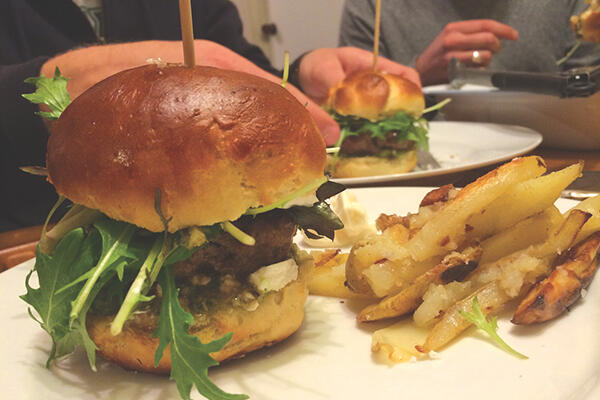
Feta & Pesto Burgers
So Sunday nights have become Burger Sundays. That’s when I make my flat (and whoever else turns up) burgers – all totally from scratch, including the buns. After a couple of texts last Sunday afternoon, our dinner for three turned into a dinner for seven. But that’s ok. The tag-alongs brought wine so the last minute notice was forgiven. This Sunday it was feta, pesto and beef burgers. You can buy the pesto but I prefer to make it myself. It’s much cheaper and has a much fresher taste. Keep the condiments to a minimum and don’t feel the need to fill this with vegetables, it is a burger after all (insert some comment about meat and buns here). I made the rookie move of buying regular over premium mince (hey, even us employed kids are poor sometimes). The patties end up shrinking to half the size and go swimming in a pan full of fat, which is kind of gross. Invest in some decent mince and do your body and your taste buds a favour. IngredientsServes 4-5 average stomachs (or 2 food comas) Patties: 500g beef mince 1 teaspoon salt Pesto: 4 cloves garlic ½ cup roasted, salted cashews ⅓ cup grated Parmesan Leaves of 1 bushy basil plant ½ cup olive oil Squeeze of lemon Salt and pepper Caramelised onions: 2 brown onions, sliced 2 tablespoons brown sugar 2 tablespoons balsamic vinegar Splash of oil A pinch of salt Crumbled feta Mesculin lettuce leaves Mayo Buns: 420g high-grade flour 1 sachet of instant yeast (8g) 40g white sugar 1 teaspoon salt 170ml milk Juice of 1 lemon 1 egg, separated 30g butter, cubed, room temperature Egg white Sesame seeds or salt flakes to garnish MethodTo make the buns, mix together the flour, yeast, sugar and salt. Add the lemon juice to the milk and let it sit for five minutes so it curdles. Mix this into the dry mix followed by the egg white and then the yolk. Stir until the dough comes together. Add the butter in small pieces and knead it into the dough, only adding the next piece when the previous piece has been totally incorporated. Knead for around 15 minutes then leave to rise in a bowl covered in glad wrap in a warm place for a couple of hours. Once the dough has doubled in size, punch it down then split it into six (you will make more buns than patties). Gently form smooth balls and leave to rise a second time on a baking tray lined with baking paper for another hour. The other alternative is to warm your oven to 50 degrees then turn it off and leaving the buns to rise in the oven’s residual heat. Preheat the oven to 190 degrees; mix the egg white with a splash of water and brush liberally over the buns. Sprinkle the tops with salt flakes or sesame seeds then bake for 15-18 minutes until they are golden and make a hollow sound when tapped. Remove from the oven and leave to cool before slicing open. In a food processor, whizz up the garlic then add the basil leaves and whizz until all chopped up. Add in the cashews and pulse until roughly chopped. Next throw in the parmesan and squeeze of lemon. With the motor running, slowly add the olive oil until you reach a consistency that you like. Store in an airtight container for up to two weeks. To make the onions, sauté the onion slices in a splash of oil until soft and translucent. Add in the sugar and vinegar and simmer until the liquid has reduced and a sticky sauce develops. To make the patties, mix in the sea salt flakes into the mince with your hands. Split the mince into four or five patties and shape into discs. In a frying pan over a medium heat, fry the patties for about four minutes either side (until they are cooked to a level of your preference). To assemble the buns, spread pesto over the base of the bun followed by the crumbed feta. Place a patty over the top and the caramelised onions on top of that. Finish off with the lettuce leaves and the crown of the bun smeared with mayo. Secure the burger with a skewer if need be. Serve with oven fries or wedges.
-
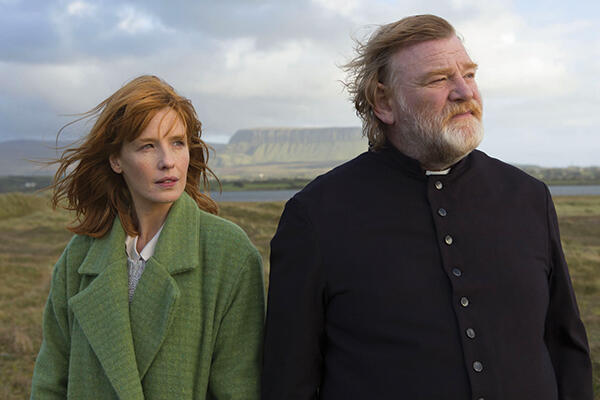
Calvary
Rating: A- Sometimes it can be hard to pick the genre of a movie before seeing it. You can be easily misled by the marketing or, as in this case, a cast comprising several prominent comedic actors such as Brendon Gleeson, Chris O’Dowd and Dylan Moran. The predominantly elderly audience and I all clearly expected a comedy. What we got instead was an overwhelmingly dark drama and, might I say, a damn good film! Calvary tells the story of a Catholic priest, Father James (Brendan Gleeson), in a small Irish village. It begins in a confession booth, where a parishioner divulges that a priest raped him as a boy. He explains that because the rapist has died he intends to get his revenge by killing Father James instead, in seven days. The film tells the story of the week after this event, and, for the most part, Father James ignores the event and carries on with his life. What we get is a snapshot of the life of a modern-day Catholic priest, and how he deals with the reality of our modern world, being confronted with adultery, violence, suicide and homosexuality. Impressively, the script never takes sides. The Catholic Church and priests are certainly not presented as enlightened or particularly good, and likewise the people of the village, despite being often vulgar and unlikable, aren’t presented in a particularly judgmental light either. Rather, the collision of these two worlds, aside from creating an engaging story, act as a platform from which to consider the place of religion in an increasingly secular world. This is made even more poignant by the focus on Ireland and the Irish people, considering that they spent centuries fighting and dying for the right to be Catholic. Despite the great script, many of the performances were uneven. This cannot be said for Gleeson, however, who gave perhaps the most evocative and powerful performance of his career this far. Going in, it is important to know that Calvary is a heavy movie. But considering the power of the story and the poignancy of the themes, it’s definitely a weight you should consider shouldering.
-
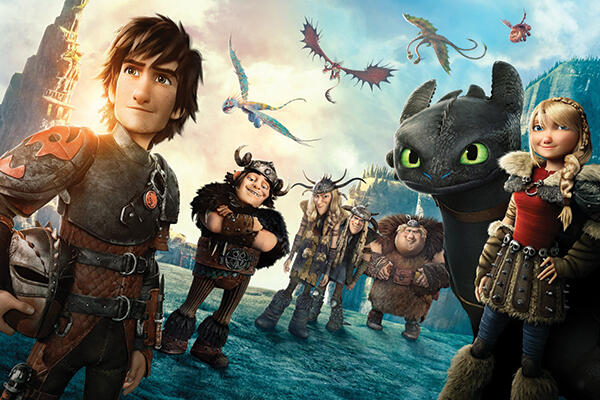
How To Train Your Dragon 2
Rating: B+ How to Train Your Dragon 2 is like one of those shape-sorter toys. It’s not complex, and every emotion fits into perfectly shaped slots. The square block fits in when the young hero acts plucky. A heart-shaped block whenever the pet dragon is adorable. A teardrop block when the inevitable sad thing happens. It’s a good film, but not revolutionary. The story picks up five years after How to Train your Dragon left off. The Vikings and Dragons are now best friends. They play Quidditch with sheep, fly about having adventures, and it seems like fun. When this cheerful way of life is threatened, our hero, Hiccup, must muster his courage and his dragons, etc. You know the drill. I’m not going to say the animation is visually stunning, because that would be inane and lazy, but the shapes on screen are sufficiently shiny. The story may be a stock sequel, but the voice work and script is surprisingly engaging. Craig Ferguson and Kirsten Wiig’s characters are especially lively. Dragons are undoubtedly the best thing about How to Train your Dragon 2. The film is a constant rainbow parade of winged reptiles. Dragons are captivating creatures in any story and the filmmakers know it: all dragons, all the time! Toothless and Hiccup’s friendship got the tear ducts working, and Toothless has managed to worm his way onto the list of “Ella’s Fave Drakes” through his open shows of affection. In fact, I was a little jealous. During the break, all the love I got from the family cat, Jervis, was a half-hearted nuzzle when she wanted to be fed. How to Train your Dragon 2 was emotionally engaging and genuinely entertaining. As sequels tend to, it lacked some of the lustre of the original. A solid effort from DreamWorks, worthy of a Friday night date with your duvet, but maybe not a trip to the cinema.
-
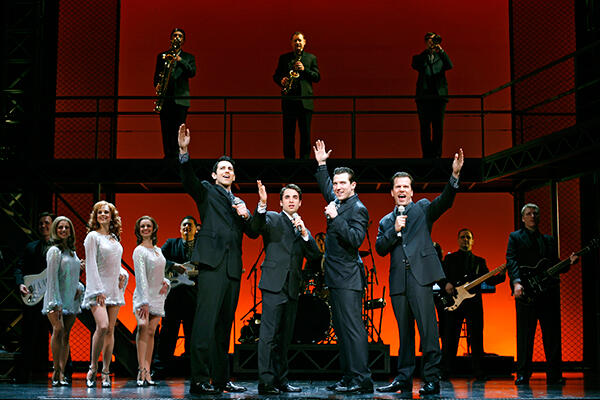
Jersey Boys
Rating: B- Let me start by saying that Jersey Boys the stage musical is SO FREAKING GOOD. Following the true story of the mob-associated New Jersey lads’ rise to fame as the squeaky-clean pop sensations The Four Seasons, it included dozens of impeccably-performed hits that you had no idea came from that band. So how did they manage to turn it into such a shit film? Film adaptations of stage musicals are always risky business, not least because they take away the most thrilling element of the original: live music. However, some have succeeded through offering the viewer that which could not be created on stage, the most enthralling example being Rob Marshall’s Chicago (2002). With its fantastical dream sequences, elaborate sets, and superb acting, Chicago gave us everything we couldn’t see on stage, making up for what we couldn’t hear in film. And that’s the problem with Jersey Boys; instead of combining the strengths of each medium, it combined the weaknesses. It kept the two-dimensional characterisations and clunky dialogue eminent in stage musicals, and married it with a prominent lack of musical performance. What’s the point in that? Although the songs of The Four Seasons’ proliferate in the film, it’s usually as non-diegetic sound playing over top of a montage, under dialogue or, worst of all, in diners where the band are eating. So much of the joy of the musical is seeing four men in matching suits standing behind microphones, following small but succinct choreography. But this was minimal in the film, as although we heard the songs often, we hardly ever saw them actually being sung. This was even more inappropriate considering the lead, John Lloyd Young (who won a Tony Award for Jersey Boys the stage musical) was clearly cast as Frankie Valli for his voice, not his acting chops. Ironically, the end credits’ high-tempo theatrical montage was exactly what I wanted from the entire film, which instead was a dreary, overly-factual chunk of average. Don’t try to make a musical realistic, Clint Eastwood; all we want is a little sparkle!
-
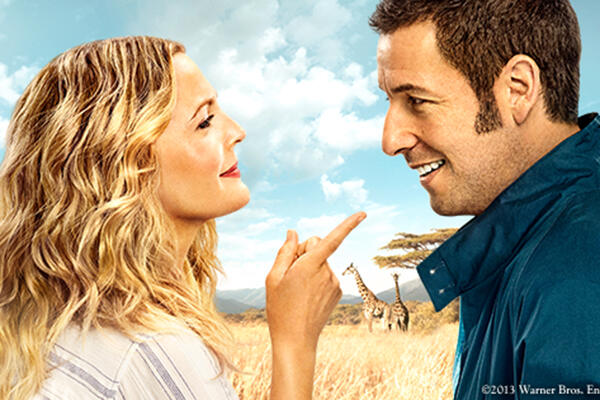
Blended
Rating: E Movies, like any art, reflect the culture that created them. If any aliens were to pick up the tired romcom Blended and draw conclusions about our planet’s cultural values, unfortunately they would be morally obliged to vaporise us all immediately. Formula: Adam Sandler is too slobby, Drew Barrymore is too uptight, UNTIL ONE DAY THEY MEET, blah blah, misogyny, blah blah, Viagra and tampon jokes. He can’t raise his daughters, and she can’t raise her sons, BUT TOGETHER, blah blah, date-rape jokes, blah blah, plagiarising The Brady Bunch, something something, happy ending. The first thing apparent is the crass sexism of the writers: males are loud; females are emotional; lesbians are gorillas. The only path in this film for boys to become men is to succeed at baseball and shun empathy. Equally, the character of Sandler’s daughter was revolting for giving up on her own potential, much like Grease’s Sandy, having learned that getting a foxy makeover and winking at the rebellious boy in the leather jacket is the only path to success and happiness. Apparently the writers of Blended believe that boobs and promiscuity maketh the woman, and bats and balls (sorry) maketh the man. My next gripe is that these first-class imperialist assholes travel on a luxury holiday to Africa (it’s all one country) and act like their petty bickering is important. Uh oh, disastrously embarrassing photo on someone’s smartphone while parasailing! Um, has anybody heard of fucking conflict minerals? Child slavery? Land mines? Desertification? The IMF? And what’s this? Every white family gets a complimentary troupe of singing, dancing, African simpletons! And every non-white, non-western character is a servant for a white westerner! We are now back to a 19th century level of racism. Way to imagine cultures complexly, there. Lastly, the animal cruelty. With riding ostriches and driving quad-bikes directly into a herd of elephants, reminiscent of the horrifying “family classic” Swiss Family Robinson (1960), Blended normalises the idea that animals only exist as entertainment for humans. This is your culture. Shame on all of us.
-
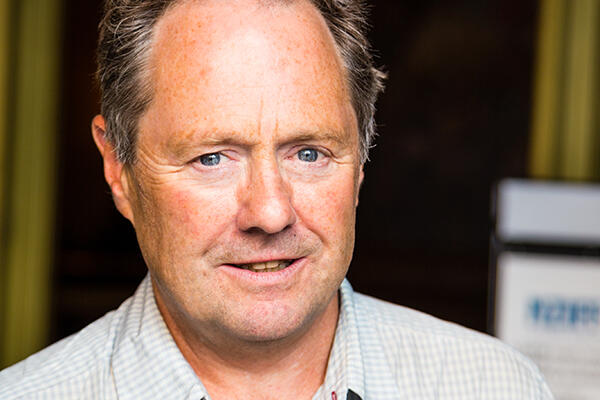
Interview: Bill Gosden - International Film Festival Director
In the Auckland and Wellington International Film Festival, there is between 150-170 films playing. And slightly less in Dunedin? Yes, but Dunedin is quite big. I haven’t counted exactly but it’s in the mid 90s. The thing is, with the availability of everything digitally, the time has now passed when the new films from Cannes only had two or three subtitles prints in the whole world. So we’d play them in Auckland and Wellington, then send them to the Melbourne Film Festival that we’ve always worked with quite closely. But now, because they’re just duplicable files, there are more films available than ever. With such a vast array of films, how do you go about the selection process? It’s a continuous process. There will be a few films that showed at the Cannes festival this year that we missed out on, or didn’t even choose to pursue for one reason or another, which may well end up on our programme next year. There are three or four films on this year’s programme that were in Cannes last year. The process never really stops. My colleague, Sandra Reed, who lives in Paris, does a lot of our programming. She’s continually watching films, and Paris is a great city for doing that, of course. She also goes to the Cannes Film Festival. How much do you have to think about the balancing act of selecting films for different kinds of audiences? There is a certain degree of that. We certainly recognise that there needs to be quite a few films in the programme that are going to please a wide audience, to ensure we have the numbers to sustain what we’re doing. Unlike most festivals elsewhere in the world, we are largely funded by box office sales. Last year, 87 per cent of our income was drawn from ticket sales around the country, which is pretty unusual for an arts organisation in any country. Every year the Festival is so wonderful for supporting Kiwi film. Are there any filmmakers you are particularity excited about? The comedy horror film Housebound is very good. It’s funny and quite original; so much of its success is that the characters in it make a certain amount of sense. They are not stock horror movie characters. It’s about a truculent, delinquent teenage girl and her very “mumsy” mum, a real kiwi type, brilliantly incarnated by Rima Te Wiata, who’s so funny. It is a very devious and complicated plot. In your job, do you get much of a sense of how New Zealand film is performing on the world stage? I watch individual films more than having a general sense of any kind of trend, but there have been quite a few films in the so-called exploitation genres that have done quite well commercially outside of New Zealand. And I imagine Housebound will have financial success for the makers outside of New Zealand. It certainly has amazing reviews out in South by Southwest. You must have seen many changes take place in the industry. How has this affected New Zealand film, or has New Zealand not been affected by all of these changes? I don’t think New Zealand has ever been ahead of the game, we’ve got to remember most exhibition and distribution is run by large entertainment corporations that are not based in New Zealand, and they pretty much define the key spaces and what’s improvised around that. The Film Festival is unique in New Zealand by being a national event that travels to so many different cities. I don’t know of any other country where the Film Festival is quite the same as that, although some festivals have travelling components if they tour around smaller towns in their neighbourhoods. That’s not quite what we’re doing; we are presenting that same programme in Auckland and Wellington, and a huge chunk of it in Christchurch and Dunedin as well. So that’s a particularly New Zealand response. It carries disadvantages for us these days, in the sense of there is an increasing amount of atomization of the cities, which has been painfully clear in the response to Open Wire, which opened this week. There’s this sense that Christchurch is quite isolated from the rest of New Zealand, but not just in Christchurch’s mind. There’s a dialogue of “why can a Wellington filmmaker make a film about Christchurch?” It does my head in; we’re such a tiny country and the filmmaker is a well-established chronicler of history and social change in this country. Looking at the Festival programme, a few films jumped out at me for their innovative filmmaking techniques such as 20,000 Days on Earth and Boyhood. Boyhood, which I’ve seen and which I love, is definitely one of the year’s outstanding films. I think what Richard Linklater had there was a very intuitive sense of something quite intrinsic about film, and its ability to capture the impact of time on people. Everyone loves the Michael Apted Up series. Certain people of my generation grew up with these films, where the filmmaker made a documentary about a whole lot of seven-year-old kids, and visited the same people every seven years. When you see those films now, you see the children as seven, 14, 21, 28 through to 56, which was the last one. There is something about that which is very gripping. Richard Linklater taps into that, but he’s done it not with documentary but with fiction. There was a fascinating piece in a recent New Yorker that was full of things I didn’t know about Boyhood when I watched it. A lot of it was about the relationship between the boy and his mother being very much based on Richard Linklater’s own relationship with his mother, and he talked about the enormous difficulty he had in showing her the movie, as she is a very distracted mother during some quite key moments in the child’s life. If you were a poor student who could only afford two or three tickets, what would your advice be? I would take advantage to see films at the Regent – I’d see Under the Skin and the Nick Cave film and, after that, Housebound. Gerard Johnson, the filmmaker, will be in Dunedin for the screening, which will add an element. The rest is up to individual fantasy and choice as there is such a wide variety on offer. I do say Boyhood is a film I would recommend to absolutely anybody. It would be interesting for people who are students now as it ends on the central character’s first day of college. It’s about people who grew up in exactly the same years, and listened to exactly the same music as students now. And of course you studied here in Otago. Yes, my degree is in English literature, but I spent most of my time at the movies ...
-
The Name of the Wind
The Name of the Wind by Patrick Rothfuss is the first novel of a trilogy known as “The Kingkiller Chronicle.” This debut fantasy novel has quickly garnered critical praise for its style and creativity. A unique prologue foreshadows an original take on the hero’s journey. It features beautiful, flowing prose that creates an uneasy and eerie silence to heighten our anticipation that, like the calm before a storm, something wicked this way comes. When we first meet the main protagonist, Kote, he appears to be nothing more than a lowly and weary innkeeper, seemingly disenchanted with life itself. Downcast, his silence is described as the “patient, cut-flower sound of a man waiting to die.” Yet as a strange and sinister evil begins to advance, Kote finds himself directly in its path. When he rescues a travelling scribe, named Chronicler, from certain death, it is revealed that Kote is none other than Kvothe, a figure of insurmountable legend. As an unmatched swordsman, gifted musician and brilliant actor, Kvothe’s reputation has swelled to monstrous proportions, leaving everyone uncertain of the truth. As Kvothe retells his story to Chronicler, he promises to truthfully account for the strangest feats he has been attributed with. At this point the novel slips into the first-person narrative, with brilliant warmth and humour, as the story of his youth begins to unfold. “I have stolen princesses back from sleeping barrow kings. I burned down the town of Treborn. I have spent the night with Felurian and left with both my sanity and my life. I was expelled from the university at a younger age than most people are allowed in. I tread paths by moonlight that others fear to speak of during the day. I have talked to Gods, loved women and written songs that make the minstrels weep. My name is Kvothe. You may have heard of me.” Central to this novel is the motif of storytelling. Importantly Kvothe is retelling the harrowing events that lead to an adolescence struggling to evade poverty and fuelled an all-consuming obsession with the mysterious figures known as the Chandrian. In a wider sense, storytelling permeates the novel in folksongs, olden mythology and children’s stories, which frequently resurface in different settings, hinting at the origins of the Chandrian. Kvothe himself advocates the importance of folklore, “You’d be surprised at the sort of things hidden away in children’s songs.” The clever structure contrasting the magnificent deeds of the young Kvothe and his current situation as an innkeeper builds a powerful suspense. As his personal trials are revealed, the reader becomes increasingly anxious that Kvothe in the present day may not be able to rally his spirits in time to vanquish the oncoming evil. Furthermore the occasional intrusion of the third-person narrative develops a richer exposition than can be achieved in first-person narrative alone. This exposition is integral to the thorough world-building in this novel, proving once again that this dual-narrative artfully contributes to what makes this novel so compelling. The Name of the Wind skilfully pokes fun at tropes that the fantasy genre has worn threadbare, and breathes fresh life into the genre. This novel has everything: strange creatures; awe-inspiring magic; tremendous action; and compelling characters complete with bothersome rivals. It is an outstanding fantasy novel and is likely to delight readers that are fans of J.R.R Tolkien, J.K. Rowling and George R. R. Martin. The only constructive disclaimer I can add is that at times this novel can be something of a slow read. However, the action that is slow to surface is well worth the wait and it is more shocking because it is withheld for so long. This first instalment leaves many questions unanswered, undoubtedly leaving the reader wanting more, as Rothfuss proves to be a master of suspense.
-
Yona Lee - Specific Objects
Blue Oyster Gallery Exhibited until Saturday 26 July Yona Lee is a Korean-born artist (and former cellist) currently residing and working in Onehunga, Auckland. She acquired an MFA from Elam School of Fine Arts in 2010, leading to her most recent exhibitions including Tangential Structures, Enjoy Public Art Gallery, Wellington (2013); Line Works, Art Space, Auckland (2012); Composition, Te-Tuhi Centre for the Arts, Auckland (2012); and Constrained Organism, Open Window and Govett-Brewster Art Gallery, New Plymouth (2011). On the objects she chooses to display in her sculptural forms, Lee writes: “I am interested in the things that are usually hidden, and things that are not a subject matter but rather a supporter. These banal objects or tools are humble in that they don’t demand other’s attention of their existence. My desire is for these hidden objects to receive the same amount of focus as the work itself and reveal their hidden beauty. Their humble existence is beautiful.” We can see in Specific Objects how Lee has used every day objects, such as paintbrushes, scissors and earmuffs, to draw attention to the changing role of such objects in the post-industrial world. Each object hangs from various rods of steel that erect from the heart of each sculpture, like withered fruit hanging off dead twigs. Lee’s use of steel is appropriately made less aggressive and definitive by its curvy construction, displaying Lee’s interest in the utilisation of industrial materials in the modern world, and the objects attached to various parts of the rods (as aforementioned) suggest the shift from a industrial/labour driven economy, to the creative/capital-culture economy that we currently find ourselves living in. While still in conversation with minimalism and formalism, stylistically, Specific Objects does divert both aesthetically and conceptually from previous exhibitions. In Composition (2012), Lee’s artistic enquiry melds the formalism of classical music with an exploration of space and industrial materials, reminiscent of 1960s minimalism. Through this work, Lee enters into a conversation with the legacy of minimalist artists such as Sol Le Witt and Fred Sandback. Her reference to classical music, however, derails this association to problematically introduce sentiment within the piety of formalism. In Specific Objects, the shown objects and steel structures stand more singularly superior to the space in which they are being shown. Lee has used a machine that bends steel using different sized discs. Lee compares her engineering of the rods to playing the cello, saying: “You have a limitation of sound that you can produce, but within that you do have a lot to work with.” Lee takes her exhibition title from Donald Judd’s seminal minimalist text written in 1965, in which he passionately espouses his views on the use and effects of industrial materials in sculpture. In this text Judd wrote: “Formica, aluminium, cold-rolled steel, Plexiglas, red and common brass, and so forth. They are specific. If they are used directly, they are more specific. Also, they are usually aggressive. There is objectivity to the obdurate identity of a material.” Lee’s evocation of this text traces the shift in ideology around the material object. Here Judd’s notion of the “specific object” (one, seemingly of pure form and objective materiality) becomes a counterpoint to contemporary conceptions of the material object as amorphous—as continually constituted by the slow warp of cultural thought. In Specific Objects, through Lee’s meticulously measured, cut and welded rods of steel, combined with the lingering presence of mass-manufactured objects, Lee draws attention to the dramatic shift in the ecology of the object as its identity changes with the rise of the immaterial, post-industrial phenomena. Lee ultimately makes a metal mockery out of millennial materialism and it is banal brilliance. Stylistically fresh, and on for another week, this exhibition is not one to be missed.
-
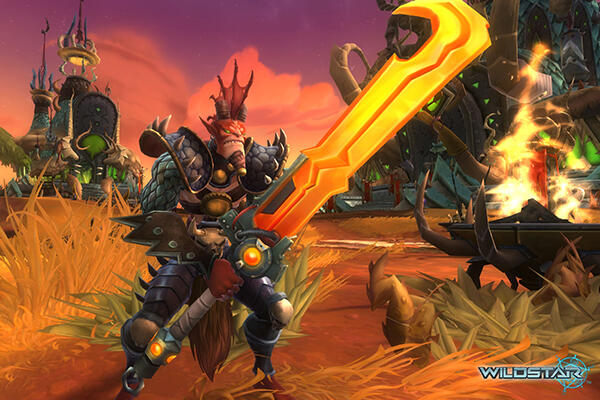
Wildstar
Rating: A- Here’s the little spoken truth about MMORPGs: they’re actually in many ways mediocre games. Take any aspect from a non-MMO game, gameplay, graphics, design, story, and compare it to any MMO and it becomes quickly apparent that nearly every aspect is just a watered down version of a dedicated single player or multiplayer experience. So why then, you may ask, do millions of people dedicate their lives to MMORPGs if they aren’t as good as other genres? For many that answer is more abstract than is typical, in that the real draw of MMORPG comes from the world itself. From how the art, characters, avatars and players combine to make an MMORPG more than just a digital space, but a community, a sanctuary, a magical world in which you get to exist, interact and live as something or someone greater than yourself. I have played in many of these worlds, but never have I felt as at home as in Carbine Studios’ Wildstar. A large aspect of how successful the world of an MMORPG is comes down to tone, in that it changes how it feels to interact with the world. The true strength of Wildstar comes from every aspect of the game, from the dialogue, to the character and monster design, to the aesthetic and layout of the world that is as pleasant and comforting as a warm bath. From the moment my character appeared on screen, I felt an affinity to the world I was exploring as though I really was part of it and always had been. This sensation is owed partly to the approach of the narrative, which understands that players of MMOs rarely invest in the story, but invest in the tone of the game instead. Wildstar takes nothing seriously, including itself. Every aspect of the world is over the top and goofy, making participating in it relaxed and fun, but still grounded within an over arching narrative concept which gives you a place within the world. Wildstar takes place on the planet Nexus, which was once ruled by a hyper-intelligent alien race, the Eldan. However, they disappeared an eternity ago, leaving the hospitable planet free to be colonised. You play as one of two factions comprised of four races each. The Dominion is a faction forged by the Eldan, with the goal of galactic domination, the Exiles are four races driven from their planets by the Dominion and allied with the goal of destroying them. Whichever faction you choose, your ultimate goal is to claim the planet Nexus for your people. This quest will see you exploring the planet, completing quests and developing your character as you progress. Many of these mechanics are fairly standard fare, often being clones of mechanics seen in many MMORPGs, such as fetch and grind quests and a standard levelling system. However, I would argue, that this is a pragmatic decision on Carbine’s part. Many times over the last couple of years developers have tried to develop new mechanics for MMORPGs and players have done nothing but complain. So, gamers: you have spoken, these are the mechanics we are going to get from now on. This isn’t a bad thing, of course; many of these components are evolutions of how we have seen them in the past. For example, the game introduces a new sub-set of quests based on how you like to play. At the start of the game you choose a class that has a focus on areas such as combat or exploration. This decision opens up your own set of quests throughout Nexus that offer you opportunities to enjoy that play style. In a similar vein, the combat of Wildstar is derivative while still being innovative. Like most MMOs, the combat consists of queuing up timed actions. However, while actions have set durations, players can still move around while casting, requiring you to aim your attack within a certain radius of your enemy. This twist has instantly made an age-old mechanic instantly dynamic, by adding a level of strategy to both aiming your attacks and dodging your enemies at the same time. The skills that you use are plentiful; due to the fact that players can custom build skill sets from several different skill trees. This means that not only will your character look distinct from others, but it will play distinctively also. It is hard to explain to people what is special about MMORPGs. Perhaps they are something that has to be experienced to be understood. Wildstar is certainly worth the effort.
-
New this week / Singles in review
Viet Cong - Throw it Away Throw It Away (Single) by Viet Cong Viet Cong is comprised of the former members of noise pop band Women. “Throw It Away” is the single from their newly released EP, the aptly titled Cassette. The track also catches the band at it’s most straightforward and catchy. Features some angular, flowery guitar playing and some cool off-kilter basslines. Speedy Ortiz - Bigger Party Massachusetts band Speedy Ortiz contribute a track to the always great Adult Swim Singles Series. “Bigger Party” is a dirty, grungy, in-your-face track. Songwriter Sadie Dupuis is in top form as she fearlessly sings, “I’m sorry for the time that I made out with all your friends, I’m really a shit head.” The instrumentation is equally as chaotic and ridden with frustration. Bat for Lashes - Skin Song Bat For Lashes is the moniker for English musician Natasha Khan. “Skin Song” is her contribution to a compilation titled Body of Songs, an intriguing project to be released in 2015. It explores how medical science has the ability to influence music, with each song featuring a different part of the human anatomy. Doprah - Whatever You Want Doprah are a group on the rise. Not only have they recently signed to Arch Hill records, they have just released an extremely strong debut EP. “Whatever You Want” is a track from that release, and features hook after hook. The song is dark, ominous and dream-like, as layer after layer begins to unravel. The chorus is as memorable as anything. Christopher Owens - Stephen A few years ago Christopher Owens left well-loved pop band Girls. Since then he has released a solo album and is now on the verge of releasing another one. The track “Stephen” showcases his ability to be a musical chameleon as it heads in the fully-fledged gospel territory. Known for his honest, heavily personal lyrics, the track deals with his crazy upbringing and his often strained relationship with his dad.
-
Ought - More Than Any Other Day
Rating: A Ought are a four-piece based in Montreal, More Than Any Other Day is their debut release. The record is an interesting conglomeration of different musical spare parts and personalities. Whilst taking cues from art punk forefathers such as Television, The Talking Heads, Wire, Slint and Joy Division, the band have somehow fleshed out something truly themselves. With angular, glassy-edged guitar playing, and almost jazz-like bass playing, what stands out most is frontman Tim Beeler’s vocals and unconventional lyrical leanings. Dynamically he is one part Ian Curtis and one part Frank Black. Spitting out verse after verse with intense restraint and every now and then breaking loose, charging his often spoken words with furious inflection. The album is eight tracks long but stretches out to hit an impressive 46-minute mark. Each track taking up about an average of six minutes or so. These tracks are lengthy compositions, and aren’t quite products of straight-up pop songwriting. Not to say that there are no hooks or the record is hard to consume or understand, but these tracks are more a vehicle for passion and individuality than a piece of ear candy to be easily consumed. Overall More Than Any Other Day flows seamlessly between strange lyrical musings and noodly but focused musical interplay. Sometimes funny, sometimes outrageous, each track has something that merits its spot on the album, however some standouts include “The Weather Song,” “Around Again” and title-track “More Than Any Other Day.” A refreshing debut from an up and coming group.
-
Interview: I Am Giant
I Am Giant are back in New Zealand for a nationwide tour. They touched down in Dunedin on 18 July to play at student bar Re:Fuel. With a new album under their belt and a lot of excitement brewing, Adrian Ng caught up with the band right before the craziness began. How long has it been since you guys were back in New Zealand? We were there in the summer just gone, so about five months ago. You recorded Science and Survival in France, can you tell us about that experience? We were given the use of an amazing hi-spec studio by our sponsors DC Shoes in their headquarters in St Jean De Luz in the south-west of France. The region is really beautiful so on our days off we did some looking around. It’s a big surfing region ... Amazing beaches but you’ve also got the Pyrenees Mountains like 15 minutes away. It was the middle of the European summer when we were there so some days it was hard sitting in the studio recording when it was so nice outside. It’s the kind of place I’d like to spend a lot more time. Recording wise it was all day, six days a week, for eight weeks. We had Forrester Savell producing and engineering for six weeks of that time, which was great. Forrester also recorded our last album. After eight weeks we still didn’t have it done and it took, like, another 12 or so back at my studio in London. Was it much of an evolution compared to the recording of The Horrifying Truth? I think we were more comfortable pushing things on this record, and since releasing The Horrifying Truth we’ve settled into our sound as a band a lot more. So I think the songs are better, and it’s a heavier, edgier, moodier, more explosive record. What was the songwriting process like? What did you draw inspiration from? Lyrically, the inspiration was whatever was going on in our lives at the time of writing, so they’re a collection of stories, thoughts, and reflections from the past few years. Musically, we collected up all the ideas we had from the past six years, even some old ones, and picked the ideas we thought would contribute to make the best record. We were favouring some of the heavier tunes and there was a kind of ‘90s alternative undertone in some of them we were digging, so we kind of focussed on that a bit. When it came to putting all the tracks together on the record, we wanted them to intertwine and flow in one motion and be a journey for the listener from beginning to end. You guys have been on tour pretty much non-stop, any standout moments? We just played a Polish festival called Orange Warsaw in the brand-new national stadium in Warsaw. Amazing gig. It was huge and so cool to have a following there so far from home. After we played, they gave us a corporate box at the top of the stadium, with our own waitress to share with Jurassic 5 and Bring Me the Horizon. So we watched the whole Outkast set from there. It was a standout moment for sure. What is the music scene like in London and how would you compare it to New Zealand? If I’m really honest, I probably stay in my studio a little too much to be a London scene aficionado but it’s a HUGE musical environment. So many bands playing every night of the week. It’s very dance and electronic heavy ... Even the live rock and pop tends to lean that way. The London rock tends to be more indie and have cleaner, less distorted twangier guitars ... Either that or it’s really heavy, super-munter inverted-crucifix-on-their-lunch-box kind of vibe. Aside from the fact that it is so much bigger than NZ and allows for more variety and musical mutation, I think NZ rock tends to draw more influence from the US than the UK. Any favorite records you’ve been listening to at the moment? Tom Petty and the Heartbreakers’ Anthology has just been playing on the van stereo. That will always be a favourite. That guy is a master songwriter. Finally, do you have any memories of playing in Dunedin? Yeah, we played at the Dunedin Town Hall a few years back with the Black Seeds and P-Money ... That was a cool venue to play and, being a big student town, Dunedin is always a party and a lot of fun.
-
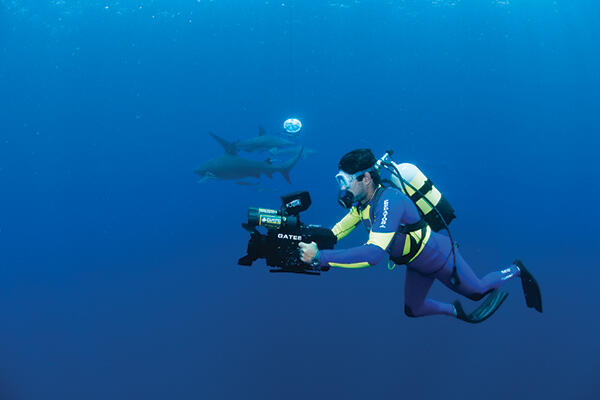
Interview: Ryan Johnson - Great White Shark Expert
You moved from New Zealand to South Africa to pursue your career looking at the Great White Shark? Well, I was primarily a zoologist and I finished my undergrad work and I suffered from what a lot of Kiwis suffer from – you want to go off and see the big world – but I wanted to carry on with my postgraduate studies. I was really lucky that one of my professors had just come back from South Africa and she gave some awesome lectures about all of the incredible wildlife over there. This is when you were at Waikato? Yeah. And I asked her whether she could help me get across, and apartheid had just finished in South Africa a few years before that, so she got hold of the university and they accepted me across so I went over there. My first year I was in Pretoria, which is land-locked and it was incredible to work with all the lions, elephants, and all this really big, charismatic African game, but I realised then how much I missed the ocean. And what happened in 1998, there was a massive spate of Great White Shark attacks in South Africa and a lot of people were blaming this new activity, which was White Shark cage diving. So the government got involved and put a call out for research to be conducted to see whether the cage diving was in fact – Cage diving, as in a touristy sort of thing? Yeah, shark tourism. So basically, I saw that up on my department wall and thought, “Hey, that’s for me. I get back to the ocean and I get to study the Great White Shark.” Because, as a zoologist, that’s your dream. So I applied for it, and basically I had to go and live on an island for a year. When a lot of people realised that was one of the requirements – this was an island that was one kilometre long by 200 metres wide – they pulled out of the running, so I think I was the only candidate left. I got it and that sort of started me off. So when you say that you were missing the ocean, where did that come from? Did you always have an eye to marine biology when you were studying zoology? Definitely. I was always moving towards marine biology. I remember in the Uni Col yearbook – my first year [at Otago] – you had to put down your dream job and it was to study goldfish or something crazy like that. But I grew up in Mount Maunganui and stuff and you just grew up on the beach and, you know: you row; you play in your nippers; you surf – and you’re doing everything and you don’t actually realise at the time how intricately aligned with the ocean you become and what impact it has on your childhood. You know, how many Kiwis surf, row, sail, and everything – it’s just really a part of our culture. And I think when New Zealanders are moved away from the ocean that’s when it really becomes apparent just how close we are to it. Interesting. And so you obviously did a lot of recreational activities on water – were you into fishing and all that sort of stuff? I fished when I was young – my dad used to take me fishing – but when I was about eight years old my dad stopped. I asked him why and he basically didn’t like killing animals anymore – killing fish. So that type of consumptive utilisation or activity sort of dropped off my radar as a kid and it became recreational snorkelling instead – just to go out and look at the animals. And a lot of sport – the rowing, the surfing, the life saving – all these kinds of things. So then in terms of the opportunity that presented itself to you in South Africa, do you think it’s important for New Zealanders to go abroad, to look for those opportunities? So if you were a marine biologist in New Zealand, do you have the same level of opportunities as you’d have in South Africa or elsewhere? I think South Africa is an incredibly special and unique place in terms of wildlife. I don’t think anywhere in the world, whether it’s the marine or terrestrial wildlife, has such a diversity, particularly of big, charismatic animals. Literally, where I live in South Africa I can drive 15 kilometres and I can see lions, elephants, hippos, Great White Sharks, southern right whales, dolphins, anything, You can not actually picture or imagine how accessible those big, charismatic animals are. So if you are interested in that type of work and that type of research and those animals then I think, unfortunately, New Zealand does come second. But in saying that, I do think that New Zealand does have its own very unique wildlife – and incredible diversity as well. It’s possibly not as big and charismatic [as South Africa’s], with New Zealand being a small island, but there are definitely opportunities. I think the recent realisation of the big Great White Shark populations down around Stewart Island and off Chatham Islands, there’s a great opportunity for shark biologists. In terms of shark research and shark biology, I think it wasn’t popular for many years in New Zealand because nobody really cared about sharks; it’s only been the last five or ten years that it’s really started to get a foothold here in New Zealand. There are some really exciting biologists that are coming up through the grade here. And I think there’s still a lot of scope for it, for more people to get involved. And that population off Stewart Island – is it a migratory population? Are they only in our waters at a certain time? I know there’s been some satellite tracking going on there and – I don’t know about the seasonality of it – but it’s definitely a migratory species and it seems to move from that Stewart Island area up to either the North of New Zealand or even across to Australia on a yearly basis, migrating back and forth, which is pretty cool. But I don’t know a lot about it. Yeah, it’s interesting because you don’t hear too much about the Great Whites in New Zealand. And so, why do you love the Great White so much? Goodness. If you could take every aspect of a huge, exciting, charismatic animal and stick it into one creature it would be the Great White Shark. You’ve got an evolutionary history that is incredible – not only of the Great White, where you’re talking of 420 million years that they’ve evolved separately. You’ve got, along with the Orca, the ocean’s greatest predator. And what was also really intriguing for me from a scientific perspective was that everyone was focused on one aspect of their life history – that they can bite humans. When I started researching them and started going through the literature I realised very little else was known about them. So you’re a young biologist starting out and you’ve got this huge, great charismatic species that suddenly you’ve discovered this really easily studied population of them off South Africa and you realise that nobody’s done much, or hardly anything, on them, and you’ve got this smorgasbord of research questions that you’ve got to answer. It’s the dream of any biologist. I guess that’s a rare opportunity if you are scientifically minded. Because there’s often that misconception that all the big discoveries have been made, so it must be exciting to find something like that! Well, you know, that was one of the frustrations when I went to Pretoria was I thought I was going to have, you know, new questions about elephants, or hippos. But these terrestrial animals have been studied for fifty – one hundred years in South Africa and there’s very advanced science about them. And when I got down to the Great White it was just an open book – a blank book – that I could just delve into and find what interests me and just go for it. Yeah I can certainly see the excitement in that, definitely. And so what are some unique challenges to studying them, then? I read somewhere that they’re quite difficult to track. Didn’t you first track the migratory pattern of the Great Whites? Yeah, I think your main challenge to studying a Great White is the environment. There’s that natural barrier between terrestrial and marine life. As a human you have to breathe air, so to study any type of behaviour in fish, somehow you have to be able to study them under water. What happened was a couple of years after I started, all of this technology that was initially developed for the Navy and for tracking submarines and enemies, started being moved across to be able to be applied to animals. So you had acoustic tags, all these satellite tags coming out, everything like that. When I scrounged up all the money and managed to get all these tags, suddenly you were able to utilise this very sophisticated technology for the first time to really start studying these sharks, particularly their movements and migrations. That was the biggest challenge, because it’s such a new science. But it’s also been the most rewarding because, you know, we’ve been able to document the greatest migrations of sharks anywhere in the world from our work in South Africa. So back to people and their misperceptions of sharks – do you find that you hate media portrayal of shark attacks and such? That’s it’s really sensationalised and, you know, do you hate Jaws? You know, it could be improved but I understand it. I understand that the media produces what the reader or viewer wants to hear. And shark attacks are always going to be a story that captures the public’s imagination. And the media is a slave to that and it’s going to respond to that. I’ve been asked a number of times why I take on those kinds of jobs and positions in the media that do potentially portray the sharks in possibly a negative light, or a light where their man-eater aspects are played up a lot. And it’s a hard one to answer, but the reality is, if me as a semi-educated scientist who has a mature approach to it, doesn’t take in those positions then someone else is going to and it’s more likely that person will have no problem portraying the White Shark in any manner that’s not accurate. So at least being able to step in and take that and hopefully guide and educate and inform the media so that there’s still someone selling the magazine or the documentary, but there’s a little bit of a deeper insight. And so by making documentaries as you do, do you feel that you’re slowly changing that media landscape? Definitely. I’ve worked on some wonderful documentaries that have really started portraying the diversity of behaviours or the intrigue of the Great White as a species, rather than playing off the interest of the Great White as a man-eater. And when I’ve gone about these and you see how particularly kids and stuff start understanding and interacting and talking about Great Whites as more than just a man-eater, it’s very rewarding and you know by taking that place in the mass media and making those documentaries and feeding it out to millions of people, that you’re actually doing something good. I always get drawn back to sharks because I know, of all the marine species in the water at the moment; the sharks are the ones of most interest. You know, in the ‘80s and ‘90s, the demand for shark product and in particular shark fins, skyrocketed. The demand sort of outstripped the science known, the resource management known, there was nothing that could match the demand for this fin soup. So suddenly the sharks were being all fished out and there was no management plan so there were no conservation efforts; there was no research. So it is really important that all the scientists involved in shark research really buckle down and start getting this data because if it’s not there the demand won’t be stopped and we won’t have sharks.