
-
Columns

Editorial | Issue 15
Let’s be fair – as the editor of a student publication, I naturally love a bit of scandal. I’ve chased trouble by publishing my opinions since early high school. It will be no surprise, then, that I was initially having the time of my life last week when Critic Politics Editor Carys Goodwin’s profile of Dunedin South MP Clare Curran (issue 14) was the source for the third-to-top link on the front page of Stuff. Initially titled “Clare Curran breaks sledge pledge,” however, the article was a completely twisted and poorly researched sledge in itself. The context is that last Sunday 6 July, Labour “leader” David Cunliffe announced a pledge that Labour would run a positive election campaign that doesn’t include “smear campaigns and a personality cult,” implying that the usual personal attacks seen in politics should, in theory, be out the door. Critic’s profile of Curran includes her letting loose on such shining personalities as John Key, Chris Finlayson and Jami-Lee Ross. The scandal almost sounds justified at this point, right? The problem lies in the fact that Curran’s profile in Critic was published online at about the same time as Cunliffe’s announcement. It is thus not too difficult to deduce that the interview with Curran was carried out before the announcement. In fact, as the original Critic article states, the interview took place after Curran’s appearance on Vote Chat. That was 23 May. The irony is even more painful when you take in to account that this article was written by Andrea Vance, who won the award for Reporter of the Year back in May for her work in uncovering the GCSB scandal. People are very quick to criticise New Zealand media - the fact that this was the practice of our country’s best reporter is perhaps the most succinct justification of such criticism you are likely to see. Indeed, on the day the story broke, her article was significantly altered every time Critic checked back in with Stuff. I wish we had taken screenshots. As Critic goes to print this week, there is now a footer that reads “The original headline on this article gave the incorrect impression that Curran made the comments about her political rivals after Cunliffe’s ‘sledge pledge’ was made.” No shit. The political bloggers (page 16) predictably misbehaved, too. Initially jumping on the band-wagon without second thought, Kiwiblog’s post was titled “That didn’t last long,” with Whale Oil’s a much longer “So much for the ‘Sledge Pledge,’ Clare Curran carries on with the Nasty Party plan.” Critic attempted to correct them; Kiwiblog at least posted an update with a no-evidence-based historical twist, however, Whale Oil’s angle was as out of right-field as you’d expect – when Curran’s sister used the time of the interview to defend her, he tweeted “is this how Labour MPs get around the sledge pledge, get their sisters to attack the media?” Naturally, Curran’s not perfect here either. After initially tweeting that she “enjoyed meeting” Carys, predicting that she has “a big future ahead,” Curran was only thankful when the article was first published. However, if you believe her responses as published on Stuff, then Carys was “pushing her” and the legitimacy of this publication was brought in to question because “it was a university magazine.” I’m going to hold back from launching into a hotheaded defence of Critic here because Curran’s responses are somewhat understandable considering the blatant attacking nature of the Stuff article. I’d say she panicked – all that was necessary was a statement of when the interview occurred and a promise to toe the new party line. She is perhaps only guilty of skipping out on her media training sessions while searching for the perfect cheese roll. Zane Pocock Critic Editor
-
News

No more liquor in the North D
A liquor store located at 21 North Road has been granted a temporary off-licence for the next three months, following objections by the University of Otago to renew the licence. Store owner Preet Minhas originally applied for licence renewal on 5 June this year. The University immediately opposed the application, which was published in the ODT as part of the public notification process. Tony Mole, Licensing Inspector for the DCC, wrote in his report of the inspection of the premises that, “Objections were received by the Director of Student Services on behalf of the University of Otago, and Maurice Jackways on behalf of Knox and Salmond College.” The licence was originally granted under the 1989 Sale of Liquor Act, but the renewal will be judged under the 2012 Sale and Supply of Alcohol Act, which came into play in December 2013. Mole told Critic, “The main difference from the 1989 Act to this one is the object which now specifically looks at minimising harm.” The University told Critic, “granting an off-licence in this locality would be incompatible with the purposes for which land near the premises concerned is used, which in this case is predominately for student accommodation.” They said, “Surveys of students’ health by Otago researchers in 2004-2011 show a range of acute harms due to their own drinking and the drinking of others. These include injuries, risky and unwanted sexual behaviour, and impacts on academic performance.” Mole documented in his report that Minhas was “unaware of the sensitive nature of the vicinity” and “did not intend to supply alcohol to student parties.” Minhas did not know that there were nearby student halls of residence and that the valley had a high proportion of student flats. Before Minhas attempted to renew his application, the store had been operating on a temporary licence granted late last year. The inspector’s report stated that the original licence had been granted on the basis that because of “the high priced nature of the products that will be sold in these premises, it is unlikely that they will affect the young student population of the area to a great degree.” Upon inspection, however, it was discovered that the store had 21 different types of RDTs available at student prices, proving that the store was not complying with the grounds on which the original licence had been approved. After a hearing last Wednesday, the liquor outlet has been placed on a three-month trial period in which it has to prove it will operate as the “high end” store it originally proposed. The Dunedin Police, Public Health South, and a licensing inspector will carry out random inspections to ensure the store owners comply with alcohol standards. Countdown Central, on Dunedin’s Cumberland Street, has also raised concerns after an inspection found that shelf displays were in breach of sections 112 and 113 of the Sale and Supply of Alcohol Act 2012. The Act requires the premises “to limit (as far as is reasonable practicable) the exposure of shoppers in supermarkets and grocery stores to displays and promotions of alcohol, and advertisements of alcohol.” Kevin Mechin, Secretary of the Dunedin District Licensing Committee, said “When a shopper enters the supermarket the alcohol section is in plain view to the immediate right when he/she walks into the store.” The report also states that trading hours of the store were greater than the licensing hours. At the time of inspection, Countdown was open seven days from 7am until midnight; the store now closes at 11pm. The licences for Super Liquor Cumberland, Super Liquor Malcolm Street and Leith Liquor are all due for licence renewal in 2016. Mole told Critic he is unaware if similar difficulties will arise.
-
News

Execrable | Issue 15
Last week’s meeting opened with discussion of the health and safety issue that is the upgrade of the barriers at OUSA’s Aquatic Centre. Originally budgeted for $18,000, OUSA now has to spend up to $42,000 on the upgrade, which they hope will last at least another 18 years. It was moved that the expenditure would happen subject to a “durability test” of the materials. Departing Colleges and Communications Officer Brydie Ockwell presented her quarterly report last week describing the “hodge podge of things” she had done to make up her volunteer hours and the success of both the College Stand-off she had organised and the work on sexual assault processes being put in place at the University’s halls of residence. Following the passing of her report, she told the Executive that she will “miss you guys” but will be sure to “whip the next Colleges Officer into shape.” Departing Welfare Officer Nali Lee was not present to speak to her report, and it was decided to table this until her return from the relaxing continuation of her six-months-and-counting holiday. Postgraduate Officer Kurt Purdon said he had “really enjoyed” the second quarter of his term. His report outlined the support he had given to the organisation of Otago University Postgraduate Society events. He raised one issue he aims to address, which was that honours students, particularly BA honours students, felt like they were missing out on the extra resources usually available to postgraduate students, saying they “effectively are postgraduate students but not treated as such.” His report was passed. Campaigns Officer Hamish Barker apologised for his late report, which came in three days late due to a “scheduling error.” The Executive all believed he was doing a good job in his role and was often the first to put up his hand to volunteer. It was agreed that he would be awarded his full honorarium on the condition he submitted the Goals section of his report by Friday 18 July. International Students’ Officer Kamil Saifuddin was quick to say that he wanted to postpone approving his honorarium payment until the full report was submitted. Kamil, who did not hold back in expressing himself for the duration of the meeting, asked for it to also be officially noted that the Executive request departing Finance Officer Nick Tenci’s report. As it was his last meeting, he thanked the Executive for enabling a “healthy and warm relationship.” The Executive approved affiliation with three clubs, including the Dunedin Gamers’ League and the Internet Party On Campus (Otago). They also approved affiliation with the Veganism and Animal Rights Society, in response to which Recreation Officer Henri Faulkner openly pondered, “You can care about animals and not be vegan, right?” The Executive then discussed their standing on requests by charities to donate money. Hamish pointed out, “you either give them money or you just look bad.” It was discussed as to whether there should be a charity fund on top of the time the Executive donates towards volunteering or whether OUSA money should purely be spent only on directly servicing students’ needs. It was decided that Admin VP Ryan Edgar would use his Policy Committee to form an official policy on OUSA’s donations to charity. After seven years of paying out $100 per year on membership, it was also discussed what the benefits of OUSA’s Volunteer Services Abroad membership were. Ryan said he would investigate the benefits of VSA and use his Policy Committee to decide whether to continue membership. Henri discussed the plans he had developed on turning one of the Recreation Centre dance rooms into a gaming/cinema/dance/yoga room. The meeting had to go into committee of the whole due to the commercially sensitive nature of the cost of the plans. It was noted that OUSA has out-dated and failing accounting software, which PwC described as “a ticking time bomb.” It was agreed that $20,000-$40,000 would be spent on an upgrade. It was also pointed out that following Critic’s coverage of the last Executive meeting, it was important that the Executive members and students know the key differences between full-time OUSA staff and Executive members’ roles. It was noted that the Executive can be, and should be, “out there prospecting for student opinion.” Networking with students was a key element of the role and something that could easily be done to make up any unaccounted-for hours. Students should also know that approaching the Executive is the best way to have your issues addressed.
-
News
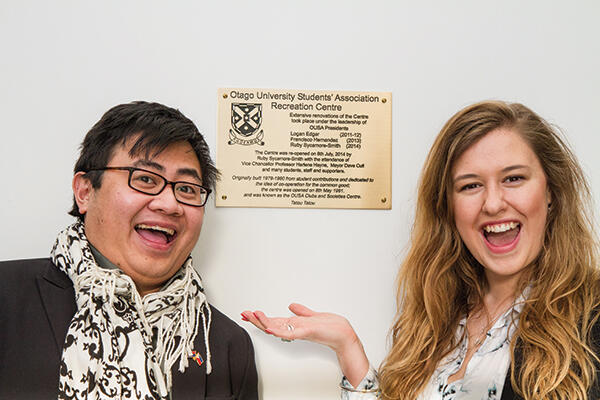
OUSA Recreation Centre officially opened
After a year-long construction process, the new OUSA Recreation Centre has officially been opened. Staff, students and members of the public attended the opening, which was held at the facility last Tuesday 8 July. Attendees gathered in the foyer as guest speakers shared their views on how the $2 million project, funded by the sale of Mojo’s Hall and OUSA’s interest in Unipol, has benefitted Dunedin’s student community. Vice Chancellor of the University of Otago, Professor Harlene Hayne, spoke of the importance of the student activities run from the building. Mayor of Dunedin, Dave Cull, said that the facility enabled students to burn excess energy. OUSA President Ruby Sycamore-Smith said, “It was wonderful to have such a beautiful event and have such a great response from the community.” She described the opening as a “historic day for OUSA.” She said the new building “ultimately gives the students the opportunity to come together in a safe environment and to create, construct and come together in every avenue possible.” The building, previously known as the Clubs and Societies Centre, had not been updated since its construction in 1980. Darel Hall, OUSA General Manager, told Critic the previous facility was “tired, both in infrastructure and visually.” He said, “the spaces for meetings and activities were good, but they’re now better.” A key aspect of the upgrade was increasing the floor space in the building, which Hall said “greatly benefits activities such as dance and yoga.” Heating and ventilation also saw a major improvement from that of the previous facility, which made the building “very cold in winter.” The foyer, where the official opening was held, has also been expanded. George McLenaghen, OUSA Recreation Assistant, told Critic earlier this year that the upgrade allowed for a “more clubs-focused system with potential for innovations in club sport.” Sycamore-Smith said she wants the building to be “a home away from home for every student, or at least for those who make a room booking.” Next on the agenda is the reconstruction of the University Bookshop, which has recently been moved onto the main campus. Hall said discussions about the upgrade are well underway, however, “nothing solid” has yet been arranged.
-
News

Open textbooks launch at Otago
University of Otago lecturers have recently led an Open Educational Resource (OER) project in conjunction with academics and librarians from New Zealand and Australia. The open textbook Media Studies 101 was created on 16 and 17 November 2013 and is partially funded by Creative Commons New Zealand. An open textbook is not only free but is also free of copyright, meaning that teachers and students can update and improve resources, “which helps get around the perennial problem of textbooks that are out-of-date,” said Matt McGregor, Public Lead of Creative Commons. Media Studies 101 is aimed specifically at undergraduate Media and Communication Studies students. Richard White, University of Otago Copyright Officer, told Critic, “It’s written for the NZ, Australian and Pacific cultural paradigm. It’s not one of those texts where all the examples are from overseas. It’s really designed to suit the courses that are taught in this part of the world.” Authors came from the University of Otago, Massey University, the University of Canterbury and the University of South Australia. Otago’s Dr. Erika Pearson, Senior Lecturer in Media, Film & Communication, led the project with assistance from Bernard Madill, an Otago PhD student in the subject. Pearson said the project aimed to address a number of issues, including “the increasing cost of textbooks that are not always relevant to the needs of the course, the desire from participants to be more open in the ways we share knowledge and ideas, and the shifting ways in which ideas and information are shared and used in the digital age.” She said, “The project was an experiment, and it’s great to see it has been received so enthusiastically not only by our students, but by a wide range of groups, from high schools to overseas institutions.” Although there are not currently fixed plans in the works at Otago, White said he has had interest from other departments. McGregor also said Creative Commons is “seeing more research funders and Universities mandating the open release of academic research, including the University of Waikato and Lincoln University.” He added, “Open Educational Resources are taking off all around the world. The Obama Administration has announced a $2 billion contestable grant to fund the production of community college textbooks. The Polish Ministry of Education has also launched a project to make all school textbooks Creative Commons licensed. Project LATIN is also looking to make open textbooks for the most popular university courses in Latin America.”
-
News

The great OUSA by-election of 2014
Following the departure of four executive members last semester, nominations have been received for the positions of Finance Officer, Welfare Officer, and Colleges and Communications Officer. The positions of Finance Officer and Welfare Officer each have two candidates running for the roles, whilst the position of Colleges and Communications Officer has just one nomination. No nominations were made for International Students’ Officer, which will result in another by-election running at a later date. Finance OfficerPaul HuntHey all, my name is Paul Hunt. I would like to be your Finance Officer. Adopting a work hard play hard ethos, I am committed to making OUSA work for everyone. Finance Officer requires someone experienced and trustworthy. Having served on the law and debating society executives, and as a final year LLB/BA student, I’m confident I have the necessary skills and experience. Engaging more proactively with student groups, pursuing a student bar and developing further support networks to assist with uni work are policies I would advocate for. Most importantly, I would diligently manage OUSA finances. In a VSM environment, OUSA should broaden its revenue streams to ensure long-term viability. Attention to detail, scrutinising expenses and ensuring the books are in order should be key focuses of the Finance Officer. For trust and experience-Vote Hunt for Finance Officer! Ricky Daniel-NieldHey all, my names is Ricky Daniel-Nield, I’ve been down in the dirty south for four years now finishing up by double degree in Commerce and Science. I’ve been around the block, spent my time on Castle, had a weep when the Cook closed its doors, and now in my final year looking at ways to give back to my fellow scarifes. I currently hold a position as an Officer in the Royal New Zealand Navy, on a more relevant front, sit on the OUSA’s policy committee. As Finance Officer I know I can do a world of good and help you with the things you actually give a shit about, I hope I can count on your vote. Welfare OfficerPayal RamrituHi, I’m Payal and I’d love to be your Welfare Officer this time round. Currently, I coordinate Teacup Club, a women’s support group at Uni, and I’m also the secretary for the International Cultural Committee (ICC). Through ICC, I’ve helped run events such as the International Food Festival and Sports Day. As Welfare Officer I will ensure student welfare is a priority by: - Getting the Welfare Commitee up and running regularly - Holding drop in sessions for students - Actively fulfilling the Welfare Officer duties Vote for action. Vote Payal. Michaela CorletI want to work with the OUSA executive to ensure strong representation of the student body. As a 5th year student I have long been involved in the university culture and community and there are areas I want to see addressed. These include: gender neutral bathrooms, working with international student groups, queer groups and feminist groups to discuss ways to combat street harassment, the development of university policy on potentially triggering topics that come up in lecturers, ensuring that students can stay happier and healthier in warm flats and working to minimize alcohol related harms. Colleges and Communications OfficerJess McLeanHey there! I’m Jess; a third year Biochemistry and English major. I have found my three years in the colleges system rewarding and would love to share that experience with incoming and current students. Following on from the previous officer I would like to: - Continue to evaluate sexual assault policies in halls. - Improve connections between OUSA and colleges. What I would like to bring to the position is to: - Help promote opportunities like clubs and societies to hall students. - Construct a What I Wish I Knew guide for hall applications. Thanks for reading and vote yes for Jess!
-
News

University to fork out $650m for upgrades
The University of Otago is set to spend $650 million on campus upgrades over the next 15 years. The new Priority Development Plan (PDP), recently approved by the University Council, includes over 20 upgrades. These include major changes to seven faculties, a number of health and safety refurbishments and several landscaping projects. The upgrades will include: A new Dental School to replace the aging facilities; Replacing the Burns building; A major renovation of the Science Precinct; Huge upgrades to Health Sciences research facilities; A new Music facility, including a Centre of Performing Arts; A new Marine Science teaching facility and aquarium; A new Biomedical Research building; and A new student services hub in the area where Union Lawn currently is. Landscaping projects will affect Castle Street between Dundas Street and St David Street, Union Street between the Staff Club and Unicol, and Castle Walk on the west side of the Leith opposite the Clocktower, the latter of which is already well underway. In a statement released on 4 July, Vice-Chancellor Professor Harlene Hayne stated that the aim of the PDP is “to show the University community, the public, and contractors, what we will be looking at, and focussing on, over the medium term when it comes to our built environments.” According to Hayne, the renovations will improve our already first-class university. “We want the campus to be enjoyed by the communities in which we live,” she said. Chief Operating Officer John Patrick presented the PDP at a staff forum on 4 July. He estimated the total cost of the plan to be $649.9 million, a figure that includes projects that have already been approved or are under construction. These include the University’s contribution to the major landscaping work, which is opposite the Clocktower, as part of the Leith Flood Protection Scheme. He added that the plan has been prepared with the intention that it can be funded without resorting to borrowing large amounts of money. “Currently the University does not use debt to fund capital projects, but looking ahead, may want to do this,” Mr Patrick says. “Funding decisions will be made as we progress planning for these projects.”
-
News
High performing polytech wins popularity contest
Otago Polytechnic is showing an outstanding level of performance. As discussed at an Otago Polytechnic Council meeting on 4 July, the Polytechnic recently received three national teaching awards and the student roll has been rising rapidly, with a predicted increase of 10 per cent this year. Otago Polytechnic Communications Manager Mike Waddell said in an interview with the ODT that this year’s enrolment figures have already reached 4,099 Equivalent Full-Time Students (EFTS), up 610 EFTS from this time last year. Most of the currently enrolled students are domestic, but international enrolments have been on the rise, too – up 186 EFTS from this time last year to a total of 425 EFTS. At this stage, the Polytechnic is already within 120 students of its overall roll target for the year. Polytechnic officials stated that 57 per cent of the enrolled students are from outside of Dunedin. The chairwoman of the Otago Polytechnic Council, Kathy Grant, said that the increase of students was positive, not just for the students themselves, “but also for the Dunedin economy.” The Polytechnic was also very successful at the Tertiary Teaching Excellence Awards last month, winning awards in three different academic disciplines. Half of the 16 tertiary teachers who received awards were from Dunedin, including the winner of the Prime Minister’s Supreme Award, Dr Karyn Paringatai, a lecturer at the University of Otago’s Te Tumu – School of Maori, Pacific and Indigenous Students. The awards presented to the Polytechnic covered the departments of culinary arts, nursing and communication design. Emeritus Professor Tom Prebble spoke about the award haul at the Polytechnic Council meeting, noting that he had been attending the teaching award events for many years and that, to the best of his knowledge, this was the first time an institution had won awards in three different disciplines in one year. Otago Polytechnic Chief Executive Phil Ker said that winning the awards was “a wonderful achievement for the recipients, each of whom inspires and motivates their students through their passion, expertise and a willingness to push boundaries.” The Polytechnic’s “exceptional” performance will greatly benefit both Dunedin as a whole as well as the city’s reputation as an awesome provider of tertiary education. Mr Waddell stated that rising student numbers delivered many benefits to the Dunedin economy, including attracting more people from beyond Otago to study here, some later becoming long-term residents.
-
News
Record number of degrees in 2013
The Government released figures showing a 20 per cent increase in undergraduate degree qualifications in 2013, compared to those in 2008. According to the results, 25,800 New Zealand students graduated from their bachelor degrees in 2013. In 2008, 20,800 were completed. Tertiary Education Minister Steven Joyce credits this climb to “the Government’s focus on achieving results rather than just “bums on seats.” It was also found that the total number of qualifications achieved in 2013 by all students, including international students, rose to a high of 162,000. The figures also showed a significant growth in Māori and Pasifika graduates. In 2008, 1,960 Maori and Pacifika students completed bachelor degrees and this jumped to 3,180 last year. “These are very significant improvements for Māori and Pasifika that are reflected across the full spectrum of tertiary study,” Mr Joyce says. “It shows our reforms across the tertiary sector are steadily delivering much better results for Māori and Pasifika.” At Otago the percentage of Maori students has risen by 0.5 per cent from 2009 to 2013, and Pacific Islanders by 0.2 per cent. Despite Joyce claiming the rise in qualification numbers was due to National’s shift to being “results” focused, the Student Loan Scheme Act which was rolled out part way through 2011 cannot predominantly take credit for this rise. The majority of students who graduated in 2013 began their three-year, four-year or double degrees prior to the scheme being implemented. The rise could also be attributed to the end of allowances for postgraduate students as well as the EFTS cut off, causing students to graduate with bachelor’s degree rather than continuing postgraduate study. Joyce told Critic, “I think the lift in the number of graduates is due to policy changes we have made for both providers and students. The lifetime limit on student loan access and the new rule that you must pass at least half your courses over a two year period will help encourage students to complete their degrees more quickly. “Performance-linked funding for providers has probably had the bigger impact but both have been positive. I’d note that stopping access to student allowances for post-graduate students has had little or no effect on numbers studying at post-graduate level to date.” Limiting age through loans and allowances caused enrolments by students 25 and older to drop at every qualification level between 2012-2013, it was found by the Ministry of Education. While there was a continual increase in international students, domestic students have fallen since 2010. University of Otago statistics, despite remaining somewhat consistent across the board, show a drop of nearly half of honours students from 2009 to 2013. Joyce maintains that, “the Government is committed to increasing achievement in the tertiary sector. Having more people achieving tertiary qualifications means a more highly skilled labour market.”
-
News
The good, the bad and the ugly of Unipol
This week we are checking in with the sweaty, grunting and largely ignored student fitness desk, where we know that being a University of Otago student comes with more perks than just a six-figure student debt and a decent chance to score a drunken pash at Boogie Nites. We also know that you can do a lot more at the much-maligned Forsyth Barr Stadium than hurl abuse at the much-maligned Ma’a Nonu or bump and grind to nonsense dubstep wubs while getting douched with luminescent paint. If you didn’t know, all University of Otago and Otago Polytechnic students are lucky enough to get free access to the awesome facilities of the gyms and sports courts at the Unipol Recreation Centre down at the stadium, which everyone should take advantage of. They say that healthy body = healthy mind, and this could prove useful when it comes to your life-defining Health Sciences exams in a few months. Owing to my transient nature, awkward social graces and the resulting lack of many close friends, I found myself with little to do over the recent holidays, so I decided to finally make good on my New Year’s resolution from 2009 and start hitting the gym in an effort to get in shape for summer. Unfortunately, seeing as though several summers have passed since that drunken resolution to one day bench press double my bodyweight and having been living the typical student lifestyle recently, means I have consumed hundreds of pizzas and Quarter Pounders, thousands of fatty chips and skinny fries and uncountable litres of beer and V, making the task of getting back in shape that much harder. Thankfully, because of my granddad, I have a healthy portion of Dutch genetics, which means I am naturally tall and skinny with a good metabolism so I never seem to gain much weight even after 10 years of heavy drinking and stoned midnight Dorito munching. So after my exams were over and my final assignments were handed in, I decided it was long overdue to head down to Unipol and check things out. What I found was a good place to bump into ex-classmates that don’t want to talk to me anymore, and ex-girlfriends who still do. But I digress: looking like a complete amateur, I did a few circuits, tried all the different weights and machines, managed a few kilometres on a treadmill, then became thoroughly knackered. Maybe a Kaboom V and a Nerdalicious wasn’t the best pre-workout meal. I waited two days to recover before returning. Better prepared this time (I had a banana and pinched a few of my flatmate’s Weetbix for breakfast), I checked out a few of the pump and core classes, where the instructors are very attractive and enthusiastic, if not prone to mispronouncing foreign students’ names. I haven’t got involved with this yet, but there are heaps of opportunities to play in social netball, basketball, soccer, badminton and volleyball teams. You can also hire other types of sporting equipment, like surfboards, fishing rods and ski and snowboard gear for that upcoming mid-semester break trip to Queenstown. The Plaza Cafe has lots of good healthy food and makes pretty decent coffee. You can book a personal session with one of the exercise leaders to show you how to safely and effectively work out and there is even a physiotherapy clinic if you ignore their advice and snap your shoulder trying to lift too heavy too soon. While I am only a month into my new fitness regimen, I feel I’ve already taken my PhD in Broscience and have formed quite a good routine. I’m feeling a lot better already, even if the mirror doesn’t quite agree yet. However, I have observed (and committed) a lot of noob gym sins, so I have taken it upon myself to draw up a list of common sense “ten commandments” for using the Unipol facilities, that, if we all adhere to them, should make for a more pleasant (or less unpleasant) Unipol experience for everyone. The Ten Commandments of Unipol Thou shalt not just casually walk away from a bench or machine, leaving it covered in your gross, salty, booze sweat. See those bottles of green stuff? Clean that thing. Thou shalt not make it super obvious you are checking out that hottie while they are face down, ass up on the leg curl machine. But don’t think sunglasses are acceptable in the gym either. Thou shalt not attempt to impersonate Hulk Hogan by strutting around wearing a weightlifter’s belt then struggle to complete two sets of three with five-kg dumbbells. Eat your vitamins. Thou shalt not show up to work out carrying an Allpress latte and wearing jeans, socks-in-crocs and a faux-Lacoste polo. Surely there must be a sale at Rebel Sport soon? Thou shalt not work out your abs for only five minutes every other week and then drink a few trays of SoGo every weekend and wonder why you don’t have a cut six-pack. Thou shalt not sit inactive on the leg press machine, talking on the phone for 10 minutes to your flatmate, bitching about your other flatmates. Have a flat meeting. At home. Thou shalt not listen to music while using an elliptical if it means constantly fumbling with your oversized, first-gen tablet. Try an iPod nano if you must listen to Taylor Swift for motivation. Thou shalt not stare disapprovingly at my shoes. Yes, they are bright green Pumas and, yes, they are dope as hell and, yes, they were on sale at Rebel Sport. Thou shalt not talk about weights in pounds instead of kilograms to make it sound like you can lift more. We use the metric system! How many ounces was your protein shake? Thou shalt not skip leg day! This is important even if it means that spreading your legs to masturbate more effectively becomes very painful. Deal with it.
-
Columns

ODT Watch | Issue 15
ODT reveals the Otago region’s most boast-worthy facts and figures … Which apparently don’t amount to much. The article highlights several, uh, “strengths” including that the average income for Otago households is $1,000 less than the rest of New Zealand, life satisfaction is lower compared to the national average and only 52 per cent of all school leavers achieve university entrance. After downing a few too many brewskis, this jilted lover was filled with several brilliant ideas for revenge on an ex-partner. The first of which was to call said ex-partner a mere eight times. When the calls and abusive messages elicited no response the mastermind was hit with an even better idea: sneaking into her apartment while she was out and overloading her washing machine, causing it to flood. No judgement though; we’ve all had those moments of booze-induced genius that turn out to be severely dumbass in the sober light of day. Gandalf: “After I form the Fellowship, can we go to Mount Doom? We really need to destroy that ring. But first, let me take a selfie.” This gem of a story describes the birthday presents an ODT journalist got for his birthday. The “knee-gobbling gaggle” (whatever the bloody hell that means) of birthday presents he received includes a rubber loom bracelet, a Rod Stewart biography and Microwave Warm Sox. ODT is going beyond scraping the barrel for articles.
-
News
Critic tackles election year | Issue 15
The world of political discourse has always, and will always be, full of people who speak really loudly. Sometimes, these people are members of parliament or those who are otherwise politically involved. Sometimes, they’re politics students who happen to write for a student magazine and enjoy trying to capture your attention with mildly outrageous sound bites. And, sometimes, they’re miscellaneous people who have somehow become popular on the Internet for writing blogs. Given the obvious (and accepted) bias of most of these blogs, it can sometimes be difficult to know where to look in order to get a balance of left/right analysis. This week’s Critic looks at a few of the more well known blogs: Kiwiblog; The Daily Blog; Whale Oil; and The Standard. KiwiblogKiwiblog began as the personal blog of David Farrar, a National Party advisor. It now boasts a team of contributors, but is still predominantly the brainchild of Farrar. Given Farrar’s involvement in the National Party, the blog is, indeed, centre-right. He largely takes the time to critique Labour’s policies, Cunliffe, and, as of late, Internet-MANA. If you scroll down the pages, you’ll find the word “Labour” everywhere – there’s a significant tendency to focus only on what the Red Team is doing, paying much less attention to minor parties; there’s also not as much mention of National as one might expect. For those who sit on the left, Farrar’s blog is useful largely to scroll through and ascertain what points of policy might be most heavily criticised. Farrar often quotes news reports to make a point, which may compromise his credibility given the perceived bias many feel the NZ Herald, Stuff, etc., have. Where Farrar shines is in his dedication to presenting the numbers. He consistently analyses polls, has polls featured down the side of the blog, and spends blog post after blog post analysing the way they could play out. Similar to the analysis presented on iPredict, Farrar is important for understanding how the right interprets possible election outcomes. The Daily BlogSwinging back over to the left brings us to The Daily Blog. It’s a relatively recent addition to the political blogging spectrum, but comprises a large team of left-leaning politicians, pundits, reporters, and general political riff-raff. Edited by Martyn Bradbury, The Daily Blog presents more like an online newspaper, with sections including “Deconstructing Headlines,” “Media Watch,” and “The Liberal Agenda.” Given that it has authors who hark from all parties to the left, there isn’t considerable bias any which way within that. It focuses most thoroughly on social issues, and is often used to defend controversial positions (a notable example being the recent Green policy on abortion) or critique right-leaning releases. The Daily Blog is, in my opinion, most significant for its work in calling to attention the bias we see in major news sources. From the way images are presented in online Stuff articles to the lack of reporting on minor parties, The Daily Blog has made its mission to present current events as they ought to be presented if you sit to the left. There is a strong bias in the way New Zealanders are presented information; it pays to look beyond the general newspapers and see how the “other side” interprets important issues. It also strays from general media critique to present opinion pieces on plays, films, and other cultural outlets. Whale OilWhale Oil is the pseudonym for Cameron Slater; his blog, Whale Oil Beef Hooked, is arguably the most well known in the New Zealand political blogosphere. And doesn’t he know it. With an “About Cameron Slater” page that includes such ego-filled gems as “Cameron Slater doesn’t do quiet, and as a result he is a polarising, controversial, but highly effective, journalist that takes no prisoners,” and, “He is fearless in his pursuit of a story. Love him or loathe him. But you can’t ignore him.” Slater sits strongly to the right, a social conservative who prides himself on holding various politicians to a certain standard of morality that excludes most progressive ideals. He presents readers with tidbits such as a “daily proverb” and “trivia,” as well as a thread for “general debate.” Whether it’s due to the general readership or the heavy moderation standards on the page, these debate threads tend to be a number of people praising Slater for his analysis or lamenting NZ’s “good old days.” If you’ve wondered where the conservatives go to hang out, it’s not at a Colin Craig picnic; it’s in the comments on Whale Oil’s posts. Of the stories Slater has broken, the revelation that Len Brown had been having an affair with Bevan Chuang has been the most high profile. People are encouraged to send tips to Slater, so should you feel you have any gossip you’d like him to pay attention to, there’s a place for that (although, personally, I would discourage the practice – any power to Slater is more power to someone who pens posts called things like “Labour’s rape laws plan to destroy your civil rights,” but I digress). The StandardThe Standard is similar to The Daily Blog in that it’s a collection of left-wing bloggers who aim to present the “real” side of the story. Unlike The Daily Blog, however, its authors aren’t so obvious. Where The Daily Blog reads somewhat like a party of the most well-known left-wing bloggers blogging about left-wing things, The Standard is, comparatively, a covert operation in presenting the facts as they aren’t presented in the media. Its overarching sections are “economy,” “environment,” “international,” “media,” “politics,” and “social issues,” which provide a good indication of the general subject matter of the website. The main focus of the website is largely critiquing National and ACT policy, but also has a significant “under cover” presence, with anonymous hacks presenting what it’s like behind the scenes at various conferences and meetings.
-
News
Politweets | Issue 15
Rude. You go, fake Hekia. Poor Brazil. Truth. Fake Russell gets on Labour’s Kiwi-everything bandwagon.
-
News
Greatest hits / Greatest shits | Issue 15
Greatest hitAs a “young person,” there’s nothing more cringe-worthy than watching non-youths attempt to become well versed in the wonderful world of the Internet if they don’t really understand how the Internet works. That makes social media campaigns hit-or-miss, and means they can either be really great or really ridiculous. Fortunately, this is the Hit section, and the Greatest Hit here goes to the recent explosion of political hashtags. Or, more specifically, the fact that the parties are gaining traction by using them. The National Party has two that have been floating around - #3moreyears and #TeamKey; the Labour Party has recently got #ForABetterNZ off the ground, and the Green Party has been using #Green2014 for a little while. As it becomes apparent just how important social media presence is going to be for getting that ever-slippery youth vote, it’s cool to see some of the parties embracing it with open arms. Greatest shitThis is not overwhelmingly recent, but it’s such a good one I can’t resist – Trevor Mallard, of the Labour Party, wants to revive the moa. In isolation, it’s a relatively cool idea; imagine if we had gigantic birds roaming the streets? In election year, it’s ridiculously hilarious. Apparently Cunliffe said of Trev’s plan, “the moa is not a goer,” but Mallard definitely isn’t joking: “I only want the small moa in Wainuiomata. I don’t want those that are 240kg and 3.5 metres tall. I’d like ones that I could pat on the head.” Beautiful.
-
News
Examination recounts result in seven per cent of marks changed
Following investigations by Critic, it has been found that in 2013, there were 315 applications for a recount of examination results at the University of Otago. Of these, 21 people had their marks changed (6.7 per cent of applications), with 10 of these resulting in a whole letter grade change. In 2012, there were 393 applications, with 20 of the marks changed and 17 of these resulting in a whole letter grade change. At Otago University, the recount policy states that it involves “a careful re-check of the marks that count toward your final result in a paper.” The purpose of a recount is “to ensure that no answer, no portion of an answer, or any work undertaken during the teaching period which counts for the final result, has been overlooked.” The policy also states that “your work is not re-marked; at the University of Otago there is no provision for any work to be re-marked.” Should results be changed, there is also no refund for the fee. Critic spoke to one student, who had applied for a recount after being devastated by her “E” grade on CHEM191. Five weeks after she applied for the recount, her new grade appeared on her PIMS account, without any notification from the University, and it had moved from 23 per cent to 64 per cent. She was not offered a refund or a letter of notification for the grade change, but said, “I would have appreciated it, considering it was [the University’s] fault.” The student eventually had to appeal through OUSA Student Support to receive a refund of the fees, after the Examinations Office told her refunding the fee was “not policy.” OUSA Student Support Centre Manager Matt Tucker said that this was the only case he remembers that Student Support have had to deal with regarding refunding a student for recount fees. He said he was unsure how students felt about having to pay a fee if the change was only small, but “personally if something were wrong, I would expect that students never have to pay for it.” Critic notes that the University would have earned $756 ($36 per student) last year from the 21 students who paid the University to fix the errors. At Massey University, for $61.30 they offer a full remark and recount of results. In 2013, there were 579 applications for a remark, with 69 of the grades changed (11.9 per cent). The higher number of applications is likely to be due to the 32,500 students who are enrolled, in comparison to the approximately 21,000 enrolled at Otago. The higher percentage of changed grades is most likely a result of the papers actually being “carefully remarked followed by a recalculation,” said a Massey spokesperson, instead of just a recount as is the case at Otago. In 2012, there were 630 applications for a remark, with 102 of the grades changed (16.2 per cent). Canterbury University students may apply in writing for a reconsideration of a final grade, which consists of a remark and recount of the final script. The $60 fee will be refunded if the application results in a change of grade. In 2013, 31 of the 188 applications resulted in a change of mark (16.5 per cent). In 2012, 48 of the 239 applications were changed (20 per cent). Auckland University examination scripts are also not remarked; a recount for $55 is the only offer and involves the same process as at Otago. Auckland University will refund students if the recount results in a change. Students may have their original exam script returned to them, but once students have seen their exam, there will be “no further consideration of exam marks.” Lincoln University offers both the option of a recount or a reconsideration, which involves a thorough re-marking of the examination script as well as a recount. They charge $50 for a recount or $120 for reconsideration; a full refund is offered should results change. Victoria University introduced a new policy this year. Prior to 2014, they charged $41 per script, refunded if there was an upward adjustment to the mark. There are now no fees associated with these requests, and they offer a “careful re-marking of the student’s performance in the examination,” as well as a recount, should students apply. Even if it is concluded after reconsideration that a lower grade should have been awarded, the first grade determined for the student will remain. The Deputy Vice Chancellor Academic and International at the University of Otago, Professor Vernon Squire, explained the reason for not offering a remark of exams: “The University recognises that the marking of examinations, and particularly of short answer and essay question formats, requires the exercise of judgement by the marker. Remarking an examination does not remove the need for such judgement, and so a second mark does not in some way represent a truer or more objective measure of the quality of a student’s work.” He explained that the University has set assessment monitoring and moderation processes and that they take the “examination assessment and the need to ensure fair marking of examinations extremely seriously.” “Human error happens,” said Squire, and, yes, it is unlikely any university can completely avoid mistakes occurring. Regarding the cost imposed on students, Squire believed “either way, it results in a cost to add up the numbers again,” so, he said, “Who should be paying that cost?” Squire went on to compare paying for a recount with paying for the servicing of an electronic device: “Whether there is a fault or not, you still have to pay the $90.” As in any industry, however, if a fault is acknowledged within a reasonable timeframe, the consumer should not, and ordinarily does not, pay for the mistake. Similarly, it should be standard practice to refund students if it is found that they received an incorrect mark, particularly when they are already paying upwards of $700 for the paper.
-
Features

#PageantLife
One day on George Street, two women intercepted me. The older one stared with such intensity that I felt sure she was a relative I’d forgotten about, and I slowed to meet her. “Excuuuse me,” she said, “I’m from Miss Universe New Zealand Otago.” Her voice was enduring, and loaded with upwards inflections. “You have such a beautiful figure!” The mermaid-haired young woman next to her piped up, “and you’re so tall!” They both had big doe eyes, and maintained the kind of strongly empty gaze particular to hypnotists and murderers. I kept my armpits shut tight so they wouldn’t smell my ugly, and stretched out my forearms to take their business cards. “Please get in touch!” they sweetly begged, and then strutted away. They were Donna, a signwriter by trade, and Annilise, a girl with modelling experience beyond her years. Together, they directed Miss Universe New Zealand Otago. My story is a typical one. A young woman is seen and approached with business cards. Rachael was approached countless times: at Glassons; Dotti; work; the supermarket. “She would not give up until I said yes,” she tells me, and so eventually she conceded. Post-competition, she had to have them trespassed from her work. Most of us sat on the opportunity for at least a week before agreeing to it. “The first time I met her,” says Missy, “I thought she was really nice, and genuine. She said that she saw a lot of potential in me. I was all excited.” Most people went to coffee with the director before they entered, so that she could vet us. You really have to embody being a traditional “Miss” to compete: no marriages, no children, and forget about it if you weren’t born female. This last rule was explained to me through laughter, as though trans* people were mythical creatures written into the rules by an overly superstitious head office. The trainings served to bond us all together: we’d spend hours learning to walk, something we’d been doing since we were toddlers. Walking in stilettos is a little more difficult, but the training time got ridiculous: “I thought we wasted a lot of time at trainings,” Missy scowls. When asked what she learned from her trainings, Rachael says: “nothing.” We incessantly went over basic turns, watching Annilise demonstrate over and over, slowly and then more slowly, how to face another direction from the one we’d been walking in. At home I was handling corners completely fine, but at the trainings I could feel myself getting more stupid. For one fleeting moment I completely forgot how to stand up, let alone walk, and had to lean against a wall. Our first event came up, organised by one of the contestants: Mary, a veteran of Miss Otago. She saw an opportunity for charity work at a place where people threw their money away all the time: the Wingatui Race Course. We were doing a bake sale, which was repeatedly described as “really disorganised and bad,” to raise money for Variety: the Children’s Charity. “We need to be here to help the children,” Donna reminded us, “if you see a child in need, help them.” I looked around at the kids’ smooth skin and wobbly walks from being carried everywhere. “The ODT is going to be here all day!” she was bubbling, “where are the children in need?!” I wondered if I had any sunscreen. Mary and Yolanda, heroes of the day, arranged for us to do “promo” – to walk around encouraging incompetent gamblers to buy someone else to bet for them. “$200 was donated,” says Mary of the day’s earnings, “and I got no thanks for it. Nothing.” She arranged for us to be there and set up the promo opportunity, and for her to go unrecognised was, in her own words, “just sad.” It was at Race Day that one of several inappropriate self-harm speeches was given. Later, a girl who left would be accused of cutting herself; two were accused of anorexia; another would be “self-hating” because she didn’t like a photo. “Donna made us all sit at the table, and was like, ‘girls, I want you to know that I’m not going to place anyone who’s stick thin in this competition’ ... Then she said, ‘Sabrina, are you doing this?’” With swimwear around the corner, her attitude to weight flipped: Sabrina suddenly had an amazing body, and girls were told to, among other things: lose weight; cover their stretch marks; get laser surgery; change their hair; use anti-wrinkle cream – on their faces and asses, for cellulite – and one was recommended a lip plumping procedure. In addition to the criticism crusade, Missy was annoyed because “it was more training than we needed, and more money: bikini; jewellery; fake tan; shoes, etc.” Katie agrees: “they were picking on vulnerable people.” She quit the competition just before the swimsuit event, saying it cost her too much and she had to focus on her studies. At the training before swimwear, she didn’t show up. Some of us knew she’d quit, but we were all gathered together for the announcement: “because Katie didn’t come today,” the St Kilda surf gave us a drum roll, “she is, actually, eliminated from the competition.” I briefly wondered if I was on Survivor. Talking to Katie weeks later, she was bewildered: “Seriously? She was asking me to re-join the competition for two weeks after that event.” “I did enjoy [swimwear],” says Missy, “but I also found it weird, because there were four-year-old kids in the pool.” Yolanda also thought it was OK, admitting, “it gave me a little more confidence in my body.” She and Mary both thought the swimwear event was to be expected: “it’s just the norm in a pageant, right?” When I’d first sat down for coffee with Donna, it was revealed that Miss Universe New Zealand was attempting to change with the times: she explained that they now considered girls prancing around in bikinis on stage immoral, so “we’re holding it at the beach!” Not only does this not actually solve the problem, it is not what national HQ meant. We were eventually sent an email that, among other things, explained that there should never have been a swimwear event – just a short photoshoot. The ethicality of this can still be called into question, and if Miss Universe really wanted to change with the times they should try to reduce objectification by not running a beauty pageant. At least letting us get our personalities across would have been a good start. Wall Street was the next event, and it was a breeze: we were just wandering around in T-shirts trying to get money for Variety. “It was really embarrassing!” blushes Missy. “It was a joke,” sasses Mary. We were made to walk around the mall in a line, over and over, just to get attention. Then we hit people up for money, which was a lot more effective than the beautiful stalls half the girls had set up to entertain children. For me, Wall Street was when I realised what had been bugging me about the competition. Before I entered, I believed that girls in pageants were objectified. Afterwards, I realised that we’re made into objects of ridicule, not lust or envy. There are very few pockets left in NZ society that respect the #pageantlife. We certainly didn’t. Walking around trying to hustle for charity, we were met with either distaste or enquiry into our lives outside Miss Otago, but mostly with disinterest. Contestants weren’t all proud of it, either: for many, it was a shameful foray into girliness. Final night was around the corner, and despite the public’s apathy, things were beginning to feel like a real competition: us versus the directors. After being told about the additional $40 modelling training fee, some of the girls began to snap. None of us remembered it being in the contract, and when we asked for a copy of what we’d signed it appeared to be re-written. One girl and her mother contacted Donna, upset. At our next training, she was called out on it. “I was contacted by someone’s mother last night,” she told us, and then explained that she didn’t appreciate it. She then named the girl, who was there, and shaking with anger. Donna explained that she didn’t like mothers getting involved, before calling her own daughter over to train us. Shauna contacted the national director, Nigel Godfrey, who stepped in. Donna was to quit as soon as Miss Otago was over, and she’s now running Miss Earth New Zealand. Opinions were mixed on Nigel: most people’s phone calls with him were “not a two-way conversation.” He was obviously trying to save his brand, not us. When he arrived, he took over. “He knows what he wanted,” says Missy of his commanding style, “and I liked how it made Donna be quiet for a bit.” “Shit kinda got real when Nigel came in,” adds Yolanda. “That’s when it started feeling like a competition.” On the overall production, Mary confesses: “it was still shit … but you can imagine how bad it would have been if he hadn’t been there.” Final night was around twelve hours long. We arrived for our interviews with the judges at twelve, which was an exercise in trying to be someone’s favourite toy. What are you most proud of? “Entering this competition!” Would you ever do a nude photoshoot? “I’d never do that,” we knew to say. Missy scoffs when she tells me this, “which is stupid, because I would.” Again, we were made into objects – tools, really – by those who ran the competition. We couldn’t do nude photoshoots of our own volition, but we could still do a swimsuit calendar that promoted Miss Otago: “I thought it was really scripted and not fair.” On the night, the curtain opened and the music played – and not one of us was on stage. “Oops,” we collectively murmured, and walked on. The music began again, and we started our dance. “So the false start happened, which set the tone for the rest of the night,” said Donald, an audience member on the night. “I thought the dance was good, but it was very clear you weren’t professional dancers,” Cal was another attendee, who put up with an “intense blue beam of light in my eyes for twenty minutes.” Donald explains the light malfunction: “that’s meant to make the audience feel more involved, because then they can yell, ‘this show is hurting my eyes!’” Donna and Annilise gave their speeches while we quickly changed into the right shoes for ours. We came back after our quick-change for a 15-second spiel about our sponsors. In most pageants, this is where we’d talk about ourselves; in Miss Otago, it’s where we advertise so that our sponsors don’t feel they’ve sunk $450 into nothing. There was no promotion of the sponsors except for the T-shirts we wore once and the hardly-sold calendars, and hardly any promo for the show itself, “except when Nigel tried to make us change our [Facebook] banners.” Unfortunately, our speeches coincided with the beginning of the largest sequence of microphone fuck-ups in pageant history. “Oh my God, the wailing!” remembers Cal. “The girl was very upsetting,” Donald is shuffling uncomfortably while he remembers the first musical act, “not only was it high-pitched and nearly a scream, but the microphone kept on cutting out and it sounded like a police siren.” Every single act was tinged with eeriness or loaded with mistakes. “It’s weird how everything in it they managed to fuck up,” I’m told. “You’d think they would have by chance got one thing right.” Before we came out in our evening gowns, a slideshow was presented of our swimsuit calendar shots. The pictures were in a random order, sometimes there were two or three pictures of one person, some girls who’d been eliminated were in the slideshow, and Nigel, doing the voice-over, got some names wrong. “He desperately tried to describe the overly-sexualised photos without sexualising it,” Cal laughs. Donald remembers the event nearly exactly the same way: “Everyone was trying to find something to look at that wasn’t the exploited women.” The hosts tried to explain the cancellation of swimwear events co-existing with the calendar by saying, “That’s not the world we’re living in,” but “we still want the girls to have an opportunity to wear swimsuits!” The show might have been a hilariously hot mess for the audience, but for those of us on stage it was painful. We’d been in heels since midday, and smiling for three hours straight is just short of torture. My cheeks and jaw were on fire, and my lips dried out so much they stuck to my gums. I couldn’t stop smiling without licking my own face, which isn’t very beautiful. I made the top ten, but was cut after that; I immediately sank to the ground and into a little ball. I had it easy. Yolanda, still waiting in the top five for the final results, was in even more pain: “I broke my hand,” she confides; the same hand she had to hold her hip with for the duration of the show. Finally, prizes were awarded and the ruthlessness of beauty pageant judges emerged: wrong nail polish colour, slightly too-sexy dress, short hair; a myriad of things that make one wonder, “I can’t believe they even noticed that.” Finally, though, it was over. When Yolanda stood there at the end, free at last, she looked down at her sashes, and thought, “fuck yeah. I could die right now and be happy.” “The best bit was having it all over and done with,” says Mary, a sentiment we all shared. There are plenty of warnings about pageants, but not enough about the comedowns. I’d invested time and money, and while I found my sudden collection of heels and fake tan irritating, it was nothing compared to a void in my life where 20 friends used to be. I used to spend hours a week with them; afterwards I spent even more wondering why I suddenly felt both more confident and more lonely. The confidence came not from learning to be beautiful, but from knowing so many supportive, friendly, and fascinating women. I don’t have that twice a week anymore. My confidence is sticking, but pageants are a fading tradition. There are plenty around but next to zero coverage. I’m thankful for the friends I made and newfound knowledge of the art of bronzing, but it’s obvious that Miss Otago wasn’t as successful as it has been in the past. Ineptitude was key to this failing, but it should be remembered that most people just aren’t interested in it. The failure of Miss Otago to be the prestigious tradition it apparently once was is probably because, as was rightly said, “that’s not the world we’re living in.”
-
Features

Picking up strange vibrations
It was in my first year at Otago when I first discovered the hilarity of looking at strange sex toys. I was innocently perusing the pages of Tumblr, with my flatmate at my side, when I came across a page called “Weird Ass Sex Toys.” I sheepishly turned to my flatmate and questioned whether I should click the possibly traumatic link. Upon gaining his approval, we dove into a world of comedy gold. We sat in the lounge continually clicking the “wander back” button at the bottom of the page, unfolding more and more horrors (or treasures). Since that fateful day, I have often found myself turning to articles about sex toys for a good laugh. After hours of scouring through seedy websites and terrifying blogs, I bring to you a list of the strangest sex toys I could find. And I promise you: all of these exist. I made absolutely sure of it. “Teletubbie sex doll” is now forever in my Google search history (I probably should have used private browsing). I had to be 100 per cent positive it truly existed in the world (it doesn’t, thankfully). For your pleasure – or disgust – here are my findings. Pleasure Pimp Finger Vibe The Pleasure Pimp Finger Vibe is a small vibrator that, for whatever reason, is shaped like a seventies-esque demon pimp with light-up eyes. I don’t quite know why he exists, but I definitely don’t trust him. You can buy him f rom Amazon for $4.87, which is ridiculously cheap as far as vibrators go and makes it seem so much more suspect. Is someone mass-producing this guy? Are there millions of Pleasure Pimp Finger Vibes out in the world? What I find even more disconcerting is that the only description provided for the product is as follows: “A super ‘Power Pimp’ motor promotes ultra powerful vibrating pleasure for ultimate pleasure.” That’s all there is. Is a “Power Pimp” motor really something I want to put near my genitals? Bad Vibes On the tamer side is the Bad Vibes vibrator called “Ever-Ready Freddy.” Although it functions as a normal vibrator, it takes it to the next level. He (the vibrator) talks to you. And not even sexy talk (although, each to her own) – Freddy abuses you. He throws out phrases like, “Hell, can’t you get a real man?” and “Go away, I’ve got a headache.” Coupled with the terrifying face someone decided would be a good idea to put on him, Freddy is disturbing but, of course, hilarious. Here’s a fun quote from the product description: “Usually, he’s your friendly, faithful, servant, ready to do your bidding, but sometimes he is just plain grumpy.” I can actually confirm his existence, as I have seen him in Peaches And Cream. I probably really pissed off the attendants working while making the vibrator yell at me and cackling hysterically in response. Sexercise Ball This one is fairly self-explanatory. It’s an exercise ball with a vibrator attachment. What really gets me about this one is the idea of actually using it. I don’t know if you would really want to put your full weight down on the vibrator. One of the funniest things about this product is the description of it. The website Sexfurniture explains that when the Sexercise Ball is “being stored it’ll look for all its life like a plain and simple pilates ball … except you’ll know it’s not!” It’s like the ball is your dirty little secret (despite the fact that positional diagrams are clearly depicted on it). Hell, your friend could pick it up and play with it being none the wiser that it’s your special alone time ball. The site promises it will “have you bumping and grinding your way to ecstasy time and time again!” So it has that going for it, I guess. Belladonna’s Extreme Pussy & Ass I don’t know how to start here. This item is exactly what it sounds like. It is apparently an exact model of pornstar Belladonna’s vagina and asshole. Yup. That’s about all there is to it. It turns out that this whole “replica of pornstars’ vaginas” is a fairly common thing that happens in the sex toy world. Instead of being your usual fleshlight toy, though, this has her butt cheeks with Belladonna’s disembodied hands stretching open her bits for … what, better access? It kind of looks like the fingers would actually get in the way instead of being any help. Maybe they’re squishy fingers. Another fun quote from the product description: “Oh Bella! We love your gaping holes that you hold open for us!” My First Pregnant Latina Pussy This chicken shaped pregnant torso is actually one of the most weirdly specific toys I have come across. Not only is it your first pussy, not just a Latina pussy, but a pregnant Latina pussy. Why is it specifically Latina? There is a “My First Pregnant Pussy,” but the race isn’t specified. So I guess white is the default and Latina is the exception? Racial profiling – even within sex toys. That’s depressing. I find this one pretty creepy; it already looks like a chicken, but when I actually think about it, it’s a disembodied vagina, pregnant belly and breasts. Who wants limbs? They get in the way of your sexy fun. Faces? Gross. This product gives you the essentials – and (apparently) that’s all you really need. Want a depressing quote from the website? Amazon tells me that this product is “better than real skin.” Yeah, I think they know their target audience. Scary, lonely people. Pussy Hood with Anus The website Latexzentrale informs me that “this new hood will really give you a bizarre look.” This is probably one of the more honest descriptions I’ve come across. It doesn’t describe all the fantastic ways that the hood will improve your sex life or masturbation times, it just tells you that you will look weird. And that’s exactly what it does. Well done. By the way, the vagina over the nose is only there as decoration. I am explaining in case you were trying to figure out the logistics of how it was used. From what I can gather, you now have a wonderful view of a totally real looking vagina while you screw the anus/mouth. Classy. Barack Blow Up Doll Because there isn’t anything sexier than a plastic blow up doll of the American president. I am 90 per cent sure that this is mainly for comical use only, especially with quotes like “He’ll Batter Your Bush” and “Visit his Oval Orifice” plastered all over the packaging. Even the reviewers were getting in on the comedy action. “Tuna Enthusiast” left a review titled “better than the last doll,” which complained about how they had to deal with a terrible doll for eight years before they finally got around to getting their own personal Obama doll. The main criticism was that it wasn’t “symmetrical … it stimulates the right, but leaves the left side wanting more.” Dylan the Dolphin Zeta Paws is a sex toy website that produces animal themed toys. There’s a dolphin penis. I cannot top the description already provided: “As you emerge into the light of the warm day, you look to the west and see standing there on the sun drenched beach, a large Anthro Dolphin, he sees you looking at him and slowly turns toward you, placing his towel on the back of his beach chair, you notice a slit between his legs. As he looks you over, you can clearly see the slit darken and then a tapered tip emerges and slowly lengthens, pulsing and jumping with his heartbeat. “Suddenly, it begins to spread open and from inside of it, another tip appears and slips slowly from the first, veins and ridges appear and begin to swell as he walks toward you, the tip moving slowly as you can see how prehensile the Dolphin is, the ring where the tips join on the shaft now swelling to resemble a knot.” Zeta Paws take their products seriously, guys. This description is so detailed! Who wouldn’t want a dolphin penis-shaped dildo? The creators have put so much effort into this description and it really feels like they’re trying so hard to turn you on and convince you that this is not even remotely creepy. Urethral Faucet Plug Most people I showed this image to stared blankly, trying to figure out what it does or where it would go. My favourite part was watching them cringe as they suddenly realised the terrible truth. This toy is a urethral plug. You put the pointy end in the penis, basically. It gives a whole new meaning to the idea of golden showers. The Amazon reviews for the Urethral Faucet Plug were amazing. Titles included: “Well Ouch,” “It is huge,” and “WOW BIG!” But by far my favourite title was a one-star review by a disgruntled customer titled, “Too Big.” His complaints are as follows: “This thing is huge, far too big to fit inside my member, ended up bleeding and in pain the last two days. Fun idea, but just not realistic for my dick. If you have a huge hole at the end of your schlong, post a video somewhere - I want to see this thing work.” I think “schlong” is officially my new favourite euphemism for penis. Portable Masturbatoriums In theory, this little penis tent allows you to jerk off in public without being noticed by anyone. While this product isn’t actually something you can currently buy, it’s still pretty hilarious. These aren’t subtle! They’re see-through! What is this trickery?! I enjoy the picture, though. Very subtle – he can read and masturbate and everyone is none the wiser. Obviously. Fun quote: “It’s a great idea by Nicolaus Chaffin and his mother!” Ride My Big Cock Sex toy Oh goodie, now they’re fetishising trans people. This is fantastic. Thank you sex toy world – at least I know there’s no sense of discrimination amongst masturbation material! This product is actually based on a Transsexual pornstar who goes by the name of Mia Isabella. The whole product description on BedroomJoys is written from the perspective of the star herself. She’s very informative, explaining the best way to use the toy: “the best part is, you can squat on my dick while you slide between my tits and straight into my mouth.” I feel like this one has a lot going on, and it’s boiled down to the “essential” aspects of the actual person. Penis, tits, mouth. What more can someone want from a sexual experience? Viktor the Czech In my searches I have found that Etsy has a surprisingly large adult toy market going. There are plenty of crafty cute glass dildos and various other fairly generic toys. Then there are the Dildollz, which are all hand crafted by Etsy user laTeefahDoLLs1898. I don’t know what it is about these dolls that creep me out. Is it the face? The puckered lips? The fact that the shop has hundreds of reviews stating how wonderful their products are? I don’t know. Viktor here is made from clay, but is safe for bath time fun. Part of what makes it so unsettling is the way the shop owner types. Random letters are capitalised, and it’s almost childlike in its playfulness. “Dirty minds aRe inclined to find Viktor Dique to be raTher thick ... but he is the usual 11”, head to tip.” Each product even has its own little poem or rhyme thing, which I assume was written by the creator as well: “Viktor The Czech, giving all you’d expect from ... from the tip of his top hat, to the nape of his neck ...!” I am unsettled and uncomfortable. “Whatever the fuck this thing is” So speaking of Etsy products, I found this thing. It’s kind of like a creepy deformed troll-man turned dildo. Now, while I promised that all these toys are definitely available – I am sorry to inform you he no longer is. I know, I know, such a shame. It was once up on Etsy, but has since been sold to one lucky perverted individual (I am assuming there wasn’t more than one of this bad boy created). The only places on the Internet that I could find it were in blogs written by horrified people who questioned the sanity of anyone who decided to actually make such an item. But come on – who wouldn’t want those bulging green eyes staring up at you while masturbating? It even has convenient arm handles so you have a solid grip! I think I can safely put this toy into the “nightmare fuel” category. Sinthetics Sinthetics is a website through which you can buy various adult toys – mainly disturbingly realistic life-sized sex-dolls. I couldn’t pick one doll, so the whole site is going to count as one toy. Whether it’s the strange anime-esque doll called Willow or something you have designed and customised yourself entirely, they are all strange and terrifying, albeit impressive at the same time. This is due to how realistic they are – until you look into their dead doll eyes. But when you’re looking at their hands and feet they almost look like photos of real people. The cost of these things start at a low $5,500 USD for the basic doll, with customisations starting at $25,000 for the body and $4,000 for the head. There’s a detailed pricing list which outlines all the different add-ons and extras you can get for your personalised, though insanely expensive, love doll. Freckles start at $50 and nipples start at $75. Reading through the customer testimonials is entertaining to say the least. Jeff in California sums up the whole thing pretty succinctly. He described his long search for the right doll and it wasn’t until he found Sinthetics that he discovered something special, something that met his needs. He saw that “these masterful creations looked like women … absolutely gorgeous women.” Beyond the testimonials there’s even a section for satisfied customers to post pictures of their dolls doing things. This section is massive. Literally hundreds of people have bought these dolls. Jeff in California found “the one” thanks to Sinthetics. Can they help you? Vajankle Well, if you have a foot fetish they can definitely help you. Sinthetics specialise in manufacturing sexy feet. Feet that look so real, that they’re even more detailed than real feet. More commonly the site produces realistic looking feet with no inserts on them. However, this obviously wasn’t enough for some customers. The Vajankle was born by special request. This is literally just a foot with a vagina in the stump. I don’t think I have anything else to say. Prospective customer Dan enquires: “Is it possible to have the vaginal insert on the sole of the foot? Also, can it be ordered in different skin tones? How would I go about ordering that?” Yes, Dan: it’s known as a footgina.
-
Features
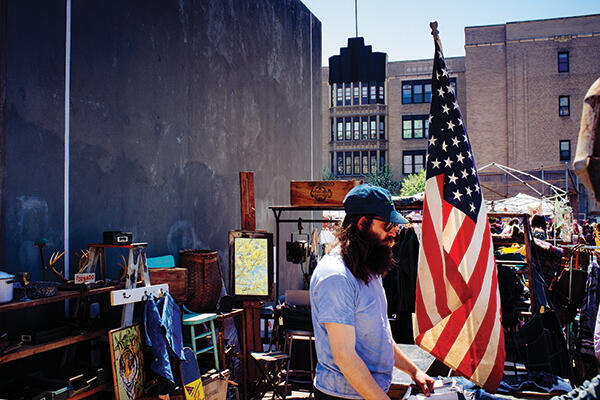
Everywhere / Nowhere
For three weeks earlier this year I travelled across the United States of America. This encompassed the Coachella Music Festival, most of the western seaboard in a frantic 72-hour driving mission, a pit stop in to see old friends in Kansas City, and an epic eight-day adventure in New York City. America is a bizarre mixture of the backwards, the desolate and the high tech; a combination that makes for some strange travel experiences. People clamour in sprawling cities, while the countryside can be devoid of anything but the dust and grass. These are some of the experiences, places and people I chose to capture in this frantic whirlwind of fast food, travel, sand, debacles and cocktails. Sunset in the desert camp on the last night of the Coachella Music Festival. A return to Westport, Kansas City and our penchant for picking up artifacts from the street. Hollywood, CA. Enough said. 36 hours after hitting American soil I was in downtown LA, and thrust straight into a street photographer’s paradise. Living next to the tourist mecca that is NYC’s High Line means this dude must get photographed daily. A 48-hour, tri-state driving mission pit stop for durries and coffee at 3am. Somewhere / nowhere, California. Getting lost on the subway is one of the most visually amazing experiences in NYC.
-
Culture

Edge of Tomorrow
Rating: A Edge of Tomorrow is one of those films that people will try and describe to you with 100 different similes, and though the film is “like” many different things, the truth is that it combines these factors to create a unique and gripping movie. Edge of Tomorrow, based on the Japanese novel All You Need is Kill, tells the story of a dystopian future in which Europe has been invaded by an alien race. The movie is largely set the night before humankind’s last push against this alien threat on the beaches of Normandy. Major Cage, played by Tom Cruise, is thrown into the battle at the last minute, despite the fact that he has zero combat training. Needless to say, he dies promptly, however his first death triggers an alien event in which every time he dies he wakes up the day before the invasion and must relive the battle. It’s easy to see many of the narratives influences, including WWII itself, and films such as Groundhog Day. I could also see many influences from the gaming industry including strategy platformers such as Super Meat Boy. However, these influences don’t make Edge of Tomorrow feel derivative; in fact the wide variety of these influences make the movie unique in both its narrative and tone. The story is utterly gripping; director Doug Liman did a superb job of avoiding the repetitive nature of the narrative becoming boring by injecting every repeat with a sense of progress and determination. It expertly jumps from emotional, to exhilarating, to hilarious. Edge of Tomorrow was in my opinion a return to form for Tom Cruise. This movie throws away the angsty, brooding Cruise of recent years, and lets him do what he does best: be utterly charming. Forget for a minute that you know how weird he can be in real life, and remember the charming Cruise of Top Gun and Jerry Maguire: that’s the Cruise you are going to get in Edge of Tomorrow. Better yet, Cruise’s aptitude is not only matched but exceeded by Emily Blunt’s performance, who plays one of the most badass female leads since Ripley in Alien.
-
Culture
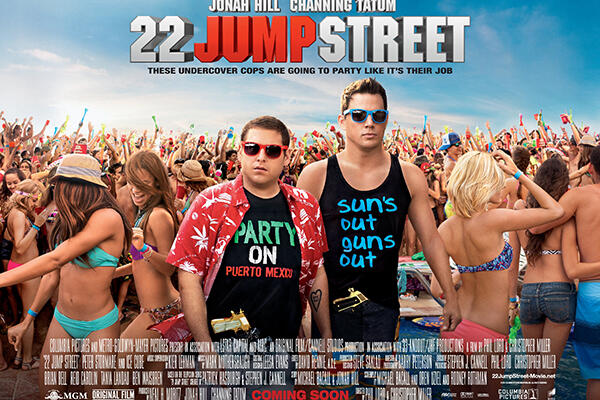
22 Jump Street
Rating: A Anyone who has ever seen a sequel of almost any comedy movie ever made knows not to expect great things. They are usually a rehash of what worked the first time, though less original and less funny (see The Hangover Part II). What made 22 Jump Street such a great sequel was that directors Phil Lord and Christopher Miller were completely aware they were making a money-grabbing sequel. The story was largely the same as the first film, but a change in setting from high school to college, and a hilariously self-aware script give this film enough originality to be arguably better than the first. Everything I loved about 21 Jump Street is present: the bro-mantic escapades of Jenko and Schmidt (Jonah Hill and Channing Tatum), references, cameos and throwbacks to and from other films, and the hilariously entertaining Captain Dickson (Ice Cube), who has a larger role this time. Jenko and Schmidt are once again sent undercover into a place of education following the arrival of a new drug, “WHYPHY,” and ordered to infiltrate the dealer and find the supplier. Captain Dickson’s advice for the pair is “it’s the same case, do the same thing.” The very clever script comes close to breaking the fourth wall multiple times, especially in the small scene involving Nick Offerman as Deputy Chief Hardy as he explains to the duo that the success of the first undercover operation (film) was a fluke, and now a lot of money has been invested in another attempt at replicating that success in another operation (film). Aside from the heavy self-parodying humour, the film has a lot of heart brought by the real-life/onscreen bro-mance of Tatum and Hill that would make every guy wish they had a bro that tight. Ultimately, this is not only merely a great sequel, but a great movie in its own right. As the directors make evident in the awesome end-credits sequence, the Jump Street gold mine has well and truly been milked dry.
-
Culture
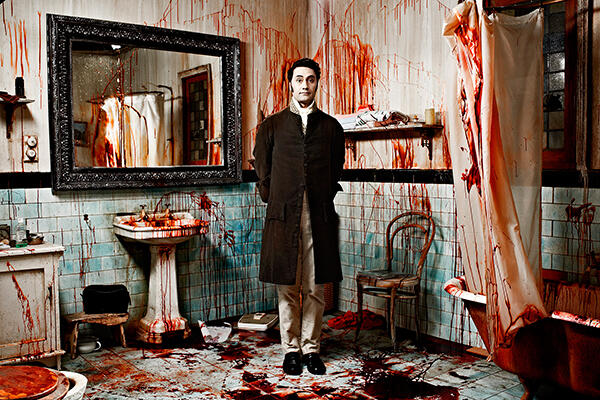
What We Do in the Shadows
Rating: A It did my heart good to see that Nosferatu hadn’t lost his touch. Vampires have become a staple offering of Hollywood flicks in recent years. I haven’t cared much for the ones that sparkle, the ones that are super-cool and drink blood like they’re shooting heroine, nor for the run-of-the-mill sexy vamp thriller. Luckily, Jemaine Clement and Taika Waititi have seen the tried and tired genre to its logical and hilarious conclusion. Anything that comes after it will (I know, I’m sorry) suck. What We Do in the Shadows follows the lives of four flatmates in a mock-u-mentary style exposé on the secret lives of vampires. Our primary contact is with Viago (Taika Waititi), who is an 18th-Century dandy and the pedantic-but-loving control freak of the flat. Jemaine Clement plays super-sexy Vladislav (I don’t know how to feel about it either), who was known in the Dark Ages as “The Poker.” Deacon (stand-up comedian Jonathan Brugh) is the young rebel, and, of course, Petyr (Ben Fransham), the 8,000-year-old terror in the basement. As it turns out, Petyr is the vampire in almost every early art work that features vampy apparitions. That’s one of the things that these Kiwi directors did to make this film so fantastic: working images of their cast into a wide array of classical art, giving the whole film an air of seamless credibility. The montages are hilarious and convincing. Their use of budget was exceptional; the concepts were wildly entertaining and original, while still managing to poke fun at the genre tropes; and the whole affair is indulgently Kiwi. I laughed hard, and so did everyone else. Bloody good time.
-
Culture
Transformers: Age of Extinction
Rating: F Since 2007, the Transformers franchise has gotten progressively more offensive in every way: offensive to your senses, offensive to your sensibilities, and offensive to your intelligence. Transformers: Age of Extinction is the culmination of those cinematic sins; making it one of the worst films I have ever seen. Let’s start with the script. It jumps back and forth between a lazy attempt at a plot, which really just acts as a platform for Bay-style action-carnage, and what I struggle to describe as “dialogue.” Never in all my life have I heard such hackneyed dialogue and character development. Characters constantly spout painfully clichéd exposition and vomit-inducing attempts at playful humour in equal measure. This is made even worse by the fact that there doesn’t exist a likeable character in the whole movie, and when one does start to be vaguely likeable they are quickly killed-off. Although, calling the cardboard cut-out clichés of this movie “characters” is probably a bit of a stretch in itself. To make matters even worse, all of this is coated with an utterly disgusting and totally unabashed level of sexism and racism that sticks to every moment. If you can make it through the sections where characters talk at each other to no effect, then you will be treated to some action that only Bay could think was appropriate in its intensity and scale. To be fair, the first five minutes of this action is certainly entertaining, but it never stops, and after three hours you’ll want to tear your eyes out rather than endure one more barrage of explosions. And that’s all you’ll get. For three hours, like the worst game of ping-pong there’s ever been, the movie volleys from the worst characters and dialogue there has ever been, to the most gratuitous and unnecessary level of action there has ever been allowed. Transformers: Age of Extinction boasts some amazing talent, including Kelsey Grammer, TJ Miller, Stanley Tucci and John Goodman. But even these great actors could not polish the sloppiest turd that Hollywood has ever shat out. I would happily bleach my eyes if it could rid me of my time with this monstrosity. All I can do is warn you not to waste your time, money, and brain cells on what is hopefully the worst movie of this year, and possibly the worst movie ever created.
-
Culture
Suji Park - Anu
Brett McDowell Gallery Exhibited until 16 July 2014 My introduction to Suji Park’s work was serendipity, and I’ve been emotionally involved with her sculptures (and photography) ever since. I was in my friend’s apartment and he had his recently purchased Park positioned on a table in the corner. Naturally I had assumed that he had just got inspired one night and decided to elaborately embellish a rock – completely naïve to the fact that the object I had spent the past hour getting lost in, was in fact a Suji Park sculpture. It wasn’t until I picked it up off its perch and waved it round in the air, exclaiming my love for it (in all its cosmic-looking glittery glory), that I was made aware of its actual artistic significance. Shocked and mortified, my friend responded to my intrigue (in hindsight – stupidity): “Hannah, put the $4,000 art work down!” Suji Park is a contemporary artist, of Korean descent, based in Auckland. Since graduating from the Elam School of Fine Arts at the University of Auckland in 2010, her unique practice has quickly gained notable recognition throughout New Zealand. Park is repeatedly concerned with nature and form. Her engagement with her work and material takes an approach that involves the “recovery, analysis and reconstitution” of her own material, allowing for her work to naturally progress both thematically and practically. Anu is Suji Park’s third exhibition at Brett McDowell Gallery, and is a further progression from her previous exhibitions, with the inclusion of disfigured human forms made out of fired-clay and metallic glazing; aluminium powder; pigment; and other reconstituted materials. But, in this exhibition, her characteristically animalistic/figure works are accompanied by simpler, less constructed full vessel forms and abstract pieces. “Vessel” I, II, III and IV, which, although they appear to look like fired clay, are actually beaten bronze, steel, aluminium and brass, give the deceptively similar effect of fired-clay, displaying Park’s clever and effective creative capability. Each of the works are arranged in the gallery in a typically Park exhibition manner – spatially separate from one another, standing singularly on varied, in height and colour, plinths, facilitating an uninterrupted, fully immersive visual deconstruction of each of the nine pieces on display. The first piece in the exhibition is mother of pearl magic; a vessel of white acrylic on fired clay, embellished with clear, clouded quartz crystals standing on a pure white plinth, and it is simply stunning. The piece appropriately sets the viewer up for the progression of the more detailed pieces where Park introduces colour and a wider range of materials, as seen in works such as “Vessel With Eight Rings,” “Yua,” and “Hu,” which are fired-clay constructions, aesthetically enhanced by numerous materials that include graphite, tempera and gold leaf. Also detailed with geometric and pigmented patterns (literally looks like real-life stardust) and finished with metallic glazing, the pieces appear to be a refined amalgamation of her previous, and present ideas. “Yua” and “Hu” in particular, exemplify the artist’s interest in the regeneration and remaking of work, as each piece displays characteristics of both animal and human forms as seen in previous exhibitions, through the rendering of human faces and animal features, which force and stretch themselves out of various parts of each object – creating an almost disturbing, but nonetheless fascinating result. “Anu” is my favourite piece in the exhibition. It radically differs from the others in form, material, and construction. It dramatically combines various medias, including fired and unfired clay that is embellished with gold leaf, tempera, garnet, pigment and mica epoxy and is all embedded in a resin, plastic and Perspex cube, with some obscure cylinder shapes arranged and attached to the top. Confusing and characteristically complex, the piece (in my opinion) is the most enigmatic and interesting to observe. It’s like looking into space from a telescope – there are so many areas of colour, texture and structure, in which the more you look, the more you discover. Each piece seemingly provides refuge from the anxiety and uncertainty of the things we don’t know in the real world; and Park’s exceptionally close attention to detail fosters a sense of nostalgia and wonder, as well as addressing the lingering possibility of something more concrete, such as the satisfying sense of discovery through an inevitably trapped gaze. On show for another week, this exhibition is not to be missed.
-
Culture

Sniper Elite 3
Rating: B I’m not a sociopath (I swear) but there is something truly satisfying in games about achieving a stunningly executed headshot. I’m not sure what exactly it is, perhaps the skill involved in lining it up and timing the shot perfectly, or maybe more disturbingly, it’s the clear feedback of that sickening squelch and the consequent rain of blood and viscera that only a headshot can offer. Regardless of the reason, I bloody love a good headshot. So it is unsurprising that given the choice, I tend to lean towards more precision weapons when playing first person shooters. For this reason, I have always loved the idea of a sniper game, where theoretically I could have a whole game of only headshots. It’s a great idea in theory, but I’ve never played a sniper game that has ever lived up to my fantasy. Thankfully, Sniper Elite 3 is the closest a developer has ever come to making my dreams a reality. The three Sniper Elite titles are without a doubt the best sniper-focused games available. All take place within WWII and introduce players to a different front of the war. Sniper Elite 3 takes place in Northern Africa and tells the story of the Allies and Axis struggle for control over the supply routes that run through there. Like all of the instalments in the series, Sniper Elite 3 has a firm grasp on the history of the war and the events that occurred within any given region and focuses on telling a story that outlines the important factors of that struggle. Unfortunately, this gives the games an almost academic feel, like it is letting you play through events just as you would read them from a history book. This means that you are guaranteed to get a better understanding of the events, important figures and locations, but removes any sense of emotion or character from the story. Being an advocate of character and rich story development in games I found this disappointing, however it was a clear design choice made by the developers and I appreciate that they chose an angle and committed to it, instead of creating half-hearted characters and emotions as some games do. Without the pull of an evocative story, the hook of the game relies on its gameplay. Generally, the gameplay of Sniper Elite 3 is very middle-of-the-road third person shooting. Moving around the map often feels clunky and while scoped your character will often inch forward without your direction, occasionally causing you to walk right off of a cliff. However, despite how unpolished the movement and smaller arms weapons can feel, the actual sniping mostly makes up for those failings. This is mainly due to Sniper Elite’s greatest feature: the bullet cam. If you line up a shot right, upon pulling the trigger time slows and the camera begins to follow the bullet from the barrel of your gun and into your target. However, just as your bullet enters, the camera changes to an X-Ray that shows the trajectory of the bullet through them and the subsequent gnarly damage it causes. It is a horrendously macabre feature that is truly addictive. No doubt, it will make you feel uncomfortably exhilarated each time the camera jumps from your scope to the bullet cam. If it were up to me all I would ever do in this game is snipe, hopefully resulting in an infinite number of these bullet cam moments. Unfortunately, the developers seemed to disagree with me by making it particularly hard to actually perform the objective the game promises: sniping. Bad level design, ridiculously stupid A.I and poorly executed mechanics culminate, making it difficult to ever just ease into a spot on the map and pick off your enemies. Granted, this could lead to a very low difficulty, but as the game stands now the trade off between difficulty and frustration is just too high. It seems a little unfair to design a phenomenally awesome gameplay feature like the bullet cam, and then design a million obstacles between you and your ability to enjoy that feature. My dream of playing a truly engaging Sniper game has not been satiated by Sniper Elite 3, but that doesn’t mean that I didn’t enjoy their attempt. If you can overlook the clunky mechanics and the lack of story, those moments situated on a hilltop, picking off Nazis with an X-Ray, are more than worth your time and money.
-
Culture
New this week / Singles in review
Spoon - Do You It’s been four years since their last album, Transference, and Spoon are finally making a return. “Do You” is the second single from their upcoming album titled They Want My Soul. An upbeat, summery track, “Do You” finds Spoon retracing familiar ground, but a kind of familiarity we have missed for some time. “Someone get popsicles, someone do something ‘bout this heat.” It’s still freezing, so it may be a few months before we can fully appreciate this track. Ariana Grande - Break Free “Break Free” is the second single from Ariana Grande’s forthcoming album My Everything. The one-time Nickelodeon actress has had a relatively smooth transition into mainstream pop and so far is doing well to cement her place there. Produced by Zedd, who is renowned for his blitzy synth work, this track definitely lives up to that reputation. At its core it’s another song about breaking free and being strong, the kind of song every popstar has to have in their arsenal to captivate the downtrodden youth. Hundred Waters - Murmurs Hundred Waters are a band from Gainesville, Florida and the first to sign to Skrillex’s OWSLA label. “Murmurs” is taken from the band’s second album titled The Moon Rang Like a Bell. The track is immersive, dreamy and subtle. Loops comprised of interesting sounds flowing into, over, one another, creating a ethereal atmosphere. Jessie Ware - Tough Love British musician Jessie Ware made her breakthrough in 2012 with her album Devotion, featuring hit singles such as “Wildest Moments” and “Sweet Talk.” “Tough Love” is her first single of 2014, and a lot of what made her debut so special is back in the mix. Her voice is as soulful as ever, the song is melodic and sweet, yet contemporary. The production is subtle and aromatic, layering soft beats and glowing synths.
-
Culture

Artist Profile: Glass Owls
Glass Owls are an alternative pop act from Auckland centered around the songwriting talents of Anthony Metcalf and Tomas Nelson. Having just released their debut album, Out From The Darkness, Adrian Ng caught up with guitarist Anthony Metcalf. Did you come from a musical background? What initially sparked your interest? Not particularly … my grandfather was quite an accomplished musician who wrote and arranged music in a big band type situation in the ‘40s. From memory he played sax and keys. My dad’s favourite bands are Foreigner and The Bee Gees. My first “fuck yes” moment was age 14, hearing Karma Police for the first time. When did you and Tomas meet and decide to form a band together? What kind of sounds did the two of you bond over? Tomas and I have been playing music together for a number of years in various incarnations. We started mainly in competition with our friends Artisan Guns. We bonded over a love for The Doors, Split Enz and the Tin Pan Alley style music of the ‘50s and ‘60s. What inspired the title of your album, Out From The Darkness? Out From The Darkness comes from the title track, which is basically about dying, and everything being okay. Or at least everything you left behind. It’s meant to be an ode to worldly problems, keeping things in perspective when it feels like there’s nowhere else to turn. It’s a theme which permeates a number of the tracks on the record so we decided it was a fitting title. Has there been much of a change between your first EP and your debut album? Quite a bit, yes. Our EP was a collection of our best tracks at the time, pretty standard release for a new band. It was recorded by Dave Parker in his bedroom studio in Oratia. Dave was great for us starting out, as we weren’t really sure what we wanted to do; he essentially gave us a sound. We tried to do something different with the record. We recorded at Revolver Studios in Waiuku with Djeisan Suskov, after a year of demoing and rearranging songs. We definitely had a stronger sense of how we wanted the record to sound and feel. The emphasis of recording was on live performance, so it felt like a band in a room - albeit going through some of the best microphones in the world. What is your songwriting process like? Usually either Tomas or myself will write lyrics and skeleton chords to a song and take it to the other half and/or band practice to flesh out. We don’t really collaborate on lyrics as we like to have different voices coming through on individual tracks. Then, once we’re happy we’ll take it to the demo stage and keep refining the song live. Have you guys played Dunedin before? We haven’t played Dunedin yet but are very keen to come down in the next few months. There’s some amazing stuff coming out of Dunedin at the moment (Males, Trick Mammoth, Kane Strang, Gasp) and we have heard great things about the crowds down there.
-
Culture

Parquet Courts - Sunbathing Animal
Rating: A Captivated by the wild blur that is Parquet Courts’ second album Light Up Gold, an initial listen of Sunbathing Animal may throw you off guard. While the album’s opening song, “Bodies,” in tone and yelping vocal style, hints at their previous album, preceding songs show definite stylistic shifts. “She’s Rollin’,” for example, descends into chaotic harmonica and “Instant Disassembly” falls into seven minutes of slow, heart-broken delusion. But what further listens reveal is exciting growth. Sunbathing Animal is serious, it’s smart and it endlessly provides. Formed in 2010, Parquet Courts consists of Andrew Savage (vocals, guitar), Austin Brown (vocals, guitar), Sean Yeaton (bass), and Max Savage (drums). The Brooklyn band’s first album, American Specialities, was released in 2011 on a limited cassette run. But it was Light Up Gold, released the following year in 2012, that really got things moving for the band. Recorded over several sessions in 2013 and released this year, Sunbathing Animal is the product of considered and gradual songwriting and producing. My first exposure to Parquet Courts was at Laneway earlier this year. My friend had spent the morning briefing me on them - his enthusiasm was infectious and proved completely valid. Parquet Courts were serious, fast and performed with a cool confidence that grips your attention. The band, barely pausing between each song, created an intense and seamless experience that left me breathless. After, I wanted to know everything about them. While this energy and presence can never be fully emulated when listening through headphones, Parquet Courts’ albums come close to recreating the energy felt when experiencing them live - Sunbathing Animal is no exception. The album’s excellent structure and lyrics give it a powerful glow for any sunbathing animal to bask in. The structure, both within songs and for the album as a whole, deliberately plays with tempos and tone, which serves to clearly distinguish each song from the other (an aspect of the new album that separates it from Light Up Gold). The opening tempo collapses on itself in “Dear Ramona.” Midway through, things are suddenly shaken up again by the urgency of “Sunbathing Animal.” These thoughtful plays with structure also create an interesting musical narrative within each song - reinforcing the roaming, wandering feel of the lyrics - which are arguably the most crucial part of Sunbathing Animal. These lyrics can be anything from anecdotal - to politically and socially critical - to flat-out bizarre. “When we started out to make this record, the focus was – more than ever – on the lyrics,” Austin Brown stated in an interview for The Skinny. “They came first in the process and are meant to be right at the front, so that you’re forced to listen to them. I mean, I don’t know if there’s a hook or chorus on the whole record; but that forces the audience to create their own, depending on which lyric pops out to them – so in its own way it becomes the chorus.” The lyrics in Sunbathing Animal, which were largely written while the band was on tour for Light Up Gold, contain the prevailing themes of freedom of creativity and the countering captivity of difficult creative process and of the industrial models that exist to share the results of this process with the world. In “Ducking and Dodging,” for example, Andrew Savage sings “I cannot be free, the concert stage, the velvet cage, the glass perimeter of me / all my friends are disappearing / all my letters are in codes.” Not to be mistaken as slacker rock interlaced with nostalgia for growing up in the ‘90s, Sunbathing Animal is a crucial cuttingly-smart punk record. It doesn’t slip, it doesn’t slop, but it certainly slaps.
-
Culture

Download of the week: The Canals - Young Napolean EP (NZ)
The Canals are an intriguing new project from right here in Dunedin. Four tracks long, the Young Napoleon EP was written and recorded by Robbie Motion, who is also from post-punk noise outfit Not From Space. The Canals seem to have a significantly more pop objective and boasts a bit of a Brit-pop influence. You can download the Young Napoleon EP at thecanalss.bandcamp.com.
-
Culture

Beef and mushroom burgers with homemade buns
Last week a boy who fancied me bought me a cookbook. Not just any cookbook, but the ultimate in burger-making glory cookbook. If the book wasn’t so spectacular I would have taken offence at this blatant attempt to get me to make him the ultimate sandwich. Riding on the current hipster food trend of gourmet burgers wrapped in patterned greaseproof paper I decided to try my hand at making one of these beauties. What I love about these patties is that they have only two ingredients: beef mince and salt. Without the onion and all the rest of the faffing around, these burgers taste true and meaty and the risk of them falling apart is minimal. For the first time since I made baby sliders I made my own burger buns. If you’ve got the time one weekend I would definitely invest the time to make these. Not only are they delicious, but their glossy finish is 100 per cent Instagrammable. This is probably going to be the first of many a column about burgers, so watch this space. Serve these up with a good side of homemade kumara chips and a dollop of mayo and you’ll be laughing your way past our favourite burger-making pals on George Street. IngredientsPatties: 500g beef mince 1 teaspoon salt Mushroom relish: 5 large Portobello mushrooms, sliced 1 onion, sliced into rings splash of olive oil ¼ cup cream a pinch of salt and pepper Buns: 420g high grade flour 1 sachet of instant yeast (8g) 40g white sugar 1 teaspoon salt 170ml milk juice of 1 lemon 1 egg, separated 30g butter, cubed, room temperature an egg white Sesame seeds or salt flakes to garnish Shredded iceberg lettuce A cheeky dollop of mayo MethodTo make the buns, mix together the flour, yeast, sugar and salt. Add the lemon juice to the milk and let it sit for five minutes so it curdles. Mix this into the dry mix followed by the egg white and then the yolk. Stir until the dough comes together. Add the butter in small pieces and knead it into the dough, only adding the next piece when the previous piece has been totally incorporated. Knead for around 15 minutes then leave to rise in a bowl covered in cling film in a warm place for a couple of hours. Once the dough has doubled in size, punch it down then split it into six (you will make more buns than patties). Gently form smooth balls and leave to rise a second time on a baking tray lined with baking paper for another hour. The other alternative is to warm your oven to 50 degrees then turn it off and leaving the buns to rise in the oven’s residual heat. Preheat the oven to 190 degrees, mix the egg white with a splash of water and brush liberally over the buns. Sprinkle the tops with salt flakes or sesame seeds then bake for 15-18 minutes until they are golden and make a hollow sound when tapped. Remove from the oven and leave to cool before slicing open. To make the patties, mix together the beef and the salt, form into four patties then cook in a frying pan over a medium heat for about three minutes either side (longer if you want them well done). Sauté the onion for the mushrooms until translucent then soften the mushrooms until cooked and dark in colour. Add the cream and simmer until the cream has pretty much reduced, then season. Assemble the buns with the mushroom relish on the base followed by the patty followed by the lettuce followed by the crown of the bun smothered in mayo. Use a small skewer to secure the bun if needed. Devour at once.
-
Culture
How Should a Person Be?
In 2012, critics praised Sheila Heti’s second novel, How Should a Person Be? The New York Times named it their most notable book of 2012 and magazines such as The New Republic (who once published the works of Virginia Woolf) and the New York Observer placed this novel on their “Best Books of 2012” lists. As well as this, How Should a Person Be? was longlisted for the Women’s Prize for Fiction. To have a novel longlisted for such a prize, a prize once won by Chimamanda Ngozi Adichie, is frankly an insult to Chimamanda Ngozi Adichie. It’s also an insult to Virginia Woolf that magazines she wrote for would enjoy such a terrible novel. In no way does Heti’s novel measure up to the recognition it has received. A part of me wonders why I even put myself through the agony of reading the entire novel. I know the answer though; I hate not finishing a book. My stubbornness led to a week’s worth of misery and a day spent in my favourite place, the library, was a day shamefully wasted. How Should a Person Be? contains 306 pages and each page is pretentious torture. The novel’s blurb describes the story as “a postmodern self-help book” and “an autobiography of the mind.” If I had the same thoughts as the protagonist, who is also the author, and if I, as a reader, willingly chose this book to help me during my quarter-life crisis, I would probably stab myself with a fork. The novel is told from Sheila’s point of view as she begins to go through a period of self-doubt and deals with big, pseudo-intellectual questions concerning morality, art and, of course, how should a person be. Unable to write a play and in search for inspiration, Sheila begins to record her conversations with friend and fellow artist, Margaux, who is based on Margaux Williamson. Margaux never appears to lack creativity and embarks on projects with a seemingly swift ease. However, Sheila’s desire to tackle the question of how a person should be and to rid herself of writer’s block by recording Margaux, eventually causes a rift in their friendship. Alongside this, Sheila enters into a relationship with a man named Israel. This results in several explicit sexual scenes that I wasn’t prepared for. The grand moment of realisation for the protagonist occurs during one of their sexual escapades and that was when I had my own realisation, or in this case, a confirmation: this book is not for me. However, I can’t completely discredit the book. There were some nice one-liners and the occasional paragraph that had me thinking that maybe this book isn’t so bad. I even found myself enjoying some of the things Sheila had come to learn about herself, others and the world around her. However, one-liners and a paragraph or two can’t carry a book to success and I can’t bring myself to write about how great the book is with those sparse but wonderful sentences in mind. While it isn’t the worst book to ever be published, I believe it comes pretty close, despite those moments of redemption. Sheila Heti’s novel, How Should a Person Be? is a true indication that one person’s opinion of a book can be very different to our own. However, I should also point out that even though I wasn’t a fan of this novel, there are people out there who would probably really enjoy it. In particular, I would recommend this to fans of HBO’s Girls as the characters share similar elements and have similar issues to those in How Should a Person Be?
-
Columns
Science, Bitches | Issue 15
There are more bacterial cells in your body than there are human cells. Think about that for a moment. Gross? Nah, not really. It’s perfectly healthy to be covered in bacteria. They are everywhere – from your eyelashes to your toes, all over your skin, in your gut, under your nails and up your nose. Most of these are non-harmful, or commensal, bacteria. It’s a win-win situation, really; we provide them with a warm, safe, and nutritious home, and they help our gut develop, strengthen our immune system, give us a hand with digestion, and even protect us from disease. What? Bacteria keep us healthy? Yeah, you heard me. Not all bacteria are commensal, as I’m sure you’re aware. Pathogenic bacteria can cause everything from pimples to, well, death. It’s not like they’re out to get us, they just want a free ride on the gravy train that our commensals have. Often the symptoms of bacterial diseases are either ways for them to spread to more people (coughing, diarrhoea), or your body trying to get rid of the infection (inflammation, fever). All they need is a small bit of real estate on your body to get started. And that’s where our handy-dandy commensals come in! If every little bit of our body is occupied by good bacteria, there’s no room for the bad ones. Just by existing, our bacterial buddies are protecting us from diseases. This is pretty effective, in combination with our damn fine immune system, but sometimes pathogens slip through the cracks and make us sick. Back in the day, this was pretty bad news – until penicillin came along in the middle of the 20th century, the miracle drug that could cure infections. Now we’ve got a whole range of antibiotics, and while they’re great, they’re not very specific. So while they might kill the pathogen, they can also kill a lot of your friendly commensals. Once they’re gone, there’s nothing to stop more pathogens setting up shop, particularly in your gut. So you take more antibiotics to stop that infection, which kills more of your commensals, so there’s nothing to stop the next infection, so you take more antibiotics … This vicious cycle can result in a condition called Antibiotic Associated Colitis: chronic inflammation and infection of your intestines. Not pleasant. More antibiotics won’t help, since really what you need is your commensals back. But how? A healthy gut is a whole ecosystem of bacteria, which is why they’re called your microflora. About 500 different species coexist in there, many of which we can’t grow in the lab. So we can’t just grow them up and feed someone an ecosystem (although people are trying!). Probiotics contain some commensal bacteria, which is why they’re recommended to take with antibiotics, but there’s not much proof that they can either prevent or treat Antibiotic Related Colitis. So yoghurt might be nice, but won’t do a lot of good. But there is one great source of intestinal ecosystems: Poop. Faecal transplants are a last resort treatment for Antibiotic Associated Colitis. Literally, they’ll take someone’s poo (preferably a healthy relative or partner) and “recolonise” your intestines.
-
Columns

Queer Eye | Issue 15
Oh woe is us as we mourn the loss of the “real” men. The ones whose facial hair was allowed to grow free and wasn’t teased into hipster-perfect face art. The men whose sole occupation was rustling sheep, drinking beer and chasing tail. The men whose only exercise was a run around a rugby field, who didn’t feel the need to spend hours pumping bar bells in front of wall mirrors while guzzling protein shakes. These are the men who built our country and fought for our freedom … apparently. I mean, seriously, do people still believe this shite? Well, according to the media and the super accurate reflection of society that is the Internet, there is a real anxiety out there that masculinity is in crisis. It seems that a lot of people are worried that our men are looking too nice, smelling too nice and wearing far too stylish clothing. I have even heard gay men worried about this trend as apparently it makes it harder for them to sort the gays from the straights! So who is to blame? Is it those dandy Queer Eye for the Straight Guy men who taught us the correct way to use hair products? Is it those raving feminists who blame men for all the ills in the world and made us feel all guilty about our manliness? Is it the school system that clearly favours girls as they constantly score better than us? Or is it some food preservative which is increasing our oestrogen levels?! It seems to me that if anything is to blame, it is capitalism. The market is always trying to increase demand for its products and therefore it is always trying to find new consumers. It is therefore no surprise that pharmaceutical companies have been trying to convince men that they need the same products that they traditionally sell to women. It wasn’t so long ago that men would laugh at the thought of using moisturiser, and now I believe it is in fairly common usage amongst menfolk. Indeed some men are exploring various forms of makeup and what Saturday night outfit would be complete without a spray of your favourite cologne? Are we really all that worried about this so-called “erosion” of masculinity, though? For me it depends on the lens through which we look at it. Sure there is a problem if the market is saying that men are not “sexy” unless we smell like roses, have our eyebrows plucked, and each have a tanned, rippling six-pack. It is most certainly a problem if we are then spending all of our money and spare time trying to obtain this look. But it is not a problem if society is crafting men who are less violent, more refined and more in touch with our emotions. It is not a problem if we are producing men who treat women with respect and recognise both their own privileges and vulnerabilities. For me the most exciting development in this evolution of masculinity, is that it is beginning to critique the gender binary. When we stop seeing gender in terms of exaggerated and archaic ideals, we begin to question what exactly it is to be a man and what it is to be a women. We begin to challenge our assumptions, prejudices and misconceptions. We might even stop using phrases like “man up” and “grow a pair.” So all hail the metrosexual! All glory be to the hipster gentlemen!
-
Columns

Defending the kingdom | Issue 15
The Animal Welfare Act Amendment Bill 2013 is currently passing through Parliament. In response to the potentially significant changes to animal law, an animal law workshop was held at The University of Auckland. Seminars were given by Vernon Tava, David Tong, Danielle Duffield, Arnja Dale, and Katrina MacClennan. Otago’s own animal law group, Otago Student Animal Legal Defense Fund, and Auckland University Animal Rights Group presented on their organisations. Vernon Tava opened the workshop. He is a solicitor at the Auckland Community Law Centre, member of the Waitematā Local Board of Auckland Council, and board member of SAFE. He has previously worked for The University of Auckland, and the Green Party. Vernon spoke on “Progressive Reform or a Step Backwards? The Animal Welfare Amendment Bill 2013,” and the implications of the proposed amendments to the Act. Second speaker David Tong is a Master of Laws student at Auckland, solicitor at Auckland Community Law Centre, and Chair of the P3 foundation. He was formerly a solicitor at a major commercial legal firm, High Court Judge’s Clerk, and President of UN Youth NZ. In his presentation, “The Animal Welfare Codes of Welfare,” David explained codes of welfare in detail. Next was Otago Law (Hons)/BA grad Danielle Duffield, the workshop’s organiser. Danielle is a solicitor for a major commercial law firm in Auckland. She founded Otago SALDF in 2010, the first student chapter of US-based Animal Legal Defense Fund in the Southern Hemisphere, and was President until 2013. Her seminar, “Instant Fines for Animal Abuse? The Enforcement of Animal Welfare Offences and Strategies for Reform” summarised her honours dissertation on the feasibility of an infringement scheme for animal welfare violations. After lunch was Arnja Dale, a Senior Academic in Applied Animal Behaviour and Welfare Science at Unitec. Her presentation, “Animal Welfare Prosecutions – what is the Judiciary Saying?” presented her scientific research on penalties for AWA offences. The last main speaker was Katrina MacClennan. Katrina is an independent barrister, journalist and commentator. Her seminar, “Animal Agenda Aotearoa – Vote Animals in 2014,” provides a unifying cause for animal campaigners leading up to the 2014 election. While the qualified lawyers held a planning session, the students took over. Otago SALDF President Dusty Pearson presented on his organisation, parent organisation ALDF, and the work Otago SALDF does here at Otago. Lastly, Auckland Uni Animal Rights Founding Co-Presidents Niccola Davies and Avril McIntyre took over to present on and promote their up-and-coming organisation. The group holds regular vegan sausage sizzle fundraisers, and has devoted themselves to reducing the killing of rats at Auckland Uni by 20 per cent by 2015, down from the current 10,000 per year by removing rat dissection from first year biology. The workshop was a great step forward for the rapidly growing field of animal law.
-
Columns

Love is Blind | Issue 15
Critic’s infamous blind date column brings you weekly shutdowns, hilariously mismatched pairs, and the occasional hookup. Each week, we lure two singletons to Di Lusso, ply them with food and alcohol, then wait for their reports to arrive in our inbox. If this sounds like you, email critic@critic.co.nz. But be warned – if you dine on the free food and dash without sending us a writeup, a Critic writer will write one under your name. And that won’t end well for you. AugustusI went into the Critic blind date expecting to get lucky. I was sadly disappointed. I started my Thursday night with a few brews at the flat; a bit of liquid lubrication was definitely in order for my night ahead. The flatties gave me some pretty choice advice and stopped me from wearing my Adventure Time t-shirt, but I’m still not sure why. I made my way into Di Lusso, and as I was the first to arrive, I took a seat in front of the fire and waited for my date to show her face. When she walked in the door I greeted her by using my sex voice, hoping to entice her into our evening of pleasure. She gave me a hug and then sat next to me on the couch. I wasn’t expecting her to be so forward. We started the night with a couple of Red Bull and vodkas and as I felt the drink go to my head our conversation started to flow. I don’t remember much about what she studied, just that her classes sucked and she was ready to forget about them for the night. I was fine to move the conversation onto me, and as I told her about my snake-skin collection and my interest in prog-rock our food order arrived. We had the sliders platter and after skulling back some cider I fed her one of the burgers. As I put the juicy beef in her mouth, sauce was dripping down my fingers and I was ready for action! I leaned over for a titty grab but got a slap instead. Don’t get me wrong, this chick was hot, but I was ready for some action! As the night started coming to an end I jumped on Tinder and started swiping right; I matched with a few babes in the area and managed to convince one to meet me at mine in 20. We walked out of Di Lusso together and I tried to give my date a cheeky pash, which failed almost instantly. She gave me a firm handshake and we went our separate ways. HazelAfter a failed year of romance so far, and a serious lack of attractive people in my small 15-person class, I decided to take the plunge and go on the Critic blind date. Being university holidays and the middle of winter I was slightly afraid of what creature may be lurking in the shadows, but regardless I knew it’d be free food, free drinks and a fun story at the end. I arrived second and spotted a tall gentleman sitting in the corner, who greeted me with an unusually low voice and a firm handshake. I had a sneaking suspicion I knew him from somewhere but couldn’t quite place him. We got onto work and study and he told me he had a passion for baking and was considering moving to Timaru to pursue this. I know what you’re thinking, right: “dream big!” He showed little interest in what I had to say and seemed to take every opportunity to turn it into a story about himself. After both downing a vodka and Red Bull (personally, I needed it to stay awake), the platter of sliders was looking pretty appetising. He insisted on feeding one of the beef ones to me and I reluctantly obliged. He made this disturbing slurping sound as he licked sauce off his fingers and I was instantly regretting our food choice. Here’s a hot tip for you future date-goers: order something that you can eat gracefully and isn’t going to be an invitation for innuendos and general weirdness. As the night went on I became more and more convinced that this guy was one of my flatmate’s Tinder-gone-wrong stories. I recognised him from the photos and she’d told me about his obsession with snakes and the various bad pick-up lines that followed. Towards the end I caught him repeatedly sliding right on his phone, and decided I was officially done. He walked me outside and there was that awkward linger where you’re thinking, “Dear God, I hope he doesn’t try to kiss me.” Lo and behold he leant in, but I ended the date on a handshake and returned to the comfort of my flat.


