
-
Columns

Editorial | Issue 06
Last week, the media pounced on Kim Dotcom for owning a copy of Hitler’s Mein Kampf. People collect some strange things. I have a friend in Sydney who bought an antique taxidermy kiwi. He’s not promoting that people start hunting our iconic native bird again. Some collect their wisdom teeth after they’re pulled. They’re not all doing so because they long to experience the pain again. I own a signed poster of Slash. It doesn’t mean I shoot heroin and fuck with the stars. I also personally own a copy of Mein Kampf. It’s there to round out my knowledge of a very dark history, although I must admit that I haven’t got around to reading it cover-to-cover. It sits alongside the likes of Night and Boy in the Striped Pyjamas. Heck, it’s still in print and you can find it at the public library. It’s both an educational tool (no, not in the sense that it teaches you how to be a Nazi) and a trivial collectible of historical interest. Just Google the book and “Mein Kampf pdf” is the second suggestion you are presented with. Yet most people who have bumped this search so high would agree with Dotcom’s response: “I’m totally against what the Nazis did.” With the publication in question being a signed first edition, Kim Dotcom’s reasoning is slightly different to my own – it’s more about having too much money and being able to say “oh em gee, look at this cool thing I bought,” which most of us will be guilty of at some time in our lives – but the point remains the same. Ownership of the book doesn’t promote Nazi ideologies, nor does it identify the owner as a Nazi. Continually reminding viewers and readers in the midst of this that “we hope you haven’t forgotten that Dotcom is GERMAN” points to a more sinister xenophobic slant coming from the New Zealand media than anything dodgy on Dotcom’s part. The last time I checked, it was compulsory for German school kids to visit concentration camps, highlighting how utterly grim they are and aiming to ensure that it never happens again. When I was at Dachau, a concentration camp just out of Munich, the visit was one of the heaviest experiences of my life. Even as someone who’d likely be executed as a conscientious objector if worldwide war broke out again, I was genuinely proud that my grandfather fought against what I was seeing and imagining. Much the same as visiting a concentration camp, acknowledging factors that lead to such atrocities, such as Mein Kampf, will better ensure a well-rounded education that minimises (and hopefully eliminates) the risk of such a thing happening again – in Germany, at least. Dotcom is trying to say that this attack has come from “the Key machine.” Considering how appropriately Key handled the media faux-scandal of his daughter’s art last year, if this is indeed coming from “the Key machine,” it is perhaps more tactical in the sense that it gives him an opportunity to seem completely reasonable in his response yet again. For sure, if I were in Dotcom’s shoes, I would avoid owning anything that could be picked up in such a way. But that’s because our media always makes a big deal out of such revelations, not because it’s wrong for him to own it. Some of our media consumers in New Zealand aren’t all that far away from those who watch Fox News in the States, and so this misguidance sadly tends to work. I respect Dotcom for owning the situation; it’ll be interesting to see whether ideology or the PR machine wins out. Zane Pocock Critic Editor
-
News
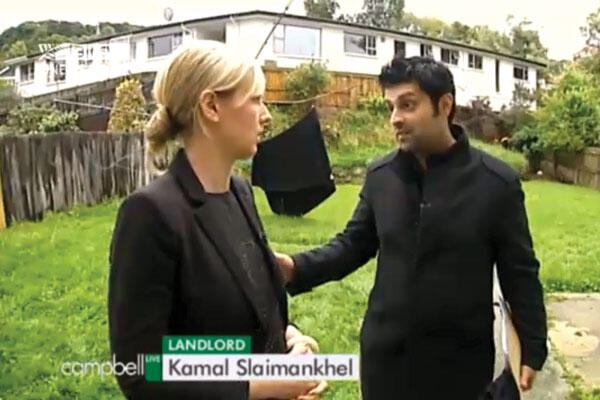
Females Find Faulty Floor, Fittings & Faeces In Filthy Flat
Another story of appalling flat conditions and an inconsiderate landlord has recently faced the media spotlight, with five Dunedin students presenting the state of their flat on Campbell Live last week. The story has been strongly disputed by the flat’s landlord and ex-tenants, who say the girls’ claims are “total rubbish.” The five girls, all third year students, moved into their $600 per-week flat in February 2014 and claim to have found vomit on the bedroom ceilings, faeces on the walls and a dead bird in one of the bedrooms. They found the house had been unlocked all summer and was left to them with maggots, broken windows and the loose ends of a hydroponics operation. OUSA Student Support tried to assist the tenants with dealing with the state of the flat but the landlord, Kamal Slaimankhel, “would not have a bar of it,” according to Steph Moody, one of the current tenants. A lawyer wrote a letter to the landlord, giving him two weeks to tidy the place otherwise the tenants would have their lease terminated. When the two weeks was up, they contacted Campbell Live, who presented the story last week. The tenants claim Slaimankhel lied to the reporter and accused the current tenants of growing the weed themselves during the first three weeks they had lived here. Following the media attention, the window, holes in the floor, letterbox and light fittings were fixed. Moody explained that an agreement had been made with Slaimankhel that they would begin paying rent once their Studylink payments began. They would back-pay the first seven weeks once they arrived in Dunedin. However, when they arrived at the flat and saw the state of it, they decided not to pay the first seven weeks until the requests to fix the flat were met. Nothing was done to fix the place until the media got involved. Following Campbell Live’s coverage and the subsequent repairs, they paid the first four week’s rent. They still owe three weeks rent but, again, claim that this is on agreement with the landlord. The tenants told Critic “the general consensus within our flat is that we shouldn’t have to pay the full back-pay considering the conditions we’ve been living in.” Slaimankhel says no agreement was ever made regarding rent and he expected the money in his account last Friday. The girls also complained of a poster showing two nude women on one of the walls, which the 2013 tenants had left behind. Critic found a photo entry on Meatmail’s Facebook page containing four of the girls, mostly nude, in front of the explicit posters with a large bong. “It was for a Meatmail competition but got deleted for being inappropriate.” They feel it was “not a wise move” but does not change the fact that they were left with unwanted items, including the poster. Last year’s tenants believe this photo discredits the allegations the girls are making about the house and Campbell Live’s reporter was not aware of the photo until after they went to air. Jack Boxall, a tenant from 2013, strongly disagrees with the claims made and says the flat was not left in the state shown on television. He admitted to knowing about the broken window but says “the Campbell Live show pissed me off.” When Critic asked what state they left the place in, Boxall said “We’re professionals. There’s one guy doing his PhD and the rest of us are doing double degrees.” Boxall says the incident is “all just lies” and that Slaimankhel is a “great guy.” On visiting the tenants to collect left-behind belongings, Boxall says he was told by one of the girls, “in quite an aggressive manner,” that “we chucked it out with the rest of your shit.” This year’s tenants deny any aggressive behaviour. He says the Campbell Live piece showed maggots and holes in the wall but these images are all from the garage, “which is not a friggin kitchen.” He says “when rubbish is left in a shed for two months, of course there’s going to be maggots.” Critic asked for photographic evidence of the state of the flat, but the most offensive image we received contained a burnt plastic bottle and a bottle of Thrive plant food. Critic advises tenants to thoroughly photograph any damages found in your flat upon arrival and to ensure any financial agreements are put in writing upon agreement.
-
News

Noise Complaint Met With Dignified Silence
The filming of a carpet commercial at a View Street flat has incorrectly been associated with a number of noise complaints, despite the flat having a history of noise problems with neighbours. The ODT reported on Friday 14 March that the filming of a Godfrey Hirst Carpet Commercial at the “Backpackers” on View Street had seen noise control officers called there at 7am on a Sunday. However, the filming had taken place between 10 and 22 February, and the noise complaints were from a different property. The article also reported that the filming, party and noise issues had left neighbours “tired, angry and, in one case, out of pocket,” and that neighbours were “outraged.” The article was subsequently removed from ODT online after a student from the flat contacted the ODT emphasising that the party was in no way connected to the filming of the advertisement, and a corrected article was published. The corrected article confirmed that there had been a party while the advertisement had been filming at the upstairs flat on Friday 21 February and that there had been a noise complaint that night which ended the party at about 2.30am. Godfrey Hirst general manager Tania Pauling confirmed that the party was not organised by the film production company, nor was any alcohol supplied. The retracted article also highlighted that luxury accommodation Chapel Apartments had estimated the “Backpackers” flat had cost them “thousands” because of noisy parties over the last four years. Critic spoke with Jon Ing from Chapel Apartments who said that the filming of the Carpet Commercial had not been disruptive but he has had problems in the past, particularly when you have “18 boy students all in one flat.” “People that stay at my apartments spend about $400 a night and like to go to bed at midnight, but they can’t get to sleep until six in the morning [because of the noise].” Ing said he’d “tried everything” but the “only serious step forward” was that the landlord of the flat had been issued with an “abatement notice,” requiring the landlord to lease the house to tenants that will not interfere with others’ lives. Ing said he’d also been approached by the TV show Neighbours at War, but he is “not very interested,” and “just wants a solution” to the noise problems. Critic’s attempts to contact the occupants of the flat for comment were unsuccessful, but the student who contacted the ODT emphasised that the flat didn’t “want to get our neighbours offside.”
-
News
Dunedin Renamed Shangedin, Shanghai of the South
The University of Otago has secured a groundbreaking relationship with a Chinese University, which is likely to grant access to China’s lucrative medical research sector. Shanghai’s Jiao Tong University consistently ranks among the top five universities within mainland China and after signing a Memorandum of Understanding with the University in 2009, the two parties have secured a more specific “relationship agreement” this month. Critic spoke with Research and Enterprise Office Director Gavin Clark, who was part of the Delegation group who signed the agreement in a week-long trip to Shanghai. He said the relationship between the universities and sister cities will benefit from the agreement by providing a “facilitated route to partnering in research and development with universities and companies in China.” Clark said that the next step is an “in-depth project discussion” in which “a subset of Otago professors with specialist expertise in near-market fields” will visit Jiao Tong University in August. Clark anticipates that the long and short term gain for Otago will help to raise research and development funding from the Government and industry, and will help create high-quality research jobs. In the long term, the partnership is anticipated to give the University and Otago companies “enhanced access to large Chinese markets.” The immediate opportunities that the agreement provides for will be in areas such as Translation Medicine, including “turning medical discoveries into drugs and services to enhance patient care and lower health costs.” Clark said that Jiao Tong University is investing in a New Translation medicine facility, which will strengthen Otago’s existing endeavours in this area. “There is also strong potential to capture synergies between Jiao Tong University’s food security and engineering centre and Otago’s strengths,” said Clark. According to the ODT, further negotiations were also discussed with Quingdao University, also on China’s east coast. Financial assistance for establishing a new marine research centre on Dunedin’s waterfront appears to be a possibility and would provide a replacement for the Portobello aquarium, which closed to the public in 2012. DCC chief executive Dr Bidrose made it clear that the DCC is not interested in being part of a joint venture, which would develop the facility, and the offer was passed on to the University. Dr Bidrose said Quingdao University’s involvement in a Dunedin marine science centre had not been discussed in detail, but is another indication of China’s search for economic development opportunities in Dunedin.
-
News
Ross Creek Zombie Apocalypse Run Forecasted
The very existence of the 126,000 men, women, children and Scarfies in Dunedin is under threat; the Zombie apocalypse is on its way. 18 May will see the Walking Dead become the Running Dead in a five-kilometre obstacle course around Ross Creek Reserve designed to raise funds for the charity ChatBus, a free counselling service for primary and intermediate school children. According to ChatBus fundraising manager Aaron Smith, the inspiration for the run comes from the popularity and success of international zombie runs. The participants of “Zombie Apocalypse” will flee their ravenous pursuers around the Reserve, ducking and diving around obstacles in a desperate attempt to outrun the infected zombie horde. “We’ve done the usual sausage sizzles, etc., but this is definitely the biggest thing we’ve organised so far,” states Smith. “There might be flats or families that want to enter together we think this kind of event appeals to all ages.” The course will provide for 300 runners and 50 zombies, states Smith. During the Zombie Apocalypse, filthy flesh-eaters will attempt to take one of runners’ three “life-tags.” Runners who fail to guard their life-tags will still be allowed to finish the race, although have their time recorded under the “deceased.” Those nervous runners need not fear, assures Smith, “They will give chase but slowly! We want to make it a challenge for people, but obviously not too hard.” The event banks on the popularity of apocalypse-themed blockbusters like World War Z, and the iPhone app Zombies, Run! – where the breathing of the undead serves as fitness motivation. The proceeds of the race will go directly to ChatBus, which will be used to employ a new trained counsellor and the purchase of a new bus. Founded in response to New Zealand’s high teen suicide rate, ChatBus aims to fundraise upwards of $10,000 for their cause. “The primary aim is fundraising but also to have a really fun day.” Alongside the classic prizes for those first to finish, there will also be awards for best and worst dressed, zombies and runners alike. Members of the NZ Army will also be stationed around the track. Individual and group prices and registration are available via the website theyarecoming.co.nz. For those looking to join the ranks of the undead, there is also an option to register as a zombie.
-
News
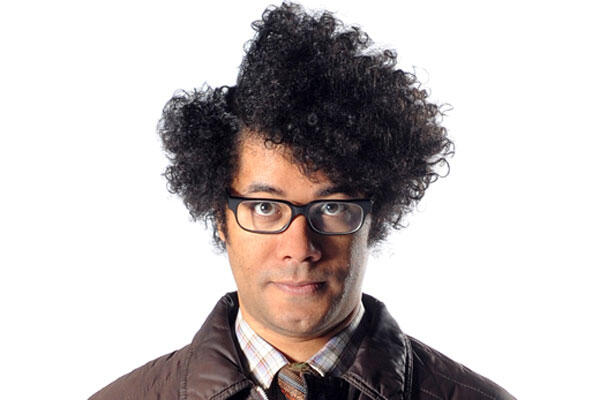
Proctology
Disgruntled moteliers and neighbours – and trampolines – are the latest victims of the plague of rowdy Scarfies, making this week’s Proctology look like an episode of Neighbours at War. Known to some as “The Tavern,” a student establishment in Woodhaugh has taken remembering their pint-pouring forefathers to a new level, much to the dismay of their “normal neighbours.” What typically starts as a quiet night at the Tavern with the 11 residents is, “all of a sudden, huge” when each invite a handful of mates along, according to the Proctor. While the same scenario on Dundas or Clyde “wouldn’t raise an eyebrow,” the Proctor has had a “few days listening to neighbours that express their unhappiness about bloody students in general.” Critic notes that a peace offering in the form of a pint for the normal, non-Scarfie neighbours might not be the best way to love thy neighbour. Another neighbour in North East Valley bounced into problems with the Scarfie breed after students came and, drunkenly, jumped on his kids’ trampoline. In what could have been a poor dismount, but more likely penance for said neighbour mowing his lawns at 9am on a Sunday, the bouncing Scarfies tore off a wing mirror on their way out. Proctor Valuation Services puts wing mirrors at anywhere from “a hundred or two hundred dollars, to two or three thousand dollars.” Regardless, the Proctor said that any one caught doing it again would be issued a fine. “So instead of having a party, they give [the money] to me.” While Critic wishes we could report that the Proctor has a fetish for buying extortionately priced exotic insects and that his office looks like an Entomology museum, any proceeds from fines actually go to the Emergency Student Fund – a fund that students can access if in immediate financial need like, for instance, covering expenses to attend a funeral. Another victim of the Scarfie plague came after a student fed up with the University Network (gasp!), got very frustrated and “berated the IT staff for their perceived lack of action.” The proctor said it “probably wasn’t [IT’s] fault,” and that students should “give the IT guys a break,” especially because “defending a million inputs from outside attacks isn’t completely easy.” The only break Critic can think of giving IT is the one now separating your laptop screen from it’s keyboard after YouTube failed to load past another Rhys Darby ad, and you’ve thrown your laptop 2 degrees too far into the ground.
-
Columns
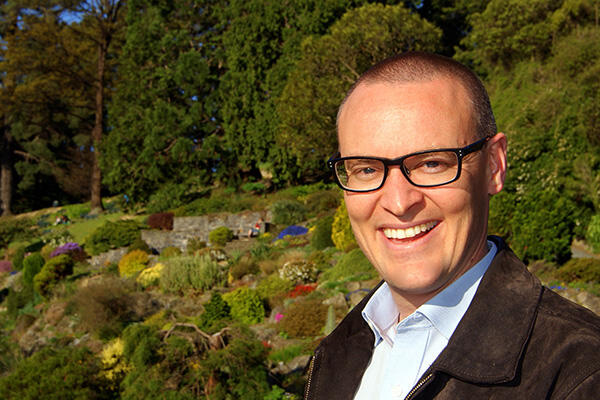
David Clark | Issue 06
Big trends shape all of our futures. The Industrial Revolution and the communications revolution have changed our world in ways past generations could not imagine. Like other trends, increasing globalisation has both good and bad sides. When I think about New Zealand’s future, there are concerns I associate with the dark side of globalisation’s fragmentation and growing individualism. A reluctance to respond to climate change. Multi-lateral action is imperative. New Zealand is a small country whose individual emissions will not change the world’s path – but for the fact that the example we set is incredibly important. If New Zealand, with its abundance of renewable resources, can’t shift to sustainable technologies, who can? Furthermore, opportunities to lead the world (and be paid for our technologies) are passing us by each day. Intergenerational justice and New Zealand’s economic interest demand we turn the climate threat into opportunity. Across the Western World, inequalities are growing. But they are growing faster here, in New Zealand. If we are to make the most of all of our people, we must ensure that kids everywhere are given opportunity to have breakfast every day and a decent education on top of it. Sustaining NZ’s prosperity depends on it. Participation in democracy is dropping. Fewer young people are enrolling to vote. Not enough academics participate in public debate. We need stronger civics education. We also need fewer politicians involved in scandals – and a media willing to acknowledge that most who engage in public life do so for the right reasons, regardless of their ideological starting point. Student support for tertiary study is inadequate. As the cost of living has risen over recent decades, student support has not risen commensurately. If we want our “best and brightest” to pursue further education for the good of society, study must be affordable for all.The negative impacts of globalisation can be managed to New Zealand’s (and the World’s) benefit. What is required is a progressive vision for New Zealand’s future and refusal to pander to entrenched interests. These are difficult issues, but we must tackle them. We can’t afford not to.
-
News
Support Shows Cull Not UNESCOrted in Literature Bid
Dunedin has taken a major step in becoming New Zealand’s home of literature after Mayor Dave Cull last week sent through a bid to become a UNESCO City of Literature. UNESCO only permits one City of Literature per country, and Cull’s bid aims to establish Dunedin as just that. A successful bid would align Dunedin with Unesco’s other literary cities: Edinburgh, Melbourne, Iowa City, Dublin, Reykjavik, Norwich and Krakow. The status would have undeniably positive effects on the University, asserts Vice-Chancellor Harlene Hayne. “It will be great marketing, but it will be more than marketing because it has teeth.” The bid has been backed by six cities of literature internationally, who are “right behind” Dunedin and have written letters of support, Hayne said. English Head of Department Chris Prentice believes City of Literature status would be “a claim to fame that is at least as important as sporting activities,” and would attract students to “the place to study our literary culture from book history to contemporary literary art.” Critic spoke to local Dunedin writer and 2012 Burns Fellow Emma Neale, who was incredibly supportive of the bid. “It’s rather hard to reduce the energy and commitment the city shows [to literature] to just a tweet-sized mouthful.” Being New Zealand’s home of literature “would attract more attention, more funding, more interest, and so refuel the creative engines.” Dunedin’s love of literature exists in both past and present, states Neale. “Not only do we have historical ties to writers such as Charles Brasch, Janet Frame and James K. Baxter,” asserts Neale, “but [we are] a city that offers fellowships, awards, a vibrant live poetry scene, New Zealand’s oldest independent newspaper” Also prevalent are literary publications such as Landfall and Deep South; the Fortune Theatre, which actively supports new scripts; The University Bookshop, The Centre for the Book and a range of high quality libraries. “When you start to total up how many different ways Dunedin celebrates, supports and embraces a literary culture,” comments Neale, “a pretty festive feeling breaks out even before the bid is assessed.” The outcome of the bid is due to be released this November. For now, Robert Burns’ statue silently presides over the Octagon of our “vibrant literary city,” patiently awaiting UNESCO’s decision.
-
News
SJS - Sycamore Jovially Sympathises
Job-seeking tertiary students in Otago may be in for a weary hunt after student earnings, generated through Student Job Search, declined by six per cent in the early months of 2014, and overall earnings dropped by $700,000 in 2013. Total earnings of $7.353 million in 2013 were 8.6 per cent lower than the $8.051 million earned in 2012. The average amount earned by an individual dropped from $1976 in 2013 to $1865 in 2014. New enrolments for SJS have also experienced a drop of nine per cent in the first two months of this year, compared to the same period in 2013. But despite these declines, 832 students have already been placed in employment during January and February this year, a five per cent increase on 2013. Critic spoke with OUSA president Ruby Sycamore-Smith, who said it was “too early to tell anything substantial” from the drop in earnings. “From the decline in placements and earnings we saw last year we’re concerned that another year of decreases could be a bad sign for students who are needing to work due to the cut in student allowances.” She also added, “Students should be able to dedicate as much time as possible to study rather than being forced into a situation of having to work.” The total placement of students in jobs has been declining over the past few years, with last year’s total placements of 4074 down from the 2010-2012 period, which saw declining placements of 5212, 4458 and 4293 respectively.
-
News
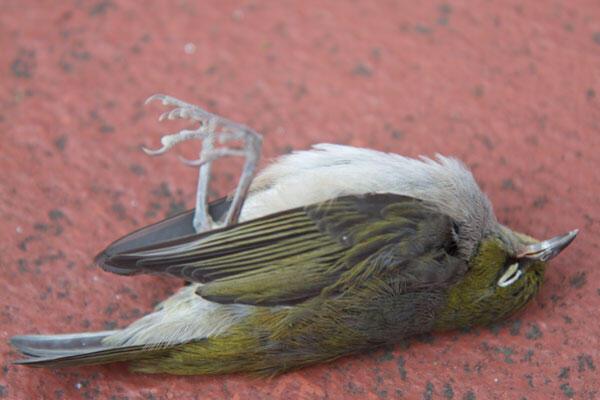
Influx of Influenza Flew In
The Emergency Department at Dunedin Hospital has seen a number of people admitted who present symptoms of Bird Flu, which comes on the heels of a recent visit to Dunedin by a group of Chinese bioterrorists. Bird flu is caused by an influenza virus that originally occurs in animals and can spread to humans. The bioterrorists appear to have smuggled a number of contaminated birds and lizards into the country, subsequently released into the city. Critic spoke with Albatross Colony staff member Robin Swallows, who has been particularly affected because of the outbreak. She has been encouraged, along with her colleagues, by the Dunedin Centre for Bird Control to cease work until the threat is contained. “It’s just a terrible situation. Until the outbreak is contained it’s too dangerous for me to go to work. And even worse, if the albatross are found to be contaminated, they will all be slaughtered.” The Dunedin Centre for Bird Control has warned the virus can be transmitted to people who have close contact with birds or bird droppings. They have issued a limited edition range of reflective wide brim shields to protect from falling bird droppings. The Centre said special caution should be taken under power lines and near leftover or abandoned food. A press release from support group Aviary International warned that birds should not be approached under any circumstances. Critic attempted to contact a number of the affected birds who refused to make a comment, but they did send us a Tweet later on.
-
News

Bayern Munich Favourites to Make Third Final Appearance in a Row
To the shiny silver football desk and the UEFA Champions League, which, since 1992, has been the elite competition in European club football. Last year’s winners Bayern Munich pocketed a cool $100 million from the competition, so there is a big financial incentive to winning as well as the prestige and all that narcissistic stuff. The draw for this year’s quarter finals has just taken place and by looking at the quality of the last eight, whoever the eventual winners are will be very deserving champions as these teams (excluding Manchester United) represent the best performing teams across Europe and the UK at the moment. You could also argue that this proves that the Champions League is a pyramid scheme that helps the rich teams get even richer. Defending champions Bayern Munich face Manchester United in the quarterfinals. No one is giving poor old David Moyes’ side much of a chance against what most people agree is the best team in the world at the moment, and favourites to become the first team to retain the Champions League trophy. Given their current Premier League struggles, this could be United’s last appearance in the competition for some time. Their only way to qualify for next year is to win it this year. In the battle of the capital cities, Chelsea face the ambitious, and big spending, French outfit Paris Saint-Germain in a very winnable fixture for the Londoners. The two teams have a similar philosophy of investment and meddling by controversial foreign billionaires that spend over 50 million quid on one rubbish striker. The first leg is in Paris and most teams favour having the second game at home. Chelsea’s defence has been very strong this season so I will give them the edge over the two games, despite the attacking force that PSG has. I am looking forward to the all-Spanish affair with Barcelona taking on Atlético Madrid. The two teams are also battling for the Spanish La Liga title, so this tie is sure to produce some fireworks. Star man Lionel Messi is capable of winning it for Barca, but I hope that Atlético will prevail on both fronts and help end the duopoly that Spanish football has become. The other side of that duopoly, Real Madrid are in the hunt for a 10th European cup win. They face a grudge match with last year’s runners-up Borussia Dortmund who triumphed four - three when the sides met in last year’s semi-finals. I think world record-signing Gareth Bale will help Los Blancos get the better of Dortmund this year. The first legs will be played 1 and 2 April, with the return fixtures the following week. You should be able to catch some of the action on the big screen in the Union food court. Now we continue our road to the World Cup in Brazil with a look at the colourful combatants of Group C. GreeceUEFA – Union of European Football Associations Population: 11 million Currency: Euro debt Capital: Athens Language: Ethniki Piratiko “The National Pirate Ship” in Greek. FIFA World Ranking: 13th Qualified: beat Romania in a final round play-off. Fun Fact: Poor at the World Cup but were surprise winners of Euro 2004. History: Only lost one game in qualifying. Key Players: Zeus-looking mofos with names like Lazararos Christodoulolipopulos. Prediction: The pirate ship won’t have enough firepower to shoot them into the next round. ColombiaCONMEBOL – Confederación Sudamericana de Fútbol Population: 47 million Currency: Peso Capital: Bogota Language: Spanish name of Los Cafeteros = “The Coffee Growers”. FIFA World Ranking: 5th Qualified: Runner up of their group Fun Fact: The team has become national ambassadors against negative Colombian stereotypes. History: First World Cup since France 1998. Have a surprisingly high world ranking. Key Players: 50 million dollar man Falcao is under an injury cloud at the moment. Prediction: Into the last 16, if all goes according to plan. JapanAFC – Asian Football Confederation Population: 128 million Currency: Yen Capital: Tokyo Language: Because of their uniforms, they are known as Samurai Blue in Japanese. FIFA World Ranking: 48th Qualified: Winner of Asia Group B Fun Fact: 34-year-old Yasuhito Endo has an impressive 141 caps. History: Dominant in local tournaments but fail to beat the big teams when it counts. Key Players: Creative midfielder Shinji Kagawa, of Man United, and Keisuke Honda of AC Milan. Prediction: They will fight bravely and be honorable in the inevitable defeat. Ivory CoastCAF - Confederation of African Football Population: 22 million Currency: Franc Capital: Yamoussoukro Language: Officially French. I wonder what Les Éléphants means? FIFA World Ranking: 24th Qualified: beat Senegal in a third round play-off. Fun Fact: Former Chelsea legend Didier Drogba is on 99 caps. History: Highest ranked African nation in the world. Key Players: Man City beast Yaya Toure anchors a very experienced team of big, strong dudes. Prediction: I really hope they can make it to the next round, which is very realistic.
-
News
Critic tackles election year | Issue 6
When it comes to election year, the Otago politics department likes to get involved. We’re only really relevant once every three years, so it’s fairly exciting to get the chance to appeal to more than eager freshers in POLS102. That’s why this week is dedicated to an Otago initiative called Vote Chat. Hosted by lecturer Bryce Edwards, it’s a web show that features a different guest each week and aims to discuss issues that might affect the election. The first event took place on 21 March, and featured Max Rashbrooke. Meet MaxIf you’ve ever wanted to know something about inequality, Max is your guy. He has written two books on the subject, and I’d estimate that the word “inequality” was said approximately three times a minute throughout the interview. He also boasts an impressive CV, having worked as a freelance journalist in the UK for five years and had his name printed alongside articles in the Guardian, NZ Herald, the Listener, and more. As Max disclosed during the interview, he is working contractually for Green Party research (a job that does not mean he is a member of the Greens). He therefore preferred not to expand too explicitly on what he considers the best party policies for targeting inequality and the party he’s most likely to vote for. A Bit of AnalysisAs the interview is available for everyone to view on YouTube, I’ll refrain from a general rehash and instead delve straight into a distinct problem that the discussion ran into – the dangerous conflation of inequality and poverty. A significant part of the interview focused on the links between those concepts and social mobility, as well as possible policies that affect them; often using them almost interchangeably. I haven’t read Max’s books, so it’s entirely possible an explanation features there, but it didn’t come up in the interview. For those unfamiliar with the wonderful world of political rhetoric, social mobility refers to the ability of someone in the lower income sphere to move to the upper; inequality, in this case, means the disparity of incomes between the rich and the poor; and being in poverty means not having enough money for basic necessities. In terms of quantifying the problems raised by assuming inequality and poverty are similar – or the same – they can largely be divided into theoretical differences and practical differences. The last thing I want to do is put you all to sleep with some philosophical exploration of societal duty, so I’ll keep the first category short and sweet. Put simply, poverty tends to be seen as objectively bad. No one actually likes seeing children starving to death. Conversely, a person’s position on inequality is often very dependent on their political leanings, and inequality itself is not inherently bad to all positions on the spectrum. Whether it’s painted as an incentive for achievement, an unfortunate outcome from necessary neoliberal reform, or a barrier to fairness, it’s important to understand that inequality is not the same thing as poverty. It’s merely a description of the way wealth is distributed heavily at the top and sparsely at the bottom (which is where the argument that inequality causes poverty emerges). If you assume they’re equivalents, you lose valuable discussion about causation and correlation between the two variables. The way this false parallel manifests in policy analysis very much stems from the aforementioned idea that poverty is objectively bad and inequality is subjectively bad (although if someone can convince me why poverty might be a subjective standpoint, I’ll give you an in-print round of applause next issue.) When deciding how a social policy might be designed, it’s often implicit that it can either be dedicated to equality of opportunity or equality of outcome. While this is obviously a simplification, and the phrases have been hotly debated, if you treat them more like a scale than mutually exclusive concepts then they do well to describe how policies from various parties might be targeted to address poverty and inequality. Equality of opportunity can be associated with eradicating poverty, giving each person the necessary standing ground to succeed. In New Zealand, this paradigm is inherent. Equality of outcome, however, would refer to also ensuring policies exist to minimise inequality amongst social spheres. As the latter builds upon the former, it becomes increasingly easy to see how conflating poverty and inequality can mean parties on the right are seen as “not caring about poverty,” whereas parties on the left are critiqued for being “delusional” about how society can work. Teasing them out into separate entities means teasing out the differences between party policy names and what actually might be the aim of particular initiatives. Leading up to the election, it’s important to think about what you really want from the party in power. If you want to rid NZ of its crippling child poverty but actually quite like the cutthroat capitalist status quo, perhaps investigate more carefully into what National says about our nation’s kids; if you despise child poverty, value a society with less inequality, and don’t mind the possibility of higher taxes, head for Labour and the Greens. While Max’s arguments are interesting and compelling, be careful of taking some of what he says for granted – it could too easily lead to immediate dismissal or immediate acceptance. Child poverty is fast becoming an election buzz phrase, and since poverty is objectively bad, not properly digesting what each party promises on that front could have objectively bad results. Critic asks some questionsAfter the interview, I got the chance to approach Max myself and nervously thrust my iPhone under his nose ... Previously in your writing you’ve questioned the value of tertiary education in terms of upward social mobility (like in your writings about the UK and such); and I was wondering what sort of policies and initiatives you would advocate to help university to be beneficial across the board and not just for those already at the top of the scale? Well, that’s a really good question. Um, I think one of the problems is that with fees being so high, there’s a very strong disincentive for lower income students to go to university. Particularly, and there’s a lot of evidence about this, there’s a real disincentive for people who come from cultures that have a strong aversion to debt. So I think we need to look at that. We need to look at ways to, you know, encourage more low-income students to get to university. I would also say, I mean, I know you’re a university paper, but actually probably one of the biggest problems is improving outcomes for kids who aren’t going to go to university. Because so much of the schooling system pushes you to do that. But, actually, a lot of people would be better off doing really high quality skills training, trade training, rather than going to university. It’s now what you do; it’s now what everyone thinks you have to do. And, actually, for people who want to do it there should be no barriers, but if it’s not what you need, you shouldn’t be there. Does any particular party worsen or improve the impact of tertiary education on “job market inequality,” so to speak? When you were talking about opportunities, and opportunities when you’re coming out of university, are there any particular parties who would help students when they’re coming out of university? That’s an interesting question. My impression is that most people think that once you come out of university, you’re an adult and you’re pretty much on your own, right? So, I mean, probably the real difference would be about how your student loan is treated. And at the moment there’s a consensus on that – that student loans are interest free – so I think the only real impact there would be if any of the major parties decided to break with that consensus. But I don’t see any signs of that happening.
-
News
Young Politician | Issue 06
Do you believe that technologies such as 3D printing and solar technology have the potential to change the world and opportunities for New Zealand? Or do you want to find out more about how they could? Young Greens certainly do and this week, Tuesday 7.30pm in Moot Court, we will be welcoming our youngest MP Gareth Hughes to come and talk about issues relating to technology legislation. Gareth will talk about the many new technologies that could revolutionise New Zealand’s economy and make it a tech capital of the world, then he will discuss the issues facing us to get the right legal setup to allow them to thrive. Hope to see you there!
-
News
Greatest Hits / Greatest Shits | Issue 06
Greatest HitsThis week has seen the rise of #nomakeupselfies across the world. Raising $3 million for cancer research, the trend has occupied Facebook, the media, and, surprisingly, Parliament. I followed Louise Upston’s no-makeup Twitter trail, with Metiria Turei and Holly Walker offering selfies of support, and ended up at Seven Sharp to find Anne Tolley, Jacinda Ardern, Jo Goodhew, Louisa Wall, Mojo Mathers, and Jacqui Dean also revealing all on camera. While there has been a considerable amount of criticism over the “point” of a no-makeup selfie, you can’t deny that it has been incredibly effective. Greatest ShitsOver the weekend, a bunch of us young political nerds got together for a good old BYO. Most of us already know each other from classes or Clubs Day, so drinking and debating is not exactly a new experience. It was intended to be a peaceable affair, as chances are we’re going to be seeing a lot of each other in the coming months; and really, who doesn’t love the chance to have a Saturday night BYO and a stint on the Alibi dance floor. I was told, however, that a member of a certain red party told other members not to attend (don’t worry, they still did) – because I’d write terrible things about fraternising with the enemy and the like. Well, I had no intention of writing about our lovely BYO. That would be shooting myself in the foot, as I was there. Upon hearing this, however, I thought to myself, “what is Critic if not facetious.” Therefore, this week’s Greatest Shit goes to the unending menial bureaucracy of political parties and their tendency to be far too uptight for their own good. Apparently, that extends beyond the Beehive and right into our very own sacred BYO joints. Very notable mention: Hekia Parata’s continued incompetence and the poor handling of the Kohanga Reo Trust scandal. A considerable amount of news time has been dedicated to questioning whether it’s a cover up or a fuck up, and once the truth is revealed (it hasn’t at the time of writing), I’m sure it has the potential to take the Greatest Shit headlining act.
-
News
Politweets | Issue 06
#cheeserolls The Internet Party might have to watch its back; the Hogwarts Party could steal a considerable chunk of the ‘nerd’ voter base Banter Novelty Hekia Parata account has really enjoyed this week’s scandal The more you know, I guess. Judith Collins frequently types like she’s on MSN. ROTFL.
-
Columns

ODT Watch | Issue 06
So that’s why they’re tearing up the Leith! Get your sledge hammers out – we’re going to be rich! You’re giving us mixed messages here, ODT. We thought destruction was meant to boost profits ... Instead an 11-year-old apple merchant is now financially ruined. High expectations for this year’s Hyde Street; all eyes are on Scarfies to scull their way to the top ... or unconsciousness – whichever comes first. Abraham Lincoln championed the abolishment of slavery, Kate Sheppard fought for women’s suffrage and Martin Luther King Jr. strove for black civil rights; the Dunedin City Council hopes to stand alongside those great civil rights movements by defending canine liberty. Giggity giggity giggity! Did they think this one through? On a more serious note, Critic remains baffled that after all these years, sports teams with women members must always be labeled as such while men’s teams are considered the norm.
-
Columns

Hi Dr. Nick | Issue 06
Hi everybody, Sex. It’s fun. It’s fun in relationships, it’s fun casually, it’s fun when you love somebody, and it’s fun when you don’t. Let’s never underestimate how fun sex can be because, in the words of Rebecca Black, it’s “fun, fun, fun, fun. [I’m] looking forward to the weekend.” But like Mum always used to say, “it’s all fun and games until somebody loses an eye to Chlamydial conjunctivitis.” ... Mum was weird. To wrap up our sex talk, I want to talk about the risks of sex. Cue the cacophony of audible “we know that already” eye rolling in the Link. Risks during sex are like a lovely bunch of coconuts standing in a row; there are big ones, small ones and ones that leave you crying in the shower while listening to Adele. In this column I want to touch on a few of them. Namely: Sexually Transmitted Infections (STIs), pregnancy, and emotional harm. STIs are actually pretty simple to cover. They’re ridiculously common, many people don’t get symptoms, you’re at risk of long term complications regardless of whether or not you have symptoms, testing is simple and pain-free, most are curable with a couple of specific antibiotics given early, they can be passed on at any point during sex, they can be passed on with pretty much any type of sex (oral, vaginal, anal, even non-penetrative sex), they can infect any part of the body, and we all tend to be really awkward around them. Which is stupid. An STI is either a bacterial or a viral infection. I’ve never met anybody who’s embarrassed to say they caught a cold back in high school or is ashamed about getting antibiotics for a sore throat, but the moment a bug is “sexually transmitted” it’s somehow unspeakably evil. I’ve had gonorrhoea and non-specific urethritis before. I’ve also had the flu. The flu was worse. Testing for STIs involves peeing in a cup. Depending on what else you’re at risk for you might need an incredibly tiny swab (genital, oral, or anal) or a blood test. If you come back positive for the more common ones, or if there’s a high suspicion in clinic, you’ll be given two pills and/or a shot of antibiotics. That’s it. The worst part is having to inform anybody you’ve been in contact with in the past three months (not nearly as awkward as you’d expect) and abstain from sex for seven days. Pregnancy is slightly more complicated. It comes about in the same way, but isn’t as ethically and logistically as clear-cut as infections. New Zealand has some abysmal teen pregnancy statistics; we’re world leaders among developed nations. The first afternoon I spent in a youth clinic, two thirds of my patients were pregnant. The oldest was 19. Really think about what you would do if you or your partner were pregnant: keep, adopt, abort. All three options come with significant downsides. If you can’t handle that, then you need to be vigilant with contraception. For guys, that means condoms; for girls, there’s a bit more of a selection. Chat to your GP, or family planning, or the sexual health centre. Always remember the Emergency Contraception Pill is an option and medico-legally it must be dispensed in a non-judgmental manner at pharmacies. Finally, the touchy-feely crap. Your emotions and sense of self-worth are a huge facet of health that we often overlook. Taylor Swift has made her career out of the pain caused by relationships and pretty much every person will be able relate to it. Emotional health is a topic for the future, but I flag it here to remind you that while sex is fun, it’s not all “partying, partying, yeah!”
-
Columns
Queer Eye | Issue 06
Greetings, pumpkins. In a previous column I noted that sexuality is slippery. Well, my friends, gender is more slippery than muscle-bound Turkish men in a grease-wrestling match (look it up)! There are many aspects of gender to explore but this column will focus on gender identity. Gender identity is the gender that you identify with, regardless of your physical characteristics. Hence why someone can identify as a man even if they were assigned female at birth, due to their physical attributes, and vice versa. This introduces the idea of being transgender, which will be explored in more depth in a later column. When you start thinking of gender as separate to physical attributes it starts getting interesting very quickly. Let’s explore it by arbitrarily asking: what does it mean to be a man? Traditionally people may have answered that manliness is about being strong, non-emotional, and practical. But as educated and enlightened souls, we realise that these stereotypes are bullshit as we can think of many awesome examples of men who don’t share these traits and many awesome examples of women who do. This is the same if we think of body language, interests, aesthetics and other areas of human nature that we have previously assumed are gendered. So if gender isn’t necessarily about your skills, the things you are into or the way you act, what is it about? Firstly, it is internal; it is about the way you see yourself. If you identify as a certain gender, which aspects of that gender appeal the most? Secondly, it is external; it is the way you present and show your gender identity to the world. This might be through your clothing, your hair, your make-up, your name, your pronouns, etc. Finally, it is important to note that you don’t need to identify as only either man or woman because gender is non-binary. This means that there are a whole plethora of gender identities, so we must break out of our gendered boxes and be aware of the gender diversity all around us!
-
Columns

Science, Bitches! | Issue 06
"This curry is really hot!” your flatmate says when you serve up dinner. Your spice-intolerant flatmate quickly asks if the curry is spicy hot, or just hot because it’s fresh out of the pan. They can’t handle spicy food, and are hoping it’s the latter. But why do we describe foods with lots of chilli as hot? As with the case of the hot curry, we don’t know straight away if it’s spicy-hot or temperature-hot when our flatmate describes their dinner. As well as your taste buds, your tongue has nerve endings that can detect pain and heat. You are probably reminded about this when you accidentally bite your tongue, or drink your tea when it’s still boiling hot. The “hot” ingredient in chillies is a compound called capsaicin, and what’s interesting about capsaicin is that it can bind to a receptor on one of these heat-sensing nerves, causing the nerve to send a signal to the brain telling it that the food in your mouth is “hot.” But as you’ll probably realise, the chilli you may have bitten in to could be at room temperature. Heck, if you eat a frozen chilli you’ll still get the “hot” sensation in your mouth and want to reach for a glass of ice cold water. These nerve endings aren’t just on your tongue either, as you may have discovered already if you’ve ever rubbed your eye after cutting a chilli. The same idea occurs when you eat something minty. Have you ever brushed your teeth, or chewed gum then had a glass of water? The water feels ice-cold in your mouth. The menthol – which gives that minty taste, can bind to a different receptor, telling your brain that it can detect cold – even though the minty thing you ate wasn’t cold at all! Again, this isn’t just on your tongue. If you’ve ever used Anti-Flamme or other skin creams with mint extracts, you’ll notice the same cooling sensation on your skin. Scientists are currently working on trying to trick your taste buds – to try and make foods healthier, yet still taste great. As you may already know, there are a number of types of taste we can easily distinguish – sweet, salty, bitter, sour, and one defined more recently: umami (which essentially means savoury). Humans love food that is high in fats, salt and sugar. Removing fat, for example, also affects the flavour. From an evolutionary perspective it makes sense to love the taste of fat-rich food; if you may face periods of starvation, having more energy-rich foods will help you get through. But in today’s society we don’t have to go out and hunt for our food. We can just hop in our car and hit the drive-through. The idea behind tricking our taste buds is giving us the sensation we crave – sweetness, saltiness, the texture and flavour associated with fats. Sometimes there are easier ways of doing this: if salt is ground finer, and the salt granules are more pyramidal in shape, the tongue detects more saltiness. This means you can add less, reducing how much you consume in the first place. Other ways involve testing other compounds – synthetic or natural – on taste buds grown in a lab to see if we can get the same responses. For example the taste buds detect sweeteners such as aspartame or stevia the same way they detect sugars! This is all down to science, bitches!
-
News
Fear and Loathing in Ukraine
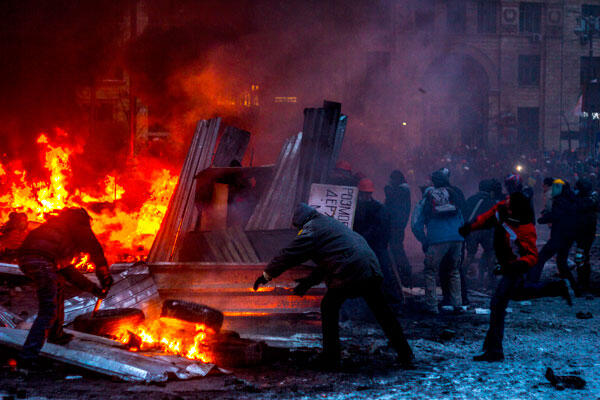
One of the big things on the news in the last few months has been the protests and revolution in Ukraine, followed by the Russian annexation of the Ukrainian region of Crimea. Here I will bravely attempt to give you a crash course in that recent Ukrainian history. Having lived in New Zealand for the last ten years and grown blissfully accustomed to the peace and stability on these remote islands, it’s pretty hard to wrap my mind around the fact that I could have lived through the revolution, a threat of civil war, and the invasion by our brotherly neighbour, were I to stay in Ukraine. I still consider moving here with my mum at the age of 15 one of the luckiest things that has happened to me. I am both Russian and Ukrainian ethnically and I can tell you this for sure: had I stayed in either of those countries, I would have continued to live in poverty and have no prospects for higher education or a career that I wanted – not to mention having to give up most civil liberties that we so easily enjoy here. Having been lucky to swap that bleak future for a life in New Zealand, I have been nervously watching this critical period in Ukrainian history that has sucked Russia, the EU and the US into a whirlpool of conflicting interests. The peaceful civil protests started in the Ukrainian capital of Kiev in November last year. For the last decade or so, Ukraine has swung between integration into the EU and its long-standing political and economic affiliation with Russia. During my first month in New Zealand in 2004, the first wave of popular protests, dubbed “The Orange Revolution,” had taken place. Hundreds of thousands of protesters poured onto the streets, waving orange flags in support of the pro-European presidential candidate, Viktor Yushchenko, claiming that his pro-Russian opponent, Viktor Yanukovych, had rigged the run-off vote. The carefully monitored re-election demonstrated that the pro-European president was indeed the popular choice. That elected President proved to be somewhat of a disappointment, however, making his opponent Yanukovych the Prime Minister for a period of time, only to become President in 2010. And so he remained until just over a month ago. A brief note on Yanukovych’s colourful track record: in 1967 and 1970 he was jailed twice for robbery and assault, later explaining it as “the mistakes of youth;” his alleged doctoral degree and professorship in Economic Sciences displayed on his website has no record of him ever lecturing or publishing any papers; during his presidency he allocated 40 per cent of the nation’s budget to his home region of Donbas, staffing police, judicial and tax services all over Ukraine with his “own people” and turning his family into the richest people in Ukraine; and, of course, let’s not forget his multi-billion dollar estate that he abandoned after fleeing his post in February, and being accused of transferring up to $70 billion from the country’s treasury into his foreign accounts. What else would you want in a leader? So, last November, President Yanukovych decided to suspend the highly anticipated association agreement and free trade agreement with the EU that would open borders for goods and ease travelling restrictions. He instead chose to pursue closer ties with Russia, declaring that €610 million in loans from the EU wasn’t enough for Ukraine, which needed about €20 billion by his estimates. Russia, on the other hand, pressured Ukraine not to sign the deal with the EU; for instance, they blocked all Ukrainian exports into Russia in August 2013 and then offered €15 billion in loans and cheaper gas prices. So nearly a decade after the Orange Revolution, fed up with false promises and no change to their standard of living, about ten thousand protesters gathered on the Independence Square in Kiev (known as “Maidan”), carrying Ukrainian and EU flags and chanting, “Ukraine is Europe.” A few hundred meters away on the European Square (oblivious to the irony) three to four thousand protesters in support of Yanukovych were also gathered. At first, the Maidan protesters (known as Euromaidan) only demanded that the pro-European agreement be signed as intended. Then, on 24 November, the special riot police known as Berkut attempted to disperse thousands of peaceful protesters, which only attracted more protesters, especially university students, in the days to come. On 30 November, Berkut carried out a violent attack on the protesters, injuring many students and journalists (the record number of journalists injured in Ukraine’s independent history since 1991), eventually succeeding at dispersing the protesters from the square. The following day, on 1 December, protesters came back in numbers multiplied many dozens of times; that is, 400,000 - 800,000 demonstrators in Kiev alone. They proceeded to take over the Kiev city hall and set up a tent city in the main square. Now the protesters, represented by the opposition leaders (including the former heavy-weight boxing champion-turned-politician Vitali Klitschko) had a list of demands: the resignation of the current president Yanukovych and several of his ministers; the release of political prisoners (including the former PM Yulia Tymoshenko arrested by Yanukovych in 2011), jailed protesters and journalists; the return to the Ukrainian constitution of 2004, which was amended by Yanukovych when he became a president in 2010; as well as the signing of the agreement with the EU. In December the protests swelled around the country, with people living in tents in freezing cold temperatures, shrouded in snow, drinking hot soup, and determined to stay as long as it takes until their demands are realised. In response to that, Yanukovych has graciously accepted the “economic lifeline” from Putin, signing the deal with him in December in which Russia was agreeing to buy €15 billion of Ukrainian debt and reduce gas prices three fold. Surprisingly, this didn’t solve the problem. On 16 January, with the protests going strong for almost two months, Yanukovych’s government passed a series of anti-protest laws that would have people arrested and jailed for wearing a helmet or a mask at a protest, pitching tents in public areas and blocking public buildings. Violent clashes between Berkut police and the protesters followed on 22 January, resulting in the deaths of several protesters, including two killed by gunshots, and two members of the police. From then onwards, the Maidan started more and more to resemble a battlefield, with barricades and fires everywhere, and the armies on both sides shrouded in shields and fire smoke. The protesters who were strong enough to fight started carrying hand-made metal shields and Molotov cocktails, while the rest of the protesters brought them food and medical supplies. The beautiful square in Kiev that I visited as a kid was now a vision from some apocalyptic nightmare. The world was watching in horror as Ukraine was closer than ever to a civil war. In many other cities, mainly in the western part of Ukraine, people have taken over several administrative buildings and councils, using them as dormitories, as well as feeding and medical bases. In the words of the leader of one non-violent resistance group, occupying state buildings: Our aims and ideology are [a] democratic ... republic of Ukraine, which we have in our constitution but unfortunately don’t have in practice. There is no sense in trying to continue a conversation with a terrorist state which is a threat for people. So only our tough behaviour can change the situation. Right now it’s a proxy war between Ukrainian people and the Russian Federation and their puppet regime here [in Ukraine.] He added that he could be captured and taken away any minute by the pro-government forces. Many journalists and activists in December and January have been kidnapped, tortured and left to die in the cold, attracting the world’s media attention. The culprits are not known, but the protesters who set up search centres to look for the missing people suspect it to be a collaboration between the Yanukovych’s Berkut police and other pro-Russian criminal groups. On 25 January, President Yanukovych offered the opposition leaders senior jobs in his cabinet, including that of Prime Minister. The offer was rejected and the call for Yanukovych’s resignation continued, much to the cheer and approval of the Euromaidan protesters. The political opposition parties involved in the protests constitute a number of different parties (one headed by the aforementioned boxer-turned-politician Klitschko), including the more militant and nationalistic far-right party that was on the frontline of the violent clashes between the police and the protesters in January through to February. The prevailing opinion of the Euromaidan protesters was not to affiliate with any particular party, as the movement was widely seen as the Ukrainian people’s fight for independence and not any particular political agenda. However, Russian media propaganda has promptly put the whole Euromaidan movement under the far right “Neo- Nazi” umbrella, labelling the whole movement “fascist,” as well as the new interim government in Ukraine and pretty much anyone involved in the anti-Yanukovych protests. By March, after Russia had invaded Crimea and the huge Russian propaganda machine had started churning, the referendum adverts hanging everywhere posed Crimea in fascist colours and swastikas against Crimea in the colours of the Russian flag; basically saying, “Choose who you want to be with.” Self-awareness and irony is apparently lost on them (just search on Wikipedia “German annexation of Austria.”) It is important to point out, however, that according to many different opinion polls in Ukraine only about half of the Ukrainians, mostly of the younger generation, support the Euromaidan protest movement, whereas the other 40-50%, made up of mostly older Ukrainians who were born and lived through the Soviet Union, are much more pro-Russian. This more or less even divide makes Ukrainian “identity” crisis even more fraught with peril and future violence. At the end of January, the parliament annulled the anti-protest laws and the PM has resigned, apparently to stop the bloodbath and the looming civil war. Yanukovych offered an amnesty deal to the protesters in which he promised to release all jailed activists if the protesters would vacate the buildings in 15 days. Between 14 and 16 February, protesters vacated the state buildings and the charges against 234 protesters, jailed since December, were dropped. But by 20 February, some of the bloodiest clashes between Berkut police and the protesters occurred, with an estimated 82-100 people killed, including 13 police officers, and over a thousand people injured. Many protesters have been killed by sniper fire, which outraged many Western leaders and could sadly be linked to Russia, who had reportedly transferred an additional €2 billion to Yanukovych hours before the police attack was ordered. Classified documents released by the former Deputy Interior Minister of Ukraine have shown that Russian officials have been advising Ukrainian police on how to crush the protests. By the end of this, Yanukovych lost his majority in the parliament with many members of his party either fleeing or resigning, and the opposition suddenly were in power. The parliament proceeded to pass a series of laws that removed police from Kiev (the dissolved Berkut police has swiftly proceeded to receive Russian passports and move into Crimea where they are more welcome), released all the jailed activists and impeached Yanukovych as a president. Yanukovych first fled to my home city of Kharkiv on the border with Russia, and then received refuge in Russia. The early Ukrainian election is set for 25 May, while the interim government has finally managed to sign the hard fought agreement with the EU. As for Crimea, the detailed events of Russia’s swift and relatively painless invasion this month will be covered in another issue of Critic. I can only say this: even if the referendum and the annexation by Russia were illegal according to the pacts between the two countries, the majority of Crimean citizens, who are ethnically Russian, seem to be pleased with how the tables have turned. And, indeed, Russia has a good claim on this peninsula that has been a part of Russia for centuries until the Soviet leader Nikita Khrushchev, in 1954, gifted Crimea to Ukraine. My only hope is that the take-over of the Crimea is where Russia will stop, while Ukraine will finally have a chance at democratic election.
-
Features
Life at a funeral
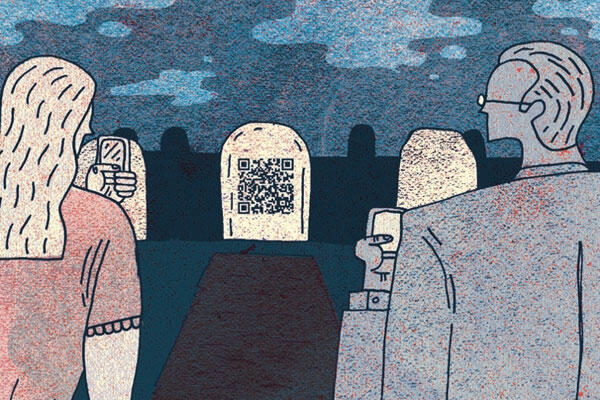
Loulou Callister-Baker explores the burial ritual and current, sometimes bizarre, trends within funeral industries around the world We reached Hamilton the day before Christmas. It was a reflective time - the drive was long and stuffy, another year was coming to an end and both of my parents’ dads were, at that time, in care. The afternoon we arrived, we visited my grandpa, who, after recent hospitalisation, was now in the intensive care ward of a Hamilton rest home. On seeing him, his impending death was immediately apparent. His skin was pulled tight around his face and his head looked shrunken somehow. His usually tanned skin tone had faded to a pale yellow. His lips were curled back into his mouth, which was dropped open revealing a black, seemingly toothless cave. His eyes were also open but milky and unseeing, despite rolling occasionally. His entire body heaved as if it took all his strength to capture the next breath. In the afternoon on Christmas Day, we visited my grandpa again. His condition hadn’t improved. The nurse pulled my dad aside to talk to him privately but I still picked up on the words “from hours to two days” – the time frame for my grandpa’s remaining life as predicted by a professional. The nurse left and Dad walked back into the room – his expression unreadable. The three of us then watched my grandpa for a while. Dad offered me a grape from a packet beside Grandpa’s bed. Time passed and soon we had to leave. Dad stepped forward and sat on the bed beside Grandpa. He then lent over his dad and gently lifted his body into a tight embrace. Made contemplative by this intimate gesture, Mum turned to me and commented that part of the grief we experience when a family member dies can be for “a lifetime of things that went unsaid.” In a subdued state, we left the room, weaving through Christmas-hat-donned elderly lined up in rows of La-Z-Boys as they watched Christmas specials on the television. They had seen it all before. Early the next morning, while at breakfast, Dad got the call. Grandpa had told everyone that he was going to make it to Christmas. He died on Boxing Day. Death, however, is only an end point for one person; for the family and friends who remain alive, a death marks the beginning of the process of mourning, celebrating and remembering. And although this process can be deeply personal, there is often a communal element – a coming together, a sharing of grief and stories – which commonly takes form in the ceremony of a funeral. But what purpose do funerals really serve? What do they mean and how do they convey that meaning? Although the answers to these questions can vary tremendously for different cultures and secular or religious groups, the concepts of “eventual rest” and “reward” for the dead are common to most death rituals. William G. Hoy depicts one example of a universal theme underlying all death rituals in his book Do Funerals Matter? “Whether in the tribal funeral march of the Kenyan Luo, the repeated ‘stops’ along the traditional Jewish funeral route to the grave, the Cambodian Buddhist custom of driving past the deceased’s home and workplace on the way to the crematorium, or the police-escorted procession of a fallen Marine to the rural cemetery outside a small town in America, the image of the ‘last mile of the way’ is ubiquitous in describing the rituals surrounding death.” The first point in time when humans began a process of burial and ceremony is difficult to determine. However, some claim that one of the earliest examples of deliberate disposal of the dead was found in Pontnewydd Cave in Wales. The remains discovered, which included the teeth and jawbone of a child, dated back approximately 230,000 years. In a different location another team of researchers found a Neanderthal man from approximately 60,000 BC whose body was buried in True Detective-esque style, adorned with antlers and flower fragments. These adornments have been thought to indicate ritual and remembrance and also symbolise a rudimentary effort to protect the living from any negative spirits expelled from the dead person. By the sixth century B.C., ceremonies associated with burial were well established throughout the world. In ancient Greek society, for example, the necessity of a proper burial was paramount, which resulted in a customary burial ritual. This three part ritual began with prothesis – the laying out of the body for people to visit and mourn – followed by the ekphora – a funeral procession, typically occurring before dawn – and ending with either burying or cremating the deceased. While the global histories of death rituals are endlessly fascinating, their roles within the increasingly secular attitudes of a typical New Zealand family or community is what drew my attention at my grandpa’s funeral. Grandpa’s funeral was hastily organised, held just over a week after his death at a beautiful Anglican church despite my grandpa, as well as a majority of my extended family, being staunchly atheist. This contradiction is something local Hope and Sons Limited Funeral Director, Donna Jenkins, is well aware of. “The increasing popularity of Celebrants and Funeral Directors providing custom built facilities, and a climate of more flexibility in and around funeral service timing, has led to many changes but I would also say that in a crisis people often go back to what is familiar,” she explains. “For example, the family may not be regular churchgoers now, but as children they attended with Mum and Dad so they will sometimes choose to have a service in the church for Mum, with a clergyperson conducting the service.” As we waited for people, many of whom I did not recognise, to fill the pews at my grandpa’s funeral, I studied the white, cardboard coffin, which stood on the small stage at the front of the church. Later I learned that this ecoconscious coffin choice reflects an increasingly green attitude to funeral services worldwide. And there is good reason as to why. Each year in the States alone, according to the Green Burial Council, “cemeteries bury more than 30 million board-feet of hardwood and 90,000 tonnes of steel in coffins, 17,000 tonnes of steel and copper in vaults, 1.6 million tonnes of reinforced concrete in vaults, and more than 750,000 gallons of formaldehyde-laden embalming fluid.” Donna confirms this eco transition within the New Zealand funeral industry: “Eco funerals are now very much within the framework of the funeral profession. Environmentally friendly products are used in the care of the deceased, there is an environmentally caring range of caskets available and Dunedin has now had its first natural burial.” In respect to Donna’s own company’s practice, they “endeavour to reduce our carbon footprint through buying locally; maintaining nice green gardens; recycling within the DCC guidelines; using energy saving light bulbs; we financially support the Orokonui Ecosanctuary and make a donation twice a year in memory of the people we have cared for; recycle paper; we have air conditioning units throughout the building that are energy-saving; and we chose our brand of photocopiers because of their carbon footprint. We are always looking for ways to improve.” Environmental consciousness also provides a partial reason for the increasing popularity of cremation, which also can reduce funeral costs by 50 per cent. But there is a whole range of reasons to be excited about cremation; savings on burial expenses and maintaining sustainable practices are just the beginning. The company Cremation Solutions, for example, can turn a few ounces of cremated ashes into a variety of jewellery – even diamonds (with the most expensive option being close to US$25,000). Often the jewellery will be moulded with a hollow chamber inside where the ashes can be placed and sealed in. And in Cremation Solutions’ own words, “Cremation jewellery is a perfect way to symbolise everlasting love along with celebrating the eternal spirit of a loved one who has passed on.” Hard to comprehend? Another particularly specialised company takes cremation to the next level – quite literally. The American company Celestis Memorial Spaceflights offers a service that involves launching a portion of the deceased’s cremated remains into Earth’s orbit. The more expensive options (approximately US$12,500 each) either involve launching the spacecraft to the moon’s surface or on a path that means the spacecraft will eventually exit our Milky Way, continually floating on in a “permanent celestial journey.” The process for this unique service is explained on the company’s website: “The remains are placed in a specially designed, individual flight module or capsule which contains either seven grams or one gram of cremated remains, depending upon the service you selected. They are then integrated into the Celestis spacecraft, which is attached to the rocket and launched into space.” Grievers can even keep track in real time of their Earth-orbiting loved one through a link on their website. Celestis spacecraft are carefully designed so as not to create orbital debris and, for those who select the Earth-orbiting option, when the spacecraft re-enters it is completely consumed by Earth’s atmosphere “blazing like a shooting star in final tribute to the passengers aboard.” Despite the knowledge that Grandpa, along with his eco coffin, would be cremated after the service, it felt important to acknowledge his body’s physical presence. However, my contemplative mood quickly became distracted when my eyes narrowed in on the set of felt tip pens teetering on the smooth curve of the coffin’s lid. Small children and supervising adults suddenly congregated around the coffin. Like a get-well card doing the office rounds, or an arts and crafts afternoon in primary school, individuals wielded their felt tip pens and began to either draw or write personal messages directly onto the coffin’s surface. Despite the sombre mood, I began to laugh. This only intensified with the realisation that laughter at a funeral is not entirely appropriate. Extended family members turned around in their seats to give me discerning looks. In a later conversation with my dad about this funeral trend he enlightened me on how wrong this fad can turn. At one funeral he attended no one particularly liked the deceased, so when it came time in the funeral service to write messages on the coffin, the coffin accumulated a set of messages only appropriate for a filthy public toilet wall – the least crude of these messages being a classic “good riddance to bad rubbish.” The increasing personalisation of funerals both parallels and intertwines with the increasing integration of app or web tools solely created to aid and ease our mourning rituals. New Zealand company, One Room, for example, provides a live funeral webcasting service for friends and family (or “virtual guest[s]” as the website describes them) who are unable to attend a service. The company was launched in early 2012 and is now installed in approximated 30 major funeral homes throughout New Zealand, having already live streamed over 1,000 services to more than 25,000 virtual guests. Other related services that One Room discusses on its blog include text-based memorials posted on memorial websites, and QR Codes, which can be implanted in tombstones and scanned over with a smartphone to take the scanner to this web memorial. One Room states: “Social media has become an essential part of today’s funeral experience, as it has changed the way people communicate about their sadness.” “It is probably fair to say that nothing is too surprising, but we will often guide families as to whether it would be appropriate, practical, dignified and of course – legal!” Donna told me when I asked what other requests or trends she has witnessed in the funerals she has directed over time. “Some examples include: a surfboard on top of the Dodge hearse; playing a recording of the deceased person singing as their casket leaves the Chapel; being asked to drive past certain hotels on the way to the cemetery; a prepared, prior to death video recording of the deceased speaking to the congregation; holding the service at the race track then the hearse (casket in back) following a race horse around the track to the song “The Gambler” being played across their PA system; a daughter spoke at her mother’s funeral from Italy via an iPhone being held to the microphone (it was very clear, as if she was there in person); horse-drawn carriage taking the casket to the crematorium and all the family following behind on foot (approximately four kilometers); fairylights, statues and greenery throughout the Chapel to recreate the deceased’s own garden; boats, motorbikes, classic cars and trucks parked in and around the funeral service venue.” Donna also listed an interesting array of music requests for when the casket either arrives or leaves the chapel. Among these included: The Can-can; Another One Bites The Dust; the Star Trek theme; Dancing Queen; Always Look On the Bright Side Of Life; the Thunderbirds theme; and, most confounding of all (to me), the Shortland Street theme. Although these choices may raise some eyebrows, Donna firmly believes “it is each to their own and if it has a special meaning for them then go for it!” She has, however, once refused to play something when requested by a member of the extended family because it “contained some really ‘colourful words’ and out of respect for the deceased, his immediate family and the wider congregation I said ‘NO’ to playing it in the Chapel and suggested that they could play it later at home.” At the end of my grandpa’s funeral, the pallbearers carried the coffin from the church and placed it into a waiting car. While the guests watched individuals scatter flower petals over the coffin, my cousin was directed to take photos of the crowd, particularly of our extended family. Although photography at a ceremonious event like a funeral is hardly a foreign concept, there is increasing debate on the appropriateness of taking selfies with the dead or during a funeral service. The Tumblr titled Selfies at Funerals is an excellent source for such photos providing evidence of this phenomenon. However, the curator of the site recently stopped publishing content to it, ending with the famous photo of British Prime Minister David Cameron, Danish Prime Minister Helle Thorning Schmidt and U.S. President Barack Obama posing for a selfie during Nelson Mandela’s memorial service. Despite the waves of criticism, a range of notable writers have defended the idea of selfies at funerals. Tracy Clark-Flory for Salon, stated, “These days, selfies are how we make ourselves real, to ourselves and to the outside world. So, it’s no wonder that some of us turn to our iPhones in these moments of loss. It’s a way of saying, ‘I still exist.’” Increasingly personalisation, celebration (rather than mourning), eco-consciousness and technological integration are a handful of broad trends evident in funeral industries around the world. Bizarre or not, humankind’s unwavering commitment to the burial ritual continues on in a perpetual quest to make sense of the absolute mysteries surrounding death or what it means to be alive.
-
Features

Journey Into "The Uncanny Valley"
No person can claim they weren’t slightly disturbed by the near-human animation of the children’s film The Polar Express. Lucy hunter explores the mystery of something being both strange and familiar or, simply put, what it means to get "the creeps". Imagine coming home and putting your key in the lock, and feeling like something is different – the key turns more easily than usual and makes a different sound. You go inside and something seems off – everything is the same, but you feel uneasy. Opening the cupboards, you stare in. Something is up. There is total silence. You boil the kettle to make coffee. You are filled with a sense of dread. Nothing is different exactly, but your familiar things seem weirdly unfamiliar, as though everything in the house has been replaced by an exact copy. Your flatmate walks in and speaks, but you freeze. It’s her, but there is something in the eyes that isn’t quite right. She’s smiling, but her face looks dead. She’s not moving normally. Or is it your imagination? What the hell is going on? Please excuse my terrible attempt at fiction. Stephen King gives the example I used of everything in your house being replaced by an exact replica to explain the feeling of terror. Terror is different to just being scared. It’s creepy. You can look at a picture of a shark or an avalanche and not get the creeps. A person pointing a gun at you is not creepy. The feeling of “the creeps” is our mind’s reaction to the uncanny. It comes from observing something that isn’t obviously dangerous, but has a sense of vagueness and ambiguity that makes us uneasy. An unmoving figure staring silently out of a window with a rabbit mask on is probably not going to hurt you. There is no immediate threat. Probably. Yet we feel like backing away, but don’t have a real reason why. “The Uncanny,” what Freud called “Das Unheimliche,” or “the unhomely,” is the sensation of something being both strange and familiar. It helps explain the reason why some things scare us, while others just creep us out. The uncanny is not simply a matter of the mysterious, bizarre, or frightening: it involves a kind of duplicity (both in likeness and deception) within the familiar. A disturbance of the familiar. The word comes from the Latin “familia,” or family – and we all know how weird families are. Keeping something “in the family,” or something that “runs in the family” has a sense of both familiarity and strangeness, something both known and secretive. Freud explains: “Certain things within the boundaries of what is ‘fearful’ [...] nothing new or foreign, but something familiar and old-established in the mind that has been restrained only by the process of repression [...] something which ought to have been kept concealed but which has nevertheless come to light.” Dé-jà vu. Doppelgangers. People acting like machines and machines acting like people. The thought of being trapped in a room with the last person on earth you want to be left alone with. Your favourite pet, just the same, but staring at you and making a noise like a new-born baby crying ... It is troubling. Though seemingly incidental, The Uncanny permeates our lives in ways we may not often think about, sometimes with devastating effects. Humans have often done awful things to each other just because we can’t deal with being creeped out. Where did The Uncanny come from? Why is it here? The feeling of “the creeps” is probably a result of evolution. We are hyper-aware of oddities and changes in other humans that make them seem not quite right. This is helpful in avoiding disease and pathogens that may be causing a person to look or move strangely. Repeated or jerky movements or strange speech patterns can be a sign of problems with the nervous system or mental illness. In the past, a sense of uncanniness in a person was enough to have them labelled a witch and exorcised, ostracised, or murdered. Many countries have a tradition of “changelings” (children or adults who have been taken and replaced by fairy replicas). Belief in changelings endured in Ireland until late in the 19th Century. An Irish woman called Bridget Cleary was killed by her husband in 1895 because he believed she was a changeling. Babies born with physical deformities, congenital illness, or even some who had a sudden radical change in temperament could also be called changelings. Many of them were killed or left to die as a result. Repetitive movement such as the head-nodding sometimes seen in autistic children could also be the sign of a changeling. Cruel methods were often employed to try to recover the “human.” In Scandinavia, children thought to be changelings were whipped or burned in an effort to bring the “taken” child back. Sadly these beliefs persist in some cultures. Religious extremists in America perform torturous exorcisms on people they believe are possessed by demons. In Kenya, elderly men and women are sometimes burned alive as witches. In Nigeria and Angola, thousands of children have been blinded or injected with battery acid among other tortures in an effort to purge them of their demons. Much of this awful practice is spread in the name of Christianity. All because humans find it so difficult to deal with people who act or look a bit different to what is culturally normal. The uncanny sensation may also be a reason for (hopefully, old-fashioned) racism, sexism, and homophobia – mistrust of people who don’t look or act like you. In Joseph Conrad’s Heart of Darkness, English coloniser Marlow describes a group of Congolese people, saying “No, they were not inhuman. Well, you know, that was the worst of it – this suspicion of their not being inhuman.” Marlow can’t bring himself to realise the Congolese people are human just like him. Thankfully this horrible book was written over 100 years ago, and the world has changed. But it shows how we used to creep each other out. The uncanny could be part of the reason why humans have been such dicks to each other for so long. And there still remains a surprisingly universal stereotype of a “creepy” person – someone who isn’t necessarily dangerous, but has certain habits and mannerisms that make people uncomfortable. One self-labelled “creepy” man says of his social effect, “Some people just react to me and I’ve not even said anything. It’s just my appearance.” Francis T. McAndrew and Sara S. Koehnke of Knox College in New Orleans did a study on what makes someone creepy, rather than simply frightening. Imagine a creepy person. The person is probably male, and may be in the habit of standing too close to you. He may be very thin with pale skin and greasy, unkempt hair. He may be unwashed and have bags under his eyes. His smile may be odd and he could have bulging eyes. He may have long fingers and a tendency to lick his lips a lot and laugh at unpredictable times. He may stare at you without blinking enough, or avoid all eye-contact. He may not let you leave the conversation, which he insists on steering toward a particular subject, possibly to do with sex. As a hobby he may enjoy collecting things, such as bones, knives, stuffed animals or dolls, or maybe he likes watching things like birds or photographing people. And for a job he could be an undertaker, taxidermist, sex-shop owner, or, creepiest of all, a clown. These stereotypes may point toward possible threat of physical or sexual attack by an undesirable, socially incompetent male who is preoccupied with sex and death. Or he could be totally harmless. Maybe. Extreme versions of our horror of the uncanny can manifest in devastating illnesses such as Cotard Delusion, where sufferers believe that all or part of their body is dead, or that they have died and gone to hell. One man’s mother moved him from Scotland to South Africa after he received brain injuries in a motorcycle accident. He was convinced he had actually died of septicaemia and gone to hell, with his mother’s spirit as a guide. In a similar vein, “Capgras delusion” is like a real-life invasion of the body-snatchers – sufferers believe that people close to them have been replaced by imposters. A woman temporarily affected by this delusion explained, “One Friday night I came home and instantly knew my boyfriend had been replaced by an alien doppelganger. He looked the same ... but somehow off. I knew it was impossible and screwed up and wrong. That’s one of the things about mental illness they don’t show you: you can know what you’re thinking is abnormal as you’re thinking it.” These real-life versions of Stephen King’s definition of The Uncanny are usually incurable, and can lead to depression, malnourishment, self-harm, suicide, or death by self-neglect. Sufferers of these disorders are rare, but modern technology has created an entirely new version of creepiness that we can all enjoy. In between lovable cartoonish simulations of humans in animation and robotics, and those indistinguishable from real humans, lies “The Uncanny Valley.” It is a term invented by Japanese roboticist Masahiro Mori to describe how our affection toward animations and robots increases along with their human-like attributes – up to a point. When they get too human-like, we are suddenly disturbed by them and our affection turns to repulsion. On a graph this is mapped as a deep, sudden dip in affection which only resolves when the perceived thing is fully human. This dip is “The Uncanny Valley.” If our brain initially thinks something is human, we get really freaked out if it turns out to not be human. On a scale of human-ness, we go from seeing an adorable robot with gorgeously human attributes (think Wall-E), to seeing a revolting, freakish human with horrifyingly unnatural mannerisms. At worst, an animated humanoid reminds us of a zombie, and an inanimate one, a corpse. Their eyes look dead. Their mouths look like they are going to bite you. Their smiles look sinister. Attempts to “jump” the “Uncanny Valley” have so far been unsuccessful. Even the very best photo-realistic digital simulations of people are unnerving and uncanny. We have an extraordinary knack for picking out even the tiniest deviation from natural facial movement. Animated movie The Polar Express was poorly received because the characters looked too much like creepy humans, earning it the nickname “The Zombie Express.” Pixar animators manage to “dodge” the valley, making their characters cartoonish rather than risking them turning out as humanoid creeps. Some people deny the Uncanny Valley exists, or that some animators and roboticists such as Hiroshi Ishiguro have successfully “jumped” it. I looked up Ishiguro’s robot, which he has made to look like a perfect Doppelganger of himself. Though very convincing while sitting stationary or in a photograph, it looks creepy as hell when it moves. Valley not jumped, as far as I’m concerned. Despite this horror and revulsion, there seems to be a trend for humans to move themselves backwards away from humanity into the Uncanny Valley with the death-robots. There is the real-life manipulation of dramatic plastic surgery, with some people turning themselves into living Barbie-dolls or anime characters. Cracked.com did an article on “Ulzzang” or “best face.” It is a Korean sub-culture where girls and women digitally alter their faces to have enormous eyes, tiny mouths, noses and bodies, and flawless white skin. Some use eyelid glue and illegal contact lenses to give them huge irises. The contact lenses are illegal because they prevent oxygen getting in your eyes, frequently causing eye infections. They can also perforate the cornea, causing blindness. Moldavian-Ukrainian model Valeria Lukyanova is famous for her resemblance to a Barbie doll, achieved through plastic surgery, dieting and makeup effects. These people are not aiming to mimic a Hollywood actress, model, or any human at all. They are mimicking drawings and dolls. Speaking of dolls, increasingly realistic sex dolls are becoming the preferred sexual partners to certain men who treat them as if they were real people. Some men who struggle to maintain relationships find alternative companionship in their sex dolls. “Real Dolls” are marketed not just as masturbation aids, but alternative partners, providing some owners with the love and companionship that real women cannot. The original Real Dolls were inanimate, but new models come complete with moving parts for a more “realistic” love experience, and can even talk with their own sexist stereotypes of “female” personalities. The BBC documentary Guys and Dolls follows some Real Doll owners, some of whom treat their man-made friends as their wives or girlfriends. One man takes “family photos” with his two beloved dolls. Another wants to be buried with his. It is nice that some lonely people can find companionship by artificial means. But it is unnerving to watch the hyper-realistic rubber women being propped against walls or hooked upright by loops on their necks to make them look as though they are actually alive. Doll-lovers and dramatic plastic surgery recipients are the extreme end of our fetish for The Uncanny, but the Uncanny Valley may be a lot closer to your own life than you think. Photoshop makes models look flawless and desirable up to a point, but push it too far and you risk slipping down the side of the very steep slope toward horror and nightmares. Smiling models with dead eyes. Limbs elongated and waists narrowed to deathly proportions. Bodies poorly over-manipulated so that limbs twist out at unnatural angles, extra joints are accidentally added, creases are smoothed to waxy death-masks, body-parts can even appear or vanish into thin air. These Photoshop mistakes are reminders of how creepy our image of perfection actually is. Super-humans or sub-humans? Beautiful or terrifying? When did striving for beauty turn into this horror? So while horror movies and fairy-tales have traditionally used The Uncanny as a way of scaring us, uncanniness seems to be evolving into new kinds of humanoids who are in some ways superior and more desirable than regular people. While humans have historically avoided uncanny differences in other people by extreme measures – prejudice, torture, ostracisation, and murder – the “Uncanny Valley” of animation, robots and modified people seems to be blurring what we think of as natural and human. Perhaps in the future we will have Bladerunner-like humanoid replicants alongside humans so altered and roboticised that the concept of normal and natural will not seem so real and important to us, and the “Uncanny Valley” will no longer exist.
-
Features
The Real Flatmates of Dunedin
When I asked students from around New Zealand what the first thing is that sprang into their mind when I said “Otago University,” the answers I received were all fairly similar. Most of their reactions were something along the lines of, “Ya’ll a bunch of Scarfies,” “Bad drinking culture,” and, “Prockta pls.” All except one responded this way; Sam Hunt spoke of the “warm atmosphere,” and camaraderie present among the University’s “quiet and studious students.” What a joke, Sam. This clichéd idea of a cold, strange city filled with excessive alcoholism and street parties has been around for decades. Why? Because there is a little truth to our dear university’s reputation: a little, but not necessarily a lot. With the latest generation of Scarfies being described by their predecessors as “weak,” and “not nearly as ruthless,” as they themselves once were, it certainly seems like times might be a’changing for the students of Dunedin. So, without further ado, let’s take a look at the Real Flatmates of Dunedin – as I know them. The Thyme Fiasco08:32AM: Gigi was on her way to University for the day. She always enjoyed the brisk morning walk; especially when a strapping young man accompanied her. Spoiler alert: a strapping young man always accompanied her. Gigi had an awful lot of attractive male friends, and sometimes the way people got all up in her business about it irritated her. “Can’t a girl just have a lot of guy friends? Perfectly platonic male acquaintances?” She’d asked herself these questions numerous times, and the answer was always “yes.” 12:41PM: Charlotte was lying on her bed, stretching toward her slightly ajar balcony door. She’d been blowing air in the general direction of the door for two minutes now, in an effort to make it swing out further. She was making no progress. April moonwalked into her bedroom, thus initiating the first silent dance party of the day. 03:46PM: Cara had been sitting in her room for over an hour, trying to wrap her head around this week’s psychology concepts. She reached for her backpack and started to absentmindedly dig for her USB stick. As her hand fumbled through the darkness it struck something small and plastic. “Oh yeah!” Cara got up and ran downstairs with the small plastic zip lock bag in hand. “Hey, guys!” 03:47PM: April, Charlotte, Stacey, Gigi and Ken were laughing in the kitchen when Cara burst through the door, looking far more excited than any student should after hours of studying. “Guys, I found this last night on my way home!” She was holding what appeared to be a small bag of weed. “Uhh, Cara, is that weed?” Stacey asked tentatively. “No, at first I thought it was but then I smelled it and I think it’s some sort of spice like thyme or something!” Everyone started to giggle. “Are you sure? Give it here.” Charlotte opened the bag and sniffed. She immediately burst out laughing. “Cara, that’s weed.” 10:17PM: Jasmine, Alice, Charlotte, April and Ken were hanging out in the lounge at the girls’ flat. Alice was expressing her exhaustion after a hard day of microbiology study. Charlotte silently congratulated herself for not taking anything quite so difficult, April examined her cutlery and Jasmine decided to make some curly-fries. Just as this momentous decision was made, Steph arrived home from gymming it up at Unipol. Jasmine considered her curly decision. She stuck with it. “No regrets,” she told herself, “no regrets.”  Life, Death and Pizza12:09PM: Steph and Alice were making lunch and discussing the mundane activities Steph had been subjected to on her latest zoology trip. “It was awful, not even a little bit exciting. There weren’t any cute animals to stare at. No muffins, either. I’ll need to go get one later.” Alice made minimal noise in response to her flatmate’s spiel on muffins and muffin cards – it was Steph’s favourite thing to talk about these days. “And oh my gosh, Alice; did I tell you that fucking Dan stole one of my muffin stamps? I’m so angry.” 04:53PM: “I DON’T HAVE A BOYFRIEND!” Stacey ran to the kitchen at the sound of Gigi’s cry. “Oh really? Then why did he buy you a pizza, huh? A whole pizza? Just for you?” Ken and Rupert had cornered Gigi by the kitchen table. “What’s going on here?!” Stacey stood still in the doorway, mouth aghast at the situation. “Gigi has a boyfriend. He just bought her a pizza.” Rupert had put on sunglasses, as had Ken, in what Stacey could only assume was an effort to look like police officers. Gigi let out an exasperated sigh, “I told you guys, we were just walking home and he said he was going to get Domino’s, I said I’d see him later, unless he bought me a pizza. He did. That’s all!” Ken turned swiftly to Rupert, “I feel like we’re not being aggressive enough with this interrogation. Let’s go strategise.” As the boys ran out of the room, Stacey gave Gigi a gentle pat on the back. She told her to ignore the boys and enjoy having such generous friends. She then grabbed a piece of pizza and flew out of the room. 10:00PM: Hannah had been thinking about the Miss Otago pageant all day. She wasn’t worried about walking in heels like she had been years earlier, instead she had been ruffled by her coach giving her the news that dark colours were off-limits for both swimsuits and ball gowns. Off-limits?! Black was Hannah’s colour! Life was really difficult sometimes. At least she could wear red. This thought comforted her as she finished her late night workout. The Tortoise and the Bitch07:21AM: Cara and Rupert had gotten up bright and early to go running together. Cara had planned to go up Signal Hill, a route that she found particularly satisfying. She quickly realised, however, that Rupert wasn’t the greatest of running buddies. As she made her way steadily up the road, Rupert danced about just ahead of her, the perfect picture of non-red-faced pride. “Ugh,” She thought to herself, “Proper athletes make me sick.” 01:15PM: “One of the greatest things about going to the same university as your sister,” Charlotte said, “is that you have someone there who you feel comfortable sharing everything with.” She and Hannah had met for lunch at Governor’s, and Charlotte was currently trying to express a matter that had been troubling her. “Now with that being said, why won’t you let me come watch your pageant? I want to support you!” Hannah knew this had been coming, she almost regretted ever telling anyone that she’d been asked to participate. “You can support me! Just ... from a distance? I don’t know, Charlotte, it’s embarrassing!” Hannah wasn’t lying, she did find the whole thing a bit embarrassing, but there was also a whole “not wanting to do badly and disappoint anyone” factor that she didn’t quite want to admit just yet. “Hannah, we’ve grown up together, what could you possibly do that would be embarrassing for me to see?” “Oh, I could start having sex with ...” Charlotte quickly made a loud, incomprehensible sound. “Okay, well, there may be some things.” 04:33PM: Ken was upstairs in his flat, listening to his favourite song from Elmo’s Dance Party, “Where’s My Cookie?” He was damn sure that he was the only one home, so he blasted the tune from his speakers and danced around gleefully. 04:36PM: Rupert was downstairs at his flat. “Yep,” he thought to himself, “Ken definitely doesn’t think anyone else is home.” Death of Dinner Conversation10:58AM: Stacey was in the middle of sending a grumpy text message to Julian. He hadn’t come to class for the third day in a row, and she didn’t like being left all alone. It wasn’t that there weren’t other people for her to socialise with; it was just that she kind of hated them all. Julian was fun, entertaining, and always up for a good gossip session – what more could a bored girl ask for? She hit “send” on her message and left for brunch. 02:55PM: Jasmine was in a world of mental mayhem. She had come to the realisation that she had a crush. Ordinarily, this wouldn’t cause her quite so much distress, but ordinarily she didn’t have a crush on two people at the same time. Not only that, but the two people in question, Luke and Gary, were also best friends. “Great. I have no options, and then I have too many options. Thanks, Obama.” 06:23PM: It was dinnertime at Ken’s flat. Cara, Ken and Gigi were having an ordinary conversation about lecturers when Stacey and Rupert’s roars of laughter interrupted them. “Imagine, though, what would it actually be like? A bit squishy, aye, aye?” The two collapsed into fits of giggles. “Sorry, what are you talking about?” Gigi posed the question hesitantly, because every time she intruded in Rupert and Stacey’s conversations, they were discussing something she really just didn’t want to know about. “We’re discussing airplane sex!” Stacey tittered. Gigi got up from the table. Again, something she really didn’t feel like discussing over dinner. 11:41PM: Charlotte was finding it hard to sleep. Her new eye mask hadn’t been stitched with a thin enough thread, so it had been too hot and she’d thrown it across the room in anguish. Her journey to slumber was troubled, as she was still stinging from an earlier encounter with Marie’s flatmate; the bitch had forgotten Charlotte’s name. Regardless of whether or not Charlotte had remembered her name, (which she hadn’t), Charlotte was far too important to be referred to as “Marie’s friend,” and nothing more. How hurtful. Getting Jiggy With It08:32AM: “Five, four, three,” Charlotte’s eyes flashed open. “Two, one. Thunderbirds are go.” Her heart raced as she reached to answer her phone. Who the hell was calling her this early? “Hello?” It was Pam; she’d been vomiting all night and had called in desperation for advice. Charlotte’s heart went out to her dear friend, but she felt somewhat groggy and had no good advice to offer besides, “Maybe you should go to the hospital.” What a way to start the day. 01:21PM: Julian and Hannah had met up for lunch at Modaks, and they were in the middle of a discussion about their recent friendship woes. Julian was feeling bad for abandoning Stacey in class, “She keeps texting me to ask if I’ve dropped out!” Hannah was finding it hard to offer any worthwhile counsel, as she herself was troubled by the distance that had formed between her and Charlotte. “She hasn’t sent me a Snapchat in two days. Something’s wrong.” The two friends slowly drank their milkshakes, enjoying the momentary emotional relief they provided. 04:25PM: Stacey had been looking forward to this day all week. Today was the day her attractive male friend David was coming to visit. He’d be staying with her all weekend, and Stacey just knew that if she were feeling frisky, the opportunity to pounce would surely occur. General friskiness was a concrete part of Stacey’s day-to-day personality, so the chances were quite high that she would partake in the hanky-panky this weekend. 05:33PM: Ken and Rupert were downstairs in their flat, making bets about Stacey’s prospective canoodling this weekend. Stacey was still at university, and since the walls of their flat weren’t exactly thick, this was a prime opportunity to gossip. Both men were well aware of the allure David exuded, and both men were comfortable enough with their sexuality to openly discuss it. “He is quite sexy, though.” “No doubt.” You Need Me, and I Need You11:07AM: Jasmine walked into her flat to hear the tail end of a conversation between Steph and Alice – Steph was on about the muffins again. Luke never went on about muffins for far too long. Luke was so perfect. She’d made up her mind about her crushes on Luke and Gary; or rather, her mind had been helped in making a decision. Jasmine had found out that Gary was already taken, so Luke was the one. She’d known it all along. 01:12PM: The Facebook event was created: everyone would be partying it up at Ken and Stacey’s flat that night. 08:55PM: Almost everyone at the party had issues they needed to address. Almost everyone had also decided that a little liquid courage could help them all in addressing these issues. 08:57PM: “Julian you need to come back to class, I can’t handle being alone anymore.” Stacey had pulled Julian aside to give him a piece of her mind. “I know, Stacey; I will. I just lacked a little motivation this week, that’s all!” “Okay, cool.” The two friends hugged it out. 09:00PM: Hannah marched over to Charlotte, and drew her into a forceful embrace. “You’re my sister and I love you, and I’m not letting you go until you be my friend again.” Charlotte remembered back to when the two were children, and all their arguments Hannah had settled using similar tactics. “Can I please come watch you? I won’t shout anything embarrassing unless you want me to.” Hannah considered this. She considered how instead of shouting at her, Charlotte could totally put off her opponents by shouting at them. “Alright! You can come!” 09:22PM: Stacey was feeling frisky. She scouted David amongst the crowd. 09:42PM: David came downstairs. He was wearing a different outfit. He hoped that no one would notice, but everyone did. 10:03PM: April and Alice had been working through their “liquid courage” plan for near on two hours, and Steph had just walked in from visiting another flat. “Steph! We need to talk to you!” Steph turned toward Alice and hurried over to them in the kitchen. “What’s up?” April knew what she needed to say. “We don’t care about the muffins, Steph. You need to stop talking about muffin cards from Night & Day. You fucking like muffins – and good for you – but stop with the talking? Alright, good chat – cool.” Alice was relieved, and she noted that she couldn’t have put it better herself. “Ha, okay guys.” Steph laughed and disappeared into the lounge. “Alice, that worked, right?” “Yeah, totally.” I Can Still Taste the Poison09:12AM: April was not feeling well. April was feeling far from anything even near well. She was so unwell that she thought wellness was merely a thing of the past and that this was it, this was her end. Her thoughts were affirmed as her insides contorted and once again she heaved over the toilet bowl. 09:13AM: “Why did I have to land the bedroom next to the goddamn bathroom?” Charlotte buried her head under the mountain of pillows surrounding her. “Why?” 12:05PM: Stacey threw a plate at the wall, and watched as it shattered into pieces. David had left early this morning and not spoken to her at all. Her anger dissipated as the plate broke in front of her. Gigi ran out to her side and started picking up the pieces – both physical and emotional. 09:29PM: The Real Flatmates of Dunedin were asleep. No matter what happened, they all stuck together. That’s what being a flatmate was all about, really, putting up with other people’s crap because, at the end of the day, they help pay the bills. And sometimes they’re good friends, too. I guess there’s that.
-
Columns

Love is Blind | Issue 06
Critic’s infamous blind date column brings you weekly shutdowns, hilariously mismatched pairs, and the occasional hookup. Each week, we lure two singletons to Di Lusso, ply them with food and alcohol, then wait for their reports to arrive in our inbox. If this sounds like you, email critic@critic.co.nz or FB message us. But be warned – if you dine on the free food and dash without sending us a writeup, a Critic writer will write one under your name. And that won’t end well for you. Fry“No expectations, no disappointments” was the philosophy i chose to embrace prior to this blind date. Such a philosophy felt appropriate, with all the pessimistic ideas that my flat mates and I had come up with leading up to the night. “What if she turns out to be a grenade?” “Will it be awkward?” Or worse: “will I not be up to her standards?” With all these thoughts in mind I thought it’d be appropriate to follow the Scarfie tradition of indulging in alcohol beforehand. As I walk into Di Lusso, to my surprise, I see a girl sitting at the bar who by far exceeded my (non-existent) expectations: cute smile, great figure and, most importantly, good chat. Conversations flowed and the food sure beat my other option – having stir-fry for the third night in a row. Nearing the end of our meal, I thought I was doing well when she agreed to come back to mine for drinks with my flat mates. What I failed to tell her was that all my flat mates are girls, thus giving her a chance to re-evaluate my manhood status. Things went from bad to worse when the flat tour ended up revealing the fact that my room solely consisted of a mattress on the floor and a suitcase in the corner. Although I tried to repair the damage that had been done, after an hour she gave me the news that it was time for her to go home. Being the gentleman that I am, I chose to walk her home. As well as a hug and a kiss on the cheek, I managed to gain enough trust for her to give me her number. Although frustrated at my failure to get laid, I plan to put in the hard graft for next time. Cheers, Critic! LeelaThe idea of the Critic Blind Date excited my interest because of the fact that you get to meet someone completely new: it’s a bit of a gamble to see whether you and your date hit it off and finish your night under the sheets, develop a lasting friendship, or have a night so completely awful you have to avoid them on campus every day. For me, I truly enjoy meeting strangers; everyone you meet has their own journey and experiences going for them and I’m always fascinated to get a peep of other people’s lives and hear their stories, even if it’s only for a night. Arriving at Di Lusso, the bartender was quick to explain to me that these blind dates always turn out to be completely awkward and highly entertaining to watch. This gave me second thoughts about the free food being worth it, and made me nervous to see exactly who my mystery date was going to be. As he walked in, all my nerves faded away; sitting across from me was a warm, friendly individual, who had just enough scruff on his face for my liking. Together we had great conversation, never feeling forced or bland. Topics ranged from the concern of Baby Boomers in the work force to our various travels around the world. All in all, he was a good chat. After finishing our drink tab we headed back to his flat, where I got the privilege to meet his flat mates: all girls. I think he might have regretted introducing me, for his flat mates immediately began to point out funny things about him to me, like that he would nervously let out a laugh after everything he said (Very cute, but I never would have noticed). For how well we both got along, I think it’s safe to say that there was no fire igniting between us. After hanging out with his flat mates for an hour or so I announced that it was time for me to go home. Being the gentleman that he was, he escorted me back to my flat, and bravely asked me for my number, which I was happy to give. He was so friendly and easy to talk to I’d be more than happy to see him again.
-
Culture
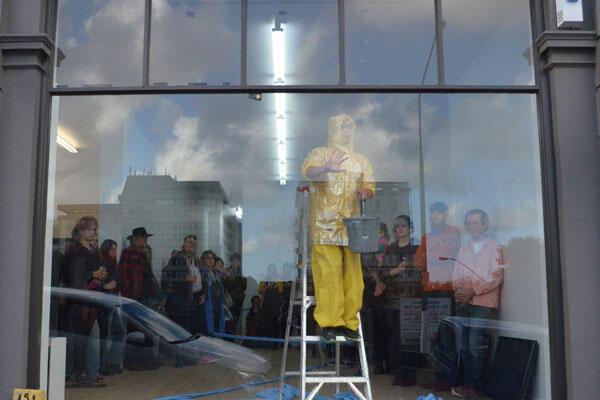
Work and Play
Orira to be performed at Blue Oyster Gallery, 6pm Thursday 3 April. I met Samin Son at the gallery on the Friday morning following the opening show from his performance series. Having heard much about him from a mutual friend, I had wanted to make his acquaintance, or at least see him perform, for the most part of a year – his reputation for exceptional performances truly precedes him. On this morning, Son was genuine, fascinating and passionate, very much buzzing about the prospect of undertaking his monstrous 15-show series despite already having a hand wrapped in bandages after just the first one. A relatively well-established artist, over the course of the series Son has continued on-going works such as Hammer Piece, and further built upon explorations of his two years as a South Korean soldier. He has noted in the past that while he was in the army he had trained for the riot police, had faeces thrown at him and entered real-life riot situations – it is renowned that the intensity of these experiences are well portrayed through his performances. As high as my expectations for Son were, I was still left absolutely astounded by his performance of Touch Paste Contact. This piece, which saw him enter and circle the room while intoning some unrecognised phrase, was enchanting, displacing and confrontational. One moment he was tying select people together with one of those everlasting public toilet hand towels, forming a defined space to accentuate displacement and uniformity; then he was commanding everyone’s attention from the top of a ladder, shrinking the audience in size and individuality; then drowning himself in a janitor’s bucket, a painful action to watch; and seemingly snapping out, briefly, to smile at a small child in the audience. While these elements combined to give the audience a very harsh-felt sense of anguish, physical exertion and displacement, Son somehow took it to yet another level when he started filling the janitor’s bucket with Aim toothpaste. As with the child before, he briefly changed tack by joking about how he “had to ‘aim’ it right,” playing off the toothpaste brand and giving the audience a brief respite from the intensity that had everyone stuck fast, petrified and fascinated, to their spots. Such breaks from the show were fascinating – they highlighted that the person inside the ritual monotony of an army was not, indeed, lost; although they were very much in pain. But then his head was in the bucket again, blinding him before pouring the mess over the large front window of the Gallery while he teetered from the ladder. Demanding that particular members from the audience come up to the window and draw in the toothpaste, Son forced the select few out of their conformity, encountering another on-going motif of his work that references his only artistic expression while in the military; he used to clean the bathroom floor every day using toothpaste, and would indulge himself by drawing with it. My friend was still shaken for hours after the performance, feeling a grief and anguish throughout that she just couldn’t rid herself of. Son was even worse off. By the end his voice was almost destroyed and he seemed to have caught a sudden flu. He was utterly worn down, but back to his cheerful self that everyone loves. It is not often that a writer can honestly say they have seen art that changes how they see the world. It is therefore a privilege for me to assert that point now. Samin Son is a remarkable talent quite unlike anyone else you will ever see.
-
Culture
Zine of the Week
By Paul Lukas Available at Blackstar Books ABeer Frame is when all bowlers in a frame of ten-pin bowling get a strike except for one person. By tradition, the person who didn’t get a strike then has to buy everyone else a round of beer. Beer Frame is also a zine. Originating in 1993, Beer Frame is one of the “role model” zines and the characteristic fringe style of appreciating the apparently unappreciated. In the long running zine, Paul Lukas lovingly reviews products from cat food and human torso models to the seemingly common and uninteresting. He also reviews services in depth such as receiving free suitcoat buttons and the “Apology hotline.” Beer Frame is revered for bringing out the consumer in all of us. In Lukas’s words: “What is inconspicuous consumption? It’s about deconstructing the details of consumer culture – details that are either so weird or obscure that we’d never see them, or so ubiquitous that we’ve essentially stopped seeing them.” Zines of the week are chosen by volunteers at Blackstar Books, Dunedin’s own anarchist-inspired community library and social space since 2003, located on Moray Place near the Octagon. Come by sometime – details and directions are available at cargocollective.com/zinefest
-
Culture
Mr Penumbra's 24 Hour Book Store
Mr. Penumbra’s 24-hour Bookstore is the debut novel of American author Robin Sloan. Originally written as a short story on his blog, he soon expanded and developed the story into a novel. Sloan is a writer for today; a self-styled media inventor, his book is a gripping mystery set between discourse on the relationship between technology and traditional print media. Think The Da Vinci Code but for bibliophiles and programmers – complete with a crazy cult. Sloan’s book is an extension of his own ideas surrounding the competing worlds of the Internet monoliths, such as Google, and the small bookstore owner, like Mr. Penumbra. The eponymous bookstore conjures up sensations of walking into Scribes, the English student’s haven. The door creaks and tinkles and the owner peers over a stack of books to welcome you. It is no different for our main man Clay. He’s been let go from his design job at New Bagel and is on the hunt for any work that might be going. This leads him unexpectedly to Mr. Penumbra’s 24-hour Bookstore. Taller than it is wide, and sulking on the seedy side of town, the bookstore leads Clay further into a mystery that isn’t going to be solved in a hurry. Just like a good wine takes time to mature, Sloan never hurried his mystery. While I was hanging out for the ending, Sloan wove a tale that never rushed towards its destination, yet still maintained momentum. The novel’s pacing was the distinguishing factor in this literary adventure. The world that Google inhabited was fast paced, and as a reader I had an unnerving sensation of being surrounded by bright reds, yellows, and greens. The scenes with old Mr. Penumbra were slower and imbued with a sense of shadow and time. Mr. Penumbra’s name is not accidental and his life and person remain very much in the shadows of the story. The mysterious book-cult the book shop supports is one that has been built upon the passing of time, and the passing on of knowledge, whereas the Googlers’ mentality towards knowledge is expressed very different. Clay acts as a link between the old world of books and time, and the new world of faster-than-fast Internet and instantaneous knowledge. While every good English student has debated the merit of reading too much of the author into their characters, I could not separate Robin Sloan from his protagonist. On his website Sloan discusses the meeting of the old and the new forms of knowledge sharing and Clay’s adventures through book-land and silicon valley, lead him to ask himself many of the same questions. As our world becomes increasingly technical it was refreshing to read a book that celebrates the bibliophile culture, yet was also not afraid to explore the toys of the future. While this book is a work of fiction, Sloan brings many pertinent debates to the fiction reading public. Libraries and bookstores have long contested these topics but the average book reader often uses the medium closest to hand. Be that a free Kindle book, an illegal download, or a hard copy book itself. By addressing a growing arena of debate, Sloan demonstrates his innovative mastery. He has brought the debate to the consumer, in a form that is both approachable and entertaining. Robin Sloan is this decade’s author to watch out for: either online or in your local bookstore. In a time where we are still learning the parameters of the electronic age, Sloan’s writing is topical and riveting. I couldn’t put this book down!
-
Culture
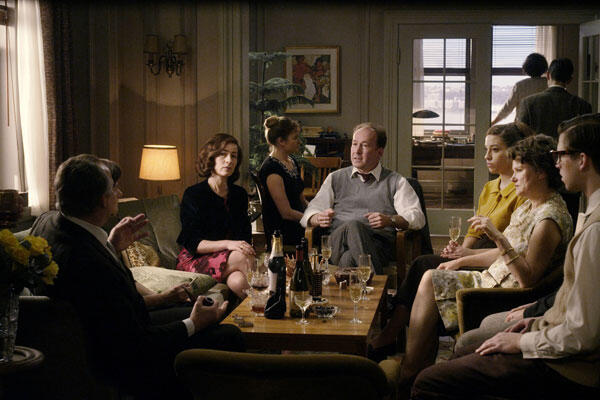
Hannah Arendt
Rating: A It was the year 1961. In jerusalem, nazi Adolf Eichmann (as himself) was on trial for being involved in the war that brought the world to its knees. As an SS Obersturmbannführer (Lieutenant Colonel), he sent Jews to concentration camps and was thus an integral part of the horrors that occurred. But this movie doesn’t centre on him. This film is about Hannah Arendt (Barbara Sukowa), a Jewish woman who escaped a concentration camp in France and moved to New York. It was there that years later, she landed the coveted position of reporting on the Eichmann trial for The New Yorker. Unwilling to be swayed by personal opinions of the horrors of World War II, Hannah was determined to report the trial in a just manner. Using her skills in philosophy, Hannah released a series of articles that challenged the world’s view on what a person can be guilty of. But what makes this film so important is that it is a true story. What I love about this movie is that it feels so real. Typically when movies are “based on the true story,” I’m always left wondering how much they added in. Hannah Arendt is different. Real scenes from the Eichmann trial were used, allowing the audience to come to grips with the fact that this story was truly a spine-chilling reality. There is no “hero” to this story either, but merely people with different opinions and beliefs. I found this to be both emotionally and intellectually challenging, as the audience is forced to question how we judge one another for our actions. Any downfalls of this film are incredibly nit-picky on my behalf. My only issue was the half-hearted attempts at flashbacks into Hannah’s past. While they could have been used to further the cinematography, they instead felt messy and took away from the storyline. Flashbacks aside, this film is beautiful and inspiring. I thoroughly recommend it, if not for the story, then for the wonderful acting of Sukowa (who carried this movie ever so gracefully). This film, this story, and the arguments posed within it, are most definitely worth your time.
-
Culture

300: Rise of an Empire
Rating: B The biggest benefit of this generation’s trend towards adapting graphic novels is how it lends a vast array of interesting visual styles for directors to experiment with on the big screen. This was used to great effect in Zack Snyder’s 2007 adaptation of Frank Miller’s 300, with its distinct mixture of stylised violence and aesthetic. Now, seven years later, Snyder has handed the reigns of the series to the unproven newcomer Noam Murro, with Snyder staying on as producer and writer for the newest film, 300: Rise of an Empire. Thankfully, Murro has successfully maintained the visual spectacle. Snyder’s screenplay is based on Frank Miller’s currently un-released sequel to 300 titled Xerxes. It weaves a more complex narrative than the first film, telling the story of events occurring before, during and after the plot of 300. This more freeform structure gave Murro room to weave a surprisingly skilful narrative that ties in fascinating stories from a diverse cast of characters. In particular, the backstories of the villains of the movie – Xerxes the god-king and his Commander of the Navy, Artemisia – were stunningly realised. It is a shame that the villains should be so interesting, only to have the Greek characters, including the lead, Themistokles, be so generic and uninteresting. Though the characterisation of the villains is superior, it is the acting that really sells them. In particular, the acting of Eva Green is phenomenal in this film. She plays the terrifying and fascinating Commander of the Persian Navy, Artemisia. Every second of screen time she has is rapturous.
-
Culture

Clueless (1995)
Cult Film This month, 1995 smash hit Clueless has well and truly been shoved back into the pop culture consciousness, through Iggy Azalea’s sassy-as-hell homage in her new music video for “Fancy.” Azalea has ensured that no one will be forgetting the brick cell-phones, yellow tartan and fluffy pens that easily, and I thank her for it. Clueless transports us to the world of some upsettingly wealthy teenagers at a Beverly Hills high school. Our hero, Cher Horowitz (Alicia Silverstone) is the fashion-focused, blonde bombshell, Queen B of freshman year, who has taken it upon herself to bring joy to the lives of others. This takes the form of shacking up with two lonely schoolteachers (in a ploy to improve her grades), and “adopting” the lowly new girl in attempt to turn her into a Betty (like, really super hot). Cher’s “self-less” plights create more trouble than good in most cases, but she emerges with the realisation that the love of her life has been right in front of her this whole time. Swoon. Sound familiar? That’s because Clueless is based on Jane Austen’s 1815 Emma, just with way more lip-gloss and references to recreational drugs. I like to think Austen would not be turning in her grave. Sure, the film heavily features the phrase “I’m bugging” and there seems to be more focus on costuming than narrative flow but Clueless is still a superbly original adaptation that, just like Austen’s work, offers social commentary. That’s right, it’s satirical. It would have to be, or else it would be really goddamn annoying. Most of us would have watched Clueless at a young age and not picked up on the irony, but I highly recommend you revisit it as an “adult” (whatever that means) and discover the real film hiding underneath all of the vapid. Clueless deservingly sits on Entertainment Weekly’s list of film history’s 100 “New Classics,” making it one beloved childhood film that has actually stood the test of time. That is apart from the fact it’s completely laughable the characters are meant to be 15; I know post-grads who look younger than Cher. Why do you always do that, Hollywood?
-
Culture
The Monuments Men
Rating: D- The story about the preservation of precious art during the Second World War is fascinating as a page in history, but as an all-star Hollywood war epic, it’s simply appalling. Ironically, it is very preachy about the innate value of cultural products (such as films. Yes, George Clooney, we got it). I had extremely high expectations for this filmic experience. All-American leading men George Clooney and Matt Damon, enigmatic Cate Blanchett, old-timers Bill Murray and John Goodman, and a “caper” plot about thumbing noses at the Nazis? Surely my prayers have been answered and this is an intelligent third Ocean’s Eleven sequel – at least in spirit?! Unfortunately Clooney doesn’t know what genre his film is. For five minutes it is a whimsical caper, then moves to characters on/off crying as a token acknowledgement of the Holocaust, then dying in the manner of an unnamed “Redshirt.” And, get this, the plot sees the only woman thrown head-over-heels in love with, apparently, the first and only man who ever talks to her. To call the dialogue well written would be comparable to calling Kentucky Fried Chicken fine cuisine. The pacing of the movie is badly skewed. We meet all our main characters in the first two minutes and hear nothing of their stories. With huge, capable names in the cast like this, it’s a crime to deprive them of roles with gravitas. Then, following the “80/20 rule,” the vast majority of the story is fast-forwarded over the next half-hour, and by the time we get to see something in-depth near the end, our ability to care has been lost. Oh, boo-hoo, Bill Murray, you got a letter from home. You’ve had forty seconds of screen time – please tell me more about how long and difficult it’s been for you on the Front. This film has all the ingredients of a charming, resonating epic about Western civilisation, but dismally fails to put them together according to a recipe.
-
Culture

Asian Lettuce Cups
This is the Asian and skinny equivalent of mince on toast. Mince on toast is actually something I have never had. Or maybe I have, but I was drunk and it was late at night and I probably stole it off someone else; so it doesn’t really count. Make the most of the cheap iceberg lettuce at the moment and make a fresh and healthy dinner before the weather gets too cold. You can use pork or beef mince for this. Try and get as lean a mince as you can. Since you add a few good sloshes of sesame oil to it, you don’t want it being too greasy which could completely defeat the purpose of this healthy dinner. Down at Unimart (the Asian supermarket opposite city centre New World) you can pick up a julienne peeler for $5. I highly recommend it. It is how you get the pretty thin strands of carrot. While you are there, stock your flat pantry up with all the vital sauces and condiments you need. If you want to boost the carb content of this meal (i.e. to keep the Y-chromosomes of the flat happy) cook up a bundle of vermicelli noodles for a couple of minutes in boiling water and serve these as an additional filling. Ingredients (Serves 4) For the mince: 500g pork or beef mince 1 onion, diced 1 tbsp sesame oil 4 cloves garlic, crushed 1 tsp ground or fresh chilli 2 tbsp sweet chilli sauce 1 tbsp fish sauce 1 tbsp crushed ginger 2 tbsp kecap manis Juice of 1 lemon 1⁄2-1 teaspoon salt 2 spring onions, chopped Fillings 1 large iceberg lettuce, washed Roasted salted peanuts, chopped Fresh coriander 2 carrots, julienned, peeled, sliced – however you want it really Handful of shredded red cabbage Sweet chilli sauce to serve 1 lemon or lime, sliced into wedges 1 bundle of vermicelli MethodSauté the onion, garlic and the white ends of the spring onions and chilli in the sesame oil until soft. Add the mince and ginger and break it up with a spatula or spoon. Cook until browned. Add in the kecap manis, fish sauce, sweet chilli and lemon juice. Simmer for a further ten minutes until a nice thick sauce develops. In the mean time, prepare your other fillings. To prepare the lettuce, remove the outer, loose, ugly leaves of lettuce then wash the remaining core thoroughly. You can do this by flipping the lettuce upside down and using a small sharp knife cut out a cone shape around the knobbly stem bit of the lettuce. Place the hole under the tap and let the water wash from the inside out. Boil the vermicelli for a couple of minutes until soft, then drain. To serve, take a lettuce leaf, place a spoonful of mince mixture in the centre, place a few carrot threads, a sprinkling of peanuts, cabbage, a few bits of spring onion and as much coriander as you can, as well as a squeeze of lime, then proceed to wrap like a burrito or a spring roll. 
-
Culture

TitanFall
Rating: A- We are living in the Multiplayer era. Five years ago it was the MMORPG that was dominating the gaming landscape and the conversations of gamers. Now, however, it is time for the First Person Shooter (FPS) Multiplayer to shine. The last couple of years have been exciting with the Battlefield franchise challenging the reigning champion Call of Duty for the title. However, a multitude of problems such as network issues, the repetitious grind of yearly instalments and the undeniable degradation of these games’ single player campaigns has left players feeling dissatisfied with the current climate of the Online FPS genre. The real trouble here is that the players of this genre want something new and refreshing, with the debilitating addendum that this new thing cannot stray too far from what already exists. The solution to this problem turned out to be Vince Zampella and Jason West. These two men created Call of Duty and were responsible for its development, until Activision forcibly dismissed them for “breaches of contract and insubordination.” However, this dismissal was fought tooth and nail by West and Zampella through a legal battle that left a bad taste in the mouth of all involved. Finally West and Zampella found refuge with EA, starting their new company Respawn Entertainment, and beginning the development of their new game that would challenge the current FPS scene. That game is Titanfall. Titanfall is exactly what the FPS genre needs right now, an online-only competitive first person shooter that combines the elements of what FPS fans love about current titles, while introducing a sizable amount of innovation. The games are your classic two-sided affair, the two sides being the IMC and the Militia, with six players in each team. The familiar aspect is that players begin matches as foot soldiers called Pilots. These Pilots are equipped with your usual arsenal of weapons (rifles, shotguns, sniper rifles) as they hunt down members of the opposite side or attempt to achieve objectives. Though this premise is familiar there are some key differences about these Pilots. They are far more agile than any other first person shooter soldier. Pilots have the capability to traverse the map both vertically as well as horizontally with a number of parkour and jetpack options that make movement a lithe and graceful dream. Another key difference is that the map is also occupied with NPC characters as well, which, though useless as fighters, allow less experienced players to still contribute to the success of a match even if they can’t kill other players by killing these bots instead. Despite these innovations, the real key to Titanfall’s success is the inclusion of the Titans themselves. After a period of time, which decreases depending on how well you’re fighting, you get the option to call in Titanfall. This glorious moment lets you mark the map with a landing point and then watch as your own personal Mech warrior launches from space and lands with a world shaking impact at your feet. You then climb inside of this metal god, equipped with a whole new arsenal of weapons, including rockets and chainguns, and are free to inflict carnage upon all unlucky enough to cross your path. That is until you encounter another Titan, at which point a skirmish begins that, unlike Pilot battles, rely much more on strategy than twitch shooting skills. This whole new FPS paradigm takes place on a range of 15 diverse and superbly designed maps, and using five different game types: Attrition, which is your classic Team Deathmatch; Hardpoint, which is similar to other titles’ Domination modes; Capture the Flag; Last Titan Standing, which has every player start in a titan and offers no respawns; and Pilot Hunter, a game type that offers points only for killing other pilots and not for destroying titans or killing NPCs. The game’s greatest feat is that, despite the innovations, wide range of different play styles, maps and game types, the game is superbly balanced, combining all of these elements together into a sleek and polished experience that is different and exciting during every moment of play. The game’s biggest weakness is its campaign mode. Though Titanfall has no single player campaign, like most FPS’s, it instead includes a Multiplayer Campaign mode. This mode includes nine matches that are first played through as the Militia, and then upon completion can be played as the opposite side, the IMC. These nine matches are a mixture of Attrition and Hardpoint on a number of maps and play out just as a regular match except that while you play there is a narrative that is delivered through voice-overs. Though this emphasis on world building offers a new layer of tension to the matches, it is not possible to concentrate on the story as well as your fighting and so the story is lost. Still, it is an interesting experiment that, despite its poor execution in this game, has potential for future iterations. Titanfall is the future of FPS titles. It shows that the core experience of twitch shooters can be retained while still offering innovative and fresh experiences.
-
Culture
Frankie Cosmos - Zentropy
Rating: B+ Sunlight passing through a prism, creating a stretched rainbow across the floorboards. Waking up to an old pet cat purring on your face. Early morning family road trips past infinite power-poles and vast fields. Faded glow-in-the-dark stickers covering the ceiling in your old bedroom. Frankie Cosmos’ first studio album, Zentropy, is filled with a type of loneliness and sentimentality, particular to a shy, quirky young adult. Despite suggested (and purposefully exaggerated) youthful naivety, Zentropy is by no means the result of a first endeavour into the world of songwriting. Frankie Cosmos is only one of a number of 19-year-old Greta Kline’s musical personas, and Zentropy is one release out of a prolific array of more than 40 album and EP releases on Bandcamp. But, in its way, this album is a definitive entry point. Kline’s most recent project, Zentropy, is indie-pop grounded by the cumulative result of a three-piece drum set, electric guitar and Kimya Dawson-esque vocals and lyrics. It begins with a condemnation of art school then weaves into a childlike awe for a daddy who is a fireman. Then, in the sad, staccato sound of “Birthday Song” comes the dwellings on past romance with Kline singing “‘cause I get all flushed and ugly / Wonder how he ever loved me / I am so clumsy.” In the same song Kline’s message transforms into one of a two-sided rejection: “I hate everybody in this town so I walk around with my head down.” From this point, the sound drifts into Fleet Foxes-like vocal harmonies and builds with “Owen.” Further along, still more is revealed about Kline - she’s “the kind of girl buses splash with rain,” but also “crazy, I have no idea what I’m doing” in “I Do Too.” The album ends with “Sad 2” - a lament to a dead dog, which (as is the pattern within each of Kline’s songs) is both about a love for a pet and something more deep and ubiquitous. Zentropy is sweet and confident. However, with its total play time only twenty minutes long, the brevity of Zentropy is noticeable. While each song has character, the listener’s encounter is short-lived allowing only an introduction, with perhaps the promise that later Frankie Cosmos releases will give more body to these slightly introspective personalities. The Frankie Cosmos blog describes Frankie Cosmos as “the flower you should grow” and “the pride soldiers show when they are returning home from battle victorious.” Perhaps contradictory descriptions (with a darker humour bubbling beneath the surface), but Zentropy certainly lays down soil for a Cosmos garden that could grow in a range of different ways - what is so alluring is all the mystery that remains as to just what lies beneath.
-
Culture
Cloud Nothings - Here and Nowhere Else
Rating: B+ On Cloud nothing’s latest Lp, frontman Dylan Baldi is learning to “focus on what [he] can do [himself].” One thing he can clearly do is write a bunch of powerful, catchy, guitar-driven songs. Once claiming that he approaches guitar more like piano, Baldi’s playing is complex without being distracting, and tends to avoid the unimaginative power chord progressions so associated with pop-punk. The album was recorded in a small Hoboken studio, the production simple and stripped back, allowing them to stay true to their live sound. With only eight tracks, this record is fast and it’s loud and it’s full of fist-pumping energy. The opening track, “Now Hear In,” begins simply with Baldi’s distinctive rolling guitar strumming before slowly building to a sing-along chorus that makes as good use of space as it does noise. Many of the tracks stick to this loose formula, but the innovation of the guitar playing and drumming stops the songs from becoming rehashed versions of each other. Baldi especially has the ability to write guitar lines that make you forget he’s the only one playing. Baldi’s vocal delivery is not dissimilar to David Monks of Tokyo Police Club; nasal, growly and full of angst. Baldi pushes his voice to its limit on this record, to greatest effect when howling “you don’t really seem to care” in the epic final chorus of “No Thoughts.” The lyrics throughout the album are pretty straightforward, making them all the more easy to shout along to. It’s impossible not to belt out the grappling hook of a chorus in “I’m Not Part of Me” – “I’m not, I’m not you! You’re a part of me!” While most of these songs are great individually, the lack of variety in both song style and production make this album hard to digest in one go. It would have been nice to hear Baldi using a few different guitar tones to add some distinction between the tracks and give them some individual character – “Pattern Walks” stands out as an exception, especially the last minute and a half that contains a rare bit of reverb and a noticeable lack of fuzz. If you like guitars, poppy hooks and heartfelt screaming you should listen to Here and Nowhere Else.
-
Culture
New This Week
Ben Frost - Venter A beautiful, atmospheric, heavily percussive track, which builds up and collapses into itself with an awe-inspiring climax. Tune Yards - Water Fountain Merrill Garbus returns with the first single of her upcoming album. “Water Fountain” is weird and quirky. Rhythmic and childlike, and infectiously so. Thee Oh Sees - The Lens Garage rockers Thee Of Sees release a looming, psychadelic pop ballad. “The Lens” is a saccharine, autumnal track, reminiscent of sixties luminaries such as The Zombies and The Mama’s and The Papa’s. White Lung - Drown With the Monster Heavy, punk rock track from Vancouver band White Lung. A sinister guitar line, and propulsive drumming, headline this two minute burst. Viet Cong - Bunker Buster (Rough Mix) Former members of now defunct band Women, “Bunker Buster” is not dissimilar to their previous work. Dissonant noise-rock, with interesting hooks and off-kilter rhythm. infectious, schoolyard track, short and sweet.
-
Culture

Download of the Week: Astro Children - Proteus (NZ)
Dunedin’s Millie Lovelock and Isaac Hickey craft atmospheric noise pop. Sometimes tranquil but spliced with vicious spurts of dilemma and rage. Proteus is available for name-your-price download at astrochildrenmusic.bandcamp.com.
-
Culture

Liars - Mess
Rating: A- Over their 14-year career, Liars have embodied various musical guises. Originally a cerebral art punk unit which formed around the time of the alternative-dance-rock revival, the band have managed to rearrange themselves into a different musical configuration with each proceeding album. From the percussion heavy, drone-rock of 2004’s Drum’s Not Dead to the insular, schizophrenic post-punk of 2009’s Sisterworld, the band consistently stretch their musical boundaries and do so convincingly. It’s as if each record is comprised of a fresh set of aural components and an updated list of rules to abide by. However, even though each project explores an alternate side of the genre spectrum, Liars always retain something intriniscally theirs. A dark, disturbing, sinister edge, which appears to have spawned from the more subconscious depths of the human psyche. Mess, the seventh album by this trio of experimental journeymen, is no exception. In the opening track “Mask Maker,” a deep, octave affected voice bellows before leading into a plethora of jarring synths and pumping percussion. “Take my pants off / Use my socks /Smellmysocks/Eatmyfaceoff/Eatmy face off / Take my face / Give me your face.” The bold perversity present in the first twenty seconds of Mess straight away presents a contrast to 2012’s reflective, electronic effort WIXIW. Mess is ferocious, visceral. It is predominantly a dance record, but one that seems to have been molded in some nightmarish alternate reality. One where haunting, primal vocals gyrate over layers of angular synth lines and brooding, unrelenting rhythm. Unlike most other dance records, instead of propelling listeners to chill out or escape to greener pastures, Mess revels in an undercurrent of uneasiness and discordance. Tracks such as “I’m No Gold,” “Pro Anti Anti” and “Vox Tuned D.E.D.” are feverish in their pursuit of some sort of subversive euphoria, whereas “Can’t Hear Well” and “Left Speaker Blown” are more introspective, yet still prevalent with an air of psychosis. In sequence, they form a bewildering collection of grimy, electronic pieces. “Fact is fact and fiction’s fiction / Mess on a mission / Mess on a mission / Mess on a mission,” Angus Andrew yells on the track “Mess on a Mission.” A mantra which epitomises the record perfectly. Embrace the dirt, the chaos, the mess.
-
Culture
Richie Boyens - Clothes I've Made
Last week i met with Richie Boyens, a Dunedin-based designer who started the brand Clothes I’ve Made, which is being shown in the capsule collection at iD. With Richie’s ambiguous design choices, combined with the use of various floral, striped, paint-speckled and tie-dyed fabrics, and his latest intention to reinvent the puffer jacket (about time someone did this) somehow his collection is coherent, structurally flawless and completely wearable. Not really a typical designer, having had no institutional fashion education or qualification, Richie’s story is fascinating and awesome. Born and raised in Hawkes Bay, Richie then spent some time in Wellington (getting inspired and not going to University), before moving to Dunedin six years ago to start what is now a creative, collaborative, and totally progressive brand. I was initially going to do a really constructed interview over coffee at a café or something, but when I found out Richie had a studio space opposite my apartment, I naturally assumed it would be more appropriate to go there instead. I didn’t really know what to expect out of a designer’s studio because I’ve only really spent time in artist studios, but it was by far one of the coolest studio spaces I’ve been into. There was art on almost every wall – rolls of material, couches, half a mannequin, a shaky worktable, an old sewing machine, and there was even a piano; it was literally like walking into a saloon-style studio (featuring fashion) and I totally never wanted to leave. He was cool, the interview was fun, his studio is insane and his work is a creative mind blow-up of mad design skills and cool images. How did CIM start? Give me all the raw details! Well ... I’d been working at Void for a while and then, when I moved to Wellington, I did a couple of years at Levi’s. I never went to Uni, there was too much shit to do in Wellington. Then I started working at a café, paying for all my sewing stuff, and I kept seeing everyone wearing the same clothes and it was just annoying. So I lived with another designer in Wellington and he was cool, and his work was cool, so I moved back down here and picked up Mum’s sewing machine and just started going for it. I really like your studio space, there’s heaps of weird and cool and interesting things in here. That half mannequin in ripped jeans in the corner – can you elaborate? Yeah, I made those pants in October 2010. They were the first pair I made. I didn’t have an over locker and I just wanted some cool pants. It was literally like ... Mum’s sewing machine, typically excited male ... rushed in with material, cut it out using Vivids, pretty much broke every rule in the sewing handbook, if there is one; then started attacking them trying to figure out how to hide seams without the over-locker. Yeah ... I quickly realised the extent of my skills weren’t as adept as I had hoped they were, and when I put them on (they were almost finished) I put an elastic band on them, and the crotch was all wrong and inverted and too low and I walked like a fucking duck. But, as it turned out, that disaster turned into a passion to go harder ... Most NZ designers are based in Auckland or Wellington. Do you think that being based in Dunedin has an impact on the way you design or the way you run CIM? In terms of fashion in Dunedin, it rules and it’s changing all the time and I’m just doing it my own way. I’m really inspired by my environment, though. Environment is definitely influential. If I go somewhere like Invercargill I’m probably not going to wear these floral silk pants. Can you tell us a little bit about the signature of CIM. Do you have a certain customer or character in mind when you put together the collection or do you design for yourself? I started making clothes for me so all the sizing is real different from universal sizing, it’s a lot more tailored. Yeah, up until now, it’s been totally motivated by my friends and the people I hang out with, but it’s kind of cool when random people just come into the studio and ask for something off the bat. Describe the general process you go through to design and realise a piece of clothing? We’ll just sit down and have a discussion and decide what fabrics we’re going to use, discuss an idea type-of-thing. When I have an idea it’s like a little explosion and then I just sort of pick parts of it to pull it back together the way I want. I don’t stick to any design process ... I just create a general process of thought. What artists did you draw your inspiration from, for the iD collection? Jarrod McHutcheon, Ben Edwards – basically everyone on these walls. It’s so cool because each style is all street art and the colour palates are often quite similar to our clothes. As art, it describes something totally different than it would as an article of clothing. Mondrian was a big inspiration, too, I think. I fucking love Mondrian. How did you transfer your inspirations into your designs? Colour palate was a big one. And symmetry – it has to look good on every angle. It’s like playing with Lego, trying to piece it all together to make on time. What can people expect to see from you further into this season? Hip-hop, design, ‘80s and ‘90s colour. My designs came from when I was a kid. PVC jackets, stripes on your sleeves, it’s just a full expression of who I am – it’s a structured set and I’m pretty stoked about it. What is your view on the symbiotic relationship between fashion and art? Fashion and art – that’s a hard one. If someone’s like, that’s a cool painting, I’d love to have it on a top, but that’ll never happen; fashion allows you to do that. But I also think people can always hang their paintings on the wall, and in a museum – as “art.” But as soon as you put it in public sphere, it becomes fashion or a trend. Fine art influences fashion, but fashion is far more physical than art. Art is more emotionally invested, I think. I don’t know. It all just looks good. Eco-fashion is a thing this year at iD. What do you think of eco-fashion? Eco and fashion don’t go hand in hand because of the way the fabric is made. They pick cotton for ridiculously cheap and it goes into this massive chemical process where the organic cotton is sprayed with herbs and pesticides, and it’s just not good for the final look of the garment. Sometimes it looks stiff. But it’s awesome that there are still designers that go to that extent to keep things environmentally friendly. What do you think makes a quality article of clothing? I’m into using fabrics that are locally made. If I was going to use leather, or something, it’s cool to be able to say its made in New Zealand. The wool we’re using now is yarned by my old boss. It smells like it would on the sheep. Why don’t people appreciate the detail, design and quality of high-end fashion? I think it comes down to who you are as a person – you can’t really generalise that kind of thing. Some people aren’t educated in fashion, per se, and some people just aren’t interested ... If I told you I wanted you to make me something, would you? I’d say “yes,” because I like a challenge. The most challenging thing is about getting over how the other person will think. But you have to just trust your own judgment. What do you wish people would understand about working in the fashion industry? For me, the whole fact that I have done this on my own has been one of the best things for me as a person. I was always stubborn as fuck, and I still am. But I’ve learnt so much. Important things like how relationships need to be – friends and business ones – and just not feel ashamed or scared to express who you are. That sounds really cheesy but it’s so true. Knowing I have support from other people has been huge. I really appreciate all the help I’ve had. The people we have met and dealt with could not have been more inviting and helpful. I’ve also learnt a lot about myself by putting myself on the ledge. I’m so happy doing this and I put every cent into it. I’m kind of poor, but I fucking love what I do. You have to be careful not to jump into something without the right intentions otherwise it’s so transparent. I don’t know if it’s a bad thing or a good thing. Fashion’s weird, I’ve noticed that once it gets past the design it goes into this mad media frenzy and the perception of success kind of changes. If you’re just printing your artwork on t-shirts to make money that’s fine, and that might make certain people happy, but that doesn’t make us happy. It’s just about finding a good balance and a way to do what you love at the same time. People need to appreciate the work people do and the craft of it.


