Download of the Week: Astro Children - Proteus (NZ)
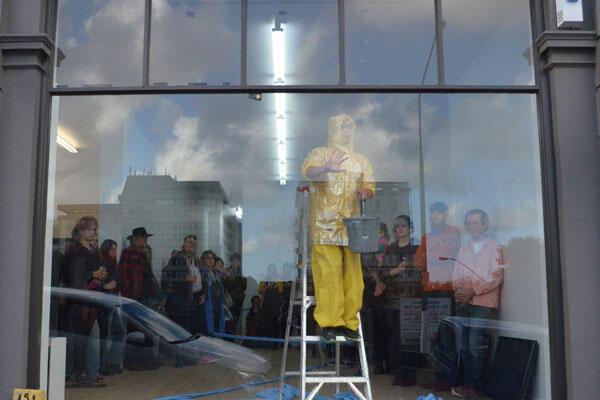
Orira to be performed at Blue Oyster Gallery, 6pm Thursday 3 April. I met Samin Son at the gallery on the Friday morning following the opening show from his performance series. Having heard much about him from a mutual friend, I had wanted to make his acquaintance, or at least see him perform, for the most part of a year – his reputation for exceptional performances truly precedes him. On this morning, Son was genuine, fascinating and passionate, very much buzzing about the prospect of undertaking his monstrous 15-show series despite already having a hand wrapped in bandages after just the first one. A relatively well-established artist, over the course of the series Son has continued on-going works such as Hammer Piece, and further built upon explorations of his two years as a South Korean soldier. He has noted in the past that while he was in the army he had trained for the riot police, had faeces thrown at him and entered real-life riot situations – it is renowned that the intensity of these experiences are well portrayed through his performances. As high as my expectations for Son were, I was still left absolutely astounded by his performance of Touch Paste Contact. This piece, which saw him enter and circle the room while intoning some unrecognised phrase, was enchanting, displacing and confrontational. One moment he was tying select people together with one of those everlasting public toilet hand towels, forming a defined space to accentuate displacement and uniformity; then he was commanding everyone’s attention from the top of a ladder, shrinking the audience in size and individuality; then drowning himself in a janitor’s bucket, a painful action to watch; and seemingly snapping out, briefly, to smile at a small child in the audience. While these elements combined to give the audience a very harsh-felt sense of anguish, physical exertion and displacement, Son somehow took it to yet another level when he started filling the janitor’s bucket with Aim toothpaste. As with the child before, he briefly changed tack by joking about how he “had to ‘aim’ it right,” playing off the toothpaste brand and giving the audience a brief respite from the intensity that had everyone stuck fast, petrified and fascinated, to their spots. Such breaks from the show were fascinating – they highlighted that the person inside the ritual monotony of an army was not, indeed, lost; although they were very much in pain. But then his head was in the bucket again, blinding him before pouring the mess over the large front window of the Gallery while he teetered from the ladder. Demanding that particular members from the audience come up to the window and draw in the toothpaste, Son forced the select few out of their conformity, encountering another on-going motif of his work that references his only artistic expression while in the military; he used to clean the bathroom floor every day using toothpaste, and would indulge himself by drawing with it. My friend was still shaken for hours after the performance, feeling a grief and anguish throughout that she just couldn’t rid herself of. Son was even worse off. By the end his voice was almost destroyed and he seemed to have caught a sudden flu. He was utterly worn down, but back to his cheerful self that everyone loves. It is not often that a writer can honestly say they have seen art that changes how they see the world. It is therefore a privilege for me to assert that point now. Samin Son is a remarkable talent quite unlike anyone else you will ever see.
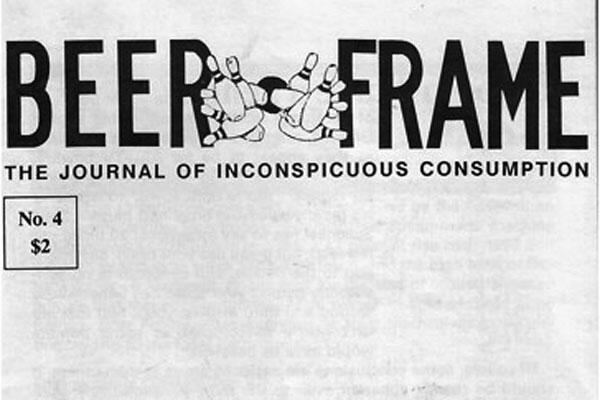
By Paul Lukas Available at Blackstar Books ABeer Frame is when all bowlers in a frame of ten-pin bowling get a strike except for one person. By tradition, the person who didn’t get a strike then has to buy everyone else a round of beer. Beer Frame is also a zine. Originating in 1993, Beer Frame is one of the “role model” zines and the characteristic fringe style of appreciating the apparently unappreciated. In the long running zine, Paul Lukas lovingly reviews products from cat food and human torso models to the seemingly common and uninteresting. He also reviews services in depth such as receiving free suitcoat buttons and the “Apology hotline.” Beer Frame is revered for bringing out the consumer in all of us. In Lukas’s words: “What is inconspicuous consumption? It’s about deconstructing the details of consumer culture – details that are either so weird or obscure that we’d never see them, or so ubiquitous that we’ve essentially stopped seeing them.” Zines of the week are chosen by volunteers at Blackstar Books, Dunedin’s own anarchist-inspired community library and social space since 2003, located on Moray Place near the Octagon. Come by sometime – details and directions are available at cargocollective.com/zinefest
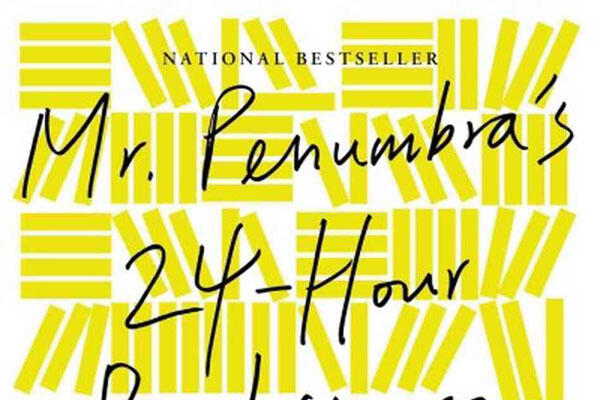
Mr. Penumbra’s 24-hour Bookstore is the debut novel of American author Robin Sloan. Originally written as a short story on his blog, he soon expanded and developed the story into a novel. Sloan is a writer for today; a self-styled media inventor, his book is a gripping mystery set between discourse on the relationship between technology and traditional print media. Think The Da Vinci Code but for bibliophiles and programmers – complete with a crazy cult. Sloan’s book is an extension of his own ideas surrounding the competing worlds of the Internet monoliths, such as Google, and the small bookstore owner, like Mr. Penumbra. The eponymous bookstore conjures up sensations of walking into Scribes, the English student’s haven. The door creaks and tinkles and the owner peers over a stack of books to welcome you. It is no different for our main man Clay. He’s been let go from his design job at New Bagel and is on the hunt for any work that might be going. This leads him unexpectedly to Mr. Penumbra’s 24-hour Bookstore. Taller than it is wide, and sulking on the seedy side of town, the bookstore leads Clay further into a mystery that isn’t going to be solved in a hurry. Just like a good wine takes time to mature, Sloan never hurried his mystery. While I was hanging out for the ending, Sloan wove a tale that never rushed towards its destination, yet still maintained momentum. The novel’s pacing was the distinguishing factor in this literary adventure. The world that Google inhabited was fast paced, and as a reader I had an unnerving sensation of being surrounded by bright reds, yellows, and greens. The scenes with old Mr. Penumbra were slower and imbued with a sense of shadow and time. Mr. Penumbra’s name is not accidental and his life and person remain very much in the shadows of the story. The mysterious book-cult the book shop supports is one that has been built upon the passing of time, and the passing on of knowledge, whereas the Googlers’ mentality towards knowledge is expressed very different. Clay acts as a link between the old world of books and time, and the new world of faster-than-fast Internet and instantaneous knowledge. While every good English student has debated the merit of reading too much of the author into their characters, I could not separate Robin Sloan from his protagonist. On his website Sloan discusses the meeting of the old and the new forms of knowledge sharing and Clay’s adventures through book-land and silicon valley, lead him to ask himself many of the same questions. As our world becomes increasingly technical it was refreshing to read a book that celebrates the bibliophile culture, yet was also not afraid to explore the toys of the future. While this book is a work of fiction, Sloan brings many pertinent debates to the fiction reading public. Libraries and bookstores have long contested these topics but the average book reader often uses the medium closest to hand. Be that a free Kindle book, an illegal download, or a hard copy book itself. By addressing a growing arena of debate, Sloan demonstrates his innovative mastery. He has brought the debate to the consumer, in a form that is both approachable and entertaining. Robin Sloan is this decade’s author to watch out for: either online or in your local bookstore. In a time where we are still learning the parameters of the electronic age, Sloan’s writing is topical and riveting. I couldn’t put this book down!
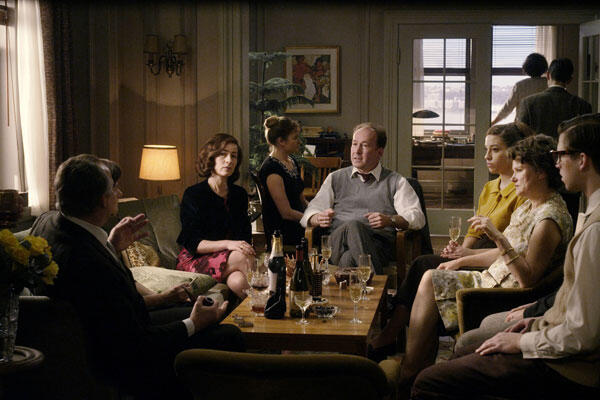
Rating: A It was the year 1961. In jerusalem, nazi Adolf Eichmann (as himself) was on trial for being involved in the war that brought the world to its knees. As an SS Obersturmbannführer (Lieutenant Colonel), he sent Jews to concentration camps and was thus an integral part of the horrors that occurred. But this movie doesn’t centre on him. This film is about Hannah Arendt (Barbara Sukowa), a Jewish woman who escaped a concentration camp in France and moved to New York. It was there that years later, she landed the coveted position of reporting on the Eichmann trial for The New Yorker. Unwilling to be swayed by personal opinions of the horrors of World War II, Hannah was determined to report the trial in a just manner. Using her skills in philosophy, Hannah released a series of articles that challenged the world’s view on what a person can be guilty of. But what makes this film so important is that it is a true story. What I love about this movie is that it feels so real. Typically when movies are “based on the true story,” I’m always left wondering how much they added in. Hannah Arendt is different. Real scenes from the Eichmann trial were used, allowing the audience to come to grips with the fact that this story was truly a spine-chilling reality. There is no “hero” to this story either, but merely people with different opinions and beliefs. I found this to be both emotionally and intellectually challenging, as the audience is forced to question how we judge one another for our actions. Any downfalls of this film are incredibly nit-picky on my behalf. My only issue was the half-hearted attempts at flashbacks into Hannah’s past. While they could have been used to further the cinematography, they instead felt messy and took away from the storyline. Flashbacks aside, this film is beautiful and inspiring. I thoroughly recommend it, if not for the story, then for the wonderful acting of Sukowa (who carried this movie ever so gracefully). This film, this story, and the arguments posed within it, are most definitely worth your time.
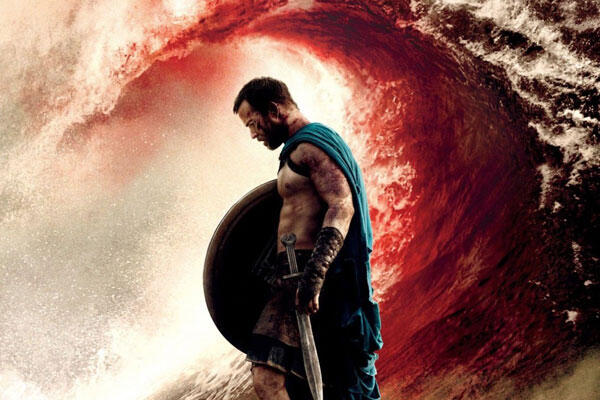
Rating: B The biggest benefit of this generation’s trend towards adapting graphic novels is how it lends a vast array of interesting visual styles for directors to experiment with on the big screen. This was used to great effect in Zack Snyder’s 2007 adaptation of Frank Miller’s 300, with its distinct mixture of stylised violence and aesthetic. Now, seven years later, Snyder has handed the reigns of the series to the unproven newcomer Noam Murro, with Snyder staying on as producer and writer for the newest film, 300: Rise of an Empire. Thankfully, Murro has successfully maintained the visual spectacle. Snyder’s screenplay is based on Frank Miller’s currently un-released sequel to 300 titled Xerxes. It weaves a more complex narrative than the first film, telling the story of events occurring before, during and after the plot of 300. This more freeform structure gave Murro room to weave a surprisingly skilful narrative that ties in fascinating stories from a diverse cast of characters. In particular, the backstories of the villains of the movie – Xerxes the god-king and his Commander of the Navy, Artemisia – were stunningly realised. It is a shame that the villains should be so interesting, only to have the Greek characters, including the lead, Themistokles, be so generic and uninteresting. Though the characterisation of the villains is superior, it is the acting that really sells them. In particular, the acting of Eva Green is phenomenal in this film. She plays the terrifying and fascinating Commander of the Persian Navy, Artemisia. Every second of screen time she has is rapturous.
Cult Film This month, 1995 smash hit Clueless has well and truly been shoved back into the pop culture consciousness, through Iggy Azalea’s sassy-as-hell homage in her new music video for “Fancy.” Azalea has ensured that no one will be forgetting the brick cell-phones, yellow tartan and fluffy pens that easily, and I thank her for it. Clueless transports us to the world of some upsettingly wealthy teenagers at a Beverly Hills high school. Our hero, Cher Horowitz (Alicia Silverstone) is the fashion-focused, blonde bombshell, Queen B of freshman year, who has taken it upon herself to bring joy to the lives of others. This takes the form of shacking up with two lonely schoolteachers (in a ploy to improve her grades), and “adopting” the lowly new girl in attempt to turn her into a Betty (like, really super hot). Cher’s “self-less” plights create more trouble than good in most cases, but she emerges with the realisation that the love of her life has been right in front of her this whole time. Swoon. Sound familiar? That’s because Clueless is based on Jane Austen’s 1815 Emma, just with way more lip-gloss and references to recreational drugs. I like to think Austen would not be turning in her grave. Sure, the film heavily features the phrase “I’m bugging” and there seems to be more focus on costuming than narrative flow but Clueless is still a superbly original adaptation that, just like Austen’s work, offers social commentary. That’s right, it’s satirical. It would have to be, or else it would be really goddamn annoying. Most of us would have watched Clueless at a young age and not picked up on the irony, but I highly recommend you revisit it as an “adult” (whatever that means) and discover the real film hiding underneath all of the vapid. Clueless deservingly sits on Entertainment Weekly’s list of film history’s 100 “New Classics,” making it one beloved childhood film that has actually stood the test of time. That is apart from the fact it’s completely laughable the characters are meant to be 15; I know post-grads who look younger than Cher. Why do you always do that, Hollywood?
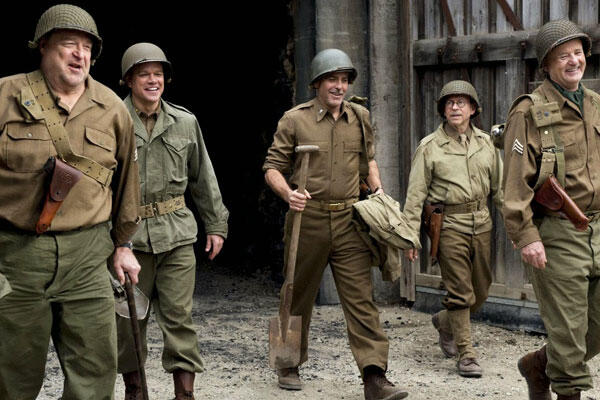
Rating: D- The story about the preservation of precious art during the Second World War is fascinating as a page in history, but as an all-star Hollywood war epic, it’s simply appalling. Ironically, it is very preachy about the innate value of cultural products (such as films. Yes, George Clooney, we got it). I had extremely high expectations for this filmic experience. All-American leading men George Clooney and Matt Damon, enigmatic Cate Blanchett, old-timers Bill Murray and John Goodman, and a “caper” plot about thumbing noses at the Nazis? Surely my prayers have been answered and this is an intelligent third Ocean’s Eleven sequel – at least in spirit?! Unfortunately Clooney doesn’t know what genre his film is. For five minutes it is a whimsical caper, then moves to characters on/off crying as a token acknowledgement of the Holocaust, then dying in the manner of an unnamed “Redshirt.” And, get this, the plot sees the only woman thrown head-over-heels in love with, apparently, the first and only man who ever talks to her. To call the dialogue well written would be comparable to calling Kentucky Fried Chicken fine cuisine. The pacing of the movie is badly skewed. We meet all our main characters in the first two minutes and hear nothing of their stories. With huge, capable names in the cast like this, it’s a crime to deprive them of roles with gravitas. Then, following the “80/20 rule,” the vast majority of the story is fast-forwarded over the next half-hour, and by the time we get to see something in-depth near the end, our ability to care has been lost. Oh, boo-hoo, Bill Murray, you got a letter from home. You’ve had forty seconds of screen time – please tell me more about how long and difficult it’s been for you on the Front. This film has all the ingredients of a charming, resonating epic about Western civilisation, but dismally fails to put them together according to a recipe.
This is the Asian and skinny equivalent of mince on toast. Mince on toast is actually something I have never had. Or maybe I have, but I was drunk and it was late at night and I probably stole it off someone else; so it doesn’t really count. Make the most of the cheap iceberg lettuce at the moment and make a fresh and healthy dinner before the weather gets too cold. You can use pork or beef mince for this. Try and get as lean a mince as you can. Since you add a few good sloshes of sesame oil to it, you don’t want it being too greasy which could completely defeat the purpose of this healthy dinner. Down at Unimart (the Asian supermarket opposite city centre New World) you can pick up a julienne peeler for $5. I highly recommend it. It is how you get the pretty thin strands of carrot. While you are there, stock your flat pantry up with all the vital sauces and condiments you need. If you want to boost the carb content of this meal (i.e. to keep the Y-chromosomes of the flat happy) cook up a bundle of vermicelli noodles for a couple of minutes in boiling water and serve these as an additional filling. Ingredients (Serves 4) For the mince: 500g pork or beef mince 1 onion, diced 1 tbsp sesame oil 4 cloves garlic, crushed 1 tsp ground or fresh chilli 2 tbsp sweet chilli sauce 1 tbsp fish sauce 1 tbsp crushed ginger 2 tbsp kecap manis Juice of 1 lemon 1⁄2-1 teaspoon salt 2 spring onions, chopped Fillings 1 large iceberg lettuce, washed Roasted salted peanuts, chopped Fresh coriander 2 carrots, julienned, peeled, sliced – however you want it really Handful of shredded red cabbage Sweet chilli sauce to serve 1 lemon or lime, sliced into wedges 1 bundle of vermicelli MethodSauté the onion, garlic and the white ends of the spring onions and chilli in the sesame oil until soft. Add the mince and ginger and break it up with a spatula or spoon. Cook until browned. Add in the kecap manis, fish sauce, sweet chilli and lemon juice. Simmer for a further ten minutes until a nice thick sauce develops. In the mean time, prepare your other fillings. To prepare the lettuce, remove the outer, loose, ugly leaves of lettuce then wash the remaining core thoroughly. You can do this by flipping the lettuce upside down and using a small sharp knife cut out a cone shape around the knobbly stem bit of the lettuce. Place the hole under the tap and let the water wash from the inside out. Boil the vermicelli for a couple of minutes until soft, then drain. To serve, take a lettuce leaf, place a spoonful of mince mixture in the centre, place a few carrot threads, a sprinkling of peanuts, cabbage, a few bits of spring onion and as much coriander as you can, as well as a squeeze of lime, then proceed to wrap like a burrito or a spring roll. 
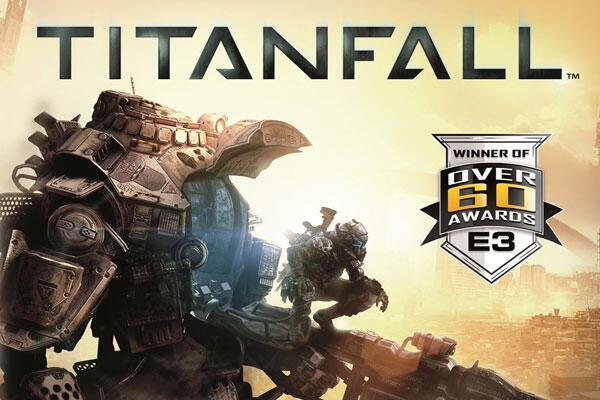
Rating: A- We are living in the Multiplayer era. Five years ago it was the MMORPG that was dominating the gaming landscape and the conversations of gamers. Now, however, it is time for the First Person Shooter (FPS) Multiplayer to shine. The last couple of years have been exciting with the Battlefield franchise challenging the reigning champion Call of Duty for the title. However, a multitude of problems such as network issues, the repetitious grind of yearly instalments and the undeniable degradation of these games’ single player campaigns has left players feeling dissatisfied with the current climate of the Online FPS genre. The real trouble here is that the players of this genre want something new and refreshing, with the debilitating addendum that this new thing cannot stray too far from what already exists. The solution to this problem turned out to be Vince Zampella and Jason West. These two men created Call of Duty and were responsible for its development, until Activision forcibly dismissed them for “breaches of contract and insubordination.” However, this dismissal was fought tooth and nail by West and Zampella through a legal battle that left a bad taste in the mouth of all involved. Finally West and Zampella found refuge with EA, starting their new company Respawn Entertainment, and beginning the development of their new game that would challenge the current FPS scene. That game is Titanfall. Titanfall is exactly what the FPS genre needs right now, an online-only competitive first person shooter that combines the elements of what FPS fans love about current titles, while introducing a sizable amount of innovation. The games are your classic two-sided affair, the two sides being the IMC and the Militia, with six players in each team. The familiar aspect is that players begin matches as foot soldiers called Pilots. These Pilots are equipped with your usual arsenal of weapons (rifles, shotguns, sniper rifles) as they hunt down members of the opposite side or attempt to achieve objectives. Though this premise is familiar there are some key differences about these Pilots. They are far more agile than any other first person shooter soldier. Pilots have the capability to traverse the map both vertically as well as horizontally with a number of parkour and jetpack options that make movement a lithe and graceful dream. Another key difference is that the map is also occupied with NPC characters as well, which, though useless as fighters, allow less experienced players to still contribute to the success of a match even if they can’t kill other players by killing these bots instead. Despite these innovations, the real key to Titanfall’s success is the inclusion of the Titans themselves. After a period of time, which decreases depending on how well you’re fighting, you get the option to call in Titanfall. This glorious moment lets you mark the map with a landing point and then watch as your own personal Mech warrior launches from space and lands with a world shaking impact at your feet. You then climb inside of this metal god, equipped with a whole new arsenal of weapons, including rockets and chainguns, and are free to inflict carnage upon all unlucky enough to cross your path. That is until you encounter another Titan, at which point a skirmish begins that, unlike Pilot battles, rely much more on strategy than twitch shooting skills. This whole new FPS paradigm takes place on a range of 15 diverse and superbly designed maps, and using five different game types: Attrition, which is your classic Team Deathmatch; Hardpoint, which is similar to other titles’ Domination modes; Capture the Flag; Last Titan Standing, which has every player start in a titan and offers no respawns; and Pilot Hunter, a game type that offers points only for killing other pilots and not for destroying titans or killing NPCs. The game’s greatest feat is that, despite the innovations, wide range of different play styles, maps and game types, the game is superbly balanced, combining all of these elements together into a sleek and polished experience that is different and exciting during every moment of play. The game’s biggest weakness is its campaign mode. Though Titanfall has no single player campaign, like most FPS’s, it instead includes a Multiplayer Campaign mode. This mode includes nine matches that are first played through as the Militia, and then upon completion can be played as the opposite side, the IMC. These nine matches are a mixture of Attrition and Hardpoint on a number of maps and play out just as a regular match except that while you play there is a narrative that is delivered through voice-overs. Though this emphasis on world building offers a new layer of tension to the matches, it is not possible to concentrate on the story as well as your fighting and so the story is lost. Still, it is an interesting experiment that, despite its poor execution in this game, has potential for future iterations. Titanfall is the future of FPS titles. It shows that the core experience of twitch shooters can be retained while still offering innovative and fresh experiences.
Rating: B+ Sunlight passing through a prism, creating a stretched rainbow across the floorboards. Waking up to an old pet cat purring on your face. Early morning family road trips past infinite power-poles and vast fields. Faded glow-in-the-dark stickers covering the ceiling in your old bedroom. Frankie Cosmos’ first studio album, Zentropy, is filled with a type of loneliness and sentimentality, particular to a shy, quirky young adult. Despite suggested (and purposefully exaggerated) youthful naivety, Zentropy is by no means the result of a first endeavour into the world of songwriting. Frankie Cosmos is only one of a number of 19-year-old Greta Kline’s musical personas, and Zentropy is one release out of a prolific array of more than 40 album and EP releases on Bandcamp. But, in its way, this album is a definitive entry point. Kline’s most recent project, Zentropy, is indie-pop grounded by the cumulative result of a three-piece drum set, electric guitar and Kimya Dawson-esque vocals and lyrics. It begins with a condemnation of art school then weaves into a childlike awe for a daddy who is a fireman. Then, in the sad, staccato sound of “Birthday Song” comes the dwellings on past romance with Kline singing “‘cause I get all flushed and ugly / Wonder how he ever loved me / I am so clumsy.” In the same song Kline’s message transforms into one of a two-sided rejection: “I hate everybody in this town so I walk around with my head down.” From this point, the sound drifts into Fleet Foxes-like vocal harmonies and builds with “Owen.” Further along, still more is revealed about Kline - she’s “the kind of girl buses splash with rain,” but also “crazy, I have no idea what I’m doing” in “I Do Too.” The album ends with “Sad 2” - a lament to a dead dog, which (as is the pattern within each of Kline’s songs) is both about a love for a pet and something more deep and ubiquitous. Zentropy is sweet and confident. However, with its total play time only twenty minutes long, the brevity of Zentropy is noticeable. While each song has character, the listener’s encounter is short-lived allowing only an introduction, with perhaps the promise that later Frankie Cosmos releases will give more body to these slightly introspective personalities. The Frankie Cosmos blog describes Frankie Cosmos as “the flower you should grow” and “the pride soldiers show when they are returning home from battle victorious.” Perhaps contradictory descriptions (with a darker humour bubbling beneath the surface), but Zentropy certainly lays down soil for a Cosmos garden that could grow in a range of different ways - what is so alluring is all the mystery that remains as to just what lies beneath.
Rating: B+ On Cloud nothing’s latest Lp, frontman Dylan Baldi is learning to “focus on what [he] can do [himself].” One thing he can clearly do is write a bunch of powerful, catchy, guitar-driven songs. Once claiming that he approaches guitar more like piano, Baldi’s playing is complex without being distracting, and tends to avoid the unimaginative power chord progressions so associated with pop-punk. The album was recorded in a small Hoboken studio, the production simple and stripped back, allowing them to stay true to their live sound. With only eight tracks, this record is fast and it’s loud and it’s full of fist-pumping energy. The opening track, “Now Hear In,” begins simply with Baldi’s distinctive rolling guitar strumming before slowly building to a sing-along chorus that makes as good use of space as it does noise. Many of the tracks stick to this loose formula, but the innovation of the guitar playing and drumming stops the songs from becoming rehashed versions of each other. Baldi especially has the ability to write guitar lines that make you forget he’s the only one playing. Baldi’s vocal delivery is not dissimilar to David Monks of Tokyo Police Club; nasal, growly and full of angst. Baldi pushes his voice to its limit on this record, to greatest effect when howling “you don’t really seem to care” in the epic final chorus of “No Thoughts.” The lyrics throughout the album are pretty straightforward, making them all the more easy to shout along to. It’s impossible not to belt out the grappling hook of a chorus in “I’m Not Part of Me” – “I’m not, I’m not you! You’re a part of me!” While most of these songs are great individually, the lack of variety in both song style and production make this album hard to digest in one go. It would have been nice to hear Baldi using a few different guitar tones to add some distinction between the tracks and give them some individual character – “Pattern Walks” stands out as an exception, especially the last minute and a half that contains a rare bit of reverb and a noticeable lack of fuzz. If you like guitars, poppy hooks and heartfelt screaming you should listen to Here and Nowhere Else.
Ben Frost - Venter A beautiful, atmospheric, heavily percussive track, which builds up and collapses into itself with an awe-inspiring climax. Tune Yards - Water Fountain Merrill Garbus returns with the first single of her upcoming album. “Water Fountain” is weird and quirky. Rhythmic and childlike, and infectiously so. Thee Oh Sees - The Lens Garage rockers Thee Of Sees release a looming, psychadelic pop ballad. “The Lens” is a saccharine, autumnal track, reminiscent of sixties luminaries such as The Zombies and The Mama’s and The Papa’s. White Lung - Drown With the Monster Heavy, punk rock track from Vancouver band White Lung. A sinister guitar line, and propulsive drumming, headline this two minute burst. Viet Cong - Bunker Buster (Rough Mix) Former members of now defunct band Women, “Bunker Buster” is not dissimilar to their previous work. Dissonant noise-rock, with interesting hooks and off-kilter rhythm. infectious, schoolyard track, short and sweet.
Rating: A- Over their 14-year career, Liars have embodied various musical guises. Originally a cerebral art punk unit which formed around the time of the alternative-dance-rock revival, the band have managed to rearrange themselves into a different musical configuration with each proceeding album. From the percussion heavy, drone-rock of 2004’s Drum’s Not Dead to the insular, schizophrenic post-punk of 2009’s Sisterworld, the band consistently stretch their musical boundaries and do so convincingly. It’s as if each record is comprised of a fresh set of aural components and an updated list of rules to abide by. However, even though each project explores an alternate side of the genre spectrum, Liars always retain something intriniscally theirs. A dark, disturbing, sinister edge, which appears to have spawned from the more subconscious depths of the human psyche. Mess, the seventh album by this trio of experimental journeymen, is no exception. In the opening track “Mask Maker,” a deep, octave affected voice bellows before leading into a plethora of jarring synths and pumping percussion. “Take my pants off / Use my socks /Smellmysocks/Eatmyfaceoff/Eatmy face off / Take my face / Give me your face.” The bold perversity present in the first twenty seconds of Mess straight away presents a contrast to 2012’s reflective, electronic effort WIXIW. Mess is ferocious, visceral. It is predominantly a dance record, but one that seems to have been molded in some nightmarish alternate reality. One where haunting, primal vocals gyrate over layers of angular synth lines and brooding, unrelenting rhythm. Unlike most other dance records, instead of propelling listeners to chill out or escape to greener pastures, Mess revels in an undercurrent of uneasiness and discordance. Tracks such as “I’m No Gold,” “Pro Anti Anti” and “Vox Tuned D.E.D.” are feverish in their pursuit of some sort of subversive euphoria, whereas “Can’t Hear Well” and “Left Speaker Blown” are more introspective, yet still prevalent with an air of psychosis. In sequence, they form a bewildering collection of grimy, electronic pieces. “Fact is fact and fiction’s fiction / Mess on a mission / Mess on a mission / Mess on a mission,” Angus Andrew yells on the track “Mess on a Mission.” A mantra which epitomises the record perfectly. Embrace the dirt, the chaos, the mess.
Last week i met with Richie Boyens, a Dunedin-based designer who started the brand Clothes I’ve Made, which is being shown in the capsule collection at iD. With Richie’s ambiguous design choices, combined with the use of various floral, striped, paint-speckled and tie-dyed fabrics, and his latest intention to reinvent the puffer jacket (about time someone did this) somehow his collection is coherent, structurally flawless and completely wearable. Not really a typical designer, having had no institutional fashion education or qualification, Richie’s story is fascinating and awesome. Born and raised in Hawkes Bay, Richie then spent some time in Wellington (getting inspired and not going to University), before moving to Dunedin six years ago to start what is now a creative, collaborative, and totally progressive brand. I was initially going to do a really constructed interview over coffee at a café or something, but when I found out Richie had a studio space opposite my apartment, I naturally assumed it would be more appropriate to go there instead. I didn’t really know what to expect out of a designer’s studio because I’ve only really spent time in artist studios, but it was by far one of the coolest studio spaces I’ve been into. There was art on almost every wall – rolls of material, couches, half a mannequin, a shaky worktable, an old sewing machine, and there was even a piano; it was literally like walking into a saloon-style studio (featuring fashion) and I totally never wanted to leave. He was cool, the interview was fun, his studio is insane and his work is a creative mind blow-up of mad design skills and cool images. How did CIM start? Give me all the raw details! Well ... I’d been working at Void for a while and then, when I moved to Wellington, I did a couple of years at Levi’s. I never went to Uni, there was too much shit to do in Wellington. Then I started working at a café, paying for all my sewing stuff, and I kept seeing everyone wearing the same clothes and it was just annoying. So I lived with another designer in Wellington and he was cool, and his work was cool, so I moved back down here and picked up Mum’s sewing machine and just started going for it. I really like your studio space, there’s heaps of weird and cool and interesting things in here. That half mannequin in ripped jeans in the corner – can you elaborate? Yeah, I made those pants in October 2010. They were the first pair I made. I didn’t have an over locker and I just wanted some cool pants. It was literally like ... Mum’s sewing machine, typically excited male ... rushed in with material, cut it out using Vivids, pretty much broke every rule in the sewing handbook, if there is one; then started attacking them trying to figure out how to hide seams without the over-locker. Yeah ... I quickly realised the extent of my skills weren’t as adept as I had hoped they were, and when I put them on (they were almost finished) I put an elastic band on them, and the crotch was all wrong and inverted and too low and I walked like a fucking duck. But, as it turned out, that disaster turned into a passion to go harder ... Most NZ designers are based in Auckland or Wellington. Do you think that being based in Dunedin has an impact on the way you design or the way you run CIM? In terms of fashion in Dunedin, it rules and it’s changing all the time and I’m just doing it my own way. I’m really inspired by my environment, though. Environment is definitely influential. If I go somewhere like Invercargill I’m probably not going to wear these floral silk pants. Can you tell us a little bit about the signature of CIM. Do you have a certain customer or character in mind when you put together the collection or do you design for yourself? I started making clothes for me so all the sizing is real different from universal sizing, it’s a lot more tailored. Yeah, up until now, it’s been totally motivated by my friends and the people I hang out with, but it’s kind of cool when random people just come into the studio and ask for something off the bat. Describe the general process you go through to design and realise a piece of clothing? We’ll just sit down and have a discussion and decide what fabrics we’re going to use, discuss an idea type-of-thing. When I have an idea it’s like a little explosion and then I just sort of pick parts of it to pull it back together the way I want. I don’t stick to any design process ... I just create a general process of thought. What artists did you draw your inspiration from, for the iD collection? Jarrod McHutcheon, Ben Edwards – basically everyone on these walls. It’s so cool because each style is all street art and the colour palates are often quite similar to our clothes. As art, it describes something totally different than it would as an article of clothing. Mondrian was a big inspiration, too, I think. I fucking love Mondrian. How did you transfer your inspirations into your designs? Colour palate was a big one. And symmetry – it has to look good on every angle. It’s like playing with Lego, trying to piece it all together to make on time. What can people expect to see from you further into this season? Hip-hop, design, ‘80s and ‘90s colour. My designs came from when I was a kid. PVC jackets, stripes on your sleeves, it’s just a full expression of who I am – it’s a structured set and I’m pretty stoked about it. What is your view on the symbiotic relationship between fashion and art? Fashion and art – that’s a hard one. If someone’s like, that’s a cool painting, I’d love to have it on a top, but that’ll never happen; fashion allows you to do that. But I also think people can always hang their paintings on the wall, and in a museum – as “art.” But as soon as you put it in public sphere, it becomes fashion or a trend. Fine art influences fashion, but fashion is far more physical than art. Art is more emotionally invested, I think. I don’t know. It all just looks good. Eco-fashion is a thing this year at iD. What do you think of eco-fashion? Eco and fashion don’t go hand in hand because of the way the fabric is made. They pick cotton for ridiculously cheap and it goes into this massive chemical process where the organic cotton is sprayed with herbs and pesticides, and it’s just not good for the final look of the garment. Sometimes it looks stiff. But it’s awesome that there are still designers that go to that extent to keep things environmentally friendly. What do you think makes a quality article of clothing? I’m into using fabrics that are locally made. If I was going to use leather, or something, it’s cool to be able to say its made in New Zealand. The wool we’re using now is yarned by my old boss. It smells like it would on the sheep. Why don’t people appreciate the detail, design and quality of high-end fashion? I think it comes down to who you are as a person – you can’t really generalise that kind of thing. Some people aren’t educated in fashion, per se, and some people just aren’t interested ... If I told you I wanted you to make me something, would you? I’d say “yes,” because I like a challenge. The most challenging thing is about getting over how the other person will think. But you have to just trust your own judgment. What do you wish people would understand about working in the fashion industry? For me, the whole fact that I have done this on my own has been one of the best things for me as a person. I was always stubborn as fuck, and I still am. But I’ve learnt so much. Important things like how relationships need to be – friends and business ones – and just not feel ashamed or scared to express who you are. That sounds really cheesy but it’s so true. Knowing I have support from other people has been huge. I really appreciate all the help I’ve had. The people we have met and dealt with could not have been more inviting and helpful. I’ve also learnt a lot about myself by putting myself on the ledge. I’m so happy doing this and I put every cent into it. I’m kind of poor, but I fucking love what I do. You have to be careful not to jump into something without the right intentions otherwise it’s so transparent. I don’t know if it’s a bad thing or a good thing. Fashion’s weird, I’ve noticed that once it gets past the design it goes into this mad media frenzy and the perception of success kind of changes. If you’re just printing your artwork on t-shirts to make money that’s fine, and that might make certain people happy, but that doesn’t make us happy. It’s just about finding a good balance and a way to do what you love at the same time. People need to appreciate the work people do and the craft of it.