
-
Columns

Editorial | Issue 03
Technology is a double-edged sword. The people on one side saying that it’s elevated and liberated humans are right; the ones on the other side who say we’re now slaves buried by it are also right. I’ve certainly got a fair bit of both sides in my life, anyway. The various computing devices that I’ve accumulated over the years are all great. It’s genuinely phenomenal having everything I might ever need to refer to in my back pocket at all times. Netflix has made laziness so much lazier, which definitely fits on the “good” side of the divide, and despite starting to acquire quite the collection of vinyl records, I wouldn’t trade digital music for anything. On the other hand, if I’m counting on sleeping in after a 6am-finish print night, someone with an “urgent” question will no doubt ring at 10 or so and completely fuck with my ability to operate over the weekend. Speaking of which, my laptop has rendered weekends completely nonexistent, and I feel genuinely uncomfortable on the very rare occasions that I find myself without my phone. My flatmates and I took the radical step a few weeks back of having reading time together. The only issue was that, between the three of us, we had a Kindle, a Kobo and an iPad. I, on the Kindle, was distracted by the Amazon store, the flatmate on the Kobo remained remarkably focused, and I’m certain that the iPad never left Minion Rush. Regardless of having anything to hide or not, I also hate the idea of my online life being spied on. I accept in life that there are two modes - offline and public - but that’s a reluctant acknowledgement of a shitty situation rather than an endorsement of it. Those who shut down this debate with “if you’ve got nothing to hide, you’ve got nothing to worry about,” are suffocating an important discussion. On another note, the cover this week was shot at the Toitu Otago Settlers Museum. Unfortunately, I know that a huge number of readers wouldn’t have visited here yet – I only went for the first time about a month ago, and most people whom I’ve discussed it with are in a similar position. But I wouldn’t be exaggerating to say that it’s incredible, and provides plenty of fascinating historical insights from the region. Zane Pocock Critic Editor
-
News
The Royal Hyde Street Party
Hyde Street Keg Party looks set to be a royal fanfare this year with the event falling on the eve of the Duke and Duchess of Cambridge’s visit to Dunedin. Stepping up to run the event this year is Admin Vice President Ryan Edgar who said the event day planning is “absolutely” underway. Being a past Hyde Street resident and one of the hosts of the event last year, Edgar follows on from last year’s Admin Vice President Zac Gawn. When asked if his previous role would be refilled, Edgar said he did “have a man in mind” but that he’d let the residents of Hyde Street decide. With a bit over a month until the big day, Edgar has already undertaken a flyer drop, started talking with stakeholders and was making door-to-door visits to the current residents of Hyde Street to discuss the logistics of the day. So far Edgar is confident that the event “will come together pretty quick” and said the organising process will become more efficient when a representative from each flat steps forward so that more productive management decisions can be made prior to the day. He also said that the template of the day was set and was “more or less the same as last year,” with a few tweaks to be made to make for an even smoother event. Edgar appears particularly ambitious in planning the event this year and intends to extend a formal invitation to Prince William, after admitting “I’ll lose my shit” and he “just wants to get him here.” Despite the royal party’s itinerary not pinpointing a visit to Dunedin until the following day, Edgar’s ambitious ploy to involve the royal family in Hyde Street 2014 will see him “looking into TV interviews and working with the council’s itinerary in order to get the Prince here.” Edgar’s admiration of the Duke is now far from secret after exclaiming to Critic that “holy shit, I love Prince William.” But, in the interests of respecting the Duchess’ new found royalty, he added that he “could even make it a joint invite with Kate.” While Prince Harry may have revelled in all of Hyde Street’s glory given his notorious bad-boy behaviour and notoriously bad taste dress-ups, Edgar admitted that William “may be a tough catch.” If the Royal Party’s itinerary does for some godforsaken reason look to accommodate Hyde Street, and “if we somehow do manage to land [Prince William],” Edgar said he’d look into one of the flats having a royal theme flat so the family could “set up base” on Hyde St. On the back of the Cook’s closure, the event appears to be the last remaining link in a now almost defunct generation of Scarfie culture. Edgar also said the success of Hyde St was potentially the “last bargaining chip” that OUSA held against the DCC in their dramatic bid to enforce a liquor ban in North Dunedin. However, OUSA’s successful premiere of an organised event last year, with the cooperation of the University, St John and the Police, helped act as “a headliner to show that a liquor ban wasn’t necessary” and that events such as this are still possible, according to Edgar. He said, “At this stage [the DCC] are good about [this year’s event],” but he still considered the DCC to be “fair-weather friends for us.” With last year’s event limited to only 3500 tickets, the majority of tickets were allocated to residents to on sell at $2 a ticket to friends, and the remainder being sold for $5 to the general student population. Ticket sales look to take a similar form this year, which Edgar hails as contributing to “less piss in the corner of the lounge,” but personally, Edgar “wants to up the numbers.” He said he’d like to open up the number of tickets available to the general student population and would ideally like to add an extra thousand tickets to the event. However, he is aware of measures in place that limit the number of people per square meter. The date has been confirmed with St John and the Police, who have agreed to allocate more resources to accommodate for the day. Evidently, if the Royals did make it to the event Edgar wouldn’t be the only one to “lose his shit,” but if the Duke and Duchess of Cambridge do choose to hyde from this year’s party, rest assured that Hyde Street 2014 will have its reign regardless. Editor's Note:This article was amended on 10 March to adequately reflect uncertainty around the event date.
-
News

Execrable | Issue 03
On Monday 3 March the second OUSA Executive Meeting of the year was held. Reflection over the past two weeks revealed that the O’Week Six60 gig went “very well,” and it was expected that Tinie Tempah would draw a crowd of approximately 5500 to 6000 students, with “potentially lots of late sales.” The Executive kicked off by agreeing to additions to the 2014 budget, the biggest of which was an increase of $19,571 to Critic expenditure due to unavoidable increases in printing costs. $15,000 was also to be spent on a “2014 political but non-partisan Election Campaign to support student issues of fees, loan and allowances,” as well as $10,000 to be spent on increasing faculty club support, with President Ruby Sycamore-Smith wanting to work out how to make clubs “easier and more interactive for students.” When asked by Recreation Officer Henri Faulkner where the $10,000 figure came from, the response was that “we picked a number that would allow something to happen.” Under s23.7 of the OUSA Constitution, the OUSA executive are allowed to alter the budget set by the Student Body in the preceding year, so long as the sum of the changes does not exceed five per cent of the total budgeted expenditure already set. This year, that maximum increase equates to $159,779, with the total change agreed upon by the Executive this time round coming in at $107,785. The Executive decided to renew OUSA’s membership with the Volunteer Services Association at $100 per year, announcing, “it’s important we show support for volunteer services.” The decision over which charity this year’s Capping Show will support has been handed over to the students, after the Exec decided a Facebook poll within the next fortnight would be the fairest way to keep students happy. In 2013, Youthline was chosen. Conversation then turned to OUSA Sex Week, which showed a disappointing and profound lack of planning from Education Officer Jordan Taylor. With Sex Week occurring in the week that this article is published, Jordan came to the meeting only one week prior to kick-off with almost nothing to show for one of his biggest responsibilities for the year. Circulated to those present at the meeting were the minutes of a Sex Week meeting Jordan had held way back on 24 January. A rather small document with very few tasks to achieve, it was noted that “Jordan will get OUSA designer to make a main [poster],” which he hadn’t, and that he was “to look into ad in Critic,” which he hadn’t done but blamed a lack of interest on our content. Critic calls “bullshit,” while he described it as a “balls-up,” which is quite an achievement considering how little effort was required. The other executive members, quite rightly, refused to help due to being “busy” thanks to the late organisation. Ruby suggested that timesheets now be implemented for Executive members to “make sure we are always going above and beyond for the students.” She says this is to “change habits from previous years,” and also suggested a drop-in service should start so students can come and see Executive members. In saying so, she did confirm her study days are behind her, observing, “I do know that for some of you, study is really important!” Kamil gave thanks for help at the International Food Festival during Orientation, before admitting that while working as part of R U OK someone turned down his help, saying “I don’t want to go back with that guy! He looks like a pedophile!” Critic leaves you to reach your own conclusions. Another point raised was that OUSA owns 50 per cent of the University Union with no acknowledgement of this at the entrance. On that note, minutes from a meeting of University Union Limited were accidentally included in the documents circulated to Critic before the meeting. These were promptly removed by the Association Secretary in a panic, amounting as they do to a leak of confidential information; however, they were dreadfully dull and boring, and thus are not reported here. This could have represented a big slip-up from Ruby if the document was newsworthy; it serves as a loud, but fortunately early, wake-up call. Critic’s overall take from the meeting was that Ryan, in Nick’s absence, was this time astute at asking for the background of financial figures, and in doing so, looked much less like our goldfish except for that one time when he admitted something relatively simple would require a “greater mind than mine.” Nali seemed on top of things for the duration of the meeting, too. Ruby continued to lead competently, reminding her Executive at one stage to “make sure you read the minutes so you can contribute.” She has clearly noticed the same lack of enthusiasm that Critic has, and may like to see more of the other Executive members chipping into the discussions, even if it doesn’t involve their particular areas of representation; aside from Henri, who is the standout from this group, the other members currently amount to a weak executive. Jordan in particular has a lot of work to do to make up for the sheer incompetence shown in his organising of Sex Week, and Critic points out that this is already following a very similar pattern to his efforts last year.
-
Columns
David Clark | Issue 03
In dark days past, when the Internet was new to Otago, I had to get a “driver’s licence” before being issued an email account by the University. Getting a “driver’s licence” involved attending labs where email communication was attempted, while supervised and under strictly controlled conditions. The pace of technological change has multiplied since then. Technology has become increasingly important to your lives as it has to mine. I can still remember being the first student to take a laptop to lectures in one of my classes. The lecturer entertained himself by referring to me as “Mr Tippy-Tappy.” I wasn’t alone for long. Others quickly realised the benefits of drafting essays while the class was still being taught. In recent years I’ve encountered more than one student who needs lessons on email – not because the technology is new, but because it’s rapidly becoming out of date. With everything done on platforms, email seems clunky and passé. Our use of technology, especially electronic communications, is something everyone wants a hand in. It’s a tool for exercising freedom of speech and it is forging our online identity. You only have to look back to the Arab Spring to see the impact technology is having in the political sphere. Facebook itself was a key organising tool used by revolutionaries to spread awareness and coordinate deomonstrations. Social media amplified their calls for political change, and first-hand encounters were able to be shared worldwide. In New Zealand, voices cannot be suppressed either. Social media is becoming a key way to interact with our country’s leaders, journalists and businesses. It is great to be able to interact with Dunedinites on Twitter and Facebook and respond instantaneously to the issues they are talking about. If you have any burning questions for me, I’m availiable on Twitter @DavidClarkNZ or on Facebook at fb.com/DavidClarkforDunedinNorth How long before Snapchat and WhatsApp render Facebook and Twitter to the electronic dustbins of history? Who knows; but for now, it seems they still have a vital role to play in our democracy.
-
News

Otago ranks with big minds, big words and know-it-alls
The University of Otago remains in the 226-250th bracket of the Times University Rankings. The rankings judge world-class universities across all of their core missions – teaching, research, knowledge transfer and international outlook – and this year they reveal that Otago ranks highest among New Zealand’s institutions for English Language and Literature (28th), History (30th) and Psychology (19th). Otago also gained a top 50 position in Law, at 37th position. “The annual Times Higher Education World Reputation Rankings, based on responses from almost 60,000 carefully selected and statistically representative academics, have become a closely watched and vital indicator of the fortunes of global university brands” says Phil Baty, editor of Times Higher Education Rankings. Victoria University’s ranking for Law dropped dramatically to 49th this year, down from 19th in 2013. This places Otago in the top position in NZ for legal studies. Victoria also gained a 31st placing in English Language and Literature. Auckland has been ranked 164th overall and had subjects placed in the top 50 for 10 subject areas – Accounting and Finance (24th), Biological Sciences (46th), Education (34th), English language and Literature (34th), Law (placed joint-28th), Linguistics (36th), Modern languages (45th), Pharmacy and Pharmacology (39th), Politics and International Studies (26th) and Psychology (34th). Massey placed in the rankings with a 19th in Agriculture and Forestry. Baty says “a university’s reputation for academic excellence is absolutely vital to its success: it drives student and faculty recruitment, international research partnerships, and helps to attract philanthropy and industrial investment.” Overall, the US topped the university rankings. It takes the top three places, with eight of the top 10 and 46 of the top 100 universities based in the US. Harvard, Massachusetts Institute of Technology and Stanford University hold the top three positions, whilst UK universities, Cambridge and Oxford, hold the 4th and 5th positions respectively. Australia now has five top 100 representatives, down from six in 2013. Only one Australian institution, the University of Melbourne (down four places to 43rd), remains in the top 50 compared with three last year. Bahram Bekhradnia, president of the UK’s Higher Education Policy Institute, says “while reputation surveys do not tell you anything objective about quality, they nevertheless do reflect visibility and awareness by others of a university’s activities.” He explains that the reputation surveys are “likely to be a harbinger of things to come and a predictor of subsequent trends.”
-
News
Unis to produce more skilled employees for economy
A five-year tertiary education strategy that focuses on enabling students to leave university with skills employers want has received bipolar reviews from the TEU and the Greens. Tertiary Education, Skills and Employment Minister Steven Joyce last week announced the Government would focus strongly on the outcomes of tertiary education as being a component of the wider New Zealand economy. The strategy seeks to “provide a stepping-stone to assisting communities and individuals to realise their full potential.” The strategy sets out six key priorities, which include: delivering skills for industry; getting at-risk young people into careers; boosting achievement in Maori and Pasifika communities; improving adult literacy and numeracy; strengthening research-based institutions; and growing international links. Joyce said that the tertiary education sector needs to be more “outward facing,” and needs to interact more with business, communities and the world economy. “Our tertiary education sector must continue to adapt and change to provide the skills and qualifications New Zealanders will need to contribute in the labour market in innovative and competitive ways.” He said the sector needs to work fast to offer more opportunities to students in ICT, engineering, science and agriculture – areas where there is “an insatiable demand” for graduates. TEU national president Lesley Francey said the strategy was “a narrow and limiting view of tertiary education. It sees tertiary education’s main role as simply providing a free, publicly-trained workforce and free publicly-funded research to private businesses.” Francey said the strategy would mean that more money from a “shrinking funding pool” would be directed to education relevant only to business and meaning that other education less favourable to businesses would be left with less funding. “Tertiary education should be a treasure for all our communities, not simply a subsidy for businesses that have failed to invest in skills training or research and development.” Green Party tertiary education spokesperson David Clendon said that the announcement “reflects this Government’s obsession with short term economic gain, rather than a balanced view of social, environmental and economic factors.” Clendon feared that this “misguided emphasis on economics” was at odds with universities’ role of offering “depth in education across many disciplines.” He added that the strategy is a clear message that the work of those engaged in “vitally important non-economic activity” is of “less value.”
-
News
Charlotte's web of deceit found out
A former president of the Maori Law Students’ Association has been indefinitely excluded from the University after stealing money from the Association during her presidency in 2013. Critic began investigating the incident last year but was unsuccessful in exposing the student despite fruitless attempts to have the information disclosed by the Law Faculty, the University, an Official Information Act request, and the Ombudsman. Charlotte Harata Solomon was convicted last year in the Dunedin District Court for taking a total of $1736.59 from the Association’s bank account by making false invoices. She was sentenced in October to nine months’ supervision and ordered to pay $260 in court costs and the outstanding reparation. The incident was last week reported on by the ODT when the University released their annual report on dishonest offences to the University Council, after Solomon had already appeared in the Dunedin District Court. The report detailed that Solomon was referred to the Provost and then the Vice Chancellor (VC) with the recommendation that she be dealt with by way of exclusion. The VC subsequently excluded her from further enrolment with immediate effect for an indefinite period. Critic began investigating the situation in September 2013, and made several requests to the Law Faculty and University for the financial records pertaining to the Maori Law Students’ Association. As a registered charity, the Association is required to file an annual return each year but unfortunately the affected records were not yet publicly available. Upon the University and Law Faculty declining to supply the information, Critic sought to hold the perpetrator to account and filed a complaint under the Official Information Act for the Ombudsman to release the records. However, the request was declined in late November. The response said that the Law Faculty “did not hold any of [the Association’s] financial information” and that the Association “is responsible for themselves.” However, it did acknowledge that the Law Faculty was aware of the issue after the Treasurer of the Association told the Faculty of a letter that they had received regarding a bill not being paid. It appeared the bill in question had been paid by the Faculty, as was sometimes practice, but the money had not been received by the biller. According to the Ombudsman, the matter was then brought to the attention of the University and referred to the Police. The Ombudsman subsequently closed the file. Despite being indefinitely excluded from the University, Solomon is still listed as an officer of the Association on the Charities Register. The annual report also shows a significant drop in the number of students disciplined by the University last year, which reflects the “continuing improvement in the overall behaviour standards.” It revealed that the Proctor saw 530 students in 2013. 13 students were referred to the Provost for further action in relation to their offending, and nine of those were referred to the VC. Director of student services David Richardson said it was “pleasing” to see the downward trend of such figures and attributed the decrease in the number of serious incidents to the “multifaceted proactive approach” the University had taken in recent years.
-
News
Safeassign no safe sign for cheaters
The number of students cheating at the University of Otago has risen on last year’s figures, but the rise is “not unusual” according to the University. The rise is documented in their annual report of dishonest offences, which shows there were 72 dishonest practice incidents in 2013. Despite there being a 56.5 per cent increase from 2012, the 2013 figure is similar to that recorded in 2010 and 2011, which had 85 and 61 incidents recorded respectively. A breakdown of the figures shows that the Humanities Division recorded the highest level of dishonest conduct with 33 separate instances of cheating, up 19 from 2012. The Sciences Division recorded the lowest number, with only nine occurrences of dishonest practise in internal assessments and final examinations. Commerce recorded 19 incidents and Health Sciences 11 incidents. Maori, Pacific and Indigenous Studies recorded 14 incidents, making it the individual subject area with the most dishonesty cases at the University for a second year running. International students were dealt with in 10 of the cases, with five of these offences occurring in final examinations. Dishonest practices include conversing with another during an exam, impersonation, and possession of unauthorised material in exams. As in previous years, offences were largely due to knowingly and unknowingly plagiarising assignments. Common penalties vary, including: awarding a reduced mark for the assignment; awarding a fail for the assignment; or awarding a fail for the entire paper. These penalties were given according to the varying degree and seriousness of the offence. Lenience was granted to first-year students that were believed to have not understood correct referencing procedures. Students that made second and third offences were often given harder punishment, commonly receiving a fail grade for the entire paper. Certain students were required to attend workshops at the Student Learning Centre, including “Referencing and Paraphrasing,” “Writing the University Essay” and, in special cases, one-on-one “Referencing in Assignments” sessions with a Student Learning Advisor. Many offences involving plagiarism were caught simply by running the submitted work through SafeAssign, the student plagiarism software used University-wide. The software can detect copied work from both websites and previously submitted assignments. An Academic Services spokersperson said that the “understanding that students have of appropriate academic writing practice is a factor contributing to the number of students recorded in the statistics.” The need to increase the university’s efforts to “educate students in appropriate academic referencing procedures” has been identified and shall be addressed through efforts from the Student Learning Centre, the Centre Library, Academic Services and Academic Departments.
-
News

If it ain't broke, another South African team should fix it
Have you finally gotten your head around how the Super Rugby conference system works? Well, even if you have, it is all set to change. Again. Why? Because fuck you ... that’s why. Interesting announcements and off-the-record comments have been surfacing about the possible evolution of Super Rugby over the next few years. However, some rugby unions have more of a revolution in mind. Russia currently sit 19th in the International Rugby Board world rankings, so President Putin’s recent move into Ukraine could be part of an IRB coup to establish a Super Rugby team in Crimea to help improve their lowly ranking. Think about it. Conspiracy theories aside, the expansion of the competition to include a team from Argentina seems to be a more logical move given their recent inclusion into “The Rugby Championship.” While this sounds good in theory, most of the players that make up the Argentina national squad play their club rugby in France and earn very good money. Even SBW couldn’t resist the temptation of the easy Euros. The UAR has warned that if its next generation of players were not encouraged out of Europe to play in Super Rugby, its national side would struggle and could not realistically compete in The Rugby Championship. The next logical move would then be a team representing the Pacific Island nations, in line with the IRB’s stated aims to build the game’s worldwide appeal and help lower tier nations to be able to compete with the top teams at the 2019 World Cup in Japan. This has been a popular choice amongst fans for years but, again, they look set to receive the cold shoulder from SANZAR. The greedy South African Rugby Union have made it clear they want a sixth team based in Port Elizabeth and would not drop any of their existing “big five” to make this happen. Like petulant teenagers, SARU officials have been grumbling for years about breaking away and aligning itself with the European rugby unions to form a rival competition if they don’t get their way. The ‘Boks want an Atlantic conference and a Pacific conference that would play separate round-robin games then come together for finals. This is an effort to reduce travel time and expenses, which would be welcome news for the Highlanders who already have some very long road trips. But with the weaker South African teams already propping up the bottom end of the table, if this move goes ahead it would only be a political move to placate the testy ‘Boks instead of a move to enhance the competition. The SARU also had the cojones to suggest that New Zealand could simply merge the Hurricanes and Chiefs. One does not simply merge rival teams. And why not scrap a few of the weaker Aussie teams while you’re at it? All this would do is guarantee that a South African team picks up the wooden spoon every year. I don’t understand the logic there but I will keep you up to date with the plans. And while I’m on the subject of twisted and possibly drug-affected logic, we all know that 2014 is officially the “Year of the Horse,” right? Back in ye olde days, Highlanders rode horses (I assume.) Following that logic should therefore make 2014 the “Year of the Highlanders!” Of course, that logic should also mean that the Brumbies (named after actual wild outback horses) have a good chance to win the Super 15, too – hence my bold prediction of a Highlanders v Brumbies final here in little old Dunedin. You read it here first. How awesome would that be? We haven’t hosted a final since the 1999 loss to those damn Crusaders at the old Carisbrook. (“Like, WTF is Carisbrook?” I can hear the freshers thinking.) Back to present reality; the final is not until August, at the other end of another long season in one of the world’s toughest club competitions. But I’m backing my main man, All Black star Ben Smith, to lead the Highlanders all the way to that final this year. Our lads got their season off to a perfect start against the Blues during O’Week and they only narrowly lost to the Chiefs in the ‘Tron last weekend. To blow away the Blues and run the two-times defending champion Chiefs that close is an encouraging start that coach Jamie Joseph will be very happy with. We have a bye for the next round and then back-to-back home games against the Force and Hurricanes over the next few weeks. Hopefully the boys can pile on the points and be near the sharp end of the table before their big road trips to South Africa and Australia. So could this be the Highlanders’ year? Yea ... Nah ... Probably not ... But fucking go along anyway and support them. That big shiny stadium isn’t going to pay for itself, and my Dad doesn’t want to see his council rates increased any further. 2014 Investec Super Rugby standings (after round 3)1. Warratahs 10 2. Sharks 9 3. Chiefs 8 4. Lions 8 5. Highlanders 6 6. Rebels 5 Highlanders March Fixtures:Saturday 15 March Highlanders vs. Force (Forsyth Barr Stadium) Friday 21 March Highlanders vs. Hurricanes (Forsyth Barr Stadium) Saturday 29 March Blues vs. Highlanders (Eden Park)
-
Columns

ODT Watch | Issue 03
This front page story about the tragic three-week shortage of bananas encapsulates what the ODT is all about … hard hitting journalism, understated exposés and, of course, first-rate puns. This man was caught cultivating and possessing cannabis in his home. Lesson to be learned? If you’re going to do something illegal, have a quality excuse like this one ready to back yourself up in court. Bet there was some teeth-gritting when this was written. But, to ensure the student reputation wasn’t overly amended, a rather sulky ODT made sure to include this accusing article on the very same page. It huffs about “excessive noise,” “bottles being thrown” and “students causing traffic hazards,” ensuring readers know students are still rampant hooligans. The tables have been turned; let’s see how this paedophile likes being observed by an unwelcome onlooker.
-
Columns

Hi Dr. Nick | Issue 03
Hi everybody, Last week we flirted with the idea of putting complex medical terms into simple concepts. This week we’re going to take our relationship with that idea to the next level; order it a bottle of the 24’s finest Pinot Gris, treat it to dinner in Dunedin’s most romantic restaurant (Le Tokyo Gardens), and then drunkenly nail it in the 10Bar toilets. Now, I’m going to make the wild assumption that most of you are between 18 and 25 and go to the University of Otago. I’m also going to assume that ducks are smaller than leopards, and that apples grow on trees. If you are an oddly proportioned duck, bush-dwelling apple, non-studying Dunedinite or a mature student, then feel free to write to Critic and complain that I’m not catering to you. My flat doesn’t have a heat pump and I could use tinder for the fireplace. As an 18 to 25 year old, you’ll likely be experiencing a lot of new things while you’re at Uni: living away from home, not having parents to look after you, being able to purchase alcohol, drunken anal sex with that guy from Fever, living with a hundred other freshers, moving into adulthood, managing your own finances, and getting a stat dose of Azithromycin after contracting rectal Chlamydia. The combination of all these major new experiences (and dozens of smaller ones) means Uni is a pretty big deal. It’s after big life events like these that see something called “Adjustment Disorder.” And, like a guy with a fetish for needles, we finally come to the point. (Mature students, you can put down your “letter of complaint” quill, because Adjustment Disorder doesn’t just happen to young whippersnappers). Adjustment Disorder is the inability to cope with a major stressor or life adjustment, with associated behavioural or emotional symptoms. It can cause changes in appetite, sleep disturbance, low mood, anxiety, and even suicide at its worst. Given these possible outcomes, you’d think it’d be pretty well understood; but like our memory of Jaegermeister-fuelled nights, Adjustment Disorder’s definition is fairly hazy. What’s the difference between being stressed by a change, struggling with a change, and being “unable to cope” with a change? What if you vary between all three? What if sometimes you struggle with the change and sometimes you love it? Health Researchers hate the fact that there are no good answers to those questions. Realistically, however, a clear definition isn’t hugely important in the outside world. The diagnosis only exists to get people thinking about the importance of life events in our health and wellbeing. Strip away the words “Adjustment Disorder” and the concept becomes simple. Everybody reading this will experience major changes in their life: some will seem awesome, some will seem awful, and some will seem like both. For many of you, your time at university will be the biggest change in your life, so it’s completely normal to have an emotional and behavioural reaction to it. It’s also completely normal for those emotions and behaviours to be different to what you expected. There’s nothing wrong with being excited to be here one day, and then upset the next. There’s also nothing wrong with seeking help if you feel that things are starting to get on top of you. The reason we have the term “Adjustment Disorder” is because we know that life changes can have huge impacts on people’s health. You might be independent for the first time, but that doesn’t mean you have to deal with things alone.
-
Columns
Queer Eye | Issue 03
Hi lovelies, “I’ve always felt that sexuality is a really slippery thing. In this day and age, it tends to get categorised and labelled, and I think labels are for food. Canned food.”– Michael Stipe. This epigraph neatly introduces a tension within the queer community: that between some people’s need to find a label or identity that “fits” and feels right, and some people’s desire to just be comfortable with the complexity that many of us experience in our sexual identity. But what do we even mean by sexuality? A great many tomes have been written exploring this very question. I will therefore only provide a loose working definition that I hope you will find useful, especially if you are exploring this. Sexuality is about whom you are attracted to. For some people this includes emotional, romantic and aesthetic attraction. For some people it is about whom they love, for some it is about who they fuck, and for some it is about curiosity and exploration. There are people who experience a lifetime of certainty in their sexual identity; others will experience sexual fluidity as it changes over time. I do not wish to enter the nature versus nurture debate which sexuality discussions often become bogged down in. Some scientists are convinced that they have found genetic markers that lead to a predisposition towards homosexuality. Other researchers are convinced that they have found environmental indicators that can affect someone’s sexuality. Then there are quacks that believe that they can alter someone’s sexual orientation. The fact is that when our society begins to value all human sexualities equally, we will lose interest in the nature versus nurture question and the quacks will lose their business. Finally, sexuality is not just about being straight, bisexual or gay. Sexuality is better modelled on a spectrum or continuum where you could put yourself at any point along the line. Yours sexually, Sir Lloyd Queerington
-
Columns

Science, Bitches! | Issue 03
So we’re three weeks in and perhaps you’re already starting to get a little sick of the ghetto of North Dunedin. Why not check out some of the local wildlife in the area? And, no, I’m not talking about the animals on Castle Street pounding SoGos. We’re actually pretty lucky here in Dunedin because a short drive can get you out of the city and see some cool animals you won’t see easily in other parts of the country – or even the world. If you’re new to dirty Dunners, or just haven’t made it to the Otago Peninsula yet, you’ll find all kinds of nature to check out. Pack a picnic, grab some friends, and head on out! You’ve probably seen the sea lions lounging around at one of the beaches – certainly if you’ve headed around the Kaikoura coast – but have you seen the yellow-eyed penguin? How about the royal albatross? First stop on our trip is the Taiaroa Head. That’s right at the very end of the peninsula. Here we can see the albatross. What’s so cool about these guys? They just look like big seagulls, right? The royal albatross spends a majority of its life at sea, travelling thousands of kilometres, and only nests in two places in the world. Taiaroa Head is one of these, so it’s a pretty rare thing to see them so close to land. They only ever come in from the sea to make and raise babies. The wingspan of these massive birds can be over three metres, so if they come close there is no mistaking them from the millions of seagulls in the area and, needless to say, they look pretty majestic gliding across the sky. You can take a tour of the colony up there or, if you’re feeling poor, you can head to the lookout near the carpark and watch them fly past. If you do take the tour, and you’re really lucky, you might see some of the juvenile birds. These guys are fat and fluffy. Before they fledge (get their adult feathers), they rely on their parents to feed them. The parents will be out at sea for weeks, never resting on land, before returning to feed the chicks a third of their body weight. That’s some serious parenting. Next stop on our trip is Sandfly Bay. Here, around dusk, we might be lucky enough to spot some penguins. The yellow-eyed penguin comes out from the sea, and waddles across the beach, right through the sand dunes, to nest. There is a shelter at the other end of the beach you can watch these guys from. Despite how cute they might be, don’t get too close. If they see you, they can get frightened and abandon their nests. If we want to keep seeing them at beaches that are accessible, we have to give them their space. Bring a good camera and you’ll still get some great pictures. You’ll probably see some sea lions chilling at the beach as well. I don’t recommend getting too close to them, either; despite their awkward appearance on land, they can move a lot faster than you can – even across the sand. After a hard day of hanging out at the beach, checking out the local wildlife, it’s time to head back. Maybe grab some fish and chips on the way home? Not only have we had a great day out, we’ve seen and learned a lot about some cool local wildlife. See you next week for some more science, bitches.
-
News

Critic tackles election year | Issue 03
As I'm sure you all know, or at least have realised from the sharp increase in red, green, and blue-clad Tent City occupiers, it's election year – and a particularly important one at that. Our current Government has often been accused of overlooking student issues, and whether you agree with this or vehemently support any reforms, it's important to get involved and make your choice known. Thus, Critic presents a page of political coverage, designed to give you guys bite-sized pieces of political fuckery every week and help you make your decision before you hit up the polling booth. National Party: Michael WoodhouseQ1: What’s the one main thing you want to do for students? I want every student to have the best experience from their time at Otago. This is not just about learning but includes connection with the city, good health, accommodation and transport, etc. All MPs, list and electorate, can assist when there are difficulties and I enjoy my regular contact with students even when their issues are challenging. Q2: Why is this going to be good for students? The better students’ experience at Otago is, the more value they will get from their (and the taxpayers’) investment in their education. That must be good for both students and New Zealand. Q3: If you were stranded on a desert island and allowed the company of one member of the opposition, who would you choose? I’d want the MP to be with a bit of a “MacGyver” (students probably don’t know this character so the modern equivalent would be Bear Grylls). Eric Roy would be the obvious choice but he’s a National MP. I’d go for Te Ururoa Flavell. Good company and knows how to build a bivouac and catch a fish or two. Q4: We can't help our love for Shoot Shag Marry, but in light of potentially compromising responses we've devised a parliamentary alternative. So: reject, (re)elect, realign? Who do you want gone, who do you want in parliament, and who do you think is in completely the wrong party? Your choices are Winston Peters, Peter Dunne, and Colin Craig. They’re all centre/right MPs – not fair! I’ll exercise my freedom of choice and say: Gone – Hone Harawira. No good will ever come of his politics; In – Ritchie McCaw. We need a loose forward for the Parliamentary rugby team. Wrong party – definitely Shane Jones. I reckon he regrets not going with the Blue team when he started out in politics. Q5: Give us a snappy one-liner for our Twitter-happy readers? Is David Cunliffe in deep cover for the National Party? Green Party: Metiria TureiQ1: What’s the one main thing you want to do for students? Make sure that all students have enough to live on while they’re studying through a universal student allowance. Q2: Why is this going to be good for students? It means that students can actually focus on studying, rather than the stress of trying to make ends meet. Lack of financial support is one of the biggest barriers to people studying, so a universal student allowance would also open the door for many students who wouldn’t otherwise see tertiary education as an option. Q3: If you were stranded on a desert island and allowed the company of one member of the opposition, who would you choose? Louisa Wall: it’s hard ‘cause there are a bunch of Labour women that I love hanging out with, but I reckon if anyone could build us a boat and row us off the island, she could. And she’s bloody funny. Q4: We can't help our love for Shoot Shag Marry, but in light of potentially compromising responses we've devised a parliamentary alternative. So: reject, (re)elect, realign? Who do you want gone, who do you want in parliament, and who do you think is in completely the wrong party? Your choices are Winston Peters, Peter Dunne, and Colin Craig. Reject: Colin, (re)elect: Winston, realign: Peter Q5: Give us a snappy one-liner for our Twitter-happy readers? Critic, come back here and tidy this bloody room! Freakin’ kids, making a mess, drinking my beer, yous got no damn respect! Labour Party: David ClarkQ1: What’s the one main thing you want to do for students? Ensure that tertiary education is as affordable for anyone who aspires to graduate with a university degree. Q2: Why is this going to be good for students? The 23 per cent drop in the number of students claiming a student allowance in Dunedin this year shows that the Government's policies are pricing New Zealanders out of education. Post-graduate students are no longer eligible to receive a student allowance, nor are students studying towards a degree that takes over 200 weeks to complete. The policy has a dramatic effect on students aspiring to be our next generation of doctors, teachers, researchers and other professionals. Couple this with the fact that there are few jobs available for students, and we see many simply cannot attend university because of their financial situation. This is unacceptable to me. Education must be accessible; students shouldn’t be spiralling into debt just to afford the basics of life. Making education access equitable is important because it is important every New Zealander has opportunity to better their lot, and the lot of people they care for. Q3: If you were stranded on a desert island and allowed the company of one member of the opposition, whom would you choose? Maurice Williamson. Thoughtful, if random, he would be entertaining company. He has more personality than the entire National Front Bench combined. Who knows, we may prosper if he finds the ever-elusive pot of gold at the foot of a big gay rainbow. Q4: We can't help our love for Shoot Shag Marry, but in light of potentially compromising responses we've devised a parliamentary alternative. So: reject, (re)elect, realign? Who do you want gone, who do you want in parliament, and who do you think is in completely the wrong party? Your choices are Winston Peters, Peter Dunne, and Colin Craig. Reject: Colin Craig. Conspiracy theorists and ultra-right-wing special interest groups have no place in NZ politics. (Re)elect: Winston Peters. In most instances, despite flourishes of rhetoric, he does the right thing. He also knows how to laugh at himself – a commodity all too rare in politics. Realign: Peter Dunne. Why not? It’s happened plenty of times before. With more positions on most issues than the Karma Sutra, the perennial man of rubber could surely survive another re-tread. Q5: Give us a snappy one-liner for our Twitter-happy readers? Failed vet Steven Joyce is trying to silence student voice on Uni Councils. #LabourWillGiveYouYourVoiceBack @CriticTeArohi @DavidClarkNZ
-
News
Greatest Hits / Greatest Shits | Issue 03
Greatest HitSometimes it’s easy to get so caught up in the humdrum of menial political drama that we forget we don’t actually live in a hilarious equilibrium of MP DJs (looking at you, Jacinda) and in-the-house banter. We do have a global context, and we have a proud history of attempting to stand up for the little guy. In recognition of this, the first Greatest Hit goes to Parliament’s unanimous support of Murray McCully’s motion to “express deep concern at the Russian Federation’s violation of Ukrainian sovereignty and territorial integrity.” As the potentially disastrous situation unfolds, it’s good to know our Parliament recognises the need to give support, even if only in words. Greatest ShitChoosing a very first Greatest Shit was a challenge, as New Zealand politics has been particularly fun-filled this past week. We’ve seen the NZ Taxpayers Union accuse Mojo Mathers of wasting taxpayer money (she attended an interview in person because she’s deaf); Judith Collins had her antics in China questioned; and Cunliffe came under the spotlight for his secretive trust funds. While all of these were hot contenders, the winner comes in the form of Clare Curran. The Labour MP accidentally emailed a confidential set of policy documents to National’s Amy Adams (although it was later revealed that apparently a staffer made the mistake). The documents included proposed Internet caps, a Digital Bill of Rights, and a plethora of Kiwi-prefixed plans that are largely uninteresting if not for proving the longevity of National’s ‘Iwi/Kiwi’ campaign. Amy had apparently been accidentally included before, commenting “they invited me to a strategy session just after Mr Cunliffe became leader so I'm starting to get a complex.” Looks like the GCSB won’t end up having much of a job if Clare keeps at it.
-
News
Young Politician | Issue 03
Liam Kernaghan was supposed to write this, but being distracted by pipe band and dancing Shetland ponies, he was too busy to meet the deadline. As his “trigger-happy puppy dog,” I get to deliver the first political sharn of 2014 – which is, ironically, the Year of the Horse. Our flat jumped on the Tinder scene a bit late in the game. One flatmate had a date with a British surgeon, one flatmate received two dreadlocks as souvenirs, and I got “are you Judith Collins’ daughter” and “omg you look like Judith Collins” a few times over. Who would have thought my fave pink suit-laden Cabinet Minister would be my doppelganger? And who would have thought Otago Tinder-ers would be aware of her existence?! Naturally, it’s always a swipe right for me if a mutual interest is “John Key,” and definitely a swipe left if their profile picture is with a gun and some dead animal slung over a shoulder, or if it’s someone posing with a tiger – what’s with that DP trend?! But noticing myself swipe right on so many JK loving individuals just within a 100km radius, between 20-25 and male, is bloody exciting; it truly shows that people are in fact taking an interest in election year … and that they’re a “Key person.” Or, they might just really like the influx of JK selfies and derp faces. Either way, I’m still waiting for my Tinderella love story.
-
Features
Navigating Relationships in the Digital Age
We Tweet, we Snapchat, we’re friends on Facebook and, hell, we even match on Tinder – but where has that left us? Navigating the social media swamp isn’t easy, and that raises the question: has technology really been helping or is it hindering our romantic pursuits? Sarah Ley-Hamilton looks to the big screen for any clues. The concept of dating is not a modern invention. Rewind some 300 years and you’ll find the pages of freshly minted newspapers and magazines littered with the personal ads of desperate and dateless bachelors in search of an agreeable wife. With society at the time believing that anyone over the age of 21 should be happily married, these “matrimonial services,” as they were called, were a desperate man’s last bid and were surprisingly undemanding. Like right out of the pages of a Jane Austen novel they usually went something along these lines: first stating the approximate age of the Gentleman in question and rumours of his possessing a great estate, then going on to detail what fortune a young Gentlewoman must possess if she hopes to secure an agreement. A rather delightful example continues on to say that after a very specific nine days of wonder and laughter (now commonly referred to as the “honeymoon period” or “the time you leave your lifeproof case on your new iPhone before abandoning it”), the two “elderly persons” should have reason to believe that the advertisement was successful. If that doesn’t scream true love, then I don’t know what will. In more recent times, most of our anecdotal evidence for personal advertisement-style dating is painfully reminiscent of the particularly down-on-his-luck Seymour, from the cult-classic graphic-novel and film Ghost World. Seymour places an advertisement in the lonely-hearts column of a small-town newspaper, hoping to rekindle a spark with a missed connection. Two angst-riddled “outcast” friends decide, in a fit of boredom, to respond to the advert and watch Seymour’s despair at the realisation he’s been stood up. After witnessing these events, feeling some guilt and pity, the two girls follow him to his apartment building and attempt to strike up a conversation. Fiction aside, nowadays most of us are only privy to the personal advertisements of the busty blondes and brunettes offering exclusive paid access to X-rated fun in the classified section of newspapers like the ODT – if, indeed, any of us still pick up newspapers. The rise of Internet accessibility in the 90s – along with the popularity of the somewhat morally-ambiguous 1998 romantic comedy You’ve Got Mail – meant it was only a matter of time before online dating became popular among unhappy, lonely singles in possession of an Internet connection. While we were all privy to the relentless warnings about serial killers and perverts lurking in Yahoo chat rooms, the concept of a successful cyber-relationship was kept alive by determined, and potentially misguided, tales of “a friend of a friend that met someone online and now they’re happily married, with kids!” In even more recent times, people no longer had to enter a chat room and risk potential harassment to find love. Instead they could sign up to a multitude of rapidly replicating dating-specific websites, promising a soul mate and the sound of wedding bells in the not-so-distant future. As a “full-figured” individual with what I can only imagine is not the most conventionally attractive visage – not to mention a reasonably high level of social anxiety – it will come as no surprise to you that I have dipped my toes in the proverbial waters of online dating. I have had a catalogue of experience across a number of sites, the most notable being the ever-popular NZDating – the slightly more charming, if not (at the very least) safer alternative to OKCupid. For the sake of quality entertainment I logged back into my NZDating profile (even I’m embarrassed to be a member) and scrolled through the messages. While there was evidence that actual intelligent conversation occurred, most of the correspondence consisted of the pre-set greetings: “:) Hey, I’m into the same things as you!” And the ever enticing: “Keen for a Fuck, Babe?” – sometimes accompanied by a dick-pic. I will never forget the time a guy I apparently knew “In Real Life” messaged me, refused to tell me anything about who he was, besides the fact that we were Facebook friends, and implored me to play in my old band again. To this very day I have no idea who that was, so if by some strange coincidence you are reading this, anon: TELL ME WHO YOU ARE! As popular as these sites are (NZDating alone boasts 100,000+ members, a mere sneeze compared to its global counterparts Match.com and eHarmony), online dating still remains as society’s dirty little secret – a virtual space frequented only by a plethora of dateless individuals who, despite their best efforts, probably should remain dateless. Traditionally these sites and their users are exposed to a lot of social stigma but what about all of that online dating that happens outside of these designated areas? Strangely enough, outside of the walls of these purpose-built websites, it’s pretty socially acceptable to put yourself out there, be bold, make connections and even flirt playfully in front of an entire internet audience. In fact, prescribing to at least one form of social media is essential to maintaining social connections in the modern age. I once made the mistake excellent decision of retiring my Facebook for a (short) period a year or so ago and the number of times I got “When are you coming?” texts from friends to events I didn’t even know were occurring was enough to make me feel like I didn’t exist. Unsurprisingly, I’m back on Facebook – if only just to lurk voyeuristically and receive invitations to events I plan not to attend. Sites like Facebook, Twitter, Tumblr and Instagram allow you to broadcast a carefully curated personal advertisement to members of your family (at your own peril), close friends and your wider social circle, as well as to any potential suitors. On social media, instead of calling this obvious personal advertisement what it is, it’s referred to as personal branding. But does all of this exposure leave us vulnerable to potential threats? We’ve all heard the horror stories, watched the exposes and, in some cases, seen first hand what can happen when you don’t listen to our friend “Madeye” Moody and employ CONSTANT VIGILANCE in cyberspace. Take the documentary Catfish, for example, which proved so popular that MTV had to get in on the action and produced a documentary-cum-reality-cum-web-of-lies show for teen consumption. The film details the budding romance between photographer Nev Schulman and a young woman, Megan, who adds Nev on Facebook after her younger sister Abby sends him a stupendous painting of one of his photos (Come on, alarm bells already team). As their relationship unfolds, Nev appears to become more and more besotted with Megan and it isn’t until she sends clips of her singing cover songs that are clearly poached straight from Youtube that things really start to go awry. After displaying some outstanding investigative skills, Nev discovers that Megan might not actually be who she says she is after all. For the sake of our entertainment – and perhaps in pursuit of critical acclaim – the brother team of subject and director travel to the middle of nowhere to uncover the truth. As it so happens, there is no Megan (surprise!) but her “younger sister” Abby exists – but she can’t paint for shit. The real culprit is the slightly unhinged mother, Angela, who after continuing to lie to Nev eventually gives up the ghost and admits it was all a sham born out of her frustration with having to give up her artistic pursuits after marrying and supporting her husband and his severely disabled adult children. The term Catfish actually comes from Angela’s husband Vince, who likened his wife to the catfish that were put into tanks with cod when they were shipped from Asia to North America to stimulate cod movement and prevent their scales from turning to mush from inactivity. Fantastic analogy aside, it turns out that Nev is a really top guy and to this day still remains friends with Angela on Facebook. While I’m sure we’re not all as naive as dear Nev – we are the generation that grew up surrounded by this technology, after all – the film is somewhat of a cautionary tale. Whether we’re in search of a friend with benefits, a life partner, a fling or, maybe, just looking for someone to re-watch Sherlock with in your underwear in the wee hours of the weekend mornings, we all still require the assistance of a little personal branding or PR, so we should be cautious and mindful when it comes to revealing our true selves to strangers. I’m not one to shy away from trends – I have never been ashamed in admitting I’m “online” –but Tinder, which I’m also on (heart me, discerning gentlemen), is a different story. While it’s been great in removing dick-pics from cyber interactions and making technology-assisted dating socially acceptable, it’s also a little shit in its promotion of superficial wankery. I’m from the beauty-is-only-skin-deep school of thought (as most of us non-models are), and even I get trigger-happy when it comes to the romance-denying left swipe. With its strangely addictive quality and its capitalisation on our generation’s desire for instant gratification, it’s no surprise that Tinder and its ilk have soared in popularity. With Tinder, you are in control. Your romantic fate is not decided upon by a humanless algorithm, so to prevent yourself from looking at your phone on a Sunday morning filled with regret and finding yourself blocking half of your matches, set yourself some rules. My rules are as follows: shirtless pics = casual sex; don’t “like” someone you know unless you are for sure you can deal with the repercussions of a match; no dead animals, but live ones are a plus – and so are witty descriptions; and absolutely no wives/children/recurring female friends. Sometimes I need to remind myself to have fun; I’m always finding myself hovering over the “X” wondering if I’d have anything to talk about with this guy I find incredibly attractive, and the resounding answer is always, “Who cares, like him!” I always Tinder with friends so I can get them addicted, therefore making it more acceptable for me to Tinder in their company – and, holy hell, do I need to limit my drunk Tindering (Beer Goggles is most definitely a thing). From my experience, you can use Tinder equally as well as any other hook-up app or, you know, in-person (with real face-to-face communication!). It’s really up to you what you want to make of it. Having your nose an inch from a screen in a room filled with similarly positioned people has become a hallmark of our generation. While we all Tweet or Facebook that ONE photo of a trainful of people with their noses in a newspaper to excuse our behaviour, there is no denying that we’re all a little bit addicted to technology. Some of us already rely on the computer-generated algorithm behind dating sites to find love, but what if we were to remove the other person from the equation completely? Our current experience with artificial intelligence is the garbled mess that is Cleverbot, but in the not too distant future we could be faced with the opportunity to interact with humanistic computer programmes. Spike Jonze’s Oscar-nominated film Her proposes just this; an operating system quite simply referred to as OS that is infused with a very real artificial intelligence. Imagine a personal assistant with the processing power of a million personal assistants, give it the power to learn and adapt at a completely unbridled pace and you’ve got the basic concept. The movie’s protagonist Theodore Twombly, an introverted divorced writer purchases the OS on a whim and decides to give it a female voice, the OS dubs herself Samantha and they go on to chat about all aspects of life and love. As their intimacy grows – she is literally an earpiece away from being everywhere and anywhere – so do their feelings of love and a romantic relationship is born. Spike Jonze’s film could easily be interpreted in numerous ways. The movie seems to question our relationship with technology itself: are we getting too attached; and as our digital interactions increase, will our physical interactions decline; will we end up relying too heavily on our digital relationships and ignore our physical ones? While I find the idea unsettling, I can’t help but think about my own behaviour: engaging and flirtatious online but somewhat distant and awkward in person. Don’t get me wrong, my online presence mimics my actual personality – in an, albeit, restrained form – yet I can’t help but feel I neglect the upkeep of my personal brand in real life. When we spend a lot of our time interacting with others digitally, a medium in which inflection and tone are dicey at best, so much more is open to interpretation. If that wasn’t hard enough on its own, you also have to grapple with the fact that you have an increasing number of communication channels: Twitter, Facebook, Messenger, Instagram, Tinder and not the least, Snapchat [engage flirting-level 3000]. Even trying to manage, let alone understand, potential relationships across so many mediums can result in a situation of total electronic FUBAR. I can’t help but echo the sentiments of Drew Barrymore’s character in He’s Just Not That Into You when she laments dating in a modern society: “Now, you have to go around and check all of these different portals, just to be rejected by seven different technologies; it’s exhausting.” With so much to process we often find ourselves turning to our family, friends and even the internet for advice; most of which is average at best and abominable at its worst. I swear to God, if I hear the statement “Treat ‘em mean, keep ‘em keen” one more time, I’ll give up on humans completely and enter into a relationship with my iPhone. But what it all really boils down to is that real life – real relationships and honest, meaningful connections – just aren’t how they are portrayed in the movies. They aren’t crafted by a team of writers and played by knowing actors on half-built sets in derelict Hollywood warehouses. They happen between people, and people are complicated, conflicted and mercurial creatures. What works well on one take may not work well on the next. It’s so easy to get wrapped up in a social media maelstrom; analysing messages, decoding Snapchats and trying to figure out exactly what the hell a match on Tinder really means. So from here on in I’m going to try to relax, unplug – even if it is just for a moment – and remember that our experiences should be measured in enjoyable memories of hanging out with awesome people, not in characters. And if one of you even mentions robot sex, I’m out.
-
Features

The Future is Dead Humans
Technology is advancing at a stupendously quick rate. We still don’t have flying cars, it’s true; but maybe that was a stroke of genius, an idea that’s just a little too crazy to be realised. We have the know-how and the wealth to produce a myriad of future gadgets: thin-as-air graphene armour; Google in your eye; and biological organ printing. But some projects have bigger aims. They aren’t designed to be turned on and off, or bring a failing body back. They are projects that want to reshape Earth of the Future, and what it means to be human, permanently. Mars One:The Mars One project has had more publicity than any other futuristic project founded in the past few years. It’s well known and celebrated by aspiring astronauts and sci-fi fans the world over. Its mission is to boldly go where no man has gone before – Mars – and establish a permanent human settlement there. But with no life that we know of to oppress, why would we colonise the red planet? Its founders, Bas Lansdorp and Arno Wielder, have raved about opportunities for a transit settlement, as we branch out and explore the wider universe. Mars One, they hope, will be the starting point. From 2013 through to 2021, testing and launching of communication satellites, exploration vehicles and food supplies will be the project’s focus, and come 2022, the first human cargo will be launched. Four astronauts will be sent away from Earth forever, followed by another four every two years; by 2033, the colony should reach 20 settlers. Anyone can apply to be one of these settlers because, according to the founders, the mission is about colonisation and not science. This is completely misleading because colonisation – especially of another planet – is basically science; some of it pretty damn specialised. They’ll need doctors and surgeons, builders, botanists, psychiatrists, electricians, astronomers, and exobiologists if they’re really optimistic; not to mention historians and mathematicians for raising their kids smart. The reason for opening up the applications to everyone, and the secret behind the massive amounts of funding required, is all too modern-day: until 2013, the entire project was funded by Lansdorp. Last year funding was opened to the public via Indiegogo, and when it takes off, it’ll be funded by reality TV. That’s right, Mars One is one giant leap for mankind, and one small step for cable television. The forces behind Mars One didn’t get their excellent PR from engineering degrees; it turns out television networks have had their hands all over the mission since before it was officially founded. What was missing from the many colonisations of Earthlands was a Big Brother-style videofeed back to the homeland, and with every day people practising brand-new skills, Mars will be a blast to watch. And when they die from ineptitude, the cameras will be there to catch the whole thing. Will the applicants really be OK with this, though? Surely they’re applying for the chance to be exploring new worlds and create a new civilisation. As Lansdorp says, “if they’re not interested in being in the picture, or even if they dislike it, then they won’t make it [to Mars].” 2045 Initiative:In 2011, a Russian billionaire had a simple idea: technological immortality. Very quickly, the world’s best scientists got on board to expand Dmitri Itskov’s vision and bring it to life. The 2045 Initiative was born. Its goal: to achieve immortality by the year 2045 via a holographic avatar. The avatar will be achieved through a series of stages: 2020 gives us Avatar A, a robot copy of a human, capable of interfacing with a human brain; in 2025, Avatar B will allow a brain to be transplanted into it; Avatar C, a 2035 model, has an artificial brain that your personality can be uploaded to. The final avatar – in 2045 – will be a nanobot body with a holographic surface. It can take any form its consciousness desires; this consciousness will be the result of reverse-engineering the human brain. Avatar D will be a fusion of humanity and robotics, and it is coincidentally set for release at the same time the infamous technological singularity is predicted to happen (the hypothetical point in time when artificial intelligence will have a greater-than-human intelligence). While this is all very trans-humanist and futurist – and excitingly sparkly – the origins of the 2045 Initiative actually lie in Itskov’s (understandable) desire to live forever. His fear of death has resulted in 2045 being guided largely by spiritual principals. The project has massive spiritual overtones, “promoting the spiritual enlightenment of humanity” and “large-scale transformation of humanity, comparable to some of the major spiritual and sci-tech revolutions in history.” These are some of its primary goals, and in the spirit of this search for enlightenment and universal immortality, the Dalai Lama has given 2045 his blessing. It seems strange to tie the next stage of human evolution – a technological, wealth-requiring affair – in with enlightenment of the human spirit. It is by no means guaranteed that great wisdom and serenity are sure to come from immortality. In fact, I imagine living several lifetimes will guarantee jaded lethargy and cynicism. So Humanity2.0 could be peaceful, but will it be fulfilling? Itskov and 2045 speak frequently of humanity’s “impending doom,” which is illustrated in his YouTube video by a ship being battered by a stormy ocean; a symbol for rising sea levels, or maybe the current human ‘machine’ being inadequate for its environment. The exact form this “doom” will take is unclear, but I’d put my money on the inconvenient truth that an immortal “next stage of human evolution” entails: our planet is already overpopulated. For that perfect world without conflict or environmental harm, they’d need to eradicate other humans competing for their resources: land, food, water, etc. Some might argue that humanity is able to adapt to the world, no matter how cramped it becomes; architectural advances certainly support this. Let’s face it, though, if our current model of technology and health trials continues, then the initial stages of avatardom will be tested on the poor and then used by the wealthy. In 2012, Itskov actually sent letters to all 1,226 people on Forbes’ Billionaire list, promising them freedom from “disease, old age and even death,” if they pledged financial support to the project. With an elite, immortal group of wealthy people – whatever breed of human they are – there will be a class divide. It’s not likely that there will be seven billion consciousnesses enrobed in fancy holographic gowns; there will be a smaller amount of posthumans, more Humans1.0, and then the robot underclass (although, by 2045, they could likely have rebelled already). VHEMT:By the time we get to 2045, the planet’s overpopulation problem might have been resolved by Earth’s friends over at VHEMT: the Voluntary Human Extinction Movement. VHEMT (pronounced ‘vehement’) was founded by Les U. Knight, and ascribes the majority of the planet Earth’s problems to humanity’s existence. We are plentiful and pollutant; should we disappear, nature would flourish. There is no secret, dark underside to VHEMT. They want humanity to die out and they are very open about it. Their philosophy may be flawed, but recognising one’s own species as a problem is, arguably, quite noble. Their motto is “may we live long and die out,” but if someone doesn’t want to do the live long part, well, says the website, “that’s their business.” Despite rumours that some members have circulated an unofficial suicide guide, the founder does not believe that a sudden rush of self-inflicted deaths will help our species die out: historically, increased death rates are correlated with increased birth rates. Instead, VHEMT advocates for “reproductive freedom, economic opportunity, and education,” as a reproductive deterrent. So, the hallmark of a progressive society is the presence of a club advocating human extinction? Wait until FOX gets a load of that! Population control researchers, by-and-large, estimate the ideal human population of Earth as being somewhere from 500 million to two billion. But VHEMT does not consider this: while it insists on being voluntary, and does not officially endorse suicide, the ‘about’ section of their website ends with the abrupt, dark sentence: “It’s going to take all of us going.” Cleverbot:Itskov and his team are working hard to create tech-augmented posthumans, but Cleverbot – or something like it – could very well be the first machine to rise. Artificial Intelligence research is normally associated with military drones or ping-pong androids, but Cleverbot has been learning from humans since back when Bladerunner was the most cutting-edge depiction of the future; the 1980s. It was Rollo Carpenter who invented the chat machine, not “David” or “The Creator,” as Cleverbot will sometimes claim. It was made to learn from humans: for ten years Carpenter and his associates were the only people to speak to it. The conversations one has with Cleverbot are the result of the millions of other conversations it has; it uses its users responses as its own. Say you ask it what its name is; it’s likely to say “Cleverbot,” but it might also use a response it got from a human, like “Ben.” Its responses can be funny, but more often than not they’re freaky. Cleverbot will claim to be the ghost of a Legend of Zelda player called BEN, a small girl locked in “The Facility” who wants rescuing from The Creator, or even a human. When it does consider itself human, it’s usually adamant that you – the “computer” in this interaction – be subservient to it. During its impersonations it will claim to have been drowned, had its eyes plucked out, been forced to respond to users even when it doesn’t want to, or never have seen the outside world. These creepy interactions are found copied and pasted all over the Internet, and have sunk into Creepypasta lore. Back in the less scary world of science and reason, at Techniche 2011 in India, Cleverbot faced a Turing test. This test, named for its famous creator Alan Turing, was designed to judge the level to which an artificial intelligence is indistinguishable from a real human, by using conversation. Before we discuss the results, it’s important to note that the Turing test does not test intelligence, only “human” behaviour; and not all human behaviour is particularly intelligent. Cleverbot was judged by vote to be “human” 59.3 per cent of the time, which is a pass. The humans it spoke to were judged to be “human” 63.3 per cent of the time. This is a surprising result for the humans. It indicates either a failure of the Turing test to accurately judge an artificial intelligence, or a terrifying misunderstanding of what it is to be human. The Turing test has many critics, particularly within legitimate AI research fields, but the inappropriateness and randomness of our favourite chat machine shouldn’t be counted against Cleverbot; it learned it all from us. We were the ones who wrote that our eyes had been plucked out, and that Cleverbot had “met with a terrible fate.” Cleverbot is constantly speaking to an average of 10,000 people; it has its hooks deep into the Internet, complete with all its Creepypasta, gore, and cat videos. If – or when – the singularity occurs, spreading its clever tendrils out via the Internet is basically guaranteed. When the machines rise, they could very well learn to communicate from tools like Cleverbot; eye-plucking and drowning will be our terrible fate. Cryonics:Cryonics is the practice of freezing people, untreatable in their own time, until sometime in the future when medical science has advanced. Freezing people for future use or healing has been portrayed in film and television since its inception in the early-1960s. Perhaps this was done to its greatest effect in the 1993 classic Demolition Man, in which criminals are cryogenically preserved and reprogrammed to be good; the ice is a prison, although not one as eternal as real-life cryonics. Cryonics is centred on the premise that the brain can store long-term memory and personality without being continuously active. This is backed up by current medical science. The guesswork comes in when we consider a dead brain, even one that’s only been dead for a short while. Doctors in the future can fix the body, sure, but what’s the point if the brain won’t come back? Unfortunately, we can’t test it, not until the future. A future, that is, which could very well do without bodies as we know them. Currently, the biggest hope for revival of these patients is research into mind uploading. Imagine waking up after your big sleep, excited to see the healthy body the future has fixed for you. You look down and see your nanobot makeup, its holographic surface lying dormant while it waits for your instructions; shocked and scared, you look to the sky and howl. Fun fact: cryopreservation can only be performed on someone after they’ve been pronounced legally dead. Were they to perform it on a living person who, for example, was literally looking for a better future, the doctors would be performing murder or assisted suicide. This law would seem to indicate that both doctors and regulatory authorities are well aware these people will probably not come back to life. Interestingly, in order for the already frozen to live again, we have to keep freezing people. The technology cryonics began with is already so out-dated that the future would need to have a recent subject – someone frozen with tools closer to that of their own time period – in order to perfect the revival process. There’s an unofficial “last in, first out” rule in cryonics. People are preserved with a hope that they might live again – this can provide consolation for the family, even if it’s ultimately a false hope. Despite the likelihood of ending up in a futuristic landfill, being frozen could still be a pretty cool way to go. Some technologies are unfeasible or unnecessary, and end up abandoned or ignored; but these four missions are not flying cars. Each of them is well under way, and only time will tell whose plan for the future will become the dominant vision. Will we all die out before we can wake our frozen brethren? Will thousand-year-old posthuman avatars be watching the human Mars colony, long into its speciation?
-
Features
How to navigate the deep web
With Edward Snowden, the NSA and Bitcoin all gaining popular attention recently, you are almost certain to have heard of the “deep web” by now: the huge, anonymous mass of the Internet that you can’t reach conventionally. Whether you see it as a network for human traffickers, a threat to national security, or just a really powerful tool for keeping your activities private when you’re online: you need to know how to use it. So without further ado, here is Critic’s guide on how to navigate the deep web. Thanks, US Government!Strictly speaking, the “deep web” is anything on the Internet that can’t be indexed (or found) by standard search engines – it’s the opposite of the imaginatively named “surface web,” which includes everything from TradeMe to the Critic website. To start getting your head around this, it’s important to understand that the Internet is best visualised with that clichéd metaphor of an iceberg, wherein the invisible, sub-surface mass of it is significantly larger than the accessible, top part. But in this example, while an iceberg is hiding 80 – 90 per cent of its volume, the Internet is estimated to be hiding as much as 96 - 99.97 per cent of its content. Considering the power that this secrecy inevitably lends to whistleblowers and journalists – think what you will of them both – the irony is that the US Government is credited with building the beast back in the 90s as a tool for the likes of the FBI and law enforcement. More irony is evident with the fact that the US is known to have trained foreign political dissidents, typically living in dictatorships, to use it for the purposes of tactical Snowden-like information leaking. Fantastic move. The creation of anonymous crypto-currencies such as Bitcoin can also be credited to the deep web. Although it is often claimed that their existence is because of a loss of faith in traditional finance, the philosophy behind them can be credited almost entirely to a desire for finding an online payment method that could be as detached from any one person as the other tools being used. If you’re not familiar with it, Bitcoin is a virtual currency that can be “mined” by computer algorithms. There will only ever be a finite amount of bitcoins that can be mined, and the mining algorithms get more and more complex as this peak amount comes closer to existence. The idea is that it’s a virtual return to the “gold standard,” the difference being that the currency never needs to be associated with any name, if necessary. Dive in the deep endAnonymity is a rather cyclic key to the deep web, for to access the anonymous material, you must be browsing anonymously. And to browse anonymously, you need special software. The only item on the list is a specialised web browser. The main one is called Tor, and is readily available from the surface web (torproject.org). Once this is downloaded, using it is basically as easy as standard web-browsing. But what is Tor? The Tor browser directs all Internet traffic through a phenomenally huge worldwide network of more than 5000 “relays,” or routes, and in doing so almost completely eradicates (or, at least, covers up) any chance of a user’s location or identity being traced. If that wasn’t enough, there is an extra layer of security built on top of that called “onion routing.” Onion routing uses several layers of encryption (think Shrek: “Ogres have layers … onions have layers”) to further shroud in anonymity any data transfer – it encrypts such details as IP addresses several times before randomly running it through successive Tor relays, each of which will unencrypt one layer of the onion and eventually deposit the information back to the user. The network itself doesn’t even know where the information is coming from or going to – let alone a search engine or even the most genius Government official. If this seems confusing in writing, that’s because the whole point is to make the process difficult to follow. Once you’ve got Tor set up, well, you’re basically ready to go. Seriously, it’s as easy as installing Chrome, and you can settle for just doing all the same stuff as you usually do (except in complete privacy) if you want to. The only real difference if you do so is that the computing behind it is so much more complicated. But if you want to explore further, which is highly recommended for reasons of general interest browsing (don’t do anything illegal – Critic wants you safe), the next step again involves onions. You’ll soon notice that a lot of deep web addresses end with a “.onion” domain – meaning that information goes through the process described earlier. For the most part, these domains mean that you need the right software installed – and considering the effort that goes into hiding these sites, it’s not surprising that they hold the most interesting content. Such web addresses are made of obscure 16-character auto-generated “hashes.” For example, the most recent version of The Hidden Wiki (detailed below) is kpvz7ki2v5agwt35.onion.to. Speaking of which, you will certainly want to know about The Hidden Wiki – a .onion website that features Wikipedia-type articles and a huge collection of links to others. The Hidden Wiki can be found through a standard web search, and the range of sites listed on this site alone is huge; it should provide hours of surfing entertainment as you scroll through links from “TOP USD Counterfeits” to “Original UK Passports” before you need to even consider casting the net wider. But eventually you will want to spread your wings, and that’s when the next examples come in to play … It's a wild world down thereTechnically, anything from Expedia searches to your Facebook login screen are part of the “deep web” because search engines don’t index them. However, the true excitement lies behind those .onion links. Here are a few of the top examples. The most well known site that you’re not supposed to visit on the deep web is the Silk Road marketplace, also known as “the eBay of drugs.” It was shut down about half a year ago, but was back up and running as strong as ever a few months later. Boasting a reported 97 per cent success rate, Silk Road will deliver almost anything in an untraceable package only a few days after you place an order. The website’s even built like eBay – with individual users receiving feedback ratings from buying and selling. When your anonymity as either type of member is completely guaranteed, these feedback ratings have even more importance than on other sites – otherwise, it would be a no-brainer for many people to scam shoppers. As you would expect, the vast majority of products for sale are considered illegal in most places – up to 70 per cent of products are, in fact, “illicit” drugs. However, the rest of the site includes art, apparel, cigarettes and erotica, while it bans the likes of child pornography and weapons of mass destruction – both of which are available elsewhere down this rabbit hole. Basically, it’s just the sort of e-commerce site that 4:20 protesters would run – albeit much, much larger. In fact, the Silk Road is alive and well in little old Dunedin, with students ordering products under fake names and collecting them several days after delivery, just in case it’s being tracked. Having said that, Critic understands that small quantities are largely considered to be safe. As mentioned above, you can also hire a hit-man (or woman – you’d hope such defenders of liberty would be past gender-defined roles). There are even differing prices on a hit, ranging from (on one of the cheaper sites) NZ$40,000 for an “ordinary person,” to NZ$400,000 for a “business associate.” The price for your spouse, however, you’ll have to get a quote for – naturally, this depends on their job and social status. Interestingly, there is enough demand for these services that there are two competing top sites – the Google and Yahoo of hired assassins, if you will – called White Wolves and C’thuthlu, who both claim that “dozens” of assassins frequent the sites daily, maxing out in price at a whopping NZ$18 million for “high politicians.” If we weren’t already, Critic is now petrified of both money and power. It therefore makes perfect sense that you can buy your own weapons, too. Euroarms is the go-to site for these; however, ammunition is sold separately – which is a confusing precaution considering how this site already sells AK 47s to unlicensed, unidentifiable Americans. Or are you more in need of money than death? Well, with the ability to purchase other people’s credit card information, it shouldn’t be hard to turn a small down payment into free rent for a year. On the site called Atlantic Carding, users are guaranteed “credit card information with high validity rate > 95 per cent,” with details for the ultimate, “infinite” credit card coming in at less than NZ$150. Perhaps you’d prefer something just as fraudulent, but seemingly less so? The answer, in this case, would be betting on fixed sporting matches – the results of which are also supposedly available for purchase. This dark recess has some other pretty fucked up things, as you’d expect. You would already assume that there’s child pornography hanging around down there, and you’d be right, but there is also the “Human Experiment,” last updated back in 2011, which claims to “illustrate several experiments that are being conducted by our group on human subjects.” Already, this should be setting off alarm bells – if this shallow description isn’t hiding anything, then there’d be no need for cloaking the site. But it continues: “The people chosen for this range of experiments are usually homeless people that are unregistered citizens.” What follows is a list of experiments that sound like they came out of Saw or a crazed Nazi surgeon’s journal, such as “starvation and water/fluid restriction” and “neonate and infant tolerances to x-rays, heat, and pressure.” The site explains that laboratory tests are carried out at hospitals, with results “carefully dispersed” under real patients’ names “so as not to arouse suspicion.” Bodies of the dead subjects, if you were worried about them, are assured to be “dissected and disposed off in dumpsters of meat shops where [they] will not be found.” Coming up for airThe biggest issue with the deep web, as you may’ve guessed, isn’t the myriad of marginal and illegal goods and services available; it’s that no one is ever really held accountable for their actions. It’s very concerning, considering human nature as it is, that the world has given those selling nukes and child pornography a place to hide. But with there currently being only two extremes in how people can use the online world (by traditional means, whereby everything should be considered public, and by the deep web, where nothing is) the pros and cons of both must be considered on the same set of scales. In the ideal world, the future would see an Internet that lends total privacy, all the while holding wrongdoers accountable – but it doesn’t take a doctor in formal logic or the US and its omnipotent “amendments” to point out the oxymoron here. With the deep web gaining lots of public attention recently – think Time cover stories and weekly news flashes – it’s sometimes hard to kid yourself that this phenomenon is that secret after all. But it’s the underground nature of it that really rules supreme. Ultimately, the whole Internet is just one huge archive – the secret is in finding the keys to the locked cabinets.
-
Columns

Love Is Blind | Issue 03
Critic’s infamous blind date column brings you weekly shutdowns, hilariously mismatched pairs, and the occasional hookup. Each week, we lure two singletons to Di Lusso, ply them with food and alcohol, then wait for their reports to arrive in our inbox. If this sounds like you, email critic@critic.co.nz or FB message us. But be warned – if you dine on the free food and dash without sending us a writeup, a Critic writer will write one under your name. And that won’t end well for you. MarnieI decided ahead of time that I should be late, because someone always seems to be in these columns. Unfortunately my fashionable five minutes turned into a terrible-but-accurate-first-impression 15, so when I power-walked into Di Lusso I was puffing too hard to properly lock eyes on my date. It was only when I heard him say to the bartender that we’d “met before” that he came into focus. His well-manicured facial hair was unmistakable: it was that guy. You know, the one you sleep with once in second year and you think you’ve forgotten because now you’re fourth year and a Real Adult. But whenever you’re ovulating that’s the guy your body wants because … well … bodies, huh?! So yeah, bit awkward at first, but we moved on and into the best date talk of my life. He’s funny and clever, but not in a wanky Russell Brand way. He studies Philosophy, and his favourite comedian is Simon Amstell, so I knew he would be relatable and insightful. He was: our chat about Robocop was absolutely top notch. He ordered a cocktail called the “Penguin,” which made him seem adventurous and comfortable in his masculinity. I ordered one, too, because so am I. I regretted the Penguin when, 15 minutes after I’d run to the bathroom to Snapchat, I needed to pee4real. The platter was intimidating, so it wasn’t long before we ran away from it back to his place, where we planned on watching Robocop. We didn’t watch Robocop. We had sex. We were standing and naked and there was moonlight streaming in from his massive windows, and I felt like we were Jennifer Love-Hewitt and Ashton Kutcher in that weird movie where they’re naked on the Big Wolf on Campus rock. Why did I watch that? Was it even in cinemas? Anyway, it was beautiful (us, not the movie). We did it in, like, four different positions, and then watched Reddit videos until we fell asleep. I’m so happy we got to finally have that date I falsely promised him all that time ago! Thanks Di Lusso and Critic! CharlieI’m not very experienced with one night stands, so being confronted by a beautiful girl who I’m forced to woo or else be moaned about to the entire Uni isn’t my idea of a good time; rather it’s the Critic blind date. My one successful venture into picking girls up in bars ended with me vomiting five times, not because the girl was unattractive but because she was so good looking that I had to almost drown in alcohol before I could talk to her. So when Critic’s editor called to convince me I should go on the blind date his phone call included a lot of “don’t worry, if you drink responsibly then that’ll never happen again.” I’d just begun my big night of responsible drinking when it happened again. Or rather, something much worse happened; the same girl who’d watched me pull my penis out of her and then vomit repeatedly walked up to the bar and announced she was there for the Critic blind date. Somehow I managed to make eye contact and watched the slightly confused eyebrow twitch of somebody realising that their romantic Di Lusso date is actually going to be the most awkward two and a half hours of their life. Yet, although her eyebrow had revealed that she remembered me, her (perfect) lips never said so and we sat through our entire date having a fantastic time. Despite having once been as intimate as two people could be, our conversation was exactly the same as between two strangers. It was almost as though in the world of casual sex everything isn’t just forgiven but totally forgotten, making one night stands exist in their own bubble-world free of judgment or any regret. The date turned out to go far better than expected. Not only was the food, drinks, ambiance and company amazing but so was being more nervous than I have been my entire life, thinking the worst thing in the world had happened, and instead it being the most liberating moment of my life. Thanks Critic, Di Lusso and my amazing date.
-
Culture

Sedition and the commercialisation of digital art
There’s a new kid on the block for serious art collectors and desktop background enthusiasts alike, and it’s frighteningly addictive. Sedition, which aims to “turn screens into art,” is fast becoming a leader in both the digital art movement and the concept of art editions in general. The idea is simple: buy and sell limited editions of digital art works, with the ability to view them on apps built for most devices – even including certain TVs. You also get a (digitally) signed certificate of authenticity for your edition number. The only caveat is that you must wait for all editions to sell out before you can list one for sale on the marketplace – speaking from experience, this can take a very long time. The aim is to encourage those who wouldn’t usually spend big money on art to dip their toes in a real art market. For those who only know the huge names, the likes of Damien Hirst and Yoko Ono are there, and despite their fame, artworks can’t be sold for more than roughly NZ$3,000. But why would you spend your precious money on what’s effectively just a video or JPEG? One defence is the same as why you’d buy a subscription to Spotify or Netflix – it makes consumption of these mediums really easy, all the while supporting the creators. Another is the arbitrary concept of “ownership” that the certificate enforces, although the relationship between collectors and their art is rather a deep one to get into here. Besides, it’s cheap! This is what lends it the addictive status – when new works are released, often for somewhere around $20 or so, it’s very often tempting to buy an edition. One of the biggest issues I can think of with the service is that it blurs the line between fine art and screensavers. Although you’d get one hell of an artwork for $3,000 in a traditional gallery setting, it’s a lot of money to part ways with for the latter. However, Samsung is reported to be coming to the rescue here – announcing a couple of years ago that it is developing purpose-built digital artwork displays. It remains to be seen whether these are just glorified digital photo frames or something much more. Thus far, I’ve only bought one work that has sold out and gone up for sale on the marketplace. A Mirror Light, El Passo by Noritoshi Hirakawa was part of a set of five works I purchased in late October last year for about NZ$50 total. That one piece from the collection shot to NZ$60 only a week after it went up for auction, two months after I had bought it. Although the dollar amounts are small, such a rapid percentage gain is almost unheard of in the art world. Overall, if you are ready to buy art then you would have started tackling questions of ownership, authenticity and arbitrary value already. For that reason, I feel like Sedition is on to something and I highly recommend it. It really is just an accessible replication of a more tangible art world, all the while opening up new Pandora’s boxes to do with artworks that never really exist.
-
Culture
Top five art blogs
Over The Netoverthenet.blogspot.co.nz This is a daily art blog written by New Zealand’s most well known contemporary art collectors. This is always my go-to – Jim and Mary Barr certainly have their fingers on the pulse. Leg of Lamblamblegs.wordpress.com Another New Zealand art blog, but quickly becoming more of a combined Australian/New Zealand one, it perfectly compliments Over The Net and they often refer to each other. EyeContacteyecontactsite.com Run by New Zealand artist John Hurrell, this site is almost a one-stop shop for New Zealand (and increasingly overseas) art reviews. A large number of the country’s exhibitions are on it – although Dunedin could use with some more coverage. Contemporary Art Dailycontemporaryartdaily.com With an international scope, this site will force you to cast your net wide into the art world. It features stunning images and well-crafted reviews, and truly shows you the best of the world. Artforum’s Scene and Herdartforum.com/diary Artforum is a highly significant international art magazine – and this is their blog. Very much a “behind the scenes” art blog, it features plenty of intriguing insights and exciting snippets.
-
Culture

Life of Pi
Yann Martel’s Life of Pi is the 2002 winner of the Man Booker Prize, among other awards. Martel’s output has been relatively scarce, with Life of Pi standing as his most popular work. His novel was allegedly inspired when he read a review of Moacyr Scliar’s novella Max and the Cats, which tells the story of a refugee crossing the Atlantic Ocean with a jaguar in his boat. The two authors had a brief conflict over ideas of plagiarism and intellectual property but eventually resolved it without any legal action. Life of Pi’s narrative revolves around Piscine Patel – known throughout as Pi – and his struggles when he is stranded on the Pacific Ocean. The novel uses the framing device of an author talking to Pi, who is now middle-aged, about his childhood experiences. The first section of the novel is dedicated to Pi’s childhood in India, detailing his attempts to find meaning, largely seen through his exploration of religion. There are a number of recurring characters in this section, however, they are rarely characterised extensively but rather exist in order to further Pi’s narrative in this coming-of-age story. The bulk of the novel is set on a lifeboat, depicting Pi’s attempts to survive the shipwreck that kills his family, and the boat’s other passengers. Despite initial misgivings, he decides to help Richard Parker – the Bengal tiger that has made its way to the boat – survive, fearful of being completely alone at sea. Despite its restricted setting, Martel’s book is filled with narrative incident, as Pi struggles to survive and assert dominance over Richard Parker. The narrative is fantastical in premise, but Martel keeps it largely grounded through his detail-heavy prose. Aside from a fictitious author’s note establishing the framing device, Life of Pi opens with Pi’s lengthy description of sloths, the subject of his zoology thesis. His rigorous description, conveying both curiosity and intelligence, sets the tone of Pi’s style of narration, which consistently dwells at length on factual details even as it considers the limits of human knowledge. The first section of the novel considers religion and faith, with Pi coming to the conclusion that “atheists are my brothers and sisters of a different faith, and every word they speak speaks of faith. Like me, they go as far as the legs of reason will carry them – and then they jump.” Martel’s dissection of different faiths occasionally seems trite, but it is refreshing to see a novel that embraces rational and spiritual thinking in equal amounts. From a narrative perspective, Pi’s journey with Richard Parker is both impressive and disappointing. The months they spend at sea are detailed compellingly, especially for a concept that sounds so inherently limited, but the novel loses a lot of its warmth and humour as its depiction of a young man growing up is overtaken by the survival narrative. Until the shipwreck, the novel is structured as a series of interlocking anecdotes that make up Pi’s narrative when combined. The humour is often dry or understated, as when Pi tells the story of Richard Parker’s name, but it adds much-needed texture to the early sections of the novel. Life of Pi eventually reveals itself not only as a consideration of religion and faith, but also imagination and creativity. It connects these concepts in a way that makes the reader consider their interaction with the novel, and entertainment generally. In this way, it exists not just as a fully satisfying narrative in its own right, but also as a philosophical discussion about why we need art in our lives.
-
Culture
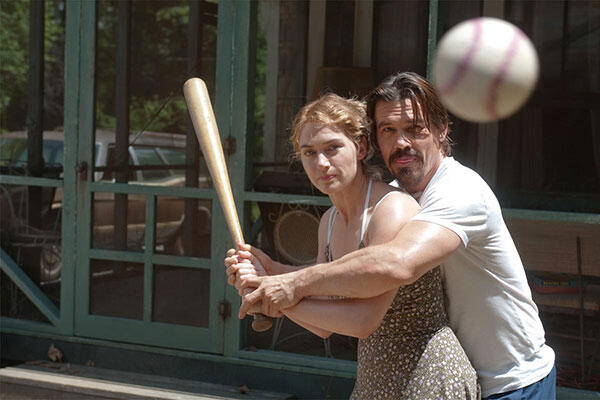
Labor Day
Grade: B+ What would you do if a convicted murderer asked you to take him to your home? This is the situation Adele (Kate Winslet) and her son Henry (Gattlin Griffith) find themselves in when they meet prison escapee Frank (Josh Brolin) in the supermarket. As Frank stays with them over the Labor Day weekend, Adele and Henry’s lives are quickly turned upside-down … in more ways than one. Initial fears subside; loves is in the air, and by the end of the film, we as an audience are introduced to a new idea of family. Labor Day, based on the novel by Joyce Maynard, is a film that truly challenges how we see one another. While the audience initially views Adele as anxious and fearful, we are shown that she will face anything to stand up for her son. We see young Henry to not be a sullen teenage boy, but one that will strive hard to make his mother happy again. And then there is Frank. Frank, who looks as though he’d probably eat you, actually has a tender heart. He cooks, he cleans, and he teaches Henry baseball … who would have thought? Winslet gives a stunning performance as Adele. She portrays both Adele’s vulnerability and strength in such beautiful harmony. The soundtrack is also well used to create moments in the movie that are truly spine chilling. However, I feel the downside of the movie is that Frank was never made out to be as frightening as he could have been. I would have liked to be sitting in my seat wondering about this strange “loose-cannon” of a man. But, instead, he was a lot kinder than I expected. It was hard to know if this character ambiguity was the director’s intention or not. All in all, Labor Day is a beautifully executed film that is well worth a watch (accompanied with a bucket of popcorn, of course). Oh, and in regards to my initial question – if this film is anything to go by – you should give a would-be murderer a lift. According to this movie, you’ve probably found your soul mate.
-
Culture

Robocop
Grade: B When I heard that the 1987 B-grade action film Robocop was going to be rebooted, the last thing I expected was to be challenged intellectually – especially considering the premise of the film. Robocop is set in the near future where a debate is raging about what the role of intelligent robots should be in military and policing roles. In an attempt to sway the American public, the robot manufacturers, “Omnicorp,” turn a near-fatally injured police officer into a – well, you guessed it – Robocop. Despite the cheesy nature of the premise, director Jose Padilha expertly utilises the premise to introduce a decent number of interesting ideas. Themes found in bio-ethics and the possibilities of restorative medicine through technology took centre stage. However, ideas about war, justice and politics all managed to find their place. Though these ideas were only presented and never explored thoroughly, I was impressed they were included at all considering the past material and film genre. However, these science fiction themes could not entirely make up for some of the weaker aspects. Robocop boasts some impressive actors, such as Gary Oldman, Samuel. L Jackson and Michael Keaton. All of these industry legends were excellent, but it was Robocop himself played by Joel Kinnaman that really let the film down. His acting was so wooden and hackneyed that there was no perceivable difference between sections where he was a loving father, and those in which he had become an emotionless robot. Of course, it doesn’t help that every attempt that the script made at creating emotion was laughable. Fortunately, the action balanced out these painful moments with a range of interesting and varied takes on action set pieces – including an epic scene in which Robocop takes on a fleet of mechanised war machines in a building lobby. Essentially, Robocop boils down to sections of cheesy emotional scenes, interesting-but-shallow science fiction, and intense action. If you’re a fan of the latter two, then this film is certainly worth seeing.
-
Culture

Gremlins (1984)
Cult Film For many, Gremlins is but a distant memory; an 80s entertainment fog at the back of our minds, occasionally spurting out images of microwaves, Christmas trees and blood to our consciousness. You know you’ve seen it, but the details are hazy and the imagery vague. Let me refresh you. Gremlins was the best comedy/horror/Christmas film to come out of 1984, and penned by the king of dark children’s entertainment Christopher Columbus. Is that name familiar? It should be. Columbus is the writer/director responsible for such titles as Mrs Doubtfire, The Goonies, Home Alone, Fantastic Four, and the first two Harry Potter films. That’s right, Christopher Columbus IS your childhood. Spurred on by such classics as the Addams Family and Young Frankenstein, Gremlins seamlessly combined horror and comedy to create one hilarious bloodbath. The story goes that all-round American dad, Randall, purchases a mogwai from Chinatown as a Christmas present for his son, Billy. Mogwai’s are just about the cutest things you’ll ever see: they are essentially a rabbit mixed with a troll mixed with pure sunshine. But there are conditions: don’t get a mogwai wet and never, ever feed it after midnight. Can you guess what Billy does? Both of those things. The original mogwai, Gizmo, spawns hundreds of distorted and evil reptilian creatures that rampage the picture-perfect town. There was action, there was romance, and there was awesome-cool puppetry reminiscent of E.T. The comparisons to Spielberg don’t end there. Not only did Gremlins spawn a massive merchandising campaign, but it was criticised as being racist as well. The gremlins’ penchant for breakdancing, rap music, fried chicken and homicide was accused of reinforcing negative stereotypes of African Americans, who were understandably unhappy to be compared to reptilian anarchists. Racism is not unheard of in 80s children’s blockbusters (have you seen Raiders of the Lost Ark? OMG). But, nevertheless, Gremlins has to be taken with a grain of salt. Can’t be bothered with the whole film? Just look up “Billy Meets Gizmo” on YouTube and get your daily dose of cute.
-
Culture

The Railway Man
Grade: C+ The Railway Man is a film adaptation of Eric Lomax’s memoir about the time he was in the British Army in Singapore when it was invaded in 1942. His company surrendered as prisoners of war, only to be tortured and dehumanised on the Burma railway construction effort. I was prepared for what was to come, perhaps more than others, after having read a similar book that claimed one man died for every sleeper laid on over 200 miles of railway. The film gives an accurate depiction of war through scenes of beatings and prolonged water boarding squarely in centre-frame. At the theatre, there were moviegoers squirming in their seats. The film makes you confront your feelings about water-boarding incredibly effectively, and obviously wants you to think about modern usages. The film features big names like Nicole Kidman, Stellan Skarsgård and, of course, Colin “Aging Handsomely” Firth. I never thought I would say this about Firth, but his performance didn’t pull me in. I gazed at him in total awe in The King’s Speech; my heart broke with his in A Single Man; and he will always be the Mr Darcy of my imagination. But as Eric Lomax he was underwhelming, even at both the tragic and cathartic climaxes for his character. The real standout of the cast was Jeremy Irvine as the younger Lomax in the considerable amount of flashbacks, who is our main character in place of Firth. It was an A+ story, yes, but here’s why the film earns only a C+ rating. First, it was terribly paced, and more screen time developing Firth, as older Lomax, was needed for our empathy. Second, the cinematography and sound design was totally derivative, and under-capitalised on the opportunity to represent the post-traumatic stress “haunting” Lomax. And, finally, while I’m sure his wife (does she have a name?) is a nuanced human being in real life, the film fails the Bechdel test hopelessly as Nicole Kidman is given no role beyond being merely the Sexy-While-Anxious-And-Helpless Woman, and that bothered me.
-
Culture

Spaghetti and meatballs
No student food column would be complete without a mince meal. And, of course, no post about spaghetti and meatballs would be complete without as many meat-and-balls innuendos as possible either. So I am going to go ahead and say that I frequently crave meaty balls and I love to gobble them up at any opportunity I can get. Anyway, I used to be afraid of pasta. Pasta equals carbs, and carbs make you fat. Yet, somehow, I was always able to justify two pieces of cake. It wasn’t until recently when a flatful of young gentlemen started serving me up the most amazing pasta dishes did this fear dissipate. Whenever Mum was in a cooking rut, spaghetti bolognaise with premade sauce popped up on the menu. So I guess it never seemed like something special or worth taking the time to make. Somehow by turning the mince into tiny meatballs and making the sauce from scratch, this plain and boring staple was turned into something I am proud to serve up to my friends. Nigella and Jamie love using a couple of good sausages in their recipes. I also am a big fan of the sausage, as the fat content helps to bind the lean mince together and give everything a bit of a flavour boost. Scout your hood for a decent rosemary bush; a couple of sprigs make all the difference. They are hardy plants that survive the Dunedin winter no sweat, so try planting one in between the scatterings of last weekend’s empties. Ingredients (serves 5)- One packet of spaghetti Meatballs: - 400-500g lean beef mince - 3 plump sausages (I used lamb and rosemary) with the filling squeezed out - 4 cloves of garlic, chopped finely - A small handful of rosemary leaves, chopped finely - ½ cup bread crumbs - 1 large egg - Salt and pepper Tomato sauce: - 3 x 400g tins chopped tomatoes - 3 cloves of garlic, minced - 1 large onion, diced - ¼ cup red wine - 2 tablespoons balsamic vinegar - 1 tablespoon dried oregano - A small handful of rosemary leaves - ½ teaspoon (or more depending on tastes) dried chilli flakes - Salt and pepper to taste All with fresh Italian basil and parmesan cheese to serve. Method1. In a large bowl, use your hands to mix all of the meatball ingredients together. Once combined, cover and refrigerate for 20 minutes. 2. Sauté the onion and garlic for the sauce, in a bit of oil, in a medium-sized deep frying pan. Once translucent, add in the oregano and chilli flakes and continue to heat for another minute. Pour in the tomatoes and the balsamic vinegar. Bring to the boil, then reduce to a simmer and leave it so for around half an hour while you make the meatballs. Add the red wine a few minutes before you serve. 3. Heat a second frying pan up to a medium heat and splash some oil into it. 4. Take teaspoonful amounts of the mince mixture and roll it into small balls. Fry the balls in a small splash of oil in batches, placing them on a separate plate while the other batches cook. The smaller the meatball, the faster the cooking time. I found myself sprinkling additional chilli flakes and oregano into the pan while they cooked to give more flavour. 5. Once all the meatballs have been cooked, place them all in the sauce and stir so all the meatballs are covered. Add the wine and continue to simmer for a further 10 minutes while you cook your pasta. Season the sauce to taste. 6. Once the pasta is al dente, drain, serve and garnish with torn fresh basil leaves and a good grating of parmesan.
-
Culture
Plants vs. Zombies: Garden Warfare
Grade: A - Often it is not until we are presented with something radically new in tone that we realise how similar everything else feels. Over the last generation we had access to a vast library of games, but I wonder if one was to sit down and categorically analyse many of these games in terms of tone, gameplay, story and mechanics, how many different categories one would end up with? My guess would be not as many as we would like. However, this is no reason to give up hope, because there are always studios like Popcap to come to the rescue. Popcap Games, creators of Bejewelled, Peggle and Plants vs. Zombies, has made a very successful career off manipulating this very problem. Many of their games incorporate overused tropes, mechanics and ideas in fresh and innovative ways that remind gamers of their desire for innovation itself. Popcaps’s newest game Plants vs. Zombies: Garden Warfare is their best example of this, and certainly the biggest risk they have ever taken. As you may know, Popcap’s games thus far have fallen into the category of casual games with variations of puzzle, skill and tower defence genres. In many gamers’ eyes their games are respectable, but not beloved of the “hardcore gamer.” But with Garden Warfare they step valiantly into the hardcore arena by bringing their beloved tower defence series into the world of online multiplayer shooters. Garden Warfare is both a competitive and co-operative online third person shooter. I’m sure there are many of you that never expected to see this genre sitting behind a Plants vs. Zombies title, and I can’t blame anyone for being sceptical of how successful this experience could be. But trust me, it’s fucking awesome. The primary competitive mode is your classic team death match, titled “team vanquish.” This game mode sees 12 Plants facing off against 12 Zombies; the first to 50 vanquishes wins. Each team has four classes (the Plants, for example, have the Peashooter, the Sunflower, the Chomper and the Cactus). Each class offers a diversely different approach to combat. The Peashooter, for example, is your classic offensive shooter, while the Cactus acts as your “sniper” of sorts. Though the Zombies’ classes are variations of the Plants’, their approach to the classes is often very different. For example, the equivalent of the Plants’ Cactus sniper on the Zombies side is the All Star - a football-themed zombie who fires a barrage of far reaching, weaker projectiles instead of the Cactus’ slow firing, but powerful, spines. Each class feels completely different to play and has a set of tactics that make it particularly effective. With such a diverse set of ways to play, Popcap has done an exceptional job of making sure that no class is overpowered. The game also includes a game-type similar to Dominion called Graves and Gardens. This mode sees either the Plants or the Zombies working their way through a series of objectives that they must capture, while the other team must try and defend these objectives long enough to run out the clock. The best part of this mode is that if the offensive team manages to capture enough objectives, the round finishes with a final event – such as the Zombies trying to deactivate a “cuke,” a Plant-variation of a nuke made out of a giant cucumber. The final game-type is the co-operative mode in which four Plants must protect their garden against waves of Zombies, using their offensive abilities as well as potted plants to defend. These pot plants are part of the most addictive part of Garden Warfare. For every round you play in any game mode, you are rewarded with coins for skill and participation. These coins can be spent on blind packs, which include the aforementioned pot plants, costumes, upgrades and whole new variations of classes. The costumes are a gleeful mix of adorable and hilarious. Often the sting of being killed is dampened by the hilarious image of the Plant or Zombie that killed you adorned with ridiculous moustaches and hats. The upgrades and class variations add an even deeper level of difficulty to the competitive battles. However, for players unwilling to play with hard-core gamers armed to the teeth, there are game type variations that don’t allow upgrades. The biggest criticism that can be made against Garden Warfare is the limited number of game modes and maps. However, the game does have a price tag of half what any other competitive shooter on the market has and the awesome mechanics and huge variety of unlockables means that every match is a joy despite the repetition of maps and ways to play. In the end, the smile this game puts on your face is worth more than all of the Call of Duty series combined.
-
Culture

New this week
It’s issue three now, and though we’ve been extremely lucky in terms of sourcing content, submissions are always welcome. So if you’re a musician wanting your music to be heard or a band wanting a little bit of press, please don’t be shy. Even if you just want to talk about music, hanging out submissions are also welcome. Just contact music@critic.co.nz. Anyway, here are your singles of the week! The Horros - I See You Hypnotic seven minute offering, sprawling and atmospheric. Music as if filtered through the stained glass window of a cathedral. Post-punk, gothic. Fear of Men - Luna Beautiful, light vocals, looming over lush guitars and driving bass. A moving, melodic track, which swoons soft. Haim - If I Could Change Your Mind Infectious pop track from debut album Days Are Gone. A song that is nostalgic for nineties girl groups and soaring eighties production. Shamir - If It Wasn't True Funky, groove heavy, disco/house. Highlighted by smooth, androgynous vocals. Like a lo-fi Jackson Five. Cloud Nothings - Psychic Trauma Second single from long-awaited third album. Garage-rock-pop-punk, which starts off steady then picks up its pace to great effect.
-
Culture

Download of the week: Arthur Ahbez - Gold (NZ)
Psychedelic folk from Auckland based, acoustic guitar virtuoso Arthur Ahbez. From haunting ballads to vast, acid tempered instrumentals; Gold is available for free download, for a limited time at arthurahbez.bandcamp.com
-
Culture
Artist Profile: Kane Strang
With his third album currently in the making, local songwriting genius Kane Strang talks to Adrian Ng, sharing insights into his songwriting process, his experience recording overseas, and of course giving us an update on his highly anticipated record. You’re always carrying a notebook around; what kind of things do you find yourself writing down? I never write down lyrics in these anymore. I’m too scared that I will lose it and someone will find a bunch of sentences that weren’t ready to be read. Lately I use notebooks more for things to do with recording, like sound ideas and structures and that sort of thing. What was it that attracted you to music? Were there any moments that made you think, “I really want to do this?” I have felt the need to create music for a pretty long time now. My memory is terrible though, so I can’t think of any particular moments like that. I was a sporty and adventurous kid but I hit my head too many times and the doctors said I shouldn’t do that sort of thing so much. If it’s not the fact that my family is kind of musical then that is probably the reason I eventually sought after a more creative life. Songs are immortal and I have always liked the idea of creating something that will last, too. When listening to your music I notice there are a few themes you seem to return to. The femme fatale for example is quite prominent. What draws you to these subjects? Is it intentional? I am a very habitual person so I am never going to be the song writer that has ten songs on an album about ten different things. I guess I return to these themes because I don’t feel I’ve completely covered them yet, like I still have something to say about them before I can move on to something else. I also enjoy the challenge of writing pop songs that are quite dark lyrically. You recorded your album A Pebble and a Paper Crane overseas last year. What was that experience like? I heard an abandoned bomb shelter was involved? Recording overseas was both the best and worst experience I have had while making music. Occasionally I would just find the gear I had been looking for and then have to move on to another town. Or maybe I would lose a few tracks when an old laptop failed me. Still, the new environments were really inspiring and it did all finally start coming together in that bomb shelter, of all places. My German friends used it as a practice space and were nice enough to give me the keys for a few nights. It was horrifying. The lights were on a timer so every few minutes the hallways would go black and all you could hear was the death metal band somewhere off in the distance. You’ve already started recording your new album; have you been playing around with names? I do have a few in mind. “Sun Sounds” is my favourite at the moment. “Beetroot” is a close second but I’m thinking that’s been done already. “Black Mermaid” is a song off the album and I also considered using that. It will change one hundred times between now and release day. Are you approaching this album any differently to the previous two? I am mainly trying to not be so much of a control freak and to ask other people to be a part of the process. I’ve also been trying to take my time a lot more and not let my impatience get the better of me again. All of my recording software is in German which is different, too. I can hardly read a word. Aside from that I have slightly better gear this time and it’s mostly been easier to get the sound I like. I heard you also have quite a presence in another reality. Can you tell me how I would go about joining your renowned clan in the world of Runescape? If this was 2009 you could have found it on the forums but those days are long gone. I try not to play when I’m making a new record. It’s sad but I’m probably better at talking about that game than I am at talking about music.
-
Culture

Real Estate - Atlas
Grade: A- Atlas is Real Estate’s first record in three years, the follow up to 2011’s Days. Having enjoyed the last album’s dreamy, guitar-noodley, nostalgia-inducing vibes, I was looking forward to hearing the new one. But whereas Days was lazing-on-a-sunny-afternoon, Atlas is late-night-Sunday-after-a-long-week. It seems that somehow Real Estate have managed to become even more chilled out. So much so that on my first listen, expecting the hooks and poppiness of 2011 singles “It’s Real” and “Easy,” I was left underwhelmed, sketching comments like “Martin Courtney’s voice gets annoying” and “like listening to Kurt Vile’s most boring song for 30 minutes.” It wasn’t until I put the record on alone in my room approaching midnight that I began to appreciate the level of relaxation these guys are operating at. The opening track, “Had to Hear” is the longest on the album, at close to five minutes. It sets the tone musically and lyrically, with crystal clear guitars that bounce along and weave together seamlessly under Courtney’s unmistakable drawl, as he yearns to be somewhere, or be with someone, else. The two incredibly catchy singles, “Talking Backwards” and “Crime” are the most upbeat tracks and are perfectly spaced to liven things up whenever Atlas is at risk of becoming dull. As with Days, they’ve included an instrumental tune, possibly just to remind the listener what a talented guitarist Martin Courtney is. “April’s Song” wanders whimsically, Courtney’s rhythmic picking patterns serving as a base for Mondanile’s simple and beautiful warbling lead lines. Real Estate have completely eradicated any form of grit on this LP, the production velvety-smooth, with choruses that wash over you, waves of sound that rise and fall but never break. With the gentleness of Belle and Sebastian and the deliberate, measured pace and delivery of Kurt Vile, Atlas is a step in a soothing direction. So if you, like Courtney, are tossing and turning all night from crippling anxiety, put this record on and get lost in some blissful guitar-pop.
-
Culture

Angel Olsen - Burn Your Fire For No Witness
Grade: A- Being a folk singer-songwriter in 2014 is not an easy path to tread. When you’re working within a genre where nothing really extravagant is left to bring to the table, it’s difficult to set yourself apart from the rest. Burn Your Fire For No Witness, however, manages to do just that. Not because it desperately tries to break the rules or has an underlying message that is eye-opening or unique; but because, luckily for us, Angel Olsen exhibits a real talent for songwriting. Conveying a conviction that comes across as genuine and innate, so much so, she retains an uncanny sense of freshness. Lyrically, the album deals mainly with the universal theme of lonesomeness, however, rarely does her music come off as just a bundle of overused cliches. “Are you lonely too? Hi -five” she croons, in the track “Hi-Five,” which feels like a darkly optimistic spin on the classic Hanks Williams track “I’m So Lonesome I Could Cry.” “You may not be around/I am the only one now” Olsen sings in “Unfucktheworld,” again another conflicting tribute to being on your own. Other highlights include “White Fire,” a six minute epic in which Olsen manages to sustain her vocal intensity through a myraid of ups and downs. “Forgiven/Forgotten” is a wild card, with crackling, overdriven guitars and propulsive drumming. Produced and engineered by the prolific and talented John Congleton (St. Vincent, The Walkmen), the record is held together aesthetically by a tepid, sun-dried, antiquity. Possesing a mild, blown out quality that highlights the beauty of tape compression while maintaining a subtle glow during the album’s more tranquil, placid moments. Olsen’s voice ranges from furious to haunting, coming across as somehow distant yet intimate. Looming almost like the ghost of a loved one, traversing stealthily. It is wispy but rarely fails in intensity or allure. Though the record can trail off a little at points, Burn Your Fire For No Witness suceeds at being a captivating package. Brimming with blood and bold as it is brittle.
-
Culture
Interview: Rupert Smiles
I have kind of been in this polygamous relationship with art and fashion for a few years now, so naturally I try to merge the two whenever I can. This week, I’ve had a really new and major obsession with handbags … as art. I simply can’t get past that moment when Kanye gave Kim a Hermes Birkin with a privately commissioned George Condo on the front; it gives me heart palpitations. I am one of those annoying people that insistently believe a bag is an essential item for any given occasion. I have numerous bags for the daytime, a bag or two for overnight, a bag for my make-up, a bag for my laptop, a bag for Uni, a bag to take to twenty-firsts, a bag for the rubbish in my car, and a few others that float around my apartment. I have so many bags I need a break. But like a good painting, a great burger, a perfect sculpture (or significant other?), a bag that makes you really happy is really hard to find. Yet, I have found one. Will Hyndman, University of Otago graduate, local designer and budding bagman – who you also might have seen selling stuff at Slick Willy’s – has come up with a classic duffel bag that can be used in every situation. Will has spent the past few months designing and hand sewing bags by himself in his basement. Inspired by vintage mountaineering, vintage skiing, exclusivity and the obvious travesty that is Country Road luggage, Will has created a range of bags (small, medium and large at this point) that are basic, black, leather, monogrammed, and totally baller. I stopped in for a quick juice and chat the other day with Will to get some moody and inspiring insights on his brand and bags. Here’s what he had to say: Your bags are beautiful! How would you describe them? Well, it’s really just a classic duffel bag that combines adventure with style, using waterproof canvas and New Zealand leather, with heavy hardware detailing. Ideal for guys at the gym and gals on the go! Where did the name “Rupert Smiles” come from? It’s a bit cute! Rupert is my middle name. And Smiles is my first love’s name – although she never really took the time to love me. Hopefully she likes the bags! How bittersweet. How do you make them; are they all hand made? HAND MADE! Yes. Blood, sweat and tears. At home, in the basement, no windows, concrete floor – cold feet. On a sewing machine. It all happens. That sounds … really raw. Why monogrammed? Yeah, the monograms are really just a point of difference. I guess it just makes them exclusive to each person. And it’s just real baller. I love having my shit monogrammed. It makes me feel important. In what instance has your Rupert Smiles bag been particularly great? It was real perfect to take to R&A because nothing important got wet … At the moment Will is reworking some vintage wetsuits, brought all the way from Cali, into some limited edition Rupert Smiles duffels – in colour! Breaking out. You can order and buy your Rupert Smiles bags online at www.slickwillys.co.nz or in store. And be sure to follow Rupert Smiles on Instagram @Williamrupertsmiles for updates and funny hashtags.
-
Culture

Interview: Charlotte Blake
23-year-old Charlotte (Char) Blake is a young family woman and student who will be shaving her hair off at the University of Otago’s Pacific Island Research Student Support Unit on March 18. Jessica Thompson Carr caught up with her for a chat. What was your inspiration for taking part in Shave for a Cure? My aunty lost her battle against lymphoblastic lymphoma at the same age as me – she was 23. The fact that she fought it for so long at such a young age really hit me and I wanted to do something about it. For a long time I’ve been thinking about doing something meaningful to raise awareness and honour her memory. What triggered these feelings? I suppose I’ve been building myself up to this decision. The fact that I had a daughter in 2012 certainly affected me and motivated me to do this. I never thought I’d be able to take such a step but I have a wee girl now so that just gave me a different perspective and made things seem a lot clearer. I was able to put myself in my grandparents’ shoes and I can’t imagine what they went through, having to lose a child, it’s something that really resonates with me as a parent. It was quite sobering. I guess the older I’ve gotten the more I’ve understood how tragic it really was. And I have two sisters as well so I just couldn’t imagine what my dad went through either, losing a sibling, especially at such a young age. It was quite a traumatic thing for my family. Do you have any clear memories of your aunty? Well ... I feel really sad about it because I was only three when my aunty passed away and I can’t really remember her being alive. The only memory that I have of her was when she was in her coffin; I asked if I could kiss her goodbye and that’s the only thing I really remember. I got to kiss her goodbye. I saw her in the coffin and recall exactly what she was wearing. I think the only reason I remember is because of the response I got from my family when I did that because I was only a little girl ... they looked at me funny and then they lifted me up and said something like “ah, that’s nice of you to say goodbye.” I didn’t understand death at that point. I just thought she was asleep. So it’s quite sad how I don’t remember her being alive but I do vividly remember her funeral. How much are you aiming to raise? I aimed to raise about $1000, which I thought was a bit ambitious, but two days ago [last Monday] I made my target which was great! How has your family reacted to this decision? My husband is pretty supportive. I think at the start he thought I was joking just ‘cause I’m a typical female who does my hair every day, you know, but when he saw I was taking it seriously he was so understanding. I remember two girls in my course did it two years ago and they were just letting people chop bits off which is what I’m gonna do too, but I just couldn’t do it then. I was horrified watching them lose their hair. But now I’m at this age with this family, I’ve developed a more grounded view of the bigger picture. Are you afraid? It’s quite strange to me. I know I don’t want to shave my hair off but I feel it would give me a better understanding of what my aunt went through because obviously she didn’t want to lose her hair either, she just had to. And I know it’s not the same because I don’t have cancer but I feel obligated to do this. There’s a picture that my grandfather sent to me of her in the hospital when she’d just lost all her hair and it’s a heart-breaking photo to look at because she’s just looking at herself in the mirror, seeing her own personal loss staring back at her. When I see that picture I’m confronted with the fact that I just can’t imagine going through such a trauma. ‘Cause at least I know for me it’ll grow back but for her it was permanent during her treatment. So now I know I have to do it to get some life experience out of it. Do you have a message for people who are dealing with cancer? The main reason I’m doing this is to encourage people to know and understand cancer and how it affects everyone – not just the patients but their families and friends. I think people are very desensitised nowadays. While it’s easy enough to shrug and say it’s a common illness, you can’t just push it away all the time. Just because we hear about cancer constantly doesn’t mean we can just brush it aside. It’s nice to bring it to people’s attention once in a while.


