More Culture from Issue 3
-
Sedition and the commercialisation of digital art
There’s a new kid on the block for serious art collectors and desktop background enthusiasts alike, and it’s frighteningly addictive. Sedition, which aims to “turn screens into art,” is fast becoming a leader in both the digital art movement and the concept of art editions in general. The idea is simple: buy and sell limited editions of digital art works, with the ability to view them on apps built for most devices – even including certain TVs. You also get a (digitally) signed certificate of authenticity for your edition number. The only caveat is that you must wait for all editions to sell out before you can list one for sale on the marketplace – speaking from experience, this can take a very long time. The aim is to encourage those who wouldn’t usually spend big money on art to dip their toes in a real art market. For those who only know the huge names, the likes of Damien Hirst and Yoko Ono are there, and despite their fame, artworks can’t be sold for more than roughly NZ$3,000. But why would you spend your precious money on what’s effectively just a video or JPEG? One defence is the same as why you’d buy a subscription to Spotify or Netflix – it makes consumption of these mediums really easy, all the while supporting the creators. Another is the arbitrary concept of “ownership” that the certificate enforces, although the relationship between collectors and their art is rather a deep one to get into here. Besides, it’s cheap! This is what lends it the addictive status – when new works are released, often for somewhere around $20 or so, it’s very often tempting to buy an edition. One of the biggest issues I can think of with the service is that it blurs the line between fine art and screensavers. Although you’d get one hell of an artwork for $3,000 in a traditional gallery setting, it’s a lot of money to part ways with for the latter. However, Samsung is reported to be coming to the rescue here – announcing a couple of years ago that it is developing purpose-built digital artwork displays. It remains to be seen whether these are just glorified digital photo frames or something much more. Thus far, I’ve only bought one work that has sold out and gone up for sale on the marketplace. A Mirror Light, El Passo by Noritoshi Hirakawa was part of a set of five works I purchased in late October last year for about NZ$50 total. That one piece from the collection shot to NZ$60 only a week after it went up for auction, two months after I had bought it. Although the dollar amounts are small, such a rapid percentage gain is almost unheard of in the art world. Overall, if you are ready to buy art then you would have started tackling questions of ownership, authenticity and arbitrary value already. For that reason, I feel like Sedition is on to something and I highly recommend it. It really is just an accessible replication of a more tangible art world, all the while opening up new Pandora’s boxes to do with artworks that never really exist.
-
Top five art blogs
Over The Netoverthenet.blogspot.co.nz This is a daily art blog written by New Zealand’s most well known contemporary art collectors. This is always my go-to – Jim and Mary Barr certainly have their fingers on the pulse. Leg of Lamblamblegs.wordpress.com Another New Zealand art blog, but quickly becoming more of a combined Australian/New Zealand one, it perfectly compliments Over The Net and they often refer to each other. EyeContacteyecontactsite.com Run by New Zealand artist John Hurrell, this site is almost a one-stop shop for New Zealand (and increasingly overseas) art reviews. A large number of the country’s exhibitions are on it – although Dunedin could use with some more coverage. Contemporary Art Dailycontemporaryartdaily.com With an international scope, this site will force you to cast your net wide into the art world. It features stunning images and well-crafted reviews, and truly shows you the best of the world. Artforum’s Scene and Herdartforum.com/diary Artforum is a highly significant international art magazine – and this is their blog. Very much a “behind the scenes” art blog, it features plenty of intriguing insights and exciting snippets.
-
Life of Pi
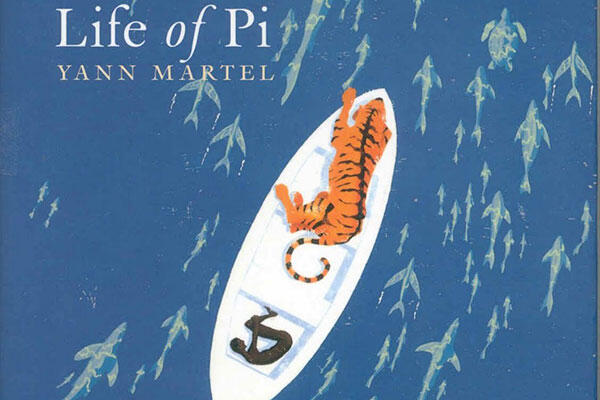
Yann Martel’s Life of Pi is the 2002 winner of the Man Booker Prize, among other awards. Martel’s output has been relatively scarce, with Life of Pi standing as his most popular work. His novel was allegedly inspired when he read a review of Moacyr Scliar’s novella Max and the Cats, which tells the story of a refugee crossing the Atlantic Ocean with a jaguar in his boat. The two authors had a brief conflict over ideas of plagiarism and intellectual property but eventually resolved it without any legal action. Life of Pi’s narrative revolves around Piscine Patel – known throughout as Pi – and his struggles when he is stranded on the Pacific Ocean. The novel uses the framing device of an author talking to Pi, who is now middle-aged, about his childhood experiences. The first section of the novel is dedicated to Pi’s childhood in India, detailing his attempts to find meaning, largely seen through his exploration of religion. There are a number of recurring characters in this section, however, they are rarely characterised extensively but rather exist in order to further Pi’s narrative in this coming-of-age story. The bulk of the novel is set on a lifeboat, depicting Pi’s attempts to survive the shipwreck that kills his family, and the boat’s other passengers. Despite initial misgivings, he decides to help Richard Parker – the Bengal tiger that has made its way to the boat – survive, fearful of being completely alone at sea. Despite its restricted setting, Martel’s book is filled with narrative incident, as Pi struggles to survive and assert dominance over Richard Parker. The narrative is fantastical in premise, but Martel keeps it largely grounded through his detail-heavy prose. Aside from a fictitious author’s note establishing the framing device, Life of Pi opens with Pi’s lengthy description of sloths, the subject of his zoology thesis. His rigorous description, conveying both curiosity and intelligence, sets the tone of Pi’s style of narration, which consistently dwells at length on factual details even as it considers the limits of human knowledge. The first section of the novel considers religion and faith, with Pi coming to the conclusion that “atheists are my brothers and sisters of a different faith, and every word they speak speaks of faith. Like me, they go as far as the legs of reason will carry them – and then they jump.” Martel’s dissection of different faiths occasionally seems trite, but it is refreshing to see a novel that embraces rational and spiritual thinking in equal amounts. From a narrative perspective, Pi’s journey with Richard Parker is both impressive and disappointing. The months they spend at sea are detailed compellingly, especially for a concept that sounds so inherently limited, but the novel loses a lot of its warmth and humour as its depiction of a young man growing up is overtaken by the survival narrative. Until the shipwreck, the novel is structured as a series of interlocking anecdotes that make up Pi’s narrative when combined. The humour is often dry or understated, as when Pi tells the story of Richard Parker’s name, but it adds much-needed texture to the early sections of the novel. Life of Pi eventually reveals itself not only as a consideration of religion and faith, but also imagination and creativity. It connects these concepts in a way that makes the reader consider their interaction with the novel, and entertainment generally. In this way, it exists not just as a fully satisfying narrative in its own right, but also as a philosophical discussion about why we need art in our lives.
-
Labor Day
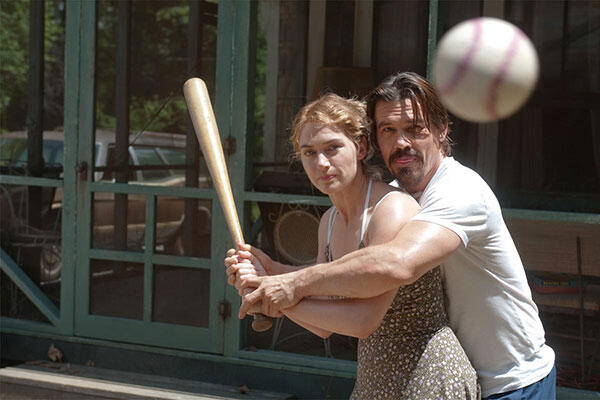
Grade: B+ What would you do if a convicted murderer asked you to take him to your home? This is the situation Adele (Kate Winslet) and her son Henry (Gattlin Griffith) find themselves in when they meet prison escapee Frank (Josh Brolin) in the supermarket. As Frank stays with them over the Labor Day weekend, Adele and Henry’s lives are quickly turned upside-down … in more ways than one. Initial fears subside; loves is in the air, and by the end of the film, we as an audience are introduced to a new idea of family. Labor Day, based on the novel by Joyce Maynard, is a film that truly challenges how we see one another. While the audience initially views Adele as anxious and fearful, we are shown that she will face anything to stand up for her son. We see young Henry to not be a sullen teenage boy, but one that will strive hard to make his mother happy again. And then there is Frank. Frank, who looks as though he’d probably eat you, actually has a tender heart. He cooks, he cleans, and he teaches Henry baseball … who would have thought? Winslet gives a stunning performance as Adele. She portrays both Adele’s vulnerability and strength in such beautiful harmony. The soundtrack is also well used to create moments in the movie that are truly spine chilling. However, I feel the downside of the movie is that Frank was never made out to be as frightening as he could have been. I would have liked to be sitting in my seat wondering about this strange “loose-cannon” of a man. But, instead, he was a lot kinder than I expected. It was hard to know if this character ambiguity was the director’s intention or not. All in all, Labor Day is a beautifully executed film that is well worth a watch (accompanied with a bucket of popcorn, of course). Oh, and in regards to my initial question – if this film is anything to go by – you should give a would-be murderer a lift. According to this movie, you’ve probably found your soul mate.
-
Robocop
Grade: B When I heard that the 1987 B-grade action film Robocop was going to be rebooted, the last thing I expected was to be challenged intellectually – especially considering the premise of the film. Robocop is set in the near future where a debate is raging about what the role of intelligent robots should be in military and policing roles. In an attempt to sway the American public, the robot manufacturers, “Omnicorp,” turn a near-fatally injured police officer into a – well, you guessed it – Robocop. Despite the cheesy nature of the premise, director Jose Padilha expertly utilises the premise to introduce a decent number of interesting ideas. Themes found in bio-ethics and the possibilities of restorative medicine through technology took centre stage. However, ideas about war, justice and politics all managed to find their place. Though these ideas were only presented and never explored thoroughly, I was impressed they were included at all considering the past material and film genre. However, these science fiction themes could not entirely make up for some of the weaker aspects. Robocop boasts some impressive actors, such as Gary Oldman, Samuel. L Jackson and Michael Keaton. All of these industry legends were excellent, but it was Robocop himself played by Joel Kinnaman that really let the film down. His acting was so wooden and hackneyed that there was no perceivable difference between sections where he was a loving father, and those in which he had become an emotionless robot. Of course, it doesn’t help that every attempt that the script made at creating emotion was laughable. Fortunately, the action balanced out these painful moments with a range of interesting and varied takes on action set pieces – including an epic scene in which Robocop takes on a fleet of mechanised war machines in a building lobby. Essentially, Robocop boils down to sections of cheesy emotional scenes, interesting-but-shallow science fiction, and intense action. If you’re a fan of the latter two, then this film is certainly worth seeing.
-
Gremlins (1984)
Cult Film For many, Gremlins is but a distant memory; an 80s entertainment fog at the back of our minds, occasionally spurting out images of microwaves, Christmas trees and blood to our consciousness. You know you’ve seen it, but the details are hazy and the imagery vague. Let me refresh you. Gremlins was the best comedy/horror/Christmas film to come out of 1984, and penned by the king of dark children’s entertainment Christopher Columbus. Is that name familiar? It should be. Columbus is the writer/director responsible for such titles as Mrs Doubtfire, The Goonies, Home Alone, Fantastic Four, and the first two Harry Potter films. That’s right, Christopher Columbus IS your childhood. Spurred on by such classics as the Addams Family and Young Frankenstein, Gremlins seamlessly combined horror and comedy to create one hilarious bloodbath. The story goes that all-round American dad, Randall, purchases a mogwai from Chinatown as a Christmas present for his son, Billy. Mogwai’s are just about the cutest things you’ll ever see: they are essentially a rabbit mixed with a troll mixed with pure sunshine. But there are conditions: don’t get a mogwai wet and never, ever feed it after midnight. Can you guess what Billy does? Both of those things. The original mogwai, Gizmo, spawns hundreds of distorted and evil reptilian creatures that rampage the picture-perfect town. There was action, there was romance, and there was awesome-cool puppetry reminiscent of E.T. The comparisons to Spielberg don’t end there. Not only did Gremlins spawn a massive merchandising campaign, but it was criticised as being racist as well. The gremlins’ penchant for breakdancing, rap music, fried chicken and homicide was accused of reinforcing negative stereotypes of African Americans, who were understandably unhappy to be compared to reptilian anarchists. Racism is not unheard of in 80s children’s blockbusters (have you seen Raiders of the Lost Ark? OMG). But, nevertheless, Gremlins has to be taken with a grain of salt. Can’t be bothered with the whole film? Just look up “Billy Meets Gizmo” on YouTube and get your daily dose of cute.
-
The Railway Man
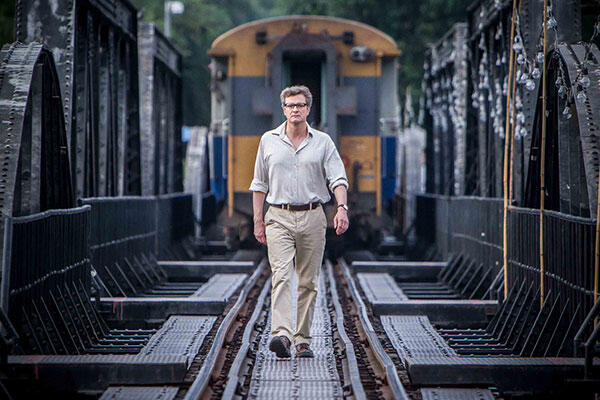
Grade: C+ The Railway Man is a film adaptation of Eric Lomax’s memoir about the time he was in the British Army in Singapore when it was invaded in 1942. His company surrendered as prisoners of war, only to be tortured and dehumanised on the Burma railway construction effort. I was prepared for what was to come, perhaps more than others, after having read a similar book that claimed one man died for every sleeper laid on over 200 miles of railway. The film gives an accurate depiction of war through scenes of beatings and prolonged water boarding squarely in centre-frame. At the theatre, there were moviegoers squirming in their seats. The film makes you confront your feelings about water-boarding incredibly effectively, and obviously wants you to think about modern usages. The film features big names like Nicole Kidman, Stellan Skarsgård and, of course, Colin “Aging Handsomely” Firth. I never thought I would say this about Firth, but his performance didn’t pull me in. I gazed at him in total awe in The King’s Speech; my heart broke with his in A Single Man; and he will always be the Mr Darcy of my imagination. But as Eric Lomax he was underwhelming, even at both the tragic and cathartic climaxes for his character. The real standout of the cast was Jeremy Irvine as the younger Lomax in the considerable amount of flashbacks, who is our main character in place of Firth. It was an A+ story, yes, but here’s why the film earns only a C+ rating. First, it was terribly paced, and more screen time developing Firth, as older Lomax, was needed for our empathy. Second, the cinematography and sound design was totally derivative, and under-capitalised on the opportunity to represent the post-traumatic stress “haunting” Lomax. And, finally, while I’m sure his wife (does she have a name?) is a nuanced human being in real life, the film fails the Bechdel test hopelessly as Nicole Kidman is given no role beyond being merely the Sexy-While-Anxious-And-Helpless Woman, and that bothered me.
-
Spaghetti and meatballs
No student food column would be complete without a mince meal. And, of course, no post about spaghetti and meatballs would be complete without as many meat-and-balls innuendos as possible either. So I am going to go ahead and say that I frequently crave meaty balls and I love to gobble them up at any opportunity I can get. Anyway, I used to be afraid of pasta. Pasta equals carbs, and carbs make you fat. Yet, somehow, I was always able to justify two pieces of cake. It wasn’t until recently when a flatful of young gentlemen started serving me up the most amazing pasta dishes did this fear dissipate. Whenever Mum was in a cooking rut, spaghetti bolognaise with premade sauce popped up on the menu. So I guess it never seemed like something special or worth taking the time to make. Somehow by turning the mince into tiny meatballs and making the sauce from scratch, this plain and boring staple was turned into something I am proud to serve up to my friends. Nigella and Jamie love using a couple of good sausages in their recipes. I also am a big fan of the sausage, as the fat content helps to bind the lean mince together and give everything a bit of a flavour boost. Scout your hood for a decent rosemary bush; a couple of sprigs make all the difference. They are hardy plants that survive the Dunedin winter no sweat, so try planting one in between the scatterings of last weekend’s empties. Ingredients (serves 5)- One packet of spaghetti Meatballs: - 400-500g lean beef mince - 3 plump sausages (I used lamb and rosemary) with the filling squeezed out - 4 cloves of garlic, chopped finely - A small handful of rosemary leaves, chopped finely - ½ cup bread crumbs - 1 large egg - Salt and pepper Tomato sauce: - 3 x 400g tins chopped tomatoes - 3 cloves of garlic, minced - 1 large onion, diced - ¼ cup red wine - 2 tablespoons balsamic vinegar - 1 tablespoon dried oregano - A small handful of rosemary leaves - ½ teaspoon (or more depending on tastes) dried chilli flakes - Salt and pepper to taste All with fresh Italian basil and parmesan cheese to serve. Method1. In a large bowl, use your hands to mix all of the meatball ingredients together. Once combined, cover and refrigerate for 20 minutes. 2. Sauté the onion and garlic for the sauce, in a bit of oil, in a medium-sized deep frying pan. Once translucent, add in the oregano and chilli flakes and continue to heat for another minute. Pour in the tomatoes and the balsamic vinegar. Bring to the boil, then reduce to a simmer and leave it so for around half an hour while you make the meatballs. Add the red wine a few minutes before you serve. 3. Heat a second frying pan up to a medium heat and splash some oil into it. 4. Take teaspoonful amounts of the mince mixture and roll it into small balls. Fry the balls in a small splash of oil in batches, placing them on a separate plate while the other batches cook. The smaller the meatball, the faster the cooking time. I found myself sprinkling additional chilli flakes and oregano into the pan while they cooked to give more flavour. 5. Once all the meatballs have been cooked, place them all in the sauce and stir so all the meatballs are covered. Add the wine and continue to simmer for a further 10 minutes while you cook your pasta. Season the sauce to taste. 6. Once the pasta is al dente, drain, serve and garnish with torn fresh basil leaves and a good grating of parmesan.
-
Plants vs. Zombies: Garden Warfare
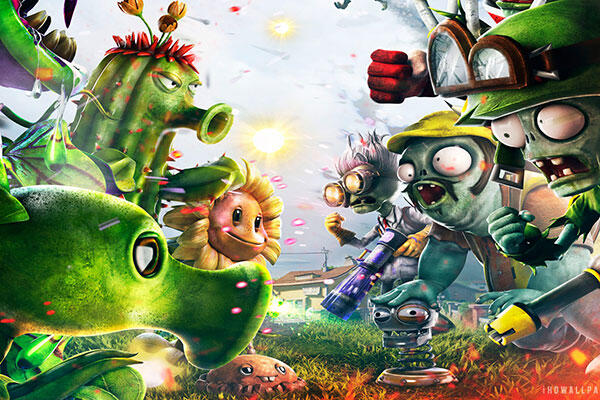
Grade: A - Often it is not until we are presented with something radically new in tone that we realise how similar everything else feels. Over the last generation we had access to a vast library of games, but I wonder if one was to sit down and categorically analyse many of these games in terms of tone, gameplay, story and mechanics, how many different categories one would end up with? My guess would be not as many as we would like. However, this is no reason to give up hope, because there are always studios like Popcap to come to the rescue. Popcap Games, creators of Bejewelled, Peggle and Plants vs. Zombies, has made a very successful career off manipulating this very problem. Many of their games incorporate overused tropes, mechanics and ideas in fresh and innovative ways that remind gamers of their desire for innovation itself. Popcaps’s newest game Plants vs. Zombies: Garden Warfare is their best example of this, and certainly the biggest risk they have ever taken. As you may know, Popcap’s games thus far have fallen into the category of casual games with variations of puzzle, skill and tower defence genres. In many gamers’ eyes their games are respectable, but not beloved of the “hardcore gamer.” But with Garden Warfare they step valiantly into the hardcore arena by bringing their beloved tower defence series into the world of online multiplayer shooters. Garden Warfare is both a competitive and co-operative online third person shooter. I’m sure there are many of you that never expected to see this genre sitting behind a Plants vs. Zombies title, and I can’t blame anyone for being sceptical of how successful this experience could be. But trust me, it’s fucking awesome. The primary competitive mode is your classic team death match, titled “team vanquish.” This game mode sees 12 Plants facing off against 12 Zombies; the first to 50 vanquishes wins. Each team has four classes (the Plants, for example, have the Peashooter, the Sunflower, the Chomper and the Cactus). Each class offers a diversely different approach to combat. The Peashooter, for example, is your classic offensive shooter, while the Cactus acts as your “sniper” of sorts. Though the Zombies’ classes are variations of the Plants’, their approach to the classes is often very different. For example, the equivalent of the Plants’ Cactus sniper on the Zombies side is the All Star - a football-themed zombie who fires a barrage of far reaching, weaker projectiles instead of the Cactus’ slow firing, but powerful, spines. Each class feels completely different to play and has a set of tactics that make it particularly effective. With such a diverse set of ways to play, Popcap has done an exceptional job of making sure that no class is overpowered. The game also includes a game-type similar to Dominion called Graves and Gardens. This mode sees either the Plants or the Zombies working their way through a series of objectives that they must capture, while the other team must try and defend these objectives long enough to run out the clock. The best part of this mode is that if the offensive team manages to capture enough objectives, the round finishes with a final event – such as the Zombies trying to deactivate a “cuke,” a Plant-variation of a nuke made out of a giant cucumber. The final game-type is the co-operative mode in which four Plants must protect their garden against waves of Zombies, using their offensive abilities as well as potted plants to defend. These pot plants are part of the most addictive part of Garden Warfare. For every round you play in any game mode, you are rewarded with coins for skill and participation. These coins can be spent on blind packs, which include the aforementioned pot plants, costumes, upgrades and whole new variations of classes. The costumes are a gleeful mix of adorable and hilarious. Often the sting of being killed is dampened by the hilarious image of the Plant or Zombie that killed you adorned with ridiculous moustaches and hats. The upgrades and class variations add an even deeper level of difficulty to the competitive battles. However, for players unwilling to play with hard-core gamers armed to the teeth, there are game type variations that don’t allow upgrades. The biggest criticism that can be made against Garden Warfare is the limited number of game modes and maps. However, the game does have a price tag of half what any other competitive shooter on the market has and the awesome mechanics and huge variety of unlockables means that every match is a joy despite the repetition of maps and ways to play. In the end, the smile this game puts on your face is worth more than all of the Call of Duty series combined.
-
New this week
It’s issue three now, and though we’ve been extremely lucky in terms of sourcing content, submissions are always welcome. So if you’re a musician wanting your music to be heard or a band wanting a little bit of press, please don’t be shy. Even if you just want to talk about music, hanging out submissions are also welcome. Just contact music@critic.co.nz. Anyway, here are your singles of the week! The Horros - I See You Hypnotic seven minute offering, sprawling and atmospheric. Music as if filtered through the stained glass window of a cathedral. Post-punk, gothic. Fear of Men - Luna Beautiful, light vocals, looming over lush guitars and driving bass. A moving, melodic track, which swoons soft. Haim - If I Could Change Your Mind Infectious pop track from debut album Days Are Gone. A song that is nostalgic for nineties girl groups and soaring eighties production. Shamir - If It Wasn't True Funky, groove heavy, disco/house. Highlighted by smooth, androgynous vocals. Like a lo-fi Jackson Five. Cloud Nothings - Psychic Trauma Second single from long-awaited third album. Garage-rock-pop-punk, which starts off steady then picks up its pace to great effect.
-
Artist Profile: Kane Strang
With his third album currently in the making, local songwriting genius Kane Strang talks to Adrian Ng, sharing insights into his songwriting process, his experience recording overseas, and of course giving us an update on his highly anticipated record. You’re always carrying a notebook around; what kind of things do you find yourself writing down? I never write down lyrics in these anymore. I’m too scared that I will lose it and someone will find a bunch of sentences that weren’t ready to be read. Lately I use notebooks more for things to do with recording, like sound ideas and structures and that sort of thing. What was it that attracted you to music? Were there any moments that made you think, “I really want to do this?” I have felt the need to create music for a pretty long time now. My memory is terrible though, so I can’t think of any particular moments like that. I was a sporty and adventurous kid but I hit my head too many times and the doctors said I shouldn’t do that sort of thing so much. If it’s not the fact that my family is kind of musical then that is probably the reason I eventually sought after a more creative life. Songs are immortal and I have always liked the idea of creating something that will last, too. When listening to your music I notice there are a few themes you seem to return to. The femme fatale for example is quite prominent. What draws you to these subjects? Is it intentional? I am a very habitual person so I am never going to be the song writer that has ten songs on an album about ten different things. I guess I return to these themes because I don’t feel I’ve completely covered them yet, like I still have something to say about them before I can move on to something else. I also enjoy the challenge of writing pop songs that are quite dark lyrically. You recorded your album A Pebble and a Paper Crane overseas last year. What was that experience like? I heard an abandoned bomb shelter was involved? Recording overseas was both the best and worst experience I have had while making music. Occasionally I would just find the gear I had been looking for and then have to move on to another town. Or maybe I would lose a few tracks when an old laptop failed me. Still, the new environments were really inspiring and it did all finally start coming together in that bomb shelter, of all places. My German friends used it as a practice space and were nice enough to give me the keys for a few nights. It was horrifying. The lights were on a timer so every few minutes the hallways would go black and all you could hear was the death metal band somewhere off in the distance. You’ve already started recording your new album; have you been playing around with names? I do have a few in mind. “Sun Sounds” is my favourite at the moment. “Beetroot” is a close second but I’m thinking that’s been done already. “Black Mermaid” is a song off the album and I also considered using that. It will change one hundred times between now and release day. Are you approaching this album any differently to the previous two? I am mainly trying to not be so much of a control freak and to ask other people to be a part of the process. I’ve also been trying to take my time a lot more and not let my impatience get the better of me again. All of my recording software is in German which is different, too. I can hardly read a word. Aside from that I have slightly better gear this time and it’s mostly been easier to get the sound I like. I heard you also have quite a presence in another reality. Can you tell me how I would go about joining your renowned clan in the world of Runescape? If this was 2009 you could have found it on the forums but those days are long gone. I try not to play when I’m making a new record. It’s sad but I’m probably better at talking about that game than I am at talking about music.
-
Real Estate - Atlas
Grade: A- Atlas is Real Estate’s first record in three years, the follow up to 2011’s Days. Having enjoyed the last album’s dreamy, guitar-noodley, nostalgia-inducing vibes, I was looking forward to hearing the new one. But whereas Days was lazing-on-a-sunny-afternoon, Atlas is late-night-Sunday-after-a-long-week. It seems that somehow Real Estate have managed to become even more chilled out. So much so that on my first listen, expecting the hooks and poppiness of 2011 singles “It’s Real” and “Easy,” I was left underwhelmed, sketching comments like “Martin Courtney’s voice gets annoying” and “like listening to Kurt Vile’s most boring song for 30 minutes.” It wasn’t until I put the record on alone in my room approaching midnight that I began to appreciate the level of relaxation these guys are operating at. The opening track, “Had to Hear” is the longest on the album, at close to five minutes. It sets the tone musically and lyrically, with crystal clear guitars that bounce along and weave together seamlessly under Courtney’s unmistakable drawl, as he yearns to be somewhere, or be with someone, else. The two incredibly catchy singles, “Talking Backwards” and “Crime” are the most upbeat tracks and are perfectly spaced to liven things up whenever Atlas is at risk of becoming dull. As with Days, they’ve included an instrumental tune, possibly just to remind the listener what a talented guitarist Martin Courtney is. “April’s Song” wanders whimsically, Courtney’s rhythmic picking patterns serving as a base for Mondanile’s simple and beautiful warbling lead lines. Real Estate have completely eradicated any form of grit on this LP, the production velvety-smooth, with choruses that wash over you, waves of sound that rise and fall but never break. With the gentleness of Belle and Sebastian and the deliberate, measured pace and delivery of Kurt Vile, Atlas is a step in a soothing direction. So if you, like Courtney, are tossing and turning all night from crippling anxiety, put this record on and get lost in some blissful guitar-pop.
-
Angel Olsen - Burn Your Fire For No Witness
Grade: A- Being a folk singer-songwriter in 2014 is not an easy path to tread. When you’re working within a genre where nothing really extravagant is left to bring to the table, it’s difficult to set yourself apart from the rest. Burn Your Fire For No Witness, however, manages to do just that. Not because it desperately tries to break the rules or has an underlying message that is eye-opening or unique; but because, luckily for us, Angel Olsen exhibits a real talent for songwriting. Conveying a conviction that comes across as genuine and innate, so much so, she retains an uncanny sense of freshness. Lyrically, the album deals mainly with the universal theme of lonesomeness, however, rarely does her music come off as just a bundle of overused cliches. “Are you lonely too? Hi -five” she croons, in the track “Hi-Five,” which feels like a darkly optimistic spin on the classic Hanks Williams track “I’m So Lonesome I Could Cry.” “You may not be around/I am the only one now” Olsen sings in “Unfucktheworld,” again another conflicting tribute to being on your own. Other highlights include “White Fire,” a six minute epic in which Olsen manages to sustain her vocal intensity through a myraid of ups and downs. “Forgiven/Forgotten” is a wild card, with crackling, overdriven guitars and propulsive drumming. Produced and engineered by the prolific and talented John Congleton (St. Vincent, The Walkmen), the record is held together aesthetically by a tepid, sun-dried, antiquity. Possesing a mild, blown out quality that highlights the beauty of tape compression while maintaining a subtle glow during the album’s more tranquil, placid moments. Olsen’s voice ranges from furious to haunting, coming across as somehow distant yet intimate. Looming almost like the ghost of a loved one, traversing stealthily. It is wispy but rarely fails in intensity or allure. Though the record can trail off a little at points, Burn Your Fire For No Witness suceeds at being a captivating package. Brimming with blood and bold as it is brittle.
-
Interview: Rupert Smiles
I have kind of been in this polygamous relationship with art and fashion for a few years now, so naturally I try to merge the two whenever I can. This week, I’ve had a really new and major obsession with handbags … as art. I simply can’t get past that moment when Kanye gave Kim a Hermes Birkin with a privately commissioned George Condo on the front; it gives me heart palpitations. I am one of those annoying people that insistently believe a bag is an essential item for any given occasion. I have numerous bags for the daytime, a bag or two for overnight, a bag for my make-up, a bag for my laptop, a bag for Uni, a bag to take to twenty-firsts, a bag for the rubbish in my car, and a few others that float around my apartment. I have so many bags I need a break. But like a good painting, a great burger, a perfect sculpture (or significant other?), a bag that makes you really happy is really hard to find. Yet, I have found one. Will Hyndman, University of Otago graduate, local designer and budding bagman – who you also might have seen selling stuff at Slick Willy’s – has come up with a classic duffel bag that can be used in every situation. Will has spent the past few months designing and hand sewing bags by himself in his basement. Inspired by vintage mountaineering, vintage skiing, exclusivity and the obvious travesty that is Country Road luggage, Will has created a range of bags (small, medium and large at this point) that are basic, black, leather, monogrammed, and totally baller. I stopped in for a quick juice and chat the other day with Will to get some moody and inspiring insights on his brand and bags. Here’s what he had to say: Your bags are beautiful! How would you describe them? Well, it’s really just a classic duffel bag that combines adventure with style, using waterproof canvas and New Zealand leather, with heavy hardware detailing. Ideal for guys at the gym and gals on the go! Where did the name “Rupert Smiles” come from? It’s a bit cute! Rupert is my middle name. And Smiles is my first love’s name – although she never really took the time to love me. Hopefully she likes the bags! How bittersweet. How do you make them; are they all hand made? HAND MADE! Yes. Blood, sweat and tears. At home, in the basement, no windows, concrete floor – cold feet. On a sewing machine. It all happens. That sounds … really raw. Why monogrammed? Yeah, the monograms are really just a point of difference. I guess it just makes them exclusive to each person. And it’s just real baller. I love having my shit monogrammed. It makes me feel important. In what instance has your Rupert Smiles bag been particularly great? It was real perfect to take to R&A because nothing important got wet … At the moment Will is reworking some vintage wetsuits, brought all the way from Cali, into some limited edition Rupert Smiles duffels – in colour! Breaking out. You can order and buy your Rupert Smiles bags online at www.slickwillys.co.nz or in store. And be sure to follow Rupert Smiles on Instagram @Williamrupertsmiles for updates and funny hashtags.
-
Interview: Charlotte Blake
23-year-old Charlotte (Char) Blake is a young family woman and student who will be shaving her hair off at the University of Otago’s Pacific Island Research Student Support Unit on March 18. Jessica Thompson Carr caught up with her for a chat. What was your inspiration for taking part in Shave for a Cure? My aunty lost her battle against lymphoblastic lymphoma at the same age as me – she was 23. The fact that she fought it for so long at such a young age really hit me and I wanted to do something about it. For a long time I’ve been thinking about doing something meaningful to raise awareness and honour her memory. What triggered these feelings? I suppose I’ve been building myself up to this decision. The fact that I had a daughter in 2012 certainly affected me and motivated me to do this. I never thought I’d be able to take such a step but I have a wee girl now so that just gave me a different perspective and made things seem a lot clearer. I was able to put myself in my grandparents’ shoes and I can’t imagine what they went through, having to lose a child, it’s something that really resonates with me as a parent. It was quite sobering. I guess the older I’ve gotten the more I’ve understood how tragic it really was. And I have two sisters as well so I just couldn’t imagine what my dad went through either, losing a sibling, especially at such a young age. It was quite a traumatic thing for my family. Do you have any clear memories of your aunty? Well ... I feel really sad about it because I was only three when my aunty passed away and I can’t really remember her being alive. The only memory that I have of her was when she was in her coffin; I asked if I could kiss her goodbye and that’s the only thing I really remember. I got to kiss her goodbye. I saw her in the coffin and recall exactly what she was wearing. I think the only reason I remember is because of the response I got from my family when I did that because I was only a little girl ... they looked at me funny and then they lifted me up and said something like “ah, that’s nice of you to say goodbye.” I didn’t understand death at that point. I just thought she was asleep. So it’s quite sad how I don’t remember her being alive but I do vividly remember her funeral. How much are you aiming to raise? I aimed to raise about $1000, which I thought was a bit ambitious, but two days ago [last Monday] I made my target which was great! How has your family reacted to this decision? My husband is pretty supportive. I think at the start he thought I was joking just ‘cause I’m a typical female who does my hair every day, you know, but when he saw I was taking it seriously he was so understanding. I remember two girls in my course did it two years ago and they were just letting people chop bits off which is what I’m gonna do too, but I just couldn’t do it then. I was horrified watching them lose their hair. But now I’m at this age with this family, I’ve developed a more grounded view of the bigger picture. Are you afraid? It’s quite strange to me. I know I don’t want to shave my hair off but I feel it would give me a better understanding of what my aunt went through because obviously she didn’t want to lose her hair either, she just had to. And I know it’s not the same because I don’t have cancer but I feel obligated to do this. There’s a picture that my grandfather sent to me of her in the hospital when she’d just lost all her hair and it’s a heart-breaking photo to look at because she’s just looking at herself in the mirror, seeing her own personal loss staring back at her. When I see that picture I’m confronted with the fact that I just can’t imagine going through such a trauma. ‘Cause at least I know for me it’ll grow back but for her it was permanent during her treatment. So now I know I have to do it to get some life experience out of it. Do you have a message for people who are dealing with cancer? The main reason I’m doing this is to encourage people to know and understand cancer and how it affects everyone – not just the patients but their families and friends. I think people are very desensitised nowadays. While it’s easy enough to shrug and say it’s a common illness, you can’t just push it away all the time. Just because we hear about cancer constantly doesn’t mean we can just brush it aside. It’s nice to bring it to people’s attention once in a while.