-
Columns

Editorial | Issue 02
Last Sunday evening, before the first issue of Critic had technically been published (we distribute a day early for reasons of practicality), an editorial decision had already left me labeled a “numbnut” on Twitter by local National list MP Michael Woodhouse. For me, there are two key points to be made here. First of all, I must surely have set a new Fastest Time record of any Critic Editor to be given a derogatory nickname by a politician. Second, and more importantly, let’s consider what an incredible word “numbnut” is. With only a rough idea of what it means (but having intended to look it up since my childhood), I turned to Wiktionary to find its two definitions. The first use of the word is to describe “a slow-witted, unresponsive or inept person.” Unfortunately, this clearly wasn’t the meaning Woodhouse was going for; his next Tweet contradicted this almost perfectly by saying that I “sound like a smart guy.” Flattered, I turned to the second definition: “A recruit who is unintelligent or difficult to train.” I guess I owe the guy a “thank you” to some degree – it’s quite the compliment that he’s finding me difficult to train; although seeing me as a “recruit” is probably a tad overzealous even if it is an election year. But then a beloved family member pointed out the truly shocking part: Woodhouse got my nickname wrong. It’s my brother who was always called “numbnut;” I was “fuck-knuckle,” which, on reflection, is a very strange nickname to give a child. Anyway, back to the tweet. In terms of the politics behind Woodhouse’s comments, I must admit that I see his concern. To give some context, he was responding to the fact that Dunedin North MP David Clark has a column within these pages while he doesn’t – although I wonder whether he would’ve bothered mentioning it if not for his trigger-happy puppy dog Liam Kernaghan initiating the discussion. Crying foul over the “first editor to show such bias in my time,” the concern is that in an election year it is unfair to give one candidate a mouthpiece and not their rivals. From this angle, Woodhouse is completely correct even if he is prone to aggression. However, your electorate MP can’t suddenly stop representing your interests because it’s an election year. That would make all such MPs completely redundant for a third of their terms. David Clark must still be allowed to do his job of representing the Dunedin North electorate, of which the student population is a significant part. To do so he must be approachable and accountable, and for that reason I resolutely stand by the decision to publish his column. I am highly conscious of the fact that this is an election year. We have a Politics Editor starting in the next few issues, and we are looking to publish plenty of relevant and balanced political coverage in the lead-up to this year’s General Election. Encouraging students to care about their futures and make informed votes at the end of the year should be seen as a top priority; let’s face it, students don’t have it too easy at the moment and the apathy that accompanies this is frightening. But all that this discussion highlighted for me was how easily your standard political hotheads will work themselves into a feeding frenzy. It was one of those frightening moments when I understood, briefly, why so many people could completely shun politics. I only ever made seven tweets in the early part of the debate, yet it provided literally hours of entertainment as I watched the chaos continue to unfold, almost entirely self-fuelled by the spiels of those who’d self-branded themselves as my opponents. For all that effort, there wasn’t a single flash of progress. Zane Pocock Critic Editor
-
News
Smoke-free campus saga continues
Opponents have further questioned the implementation of the University’s Smoke-free Campus policy after it was raised that certain areas included in the ban, as thought by some, belong to the DCC. Otago Norml spokesperson Abe Grey said the University “sound like they are bluffing,” and that they are “basically intimidating everyone into believing they can enforce the ban.” Grey, who began enquiring into the smoking policy as soon as it was announced, has become particularly interested in the implications of the ban, especially those areas included that are based on public access. “I immediately started to think laterally about [the ban] – what are the loopholes?” Interestingly, he highlighted that the University is effectively encouraging people to smoke on the roads surrounding or traversing the University. For instance, the footpath outside Smithell’s Gym is a public area, although it is “strangely” bound by University Buildings on both sides and therefore public access is “guaranteed on both sides.” Grey said that certain thoroughfares through the University are “still technically legal public roads” and the University has “encroached on them over the years.” Grey was of the opinion that the University “arbitrarily enforced some public roads.” He highlighted that unless there is “some piece of paper to change the designations,” the ban on these areas in unenforceable. However, closer inspection of the perimeter map shows that the University has excluded major thoroughfares such as Cumberland St, Dundas St, Albany St and Leith St from being within the bounds of the ban, predictably because of their status as roads. Of special mention is the portion of Castle St between St David St and Dundas St, which is marked on the perimeter map to be included in the ban, but which to many is presumably still council-owned property. DCC Programme Engineer Michael Harrison was able to confirm that Castle St from St David St to Dundas St is University property. In addition, St David St from Cumberland St to Clyde St has also been deemed University property. It was unclear when the Council vested their interest in the land to the University, but it presumably dates back a long time. Critic also spoke with Director of Property Services Barry Mackay who added further “all of Castle Street, from Dundas St to Albany St, including the footpaths, has been vested in and is owned by the University and is therefore covered by the Smoke-free Policy. Harrison said that often privately owned land that is open to public use, such as Castle St between Dundas St and St David St, may not be specifically identified as private property “unless the owner or council find it necessary to do so.” He added, “Most often owners use street signs to indicate private ownership status. The land owned by University is within the management of the University without any requirement for Council input.” Critic remains uncertain whether the current works under way on Castle Street, between St David and Dundas Streets, are also indicative of it being University property. Mackay also confirmed that the inclusion of footpaths within the University was an important consideration. “The smoke-free policy applies to all University buildings, grounds (including footpaths), vessels and vehicles owned or leased by the University and this is reflected in the perimeter map.” While the University appears to have stitched up the perimeters of the ban in terms of where University property starts and finishes, the final copy did appear to be slightly unclear in places whether footpaths surrounding University buildings are to be included. Critic can confirm that the University is unable to enforce the ban on any legal road boundaries under council ownership and management. According to Harrison, this included the footpaths and road on Albany St and Mongomery Ave. Harrison also added for future reference “the legal status of a road or property can be confirmed through a contact to the Dunedin City Council and by making use of the DCC web site to show details on property ownership.” Further opposing the ban, a recent editorial in the ODT by Dunedin lawyer Joss Miller highlighted the discriminatory nature of the total campus ban and the individual liberty and human rights issues arising from that. It also considers that the policy is strongly influenced by pressure exerted from the Smoke-free Campus Working Group and Aspire 2025.
-
News

Uni might not flood?
On-going works to the Leith River banks and surrounds will contunue to have an impact upon pedestrian and traffic flow for most of the semester. Once the scheme is complete the benefits to the campus will be “significant,” according to the University, and a large part of the campus will receive improved flood protection from the Leith River, which has burst its banks in the past. The most recent stage of the Otago Regional Council’s (ORC) Water of Leith flood protection works is to occur on the stretch of the Leith between St David Street bridge and Union Street bridge. This will include alterations to the St David Street bridge and widening the flood control area surrounding the Leith. The existing St David foot-bridge is to be extended lengthways at the western end and will see foot-traffic pass beneath it on a new river-side footpath that will lead to Montgomery Avenue. A temporary pedestrian footbridge is to be installed 25 metres to the north of the existing bridge while the historic bridge is closed for two to three months. The wall against the river, directly opposite the Clocktower, is to be lowered to just above the existing stream bed and the new river-side footpath will extend along the river. According to the University, there will be steps down towards the river and footpath, improving public access to the “previously unapproachable but picturesque Leith.” The ORC’s work on the Leith was due to start in November, but was held up due to the University wanting further assurances about its timing and quality. It has meant the aim of completing the bulk of the work during the summer holidays was no longer possible and certain aspects of the work will not proceed. For example, the east river-bank was to have the wall lowered but, due to delays, this aesthetic aspect of the work will no longer proceed in order to minimise disruptions to staff and students. Instead, decorative iron railings will be installed, improving safety, and all trees will be retained. University Project Manager Christian German said that the construction will “require significant use of heavy plant [machinery]” and that “there will be typical construction noise over the next few months.” German said that while the site had designated pedestrian areas and roadways for the ORC’s plant and service vehicles, journey times around these areas could be “slightly longer” and may involve use of temporary surfaces. “Site setup, traffic management and any reverse sensitivity issues will be monitored daily to ensure safe routes are maintained and any disturbance is kept to a minimum.” Staff and students have been asked to comply with warning and exclusion signage and “to take care when passing the site generally.” ORC Contractor, Downer Construction, currently have possession of the site, with completion of this stage of the flood protection work due by Monday 2 June.
-
News

OUSA Recreation Centre refurbished
The new OUSA Recreation Centre is set to open in some capacity on Monday this week following upgrades that “will bring the centre into the 21st century.” Previously known as OUSA Clubs and Societies, the Centre was “well overdue for a bit of TLC,” says OUSA General Manager Darel Hall. The two million dollar renovations are “based on feedback from students and clubs about what they want from the centre.” The centre will continue to be home to the numerous recreational activities offered by OUSA, as well as a meeting place for the association’s clubs and societies. The new centre aims to increase space, flow and facilities offered by OUSA, as well as improve sustainability. The centre should allow OUSA to increase income streams in order to reduce dependency on income from the University. The improvements include health and safety upgrades as required by law, and changes which “will increase the usability of the Recreation Centre,” according to Hall. The updated meeting spaces will cater to the needs of clubs, including rooms that can be split up to house more than one meeting. The popular dance studios will remain, whilst a gaming room has been put in place for the likes of E-sports. The centre was due to open in time for O-Week, but Hall says “we were always pushed for time.” Clubs Day during O-Week was held in the Union Hall and MCR instead of the Recreation Centre, which Hall says “was a silver lining.” He said “it worked really well [and] the University are positive about repeating the experience.” Additional changes to clubs development will occur this year, with a functional upgrade which will see the employment of two Clubs Development Officers (CDOs), up from the one employed previously. This will “allow for a more clubs-focused system with potential for innovations for club support,” says OUSA CDO George McLenaghen. At this stage, one CDO will solely focus on directing clubs and supporting them, whilst the second will be involved with managing events such as Uni Games and the Blues and Golds Awards. McLenaghen says the additional staff will also be aiding clubs to be “more responsible about progression planning, to ensure the future of each respective club.” OUSA President Ruby Sycamore-Smith, for whom clubs support is in her top three priorities for the year, says she is “really positive about the redevelopments and what this will do for the students. In terms of the clubs development, being enabled to learn excellent leadership skills and having a beautiful environment to learn in is another great benefit for the students.”
-
News

Student allowance numbers plummet
The number of students receiving the student allowance in Dunedin has dropped by 23.8 per cent between 2012 and 2013. According to opponents of allowance entitlement cuts, the numbers indicate that Government policies are having a serious impact on the student populace of Dunedin in particular. The numbers plummeted from 6327 students receiving the allowance in 2012 to 4822 last year. In the same period, allowances dropped from 96,908 to 85,094 nationally, amounting to a net fall of 12.2 per cent. According to Labour tertiary education spokesman Grant Robertson, stagnant parental income thresholds and the abolishment of post-graduate allowances are largely responsible. He believes that the alterations will hit learners from poorer backgrounds the most. ‘’It just makes it much, much harder for those people from low-income backgrounds to get access to tertiary education. Our view is that we should create the opportunities for people to be able to study further, not put up barriers in their way.’’ OUSA President Ruby Sycamore-Smith agrees, and has made clear that the Student Association will do its best to make the voices of University of Otago students heard in this year’s General Election. ‘’The OUSA is in favour of universal student allowances and will be strongly advocating this to all parties in the lead-up to the 2014 election.’’ Sycamore-Smith has initiated a review of OUSA’s fees, loans and allowances policy, which will aim to update current policy on these issues. A paper has been drafted and is being circulated around Executive members for input prior to formal discussion. This will be taken to referendum, to test student opinion, and then pushed to all political parties as the view of Otago students. According to OUSA estimates, between 172 and 555 fewer Dunedin students will receive an allowance in 2014. Critic wonders why OUSA’s margin for error was so huge, but speculated that the Executive had run out of fingers to count on after discovering their stock of calculators had mysteriously disappeared. Further observations suggest that despite a tightening on allowance eligibility, there is no evidence that students are transferring to loans. The student allowance for away-from-home students is granted to those whose parents’ combined income amounts to less than $90,000 per year. This figure is renewed annually on April Fool’s Day so that adjustments for inflation can be made.
-
Columns

Feelgood | Issue 02
Comrades, at the time this article was written, Ellen Page (best known for her role as an irritating prego-hipster) had recently burst forth from the closet in a cloud of rainbows, glitter and k. d. lang records. Oh, good for her; I know a thing or two about being locked in a small enclosed space for years because society judges you “unusual” or “guilty.” Now we have two famous lesbians called Ellen, however, I doubt the career of the diminutive one is going to be as auspicious as that of the blonde one who used to be really funny. Guys, Ellen D. was never a leading lady - sure, she had a sitcom; but said sitcom tanked after she revealed she liked boobs more than dudes. Remember Rupert Everett? At one point in the mid-90s he was the next big thing, picking up BAFTA and Golden Globe nominations for that piece of celluloid vomit My Best Friend’s Wedding. Then he came out and the next big thing was reduced to doing voice roles in Shrek sequels (a study in diminishing returns if there ever was one). So while we’re all celebrating a millionaire’s life becoming a modicum simpler, take a moment to visualise that her career is now in the hands of one Ron Jeremy, who will then proceed to roundly fuck it. Even the great Jodie Foster kept her proclivities down on the level of “open secret,” and only revealed her Sapphic leanings when having fell into that “woman in her late 40s” career nadir. Likewise, Ellen P. is less common in movies than ever before; in fact, the last time I saw her in anything, she was playing some public speaker at a gay conference – such a tedious film. Lamentably, the public don’t want their actors on-screen pretending to be something they’re not; no, they want actors pretending to be something they are . Evil producers are acutely aware of this, so while they applaud an actor’s courage with one hand, they’ll gently push them into roles like “Jane, the sassy lesbian best friend!” “Neil Patrick Harris!” you may cry. “Please, his last big screen role was the Smurfs 2!” I retort.
-
News
Proctology
This week in Proctology we highlight the cyclical nature of Scarfie antics as Dunedin’s returning students egg-xacted revenge on the newest influx of freshers. OUSA President Ruby Sycamore-Smith said she was “in a flap” after hearing that “freshers are being beaten by their own flock.” Critic’s sources at New World Centre City and Countdown investigated the poultry aisle and were not surprised to see that the Budget and Homebrand range of eggs had only recently been replenished after what looked like a cracking week of sales. Critic also found a scrambling of yolk and eggshells trailing down Union St toward the Stadium, which presumably was one of the more popular attacking grounds, especially during the procession of togas. Sycamore-Smith said “while the victims may have their share of egg on their face, the yolk is really on those doing it.” She said the Proctor’s office “crack up” at their expanded collection of slingshots and that a number of halls had “been given lovely gift cards courtesy of the idiots who can’t stop at just having a lol at the procession of toga-wearing first years (and a few fourth years who should know better).” Instead, she suggested people “leave innocent freshers scrambling on their first big night out in Dunners.” While most of the incidents were targeted at freshers in togas, the Proctor also reprimanded a flat of gentlemen who eyed up a different target. While they claimed to have egg-cidentally inflicted the damage, the flat of George Street males were caught throwing eggs at a motelier’s carpark across the road from their flat. After issuing the flat with a collective fine, the motelier had his own form of revenge when one of the flatmates’ parents came for a visit to Dunedin and stayed at his coup across from the boys’ flat. The motelier had great delight in informing the boy’s parents that the boy’s future didn’t egg-xactly lie in any form of culinary art. Sycamore-Smith had one final message to the perpetrators of such serious violence. “I for one want to send a message to these criminals; you no longer have free range! I only hope that with Campus Watch’s battery of slingshots they may one day get to save our freshers from a few rapscallions and their hard-boiled schemes. But I wouldn’t want to count my chickens, there’s always going to be a few bad eggs. Much love, Ruby xo”
-
News
Highlanders miss conversion
The University’s recent sponsorship of the Highlanders has highlighted the enduring issue that nowhere on campus sells tickets to the team’s games. While the sale of tickets by OUSA ceased about two years ago, the issue again resurfaced when tickets to O-week’s Blues v Highlanders match were the only event tickets that OUSA could not sell, other than those included in the Super Pass. OUSA President Ruby Sycamore-Smith said that OUSA ceased to sell tickets to games about two years ago when “the Highlanders wanted OUSA to take on all the financial risk.” She said the Highlanders were not willing to support a sale and return agreement which would see OUSA pay for only the tickets that they were able to sell, with the surplus returned to the Highlanders and presumably sold at alternative venues. The alternative required OUSA to buy an allotment with the potential to wind up with a number of unsold tickets and thus a loss of revenue. Sycamore-Smith added that taking on the loss of any unsold tickets would “not be an appropriate risk” for OUSA to take. Critic spoke with Highlanders Marketing Manager Amanda Gould who said that sale and return options “create exposure to situations where tickets are returned too close to kick-off to be able to be re-sold.” She said that an area such as the Zoo, where numbers are limited, meant that closely tracking the number of tickets sold was necessary to “maximise sales.” She said that given the proximity of Forsyth Barr Stadium to campus, and with the option to purchase tickets online through Ticket Direct, “[Highlanders] tickets are readily available.” When asked whether implementing ticket sales on campus might be considered in the future, Gould didn’t express any plans for the Highlanders to do so but said that alternative measures may be an option. “Our ticket partner, Ticket Direct, may well be interested in an agreement with the University of Otago to set up a ticket outlet onsite in future.” Sycamore-Smith said she “absolutely” supported the sale of tickets on campus. “OUSA would also be keen to sell tickets but not at the cost of increased financial risk.” Critic speculated that the new Visitors Centre at St David’s Lecture theatre on Cumberland St would be a prime location to sell tickets to matches; however, the University has not confirmed any intention to do so.
-
News

Orientation After Party set to draw huge crowd
A huge turnout is expected at the Forsyth Barr Stadium for OUSA’s Orientation After Party this Thursday 6 March, with all British acts Chase & Status, Tinie Tempah and Sub Focus drawing in the crowds. Kicking off the night is dance music guru Sub Focus, AKA Nick Douwma, who cemented himself as a serious presence on the dance scene back in 2009 after six years of releasing music. Creating most of his own samples from scratch, his music is varied and high quality. His 2010 album, Torres, has even seen him labeled as a dance music “pioneer,” sure to kick off the night with heaps of energy. Following on from Sub Focus will be the incredible hip-hop arena anthems of Tinie Tempah. Released in February 2010, Tinie Tempah’s debut single, “Pass Out,” was an overnight success, entering the UK singles chart at number one and selling 92,000 copies in its first week. Brilliantly, it was originally only envisioned as an underground buzz record until the energy around Tinie Tempah took off. This makes sense when you consider the reasoning behind the artist’s name; “Tinie Tempah” consists of two words that “don’t normally go together, but roll off the tongue nice.” This dichotomy is seen none the clearer than in his proper and polite interviews, contrasting with the performer who jumps around the stage with a bourbon bottle. It continues in his music, too. Dynamic and polarising, his tracks effortlessly jump from smooth samples to manic verses. Called “the most exciting producers in the UK today” by Pharrell Williams, multi award winning duo Chase & Status will headline the epic night with a DJ set featuring MC Rage. With two critically and commercially successful albums, Chase & Status are one of the biggest selling artists in the UK; in 2011 their singles sold over a million copies in the UK alone. More impressively, their album No More Idols dominated the charts, not leaving the top 40 for 35 weeks, eventually reaching double platinum status. The show kicks off at the Forsyth Barr Stadium from 8pm on Thursday 6 March. Tickets are still available and cost $65 for students or $75 for general admission from the OUSA Main Office and Ticketdirect.
-
Columns
David Clark | Issue 02
In the past seven days, new Otago students will have met people they’ll know and care about for the rest of their lives. How do I know this? From my own experience and from that of countless Otago grads through the years. Ask those who’ve been around a little longer. Of course, not everyone you’ve met in O’ Week will become a lifelong friend. Heaven forbid. But some will. The early time at Otago is not universally happy, but it is rich. My advice, for what it’s worth, is savour the positive parts and treasure the emerging friendships. I’ve had the good fortune of being an Otago student for many years. Nearly as good, I’m now two years into my new job representing the electorate where most of the University’s population resides. And that privilege gives me plenty of opportunity to still poke around the University. And so I’ve already ducked in and out of campus a fair bit this year. As first year students arrived, I observed some of the weekend welcoming rituals of the colleges; on Monday, I dodged rain showers and took in Tent City on the Museum Lawn; after a spell in Wellington on Tuesday, I was back Wednesday for Clubs’ Day in the new and improved Union format; and on Wednesday night, I joined the crowd at the stadium. If you’d like to catch up, and haven’t spotted me on campus yet, please drop by my office in Albany Street – it is just down from the Rob Roy Dairy. One of the unforeseen “opportunities” a politician has is to show you’re able to laugh at yourself. I’ve decided as a new politician that subjecting myself to an occasional ribbing is something of a public duty. And so, this week, I accepted an offer to appear on TV3’s 7 Days programme. Such an appearance is not without risk as a politician; I’m told I indicated willingness to enter a charity boxing competition with Colin Craig. In my defence, I heard “relay for life,” instead of “fight for life,” which will explain to viewers my tone of disbelief when the panel queried my answer. In truth, I don’t much fancy spending time up close and personal with Colin Craig. I guess at least I didn’t say “yes.”
-
News
Council demands consent for movie vouchers and pizza
The trend of sponsored flats in North Dunedin has come under DCC scrutiny after the branding of a radio station on a Castle St flat did not have the required resource consent. The flat, situated on the corner of Castle St and Dundas St, has the ZM logo and radio frequency plastered on one of its external walls, which the Council, in a letter to the property owner, asked to be either removed or for retrospective resource consent to be applied for. The ODT reported that, according to DCC resource consent manager Alan Worthington, the branding falls within the Council’s definition of “signage” and thus required that resource consent be applied for. Worthington further added that he “wouldn’t encourage [the property owner] applying. The most expedient route would be to remove it, I would think.” The growing trend of sponsored student flats, including the V flat and newcomer Pic’s flat, has reportedly contributed to the Council’s latest action. Worthington said that the ZM brand logos differed from the “whole swag” of signs on other flats, many of which were flats named by tenants and were “part of the character of that environment.” While it appeared that ZM had arranged with the property owner for the branding to be put up, neither party were aware that any such resource consent was required. Radio Network promotions coordinator Laura Campbell said, “The owner of the flat gave us consent; that’s why we pushed forward.” While it was unclear to Critic whether the property owner intended to apply for retrospective consent or remove the branding, the tenants of the flat in question were against removing the branding as the arrangement saw them being given movie tickets and pizza vouchers. Flat tenant Abby Van de Vlierd told the ODT that the request by Council to remove the branding was “pathetic” and the sign itself was “harmless.” Although the branding undoubtedly served as an impressive advertising platform to one of ZM’s target markets, Otago Business School senior marketing lecturer Dr John Guthrie said that flat sponsorship or endorsements could be considered a “mildly risky strategy” and things could “backfire quite badly” if the wrong mix of flat, place and students were included.
-
News
Uni spends $600,000,000 on infrastructure
Dunedin’s construction industry stands to benefit from more than six hundred million dollars in expenditure by the University on infrastructure, as well as the creation of hundreds of jobs. Chief Operating Officer John Patrick revealed the gargantuan figure at the University Council’s meeting on 25 February. Much of the work will begin in the next two years, including a major refurbishment of the University’s dental school which is “likely to be the single-largest project ever undertaken by the University.” The updated amount marks more than a $242 million increase on the University’s 2012 projections of $358 million for construction projects. This figure covered the 2012-2020 period, and at the time the information included 22 projects in the University’s priority development plan, of which 20 are in Dunedin. The ODT reported that Naylor Love Construction chief executive Rick Herd considered the University’s building programme as a “major shot in the arm” for all construction industry participants, including main contractors, subcontractors and suppliers. He said it was important to look at “a sustainable construction industry … [so people] aren’t going to have come in for those projects and leave again, because there is nothing else afterwards.” Herd also said that while the construction industry in New Zealand was “generally on the up,” Dunedin had been “lagging a little bit.” He said that the University’s revelation was “very encouraging,” and could be seen as a “renewed level of opportunity in Dunedin.” The expenditure and pending industry benefits come in the wake of the University’s announcement that last year’s operating surplus amounted to $36.5 million. According to University officials, this was largely down to “one-off” benefits, including $8 million of insurance payouts for the University’s Christchurch medical school. The University also celebrated the success of publicly listed biotechnology company Pacific Edge Ltd, which originated at the University and enjoyed almost $2.5 million from an increase in the value of its shareholding at year-end. The University finished 2013 debt-free, with a disposable $92.3 million on hand. This will contribute to the future construction projects to be seen around campus. Vice-Chancellor Harlene Hayne appears to be excited with the developments, projecting a timespan of five to eight years for the refurbishments. “It’s an incredibly ambitious series of building projects and really just signals the fact that the University is in really good heart,’’ she said. “We are looking at some of the biggest capital development this University has ever seen.”
-
Columns

ODT Watch | Issue 02
Considering the level of racial diversity seen in Dunedin, it comes as no surprise that our fine region’s “African Chief” looks like a mixture of Prince Charles and Hamish Keith. What is most alarming about this scenario: that the prostate examinee was enjoying it more than the examiner; or that the examination took place in what looks like an office in the Richardson Building? Though the anecdote may be amusing either way, the ODT could have done a better job of explaining the crime in full. Did the septuagenarian merely threaten his victim over the phone? Or did he go full Russell Crowe and administer some real, tangible pain? No week of “ODT Watch” is complete without a shit pun, and, as always, it was more than easy to find a headline to suffice. All we can hope is that the author stops dreaming up headlines in their sleep.
-
Columns

Hi Dr. Nick | Issue 02
Hi everybody, If you’ve been lucky enough to contract a rare disease in your lifetime, then you’ve no doubt met a bunch of medical students and had them poke, prod and probe you. It’s a law of nature that doctors love to cart their minions through the hospital to proudly display their interesting patients, much like a peacock’s tail, a lion’s mane or a drunkard’s nudity at an O’ Week party. During this pride parade, however, there’s something that you often won’t see as a medical student. One of the biggest secrets that isn’t shared outside the medical world (besides the pill that actually does make your penis larger) is that there’s a type of patient that embarrasses doctors. Hidden within the wards are patients that fill us with more shame than the hung-over Scarfie who got their privates out for everyone the night before. They are the patients with medically unexplained symptoms. Defining what a medically unexplained symptom is doesn’t require a six year degree or $100,000 student loan. Heck, I’m willing to bet that most of you would be able to come up with a definition if pressed for one. But for the benefit of the PE students being read this by a literate friend: a medically unexplained symptom is a symptom that isn’t medically explained. Defining the condition isn’t the problem, though; diagnosing it is. Diagnosing a medically unexplained symptom brings us docs more shame than when we arm-wrestle a PE student. Or a gender studies student. Or one of those ridiculously smart 12-year-olds who go to University in between art class and story time. Despite there being no underlying organic cause, most doctors still see diagnosing a medically unexplained symptom as admitting defeat in the search for an answer. Doing so is effectively asking an academically-driven, former health-sci to publically document the fact they didn’t know the answer to a question in the terms test of life. In these situations, we utilise the tactics of the schoolyard bully: we divert attention away from our ignorance and shame by making others feel ignorant and shamed. We medicalise things and overcomplicate them to justify our degrees, using big words and a side helping of Latin to make it hard for laypeople to understand exactly what we’re talking about. Medically unexplained muscle pain becomes “fibromyalgia,” medically unexplained stomach pain becomes “functional dyspepsia,” medically unexplained gut problems become “irritable bowel syndrome.” There are more reasons why we medicalise things and overcomplicate simple terms, some of which may be more valid. I’m not an epidemiologist (health researcher), psychologist (mind understander) or a cunning linguist (intelligent language expert), so I won’t delve too deeply into why we tend to medicalise medically unexplained symptoms. Suffice to say, there are some rational reasons behind doing so, such as shared risk factors between their conditions; suggestions of a symptom-specific organic cause in some people with the symptoms; and significant overlap between conditions of the symptoms. A large part of it still tends to be to give an “answer,” however. If you ask your doctor to diagnose your ongoing muscle pain, you’ll both be more satisfied with a diagnosis of “fibromyalgia” than one of “ongoing muscle pain.” Before you get either diagnosis, however, you’ll probably be unnecessarily investigated just in case the doctor can somehow solve the puzzle, find a rare diagnosis to be proud of, and avoid the shame of a medically unexplained symptom.
-
Columns
Queer Eye | Issue 02
Hello Lovelies, This week I want to tell you a story about a little boy called Lloyd. This boy grew up in a small rural town in the south of Aotearoa. He had a “traditional” upbringing, surrounded by a loving family, Christian values, hard work and lots of toys. He was a bright kid, good at school – though not so great at sport. He had good friends and was respected by most people he met. Then puberty hit and turned his life upside down. As hormones started shooting around his body he gained new feelings of sexual desire; he realised something was wrong when this desire was directed more towards his male classmates than his female ones. He knew this was bad because he had heard his friends and family make jokes about fags, dykes and poofters. He knew that this was something he didn’t want to be. He knew his friends and family would think less of him if he was one. And so he ignored those feelings and did his best to be just like everyone else. But it was hard. He needed to always be on his guard, always making sure that what he said, how he dressed, how he gestured and even how he walked was just like how his mates acted. He lived his life in a way that wouldn’t let anyone suspect a thing. He became quite a good actor, though he almost lost his own sense of self in the process. This is a common experience to many queer people in New Zealand. They discover that they are part of a minority and feel that they need to keep their identity hidden due to fear of discrimination, marginalisation and oppression. Our society keeps people in the closet because we have yet to progress to the point where being LGBTIAQ is seen to be just as “normal” as being straight. We keep people in the closet due to cultural, religious and patriarchal assumptions of what is right, good or proper. The good news is that we can all play a part in changing society and render closets redundant. Yours Fabulously, Sir Lloyd Queerington
-
Columns
Science, Bitches! | Issue 02
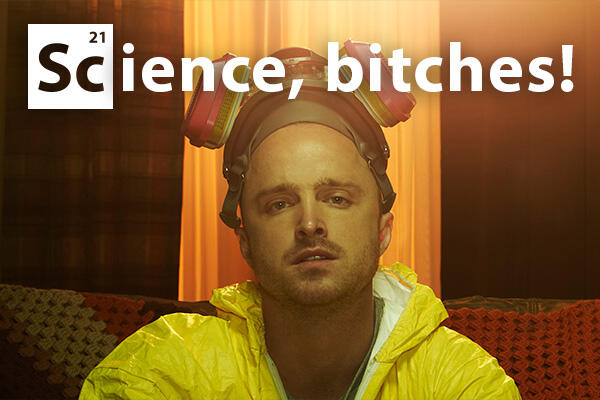
Your busy timetable of procrastination and partying hard may not have left you much time to sleep. Will science be able to help you when those first due dates start to loom? Of course! Your solution: a power nap. The key thing about power naps is that they’re less than 30 minutes long. As you may have experienced from dozing off briefly in lectures, they can benefit your alertness, creativity and memory. Even just six minutes can do the trick! But be careful; sleeping too long can lead to sleep inertia – also known as alarm-clock blues. Sleep inertia is that grogginess that makes you hit that snooze button in the morning and causes disorientation after a too-long nap. There are still benefits to memory and focus with longer naps, but it takes over half an hour for the sleep inertia to wear off, and you run the risk of interfering with your ability to sleep at night. The key to a successful power nap is waking up in the right stage of sleep. There are four stages of sleep. The first three are called the NREM (non-rapid eye movement) stages. NREM stage one is the lightest, and you may not even realise you have been asleep! When you jerk awake from this stage you can experience a falling sensation, like you have tripped. These are called hypnic jerks and you are more likely to experience them the less consistent your sleep schedule is. NREM stage two is a bit deeper, and by NREM stage three you are officially in a deep sleep. Finally, there is REM (rapid eye movement) sleep, so-called because your eyes will move around quickly and randomly. Fun fact: the band R.E.M. was named after this phenomenon when the acronym was randomly picked from a dictionary. REM is also the stage when you are the hardest to wake and when most of your dreams take place. While the role of REM sleep, as with NREM sleep, is not yet completely understood, if you deprive yourself of REM sleep your body will try harder to get it. It does this by entering REM sleep more quickly and spending more time in this stage than it normally would. During the night, a person will cycle between the stages, in the above order. The power nap trick is that when you take a short nap, you wake up in one of the first two stages and avoid the sleep inertia associated with waking during a deeper sleep. Now, instead of feeling like you would like nothing more than to continue sleeping, you should feel more awake and have more motivation to write that essay or lab report you have been putting off. Awesome! Like the good scientists you are, you should experiment to find what length of power nap you prefer. This is usually between 10 and 20 minutes. If you want to be really efficient about your napping, give caffeine naps a go! Do try this at home; drink your caffeinated beverage of choice and immediately fall asleep. You should plan to wake up when the caffeine is starting to kick in. For coffee, this usually takes less than half an hour. It has been suggested that these caffeine naps might be even more effective than regular power naps for increasing your alertness when you need it the most. Eventually, you will probably need a good night’s sleep. But in the meantime, if you are caught sleeping in the library, just say you are doing it because of science, bitches!
-
News

The great Otago drilling debate
Last year Texan company Anadarko Petroleum announced it was sending its test drill ship, the Noble Bob Douglas, into the Canterbury basin. The first step in drilling this exploratory well, situated just off the Otago coast, has been completed, but debate over whether the risk is worth it continues. If the drilling does strike oil or gas, the next step will be to find out how significant the discovery is and whether it is financially worthwhile to commence commercial production. This process could take five years. It is still to be decided whether Dunedin will be the base of operations, but the city’s proximity to the drill site gives it a strong advantage. For many students, their transient lifestyle in Dunedin will leave them little desire to consider a topic such as deep sea drilling. However, it is a particularly important debate that has the potential to shape Dunedin’s future, impacting on the future students of Dunedin. Critic spoke to various supporters and opponents of the drilling … ForPro Oil and Gas Otago spokesperson and Dunedin City Councillor, Andrew Whiley, believes there will be ‘’massive’’ benefits for the city’s economy if the drilling project goes ahead. Whiley insists that “all of the data coming in is showing it is 90 per cent gas down there and 10 per cent condensate, anyway. Oil is barely being looked at.” He says “I am all about growing Dunedin. The real issue is where the base is going to be.” The base for operations will be either in Timaru, Invercargill or Dunedin, all of which could plausibly handle the opportunity. New Zealand would gain approximately $385 million in royalties and even more from the tax on income paid to the oil/gas workers. Whiley says “Every part of the city benefits. If we can bring in five hundred people on $90,000 a year, that will bring in huge benefits.” Whiley believes that Dunedin has been poor at showing it is open for business and has not been putting its “game face on.” Timaru is now partly owned by Port of Tauranga, and Whiley says “they wouldn’t have bought shares if they didn’t think there was opportunity there.” All three potential operation centres have big hospitals, but “Dunedin is the best option in terms of city infrastructure.” Whiley is “totally supportive of green technology,” and agrees that the city could be doing “a whole lot more.” He says that for us to move forward with clean energy, we need investment, and investment comes from money, “and money comes from opportunity.” In response to protestors Oil Free Otago, he says, “I think they run a great campaign, but it drives me nuts that they all talk about oil.” He continues that gas is what is being searched for and the oil off Otago “is not under pressure, anyway. We would have to suck it out.” Critic spoke to Dunedin City Councillor Hilary Calvert, who welcomes the deep sea drilling “providing safeguards are put in place.” She says the drilling could create jobs, whilst boosting the city’s economy. According to Calvert, “Dunedin’s risk of not having any economic development is reasonably high.” She believes the opponents are being hypocritical. “People are getting into vehicles to go and protest about not using vehicles.” When asked why alternative measures such as renewable sources could not be taken, Calvert explained “nobody is taking the steps.” “It’s a rich person’s game being environmentally friendly … we can only afford to worry about those things if the local people have what they need, like jobs and warm dwellings.” She says the council cannot afford to spend money on wind turbines and renewable sources, and “we can’t keep telling people how to spend their money here.” She also states that if we were to put resources into wind turbines, people would complain about where the wind turbines were put. Calvert believes that if gas were to be found, “it would be a game changer to Otago’s economy.” However, she added that the Government’s current focus is on Christchurch and Auckland, “so we need to look after ourselves.” She explains that without the government bringing jobs to Dunedin, we need to encourage the work to come here. “Even if the jobs are given to foreigners, once they are here, they are here. They are spending money and paying taxes. The jobs might not go to graduates, but the benefits will still be had by all.” “I’m not saying there aren’t environmental issues but you don’t see a whole load of green people putting $20 a week to a fund looking into alternative sources of fuel.” Calvert wants the people who are protesting against this potential source of income to “put their money where their mouth is.” She says that being a poor city, the elderly worry about having a warm home. She says “students are not vulnerable. Worrying about whether the planet will be nice for your children is a high level worry which can only be a concern when basic necessities are met.” AgainstProtestors of the drilling say it is extremely risky for the environment and they question the safety record of US-based Anadarko, which was one of the companies involved in the Deepwater Horizon oil spill disaster in the Gulf of Mexico in 2010. Even if only gas is found, “taking any more hydrocarbons is still stuffing up the environment,” says Kuini Scott, a spokesperson for the St Martin Island Community, many of whom have participated in the protests against Anadarko. She believes that “there are not really two sides to this” because “if we don’t act as a city now, our choices will only get more limited.” Associate Professor Bob Lloyd, Director of the Energy Studies and Energy Management degrees in the University of Otago Physics Department, says “this oil and gas is not part of the world’s known reserves, and so by all scientific accounts cannot be used if we are to keep our climate habitable.” This is because these “known reserves” already contain five times the amount of fossil fuels required to raise the world’s temperature beyond what is inhabitable; as such, it seems foolish to add any more. He explains that substituting coal for gas will “delay the required transition to sustainable energy sources in the short time we have left,” as well as financially benefitting “companies like Anadarko that will search for yet more oil and gas and deliver more CO2 into the atmosphere. We have to stop this cycle of fossil fuel dependence, not extend it.” Lloyd has completed extensive research in the field of renewable energy, highlighting the research instigated by the DCC that shows that “it is currently economic to put solar PV [photovoltaics] on your rooftop.” He says “the two thirds or so of existing fossil fuels that should not be extracted add up to hundreds of trillions of dollars of profits. But what do profits mean when the earth is uninhabitable? What do dollars mean when there is nothing to spend them on?” Niamh O’Flynn, of Oil Free Otago, says deep sea drilling “is not the way forward and it will be 10 years before the drilling would be commercially viable.” “Calling us hypocrites is an attempt at shutting us down,” O’Flynn explains. “We are not saying ‘stop driving your cars’ or ‘stop using any fossil fuels.’ We’re just saying that existing fuels should be used as transitional fuels as we move on to cleaner energy sources. The Government is putting millions into fossil fuel extraction but some of this should be going into clean energy alternatives.” She goes on to say that instead of making the most of the research and innovation we have here in Dunedin, “we are choosing to invest in foreign industries where we gain nothing.” MP Gareth Hughes believes drilling is “too risky.” He says that allowing the drilling is “directly risking the whole of the South Island” and will be “catastrophic for fisheries, tourism, and the coastline.” Hughes believes wind energy should be getting more focus as it is “a smarter use of electricity.” He says the biggest reason for people supporting the drilling is that the Government is “cheerleading for the oil industry.” He thinks the Government sees it as “an easier path than coming up with a real economic strategy,” describing the drilling as a “lazy gamble” to avoid any innovation, with the Government “just hoping that someone foreign finds something deep.” Instead, he believes we should be looking at the long-term future. Hughes also thinks the economic benefits are “massively overstated” and that only a handful of jobs will be brought to Dunedin. He refers to the employment in Taranaki, where, he says, “oil drilling has the lowest job producing potential as a percentage of any other sectors.” Both O’Flynn and Hughes have referred to the growth in clean energy in the US, which has found that for every dollar going into clean energy, this creates two to four times as many jobs than if the dollar were to go into the oil industry. Despite the light condensate evaporating and dispersing more quickly than heavier oils, over 14,000 tonnes are predicted to reach shore if a spill occurs, according to Anadarko’s own modelling report, which has been prepared for Maritime New Zealand. There’s also a medium chance that more than two hundred kilometres of foreshore, from Ashburton River to Waimakariri River, would be contaminated. Associate Professor Lloyd told Critic, “while the visible signs of global warming are increasing every year, world governments appear incapable of acting to mitigate climate change. Unless the general population of all countries, including NZ, express their concern by trying to stop the insanity, governments will continue not to act. It may be that to just sit on your backside vaguely contemplating the problem and not protest is crazy. And yes, I was one of the (not so young) alleged radicals protesting at Port Chalmers the other week.”
-
Features
Why I Hate Psychics
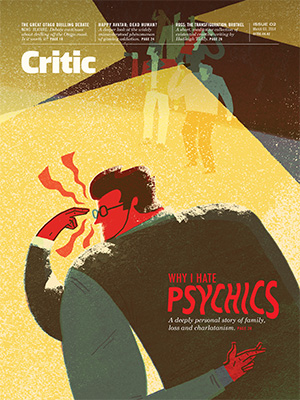
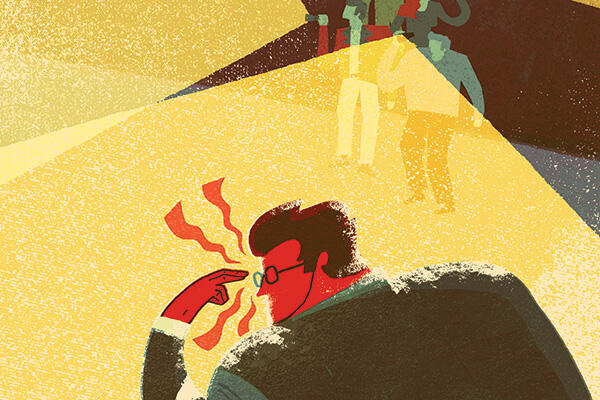
I used to believe this psychic shit. When I was 17 I worked as an usher at the St James Theatre in Wellington. I ushered for a show by psychic medium Tony Stockwell. There were about six hundred people in the crowd. Predictably, I was convinced that the spirit of my beloved aunt had come through. Tony said he was channeling a woman in her fifties who had died from a chest-related problem, trying to connect with a young person in my quarter of the stalls. He mentioned the name Alistair, an old woman having trouble putting on her shoes, and seeing two different types of tartan. He said some other things which I can’t remember; I was flustered and my heart was beating. My aunt died of breast cancer in her fifties and had a son called Alistair. My granny, her mother, had trouble putting her shoes on because of problems with her feet. Our ancestors are Scottish. But here’s the catch: because I was an usher, dressed in a uniform with a waistcoat and nametag, I didn’t put my hand up. And then somebody else did. My aunt’s “description” suited another woman’s lost loved one just as well as mine. On later reflection I realise that the things that had seemed so personal to me really weren’t. The name “Alistair” isn’t my aunt’s or mine. The medium could have said the name of any member of my large extended family and it would have seemed significant. Huge numbers of New Zealanders have Scottish ancestry, and the name Alistair is Scottish. A lot of old women struggle to put their shoes on, and this could also be a metaphor for a journey. Besides, most deaths are caused by chest-related problems. And most importantly, I had totally forgotten everything Tony said that didn’t relate to my aunt or me. Psychological illusionist Derren Brown regularly demonstrates how suggestion and trickery can convince viewers that people have paranormal powers. Brown replicates “paranormal” phenomena by openly natural means. He can do séances. He can read minds. He can dictate what people dream. Brown explains the tricks of “cold reading” used by mediums to make it seem as though they know a lot about a person, when actually they know very little. It is a very old technique. Cold reading is usually done in front of a large audience, so that an initial description of a dead person is likely to match that of someone lost by a person in the room. Readings usually start out with very vague, tentative statements, such as a letter that could be an initial of the dead person, of the living person, or one of either person’s family or friends. The “Barnum effect” is the use of statements that seem very personal, but could actually apply to just about anybody. The question trick – asking “Who’s David?” – leaves it up to the subject to explain, and if they can’t, the blame falls on them for not being able to interpret the information, rather than on the medium. But most importantly, people either already believe in the medium’s psychic ability or they desperately want to. Once the excitement, emotion and adrenaline are rushing through them, especially in front of a minor celebrity on the TV, the subject becomes a complicit performer in the charade. They forget the misses and remember the hits, all because they really want it to be true. Then there is “hot reading.” Hot reading is when you find out key information beforehand, then bullshit that you are psychic. It is way more common than you may expect and it is irrefutable charlatanism. New Zealand’s own prime time TV show Sensing Murder seems so convincing when you watch it. That is, provided you take on and trust all of the promises they make at the start. These include: that the filming is all done in one day; the psychics have no details of the case they are “sensing;” they don’t know the location they are going to; are kept under supervision to prevent them researching the case; and only correct statements are confirmed. But these are public, often high profile cold cases. Information on them is available. An entire day of filming is edited to 75 minutes, heavily fleshed out with dramatic “reenactments.” Confirmation of correct statements is ample fodder for an experienced cold reader. Most damningly, none of the shows revealed anything that wasn’t already known, no new leads have been discovered; none of the cases have been solved. Yet the blame is heavily laid on the NZ Police for not doing their jobs properly. I have a personal grudge against psychics and mediums. When my brother Jonathan died three years ago, his body was missing for two and a half days. Searching for a missing person is the most exhausting, frustrating thing I have ever done. We’d search a park for an hour and then leave, knowing that we could have missed a spot. Then we’d look around at the surrounding streets, houses, fields, bushes, ditches, rivers, and vehicles, knowing he could be anywhere – fucking anywhere – and we had to keep looking. My uncle asked me when we were searching: “what did I feel had happened to him?” What did I feel? My severely depressed brother left the house in the middle of the night with no shoes, wallet, iPod or cigarettes. What did I feel had happened? I’m worried that maybe he’s hurt, or unconscious, or kidnapped. I’m worried about my parents. I haven’t been eating or sleeping and I’m scared, distressed, and tired. I hope he’s alive. I think he’s dead. What am I supposed to fucking feel? And then the psychics called. Just like the police officer waiting at home with my mum had said they would. One woman we didn’t know called to say he was still alive and fine, just waiting for us to find him. We also had a family friend, now sadly passed away, who was an astrologer. He had looked at my brother’s star chart and seen a dark patch in the month of February, which would pass by March. He looked at my mum’s chart and saw a lovely year ahead for her. Another friend, who owns a “distance healing” machine called a SCIO (Scientific Consciousness Interface Operation system), called to say that Jonathan’s psychic energy field (or whatever) was weak but present. So all three predictions said roughly same thing. My skeptical but desperate parents saw a glimmer of hope. The only problem is that the psychics were wrong. A kayaker found Jonathan’s body in the river. He’d died the night he went missing. Caring people who genuinely believed that they were helping made all three of these predictions. I don’t have any hard feelings toward them as people. The astrologer friend said later that his reading was too optimistic: if Jonathan had held on till the end of the month he would have been okay. The SCIO operator said she had misread the computer display. My problem is this: if paranormal predictions do not give accurate information, then what are they for? How is it different to guessing? If you can’t tell if someone is alive or dead, then you should shut the hell up. We all wanted my brother to be alive. What is the point of telling a desperate family to keep searching for a person they are desperately searching for, anyway? And if psychics like Deb Webber from Sensing Murder really have the powers they claim to have, then they should get off TV and go and help families like mine. If I had her power and knew how to find bodies psychically, alive or dead, I would go and find them. I’d tell the police where they are, and if they wouldn’t help me, I would dig them up myself. How could you not? In an interview on Breakfast, Deb Webber said she “senses” that Madeleine McCann was smuggled, and the parents didn’t kill her. In other words, she is “sensing” the same scenario that most people who have heard the story are assuming has happened. But what is the point of that? How does that help? Why don’t you find the girl, or find her body? Why don’t you give specific information that would lead to an arrest? One man whose sister’s murder remains unsolved after 20 years wrote a letter to NZ on Air asking them to stop the show. He received about one hundred phone calls over the years from psychics claiming to have information on his sister’s murder or the location of her body. Each lead had to be followed up by the police in case it was real information from someone pretending to be psychic. None of the claims led anywhere. The abhorrent show is no longer being filmed, but the featured psychics continue to tour New Zealand and Australia, performing in front of large, credulous, and (of course) paying audiences. Psychic baloney isn’t new. The magician Harry Houdini went around debunking this shit nearly a hundred years ago. I recently had an argument with my uncle about Houdini. He believes that Houdini planted wires on the mediums to make them look like frauds, while I believe they were frauds and he found the wires. It was a fruitless argument, but we agreed that Houdini was too good a magician to be fooled by magic tricks. Advances in technology mean a lot of the old Victorian medium’s tricks have disappeared. They are just too easy to see with modern cameras. But people claiming paranormal phenomena are enjoying a fabulous resurgence. James “The Amazing” Randi is a magician who has been investigating paranormal claims for over sixty years. His educational foundation offers the One Million Dollar Paranormal Challenge: a cash prize for anybody able to prove paranormal ability under controlled conditions agreed on by both parties. When asked if any claim has been particularly hard to refute, Randi replies, “I’d like to say that there has been one particular difficult one, but no, they’ve all been so easy. They’ve been so easy because they’re so transparent [. . .] in any different culture, the costume is different, the language is different, but the same stunts are being done again and again and again. They haven’t invented anything new since the early sixteen-hundreds.” The Sensing Murder team have all been invited to take the Million Dollar Challenge, as well as a similar one proposed by a New Zealand businessman offering $25,000. None have taken up the offer. Randi is famous for his exposure of Uri Geller and the “Geller Effect,” where people report to have seen spoons bending and broken watches starting up in their homes when Geller is on TV. I have heard someone say they believe Geller is trustworthy because of his beautiful doelike eyes. I admit he was pretty dreamy in the 70s. But Randi says Geller’s performances are simply four magic tricks, which he himself can replicate easily. He says that if Geller really is using psychic powers to do his tricks, “he’s doing it the hard way.” Randi has a particular hatred toward Geller because his highly successful TV career managed to convince many scientists and academics that his abilities were paranormal, allowing many people’s entire careers and millions of dollars to be wasted on researching deliberately faked phenomena. In 2007, to the chagrin of Randi, Geller began to call himself a “mystifyer,” or entertainer, no longer claiming supernatural powers. Geller did not admit to performing all of the magic tricks he had been accused of, but did admit to pretending to guess the licence plate numbers of audience members, having been told them earlier by his agent. The arsehole was hot reading. Magical duo Penn and Teller despise fake mediums so much that they chose to do the first ever episode of their TV show Bullshit! on people who claim to talk to the dead. Penn explains: “We hate these bastard psychics so much we have to spit . . . Once you’ve felt that pure grief, seeing it exploited can take away your sense of humour. Once a loved one has died, all you have is your memories of them. We don’t give a rat’s ass about the money these bastards are taking from the grief stricken. What we do care about deeply is the desecration of memories.” Self-delusion can only excuse so much; inefficacy should be reason enough to prompt reflection on the extraordinary claims a person is making. There is too much at stake not to do so. But self-delusion is morally preferable to outright charlatanism. Charlatan mediums are taking grieving, vulnerable people, winning their trust, then shitting on their memories and taking their cash. You don’t get much lower than that. There is a reason that some paranormal claims seem invincible to falsification. They have been tailored to explain any possible observed phenomena; the veritable definition of a pseudoscience. “Energy” tends to be a kind of catchall defence in these claims. When Uri Geller failed to perform his spoon tricks on The Tonight Show he blamed bad “energy,” saying he did not feel “strong” that night (the presenter Johnny Carson had taken advice from James Randi and not allowed Geller to use his own spoons, or to have access to the spoons before the show). A nastier version of the “energy” claim is for the medium or psychic to blame the sitter. They can say that the recipient of the reading is not remembering something properly, or has misinterpreted information, and will realise its true significance later on. They can blame the sitter for not having enough faith or blocking the spirit. Some claim that scientific investigations don’t work because spirits don’t like to be tricked, examined, or measured. Which is convenient, as it avoids crediting any evidence that may refute a paranormal claim. Most people accept that there is such a thing as a corrupt stockbroker, pharmaceutical company, police officer, politician, lawyer, accountant, celebrity, or government. Why do some have trouble believing that the psychics on TV might be charlatans, too? Because they often cry when they’re asked difficult questions? Because they fake modesty by claiming to be mere channels for something greater than themselves? Or, maybe, just because people so badly want to believe in them? Anyone who has lost someone close to them knows the feeling of desperately wanting to have one last conversation with the deceased loved one. I would pay all the money I have, and much more, to have five minutes with my dead brother – just to tell him I love him, to ask him questions, to see his face and hug him. This is why skepticism is so important. Fuck you, Deb Webber. Fuck you, Uri Geller. Fuck you, Tony Stockwell. Suspension of disbelief means that grieving and vulnerable people are being swindled out of something worse than money. They are being robbed of all they really have left of their lost loved ones: their memories.
-
Features
Happy Avatar; Dead Human?
Frequently jolted awake by the various early morning sounds of her brother, Loulou Callister-Baker takes a deeper look at the misunderstood phenomenon of gaming addiction. It is 3pm. My parents are still at work; the house is silent. A tired groan suddenly reverberates throughout the house. I feel myself grow frustrated. He’s waking up. Dishes clink together in the kitchen; I sink low in my chair at the sound of approaching footsteps. My brother appears in the lounge with a large bowl of cereal in his hand. The hair on his head is a fiery mess. He grunts at me. I’m unsure as to what he wants, so I retreat to a corner of the lounge to let him eat his cereal in peace. A few minutes later, after finishing his breakfast, my brother has dragged the dining table in front of the television in the lounge. On this table his laptop omits a breathy hum as it whirs to life. At 3:30pm the day has just begun for my brother. I remain in the corner of the lounge, observing him. Many days during the summer break involve the same routine for my brother. They start at two or three in the afternoon, and end at some unknown time in the early morning when everyone else in the house is fast asleep. Although my brother would probably despise this label, during this free time, he is a gamer. He loves the strategies, combat, and online interaction with various virtual, often astoundingly beautiful, worlds. And, apart from those who share his interest, it’s hard for people – especially my parents – to accept this habit. After several fervent family arguments over dinner, with my brother presenting strong defenses for his cause (typical of a Philosophy major – confusing people with his questions on semantics: “But what does it mean to be happy, anyway?”), I have begun to wonder if any of us are in a position to question this kind of habit or how my brother spends chunks of his free time. I have also come to be fascinated with the allure of online gaming. Most online games can be split into a range of popular genres. Three particularly common genres are massively multiplayer online role-playing games (MMORPGs), multi-user domain games (MUDs), and first-person shooters. MMORPGs involve networks of people, all interacting with one another to play a game to achieve goals, accomplish missions, and reach high scores in a fantasy world; examples include World of Warcraft, Guild Wars, EverQuest, RuneScape and Dofus. MUDs, on the other hand, combine elements of role-playing games, with fighting and killing in a real-time virtual world that is often text-based; this type of game is also what many MMORPGs evolved from. “First-person shooter” is hopefully self-explanatory in its name, and includes Call of Duty, BioShock and Halo. My eyes snap open. I look at my cellphone’s clock. It’s three in the morning. A maniac laugh echoes throughout the house followed by a frantic frenzy of mouse clicks – the collective sounds of someone seriously getting screwed in their game. I wonder what my brother has done. The next morning he explains. He was in the middle of an online quest on Guild Wars 2. On this particular quest, there were four others in his team. He starts laughing hysterically as he recounts the scenario to me: “On this quest,” my brother begins, “the group must make their way through a small maze of tight corners and hallways. At the end of each part of the maze are electricity turrets, which all go off simultaneously every two or three seconds. The aim is to turn off the switches in the maze. If you’re new, you don’t know where to go to dodge the electricity bolts. (He pauses dramatically.) You often get smashed up by the bolts, your body flies up in the air, and you lose a lot of health. However, if this happens, you’re never completely dead – you have last-moment health. You wait and hope for an ally to heal you. But the ally has to get to an unsafe spot and often they get hit, too. Then both of you keep getting hit. Soon two people are dead and the maze can’t be completed. The whole team comes to heal you. At that point, everyone starts to die.” My brother is part of this world, a global community he can interact with without even stepping out of the front door. It’s almost utopian. Gamers, regardless of their personal backgrounds, are “reborn” again each time they start a game. Everyone begins at level one with equal opportunities to advance in seemingly infinite directions. There is no privilege, no class structure. Gamers can also go wherever they want in the virtual world despite any physical incapacitation (like a broken limb, a wheelchair, or morbid obesity). They can accomplish quests or win battles, which provide them with money, level-ups, and interesting gifts. There are moments of hilarity, of comradery, and of failure (never complete, perpetually redeemable). In fact, to some extent, most online games can fulfill every desire a person could have – what’s more, everything is so much more attainable than in real life. Why choose taxes and laundry chores when you can build and wear full Rune armor in Runescape, or (male or female regardless) you can fight as the beautiful Ahri the Nine-Tailed Fox in League of Legends? However, despite these idyllic aspects of gaming, it seems there is a general feeling of unease felt by non-gamers towards those who enjoy adventuring in a virtual world. In some ways, this is understandable. Games are made with the intention of hooking the user so they keep coming back, over and over again (just look at the low-budget documentary Away From Keyboard which films a group of gamers who constantly return to World of Warcraft over six years, while their social and working lives crumble). Game-developers, in their quest for lucrative business, can act similarly to those who run tobacco companies. In an interview with Mez Breeze for The Next Web, Transmedia Game Designer Andrea Phillips explains that game developers have “rampant and intentional use of the compulsion loop, which is a term ultimately derived from Skinnerian psychology ... The core appeal of gambling is the compulsion loop, too … It’s that tension of knowing you might get the treat, but not knowing exactly when, that keeps you playing. The player develops an unshakeable faith, after a while, that THIS will be the time I hit it big.” While the compulsion loop isn’t inherently negative (it’s actually a fundamental aspect of human nature) it can be used in negative ways – just watch any long-term gambler (dead eyes, pallid skin) at a slot machine. Other essential elements to the hook factor of these games are the intense satisfaction in achieving a goal or moments when a gamer is so close to achieving said goal but fails at the last moment and therefore must try repeatedly to achieve it. As Mez Breeze writes: “This idea of ‘fun failure’ links directly to the psychological concept of attentional bias. Attentional bias is where an individual constantly prioritises their attention towards emotionally dominant stimuli in one’s environment and to neglect relevant data.” The low amount of effort required for gaming, and the large amount of reward that’s gained – along with the flow of easily attainable goals, and online friends who convince you to play for longer to keep up with the team – are also factors that keep a player returning to a game. The general unease and suspicion of gamers may be aggravated by the constant flow of shocking new stories. Daniel Petric, from Ohio, was convicted in 2007 of shooting his parents (killing his mother) with his father’s 9mm handgun after they confiscated his copy of Halo 3. His sentence was 23 years to life in prison. Alexandra Tobias, at 22 years old, shook her three-month-old baby to death because he cried while she was playing games on her Facebook page. She was sentenced to 50 years in prison. Tobias, a person with a troubled history, told the judge: “I hate myself for what I did, but not for who I am.” These stories continue. Rebecca Colleen Christie, from New Mexico, received a 25 years prison sentence for the death of her daughter (malnutrition and dehydration) while she spent hours chatting and playing on World of Warcraft. Reports of this case from the U.S. attorney’s office described Christie’s house as having an “overflowing litter box and pervasive smell of cat urine [... with] so little food that the child ate cat food.” In Shanghai, Qiu Chengwei stabbed Zhu Caoyuan when he discovered that the fellow gamer had sold his virtual sword (won in the game Legend of Mir 3) for 7,200 Yuan. In February 2012, Chen Rong-yu died at an Internet cafe while engaged in a marathon gaming session on League of Legends. He was found by one of the cafe staff slumped in his chair with both arms stiffened in a pose that suggested Chen was still attempting to reach the keyboard whilst undergoing a suspected cardiac arrest. “My dad brought me here to see the doctor. But he locked me here instead,” sobs a young Chinese man in the short New York Times Op-Doc by Shosh Shlam and Hilla Medalia called “China’s Web Junkies” (a segment part of a much longer documentary to be released this year called Web Junkie). As the man speaks to the camera he sits on a bunk bed in the Internet Addiction Treatment Centre in Beijing, where he will be for three to four months, often behind bars and guarded by soldiers, in order to recover from his addiction. His days are highly regulated and disciplined, with controlled meals and regular group-therapy sessions. There are also sessions for the parents. One professional at the Centre says, “Some kids are so hooked on these games, they think taking a restroom break will affect their performance at these games. So they wear a diaper. That’s why we call it electronic heroin.” The “loneliness” of these addicted kids is also emphasised. The Centre, established in 2004, was one of the first of its kind, but now there are hundreds in China and South Korea, with numbers increasing around the rest of the world, too. In 2008, four years after the Beijing Centre’s establishment, China declared Internet addiction to be a clinical disorder, believing it to be a major health threat to its teenagers. However, after filming the Web Junkie documentary, its directors were still not convinced that the children were being accurately evaluated (especially if other complex social and behavioural issues were also apparent.) They also questioned the effectiveness of the treatment itself. This uncertainty as to whether compulsive gaming and excessive Internet use are really addictions in the clinical sense is not unique to the Web Junkie directors; it’s everywhere. The American Psychiatric Association, in the fifth edition of the Diagnostic and Statistical Manual of Mental Disorders, identifies Internet Gaming Disorder as a condition that requires more clinical research and experience before it might be considered for inclusion in the main book as a formal disorder. On the other hand, Jerald J. Block, writing for the American Journal of Psychiatry, believes that Internet addiction in general should be viewed as a common disorder. Furthermore, Block identifies four components that make up the disorder: “1) excessive use, often associated with a loss of sense of time or a neglect of basic drives; 2) withdrawal, including feelings of anger, tension, and/or depression when the computer is inaccessible; 3) tolerance, including the need for better computer equipment, more software, or more hours of use; and 4) negative repercussions, including arguments, lying, poor achievement, social isolation, and fatigue.” New Zealand, however, has no specialist treatment centre for this problem (disorder or not). One exception to this may be Nelson’s Nayland College, which started a gaming club back in 2012 to help students “addicted” to gaming by both recognising the importance of gaming while encouraging the development of their social skills and a sense of belonging outside of virtual realities. “You want me to say gaming is bad for you, but you’ve got to first define what the good life is,” my brother asserts in a conversation over lunch one day. “Maybe the Internet simply clarifies our immobility – what we can’t do – then games actually address this issue. And if you can’t win in your physical reality, why is it not acceptable to enjoy winning in a gaming one? Maybe, for many, a gamer’s success is intangible, but to them, they can see it right there on their screen. It’s not like gamers all turn to games because they’ve been rejected by society – many might view themselves as simply lacking opportunities.” In a similar vein of thought to my brother, theorists like McKenzie Wark (author of Gamer Theory) questions this “addiction” status. “Is ‘addiction’ even the right term? Or is it just a metaphor?” Wark queries. “Why do we stigmatise certain engrossments more than others? When my kid reads books all day, my partner and I are happy about it. When he plays games all day, we are not. Who is to say one is better or worse than the other?” For several weeks in the break, I had trouble sleeping. Each night I’d turn my bedroom light on after trying to sleep for an hour or so. Despite the imminent exhaustion, I’d continue to read my book until the early morning. After a while, I’d look at the clock and my heart would sink at how late it was. Two in the morning. Again. Sometimes, as a sort of distraction, I would get up to go to the bathroom and each time I noticed everyone was asleep – including my brother. I would finally fell asleep at a very late hour, which meant that I would miss half the next day, and often oversleep. It’s the same pattern seen in gamer stereotypes. But instead of games, I had my fantasy fiction novel. “Addiction” may be a question of semantics, “disorder” may be a question for psychiatrists, but, intentional or not, games – like most consumable products – are designed to hook. However, what these games do that many other things can’t, is provide, as my brother tells me, “opportunities to make the powerless feel powerful.” Which leads to the basic question: why do these people feel powerless in the first place?
-
Features

Ross
Up through the swerving Brooklyn hill and over the crest past the dozy corner shops and winding all the way down through Happy Valley road; down past the gorse and toitoi, speckled sedge, chickweed, kawakawa, nasturtium, wild fennel, wild mint, borage, and flax; all the way down to the sea, behind the double cream house on the right, there he works: slender, svelte, lithe, limber, lissome, crouched. Pumping air into the back wheel of an upturned bicycle with the northwest sun to warm him. His back is straight and his hips are sunk deep and his head is poised weightless above his neck and shoulders. Posturally enlightened. His clothes, draped on him in soft mural tones, speak in verse: the socks from a neighbor, the sweater made of unwashed wool from the Nelson Markets, shorts from the Otaki op-shop. Six feet tall, sixty-three kilos. Hungry. Restless. Tuis and seagulls overhead cry paeans of praise. Exalted. Twenty-one years old and still a boy, looking up at you through the spokes. Features that hark back to the English New Forest: warm green eyes, gentle beard, tousled mouse-brown hair, nose off-kilter from a bike accident when he was younger. Soft hair. Honey skin that keeps a steady tone on every part of his body. He greets you by name. You’ve known him now for nearly three years. Ross at the Sunshine Flat, eyes fixed on the flames in the brazier and talking about shamans, Vision Quests, ayahuasca, dreams, rivers, and communes. Ross on Holloway road, another party, crying in the kitchen. Ross at his parents’ house, taking the weight of an expired relationship on his back. Surrender to the sky your heart of anger. Ross and Rosie returning from the silent retreat, afraid to talk. Ross and Louise on the slackline of their love. Ross and you cross-legged on pillows on the floor of his bedroom, returning time and again to the breath. Ross a few wines down, lecturing you on the virtues of connectedness and community and ecology and organics and holistic lifestyles. Ross telling you he has dropped out of university. Ross, crying again, this time knee-deep in a stagnant black pond in a forest in the Takaka hills with midgies and mosquitos buzzing all around, a summer sky so blue it looked almost golden, and the pond so black and still and stagnant and holy that his presence in it was nearly sinful. Ross, your brother, born again right there in that black pond. Return to the breath. He’ll tell you all about these ideas of his and you will nod, listening closely, with the words floating like dandelions around you and you will nod again, and close your eyes, and mimic his mmm’s. Sit out on the step by the backdoor in the sun, cup of tea in hand, and talk softly about the Cosmos as the very ground beneath you quakes and shudders. The wise sage, the prankster, the dharma-bum, the neo-taoist psychedelic eco-poet, flashes of wisdom and insight ringing like a Tibetan singing bowl through your skull; but: let it go… and return to the breath. A child of the earth and everything beneath it. Dirt on his hands and in his ears and under his nails, worms in his hair, waist deep in compost, clothed in leaves and humus and foliage. Vocation: gardener, organic farmer. Who else would get excited over finding big piles of horseshit a few kilometers from his house? “But think about the nutrients!” And so sincere. But: let it go… and return to the breath. Not a perfect friendship by any stretch – a soul that close to yours stirs up rivalry, competition, fear. An inevitable tangling. And in the centre of the tangle, a girl. And in the centre of the girl, a paradox. There was never a confrontation, only something much gentler and awful – a loss of trust, a quiet distancing, a removal of presence and light. Both too proud to put any words to it until that day in black pond in the deep summer heat. A year ago now. And: let it go. Return to the breath. Come back to the hills and the house beside the sea, around the back, in front of the bike. Smile. Breath. Realise that you love him, and tell him so immediately.
-
Features
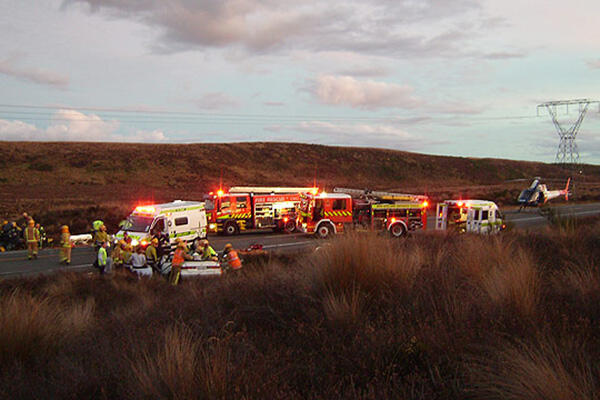
The Transfiguration
Now you’re dead. Lying facedown on the gravel somewhere along the Desert Road at four o’clock in the afternoon, skies overcast, your car wrapped around a power pole, your neck twisted too far backwards, your eyes still open. No one has come yet. You were driving alone. It happened so quickly– Now your soul slips out softly. It leaves through your pores: these soft, tiny, little crenellations that you always thought of as boundaries but now, you realise, were gateways; openings to the infinite space around you. Your breath stops. Your mind, so charged and animal in those final, screeching moments, gets slower and slower, with gaps of silence punctuating your thoughts until, at last, a gap so long that nothing follows after it. This is the silence of heaven. Within it comes a feeling of being poured out, or of draining – you think of tepid water in a bathtub, noiselessly sinking out through the plughole at the bottom. Do you remember what it felt like getting born? It’s painful, yes, but stay with the feeling: watch it fill like a parachute, heating up and rising and expanding outward, all limits and borders and boundaries evaporating into this pure, boundless space and a vast, quivering energy. An expulsion, erumpent: up and out, overtaking and engulfing you. Circumambient. You pause for a moment and look back down. The road. The car. The body, always so loyal and now so empty. It shall, in time, nourish the earth and worms and birds and plants and men. You give it to them with your blessings, and leave. Now you come up. Slow, at first, and then quicker, gaining speed and expanding with every moment. You shoot though the clouds and burst out through the atmosphere – look around! Watch planets spin about like vinyl records, unfathomable beauties, their moons looping and circling in erratic fervor: Io, Europo, Ganemeyde, Callisto. Soar out beyond them, into the bristling stars and constellations, and listen to canus major howl in welcoming. Orion welcomes you! The Pleiades welcome you! Taurus, Gemini, Scorpio – and all of the bright supernovae, bursting out through death in their explosionary, technicolour brisance, welcome you! You celebrate with them as they transfigure – now hydrogen, now gold, now lead, now polonium, now radon. Watch the billion suns, the trillion galaxies, all spinning around you in every direction, expanding, lusting – do you see it yet? These are you, my child, you in stelliform lightwaves, you, heaving in cosmic splendour, you of the infinite void! This was always the truth, wasn’t it? It was like this all along, you in everything, knowing it deeply but always forgetting it. How on earth did you forget it? Look back now, back down to the earth in all its crazy splendour and recognise: this, also, was you. You, the driver, the car, and the road. You the family, you the people, you the earth! Can you see yourself? There you are – there, and there, and there, and there – my god, look! Now you’re Christ, Mohammed, Krishna, Gautama, Theresa; now Whitman, Emerson, Ginsberg, and Thoreau; you, all who knew it, and you, all who didn’t know! You, the beloved little girl safe in Daddy’s arms. You, the fearsome soldier, laying mines down on enemy camps in the dead of night. You, the hungry peasant and you, the rich landowner! You, now in the room on the fifth floor of the hospital ward, looking down into your own eyes and recognising it for a flash, a glimmer of it. You, the mountain and the clouds and the rivers and the rain! You, the writer! You, the reader! You, great rhythm of life! …and now, soul, let go. Disenthrall. Melt away. Don’t be afraid – this is what you always were, before all of that dreaming, you at your most infinite and most fertile. This is heaven: total oblivion, sweet and dreamless and beckoning. Come.
-
Features

Brothel
What I remember specifically about the first time I went there – not the first actual time but, like, the preliminary meet-and-greet type thing – was the lemon. Sliced, floating pale in a cool glass of water. The glass it was in was crystal and heavy and felt moneyed, somehow, cylindrical and bottom-heavy, with a clear diaphanous base that was very thick, about a third of the total volume of the glass. Not something you’d find at a typical student flat. Not anything in my cupboards, anyway. The older one had brought it over to me and set it down on this minimalist jet-black coaster, asking if Everything Was OK and if I Felt OK. Of course, I didn’t spend much time pondering that question, but the heavy glass of cool water with the lemon was the most luxurious little thing I’d had in about five months of scrimping, and as well as that, I was wearing these great heels I’d borrowed from a friend, so it was Yeah, Fine Thanks. Olives later, too, big fat ones, juicy and bigger than your fists. The younger one was running late, and while we waited, I thought back to the last few weeks that had led up to this. Frigid winter in the flat, no thermals. Dahl for four nights running. The acrid taste of instant coffee with one McDonald’s sachet of sugar. Shop windows. This weird insistence on telling Mum that No, I Don’t Need Help Thanks. The worries about what I should wear, whether I was attractive enough, what we would talk about. Seeing as it was the very first time I’d gone there, I didn’t have much to worry about in terms of people finding out or anything. That came later. I told my boyfriend I had study to do and headed off in the direction of Uni, doubling back after a couple of blocks. The place was actually across the road from the shithole I was living in, so close that I could look down and across the road into our kitchen window and actually see the empty fruitbowl on the bench. Sometimes I’d imagine what he was doing at that point, where he thought I was. The first thing I remember about Sue was her swooping in all rushed and flustered and clutching those big olives. I’ve Just Found These, she said, Are You Hungry? And my tongue became wet. She was a spectacular woman – very tall, an ex-supermodel in flats and a black silk Dior blouse with perfect complexion and soft angel hair tied roughly back. She was heavy, too – she told me later how she’d been modeling all through her teens and twenties and had apparently lasted the whole era on a single packet of menthols. Now, she had told me, she wanted to eat. And eat she did. Flans, parfait, tiramisu. Figs and blue cheese on crackers with Foie Gras from France. And so here was this beautiful lady, gorgeous, of clear-complexion, tall, and now with some meat to her. Weighted. Luxurious. And bringing me olives. I don’t really remember much of what we talked about, although I do remember her specifically saying she’d buy me a new dress before I started, just right off the bat for free. And every time I came in I could have a couple of glasses of wine, too, with whomever it was. She showed me the wine cabinet with a panoply of Chards and Savs and Forts and Rosés, which I could use (in moderation, of course). She told me they were important for what in the field is called an authentic GFE, or Girlfriend Experience, which is what most of them were after. I didn’t mind, or it at least wasn’t a major point of the conversation. Getting paid to wear new dresses and drink wine was good enough for me. Eventually we finished up the conversation and I got up to leave, in my excitement nearly tipping over that nice full glass of water in front of me. I felt great – left pretty quickly down the stairs and out the door, giddy, better than OK. Oh, the things to come.
-
Columns

Love Is Blind | Issue 02
Critic’s infamous blind date column brings you weekly shutdowns, hilariously mismatched pairs, and the occasional hookup. Each week, we lure two singletons to Di Lusso, ply them with food and alcohol, then wait for their reports to arrive in our inbox. If this sounds like you, email critic@critic.co.nz or FB message us. But be warned – if you dine on the free food and dash without sending us a writeup, a Critic writer will write one under your name. And that won’t end well for you. TaylorOriginally this blind date started out as me nominating a friend [Emma], but that was short-lived when a Six60 concert became the priority [Editor: Six60 was the night after; Critic senses ulterior motives], leaving the blind date in the lurch and my own plan backfiring. Thinking it would be poor form to stand some poor guy up, I took it upon myself to keep up our end of the bargain, even if it killed me. Arriving at the venue, it took me all of three seconds to realise who the date was. With sweating palms and Ed Sheeran as his celebrity lookalike, we took to our table where the drinks could not come fast enough. During this time, the blind date and I realised we had some mutual ground as we both attended the same school, but sadly this was to be the last of our similarities. I think this date went downhill after proclaiming he was a “foodie” and not knowing what a terrine is. Fatal mistake. Yet in an effort to not seem like Regina George, I optimistically let it slide, in the hope he could redeem himself. The saving grace, I suppose, is that at least the conversation wasn’t completely stilted. Now, despite this seeming like your average blind date, the whole time I couldn’t quite be assured that the date actually had any idea of what I was talking about. Definitely the smile-and-nod type (endearing, sure, but not exactly reassuring in this type of situation). This all culminated in the slightly insulting chat asking if I had ever tried speed dating; that would be a no. Now for the kicker; when departing our separate ways, the date had to ask me my name again. Not totally unexpected though, given what I was just subjected to. Overall, this was an evening of my life I’m not going to get back. Oh well, Critic, at least you tried! Thanks DiLusso for the tab and great drinks. And to Emma, fuck you. EdI arrived first, and spent five minutes having a yarn to the bartender. Nice guy. Then she came in and we found our way to the closest table. I could tell she was nervous because she was speaking pretty fast, and unfortunately she must have never felt too relaxed because this continued for the rest of our date. But maybe that was the whole point. She let me know that her friend, who was meant to be on the date, had gotten cold feet and she swapped a subliminal message of “I don’t want to be here, let’s make this as easy as possible” into the mix. Not that it mattered to me; the way I saw it, nice drinks and a decent meal was enough by itself, anything more would have been a pleasant bonus. In fact, getting to know a stranger over some food is its own little delight. I even learnt she did yoga-boxing, which either means there is some very lucky or unlucky man out there waiting for her bedroom. By the end, I had lashed out on some fine desert (I’m a sucker for my sweet tooth). Now any tiny fragment of attraction I’d unintentionally built from the other end of the table was probably eroding away as I indulged with the unrestrained joy of my former 10-year-old self. I wish I could go on a blind date with chocolate cake. When you first see it, it looks like shit, only to surprise you with how sweet it is. Unfortunately this date only held up the first truth out of those two. We then made our way outside where a very awkward combination of things happened. I didn’t just want to walk away in the opposite direction like a jerk, so I asked for her cell number. Then she pulled out her iPhone and let me know it was broken. As a non-iphone user, it didn’t click why this was relevant, so I asked again like a dumbass. Instead of letting me know for the second time it’s broken, she told me her (nonexistent?) number. I had no idea because I just hit random numbers to get out of the situation politely. I then did the jerk thing I set out to avoid, and walked in the opposite direction.
-
Culture
When Your Neighbour’s Problems Become Your Own
The Blue Oyster Art Project Space on Dowling Street - recently re-located, re-furbished and re-directed - is the coolest little gallery I’ve been to in Dunedin. Comfortably minimalistic with its smaller sized rooms, unpolished wooden floors, white walls and warm light, Blue Oyster is the perfect space to exhibit interactive, involved and intimate exhibitions. With new Director Chloe Geoghegan (originally from Christchurch’s highly successful Dog Park Art Project Space), who has a flare for developing project-based exhibitions and events, and publications investigating experimental contemporary art practices, Critic is anticipating an energetic and diverse programme by local and international artists in the coming years. Last night was the opening of Chloe’s first exhibition as Director at Blue Oyster, and I was delighted to be there; with Cat Auburn’s work, plus wine and friends, it was fab. Cat Auburn is a contemporary New Zealand artist who exhibits extensively around the country. Auburn also works as a sculptor and prop-maker for film and television, and she has recently taken up a position at Weta Workshop. Auburn graduated with a Postgraduate Diploma in Fine Art at Elam School of Fine Arts in 2007, and then received a scholarship at the University of Auckland, where she also tutored Critical Art Theory. After graduating, Auburn trained with leading New Zealand sculptor Michael Parekowhai, and has received several awards to date, including the year-long Olivia Spencer Bower residency in Christchurch. Animals in one form or another have been a recurrent feature of Cat Auburn’s conceptual work. In her first solo exhibition last year, entitled Push Me, Pull Me, at the Bartley + Company Art Space in Wellington, six life-sized sculptures of hunting and hunted animals and a limited edition suite of pewter maquettes, made from concrete, were shown. Similarly, in When Your Neighbour’s Problems Become Your Own, strong skilled carving and fabrication techniques are exploited in the poetically charged sculptural works, suggesting the artist’s interest in the animals’ ability to personify human characteristics and emotions. This body of work is a refined, contrasting version to Push Me, Pull Me, in the sense that the density and overt heaviness of the concrete animal sculptures that were shown in her previous exhibition have seemingly been stripped back to their bare skeletons of tall steel, appearing gangly and limp as they subtly sway in their weightless height. Auburn expertly renders the animals’ figures, which are elongated, distorted in scale and generally appear to take on a mechanic, skeletal appearance. In doing so, she continues to explore the psychological spaces of freedom and constraint in both the material and the subject of the work. Moreover, Auburn’s investigations into the limits and biases of materials have found several strong directions; most noticeable in her work is her ability to create a distorting sense of illusion. In Auburn’s ability to create the illusion of polystyrene being heavy, and steel being weightless - the artist completely subverts the order and expectations of an object’s composition, expressing Auburn’s apparent interest in qualities of psychological change and transformation. Also intrigued by found objects in the form of antlers and taxidermy, the polystyrene, wire and tinfoil bow and arrow sculpture - displayed separately in the second room of the gallery - engages the viewer again into the paradoxical illusion of weight and material. This piece fascinated me the most as it was the more conceptually challenging and visually intriguing piece of work; a rare gem.
-
Culture

Empress Dowager Cixi
Jung Chang’s Wild Swans, a retelling of her own family’s history through the female line, was (and presumably still is) an eminently readable and fascinating book. With her latest work, Empress Dowager Cixi, she again showcases her gift for retelling great big chunks of history in an accessible and informative way. Empress Dowager Cixi, who in being unitalicised is now a person and not a book, unofficially ruled China from 1861 until her death in 1908. And, according to Chang, she did more to make modern China what it is than many of its rulers, both before her reign and after it – and certainly did more than history writers have been inclined to credit her for. Indeed, one of the central conceits of Empress Dowager Cixi, (it’s a book again now) is that the woman herself was unfairly maligned and made a scapegoat, both during her lifetime and in what was written about it afterwards. Because, despite everything she achieved, she still committed the heinous crime of bossing people around while possessing lady bits. Until recently, it has been all but impossible to forgive women for having the temerity to be female. The truth is probably not nearly so neatly a modern morality tale. Chang has been criticised for portraying Cixi as a proto-feminist heroine, and writing with a tone bordering on adulation while whitewashing away her cruelties and stupidities. These criticisms seem a little peculiar to me. Anyone who is naïve enough to take any one historian’s work as a holy font of the whole shining truth, isn’t interested enough in history for it to matter whether their mental image of Empress Dowager Cixi is skewed. If someone must have the wrong idea, it seems clear that Chang’s portrayal of Cixi is much less skewed than the more traditionalist portrayal of Cixi as a cruel, dim, murderous whore. Maybe my standards of whitewashing are far too high, but I sincerely hope that when people are writing propaganda about me they’ll make more of an effort to gloss over my vanity, mistakes and greed. Also, I’ll need them to be a bit more apologetic about the time I had a woman thrown into a well while she begged for help; Chang explains Cixi’s probable reasoning for doing exactly that, but I didn’t feel she was struggling desperately to justify it the way a wilfully blind hero-worshipper would. Anyway, unless you are a historian dedicated to Chinese history – good job, you – in which case you would’ve almost certainly already read this book and formed your own opinion, Chang’s mysterious inability to write a near four-hundred page book about a subject towards which she felt perfect neutrality shouldn’t concern you greatly. Empress Dowager Cixi is interesting, both as a book and a person. China at the time of Cixi’s rule has aspects as fascinatingly alien as anything you’ll find in high fantasy. Some of Cixi’s political manoeuvring is so audacious, and comes off so successfully, you’d condemn it in fiction as authorial favouritism, and the knowledge that the truly atrocious things that happen in this book did genuinely happen, to actual people, grants them a gravitas that no fiction ever has. All that, and the story would be worth reading, even if it wasn’t real. Jung Chang is giving a talk about the writing of Dowager Empress Cixi at 2pm, Sunday 9 March, at the College of Education Auditorium. Tickets are available from the University Bookshop for $10. Read. Go. Learn.
-
Culture
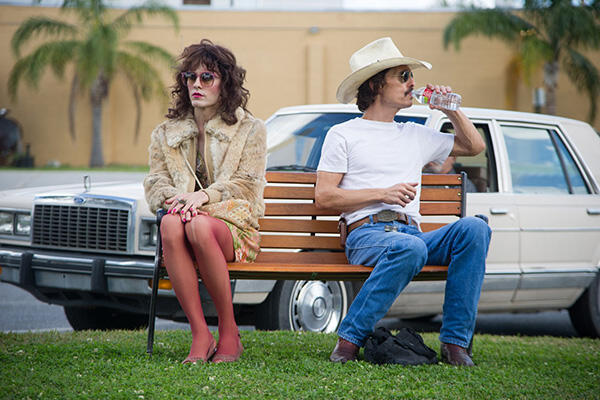
Dallas Buyers Club
Grade: A - Dallas Buyers Club tells the true story of Ron Woodrof, an HIV-positive hillbilly given 30 days to live and with no availability of effective medicines to change his fate. In a desperate attempt to extend his expiry date, and make a little money on the side, Woodrof begins smuggling unapproved pharmaceutical drugs into America for himself and fellow AIDS sufferers. This is not your regular AIDS flick chronicling the plight of socially-liberated homosexuals fighting against the system (ala Philadelphia or Rent). Instead, our protagonist is a homophobic, small-minded redneck with a penchant for hookers and cocaine (think the Wolf of Wall Street, but in a trailer park). Dallas Buyers Club offers a different perspective on the AIDS epidemic of 80s America as we see it through the lens of a man terrified and repulsed by gay people. Matthew McConaughey is extraordinary as our anti-hero, holding nothing back in portraying Woodrof’s shocking lifestyle. McConaughey not only nails the character’s extreme bigotry and aggressive machismo, but also the desperation and vulnerability that occasionally spurts from Woodrof beyond his control. In the wrong hands Dallas Buyers Club could have turned into one hell of a melodrama, but director Jean-Marc Vallee treats the material with minimal sentimentality and very few swooping violins, thank goodness. In particular, Woodrof’s transformation from a hillbilly caterpillar to an open-minded butterfly is so painfully gradual it avoids the usual pitfalls of the obnoxious “bad guy grows a heart” plotline so favoured by Hollywood. Jared Leto contributes to the subdued tone through his three-dimensional portrayal of Rayon, Woodrof’s transgender partner-in-crime, which was a breath of fresh air from Hollywood’s usual tendency to portray transgender people as only fabulous drag-queens. The downside of this realism is that the film’s pace had a tendency to lag, and it took far too long to get to the major plotline of drug-smuggling. Nevertheless, there is enough excellence in this movie to make up for the pointless and is worth seeing for McConaughey’s performance alone. I’m sorry Leo, but I think you’ll have to wait another year for that Oscar.
-
Culture
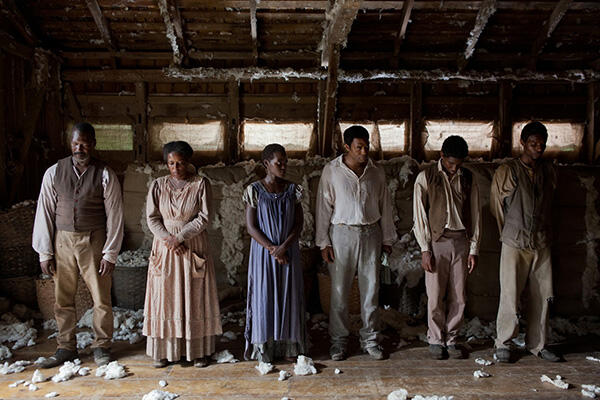
12 Years A Slave
Grade: A+ “I don’t want to survive. I want to live.” While 12 Years a Slave is expertly (and beautifully) set in 1840s America, it is not a very comfortable film to watch. Steve McQueen’s (Shame and Hunger) film has garnered a raft of Oscar nominations and accolades, a testament to its calibre and power. It is a bloody and brutal narrative of Solomon Northup’s (Chiwetel Ejiofor) kidnapping and condemnation into slavery. His treatment by subsequent “Masters” Ford and Edwin Epps (Benedict Cumberbatch and Michael Fassbender, respectively) are case studies of slavery in the American South. The human spirit is relentlessly examined through moments of brutality and sheer desperation, and it makes for some testing viewing. Fassbender, in particular, produces a compelling portrayal of a slow descent into terrifying madness caused by having absolute power over of his “property.” However, his portrayal is only of many dark, soul-crushing aspects of this film that create the feeling of hopelessness and systematic oppression that a slave had to endure, especially on cotton plantations. Behind the patriarchal domination lies the equally influential Mistress Epps (Sarah Paulson), who plays the part of the jealous wife to perfection. In this setting, her actions and reactions determine the fate of their slaves, however terrible they may be. A typically emotive soundtrack from Hans Zimmer and a sincere (and crucial) cameo from Brad Pitt round-off an immensely powerful and moving picture. It successfully projects the great repugnancy of slavery and a society divided according to race. You may think that these scenes are unthinkable, but you will think again after viewing this realistically shocking tale. “A great ill hangs over this nation, and the Day of Reckoning is yet to come.”
-
Culture
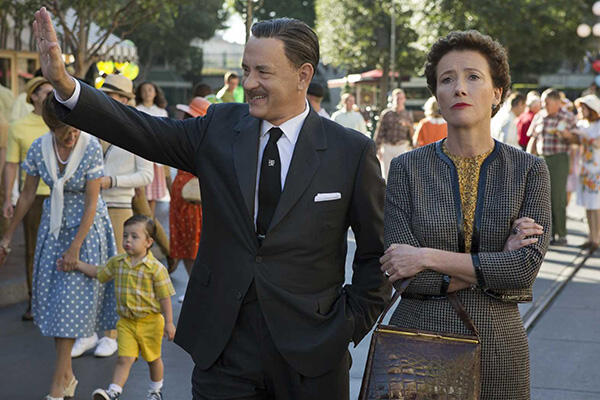
Saving Mr. Banks
Grade: A - Exquisite performances and a powerful story make this film a success. You may be familiar with the classic 1964 Disney film Mary Poppins. The 2013 film Saving Mr. Banks invites you to become familiar with the tormented artists responsible for producing such an uplifting and memorable childrens’ tale. Emma Thompson is superb as the austere P.L. Travers, who wrote the original book. When Walt Disney, captured magnificently by Tom Hanks, finally convinces her to come to Los Angeles to co-write a film screenplay, she finds that his alterations conflict with her values and dark past. By showing us the struggle between Travers’ rigid artistic integrity and Disney’s mass consumerism, the film causes us to question why people ever choose to create artworks at all. Is it to exorcise the demons they carry? To preserve a perfectly-imagined dream against a cruel reality? Or simply to make money? A similar, fantastically provocative theme was the question of whether or not Walt Disney is evil. He wants to ‘dumb down’ the Mary Poppins story as it was written, and we are set up to hate him and the way he sold out his own treasured creation, the Mickey Mouse character, in the form of gaudy merchandise. But it is no spoiler to reveal that in the end Disney has his way and the Mary Poppins film (surprise, surprise) is made. Can he be evil for trying to sprinkle a little pixie-dust on every child, for profit? Or is Travers the evil one, for refusing to take joy in her own life; or for eventually getting a taste of Disney’s whimsy and money, and caving in? You’d best see the film and decide these questions for yourself. This film’s climax was so inspiring it even made me forget how deeply I detest Colin Farrell in everything – not to mention the Disney corporation, as a whole.
-
Culture

I, Frankenstein
Grade: C A huge number of people work to produce a film. When I watch a film as horrendously written as I, Frankenstein, this is all I can consider. How is it that a huge number of industry professionals worked on this project and, yet, not one person put up their hand and said “Excuse me, I don’t know if you’re aware, but this script is garbage.” I, Frankenstein is the adaptation of a graphic novel in which the character of Frankenstein’s monster from Mary Shelley’s novel Frankenstein is pulled into a war between demons and gargoyles. Believe it or not, this ridiculous premise actually works quite well in graphic novel-form. However, as a film, it is an abysmal failure. The script is an unmitigated train wreck. In terms of narrative form, it is all over the place. The first 30 minutes are unadulterated exposition, desperately trying to give the story some form of grounding. The characters themselves are unjustifiably one dimensional, lacking any motivation or conceivable emotion. But, worst of all, is the dialogue. The film had three types of dialogue: blatant exposition; cheesy action-hero catchphrases; and vomit-inducing attempts at characterisation. As deeply flawed as this film is, it is not entirely without merit. It boasts some impressive stars such as Aaron Eckhart, Yvonne Strahovski and Bill Nighy. These reputable actors did their best with the script, but their credibility has to be called into question on the basis of why they would take on a film like this at all. I, Frankenstein has some impressive action sequences and, I have to admit, the spectacle of hundreds of enormous stone gargoyles battling even more demons appealed to the action jockey deep inside me. The film also featured some interesting visual moments as the camera slowed in action scenes to reveal detailed sequences of carnage. However, I, Frankenstein also featured some truly terrible prosthetic effects that were painfully reminiscent of C-grade 80s science fiction. The only reason I could recommend this film would be for its action sequences, but they are not worth sitting through the “story” to get to. How this film got passed the first read I’ll never know. Sigh.
-
Culture

Chipotle Chicken Tacos with Homemade Flour Tortillas
Sometimes I feel like Mexican food is really just an excuse to bring out Corona and tequila. Which isn’t a bad thing, mind you, but while we’re at it, replace the fatty, cheesy Tex-Mex with this vibrant and flavourful, fresh alternative. My favourite dish at the moment is chipotle chicken tacos with homemade soft tortillas (which are also cheap and a dream to make). I used some La Morena homemade-style chipotle in adobo sauce that I found in the international section of New World City Centre. It comes in a bright orange tin. I think it costs, like, $3.50 but it should last you about two meals (freeze the left overs in a snap lock bag). I always make my tortillas from scratch. Now, you could buy those in the packets but they can be really expensive, especially if you are feeding four, five or six people – and even more so if they all happen to possess a Y-chromosome. Over the summer, when I had an abundance of time, I practiced making tortillas myself by hand. All you need is flour, oil and water and they turn out really well. Plus, there is nothing like the taste of a fresh one, straight from the pan. You can buy tortilla presses but I just use an old wine bottle or a rolling pin to roll them out. Sure they will be far from circular, but I think that looks cool. Bulk it all out with fresh tomato salsa, lettuce and a tonne of coriander and you are good to go! Ingredients (SERVES 4)For the chipotle marinade: 500g chicken breast or tenderloin 3 tablespoons La Morena homemade-style chipotle sauce (available from the Mexican section of NW City Centre) 3 cloves of garlic, crushed 1 teaspoon ground cinnamon 1 teaspoon ground cumin 2 teaspoons paprika 1 teaspoon smoked paprika 1 tablespoon dried oregano 1 teaspoon salt ½ cup vegetable oil ½ cup cold water For the flour tortillas: 1 ½ cups plain flour 1 teaspoon salt ¼ teaspoon baking powder ¼ cup + a splash vegetable oil ½ cup boiling water For the pico de gallo salsa: 2 large tomatoes, diced ½ red onion, diced finely 1 handful fresh coriander, roughly chopped 1 teaspoon salt A good grinding of pepper Juice of one lemon or a couple of limes A splash of olive oil Other fillings: Butter or iceberg lettuce, shredded Sliced avocado Sour cream Hot sauce or the left over chipotle sauce Method1. Slice the breast or tenderloins into chunky strips. Mix with the other marinade ingredients in a medium-sized bowl. Leave to marinate for an hour or overnight. 2. Pan-fry the chicken pieces in batches on a medium heat. Cook the chicken at the same time as you make the tortillas; that way everything will be ready at the same time – but in a different pan, of course. 3. To make the tortillas, combine all the ingredients in a large bowl. You may need a bit more water and oil to bring it together into a nice, smooth ball. Knead for a few minutes then pop it back in the bowl and cover with glad wrap for 20 minutes to rest it. 4. Heat up a clean, dry frying pan to the highest temp you can get it. Take Ping-Pong ball-sized blobs of dough and roll out until they are thin enough until you can just see the bench colour beneath them. Place them on the hot pan, one at a time, until each side starts getting those attractive brown spots on it. Leave under a clean tea towel while you cook the rest. This should make around 12 tortillas. 5. To make the salsa, combine all the ingredients and toss to mix in the salt and lemon juice. Serve in a bowl with a coriander sprinkling. 6. To construct your taco, place a small amount of the chicken in the centre of your tortilla. Plop a dollop of sour cream on top of the chicken. Add a couple of spoonfuls of the salsa and some shredded lettuce. Sprinkle over some of the left over La Morena chipotle sauce or some hot sauce if you wish. Fold in half, try not to make a mess (my bad!) and enjoy!
-
Culture
Banished
Grade: A - It’s not often that you can call a game literary. In my opinion, it has only been in the past generation of games that developers have truly cracked into gaming’s potential to reveal and analyse truths about the human condition. The human condition, of course, is a very broad thing, but some games have successfully looked at subjects like emotion, relationships and conflict. The games that I think have transcended their medium into the realm of literature have come from a variety of genres, but never has a strategy game numbered among them … until now, that is. Banished is the first game made by Shining Rock Software, a new developer that is amazingly comprised of just one man, Luke Hodorowicz. Hodorowicz spent the last decade working as a graphics programmer, until he broke off on his own to develop a game he would want to play. That game is Banished. Banished is a city-building strategy game. This, of course, is a very broad genre, so to put the game into perspective, it falls somewhere between Age of Empires and SimCity. The premise is simple: you start the game with a group of people in a randomly generated environment; they have recently been banished from their society and have to start again, only using the resources at hand. Like Age of Empires, the game has an emphasis on resource management and buildings with specific functions. However, like SimCity, the game functions without any form of conflict or absolute objective – other than to build and maintain your civilisation. The real challenge of the game comes from the strategic assignment of resources and manpower. Your enemy, in a sense, ultimately ends up being nature itself. The game has a cycle of seasons that directly influence the world: in spring, your villagers plant their farms; in summer, they grow; and in autumn, they harvest – all in the interest of surviving winter. In fact, nearly every decision you make playing this game will make you ask yourself “How will this effect my winter? Will it leave me with enough food and wood?” Each cycle of seasons marks the passing of another year, and the aging of your citizens. Your citizens, like the seasons, also have the natural cycle of birth, work, procreation and death. So management of age in your society is also a constant juggle. As your population builds, the needs of your society continually fluctuate. While you focus on supplying enough food to prevent your citizens dying of starvation, the wood supply runs out and they all freeze to death. And, just when you find a perfect balance, disaster strikes. There are several disasters built into the game, such as tornados and fires. These forms of disasters are sure to decimate your populations and raze your buildings. However, the far more insidious disasters are the subtle ones such as an early snowfall in autumn that wipes out your crops before you’ve finished harvesting them. Banished can be equally uplifting and devastating in quick succession. It is through this experience that Banished finds its ways of transcending entertainment and becoming art. As you struggle and toil, doing your best just to ensure that your people make it through another harsh winter, it is almost impossible not to reflect on the struggle of human existence. In a more literal form, it makes you think about the insurmountable odds humans have overcome to evolve into our current, sophisticated society. In a more abstract sense, the game made me reflect on the entropy of existence, the continual everlasting cycle of life and death. Like most art explained on paper, it sounds immaterial. However, Banished offers insights that have to be played to truly be experienced. Despite the game’s literary nature, it has little more to offer once you’ve grown your society to whatever feels like peak. In many ways, this contributes to the literary sense of the game. However, it also means that there is little reason to continue playing aside from starting another village or set of arbitrary Steam achievements. Regardless of the game’s limited replay-ability, the experience the game offers in building and maintaining your civilisation is an artistic feat. Your time with the game will undoubtedly be a rollercoaster of frustration and victory, and I hope that, like me, your experience is also a thought-provoking one.
-
Culture

New this week
For how long exactly is an album, or track, considered new? Keeping up can become quite a time consuming task, though nonetheless a rewarding one. Media is so readily available now; we have the ability to consume at a very high rate. For me, it’s hard to not get carried away on an endless wave of just listening to “The Best New Thing.” The quantity and availability of music is definitely something to be embraced, but does it come at the cost of sometimes devaluing musicians and their work? We live in a culture where longevity and relevance is a feat because of its rarity. So it’s out with the old and in with the new; singles in review. Tiny Ruins - Me At The Museum, You In The Winter Gardens An autumnal tune which features some beautiful guitar picking. Channelling Nick Drake, the track is romantic in a way that is subtle, whilst retaining a peaceful undercurrent of melancholy. Mac Demarco - Passing Out Pieces A breezy, summer track from the Montreal-based songwriter. Includes a swinging horn section and nicely used synths in the background. Real Estate - Crime This reverb-soaked song features intricate guitar playing and a wistful, swaying vocal melody. Light, melodic and washed out. Heterotic - Rain [Ft. Vezelay] Sensual, dreamy, synthesiser pop, with soft, wispy vocals by Vezelay. A slow-burner, after-hours kind of song. Speedy Ortiz - American Horror Left Noisy, angular, Slint-esque guitar playing, with a strong hint of melody. Speedy Ortiz showcase elements of slam poetry in a haze of nineties nostalgia.
-
Culture

Artist Profile: Clap Clap Riot
As part of their four-date New Zealand tour, Auckland based indie-rock band Clap Clap Riot play Chick’s Hotel on 15 March. Stephen Heard and Dave Rowland talk briefly to Adrian Ng about the band’s new album Nobody/Everybody, touring life, and Rock N’ Roll. Did you all come from quite a musical background? What caused you to gravitate towards music? Stephen Heard: My brother was always the most musical in our family. He made the local paper for building a bass guitar in woodwork class, and his saxophone ability earned him the nickname “saxy boy.” We gravitated towards music in high school after discovering that it made us way cooler. Dave Rowland: My folks tried to get me into piano when I was younger, but I failed dismally at that. Music was just something we all really enjoyed doing together and we always had the same ethos on performance so that’s what kicked it all off. What was the writing process like for this upcoming album? SH: One person usually writes the bones of a track and brings it to the rest of the group for further additions/tweaking. Lyrics are usually the last thing to be completed. DR: It varied from song to song. Some were written in parts by each of us and then added to. Others were written mostly by one person then brought together at the end. They were all refined further when brought to the rehearsal room. SH: Each song has its own story but a few were written within a shipping container deep in South Auckland, and others may have come from ideas recorded into someone’s phone. In relation to your previous album, did you feel a difference in terms of what you wanted to achieve musically? SH: Definitely. We wanted a looser, more live feeling, resulting in a more human feel and groove. DR: Yes, we wanted to go for a more real, live sound to the record, giving a more honest picture of who we are as a band. You’re currently touring New Zealand with Sherpa. Have most tours been a relatively positive experience? Were there any major disasters? SH: There’s nothing better than touring with your mates. We’ve definitely come close to disaster a few times. DR: We have had some minor hiccups on the way - car engines catching on fire, no accommodation arranged, running off the road at a T intersection, and getting busted stealing chocolate brownie. Do you feel rock n’ roll will ever die? DR: Never. People are always going to start getting sick of seeing someone stand behind a computer punching buttons and will eventually crave the real thing again. SH: The genre will progress but the culture will stick around as long as there’s sex, drugs and beer.
-
Culture

Download of the week: Perfect Hair Forever - VOID (NZ)
Infectious, bedroom pop punk from Auckland. Perfect Hair Forever produce adrenaline pumping, angst-ridden songs, coupled with a lo-fi sheen. Released late last year, VOID is available for free download at crystalmagic.bandcamp.com/album/void
-
Culture

St. Vincent - St. Vincent
Grade: A When an album is self-titled it usually signals an attempt at a self-defining statement. The cover of St. Vincent’s fourth album depicts Annie Clark perched atop a pink throne; deadpan, confident and menacing. With her hair now dyed a blonde-grey and styled in eccentric fashion, she resembles an evil mastermind – Einstein and Cruella de Vil’s lovechild, if you will. Following in the footsteps of art-pop icons such as David Bowie and David Byrne, Annie Clark seems to have truly embraced the performance aspect of being a musician, using her image as a vehicle to further personify her art. Musically, however, and unlike Bowie – who over time garnered the nickname “The Musical Chameleon” – St. Vincent’s latest output is not so much a reinvention, but an evolution; a progression which seems to have reached another interesting stage of development. The album begins with “Rattlesnake,” a robotic, art-pop track centred on a fuzzed-out synth groove. “Am I the only one, in the only world?” Annie sings, recalling a real life encounter with a rattlesnake, while naked in a Texan desert. After a few listens, the record almost follows a similar model to Michael Jackson’s Thriller or Prince’s Purple Rain, with its combination of groove-based numbers and heart-felt ballads. In St. Vincent’s case, manic, distorted-funk gems are contrasted with ethereal, plastic-soul ballads. However, aurally, some layer of crunch and fuzz ties them all together. Songs like “Huey Newton” and “I Prefer Your Love,” for example, would not be out of place on a Prince album, with their sweeping, angelic vocals, and moody, jazz-soul melodies. However, the rhythmic, crunchy percussion, and the sometimes-angular instrumentation, introduces a unique, quite machine-like dynamic to the music. Lyrically, the songs seem to revolve around human behaviour and existence, addressing the mundane social norms of today’s society. “Digital Witness,” for example, draws attention to society’s addiction to documenting and sharing everyday events on social media, whereas songs like ‘Prince Johnny’ touch on artifice and a longing for identity. In comparison to her preceding albums such as Cruel Mercy and Actor, St. Vincent feels and sounds more coherent; building upon her already consistent song writing. By no means is this record unfamiliar to some of Annie Clark’s previous work, but it is definitely bolder and more focused in terms of what it wants to achieve. As Ms Clark herself puts it, “I wanted to make a party record you could play at a funeral.”
-
Culture
Modern Baseball - You're Gonna Miss It All
Grade: B + If this record had come out seven years ago, it would’ve been a solid fixture in my CD collection; wedged right between A Lesson in Crime and From Under the Cork Tree. With the angst of emo’s old generation like Sunny Day Real Estate and Built to Spill, and the pop-punk energy of Blink-182, Modern Baseball are part of the current emo-revival fuelled by dudes who grew up listening to the first wave. Just like some of the 90s-revival bands that have put out decent albums in the last few years (Yuck, Pains of Being Pure at Heart), Modern Baseball won’t give you anything radically new on “You’re Gonna Miss It All,” but what they do give is pretty radical, anyway. “Your Graduation” is an everything’s-fucked-I’ll-show-you-all-one-day banger that takes you on a fifth form heartbreak nostalgia trip, while “The Old Gospel Choir” begins as a Modest Mouse track and ends in an ultra groovy breakdown, dropping sass along the way like: “Sharp as a tack but in the sense that you’re not smart, just a prick.” “Two Good Things” could be the cheesiest “Why?” song you’ve never heard. However, it’s the most sombre, self-deprecating track on the album that I found myself going back to. “Timmy Bowers” is a slow moving acoustic ditty about “living more like a piece of shit without you” that bounces along in the middle of swirling ambience and reverb. Two-thirds of the way through the LP, it’s a nice break from the intensity of the relatively heavy first seven tracks. The amount of angst exerted on this record is one of its greatest strengths, but also the thing that makes it hard to really connect with as a (somewhat) grown-up person. When, finally, you’re able to identify why he/she just wouldn’t notice you, and how it actually was fair because you were kind of an asshole back then, it’s easy to feel pretty silly about the whole thing. Listening to “You’re Gonna Miss It All” was like getting a beer with an old friend from high school: you remember what you loved about them, but also why you’ve moved on. It’s still good to catch up, though.
-
Culture
Interview: Chloe Geoghegan, Director of the Blue Oyster Art Project Space
With her first exhibition opening as Director of the Blue Oyster Art Project Space just last Tuesday; Chloe Geoghegan is set to bring an exciting, fresh breath of life to Dunedin’s art scene. Loulou Callister-Baker caught up with Chloe to discuss Oxford, irrigation and earthquakes. How’s everything going? Something really embarrassing happened to me yesterday. Last night at the opening [of the exhibition titled When Your Neighbour’s Problems Become Your Own, see page 34], the new chair of the board for Blue Oyster introduced the show and me. After she described my background, everyone was silent – nobody said anything. It was the kind of moment where I should have just said, “As you were...” But instead I was thinking, “Wow, do I actually have to say something now?” Then all I could think of was how funny it would be if I said, “Hi, everyone ... I have no friends.” And that’s what I said ... It was so embarrassing! People told me afterwards that what I said was endearing. Now, I realise I should have something prepared. My position is a position of learning. Can you describe your background? I grew up in Wellington but I was really curious about the South Island, so I decided to study fine arts at Canterbury University’s Ilam. I was also attracted to the South Island because of affordability – when you go to art school, you need money to buy a lot of material. After art school I went travelling. I even went skiing in the Himalayas. Then, after two years of doing things like that, I was working at the Govett Brewster in Taranaki and I found the curating really interesting, so I went back to Canterbury to do a postgraduate diploma in art curatorship. On the second day of university was the earthquake, but this amazing thing happened where the university offered postgraduate art students the opportunity to go to Oxford University. I went to Oxford and studied curating on my own because they didn’t have a curating paper, so I just did an independent course of study for a trimester. Also, while I was overseas, I went to the Venice Biennale (the one that Michael Parekowhai was in). I went to multiple lectures including a talk by Glenn Lowry, who is the director of the Museum of Modern Art in New York. It was amazing! When I came back I did an internship at the City Gallery in Wellington because the paper I was taking had an internship component as well. I finished that then went back to my job at an irrigation shop selling sprinklers. Found objects... Yes ... it was very contemporary. Living in Christchurch that year was quite difficult; I wasn’t really into constantly tidying up sprinklers after every little quake, so I had to decide whether I was going to stay in this God-forsaken town and kill it, or leave and never come back. I decided to stay as a friend of mine and I were both interested in starting up a gallery space so we ended up setting up Dog Park Art Project Space, a concrete unit in the industrial district of Christchurch. We’ve had over 20 shows in the past two years by students, established artists, collaborations and residencies. We even had the space turned into a specialised car decalling workshop for an exhibition, kind of like getting your car specially spray painted, but with stickers like the ones you’d see on a Hilux or a Rav4. It’s been a lot of hard work over the past two years but, as I was saying before, learning all the time. The School of Life. But I’m not giving any hope to any art students here because we weren’t getting paid! We were spending money on it. Now I’m using all of these experiences and bringing them to this space at the Blue Oyster (an actual paid position; they do exist). Ten years later after starting university, it’s really exciting to be in a position as director of a gallery, even if it’s just a little one! Do you view yourself as bringing something different to the space than the previous director? The previous director, Jamie, is a really good friend of mine – he’s been really great in presenting challenging works to the Dunedin community. He was amazing with funding and even moved the gallery from a basement to a street front. I’m interested in continuing what Jamie was doing and diversifying as well. I want to use all the good work that he did and push the Blue Oyster further into the professionalisation of a long-running project space. Do you have any set goals of what you want from 2014? I want to use this year to really immerse myself in Dunedin. I’ve never lived here before. I want to find out more about the place and use what I find curatorially and directively. Does part of that involve visiting artists in their studios? Studio visits are really important. It’d be great to help increase the profile of artists here and encourage people graduating from art school to challenge themselves and apply when the Blue Oyster has proposal rounds. I also want to bring national and international artists in who can show artists in Dunedin what’s out there and give them access to new things. What are you personally interested in with contemporary art? Emerging and experimental practice is my overarching interest and that’s why I am working in a place like Blue Oyster. I’m interested in collaborations. I’m also interested in artist-run spaces and social practice in a gallery – the conversations, the interactions, going to openings. If students want to be involved, what do you recommend they do? Email me at director@blueoyster.org.nz or visit me at the gallery on Dowling Street. Don’t feel shy about walking to the other side of town – we’re only two blocks away from the Octagon! We have a volunteer pool of people who pour drinks at openings, gallery sit, help with installing, have artists to stay, and photograph the art. I would also recommend coming to the openings – come in, have a drink, then go out for dinner afterwards!


