More Culture from Issue 2
-
When Your Neighbour’s Problems Become Your Own
The Blue Oyster Art Project Space on Dowling Street - recently re-located, re-furbished and re-directed - is the coolest little gallery I’ve been to in Dunedin. Comfortably minimalistic with its smaller sized rooms, unpolished wooden floors, white walls and warm light, Blue Oyster is the perfect space to exhibit interactive, involved and intimate exhibitions. With new Director Chloe Geoghegan (originally from Christchurch’s highly successful Dog Park Art Project Space), who has a flare for developing project-based exhibitions and events, and publications investigating experimental contemporary art practices, Critic is anticipating an energetic and diverse programme by local and international artists in the coming years. Last night was the opening of Chloe’s first exhibition as Director at Blue Oyster, and I was delighted to be there; with Cat Auburn’s work, plus wine and friends, it was fab. Cat Auburn is a contemporary New Zealand artist who exhibits extensively around the country. Auburn also works as a sculptor and prop-maker for film and television, and she has recently taken up a position at Weta Workshop. Auburn graduated with a Postgraduate Diploma in Fine Art at Elam School of Fine Arts in 2007, and then received a scholarship at the University of Auckland, where she also tutored Critical Art Theory. After graduating, Auburn trained with leading New Zealand sculptor Michael Parekowhai, and has received several awards to date, including the year-long Olivia Spencer Bower residency in Christchurch. Animals in one form or another have been a recurrent feature of Cat Auburn’s conceptual work. In her first solo exhibition last year, entitled Push Me, Pull Me, at the Bartley + Company Art Space in Wellington, six life-sized sculptures of hunting and hunted animals and a limited edition suite of pewter maquettes, made from concrete, were shown. Similarly, in When Your Neighbour’s Problems Become Your Own, strong skilled carving and fabrication techniques are exploited in the poetically charged sculptural works, suggesting the artist’s interest in the animals’ ability to personify human characteristics and emotions. This body of work is a refined, contrasting version to Push Me, Pull Me, in the sense that the density and overt heaviness of the concrete animal sculptures that were shown in her previous exhibition have seemingly been stripped back to their bare skeletons of tall steel, appearing gangly and limp as they subtly sway in their weightless height. Auburn expertly renders the animals’ figures, which are elongated, distorted in scale and generally appear to take on a mechanic, skeletal appearance. In doing so, she continues to explore the psychological spaces of freedom and constraint in both the material and the subject of the work. Moreover, Auburn’s investigations into the limits and biases of materials have found several strong directions; most noticeable in her work is her ability to create a distorting sense of illusion. In Auburn’s ability to create the illusion of polystyrene being heavy, and steel being weightless - the artist completely subverts the order and expectations of an object’s composition, expressing Auburn’s apparent interest in qualities of psychological change and transformation. Also intrigued by found objects in the form of antlers and taxidermy, the polystyrene, wire and tinfoil bow and arrow sculpture - displayed separately in the second room of the gallery - engages the viewer again into the paradoxical illusion of weight and material. This piece fascinated me the most as it was the more conceptually challenging and visually intriguing piece of work; a rare gem.
-
Empress Dowager Cixi
Jung Chang’s Wild Swans, a retelling of her own family’s history through the female line, was (and presumably still is) an eminently readable and fascinating book. With her latest work, Empress Dowager Cixi, she again showcases her gift for retelling great big chunks of history in an accessible and informative way. Empress Dowager Cixi, who in being unitalicised is now a person and not a book, unofficially ruled China from 1861 until her death in 1908. And, according to Chang, she did more to make modern China what it is than many of its rulers, both before her reign and after it – and certainly did more than history writers have been inclined to credit her for. Indeed, one of the central conceits of Empress Dowager Cixi, (it’s a book again now) is that the woman herself was unfairly maligned and made a scapegoat, both during her lifetime and in what was written about it afterwards. Because, despite everything she achieved, she still committed the heinous crime of bossing people around while possessing lady bits. Until recently, it has been all but impossible to forgive women for having the temerity to be female. The truth is probably not nearly so neatly a modern morality tale. Chang has been criticised for portraying Cixi as a proto-feminist heroine, and writing with a tone bordering on adulation while whitewashing away her cruelties and stupidities. These criticisms seem a little peculiar to me. Anyone who is naïve enough to take any one historian’s work as a holy font of the whole shining truth, isn’t interested enough in history for it to matter whether their mental image of Empress Dowager Cixi is skewed. If someone must have the wrong idea, it seems clear that Chang’s portrayal of Cixi is much less skewed than the more traditionalist portrayal of Cixi as a cruel, dim, murderous whore. Maybe my standards of whitewashing are far too high, but I sincerely hope that when people are writing propaganda about me they’ll make more of an effort to gloss over my vanity, mistakes and greed. Also, I’ll need them to be a bit more apologetic about the time I had a woman thrown into a well while she begged for help; Chang explains Cixi’s probable reasoning for doing exactly that, but I didn’t feel she was struggling desperately to justify it the way a wilfully blind hero-worshipper would. Anyway, unless you are a historian dedicated to Chinese history – good job, you – in which case you would’ve almost certainly already read this book and formed your own opinion, Chang’s mysterious inability to write a near four-hundred page book about a subject towards which she felt perfect neutrality shouldn’t concern you greatly. Empress Dowager Cixi is interesting, both as a book and a person. China at the time of Cixi’s rule has aspects as fascinatingly alien as anything you’ll find in high fantasy. Some of Cixi’s political manoeuvring is so audacious, and comes off so successfully, you’d condemn it in fiction as authorial favouritism, and the knowledge that the truly atrocious things that happen in this book did genuinely happen, to actual people, grants them a gravitas that no fiction ever has. All that, and the story would be worth reading, even if it wasn’t real. Jung Chang is giving a talk about the writing of Dowager Empress Cixi at 2pm, Sunday 9 March, at the College of Education Auditorium. Tickets are available from the University Bookshop for $10. Read. Go. Learn.
-
Dallas Buyers Club
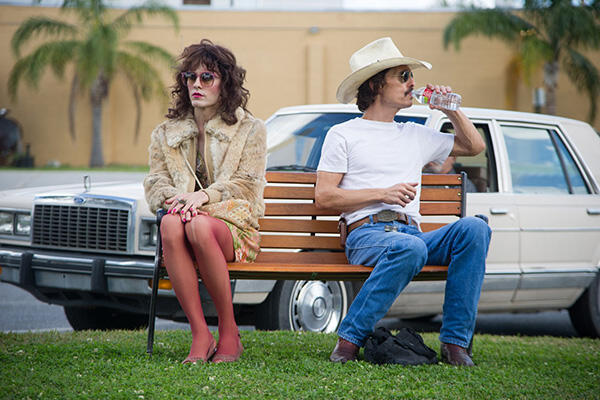
Grade: A - Dallas Buyers Club tells the true story of Ron Woodrof, an HIV-positive hillbilly given 30 days to live and with no availability of effective medicines to change his fate. In a desperate attempt to extend his expiry date, and make a little money on the side, Woodrof begins smuggling unapproved pharmaceutical drugs into America for himself and fellow AIDS sufferers. This is not your regular AIDS flick chronicling the plight of socially-liberated homosexuals fighting against the system (ala Philadelphia or Rent). Instead, our protagonist is a homophobic, small-minded redneck with a penchant for hookers and cocaine (think the Wolf of Wall Street, but in a trailer park). Dallas Buyers Club offers a different perspective on the AIDS epidemic of 80s America as we see it through the lens of a man terrified and repulsed by gay people. Matthew McConaughey is extraordinary as our anti-hero, holding nothing back in portraying Woodrof’s shocking lifestyle. McConaughey not only nails the character’s extreme bigotry and aggressive machismo, but also the desperation and vulnerability that occasionally spurts from Woodrof beyond his control. In the wrong hands Dallas Buyers Club could have turned into one hell of a melodrama, but director Jean-Marc Vallee treats the material with minimal sentimentality and very few swooping violins, thank goodness. In particular, Woodrof’s transformation from a hillbilly caterpillar to an open-minded butterfly is so painfully gradual it avoids the usual pitfalls of the obnoxious “bad guy grows a heart” plotline so favoured by Hollywood. Jared Leto contributes to the subdued tone through his three-dimensional portrayal of Rayon, Woodrof’s transgender partner-in-crime, which was a breath of fresh air from Hollywood’s usual tendency to portray transgender people as only fabulous drag-queens. The downside of this realism is that the film’s pace had a tendency to lag, and it took far too long to get to the major plotline of drug-smuggling. Nevertheless, there is enough excellence in this movie to make up for the pointless and is worth seeing for McConaughey’s performance alone. I’m sorry Leo, but I think you’ll have to wait another year for that Oscar.
-
12 Years A Slave
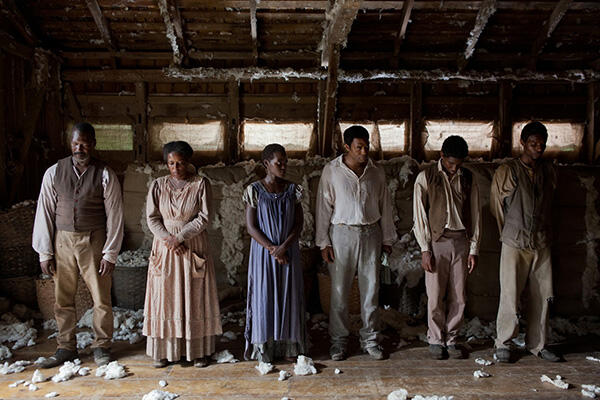
Grade: A+ “I don’t want to survive. I want to live.” While 12 Years a Slave is expertly (and beautifully) set in 1840s America, it is not a very comfortable film to watch. Steve McQueen’s (Shame and Hunger) film has garnered a raft of Oscar nominations and accolades, a testament to its calibre and power. It is a bloody and brutal narrative of Solomon Northup’s (Chiwetel Ejiofor) kidnapping and condemnation into slavery. His treatment by subsequent “Masters” Ford and Edwin Epps (Benedict Cumberbatch and Michael Fassbender, respectively) are case studies of slavery in the American South. The human spirit is relentlessly examined through moments of brutality and sheer desperation, and it makes for some testing viewing. Fassbender, in particular, produces a compelling portrayal of a slow descent into terrifying madness caused by having absolute power over of his “property.” However, his portrayal is only of many dark, soul-crushing aspects of this film that create the feeling of hopelessness and systematic oppression that a slave had to endure, especially on cotton plantations. Behind the patriarchal domination lies the equally influential Mistress Epps (Sarah Paulson), who plays the part of the jealous wife to perfection. In this setting, her actions and reactions determine the fate of their slaves, however terrible they may be. A typically emotive soundtrack from Hans Zimmer and a sincere (and crucial) cameo from Brad Pitt round-off an immensely powerful and moving picture. It successfully projects the great repugnancy of slavery and a society divided according to race. You may think that these scenes are unthinkable, but you will think again after viewing this realistically shocking tale. “A great ill hangs over this nation, and the Day of Reckoning is yet to come.”
-
Saving Mr. Banks
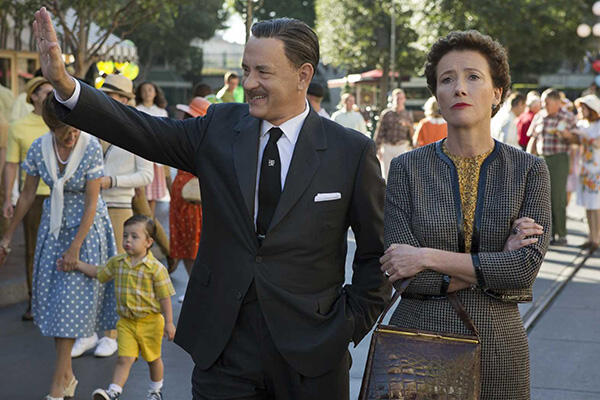
Grade: A - Exquisite performances and a powerful story make this film a success. You may be familiar with the classic 1964 Disney film Mary Poppins. The 2013 film Saving Mr. Banks invites you to become familiar with the tormented artists responsible for producing such an uplifting and memorable childrens’ tale. Emma Thompson is superb as the austere P.L. Travers, who wrote the original book. When Walt Disney, captured magnificently by Tom Hanks, finally convinces her to come to Los Angeles to co-write a film screenplay, she finds that his alterations conflict with her values and dark past. By showing us the struggle between Travers’ rigid artistic integrity and Disney’s mass consumerism, the film causes us to question why people ever choose to create artworks at all. Is it to exorcise the demons they carry? To preserve a perfectly-imagined dream against a cruel reality? Or simply to make money? A similar, fantastically provocative theme was the question of whether or not Walt Disney is evil. He wants to ‘dumb down’ the Mary Poppins story as it was written, and we are set up to hate him and the way he sold out his own treasured creation, the Mickey Mouse character, in the form of gaudy merchandise. But it is no spoiler to reveal that in the end Disney has his way and the Mary Poppins film (surprise, surprise) is made. Can he be evil for trying to sprinkle a little pixie-dust on every child, for profit? Or is Travers the evil one, for refusing to take joy in her own life; or for eventually getting a taste of Disney’s whimsy and money, and caving in? You’d best see the film and decide these questions for yourself. This film’s climax was so inspiring it even made me forget how deeply I detest Colin Farrell in everything – not to mention the Disney corporation, as a whole.
-
I, Frankenstein
Grade: C A huge number of people work to produce a film. When I watch a film as horrendously written as I, Frankenstein, this is all I can consider. How is it that a huge number of industry professionals worked on this project and, yet, not one person put up their hand and said “Excuse me, I don’t know if you’re aware, but this script is garbage.” I, Frankenstein is the adaptation of a graphic novel in which the character of Frankenstein’s monster from Mary Shelley’s novel Frankenstein is pulled into a war between demons and gargoyles. Believe it or not, this ridiculous premise actually works quite well in graphic novel-form. However, as a film, it is an abysmal failure. The script is an unmitigated train wreck. In terms of narrative form, it is all over the place. The first 30 minutes are unadulterated exposition, desperately trying to give the story some form of grounding. The characters themselves are unjustifiably one dimensional, lacking any motivation or conceivable emotion. But, worst of all, is the dialogue. The film had three types of dialogue: blatant exposition; cheesy action-hero catchphrases; and vomit-inducing attempts at characterisation. As deeply flawed as this film is, it is not entirely without merit. It boasts some impressive stars such as Aaron Eckhart, Yvonne Strahovski and Bill Nighy. These reputable actors did their best with the script, but their credibility has to be called into question on the basis of why they would take on a film like this at all. I, Frankenstein has some impressive action sequences and, I have to admit, the spectacle of hundreds of enormous stone gargoyles battling even more demons appealed to the action jockey deep inside me. The film also featured some interesting visual moments as the camera slowed in action scenes to reveal detailed sequences of carnage. However, I, Frankenstein also featured some truly terrible prosthetic effects that were painfully reminiscent of C-grade 80s science fiction. The only reason I could recommend this film would be for its action sequences, but they are not worth sitting through the “story” to get to. How this film got passed the first read I’ll never know. Sigh.
-
Chipotle Chicken Tacos with Homemade Flour Tortillas
Sometimes I feel like Mexican food is really just an excuse to bring out Corona and tequila. Which isn’t a bad thing, mind you, but while we’re at it, replace the fatty, cheesy Tex-Mex with this vibrant and flavourful, fresh alternative. My favourite dish at the moment is chipotle chicken tacos with homemade soft tortillas (which are also cheap and a dream to make). I used some La Morena homemade-style chipotle in adobo sauce that I found in the international section of New World City Centre. It comes in a bright orange tin. I think it costs, like, $3.50 but it should last you about two meals (freeze the left overs in a snap lock bag). I always make my tortillas from scratch. Now, you could buy those in the packets but they can be really expensive, especially if you are feeding four, five or six people – and even more so if they all happen to possess a Y-chromosome. Over the summer, when I had an abundance of time, I practiced making tortillas myself by hand. All you need is flour, oil and water and they turn out really well. Plus, there is nothing like the taste of a fresh one, straight from the pan. You can buy tortilla presses but I just use an old wine bottle or a rolling pin to roll them out. Sure they will be far from circular, but I think that looks cool. Bulk it all out with fresh tomato salsa, lettuce and a tonne of coriander and you are good to go! Ingredients (SERVES 4)For the chipotle marinade: 500g chicken breast or tenderloin 3 tablespoons La Morena homemade-style chipotle sauce (available from the Mexican section of NW City Centre) 3 cloves of garlic, crushed 1 teaspoon ground cinnamon 1 teaspoon ground cumin 2 teaspoons paprika 1 teaspoon smoked paprika 1 tablespoon dried oregano 1 teaspoon salt ½ cup vegetable oil ½ cup cold water For the flour tortillas: 1 ½ cups plain flour 1 teaspoon salt ¼ teaspoon baking powder ¼ cup + a splash vegetable oil ½ cup boiling water For the pico de gallo salsa: 2 large tomatoes, diced ½ red onion, diced finely 1 handful fresh coriander, roughly chopped 1 teaspoon salt A good grinding of pepper Juice of one lemon or a couple of limes A splash of olive oil Other fillings: Butter or iceberg lettuce, shredded Sliced avocado Sour cream Hot sauce or the left over chipotle sauce Method1. Slice the breast or tenderloins into chunky strips. Mix with the other marinade ingredients in a medium-sized bowl. Leave to marinate for an hour or overnight. 2. Pan-fry the chicken pieces in batches on a medium heat. Cook the chicken at the same time as you make the tortillas; that way everything will be ready at the same time – but in a different pan, of course. 3. To make the tortillas, combine all the ingredients in a large bowl. You may need a bit more water and oil to bring it together into a nice, smooth ball. Knead for a few minutes then pop it back in the bowl and cover with glad wrap for 20 minutes to rest it. 4. Heat up a clean, dry frying pan to the highest temp you can get it. Take Ping-Pong ball-sized blobs of dough and roll out until they are thin enough until you can just see the bench colour beneath them. Place them on the hot pan, one at a time, until each side starts getting those attractive brown spots on it. Leave under a clean tea towel while you cook the rest. This should make around 12 tortillas. 5. To make the salsa, combine all the ingredients and toss to mix in the salt and lemon juice. Serve in a bowl with a coriander sprinkling. 6. To construct your taco, place a small amount of the chicken in the centre of your tortilla. Plop a dollop of sour cream on top of the chicken. Add a couple of spoonfuls of the salsa and some shredded lettuce. Sprinkle over some of the left over La Morena chipotle sauce or some hot sauce if you wish. Fold in half, try not to make a mess (my bad!) and enjoy!
-
Banished
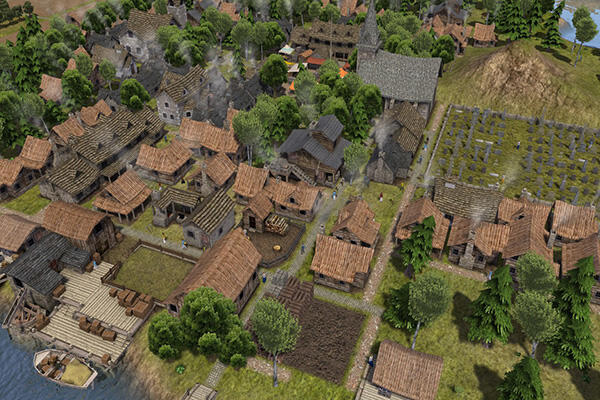
Grade: A - It’s not often that you can call a game literary. In my opinion, it has only been in the past generation of games that developers have truly cracked into gaming’s potential to reveal and analyse truths about the human condition. The human condition, of course, is a very broad thing, but some games have successfully looked at subjects like emotion, relationships and conflict. The games that I think have transcended their medium into the realm of literature have come from a variety of genres, but never has a strategy game numbered among them … until now, that is. Banished is the first game made by Shining Rock Software, a new developer that is amazingly comprised of just one man, Luke Hodorowicz. Hodorowicz spent the last decade working as a graphics programmer, until he broke off on his own to develop a game he would want to play. That game is Banished. Banished is a city-building strategy game. This, of course, is a very broad genre, so to put the game into perspective, it falls somewhere between Age of Empires and SimCity. The premise is simple: you start the game with a group of people in a randomly generated environment; they have recently been banished from their society and have to start again, only using the resources at hand. Like Age of Empires, the game has an emphasis on resource management and buildings with specific functions. However, like SimCity, the game functions without any form of conflict or absolute objective – other than to build and maintain your civilisation. The real challenge of the game comes from the strategic assignment of resources and manpower. Your enemy, in a sense, ultimately ends up being nature itself. The game has a cycle of seasons that directly influence the world: in spring, your villagers plant their farms; in summer, they grow; and in autumn, they harvest – all in the interest of surviving winter. In fact, nearly every decision you make playing this game will make you ask yourself “How will this effect my winter? Will it leave me with enough food and wood?” Each cycle of seasons marks the passing of another year, and the aging of your citizens. Your citizens, like the seasons, also have the natural cycle of birth, work, procreation and death. So management of age in your society is also a constant juggle. As your population builds, the needs of your society continually fluctuate. While you focus on supplying enough food to prevent your citizens dying of starvation, the wood supply runs out and they all freeze to death. And, just when you find a perfect balance, disaster strikes. There are several disasters built into the game, such as tornados and fires. These forms of disasters are sure to decimate your populations and raze your buildings. However, the far more insidious disasters are the subtle ones such as an early snowfall in autumn that wipes out your crops before you’ve finished harvesting them. Banished can be equally uplifting and devastating in quick succession. It is through this experience that Banished finds its ways of transcending entertainment and becoming art. As you struggle and toil, doing your best just to ensure that your people make it through another harsh winter, it is almost impossible not to reflect on the struggle of human existence. In a more literal form, it makes you think about the insurmountable odds humans have overcome to evolve into our current, sophisticated society. In a more abstract sense, the game made me reflect on the entropy of existence, the continual everlasting cycle of life and death. Like most art explained on paper, it sounds immaterial. However, Banished offers insights that have to be played to truly be experienced. Despite the game’s literary nature, it has little more to offer once you’ve grown your society to whatever feels like peak. In many ways, this contributes to the literary sense of the game. However, it also means that there is little reason to continue playing aside from starting another village or set of arbitrary Steam achievements. Regardless of the game’s limited replay-ability, the experience the game offers in building and maintaining your civilisation is an artistic feat. Your time with the game will undoubtedly be a rollercoaster of frustration and victory, and I hope that, like me, your experience is also a thought-provoking one.
-
New this week
For how long exactly is an album, or track, considered new? Keeping up can become quite a time consuming task, though nonetheless a rewarding one. Media is so readily available now; we have the ability to consume at a very high rate. For me, it’s hard to not get carried away on an endless wave of just listening to “The Best New Thing.” The quantity and availability of music is definitely something to be embraced, but does it come at the cost of sometimes devaluing musicians and their work? We live in a culture where longevity and relevance is a feat because of its rarity. So it’s out with the old and in with the new; singles in review. Tiny Ruins - Me At The Museum, You In The Winter Gardens An autumnal tune which features some beautiful guitar picking. Channelling Nick Drake, the track is romantic in a way that is subtle, whilst retaining a peaceful undercurrent of melancholy. Mac Demarco - Passing Out Pieces A breezy, summer track from the Montreal-based songwriter. Includes a swinging horn section and nicely used synths in the background. Real Estate - Crime This reverb-soaked song features intricate guitar playing and a wistful, swaying vocal melody. Light, melodic and washed out. Heterotic - Rain [Ft. Vezelay] Sensual, dreamy, synthesiser pop, with soft, wispy vocals by Vezelay. A slow-burner, after-hours kind of song. Speedy Ortiz - American Horror Left Noisy, angular, Slint-esque guitar playing, with a strong hint of melody. Speedy Ortiz showcase elements of slam poetry in a haze of nineties nostalgia.
-
Artist Profile: Clap Clap Riot
As part of their four-date New Zealand tour, Auckland based indie-rock band Clap Clap Riot play Chick’s Hotel on 15 March. Stephen Heard and Dave Rowland talk briefly to Adrian Ng about the band’s new album Nobody/Everybody, touring life, and Rock N’ Roll. Did you all come from quite a musical background? What caused you to gravitate towards music? Stephen Heard: My brother was always the most musical in our family. He made the local paper for building a bass guitar in woodwork class, and his saxophone ability earned him the nickname “saxy boy.” We gravitated towards music in high school after discovering that it made us way cooler. Dave Rowland: My folks tried to get me into piano when I was younger, but I failed dismally at that. Music was just something we all really enjoyed doing together and we always had the same ethos on performance so that’s what kicked it all off. What was the writing process like for this upcoming album? SH: One person usually writes the bones of a track and brings it to the rest of the group for further additions/tweaking. Lyrics are usually the last thing to be completed. DR: It varied from song to song. Some were written in parts by each of us and then added to. Others were written mostly by one person then brought together at the end. They were all refined further when brought to the rehearsal room. SH: Each song has its own story but a few were written within a shipping container deep in South Auckland, and others may have come from ideas recorded into someone’s phone. In relation to your previous album, did you feel a difference in terms of what you wanted to achieve musically? SH: Definitely. We wanted a looser, more live feeling, resulting in a more human feel and groove. DR: Yes, we wanted to go for a more real, live sound to the record, giving a more honest picture of who we are as a band. You’re currently touring New Zealand with Sherpa. Have most tours been a relatively positive experience? Were there any major disasters? SH: There’s nothing better than touring with your mates. We’ve definitely come close to disaster a few times. DR: We have had some minor hiccups on the way - car engines catching on fire, no accommodation arranged, running off the road at a T intersection, and getting busted stealing chocolate brownie. Do you feel rock n’ roll will ever die? DR: Never. People are always going to start getting sick of seeing someone stand behind a computer punching buttons and will eventually crave the real thing again. SH: The genre will progress but the culture will stick around as long as there’s sex, drugs and beer.
-
St. Vincent - St. Vincent
Grade: A When an album is self-titled it usually signals an attempt at a self-defining statement. The cover of St. Vincent’s fourth album depicts Annie Clark perched atop a pink throne; deadpan, confident and menacing. With her hair now dyed a blonde-grey and styled in eccentric fashion, she resembles an evil mastermind – Einstein and Cruella de Vil’s lovechild, if you will. Following in the footsteps of art-pop icons such as David Bowie and David Byrne, Annie Clark seems to have truly embraced the performance aspect of being a musician, using her image as a vehicle to further personify her art. Musically, however, and unlike Bowie – who over time garnered the nickname “The Musical Chameleon” – St. Vincent’s latest output is not so much a reinvention, but an evolution; a progression which seems to have reached another interesting stage of development. The album begins with “Rattlesnake,” a robotic, art-pop track centred on a fuzzed-out synth groove. “Am I the only one, in the only world?” Annie sings, recalling a real life encounter with a rattlesnake, while naked in a Texan desert. After a few listens, the record almost follows a similar model to Michael Jackson’s Thriller or Prince’s Purple Rain, with its combination of groove-based numbers and heart-felt ballads. In St. Vincent’s case, manic, distorted-funk gems are contrasted with ethereal, plastic-soul ballads. However, aurally, some layer of crunch and fuzz ties them all together. Songs like “Huey Newton” and “I Prefer Your Love,” for example, would not be out of place on a Prince album, with their sweeping, angelic vocals, and moody, jazz-soul melodies. However, the rhythmic, crunchy percussion, and the sometimes-angular instrumentation, introduces a unique, quite machine-like dynamic to the music. Lyrically, the songs seem to revolve around human behaviour and existence, addressing the mundane social norms of today’s society. “Digital Witness,” for example, draws attention to society’s addiction to documenting and sharing everyday events on social media, whereas songs like ‘Prince Johnny’ touch on artifice and a longing for identity. In comparison to her preceding albums such as Cruel Mercy and Actor, St. Vincent feels and sounds more coherent; building upon her already consistent song writing. By no means is this record unfamiliar to some of Annie Clark’s previous work, but it is definitely bolder and more focused in terms of what it wants to achieve. As Ms Clark herself puts it, “I wanted to make a party record you could play at a funeral.”
-
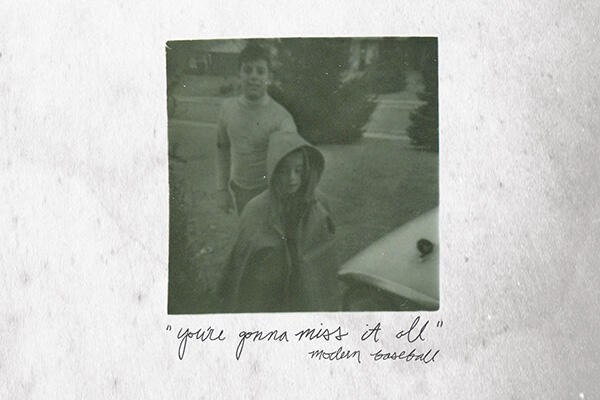
Modern Baseball - You're Gonna Miss It All
Grade: B + If this record had come out seven years ago, it would’ve been a solid fixture in my CD collection; wedged right between A Lesson in Crime and From Under the Cork Tree. With the angst of emo’s old generation like Sunny Day Real Estate and Built to Spill, and the pop-punk energy of Blink-182, Modern Baseball are part of the current emo-revival fuelled by dudes who grew up listening to the first wave. Just like some of the 90s-revival bands that have put out decent albums in the last few years (Yuck, Pains of Being Pure at Heart), Modern Baseball won’t give you anything radically new on “You’re Gonna Miss It All,” but what they do give is pretty radical, anyway. “Your Graduation” is an everything’s-fucked-I’ll-show-you-all-one-day banger that takes you on a fifth form heartbreak nostalgia trip, while “The Old Gospel Choir” begins as a Modest Mouse track and ends in an ultra groovy breakdown, dropping sass along the way like: “Sharp as a tack but in the sense that you’re not smart, just a prick.” “Two Good Things” could be the cheesiest “Why?” song you’ve never heard. However, it’s the most sombre, self-deprecating track on the album that I found myself going back to. “Timmy Bowers” is a slow moving acoustic ditty about “living more like a piece of shit without you” that bounces along in the middle of swirling ambience and reverb. Two-thirds of the way through the LP, it’s a nice break from the intensity of the relatively heavy first seven tracks. The amount of angst exerted on this record is one of its greatest strengths, but also the thing that makes it hard to really connect with as a (somewhat) grown-up person. When, finally, you’re able to identify why he/she just wouldn’t notice you, and how it actually was fair because you were kind of an asshole back then, it’s easy to feel pretty silly about the whole thing. Listening to “You’re Gonna Miss It All” was like getting a beer with an old friend from high school: you remember what you loved about them, but also why you’ve moved on. It’s still good to catch up, though.
-
Interview: Chloe Geoghegan, Director of the Blue Oyster Art Project Space
With her first exhibition opening as Director of the Blue Oyster Art Project Space just last Tuesday; Chloe Geoghegan is set to bring an exciting, fresh breath of life to Dunedin’s art scene. Loulou Callister-Baker caught up with Chloe to discuss Oxford, irrigation and earthquakes. How’s everything going? Something really embarrassing happened to me yesterday. Last night at the opening [of the exhibition titled When Your Neighbour’s Problems Become Your Own, see page 34], the new chair of the board for Blue Oyster introduced the show and me. After she described my background, everyone was silent – nobody said anything. It was the kind of moment where I should have just said, “As you were...” But instead I was thinking, “Wow, do I actually have to say something now?” Then all I could think of was how funny it would be if I said, “Hi, everyone ... I have no friends.” And that’s what I said ... It was so embarrassing! People told me afterwards that what I said was endearing. Now, I realise I should have something prepared. My position is a position of learning. Can you describe your background? I grew up in Wellington but I was really curious about the South Island, so I decided to study fine arts at Canterbury University’s Ilam. I was also attracted to the South Island because of affordability – when you go to art school, you need money to buy a lot of material. After art school I went travelling. I even went skiing in the Himalayas. Then, after two years of doing things like that, I was working at the Govett Brewster in Taranaki and I found the curating really interesting, so I went back to Canterbury to do a postgraduate diploma in art curatorship. On the second day of university was the earthquake, but this amazing thing happened where the university offered postgraduate art students the opportunity to go to Oxford University. I went to Oxford and studied curating on my own because they didn’t have a curating paper, so I just did an independent course of study for a trimester. Also, while I was overseas, I went to the Venice Biennale (the one that Michael Parekowhai was in). I went to multiple lectures including a talk by Glenn Lowry, who is the director of the Museum of Modern Art in New York. It was amazing! When I came back I did an internship at the City Gallery in Wellington because the paper I was taking had an internship component as well. I finished that then went back to my job at an irrigation shop selling sprinklers. Found objects... Yes ... it was very contemporary. Living in Christchurch that year was quite difficult; I wasn’t really into constantly tidying up sprinklers after every little quake, so I had to decide whether I was going to stay in this God-forsaken town and kill it, or leave and never come back. I decided to stay as a friend of mine and I were both interested in starting up a gallery space so we ended up setting up Dog Park Art Project Space, a concrete unit in the industrial district of Christchurch. We’ve had over 20 shows in the past two years by students, established artists, collaborations and residencies. We even had the space turned into a specialised car decalling workshop for an exhibition, kind of like getting your car specially spray painted, but with stickers like the ones you’d see on a Hilux or a Rav4. It’s been a lot of hard work over the past two years but, as I was saying before, learning all the time. The School of Life. But I’m not giving any hope to any art students here because we weren’t getting paid! We were spending money on it. Now I’m using all of these experiences and bringing them to this space at the Blue Oyster (an actual paid position; they do exist). Ten years later after starting university, it’s really exciting to be in a position as director of a gallery, even if it’s just a little one! Do you view yourself as bringing something different to the space than the previous director? The previous director, Jamie, is a really good friend of mine – he’s been really great in presenting challenging works to the Dunedin community. He was amazing with funding and even moved the gallery from a basement to a street front. I’m interested in continuing what Jamie was doing and diversifying as well. I want to use all the good work that he did and push the Blue Oyster further into the professionalisation of a long-running project space. Do you have any set goals of what you want from 2014? I want to use this year to really immerse myself in Dunedin. I’ve never lived here before. I want to find out more about the place and use what I find curatorially and directively. Does part of that involve visiting artists in their studios? Studio visits are really important. It’d be great to help increase the profile of artists here and encourage people graduating from art school to challenge themselves and apply when the Blue Oyster has proposal rounds. I also want to bring national and international artists in who can show artists in Dunedin what’s out there and give them access to new things. What are you personally interested in with contemporary art? Emerging and experimental practice is my overarching interest and that’s why I am working in a place like Blue Oyster. I’m interested in collaborations. I’m also interested in artist-run spaces and social practice in a gallery – the conversations, the interactions, going to openings. If students want to be involved, what do you recommend they do? Email me at director@blueoyster.org.nz or visit me at the gallery on Dowling Street. Don’t feel shy about walking to the other side of town – we’re only two blocks away from the Octagon! We have a volunteer pool of people who pour drinks at openings, gallery sit, help with installing, have artists to stay, and photograph the art. I would also recommend coming to the openings – come in, have a drink, then go out for dinner afterwards!