
-
Columns

Editorial | Issue 18
I tried, oh how I tried, to get up on my high horse and write about the marriage amendment bill that will shortly be coming before Parliament, which will of course allow gay and lesbian couples to marry. But I just couldn’t get passionate about it. Not only is it highly likely that the bill will pass, it’s blindingly obvious to anyone born this side of 1945 that a legally mandated institution like marriage needs to be open to any two people that want to enter into it, regardless of how their bits fit together. Personally, I’d prefer if the government got out of the marriage business entirely, and just provided a basic civil contract that people could sign, divvying up their property if they decide to split. But that’s just me. Generally there are two arguments against gay marriage, and neither of them is very good. The first says that you are undermining the family unit, and that it is unfair on any children that would be raised by said couple. Sure, ideally there would be a man and a woman raising a kid. But hetero marriage has a terrible track record of providing committed and loving relationships as the basis for raising kids. Anyone with half a brain would say that a loving gay marriage is a better place for a kid than a divorced and acrimonious hetero one. The second, slightly stronger argument is that religious establishments, churches for example, shouldn’t be forced to marry people that do not share their religious views. And if a religion forbids homosexuality, then fine, of course they shouldn’t be forced to marry a homosexual couple. However, it is the government who makes the rules about marriage, not churches. Legally gays should be allowed to marry. Churches should make their own internal decisions. No, you won’t have the right to marry in that beautiful church that you love if the parish that the church belongs to doesn’t agree with gay marriage, but it’s their church, tough shit. Honestly, it surprised me how excited people got when the news came out (see what I did there) that a gay marriage bill would be put before Parliament. I cannot for the life of me understand why any intelligent person would fight for the right to enter into an establishment as fucked up as marriage. I get the desire to have exactly the same rights as everyone else, but still, it is honestly beyond me. But it sure as hell isn’t up to breeders like me to decide what rights queers should have. You tell me what you want, and I’m more than happy to help you get it. Hey, look at that. Wrote the whole thing about gay marriage after all.
-
News

University Staff Member Receives C+ in FRAUD101
A University of Otago staff member was escorted from the University campus by security guards last week, as police began investigating an alleged major fraud that was uncovered by an internal University audit in June. National Radio has reported that between $200,000 and $300,000 was allegedly stolen over several years. A University spokesperson confirmed that the matter was handed over to police last week. Detective Senior Sergeant Kallum Croudis says police began investigating on Thursday July 19 after the University laid a formal complaint against the staff member earlier that day. University Council members were apparently informed that the suspected fraud had occurred at their last meeting. However, it is not clear why there was a gap between the Council being informed and the matter being handed over to police. Critic has received reliable information that the alleged fraudster worked as an Accounts Manager in the University’s Financial Services Division. The man’s name has now been removed from the Financial Services staff directory. Speaking to Critic, Det. Snr. Sgt. Croudis declined to confirm the identity of the alleged fraudster. Becoming increasingly amused with Critic’s requests for confidential information, Croudis taunted this knowledge-hungry reporter that the investigation was going “swimmingly”, and that “tons of relevant information has come to light”. However, charges have not yet been laid, and “no one has been arrested yet”. The alleged fraudster’s Facebook page provides a tantalising hint that he may have been fond of a flutter – one of the only two pages he has “liked” is that of Slotomania, an App available for Facebook, iPhone and Android in which users can spend real money purchasing coins to use in virtual slot machines. Critic tried to think of a stupider way to spend stolen money, but was unable to do so by the time the magazine went to print.
-
News

Student Health Sickened By Influenza Outbreak
An increasing number of people have been affected by the spread of the influenza strain known as H3N2. While the name of the virus sounds similar to that of Star Wars’ R2D2, those afflicted will feel as though they’ve crash-landed on the Ice Planet Hoth. Christchurch has been hit hardest by the influenza, with over 60 people hospitalised, 12 of whom are in a critical condition. The significant number of hospitalisations resulting from the flu outbreak has led to a push for people to get the flu vaccine. Health Minister Tony Ryall issued a statement in which he confirmed that the flu vaccine would continue to be made available to the public: “At this stage, the strains identified are covered by this year’s seasonal influenza vaccine. We have stock of around 20,000 vaccinations within the current budget, and we are advised that additional doses would be readily available.” Although H3N2 is yet to be confirmed as present in Dunedin, Director of Student Health Dr Kim Maiai told Critic that surprisingly few students shelled out for the $20 jab before the “flu season”. Maiai confirmed that students are coming in with symptoms such as nausea, coughing, and a sore throat, all of which are common in cases of H3N2. As with other flu outbreaks, Dr Maiai explained that the best way to prevent the spread of germs is common sense precautions like washing your hands as if you had OCD, eating well, and getting plenty of sleep. An interview with a Student Health staff member would not be complete without a desperate plea for students to lay off the drink, and Dr Maiai duly obliged. One online doctor’s website has suggested that the H3N2 outbreak “is going to be worse than the swine flu epidemic”. While this claim is yet to come to fruition, Critic advises sick people to stay home and not be “that annoying coughing person” in lectures.
-
News

South Dunedin Blamed for all Problems
Alternatives to the proposed liquor ban are being sought following a meeting between OUSA, Dunedin City Council representatives, and the Youth Action Committee on Tuesday July 24. The Council’s Liquor Ban Implementation Group delayed its decision on the liquor ban last month to consider various alternatives, although the ban is still an option. The Council will hold a series of similar meetings with relevant groups such as the police and the health sector. The objective of the group is to curb harmful drinking among students, and at the end of the year the group will present the council with a recommendation which will be voted on. Councillor Kate Wilson commented to the ODT that “there is no point using ... [a liquor ban] as a tool if you are not going to get buy-in [from those affected].” OUSA President Logan Edgar told Critic that although he’d “armoured-up” going into the meeting, he was pleased that the meeting’s objective was to find a better alternative to the “shit idea” that is the liquor ban. Edgar told representatives at the meeting that “students aren’t the problems in society”, citing arrest figures during big student events: of the fifteen arrested during Orientation Week, only four were students; of the ten during the Hyde Street Keg Party, just one was a student; and of the 17 during the recent Re-Orientation Week, three were students. “One of them was for having a piss in the street, another one was for offensive language and the last one was for being drunk. The other ones are probably giving people hidings and stealing things, like the South Dunedin people.” One of the more popular alternatives the group discussed was to clean up scarfie-ville. “If you drive through a nice suburb, it’s not fucked up. People respect places when they’re nice,” Edgar says. These plans to clean up North Dunedin would potentially include a glass ban, and would capitalise on the passion for the environment shown by many students by putting out more recycling bins. Another idea is to open more student pubs in the area, which are inherently safer places for people to drink due to regulation, support by proprietors, liquor licensing, and police. However, the closure of several student pubs such as the Bowler and Gardies has reduced the number of licensed premises close to studentville. “It’s like the Indians have all surrounded the last railway carriage that is the Cook,” says Edgar. The proposed bars don’t even need to be spread out – Edgar likes the idea of a good local bar area for students around the Cook area, and says OUSA are going to “have a think about a few different bar options around there.”
-
News
Panel Debates Age Restrictions for Fermented Grain
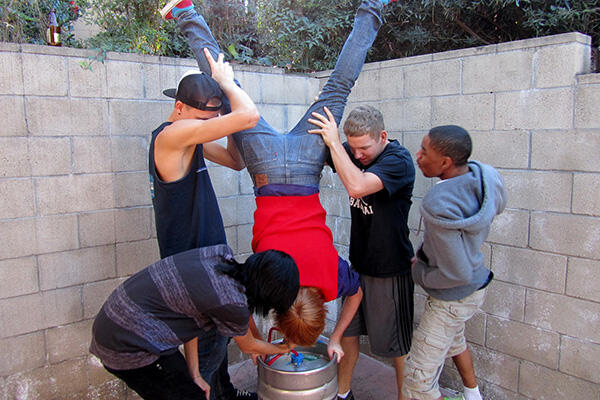
The controversial topic of a split legal drinking age came before a caffeine-fuelled Otago University Debating Society and a panel of guest judges in the Great Alcohol Debate last Wednesday. The negating team, who were arguing that the drinking age should remain 18, secured the win as well as majority support from the audience. The affirmative team argued in favour of a split drinking age, with 18-year-olds allowed to drink in bars but not allowed to purchase alcohol outside bars until age 20. The argument put forward was that 18 to 20 is the most vulnerable age bracket, and that a split drinking age would help to delay young people’s acclimatisation to binge-drinking culture by ensuring that their drinking occurs in a controlled environment with limited access to alcohol. Arguing that the drinking age should stay at 18, the negating team pointed out the absurdities that the law change would create – notably, the inconsistencies between rights would leave an 18-year-old alcohol-free but still legally able to work as a prostitute in Mosgiel. They further highlighted the dangers of on-licence drinking with the toast-worthy example of Monkey Bar, “where you certainly can coma on a couch and they won’t do much about it.” The guest panel, which was comprised of Mayor Dave Cull, Student Health Director Dr Kim Maiai, Dunedin South Labour MP Clare Curran, and OUSA President Logan Edgar, was put to good use between each six-minute offering from the debaters, answering questions sent in via text or the more tech-savvy Twitter hashtag #splitagedebate. Notably, Curran opposed the idea of a split age, remarking: “Legislative measures should be addressing behavioural issues, not age issues.” Following Mayor Cull’s concern that drunkenness was treated among students as “almost cool,” Edgar declared his intentions to put a “Great Wall of China between the student population and Dunedin South” to isolate those who are really to blame for ruining Scarfie culture. Edgar is currently calling for tenders for the construction of the wall, which is due to commence in 2013.
-
News
Rumours not enough to kill captain cook
With the University’s new Alcohol Implementation Group (AIG) aiming to rid the streets of shameful Scarfie inebriation, it was only a matter of time before rumours began to abound regarding their nefarious plotting. Professor Jennie Connor, chairwoman of the AIG, has publicly stated that the board would lead a more proactive approach towards dealing with alcohol, which would result in the University opposing liquor licenses, and having more input on the location of bars and the conditions of their licenses. Critic subsequently heard various rumours that The Cook was not going to get its license renewed, that the Uni was going to buy it out, or that it was straight-up closing down. The wrath of the board was also said to have spread to Madly British and The National. On investigation, it became apparent that the rumours have no basis. A spokesperson for The Cook even went so far as to sigh heavily when he heard the news of their imminent closure, saying that they “get these rumours every year”. He reassured Critic that The Cook’s license is not up for revision until November 2014, and that they are on good terms with the Uni: “[The Uni] likes that we can control where the students are drinking rather than them setting things on fire.” Madly British seemed surprised by the suggestion that they were in any trouble, insisting that it was “full speed” over there, and that there was no suggestion that they would lose their license. There was a small gem of truth in rumours about The National – it has closed its doors temporarily while they relocate. The proprietor says they should be up and running again soon, but are currently unable to make any statements about the closure. The AIG’s aims have so far been said to be all about controlling the environment in which students drink, particularly in flats. Shutting down three pubs (two of which are arguably not typical watering holes for riotous students) would seem somewhat counter-intuitive.
-
News

Margaret Mahy - She Dead
Margaret Mahy, the author who gave New Zealand the gift of such brilliant children’s books as The Lion in the Meadow and The Man Whose Mother Was a Pirate, died at the age of 76 in a Christchurch hospice last Monday night after losing her battle with cancer. Mahy arguably found her point of difference from other children’s writers in her ability to tackle challenging issues with intelligence and a sense of fun. Her trademark wit made Mahy’s stories genuinely enjoyable for parents who were reading to their children, a concept later ripped off by “kids’ books that also appeal to adults” staples such as Harry Potter. Let it never be forgotten that Margaret Mahy invented that shit. Mahy started writing at the age of seven, putting pen to paper “in a spirit of implacable plagiarism because, reading widely as I did, I rapidly came to feel that everything worthwhile had already been written.” In keeping with that same spirit, Critic plagiarised this quote from the New York Times. As well as her more than 45 published books, Mahy provided the concept for the BBC’s TV series Maddigan’s Quest, which depicted the story of a girl in a post-Apocalyptic world who, along with the rest of her circus troupe, journeys to find a new Solar Converter to save her town. The show was aired in New Zealand in 2006. Mahy was undoubtedly the queen of New Zealand literature, to the point where her contemporary rival Joy Cowley was regarded as having received a compliment when she was described as “The Poor Man’s Margaret Mahy”. One of Mahy’s more popular works, Raging Robots and Unruly Uncles, tells the story of a criminal family who are given a robot programmed to be pure evil, and a virtuous family who receive an enchanted living doll determined to “improve” others. While the plot has great potential, the hilarious writing style is what made the story so outstanding. At one stage, the “good” robot hopes to adjust the bad robot’s ethics dial, which is stuck on “super-villainous”, to “merely bad”, or even better, “downright inconsiderate”. A public memorial service has been planned for Wednesday August 1 at Christchurch’s Hagley Park Dome, where Critic expects the city to shake with grief as her stories are read out to the crowd.
-
News
Lavender Armageddon Begins
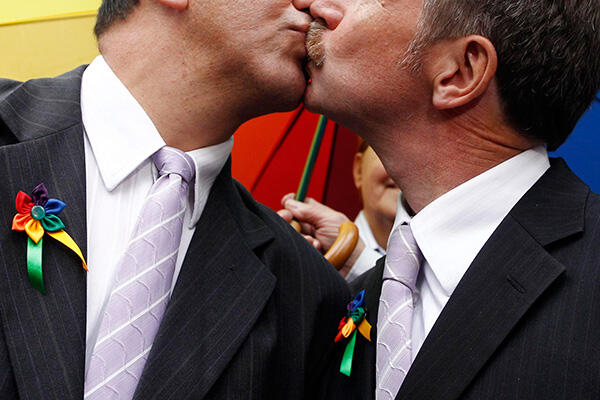
God is reportedly “gutted” after a bill aiming to legalise gay marriage was pulled from the Members’ ballot on Thursday. The Marriage (Definition of Marriage) Amendment Bill was submitted into the ballot by Labour MP Louisa Wall. The first reading of the bill is expected to be held in around six weeks’ time. At this stage, the bill seems likely to pass. Major parties will almost certainly allow their MPs to vote with their consciences, which ensures the support of National’s liberal wing as well as the Greens and the majority of Labour’s MPs. The Campaign for Marriage Equality recently surveyed MPs as to how they would vote at the bill’s first reading. Of the 72 who replied, only 16 would vote “no”. The naysayers include Hone Harawira, Peter Dunne, Labour MPs Damien O’Connor and Ross Robertson, and several National and NZ First MPs. Four other bills were also drawn from the 62 in the ballot, including Labour MP for Dunedin North David Clark’s Minimum Wage Amendment Bill, which proposes lifting the minimum wage to $15 per hour from its current rate of $13.50. The bill is likely to be shot down by the Government at first reading. Another bill drawn from the ballot was Labour MP Clayton Cosgrove’s State-Owned Enterprises and Crown Entities (Exercise in Utter Futility) Bill. If passed, the bill would make asset sales require either a 75 percent majority in Parliament or a referendum. Given that it goes against one of the Government’s major policy platforms as well as fundamentally undermining the principle of Parliamentary Supremacy, which provides that Parliament should not entrench legislation in order to bind future Parliaments, the bill has about as much hope of passing as a linguistics student with Wernicke’s aphasia.
-
News

OUSA Revolving Door Keeps On Turning
Maria Pozza has been elected as OUSA’s Postgraduate Representative after a fierce campaign against bitter rival No Confidence. In the final count, Pozza won with 70 votes, compared with four votes for No Confidence. Poor showing, old buddy. Pozza believed that her PhD would make her a great candidate, and campaigned on the basis that “it would be both a pleasure and a privilege to utilise my diplomatic, organisational, and motivational skills to represent our collective interests.” The by-election came after the recent departure of ex-Postgrad Representative Victoria Koszowski at the end of last semester. Another departure from the OUSA executive was also announced early last week. Aaspreet Boparai resigned from his position as Education Officer due to “personal family reasons”. In a press release he announced that he “was sorry to be leaving.” Speaking to Critic, Boparai rejected any suggestion that the constant exodus of Exec members was a sign that all is not well within the boardroom, saying his resignation had “nothing to do with the operation of OUSA”. OUSA President Logan Edgar showed some emotion while commenting on Boparai’s resignation, stating: “He didn’t want to go but he had to go. That’s life.” Boparai denied Critic’s completely unfounded implication that he had been touched inappropriately by Edgar during his time on the Exec. After this string of resignations, questions have arisen over Edgar’s ability to hold together the OUSA Executive for the rest of the semester. Edgar admitted that “some people might think things might not be all peachy, but they’re really pretty fucking sweet to be honest.” As for the prospect of yet another by-election, Edgar stated he hoped there would be a lot of interest in the Education Officer position: “It’s a sweet gig.”
-
News

Medieval Trenchcoat Knight Terrorises Waikato
Students at the University of Waikato were falsely alarmed on Wednesday July 25 when a man wearing a trenchcoat was reported to be carrying a weapon on campus. At 10:29am, an email was sent to all staff and students following the sighting of a “tall, Caucasian male, in his twenties... with shoulder-length brown hair”. Police were immediately called to the campus, while the University was left to simply “hope there is no cause for concern” as the man roamed free. An update was sent out 13 minutes later to alert students that the weapon “was probably a sword [which] may be part of a medieval jousting event being held on campus today.” While the police were still investigating, the University affirmed that they “believe there is no cause for alarm,” demonstrating the beautifully-crafted and poetic repetition that has made their English Literature department the envy of the western world, subverted only with synonyms for “concern” and “hope”. Over an hour after this literary gem – giving their students time to fully appreciate it – the University was given the all-clear by police, who “closed” the tragic case. The intruder, who turned out to have been holding an umbrella, “had been addressed”, and the University was using the incident “to hone our own emergency response.”
-
News

What is a Sport (Part 1)
Rowing is not a sport. Neither is cycling. In fact, most of the events at the 2012 Olympics are not sports. And most of the ones that are sports don’t belong at the Olympics. Sometimes the dictionary definition of a word just doesn’t cut it. According to the ivory-tower intellectuals who wrote the Oxford Dictionary, tomatoes are a fruit. Tell me, geniuses, when’s the last time you saw one in a fruit salad? The word “sport” is even more vexing – every man and his Tux Wonder-dog claims that his own obscure, one-dimensional hobby counts as a “sport” because of the legitimacy the term provides. Shamefully, the dictionaries of the world are complicit in enabling such misrepresentations. It’s time to return the term “sport” to its original, narrow meaning. Here’s how to separate the real sports from the wannabes: 01 | Closed skills are not sportsThe first hurdle for qualification as a sport (NB: hurdling is not a sport) is that it must involve open skills. An open skill is performed in a constantly changing environment, where the competitor must react to things happening around him/her. One example is cricket, in which the batsman must react to the speed and direction of each ball as it is bowled, while the bowler must constantly adjust his strategy to avoid becoming predictable. Another example is boxing – each fighter must dodge or attack as the situation demands. Most team sports, as well as all martial arts, are based on open skills. Closed skills are performed in a stable environment, where there is no need for any adaptation to circumstances that crop up during the event. For example, 100m sprinters simply sprint as fast as they can. They can’t leave their own lane, and they can’t interact with their opponents in any way. The same applies to rowing. Closed skills such as sprinting and rowing lack the dynamic and strategic elements that are a key part of any genuine “sport”. This article is not intended as a criticism of closed skills, many of which are challenging and impressive athletic endeavours. But they’re not sports. Some genuine sports require the occasional performance of closed skills, such as penalty kicks in football and free throws in basketball. But on the whole, players in these sports are moving around and choosing which actions to take in a dynamic environment. The Olympic Games should represent the pinnacle of human physical achievement in certain athletic pursuits. It is not the right place for sport. The Ancient Greek Olympics had the right idea, being packed with closed skills like javelin-throwing, discus, and long jump. The modern Olympics include other worthwhile closed skills such as cycling, triathlon, and gymnastics. A few sports have snuck in since the modern revival of the Olympics in 1896 (such as tennis and volleyball), but like a homo erectus at a bronze tool-making class, they clearly don’t belong. The only exceptions are combat sports like boxing and judo, which fit with the spirit of the ancient Olympics. 02 | Sports can’t be played in skinny jeansReal sports involve at least a small amount of physical exertion, so they can’t be played to the best of one’s ability while wearing skinny jeans or a miniskirt. Sporty Spice wouldn’t have worn those Adidas sweatpants if she was just going to play snooker or Texas Hold’em. She needed the flexibility and durability they provided while playing sport. The bar is not set very high for this requirement – even golf qualifies under the skinny jeans test, despite being suitable for overweight septuagenarians. But the test does rule out purely mental pursuits such as chess and debating. And don’t even try to call video games “E-sports”. That’s like calling sociology a science. 03 | Sports don’t have cars, horses or boatsIf you’re sitting in a car, riding on a horse, or sailing in a boat, it’s not a sport. Being responsible for moving around solely through the use of one’s arms and legs is a crucial element of sport. As soon as you add machines or horses into the equation, you’re dealing with something completely different. Like the name of Dunedin restaurant “Great Taste”, the word “motorsport” is severely misleading. After applying these three rules, there are only 14 sports being played at London 2012. And most of them don’t belong in the Olympics. Finally, always remember the golden rule: if you have to ask whether something is a sport, the answer is probably no.
-
News
What is a Sport (Part 2)
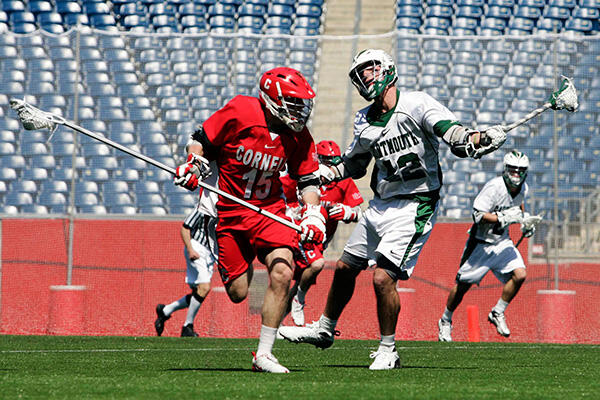
So here goes. First, I would like to say that this is a completely thankless task. This debate will never be decided, and no amount of emotive vitriol or ascerbic wit will bring us any closer. They only thing we can hope for is to be dragged entertainingly off-topic by some interesting thoughts and avoid getting bogged down in semantics. Still, I fear that that the atrocious avenues of vitriol and semantics are exactly where Callum will take you, mainly because this topic lends itself to fuck-all else. I am sure Callum will instantly set about tearing down anyone and everyone’s moderate and sensible notions of what a sport is in scurrilous fashion. I can hear his self-righteous pomp now: “I don’t care what you say Gus, javelin is not a sport (voice a little higher pitched now), it’s just not (even higher now), I mean, I don’t know how anyone can think that javelin is a sport, what you’re thinking of is a hobby (and finally, at a pre-pubescent crescendo), I don’t care what anyone says, I’m not going to let those hippies win, rah rah rah, tax the poor, rah rah rah.” While Callum’s theory is sure to be polarising, like a child he sees only in black and white, while I understand the more sophisticated concept of a “grey area”. Skills are not divided simply into “open” and “closed” activities. They are spread along a continuum, and most have elements of both (I don’t have time to explain what closed and open skills are, this isn’t Sixth Form PE). In my opinion, an activity can consist mostly of closed skills, but as soon as it tips even slightly off the impossibly high pedestal of a “purely closed skill” then it is eligible to become a sport. Take Javelin as an example. In essence, it is a closed skill. But then introduce external factors such as the pressure of competition, the environment of the stadium, and the fact a winner will be crowned, and you’ve got yourself enough grey area to rebuff the black-and-white “closed skills can’t be sports” argument. I’m not saying that all closed skills are sports, but that an event appearing “closed” at first glance is not enough to banish it from the sporting pantheon forever. For me, a sport only has to clear three hurdles to make the grade. Is it organised (not spontaneous)? Is it competitive (a contest)? Is it physical (the primary means of success is through the superior execution of a physical skill)? If yes to all three, then you’ve got yourself a sport my friend. Come on up here with the rest of us. Now, the physical part is important. The other two criteria are pretty easy to meet, but the physical element really decides the issue. Is the main activity involved in the sport powered by the participant’s own body? If so, then yeah, you’ve got yourself a sport. Football? A sport. Javelin? A sport. Darts? Sure, why not. Video games? Nah. So I’m sure Callum has had a great old time tearing down all the things he thought you thought you knew about what a sport is. I have tried not to get bogged down in semantics and lexicology – we all know that’s boring as shit. It’s the reason legal trials don’t attract massive audiences. You know what do attract massive audiences? Sports. Now go watch the Olympics.
-
Features
Prof. Alan Musgrave
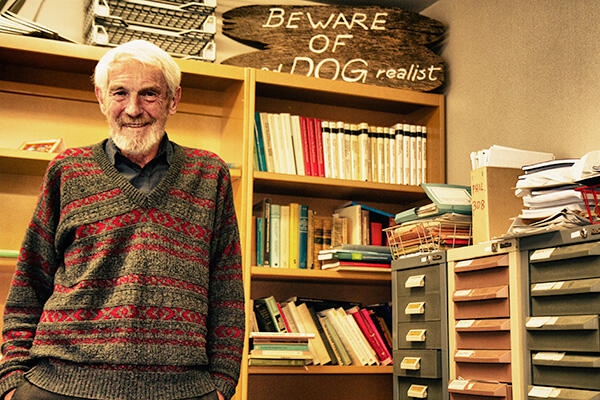
Over 40 years of research and dedication to the University of Otago Philosophy department has paid off for Professor Alan Musgrave after being awarded an Otago University Distinguished Research Medal. The medal is Otago University’s highest research honour. It rewards and recognises outstanding scholarly achievement, including the discovery and dissemination of new knowledge, the development of innovative technology, and the development of concepts that lead to significant advances. Prof Musgrave has been at Otago since 1970, when he was appointed Head of the Department of Philosophy, and is unsurpassed in the research areas of Epistemology and the Philosophy of Science and Biology. Prof Musgrave humbly describes his career as “a chapter of accidents, most of them lucky accidents… When you have spent your life somewhere, it is good to know that you’ve not wasted your time.” He was initially accepted into the London School of Economics to study law, but reassessed this career path when an obstinate man told him that to be a barrister at law, you needed to have a rich father. “I didn’t have a rich father, so I thought, ‘Oh bugger, no point studying law,’” Prof Musgrave reveals. He then took up a new course, in Philosophy and Economics. Despite not knowing what Philosophy was when he started, Prof Musgrave soon realised his passion for it under the watchful eye of his lecturer, the world-renowned philosopher Sir Karl Popper. He eventually became Popper’s research assistant. With his career trajectory set towards teaching, Prof Musgrave came across “a Mad Hungarian” who told him “you’re mad, you must do research.” Who was the madder of the two became irrelevant, as soon after a letter arrived awarding Prof Musgrave a PhD scholarship to study Philosophy and Economics at the London School of Economics. It was Popper who went on to recommended Prof Musgrave for the upcoming position as Head of Philosophy Department at Otago. Popper, who had taught at Canterbury University during World War Two, and was a lecturer and colleague of the Vice-Chancellor, Pro-Vice Chancellor and Dean of Arts at Otago University at the time, suggested Prof Musgrave might be fit for the role, despite being “an absurdly young man” of only 30 years old. Migrating from the other side of the world with two young children and a wife, Prof Musgrave said he “was welcomed with open arms” into the Department. During his first visit he fell in love with Dunedin. Coming from the British class system, he knew no better than to tip his taxi driver. However, the habitual gesture was ill-received: the taxi driver responded, “I’m not your servant, mate.” Another incident that emphasised the differences between the two countries occurred when Prof Musgrave spotted a Rolls-Royce coming towards him. On closer inspection, he saw that the back of it had been converted into a sheep truck carrying three ewes. Prof Musgrave was delighted, and thought “what a wonderful country! Nobody is anybody else’s servant, and the farmers have Rolls-Royces to cart about useful sheep instead of useless Lords and Ladies.” For a man so down-to-earth, yet so incredibly smart, Prof Musgrove is still able to relate to the less philosophically minded. Epistemiology, his area of study may sound intimidating, but as Prof Musgrave explains, “Epistemology is just a fancy name for theory of knowledge. Do we know anything? Are there any things we know for certain?” As for the future of Philosophy and how much more questioning and thinking that can be done, Prof Musgrave reassured me that there are in fact no limits. “The problems with philosophy are so general that they are not going to go away. They get redefined every generation, and new disciplines arrive – communication studies didn’t exist 50 years ago. I think there will always be new things for philosophers to do.” This probably explains why Prof Musgrave is yet to retire. The 72-year-old thought of retiring long before 2010. Needless to say, he is still teaching and lecturing. He puts it down to the fact there’s “no compulsory retirement age anymore, so the University has this very nice scheme where by people can retire very gracefully and gently.” As far as life after death goes, Prof Musgrave “[doesn’t] believe in it. But the people who do, what do they mean? Life of something other than the body after the death of the body, so we consist of bodies and souls, do we?” Coming from an “irreligious background”, Prof Musgrave’s stance on religion is that “it’s very sad that there’s so much pain and suffering inflicted by one lot of people on other groups of people because of what really are very odd metaphysical beliefs.” During his years at Otago, Prof Musgrave’s research department has twice been ranked the top research department of any subject in New Zealand. Understandably, cutting all ties to something you have dedicated a huge chunk of your life to and excelled at is not an easy task. Upon hearing of his retirement, Prof Musgrave’s colleagues wanted to set up a scholarship to commemorate his 40 or so years of service to the department. The scholarship is now up and running, with the first recipient arriving on campus shortly. Donations from friends of the Department and the University have been so generous that the recipient’s Masters course, costing about $35,000 a year, is covered by the interest gained by the fund. “I am indeed proud, and I am pleased that the beneficiaries of it won’t be me but students of philosophy,” says Prof Musgrave. “It will go on forever.” Not only will his scholarship go on, but so will the books that he has written. Sense, Science and Skepticism was written for a course in Epistemology over 20 years ago: “I couldn’t find a good [textbook], so I wrote one.” It is still being published, and has been translated into multiple languages. As for where philosophy can take you, some of Prof Musgrave’s students have found themselves in rather prestigious positions. The current professor of political thought at Oxford and the youngest and first female Solicitor-General of an Australian state, who is now a high court judge, are both Graduates of Philosophy at Otago. However, Prof Musgrave advises to “do what interests you. You’ll enjoy it more, and you’ll probably do better at it.”
-
Features

An Unnecessarily Clinical and Probably Inaccurate Analysis of New Zealand's Olympic Team
185 New Zealand athletes will compete across 21 sports at the London 2012 Olympics. That's a lot. It puts us in the top 20 nations in the world in terms of numbers competing. Britain will have the most, with 542 athletes competing across all 26 sports. 21 sports is a lot of sports to know about. 185 athletes are too many to follow closely. Dunbar's number proposes that we can only maintain 150 friends. I propose that we can only pay attention to around 120 athletes in a single Olympics. Under the guise of being a sports expert, I have been charged with distilling those 185 athletes down to a manageable level. Partially in order for you to enjoy the Olympics more easily, but also partially because Stockman has a sadistic love of time-consuming research assignments. I have divided the 185 into three manageable groups. Firstly and most importantly, a group I have labelled “The Legitimate Medal Hopes”. This is the group of athletes who I have decided would be extremely disappointed to not win a medal. Not all of them will win medals, but all of them are travelling to London with a realistic hope of glory. The second group I have labelled “In With a Shot”. Sport is a wonderful thing. Anything can happen on the day. If “the day” of this group’s event happens to coincide with “the day” of this group’s best-ever performance, along with the stars aligning on a few other uncontrollables, this bunch could sneak a win. Don't expect any medals from this group, but you never know. The third group I have cruelly labelled “Making Up the Numbers”. These athletes are of an extremely high calibre, and all legends in their own right. To even qualify for an Olympics is a massive achievement. Unfortunately, at this level the competition will be too much. Maybe it is their first Olympics and they will improve in years to come. Or maybe qualifying for the Olympics was their Everest, and they should just relax and enjoy the experience. We may get to enjoy some plucky and inspiring performances from this group, but unfortunately they will come home empty-handed. So here goes. I'm quite happy to be proved wrong on as many of these as possible, as long as New Zealand grabs loads of precious metal. The Legitimate Medal HopesValerie Adams is the reigning Olympic and World Champion. If she throws near her best she’ll win another gold medal. The only person in her way is Belarussian Nadzeya Astapchuk.Lisa Carrington may be an unfamiliar name, but she came from nowhere to win the K1 200m World Championship title in 2011. That means she can do the same in London.Marc Willers and Sarah Walker are both realistic chances for a medal in the BMX. Walker got 4th in Beijing, and is quite hot. Willers was the ABA rider of the year last year, whatever that means.Linda Villumsen used to compete for Denmark in road cycling. Now she is a New Zealander, and she is really good. I wonder if she knows the national anthem.Out of the rowers, four crews should get a medal. The men’s pair of Bond & Murray are as close to a certainty as it gets. The men’s double and lightweight double should come home with something, and Mahe Drysdale has won everything in rowing except a gold medal.Two sailing crews should do well in familiarish conditions. Aleh and Powrie in the 470, and Burling and Tuke in the pseudosexually-named 49er class.Andrea Hewitt is ranked Number One in the world in triathlon. She is also very small. So very, very small. In With a ShotStuart Farquhar is capable of some big throws in the javelin. In such a conditions-dependent sport, if he can make the final he could sneak close to a medal.Nick Willis is the reigning Olympic silver medalist in the 1500m. Injuries and form mean he is an outside chance to repeat his feats, but he is a man for the big occasion.Ben Fouhy in the K1 1000 and Steven Ferguson with Daryl Fitzgerald in the K2 1000 are rowers who could turn back the clock and recapture some form of years gone by.Karen Hanlen had a top ten finish in a World Cup race this year. If some people crash she could get lucky in the women’s mountain biking.Greg Henderson is an outstanding “lead out rider” in tour cycling events. Unfortunately the team element is absent in the Olympics road race, but he has won stages of tours before. It’s really hard to find any meaningful information about our mountain biking duo Sam Bewley and Karen Hanlen. I guess they're in with a shot then. The eventing team should do all right. They have Mark Todd, who is at his 3000th Olympics, and Jock Paget, who is ranked 4th in the world at the moment.Both men’s and women's cycling pursuit teams are ranked well into the top 10, and both could sneak a medal if things fall into place. Pretty much the entire track cycling team fits into the “In With a Shot” category – they are all ranked in that 10th to 4th in the world range which puts them in the hunt.The women’s and men’s hockey teams are ranked 6th and 7th in the world respectively. Both have had top 5 finishes at the Champions trophy in the last couple of years.Because of the strength of New Zealand, the seven other crews who weren't in the first group are in this group. My favourites for a surprise medal are the women’s quad, which includes Otago's own Fiona Bourke, and the women’s pair of Haigh and Scown.The remainder of the sailing team is a bit of a mystery to me. They all have confusing number-related category names, and there are 15 of them. Sailing is a bit of a lottery at the best of times anyway.In the pool New Zealand has three swimmers with a chance. Freestyler Lauren Boyle, breaststroker Glen Snyders, and backstroker Gareth Kean. Unfortunately New Zealand hasn't won a swimming medal in 16 years.The rest of the triathlon team is also very strong. Docherty is very experienced, as are Gemmell and Samuels. Sissons and McIlroy can beat anyone on their day. Making Up The NumbersSarah Cowley is a heptathlete at her first Olympic games. Even her best points total won't put her in the hunt for medals.Decathlete Brent Newdick will be excited about his first Olympics. Unfortunately his personal best of 8114 won't put him anywhere near the medals.Race-walker Quentin Rew has said that he is aiming for a top 16 finish. Unfortunately they only give out three medals.Unfortunately for Kim Smith, the Kenyans dominate the women's marathon. No one else really gets a look in.Lucy Van Dalen's official Olympic profile says she has the “potential” to make the top sixteen. Maybe Rio is the Games for her.Women's boxers Siona Fernandes and Alexis Pritchard are both testing the waters in this brand new event. Pritchard has been ranked as high as 11th in the world, but that’s about it.Teneale Hatton is canoeing at her first Olympics and improving fast. Maybe the Olympics for her will be Rio 2016.Erin Taylor is the partner of Lisa Carrington in the K2 500. Carrington is better on her own.Mike Dawson will be the first NZ male ever to compete in white water slalom canoe. Unfortunately he qualified by finishing 11th in a World Cup meet. Luuka Jones goes into the women’s event ranked 14th in the world. On the plus side, she has a very white smile in her Olympics profile.Kurt Pickard is the odd one out in the BMX crew. He's still young though.Jack Bauer will compete in the road cycling time trial and road race. Fighting terrorism in a predetermined time period? Yes. Medals? No.Louisa Hill is competing in the dressage, which in my opinion shouldn't be in the modern Olympics. They should give the horse the medal instead of the rider.Both football teams won't get anywhere near the medal games. The women will probably do better than the men, but the men have some interesting young attackers in Chris Wood and Marco Rojas.I know nothing about Judo. It says on Moira De Villiers profile that she has the potential to make the top 16…Shooter Ryan Taylor only made the Olympics after a legal appeal that proved he could make the top 8.The rest of the swimming team, apart from the three already mentioned, are going to struggle to make any finals. To pass the time they should all grow Danyon Loader ponytails.Logan Campbell is the best-known Tae Kwon Do representative in London, but that is because he opened a brothel with a certain Critic staff member’s brother to pay for his trip. He and Robin Cheong are ranked in the top 10 in the world, but Vaughn Scott is ranked a lowly 20th.Marina Erakovic might get out of the first round in the tennis but shouldn't get much further.Richie Patterson is the only New Zealand weightlifter at this year’s Games. He's aiming for a top 10 finish. Well, there you go. That was pretty comprehensive. The New Zealand Olympic committee has said that they are aiming for 10 medals. My patented quotient ratio has determined that we will in fact receive 6 medals, 2 of which will be gold. I'm not going to tell you who they’re going to be, because that would bankrupt the TAB. Enjoy the Olympics. I know it’s going to be a sleep free month for me.
-
Features
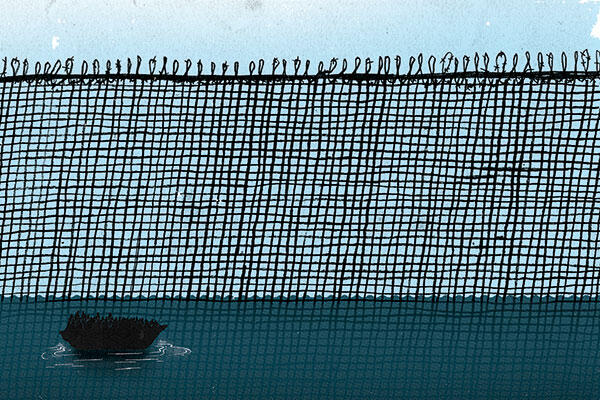
A Long Journey Home
We’ve all been in situations where we don’t feel safe and need to escape. Maybe it was a sober night at Monkey Bar, a slightly-too-ruckus Castle St party, or being confronted by a stranger in a dark alley. I was chased down Arthur Street by a drugged-out lunatic at 2am just last week. But luckily for us, such conflict is usually quite easy to avoid. A short taxi ride (or a long run) and we are home safe and sound. But imagine that instead of ultra-ghetto North Dunedin, you are in Afghanistan. And instead of lusty first-years chasing you, the Taliban are after you and your family simply because you’re different. You are literally fleeing for your life. You have no choice but to leave your family behind to escape and build a new life, clinging to the slim hope that one day you’ll be reunited. You fork out all your savings and more, leaving your fate in the hands of vicious loan sharks. The journey is horrific. Instead of a taxi, you are huddled in the back of a truck, then crammed into the hold of a boat that looks like it would never float, especially not with several hundred other desperate people on it. The conditions are treacherous, but really there is no choice. You die where you are or you hold onto the slim chance you may reach somewhere hospitable, and not die on the way there. Mohammad Amiri is now a New Zealand citizen and the President of the Afghan Association in Wellington. He was once an asylum seeker, and this story closely resembles his. Speaking from his new home in Wellington, he told me the dramatic story of his flight from Afghanistan in 2001, while fearing for his life. “For decades we have had war in Afghanistan. Sometimes you have to leave the country if you want to live. If I had stayed I would have been killed, as so many others had been killed back in my city.” Like many asylum seekers, Amiri had no chance to go through a refugee camp. He made the arduous journey through Pakistan, Hong Kong, and Malaysia to Indonesia, where he contacted people smugglers who he paid US$4000 - 5000 to take him to Australia. Who are Asylum Seekers?Before getting started, it is important to clarify a few points, as I am sure not all of you are law or politics majors. The United Nations (UN) defines an asylum seeker as someone “who has applied for protection as a refugee and is waiting for his or her status determination”. Amanda Brydon, of Amnesty International New Zealand, says: “Asylum seekers have a legal right to seek protection under the Universal Declaration of Human Rights, the Refugee Convention, and the 1967 Protocol, [all of] which New Zealand is a signatory to.” Michael White, of the New Zealand Human Rights Commission, explains: “Asylum seekers flee their home country because they face persecution. They seek safety and refuge in either an adjoining country or a third country.” Brydon adds, “It can be extremely difficult to flee, as countries are often in chaos as a result of the violence and instability. To make ones way to a UN refugee camp to be processed can often be near impossible for individuals and their families to do.” Many countries are also not signatories to the international agreements, which make countries who are, like New Zealand and Australia, more attractive. While there is no “normal” way to become a refugee, the danger such people face in fleeing their country often means they have to take desperate measures. Gary Poole, of the Refugee Council of New Zealand, explains: “Asylum seekers usually have no choice. They have frequently fled their home countries because of immediate danger of persecution, detention, torture, or execution.” Some resort to people smuggling, an illegal practice where asylum seekers are smuggled into a country for a fee, often by boat. These asylum seekers have come to be known as “boat people”, and over the last decade their plight has become increasingly prominent as people flee from conflict in the Middle East and parts of Asia. In 2010, 6,555 people in 134 boats attempted to reach Australian shores. While people smuggling is illegal, the Refugee Convention 1951 holds that asylum seekers cannot be discriminated against for the manner in which they arrive, even if it is through a people smuggler. If New Zealand were to refuse assistance to asylum seekers who arrived via people smugglers, we would be the ones breaking international law. Nonetheless, seeking to reach Australia by boat is an extremely dangerous practice. More often than not the boats are hardly seaworthy, and are packed with several hundred people. In October 2001, a boat carrying 400 people crashed into rocks off Christmas Island off the West Coast of Australia, and 353 people drowned. The death toll included 146 children and 142 women. Just last month, around 50 people are believed to have drowned after a boat carrying 200 passengers crashed in a similar spot. The risks people take on these boats show just how desperate their situations are. Amiri puts it bluntly: “They have two options: die where they are, or take the risk [on the boats] and maybe they will live.” The Tampa AffairIn August 2001, Amiri and several hundred other asylum seekers were crammed into a 30-metre long wooden fishing boat aimed for Australia. This was the start of a saga that came to be known as the “Tampa Affair”. Not long into the journey, Amiri’s boat began sinking just off the North West Coast of Australia. The Tampa, a Norwegian freighter, responded to the distress call and rescued everyone onboard. Amiri recalls, “Luckily the Tampa rescued everyone, as fifteen later minutes the boat went down.” However, the Australian Government refused to allow the ship to enter Australian territorial waters, and threatened to arrest the captain for people smuggling if he did so. When the captain entered Australian waters anyway, having declared a state of emergency on board, the Howard government dispatched Australia’s Special Air Service (SAS) to take control of the boat and ensure it did not enter Australian waters. The Australian government eventually came up with the so-called “Pacific Solution”. Two detention centres for the asylum seekers were built on the pacific island of Nauru. The refugee status of the asylum seekers was determined there, rather than on Australian territory. But for some, what was supposed to be six months of processing turned into several years of living in oppressive conditions. Amiri describes his time on Nauru as “Hell – for one 45 — 50 degree heat, but not just the weather: the situation, the emotional, physical conditions… Everything was like hell… Imagine you don’t know about your family for three years, and they don’t know about you either.” Amiri ended up spending three years on the island, and during this time he became aware of New Zealand. He began to write to then-Prime Minister Helen Clark regularly, pleading with her to let him come to New Zealand. Clark responded that first the United Nations High Commission for Refugees must accept him (UNHCR), and then New Zealand could assess his case. Eventually the UNHCR accepted Amiri, and he joined other refugees from the Tampa in New Zealand. Why do they want to come here?Amiri says, “New Zealand has one of the best reputations in the world for taking in refugees, and we should keep that.” From the Greens through to National, this pride crosses all political boundaries. Jan Logie, of the Green Party, says: “The Green Party is proud of New Zealand's tradition as a caring global citizen which goes right back to our involvement in the writing of the declaration of human rights, which binds us to accept people seeking asylum.” Minister of Immigration Nathan Guy is “proud of our humanitarian record... We accept around 750 genuine, UN-mandated refugees every year.” New Zealand and Australia are part of a group of only ten countries in the world that accept UNHCR quota refugees for resettlement. Further, in New Zealand we process an average of 250 — 300 asylum claims each year. Guy recalls United Nations High Commissioner for Refugees António Guterres’ visit to New Zealand earlier this year. “He praised the quality of our resettlement programme, and attended a Marae welcome ceremony for newly arrived refugees in Hamilton. He said that it was ‘one of the most genuine and moving reception ceremonies’ he had seen for refugees anywhere in the world.” National has recently claimed we must be prepared for a mass arrival of asylum seekers by boat, but whether New Zealand is a target is debatable. Amiri recalls that when he left Afghanistan he had never even heard of New Zealand. “I knew about Australia, but only in Nauru did I meet someone from New Zealand and became interested.” THEY’RE COMING!!! In April, the Government introduced the Immigration Amendment Bill as a means to deter people smuggling and cope with the potential mass arrival of asylum seekers. It is a controversial piece of legislation and has already drawn strong criticism from a wide range of influential actors, including Amnesty International, the New Zealand Human Rights Council, the Refugee Council of New Zealand, and the United Nations High Commissioner for Refugees. Guy says, “New Zealand has been targeted by people smuggling operations in recent years, and we know that the risk is real.” He believes the bill will show New Zealand is not a “soft touch”, and will hopefully “discourage the dangerous and cruel business of people smuggling, and help us deal with such an arrival if it does occur.” While the bill was designed to deter people smuggling, critics argue that in fact it is discriminatory to asylum seekers arriving in groups by boat. Logie believes it only “sends a message of mistrust, and reinforces a sense of fear and burden [in the asylum seekers].” Further, it is seen as an unnecessary response, as New Zealand has never had asylum seekers arrive by boat. One of the main points of contention is the definition of “mass arrival” as an arrival of more than 10 people, far less than the 500 the bill was designed to deal with. The bill also allows for the detention of “mass arrivals” for an initial period of six months. According to Brydon, “detention can have serious consequence on the rights and health of an individual”, and should only be used as a “last resort”. From experience, Amiri is also wary of the six months’ detention period. “Australia said the same, to hold for six months, but it turned out to be over three years.” Brydon adds, “It is important to note that people smugglers may be breaking the law, but asylum seekers are not. It is inhumane and in contravention of international law to punish asylum seekers escaping war and terror in order to send a message to people smugglers.” The Office of the United Nations High Commissioner for Refugees also expressed their concern. “The combined effect of these proposed measures represents a significant change of direction from New Zealand’s traditional, and very positive, approach to asylum-seekers and refugees.” So where to now?While sad to have left Afghanistan, Amiri is very grateful for the opportunity to start a new life with his family in New Zealand. “New Zealand is beautiful, it’s amazing, and I can’t believe it. When I say to people that New Zealand is paradise they don’t believe me, but actually it is paradise.” White argues that punishing the people who are smuggled will not stop people smuggling. Rather, regional cooperation in shutting down the people running the smuggling operations themselves is the answer. Brydon agrees, and believes governments need “to address the reasons that force asylum seekers onto boats.” We live incredibly safe and sheltered lives here in New Zealand, especially in the haven of North Dunedin. While this is not a bad thing, we should not take it for granted and sit idly by watching people suffer around the world. One way we can help is to give those people a new chance at life here in New Zealand. Unlike Australia, we don’t have to deal with the immediate issue of thousands of asylum seekers arriving by boat every year. Our isolation gives us the advantage of time to create a fair and just system to deal with asylum seekers, rather than a poorly thought-through piece of legislation that will damage our international reputation. Perhaps Amiri can give us some directions for the future. “New Zealand shouldn’t follow what the Australian government did, because New Zealand is different. We are better than Australia.” We certainly like to think so, don’t we?
-
Features

Dolphin Wars
They are one of those quintessential creatures that people just love, aren’t they. Dolphins fill crappy children’s movies, decorate our toilet paper, and are used by the New Zealand tourism industry to attract tourists who pay up to $200 for a chance to dive into our icy waters and hopefully swim with one. Everyone knows a mad keen horse fanatic. Well, the dolphin fans come a close second in levels of fervour. Yet despite their undeniable cute factor, dolphins have never really had the hypnotic effect on me that they seem to have on so many. So I set out to discover what it is that makes the dolphin such a well-loved mammal, and what is happening to New Zealand’s unique, and endangered, cetaceans. Maui had a dolphin … New Zealand is home to the critically endangered Maui’s dolphin, and it turns out we’re not the best protectors of these little guys. While New Zealanders often trumpet our proud anti-whaling stance, the plight of the 55 remaining Maui’s dolphins is quietly going under the radar. It seems a tad hypocritical that NZ calls so loudly for the protection of Antarctic whales when we are doing such a poor job of protecting a critically endangered species at home. However, you might cynically ask what the point is in trying to save the species if there are so few left. What can possibly be done now to save the species? Well, quite a lot, it turns out – and it’s not just conservation workers saying so. The Maui’s Dolphin is the world’s smallest dolphin, and is only found on the West Coast of the North Island. The dolphin inhabits a very specific part of the coast, and a Department of Conservation (DOC)-funded study conducted earlier this year concluded that the depletion of the Maui population is largely due to the presence of gill-netters in the same area. The recognition of the threat created by nets has resulted in an extension of the area in which nets are banned along the Taranaki Coast. However, the Taranaki fishery workforce is challenging the findings of the study and the subsequent ruling. Keith Mawson, spokesperson for the Taranaki fishers, suggests that there has been only one fishing-related dolphin death in the region in the last 20-years, and that as a result New Zealand must consider whether “this remote threat is enough to shut an entire fishery down, causing the loss of 50 jobs.” Like a Panda, but wetI asked environmental campaigner Pete Bethune why the plight of the dolphin is so important. Bethune compared the dolphin to another cute creature that, much like whales, New Zealand is quick to want to protect. “The Maui’s Dolphin is New Zealand's panda. We cannot allow it to go extinct. But we need a government with some backbone to act now.” And here lies the crux of the issue: there is an ongoing battle about what can be done to boost dolphin numbers, between government policy-makers, and the wishes of animal rights activists, DOC workers, and marine biologists. In 2007 a petition was delivered to Parliament with the signatures of more than 32,000 New Zealanders, in which the government was called upon to protect the dolphins through their current and historic range. While asking for the guaranteed protection of a species may seem like a vague and optimistic request, the campaigners, and DOC have suggested several specific ways in which it is believed the dolphins can be saved. Firstly, there is the obvious desire to regulate the ways in which fishing on the coast occurs so there is no dolphin by-catch. There is also a call for increased research into, and management of, other possible threats to the species, and lastly a need for further research into the dolphins and their environment. However, the wishes of Maui campaigners are largely in opposition to those held by Taranaki fishers, who say that the extension of the no-net area will destroy the local fishing industry. Cash MoniesThis is an important question to consider. In a time where all sectors are financially stretched and the implementation of new government policies is resulting in a social shake up, is the government right to destroy fishing jobs to protect the endangered Maui’s species? Yes, I am aware that this is heading dangerously down the “are humans and animals equal” track, but just ponder it. Mawson suggests that not only will the government’s new net policy cause job losses, but it will fail to increase Dolphin numbers. He points to factors such as pollution, disease, and predators as other threats that the net ban fails to address. "It will be the final nail in the coffin of the local industry and Port Taranaki as a fishing port. It's a case of mutually assured extinction, out of which no one will be winners – not the dolphins, and not the fishermen." However, the World Wildlife Fund (WWF) argues that an extension of the set net ban is the only way that the dolphin can be saved. Bethune also shares this sentiment, and points to the Black Robin as an example of a species that was saved when it was right on the brink of extinction. “The Black Robin was down to a single female. There are now 250 of them. If we can save a single bird we can save the Maui.” While the Black Robin is a good example of conservation at its best, there are vast differences between the circumstances surrounding the revival of the Robin and the obstacles to saving the Maui’s dolphin. The Robin could be transported to a safer environment in which it was essentially removed from many of the threats it faced. Birds are also considerably easier to control and monitor than dolphins, which of course are much larger. And perhaps most importantly, the survival of the Black Robin was never at odds with the livelihoods of people who shared their environment. Extinction face offUniversity of Otago Associate Professor of Zoology, Elisabeth Slooten, suggests that the banning of gillnets will also be beneficial for the fishing industry. “If these fishermen want their children and grandchildren to have a future in the fishing industry they need to stop using these nets today. This would be far better for the long term future and long a term benefit for the fishery.” Associate Professor Slooten, who has carried out several surveys of the Maui’s dolphin, told me of a recent study in which she was able to track the movements of the dolphin into harbours on the West Coast of the North Island. Slooten describes these harbours, which are not yet net free, as “death traps” for the dolphin. “This means Maui’s dolphins are literally staring extinction in the face. I sometimes wonder what it is about the words ‘critically endangered’ that the government officials don’t understand. They don’t seem to know that this is the last stop before extinct.” Keith Mawson also argues that the government is out of touch with the issue, suggesting that the government has done very little research into the species. Mawson told me, “The dolphin population will not survive if people only focus on the fishing industry, and think that restrictions to fishing will be the silver bullet for the survival of this dolphin.” Mawson suggests not only that set net fishing is not to blame for the dwindling population, but also that the claim that the dolphin only exists on the Taranaki Coast is simply not true. “The furthest south that a Maui dolphin has been found is Raglan, which is well north of New Plymouth. We do not believe, and there is no proof, that Maui’s dolphin are present in Taranaki waters. Therefore, we do not pose a threat to the Maui’s dolphin population.” Assoc Professor Slooten calls this claim “complete nonsense”. She explains, “if any of these fishermen have been working in Taranaki for more than a few years, they will remember the days when it was common to see Maui's dolphins in Taranaki waters.” While the differing perspectives of those involved reveal the complexity of the issue, what is certain is that the Maui’s dolphin is on the verge of extinction, whether as a result of fishing nets or other causes. All parties involved agree that inaction is simply not a viable option if the species is to be saved. So whether you are firmly on the side of the environmentalists, or feel the financial pains of the fishing industry and the families that are fed by it, what is most important is that a debate is started. As our population continues to grow, so too will the issues caused by the commercial use of an animal’s environment for financial gain. I mean, if we are willing to get tacky dolphin tattoos and rant about documentaries like The Cove, surely it is important that we consider how we can ensure that future generations are able to have dolphins around to do the same.
-
Columns
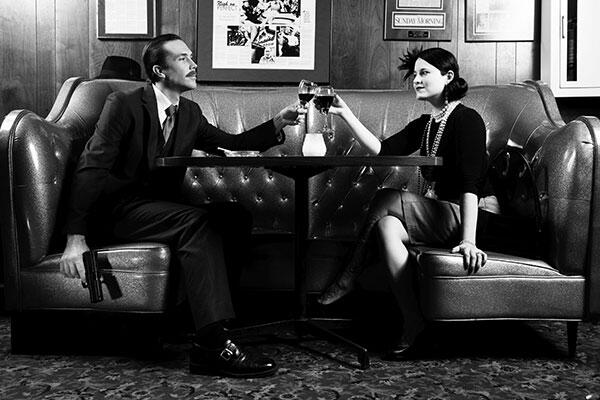
Me Love You Long Time | Issue 18
MILOCan’t say I’m nervous as I get dressed for the evening, of course the flaties help me. As I walk down the road to the bar I wonder who I’ll meet. Well I turn up 49 minutes early because being fashionably early is in these days. Finally I go into the bar, grab a seat and wait. I wait 15 minutes, not cause she is late, but because I’m early. I’m on the look out. I receive one last piece of txt advice from the flaties. And then she walks in, nice and with an easy stride. We quickly meet and greet, soon we’re talking. And what do you know, a Phyz Ed student with a great personality. Can’t say I’m surprised that we hit it off so good, no obvious awkward moments, and soon we talk up a storm. The meal comes and goes as we go through our movie preferences and things we like, having left things like what we want to see and do over garlic bread. The fish in well cooked and the chips taste good as we go through our food. Soon it’s 9:30 and we’re close to dessert, but we know so much, now for the more personal things like favorite color and exotic animal. Over too soon, we finish but decide to walk home together, discussing another topic we enjoy, ‘How I met your mother’ which soon has us laughing in fits. We keep walking and talking, as topics like actors and plays pass our lips and all too soon we’re parting ways, I ask the question of the evening, but no romance seems to be on the horizon, the ship of friendship is going strong. So thanks Critic for setting me up with such an awesome girl, hope we met again but in the mean time remember to pat your boy’s ‘proud patch’ and I hope we can find the answers to life’s questions in the fridge. So thanks for the laughs and all that. To the girl with the blond hair, I hope we met again, To talk about all things cats and cows, And hate the americans so proud, So I hope I did well to please both sight and smell, Because I do so wish to met again so well, So remember to not pat pink ponies in boats. OTISSo the evening started with my beautiful flatmates assisting me to get ready for my date in only 35 minutes! One of them asked me if I was going to have any pre-drinks but I flagged and said I’d wing it. Then one of those fab chicks dropped me off outside – fashionably late of course. I walked into the dimly lit Metro and got directed to his table just a few metres away. I sat down and we introduced ourselves. Conversation was pretty good – we definitely covered a diversity of subjects. I ordered a red wine to get me started as from our meeting I knew this was going to be a sensible night. As the evening went on I believe both of us were on the same wavelength that all this date was going to bring on was friendship due to most of our interests and attractions being quite opposite – with myself basically living and breathing sports and him having a great interest in sci-fi. He was also first year which was a little bit of a shock – considering I was third year, but I got over that. We just yarned and sharned till our main meals came out – which were delicious (I’d been looking forward to pizza all day nomnomnom!). The Bar Maids were great and allowed us to use this rest of the bar tab on food instead of drinks so we each got a dessert – which I didn’t even expect them to have on the menu, topping off an excellent meal and good conversation. As we left the bar the Bar Maid said cheekily “Have a good night!” – it was as if she was a real life Tui billboard – yeah right I thought in my head, what you’re thinking isn’t going to happen lady (get cho mind out of the gutter). We’re definitely in the friend’s zone. We both lived up the same end of town and as we walked we continued to question each other on abstract subjects which were surprisingly fun. When we were about to go our separate ways he asked “So do you think there’s an attraction here?” to finalise what we had been thinking all night out loud, I chuckled and said “No, I think we would be best to be friends”. The date ended there, even though it was unsuccessful in getting me back into the relationship game, it felt good to get back out there with those intentions.
-
Columns

Yes We Might! | Issue 18
If this keeps up 2012 could be remembered as the year of the “Batman election”. Instead of simply going to the cinema to watch a maladjusted billionaire get beaten to a pulp by a fruitily gurgling beefcake and leaving seven hours later pining for plot structure and Michelle Pfeiffer, we have to witness The Cinematic Event of the Year™ get pumped into a white leather sphere, adorned with black pentagons, and kicked around a field by a group of maladjusted millionaires while fruitily gurgling journos commentate with inordinate levels of excitement about Team Liberal’s intricate passing triangles and Team Conservative’s lumpen long-ball prowess. It all started, as many insane things do, with Rush Limbaugh, that seething mass of crank and spittle-fleck crazy. On his radio show on July 17, Limbaugh accused The Dark Knight Rises of being a re-election ploy for Obama, on the basis that the villain’s name, Bane, sounded like Bain Capital, Romney’s former company and current headache. Never mind that Bane first appeared in Batman comics in 1993, or that the storyline for Rises was roughly complete by the end of 2008, or that “bane” is already a word in the English language (along with “rush,” which means “to move very quickly from one point to another, often in an illogical or arbitrary manner”). So the left metaphor’d straight back. Catherine Shoard, film editor for The Guardian and the kind of meekly apologetic middle-class liberal you’d expect to find donating alms to an impoverished reformed criminal called Knife, suggested later that day that Batman is actually a champion of the wish-fulfilment and self-righteousness of the wealthy, a “benevolent, bad-ass billionaire” who dishes it out to Gotham’s scheming anarchist rabble-rousers and malcontent proles. Boom. Then on July 20, there was the tragic shooting at the film’s premier screening in Aurora, Colorado, in which 12 died and 59 were wounded. Predictably, the shooting has reignited the debate over gun control in a country in which 89 people per day die in firearm-related incidents (let that sink in for a moment – 89 every day). Just as predictably, while the left has argued that this highlights the need for stricter gun controls so that, for instance, mentally unstable people can’t go out and buy automatic weapons over the counter, the right has accused the left of “politicising” a tragedy – as though this defensive tactic isn’t itself an example of politicisation, a blatant grab for the moral high ground. It’s ironic that Batman should be at the centre of this debate. Batman has a code. As he tells that-actress-who-isn’t-Michelle-Pfeiffer’s Catwoman during the film, “No guns. No killing.” If only that were the message Americans were listening to.
-
Columns

Notes on a Scandal | Issue 18
As a peace student this is mortifying to admit, but there have been times when I have considered joining the army. These phases consisted primarily of daydreams in which I was toned, tanned, fit and ready, covered in mud and sweat, and doing innumerable press-ups in a too-tight singlet and camo pants. In hindsight, perhaps I did not so much want to become a soldier as I did Lara Croft, tomb raider. The closest I ever got to this was a Les Mills Boot Camp, where I was made to tuck my indefinite layers of polypropylene into my tights, which resulted in an unfortunate ‘gunt’. This coupled with the chest-squishing effect of a sports bra served to desexualise me entirely, shattering any dreams of ever becoming Angelina Jolie’s stunt double. As it turns out, the woes of American military service extend far beyond the fact it’s difficult to look good in a tee-shirt emblazoned with your surname (exponentially more the case when your surname is ‘Mann’.) In fact, people going to war for the star spangled banner have ended up losing their lives. But I’m not referring to the more than 6,365 U.S. military ‘casualties’ so far of the wars in Afghanistan and Iraq, or the estimated 22-33% of female soldiers who are sexually assaulted by their colleagues. I’m not even talking about the 68,000 American veterans who are homeless (an experience most Kiwis would find difficult to comprehend. Unless you live in Christchurch). What I am talking about is the fact that this year, for every soldier killed in Afghanistan or Iraq, twenty-five have killed themselves. Young people are lured into the military to fight for life, liberty and the pursuit of happiness, only to return and be imprisoned by their own suffering. The main reason for these suicides seems to be post-traumatic stress disorder- thought to affect one in five soldiers- traumatic brain injury, combat stress or some combination thereof, that goes inadequately treated. High rates of veteran unemployment compound the problem, which is often self-treated with alcohol or drugs. Despite the fact that Obama has increased the access to, and range of support services available to veterans, and there have even been promising studies done using Ecstasy for the treatment of PTSD, the tragedy persists. Arguably, the real issue is the culture of silence that pervades the military, which traditionally views those showing emotional stress as weak. What this epidemic needs most is not a halfway house or a drug, but rather a culture shift that makes it okay to not be okay. Given the fact that New Zealand, too, is experiencing a suicide epidemic, this is advice that we ourselves might do well to heed.
-
Columns

Straight Up | Issue 18
This week I’d planned out my column days in advance. I’d written it quickly – the time I had was squashed beneath piles of other things. When I returned to it today, I noticed something. My words were flat. The piece was stodgy, and I just wasn’t into it. I’d tried to write about something I felt was worthy, rather than something I was really engaged by. And it showed. So, I have shelved that other column and have decided to listen to my gut, and write about something that I can really connect to. This column is speaking not only to queer and trans folks, but to anyone who works on projects for social justice. It’s about self-care. Not so long ago, I was working on projects that were important to me. They were so important, I guess, that I acted as though they were more important than me. I became merely a vessel to carry out that kind of work. Often I’d work too hard, and I’d come home with no energy, fall asleep, wake up, and then keep going. I was really “productive”, if you measured this by the hours I worked. But this pattern of making change was really unproductive personally. It also meant that the quality of my work, the thoughtfulness that making change really requires, was lacking. I had a slow awakening that this model didn’t work for me. I realised that the important work I do around queer liberation is important because queer people are important. Queer people like me are important. And we are not important at some hypothetical moment in the future. We are important and gorgeous and fucking amazing, right now. For me, loving myself doesn’t mean I go and buy myself crap from a gift shop. This week I did lots of things that were self-loving. I did exercise, not because I want to lose weight, but because I enjoy the feeling of my body in movement. I ate good food, and didn’t count the calories I consumed, because I believe in nourishing my body. I went to therapy, yoga class, made a date with a friend, put on a facemask, and listened to Missy Elliot as I brushed my wigs. I did all this, ‘cause I am important. And as a side-effect I get myself in a better place to do more work. In a world that would prefer queer and trans people were quiet, invisible and/or dead, loving ourselves and practising self-care is more than a good idea. It’s fucking revolutionary.
-
Columns

For The Record | Issue 18
I don’t like decade-themed parties. I’ve never understood the novelty of playing historical dress-up. But more than that, these “retro” parties beg the question: how will we be remembered? From the 1950s up to the new millennium, each decade brought with it a new and unique cultural aesthetic. The Sixties had “Free Love”, the Eighties had MJ and the Brat Pack. Hell, even the Nineties can claim grunge. But what about us? How will our current epoch be simplified, taxonomised, and ultimately commercialised? I fear that we’ve become too sceptical to buy into mass culture. Our aggressive individualism makes an overarching generational style impossible. We don’t want cultural ubiquity, and we seem uninterested in solidarity. Our cynicism keeps us from wholeheartedly embracing a mainstream identity. Our self-aware irony makes us choose to regurgitate “retro” fittings instead of adopting “now” fashions: our style is nothing more than historical bricolage. We like stealing from the past, and love to imagine how simple life was way back then… But faux-nostalgia is a cultural black hole. It stops us from progressing, and keeps us in a sepia-toned Instagram past. If I had a dollar for every time I heard someone complain, “Man, I was born in the wrong decade,” I would almost have enough money to shop at Slick Willy’s. The fact is, we couldn’t handle living in the past. Our lives are so dependent on technology that we simply couldn’t cope. Last semester, when the Otago network was down, people panicked at the thought of an entire day without the Internet. We like to think of ourselves as superior to past generations; we’re an arrogant bunch. That smug look of technological superiority dances across our faces whenever we watch a pre-90s film, see someone with a Walkman, or hear someone talk about MySpace. We want the latest and the fastest, and we want it now. We seem to have put cultural evolution on hold in favor of technological innovation. We are happy to recycle trends from the past so long as our laptops keep getting smaller. Apple would sell us a soul if they could market it, and we would buy it, brushed steel, shiny glass and all. I admit that this is a pessimistic view of our current era, but the first step to recovery is acknowledging the problem. We need to put down our iPods and go to a concert; stop streaming that movie online and go to the cinema. Otherwise we might be remembered as the generation that stopped cultural progression. For the record, if you need your faith in our generation’s musical output restored, have a spin of Beach House’s latest, Bloom. It’s nothing short of hypnotic.
-
Columns

Sex at The Dinner Table | Issue 18
It’s never fun being walked in on. Be it your parent, ex lover, or flatmate, nothing is less enjoyable someone wandering in mid-thrust. Unfortunately, that’s exactly what happened last week when Louise decided to walk in just as I began squirting some special white chocolate all over Nina, my dark chocolate lover. In retaliation, I offer you a sliver of Louise’s diary. Louise needs to learn that it’s not wise to write a diary in this house. Especially when you live with a computer programmer and store the files unencrypted on what you thought was the inviolability of your hard drive. Enjoy, fellow pervs. Tim xoxo -- Diary of Louise -- Tuesday 17 July 2012 --That’s the thing about Shane – he isn’t very smart. He doesn’t seem to make coitus safe, or even convenient. We had the house to ourselves all day, and Shane chooses to get freaky with the zucchini when Tim is scheduled to come home from his masturbating or whatever. The second problem we encountered was that there were knives lying around and, conveniently for Shane, I’m the one who gets thrown on her back. Luckily, all the vegetables broke my fall this time. Once the awkward “I’m sorry”s were over, he proceeded to stretch me out using smaller vegetables first before moving onto bigger things. Note to self: Creamed corn does NOT make a good lubricant. The vegetables just kept getting bigger and bigger – first the carrot, then the cucumber… I had to stop him when he got to the pineapple; it wasn’t yet time for dessert. He frowned, and I asked him how much he would enjoy shoving a pineapple up his anus. Unfortunately for me he looked very excited by this prospect, so I proceeded to lube up all our remaining vegetables (we found root veges work best for this) and push his anus to its limit…. Which, as it turns out, wasn’t that high. He only got up to a baby carrot before he whined and backed out. No matter how big the balls, men are always so very precious. He needs to grow a pussy, they really can handle a pounding! We decided to go back to basic, animalistic fucking, except I was now stretched so wide that his canoe disappeared into my grand canyon. Jokes aside, I still needed to cum, so with only one option left he reached for the vegetables again, which is when Tim walked in. That boy is going to be spanked so hard as soon as there’s no one around to hear his pathetic screams.
-
Columns

In 'da House | Issue 18
Last Monday was the first day back after a two-week Parliamentary recess. As Critic readers will know, I spent the recess watching the same movie over and over again in different parts of the country. I can’t complain, however, because this was entirely self-inflicted, and very much for a good cause (ending child poverty). Perhaps because of all that talk of children, I arrived back at Parliament fired up and ready to stand up for our kids in the House. On Tuesday, I got to ask Social Development Minister Paula Bennett about the number of children who were abused while in CYFS care in the year from July 2010 to June 2011. As the release of the Coroner’s findings about the horrific deaths of Chris and Cru Kahui last week reminded us, we have a serious problem of child abuse and neglect in New Zealand, and no children are more vulnerable than those who have already been abused or identified as at risk of abuse and removed into CYFS care. The fact that in one year alone 71 children were abused while in the care of the state is totally unacceptable, especially when you consider that 30 of those were abused by their CYFS-approved caregiver. This raises some serious questions about CYFS’ vetting processes, but more fundamentally, it is concerning that the only reason we know about this abuse is because some poor social worker spent seven weeks trawling through case files at different CYFS offices to put the information together. Unbelievably, CYFS collects no central data about abuse of children while in care, and has no immediate plans to do so. I was pleased to be able to highlight this in the House to a Minister, who admitted that this situation was less than ideal. The next day, I proposed an amendment to the Government’s welfare reform legislation that would have given WINZ the flexibility not to cut the benefits of young parents if they were worried that doing so would deprive their children of food or shelter. I naïvely thought this might attract Government support, at least if you believe all their rhetoric about improving outcomes for vulnerable children. No such luck. Not satisfied with simply voting down the amendment, the Government chose to use their financial veto on the grounds that they’d already banked on the savings from cutting parents’ benefits, so they couldn’t afford to entertain an amendment that might prevent them from doing so. Yup, they’ve banked the kids’ lunch money already, and have effectively admitted that their welfare reforms will deprive kids of food and shelter. All in all, not the best week for kids in the corridors of power.
-
Columns

Poetry | Issue 18
Friday nights are always the same An anxiety ruminating through The shapes your lips make Desparate, decadent pleas For the public validation You crave enough to Vacuum every day, Buy organic low fat milk, Read about socialism And pretend that I’m A respectable person. The pleas go unnoticed But not unheard. The scrutiny of friends Is tiresome And if I’m not here To drink the rest Of the wine you tried To hide from me And scream at televangelists Then who will? You aren’t so understanding So you begin once more Your routine of chaos A crusade against stagnation That is yet to be apparent. While I return with a sigh To my unfinished poem And light a cigarette My own intimate smoke signal.
-
Columns

ODT Watch | Issue 18
Dave Cannan’s “The Wash” documents the daily non-events of Dunedin’s mediocre affairs, or “phenomena” as Cannan would say. This week, a thrilling mystery: A member of the public spotted a picture saying “Joe loves Jill”: I think they’re lesbians, Dave. Dave also had some exceptional pun chat for us… …conceding that the ODT does in fact actively source puns for its impressive headlines. In other ODT brilliance: And in its coverage of Te Reo Maori Language week, the ODT gained insightful knowledge from a local Maori woman:
-
Culture
Fun-Sized
It’s probably become obvious to those who regularly read Critic’s art section that the majority of exhibitions I write about are “official” ones. What I mean by this is that these exhibitions, curated by various art galleries around the city, feature New Zealand artists who are well established nationally, if not internationally. But I’m not gonna lie. While I certainly appreciate such displays, the exhibitions I truly enjoy reviewing are those that hit a little closer to home – artworks created or curated by unknown artists or unestablished students. “It’s A Small World, Painted” is one of these gems, allowing people of all shapes, sizes, and ages the chance to display their works to the public in a very special, intimate setting. The exhibition is the brainchild of third year Dunedin School of Art student Georgia Glass, who organised the entire venture after discovering an empty hallway in her flat on Albany Street. To make use of the space she decided to exhibit a collection of miniature artworks, which twelve New Zealanders created specially following a call for submissions. The variety of works is stunning, incorporating a wide range of mediums, styles, and subjects. Philippa Jones’ gorgeous acrylic glass artworks contemplate how humanity deals with flux and change through object scenarios; Gareth Blackler’s quirky portraits of owls and foxes showcase his fascination with Seventies psychedelia and ancient mythology; Alex Scott’s attention to detail is magnified tenfold on her rather unusual choice of canvas – the humble matchbox. There is something for everyone in this complex and diverse collection. Moving from artist to artist yields startling, abrupt, and sometimes disorienting (though not unpleasantly so) changes in mood and emotion. While the artworks are gorgeous, what really makes the exhibition stand out is the experience itself. The problem Glass faced in attempting to convert the hallway into a mini gallery was lighting – namely, the fact that there was none. This dilemma was solved when Glass managed to find a couple of hand-held lanterns, which make viewing the collection a much more personal and concentrated experience. She says, “having the space lit only by a hand-held lantern induces a certain intimacy as the works can only be properly viewed alone. The light creates a tunnel-like field of vision, a singular focus that mimics the sensation of art observation.” It’s certainly an ingenious solution to an awkward problem, and makes the exhibition that much more inviting and memorable. That’s probably an understatement, to be honest. I squealed like a little girl when I saw the lanterns. Luckily I was the only one at the exhibition at the time so no one had to witness my embarrassing fangirl moment. I’m sure it goes without saying, but another reason “It’s A Small World, Painted” impressed me so much was because all the work and initiative behind it came from the interest of one student. Often I feel the Scarfie image implies Dunedin students’ only interests are drinking, sex, and couch burning. And while we undoubtedly enjoy all those things (in moderation, of course), creativity and ingenuity are important to us too. Thanks Georgia, for showing us how it’s done.
-
Culture

The Forgotten Waltz
Attraction works in mysterious ways, and we often find ourselves wanting things we cannot have. But what happens when we get what we want? What happens when our lust for our husband’s attractive, married friend shifts from fantasy to reality? What about his family, our family, and our marriage? At the heart of Anne Enright’s The Forgotten Waltz lies the complex love affair between Gina and Seán, both of whom are “happily” married, and the impact of the affair on them and their families. In The Forgotten Waltz, her first novel published since winning the Man Booker Prize in 2007, Enright beautifully illustrates how Gina’s and Seán’s relationship develops from an accidental catching of eyes at a party to a full-blown affair which culminates in them leaving their respective partners for each other. In the end, Gina finds herself in a situation that compels the reader to either pity her or feel satisfied that she may finally get her comeuppance. The plotting leading to Gina’s ultimate situation is rather slow. Near the end of the book, I found myself feeling like nothing much had happened. Yes, Gina had fallen for Seán, yes, they had both left their spouses, and yes, Gina’s mother died, but the usual pain and turmoil of marital separations was lacking. However, I soon became aware of the subtlety of Enright’s narrative. Enright cleverly uses these events in the novel to contribute to Gina’s growing uncertainty in love. In the end, I think we can conclude that Gina, in her quick decision to leave Conor for Seán, begins to question the certainty of the relationship between her and Seán. Her relationship and conversations with Evie, Seán’s daughter, in the last chapters force Gina to consider Seán’s past infidelities to Aileen, his ex-wife and mother of Evie. Gina contemplates, “Did he love my sister that day in Brittas? Or all of these women, all of the time? I don’t care. He loves me now. Or he loves me too. Or. I love him. And that is as much as any of us can know.” Gina’s confusion as to whether what her and Seán share is genuine, or just another fling for him, becomes all too apparent. From the novel’s outset, Gina’s retrospective first person narrative emphasises her deepseated uncertainty. However, the reader is unaware why Gina’s narrative is so vague and disjointed. Her hazy narrative does not necessarily paint a picture of love at first sight. At times the retrospective narrative was unclear, and at points I found myself frustrated with Gina’s fluctuating stream of consciousness. However, I must admit that it does effectively communicate Gina’s inner turmoil, which the reader learns more about as the novel progresses. Enright’s novel offers the reader a less typical perspective of an affair and the events which follow it. Although the narrative may cause some frustration, it is an accessible read which I would recommend to anyone who is interested in reading about what happens when we get what we want, even though we were perhaps better off without it.
-
Culture

The Dark Knight Rises
The story picks up sometime after the end of The Dark Knight. “Batman” is a spurned memory from a darker time in Gotham City's recent history, and billionaire philanthropist Bruce Wayne is a recluse. Christopher Nolan starts this episode of the Batman legend by planting the seeds of this story in the fertile soil of the past, recalling Harvey Dent, who went on to become Two-Face, the source of the Gotham City Police Department's standing prejudice against the capped crusader. Nolan clearly enjoys the process of story building and execution. His style of shooting both puts us in the middle of the action and focusses very strongly on the characters, whose conflicts and journeys drive the story relentlessly forwards. In essence this Batman story is about redemption, not only for Bruce Wayne and Batman, but also in some strange way for Bane himself. One feels almost as much for the bad guy as one does for the hero, and we see that Bane is much more than a mindless thug bent on destruction and mayhem. Meanwhile, Bruce Wayne must face his own fears and demons, literally climbing out of a pit of despair in order to redeem himself and his alter-ego. I would recommend this to fans of the Batman franchise as well as to fans of Christopher Nolan. Nolan forces the established set of Batman characters to play out a more introspective story rather than pursuing action for action’s sake. I loved The Dark Knight Rises, unlike the cynical bastards sitting behind me who complained that it was cheesy. This was character driven drama all the way. Go and see this film. 5/5 stars
-
Culture
Letters to Father Jacob
Letters to Father Jacob is a Finnish subtitled film set in the 1970s, about a thick-skinned ex-convict named Leila and her experience working with Father Jacob. The recipient of a life sentence (presumably murder, though it is never explicitly stated), Leila is given a pardon (much to her disgust) and freed from prison. With nowhere to go, a live-in position is arranged for her in a rundown old house where she is assigned to assist an old visually impaired clergyman, Father Jacob. Jacob appears to have a good reputation, and receives mail each day from troubled individuals asking for prayer. Leila’s job is to read this mail out to him and answer them as he directs her. What you expect to follow is a heart-warming tale of redemption, renewal, and rehabilitation of a formerly remorseless convict. What actually follows is 74 minutes of static and unsympathetic character development as we watch Leila hide the Father’s mail, leave him stranded alone in an old church for hours, and generally treat a nice old man like a leper. Leila has no respect for humankind, let alone the importance of the letters in Jacob’s life, and makes no effort to sugar-coat this fact in his presence. What starts out as a boring film soon becomes a burden on everyone watching it, as we are forced to endure the aggravation of the film’s main protagonist. The lucky guy sitting two seats away from me managed to fall asleep at the start and saved himself the torture as he snored loudly for the duration of the film. Frankly, the trailers before the movie were the most entertaining part of my visit to the cinema, before we were all subjected to an inconsequential snooze fest. zero stars
-
Culture
Film Festival Picks!
The New Zealand International Film Festival opened on Thursday night with Wes Anderson’s latest gem, the super-cute Moonrise Kingdom. Running from 26 June to 19 August, the film festival marks an annual academic slump in Sarah Baillie’s calendar – three weeks of not much study and lots of sneaky trips to the cinema in between/instead of classes. A law lecture missed to go and see West of Memphis, Peter Jackson’s documentary about wrongly accused murderers in the US – totally legitimate. Spanish 132? Nothing compared to the two films (No and The Loneliest Plan) starring Gael Garcia Bernal, Mexican super-babe, on offer this year. Because perhaps not everyone will obsessively pore over the film festival programme and highlight every second film, Sarah has narrowed down the field to a few “must sees” for the festival. Check out the website, nzff.co.nz, for more information, and head along to a few films! Beasts of The Southern WildThis film is my definite top pick for the festival this year. Starring an extraordinary 6-year-old actress, the film is peppered with magical realism and fosters an almost primal connection with the viewer (this is just from me watching the trailer). It looks beautiful and very moving. Screening at the Regent Theatre on Tuesday July 31 at 1:45pm UndefeatedThe winner of this year’s documentary film Oscar prize, Undefeated follows the trials and triumphs of a Memphis High School football team in a very poor area. I couldn’t care less about football, but I still loved this film! If you enjoy a feel-good, underdog documentary, check it out. Also for sports fans. For more info, check out the preview of Undefeated in last week’s Critic, or at critic.co.nz. Screening at Rialto August 15, 16 and 19th. On The RoadI’m interested to see whether Kristen Stewart is the downfall of the much-anticipated film adaptation of Jack Kerouac’s famed novel chronicling his coast-to-coast booze-fuelled adventures in 1950s USA. With a stellar cast including Sam Riley, Elisabeth Moss (Mad Men), and Kirsten Dunst, it’s looking pretty good, regardless of bitch-faced Kristen’s performance. Screening at the Regent Theatre on Saturday August 4th at 8:30pm and Monday August 6th at 3:15pm. Shut Up and Play The HitsA concert film of LCD Soundsystem’s final sold-out concert at Madison Square Garden, Shut Up and Play the Hits counts down the last days and hours of James Murphy’s brainchild. Rather than exiting the world with desperate gasps, LCD Soundsystem goes out with a bang, and will live on through this very cool-looking documentary. Screening at the Regent Theatre on Friday August 10th at 3:45pm and Saturday August 11 at 9:15pm How to Meet Girls from a DistanceThe winner of the first New Zealand “Make My Movie” feature film competition, this film follows a man who takes stalking to a new level. Is there really that much of a difference between trawling through every single Facebook photo of the hot girl you just met, and going through her rubbish? Not really, this film argues. It pays to know a bit about someone before you try to hit on them! Slightly creepy, hilarious, and self-deprecating, this film is definitely on my list! Screening at Rialto on Sunday August 19th at 8:15pm. BernieJack Black stars in Richard Linklater’s latest film, as an undertaker enormously popular in his Texas community. When he ends up shooting the town grump who he has become romantically involved with and admits to it, no one will believe him. The great thing about this film is that Black’s “larger than life” character and his exploits are based on a real guy. If you’re after something not too “arty” (as film festival films can sometimes be guilty of being), check this one out! Screening at the Regent Theatre on Friday August 3rd at 8:45pm and at Rialto on Tuesday August 7th at 4pm and 8:30pm. Holy MotorsLikely to be one of the aforementioned “arty” films at this year’s festival, Holy Motors looks freakin’ weird. Even after having watched the trailer and reading some stuff about it, I’m still not quite sure what it’s about. But I am intrigued. Starring Kylie Minogue, Eva Mendes and set in Paris at nighttime, Holy Motors looks weird (in a good way), mysterious and very beautiful. I’m there. Screening at the Regent Theatre on Thursday August 9th 3:30pm and Sunday August 12th 8:30pm,
-
Culture

Watch Dogs - PREVIEW
Watch Dogs, another intriguing title from this year’s E3, is about killing people using Facebook. Aiden Pearce, the painfully generic protagonist, wields dystopian “Google-goggles” to identify his target. In an instant, a juicy fact is revealed about every person he scans: “HIV positive”, “charged with plagiarism”, “newlywed”. Whether facts like this can be used to blackmail or target NPCs outside of heavily scripted story sequences remains to be seen. Either way, Watch Dogs promises to be an interesting critique on 2012’s ever-connected, ever-posting, ever-liking culture. Pearce has somehow hacked into the omnipresent network of a futuristic Chicago, allowing him to eavesdrop on any cellphone call, see through the eyes of any security camera, and even render any set of traffic lights completely useless. A brutal vehicle pile-up happens during the live-demo. Pearce is kind enough to rescue one frightened, perfectly innocent, driver during the ensuing shoot-out, despite having blatantly caused the death of the lady sitting in the passenger seat. He is a typical male action protagonist – gravelly-voiced and cynical, striding around with his collar popped around his throat and a tacky cap shading his face. The shoot-out itself is best described as “GTA” – right down to the shuffling around behind car bonnets and taking pot shots at other humans with a plain white dot-crosshair. Watching it gave me flashbacks to the astonishingly bland shooting sequences in LA Noire. In 1950s Los Angeles I want to interview people and solve puzzles, not battle in time-wasting skirmishes. I’m scared that, in near-future Chicago, I’ll want to spend most of my time causing train accidents and none engaged in hand-gun combat. A car chase follows. Surprise surprise. But at least this time it’s integrated with the hacking mechanics that make the game stand out – Pearce raises a drawbridge to block off his pursuers and escape.
-
Culture

The Last of Us - PREVIEW
With The Last of Us, developer Naughty Dog replaces the lush temple vistas, charmingly witty characters, wholesome fun and will-they-won’t-they dynamics of their previous franchise Uncharted with lush overgrown cities, gloomy-but-still-likable characters, brutal strangulations, and adult man/14-year-old girl relationships. It follows the Uncharted mould in the sense that there aren’t really any earth-shattering new gameplay mechanics. It’s more about applying extremely high-quality production values to every facet of the game. The environments are saturated with mottled shades of green, and soaked in as many perfectly shimmering puddles as could possibly be packed into an interpretation of a post-apocalyptic United States. The opening has a brown-haired, unshaven male (sound familiar?) forcing a cabinet against a wall to stop an unseen threat. You hear the voice of a much younger girl who stumbles into frame. Her name is Ellie, and Naughty Dog hopes to steer clear of vulnerable damsel stereotypes. She’s still a small girl, mind, but she has a knife and she knows how to chuck a mean brick. The mixture of cover-based shooting and close-up combat with a healthy dash of stealth has returned from Uncharted, and there appears to be a remarkable integration of combat with convivial story beats. At the sound of an empty click from Joel’s handgun, a foe storms down the hallway towards him only to take a cinderblock to the side of the head from Ellie. before she biffs it. Joel’s takedown manoeuvre takes the environment into account: he smashes his victim’s head into a bench in a way that’s actually quite unpleasant to watch. This game is far removed from Nathan Drake’s pseudo-charming “Oops! Got your neck!” quips in Uncharted.
-
Culture

Travis Kooky
"The constraints of the theatre are only limited to your creativity… and your lack of budget.” Hitting the stage this week at Allen Hall Theatre is Travis Kooky and the One Problem, an original work by Rosie Howells, a second-year student at Otago who is becoming renowned around campus for her ability to write comedic genius. I met up with director Jacob McDowell, graduate of Allen Hall’s Theatre Studies, to discuss black comedy, German cinema, and The Wiggles. “I feel very lucky to put it on. It’s one of those weird things that, like any script, depends on the balance between adaptation and storytelling. Whether you’re going to stay completely true to the stage notes and everything the script initially comes off as. [The question is], how are YOU going to tell the story?” The story began with Howells writing a one-act play for an assignment in her Playwriting course last semester. McDowell believes “creativity works best with a little bit of pressure and drive. So if you’ve got limitations, it’s really nice to push to the boundaries of your limitations, and if you’ve got time constraints, to really work under those time constraints, to really give it a challenge.” And it most certainly paid off. Howells’ quirky style shines through in this black comedy based around a successful children’s TV presenter, Travis Kooky. “She’s awesome and the script’s hilarious… The comedy and the darkness are like a bit of salt and sugar, it’s really nice to have both. It’s kind of like having ice cream and popcorn, you really get that variety of flavour… It’s refreshing to see a comedy which has depth of character.” Using his skills from both Theatre and Film, McDowell is creating an exciting take on the piece for its first journey to the stage. “What initially came to mind was the idea of this as a story within a story, and for me that links heavily to the start of German Expressionist cinema. So taking those elements, taking the distorted reality within the reality, and then combining them with the iconic Wiggles and Peewee Herman sort of television to give it that sort of liveliness, action and colour… I think this embodies the aesthetics of what the piece is going to be visually like.” It’s a great success for a piece born and bred at Allen Hall Theatre to come to fruition in the Lunchtime Theatre season. “I love it, I think it’s awesome, and I think it’s such a cool service that Theatre Studies and the University puts on for the students, because it allows these kinds of things!” “My cast is the great and wonderful Alex Wilson and Baz Macdonald. We’re just doing two actors, and they’re awesome, they’re lots of fun.” The script features six characters. Alex Wilson will play five of the above, which vary from a policeman to a grandmother. “Fun and play are big things for me which have to happen within a theatre, and within a rehearsal space as well.” By the sounds of things this will definitely shine through to the performance. As McDowell explains, “the main goal of this is simply to entertain. I want to actually give people a show and especially a more modern audience, trying to get, not just the usual theatre goers, but to get other people to actually come in to theatre and enjoy and go ‘Hey that’s actually not what I thought theatre could be but it’s really cool.’ You know, I think that’s everyone’s goal.” Travis Kooky and the One Eyed Problem will feature in Allen Hall this Thursday and Friday at 1pm.
-
Culture

Mixed Messages
Have you ever made a mixtape? Like, a real one? Maybe you sat eagerly by the stereo, waiting for your song to play, winding the take-up reel on the cassette by hand so you could get that perfect transition timing. Or sat in a locked bedroom with your friends playing a “borrowed” tape/CD from a sibling on one recorder (eyes watering with the effort required to resist making fart noises) as you recorded your favourite tracks to share on another? Maybe someone made you one? Could you have compiled an eight-track pack of your favorite lusty songs for a secret crush? Even if these activities didn't occur during your childhood, you could hardly have lived through the ’90s/00s without encountering the NOW! Mixes, movie soundtracks, or more recently, the compilation albums sent out by record labels featuring mixes from all the bands they're promoting. There's even a pretty decent website called 8track where anyone can upload their mixes. Mixtapes (albeit in various forms) are all around you. You can't avoid them, so get amongst it. Don't be frightened. There seems to be a lot of snobbery surrounding mixtapes. I find this a little curious given that they're usually made for a very small audience, so opportunities for judgment will be pretty limited. Surely you can make a tape of whatever YOU want, right? Not everyone enjoys seeking out obscure bands or spending hours getting the transition between songs just right (I do, but I also like fashioning small armies of critters out of discarded bread-bag ties, so what the hell do I know?). I grew up with mixtapes. A friend of my dad's routinely sent him hilarious compilations on cassettes. They were always pretty botched jobs: the songs would cut out 20 seconds early, or there would be inexplicable interludes of random songs in the middle of others, or he would mumble to himself in the middle of the recordings. BUT they were always incredible mixes. Aside from the entertainment factor, exposure to the art of mixtaping from a young age instilled in me a life-long love for the craft, and with that devotion came a little knowledge. I'm certainly no authority, but I like to think that there are a few rules one should consider: Don't be put off including tracks because the band/song has a stupid name. In fact, you could gift a mixtape sans track listings. Try withholding the names until after the first listen in order to shield your recipient from the unavoidable human reflex of judgment. Try not to make the tape too long. Traditionally cassettes had room for eight tracks, so that's always a good starting point. Don't just throw it together like some kind of audio Rorschach test – that’s plain bad manners. Think about it a little. Nobody wants to listen to the theme from Star Wars right after T-Pain's “Church”... that's just stressful! However, don't fall into the trap of playing lots of songs that sound the same either. Everyone loves a theme, but you've got to keep things interesting. You can find ways to make the tape more interactive. I once made a compilation for someone's 21st birthday, and wrote a story incorporating all the song titles (I wouldn't recommend that too highly though, it took FOREVER). Or you can line up tracks to play as you follow a recipe – a mixtape cake, if you will. “Cream butter and sugar for as long as it takes John Lennon to Twist and Shout” – you get the idea. But sometimes the best way is to be a maverick and do whatever the hell you want. I'm sure someone will want to listen to your two-hour compilation of Alvin and the Chipmunks singing Muddy Waters covers. So, here is my mixtape for you today. It's compiled of songs that came to mind (God knows why) as I listened to the one before. My starting point was Dead and Lovely – Tom Waits: 1.Winter – The Dodos, 2. Steak Knives – Man Man, 3. Riot Rhythm – Sleigh Bells, 4. Are You Pretty Enough – The Murderchord, 5. There There – Radiohead, 6. See America Right – The Mountain Goats, 7. Gamma Ray – Beck, 8. There Are Birds – The Ruby Suns. Check it out. So go on, make a tape. Send one to whoever has had some kind of musical influence on your life. Slip one under your flatmate's door, drop it in a stranger’s mailbox, whatever. Just make one – because it's fun.
-
Culture

Soy and Ginger Dumplings
When eating at Dunedin’s Japanese restaurants, dumplings are a favourite choice of mine. The art of balancing them between chopsticks while dunking them in the provided dipping sauce is comparable to the art of making them yourself – seemingly daunting, but remarkably easy after you’ve done it once. I used dark soy sauce, which is slightly syrupy and sweeter, so reduce the quantity to three tablespoons if you use regular soy sauce. The plum sauce compliments the dumplings with its tartness, and the water chestnuts add a delightful crunch. Enjoy with chopsticks or eat without cutlery, finger-food styles. Ingredients2 tbs rice bran or canola oil1 thumb-sized piece ginger, finely grated5 cloves garlic, peeled and finely diced350g pork mince2 tbs sweet chilli sauce4 tbs soy sauce1 tbs hoisin sauce1 can water chestnuts, drained and chopped (optional)1 egg, beaten1 packet wonton wrappers1/2 cup waterMung bean sprouts, to servePlum sauce, for dipping Method01 | Defrost the wonton wrappers in advance. If you are using the entire 100-sheet packet, this will take several hours. However, I find it easiest to separate the required number of sheets and place on a plate for half an hour to come to room temperature. For this recipe, you will need approximately 30 square wonton wrappers. 02 | Heat half of the oil over a medium heat in a large non-stick frypan. Add the ginger and garlic and fry for one minute, stirring frequently. 03 | Put the fried ginger and garlic in a large bowl with the pork mince, sweet chilli sauce, soy sauce, hoisin sauce and water chestnuts. There is no better way to combine the mixture than by using your hands, so roll your sleeves up and get right in there. Mix until all ingredients are thoroughly incorporated. 04 | To prepare each dumpling, place a teaspoonful of the mixture in the centre of an individual dumpling sheet. Brush two perpendicular sides of the wrapper with a little beaten egg. Fold in half to form a triangle, pressing any air out, then press the edges together. Fold the longer edges over if you wish, otherwise leave as a triangle. 05 | Heat the remaining oil over a medium heat in a large non-stick frypan. Fry the dumplings until brown on one side. Turn the dumplings over, cook for one minute, then pour 1/2 cup of water into the pan and steam the dumplings until the water has evaporated. Cook in two batches if you are unable to fit all the dumplings in the pan in a single layer. 06 | Serve with mung bean sprouts and plum sauce. Makes about 30 dumplings for under $10. Photo by James Stringer
-
Columns
Ramadan | Issue 18
Muslim adults around the world except the sick, infirm and those travelling are currently fasting every day, from dawn till sunset, during this blessed month of Ramadan. Ramadan is about meeting the challenge of not only curbing our appetite from the basic needs of food, water, and worldly pleasures, but also to restrain our negative emotional conditions, especially anger, greed, intolerance, arrogance, corruption and dishonesty. Ramadan is a rigorous training program in self-purification, self-restraint and discipline to revive the true qualities and spirit of humanity. It is a month where one’s tongue is trained to avoid lying, backbiting, scandal mongering, obscenity, rudeness, indecency and viciousness. Abstaining from hearing everything that is reprehensible, everything unlawful and forbidden. Controlling the eyes so they do not see ‘the want’ of prohibited desires. Refraining the heart so it does not feel and harbour anything corrupt. Preventing the feet going in the direction of evil and illicit places. Stopping the hands from committing any acts of indecency and offensiveness. One of the main benefits of Ramadan is to increase our compassion for those in need of the basic necessities of life and fundamental comforts that all living creatures desire. Ramadan is a way of calling the ‘haves’ to help the ‘have-nots.’ It is only through the hunger of fasting that the ‘haves’ feel the real hunger and tragic situation of the poor. Without fasting, many of us who are in a very fortunate position cannot experience how painful hunger and poverty is and to what extent the poor need our care, compassion and support. Our feeling for others during Ramadan becomes the foundation of true caring for the ensuing 11 months of our Islamic lunar calendar. The recitation of the Qur’an in Mosques and homes around the world during this blessed month will inspire, train and fortify us against all unfairness and the great injustices bearing down on the less fortunate, the weak, the injured, the powerless, the oppressed and all those who have been driven from the comfort of their homes. Finally, Ramadan is marked by a sincere desire to devote ourselves to All Mighty God for His endless Blessings, and for giving us the health and strength to observe the fasting of Ramadan. Muslims strive to move closer spiritually to All Mighty God through prayer, recitation of verses from the Holy Quran, and by remembering Him so as to receive more of His Mercy and Bounty. Every night here in Dunedin’s AlHuda Mosque, an iftaar (breaking of the fast) meal is served to the Muslim community. The strong sense of togetherness and universal feeling of spiritual fulfilment makes these iftaar gatherings very unique, and anyone from the community interested in learning about Islam is more than welcome to join us. If you have any questions or would like to know where the Mosque is, please feel free to contact us on 022 islam 2 u or email admin@otagomusa.com. Mostafa Amer President, Otago Muslim Students Association
-
Columns

Microbiographia | Issue 18
So today I’ll be trying to remedy the anticipated Euro-centric subject bias mentioned in my first column (cos everyone remembers what I wrote three weeks ago). Basically, this means the subject is Eastern: Japanese, to be precise. Tomoe Gozen lived in the late 1100s, when Japan was rife with ninjas, ritual suicides, and gardens with those picturesque little bridges (gotta get me one of those). As a female samurai (itself a rare thing), Gozen excelled in the arts of war. At this point I’m gonna cop out a bit and quote a historical account (straight off Wikipedia, but who’s checking). So, according to “The Tale of the Heike”: “Tomoe was especially beautiful, with white skin, long hair, and charming features. She was also a remarkably strong archer, and as a swordswoman she was a warrior worth a thousand, ready to confront a demon or a god, mounted or on foot. She handled unbroken horses with superb skill; she rode unscathed down perilous descents. Whenever a battle was imminent, Yoshinaka sent her out as his first captain, equipped with strong armor, an oversized sword, and a mighty bow; and she performed more deeds of valour than any of his other warriors.” Now, some might question the historical accuracy of these claims. Whether or not Tomoe rode around on unbroken horses, storming down perilous descents to confront and kill demons with her oversized sword and mighty bow, is a mystery that shall remain forever unsolved. She does, however, have less suspicious claims to fame. Apparently she beheaded some guy named Honda during a huge battle. Okay, beheading someone isn’t really a claim to fame, but it’s still pretty badass. If you’ve been following the column closely (cue tumbleweed), you might have noticed that both the women I’ve profiled were total babes (well, y’know, the evidence suggests they were). ~This is most likely a result of me being a closet chauvinist who believes the only way women can achieve greatness is by looking pretty~. Here you might note my use of irony-marks. It’s just a little bit of innovative punctuation addressing the inability to communicate sarcasm easily via the written word. ~I’m sure it’ll catch on~. I seem to have strayed from my topic somewhat, like a lost lamb straying from the safety of its herd only to be set upon by the wolves of vacuous and overly wordy journalism. No matter, I’ll wrap it up quickly. Following the big battle mentioned earlier, where she beheaded some chap, Tomoe Gozen is said to have given up the sword and become a nun. Lesson for the day: don’t mess with Japanese nuns.
-
Columns

Diatribe | Issue 18
As a stereotypical arts student, I’ve been feeling besieged lately. The government is talking of tying education funding to job opportunities, smoking is being made financially crippling, and now they’re onto booze. Art, durries, booze: all of the vices that make life worth living are being attacked. Now I’m left staring into the dregs of my coffee cup of goon, and wondering when so many carrots found their way up so many asses. Being consistently titted and living in a smoky haze, I’ve no doubt that my liver and lungs are in just as sad a state as my wallet. But health must not be confused with wellbeing. While I hold no doubt that the chance of my living into my 90s is slim, I’m determined to enjoy whatever more natural lifespan is available to me. Being drunk makes that a lot easier. It’s an essential escape from the crushing boredom of normality, that spiritual deformity all too often misdiagnosed as common sense, diligence, or even wisdom. At university, the cause of this boredom is simple. We are rumbling along the tertiary conveyer belt in an institution that is increasingly putting profits ahead of ideas. We are compelled to produce larger amounts of mind-numbingly dull internal assessment every semester. More and more people are crammed into ever more congested courses. And “cleaning up our act” really means cleaning up the Otago brand. The hum of the intellectual market place is being drowned out by hawkers trying to sell shares in the god of growth. Now, I know that one day I’m probably going to have to stop spending my time talking shit about Plato, Picasso, and Pound. One day I might have to sober up, butt out, and kneel before the god of growth. But university isn’t that time or place. I’m going to continue to maximise my wellbeing, no matter what my liver, lungs, wallet, or self-nominated guardian angels may have to say on the matter. Issue 16’s diatribe suggested that we don’t like ourselves. That’s not something I’ve been accused of before. I’m a big fan of Dan. I’m an even bigger fan when he has a drink in his belly and a smoke in his hand. When other people don’t share the same tastes I don’t mind. But when they try to stop me from enjoying myself, whatever their motives, then I mind. I’m not trying to push you into the pubs, but I’m sure as hell not going to let anyone push me out of them either. It’s not the not drinking – it’s how we’re not drinking. Send your diatribe to critic@critic.co.nz to see your name in print


