Film Festival Picks!
from Issue 18 ()
from Issue 18 ()
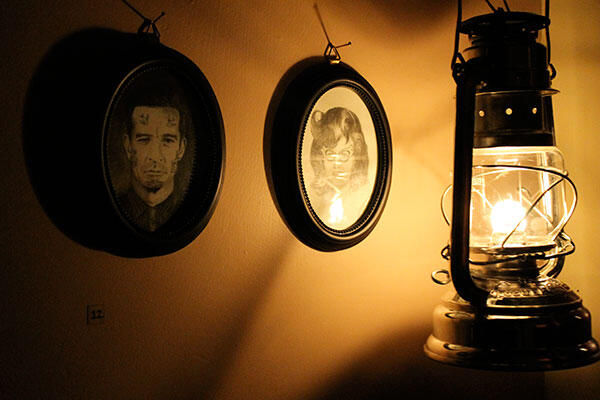
It’s probably become obvious to those who regularly read Critic’s art section that the majority of exhibitions I write about are “official” ones. What I mean by this is that these exhibitions, curated by various art galleries around the city, feature New Zealand artists who are well established nationally, if not internationally. But I’m not gonna lie. While I certainly appreciate such displays, the exhibitions I truly enjoy reviewing are those that hit a little closer to home – artworks created or curated by unknown artists or unestablished students. “It’s A Small World, Painted” is one of these gems, allowing people of all shapes, sizes, and ages the chance to display their works to the public in a very special, intimate setting. The exhibition is the brainchild of third year Dunedin School of Art student Georgia Glass, who organised the entire venture after discovering an empty hallway in her flat on Albany Street. To make use of the space she decided to exhibit a collection of miniature artworks, which twelve New Zealanders created specially following a call for submissions. The variety of works is stunning, incorporating a wide range of mediums, styles, and subjects. Philippa Jones’ gorgeous acrylic glass artworks contemplate how humanity deals with flux and change through object scenarios; Gareth Blackler’s quirky portraits of owls and foxes showcase his fascination with Seventies psychedelia and ancient mythology; Alex Scott’s attention to detail is magnified tenfold on her rather unusual choice of canvas – the humble matchbox. There is something for everyone in this complex and diverse collection. Moving from artist to artist yields startling, abrupt, and sometimes disorienting (though not unpleasantly so) changes in mood and emotion. While the artworks are gorgeous, what really makes the exhibition stand out is the experience itself. The problem Glass faced in attempting to convert the hallway into a mini gallery was lighting – namely, the fact that there was none. This dilemma was solved when Glass managed to find a couple of hand-held lanterns, which make viewing the collection a much more personal and concentrated experience. She says, “having the space lit only by a hand-held lantern induces a certain intimacy as the works can only be properly viewed alone. The light creates a tunnel-like field of vision, a singular focus that mimics the sensation of art observation.” It’s certainly an ingenious solution to an awkward problem, and makes the exhibition that much more inviting and memorable. That’s probably an understatement, to be honest. I squealed like a little girl when I saw the lanterns. Luckily I was the only one at the exhibition at the time so no one had to witness my embarrassing fangirl moment. I’m sure it goes without saying, but another reason “It’s A Small World, Painted” impressed me so much was because all the work and initiative behind it came from the interest of one student. Often I feel the Scarfie image implies Dunedin students’ only interests are drinking, sex, and couch burning. And while we undoubtedly enjoy all those things (in moderation, of course), creativity and ingenuity are important to us too. Thanks Georgia, for showing us how it’s done.
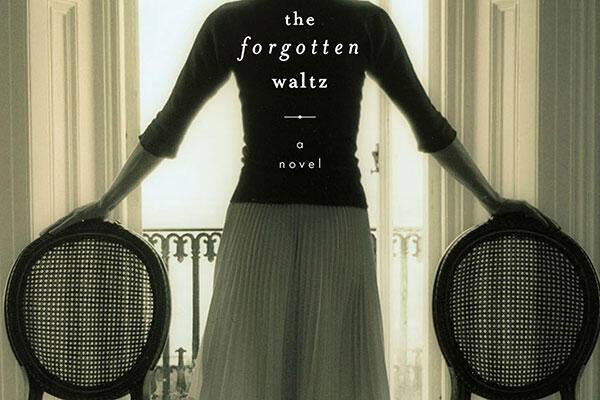
Attraction works in mysterious ways, and we often find ourselves wanting things we cannot have. But what happens when we get what we want? What happens when our lust for our husband’s attractive, married friend shifts from fantasy to reality? What about his family, our family, and our marriage? At the heart of Anne Enright’s The Forgotten Waltz lies the complex love affair between Gina and Seán, both of whom are “happily” married, and the impact of the affair on them and their families. In The Forgotten Waltz, her first novel published since winning the Man Booker Prize in 2007, Enright beautifully illustrates how Gina’s and Seán’s relationship develops from an accidental catching of eyes at a party to a full-blown affair which culminates in them leaving their respective partners for each other. In the end, Gina finds herself in a situation that compels the reader to either pity her or feel satisfied that she may finally get her comeuppance. The plotting leading to Gina’s ultimate situation is rather slow. Near the end of the book, I found myself feeling like nothing much had happened. Yes, Gina had fallen for Seán, yes, they had both left their spouses, and yes, Gina’s mother died, but the usual pain and turmoil of marital separations was lacking. However, I soon became aware of the subtlety of Enright’s narrative. Enright cleverly uses these events in the novel to contribute to Gina’s growing uncertainty in love. In the end, I think we can conclude that Gina, in her quick decision to leave Conor for Seán, begins to question the certainty of the relationship between her and Seán. Her relationship and conversations with Evie, Seán’s daughter, in the last chapters force Gina to consider Seán’s past infidelities to Aileen, his ex-wife and mother of Evie. Gina contemplates, “Did he love my sister that day in Brittas? Or all of these women, all of the time? I don’t care. He loves me now. Or he loves me too. Or. I love him. And that is as much as any of us can know.” Gina’s confusion as to whether what her and Seán share is genuine, or just another fling for him, becomes all too apparent. From the novel’s outset, Gina’s retrospective first person narrative emphasises her deepseated uncertainty. However, the reader is unaware why Gina’s narrative is so vague and disjointed. Her hazy narrative does not necessarily paint a picture of love at first sight. At times the retrospective narrative was unclear, and at points I found myself frustrated with Gina’s fluctuating stream of consciousness. However, I must admit that it does effectively communicate Gina’s inner turmoil, which the reader learns more about as the novel progresses. Enright’s novel offers the reader a less typical perspective of an affair and the events which follow it. Although the narrative may cause some frustration, it is an accessible read which I would recommend to anyone who is interested in reading about what happens when we get what we want, even though we were perhaps better off without it.
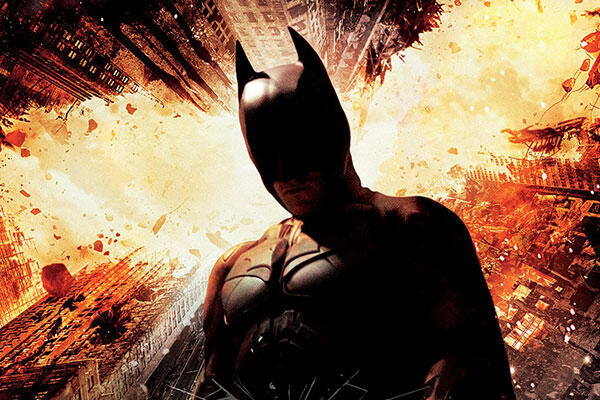
The story picks up sometime after the end of The Dark Knight. “Batman” is a spurned memory from a darker time in Gotham City's recent history, and billionaire philanthropist Bruce Wayne is a recluse. Christopher Nolan starts this episode of the Batman legend by planting the seeds of this story in the fertile soil of the past, recalling Harvey Dent, who went on to become Two-Face, the source of the Gotham City Police Department's standing prejudice against the capped crusader. Nolan clearly enjoys the process of story building and execution. His style of shooting both puts us in the middle of the action and focusses very strongly on the characters, whose conflicts and journeys drive the story relentlessly forwards. In essence this Batman story is about redemption, not only for Bruce Wayne and Batman, but also in some strange way for Bane himself. One feels almost as much for the bad guy as one does for the hero, and we see that Bane is much more than a mindless thug bent on destruction and mayhem. Meanwhile, Bruce Wayne must face his own fears and demons, literally climbing out of a pit of despair in order to redeem himself and his alter-ego. I would recommend this to fans of the Batman franchise as well as to fans of Christopher Nolan. Nolan forces the established set of Batman characters to play out a more introspective story rather than pursuing action for action’s sake. I loved The Dark Knight Rises, unlike the cynical bastards sitting behind me who complained that it was cheesy. This was character driven drama all the way. Go and see this film. 5/5 stars
Letters to Father Jacob is a Finnish subtitled film set in the 1970s, about a thick-skinned ex-convict named Leila and her experience working with Father Jacob. The recipient of a life sentence (presumably murder, though it is never explicitly stated), Leila is given a pardon (much to her disgust) and freed from prison. With nowhere to go, a live-in position is arranged for her in a rundown old house where she is assigned to assist an old visually impaired clergyman, Father Jacob. Jacob appears to have a good reputation, and receives mail each day from troubled individuals asking for prayer. Leila’s job is to read this mail out to him and answer them as he directs her. What you expect to follow is a heart-warming tale of redemption, renewal, and rehabilitation of a formerly remorseless convict. What actually follows is 74 minutes of static and unsympathetic character development as we watch Leila hide the Father’s mail, leave him stranded alone in an old church for hours, and generally treat a nice old man like a leper. Leila has no respect for humankind, let alone the importance of the letters in Jacob’s life, and makes no effort to sugar-coat this fact in his presence. What starts out as a boring film soon becomes a burden on everyone watching it, as we are forced to endure the aggravation of the film’s main protagonist. The lucky guy sitting two seats away from me managed to fall asleep at the start and saved himself the torture as he snored loudly for the duration of the film. Frankly, the trailers before the movie were the most entertaining part of my visit to the cinema, before we were all subjected to an inconsequential snooze fest. zero stars
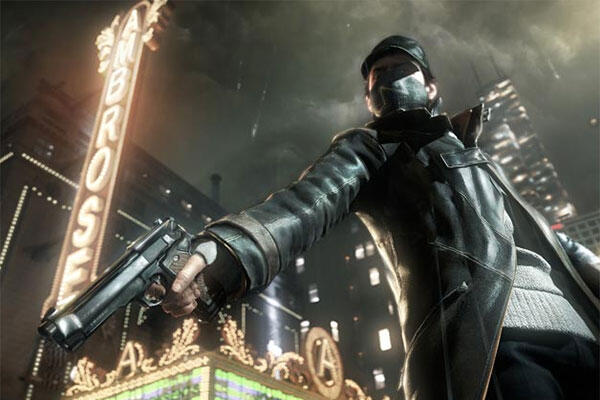
Watch Dogs, another intriguing title from this year’s E3, is about killing people using Facebook. Aiden Pearce, the painfully generic protagonist, wields dystopian “Google-goggles” to identify his target. In an instant, a juicy fact is revealed about every person he scans: “HIV positive”, “charged with plagiarism”, “newlywed”. Whether facts like this can be used to blackmail or target NPCs outside of heavily scripted story sequences remains to be seen. Either way, Watch Dogs promises to be an interesting critique on 2012’s ever-connected, ever-posting, ever-liking culture. Pearce has somehow hacked into the omnipresent network of a futuristic Chicago, allowing him to eavesdrop on any cellphone call, see through the eyes of any security camera, and even render any set of traffic lights completely useless. A brutal vehicle pile-up happens during the live-demo. Pearce is kind enough to rescue one frightened, perfectly innocent, driver during the ensuing shoot-out, despite having blatantly caused the death of the lady sitting in the passenger seat. He is a typical male action protagonist – gravelly-voiced and cynical, striding around with his collar popped around his throat and a tacky cap shading his face. The shoot-out itself is best described as “GTA” – right down to the shuffling around behind car bonnets and taking pot shots at other humans with a plain white dot-crosshair. Watching it gave me flashbacks to the astonishingly bland shooting sequences in LA Noire. In 1950s Los Angeles I want to interview people and solve puzzles, not battle in time-wasting skirmishes. I’m scared that, in near-future Chicago, I’ll want to spend most of my time causing train accidents and none engaged in hand-gun combat. A car chase follows. Surprise surprise. But at least this time it’s integrated with the hacking mechanics that make the game stand out – Pearce raises a drawbridge to block off his pursuers and escape.
With The Last of Us, developer Naughty Dog replaces the lush temple vistas, charmingly witty characters, wholesome fun and will-they-won’t-they dynamics of their previous franchise Uncharted with lush overgrown cities, gloomy-but-still-likable characters, brutal strangulations, and adult man/14-year-old girl relationships. It follows the Uncharted mould in the sense that there aren’t really any earth-shattering new gameplay mechanics. It’s more about applying extremely high-quality production values to every facet of the game. The environments are saturated with mottled shades of green, and soaked in as many perfectly shimmering puddles as could possibly be packed into an interpretation of a post-apocalyptic United States. The opening has a brown-haired, unshaven male (sound familiar?) forcing a cabinet against a wall to stop an unseen threat. You hear the voice of a much younger girl who stumbles into frame. Her name is Ellie, and Naughty Dog hopes to steer clear of vulnerable damsel stereotypes. She’s still a small girl, mind, but she has a knife and she knows how to chuck a mean brick. The mixture of cover-based shooting and close-up combat with a healthy dash of stealth has returned from Uncharted, and there appears to be a remarkable integration of combat with convivial story beats. At the sound of an empty click from Joel’s handgun, a foe storms down the hallway towards him only to take a cinderblock to the side of the head from Ellie. before she biffs it. Joel’s takedown manoeuvre takes the environment into account: he smashes his victim’s head into a bench in a way that’s actually quite unpleasant to watch. This game is far removed from Nathan Drake’s pseudo-charming “Oops! Got your neck!” quips in Uncharted.
"The constraints of the theatre are only limited to your creativity… and your lack of budget.” Hitting the stage this week at Allen Hall Theatre is Travis Kooky and the One Problem, an original work by Rosie Howells, a second-year student at Otago who is becoming renowned around campus for her ability to write comedic genius. I met up with director Jacob McDowell, graduate of Allen Hall’s Theatre Studies, to discuss black comedy, German cinema, and The Wiggles. “I feel very lucky to put it on. It’s one of those weird things that, like any script, depends on the balance between adaptation and storytelling. Whether you’re going to stay completely true to the stage notes and everything the script initially comes off as. [The question is], how are YOU going to tell the story?” The story began with Howells writing a one-act play for an assignment in her Playwriting course last semester. McDowell believes “creativity works best with a little bit of pressure and drive. So if you’ve got limitations, it’s really nice to push to the boundaries of your limitations, and if you’ve got time constraints, to really work under those time constraints, to really give it a challenge.” And it most certainly paid off. Howells’ quirky style shines through in this black comedy based around a successful children’s TV presenter, Travis Kooky. “She’s awesome and the script’s hilarious… The comedy and the darkness are like a bit of salt and sugar, it’s really nice to have both. It’s kind of like having ice cream and popcorn, you really get that variety of flavour… It’s refreshing to see a comedy which has depth of character.” Using his skills from both Theatre and Film, McDowell is creating an exciting take on the piece for its first journey to the stage. “What initially came to mind was the idea of this as a story within a story, and for me that links heavily to the start of German Expressionist cinema. So taking those elements, taking the distorted reality within the reality, and then combining them with the iconic Wiggles and Peewee Herman sort of television to give it that sort of liveliness, action and colour… I think this embodies the aesthetics of what the piece is going to be visually like.” It’s a great success for a piece born and bred at Allen Hall Theatre to come to fruition in the Lunchtime Theatre season. “I love it, I think it’s awesome, and I think it’s such a cool service that Theatre Studies and the University puts on for the students, because it allows these kinds of things!” “My cast is the great and wonderful Alex Wilson and Baz Macdonald. We’re just doing two actors, and they’re awesome, they’re lots of fun.” The script features six characters. Alex Wilson will play five of the above, which vary from a policeman to a grandmother. “Fun and play are big things for me which have to happen within a theatre, and within a rehearsal space as well.” By the sounds of things this will definitely shine through to the performance. As McDowell explains, “the main goal of this is simply to entertain. I want to actually give people a show and especially a more modern audience, trying to get, not just the usual theatre goers, but to get other people to actually come in to theatre and enjoy and go ‘Hey that’s actually not what I thought theatre could be but it’s really cool.’ You know, I think that’s everyone’s goal.” Travis Kooky and the One Eyed Problem will feature in Allen Hall this Thursday and Friday at 1pm.
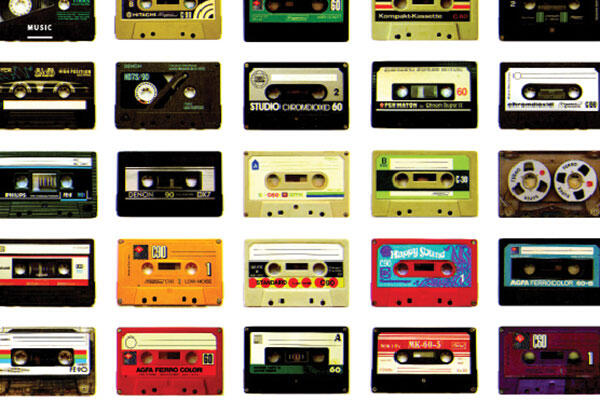
Have you ever made a mixtape? Like, a real one? Maybe you sat eagerly by the stereo, waiting for your song to play, winding the take-up reel on the cassette by hand so you could get that perfect transition timing. Or sat in a locked bedroom with your friends playing a “borrowed” tape/CD from a sibling on one recorder (eyes watering with the effort required to resist making fart noises) as you recorded your favourite tracks to share on another? Maybe someone made you one? Could you have compiled an eight-track pack of your favorite lusty songs for a secret crush? Even if these activities didn't occur during your childhood, you could hardly have lived through the ’90s/00s without encountering the NOW! Mixes, movie soundtracks, or more recently, the compilation albums sent out by record labels featuring mixes from all the bands they're promoting. There's even a pretty decent website called 8track where anyone can upload their mixes. Mixtapes (albeit in various forms) are all around you. You can't avoid them, so get amongst it. Don't be frightened. There seems to be a lot of snobbery surrounding mixtapes. I find this a little curious given that they're usually made for a very small audience, so opportunities for judgment will be pretty limited. Surely you can make a tape of whatever YOU want, right? Not everyone enjoys seeking out obscure bands or spending hours getting the transition between songs just right (I do, but I also like fashioning small armies of critters out of discarded bread-bag ties, so what the hell do I know?). I grew up with mixtapes. A friend of my dad's routinely sent him hilarious compilations on cassettes. They were always pretty botched jobs: the songs would cut out 20 seconds early, or there would be inexplicable interludes of random songs in the middle of others, or he would mumble to himself in the middle of the recordings. BUT they were always incredible mixes. Aside from the entertainment factor, exposure to the art of mixtaping from a young age instilled in me a life-long love for the craft, and with that devotion came a little knowledge. I'm certainly no authority, but I like to think that there are a few rules one should consider: Don't be put off including tracks because the band/song has a stupid name. In fact, you could gift a mixtape sans track listings. Try withholding the names until after the first listen in order to shield your recipient from the unavoidable human reflex of judgment. Try not to make the tape too long. Traditionally cassettes had room for eight tracks, so that's always a good starting point. Don't just throw it together like some kind of audio Rorschach test – that’s plain bad manners. Think about it a little. Nobody wants to listen to the theme from Star Wars right after T-Pain's “Church”... that's just stressful! However, don't fall into the trap of playing lots of songs that sound the same either. Everyone loves a theme, but you've got to keep things interesting. You can find ways to make the tape more interactive. I once made a compilation for someone's 21st birthday, and wrote a story incorporating all the song titles (I wouldn't recommend that too highly though, it took FOREVER). Or you can line up tracks to play as you follow a recipe – a mixtape cake, if you will. “Cream butter and sugar for as long as it takes John Lennon to Twist and Shout” – you get the idea. But sometimes the best way is to be a maverick and do whatever the hell you want. I'm sure someone will want to listen to your two-hour compilation of Alvin and the Chipmunks singing Muddy Waters covers. So, here is my mixtape for you today. It's compiled of songs that came to mind (God knows why) as I listened to the one before. My starting point was Dead and Lovely – Tom Waits: 1.Winter – The Dodos, 2. Steak Knives – Man Man, 3. Riot Rhythm – Sleigh Bells, 4. Are You Pretty Enough – The Murderchord, 5. There There – Radiohead, 6. See America Right – The Mountain Goats, 7. Gamma Ray – Beck, 8. There Are Birds – The Ruby Suns. Check it out. So go on, make a tape. Send one to whoever has had some kind of musical influence on your life. Slip one under your flatmate's door, drop it in a stranger’s mailbox, whatever. Just make one – because it's fun.
When eating at Dunedin’s Japanese restaurants, dumplings are a favourite choice of mine. The art of balancing them between chopsticks while dunking them in the provided dipping sauce is comparable to the art of making them yourself – seemingly daunting, but remarkably easy after you’ve done it once. I used dark soy sauce, which is slightly syrupy and sweeter, so reduce the quantity to three tablespoons if you use regular soy sauce. The plum sauce compliments the dumplings with its tartness, and the water chestnuts add a delightful crunch. Enjoy with chopsticks or eat without cutlery, finger-food styles. Ingredients2 tbs rice bran or canola oil1 thumb-sized piece ginger, finely grated5 cloves garlic, peeled and finely diced350g pork mince2 tbs sweet chilli sauce4 tbs soy sauce1 tbs hoisin sauce1 can water chestnuts, drained and chopped (optional)1 egg, beaten1 packet wonton wrappers1/2 cup waterMung bean sprouts, to servePlum sauce, for dipping Method01 | Defrost the wonton wrappers in advance. If you are using the entire 100-sheet packet, this will take several hours. However, I find it easiest to separate the required number of sheets and place on a plate for half an hour to come to room temperature. For this recipe, you will need approximately 30 square wonton wrappers. 02 | Heat half of the oil over a medium heat in a large non-stick frypan. Add the ginger and garlic and fry for one minute, stirring frequently. 03 | Put the fried ginger and garlic in a large bowl with the pork mince, sweet chilli sauce, soy sauce, hoisin sauce and water chestnuts. There is no better way to combine the mixture than by using your hands, so roll your sleeves up and get right in there. Mix until all ingredients are thoroughly incorporated. 04 | To prepare each dumpling, place a teaspoonful of the mixture in the centre of an individual dumpling sheet. Brush two perpendicular sides of the wrapper with a little beaten egg. Fold in half to form a triangle, pressing any air out, then press the edges together. Fold the longer edges over if you wish, otherwise leave as a triangle. 05 | Heat the remaining oil over a medium heat in a large non-stick frypan. Fry the dumplings until brown on one side. Turn the dumplings over, cook for one minute, then pour 1/2 cup of water into the pan and steam the dumplings until the water has evaporated. Cook in two batches if you are unable to fit all the dumplings in the pan in a single layer. 06 | Serve with mung bean sprouts and plum sauce. Makes about 30 dumplings for under $10. Photo by James Stringer