
-
Columns

Editorial | Issue 14
We’re taking a look at mental health issues this week, specifically depression and suicide. They’re tricky subjects to talk about, and even trickier to talk about in a way that isn’t going to cause more harm than good. I hope that you get something out these articles. It’s unusual not to have been affected in some way by depression or suicide, either personally or through the suffering of friends or family. I have never suffered from depression or been close to the point of taking my own life. I don’t know what it’s like to be in that moment. But I do know what it’s like to be on the other side, and it’s horrific. I’ve lost a couple of mates to depression and suicide. It is a tragic, useless waste of a young life. You wish you could grab them and make them understand how important they are to you, how much you need them. As you will read in the first-hand accounts of sufferers in the articles, the most important thing that you can do is to be there to offer support and assist them in getting the help they need. In other news, we’re halfway through the year. Well, halfway through the Critic year. Critic costs each of you roughly 12 cents per issue, and I hope you consider that value for money. But we’re always looking for feedback on how we’re doing and what you think. It’s pretty fucking hard to make a magazine that 20,000 different individuals will enjoy, and inevitably we’re going to fail. But your feedback goes a long way towards helping us get closer to making that happen. If you’ve got something to say, email critic@critic.co.nz and let us know what you think. We might even take it on board. And while it’s a bit early to be thanking everyone, there are a few people in line for a mid-year mention. News Editor Charlotte Greenfield is done with uni and off to bigger things, and we wish her all the best. Thanks to Sam McChesney, who did his best to tidy up my lazy grammar throughout the semester, and a big thanks to Andy Weston, Lucinda McConnon, Daniel Alexander, and everyone else who helped us get Critic out the door during some challenging times this semester. And a special thank you to Andrew Jacombs, the Critic Designer and Art Director for the past 18-months. Though you’ve moved on mate, we’ll never forget what you gave to this place, and that you left us a much stronger magazine then when you found us. Good luck for the future. Good luck with exams and enjoy your holiday. We’ll be waiting for you when you get back. - Joe Stockman
-
News

Edgar exposes assets failure
The Otago University Student’s Association (OUSA) has been criticised for its failure to support the Keep Our Assets campaign, after a media faux-pas from Logan Edgar taught the OUSA President that the majority of journalists outside of Critic do not appreciate his sense of humour. In early May, the New Zealand Union of Students Associations (NZUSA) announced its support for the campaign without consulting members or students. Edgar heavily criticised this move, saying it was “inappropriate for NZUSA to support the Keep Our Assets Campaign. It’s not an education issue.” Edgar was later interviewed by a journalist from the Star who questioned his decision to call for NZUSA to withdraw its support from “the largest and most controversial issue of the year.” The outcomes of the interview were front-page articles in both the Star and the Otago Daily Times last week, stating that Edgar is planning to use OUSA money to invest in power company shares. “We’d do it to keep some lights on for studying students and to keep them [the energy companies] New Zealand-owned,” Edgar was quoted as saying, alongside a colour photo of the president gazing at light switches. In an exclusive interview with Critic, Edgar expressed remorse towards the media blunder. “I’ve been so lax with journos all year, and now it’s coming back to bite me.” Critic then proudly reminded Edgar that it counted itself as one of the esteemed “journos” Edgar has been “lax” with, with one hard-hitting interview between the OUSA president and Critic’s News Editor taking place on a toilet. Edgar has attempted to explain away his interview with the Star. “They asked me about it all, and I said it was a good investment, hypothetically anyone would invest. I was just making the general point. I didn’t mean it seriously, it was satire.” When Critic asked whether the journalist was aware of this fact, Edgar replied, “I kept repeating that it was satire. He kept asking what I meant by satire. I said ‘satire’. Fuck, I don’t know aye.” OUSA will continue to refrain from taking a stance on asset sales, until it receives support to do so by students. “We’re like a neutron on the matter of asset sales – neutral,” says Edgar. “We’re an association that cares about education; we only step into other areas when we are given a mandate by the students… We can’t act when it’s something the country is so divided over. We thought maybe someone would come up with something for the referendum this week but nobody gave us anything, not even [Dan] Stride. So what’s a man to do?” OUSA ran an online poll asking its 7000 Facebook page members whether or not OUSA should support the campaign. Out of the 20,000 students that the OUSA represents, 169 respondents answered. OUSA’s lack of support for the Keep Our Assets Campaign has disappointed local Grey Power members. Grey Power is one of the major groups, along with NZUSA, behind the Keep Our Assets Campaign. Dunedin Grey Power President Jo Millar told Critic, “we have been through what has happened. We don’t want our grandchildren to go through the same as what we did. We’re sharing knowledge and protecting this generation.” Millar said students would be welcome to join a protest against asset sales on 16 June on George Street, regardless of the OUSA’s stance. Edgar admitted that his media blunder had not helped Grey Power to receive a full explanation of OUSA’s stance on asset sales. “I’m not really used to appealing to the grey power people,” said Logan, admitting he is not usually a “cougar man”. “But in all seriousness, I should’ve known there was a line. And that the most political, controversial issue of the year was not the place to cross it.” Meanwhile, NZUSA has neither withdrawn nor re-affirmed its support for the Keep Our Assets Campaign. At the time Critic went to print NZUSA had frozen comment on the issue.
-
News

Referendum Results Retardedly Reach Reporters Retrospectively
By the time you read this OUSA will have announced the fate of the eight motions in its referendum, as well as the results from the International Officer by-election. Due to insensitive scheduling on the part of OUSA, the results were not yet available when Critic went to print on Thursday night. They will have been released on Critic’s Facebook page on Friday. Critic has now had its mind boggled by the feat of writing a future article in the past tense. As of Thursday 1126 students had voted in the referendum and 88 had voted in the by-election. The referendum included eight motions, four of which were external with the other half internal. External motions are those submitted by students, and required the majority support of at least 5% of the student population to pass. These included the motions that OUSA should “actively support prioritising the transition to a carbon neutral University” and provide “a constructive alternative to the proposed liquor ban in North Dunedin”. Students concerned about OUSA’s close relationship with the University have put forward the motion that OUSA should adopt a policy to “affirm its status as an independent voice for students from the University and direct the Executive to behave as such for the duration of any service level agreement with the University.” The VSM dead horse has been given another flogging thanks to the motion that OUSA should “affirm its continued support for universal student membership, and call for the immediate repeal of the Education (Freedom of Association) Amendment Act 2011”. The remaining four internal motions were put forward by OUSA and required only a 1% quorum. These covered routine matters, including the aceptance of OUSA’s annual report and financial statements, and the appointment of Pricewaterhouse Coopers as OUSA’s auditors and Anderson Lloyd as its honorary solicitors. In the by-election Yee Min Chua ran unopposed, meaning the only question is whether the No Confidence camp could thwart her bid for the position of International Officer. As a side note, Critic wishes to remind readers that “referendums” is a valid word, and provides a clearer and less pretentious alternative to the Latin-sounding “referenda”. Also, “octopi” is a truly amazing word. That is all.
-
News
$1.4 Billion, Still No Hydroslide
A hard-hitting article by the ODT’s Vaughan Elder has revealed that the University of Otago is the most asset-rich of New Zealand’s many illustrious tertiary institutions. With $1.4 billion in total assets, Otago left the University of Auckland to sob all the way to the bank with its miserable asset base of $1.37 billion. Before the New Zealand public jump to the reasonable conclusion that the measure of university assets is part of a legitimate ranking system, Critic would like to point out that the ODT simply requested numbers from the Tertiary Education Commission and then declared the University of Otago to be the richest. Elder even managed to write the article without actually interviewing anyone from the University. In a controversial new policy, Critic has decided not to do any of its own reporting, choosing to simply re-report the ODT’s stories with less grammar and more lolz. Critic suggested to the University that, since it seems so intent on expanding the value of its assets, it should seek to invest in a few major areas: 01. An international airport: If it’s good enough for Invercargill, it’s good enough for us. Coldplay can land their jet, and the city might have a hope in hell of filling up that $100 million hotel some undisclosed entity is so intent on building. 02. A massive bouncy castle: Imagine how much better study breaks would be if there was a huge fuck off bouncy castle on the Union lawn. Critic does acknowledge that the astronomical cost of cleaning SoGos and semen out of bouncy castle seams would make the cost of upkeep a weakness of this particular investment. 03. Fever Club: To train the cougars of tomorrow. Let’s face it, Fever Club is the only bar in Dunedin that would appeal to both students and staff. 80s décor, terrible music, middle-aged patrons, and disco lighting on the dance floor mean it has everything that the University could ever want from an entertainment venue. 04. A space station: Even NASA is using private firms to send supplies into space these days. If the Uni is going to ball, then ball properly. And space travel is where tomorrow’s ballers will be at. 05. A giant golden statute of Logan Edgar: We all love that larrikin bloody Scarfie, but he’s not going to be around forever. A10 metre erection in Logan’s honour would be a fitting way to commemorate our beloved president. The University had not responded to Critic’s suggestions at the time Critic went to print.
-
News

Scarfies drink for Africa
The 40-Hour Famine was held on the weekend of 25 to 27 May, with participants around the country giving up something of value for 40 sponsored hours in order to raise money for World Vision. A number of Otago students displayed an especially entrepreneurial attitude to the cause. 20 year-old med student Ron Puni sat in a cardboard box in the Hunter Centre car park for 40 hours. Puni went without food, including the usually exempted barley sugars and juice, for the duration of his stay in the box. He referred to his efforts as “A Bear Grylls twist on the traditional famine”. Although his friends called him “insane”, Puni raised $790, just short of his goal of $850. A third year flat took a typically Scarfie approach to the “famine”. Each flatmate was required to consume 40 beers in 40 hours. The flat spent the weekend of drinking locked in their lounge while over 200 people watched via an online live video stream. The charitable inebriation raised over $2000, prompting the flat to promise to repeat the feat next year. Participant Sam Stuch told Critic that in 2013 “we’ll find corporate sponsorship and get up to $10,000.” Famine events will continue, with Vision media representative Dylan Cornell telling Critic there will be a 20-hour walkathon around the Octagon later this year. The 40-hour famine has taken place annually since 1975, when it was instigated in response to a famine in Ethiopia. In its first year the famine raised $265,000. World Vision is aiming for $2.5 million this year. Funds raised will go towards agricultural projects in Mali and Niger, with a small percentage devoted to nutrition programmes in Rwanda and Cambodia.
-
News
English implores students: go Greek!
Students’ associations have lent their support to the criticism over changes to the student loan and allowance systems announced in the National Budget on Thursday 24 May. Following the blockade of central Auckland streets by angry students, Finance Minister Bill English taunted the students over the effectiveness of their protest, telling an audience of business people, “they need some Greeks to show them how to do it.” English defended the effect of the budget on students, saying their objections "get reported, mainly because [they] blocked the traffic, [but] who's listening? Most people actually think the students got a pretty fair go and they should count themselves lucky that they've still got interest free loans and get on with it because, you know, get your training finished and get a job and start contributing." OUSA president Logan Edgar disagrees, saying, “We would have liked to have seen some more fine tuning from the Government.” Edgar cited the 200-week cap on the availability of the student allowance as of particular concern: “It just takes away support from people we need to have strong economy and a great country – clinical psychologists, dentists, doctors. Sure it might cut out the people who are here forever and should just graduate but there’s no reason we couldn’t make exceptions to the cap according to performance or based on the course taken or something.” Todd Dickens, a representative of Young Nats Otago, defended the allowance limits, saying five years was “ample for the majority of students … to be able to receive five years of Student Allowance which you do not need to pay back is fairly generous in my opinion. Rather than focussing on what is reduced, people should be looking at what they receive and how these minor changes are ensuring that tertiary education is going to be easily accessible for all New Zealanders for many generations to come. It is truly investing in the future to maintain a fantastic system, and not continuing an unsustainable system which would short-change New Zealand in the long run.” Edgar admits that Otago students, unlike their Auckland counterparts, “don’t seem to be creating an uproar about all the cuts to the student support system.” Edgar puts the student apathy down to the changes “not being huge, by themselves. More like nipping round the edges, which we all expected from this government.” To ensure that students understand the Budget’s announcements, OUSA is holding “Logan’s Budget Briefing” at Clubs’n’Socs this week. When queried on the details, Edgar told Critic that “It’ll be on Wednesday [May 30] probably in the Evision lounge, after the Hare Kirshnas are finished, so around 3pm.” Edgar promised to take action against the budget cuts if that is what scarfies want: “Tell them we’ll put a video on YouTube. If it gets 5,000 likes I’ll lock myself in a cage for another two nights.”
-
News

“Cheeky darkies” better represented*
The University of Otago has appointed Tuari Potiki as its new Director of Māori Development. This will put Mr Potiki in charge of Māori development activities at the University, as well as maintaining the University’s relationship with local iwi. Mr Potiki has previously held a senior role on the Alcohol Advisory Council and worked in the health, education, and justice sectors. University Vice-Chancellor Professor Harlene Hayne welcomed Mr Potiki’s appointment, saying “Tuari Potiki has long-established and excellent working relationships with iwi and Māori communities throughout the country. He is very well placed to enhance Otago’s ongoing commitment to contributing to Māori development at University, regional, national and international levels.” Mr Potiki, who is of Kai Tahu, Kati Mamoe and Waitaha descent, is excited to take up the position. He hopes to further strengthen “Māori development and the realisation of Māori aspirations”, and told Radio New Zealand that he expects his appointment to provide Ngai Tahu with a direct line of communication to the University. “I’m also looking forward to working closely again with Ngai Tahu at both the local runanga and iwi level, and extending the existing links the University has forged with other Māori communities and providers.” Mr Potiki intends to “build on this solid groundwork and keep the momentum going. This will involve guiding strategy and policy development and implementation while fostering high-quality working relationships with colleagues throughout the University.” He is optimistic in relation to the position of Māori at the University. “In a relatively short time Otago has achieved a great deal in its efforts to advance the University’s contributions to Māori development and the realisation of Māori aspirations. I intend to build on this solid groundwork and keep the momentum going.” Mr. Potiki will begin his new role at the University on 10 July. [CORRECTION: The print version, and original online version of this story incorrectly identified the Director of Maori Development position as being as new role, when in fact it has already been established for several years. Critic apologises for our mistake.] *APOLOGY: Critic wishes to apologise for the headline of this article. It was an attempt to once again tar Mr Holmes with his own racial epithet, however, we now realise that it was inappropriate, and did not link at all with the content of the article. We apologise unreservedly to anyone offended, and will work harder in future when we seek satire and entertainment.
-
News

Red Bull flies student to Austrian brainwashing bender
University of Otago student Josh Stewart placed 23rd at the Red Bull Paper Wings World Finals in Salzburg on 4 – 5 May. The second-year Knox resident gained a place in the international round after beating 496 New Zealand competitors with a 43.6 metre throw at the Alahambra Rugby Club in March. The win gained Stewart, along with two other New Zealanders, an all expenses paid trip to Austria for five days to compete with other “pilots” from around the world. Stewart told Critic he trained hard in the lead up to the finals, and before his departure he achieved throws of up to 60 metres, just short of the 69 metre world record (insert requisite smirk whenever the number 69 is mentioned). Despite his efforts, Stewart’s best throw in the final round was disqualified after it sailed into the roof. Despite the disappointment Stewart claimed the experience was “brilliant, brilliant.” He told Critic that parties were thrown every night for competitors, and that he got only 11 hours of sleep during the five day trip. “Red Bull just went over the top on everything. It was awesome!” said Stewart, in a plug unashamedly primed by Red Bull’s marketing department. The next Red Bull Paper Wings tournament will be held in 2015, giving students three years to develop their origami skills and Red Bull marketing credentials. Drink Red Bull.
-
News
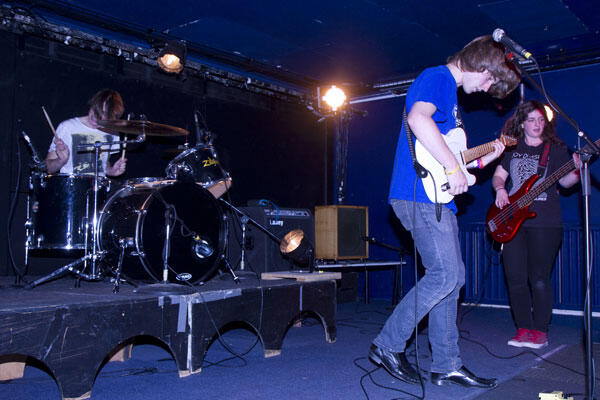
Children beaten by band of youths
A crowd of 200 converged for the final of the Converse Battle of the Bands was held at Re:Fuel on Saturday May 26. 40 bands compete in four heats in the OUSA-organised event. A Distant City emerged the winners, with Astro Children named runners-up and Abstract Survival placing third. A Distant City, whose members describe the band as “pseudo rock” and “shoegaze”, was awarded $650, music recording time, merchandise and $500 worth of advertising on Radio One. OUSA events organiser Koren Allpress praised the event, saying "We had a really strong line up of bands with a really diverse range of sounds. There were touches of the classic Dunedin sound along with SKA, pop and heavy metal bands making a name for themselves to our crowds.” The final round this year included two wild-card entries. According to Allpress, “The competition was so strong that after two bands tied they were both awarded a wildcard entry instead of just the one we'd usually have." Gabriel Griffin, the drummer of Sewage, who also performed in the final, told Critic that the competition was “a good platform for emerging bands in Dunedin” and exposed students to “the broad range of musical talent within the university”. OUSA events organisers confirmed that Battle of the Bands will take place again next year, with the number of entries and audience members having grown over the past few years. A Distant City will represent Dunedin at the national final of Battle of the Bands in Auckland in August.
-
News
Bouncer screwed, surprisingly unhappy
An intoxicated teenager stabbed a Monkey Bar bouncer in the neck with a screwdriver on Friday 25 May after being refused entry to the nightclub. A 19-year old labourer was arrested and appeared in the Dunedin District Court the following morning, charged with intent to cause grievous bodily harm. He was expected to reappear in Court last Friday after Critic went to print. Detective Sergeant Brett Roberts told the ODT he had spoken to the victim, who had received treatment for his wound. “If it had been much deeper, it would have been serious.” Police have warned that they will arrest anybody with a weapon (presumably screwdrivers are classed as weapons) in a public place, and that anyone who drinks and carries a weapon (or a screwdriver) is a “brainless idiot”. “Alcohol and weapons do not go together,” said Detective Sergeant Roberts. Monkey Bar Director Benjamin Hanssen agreed, telling the ODT it was “fortunate” that the incident was not more serious. "It was a relatively minor injury – he was very lucky in that respect." The labourer is expected to be banned permanently from the Monkey Bar. This will likely eliminate the 19-year-old’s only chance of picking up in Dunedin, representing a crushing blow to the young man’s quality of life.
-
News

Smashed Him Bro!
This week we are going to talk about head injuries in sports. TVNZ's Sunday programme recently broadcast a shocking exposé on the reality of brain injuries caused by contact sports. Research in the US has shown that the repeated traumatic brain injuries often seen in contact sports can cause early-onset chronic traumatic encephalopathy. This condition causes the brain to deteriorate at a much faster rate than normal. Admittedly the research studied American athletes who play sports like ice hockey and American football, in which mandatory protective clothing and helmets allow players to use their bodies and heads as weapons. Ironically, this actually increases the risk of head injury. But the underlying problems hit a little closer to home. If you play rugby or league, at some point you are going to take a clonk to the head, risking concussion and brain injury. I'm going to let you in on a little secret. During several rugby games I have sustained what was almost certainly a concussion, but played on. Short-term memory loss, blurred vision, a massive headache after the game – check, check, and check. On one occasion I completely forgot all the backline moves, the score, and who the opposition were, but finished the game anyway. It finally dawned on me that concussion wasn’t a joke after I ended up in hospital for a few days after getting knocked into next week. I still can't remember how it happened. The Sunday programme focussed on 10-test All Black Steve Devine. Devine had to retire early after being knocked out so many times he started suffering from chronic fatigue and constant migraines. The presenters also talked to a teenager in Australia whose parents were threatening to ban him from playing league if he got another head knock. Possibly a wise move – studies revealed that as few as eight “concussive episodes” before the age of 22 can have serious and irreversible effects. So what needs to happen to stop everyone who picks up a rugby ball from becoming a drooling vegetable? There is no way kids are going to stop play contact sports – they’re far too much fun – but there is no easy way to prevent head knocks in these sports. Contact sport is here to stay, but our attitude towards head injuries needs to change. Too often we see professional rugby players get laid out on the ground after a massive head knock, stumble around a bit, get a drink of water from the physio, then carry on. Steve Devine's ongoing problems seem to stem from his All Black debut. He was dazed after being hit in the head by a knee early in the game, but played on. He then got a second blow to the head, which finished him off. When kids see their heroes playing through head injuries they think they are being brave. What they need to think is that they are being stupid. The sports world is slowly waking up to the new reality. In the USA, 1500 ex-NFL players filed a lawsuit against the NFL, claiming they were not made aware of the risks of the brain injuries they were suffering. The NFL has subsequently started to discourage the use of the head/helmet as a weapon used to cripple the opposition. The NRL says they have always taken concussion seriously, but in the past players with concussion have been allowed to continue far more often than they've been taken off. After Frank Pritchard levelled David Simmons (Youtube it) in Round One this season, the NRL have come down hard on any contact to the head. Any tackle that targets the head or inadvertently makes contact with the head now results in an automatic penalty and/or a suspension. Some of league’s best defenders have had to re-evaluate their tackling technique. The professional sports world waking up to the seriousness of head injuries is a great start. Hopefully there will be a trickledown effect, making the sports we love safer for all the people who play them, especially kids. If I haven’t convinced you that kids getting head injuries is a big deal, search “Big Football hit – Helmet to Helmet” on Youtube. Make sure you turn the volume right up.
-
News
If Shane Jones Doesn’t Resign
Labour MP Shane Jones, who has been dogged recently by allegations that he gave citizenship to an international criminal in exchange for donations to the Labour Party, has entered a bill into the members’ ballot that would, if successful, provide free kittens to all. Mr Jones, who attracted widespread ridicule two years ago after being forced to admit spending taxpayer money on renting pornographic films in a hotel room, says the bill will “completely update and modernise” New Zealand’s kitten legislation. The bill will be a welcome distraction for Mr Jones, who was stood down from the shadow caucus and faced calls to resign after the citizenship scandal. Mr Jones was further besmirched by the involvement of former MP Chris Carter, who wrote a letter in support of Bill Liu’s citizenship application. Mr Carter was expelled from the Labour Party in 2010 after spending extravagantly on overseas travel, flowers and massages, courtesy of the taxpayer. It is believed that Mr Jones was aware of Mr Carter’s love of luxury, but did not disclose this to Parliament or the media. Although Critic put questions to Mr Jones about the Chris Carter saga, these questions were avoided, ignored or deflected, with Jones insisting that his bill was the more important topic of conversation, considering that “over three thousand combined hours” had been put into sculpting the “revolutionary” 150-clause bill. Mr Jones is no stranger to controversy. He attracted widespread condemnation after ripping up a letter of complaint addressed to him in his capacity as Select Committee Chair back in 2006. Now he says he is working with parties across the political spectrum in an attempt to win bipartisan support for his bill. Indeed, a group of prominent New Zealanders ranging from Richie McCaw to Corporal Willie Apiata have banded together to support the bill. Mr Jones stormed out of the interview with Critic after taking exception to the question “How do you sleep at night, given that you said you would resign as a director of Te Ohu Kaimoana, the Maori Fisheries Trust, once you became an MP, but in reality you didn’t resign until more than a year after entering Parliament?” In Critic’s view, this latest display of petulance from Mr Jones demonstrates that he has not learned his lesson from his many scandals over the years. The interview provided the perfect platform for Mr Jones to promote his bill, but that opportunity went out the door along with the man himself.
-
News
Small, locally-owned business becomes Big Corporation
James “Jim” Peterson, the owner of Jim’s Miniature New Zealand Flag Emporium on Hanover Street, has been slammed as a “sellout” after hiring a 20th employee last week, officially pushing his company over the line from “small, locally-owned business” to “Big Corporation”. Protestors have called for a boycott of the Emporium, saying it will drive smaller competitors out of business. An “Occupy the Emporium” camp has been set up outside Peterson’s shop. One of the occupiers told Critic: “We used to love Jim’s flags, and I counted Jim as a personal friend, but this is a betrayal that just can’t be forgiven.” Peterson appeared before the protestors on Friday and pleaded for a compromise, offering a public acknowledgement of “medium-sized business” status along with a formal meeting where protestors could share their concerns, but protestors say this is a typical Big Business technique known as “containment by co-optation”. If the rumours that Peterson is in negotiations to supply an Australian retailer with his miniature flags are true, there will be no denying the Multi-National Corporation status that will accompany such a deal. Should this occur, the occupy protestors say Peterson will be “truly irredeemable.” Critic spoke to a high school friend of Peterson’s, who said she was “shocked” to hear Peterson was now a Big Business owner. “That’s not the Jim I knew. He was always talking about starting a small business, but he never mentioned becoming a corporate shill.” Peterson says that if he is unable to convince the protestors to accept his company’s Bigness he may embrace his new identity as a Big Business fat cat. He is tossing up between the titles “Mogul” and “Tycoon”, and plans to use the profits exploitatively obtained through the labour of the new employee to purchase a pinstriped suit and monocle.
-
Columns
Red and Starry Eyed | Issue 14
We all need a holiday, exams are approaching, and the cold is permeating our unheated flats. Maybe we should take heed of Bill English’s advice (he recommended we take a leaf out of the Greek protesters’ book) and occupy the library until our flats get warm. Just saying. Onto the real issue: the US. It’s called the land of the free, but this is a misnomer. Occupiers have been through a tough time, and the country is run by a defective electoral system that only allows for two sides of the same coin. This electoral system is worse at procrastinating than your average BA student, and more boring than a legal case study. Think about it – it takes months to get through a popularity contest that costs millions, and that’s only the beginning. We’re now kicking off the real election campaign, with Barack “Not-A-Muslim” Obama and Mitt “Compulsive Liar” Romney showing the American public who is best. To understand American politics, think of the horrors we have been through with National. Now, the Nats are tamer than the Democrats. This shows just how screwed-up the American system is. Obama’s main difficulty has been trying to keep at least some of his electoral promises. To be fair, he’s made a good stand on gay rights, he’s slowly getting out of Iraq, he’s on track to save the American public from a terrible health bill, and he almost personally killed Bin Laden. Obama is a great speaker, and I’m sure he will re-light the beacon of hope in the next couple of months, but his opposition makes it too easy for him. Mitt Romney is the biggest liar Red has ever come across – watch some vids of him on Youtube. Even Obama is turning Romney’s own words against him. Romney used to be CEO of a company that stripped Americans of their labour rights, his contradictions are a joke to everyone except (some of) the American public, and he may not even have enough support within the Republican caucus to succeed. We should all hope that Obama makes it back into the White House. He is not a great president, but he is definitely the best option the American public has. Keep an eye out for Occupy though. A democratic change could take place that would make Americans truly free again. – Red and Starry Eyed
-
Columns
The Tory Templar | Issue 14
Oh how quickly “Yes We Can” becomes “No We Can’t”. A mere four years ago liberals the world over were hailing Brack Obama as a great orator, a great statesman, our hope for the future. Today we can look back on four years of failure. For all his talk Obama has achieved very little. The Templar stands behind Mitt Romney, conqueror of this man’s favoured candidate Rick Santorum, to put America right. Obama came to power promising to fix Capitol Hill. The economy had tanked and the Bush years were crawling to an end. Obama promised change. He promised to kickstart the economy with new jobs and new investment. Fast forward four years. Obama’s socialist agenda, full to the brim with handouts, has seen debt balloon to $15 trillion. That’s an extra $5 trillion of debt in four years. Obama has spent the world’s biggest economy into the gutter. Maybe the president should have spent more time doing and less time talking. Sure, his campaign inspired a nation, but he never got down to the hard work of being president. Obama never switched out of campaign mode. His need for attention and catchy slogans have seen him neglect his real job – running the nation. Obama has replaced the former greatness of the Oval Office with meaningless photo ops and crummy slogans that hide his inadequacy as a leader and legislator. The Templar won’t, and you shouldn’t, stand for the destruction of fundamental values in the face of economic strife. When good hardworking people were looking for strong leadership in the face of adversity, Obama trotted out socialist glory projects. He made a mockery of the anti-abortion laws, and allowed social decay to permeate the legislation of a once-great power. Obama not only sought to legalise abortion, he has become an architect of the destruction of the sanctity of marriage. Obama’s term as president has been four years of wish-washy pandering to sandal-wearing, pot-smoking liberals with agendas. It has crippled the social structures of a once great society. The Templar knew the glory-hunting liberals would be found out. He stands behind a candidate for strong values, morals, and business acumen. We must unite behind a force for social and economic good. We should shelve the socialist agenda of the Obama years and realise that “Yes We Can” wasn’t a slogan of hope, but a call for destruction. The Templar backs Romney to fix the mess come November. –The Tory Templar
-
Features

Depression: The Hidden Illness
Sufferer’s descriptions of the experience of mental illness can be as varied as the individuals themselves. “[I feel] as though I don’t have the right to be depressed”; “like being on the opposite side of a glass wall”; “out of control”; anxious”; “sleepy”; “cold and numb”; “like I’m going crazy. Am I going crazy?”; “going through hell”; “desperate”; “betrayed”; “hopeless”; “hidden”; “alone”; “hurt”; “lost”; “low”. And, almost always: “misunderstood”. Despite its recent rise to public and academic attention, descriptions of depression date back thousands of years. Aristotle suggested that all those who excel in philosophy, politics, poetry, or the arts are “melancholics.” His straightforward diagnosis has since been replaced by a more comprehensive definition of the mental disorder that we now call clinical depression. Globally, depression causes more disability than any other psychiatric disorder, and creates the greatest social burden of all mental illnesses. It is extensively interconnected with other mood disorders, so it manifests itself differently in every sufferer. Depression is an illness that appears to be unrelated to ethnicity, education, income, and martial status. Unfortunately for us students however, 16 — 24 year-olds are considered to be most at risk. Thankfully, it’s a treatable disease. MENTAL HEALTH – A LOCAL HISTORY“The long corridor outside shines like the leather of a new shoe that walks that walks upon itself in a ghost footstep upon its own shining until it reaches the room where the women wait, in night clothes, for the nine o’clock terror called electric shock treatment. “ — Janet Frame Mental health has been of concern to New Zealand governments since the 1850s. Before then, no provision was made for the mentally ill by the Crown Colony. Patients were simply sent to gaol if they didn’t have any relatives to look after them, or if they became too much of a problem. In the 1850s and 60s, provincial governments set up a number of institutions to house and treat people with mental disorders. Such institutions included the Dunedin Lunatic Asylum, and the Seacliff Lunatic Asylum (neither of which exist anymore). Many horror stories were born out of such asylums: misdiagnosis, patient abuse, electroconvulsive therapy, lobotomies … These past days of mental health treatment have come a hush-hush issue steeped in national shame and controversy. We’ve come a long way in recognising depression as a health concern. However, we still have an uphill battle creating awareness that depression is a serious illness, rather than an emotional weakness. CLINICAL DEPRESSIONThe essential feature of a major depressive episode is a period of depressed mood, or loss of interest or pleasure in nearly all activities. A person suffering from depression may describe their mood as hopeless, discouraged, down in the dumps, or just plain “blah.” To qualify as a major depressive episode, symptoms must persist for at least two consecutive weeks, and cause clinically significant distress to the individual’s functioning. Some individuals might report physical aches and pains, rather than feelings. Others may become irritable, angry, and frustrated. Even the smallest tasks — rolling out of bed, pulling on some clothes — become draining and time-consuming. In addition to mood and activity changes, the following symptoms are often experienced by sufferers: -Weight loss or gain, or appetite loss -Insomnia or hypersomnia -Unusual (such as really slow) movements -Tiredness -Feelings of worthlessness or guilt -Difficulty thinking or concentrating -Thoughts of death or suicidal thoughts and plans In a “chicken and egg” – like scenario, individuals with chronic or severe general medical conditions (such as cancer) are at an increased risk of developing major depressive disorder, and individuals with major depressive disorder are more susceptible to other sicknesses. Statistically, the lifetime risk for major depressive disorder varies from 10% to 25% for women and from 5% to 12% for men. Although one in five New Zealanders experiences some form of mental disorder, less than half of people suffering from a mental disorder sought treatment from health services last year. A STUDENT’S PERSPECTIVEIt’s difficult to understand what a major depressive episode feels like if you’ve never been there before. Caleb, a student at the University of Otago, is willing to share his experience to shed some light on what it’s like to live with depression: “It began with an extremely bad trip on marijuana. That was two years ago now, in October. I’d never felt like that before — I just felt like I was going to die.” Several weeks later, “the same thing happened again, after I came home from soccer one day. I hadn’t touched marijuana since that last experience. I felt like I was going nuts. I started having these feelings over and over; I couldn’t do anything without having a panic attack.” Caleb struggled to blame his illness on any specific trigger: “At the time, I was worried about my life in general. I wasn’t happy about my course, my dad was sick — that was hard on my family — there was a lot going on, and it just seemed to come together all at once.” On advice from family and friends, Caleb sought professional help at Student Health. After assessments with a psychologist and a psychiatrist, Caleb started taking medication for his depression and anxiety two months after his first panic attack. Although the medication helped initially, Caleb admits that, “there was a big period there where I was just going day by day. It was easier to sit inside with the curtains closed, doing nothing. There were times when if I stepped outside, that step would be enough to trigger an attack. If I looked out the window, if someone looked at me in a certain way, if someone said something… that would be enough to set me off. I was losing control over my life, and there was nothing I could do about it.” Caleb acknowledges that everyone who suffers from depression will find respite and help through different means. For him, John Kirwan’s story was a source of inspiration. “One of the things with depression is that, while you’re caught up in this moment of feeling like crap, you feel like you’re the only person in the world with these issues. But then, you read a book, you talk to someone, and it’s a lot better.” From here, life became more positive for Caleb. “I guess the meds were starting to kick in, too. I began forcing myself to go outside. I told myself that I wasn’t going to let this stop me from enjoying myself … it wasn’t going to stop me from hanging the washing on the line.” Being open with people was a significant step in Caleb’s recovery, and he urges others to keep looking for help, “don’t stop until you find someone that you’re happy to talk to. It’s important that if there’s a counsellor or a doctor that you don’t like, just ask to see someone else, try to find someone that you’re comfortable with.” Caleb admits that depression can also be a difficult time for friends and flatmates. He recommends that, “you should always offer to do things with them. The worst thing is leaving them alone and not including them.” Now, as he reflects back on that time from a healthier perspective, Caleb can see a silver lining: “I think I’m a better person now. I value certain things in life much more than I used to, I realise now how good it is to feel good. And when things don’t go my way, I’m much better equipped to deal with them than I used to be.” TREATMENT: STUDENT HEALTHBoth Mark Chignell, clinical group leader for Student Health’s counselling service, and Christine (Chris) Griffiths, heath education nurse, are in the business of helping students like Caleb get through mental illness. Although mental health is considered a “special field” in medicine, Chris asserts that it’s “part of every aspect of health, because it’s part of wellbeing.” However, Mark acknowledges that there’s “a big difference between sadness — not having a good day, week, month — and having depression. Having a bad day, is that mental health? No, that’s normal life. Clinical depression, that’s mental health. A student’s age, background, and experiences will determine how well they cope with sadness.” Student Health provides numerous treatment pathways for students suffering from mood disorders, as Chris says, “The person has a lot of choice – it depends on what they want in the way of therapy, and what therapy means to them. Do you manage and lift their feelings through medication? That’s very much an individual thing.” Although the Mental Health Foundation indentifies women as being more susceptible to depression than men, Chris suggests that this may be masked by masculine misnomers: “The ways that boys and girls present themselves are very different. Boys tend to use a lot of alcohol, and other drugs. They may not talk about issues so easily.” Mark says that, “Guys’ guys tend to call it ‘other stuff’. They might call it rugby, drinking, casual relationships, missing classes…” Looking into the relationship between alcohol abuse and depression is Chris’s specialty: “My experience of working with 353 students last year regarding alcohol-related harm, is that grief is hugely connected to alcohol. Untreated grief sort of sits there, and gets sloshed up with alcohol and other drugs, which doesn’t make it go away. That can compound, and make people feel low and depressed.” Chris and Mark recognise that the transition from school to university life can cause dramatic emotional changes in a young adult. Chris points out that, “it’s an opportunity for young people to find out who they are. A lot of therapy is wellbeing stuff, and for many, that’s all they need. Even simple lifestyle changes can be quite healing, rather than just popping a pill.” Both Chris and Mark stress that if you’ve got a friend who is suffering from a low mood disorder, you must encourage them to seek help — it’s not your responsibility to support them by yourself. G.R.O.W. WELLBEINGBefore heading to Student Health, self-help is often encouraged as an initial form of treatment, or encouraged as an additional treatment, for students who are suffering from low mood disorders. With developments in technology, online wellbeing services are becoming increasingly valid sources of indication, management, and even treatment for depression. Thomas Mitchell, a student of neuroscience at the University of Otago, is employed as Chief Technical Officer of a new website, Global Review Of Wellbeing (www.growhq.com). Based in Wellington, this online tool was the brainchild of four PhD psychologists. It now has an extensive and well-published range of academics, scientists, and ethicists on board, including one of “the top ten wellbeing psychologists in the world”, according to Thomas. Thomas explains, “The problem with the current wellbeing market was that there wasn’t a scientifically valid assessment online. We’ve basically taken the gold-standard tests, and put them out there for people to use.” This makes the website helpful not just for individuals, but also for health professionals: “We know for a fact that if you walked into a clinical psychologist’s office tomorrow, you’d be answering many of the same questions that we ask online. So we see it as a diagnostic tool for counsellors, to give them a heads-up about their patients.” GROW is also committed to promoting research into wellbeing, and the company freely shares their data with genuine academic researchers. According to Thomas, all students should give it a go. After all, what have we got to lose? “No more than fifteen minutes,” he points out. John Kirwan’s interactive website, depression.org.nz, and his book All Blacks Don’t Cry, have also become well-regarded sources for people seeking comfort and hope. In All Blacks Don’t Cry, John Kirwan promotes the “little things” which together make a big difference to one’s quality of life: taking the time to appreciate overlooked activities such as showering, having a cup of coffee, reading a book, and exercising outside. BE WELL, STAY WELLShortly after arriving at university, students can get caught up in the habit of doing, well, nothing. It can seem impossible to discover daily doses of inspiration and hope when pessimism and boredom are blocking the way. Part of maintaining a healthy mind is allowing yourself to be curious. Make an effort to see new places, do exciting things, and engage with lots of other people. It’s baffling that such a common illness as depression remains so stigmatised. As one interviewee put it, “If someone has a broken leg, they can say, hey, I need some help getting to class each day. But if you’re mentally ill, it’s much more difficult to ask for help. There’s all this blame, and people don’t want to speak to you because it makes them uncomfortable.” Practice makes perfect, right? There is no better time than right now to start talking, listening, and most of all understanding. Many thanks to all those who contributed their personal experiences and opinions to this article.
-
Features

Last Breath Left
Suicide is an issue that hits close to home for too many New Zealanders. We have the highest suicide rate in the OECD, and an estimated 3% of our population considers suicide every year. Debate rages in the media about how we should approach and treat this problem. Critic's Zane Pocock delves into the major issues surrounding suicide, its treatment in the media, and what it is like for those that have considered taking that final breath. WARNING: The following article contains graphic discussion of suicide
-
Features

Dunedin Through International Eyes
I estimate that as I endure my stressful daily routine - sleeping, eating, considering going to lectures, deciding in the negative, sleeping, Facebooking, quick trip to Sav Jap, illegal downloading, sleeping again - I spend about 94.6% of that time thinking about how much I hate Dunedin (the other 5.4% is a recurring sexual fantasy involving Ridiculously Photogenic Guy and a riding crop). My grievances are so numerous I could probably write an entire article on them, but in brief the main ones are: the weather - colder than Angela Merkel’s vagina, with a fortnightly stunning day to remind us how shit it is the rest of the time; the housing - no insulation, current flat’s shower pressure feels like small fruit bat urinating on the back of my neck; the sex - sometimes good, mostly awful, always far too drunk; the drugs - crap and expensive. Almost enough to drive an aspiring psychonaut to Life Pharmacy for some Robitussin. Cold, inadequately showered, sexually unsatisfied and irritably sober bitch that I am, I find it incomprehensible that anyone from a less “culturally isolated” city/country/continent would make a conscious decision to come and study at the University of Otago for a semester. But apparently they do, and there are actually quite a lot of them. There are currently nearly 3,000 exchange students at Otago. The biggest cohort is Americans (650), followed by Malaysians and Chinese. I somehow found a free slot in my hectic schedule to drop by one of the international flats on Great King and interview three exchange students about their Otago experience: Colin, from Boston, USA; Shane, from New York State, USA; and Jess, from Glasgow, Scotland. I was hoping it would be a massive bitch session, but the overall verdict was overwhelmingly positive save for a few complaints. Meh, whatever. My old flatmate in Berlin enjoyed his boyfriend evacuating his bowels on his chest then smearing the resultant faecal matter around his torso with his buttocks, but that doesn’t make it ok. Freaks. The GoodGoing feralUnsurprisingly, the number one attraction of Dunedin for exchange students is the chance to go a little bit feral. Colin and Shane gleefully espoused the timesaving benefits of diminished responsibility for one’s own personal hygiene: “People would look at you funny if you didn’t shower every day at home, but it’s normal here. Pretty freaking sweet”. I moved my chair back a couple of feet to pose my next question. Both were rocking majestic beards that gave off a sort of Borat-meets-Southern-Man vibe. Was this luxuriant facial hair a Dunedin addition? It was. Apparently most of the boys see little need to bother shaving while at Otago, “for warmth”. They have a point. I have always felt that one of the few pluses of Dunedin’s harsh winters and harsher summers is the freedom from shaving my legs unless the remote possibility of a Les Mills visit or getting laid presents itself. Minimal class attendanceAlso much beloved among the exchange student population is general freedom from academic responsibility. Reassuringly, the students’ lecture attendance records seemed to be as dismal as my own. Back home, they said that the standard low-achiever attendance pattern (first lecture, last lecture, maybe one guilt-ridden lecture sometime around mid-semester) would probably lead to failing the paper. Otago, probably understanding that such a policy would lead to 85% of students failing everything, has a more “laxed” approach. Colin: “Yeah, pretty much haven’t gone to anything since before mid-semester break. Went and got Frankly’s the other day though. I really like the hummus there.” Nice peopleDunedin’s people were even more unanimously lauded than our superbly garlicky hummus. The general consensus was that we are all “super chilled”, “know how to drink” and “really like speed cooking”. The first two seemed fair enough, but the last one puzzled me until Shane explained that Critic’s old Scarfie reporter Lozz Holding had welcomed them to Dunedin with goon and a reenactment of a You Tube speed cooking clip he had seen earlier that afternoon. Shockingly, Holding’s attempted “2 minute Boeuf Bourguignon” did not go entirely according to plan. He departed after ten minutes in suspicious circumstances, leaving the exchangers with no clean pots or utensils and a small soup bowl half-full of what Holding referred to as as “jus” but Shane asserts was in fact charred marrow thinned to a slurry with Holding’s own urine. The boozeMore successful than the Boeuf was the goon, which all the exchangers professed a profound, almost spiritual reverence for. Cheap wine was another highlight, their preferred brands being Riverstone and Corbans. Shane waxed lyrical about our laws requiring alcohol brands to put the number of standard drinks per bottle on the label. His favourite way to wile away a drizzly afternoon of no lectures is the “standards game”. To play, you wander the aisles of Leith Liquorland trying to identify the cheapest possible standard drink. Shane plays weekly: “it’s almost become a ritual, you know? I’m gonna miss it when I go back to the States,” he murmured wistfully, with what was either a far-away or very hungover look in his eye. The BadVile weatherJess told me without a trace of irony that she had selected Dunedin as an exchange destination for its weather: “It’s kind of near Sydney and they have nice weather there”. This is an assumption about as dangerous as booking a family holiday to Baghdad because it’s kind of near Dubai and they have nice shopping there. Jess’s dreams of cloudless skies, balmy breezes and taut tanned limbs were immediately shattered when she arrived and realised that actually climate is “absolutely fucking bollocks”. “Not just cold, not just wet, but both. Frankly it’s pretty ratshit whichever way you look at it.” Backwards everythingWhen I asked the exchangers what they expected when they touched down in Dunedin, they unanimously answered, “central heating”. Um, yeah, nah. Let’s face it, we’re not exactly at the forefront of global living standards. Colin summarised Dunedin thusly: “It’s like the USA of the 60s - the fashion and stuff - combined with the technology of the 90s.” The preference for stubbies was cited as “worrying”, particularly when paired with “flip-flops” “in the middle of fucking winter.” All the students were horrified at our ridiculously slow internet. Jess nearly shed a tear when she realised that in only a month she’d return home and be able to watch You Tube videos without waiting for five minutes for each one to load, “by which point you’ve lost interest and have gone to the kitchen to do some spots anyway”. Not enough wanton destruction of propertyThere was palpable disappointment at the general lack of couch fires - “just a couple in O-Week; was kinda hoping for some more destruction to be honest,” says Shane. I asked why they had not got the ball rolling and the upholstery burning themselves. They agreed that it was important to be proactive, but their motivation to do anything except sit around the kitchen swaddled in blankets and doing spots had waned significantly since they arrived in Dunedin. Spots seemed to be a big hit - I heard several anecdotes about “Blackout Brian”, another American who has become so attached to this method of getting stoned that he brings his own knives and a small camping stove with him wherever he goes. What a GC. WHERE ARE THE drugs?Everyone agreed that the quality and availability of most drugs was a disappointment. However, the ever-resourceful Jess said that she has used the opportunity to “get off hard drugs, for this semester anyway”. General ignoranceJess has a friend in Glasgow who has managed to get himself banned from “like 30 bars”. When she repeated this story to some P.E students from Southland at the Cook, they didn’t believe her, because “it’s not possible for a city to have more than 20 bars”. What. The. Fuck. Sometimes I’m seriously ashamed to be Kiwi. But Why?Despite the general backwardness of Dunedin, the overall verdict was that all the exchangers “fucking love it”. Despite my misanthropy about my adopted hometown, I can see their point. Whether you’re Glaswegian or Bostonian or Wellingtonian, the best bits of Dunedin are its seediest and scarfiest. If you’re here for what is rapidly becoming a seven-year BA/LLB, some of it inevitably gets a bit tired, and physical and mental health becomes a concern. But a single semester? You may as well do all the spots and burn all the couches you like.
-
Columns
Me Love You Long Time (CriticTV) | Issue 14
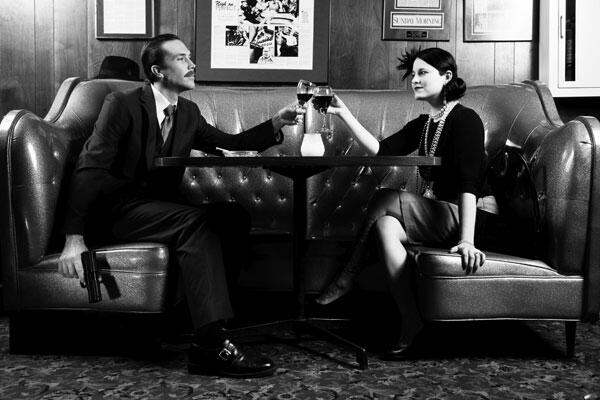
Critic’s blind date column has been running for a while now. We’ve all got some good laughs out of it, and at least a few people have scored themselves a night of romance. But here at Critic we feel that it’s time that we stepped it up a notch. The date is now at Little India to add a little more spice. But that’s not all; each week our blind daters will have an extra challenge to deal with, which they won’t be told about until they arrive for their date. If you want in on the action, email critic@critic.co.nz with your details. CriticTV Takes on the Blind DateSo we’ve turned things up a little bit each week, just a little bit, to keep the blind dates fresh. But this week shit got real. The boys at Critic TV turned up and asked if they couldn’t have a crack at the blind date. Why not right? So two un-expecting young things turned up at the Cook last Tuesday with no idea that their entire blind date would be filmed, and then let loose on the internet. Good sports that they were, they didn’t fuck off (okay the first guy did, but they second one we called up stuck around). So here you go, the very first Critic TV Blind Date: critic.co.nz/critic-tv/ Fuck studying, check it out. critic.co.nz/critic-tv/
-
Columns

Straight Up | Issue 14
In case you missed it, the big news this week was the launch of Rainbow Youth and Outline’s new campaign WTF, which stands for both “What The Fuck” and “Where’s The Funds”. If you haven’t checked it out already, you really should. WTF features a number of well-known New Zealanders, including – OMG! – Lucy Lawless, calling for wider reflection on the crap experienced by queer and trans folks. It asks for donations to help organisations deal with this problem more effectively. I know many of the people involved in producing the video, and want to thank them for all their hard work. At the time of writing the video had already received 71,000 views, and been covered in gay media worldwide. It has definitely succeeded at getting people yakking. The thing that irked me about the straight media coverage of WTF was the tendency to reduce hetero/cissexism to incidences of random street violence or similar, as though that is the main concern for queer/trans folks. For me, this violence is only symptomatic of a wider sick culture, which ultimately wants queer/trans kids and (gender)queerness in general to disappear. I would love it if the media would instead highlight the fact that it is our culture of heterosexism which needs to change, not just the thugs that exemplify it. That requires deep and sustained intervention in many spheres of life. In other news, Jim Parsons, that cute dork from The Big Bang Theory, came out. I get really annoyed by well-meaning heteros saying things like “Who cares if he is gay? It won’t stop me watching it!” Well… I CARE I CARE I CARE I CARE. I care because mainstream media provides precious little visibility of queer/trans folks, so when someone decides to make an announcement like that, it makes me a little bit happy. I get annoyed when cis-straight people say things like that, or the old chestnut: “I don’t see gender/sexuality. People are people.” Um, WTF. Yeah you do. We all do. Don’t tell me you don’t see me, and my gender-giftedness and lustiness. For me, what would be way cooler is if you would say something like: “Woah babe, I see your gender in all its glory, it is gorgeous and you are amazing!” What do you think of the WTF campaign or celebs coming out? Email me at dameladida@gmail.com. xox – Dame La Dida
-
Columns

Classic Film | Issue 14
Director: Ed Wood Plan 9 from Outer Space is one of the most celebrated science fiction films of all time. Changing tack from the serious social commentary of his previous films Glen or Glenda and Bride of the Atom, legendary director Ed Wood combined slapstick with themes of existentialism, loss, and hubris to create the 1950s B movie in excelsis. A crowning achievement, it is probably the most enduring work of Wood’s career. Plan 9’s narrator assures us that “future events such as these will affect you in the future.” This bold opening gambit blurs the line between fact and fiction, leaving the audience constantly wondering whether the film contains a grain of truth. Fearing that the unfettered advance of human technology could result in a doomsday device that wipes out the universe, gay alien hippies execute their master scheme to cow the world’s governments into pacifism. This enigmatic “Plan 9” involves unleashing three reanimated corpses on a small US town. With impeccable logic, the narrator asks “can you prove that it didn’t happen?” The dramas unfolding in front of the camera were matched by those behind it during filming. Struggling for funding, Wood turned to a church group for some of the film’s financing, and his new backers insisted on a raft of changes. Shorn of its original title Grave Robbers from Outer Space, the film went ahead on a shoestring: The flying saucers are in fact hubcaps on strings, headstones are made from polystyrene, and much of the dramatic showdown between the “visitors” and the US Army is actually stock footage. It is a testament to Wood’s skill that this is barely noticeable. Plan 9 also has the distinction of being the last on-screen appearance of Bela Lugosi, the original Count Dracula, who died at the start of production. Few would call it an ignominious epitaph, despite Lugosi’s character being hit by a car and his reanimated body played by a stand-in, veiled chiropractor. RIP. – Kathleen Hanna
-
Columns

Objection Overruled | Issue 14
This week I’m talking about the plea of insanity – hopefully not for future reference. For legal purposes, insanity means either that a person was labouring under natural imbecility or disease of the mind at the time of the offence, or that they are unfit to stand trial. The defence is not limited to homicide, but it is primarily used in such instances because a successful plea often results in involuntary incarceration, and this can be more oppressive than a conviction. The law has long recognised insanity as a defence. In 1798, a Mr. Hadfield attempted to assassinate King George III. Already suffering from delusions after sustaining multiple head injuries at war, Hadfield joined a religious cult. Needless to say, this only served to exacerbate his delusions. Hadfield thought that killing the King would bring about religious revolution, and attempted to shoot him. The judge was of the view that Hadfield acted with a degree of premeditation in reliance on his delusions, and he was acquitted on that basis. The M’Naghten Rules arose from similar circumstances in 1843, and a revised version of those rules has been incorporated into our Crimes Act. In New Zealand, the defence is available where a person laboured under natural imbecility or disease of the mind at the time the offence was committed. Adams on Criminal Law provides that “a finding of not guilty on the ground of insanity will ensure that someone who has no criminal intent or capacity to form a criminal intent due to mental illness, is not regarded or treated as criminal.” The plea was successful for one man who shot a police officer in “self defence”, believing him to be a KGB infiltrator. Although a mistaken and delusional belief, it was rationally held by him. After a successful plea, one may be incarcerated on the grounds of mental illness, contrary to what is sometimes depicted on below-par crime shows where the defendant walks free after being found not guilty by way of insanity. Through the relevant mechanisms, the person is monitored and treated until such supervision is no longer required. Detention as a “special patient” may be made under the corresponding legislation. Alternatively, detention in hospital may be ordered under compulsory community psychiatric care on either an inpatient or outpatient basis. Immediate release is less common and only ordered where special circumstances arise. This happened in 1998, when release was in the best interests of the public as the peculiar circumstances (including a mix-up with medication) were unlikely to repeat themselves. – Alice O’Connell
-
Culture
Max Payne 3
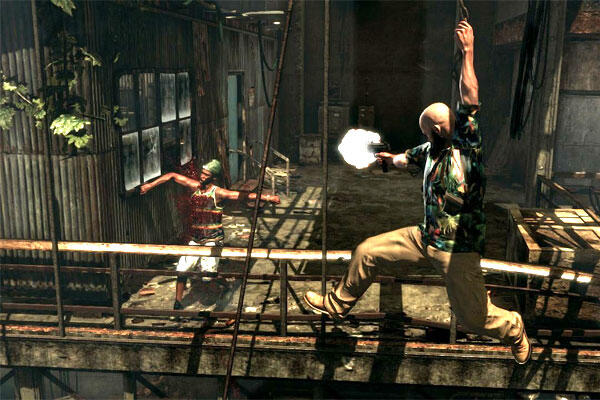
I stumble into my room, which is more of a mess than a coke addict’s savings plan. Falling into the chair in front of my desk, I stare into the screen. It stares back at me with a look of pure contempt, taunting me with the question: why didn’t you like Max Payne 3? Just like the game itself, this review has begun with a noir, in media res opening (the game’s one is much better). Now, I’ll provide a bit of background. Max Payne 3 is the follow-up to Remedy’s Max Payne series, which blended a film noir-style New York detective story with Hong-Kong-action-crossed-with-The-Matrix gameplay. However, this time round, it is not Remedy at the helm, but Rockstar, creators of the famed Grand Theft Auto, Red Dead Redemption and Bully. Max Payne 3 is a linear combat-centric game. It picks up the story of the titular character Max Payne several years after the events of the previous games. Max has fallen even further into despair. The third game centres on his addiction to alcohol and painkillers, but offers him a final chance at redemption. Rockstar chose to change the setting from wintery New York to sunny São Paulo, Brazil, while attempting to keep the noir feel. Overall, they succeed. Max is still as cynical and melodramatically poetic as ever, the story is a dark criminal conspiracy plot, and the cut scenes are very stylishly told. Indeed, the story telling is some of Rockstar’s best, which is saying a lot. The gameplay further evolves Bullet Time from the previous games. The player can slow down time when shooting, allowing bullet dodging and fine aiming. This results in some incredibly cool gunfights – imagine diving out from cover with dual Uzis, and shooting all three bad guys in the head before you hit the floor. This is complemented by the animation physics, which give Max more natural movements. Slowing time down allows you to appreciate this. Bullet Time feels less powerful than in the previous games because of improved AI, more difficult aiming (slowing time also reduces the reticule movement speed), and its shorter duration. Despite this, pulling off a perfect Bullet Time is much more rewarding. The varied weapons are back and dual wielding combinations are as fun as ever. Max has lost his trench coat that can hold every single gun. Now, the player has to decide what single two-handed weapon he carries, resulting in tactical weapon choices. Overall, Rockstar has nailed the combat. While it is more difficult, it is a real pleasure to play. Unfortunately, the game’s noir atmosphere isn’t as thick or as consistent as in previous entries. This is partly because of the change in setting – no amount of Max Payne monologue can fix the change from noir-perfect New York nights to daytime-bright São Paulo. Shooting up the favela in a Hawaiian shirt and killing Portuguese-speaking gangs doesn’t feel the same as exploring the twisted depths of a demonic New York nightclub. Secondly, the replacement of the comic book sequences with incredibly slick motion cut scenes doesn’t carry the amount of style or feeling that the incredible artwork did. The problem for old Max Payne fans is that Max Payne 3 is not a Remedy Max Payne game, with an over the top dark tone, colourful characters, and a twisted, surreal New York story. Instead, this is a realist Rockstar story about drugs, crime, and corruption in Brazil, all told through the noir perspective of Max. Staring into the pale glow of the screen, I realise why I don’t like the game: it isn’t the Max Payne I expected. I wanted the old one back, but I wanted a new one at the same time. I killed several of my hours along with the strangers I killed online in the multiplayer, and I still wasn’t satisfied. Maybe some young punk who’d never played Max Payne in his sad life would be real happy with this – but I wanted a real Max Payne 3, and all I got was some shiny Rockstar version. All I can say is, bring on GTA V. 3 / 5 stars – Vimal Patel
-
Culture
Post-Progressive Instrumental Dunedin Shoegaze
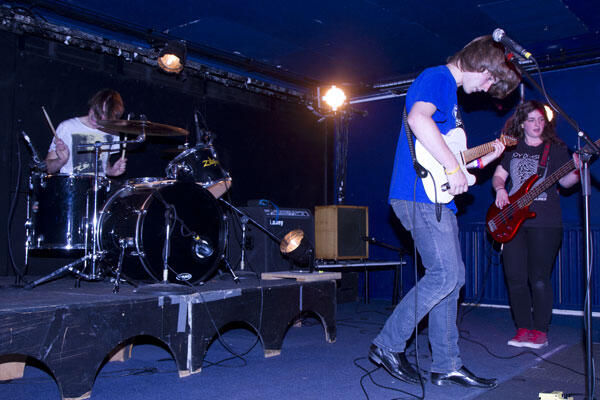
What better way to finish up New Zealand Music Month than the grand final of the OUSA Battle of the Bands. With so much talent on show, and the extreme diversity of the line-up, from ska-punk to metal to “dance music for the insane”, the judges must have had a hell of a time crowning a victor. While there can only be one winner, all of the bands performing deserve recognition for their eclecticism and general stage antics. Aside from being drunkenly accosted by the venerable Jamie Green regarding a typo in my previous Critic article, the night went exceedingly smoothly. After the event, I caught up with newly crowned Battle of the Bands winners: the Idiot Prayer-obsessed, Six60-damning A Distant City. I’m pretty sure that according to law I have to make sure it’s ok that I record this conversation, so…is it ok? All – [Laughs] Yeah it’s fine. Cool, so just to get the formalities out of the way, can you please all state your names and instruments for the record. J – I’m Josh, I play drums. (Editor’s note: This will be the last we hear from Josh) CJ – I’m CJ, I play bass. N – I’m Nick and I play guitar and sing. Z – I’m Zach and I play guitar. Well it’s a pleasure meeting you guys. You played excellently tonight. How long have you all been playing together? N – Cheers. We’ve been together for about two years now… And did you know each other before then? N – Well Josh and Zach are brothers, and I met them a while ago. And we needed a bassist, and we knew that CJ played bass. Z – She played bass in a band with Astro Children (came runner-up at Battle of Bands). Were you in high school then? N – Yeah, we were at Otago Boys. And are you still in school? CJ – I’m first year at uni. N & Z – We’re still at high school [chuckles]. So how long have you been gigging for? Where and how often do you perform? CJ – Well for ages we played at the Muso’s Club Open Night. We did that a lot… N – Yeah, we got reasonably tight doing that… And we’ve played quite a few gigs around Dunedin. What are your views on the Dunedin music scene? N – I think it’s generally pretty good. Everyone kind of knows each other. CJ – As long as you know people it’s fine… That’s how you make it in Dunedin, it’s about who you know. Have you released any recorded material? EPs or LPs or anything? CJ – We released an EP under our previous band name… What were you called? CJ – It doesn’t need to be mentioned… N – It was very different to what we are now. So have you released anything as A Distant City? CJ – No, not yet. N – We have a couple of recordings, and we want to put something together soon. Z – Especially now that we have a lot of recording time! Yes you do, and congratulations again for that! Ok, so here’s a few more generic, yet necessary questions… Who do you consider your musical influences to be? CJ — [without any hesitation] Idiot Prayer! N & Z – Yes, Idiot Prayer! Well that was easy… So what kind of stuff do you recreationally listen to? N – I really like Paolo Nutini, Chris Cornell, and Jeff Buckley. CJ – Idiot Prayer, man! N – Oh, and Two Cartoons. We love Two Cartoons! Oh yeah, Two Cartoons are great… So what are your immediate plans as a band? Say, in the next month? CJ – We’re playing a gig with The Great Jali and Two Cartoons on Wednesday. N – And then Friday we have a gig with Kilmog. And then you’ll be going into the studio at some point soon? N – Definitely. CJ – Fo shizzle! So what are some of your favourite records that have been released this year? Z – Idiot Prayer Live. N – Jack White’s new album is really cool… You were billed as “pseudo-post-rock, post-progressive, shoegaze”. Can you tell me about that? CJ – It was kind of a joke. In one of our reviews, we were called pseudo-post-rock, and then when we were playing acoustically at the library, they called us… Z – ...“Post-Progressive Instrumental Dunedin Shoegaze”. Fair enough... Though you did look at your shoes quite a bit tonight. N – Well that’s less us trying to be “shoegaze”, and more like, we have nowhere else to look. Z – Yeah, we’re pretty scared of people [laughs]. So we all hear about the Dunedin Sound a lot – any thoughts on that? N – Well we all have jangly guitars… But seriously, it’s a very “do whatever you want” kind of vibe that is unique to Dunedin I think. No pressure to be anybody but yourself. It’s very personal. Yeah for sure. So what Dunedin bands do you look up to? CJ – Idiot Prayer. Z – HDU… And, of course, Idiot Prayer. Ok then, moving on… How do you feel about the Internet’s effect on the contemporary music scene? CJ – It definitely has helped us. N – It’s a great way to quickly get your music out there. Especially coming from Dunedin, it’s hard to get radio airtime, and any kind of international recognition. The Internet becomes essential. So do you think CDs should even be kept around? N – Definitely… Same reason vinyl should be kept around. Ok, if you were to rank CDs, Vinyl and MP3… All – Vinyl, CDs, MP3! No hesitations there… So how do you plan to use the money that you won tonight? N – I want to put it towards a new amp. CJ – I want a new bass… I’ve had mine since I was 13. So are there any bands that you model yourselves on, or aspire to be like? CJ – I would have to say Idiot Prayer again… Except for the fact that they broke up. Or Alizarin Lizard… N – Yeah, that would be cool. Paul Cathro seems too awesome to be real. How do you feel about the New Zealand music scene as a whole? Is it an easy place for a band to make it? Z – I don’t know that it’s easy. I think you have to have a certain sound to do well. You have to sound like… Six60. CJ – Oh my God, don’t even mention them. N – That didn’t happen! We didn’t just slag off Dunedin’s favourite band. CJ – Yes we did! This is good. This is the kind of dirt Critic readers want to see. So, what do you honestly think about Six60? Why are they so popular? N – Six60 is not representative of the Dunedin Sound. CJ – Yeah, that’s a good quote. N – Whatsoever! But they’re like the Dunedin success story! N – Oh aren’t they just… It’s great… so great. CJ – WHY! WHY!?!?! So why do you think people are so into it? Z – Because they sound the same, all the time… N – Because most people don’t like to think. Ok, let’s go deeper into this. This is a scab I want to break open. CJ – I think that people are ignorant. And need to listen to better music. N – Oh hey, you know if someone genuinely likes Six60 it’s their taste… I think we should change the subject. Yeah, we probably should. Ok, so if you do continue to succeed and grow as band, do you think you will leave Dunedin, and New Zealand? Or do you feel pretty loyal to this place? N – We would have to leave eventually. At least for a bit. But we will definitely come back to Dunedin. I love it here. CJ – I disagree. I definitely want to leave New Zealand. N – I definitely do not want to leave New Zealand! Well this is awkward… We should move on. In fact, we’re all pretty tired. Let’s finish this up. One final question – what do you think of Critic? N – I don’t really read the Critic. CJ – Bring the glossy paper back!
-
Culture
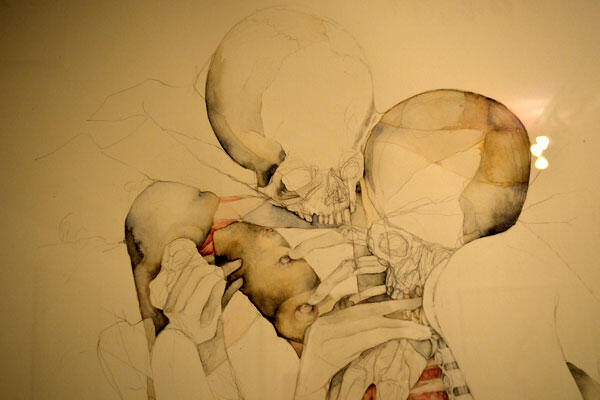
Heart, Hand, Humerus
Blue Oyster, 24b Moray Place 16 May – 16 June There’s something utterly enthralling about these paintings that you can’t quite put your finger on. The first thing I noticed was the breathtakingly beautiful use of watercolours. Williamson’s skillful merging of inky blue, dove grey and blush pink is, quite simply, gorgeous. The colours’ limited use in these artworks further enhances their beauty. That’s not quite it, though. The second thing I noticed was the map of lines that stretches across the plane of the paper. Tiny fissures trace their way through space, resembling the branches of a Bonsai tree. Follow these lines further and more abstract forms appear in the curiously rounded edges and trailing strings. But that’s not exactly it, either. Take a step back and the full picture will form, but it’ll still take you a while to figure it out. Maybe you won’t figure it out at all. I’m honestly still not sure if I have. I’ll stop being so irritatingly mysterious now, but it won’t make it any easier to explain the intricate details that combine to form Williamson’s series of artworks. Her exhibition “Back To You” comprises six paintings (actually three sets of two companion paintings). In each set, one painting is the “official” watercolour piece and the other is the “skeleton” of its partner. Williamson created these “skeletons” by sewing the outline of each watercolour piece into the second artwork. From a distance this doesn’t look like much, but up close the “skeleton” pieces are quietly haunting echoes of their showier twins. Each pair of paintings is unique in form and arrangement, but united in subject matter: the awkward beauty of the human body. All those trailing lines? Veins. All those oddly rounded shapes? Organs and arteries. But Williamson doesn’t discriminate. Her fondness for both outsides and insides is demonstrated by the repeated appearance of lips, hands and breasts. Such a description makes the works sound very sensual. They are, but there’s something a little off about these paintings that both attracts and repulses the viewer. Perhaps it’s the bluntly anatomical rendering of the human body so casually imposed over smoother, less offensive body parts that provokes a mixed reaction of awe and abhorrence. Williamson depicts us as at once beautifully human and savagely animal. This perception of humanity appears most strongly in a watercolour depicting two human skulls biting into, or maybe just nuzzling, each other. It makes for a simultaneously lovely and terrifying image. I hate to play favourites, but I loved this exhibition more than anything else I’ve reviewed this year, so I highly encourage you to see it. Maybe even drop me a line and tell me what you think. Of course there’s no disputing Williamson’s artistic talent: each limb and organ is precisely rendered, her eye for the most minute detail is incredible, and her sketches of hands in particular make me green with envy (I have always sucked at drawing hands and feet, it’s still a sore point). But, as always, it’s the emotional response that’s most interesting, so let me know if you manage to figure out exactly why these works are so haunting.
-
Culture
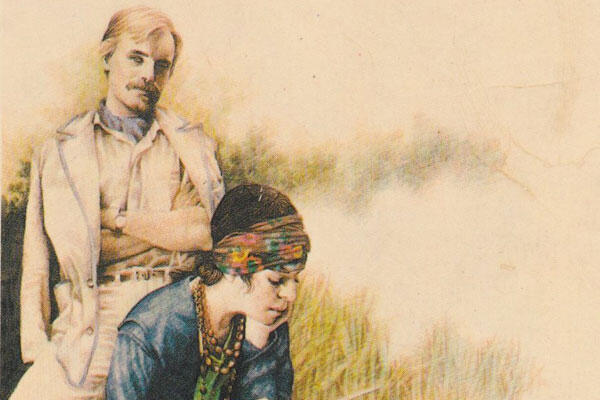
Women In Love
Despite its title, D.H. Lawrence’s 1920 novel Women In Love is not — I repeat, NOT — a romantic book. If anything, it gives romance of the roses-and-Valentines-Day variety a swift and decisive slap in the face. Though it is mostly about relationships between men and women, what Lawrence is really interested in is the conflict, violence, bitterness and resentment that can arise when two people decide to be together. Paradoxically, all this darkness is delivered in some of the most swooningly rhapsodic prose I’ve ever read. The novel centres around two couples: Ursula and her eventual lover Rupert Birkin, and Gudrun (Ursula’s sister) and Gerald Crich (Birkin’s best friend). On a superficial level, you could say that Ursula and Birkin are the happy couple and Gudrun and Crich are the unhappy couple. But that irons out the subtle nuances that Lawrence builds into these four characters and their respective relationships. Ursula and Birkin have more than a few quarrels (the descriptions of which are clearly drawn from Lawrence’s own experiences of marriage), and, significantly, the novel ends with the “happy couple” debating whether they are really enough for one another. To say Gudrun and Crich are unhappy doesn’t begin to describe how venomous their relationship becomes. It’s both fascinating and repulsive to observe this car crash of a romance. In fact, almost every relationship in the novel defies your expectations of what should be happening within that relationship. Fathers hit their daughters, a girl drags her sweetheart to a watery death, and lovers initially desire each other, then are frightened of each other, then unswervingly hate each other. Two things stop Women In Love from becoming a soapy melodrama. The first is the general sense of malaise, evoked most frequently and fully through the philosophising of Rupert Birkin. Though Birkin’s rhetoric is mocked later in the book, it’s clear that he is to a certain extent Lawrence’s mouthpiece. Birkin expounds on the soullessness of early twentieth-century Britain and the seeming mechanisation of its society, the emptiness of old idols and the yearning for new ones, and the urgent search for meaning despite the spiritual barrenness of 1920s society which suggests that such meaning no longer exists. In this sense, Women in Love connects with other great artistic and literary works of the time. It is most obviously comparable to The Waste Land, in which T. S. Eliot refers to the cultural achievements of the past as “a heap of broken images” and promises to show the reader “fear in a handful of dust.” Lawrence dramatises this sentiment by putting that fear in his characters’ mouths. Above all, it’s Lawrence’s prose and incredible skill as a writer that kept pulling me back in. Even when the plot got slow or Birkin’s philosophising got tired or a passage got so complex and rich in verbal nuance that I felt I was floundering in a wordy swamp, all I had to do to recover was turn the page. And on that page there would always be another luminous description or image of intense clarity, detailed in precise and nuanced language and seen through a fresh eye. E.M. Forster described D.H. Lawrence as a “prophetic” author, one “in whom the song predominates, who has the rapt bardic quality”. The beauty of his prose proves this to be true. Anyone with an interest in language and writing will feel invigorated after reading this book. Anyone interested in human nature and relationships will find this book absorbing and sadly truthful. Anyone interested in both will probably be like me and realise halfway through that they already want to read this book again. –Feby Idrus
-
Culture
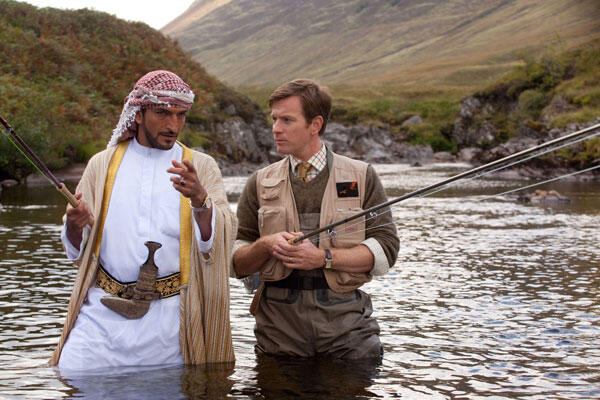
Salmon Fishing in the Yemen
From the director of Chocolat, Dear John and several ABBA film clips (I’m not joking) comes the film Salmon Fishing in the Yemen. Based on a novel and adapted for the screen by the same guy who wrote the screenplay for Slumdog Millionaire, this film was always going to be a romantic story of triumph against the odds. It follows a fisheries expert named Fred (Ewan McGregor) as he attempts to find a way to make real a wealthy sheikh’s vision of (you guessed it) salmon fishing in the Yemen. The film begins in London, with an email conversation between Fred and Harriett (Emily Blunt), a consultant who wants to discuss with Fred the possibility of introducing salmon to the Yemen River. Fred initially dismisses the idea as unfeasible, but with a bit of persuasion begins to treat the idea as a “theoretical possibility”. Once he meets the sheikh behind the idea, he starts to believe that it might work. The film documents Harriett and Fred’s efforts to make the seemingly impossible a reality, and the unexpected outcomes of one man’s vision. There were three outstanding elements of this film for me. The first was the scenery – go and see it for its panning shots of the Scottish countryside alone. The second was Kristin Scott Thomas’ performance as the head of PR for the Prime Minister of Britain. The third was her IM conversations with the aforementioned Prime Minister – hilarious. The rest of the film fell a bit short, but maybe I was expecting too much. If you’re after a riveting plot and character development, this is not the film for you. My date described this film as “a romantic romp in the Yemen”. I concur. –Georgia Rose
-
Culture

Shihad Beautiful Machine
“We give up that dream of being in America or we change our name and give it a go. Those were my options — Shit A or Shit B.” In this film chronicling the highs and lows of Shihad, Jon Toogood tells it like it is. Beautiful Machine traces the band’s twenty-three years of the good, the bad, and the just plain ugly. It follows Shihad’s successes and failures in the local and international music industry, and investigates the band’s longevity despite numerous setbacks. The film’s greatest strength is its demonstration of how hard it is for a Kiwi band to get anywhere in the music industry. It gives the viewer a good look at what goes on behind the scenes with the managers and record companies that the band deals with. Beautiful Machine takes a very upfront and honest approach to the rockumentary that sets the film apart from its music documentary ilk. It contains candid interviews with the band members’ parents, ex- and current partners, and music industry insiders. The music itself is set aside to make room for the stories of the band members’ lives and relationships with their wives, girlfriends and families. The film is about ambitions and aspirations, and whether or not fulfilling these will bring the happiness the band had hoped for. As it follows the band with four number one singles, Beautiful Machine explores not only the place a New Zealand band has in the American music market, but New Zealand’s place in an increasingly Americanised world. Not just for the fans! –Taryn Dryfhout
-
Culture

Oreo Nom Nom Nom-ness
Are those late night adventures to the 2-4 not doing it for you? Do their cupcakes feel a little worse for wear? Are you tired of the nacho cheese-chicken cordon bleu combination? Finding yourself wanting something a little more Nigella Lawson or Julia Child? There is nothing more comforting and delicious than a carbohydrate-rich baked good. Of any variety. If you subscribe to the last-minute model, favour the frequent all-nighter, or live in the deep dark depths of North East Valley, these easy, delicious recipes ought to strike your fancy. Which is to say, Martha Stewart's tedious and lengthy recipes need not apply. What’s more, the recipes are quick enough to warrant eating two-thirds of the raw mixture in one sitting. Oreo TrufflesIngredients1 packet Oreos 150g tub cream cheese 250g chocolate (perhaps use Whittakers peanut butter chocolate to spice things up) Method01 | Firstly, seize the opportunity to take out any flatmate hate on the biscuits by crushing them with a hard-edged device. Ludicrously overpriced Kitchenaid appliances would be ideal, of course, but a hefty backhand and a rolling pin will suffice. 02 | Add the tub of cream cheese to the Oreo mixture. Roll into balls. 03 | Meanwhile, put the chocolate in a non-metal bowl, and microwave in 30-second bursts, stirring between each burst. To prevent the tragic splitting that can arise from overheating chocolate, I suggest adding a drop of milk. 04 | Cover the balls of truffle gloriousness evenly with the melted chocolate. 05 | Getting impatient? Simply pop these moreish babies into the fridge for an hour or so, and voila! 10 servings. 1000 calories per ball of goodness Oreo CheesecakeIngredients2 packets Oreos 3 tbs butter 3 x 250g tubs cream cheese ¾ cup sugar 2 tsp vanilla 3 eggs Method01 | Pre-heat that dubious flat oven of yours to 180°C. 02 | As in the first recipe, crush the life out of half the Oreos. Putting them in a plastic bag before crushing helps reduce mess. Be sure to close the bag and remove all of the air before striking the biscuits with a rolling pin/Psych textbook. Place the contents in a bowl and add the melted butter. Press the irresistible mixture into the bottom of a 9-inch quiche dish. 03 | Beat the cream cheese, sugar, vanilla and eggs in a bowl. Yes, this recipe does essentially legitimise eating three tubs of cream cheese and two packets of cookies. 04 | Crush the remaining Oreos. Blend half of the biscuits into the mixture, and leave the other half for decorating the cheesecake. 05 | Bake that baby for 45 mins. Cool, refrigerate for at least three hours, then enjoy! Further your passive aggression by giving off mixed messages and offering these treats to those heatpump-over-using freaks you call friends. Serves 12, or 1, really.
-
Columns
Te Roopu Māori | Issue 14
Life, even at university, is not solely about study — and that’s a good thing. Everyone has other commitments, be they to whānau, friends, work, or sport teams. Life needs to have balance to be enjoyable. On the other hand, when you’ve got lots on you need to prioritise. Often Māori students overcommit themselves, which negatively impacts their grades. Be realistic about what you want to achieve, what you can achieve, and what needs to take priority. With exams only a few nights away, be sure to look after yourselves, take study breaks, and eat well. Those who are sticking around in Dunedin for the break should get amongst the community activities and share in the celebrations of Matariki. Matariki is the Māori name for the group of stars also known as the Pleiades star cluster or the Seven Sisters. It rises just once a year, in mid-winter – late May or early June. The Māori New Year is marked by the rise of Matariki and the sighting of the next new moon. Matariki literally means “eyes of god” (mata ariki) or “little eyes” (mata riki). According to myth, Ranginui, the sky father, and Papatūānuku, the earth mother, were separated by their children. The god of the winds, Tāwhirimātea, became so angry that he tore out his eyes and threw them into the heavens. Traditionally, Matariki was a time to remember those who had died in the last year, but it was also a happy event. Crops had been harvested, and seafood and birds had been collected. With plenty of food in the storehouses, Matariki was a time for singing, dancing and feasting. Check out the link below for all the activities taking place in Dunedin. http://www.matarikievents.co.nz/index php?page=events-calendar&category=Otago Also, I thought I would mention a few events early in the next semester to pop into your calendars. Any queries, just holla! Te Hokai (Ball) July 21. Tickets are $40, theme is 1950s. Te Wiki O Te Reo (Māori Language Week), July 23 - July 27. Hypnotist Fundraiser, July 26 and 27. Tickets are $15. Keep an eye on your emails and on the facebook page. All the best with exams, and have a well deserved break. –Lisa Pohatu xx


