More Culture from Issue 19
-
Pork and Coriander Dumplings
Hi, my name is Sophie and i am a dumpling fiend. Steamed dumplings, fried dumplings – all the dumplings! I spend a lot of time sourcing out the best dumpling stalls and night markets and frequently venture into D-graded food establishments to find premium offerings. I had tried making dumplings before but my Caucasian man-like hands made the delicate motion of wrapper crimping somewhat a futile art for me. I think my father took pity on me when he presented me with my very own dumpling press (that or he wanted me to make him dumplings). I threw in the Burger Sunday towel and directed my patience towards dumpling production! Mince and cabbage – that is pretty much all you need to make dumplings. Well, that and wrappers. Pork and coriander was my flavour of choice. You can buy the wrappers at your local Asian supermarket for less than four dollars for a pack of 50. Making 50 dumplings is a horrendously tedious activity, even with your own dumpling press, so make sure you have plenty of time onhand. And hands. You can fry and steam or just fully steam your dumplings, up to you. Increase the greenery in your diet by serving these up with a side of steamed bok choy or whatever. Ingredients Makes 50 Dumplings 500g pork mince 3 cups finely shredded savoy cabbage 2 tablespoons fresh ginger, grated 1 bunch coriander, finely chopped 2 spring onions, finely chopped 2 red chillis, finely chopped 4 cloves of garlic – you guessed it – finely chopped 2 tablespoons sesame oil 2 tablespoons soy sauce 2 tablespoons mirin 1⁄2 teaspoon salt 50 dumpling wrappers Equal parts soy sauce, sweet chilli sauce and sesame oil for the dipping sauce Method Mix together the filling ingredients with your hands. Place about a teaspoon and a half of filling in the centre of a dumpling wrapper. Rim the edge with a tiny bit of water, fold in half then press the edges together to seal them. Crimp the edges by pleating them over one another. Place folded dumplings on a floured bench while you assemble the rest. To cook the dumplings, you can either steam them over boiling water for eight minutes (I made a makeshift steamer using a grated dish over a saucepan of simmering water with a lid whacked on it). Or you can fry the dumplings in a deep frying pan in a splash of sesame oil. Once both sides are brown, pour in a cup of hot water, place a lid over the top and leave to steam for eight minutes until they are cooked. Garnish with coriander and serve with a dipping sauce.
-
John Ward Knox & Sophie Bannan
Blue Oyster Art Space Exhibited until 23 August 2014 The Optimists is a new work by Christchurch-based artist Sophie Bannan and Auckland-based artist John Ward Knox, and is currently being exhibited at The Blue Oyster Art Project Space. While each artist presents a series of work unique to their current practice, The Optimists offers a parallel moment between the two artists. It is a space for the two to collaborate without any preconceived themes or constructed ideologies. Originally from Melbourne, Sophie Bannan is currently completing an MFA in Christchurch. Sophie also writes semi-fiction, cultural criticism and exhibition reviews and has recently written for Point Magazine and The Physics Room. She founded artist-run initiative Strines (Melbourne) and co-founded Personal Best Gallery (Auckland). Recent solo exhibitions include Variations, Knight Street Art Space (2013) and I am in the middle, Rearview (2013). In early 2015, she will be attending the Mountain School of Arts in Los Angeles. John Ward Knox holds an MFA from the University of Auckland (2008) and was a founding member of Newcall Gallery (Auckland). Recent solo exhibitions include Breathing After Thinking, Ivan Anthony (2014) and a lightening strike, a hand on a shoulder, Robert Heald (2013). He has been part of the group exhibitions New Revised Edition, City Gallery Wellington (2013) and Contact. Artists from Aotearoa/New Zealand, Frankfurter Kunstverein (2012) and in 2008 he won the National Drawing Award. Both artists are interested in similar practices regarding form, space and material and this exhibition reveals how each artist is able to effectively render form, through various manipulations of material, to generate different responses to the objects. Moreover, the artists bring attention to the fluid concept of space, emphasising how it can alter one’s perception of any object. When you first enter the gallery there is a low table with a delicate wee sculpture assembled lonesome on the top of the reflective table – notably reflective as the pots are actually white, but the copper toned surface makes their reflection look like raw terracotta; it’s so organic. The object literally looks like a handle-less teacup/upside down mini volcano made out of asteroid remains, solidified cookies and cream, and those weird paper-thin shells you find on North Island beaches that have black speckles on the surface. Regarding space, my initial thoughts were “it is really weird how such a small object can impose feelings that are totally unrelated to the object itself.” I genuinely felt sorry for it because it looked so significantly insignificant. After a moment of contemplative pity, I moved on to the next room, where nine of the small pot/teacup-with-no-handle objects are similarly assembled (but in a zig-zag kind of arrangement) on another table that has an identical surface to the one mentioned before. I really appreciate the material coherency here and the tables stood out to me more than the actual objects. The objects are in a smaller space and there are more of them, so naturally the general feeling was a lot less lonely and a lot more intimate. I stayed in there for about five minutes observing. Again, I was more interested in the reflections than the actual objects, and in this instance of thought, I couldn’t help but consider some qualms of contemporary culture – does the image, or the object generate more meaning and value? And why? And how does the space it’s represented in contribute to that? (Art being art, I was told there is no certain answer to my questions). In this exhibition each artist has an interest in material and spatiality; and each of their work revises, evaluates and compiles new materials and spaces. In The Optimists, each object is reworked in a slightly different way, and is presented in different spaces, fuelling numerous feelings around what fundamentally (materially) appear to be the same objects. This suggests how each object questions and challenges ideas about how a material can express itself in a most basic way, while simultaneously hosting an external realisation. The exhibition encourages the viewer to see “things” as objects, whose surface is a mere indicator of a far deeper volume beneath, and I’m probably going to drag all my friends there (I say drag because I’m sure they get sick of me taking them to galleries all the time) and try to make them understand life a little bit more, one exhibition after the other! You should do it too. It’s on display until 23 August.
-
Hercules
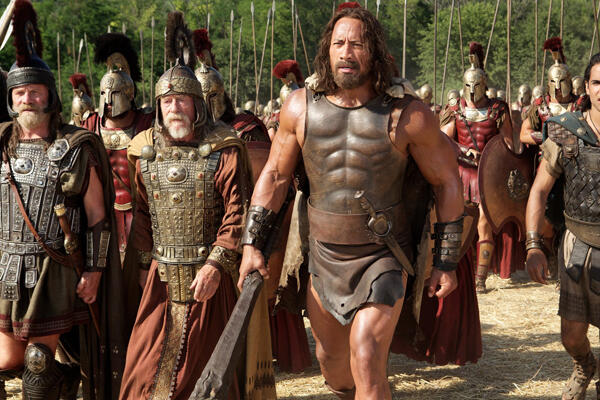
Rating: B When you’ve heard a story told the same way 100 times, you never expect the 101st retelling to be different. Which is why Brett Ratner’s Hercules was a pleasant surprise, if not your usual action blockbuster fare. Hercules is one of humankind’s oldest legends, and Ratner’s action epic investigates the story as just that: a legend. The film presents the story as we know it, Hercules, the demigod son of Zeus, battling some of mythology’s most fearsome creatures, and then flips it on its head, exploring the concept of how a man becomes legend and how such fantastical stories start. This intriguing angle created a narrative that was both fresh and engaging, and allowed millennia-old Greek tropes to be subverted. That said, this was just the foundation for what is ultimately still just a period action film, and really just acts as a platform for melee combat mayhem. But hey, who doesn’t love a good dose of that every now and again? Plus, the fight scenes were superb, taking full advantage of the concept of Hercules as a brutally strong mercenary to create some truly memorable set moments of combat. I was also pleasantly surprised by the calibre of performance in Hercules. Considering that the lead is Dwayne “The Rock” Johnson, that is quite a statement. The Rock clearly is a good pick to play Hercules physically, and there were many moments when what would have to be CGI effects could truly be believed to be feats of strength The Rock is capable of. He also did a commendable job on turning a character that on paper is purely one-dimensional, into someone not only likable but also relatable. All in all, I would characterise Hercules as a pleasant surprise. I didn’t expect a movie directed by Brett Ratner, the director of X-Men: The Last Stand (bleurgh), and starring Dwanye “The Rock” Johnson, to do justice to such an important story, and yet, it might just be my favourite new adaptation of Hercules.
-
Pacific Rim
Cult Film For various reasons, in this day and age there is often a certain scorn for so-called “blockbusters,” like it is incredibly passé to find enjoyment in anything mainstream. It probably doesn’t help that, in the days of mass film production, unique plot lines are often few and far between. But why is that such a problem for people? I personally honestly looked forward to the release of Pacific Rim, I believe I even went to see it on the opening weekend. I kept calling it RimPac; clearly, I’ve been a student of military history for too long. And I liked it. I liked the enormous aliens, the robots built to combat them, and most of all I loved the ridiculous and amazing combat scenes that take up the grand majority of the film. Because, and here’s the important point, I didn’t have to concentrate to enjoy the film. I just watched it, enjoyed it, and left the cinema feeling like it was worth the money I spent on it. Because as a student of politics, history and security, knowing exactly what people are capable of in real life, having two hours of blissful non-thinking entertainment is a God-given gift. I watched it again the other night, and guess what? I still loved it. I loved the predictable storyline, the massive explosions, and the total lack of exigent activity of the neurons. And, let’s face it, the graphics are freaking amazing. Charlie Hunnam wasn’t exactly difficult to look at, either. I also, oddly enough, found myself appreciating the female lead ... for her eyebrows. As in, they were present and strong on her face; actually framing it rather than some twin set of Spock-brows with an elongated tail, that sort of perch on the forehead. So, the next time you’re giving your mate hell for being so unfashionable as to admit to liking a product of mainstream Hollywood, do two things: Think about why they are watching it, why they like it. Stop being a pretentious ass and admit you don’t think it’s terrible, either.
-
Begin Again
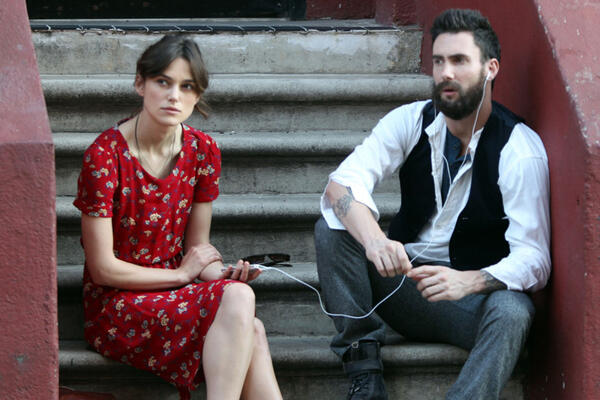
Rating: B- Begin Again, a modern music film in which the music felt terribly dated, and scored by The New Radicals, who haven’t released an album since 1999. I don’t understand this bizarre choice in musicians for the score of a film about the current music industry. The whole thing felt really dated, actually. Maybe it was set in the ‘00s and they just forgot to add the tag line? It didn’t stop me from enjoying the plaid, linen pants or crop tops, though. And these days, I guess it’s hardly indistinguishable. It turns out Adam Levine (from Maroon5) is a great actor, or a terrible actor who is accidentally perfect for the role he played, which was probably just his real self with varying degrees of beard. “Beard” was a motif of the film: the more beard that a character acquired, the more reprehensible his behaviour. Mos Def, (Yasiin Bey, his preferred name) had a beard so amusing that it made him hard to take seriously. That is a criticism for the art department, but also one that can be applied more generally to the director’s treatment of all cast members of colour. It was a little offensive, the bass player complete with afro pick and cheesy grin, the big comedic drummer, neither of whom actually spoke except to beat box. That said, Cee Lo Green’s part, which again was pretty much himself – does that make him crazy? – was pretty entertaining. I haven’t seen Once, which was arguably John Carney’s fame baby, but according to a friend who has, this is really just the American version of that, but with Mark Ruffalo. I love Mark Ruffalo. He’s not wildly handsome, and he is always cast as the same character in everything, but gosh darn it the man is charming, in that half down-and-out-dead-beat kind of way of his. I cried in moments of this film, and I felt silly for crying because it’s a silly film, but I guess it’s also pretty honest and quite touching.
-
Robocop (1987)
Classic Film I can imagine watching the blood-soaked ridiculousness that is Robocop would be an incredibly rewarding experience while high. Peter Weller plays Alex Murphy, a police officer that is brutally and graphically blown to pieces by criminals, his life saved when he is rebuilt (or resurrected?) as Robocop, a state of the art crime fighting machine designed by the mega corporation “OCP” (Omni Consumer Products) to end crime in the future version of Detroit. It is chock full of everything that makes a great cult film: over-the-top gore, great one-liners, and a preposterous plot, but what set this movie apart from other classic ‘80s films is its surprisingly complex themes regarding human nature. The weakest part of this film is possibly the first half hour before Murphy becomes Robocop, which is less focused on the central character but instead the powers behind OCP and finding the solution to ending crime in the city. The first display of sci-fi in the film is the introduction of “ED-209,” the original crime fighting droid (with fantastically ‘80s stop motion effects) built by OCP. ED-209 was seemingly the solution to crime, until a malfunction causes the bloody death of an executive at the meeting. A junior executive at the meeting, unfazed by the death, uses ED-209’s failure as an opportunity to propose his Robocop program to the CEO. When Murphy was rebuilt as Robocop, his memory was erased in an effort to turn him into a machine unhindered by his human memories. Over the course of the film, Robocop slowly regains his memories of his old life, and the film ends with Robocop identifying himself as Murphy. Robocop is, or was, a brilliantly original character and an icon of ‘80s science fiction, and the subtle humour and clever themes have ensured this movie a cult classic not likely to be forgotten. I have to mention the 2014 remake, which unlike the original, was a terribly bland film that lacked everything great the latter had, including an R18 rating. Don’t judge the original on that mess.
-
Pulp: A film about life, death & supermarkets
This documentary-style film is an en- dearing tribute to the ‘80–‘90s Sheffield- based band, Pulp. While probably not a well-known rock group in New Zealand, they have had many hits, including “Common People” (1995). Unlike many band-based movies, the members (now in their 50s) seem like genuinely nice people. They appear to live relatively “ordinary” lives despite their international fame – they have normal jobs, normal homes and have aged surprisingly just like the general population (unlike Hollywood #thanksObama). The audience joins the Pulp crew in 2012 on their so-called “tidy-up” tour, as they attempt to end on a better high than they did before their decade-long hiatus. Pulp has an interesting film aspect to it involving interviews of the band members, fans, and of the general public. The film takes us on a journey through the eyes of others on what Pulp truly means to them. As in any movie though, some people aren’t all that insightful. For instance, a newspaper seller claimed his favourite Pulp song was “We Are the Champions” ... hate to break it to you, mate, but that song was Queen’s. Nevertheless, the movie covers some truly touching stories of how Pulp’s music helped people through really tough times. While a film about one band can be a little dull for those not interested in the band itself, I believe the message of this 90-minute movie is much deeper. It was succinctly described on a panning piece of graffiti that said, “Imagine waking tomorrow and all music has disappeared.” That, my friends, is the crux of it all. Music matters. Music is important to so many people; is with them in the high and low times, and reminds them of loved ones they have lost, as well as the memories that they treasure. The band Pulp may not mean the world to you as an individual, but the ideas behind the film are important. Music connects us and while you may not live and breathe it, music is a fundamental aspect to our existence. #deepthoughtsforcritic Pulp is screening at Regent Theatre 8:15pm Thursday 14 August
-
God help the girl
God Help the Girl follows three youngsters around the streets and music halls of Glasgow, in one of those “perfect carefree summer” kind of romps. Eve is recovering from a self-harm episode and decides to chase her musical dreams, enlisting the help of mega-cutie James, one of those insufferable music snobs who believe they know best about what makes art pure. Together with their sheltered friend Cassie, they dance, skip, and sing their way through the film, forming a band, forming relationships, and writing music that expresses their desires and frustrations to us. The film has a Tom Sawyer- type of tra-la-la to it, and we as the viewer have perhaps a little more perspective on what issues, such as denial and self-loathing, are really in play here, than the characters themselves. To say this is a vanity project might be understating it. Writer/director Stuart Murdoch crowd-funded this film musical on the basis of the songs his band had already written for the characters. Thus the script is clearly constructed around the music, and at times feels clunky and self-conscious. There is a slight sense that the dialogue is only here to fill in space between dance numbers, and frankly, until it dawned on me that the point of the story was that the characters were in their own Neverland, I was very confused about what was going on (nothing?). Only a mere 88 minutes into the running time, the film finally began to explore something meatier, and the characters began to have the unpleasant, necessary conversations that would mark the beginning of the end. She loves me; she loves me not. The record company will sign our band; they will sign us not. We will stay here, happy forever; we will grow up. This film beautifully captures when “just for a moment, we were all in the right place, and the possibilities were infinite.” For this reason, and to see two endearingly dorky kids figure out their first and last kisses, I highly recommend it. Gold help the girl is screening at Regent Theatre 1:15pm Thursday 14 August & 4pm Saturday 16 August
-
Oddworld: Abe's Oddysee - New 'N' Tasty
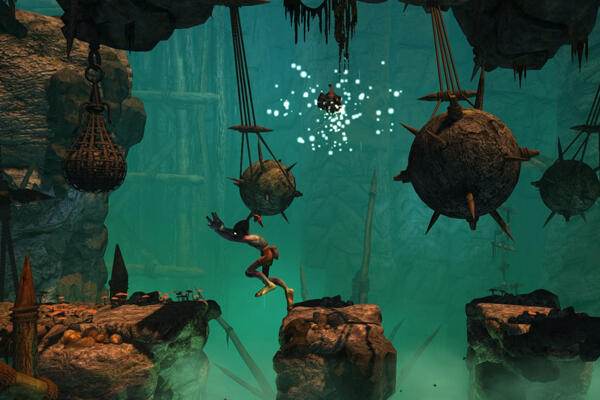
Rating: A- Have you ever finished a book/film/TV series and felt totally devastated by the loss? That feeling of emptiness created when you have become so utterly entranced and involved in a fictional universe that for a time after finishing the series you don’t know how you can function without somehow still being involved in it. I’ve no doubt that this is a sensation familiar to many of you, and certainly one I can empathise with. It is amazing to me how emotionally and psychologically involved I can become with fiction, particularly fiction with a concept and universe complex and interesting enough to require investigation. I remember the first time I ever felt this sensation was at my uncle and aunty’s house, with a PS1 controller in my hand and the face of an adorable alien named Abe on the TV screen. The Oddworld universe became, and remains to be, one of the most fascinating fictional universes I have ever explored, so nothing makes me happier than the first Oddworld game being remade for a new generation of gamers. Oddworld: Abe’s Oddysee – New ‘n’ Tasty is everything I remember and more. For those not lucky enough to have played an Oddworld game let me illustrate this world to you. Though games in the Oddworld franchise such as Munch’s Oddysee or Stranger’s Wrath have explored other aspects of the world, Oddworld games are mostly engaged with the industrial empire constructed by the Glukons, a megalomaniacal race hell bent on capitalist domination. This goal sees the Glukons taking advantage of all other races, using some such as Scrabs and Paramites as food sources and using more intelligent races such as the Mudokon as slaves. The story of Abe's Oddysee begins with a mudokon named Abe's discovery that due to the Glukons' plummeting sales they have decided to begin a new line of products, using the Mudokons as a food source. Abe, equipped with this information, decides that he must escape and save as many of his Mudokon brothers as he can in the process. Every aspect of the Oddworld universe is gorgeously stylised, making even the simplest of stories an overwhelming treat to engage with. The story itself is told through Abe’s own narration, and despite the gritty and gruesome thematic and story content, is often hilarious and adorable. The cast of characters are all incredibly unique and interesting, but still somehow familiar and insightful. For example, though the Glukons are hideous monsters with cigars hanging from their mouths, they still encapsulate ideas and concepts very familiar from our own political and corporate world. This is all stunningly realised through an art style and design that is an absolute treat to behold. Each of the creatures are fascinating in their wonderful weirdness and are always highlighted by the intricate and varied backdrops. The game itself is a side-scrolling platformer with a heavy emphasis on puzzles and problem solving. This makes the challenge of the game two-fold. On one hand your main goal is to help Abe escape, however this is constantly at odds with your desire to save all of Abe’s Mudokon brethren. You will constantly run into situations in which it would be far easier just to run and leave your fellow slaves behind, but your great affection for Abe and the other Mudokons stop you in your tracks, forcing you to think carefully through a situation and how to save as many Mudokons as possible. Sometimes this is in the form of platforming challenges, finding ways to manipulate environments to allow for the safe passage of your stowaways. These sections are always very cleverly designed, however my preferred challenges come from the enemies. These enemies are varied and pose a number of different challenges. There are the Sligs, the machine gun wielding minion of the Glukon. These evil little buggers I like to dispose of in the most gruesome way possible – whether it’s by grenades, grinders or pulling a platform from under their feet, it’s all-good. However, other more primitive threats such as Paramites and Scrabs I try my best not to kill, because just like me they are slaves to the evil Glukon. I think right there is the key to what makes Oddworld so amazing. My inclination to, without instruction, save some while destroying others demonstrates the depth and complexity of this universe. Only something this well designed would be able to create thought processes and urges this evocative. The Oddworld games created a universe 10-year-old Baz never wanted to leave, and now neither does 22-year-old Baz.
-
New this week / Singles in review
Dope Body - Hired Gun Dope Body are a four-piece rock bandbased in Baltimore, USA. “Hired Gun” is the first single from the group’s third full- length album, Lifer. Known for their heavy yet intricate sound and referencing of 90s hardcore-influenced riffs, the band pretty much cover a similar trajectory in this latest offering. Centred around a dissonant, high-octave guitar run, the song plays largely on the contrast of fist pumping, classic punk and guitar-noise atmospherics. FKA Twigs - Pendulum Tahliah Barnett returns with yet another single to her upcoming debut album LP1. Her first single, “Two Weeks,” was a beautifully epic ballad, bringing together traces of minimalist pop and soul. “Pendulum” takes on a similar approach but with more emphasis on the minimal. The track is softly layered with subtle piano stabs and faint backing vocals. The percussion is nuanced and particular, often sputtering into fits, like tiny gunshots or gentle rain. This creates the perfect atmosphere for Barnett’s glistening vocals and soulful, tender delivery. Joanna Gruesome - Jerome (Liar) Joanna Gruesome are a five-piece group based in Cardiff, Wales. Their widely overlooked debut album Weird Sister was released just last year and brought together a much needed mixture of noise, punk and C86 pop. “Jerome (Liar)” is the latest single from the band, and it sees Joanna Gruesome picking up right where they left off. The track is melodic, poppy and dabbles in spurts of angst every now and then. The chorus is a furious combination of flowery riffs and distant screaming, and works as a nice contrast following the song’s saccharine, sweet refrain. Lil B - No Black Person is Ugly The Based God returns. Lil B is an America Hip-Hop artist based in California, USA. Having dealt with his share of controversy, Lil B is always, at the very least, entertaining. His most popular songs are basically straight-up diss tracks. Which is kind of awesome. The Kevin Durant one is pretty spectacular. “No Black Person Is Ugly” is the first track to drop from his new mixtape, Ultimate Bitch, centred around a smoothly played guitar sample. The track is mellow and reflective. The chorus is anthemic and just kind of beautiful – “sunshine, sunshine, looking for the sunshine.” Cymbals Eat Guitars - Warning Cymbals Eat Guitars are a four-piece alternative rock back from Staten Island, New York. Their sound is influenced by a range of guitar bands from the 90s, citing groups such as Pavement and Guided By Voices as major reference points. It’s been three years since their sophomore album, Lenses Alien. “Warning” is the first single from their upcoming album, LOSE. The guitar work is beautiful, and the intro riff is like a 90s nostalgia trip. The track is definitely structured in a more straightforward way compared to any of the band’s previous material. Joseph D’Agostino’s vocals are emotive and tense, giving the track a wiry intensity. The chorus is infectious, and it’s all kind of glam rock.
-
Spoon - They Want My Soul
Rating: A- I’ve been a Spoon fan for quite some time now. I found their music mesmerising for its meticulousness. I appreciated the mastery they had over their sound, from each guitar stab, to each drum fill Jim Eno decided not to play. Their music seemed to ruminate in this pent up aggression underlying its ultra, polished exterior. I was always waiting for that one screw to come loose, or the whole building to collapse, even. I mean, it was maybe too uptight, and executed almost too perfectly. It was strange and unnerving. Feeling that tension behind Britt Daniels’ raspy croon felt just as fierce as them suddenly transforming into some sort of death metal outfit. There was always this hidden layer of edginess, buried somewhere under that tongue-in-cheek sense of fun. Behind those carefully crafted pop songs was a mouth full of sardonic grins and bloodied, white teeth. Based in Austin, Texas, They Want My Soul marks the group’s eighth album since their debut release 18 years ago. Their first album since 2010’s Transference, the band sound rejuvenated after a work-heavy decade. The group have also recruited Alex Fischel, who contributes additional keyboards and guitar. From the opening track, “Rent I Pay,” it is already apparent that the album is classic Spoon. From their groove-based, stabby percussion to their unhinged, raspy vocal delivery. A little like a cross between Bruce Springsteen and Wire. Highlights include “Inside Out,” which is an interesting, minimalist piece, making use of subtle vocal hooks and synth. “Rainy Taxi” is an infectious rock song, with crunchy guitar and angular riffs. “Do You” is centred around a great Britt Daniels falsetto hook, and sounds like an upbeat summer anthem. Closing song “New York Kiss” is a beautiful pop song, with interesting use of effect pedals and synth wizardry. Production-wise, every sound and layer falls into place like a well-oiled machine, from the panning to the vintage guitar sounds and keyboard flourishes. The album does, however, contain some clunkers. “I Just Don’t Understand” sounds kind of like a flat version of “Working Class Hero” by John Lennon. Some tracks just don’t stand out or create any sort of cohesion, which makes a record great. They Want My Soul is, by all means, a great comeback record, and contains some of the best songs the group have ever written. It will be interesting to see where the band can take their sound from here.
-
Jenny Lewis - The Voyager
Rating: B+ The Voyager is the third full-length release from Jenny Lewis, the former co-songwriter of the now deceased Rilo Kiley. With albums such as Take Offs and Landings and More Adventurous, Rilo Kiley were certainly a leading presence during that weird, semi-commercialisation of alternative pop that took place around the new millennium. With artists such as Death Cab For Cutie, Bright Eyes and Iron & Wine also at the helm, this was a group of talented songwriters who referenced the simplicity of country and folk and also had a keen ear for a good pop melody. Now 16 years into her music career, Lewis’ songwriting is just as sharp as ever. The ability to tell a good story through song is one that seems will never leave her. With the gift of being able to place awkward sounding lines of verse side by side and still pull it off. Tracks such as “She’s Not Me” and “Late Bloomer” showcase her ability to really structure a song, leading listeners through several interesting twists and turns. A lot of the stories feel quite intimate and seem to be drawn from quite an honest place. The Voyager leaves you with quite a candid glimpse of Jenny Lewis’ present struggles and musings. Spanning 10 tracks and 40 minutes, a lot of the tracks are extremely well developed in terms of being able to get their point across, as is the instrumentation. Some other highlights include the anthemic “Just One Of The Guys” and “Head Underwater.” Overall, The Voyager is just an extremely solid alternative, country-pop record. To be honest, it sounds kind of like a Rilo Kiley album. The opening guitar riff of “Slippery Slopes” even seems like a reference to 2007’s “Under The Black Light.”
-
Guardians of the Galaxy: Legacy
Guardians of the Galaxy: Legacy is the first volume of the 2008 comics reboot of the ragtag space-team. The writers, Dan Abnett and Andy Lanning, or “DnA” as they are known collaboratively, have been writing comics since the mid-80s and have a solid legacy as a team. Together they have worked extensively on Marvel’s “cosmic” (outer-space) line of comics, as well as non-Marvel comics such as Superman/Batman and 2,000 AD (AKA “the people who made Judge Dredd”). Unfortunately for us fans, the two creators have had a lovers’ quarrel or something recently and have gone their separate ways, but are still individually creating fantastic content nonetheless. The basic idea behind this book is that Peter Quill a.k.a. Star-Lord has watched his cosmic home get ripped almost completely apart, and so he sets out to establish a proactive butt-kicking team to keep his galaxy safe from whatever might threaten it. However, through dialogue hints and precognitive aliens (because what’s a space comic without future-sight?) we know that the team members all accepted their roles suspiciously quickly, and one of them is a traitor ... Paul Pelletier’s artwork within this book feels like a punch line of its own, while still retaining its scare factor when it needs to. However, it is Rick Magyar’s inking which makes it hard not to keep turning the page. The vibrancy of the bright colours in most scenes makes you feel like you’re having fun despite, you know, the galactic apocalypse. The black pen comes out strong and heavy in the action scenes to give the blows some oomph, but it always feels exciting. So the book looks great, but if I’m forced to give one reason I fell in love with it, it’s the dialogue. The characters joke and jab, weave in and out of personal interactions and just generally bounce off of each other with a lot of grace and joy. Even the badasses like Drax aren’t presented as purely being a grim, dark, brooding, “I am the night” -type character. Keeping this alive may be James Gunn’s biggest challenge in moving these characters to the big screen, but I have high hopes. Yet another thing that I really love about this book is the range of characterisation in its women – beating back the stereotypical comic book “fighting fuck-toy” treatment. Phyla-Vell, codenamed Quasar, is strong and powerful yet feminine, emotional and impressively non-sexualised. Gamora (the green alien chick in the film), on the other hand, is sexualised, but she owns it – she’s given plenty of oppor- tunities to be more than a sexy green space babe. Whether the other characters are speak- ing about her ability as an assassin, or she is endangering herself to save her team (and the galaxy, of course), Gamora is more than big- boobs-stab-things – she’s definitely the subject of her own story. If you want to check out the Guardians’ adventures (and I suggest you do, if you like fun and happiness) there are a couple of things you’ll need to watch out for. If you’re new to comics you’ll need to take your time. There are a lot of new concepts thrown at you quickly, including time-travel and alternate universes. I recommend having Wikipedia ready if you want all the trivia. Also, the second half of the book (or last three issues, depending on how you read it) are part of a Marvel crossover event. The writers handle this deftly, but you might find yourself wondering “what is a Skrull, and why are they killing people?!” And lastly: you’ll fall in love with these characters, and not all of them will make it to the big screen. You’ve been warned.