More Culture from Issue 20
-
Gary Currin
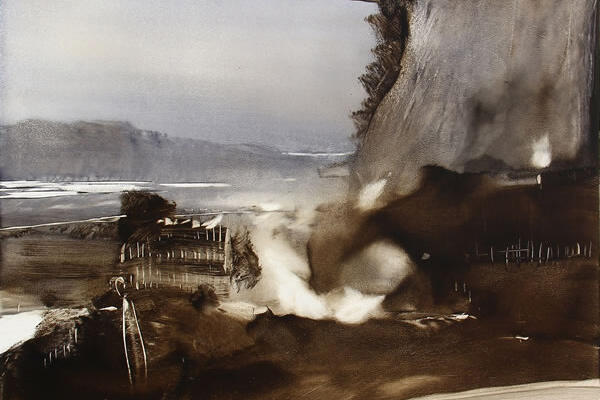
Milford Gallery Exhibited until 27 August 2014 Gary Currin was in Wanganui in 1952 and has been exhibiting his work since 1976. His paintings and exhibitions have gained national momentum, placing Currin within the sphere of significant New Zealand artists alongside people like McCahon, Hotere, and Woollaston. Currin was a finalist in the Wallace Visa Gold Award in 1999, and a finalist in the James Wallace Awards 10 times since 1995. He also won the “people's choice” vote in 2004. In 2008 Currin won the grand prize in the Team McMillan “Where Brush Meets Bonnet” BMW Art Award and, in 2011, a merit in the NZ Painting and Printmaking Award. His work is included in various significant collections and, excitingly, he is currently being exhibited here in Dunedin at the Milford Gallery. The exhibition title, Hints for the Incomplete Traveller, encapsulates the experience of Garry Currin’s paintings. The works are suggestive rather than explanatory; Currin tells part of the story but leaves viewers time and space to extend and complete the narrative as it suits them. From my perspective, the painting seems to reflect the moments a traveller vaguely remembers. His work is stretched across the gallery walls, drawing on cinematographic traditions of representation. Currin’s paintings allude to sepia-toned photographs or frames from faded eight-millimetre film and each small panel reveals a self-contained world where individual stories overlap and time and place are fluid. Currin directs the framing and focus of each “shot,” revealing only parts of the wider narrative structure and, in this, it seems that Currin's paintings are not merely allegories conveying meaning through symbolic representation, nor do they seek to imitate reality. Rather they employ a sort of lyrical form of abstraction, where the emotive and expressive qualities of colour, shape and brushwork, capture first the artist's feelings, and subsequently the viewer's. Landscapes appear to be the subject, yet the dark shades, the atmospheric smudges of light and shadow, present moments of another world that shifts between experience, memory and dream. The oil paint allows for this type of rendering, as the fluidity of the medium parallels the fluid nature of memory, dream and reflection, as it passes through our thoughts as flickering, blurred fragmentary images. It’s very Edvard Munch. The individual paintings in the exhibition are small, intense works and they radiate within their delicate frames. Currin uses overexposed points of light as visual signposts that draw the eye into and across the surface of the panels. Using a limited palette, he layers tone upon tone, creating a rich depth within the lightness of the framework. More figurative than his earlier bodies of work, Currin has populated the stories with people and places that are almost recognisable. (Almost, as they appear as half-forgotten memories, which have warped and changed over time.) Accompanying the “storyboards” is a single large work on canvas, which showcases Currin’s skill with his medium. From a raised point of view, the viewer looks down onto a shifting landscape that is touched with light. Dominating the foreground are shadowed plains and a solid sweep of hillside; Currin captures simultaneously the solidity of the landscape, and its mutability. Behind Currin's paint application lays a history of New Zealand's art. If we are looking for signs of our painterly traditions there are hints of John Gully's somewhat Arcadian landscapes, a certain darkness of the New Zealand psyche implied by Colin McCahon, and even Toss Woollaston's "mountainous scrumblings," come to mind when looking at Currin’s work, but in the end Currin's paintings provide us with a visual negotiation of man's subtle and shifting relationships with the land, with history and with our sense of the spiritual.
-
Guardians of the Galaxy
Rating: A It was a big risk for Marvel to move their massive franchise into space. After all, the Space Opera is a swing-or-miss genre that began with one colossal hit, in the form of Star Wars, but has been predominantly misses in the 40 years since. The coming weeks will tell if Guardians is commercially a hit, but by God, let me tell you now, it sure as hell is a critical one in my books. Based on one of Marvel’s lesser-known comic book franchises, Guardians of the Galaxy opens the scope of the cinematic universe to, well, the universe itself. The story starts when a young Peter Quill (Chris Pratt) is abducted into space, and then quickly jumps 26 years in the future, introducing Quill to us as the space outlaw he has grown up to become. He and an unlikely group of other outlaws, including the scheming and wise-cracking raccoon Rocket (Bradley Cooper) and the outrageously adorable tree man Groot (Vin Diesel), band together to overcome a threat to the universe. James Gunn has accomplished with Guardians what every action movie tries and seldom few achieve, and that is melding comedy and action into an experience that is both exhilarating to watch while at the same time being awesomely fun. The movie expertly balances stunningly conceived and executed action sequences with scenes of dialogue and character development that you can not only enjoy, but also invest yourself in. So few films in this genre create dialogue-heavy moments that aren’t dull, awkward or entirely expositional. Gunn has created a movie (well, franchise, with the announcement of the sequel) that has characters and relationships that have you eagerly waiting for action sequences to finish, so that you can watch them interact once again. It is not without great thought that I compare this movie to Star Wars. But the truth is, this movie is so exciting and fun that it has the potential to be this generation’s Star Wars. I am not normally a repeat viewer, but I am desperate to see this movie again!
-
Under the Skin
Rating: A+ Harvesting human flesh for your alien homeworld’s meat industry is a tough job, but someone’s got to do it. Scarlett Johansson (or ScarJo, as she likes to be called) plays an enigmatic seductress that has a disgusting job to do here on Earth: luring local Glaswegian men into her van with flirtatious chit chat, and driving them to her scary meat grinder house, where she proceeds to get naked with them until they die. Naturally, not one of these men ever protests, because, come on, ScarJo beeeuuubs! When you know ahead of time that this movie was filmed using hidden camera footage of real people from the street, it makes it shocking to watch. One assumes the CGI and full frontal male nudity scenes were filmed after informing the men about the production, but other than that, it’s terrifying to see her messing with real people’s heads. Let’s just say this project probably wouldn’t get the approval of the ethics committee. The amazing thing is that this story works despite only a tiny amount of dialogue and absolutely zero exposition. To find meaning (and plot!) in this film, we have to think literally, laterally, and deeply about what we see. We follow the alien carrying out her meat grinding function until she catches a glimpse of herself (itself?) in a mirror, and is suddenly confronted with that ultimate existential question: who is looking back? Thus begins the incredible journey of this film, the opportunity for an alien to explore the concept of the self in our contemporary world, and choose not to do what it is told. This theme of disobedience, to me, immediately red flags The Matrix trilogy, a thematic homage perhaps reinforced when the alien tries to experience chocolate cake and orgasms. This alien has the appearance of a human, and may even be able to converse and feel sensations, but through its behaviour it reveals itself to us to be horrifyingly lacking in the most essential human trait: empathy. This is a simply astounding film, for philosophers and ScarJo anatomy enthusiasts alike.
-
The Dark Horse
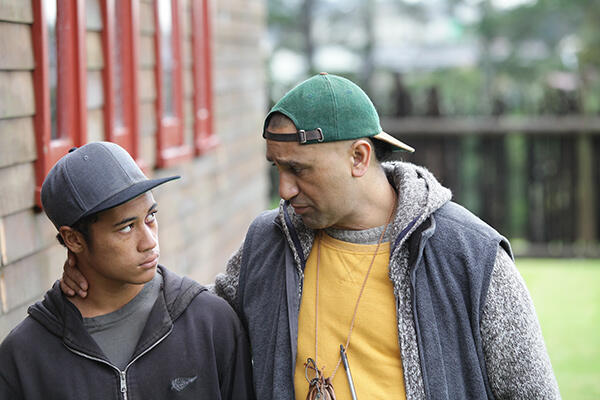
Rating: A+ The Dark Horse echoes the conversation around Maori urbanisation started by Once Were Warriors and, in my opinion, supersedes it. Set in Gisborne, The Dark Horse tells the based-on-life story of Genesis Potini, who is a one-time chess champion. Released from institutionalised care for severe bi-polar disorder, he is forced to move in with his gang-member brother. In a move to restore normalcy to his own life, he joins a chess club for kids. Many aspects of the plot are clichéd, but it’s the cliché that opens a new and more honest vantage point on this type of story, a classic “overcoming of adversity for a shot at the championship.” Genesis teaches disadvantaged youth, leading them on to a tournament in The Big City, complete with montage scenes of them growing as a group. But the reality of the situation is powerfully banal: the tournament is in a dank community hall, their team is scrutinised by a white-gaze based on their class and ethnicity, and Genesis’s recovery is slow. No one’s surprised, It’s the way of things – Gisborne not Hollywood. The central theme is the potency of culture. Characters of Maori decent who are completely disengaged with their heritage have replaced their culture with one of violence, aggression, bitterness and rage. The Dark Horse pulls focus onto the innocence of youth, and most poignantly, the brutal way in which gang culture rips this from the lives of the children it touches. This film engages in an astute exploration of mental health. There is an intimacy in the cinematic realisation of Genesis’ lapses in connection with reality. The audience is an intimate witness to his suffering and attempts at recovery. The sense being that this is a directly proportional portrayal, neither downplayed nor sensationalised. James Napier Robertson has worked in New Zealand media as an actor since the early 2000s. In 2009 he wrote and directed his first feature length film, I’m Not Harry Jenson. With his only other directing and writing credit being a short film, The Dark Horse is astonishing.
-
Ferris Bueller's Day Off
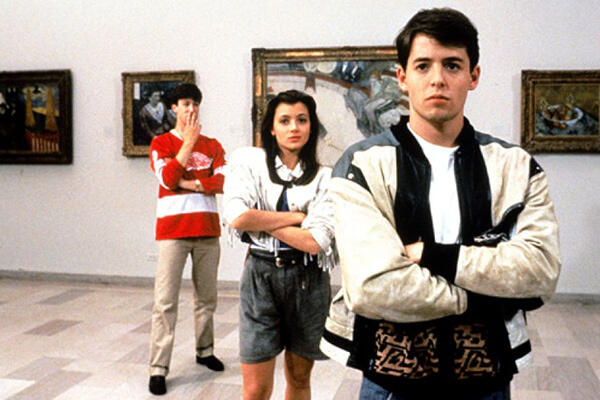
Classic Film I once asked my family if I could skip school and stay at home; unfortunately, they said no. Ferris Bueller’s Day Off always makes me wonder if my hypothetical day off would have been as cool as his. Probably not. I mean, I asked if I could stay at home. Sooo not “choice” of me. Ferris Bueller (Matthew Broderick) decides that it’s too beautiful of a Chicago day to be spent taking a test on European Socialism. He manages to convince his parents, as well as the whole town, that he’s ill, despite the disbelief of his sister and the Dean of Students, Edward Rooney. Ferris then forces his best friend, Cameron Frye (Alan Ruck), to help get his girlfriend, Sloane Peterson (Mia Sara), out of class. Cameron hesitantly agrees and impersonates Sloane’s father, informing Rooney that her grandmother has died. Plot twist: she’s been alive this whole time! What ensues will make you laugh and feel as though you’re in Chicago with the trio as they eat pancreas, visit an art museum, and sing on a parade float. Did I also mention that they drive around in a 1961 Ferrari 250 GT California Spyder convertible? In some ways, the moral of the film is, if you’re going to skip school, do it with style. Don’t fall into the trap of, you know, suggesting to your family that you should skip school and stay at home all day. While some reviewers panned the film for being too self-indulgent and disliked the protagonist’s “rebel without a cause” personality, this film is a classic. It’s a fountain of unforgettable, impressive quotes, and the parade float scene remains etched in time. Matthew Broderick perfectly describes the film as a “lightning flash of your life” and I personally think this film should be appreciated for what it is: a moment of youthful freedom shared with your very best friends. As Ferris Bueller says, “life moves pretty fast; if you don’t stop and look around once in a while, you could miss it,” and that is valuable advice we should all remember.
-
Vegetable and Blue Cheese Hipster Soup
I decided to call this soup hipster soup as when made in its purest form, from the sad-looking veges at the bottom of your fridge, it costs you next you nothing but somehow taste delicious. You can also make it wannabe hipster soup by buying and making it with new veges and then dressing it up in that $420 moth-eaten designer cardigan also known as blue vein cheese. I am ashamed to say that I made wannabe hipster soup. I had to go and buy my vegetables for it – mainly because my shelf of the fridge resembled a barren wasteland. I did manage to find some yellowing cabbage, however ... Use up any vegetables you have lying around. The recipe below is merely a guideline. Use a drained tin of chickpeas to add substance and body to your soup. Throw in a couple of chopped up potatoes and kumara too so it thickens nicely. Frozen spinach portions are a really cheap way to add greens to your soup without the cost. You could be super hip and add the kale that you purchased at the farmers’ market on Saturday, too. Stirring in some crumbled blue cheese makes all the difference. I’m not usually a blue fan but in this it is exceptionally delicious. Wait for it to go on special or use the Edam that has been sitting in the back of the fridge since late last year. Ingredients (Makes a really big stock pot’s worth) 3 large carrots, diced 3 stalks celery, diced 2 onions (red or brown), diced 6 cloves garlic, minced 1 leek, diced 3 handfuls spinach (fresh or frozen) 4 medium sized potatoes, chopped into chunks 3 small kumara, chopped into chunks 1 can chickpeas, drained 1 tablespoon olive oil 4 cups chicken stock 4 cups boiling water 1 teaspoon chilli powder ½ teaspoon cayenne pepper 1 teaspoon salt Freshly ground pepper 50g blue cheese plus extra for topping Also try adding pumpkin, cabbage, kale, parsnip or broccoli. Method In the olive oil, sauté the onion and garlic until translucent. Add in the carrot, leek and celery and sauté with the chilli, cayenne and salt until slightly softened. Throw in the potatoes, kumara and chickpeas and stir to coat them in the chilli. Pour over the chicken stock and water then leave to simmer away for half an hour until the vegetables are all soft. Throw in the spinach and cook for a few more minutes so it is cooked. Use a stick blender and blend until smooth. Stir through the crumbled cheese and season well with pepper. Serve with a further sprinkling of blue cheese and you are good to go!
-
Rogue Legacy
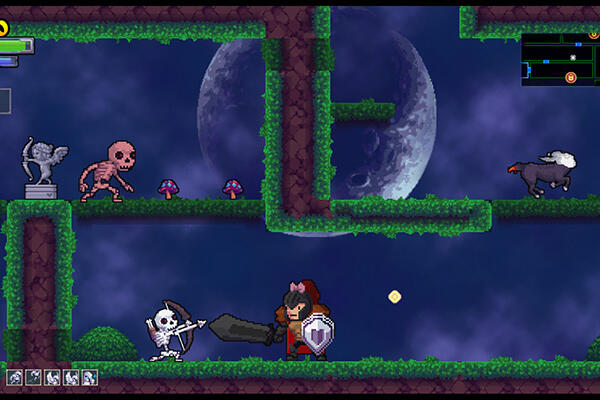
Rating: A We are currently living in the midst of the Renaissance period for the platforming genre. Over the past couple of years Indie developers have created a litany of amazing new platforming experiences, which is incredible when you consider that at its core platforming games really only consist of jumping from platform to platform. Nevertheless, we have been treated to some amazing titles, including: Spelunky; 1001 Spikes; and now what has become, potentially, my favourite platformer of all time, Rogue Legacy. So what is it that we have to thank for this period of amazing platformers? The rediscovery and influence of the “roguelike,” of course – a subgenre of game descended from 1980’s Rogue whose most basic mechanic is that the death of a character means restarting the game, or at least starting from the beginning again. Like in the Platforming Renaissance, contemporary game developers have been looking to this tradition with great success. Playing platformers of the 80s and 90s is an experience coloured by both the frustration of failing, and having to start again, a game, and the glee of completing it, which was made all the sweeter by the attrition it took. Developers such as Cellar Door Games, responsible for Rogue Legacy, are emulating this experience while using modern technology and techniques to enhance it in ways previously unthought-of. The premise of Rogue Legacy is an age old one. There is an ultimate evil in a castle, and it is the sworn duty of one family to vanquish this evil. However, Rogue Legacy stretches this premise to it’s limit, by creating a roguelike in which each time you die you must choose an heir to continue your valiant quest, but setting no limits on the number of heirs you can use to accomplish this. In my first playthrough it took me a hilarious 226 generations to complete the entire castle. Of course it is possible to use significantly less (one of the game’s trophies challenges players to do it in less than 12), but I was having too much fun just exploring the castle and slaying bad guys, feeling myself become increasingly more formidable and skilled with each generation. The castle itself is broken up into four sections, each with a distinct aesthetic and monster set. It takes time to become familiar to the strategies and traps of each area, meaning that it will take a significant number of generations before you are familiar enough to finish a whole area and kill its boss. For those thinking that playing the same map over and over again sounds boring, you’re in luck. The map is randomly generated in each play-through, meaning that every new hero’s quest is unique. Of course, it is possible to pay a portion of your loot to fix the structure of the castle. But I couldn’t find the fun in that, and preferred instead to plunder and pillage with a fresh castle each time. Much like the castle, each heir you choose feels unique also. This is due to a hilarious and clever system of traits. Each time you die you get a choice of three heirs to carry on your quest. These heroic men and woman each have their own distinct name (which lapse after a period into Sir and Lady whomever the II, III, IV etc.) and also a distinct build including a class, ability and a set of traits. The class dictates what kind of fighter you are and, similarly, the ability supplementing this, such as magic spells and offensive and defensive skills. However, the traits are much more character orientated. For example, a trait might be that you’re colour blind, which would make your next run of the castle in black and white. Some have gameplay effects, such as this, while others just flesh out your characters personality or appearance such as the fact that they are bald, or nostalgic, or even gay. The goal of each run, especially early on, is more about collecting gold than beating the game, as you can use this gold to unlock skills, buffs and vendors to enhance and supplement your character and experience, making the game progressively more feasible. This mechanic also builds your castle with each upgrade, which makes you feel like you are building your family at the same time as destroying the evil nearby. This clever, amusing and progressive game is an absolute joy to play. It is the kind of game that you hope never ends, and thankfully due to it’s roguelike structure it never needs to completely. Also the levelling system is so robust that you can continue to build your character and home long after the evil has been vanquished.
-
New this week / Singles in review
Merchandise - Green Lady Merchandise are a trio from Tampa, Florida. “Green Lady” is the second single from their upcoming album After The End. The track is a shameless rock ballad, in the same trajectory as Oasis' “Champagne Supernova” or Suede's “Beautiful Ones.” With the grandiose of The Smiths, and also with a significant portion of their charm, the production is huge, lush and vibrant – an interesting contrast to their first single “Enemy,” which was built on a Rolling Stones-esque acoustic guitar riff, perhaps showcasing the versatility of the band's songwriting. The Growlers - Good Advice The Growlers are a five-piece based in Orange County, USA. Their sound is a mixture of folk, surf and psychedelic rock, recalling a little bit the sound of the first psychedelic era during the late 60s. Self-described as “Beach Goth,” the band’s new track “Good Advice,” Brooks Neilsen's voice is as raspy as ever, crooning about loneliness. You can sort of imagine him brooding in the faded morning sun, looking apathetically out across the ocean and kind of, like, just sighing. Allison Crutchfield - You Lean In To It by Allison Crutchfield Allison Crutchfield is better known as the lead vocalist for New York punk band Swearin'. The track “You,” however, comes from her new solo EP Lean Into It. Drawing more from 90s pop and bringing to mind artists such as Liz Phair and Alanis Morissette, the song is melodic with an interestingly immersive chorus, the hook containing just the one word, “you” – the only word it seems that can sum up the frustration of the romantic situation taking place within the track. The production is lo-fi, laid back, and charming. It is a beautiful bedroom recording, with fuzzy guitar and some well-executed piano lines. SOPHIE - Hard SOPHIE is the stage name for a mysterious producer based in London. Known for his colourful visual style and innovative, fresh take on dance, trap, and electronic music. “Hard” is a jagged, rhythmic, hip-hop influenced, dance track. With quirky guitar lines and glittering synths executed over trash can drum beats. It is a fun and sinister sounding offering from the UK enigma. Mr Twin Sister - Blush Mr. Twin Sister is a five-piece dream-pop/chill-wave band based in Long Island, New York. The single, “Blush,” is from their upcoming, self-titled album. Having drawn comparisons to acts such as Cocteau Twins and Portishead, Mr. Twin Sister is a little more laid back. Well, with this track they certainly are anyway. The production is on the lighter side of dream-pop, or trip-hop – quite minimalist and lush. Andrea Estalla's soulful voice is definitely captivating, as the song gently unravels itself through waves of feathery synth.
-
FKA Twigs - LP1
Rating: A+ "I love another, and thus I hate myself,” Tahliah Barnett (FKA Twigs) chants over the first two minutes of LP1. Her delivery is bold. Her voice warped and affected. Layer upon layer, resembling a sort of Kate Bush, alien choir. If there is a phrase or message that conveys the essence of this album, it’s this wrenching mantra. You can almost feel the potent insecurity underpinning those words. Laid open, shameless and bare. Heart-breaking in its tragic bluntness. It's not quite the type of self-loathing or self-hatred that cripples, however, but one that continues to strive, almost as if hounding some unattainable sense of perfection. This is not your typical, slightly pathetic, pity party, angst-for-the-sake-of-it kind of deal. Instead these feelings seem to be seeded from a brutal, unrelenting ambition and a constant need for self-betterment. “I love my music, so I want to produce, write, and serve my music. I've had to learn about EQ frequencies, and programming, and space, and clutter, and how to be a better piano or bass player, everything. You can have big aspirations, but then you realise your skill level or your insecurities are holding you back. So you start to hate yourself, because it's so frustrating!” Barnett expresses in an interview with Carrie Battan. You can hear the meticulousness, production-wise. The jagged percussion, panned left to right, slicing in, out and across, through a sleek mixture of bass synth, digital effects and acoustic instruments. Her voice tender, strong, heavily produced but still dripping with emotion – almost as if she is retreating behind an otherworldly mask. If you look at the image that graces the front of LP1, you'll find yourself locking eyes with a rather peculiar portrait of Barnett. Her presence is almost doll-like, from that strange sheen on her left cheek, to that cold, vacant stare. A feeling of artifice radiates from her cold, gleaming face. The almost alien-like nature of it emphasising the shell Barnett must become in order to conceal herself. “When I trust you we can do it with the lights on” she sings on “Lights On,” an interesting look at the insecurities of having sex in full view of each other. This track is followed by album highlight “Two Weeks,” a green eyed, sensual, sexual, trip-hop ballad. “I can fuck you better than her,” Twigs croons. Reaching the climax with a masterful, sweeping bridge that references Air Supply. “Pendulum” is the other major centrepiece of the album, with Barnett's subtle delivery, traversing and ultimately transcending a soundscape of sharp, wooden, staccato percussion. “I'm a sweet little love maker,” she sighs, as an ethereal array of synthesisers swoop and swell around her. Clocking in at just over 40 minutes in length, LP1 is an insular pop album. Unique in terms of its blending of sounds, highlighted by Barnett's own voice. It is down-tempo, yet immersive and bombastic. It's epic, but intimate. Fragmented but still strangely cohesive. “Is she that girl from the video?” Twigs sings on the song “Video Girl,” referencing her earlier claim to fame as a backup dancer in pop music videos. This record cements Tahliah Barnett's place as someone whose talent reaches far beyond that.
-
White Fence - For the Recently Found Innocent
Rating: B- Gentle, psychedelic rock music with some great guitar moments – the penultimate track “Raven on White Cadillic” really shines. Frontman Tim Presley sounds like a world-weary Syd Barrett, nightingale-singing through a warm, beautifully mastered mix. However, as a whole, For the Recently Found Innocent underwhelms. Poor sequencing was a problem and the album feels directionless and derivative. Will I be playing this on repeat? No. But it’s definitely worth a shot if you’re looking for something understated, inoffensive and full of lo-fi charm.
-
Burial Rites
I am a wide reader, and will read just about anything; I have even been known to read the phone book in those moments of bibliographic desperation. Hannah Kent’s debut novel Burial Rites, however, finally stumped me. I have had no motivation to read this book. Zip. Nada. Zilcharooney. On paper Burial Rites should have become a new favourite: it’s historical fiction, it is set in Iceland, it has weird names that any linguist should appreciate. Despite its paper credentials this book just never hooked me. Set in the freezing farmland of 1800s Iceland the plot retells a real historical event from a black sheep’s point of view. The murderer Anges Magusdottir was the last prisoner in Iceland to be executed for their crime, and the novel is Kent’s attempt to fill a historical story with fictional empathy for Anges. I am not saying that the real Anges should have/shouldn’t have died, but it is very difficult to get a reader to remain engaged when the moment they open the book they know the protagonist is going to die. Everything about this book was so predictable. Every moment and interaction was exactly as I expected. Yes we know from the outset that Anges is to die but that doesn’t mean that the story leading up to the point has to be all spelled out. As I started reading I began to set up a bingo game of clichéd predictable moments and soon found my card full. There’s the gruff, lewd guard and company, the thwarted love interest with a curious desire to suck Anges’ fingers. Oh and how could we forget the inquisitive child who befriends the wretched woman. Kent’s novel followed convention so closely that there was no room left for the reader’s imagination. In many historical fiction novels, the authors try to draw the reader in with the nitty gritty of life in that time. Sometimes this works and the reader gains a new appreciation for the historical background, but in Kent’s case it all felt clichéd. From the descriptions of landscape, of sex, of farm life, nothing seemed original. All the characters felt like stock characters without their own individuality. The setting as well did not leave me with a sense of having lived in Iceland with the characters. I have never been to Iceland in real life. Perhaps people there really are leftover cast members from Les Miserables and maybe the scenery doesn’t leave you with any great memories; I seriously doubt it. Human experiences are hardly ever so blankly gratuitous. Fiction has the power to delve into aspects of humanity that we normally gloss over. Kent’s book, however, only explores its characters on a purely superficial level. There never seems to be any development in the layers of the story. The whole book is focused on the execution while pretending to be distracted by the day-to-day moments that comprise the bulk of the book. In spite of all my issues with this book, the author has won an award and other people have enjoyed it too. As an example of historical fiction it is accurate in detail but lacking in the execution (pun totally intentional). I think that Kent has tried to please the reality of the history too much and neglected the reality of the fictional world in doing so. Overall it is not an engaging read but not a difficult read either. Big words, small chapters, yet I still could hardly drag myself to the finish. At best it is a procrastination read, the sort of book that only becomes readable when there’s a test in the morning.