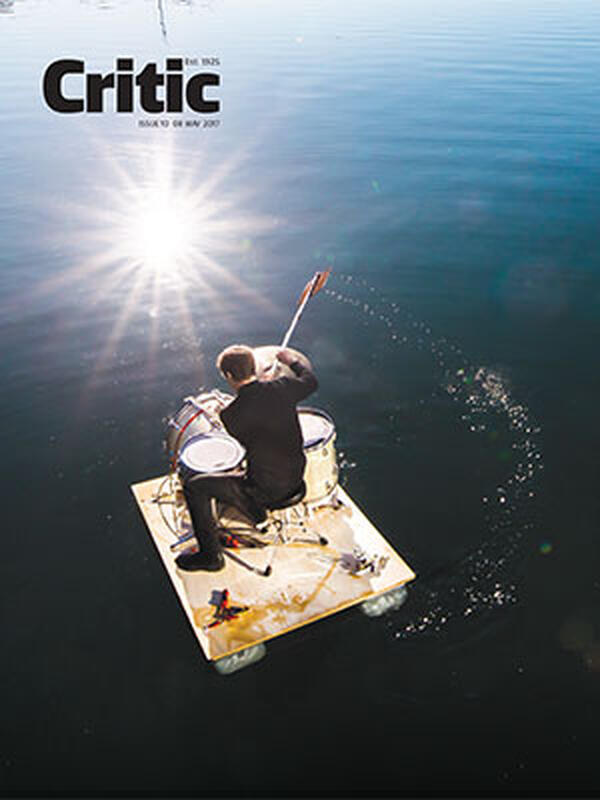
Based in Dunedin, Kane Stang is the city’s resident songwriting genius. When he is not drunkenly stammering in manic rock band Dinosaur Sanctuary, he is writing clever, interestingly crafted, psych-pop songs. Released last year, A Pebble and a Paper Crane is available for free download at kanestrang.bandcamp.com.

Culture
More Culture from Issue 1
-
Hotere Culbert
Ralph Hotere and Bill Culbert Exhibited until 9 March 2014 This whole exhibition could be the result of Dan Flavin meeting Ad Reinhardt in Port Chalmers for a couple of arty hours by the beach. But, in fact, the Hotere and Culbert exhibition, currently at the Dunedin Public Art Gallery, seamlessly brings together the works of two significant New Zealand artists in a retrospective of creative collaboration, revealing the fine fruits of an artistic partnership that lasted more than two decades after the pair met in London, in 1978. The exhibition is an all-encompassing revelation of the pair’s creative relationship, wherein each work reflects the major contribution that both artists have made to both the New Zealand and international art worlds. As individual artists, both Hotere and Culbert have left a permanent mark on the discourse of contemporary – and especially New Zealand – art, through their innovative, emotive and minimalistic use of everyday materials including lights, corrugated iron, and other found objects, which serve to reveal both social and political commentaries close to the artists’ personal thoughts and ideas. The works shown – namely, “Pathway to the Sea – Aramoana” (1991) and “Blackwater” (1999) – unite Culbert’s devotion to fluorescent lights and their energising ability and transcendent clarity, with Hotere’s stark commitment to heavy organic materials, and the colour black. The idea of “Pathway to the Sea – Aramoana” came from a time where Hotere and Culbert were among locals who protested against a proposed aluminium smelter at Aramoana in the late 1970s. They shared a mutual concern that the establishment of the smelter would disturb and upset the local environment. The artists’ working drawings for this installation are shown in the gallery as they lead towards the actual installation. The drawings exhibit instances of wine drinking, and the doodling of pictures of light beams, among other environmentally inspired, nonsensical scribbles. With lines from a poem by John Caselberg (“there is a rock to guard every sacred harbour in New Zealand. It but waits its hour”) printed on the working drawings as well, these pieces are all very nostalgic, atmospheric and eerily close to home (literally – as both men had long lasting associations with the area.) You can almost imagine Culbert pouring a glass of wine as Hotere scribbles down some inspiring Māori words on a piece of wood or something, as they discuss their creative ideas. Once you get to the larger body of work, it becomes obvious that the drawings are very much a delicate visual entree to the buffet of fluorescent light tubes (100 feet of them) laid out in a straight line, with a parallel line of paua shells, all leading to a large rock, that makes up the colossal “Pathway to the Sea – Aramoana.” To put it bluntly, it’s like walking down a beach access in your hometown, then looking over the water at night when you haven’t been there for a few years. The large installations “Pathway to the Sea – Aramoana” and “Blackwater” harmoniously blend Hotere's richly lacquered blacks with Culbert's bright white bulbs and, in doing so, create this prodding yet peaceful reflection of the presence of both the immaterial and material world, as they so naturally impose on one another. The work captures a particular moment in time, and through the innovations of both artists materially and subjectively, visions of these moments have been scaled down to a smaller size, where we can all appreciate and feel that fleeting moment of reflection, in one glance – and all without having to be in the cold at the beach at some ungodly hour of the night. I definitely recommend seeing this exhibition, particularly if you’re into minimalist black-square beauty. And if you’re not into that, it’s worth visiting in celebration of the late, great Ralph Hotere, whose work will again be exhibited, in a significant retrospective, in 2015.
-
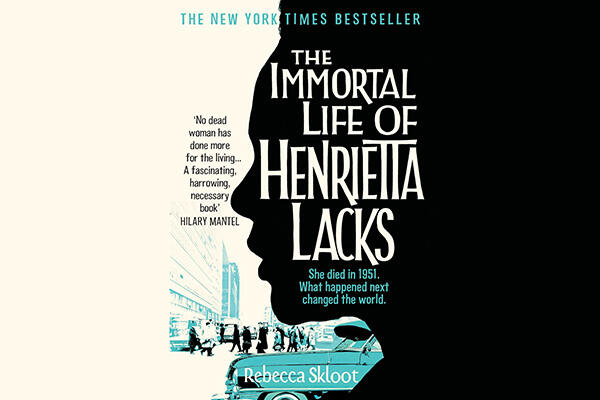
The Immortal Life of Henrietta Lacks
The Immortal Life of Henrietta Lacks is a pertinent, well-constructed slice of the creative non-fiction genre. Written by Rebecca Skloot in 2010, the book takes its readers back to 1951 when a 29-year-old African American housewife and mother died from ovarian cancer. Her death led to an instance of medical-science history. The doctors who treated her at Johns Hopkins University, which is still known for its medical research, were known to use unusual cases for research, without the consent of the patients concerned. Henrietta’s particularly aggressive cancer had caught a doctor’s eye and, subsequently, tissue was collected from a biopsy and kept for further testing. This testing led to the discovery of HeLa cells. For the science students, these cells may not be an unfamiliar topic but for the otherwise uninitiated, HeLa cells are continuously reproducing cancer cells that have been used in medical science labs since 1951. They were initially cultured in biologist George Gey’s lab, which he then passed on to some of his colleagues, establishing Henrietta’s fame. Since then, HeLa cells have been shared between researchers, passing Henrietta’s legacy on through time. Henrietta Lacks gave the world these remarkable cells, and Skloot’s book documents the history of her gift to science, but it also details the effects that the use of the cells had on her family. Today her family is poverty-stricken. Many are uneducated and have genital defects due to family inbreeding. While their matriarch’s cells have become famous, their lives have become shadows in the face of medical progress. They did not know about the HeLa cells and were deeply disturbed to discover their use and, in their opinion, abuse. The interviews in the book have been left in the voice of the speaker, so dialect and personal language quirks give the reader a sense of speaking directly to Henrietta’s remaining family. Skloot wanted to capture the “real people” in Henrietta’s family. This is what cements the book as a jewel in the creative non-fiction crown. The narrative style makes for an easy, yet informative, read. I would recommend this book to both arts and science students. With its anthropological focus on the Lacks family, the text crosses the bridge between the two disciplines with ease. While on one level it is a purely interesting read, this book also poses ethical questions that encourage the reader to see past the science and to consider the human side of our medical discoveries. Skloot asks readers to not only consider Henrietta’s past but all the other unsung contributors to medical knowledge, too. There is a great amount of creative non-fiction around today, and The Immortal Life of Henrietta Lacks is a great example of it; both as an engrossing read to curl up with, but also as an introduction to medical research. The book presents the scientific elements in a non-threatening, exciting way. It is sure to appeal to all readers of an enquiring mind.
-
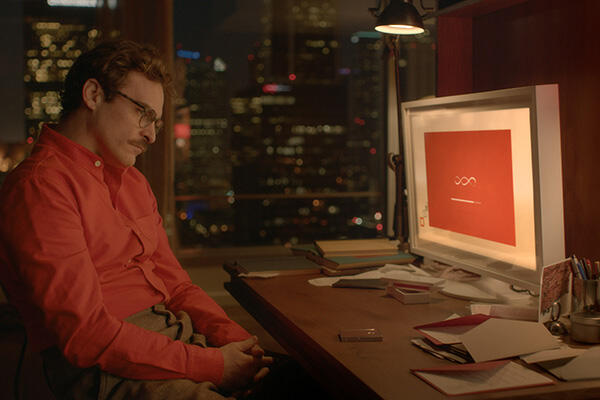
Her
Grade: A- Every romantically focused film made has tried desperately to capture the events, thoughts and emotions associated with love. But no film, in my opinion, has ever captured the essence of it quite as poignantly as Spike Jonze’s Her. The film traverses all of the ups and downs of relationships and love, exploring crucial moments from the magic of first connection to the heartbreak of loss. The truth in Jonze’s exploration of love is all the more astounding considering the futuristic context in which his story is based. Her takes place in our not so distant future, when sentient Artificial Intelligences have become part of our everyday lives. The film follows Theodore Twombly, played with spectacular prowess by Joaquin Phoenix, as he gets to know and ultimately begins to love his personal operating system, voiced by Scarlett Johansson. Dealing with such universal themes as love through an unconventional context can be a risky move, however, the astounding performances delivered by Phoenix and Johansson cemented the story in a visceral emotional reality that was hard to look away from. Scenes of intimacy between Theodore and simply the voice of his operating system is a unique acting challenge, but watching Phoenix’s face for minutes on end tells as much of a story as words ever could. Not many romance films have room for much more than emotion; however, Jonze uses the futuristic context of the film to feed in fascinating themes. In particular, the film challenges the way we see technology. It pushes us to consider that though our technologies are currently tools, this perception will soon rapidly change the more complex it becomes. I couldn’t help but look around me after the film and notice how encompassing technology has become in our world, and how different the world will be the moment we admit that technology can think for itself, which we are already starting to see primitive forms of. Her is a must see film for anyone with a heart. It’s a film that will make you feel for two hours, and think for weeks afterwards.
-
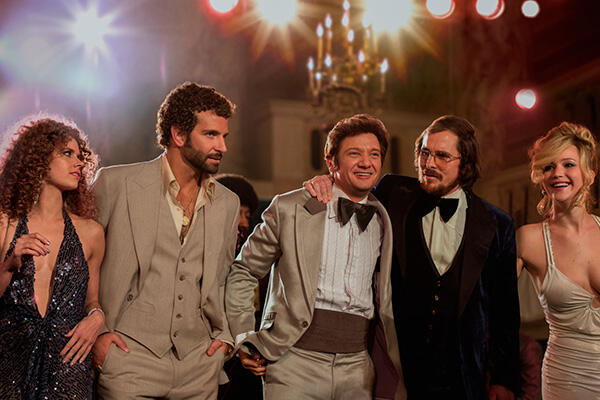
American Hustle
Grade: B Goddamn, did American Hustle have a good trailer! Through a grandiose string of clips, one was treated to dancing, boozing, screaming in toilet cubicles, Jennifer Lawrence in a leotard and the phrase “only in America” punching onto the screen in sassy block letters – all in perfect unison to the beat of Led Zeppelin’s “Good Times, Bad Times.” Needless to say, I was pumped – the WHOLE WORLD was pumped. This was set to be the best hair/70’s/heist/social-commentary film of recent times. Unfortunately, my love affair ended around 20 minutes into actually seeing the movie. American Hustle follows the story of greasy con artists Irving (a chubby, and proud of it, Christian Bale) and Sydney (a tiny, and proud of it, Amy Adams) as they are forced to work for a manic FBI agent (Bradley Cooper) in order to save their skin. Or something. I’m not completely sure. The script was very convoluted – and not because it was too intelligent for the average audience member, but because the plot was messy and the characters’ actions were often unmotivated. People were constantly changing their minds, or swapping allegiances, in a way that didn’t make them look complex, but just confused. It was a waste that O’Russell didn’t employ narration to help clear up the finer points of the heist, but instead used it intermittently to tell the audience things that we should be shown, not told. However, some very skilled and hard-working actors saved this film: most notably Adams, as a deeply unhappy and highly-strung con artist, and Jennifer Lawrence, Irving’s unpredictable and obnoxious wife. In the wrong hands, both characters could have easily turned into two dimensional, typically vain glamour-babes, but Adams and Lawrence give them humanity and humour. And big-ups to O’ Russell for the interesting directorial style, fast-paced editing, badass music and use of slow motion. These things make the film fun to watch, even if you don’t know what you’re watching. American Hustle is a wasted opportunity for something greater, but still worthy of your time. And not just because of the wigs.
-

Inside Llewyn Davis
Grade: A- Inside Llewyn Davis follows our title character as he desperately attempts to make a name for himself in the Greenwich Village folk scene of 1961. Plagued with a homeless cat, an empty wallet and bad attitude, Llewyn (Oscar Isaac) fumbles through his increasingly disastrous life to what has to be the best movie soundtrack since 1983’s The Big Chill. Bob Dylan, Marcus Mumford, T-Bone Brunett and Tom Paxton all lend their music as either scene enhancers or as covers for the characters to sing in concert as if their own. Thankfully, the Coen Brothers cast actors who were actually comfortable singing, meaning the musical numbers were not excruciating and awkward, as has been the trend of recent Hollywood Musicals (I’m looking at you, Russell Crowe). Carey Mulligan and Justin Timberlake do the best they can as Llewyn’s long-suffering friends/enemies (it was complicated) but are easily eclipsed by the wonderful and almost unknown Oscar Isaac’s effort as Llewyn. The Coens were so supremely lucky to find such a talented guitarist, vocalist, and comedic and dramatic actor all in one person. There’s no denying Llewyn’s a Class-A ass-hole, but through Isaac’s beautiful musical performances, excellent delivery of insults and sad eyes you can’t help but feel for the guy. The major joy for me was that this film feels so un-Hollywood. Instead of following the classic (and tired) “guy-achieves-goal” story, there were numerous narrative threads that interweaved seamlessly, none of which ended the way one would expect or, for that matter, want. Yet it still delivered a fully formed protagonist as more and more of Llewyn’s difficult past is revealed. It also didn’t feel like a Coen Brothers film. That is, apart from John Goodman’s ludicrous stint as a vile Jazz musician, which seemed to serve the basic purpose of saying “chill out, we’re still the Coen Brothers!” I’m sure we’ve all seen John Goodman being John Goodman numerous times before, and I felt Inside Llewyn Davis was no place for John Goodman. Nevertheless, this sepia-soaked bad boy is a must-see and a must-listen, which I recommend you watch alone, and in the dark.
-
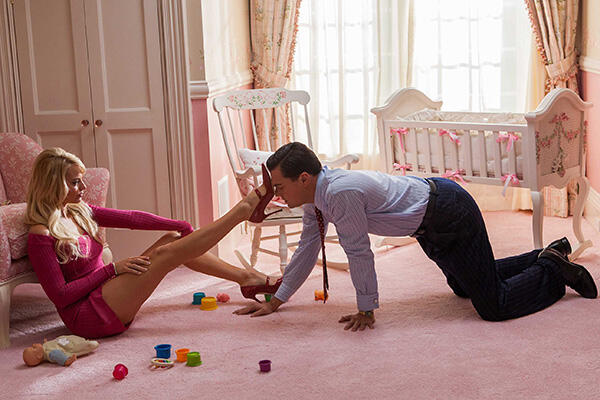
The Wolf of Wall Street
Grade: A+ In recent years, economic disparity has permeated society’s political zeitgeist, questioning whether it is ethical for such a small percentage of the population to control so much wealth and power, while so many struggle on the way side. Wolf of Wall Street gives a face to some of that small per cent, revealing that their wealth comes from systemic predatory exploitation of that larger per cent. Based on the autobiography by Wall Street trader Jordan Belfort, played by Leonardo “I can do comedy, too” Di Caprio and helped along by Jonah “I can do drama, too” Hill, the film takes us through what can only be described as an exuberant fast-paced cartoon of a film that pulls no punches in portraying the lifestyle of these livewire tricksters and raconteurs that man the stock-trading floors of Wall Street. We see it all: Ferraris; mansions; whores; coke; Quaaludes; midget tossing; and anything that Belfort’s band of merry (mostly) men wanted. The idea being such a fast-paced life with unlimited means will lead to desire for unrestrained consumption for these “supermen” of industry. Which leads to what has been a major criticism of the film: glorifying these actions and not depicting the faces of those that were exploited. Warning, here lie spoilers: While there may be no narrative come-uppence for the central character, that’s kind of the bleeding point. Unrestrained capitalism leads to this gross corruption, ruthlessness and excess similar to Belfort’s. However, as a system, it seems impotent in handing out any reasonable penalty to those that exploit it. Belfort served 22 months in prison and now has to pay 50 per cent of his salary to his victims. To this day he still owes his victims over $100 million in restitutions, while he gets to live a life of relative luxury giving public speaking tours about how to sell fucking pens to New Zealanders with horrific accents. End of spoilers. While some reviewers say this film is glorifying the actions of Belfort, I would argue those people also would say the same about a film depicting the final days of Rome. If we argue that this behaviour is unacceptable and disgusting, maybe we should look at the world that we live in.
-

Fridge Pizza
That O-Week time of the year is a week full of good flat intentions, like doing the first flat shop full of nutritious food, drafting up the cleaning roster and vowing to never screw the crew. But, as we all know, the week’s charming side effect – also known as the week-long bender – renders all of the above little more than well-meant intentions. Many of you will find that the week’s New World budget leaned more towards the wine section than it did the fruit and vege, and now all you have left in your fridge is a limp looking onion, some blackened tomato paste and some rather shiny-looking ham. Never fear, the fridge pizza is here! This pizza base recipe had its humble beginnings as a recipe for hangover-curing focaccia bread, but was quickly converted into a pizza base dough when Visa Debit accounts ran dry. My fridge was looking pretty bare the other night, so when my brother and his girlfriend came over for dinner, they brought the contents of her fridge with them. We then compiled our stocks to create some excellent pizzas. You can throw whatever you want on this pizza; this is just an example from my fridge using in-season ingredients. I make a simple pizza sauce using tomato paste, balsamic vinegar, garlic, a bit of oregano and a sprinkling of chilli. You can use pre-made pizza sauce but making your own, as usual, is cheaper. This dough recipe will make quite a bit, so wrap up any leftover dough in cling wrap and keep it in the fridge for pizza the next day. IngredientsFor the base: 2 cups plain flour 1/2 sachet instant yeast 1 teaspoon sugar 1 teaspoon salt 1/4 cup cooking oil 150ish ml hot water; More flour for bench dusting. Tomato sauce: 1 cup tomato paste 3 cloves of garlic, minced 1 teaspoon oregano 1 teaspoon balsamic vinegar A pinch of salt A pinch of chilli powder Toppings: 1 eggplant, sliced and gently browned in a frying pan with a tiny splash of oil 100g feta, crumbled 1-2 avocados, sliced into small chunks 1 red onion, sliced thinly Edam cheese, grated (use as much or as little as you like) Method1. Preheat the oven to 100°C on bake, and then turn off once it has gotten to temperature. 2. In a large bowl, mix together the flour, salt, sugar and yeast. In a jug, add the oil to the hot water, then gently pour into the flour mix and stir with a knife until the dough comes together. 3. Tip out onto a floured board and knead for five or so minutes until the dough is nice and soft. You may need to wet your hands if the dough is a bit too dry. Oil up a heat-proof bowl and place the dough inside. Pop it in the now-off oven to rise for half an hour. 4. In the meantime, mix together all the pasta sauce ingredients in a small bowl. 5. Once the dough has doubled in size, remove from the oven. Preheat the oven to 200 degrees on bake. Take squash ball-sized clumps of dough and roll out until about 3mm thick. Transfer onto a baking tray, lined with baking paper, and bake for around ten minutes until the base has turned a golden-brown colour. 6. Remove base from the oven and start topping with ingredients. Spread the base with a good dollop of the base sauce. Sprinkle over the onion, eggplant and feta followed by the grated cheese. Pop back in the oven for another 5 to 10 minutes until the cheese has melted and starts to brown. Slice up into pieces and repeat these steps for all the rest of the pizzas until the precious cheese runs out! Makes 7 small to medium-sized pizzas
-
Broken Age
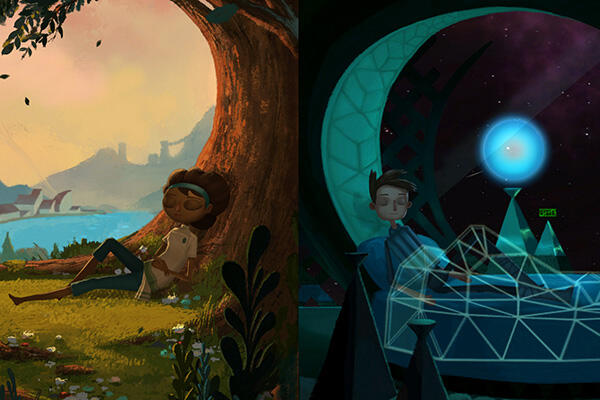
Grade: A As consumers, we are at the mercy of what sells. When what you like is “what sells,” that’s a wonderful fact. However, when something you like is niche, then it can be the worst. However, the last couple of years have given gamers the opportunity to directly influence what they like as being the thing that sells, all because of the glorious innovation that is Kickstarter. For those of you not in the know, Kickstarter is a website that allows anyone to pitch an idea to which they can ask people to contribute money, essentially making them investors in that product. This service has been a revolution for the gaming industry. Suddenly, games which publishers deemed to be products that wouldn’t sell can bypass these fat cat suits and go straight to the consumers with the question of whether we want it or not. This has allowed gamers to set in motion the development of many games that may not have seen the light of day otherwise. And seeing as the site has been popular for two years, and the average game development cycle is two years, we are finally starting to see the fruits of this endeavor. And, oh, are those fruits sweet. The game that kicked (get it?) this whole gaming revolution off was a proposed project by the legendary team Double Fine Studios, who brought us games such as Monkey Island, Grim Fandango and Psychonauts. They began their Kickstarter asking for $400,000 and, in just under a month, they raised $4,000,000. The game this Kickstarter produced is Broken Age. However, the exponential amount they raised meant they wanted to make a far larger game than anticipated. So the game you buy now is Act One of the game, with Act Two set to come out later this year for no additional fee. Broken Age is a classic point-and-click adventure. Though the genre has seen a resurgence in the last couple of years, with titles such as Telltale Games’ The Walking Dead, these games are evidence of the evolution of point-and-click adventures (Point-and-Click 2.0, if I may). Broken Age, on the other hand, captures the magic of 90’s point-and-click adventures while utilising 21st century technology to make a game that is equal parts nostalgic and refreshingly innovative. Broken Age is the gamer’s version of a coming-of-age tale. It is broken up into two narratives. One story follows Shay, a teenage boy stuck on a spaceship with an overbearing computer, AI, for a mother. Shay is tasked everyday with missions that, as it quickly becomes apparent, are meant as nothing more than distractions for him, as the ship’s main prerogative is to keep him safe. The other story follows Vella, a teenage girl who has been chosen by her village as a sacrifice to the monster that visits every 14 years to eat the offered maidens. Both of the narrative threads share the common theme of reaching a moment where we must question the situation we are in and either accept or rebel against it. The player has the option of swapping out of the narrative they are in and jumping to the other at any time. Both of these stories are superbly constructed, taking the player on two journeys which are absurdly fantastical while never being alienating. Though the stories have real heartfelt sentiments, the game doesn’t lean on emotion to keep the player engaged; its levity and humor keeps you engaged enough as it is. The game is utterly hilarious – when you’re not laughing out loud, no doubt you’ll have a goofy grin plastered on your face. The gameplay is exactly what you’d expect of a classic point-and-click adventure. You will spend almost equal amounts of time exploring, conversing and problem solving. As is customary with this genre, often the problem-solving aspect can lead to some frustrating moments as you search for the object you missed. But hey, it wouldn’t be a point-and-click adventure without those moments. Broken Age is the beginning of gaming revolution: expect a wave of games bought, paid for and developed just for you. For this to be true, of course, you’ll need to keep an eye on Kickstarter and have your wallet ready. But if Double Fine’s fantastic new IP is any indication, it’ll be worth it. I am so excited to play Act Two, and I hope that by the time it launches later this year, you will all be waiting in anticipation with me.
-

Warpaint - Warpaint
Grade: A- From start to finish, the sophomore effort from this Los Angeles-based four piece emanates a dense atmosphere, each track transitioning beautifully to the next. Soaked in a somewhat ethereal splendor, the record is held together by a subtle, carnal groove which comes across as tribal yet intricate. In a way, the band have crafted a vast, disparate aural landscape, where haunting melodies and gloomy instrumentation beam down like a heavy kind of moonlight, interplaying morose restraint with a starry eyed animal instinct. Produced and mixed by the talented duo of Flood (U2, PJ Harvey) and Nigel Goodrich (Radiohead), the record feels almost nocturnal in nature; each chord balancing on effulgence, every vocal line bellowing like a severed shade of night time. The bass lines are dark and heavy, but luminous. Emily Kokal and Theresa Wayman take turns singing lead vocals and layering waves of lush melody, while the rhythm section of Jenny Lee Lindberg and Stella Mozgawa proves absolutely stellar, drawing influence from genres such as R&B and hip-hop. Spanning approximately 50 minutes, Warpaint is best consumed whole, working well through a sense of synergy. However, there are individual tracks that do demand attention when singled out: “Love Is To Die,” with it’s dark sensuality; and “Disco Very,” which pumps on like a funeral procession. “Teese” is another standout, sounding like a wispy, warm whisper by candlelight. With several traces of banter also included between songs, a live dynamic is also apparent, serving to further magnify the intimacy between band and listener. Lyrically, themes are a little ambiguous and arcane, loosely centered on love and romance, and almost always reaching a gripping mantra: “Love is to die, love is to not die, love is to dance.” The album starts with a short introduction; an instrumental jam highlighted by what sounds like a howling synthesiser. This leads perfectly into “Keep It Healthy,” which greets us with a plethora of descending arpeggios, eventually coming together with doses of haunting backing vocals and off-beat, percussive drumming. These elements become familiar throughout the course of the record as they form the basis of many of the album’s other tracks. Though not all tracks are memorable, none are by any means wasted space. What they all do achieve is the creation of a consistent sense of mood, making this record an overall worthwhile, though sometimes esoteric, experience. A mood record, made for the midnight inside us.
-
Broken Bells - After The Disco
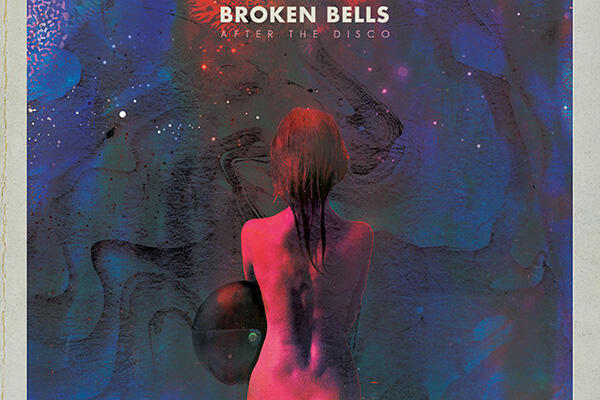
Grade: B Broken Bells is comprised of James Mercer (The Shins) and Brian Burton (Danger Mouse), who team up again following their 2010 debut. After The Disco is an album of very well crafted songs, merging elements of new-wave and disco with Mercer’s trademark pop sensibilities. The production is rich, clean and lustrous. Congregations of instruments swoop in and out, colourfully centered around ear-worm vocal melodies. Burton again proves himself a master behind the desk, brilliant almost to a fault. Yet, despite having described what should be a perfect pop album, why am I left unmoved and struggling to recall even the most infectious moments? Could it be that James Mercer has become too good at what he does, to the extent that he has lost a certain kind of edge? Not that The Shins were a band who took part in any sort of boundary-breaking. But at one point they felt fresh and new – even if that moment was brief and fleeting. It feels like I have stumbled upon some sort of awkward mystery; when did this sudden blandness descend? Is one of the symptoms of perfection a tendency to appear safe? Is that what I have come to label such consistent songwriting? Maybe some moments of subtle mediocrity are needed to highlight moments of brilliance. All I know is Broken Bells did not make a bad record, but what they did produce is strangely underwhelming. Of course, there are standout tracks. “Perfect World” is melodically instant and boasts a catchy synthesiser motif. “Holding On For Life” succeeds at being a great cross-over disco pop song, hinting at what a contemporary Bee Gees would sound like, though lacking in any instance of danger. These are above-average songs, mind you, but maybe it’s the fact that this collection of songs does not amass to a coherent collection? Yet the songs do have a similar aesthetic; the overall sound is consistent and thematically it all seems quite well tied together. But maybe a collection of good songs does not always make a great album? It does, however, sometimes signal a safe one, an enjoyable one, and definitely not an awful one. After The Disco is just that: a collection of sometimes above average songs, which may actually be quite enjoyable. It’s good, I guess.
-
Artist Profile: Brown
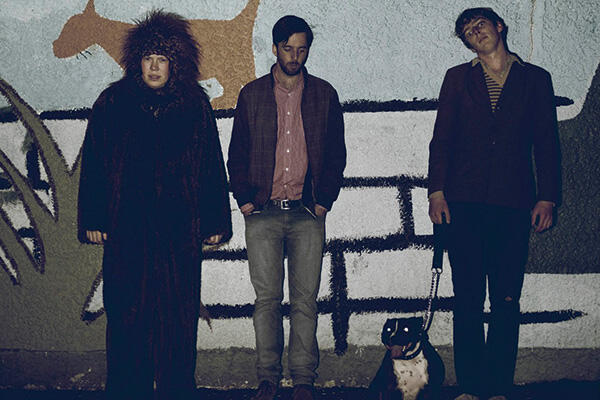
Brown are a four-piece alternative pop band based in Auckland and Dunedin. From confrontations with boy racers to recording an acapella covers cassette, Michael Cathro, AKA Skinny, talks to Critic’s Adrian Ng about his approach as a songwriter, his memories of Dunedin life, and also gives us an update on Brown’s long awaited debut album. How did Brown come to be? What is your story? I had recorded a couple of bedroom EPs with my solo recording project Baraka and the Finish Hims and decided to transition it into a full band. My brother, Paul, and Ben Sargeant joined as the rhythm section. We were walking home after our first gig when I got bottled by a boy racer and knocked out. They had yelled at us from their car and I had shaken my fist in an attempt at a dad joke. Boy racers really hate dad jokes. We decided on a name change and I’d heard our friend’s band Thundercub describing their music as the colour “orange,” and I’d also had a pet rat called Mr Brown. I liked the idea that we could try to let a colour conjure up our music and in the same stroke honour the memory of Mr Brown. We’ve since added Theo Francis to play more guitars, so we are now a four-piece music group. Your songs seem to come from quite a unique perspective. What kind of topics/subjects intrigue you as a songwriter? Often it can come from something I’ve found really absurd or funny during my day, like, I’m having this issue at the moment where I’m alternating between using the hand dryer and the paper towels at work because I can’t figure out which would be doing less harm to the environment. I quite like to deconstruct things and break them down into their parts so I can see them for what they really are; this can be traumatic but also very funny and I get a lot of material from it. I also find that reading is really important for generating ideas and whatever I read tends to have quite an effect. Or there are these window cleaners that come and clean windows in the CBD, dangling from ropes, and I like to pretend they’re solipsists who live on the rooftops. I wrote one about them. On your Bandcamp page you describe your previous release, Mannequins, as a demo album. For you, when does a song take that leap from demo to final version – is it a fidelity thing? On Mannequins I recorded and played all the instruments myself, so it’s not a real representation of the band. It’s more me just messing around in my bedroom. So I don’t think it’s fidelity; we’ve released some shocking sounding EPs. I really mocked up the album as a way to send tracks down to Dunedin for Paul and Ben to have a better idea of the songs in their entirety. We’ve re-used a few tracks from it on our new album, so it’s probably a demo album in retrospect. Does it feel like a sort of homecoming when you play in Dunedin? When will you be playing here next? Dunedin is still my home and it always feels like coming home, and one day I’ll probably come home for good. When we play Dunedin it’s always a party and easily the most fun gigs to play. We’re playing Queens on the 28 February as part of a tour but I get to spend, like, a week in Dunedin, so I’m pretty excited. Finally, what is the name of your upcoming record and when can we expect it? We’ve named it after a song of ours, “Bacterium, Look at Your Motor Go,” and it is due out about mid-year. We have some more singles we want to release first. browntrout.bandcamp.com facebook.com/brownonbrown twitter.com/brownonbrown browne.tumblr.com
-

New this week
Welcome to the 2014 Critic music section. I’m Adrian Ng, a songwriter and producer based in Dunedin. What qualifies me to write about music, let alone curate a section around it? Not much, really. I’ve realised that when it comes to music, the person you should pay the most attention to is yourself; find what you love and enjoy it. There is no point listening to something that you hate. My aim is to aid you. You will find that this section has undergone a slight makeover; these pages should now be bursting with new, interesting things to check out. Below are some singles, a playlist of sorts, which will correlate with the Critic Morning Spectrum show on Radio One from 10am – 12pm every Monday. I hope you stumble upon something you like. Cloud Nothings - I’m Not Part Of Me Infectious garage-pop offering, dripping with angst and self-loathing. “I’m not telling you all I’m going through,” Dylan Baldi emotes over a brick wall of dry fuzzed-out guitars. St. Vincent - Digital Witness Retro-fusion, electro-funk madness. “I wanted to make a party record you could play at a funeral,” says songwriter Annie Clark. Which pretty much sums this track up perfectly. CEO - Whorehouse Mystical, melodic electro-pop, brimming with neon and technicolor. Sing-along inducing chorus, “baby I’m so lost inside a whorehouse.” Perhaps a magical whorehouse ... of drugs … Yumi Zouma - The Brae Dreamy track, conjuring visions of streamlined rivers, with masterful use of vocal melody, weaving around layers of rich bass and saccharine guitar lines. Woods - Moving To The Left Sweet, warm, and cradled with a coat of reverb. A cozy Sunday afternoon track which brings to mind the glory days of Elephant 6.