

Iron Tusk are a local Dunedin progressive metal band, featuring the talents of Adam Wells on drums, Scott Herriott on guitar, Jake Langley on vocals and Shane Hellyer on bass. Members and ex-members of Dunedin metal luminaries Ignite The Helix, Threads, El Schlong and Twist of Fate.
The Iron Tusk EP is an impressive blend of riff-based metal and progressive rock dynamics. You can download it for a name-your-price deal on irontusknz.bandcamp.com.

Culture
More Culture from Issue 21
-

Housebound
Rating: A- Does anyone else feel the pressure to love any film made in New Zealand? Like there’s a special place in hell for those that don’t support Kiwi comedy? What I’m saying is, I do. So when reviewers and punters alike starting raving about Kiwi-made horror-comedy Housebound, a voice inside my head akin to Roz the secretary of Monsters Inc. retorted: we’ll see. And what I did see was completely refreshing, hilarious and promising for the future of New Zealand film. Housebound follows protagonist Kylie (Morgana O’Reilly), a delinquent charged with eight months of house arrest in her small-town mother Miriam’s (a hilarious Rima Te Wiata) home. As if Miriam’s small-minded chitter-chatter and casual racism aren’t torturous enough, Kylie discovers her old family home is obnoxiously haunted. The film took off to a slow start that had me very nervous. Don't get me wrong; the beginning half hour was funny and scary, but it was also very typical. The first handful of scenes were full of tired tropes: suspenseful music; stock shots of the haunted house under an ominous sky; the discovery of files that explain the sordid history of the building, blah blah blah. I had settled myself in for an enjoyable but thoroughly predictable couple of hours. HOW WRONG I WAS. This film has three twists. THREE. As soon as you'd wrapped your head around the first bombshell they'd drop another, then another... then another. I haven't made so much noise in a movie theatre since Sacha Baron Cohen's Bruno (which I think we can all agree was visceral). Although Housebound employed the same "someone creepy appears very quickly when you weren't expecting them" technique over and over again, goddamn does it make you jump. Johnstone managed to slightly alter each "shock" moment just enough that each one was funnier, scarier and more ludicrous than the last. I haven’t laughed this much in a long time. I am proud to say Housebound is international funny, not just Kiwi funny. Quote me.
-

The Expendables 3
Rating: C+ In the long tradition of The Expendables series repackaging the exact same action-hero products you have seen before in 80s’ movies, comes The Expendables 3, a film with no original dialogue. Some might say that the way they rework each action actor’s iconic catchphrases (such as “I’ll be back!”) into their new films ad nauseam is a bold and wholly new genre of self-referential parody genius. Not me, however. From the moment I saw the first Expendables film, I knew that every bad-but-great old action movie I ever loved from late night TV was going to be ruined by the same actors trying to do their thing all over again in a series of much more modern, and much less interesting or authentic, sequels in the coming years. And, sadly, Ex-3 did not fail to deliver on that score. As if seeing Jean-Claude Van Damme doing a pathetic parody of his flying-kicking younger self in The Expendables 2 wasn’t bad enough, now we have “Crazy Mel Gibson” doing that whole suicidal Lethal Weapon thing all over again. It sucks. None of the evil they create for his on-screen character is as disturbing as the YouTube videos out there of his drunken, misogynistic, anti-Semitic torrents of spousal abuse. Wesley Snipes too is back in a poor, poor reprisal of his role in Stallone’s Demolition Man. But blow me down was that Harrison Ford doing a Han Solo cameo!? Awesome … I guess. Oh, I tried so hard to like it. But there comes a time in every young boy’s life when he watches a shoot-em-up film, and instead of being excited by the bloodlust, he breathes in deep, accepts his new place in the world, and says out loud: “Oh come on, there’s no way they could have survived that eight-story freefall and then killed those 60 guys who were waiting for them right there with tanks. This is bullshit.” Son, today you are a man. The one and only good part of this film was Antonio Banderas’ cameo, reminiscent of PUSS … in boots!
-
The Hundred-Foot Journey
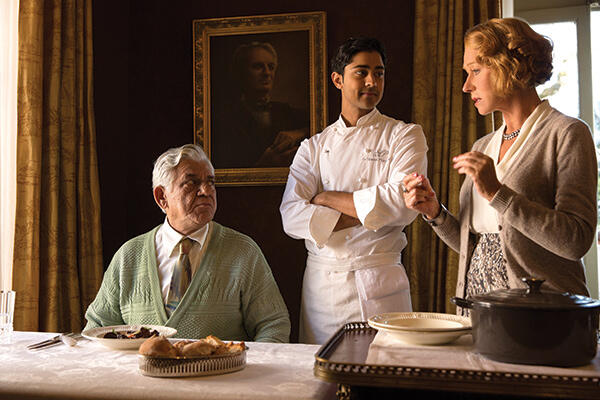
When I procrastinate, I try to do it with class. As in, I’ll be my foodie self and watch seven episodes of Kitchen Nightmares. To me, “foodie” just means you’re addicted to food porn. The Hundred-Foot Journey is not just a feel-good film; it’s a feel-good opportunity to satisfy those foodie needs. The Hundred-Foot Journey focuses on the Kadam family and, in particular, Hassan (Manish Dayal). Following the fire that killed Hassan’s mother and destroyed their restaurant in India, the Kadam family relocate to France. The journey is cut short when Papa Kadam’s (Om Puri) car breaks down. Reassuring the family that “brakes break for a reason”, they eventually settle down in a French village and even open up their own restaurant. However, 100 feet away from ‘Maison Mumbai’ is a Michelin one-star restaurant run by the strict Madame Mallory (Helen Mirren). The interaction between Madame Mallory and Papa is initially one of hostility. Insults are thrown and there are many attempts at sabotage. However, their humorous war later adds a deeper element to the film: the issue of racism. The seriousness of this topic adds a dash of reality and I felt it enhanced the cookie-cutter plotline. The film has a central focus on the development of Hassan, who is a promising future chef. With the lessons learnt from his mother, the cookbooks left in his new home, and advice from sous-chef Marguerite (Charlotte Le Bon), Hassan soon becomes an acclaimed chef and pushes the boundaries of the culinary world. He even gets a taste of romance (pun completely intended) – it’s predictable but nice. However, the film’s unravelling of the generic, happy ending dragged on. At one point, I became more interested in the cinema’s curtains. Fortunately, the close-ups of elegant dishes and long shots of the village redeemed the ending. Overall, The Hundred-Foot Journey was a heart-warming film to watch and it’s definitely a good fix for the foodies.
-
Jumanji
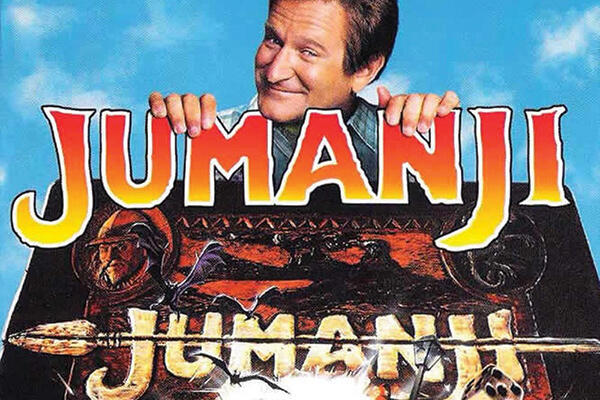
Classic Film A nostalgic 90s’ classic, which I’m sure many of us have been revisiting in the weeks since Robin William’s death. The film is about a magical board game named Jumanji, which conjures deadly jungle-related things with each roll of the dice. There are killer mosquitoes, lions, carnivorous plants, etc., and the only way to get rid of them is by finishing the game. Four characters (played by Robin Williams, Bonnie Hunt, Kirsten Dunst and Bradley Pierce) wind up playing Jumanji, and must attempt to complete it while escaping the terrors it throws at them. As an adult, I can no longer pretend Jumanji is the flawless masterpiece I once thought it was; the first 15 minutes feel like a Goosebumps episode, the ending raises all sorts of logistical questions, and the “face your fears” message is a bit too simplistic for a movie that features so much danger that one would be well-advised to run away from. Also, the villain is played by the same actor who plays the protagonist’s father, with no in-story explanation, bringing with it a Freudian WTF factor that probably doesn’t belong in a kid’s movie. However, the things that are still awesome about Jumanji outweigh any faults. The characters are well fleshed-out and entertaining to watch; Williams and Hunt are both just as adept at drama as they are at comedy, and they strike the perfect balance. There’s some real suspense as well, and the special effects are generally pretty amazing. And I think a big part of why I loved this movie so much as a kid was that the action sequences are taken just as seriously as those in movies for adults. They are just as imaginative, well-constructed, suspenseful, and entertaining. Jumanji drew some criticism for being too scary for young children, which is understandable. But there’s a lot of heart and comedy that balances the scares, and for kids who aren’t old enough for Kill Bill, it offers a level of action and excitement that most other family films don’t.
-

Slow cooked moroccan chicken
I stayed home sick today. It was miserable outside and I sound like a man. A man with a blocked nose. I took advantage of the day of paid sick leave at home to fill the house with the smell of slow cooked Moroccan chicken. I usually make it on the stove but I find it far easier and way more delicious to throw all the ingredients into a slow cooker and whack it on for six hours or so. The flavour has more time to develop and the chicken melts in your mouth. I don’t really have a set recipe for this. It is sort of my lazy cooking meal. Very little effort is required. I just sprinkle over the spices in approximate quantities. Add more or less if you wish. If you are making this in under an hour just brown the chicken in a splash of olive oil along with the spices. Add the onion and garlic and sauté until soft. Pour over the tomatoes, chicken stock, chickpeas and dates and leave to simmer for 45 minutes until nice and thick. IngredientsServes 4 500g chicken thigh, cubed 1 teaspoon chilli 2 heaped teaspoons cinnamon 2 heaped teaspoons ground cumin 1 teaspoon paprika 1 teaspoon ground coriander ½ teaspoon turmeric 1 teaspoon salt Freshly ground black pepper 2 onions, sliced 4 cloves garlic, minced 2 400g tins of chopped tomatoes 1 400g tin of chickpeasv ½ cup chopped dates; 3 cups chicken stock Rice, plain yoghurt and fresh mint to serve. MethodPlace all the chicken ingredients into a slow cooker. Cook on high for six – eight hours. Give it a stir every so often if you can. Serve atop rice or couscous and with plain, unsweetened yoghurt and fresh mint leaves, maybe even some chopped nuts too. I feel like I need to insert some anecdote to fill in the lack of word count. Sorry, Zane. It is seriously that easy. You should make it.
-

Profile: Zac Fay
Last Friday night I went to Dunedin-based artist Zac Fay’s first official exhibition, Blood Eagle, at Kiki Beware on George Street, and it was so effortlessly great. Unfortunately the exhibition is now over, but because Zac is local, naturally I felt it would be appropriate to meet and greet and discuss art in the flesh, so we sat down at Nova for a quick espresso. Fay is 23 years old and was born and bred in Dunedin. Aside from spare time doodling, he worked for a year as an assistant at Van Brandenburg architects in Dunedin before he left to study marketing. The architectural elements of his work and his decision to exhibit it in a clean, modern and architecturally reflective space stemmed from his interest in architecture. Other than that, he gets a lot of inspiration from cartoons and other illustrative artists. His favourite graffiti/street artist is American contemporary illustrator and street artist Neckface, whose work is generally congruent with Fay’s. The exhibition at Kiki took Fay a month to do and was comprised of eight A4 pieces, six A5 pieces and two A3 pieces. In terms of the creative process, he says his process is quite basic but it works. Fay starts with a light pencil outline, which he then goes over in ink, before filling in chosen areas with water colours and the occasional hint of gouache. Fay’s images are what he describes as “creepy and creature-like” but still friendly as the characters and images appear both comical and cartoonish. When I first saw the exhibition it reminded me of Salad Fingers, but not so anguished and cynical. The creepy subjects are juxtaposed with subtle saturations of water colour that “tone down the subjects a bit,” as they contrast the sharpness of the black inked lines and in doing this, instead of appearing horrifying or gruesome, his images feel more light-hearted and seem to represent a specific state of ironic, modern melancholia. This theme runs through his whole exhibition with images of things like stubbed-out cigarette butts and daggers with blood on them, filed lightly with pastel-like blue, red and black watercolours. His work is playful but well-constructed and is thematically coherent. Outside this exhibition (in Dunedin spirit) Fay has collaborated with other local creative friends and fellow artists, including commissioned prints for local brand Clothes I’ve Made, where he designed t-shirt prints: “I did a Gucci-esque print for them, and a Street Sharks inspired one.” Fay has also done some work for the Public Gallery and has extended his reach to Melbourne, where he has done album covers for his friend, Scapegoat Mercy (soundcloud.com/username-21). With not much else to say about his work apart from the fact that he was overwhelmed by the positive response, numb by excitement on the night, and thankful to his girlfriend, Briar, for being the “brain” behind his creative impulse, Fay finished his long black before he pulled out his sketchpad showing me a quick drawing of a bloody dagger he had done for a best friend and, gathering his things together, he assured me he would pen me a piece that features knives and blood and cigarettes – specifically, a dagger impaling a bunch of cigarettes. Fabulous! Uncertain when his next exhibition will be, Zac is enthusiastic to keep drawing and working, and I am looking forward to seeing more in the future.
-

New this week / Singles in review
Lauryn Hill - Black Rage (Sketch) The actress and musician Lauryn Hill only has one album under her belt, but that hasn't stopped her from releasing the odd single now and then. “Black Rage (Sketch)” is a slow burning, RN'B track, dripping with her trademark boldness. While it borrows the melody from “My Favourite Things,” a song from The Sound of Music soundtrack, the subject matter at hand is not quite the same. Hill tackles issues deeply entrenched in her past and present society, regarding race and injustice. Her vocal performance is mesmerising and the production is rich and gritty. Pharmakon - Body Betrays Itself Pharmakon is Margaret Chardiet, a noise artist from Brooklyn, USA. After her debut album from last year, Abandon, Chardiet is set to release her second album, Bestial Burden, on Sacred Bones records. “Body Betrays Itself” is the record's first single and gives a good glimpse of what to expect. The track is a writhing soundscape of deep, ominous synth and booming drums. Something you would include in a post-apocalyptic soundtrack or your next barbecue, perhaps. Chardiet's voice is venomous, and raw; a visceral and engaging track that kind of sounds like hell. Caribou - Our Love “Our Love” is the second single from Dan Snaith's project Caribou. It is from the upcoming album of the same name and will be the Canadian musician's fifth to date, following the stellar Swim from 2010. “Our Love” is a house-influenced, electronic-trance track. The rhythm is hypnotic; the backing vocal hook vibrates up and down and conjures an almost otherworldly euphoria. It's definitely a song for standing under the neon lights in the early hours of the morning. Electric Wizard - Sadiowitch Hailing from Dorset, England, Electric Wizard are one of the most renowned doom metal bands around, known for their incorporation of stoner rock as well as sludge. Four years removed from their seventh studio album, Black Masses, the band return with “Sadiowitch,” the single to their cheerfully titled upcoming album, Time To Die?. The track is a propulsive, nightmarish acid trip. More psychedelic, classic Black Sabbath than heavy doom. Jus Oborn's trademark sneer is on top form. Vince Staples - Blue Suede At present, Vince Staples is probably best known as the guest MC on Earl Sweatshirt's track “Hive.” The 21-year-old Long Beach rapper has been busy, however, preparing his debut album set to be released on Def Jam records. “Blue Suede” is the lead single from his upcoming album titled, Hell Can Wait. The track is built over a dark, almost terrifying, landscape of blaring synths and grimy beats, resembling a police siren, booming out across a dark, cold neighbourhood. “All I wanted was them Jordans with the blue suede in them.”
-

Merchandise - After The End
Rating: A- Formed in 2008 in Tampa, Florida, Merchandise has undergone reinvention after reinvention. Cementing themselves, at first, as a punk band, they soon evolved into an off-kilter, experimental, alternative, pop outfit in the early 2010s. After experiencing mild success with 2012's Children Of Desire the group found themselves signed to 4AD this year and, as time has taught us, the group were on the verge of reinventing themselves once again. This time the result of the band's musical restlessness comes in the form of the glistening After The End. A classy collection of beautiful, lush ballads and blissed out, hook-based pop songs, which reference 80s guitar-pop luminaries such as The Cure, Blondie, U2 and The Smiths. The record's larger than life production signals a classic move made by bands trying to make an impact after being signed to a bigger label. Which is to make full use of their increased exposure by offering audiences a more polished sound, making their music more palatable for the general public. However punk or indie you may consider yourself to be, this move can sometimes be a good thing for both the band and fans alike. In fact, I think most bands should try their hand at writing a pop song. There is nothing wrong with aiming to release more immediately likable songs, however miserably it may end up backfiring at times. Lucky for us, though, Merchandise execute this challenging endeavour with confidence, authenticity and moderate success. First of all, production-wise, the record is rich and warm, and skilfully produced by the band themselves. The guitars sound majestic, with each string sounding like it could've been crafted out of strands of Jesus' hair. The organ and synth act to further emphasise the luminescence, sweeping in every now and then, to add various layers of sheen. Perhaps the most intriguing part of Merchandise's present, grandiose pop escapade, is the rich, vocal performance provided by frontman Carson Cox. Sounding one part Morrissey, one part Julian Casablancas, and one part early Scott Walker. His voice brushes by effortlessly across the mix, like velvet on velvet. It all goes down smoothly but, at times, perhaps too smoothly. The album opens with “Corridor,” an instrumental track, which floats softly on a bed of acoustic guitars and atmospheric synth. At 2:47, this track is also the shortest track, which is a feat considering a third of the other nine songs are supposed to be full-blown pop singles. In fact, most of the songs. “Enemy” is an obvious single, based on an acoustic guitar riff that sounds like an ethnic version of “I Can't Get No Satisfaction” by The Rolling Stones. The next three songs, “True Monument,” “Green Lady” and “Life Outside The Mirror” are sweeping ballads, perhaps meandering at times. However, the arrangements are humungous and, in terms of sound, could be considered a cousin of Joshua Tree-era U2. Side two of the album starts off with “Telephone,” which is the most 80s pop thing on the album. With a groovy pop bass hook, and a chorus that Whitney Houston would be proud of, “I wait and I wait and I wait by the telephone.” “Little Killer” is definitely the standout track. It is undoubtedly the most upbeat song, sounding like The Cure in full-fledged pop mode. The last three songs, “Looking Glass Waltz,” “After The End” and “Exile and Ego,” see the band return to a much slower paced approach. Carson Cox croons through the final 16 minutes, sounding like Scott Walker on his first four albums. Huge lavish songs, with a hint of dry emotion, setting off visions of long dusty roads and heartbroken heroes. As a whole, After The End, is an immersive experience but one that perhaps relies on its huge, lush, sound instead of making the most of its pristine pop environment. The record does tend to drag, not because of one particular song but because of the bevy of slower paced songs that seem to be bunched together. The band carry these songs with moderate success; even Cox's golden voice starts to come off whiney after a while. When Merchandise embrace the challenge of writing pop singles, however, they truly do succeed, with highlights such as “Enemy,” “Telephone” and “Little Killer.” After The End is a clean, polished, pop record by a band that has never before fit that description. It could have been a little more interesting, but there are some excellent moments indeed.
-

Where'd You Go, Bernadette
Before Maria Semple was a novelist, she was a screenwriter for Arrested Development and Saturday Night Live. With the Arrested Development aspect in mind, there is no doubt that Semple can write great, satirical pieces. Her latest novel, Where’d You Go, Bernadette, is no different. In this novel, Semple draws from her own personal, and very much first world, problems of living in Seattle. Semple experienced the pain of not having a personal assistant and also felt that all 634,535 inhabitants of Seattle hated her. These anxieties are channelled through the novel’s missing person: Bernadette Branch (née Fox). A friend inadvertently recommended this book to me. Well, it popped up on my Goodreads feed and I couldn’t help but pry into my friend’s literary life. I just like to know what other people are reading. I’m also just a very nosy person in general. However, after reading the blurb, I found myself wanting to know more about the novel. I was also quite taken with the front cover. There’s an air of captivating mystery about it that makes me genuinely want to know the answer to Bernadette’s whereabouts. The illustration on the front cover consists of bold, solid colours. Despite its simplicity, the portrait of Bernadette immediately caught my eye. In some ways its simplicity is ironic because the story itself has a lot of twists and unexpected elements. For some reason though, eye rolling always ensues around books that are categorised as “chick lit” and Where’d You Go, Bernadette certainly gives off that chick lit vibe. However, this novel does not deserve eye rolling of any kind. As the winner of the 2013 ALA Alex Prize award and a nominee for the 2013 Women’s Prize for Fiction, Where’d You Go, Bernadette shouldn’t be pigeonholed by first impressions. I didn’t expect myself to enjoy this book as much as I did, but the fact that I finished it within two days proves otherwise. From the very first page, the reader becomes well acquainted with the Branch family and the people who, unfortunately for Bernadette, surround them. The novel is made up of letters, e-mails, magazine articles, and police reports. Bee Branch, Bernadette’s daughter, briefly narrates in between these documents. Semple’s unique, epistolary style was a rollercoaster ride into inner workings of the Fox/Branch family and we enter at a time where their lives are beginning to fall apart. The unravelling of their hint of quirky, upper class lives is spurred when the family start preparing for their trip to Antarctica. This sets off a chain of events that take a major toll on Bernadette. She becomes completely dependent on Manjula Kapoor, her assistant from India (whom she has never met), and eventually detaches herself from the outside world. Bernadette and her absence fuel the events of the novel and the outcomes ultimately change everyone’s lives. From the Branch family to their neighbours to Bernadette’s psychologist, no one remains unscathed. I definitely had my moments of eyebrow furrowing. Firstly, Bee is actually short for Balakrishna. Bernadette named her daughter after Krishna, the eighth incarnation of the god Vishnu because Bee was born with a heart condition that gave her skin a blue tinge. Maybe I’m being too sensitive but that just doesn’t sit quite right with me. Secondly, there were things Bernadette wrote to Manjula that made me cringe. A bindi is not just “a red dot,” thank you very much, Ms Semple! Despite those moments though, Where’d You Go, Bernadette is an engaging, adventurous book and one I highly recommend.
-
Luftrausers
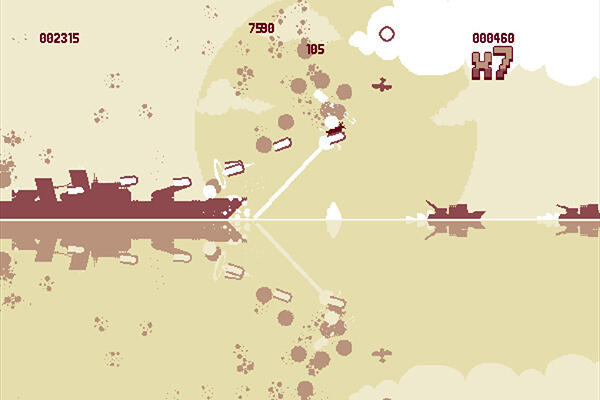
This may or may not be something you consider when pondering video games, but join me for a moment in thinking about how a game feels to play. Think of your favourite game … Now instead of its art, sound or gameplay mechanics, I want you to think about how the game feels. Does it feel light or heavy? Floaty or grounded? Smooth or stuttered? These can be vague concepts, but I’m sure with some thought or a conscious examination when playing you will be able to determine the weight and feel of any game. Take for example a Call of Duty game; they are famous for being incredibly fast, smooth and grounded first person shooters. Now compare that with another first person shooter such as Arma that is realistic in how heavy, slow and stuttered it feels. When you think about these differences in feel they seem obvious, but there is a reason you need to think about it, because the feel of a game is supposed to be a sub-conscious experience. That is why a game such as Luftrausers feels so unique to play, because it very clearly asks you to consider the feel of the game and how that affects your experience with it. Luftrausers is a 2D airplane shoot ‘em’ up title developed by the talented indie team Vlambeer, who you might also know as the developers of Ridiculous Fishing. Expressed through the tone and aesthetic aptly associated with the WWII era German military, Luftrausers has players commanding an airplane against hordes of enemy planes, boats and blimps. The plane you command varies greatly depending on which combination of weapons, hull and engine you pick. As well as changing the way you fly and engage in combat, your choice of these three specifications also changes the challenge you are presented. These challenges vary from achieving a certain score, to destroying a certain number of enemies or with a particular method. In itself these challenges are fun and varied enough to engage players in hours of aerial mayhem. However, it is the combination of the challenges with the airplane specifications that really makes this gameplay special. You see, each different component you choose (weapon, hull and engine) drastically changes the way the plane feels to fly and shoot with and then combining these different components creates a staggering selection of varied fighting and flying styles. This innovation is what makes the feel of the game such a keen focus. Your first several hours with the game will be naturally be inclined to experimenting with these different components and how they change your experience with flying. You find yourself being drawn to a certain combination. For example, I preferred using weapons that were slow and precise but delivered huge amounts of damage, but then combining these slow weapons with fast and agile engines and hull. However, though you may find a preferred play style, the game pushes you to constantly have to change your aptitude with different play styles, as the challenges are tied to the components. This means that your experience with the game is constantly changing, you have to repeatedly retrain yourself to operate and fight with drastically different feeling airplanes. The game has no story, but instead opts for challenge as the hook for continued play. The clever design means that the challenge the game offers is constant and evolving, allowing you the feeling of becoming more proficient while still having you continue to chase the carrot at the end of the stick. When I began my time with Luftrausers the unique controls and flying functionality were alien and confusing. However, with only a little practice I quickly found myself not only comfortable with the controlling, but excited by how the game allows you to become quickly proficient with its mechanics. This adds another layer of fun in just racking up high scores and the feeling that you are constantly one more attempt away from gaining a new and impressive high score. Luftrausers is a game unique in tone, aesthetic and, as I have demonstrated, in how it feels to play. It is so satisfying in this uber-realistic digital landscape to realise how much joy only a few pixels properly designed and executed can offer.


