Chicken Caesar Salad
from Issue 25 ()
By Maeve Jones
from Issue 25 ()
By Maeve Jones
In a quantum instant, a single broadside torpedo slips through the rickety space-cruiser’s momentarily downed shields, and ignites the oxygen recirculator. Immediately, the grizzled captain shuts down the blast doors and opens the ship’s port and stern airlocks, evacuating the gaseous contents from most of the hold in an attempt to quell the ever-spreading blaze. It works, but the non-functional pump that should be keeping the crew breathing clean air is trapped on the other side of an isolated interstellar frigate that contains no air at all. One crewmember – I named him after a semi-close personal friend (I’m in the captain’s swivel-chair, obviously), is ordered to make repairs on the unit. He proudly takes up the challenge, and a deep breath, stepping through the blast doors into the vacuum. It is a suicide mission either way. Even if he repairs the wretched machine before he suffocates, the room he stands inside will be refilled long after his brain tissue begins to decay. He dies a hero, allowing the wounded vessel to deliver its vital plans to the federation. Such is the nature of FTL, a procedurally generated rogue-like that allows you to act out all your favourite Star-BLANK, or if you’re classy, Firefly fantasies. It’s awfully important to constantly scream “reroute the power from X to X” inside your head. A good captain must decide whether it’s more valuable to have functioning shields to deflect laser blasts, or super-juicy engines to evade cursed shield-ignoring torpedoes at any moment. None of your onboard systems or subsystems is unimportant. In fact, all are vital in exceedingly common, and frustrating, situations. Without a functioning door-control it’s impossible to remotely shut off the ship’s soft innards to the chilling space-cold. If a cruel boarding party had crashed the ship’s most mundane system, then the above anecdote about the SS Critic would have ended very differently. FTL is brutally hard. Saving your game is impossible. Every playthrough, every journey across the stars, is its own unique story with a unique sequence of events. Ships you meet can be tremendously kind and gift you with extremely rare weapons and a tonne of scrap, which functions as both currency and experience. Most often they are mean old pirates, megalomaniacal rebels or a socially confused, or easily offended, alien race. It remains tremendously satisfying. There certainly are unfair moments, when your clunky junk is assaulted by some kind of class-F destroyer frigate in an early part of the game. Every time I failed, though, I felt like I’d learned something – something little or something big. It’s this sense of genuine progress, I think, that makes FTL insanely addictive. It is a complex, but immaculately balanced collection of game mechanics that I almost can’t find fault with. There is space-method to get out of any given space-scenario. A player must appreciate the right time to go into warp-speed and jump away from a threatening foe. In case such a scenario comes up, they must keep an eye on their fuel reserves. In FTL, (It stands for faster-than-light if you’re curious) you must know when to hold them, when to fold them, and, most importantly, know when to walk away. 5 / 5 stars
I don’t know about you, but there’s something about tentacles that freak me out. Sea creatures in general are scary: sharks, jellyfish (Finding Nemo has a lot to answer for), flesh-eating piranhas, and so on – the whole lot are evil harbingers of doom as far as I’m concerned. But while Deep Sea Dis-comedusae features some of these creepy crawlies (creepy swimmies?), the effect is interesting rather than terrifying, perhaps because I wasn’t in actual proximity to any carnivorous fanged fishes. The sea theme is prominent across the entire exhibition, but the variety of mediums Prujean and Wedde use results in a textured and innovative visual display. The sound of rushing water, courtesy of Wedde’s turbine, chest and dive video titled “Biomorphic artifact #1”, produces a highly visceral underwater atmosphere. Miniature video interfaces sit beside sculptures reposing on the floor and suspended from the wall, with the odd painting thrown in for good measure. While it would have been easy for these paintings to be obscured by the sculptures, which are initially more attention-grabbing due to their three-dimensionality, they hold their own via lively colour palettes and curious subject-matters. Curious, because while they certainly depict underwater scenes, they do so through a unique process of defamiliarisation. “Oil Lamps and Moby Dick” is intriguingly self-explanatory: it depicts a giant whale emerging out of the sea, surrounded by multiple long-stemmed oil lamps bobbing in the water. Why? I have no idea, but it looks pretty damn awesome. Another pretty damn awesome work is “The Node of Inaccessibility”. It appears to depict a giant blue egg-shaped object from a distance, but approach the painting and you witness hundreds of tiny boats and ships moving busily over the surface of the so-called egg. That several of these ships are actually falling off the curved edges recalls the Middle Ages-era assumption that if you travelled too far by sea you would literally fall off the edge of the world. Thus, the egg comes to signify a parallel earth – one without a land mass, completely covered by water. I’ll correct my earlier sentiment, and say that this is one terrifying aspect of the exhibition. Another memorable piece is the “Call of Cthulhu” ceiling display. I say display, but what I actually mean is REMOTE-CONTROLLED TENTACLES. Okay, not really remote-controlled, but they do wave alarmingly in your face thanks to some kind of electronic contraption. With the sloshing sounds of the water soundtracking the exhibition, they too contribute to a surprisingly realistic underwater effect. Meanwhile, the “Escape the Greyness” sculpture is perhaps the most whimsically delightful artwork of the exhibition, depicting an intriguing semblance of seaweed draped over a rock with a combination of plastic milk bottles, silicone, cement, and LED lights. Possibly one of the most original exhibitions I’ve reviewed this year, Deep Sea Dis-comedusae presents the viewer with a familiar theme and inverts this familiarity in a simultaneously surprising and compelling way. Whether you love sea creatures or recoil from them like yours truly, it’s definitely worth a look-in. Deep Sea Dis-comedusae (Hayden Prujean & Carlos Wedde) Blue Oyster Gallery29 August – 29 September 2012
This adaptation of Jack Kerouac’s novel immerses us in a time period that is short but alive with change. It is the postwar era, and we are introduced to a small group of budding writers who are part of a culture which, as a whole, seems lively and creative. Sal Paradise (Sam Riley) is not feeling it though. He is frustrated at the success and inspiration of his friends while he struggles with the half-written manuscript of a novel. Upon being introduced to Dean Moriarty (Garrett Hedlund), Sal becomes fascinated with his lifestyle. His carefree attitude and seeming success pulls Sal into a friendship that takes Dean, himself, and many others on a drug-enhanced adventure through the United States and Mexico. The audience takes a back seat – sadly often with Kirsten Stewart – as we watch the ideas and conventions of the time break and evolve in ways that still make us raise an eyebrow now. On The Road feels like an adventure for the viewer, who will undoubtedly walk out with the realisation that they have not only watched a beautiful film, but have also taken in some of the ideas. Early on in the film, Sal is asked where he is going. “Just going,” with enough for a pint of whiskey, he says. While “on the road” Sal finds his inspiration, but also finds stories, friendships, and the heart of the United States. The film is a must-watch for any wannabe hitchhiker or traveller. It shows the simple and sometimes serendipitous interactions of people travelling through the beautiful hills, mountains, and back roads of the United States in search of what Dean calls “it”. What is “it”? Well, that’s for you to decide. 4 / 5 stars
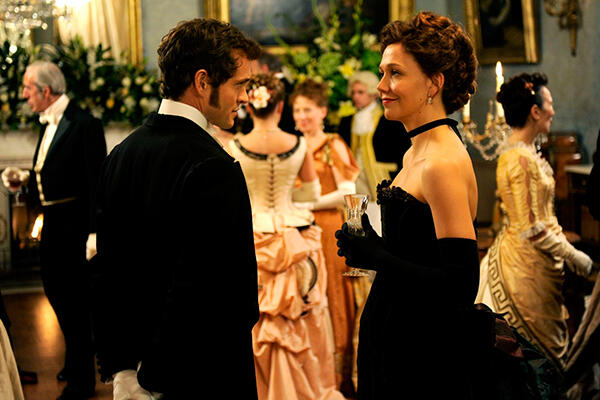
Hysteria, set in London in the 1880s, follows the story of the ever-spirited young Doctor Mortimer Granville prior to his discovery of the vibrator and its medical benefits. Mortimer (Hugh Dancy) continually seeks betterment in the medical profession, and is enamoured with the breakthrough science of germ theory, much to the dismay of his stuffy old employers. A sudden realisation that he is not finding stimulation in his work, nor room to try new methods, leads Mortimer to the door of Dr Dalrymple, the owner of a private women’s practice. Dalrymple introduces Mortimer to the problem of “hysteria” among a client base of upper-middle class housewives. In truth, the women are simply sexually frustrated, and the “treatment” that the Doctor and his new assistant (Mortimer) provide is clitoral stimulation. Although the film is set in the 1880s, its subject matter forces a certain modernity to shine through in its treatment of characters. Maggie Gyllenhaal plays the outspoken Charlotte Dalrymple, the eldest daughter of Dr Dalrymple, and later the unexpected love interest of Mortimer. A beacon of women’s rights, humanitarianism and forward thinking, Charlotte is initially portrayed as a crazy person, an exception to how women “should be”, and Dr Dalyrymple is profusely embarrassed by her. However, she is an audience favourite for her audacity, refreshing candidness, and way of thinking that modern citizens can more easily relate to. Hysteria more than fulfils its role as an entertaining insight into the intricacies of the female orgasm. This film does not attempt to be anything but light, bright and humorous, which is evident in its witty, honest portrayal of the history of vaginal pleasure. 3 / 5 stars
I’m not sure if Your Sister’s Sister is a romantic comedy or not, but whatever its classification, it’s a great watch. The film opens with Jack (Mark Duplass) struggling to recover from the loss of his brother, and making an ass of himself at a subsequent memorial party. His best friend Iris (current “It girl” Emily Blunt) lets him stay at her family’s reclusive country house to reflect and pull himself together. When he arrives, he finds Iris’ older sister Hannah (Rosemarie DeWitt), who is recovering from her abrupt breakup with her long-term girlfriend, and what starts as an evening of ranting and tequila between the two of them quickly becomes a one-night stand. The next morning is full of chaos and cover-up, as Iris’ arrival to the house prompts Jack and Hannah to try to hide their illicit night together. If none of this is gripping you, then wait and see what Hannah’s motives were for bedding Jack. I won’t give away the twist, but it’s a goodie! Just to add to the clumsiness of the situation, Jack and Iris are madly in love with each other, but neither has admitted it to the other. The film suddenly becomes a twisted love triangle, with Jack set between two sisters. The whole movie is set within the lake house, and basically revolves around the one thing that happens – the awkward, blink-or-you’ll-miss-it sex scene. I think what I liked the best about this movie was the unconventional male lead, who is not muscular, tanned, or charming, but instead realistic and thoughtful. A great watch, with a cliffhanger ending! 4 / 5 stars
Monsieur Linh is the only person who knows his name, because everybody who used to know it is dead. He arrives by ship from an unnamed country in Indo-China to France, clutching a small suitcase of meagre possessions, and his new-born granddaughter, Sang diû, who weighs less than the suitcase. His wife died when his son was a baby, and his son and daughter-in-law were killed by a mine as they worked. Their swaddled child lay next to her doll, whose head was blown off in the explosion. Nothing matters to him now but his little girl. He escaped so that she could escape too. He eats because she needs him to eat. He chews up food and feeds it to her, and it dribbles down the side of her mouth. Monsieur Linh is scared by the new city. The cars and the crowds of indifferent people rushing around the streets frighten him. At a refugee detention centre, he is teased and ignored by children and adults. Women from his country laugh at how he looks after his baby. He can’t stand the cold. The case-workers convince him to go for walks for the sake of his health. On his first walk, a woman with an unpleasant face bumps into him then yells at him, and he can’t make her understand that he is sorry. A park with cages full of animals and a merry-go-round lurks creepily in the background. But Monsieur Linh makes friends with the recently widowed Monsieur Bark. He is desperately lonely, and spends a lot of time sitting on a park bench. The men can’t understand each other, but bond over chain smoking (don’t read this book if you are giving up) and sympathetic patience. They go to the harbour and Monsieur Linh tells his friend about his village, his family, and a story about a mad woman who scolded the sea, saying “There you are, you see, I’ve found you at last, I told you I would, it’s pointless trying to hide now!” He laughs. The Frenchman tells his friend about his youth as a soldier in Monsieur Linh’s country. He set fire to houses and watched screaming children run. The flimsy houses burned like paper. He cries and cries while Monsieur Linh pats his shoulder, not understanding a word. The baby girl sits quietly between them. The soldier and survivor find comfort for their guilt, loneliness and grief through the kind gestures of friendship, where an understanding of each other’s words may not have been helpful in exorcising the unspeakable horrors they have both lived through. Dream sequences create a world which seems more real than the grey, indifferent city surrounding the characters. At first village life is romanticised. Monsieur Linh imagines his village, where he and Monsieur Bark can understand one another perfectly, and live happily together eating food with Monsieur Linh’s happy family. He describes the colours, smells, and sounds with childish happiness. But just when the book is in danger of getting too sentimental and sappy, social workers intervene and move Monsieur Linh and his child to another place, so that he can’t find his friend. His treatment is a reminder of the assumptions it is easy to make about the elderly, the poor and the homeless, and the cruelty that can come out of good intentions. But Monsieur Linh’s determination to be back with his French friend brings about a reunion and a surprising, satisfying plot twist. The initially irritating, patronising depiction of a naïve foreigner bewildered in a western city turns out to be that of a man in possession of a “disturbing and innocent simplicity”. Atrocities are described in simple prose with a deceptive sweetness which hides a harrowing secret. But this is predominantly a story about love, and the need to care for others giving desperate people the ability to keep living.
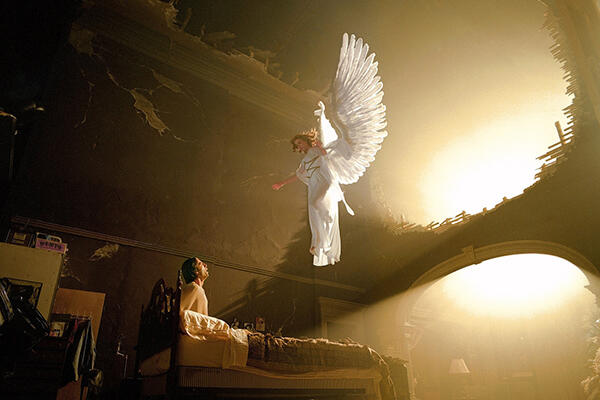
What a week! Art exhibitions in the Link and free coffee out on the lawn – aah, what a cultured University we all attend. In sticking with the 24-hour time frame, it’s hardly a panic to find something to write about for this issue, as dear old Allen hall will always have something for us there. Thanks Allen Hall. Heading the bill at Lunchtime Theatre this week is the award-winning Angels In America. Never heard of it? Shame on you! Set in ’80s America at the height of the AIDS epidemic, the play orbits around multiple characters’ lives, weaving in and out of one another. Like Love Actually but way better – with three-dimensional characters and stuff. Yeah, I went there. Tony Kushner’s piece is rife with political and social commentaries of the time, with the multiple layers often paralleling historical events. With a piece this dense and with a running time of approximately seven hours – yeah, I know – it’s obvious it will have to be cut down for a lunchtime slot. Director Heidi Geissler, a fourth-year theatre student, is taking the piece on for her honours year, and has adapted the play into a compilation of scenes revolving around one of the main characters, Harper. Harper is described as “sex-starved,” “pill-popping” and “a Mormon” (all of which are true). Geissler has managed to take a huge piece of theatre work and weave this one, fragmented story into a solid and coherent performance. You’d almost forget it was part of a larger piece. Featuring other characters, such as Harper’s husband and multiple hallucinations, we see the Valium addict fall in and out of reality. Played by Abby Howells, Harper is brought to life in a truthful and innocent manner; as an audience we are made to feel connected to her despite her bizarre circumstance. Luke Agnew, Daniel Goodwin and Ben Blakely also feature in the piece, giving stellar performances, nailing the accents and looking great in drag. As an honours student, obviously a lot of work goes in to these pieces, along with a lot of sweat and a lot of tears. So it’s only fair that you come along and appreciate all of the hard work that’s gone in to the piece! It’s also one of those plays that people who like to seem intelligent talk about, so you could go and then casually mention that you’ve seen it and “really enjoyed the social commentary and really felt for housewives of the time,” and maybe, if you’re feeling cheeky, pretend you’ve seen the seven-hour version and impress all those big shots and act all cultured. That’s what it’s about. I highly recommend you all come along for a bit of magic in your lunch hour. Or if you’re a busy med student there is also an evening performance on Thursday at 7:30pm. Score! Catering to the masses! And at only $3 a ticket – why not?
Dubstep gets a bad rap, and to be fair, it does deserve a lot of it. But dubstep is not total shit. There is some wonderfully interesting, energetic, face-meltingly beautiful dubstep created out there in a truly global scene, facilitated by the same thing that made it so hated – the Internet. Yes, I am biased. Ever since hearing “Innocence” by Nero for the first time – my first experience of Dubstep, which awkwardly occurred at The Cook – I have been obsessed with the genre, and really all Electronic Dance Music (EDM). There’s just something about the pretty melody mixed with the ugly energy. But even though I am constantly immersed in dubstep, I still have a sense of perspective on what’s good or bad. Dubstep was a genre born in a very different age – the age of the Internet. Once the music was distorted from the minimal dub-heavy roots of Skream, Hijack, Benga and co into the energetic and warped thug of Rusko, and then disseminated out into the interwebs, the rules were abolished. Accessibility is a gift as well as a curse. New Zealanders could listen, and be part of, a movement started back in the Motherland. Quality control was removed – record labels were its gatekeepers, but they were easily and quickly circumnavigated as YouTube lovingly opened its arms. For the first time, a genre didn’t have any preconceptions of greatness. There was no canon of excellent music, no past precedent with which to judge the quality. Around the world, great dubstep was being heard and then drowned out by the oceans of filthy stinking crap. And so we learned to hate it. That’s ok, you didn’t know any better. You heard that one song, it went wub wub and made screeching noises, and the bogans on your street loved it like they loved Megadeth (that’s a lie. No one likes Megadeth, not even Dave Mustaine). I can forgive you. While there are still innumerable “artists” making awful bedroom crap, it’s not like the early days anymore, I promise. Quality control has resumed, new labels have risen up, and even better, artists are making the best music that some styles have ever seen. There is now a canon for all flavours and tastes within the genre, from noise porn to blip-heavy brostep on Skism’s “Never Say Die”, skank, stoner, silly vibes on Flux Pavilion’s “Circus” records and the eclectic, hipster sounds of Skrillex’s own OWSLA. Amateurs are still posting to YouTube and spamming Twitter and Facebook, but now that there are accepted avenues of quality maybe dubstep can retrieve some of its deserved respect. Nowadays, dubstep is almost as varied as a real genre. While it evolves and slowly regains its credibility, some artists have made smaller changes while also making big leaps for the genre. Benga, one of the “originals” from Croydon, was part of the first dubstep supergroup “Magnetic Man”, along with Skream and Artwork. He crossed over into the mainstream with “Perfect Stranger” and “I Need Air”, bringing atmospheric, melodic, and most importantly musical dubstep to the masses. Now he is taking another leap into the commercial world with “Pour Your Love”. An earworm of a song, it features the requirement for any charting electronic song at the moment, a soaring catchy female vocal, before sliding into Benga’s signature two-time beat and relaxed synths, forcing the listener to bounce up and down. Continuing vocals through entire songs has been a coup, moving the genre from drop-to-verse formats into the more accessible intro-verse-chorus of the traditional radio song. Accessibility is key, but as dubstep has proved, it can also be a killer. Only six years later has dubstep finally begun to rebuild its respect, gain plaudits, and actually become musically respectable. Because there are a lot of us idiots, and when we are given the opportunity to add to culture like we could with dubstep, we will ruin it over and over, until the gates are put back in. Control is awful – but it’s necessarily awful.