Sexuality
5 articles found. Displaying page 1 of 1.
-
News
 Issue 23 20/09/2021
OUSA “Strongly Supports” Gender Self-Identification
OUSA has submitted in strong support of gender self-identification on birth certificates. The proposed Bill, currently at its final stage before the House of Representatives, would make it easier for people to change the sex or gender on their birth certificates without going to court.
-
News
 Issue 17 01/08/2021
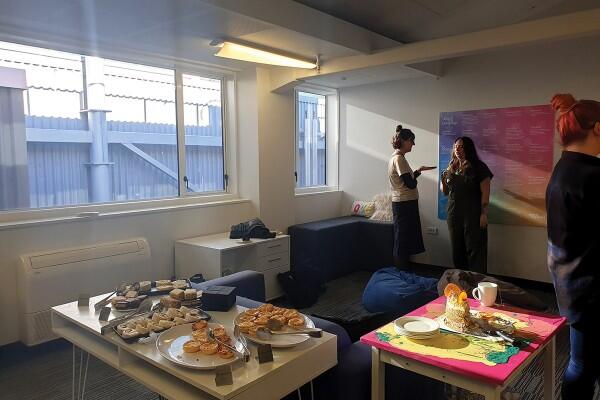
Queer Space Finally Opens, Students Say It’s “Pretty Cool”
The queer space officially opened on Friday 23 June, after a blessing. This was followed by a speech from OUSA President Michaela Waite-Harvey. The space is located on the second floor of the Union building, opposite the Terrace Lounge. It has a microwave, a mini-fridge covered with The Office stickers (which were added by the fridge’s previous owner and not the Exec), a chalkboard wall covering up some feature wall experimentation, and a couch.
-
News
 Issue 12 23/05/2021
GUEST EDITORIAL: Menstruation is non-binary, period.
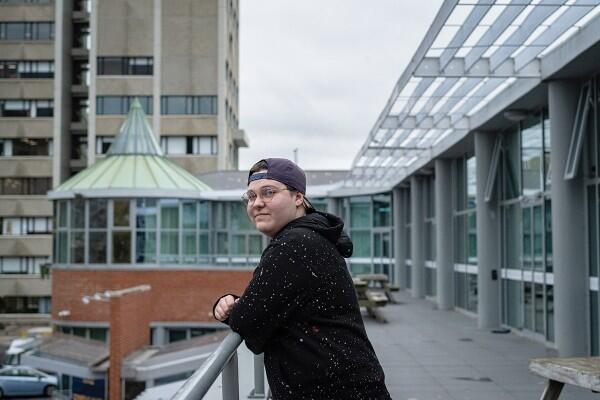
As a transgender person who was assigned ‘female’ at birth (AFAB), menstruation is a funky topic for me. My body’s feminine properties constantly remind me that I exist in a meat shell which doesn’t quite fit with my perception of myself. But my body is not as clearly binary as transphobic “basic biologists” like to believe.
-
Features
 Issue 13 17/05/2015
Beyond the Binary
With recent headlines hailing Bruce Jenner's interview as an "Ellen" moment for the trans* community, we take this opportunity to educate and explore the world of sexuality and gender.
-
Columns
 Issue 5 23/03/2014
Queer Eye | Issue 05
Hello again, sweetpeas. Today we are continuing our 101 of queer identities by looking at sex. Not the sex that you do but the sex that you have been assigned. Confused? Well, let us begin with some baby-making. People make babies. They make them in a whole lot of different ways, but what they have in common is that they used sperm, eggs and a womb. Then after much pushing, sweating, cursing or surgery, that baby is born. Medical professionals then assign them a gender (sex) such as male or female based on physical attributes such as genitalia and hormones. Not all babies neatly fit within this sex binary. Somewhere between one in 100 and one in 2,000 babies are born intersexed. This is an umbrella term for a range of conditions that lead to people not neatly fitting what medical professionals define as male or female. This may result in external or internal differences which are usually identified early in someone’s life, although can also become evident during puberty or when someone tries to reproduce. If you want to know more check out www.ianz.org.nz Once a baby is born, its parents and wider society set about imposing gender norms on it. This might include blue and pink decor, boys’ and girls’ toys, gendered clothes, etc. We will look into gender construction in a later column, but it does raise the question: what would the world look like if we didn’t impose socially constructed gender norms on a baby just because of their birth sex? Or to quote Monty Python, when someone asks “is it a boy or a girl?” maybe we should reply, “I think it is a bit early to be imposing roles on it, don’t you?” The fact is that we don’t live in a vacuum and it is therefore very difficult to discern how much of our own sense of gender derives inherently from our birth sex or how much is a result of our upbringing and wider social narratives. What we do need to do is to critique that social narrative where it is too restrictive and causes harm.


