Maori
4 articles found. Displaying page 1 of 1.
-
Features
 Issue 22 11/09/2023
BIONICLE: The Craziest Use of Te Reo You’ve Never Heard of
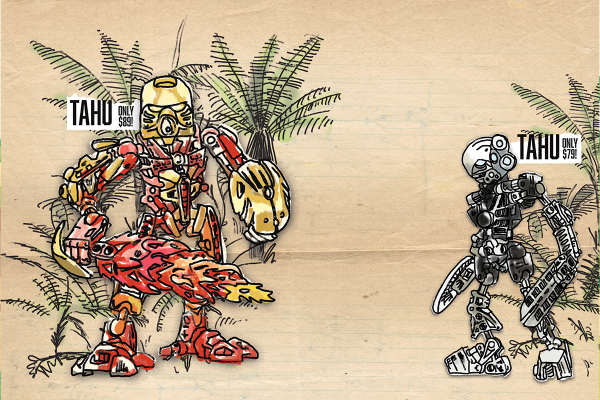
Once upon a time, the great being Mata Nui wandered the endless cosmos. But his evil brother, Makuta, plotted to destroy him. Makuta summoned hoards of monsters, but could not take the Great Spirit’s life. Instead, Makuta cast Mata Nui into an eternal slumber. His body came crashing down from the heavens into the sea, forming our pristine world. The first people were villagers called the Tohunga, performers of the Great Haka, children of Rangi and Papu, and they lived in peace with their environment. But trouble is stirring in Mata Nui. Prophecy has foretold the coming of a new Toa, and the forces of Makuta will stop at nothing to control him. Sound familiar? That’s probably because most of those names and words come directly from te reo Māori. But this isn’t a traditional pūrākau (legend). This is the plot of Bionicle, a line of toys made by the LEGO Group. I wanted to write a piece about appropriation of Polynesian culture by a Danish toy company, but this quickly spiralled out of control. Turns out, Bionicle isn’t just a toy brand with a loose veneer of Polynesian culture; it has a ten-year history spanning an astonishing 2,000 pages of lore — plus video games, comic books and movies. This lore is so dense and incomprehensible that we had to get one of our volunteers to watch a nine-hour-long video on the backstory, coupled with an 83-page treatise on their language and a bona fide academic paper from the University of Copenhagen to boot. 2001 saw the release of Lord of the Rings, a movie based on a book based on one man’s obsession with creating a language. It also saw the release of Bionicle, a toy line based on one man’s severe illness and flavoured by Polynesian culture, and also centred on a language. I am not exaggerating when I say these two fandoms have comparable troves of background lore, which is why we are explicitly sticking to the 2001-2003 period of Bionicle, from the first release of toys, to the first movie. Simply put, the basic idea of Bionicle (read: Biological-Chronicle) is that a big robot crashes down because the cells in his body are fighting for control. He goes to sleep in the ocean and the parts of his body above water become islands (sound familiar?). Unbeknownst to the inhabitants, their entire existence is within a larger being, where they must fight off “infections” in the form of the Makuta to save the host body. The canisters the toys come in are even shaped like pill capsules. That’s the “Biological” half. To build the “Chronicle” half, creators of Bionicle tapped into genuine island culture for “inspiration”. Here is one of many, many examples: most of the Tohunga (villagers of the Matoran species) are on Mata Nui (the main island). They live in six different wahi (biomes), and if they are given the chance to take up a Kanohi mask, they can unlock their elemental powers and become a legendary Toa warrior. Once a Toa feels their duty has been fulfilled, they can transform back into a villager, except this time they’re a wise elder. Every single one of those terms is a direct translation from te reo, except ‘Matoran’. In 2001, LEGO had just bought the rights to Harry Potter and Star Wars, and while their toys were a hit, their finances were in the shit. Bionicle was there to save the day. Propped up by rich Polynesian history and language, the product line was the only profitable LEGO product for several years, single-handedly keeping the entire company above water. Part of this success was the toys themselves (fuckin’ ripped), but part of it was also due to the vast world imagined by the product line’s designers. This lore was clearly inspired by te ao Māori and other Pacific islands like Fiji and Hawai’i. All this backstory had already been set up when LEGO started releasing the toys and online game, and while Western audiences might’ve thought of it as “cool, exotic nonsense”, a lot of the terms started to seem very familiar to people in Polynesia. Yet again, an overseas indigenous population made it into the mainstream, but only in the role of “alien”, because that’s exactly what they are to their Western designers: alien. Let’s look at the original line of toys: We’ll start with the lowly villagers, which were originally called Tohunga. There was Onewa, the grey one from the mountains (whose name literally just means “grey”). Matau, the green one from the forest who was maybe meant to be from the ocean because his name means “fish hook”. Did someone accidentally swap the two? Who knows. And how could we forget Whenua, the one that drills through the earth? Pronounced, of course, “wen-ua”. Which I guess is fine if you’re from Taranaki (it was later changed to ‘Onua’). Remember: the Tohunga are tiny, 40-ish piece play sets. If you wanted a bigger toy, you had to purchase a whole different playset: the Toa. Also known as the Toa Mata (literally “mask warriors”) and later Toa Nuvu, these elemental heroes gained their power by adopting various masks. These came with new names, giving us Tahu (the fire Toa), Pohatu (the stone Toa) or Kopaka (the ice Toa). Each name is literally just their elemental theme in te reo. Other names came from other Polynesian languages, like the Hawaiian “Lewa” giving its name to the air Toa. Oh, and spoiler alert: if you knew te reo, you’d realise that island of Mata Nui (“Great Face”) was secretly the protruding mask of the sunken deity all along. Plot twist! And it goes beyond names and places. The Matoran language - which is a fully-fledged thing of its own - has a sentence and grammar structure extremely similar to te reo, with a limited vocabulary made up of a hodgepodge of words from the Polynesian Triangle. And since people are so incredibly invested in Bionicle lore, a whole generation of kids in the early 2000’s ended up accidentally learning rudimentary te reo in the process of playing with these toys. No joke! The 10-part documentary series that I tried to watch (different than the one our volunteer watched) was hosted by a bespectacled geek with about a bajillion Bionicles on the shelf behind him, and at one point he interrupts the video to describe the naming conventions of the various Toa, explaining how the descriptive terms come after the nouns, all in perfect te reo. This man literally taught himself te reo without realising it. Not every word was ripped from te reo; many just sort of “sound like” they’re Māori. LEGO also seemed to favour the same sounds over and over, undoubtedly confusing parents everywhere when they couldn’t remember if their kid wanted a new Brutaka or Piraka. Or was it a Berocca? But if you look past the early years of Bionicle, you’ll notice that a lot of these Pacific terms seem to die off, replaced with names that just sort of “sound like” they’re from here, or names inspired by Greek, Latin or other European sources. And there's a good reason for this; after the 2001 release of the ads, local iwi caught word that some Danish toy company was making products using their language, and they had a problem with that. It’s at this point that a lawyer sent a strongly-worded letter to LEGO, basically saying, “Hey can you please not use our culture for this, also don’t you dare trademark any of these words.” And his challenge worked. LEGO apologised and said they’d change some names in the future, most importantly “Tohunga”, which translates to something much more influential than just “villager”. This was worked into the storyline by having the various Tohunga realise they’re one people and suddenly deciding to change their species name to “Matoran” - though this event was pretty quickly dropped from the story and pushed under the rug. The elder villagers were renamed “Turaga”, a clear nod to Tohunga. But this wasn’t the only thing pushed under the rug: the online game had a few lines of dialogue that needed to be changed. For instance, mentions of “Rangi and Papu” were removed, and Jala, the Captain of the Guard, became “Jaller”. He also no longer describes his participation in “the Great Haka dance” because… yeah. LEGO, fearing a “bitter conflict” with Māori groups over their only viable product line, agreed to demands made by the iwi. The iwi, in turn, agreed that LEGO probably didn’t mean any harm by using Polynesian culture. Roma Hippolite (of the Ngāti Koata Trust) said at the time, “We have been impressed by the willingness of Lego to recognise a hurt was inadvertently made and show that in their actions.” LEGO sent a representative to meet with these groups in person, promising that future sets would avoid appropriation, and that an internal code of conduct would be built to avoid this mistake elsewhere. The next year, 2002, Aotearoa formalised Toi Iho Māori: the recognised trademark of te ao Māori – though, like the characters in Bionicle, it has changed shape over the years. To make this even crazier, the lawyer that represented these groups would, years later, take on a much more high-profile case of misrepresented islanders. His name is Maui Solomon, and he is the guy that fought for formal representation of Moriori. Maui (Moriori, Kāi Tahu) has somehow been woven into this bizarre story, and despite what the Bionicle legends would say, he’s probably the real hero here. Sorry, Mata Nui. Following the challenge, Bionicle made some retroactive corrections and changed their ethos moving forward. But the impact had already been made. An entire language and culture had been formed around these cultures, and a dedicated fan base sprung up to chronicle the lore - a fan base that is incredibly active online. Many of them are very aware of the influences of te ao Māori, but many casual fans never had a clue. And that was basically that: a bunch of white kids accidentally learned te reo, Maui Solomon got brought into the fray, and LEGO survived financial ruin by hitching a ride on Polynesian culture. Now, we’re being treated to ads for an upcoming Bionicle game. Fans are veritably manic over this news, looking forward to a return to Mata Nui early next year. Perhaps we can look forward to a new generation of accidental te reo enthusiasts - though this time someone might want to tell them that the language is more than just flavour for a children’s toy. LEGO is not the only group to tap Polynesian lore for “inspiration”. How often do we see te ao Māori cast as the “alien” culture, rather than human? Looking at you, Avatar. Each word appropriated a shadow over Polynesian culture. Each kupu not alien, just indigenous. Each set sold separately. DICTIONARY SECTION BELOW - 1 PAGE A (Brief) Dictionary of Bionicle’s Polynesian Words Yet again, somebody with a lot of time on their hands has come to the rescue. Chuckschwa on Reddit has compiled an extensive list of Matoran words and their Polynesian roots, some of which have been included here: Characters Toa - elemental heroes/protectors Toa (Māori) - warrior, courage, champion, bravery, expert Tohunga - villagers Tohunga (Māori) - revered village expert Tahu - Toa of Fire Tahu (Māori) - to burn, ignite, set on fire Pohatu - Toa of Stone Pōhatu (Māori) - stone Kopaka - Toa of Ice Kōpaka (Māori) - ice Lewa - Toa of Air Lewa (Hawaiian) - sky, air, atmosphere; to float, swing Gali - Toa of Water Gali (Kamilaroi/Gamilaraay) - water, rain Galu (Samoan) - wave Onua - Toa of Earth Honua (Hawaiian) - earth, land, world Fonua (Tongan) - the whole earth Vakama - Turaga of Fire Vakama (Fijian) - burn Nokama - Turaga of Water Waka ama (Moari) - outrigger canoe Noka, Nokata (Fijian) - to tie up, make fast, a boat from going adrift Noke (Fijian) - woven basket for collecting seafood Nuju - Turaga of Ice Nuju (Rotuman) - river bank; beak; mouth; to recite by memory/heart; spokesman Nuju (Sudanese) - to lead, tend Onewa - Turaga of Stone Onewa (noun, Māori) - granite/basalt, short weapon made of stone Whenua - Turaga of Earth Whenua (Māori) - ground, land Matau - Turaga of Air Mātau (Māori) - to know, be certain of (noun) knowledge, understanding; fish hook Mata'u (Rotuman) - carefulness, caution; to watch Matau (Tahitian) - fear, dread; accustomed or used to a thing; fish hook Makuta - evil spirit, Master of Shadow Mākutu (Māori) - witchcraft, sorcery, spell or incantation — Masks Kanohi - masks of power Kanohi (Māori) - face, countenance Pakari - mask of Strength Pakari (Māori) - to be strong, sturdy, mature Hau - mask of Shielding Hau (Māori) - vitality; breath, air Kaukau - mask of Water Breathing Kaukau (Māori) - to swim, bathe Miru - mask of Levitation Miru (Māori) - alveolus (part of your lungs) Mirumiru (Māori) - a bubble Kakama - mask of Speed Kakama (Māori) - be quick, alert, nimble Akaku - mask of X-ray Vision Akakū (Hawaiian) - vision, trance Huna - mask of Concealment Huna (Māori) - to conceal, hide Huna (Hawaiian) - secret Rau - mask of Translation Lau (Tongen) - to talk, to converse, familiar discourse Parau (Tahitian) - to speak, converse; the shell of the pearl oyster Komau - mask of Mind Control Mau (Māori) - to seize, to take hold of Koma (Māori) - axe head made of stone Mahiki - mask of Illusion Hiki (Māori) - to lift up, carry Mahiki (Māori) - to jump, leap, hop, vibrate Note: this mask was worn by the air Toraga, Matau, which might explain the words used. Matatu - mask of Telekinesis Matatū (Māori) - to be watchful, to keep awake Ruru - mask of Night Vision Ruru (Māori) - owl Aki - mask of Valor Āki (Māori) - to encourage, challenge, incite; to beat, pound, throw down Rua - mask of Wisdom Rua (Māori) - hole, chasm, abyss (where heavenly bodies disappear before returning again) Vahi - mask of Time Vahi (Pascuan) - to pass (of the beginning of a season) Vahi (Rotuman) - to be completed; to be past/gone by (events, time) — Places and Nature: Mata Nui - island home; Great Spirit Mata (Māori) - face, eye, surface Nui (Māori) - to be large, many, great Koro - village Koro (Fijian) - village Mangaia - great volcano Maunga (Māori) - mountain Daikau - carnivorous jungle plant Dai (Fijian) - trap Kau (Fijian) - plant Hikaki - large fire lizard Hika (Māori) - to rub violently (to kindle a fire) Kahu - great hawk Kāhu (Māori) - hawk Tarakava - giant water lizard Tarakuero (Pascuan) - a fish Tarakona (Māori) - dragon Vatuka - stone monster Vatu (Fijian) - stone Ka (Fijian) - thing Amaja - story circle A'maja (Rotuman) - to develop a story/theme Ignalu - lava surfing sport Ignis (Latin) - fire Nalu (Hawaiian) - wave Suva - Toa shrine Suva (Fijian) - mound or pile of stones used to mark a place; Capital of Fiji
-
News
 Issue 22 06/09/2015
Māori Bar “Shows No Credibility or Integrity”
The Māori Party has condemned former All Black Byron Kelleher’s sports bar, “The Haka Corner”, claiming it disrespects Māori culture. The Māori-themed bar is set to open in Kelleher’s residence of Toulouse, France.
-
Columns
 Issue 6 01/04/2012
The Tory Templar | Issue 6
A case is currently in front of the Waitangi Tribunal looking into the running of Maori-language preschools. These centres claim they need more funding and separate legislation to ensure that the language survives. This raises an interesting question – what role should Maori language and culture play in our school system, if any? No doubt Maori culture should and does have a place in New Zealand’s society, but whether that place should be secured by legislation is doubtful. The protection of Maori language and customs should be the responsibility of Maori communities and families, just as religion is. If we are going to ensure that the school system officially incorporates Maori into mainstream teaching then surely the teaching of religious education should stretch beyond the boundaries of Catholic schools? The Templar thinks that if you are going to go about making less than a fifth of your population a central part of your education system, then the 2/3 of New Zealanders who identify as being religious deserve to have religious education legislated into the system too. Somehow I see this being controversial and that is the problem. At what point should government interfere to protect minority customs in general education? Put simply, it’s not the government’s job to dictate what culture should be favoured over another. It never has been and should never be. The place for education of Maori culture should be in history and social studies classes. Beyond that the establishment of specific after-school programmes that teach the customs and language of Maori is far more likely to succeed than forcing schools to teach it to kids who simply don’t want to learn. If families then choose to emerge their children in Maori culture they have the option too, free from state intervention. After all our culture comes from our home, our family, and our beliefs, all of which should be free from the meddling of the state, as long as we are not harming others. The Templar is sick and tired of the government’s pandering to such a small minority merely because of past wrongs. The purpose of the Waitangi Tribunal should not be as a forum for lobbying government. Preserving Maori culture is the responsibility of Whanau and Iwi, not the job of the state. If it becomes such then every culture under the sun should have a right to see its customs made part of the education system. - The Tory Templar
-
Columns
Issue 6 01/04/2012
Red and Starry Eyed | Issue 6
At the beginning of the 20th century, many New Zealanders hoped Maori would die out. Their numbers were declining quickly, but a hundred years later we claim to be Aotearoa – a multicultural, bilingual society. We may be multicultural, but our society has very little Maori left in it. And our government’s current quest for standardisation in education is threatening Te Reo even more. The Crown is currently in court, accused of limiting the funding to Kohanga reo and thus deteriorating their quality. These centres have given kids a 100% Maori preschool education for more than 30 years and there is no need to cut the services. They are run by the community and studies suggest that kids immersed in these schools are twice as likely to attend university. The Kohanga Reo Trust Board wants the government to separate the preschools from the Ministry of Education, and to put funding at a par with other preschool institutions. It is the government’s duty to do this if we want to continue calling New Zealand a bilingual society. Moreover, Te Reo should be compulsory education for primary and secondary schools. Kids should be able to leave school knowing more than one to 10 and a couple of mispronounced phrases. Maori is an active part of our identity and performing the haka will not suffice. Unless someone, Maori or Pakeha, can go to the supermarket asking for bread and butter in Te Reo, we are at risk of losing our culture and history. In ten years time, we will be no different from an English county, or an Australian province. The Crown says it needs to standardise education so that it can ensure we all come out of high school as robots without critical capacity. Standardisation is a one-size-fits-all straightjacket. It culls creativity and culture to make an “average individual”. There is nothing wrong with community-run schools, especially if they are more successful than your average kindy. The trust says the Crown is not taking into account the “cultural needs of Maori”. Red and Starry Eyed thinks the Crown has never taken into account the needs of Maori. They have been robbed across the centuries, but we still have time to recover an important slice of Kiwi culture. Maori in preschool is a good start if we want to keep an identity that is much more than rugby. - Red and Starry Eyed


