Lgbt
11 articles found. Displaying page 1 of 1.
-
Culture
 Issue 13 25/05/2025
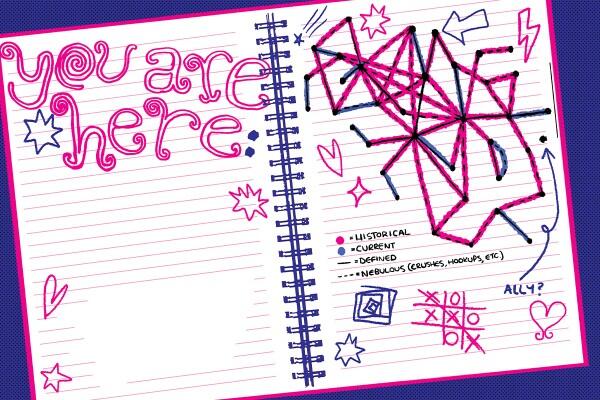
You are here: An investigation into the tangled web of the queer Dunedin dating scene
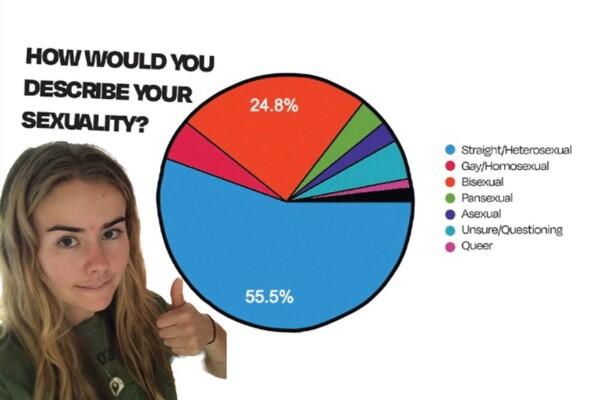
Having been in ostensibly queer friend groups basically since arriving in Dunedin, I’ve observed that all of my friends (myself included) are, indeed, dating each other. But can I back this up with data?
-
Columns
 Issue 13 25/05/2025
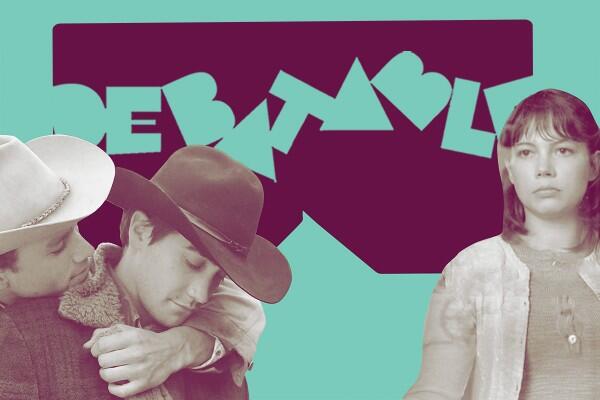
Debatable: Is the gaydar real?
For: We naturally put other people in boxes immediately upon meeting them based on preconceptions and perceived signals, real or imagined. We are brought up to understand that subtle indicators are reflective of deeper identities. The subliminal messages that we send with our choices in clothing, our appearance, our habits and behaviour, are all meant to be perceived, on a conscious or unconscious level, and communicate aspects of our identity.
-
Culture
 Issue 13 25/05/2025
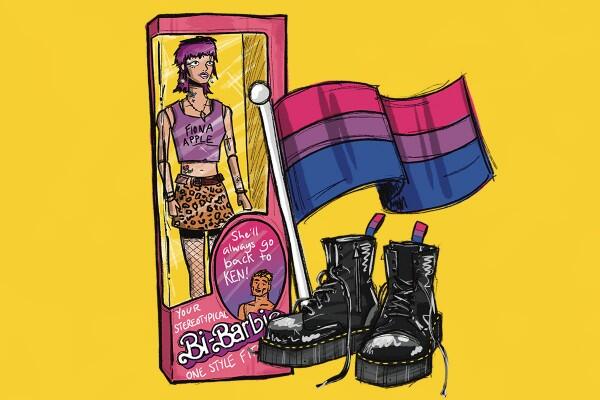
The Jorts and Jafas of Bisexuality
Jokes about Doc-wearing, threesome-having bisexual femmes are as low hanging as ragging on breathas for the mullet-moustache combo. While the copy and paste breatha look at festivals means some stereotypes often have a basis in truth, stereotypes can also be exaggerated or distorted in ways that can be harmful. This is especially true for marginalised communities such as the LGBTQ+ community. Though stereotypes around style or appearance can be pretty harmless, negative assumptions can feed internalised homophobia – and bisexual femmes can cop a lot of this.
-
Columns
 Issue 13 25/05/2025
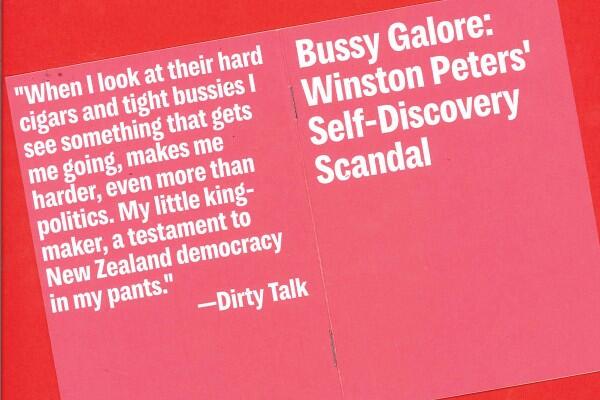
Local Produce: ‘Bussy Galore’ by Dirty Talk
If you've found yourself chain smoking outside Woof! or neck deep in an americano at Yours, you may have spotted a slim, lipstick-red booklet amongst the anarchist clutter. No, it's not Mao’s Little Red Book, but it has just as much revolutionary energy. It’s Bussy Galore: Winston Peters’ Self-discovery scandal, written by an author known only as Dirty Talk.
-
Features
 Issue 13 25/05/2025
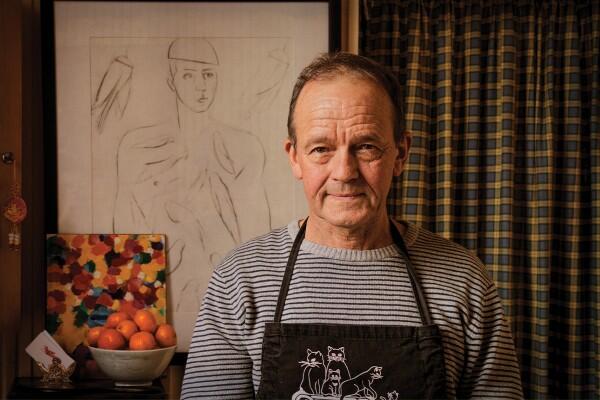
John Robinson and Ōtepoti’s Queer History
At the top of a steep flight of stairs, tucked into a small cluster of rooms that made up his studio, Ōtepoti artist John Robinson's handcrafted jewellery was carefully displayed. If you looked up, vibrant artwork stretched across the walls all the way to the ceiling – beautiful, expressive, and bursting with colour. The room was full of light and inviting. I sat on a cushioned bench by the window as I interviewed John.
-
Columns
 Issue 13 25/05/2025
Editorial: Representation Matters, Now More Than Ever
Let me get this out of the way: I’m a very straight, stereotypical cis-woman. If you look at me, there’s little doubt in your mind that my favourite colour as a young girl was pink, that my first crush was Dan Carter, and that Azealia Banks Twitter lore draws a blank (had to consult the office for that one).
-
Culture
 Issue 13 25/05/2025
criticHow To Be An Ally
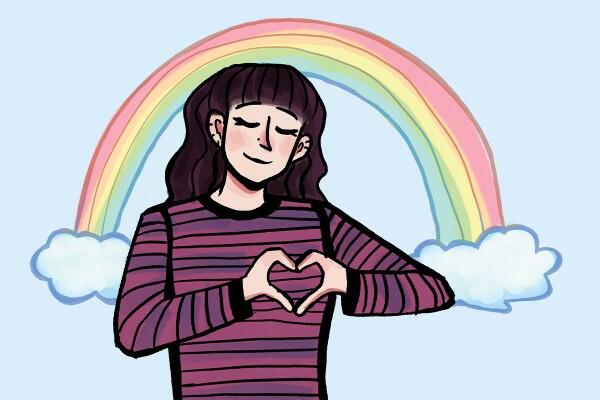
There are many ways in which we can become better people in this society. Dunedin is an ever-expanding, diverse, and lively city full of all colours of the rainbow. Maybe you don’t think you’re one of those guys. Maybe when you're at a flat party and see a queer couple you only stare for a little while. Maybe you even come along to trans rights protests. But there’s always some way to improve. Essentially, this is a wikiHow to be a decent human being, because it really shouldn’t be much of an ask to treat people with respect. Sometimes even the little things we do or how we naturally think are homophobic in ways we don’t even realise. So, for all you non-Communications students, here’s a guide to some critical thought!
-
Culture
 Issue 13 25/05/2025
Queer Mess?
It's a bit of a running joke within my circle that my sexuality announces itself before I do. My friends often tease about how they can hear me coming before they see me. The jangle of keys on my carabiner is like a rumble of dyke thunder before lightning strikes. Pair this with my eyebrow piercing, button up, and mullet then you get the full picture. I don't need to vocalise the phrase “I’m gay” to let people know, my outward expression does it for me.
-
Features
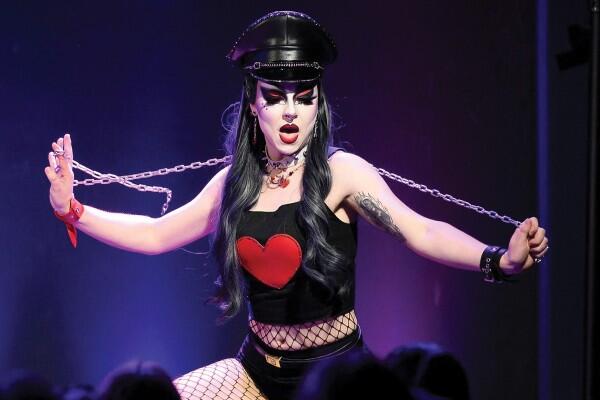 Issue 20 25/08/2024
Revival: A History of The Drag Scene of Ōtepoti
There’s been a drag revolution in Ōtepoti this year. The revitalised queer scene has been spearheaded by Ōtepoti Drag Directory founder Ann Arkii, who has firmly established herself as Dunedin’s queen of drag. Earlier this year, Ann Arkii was quoted in a Local Produce column article saying, “There was a scene that died out about a decade ago and I am often credited with revitalising the scene here in Ōtepoti.” Critic Te Ārohi delves deeper into the historical roots of drag as a vehicle for queer liberation in Aotearoa, and the glitter and politics behind the people of Dunedin’s revived drag scene.
-
Features
 Issue 22 11/09/2023
It’s In Our Roots
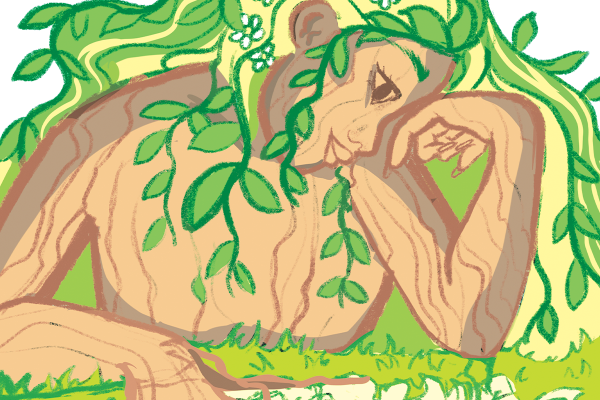
If you’ve ever done a course on Duolingo, you’ll probably have noticed that the French think shovels are feminine and cheese is masculine. Colonisers, amirite?) But te reo Māori doesn’t really place emphasis on masculine and feminine nouns, and instead garners much of its contextual meaning from whakapapa (genealogy). English, to its credit, isn’t big on gendered nouns either, but English and other Western languages insist on personal pronouns. While this might seem dismissable, the implications are quite insidious: if your entire worldview is narrated by the gendering of objects, gender becomes a central factor of life. I mean, imagine getting stepped out for misgendering cheese, but thinking personal pronouns are for the woke… yikes. As tāngata whenua, our relationship with the land stands as a testament to the intricate bonds that exist between people and the environment. We trace whakapapa to the natural world, bury our afterbirth in the whenua, and eventually return to the earth from which we came. But it is the marae, the heartbeat of hāpori Māori, that unites tāngata whenua across the motu. Honestly, it’s undeniable - it’s in our roots. It is our roots. And it’s here on the marae where debates over these pronouns are raging, all while we strive to revive a language that doesn’t even have them in the first place. To some, the marae is but a labyrinth of protocol steeped in age-old traditions. Some Māori find themselves disillusioned by marae formalities, which doesn’t make them want to visit. Critic Te Ārohi sat down with tauira Māori to discuss the weight of marae culture: from sleeping arrangements and gender-specific bathrooms, to gendered responsibilities and beyond. Between the piercing call of the karanga, to the hākari where all hands blend to fix a feast for the multitudes, varying degrees of procedure characterise every marae and its people. This is known as ‘kawa’, a concept that is similar to tikanga. The kawa of every marae and hapū is almost guaranteed to change based on location: for example, in parts of the Far North, women are not permitted near carving workstations, and iwi such as Tainui and Te Arawa follow the tau utuutu (alternating speeches) method during whaikōrero. Kupu like ‘takatāpui’ have origins in places like Wairarapa. But here, there and everywhere, with or without the title, these people have always existed. Waitapu (Ngāpuhi, Rongowhakaata), a fourth-year student in Auckland, spoke of her own experiences as a whakawāhine growing up in Northland, taking aim at a particular institution. “Up at home, the influence of the Church clearly takes precedence over tikanga, and I just didn’t fuck with it,” she said. “I constantly felt like a burden; like that relative with a thousand dietary requirements, when really I just didn’t wanna sleep next to all the tāne… don’t get me wrong, other marae I visited during kura were quite accepting. It be your own that don’t.” At its core, takatāpui embraces diversity while rejecting the notion that gender and sexuality are binary categories. And historically, Māori society embraced these identities. So where did it all start to shift? I’ll let you take a wild guess. “The relationship between takatāpui and tāngata whenua has been fractured for a long time, and [for] people like me it’s impacted my desire to go home,” said Waitapu, who agreed that judgement has, over time, expanded to other Māori who don’t fit a certain description. From urban Māori, to white-passing Māori and can’t-speak-the-reo Māori, the displacement is real. “We make fools of our whanaunga for shit they had no say in - no Māori just decides to just be white-passing or willingly abstains from te reo [Māori] at birth. But here we are, making it a running joke.” What we consider “the norm”, however, wasn’t always normal, considering the gendered hierarchy was just as foreign as tāngata pōra. It just wasn’t a thing back then. You can see this in te reo Māori, as both personal pronouns (ia) and possessive personal pronouns (tana/tona) which are gender-neutral. But the sudden arrival of Christianity and Victorian values forever changed Māori society, shattering all ideas of gender diversity and placing men firmly at the top. Today, through cultural revival and a surge of international pride, some of these traditions are reemerging. Atawhai (Te Ātiawa, Ngāti Raukawa), a graduate student in Kirikiriroa who identifies as iakē (genderqueer), shared that external influences have had a detrimental impact on Māori for the benefit of colonisation. “We are fracturing our relationships to align with a standard that didn’t once try to understand our own,” they said. “Instead of kissing the white man’s arse, why can’t we love our own people? We preach ‘manaakitanga’ to foreigners, and then don’t manaaki our takatāpui - make them feel like accessories.” And moving towards (or, in many cases, back) to a genuinely takatāpui-inclusive space on the marae is a vital step towards recognising their contributions to the development of te ao Māori. Waitapu agreed that the first step in the right direction goes beyond pronouns - a no brainer, really. “Getting my pronouns right is like foreplay… you kinda should just do it. The reo is already inclusive. But the active work we need to do is rethink traditional gender roles and expectations,” said Waitapu. “We have so few tāne that are fit to speak on the paepae, which is what drove me away from home - not being allowed to speak on the pae as a transwoman. While I don’t have a burning desire to, I was raised to do so.” Atawhai added, “It’s clear to me now, that our people have religious trauma and need to have a wānanga with themselves about it. Until then, I don’t have to put up with it.” “There ARE Māori who view wāhine as accessories, and see takatāpui as ‘unnatural’,” Atawhai said. “Considering the extensively recorded importance of our female and takatāpui ancestors, and the role they held throughout history, only to become a false narrative… my tūpuna would be spewing in their graves.” While historical accounts and evidence prove that takatāpui were established members of society, this is continuously challenged by historians as exceptions to the rule - the rule being that men hold leadership positions in traditional cultures worldwide. However, Atawhai said that “the evidence provided proves anything but that. Those claims are nothing more than a stereotype… Indigenous people ARE the exception to that rule. ‘Nuff said.” After all, who are we to deny our roots, muddied hands and all?
-
Features
 Issue 2 04/03/2012
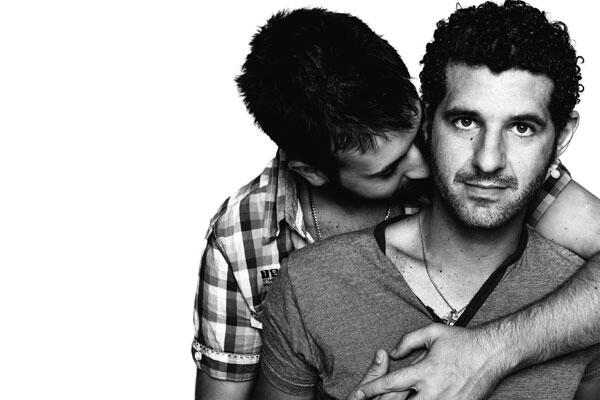
The Hetero Agenda
I’m one of the lucky ones. No matter what my sexual orientation turned out to be, my parents said they would always accept me. I don’t really have any desire to know whether I received this reassurance because of my interest in fashion or complete disinterest in Barbie-like bimbos, but it was comforting to know that when I got called a “fag” at school (like most kids who sucked at sport), at least my family would always be cool if it were true. What I do know is that my generation-older grandparents, however, would struggle: An indicator that as the Western world progresses, liberals are triumphing over conservatives regarding sexuality. Yet despite the increased acceptance of LGBT identities, many institutions and societies still focus almost exclusively on straight culture. It’s absurd that dress sense and mannerisms alone single me out for taunts when walking along the street. And when I talked to friends about writing this piece, their main concern was that it would look like I was gay and trying to justify it. Why the heck should that be such a concern? The NormThe answer is the hetero-normative agenda, which is a “set of lifestyle norms that hold that people fall into distinct and complementary genders (man and woman) with natural roles in life” (thank you Wikipedia). This assumes that the “normal” sexual orientation is heterosexuality, that sexual relations are only “natural” between man and woman, and that gender pertains exclusively to biological sex. In short, it’s the phenomenon by which the contemporary world assumes that it’s normal to be straight and abnormal to be otherwise. Everything from the Kinsey Scale (more on that later) to the scientific research that has shown homophobes to actually be more bent than people who aren’t such arseholes (no shit) demonstrates that there is absolutely nothing queer about being queer. More needs to happen to turn this into acknowledged fact: As far as I know, the only mass medium where non-heterosexuality tends to be discussed as being normal is Vice Magazine. So why is it that suicide rates within the community of LGBT youth are abnormally high? Why are people ignoring one of the main things they’re taught as youngsters – that there’s no such thing as normal? I asked gay couple Max Cromie and Ben Hook what they thought, and in their opinion, and the biggest facilitator of the agenda is education. “Although ‘gay’ is beginning to be accepted stigma-wise,” Ben says, “there’s a big thing about parents trying to influence their children not to be gay by avoiding the issue completely. They ask ‘what did I do wrong to make him gay?’ And parents keep their kids away from things that could influence them into being gay – if they see a flamboyant couple walking down the street it’s like ‘quick kids, hide behind me.’” Max agrees: “a lot of parents go into childrearing with the misconception that they can shape their cub.” This problem with education extends into the New Zealand school curriculum too. “Sex is still a taboo topic,” Max tells me. “If you say ‘we need to teach sexuality at school,’ then people say ‘Oh, but you’re pushing it onto them.’ People say that the only safe sex is either what we tell you or something stupid like not doing it at all. So if you go along and say that two guys can do this, people will freak out. Particularly people with kids - there are a lot of stupid views that get passed on to kids.” There is a vital need for homosexuality to be taught in the school curriculum alongside heterosexuality in Year 10 Health classes. When ‘normal’ kids are being taught about what’s healthy and safe, LGBT youth are often left in the dark. However, the modern world does help with this. “Most people go to the internet. Even NZ has big online gay resources,” Max assures me. GayBloodOne of the odder things about current affairs is that gay people still can’t donate blood. “If you’ve been sexually active as a gay person within the last six months, you can’t donate blood. That’s a misperception about AIDS. But I just don’t think that gays having sex is any different from straight people having sex,” Max goes on. And despite progress by civil unions in trying to sidestep the issue, gay marriage and gay adoption remain either difficult or elusive. According to Professor Mark Henaghan, Dean of Law at the University of Otago, “Family Law legislation, apart from marriage and adoption, recognises same sex relationships on the same level as opposite sex relationships,”. But nothing looks to be changing in the eyes of the law. When a friend of Max’s emailed an MP about the issue, he received a simple reply which indicated that the issue is not considered important at the moment. “Right now if anyone tried to make a big upcry in legislature and tried to change perceptions, they’d be met with everyone saying three things: ‘don’t tell me what to do,’ ‘why is this an issue?’ and ‘shut up faggot.’” It’s Kinsey!The problem with current legislation and discrimination is quite simply that it goes against human nature. Remember the primary school myth which scared all the snotty-nosed subjects of the hetero-normative agenda into thinking that 10% of your class were gay? Well, guess what? It’s true. In 1948, a graph called The Kinsey Scale was published which showed that everyone in the world lies somewhere on a scale of 0-6 between exclusively heterosexual and exclusively homosexual; and yes, roughly 10% fitted into the category of being exclusively homosexual. You can take it for granted these days that most people have had at least some homosexual inclinations at some time in their lives. So no, bisexuals are not just gay people who are trying to act a little bit more straight. I’m sure I’m not the only person who couldn’t turn down an opportunity to get all chocolate-saucey with Morgan from Criminal Minds. Which leads onto another problem with the hetero-normative agenda: The idea that interracial sex is also considered abnormal. I thought we’d got over this whole racism thing … Jesus LOVES the gaysA lot of the blame for homophobia has been placed on the Christian Church, and although this is certainly well founded, people need to look beyond this when many within contemporary Christianity are working very hard to change people’s attitudes. Yes, the fact that Greek and Roman cultures engaged in lots of steamy homoerotic activities until Christianity came along is becoming more and more of a widely talked-about topic. Yes, specific Christian institutions like the Catholic Church get a worse-than-others rating for their extreme hetero-normative agenda. And yes, last year I tried to have a crack at going to a particularly evangelical student church, and although it was entertaining to imagine Borat running around screaming, I stopped one visit later when an enquiry about their attitude towards homosexuality returned the fact that they would “help” people fight the problem if they had it. But others are attempting to bring the church into the modren era, and in a freak double-whack of the media agenda, these good parts are rarely discussed. For example, one of the kindest and least judgmental people I know is a gay Presbyterian Minister. Very few people would guess that an openly gay person could lead a church. But that a minister would molest a child? Well, those same people would take it for granted. For gay Otago student Atrayl Elliot-Roderique, whose father is from “one of those American-type happy-hand-clapper churches where people speak in tongues,” it was harder for his father to take it. “But when your family realizes that you’re still the same person and only one little thing has changed, they’re alright with it.” Then there’s good ol’ Islam, the religion where misogyny and homophobia are prerequisites, right? Well, have I got a shock for you. Much like Christianity, there are varying extremes to this religion. Tel Aviv in Israel has become a kind of Mecca for gay Muslims. Indeed due to the extreme sexual repression of many Islamic nations, homosexual relationships have become more normal in order to relieve sexual tension. Afghan soldiers, for example, have quite a reputation for man on man in their downtime. Homo-Normative?Having said all this, it’s remarkable just how positive the general outlook of a lot of gay youth is. There’s a perception that things are slowly improving and will continue to do so. Ironically, it is more of a problem that “people have a lot more freedom these days... a lot of people have voices and a lot of people are jackasses. But things will continue to change. People will start minding their own business more,” Max tells me. A different phenomenon, known vaguely as the homo-normative agenda, could be to thank for such hope for continued change. This defines the assumed “normal” for a non-hetero-normative individual as a gay white boy. Ben describes its power as “removing another layer of people not being able to accept it” - meaning that it lessens the problem for some LGBT youth by stratifying those who have varying attitudes towards different non-hetero-normative behaviours. For example, it allows someone to be okay with gay boys and still discriminate against other sexual orientations. But it can be, of course, a bad thing for those in the LGBT community who don’t fit the right stereotype. “When talking about lesbians, the whole straight male fantasy is detrimental in a way,” Max explains as an example. “It’s a stereotype too, it’s part of the homo-normative agenda. But the flip-side is that because of it, lesbians in real life don’t get as much shit. They get wolf-whistles because men idolise them. in reality men might not actually enjoy lesbian porn the way a lesbian would make it.” Although the progress for the gay community has been great in New Zealand, it’s vital that awareness continues to rise and perceptions significantly change. It’s disgusting that people in New Zealand could still be so ignorant of the nature and rights of others, because it’s still doing a lot of harm to normal, good people. And for those who still squirm at the idea of two same-sex people holding hands, think of it like Woody Allen does: on a Saturday night out on the prowl, swinging both ways immediately doubles your chances for a swirl of fresh cream. Statistic students (or at least, those doing honors) will confirm that this comes down to basic probability.


