Harlene Hayne
10 articles found. Displaying page 1 of 1.
-
News
 Issue 10 09/05/2021
Admin Job Losses Actually Led to Larger Departments
The University initiative which cut 160 support staff jobs for “efficiency” has led to the hiring of at least 170 full-time equivalent staff to replace them.
-
Columns
 Issue 7 19/04/2021
Judith Collins Eyes Vice-Chancellorship
After a slew of dismal polling numbers and backstabbing within the National Party, Leader of the Opposition Judith “Crusher” Collins is in talks with Otago Uni executives for the vacant role of Vice-Chancellor.
-
News
 Issue 7 18/04/2021
Building Students’ Dream New Vice-Chancellor
With the gaping void left in our hearts by the departure of beloved Vice-Chancellor Harlene Hayne, students have been left in the lurch when it comes to someone to blame for our next round of department cuts.
-
Features
 Issue 6 11/04/2021
The Committee: A Tale of Cash, Cocktails, and Conspiracy
It’s August 2018. You’re in Year 13. You’re covered in pimples, you don’t know how to blowdry your hair, and your fashion sense is what can only be described as preppy-grunge. Your on-and-off high school girlfriend has just broken up with you because you had a Skype call with another girl. Zoom is just a thing that Sonic does when he goes fast.
-
News
 Issue 6 10/04/2021
Goodbye, Harlene
It was a Friday afternoon that no human alive will ever forget. 19 March 2021, the day that Great and Glorious Vice-Chancellor Doctor Professor Vada Harlene Hayne ONZM BA MS PhD left our beloved University.
-
Columns
 Issue 6 10/04/2021
EDITORIAL: Harlene Certainly Left Her Mark on Otago
Harlene left Otago a few weeks ago, but that was too early in the year for Critic Te Arohi to have our shit together. We’re writing about her legacy now.
-
News
 Issue 4 21/03/2021
Harlene Gives Harlene an Honorary Law Doctorate
Outgoing Vice-Chancellor Harlene Hayne got a very special going-away gift from the University: A honorary PhD in Law.
-
News
 Issue 3 13/03/2021
More Students Studying At Otago Than Ever Before
With international gap years now off the market, and a lack of jobs available, about a thousand naive lads and lasses with nothing better to do have enrolled at Otago, boosting the total number of students back to pre-Covid levels.
-
Features
 Issue 1 24/02/2012
Oh Harlene,
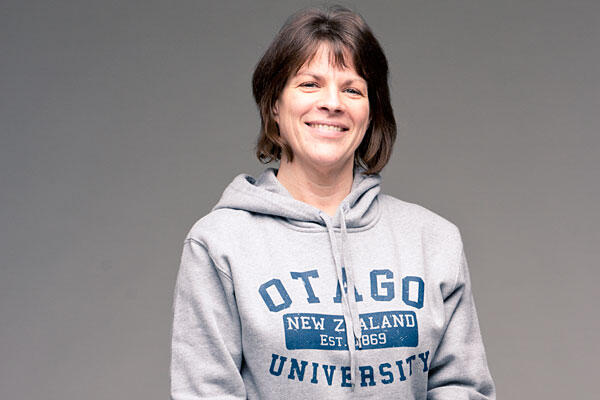
You know the Vice Chancellor right? That lady in the big fancy office by the Leith? She basically runs the entire University, and well, let’s face it, is far too busy and important to sit down for an interview with a little old student magazine. Or so you would have thought. Without a second thought, Prof Hayne invited Critic Editor Joe Stockman to sit down on her oh so comfy couch for a yarn about her job, her role in organising Orientation, and her thoughts on So Go’s. How are you enjoying your new job so far? I absolutely love the job; it’s the best job on the planet! I loved my time at university so much that I decided to never leave. This job allows me to celebrate all the things that I love about universities. What on earth does the Vice Chancellor do? The Vice Chancellor is essentially the Chief Executive Officer of a very large company. Basically, I’m responsible for the buildings, the staff, the finances. But we’re not making cars; we’re here to inspire young minds. So I am also ultimately responsible for the academic side of the university. So, you’re the first female Vice Chancellor – is that a big deal? When it was first announced that I would be the Vice Chancellor, that’s what everyone wanted to talk about. I hadn’t reflected on it too much, because being a female had never really been an issue in my career. Ironically, my status as the first American Vice Chancellor and as the first psychologist Vice Chancellor is probably more diagnostic than my gender. One of the great things about the University of Otago is that it was the first university in Australasia to admit female students. A number of the first female students, such as Caroline Freeman and Ethel Benjamin, were the women who fought the hard fight, and paved the way for gender to no longer be an issue. You’ve taken an active role in Orientation. Why are you so passionate about this? OUSA does a great job of introducing students to the social aspects of the University, and that’s vital. It’s important for them to come here and to realise that they’re adopting a new way of life. First and foremost however, universities are academic institutions. Many students come here without a clear understanding of what it is that they’re supposed to do. The University is becoming increasingly selective regarding student admission. For the individual student, the cost of failure has increased over the last few years. I actually do research in this area – on students settling into universities – and we know that students are most successful when they have an opportunity to learn the rules of the game very early on. I think it’s really important for the University to get in there and to help students get off on the right foot from the very beginning; that’s what we’re trying to do. We’ve heard you talk about the need for an Academic Orientation. What are you on about? An Academic Orientation reminds students of their obligations. Even though students pay tuition to come to university, 75% of their bill is paid by the New Zealand taxpayer. Most students don’t realise that they pay only a small fraction of the total cost of their tertiary education. So, we’ll talk about some of the exciting opportunities that the University provides for students to give back to their community, to New Zealand, and to the world. Do you think that your research on memory development has shaped your views on youth alcohol consumption? From my research on memory, the biggest message that I can give undergraduates is that there’s a phenomenon called the “reminiscence bump”. When looking back on our life experiences, there’s a huge bump in the number of memories between the ages of 18-25. When I work with masters of colleges, or lecturers, I remind them that they’re going to feature in the autobiographies of thousands and thousands of students. It’s important that they think about how they’d like to be remembered. The issue about alcohol is slightly different. I’m very concerned about the high susceptibility of young adults’ brains to the negative aspects of alcohol. The risks of permanent brain damage, and a whole host of other social and emotional outcomes, come from prolonged, extensive alcohol use at this age. Do you think there has been a shift back towards in loco parentis treatment of undergraduates? One of the fantastic things about the University of Otago is the huge amount of pastoral care and additional educational opportunities that are offered through our residential colleges. I was the chairman of the board of UniCol for a decade, so for at least the last fifteen years here, we’ve done a pretty darn good job of in loco parentis! What we haven’t done, however, is spread that out into the academic community. Research shows that the more we involve adults (whether it’s lecturers, professors, or parents) with undergraduate education, the easier it is for students to make the transition to university. A large number of students are disadvantaged because they’re homesick, they’re depressed, or they’re anxious. These are things that we can deal with, but we must take responsibility. Do you think that students should think of universities as “service providers”, from which they are “buying” a degree? I think that’s an extraordinarily sad way to view the world. We are not the Harvey Normans of the educational world. Universities are ways of life. The three, four, five, six years that students spend at university will ultimately be some of the best years of their lives. What do you think of the relationship between the University and the student body? I think that it is important to keep in mind that at Otago, the Vice Chancellor and the deputy Vice Chancellors are all still active academics. For us, there is no line between “out there” and “in here”. We all still conduct research, supervise students, and take lectures on a regular basis. What does it mean to an undergraduate that Otago is “Research Led”? Once students get into their classes, they’ll discover that their lecturers are internationally recognised leaders in their areas of expertise. Our teachers are not only transmitting knowledge and information, but they are actually the people who are creating that information. Our undergraduates will have the opportunity to learn about things that may not even be published yet. Being educated at that cutting edge is highly valued here. What were your thoughts on the VSM legislation? Personally, I’m not in favour of any kind of mandatory unionism. I like democracy and free will, and it’s important for people to make choices. Putting that aside, I’m not sure that students’ rights were being overlooked through compulsory OUSA membership. This is why we, alongside OUSA, opposed VSM. Now it’s important to figure out how we are going to make it work in this brave new world! What do you think is the role of student media on campus? I think it’s the same as the role of media everywhere; it’s designed to educate and to entertain people. In terms of the university environment, student media provides a great training ground for budding journalists and radio presenters. I think that universities are the critic and the conscience of society. In fact, NZ is one of the only countries in the world that has this enshrined in legislation. Student media, like every other aspect of the university, should play a vital role in that. Speights or Southern Gold? Neither. I’m not a teetotaller; I do enjoy NZ wine. Particularly wine that comes from vineyards owned by University of Otago graduates. Are you on Facebook? I am on Facebook.
-
Features
 Issue 1 24/02/2012
Business Time
The University and OUSA have forged a new relationship to counteract the threat of the VSM legislation. From now on, the University is going to take your money, and then give it to OUSA for you. Critic’s Callum Fredric investigates the ins and outs of this budding romance. For as long as anyone around here can remember, war has raged between the University and the Otago University Students’ Association (OUSA). When the Uni raised its fees in 1993, OUSA activists occupied the Clocktower building. And they did it properly too, getting smacked with riot police batons for their trouble, unlike the wimps recently camping in the Octagon. OUSA also didn’t take kindly to the Uni’s introduction of a student Code of Conduct, which allowed the Uni to punish students who broke the law in their own spare time – they took the Uni to court. But times have changed. Under the regimes of OUSA President Logan Edgar and new Vice-Chancellor Harlene Hayne, OUSA and the Uni have become BFFs. In slightly more technical terms, they’ve signed a Service Levy Agreement (SLA) whereby the University will fund OUSA for the whole of 2012, and possibly beyond. VSM comethFor all the freshers on the block, here’s some history. In 2011, the Government passed the Voluntary Student Membership Act (VSM), meaning membership of all students’ associations is now voluntary. Without compulsory membership, OUSA was facing a huge drop in members and therefore revenue. Initially, OUSA resigned itself to passing a “black budget”, with significant cuts to its services and spending – but in December, the Uni and OUSA made a last-minute deal. Under the SLA, (Students Love Acronyms), OUSA will get basically the same amount of money as last year, except this time OUSA has zero fees – the Uni collects the money from students and passes it on to OUSA, thus nimbly sidestepping the VSM legislation. And what the hell does this all mean for your average student you ask? The Gospel according to Logan EdgarCritic sat down on the classy new executive couches for a chat with OUSA President Logan Edgar about the SLA. After a brief discussion as to whether the conversation was to be a yarn or a sharn, the slightly more formal “yarn” was chosen due to the statistics and charts being referred to. First elected in June 2011, Edgar knew that the VSM bill would almost certainly be passed into law, and he was expecting to have to make some tough financial decisions. “When it was just me handling it, blindly just come into power… I was just going for the old your-mate-JK [John Key] big fucking asset sales, it was all go as we saw with Radio One” (which Edgar considered selling off in 2011). But just when all looked bleak for OUSA, “lo and behold this wonderful new VC has come to the party and helped out good old OUSA.” “The SLA was the University recognising that the services we provide are crucial to this vibrant unique Otago University experience and hence why they’ve come to the party and contracted our services.” The next step was to take the proposed agreement to the University Council to see how much was in the “honeypot” for OUSA. As it turned out, there was a lot of honey. In 2012, OUSA will be receiving roughly the same amount as in 2011 (around $190 per student), and providing similar services. Theoretically, if the Uni thinks OUSA is doing a bad job of providing services, the Uni could cancel the contract with OUSA and get another company to provide the services, or cancel the services altogether. However, Edgar suggests that the supposed threat of the Uni going elsewhere is emptier than the Highlanders’ trophy cabinet: “It’s gonna be ongoing…. we’d have to be pretty shit for them to leave us in the dark for next year.” The Vice Chancellor was less certain: “First of all, we’re going to have to see if this works. We have to decide if we’re happy. Secondly, we have to make sure that we can afford this. We think we can… [but] we’re not 100% sure that we are going to be able to maintain this complete level of service.” Independence Lost?One of the downsides of the SLA is that the University is raising its non-academic service fees from $580 to $672 per year to cover the money being given to OUSA. Normally, OUSA would be stocking up on megaphones and banners to protest this sort of fee hike, but since OUSA were the ones who set up the agreement, they can’t complain on behalf of students. Young Nationals Southern Region Chair James Meager says OUSA has lost its independence. “OUSA are in an incredibly precarious position – how can OUSA sit there and argue against rising fees for core academic services, but then go cap in hand to the University to fund their Future DJ Competitions and refurbish their squash courts?” ACT on Campus Otago President Kim Hannah provided even stronger rhetoric: “OUSA has lost any legitimate claim to being a representative of student views… [OUSA] has no moral authority to pretend to students that it is protecting them against its University paymaster.” Edgar accepts that to a certain extent the SLA “compromises our position to speak out”. But he’s confident that for 2012 at least, he can safely criticise the Uni without fear of repercussions: “I’m not gonna let a dollar or a contract get in the way of opening my mouth and letting the wind blow my tongue around.” Edgar cites his current campaign against the University’s support for a liquor ban on North Dunedin streets as an example of sticking it to the Uni. Edgar did express some concern that “in the years to come the purse strings could tighten, and the execs could be made to keep quiet by things that were popping up in the Uni”. He would “love to think that 10 years down the track we wouldn’t have to have an SLA”, and is “working towards decreasing dependency on University money”. OUSA has also built up a large stash of treasure over the years, thanks to “penny pinching” by previous execs. At this point, the interview was interrupted by OUSA Welfare Officer Francisco Hernandez, who burst into the room saying “sorry, just getting my lube”. After retrieving the relevant lubricant, Hernandez left the room, having provided Critic with some cheap laughs. Edgar insisted Critic “run wild” with speculation as to Hernandez’s motives, and a full-length feature article on the subject is planned for Issue #4. Poking the Beehive – prepare to be stung?As the University acknowledges in its 2012 budget, the National-led Government “has brought a greater focus to the return the Government receives for its investment in tertiary education… given the current national and fiscal outlook”, which is a tactful way of saying the Government is reining in the horses of tertiary expenditure. Tertiary Education Minister Steven Joyce wrote a “Ministerial Direction on Compulsory Student Services Fees for 2012”, which restricts the types of non-academic services universities are allowed to charge for, with the objective of ensuring “accountability in the use of compulsory fees for student services”. The University is required to report their non-academic service spending to the Government at the end of 2012. But it appears the Directions are about as effective a deterrent as a “beware of the dog” sign at a poodle sanctuary. The Vice-Chancellor says the Directions didn’t actually prevent the University from charging for any services they wanted to charge for. Right-leaning student groups have expressed disappointment with the SLA, with ACT on Campus Otago arguing that the Agreement “fundamentally undermines the purpose of the legislation”. Hannah argues that it is the “right of students to choose for themselves what association, if any, will receive their money in return for the services and representation they want”, rather than being forced to fund OUSA via the Uni. The Young Nationals Southern Region are similarly miffed, with Meager describing the SLA as perpetuating the “unjust waste of students’ money”, where the majority of students are forced to pay for “ski trips and rowing facilities for the minority”. “What does funding a radio station that nobody listens to, or an Aquatic Centre which only a minority of elite rowers use, have anything to do with getting a degree at the Uni? The Uni could find themselves under very close scrutiny by the Minister.” Edgar countered that “the Ministry wanted this mechanism to be in place. It’s perfectly legitimate.” The VSM Act specifically allows students’ associations to be contracted by universities. The University also argues that OUSA’s “very valuable” student support services are a key part of the university experience. Only time will tell whether the Minister will crack down on SLAs like the hammer of Thor, or whether the battle of the students’ associations is over with victory to OUSA. Heartwarming conclusionAccording to the Vice-Chancellor, the University now has a “real trusting relationship” with OUSA. The VC is even running a barbecue for OUSA on sports day. Edgar says OUSA is in a “honeymoon period between us and the University.” Awww. Edgar is now aiming his guns on what he calls the “real anti-student villains” – including Studylink’s terrible customer service. Now there’s a battle we can all support.


