Education
12 articles found. Displaying page 1 of 1.
-
News
 Issue 16 26/07/2026
Quickfire Sex Ed Q&A with Melody Thomas
For nearly ten years, Melody Thomas has been talking about sex and relationships. If she keeps that up for another 91 years, she’ll be a lot like Critic Te Ārohi. Melody’s the creator and host of the Good Sex Podcast, so we were pleased to have a yarn about all things intimate from hacking the Hinge algorithm, to body counts, to rough sex.
-
Features
 Issue 22 16/09/2024
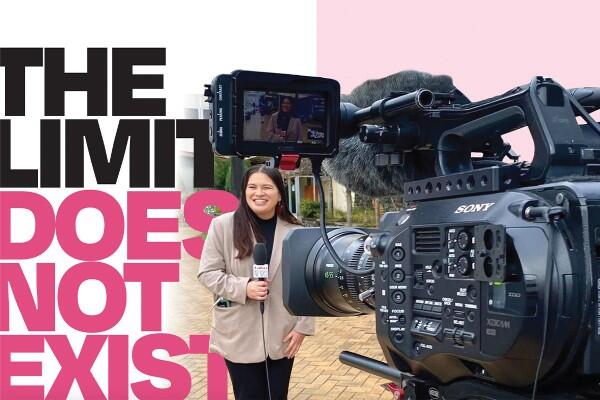
The Limit Does Not Exist: Kura Kaupapa Māori and Beyond
Conventional education often shackles success to outdated standards and narrow frameworks, measuring achievement by grades or awards. The dynamic force of Kura Kaupapa Māori (KKM) throughout the motu redefines what it means to achieve greatness. Kura Kaupapa Māori are Māori language immersion schools, where teaching reflects Māori knowledge and culture. Tradition, far from being a relic, serves as a powerful catalyst for Māori, propelling the transformative educational approach.
-
News
 Issue 21 03/09/2023
Won’t Someone Think of the Children?
Throughout the election cycle, politicians get asked a lot of questions - in the debating chamber, on the tiles outside Parliament, on the TVNZ debate stage, in the RNZ studio, on the side of the road. The sum of these questions can paint a picture of the values and concerns of at least some portion of the population, and of what political leaders plan to do with that information. Subsequently, what gets asked in town hall settings, by the party faithful, and how leaders respond can provide some uniquely focused insight.
-
Culture
 Issue 22 11/09/2022
MĀOR110 Should be Mandatory
The University’s decision to bar students with recognised experience in te reo Māori from taking MĀOR110 (Conversational Māori) was regrettable to be sure. It was undone after students pushed back. The second most regrettable decision the University has made was not making the paper compulsory.
-
Culture
 Issue 22 11/09/2022
Torn Between Two Worlds:
Navigating one’s identity at university can be a tricky task for many. You’re away from friends, family and the familiarity that comes with home. You’re finally off in the big wide world, free to experiment and figure out who you really are. But for Māori students, the experience of navigating our identities is much more complex and challenging, especially in a westernised, Eurocentric institution like university.
-
Features
 Issue 20 19/08/2022
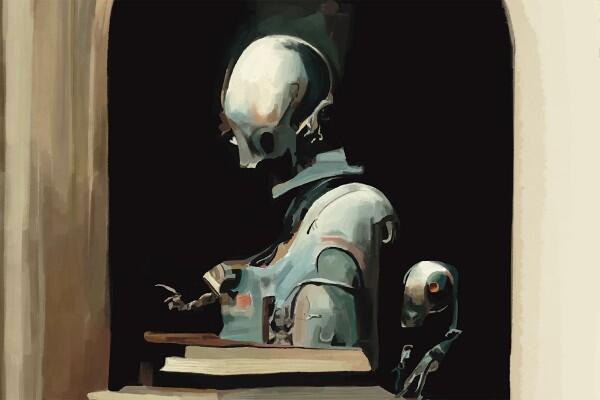
The Computer Ate My Homework
AI is getting better and better. It’s becoming more and more popular at the same time as online learning is booming in popularity. What's stopping students from using AI to do their assignments? Who would even be able to tell if they did? As AI continues to take over jobs, and as more and more of our everyday activities are becoming robotics-enabled, the question becomes how to regulate these advancements. How does this form of AI work? When did it get to the point where it can be used in everyday life? Are there regulations around the world for it? Does New Zealand?
-
News
 Issue 14 08/07/2022
Maths Mayhem!
Six mathematics alumni and current students have sent an open letter to the University of Otago expressing their concerns over its alleged disregard of the importance of maths education. Critic Te Arohi spoke to Elliot Marshall, a signatory of the letter, about claims that inadequate funding and the University’s refusal to require maths as a prerequisite for certain courses calls into question how the quality of STEM degrees is measured by Otago.
-
News
 Issue 22 11/09/2021
NZUSA Statement Changed After Student Backlash
The New Zealand Union of Students Associations (NZUSA) put up a Facebook post praising the Government’s support for students. After just 24 minutes, and comments from students, the post was extensively revised to take a more critical stance. I believe this is what they call a “flip-flop”.
-
Columns
 Issue 16 23/07/2017
David Clark | Health and Education vs. Tax Cuts
Under the National government, things have swung too far out of balance in our country. A small group of ultra-wealthy people continue to get ahead while everyday New Zealanders are running to stand still, or are being left behind.
-
News
 Issue 13 24/05/2015
Religious Education Heads to High Court
A complaint about the unfair treatment of a 9-year-old girl whose family opted her out of a Bible in Schools programme has escalated into a High Court battle that could see religious education removed from public schools. The Churches Education Commission, which provides bible courses to 660 New Zealand schools, will head to the High Court to fight for the continuation of these courses.
-
Columns
Issue 6 01/04/2012
The Tory Templar | Issue 6
A case is currently in front of the Waitangi Tribunal looking into the running of Maori-language preschools. These centres claim they need more funding and separate legislation to ensure that the language survives. This raises an interesting question – what role should Maori language and culture play in our school system, if any? No doubt Maori culture should and does have a place in New Zealand’s society, but whether that place should be secured by legislation is doubtful. The protection of Maori language and customs should be the responsibility of Maori communities and families, just as religion is. If we are going to ensure that the school system officially incorporates Maori into mainstream teaching then surely the teaching of religious education should stretch beyond the boundaries of Catholic schools? The Templar thinks that if you are going to go about making less than a fifth of your population a central part of your education system, then the 2/3 of New Zealanders who identify as being religious deserve to have religious education legislated into the system too. Somehow I see this being controversial and that is the problem. At what point should government interfere to protect minority customs in general education? Put simply, it’s not the government’s job to dictate what culture should be favoured over another. It never has been and should never be. The place for education of Maori culture should be in history and social studies classes. Beyond that the establishment of specific after-school programmes that teach the customs and language of Maori is far more likely to succeed than forcing schools to teach it to kids who simply don’t want to learn. If families then choose to emerge their children in Maori culture they have the option too, free from state intervention. After all our culture comes from our home, our family, and our beliefs, all of which should be free from the meddling of the state, as long as we are not harming others. The Templar is sick and tired of the government’s pandering to such a small minority merely because of past wrongs. The purpose of the Waitangi Tribunal should not be as a forum for lobbying government. Preserving Maori culture is the responsibility of Whanau and Iwi, not the job of the state. If it becomes such then every culture under the sun should have a right to see its customs made part of the education system. - The Tory Templar
-
Columns
Issue 6 01/04/2012
Red and Starry Eyed | Issue 6
At the beginning of the 20th century, many New Zealanders hoped Maori would die out. Their numbers were declining quickly, but a hundred years later we claim to be Aotearoa – a multicultural, bilingual society. We may be multicultural, but our society has very little Maori left in it. And our government’s current quest for standardisation in education is threatening Te Reo even more. The Crown is currently in court, accused of limiting the funding to Kohanga reo and thus deteriorating their quality. These centres have given kids a 100% Maori preschool education for more than 30 years and there is no need to cut the services. They are run by the community and studies suggest that kids immersed in these schools are twice as likely to attend university. The Kohanga Reo Trust Board wants the government to separate the preschools from the Ministry of Education, and to put funding at a par with other preschool institutions. It is the government’s duty to do this if we want to continue calling New Zealand a bilingual society. Moreover, Te Reo should be compulsory education for primary and secondary schools. Kids should be able to leave school knowing more than one to 10 and a couple of mispronounced phrases. Maori is an active part of our identity and performing the haka will not suffice. Unless someone, Maori or Pakeha, can go to the supermarket asking for bread and butter in Te Reo, we are at risk of losing our culture and history. In ten years time, we will be no different from an English county, or an Australian province. The Crown says it needs to standardise education so that it can ensure we all come out of high school as robots without critical capacity. Standardisation is a one-size-fits-all straightjacket. It culls creativity and culture to make an “average individual”. There is nothing wrong with community-run schools, especially if they are more successful than your average kindy. The trust says the Crown is not taking into account the “cultural needs of Maori”. Red and Starry Eyed thinks the Crown has never taken into account the needs of Maori. They have been robbed across the centuries, but we still have time to recover an important slice of Kiwi culture. Maori in preschool is a good start if we want to keep an identity that is much more than rugby. - Red and Starry Eyed


