Editorial
205 articles found. Displaying page 7 of 18.
-
Columns
 Issue 26 08/10/2023
Editorial: Is this a Dunedin Initiation or a CIA Blacksite Torture Method?
Flat initiations are 20 years old at best. You know what else is 20 years old? Enhanced interrogation techniques designed by CIA crackpots in the wake of 9/11. They like to go out, abduct suspected terrorists and then torture them for weeks in secret locations on foreign soil. The tactics used (the whole programme, really) were kept secret until leaks in the mid ‘10s, and once out in the open, shit hit the fan - quick. And as we’ve covered this year’s intense initiation season, I’ve realised that the tactics used to “get together for a good bit of fun” are literally the exact same as those used to torture “the worst of humanity”. Let’s see if you can tell them apart. Which of these happened in a Dunedin initiation, and which happened in a CIA Blacksite? Which happened in both? Subjects were… Shaved Waterboarded Deprived of sleep for up to a week Forced to stand naked against a wall Had a bag secured on their head and then beaten Crammed into coffin-sized boxes Crammed into coffin-sized boxes filled with a gas Subjected to “rectal rehydration” Forced to consume vomit Forced to consume faeces Used for sexual gain Urinated on Killed Bonus round! Does this come from news coverage of Blacksites or initiations? A bunch of videos of [event] are deleted after the group gets in trouble with [authority]. They delete the videos ahead of investigation, because the penalty for that “is nothing compared to what it would be if the [videos were posted]... out of context they would make us look terrible.” [One of the abusers] said it was “tough to watch in places.” “The [subject] was found unresponsive, on his stomach with bubbles frothing from his mouth.” And here are some recent highlights: one girl was forced to drink a slurry of vodka and shellfish juice. She’s allergic to shellfish, so she brought her epi-pen and immediately used it. Last year, a boy was blinded when a frozen egg was thrown in his eye. Another girl refused to do a cigarette race, so she was pinned down and had her eyebrows shaved. She’d lost a family member to lung cancer. Another group of girls was made to chain smoke inside wheelie bins, which then (surprise!) filled with carbon monoxide and one of them passed out. To help her out, her mates knocked her bin around with her inside. I saw videos of boys getting straight-up beaten by mates who’ll be passing them a beer ten minutes later. I saw videos of people being forced to drink 20 standards in 20 minutes, then vomiting into each other’s mouths. But here’s the thing: they all “want” to do this. It’s voluntary. Adults in the safety of their own homes. But I just have a really hard time believing that this “want” is genuine. I believe that if you’ve gone through it, you want to do it to someone else. I believe that you want to have a strong group of friends. I believe that you want approval and want to show off. But I don’t believe that you want to be doing this - because if you did, you wouldn’t have a problem with the fact that I’ve got you on video committing a violent crime. This is not student culture. It’s 20 years old, tops. And it’ll either stop when - like with the CIA - you kill someone and the world watches, or when you all decide to reel your fucking heads in and find a better way to do group bonding. You can bitch and moan about me covering your initiations, but when someone dies, that’s gonna be a pretty cringe take to look back on. I’m sick of this bullshit. I’m sick of the bad name you’re giving Dunedin, and I’m sick of seeing year after year of genuinely good people do the most depraved shit you’ve ever seen. There is no way someone in that initiation can say “no” - I know, I’ve been there. And you act like it’s so unfair that the media is focusing on you, that you’re gonna pay the consequences for a “tradition” that nobody else got in trouble for. Tough shit. You chose to engage in literal torture, and you’re either gonna own up to that or you’re gonna go home. Hopefully not in a box. ANSWERS: Both, 2. Both, 3. CIA, 4. Both, 5. Both, 6. Both, 7. Dunedin, 8. Both, 9. Dunedin, 10. Dunedin, 11. Dunedin, 12. Both, 13. CIA (for now). Bonus round: 1. CIA, 2. CIA, 3. CIA.
-
Columns
 Issue 25 01/10/2023
Editorial: The Dictator
There is no student body. It doesn’t exist. There is no cohesive group of students. Everyone has retreated so far into individualism, into digital and physical isolation, that an overall sense of community has been lost. This is why you are lonely. This is why you feel powerless. You are chasing something that you cannot even picture, because it ceased to exist before you even stepped foot on campus. “Individualism” is bullshit. It champions the ideals of self-sufficiency and stoicism but, when you think about it, true independence is misery. It’s the deepest pits of loneliness, peddled as the route to success in a market-based world where you must sell yourself at every turn. It will drive you insane. Quietly. And this is why, now that a university degree is just a product to be bought and paid for, you have no real reason to be here. You certainly don’t have a reason to care about uni politics, and even less reason to care about student government, because you are an individual. And this is why “divide and conquer” works so well: if you can reduce an organised community to a mere group of individuals who happen to be in the same place, they lose all power. They cease to function as a unit, and they cede power to other individuals who know that with the bare minimum effort, they can take up the responsibility relinquished by the masses. Voter and nominee turnout for student politics is at an all-time low, to the point where this year nobody even wanted to run for OUSA president. Keegan Wells decided to throw her name in the hat pretty much the day of, figuring that she was better than literally nothing. And she won. A race that has in the past been the source of genuine screaming matches has now been reduced to a five-minute yarn on stage in front of a dozen people and an easy coast to presidency. Nobody cares, because it doesn’t affect them. Them personally. “Why should I care?” Me, personally. This is what happens when people grow apathetic to democracy: you get people in positions of power who will take advantage of you and milk that position for all its worth. You get charlatans, crooks and all their ilk, people who will rely on your disinterest to pursue their own interests, people who will use your student fee dollars to pay for their pet projects. You get Keegan. You get what you bloody well deserve. Fortunately for you, Keegan is not what you deserve. You deserve so much worse. She’s crook, to be sure, but she is not a crook. She actually does care about you, the student body, and she’s pretty well-prepared to lead the charge. You could have ended up with anyone in this role. You could have ended up with Evil Keegan, the one on the cover, the one interviewed in this issue. Think about it: Keegan could have been someone who actually gave so few fucks about the role that she blew the whole budget on pimping out the ski club, and you still wouldn’t have had a choice. Guess you dodged a bullet on that one. In the meantime, if you’ve ever wanted to be a power-hungry student government dictator, there has literally never been a better opportunity. Do with that what you will.
-
Columns
 Issue 24 24/09/2023
Editorial: No Fucks Left
There’s only so much you can write about sex week before you run out of content. Like an editorial refractory period. After enough time at Critic you really start to scrape the bottom of the barrel for the salacious and the scintillating. And I’m fresh out. Which is a good thing, because I’m getting old anyway and I don't have much more to give this mag. This horse has run enough races and, to be honest, I’m looking forward to the day when my trainers take me out back and put me out of my misery. Three issues left. At the end of the year, a massive amount of Critic staff are going to be rotating out, including me and almost all of the senior leadership. A few have completely checked out already, which I’ll be assured of when none of them even read this column. But no matter! We have a saving grace: you. Probably. If you want to. Jobs will open here towards the end of the year. I’m not sure what the next Editor will do in terms of structure, but I know that this magazine will need the young creative juices that can only be squeezed out of the brains of Otago's most twisted, manic and curious students. So if that sounds like you, come pop by the office. We’ll crack your head open like an 1800’s sperm whale and soak up the precious juices inside. Mmm, content. Anyway, something about sex week that you should know: we put out a survey asking what you wanted and we got a very divided set of answers. Half of the respondents said “Tits! More boobs!” that sort of thing. The other half said the exact opposite, saying they didn’t want juvenile content and the trivialisation of sex. So I’m not sure what to do with that, but it confirms a pattern we’ve encountered about sex content: someone will always, always be upset. You went too far; you didn't go far enough. You filled the mag with smut; you didn’t show a single boob. No matter what we print it’ll cause someone to send an angry email, and more than anything else, that’s something I’m looking forward to never having to deal with again. Bottom line is: if you think the mag’s shit, do something about it. It’s your magazine. Don’t complain if you’re not willing to make it better. And hey, the same goes for sex! Funny that.
-
Columns
 Issue 23 18/09/2023
Editorial: The Beer Pong Survey Three Years in the Making
We’ve finally done it. It’s taken literal years, but we finally have a somewhat-comprehensive survey of Dunedin’s beer pong rules. You’d think this would be relatively easy, but you would be oh-so-wrong. This counts as a sport, right? Three years ago, I wrote a piece about Dunedin’s King’s Cup rules. We sent out a survey, got a few hundred responses and crunched the data, and that was that. Simples. “On to beer pong,” I thought, before stumbling across what ended up being an excellent example of a problem that plagues bona fide scientists: surveying a quantitative vs qualitative dataset. It has kept me up at night ever since. In King’s Cup, you only have 13 different cards, so there’s a maximum of 13 different rules to survey. You might have some extreme variation within those rules, but the confines are clear and convenient. 13 cards per suit, four suits per deck. Done and dusted. Beer pong has infinite rules, as anyone who’s ever had a mid-game argument will know. When can you rearrange? Can you bounce the ball? What happens if you do bounce the ball? Can you catch it? What’s a valid trick shot? The questions are endless - so how do you even begin to build a survey to get the answers? And once you have those answers, how do you know you didn’t miss anything? Since games and data are the only two things near and dear to my heart, this piece proved impossible to write. For years, I barred everyone in the office from even attempting to take over the project, telling them, “You have no idea what you’re getting into. It’s dangerous. It’s maddening. You cannot do it, for your own safety.” And finally, I conceded. I learned to let go. I relinquished my editorial child into the open arms of our news editor. Much like your parents, I watched my baby go on into someone else’s supervision, with little control on how the student masses at Otago would treat it. I hoped, I prayed, and I crossed my fingers. And I’m proud of how it’s grown. Nina had fresh eyes, and was able to design a survey that was “long as fuck” according to some dude I met at a party. “Long as fuck”, of course, translates in the science community to “of appropriate rigour and scope”, so this was a compliment, really. And while I know that the qualitative nature of the question makes it fundamentally impossible to answer with a quantitative survey, I hope that we’ve at least hit it close enough. If not, there’s always redemption.
-
Columns
 Issue 22 11/09/2023
Editorial: Te Wiki o Te Reo Māori: Because who needs English, anyway?
Ah, Māori Language Week, that time of the year when corporate giants dust off their faux-cultural sensitivity and engage in the shameless game of linguistic Monopoly. It’s almost heartwarming to see these mega-corporations roll the dice to determine which Māori word they’ll incorporate into their branding next. Will it be ‘whānau’ for that warm and fuzzy family-friendly image, or perhaps ‘kai’ to give their overpriced organic snacks an air of authenticity? It’s all just part of their elaborate marketing strategy, where they collect cultural tokens and properties, hoping to win the game of public perception. But don’t worry, while THEY rake in the profit, the true winners of this linguistic board game are the Māori language and culture, being trotted out like little Monopoly pieces for the corporate elite to play with. Just remember, e hoa mā, when it comes to Māori Language Week, you can't pass go, and you most certainly won't collect $200 - unless, of course, you're a multinational corporation with a monopoly on cultural appropriation. But as the algorithm feeds us the same “5 ways you can speak Māori this week” bullshit, we may actually be hindering progress, not furthering it. Don’t get me wrong, the exposure is great, but it’s starting to feel pretty bland. In short: shit’s just boring. We need to elevate, not tokenise. Please, I cannot stress this enough: I don’t want another ten words to use in the workplace. Speaking of large corporations on the cutting edge of terrible timing and questionable decisions, the University has decided to unveil a new rebrand (more like ‘reo-brand’, ha) just as the Māori Language is gaining momentum and recognition. And while it’s great to see this recognition, and while I can only assume it’s a genuine effort to elevate and not tokenise, I’ve still got a bone to pick with this. The overarching raru here is that the poorly executed timing coincides with the announcement of major budgeting woes, meaning Māori advocacy is getting torn to shit and copping the blame for being “expensive”. I mean, it’s as if they thought, “Hey, let’s overshadow an entire culture’s efforts to preserve their heritage by choosing the worst possible timing.” Congratulations, University of Otago, for reminding us that some institutions are truly timeless in their näivité. Ōtākou Whakaihu Waka goes hard - I just think the timing might undermine some of our people’s hard work and allow your efforts to feel as if they’re token values, not tāngata whenua values. And nobody wants that. So let’s platform some changes. For instance, in this issue, we’re not just doing guides on your everyday basics of the reo; every article is not just about te ao Māori alone, but specifically about an investigation into the way kupu Māori have influenced several corners of society: from controversial pronouns, to the LEGO company, and even to figuring out who the hell ‘Ngāti Pākehā’ is named after. Because it's Māori Language Week, not just Māori Week. On Māori land, every week is Māori week. Don’t you forget it. Ka keetz Sky xxxxx
-
Columns
 Issue 21 03/09/2023
Editorial: Two problems with big-time philanthropy.
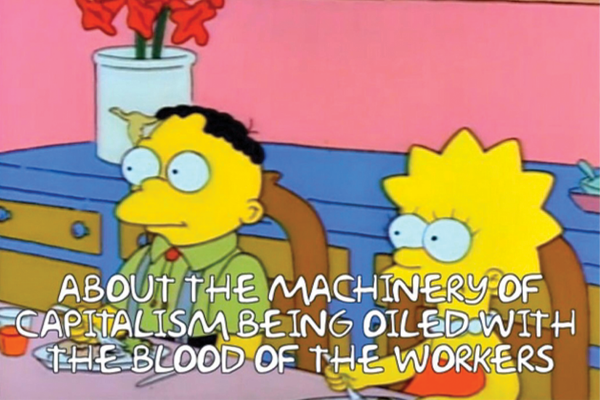
It’s politics week, so I want to talk about donations. Specifically “big-time philanthropy”, which is not when Auntie Lorraine makes out a $2,500 cheque to the children’s hospital. I mean more like when Peter Thiel donated $1 million to the Christchurch earthquake recovery fund and then was quietly granted citizenship by John Key’s government (after spending just 12 days in the country). You’re gonna be hearing a lot about which party is raising the most money, and there are two points I want you to keep in mind when you think about what actually motivates people to give away their money. The first problem is well-documented: donations can be tax deductible, which is great - in theory. In practice, it means that the few of us with massive stockpiles can effectively opt out of the public works scheme and choose where they want their tax dollars to go. Not a fan of light rail, but your local government is? Easy! Instead of paying the taxes that would be used to fund light rail, you can donate a large sum to a charity focused on giving rides to elderly folks (if that exists). This is a complete subversion of the democratic process and, when you think about it, it’s pretty evil. After all, every time someone makes this sort of donation, they get to bathe in the warm waters of public approval. But this is doubly sinister because when you consider where that money is actually coming from, who is the real philanthropist? These billionaires are only able to exist because they’ve taken advantage of an exploitative system, one that transforms a person’s waking hours into capital and then squeezes the literal life out of them in an effort to extract as much capital as possible. “Time is money,” they say, so the inverse is also true: money is time. So when you’ve hoarded inordinate amounts of money, what you’ve really done is hoarded the minutes, hours and days of countless cogs in your human machine. The donations made by these billionaires are funded, as Homer Simpson put it, by the blood of the working class. It’s not their money it’s not their time; it’s ours. The real philanthropist is the one working their life away for less than they need to survive. That’s selflessness. Remember all that talk about “essential workers”, before we promptly shooed them back into poverty? They’re the philanthropists, literally donating their lives to keep us all afloat. Since this economic system has been engineered to encourage wage-hoarding, these people will essentially be donating their time (er, money) to whoever's above them in the chain. Trickle-down economics in reverse - it’s more like economic vampirism. Finally, all of this time and money ends up filling the pockets of the top dog, who can then use the fruits of others’ labour to make big-time donations to whatever cause they please, subverting their taxation requirements and improving their reputation. They are free to influence policy and opinion almost entirely at the cost of the people they claim to be helping. Neither of these ideas are mine originally. I’ve heard the first idea from several sources, but the second is from Barbara Ehrenreich’s Nickel and Dimed from way back in 2001. It’s only gotten worse since then. Have a think about this next time you see which parties collect the most donations - right now National is well in front. ACT and National combined were making $8.50 for every $1 donated to Labour and the Greens. Only certain people in today’s world can actually afford to make donations. What might attract such a large portion of them to one party?
-
Columns
 Issue 20 20/08/2023
Editorial: Otago is About to Solve the Climate Crisis
Great news! We’re set to lose about $900,000/year in the Geology Department, crippling our ability to research natural hazards and climate change. But what we aren’t realising is that this is actually a genius move from the top levels of government to solve the climate crisis overnight. We’ve got all sorts of national climate and hazard problems to worry about and, if that weren’t enough, we’re expecting to be hit with the largest-ever recorded earthquake when the Alpine Fault goes. Lots to worry about, which also means lots of expensive maintenance. Central government knows this, and while they aren’t busy taking $2 billion from totally-unproblematic Blackrock, they’re in charge of supporting our universities. They could, if they wanted, use some of that $2 billion to bail out our entire tertiary sector in the name of climate security. But here’s their genius play: If they let all of our climate and hazard research departments fail, nobody will be collecting climate data. And then the problem disappears! It’s so simple, really, when you think about it. Answering an alarm bell can be an extremely costly and downright annoying exercise. So instead of paying consultants millions to figure out what the best response would be, we can save heaps of cash by just getting rid of the bell! They say “numbers don’t lie”, so all we need to do is get rid of the numbers. Simples. This definitely won’t end up costing more in the long run. Letting geology and science communication collapse is the first step towards a more sustainable future. At least, it’s the first step towards a future where people just shut up about climate change for once. Even if that blabber was worth listening to, what’s the point? Everything is already so irrevocably screwed that training new scientists can’t have any value at all, right? Like why are we even studying earthquakes if we can’t say exactly when they’re going to strike? Save some money by putting your fingers in your ears. Ignorance truly is bliss. What you don’t know can’t hurt you, so we’re making sure we don’t know much about anything. Ergo, we are indestructible. The millions it would take to prop up our floundering departments (which are only floundering because of the system we imposed upon them, nice) has got to be a higher price tag than the consequences of crippling our hazard and climate researchers. It’s not like deplatforming your earth scientists could possibly lead to millions more in damages when we get blindsided by a disaster that one of them was studying. But I guess that doesn’t matter since Blackrock just gave us $2 billion dollars to become carbon neutral. Who needs home-grown experts when you can just tap that sweet, sweet American oil-military-investment income? I say: keep our heads in the sand! It’s a lot more peaceful that way.
-
Columns
 Issue 19 13/08/2023
EDITORIAL: Rock Bottom
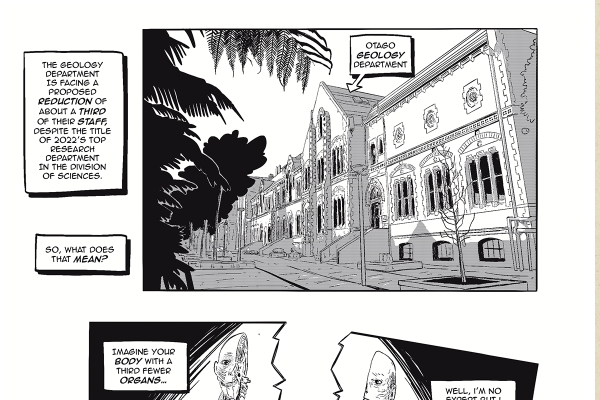
Hey, you, you’ve got thirty seconds. Sign this petition. It’s not pointless, we did this sort of thing when marine science was under the axe, and it worked. Do it, because it’s only open until Wednesday. Do it, because if Otago is willing to cannibalise its own founding discipline, it’s willing to eat yours, too. Below is a plea from Chelle - she was features editor here at Critic a while ago. Now she studies volcanoes. This is the department of dinosaurs, meteors, climate change, earthquakes, Antarctica, mining, geothermal energy: all the cool stuff, all of which is vital for our changing world. They say enrollments are down, but that’s not entirely true. Globally, enrollments of petroleum industry geologists are down. But plenty of people want to study the consequences of that industry’s behaviour, and somebody needs to clean up the mess. Don’t let our Geology Department be undermined. Heck, I’ll shout you some pints if you help out. Kia ora, No doubt you will by now be aware that the University is proposing to cut staff in the Geology Department by around 30%. This is an absolute nightmare scenario, regardless of how many reassurances we are given about these changes not affecting our education or the quality of the Otago Geology degree. In the Geology Department, we care deeply about our people, our whānau. The level of contact between staff and students is unlike no other. We camp with them in the field in all conditions, we hike glaciers with them, we helicopter into inaccessible terrain with them, we tent in Antarctica with them, we camp out in the Arizona desert with them. On Friday afternoons we chat over beers at Emerson’s or Eureka, an urban echo of the shared beer at the end of a long day in the field. Our staff know us well, and us them. We house-sit for them, we look after their dogs, we rally around each other in times of grief. They support us, they care about us, and they are genuinely excited about our research, whether they are our supervisor/lecturer or not. We are a family. Our treasured staff have increasingly borne the additional strain of a number of staff vacancies in recent years, and it has been devastating to watch their workloads and stress levels rise. Despite this, they have continued to enthusiastically nurture our education and research, and these proposed cuts effectively kick them when they are already down. New Zealand’s unique geological situation means that maintaining our world-class geology department is vital, and staffing cuts to this department will unequivocally kneecap the Otago geology education in many ways - not to mention the risk of losing overseas interest. Geology already attracts so many of the Clocktower’s prized international students. I am begging everyone to support us in our mission to have these proposed cuts overturned. One way you can help right now is to sign our petition ASAP, BY WEDNESDAY 16 AUGUST, or follow the QR code. There is also a template for an email of support that you can send to Richard Barker, the Pro-Vice-Chancellor of Sciences, which would aid us immensely. Please help us keep the magic alive. Chelle Fitzgerald PhD Student (Volcanology) Geology Department
-
Columns
 Issue 18 07/08/2023
Editorial: Finance is just Astrology for Capitalists
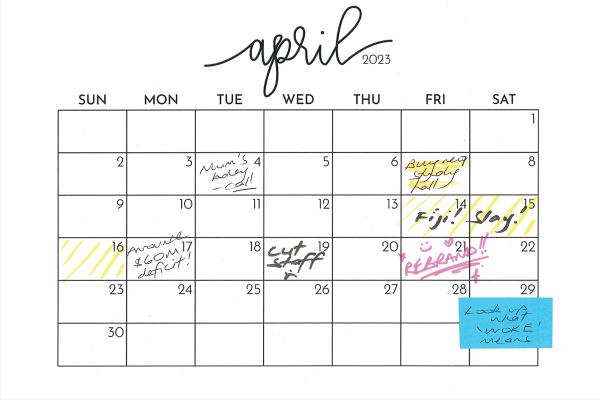
Last time we talked about bad timing: why announcing a million-dollar rebrand during massive staff cuts is a bad idea, even if the rebrand itself is a good call. This time we’re gonna be talking about maths. Unlike the decision to rebrand, the decision to set a budget is rooted firmly in calculations. These economic balance sheets and extensive formulas are meant to be the reason we pay our executives so highly, and why economic contractors charge such a premium. It’s sort of like paying a fortune teller or a psychic; you need to pay top dollar to have someone come in who can understand the hidden meaning of the universe, or who can parse through tables and tables of data to present the best financial course forward. It’s financial divination. But if you’re paying top dollar, they’d better be correct. And here’s where we come to the second mistake that I’ve got a problem with. The current $60 million hole is due, in large part, to dramatically lower-than-expected domestic enrolments and bad financial divination. Last year, someone in our arcane circle of economists worked out a forecast of 4% student growth, an extra few hundred. This was meant to come from a 50% growth in international students and a 1.8% increase in domestics. And while we crushed the international number (it ended up being 57%), the domestic enrollment rate absolutely tanked to -0.9%. We thought it would go up nearly 2% but it didn’t even get off the starting line - we ended up losing students. New internationals aren’t enough to prop up the uni so, with a 4.9% total decrease in real enrolments, we’re left with a whopping 6.7% difference from the forecast. 6.7%! Despite the millions of dollars we spend on financial management, despite the massive salaries paid to top-level executives, and despite priding ourselves on our commerce department (which isn’t seeing very many cuts), we’ve somehow fucked it up. The only two explanations are that this massive shortfall was intentionally induced to encourage government funding and to consolidate courses (which would be crazy) or that the people at the very top of the pyramid were completely off the mark (which is also crazy, right?). I just want you to think of it this way: if this scenario was on your commerce exam and you got your forecast off by 6.7%, they would probably fail you. 4% student growth is an egregiously high estimate to make in the middle of a recession, especially considering the fact that every academic on campus probably could have told them that domestic students were dropping their courses. It’s like if all your crewmates saw a storm on the horizon and instead of battening down the hatches, the Clocktower went full sail. It was an unbelievably bold call that has absolutely failed to meet reality. And now, the same people that signed off on that 4% estimate are the ones who are choosing where to cut savings. Their target is the very product that they’re advertising to students. Will that encourage domestic enrolments to rise? I dunno, what does the multi-million dollar crystal ball say? Because honestly, at this point, they might as well be forecasting off our horoscopes. They’re about as grounded in reality as that 4% forecast. But at least when our horoscopes are wrong we don’t fire our staff.
-
Columns
 Issue 17 31/07/2023
Editorial: Begin the Warpath
I often write these columns with second-years in mind, because that’s usually who reads this magazine. And so I tend to write silly little editorials with fun facts and stories in them because life is already pretty stressful and depressing and the last thing a second-year wants is another reason to feel existentially anxious. But with only ten issues of Critic left in my time here, I think it’s time to begin the editorial warpath. I want to outline, over the next few weeks, a series of decisions made by the Clocktower that I find to be genuinely bad. I want to explain why I think they were bad, and I want you to understand what these decisions mean for your future - because otherwise they’re just another sequence of decisions made by faraway bureaucrats in an already-gloomy world. Basically I want you to understand that despite the suits and stigma of a boardroom, the leadership of this university is a fundamentally human enterprise, and is fraught with fundamentally human mistakes. The first thing I’d like to address is the rebrand, because that’s a hot topic. And before I say anything else, I want to make it very clear that I support the idea at the heart of the rebrand: working with mana whenua to “emphasise… the transmission of knowledge between generations.” I’m on board with it. I like the logo, I like the whole thing. But I think the announcement was a terrible decision. The uproar caused by this announcement was going to happen regardless of timing. The racist and bigoted were always going to be racist and bigoted, but the University wasn’t always going to be in a period of financial deficit. In fact, this is literally the worst it’s been since WWII. The decision to go ahead with this multi-million dollar enterprise could have waited - it already took several years to get this far. Effectively, what the Clocktower has done has been to arm the otherwise-baseless critics with a genuinely solid piece of ammunition: financial critique. Even if the price tag of the rebrand is dwarfed by the total deficit, their “spending money on image rather than staff” argument does hold water. Even if that amount of water is pitiful by comparison. And now that new tohu - the whole new image that they spent so many years working on - all of it will be associated with controversy about misspending and culling of staff. Timing is everything for a brand launch. Considering how precious the Clocktower is over their marketing department, you’d think they’d know better. The decision to rebrand was probably a good one and surveyed responses showed that. The decision to announce it amidst the worst financial storm in the University’s history, I would argue, is undeniably a bad one. It is one bad decision in a long pattern of bad decisions that has culminated in the mass culling of institutional expertise: the very product that executives are hoping will lure an extra 20% of students to campus. From where? And who’s gonna teach them? I want to reiterate that not ALL of this is the Clocktower’s fault. The funding system they are dependent on is inherently flawed, and ultimately, right now, what we need is a government bailout. But the route that led us to this eventual trainwreck was defined by a series of wrong turns; a pattern of mistakes that has landed us all in a position where nobody wins, abiding by a set of rules that nobody particularly agrees with. And while we can't turn back the clock, we can be very loud about what we want to happen next.
-
Columns
 Issue 16 24/07/2023
Editorial: Bring Back Child Labour
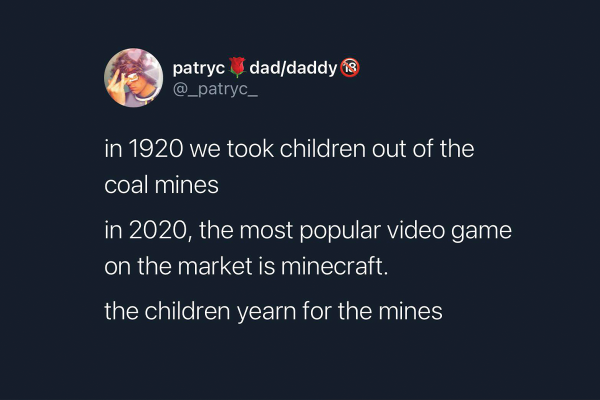
It’s the meme that started it all. And while we all laughed about it, we were too shy to admit that they were kinda right. That’s why, heading into election season, I am once again challenging any of the major parties to announce their plan to bring back child labour. Hear me out. Firstly, this would immediately solve any labour shortages we have in the country. Overnight. Sorted. Give the kids all the delicate jobs that require dextrous little hands, and let the adults work the more artisan jobs like flying aeroplanes or making silly little magazines. Second, kids need to start learning early that if you can’t adapt your body and mind to the 9-5 grind, you might as well die. School is already a noble effort to conform them to the mentality of deadlines, workdays and cookie-cutter corporate policy, but we can do better. Skip the middleman and just give them a real job. They all say they don’t want to be in school anyway, so we should honour that wish and let them have a go at it. The sooner they conform, the easier it is for all of us. Plus, no more worrying about daycare. Also, your household income rates are about to skyrocket, so you can kiss that recession goodbye. Immoral labour? Never heard of her. In fact, I can’t hear much of anything over the constant din of societal progress. Rome wasn’t built in a day, but you can bet that child labour laid a few bricks. How are we meant to improve as a society if we’re too woke to put literal children back in literal goldmines? Letting children take the “undesirable” jobs would also go a long way in improving racism in this country. Currently, our only scapegoats for labour shortages are those filthy immigrants, the ones who come here and take all the jobs we didn’t want to do anyway. If we just put children in those jobs, we can’t have immigration! With that pesky back door closed once and for all, we can get back to what really matters: keeping our country clean. Because it’s OUR country, after all, and we need to preserve it. You know, for the children. Finally, as I’ve said a million times and will say once again, we have to trust the market. If it’s suggesting that child labour needs to come back, we are in absolutely no position to question it. Especially once we scrap all of the ease-of-access policies set up to help guide those minors (miners?) into “liberal” arts university programmes, where - God forbid - their brains might grow. No. What we need, and what the market is clearly telling us to acquire, is a veritable army of stupid, brainwashed, nimble little labourers who are without any means of standing up for themselves (because even if they did, they’d only come up to, what, like 3’4”?). I say we listen to our collective gut, nay, to the wisdom of the infallible market, and put children back in the mines. Put children back in the factories, in the fields, in the full range of jobs for which they so loudly clamour. Who are we to stop them? Who are we to question the will of the all-consuming market? This nation must be one of the children, by the children and for the children, and to achieve that most noble of standards, we simply must let the children return to the mines. If any major party should be brave enough to consider this agenda, they would certainly have my vote. If I could vote, which I can’t, because I’m not a citizen. Just know that it would be a really cool thing for you to do.
-
Columns
 Issue 15 18/07/2023
Editorial: Dude, Where’s my Castle Host?
I’ve heard talk that Castle hasn't had an open host since O-Week. What’s up with that? Ya scared? If you live on Castle, you have a communal responsibility to throw open hosts beyond the bare minimum dates of O- and Re-O-Weeks. That’s what Castle is known for, and it’s why you moved there. You can’t choose to move to a new location because of all the promises it offers and then pull up the ladder behind you; that’s like moving to Wanaka to be close to the mountains and then being upset when other people move there after you because “it’s getting too crowded”. The older students (is third-year old?) recognise what’s going on here and, honestly, it’s pretty cringe. The entire point of Castle is to live communally and play host to the heart of Dunedin culture, and if you close it off it’ll become a gated and elitist community rife with incest and infighting. Nobody wants that. Even worse, it means that people won’t want to move there next year because they won’t have the communal party memories associated with it, so you’d be responsible for killing the reputation of Dunedin’s most notorious street. Not to be dramatic or anything. “But wait!” you say, “The reason we’re making it exclusive is because strangers keep trashing our flats!” Ah, yes. There are two problems with this: firstly, that’s not new. Literally everyone before you dealt with that and you knew what they were signing up for. You can’t get mad at the rollercoaster operator because your tummy got upset, right? It’s a rollercoaster. Second, this problem is valid, but it doesn’t mean that the answer is closing off your parties. The responsibility to not be a dick falls on all of our shoulders and, instead of closing off the party, maybe we need to eliminate the behaviour. I recommend the public shaming of people who steal or break things, it really brings the neighbourhood together. Besides, the awkwardness of calling out that behaviour is worth preserving the culture. Now, I’m all about having safer parties, but that’s a different discussion. We all know what goes on at Castle and it’s not going to change any time soon. The only difference is: if you’re not letting other people into the hosts, they won’t have any reason to want to take over the flats, and then the culture begins to die. Who wants to go to a host on Castle if the hosts themselves are exclusive? That’s bad vibes. Don’t be bad vibes. If you’re gonna live on Castle, live on Castle. No half measures. You knew what you were signing up for, and if I see another private Courtyard Ball I’ll cry. You’ve gotta use it or lose it. If you don’t honour the Castle culture, it will honestly just move somewhere else. You won’t be cool anymore. I’m sure Leith is chomping at the bit for a chance to take the title of most notorious party street… you just gonna roll over and let them take it?


