University
51 articles found. Displaying page 5 of 5.
-
News
 Issue 3 11/03/2012
Dunedin "100% Likely" to Suffer Catastrophic Earthquake by 2012
The University is spending $50m to upgrade its buildings over the next seven years, in order to reduce the buildings’ vulnerability to earthquakes. A top-secret forum, off-limits to students and the media, was held last Tuesday March 6 in the College of Education Auditorium, in order to discuss plans for assessing and strengthening University buildings. Due to the forbidden fruit effect, Critic’s interest was high. Unfortunately an attempt by Editor Joe Stockman to sneak in disguised as the Vice-Chancellor did not succeed. An initial assessment of 80 buildings has already been carried out, and seven buildings have so far undergone more detailed assessments: Cumberland College, the Lindo Ferguson Building, the Scott Building, Staff Club, the Arts Building (a.k.a. Burns), Geology (a.k.a. Quad) and the Clocktower Building. The Scott Building was deemed to be “earthquake-prone”, and will be prioritised for strengthening. The Clocktower’s assessment is not yet complete, but the building is deemed “not likely to be earthquake-prone”. However, the University has its own set of “seismic guidelines”, which demand a higher standard than that required by the Building Act 2004, and thus several of the buildings will be upgraded anyway. The work will be scheduled during university holidays to minimise disruption to students. The Social Darwinist Society has expressed its disappointment that Cumberland College was upgraded over the summer and is no longer considered “earthquake-prone”. The Society was further disheartened to hear that the College will receive further upgrades over the next two years to reduce the risk to the future leaders of our society. The next eight buildings in line for a detailed assessment are Arana College, Carrington College, Zoology Building, School of Surveying Building, Property Services Building, Marama Hall, Archway Buildings and the Professorial Houses by the Leith. Critic can only imagine the chaos that would occur in Archway in the event of an earthquake, given that trained explorers have starved to death while trying to find a way out of its labyrinthine passages. The Alpine Fault is the fault line closest to Dunedin, but is far enough away that a 2009 earthquake that measured at magnitude 7.8 at its source in the alps did no damage to Dunedin, although the city moved 10 millimetres to the west during the quake. Critic considered following the tradition of Wellington’s Dominion Post, which responds to slow news days by manufacturing fear-mongering stories about earthquakes. The tried-and-true method involves talking to a Professor of Geology and asking him/her whether there is even a remote possibility of a catastrophic earthquake occurring in the next few years. The Professor will inevitably answer that there is always at least a small possibility. The headline will be along the lines of “WELLINGTON AT RISK OF CATASTROPHIC EARTHQUAKE – DISTINGUISHED PROFESSOR”. Critic is too classy to resort to such tactics in order to sell magazines. Especially because we give them away for free.
-
News
 Issue 2 04/03/2012
Skateboarders unable to read minds
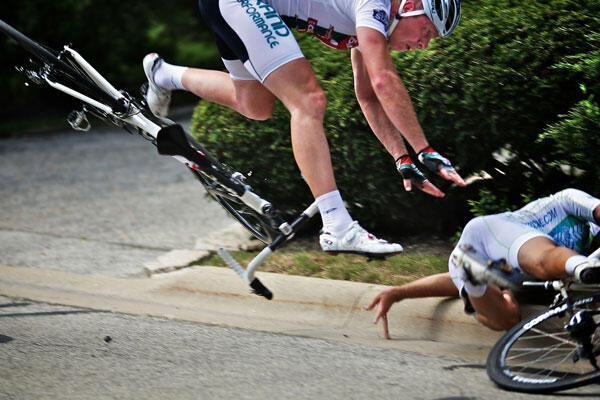
Property Services have announced that they will release a new Cycling and Skateboard policy later this year, with the intention of addressing several areas of concern for campus users. The policy will include maps showing cycle routes, an update of the current “open” bike racks on campus, and possibly an update to markings and paving. In addition the University’s Draft Travel Plan in support of sustainable travel options is also scheduled for approval later this year. This piece of policy is intended to outline the University’s commitment to sustainable travel options to and from campus. Critic’s resident policy analyst suggests that both policies are good examples of the University’s fetish for devising, considering and passing as much policy as possible. “If policies were stray kittens the University would have a feline AIDS pandemic on their hands.” However Generation Zero’s Lance Cash was more upbeat, telling Critic that the youth movement was excited to hear that the University would be addressing sustainable travel options. “We need to move towards a carbon zero future in order to combat climate change, and we will no doubt see increasing numbers of cyclists in the future. Generation Zero fully supports measures that encourage sustainable transport such as cycling and skating throughout the University, while still maintaining a safe environment for pedestrians.” Cycling is viewed as the most realistic way to reduce the carbon cost of travel to and from the campus. However current infrastructure for cyclists is poor, with limited cycle lanes and concerns over the safety of those lanes located on the one-way system. Professor Hank Weiss, a regular cycle commuter and director of the Injury Prevention Research Unit, told the Otago Bulletin that “there is little or no evidence that bike lanes on roads like the one-ways reduce cyclist risk”. On campus, both cycling and skateboarding are currently banned in the interests of pedestrian safety. However Resource Planner/Policy Advisor Katrina Roos stated in the Otago Bulletin “skaters perhaps don’t know this because all the signs pertain to cyclists.” Roos also stated that there had been repeated complaints about “near misses” involving skateboarders. Critic interviewed several skateboarders, the least of whom were commerce students. None of the students spoken to were aware of the ban on skateboarding, with one student telling Critic that “the feeling of freedom I get while flying down Castle St on my longboard is the only reason I even go to my Tourism lectures. Sometimes I even get a little aroused and have to try to hide my erection while doing my best not to crash into someone. That would be awkward to explain to the Proctor.”
-
Features
 Issue 1 24/02/2012
Oh Harlene,
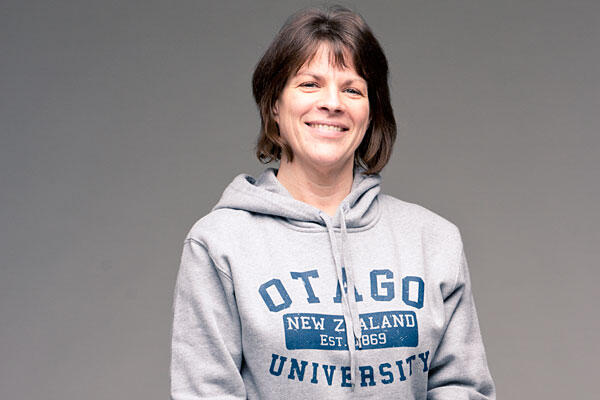
You know the Vice Chancellor right? That lady in the big fancy office by the Leith? She basically runs the entire University, and well, let’s face it, is far too busy and important to sit down for an interview with a little old student magazine. Or so you would have thought. Without a second thought, Prof Hayne invited Critic Editor Joe Stockman to sit down on her oh so comfy couch for a yarn about her job, her role in organising Orientation, and her thoughts on So Go’s. How are you enjoying your new job so far? I absolutely love the job; it’s the best job on the planet! I loved my time at university so much that I decided to never leave. This job allows me to celebrate all the things that I love about universities. What on earth does the Vice Chancellor do? The Vice Chancellor is essentially the Chief Executive Officer of a very large company. Basically, I’m responsible for the buildings, the staff, the finances. But we’re not making cars; we’re here to inspire young minds. So I am also ultimately responsible for the academic side of the university. So, you’re the first female Vice Chancellor – is that a big deal? When it was first announced that I would be the Vice Chancellor, that’s what everyone wanted to talk about. I hadn’t reflected on it too much, because being a female had never really been an issue in my career. Ironically, my status as the first American Vice Chancellor and as the first psychologist Vice Chancellor is probably more diagnostic than my gender. One of the great things about the University of Otago is that it was the first university in Australasia to admit female students. A number of the first female students, such as Caroline Freeman and Ethel Benjamin, were the women who fought the hard fight, and paved the way for gender to no longer be an issue. You’ve taken an active role in Orientation. Why are you so passionate about this? OUSA does a great job of introducing students to the social aspects of the University, and that’s vital. It’s important for them to come here and to realise that they’re adopting a new way of life. First and foremost however, universities are academic institutions. Many students come here without a clear understanding of what it is that they’re supposed to do. The University is becoming increasingly selective regarding student admission. For the individual student, the cost of failure has increased over the last few years. I actually do research in this area – on students settling into universities – and we know that students are most successful when they have an opportunity to learn the rules of the game very early on. I think it’s really important for the University to get in there and to help students get off on the right foot from the very beginning; that’s what we’re trying to do. We’ve heard you talk about the need for an Academic Orientation. What are you on about? An Academic Orientation reminds students of their obligations. Even though students pay tuition to come to university, 75% of their bill is paid by the New Zealand taxpayer. Most students don’t realise that they pay only a small fraction of the total cost of their tertiary education. So, we’ll talk about some of the exciting opportunities that the University provides for students to give back to their community, to New Zealand, and to the world. Do you think that your research on memory development has shaped your views on youth alcohol consumption? From my research on memory, the biggest message that I can give undergraduates is that there’s a phenomenon called the “reminiscence bump”. When looking back on our life experiences, there’s a huge bump in the number of memories between the ages of 18-25. When I work with masters of colleges, or lecturers, I remind them that they’re going to feature in the autobiographies of thousands and thousands of students. It’s important that they think about how they’d like to be remembered. The issue about alcohol is slightly different. I’m very concerned about the high susceptibility of young adults’ brains to the negative aspects of alcohol. The risks of permanent brain damage, and a whole host of other social and emotional outcomes, come from prolonged, extensive alcohol use at this age. Do you think there has been a shift back towards in loco parentis treatment of undergraduates? One of the fantastic things about the University of Otago is the huge amount of pastoral care and additional educational opportunities that are offered through our residential colleges. I was the chairman of the board of UniCol for a decade, so for at least the last fifteen years here, we’ve done a pretty darn good job of in loco parentis! What we haven’t done, however, is spread that out into the academic community. Research shows that the more we involve adults (whether it’s lecturers, professors, or parents) with undergraduate education, the easier it is for students to make the transition to university. A large number of students are disadvantaged because they’re homesick, they’re depressed, or they’re anxious. These are things that we can deal with, but we must take responsibility. Do you think that students should think of universities as “service providers”, from which they are “buying” a degree? I think that’s an extraordinarily sad way to view the world. We are not the Harvey Normans of the educational world. Universities are ways of life. The three, four, five, six years that students spend at university will ultimately be some of the best years of their lives. What do you think of the relationship between the University and the student body? I think that it is important to keep in mind that at Otago, the Vice Chancellor and the deputy Vice Chancellors are all still active academics. For us, there is no line between “out there” and “in here”. We all still conduct research, supervise students, and take lectures on a regular basis. What does it mean to an undergraduate that Otago is “Research Led”? Once students get into their classes, they’ll discover that their lecturers are internationally recognised leaders in their areas of expertise. Our teachers are not only transmitting knowledge and information, but they are actually the people who are creating that information. Our undergraduates will have the opportunity to learn about things that may not even be published yet. Being educated at that cutting edge is highly valued here. What were your thoughts on the VSM legislation? Personally, I’m not in favour of any kind of mandatory unionism. I like democracy and free will, and it’s important for people to make choices. Putting that aside, I’m not sure that students’ rights were being overlooked through compulsory OUSA membership. This is why we, alongside OUSA, opposed VSM. Now it’s important to figure out how we are going to make it work in this brave new world! What do you think is the role of student media on campus? I think it’s the same as the role of media everywhere; it’s designed to educate and to entertain people. In terms of the university environment, student media provides a great training ground for budding journalists and radio presenters. I think that universities are the critic and the conscience of society. In fact, NZ is one of the only countries in the world that has this enshrined in legislation. Student media, like every other aspect of the university, should play a vital role in that. Speights or Southern Gold? Neither. I’m not a teetotaller; I do enjoy NZ wine. Particularly wine that comes from vineyards owned by University of Otago graduates. Are you on Facebook? I am on Facebook.


