Local Produce
116 articles found. Displaying page 5 of 10.
-
Columns
 Issue 8 21/04/2024
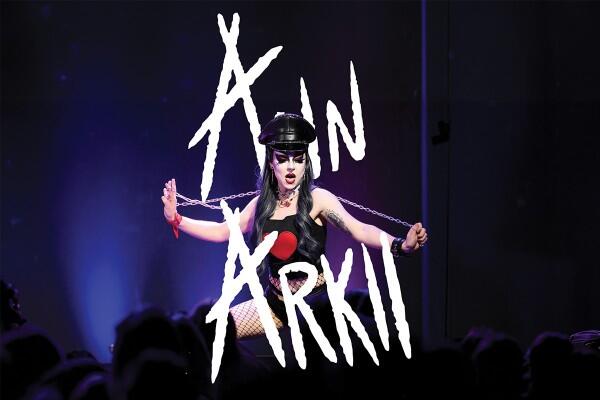
Local Produce: Ann Arkii
Ann Arkii is the Monarch of the Ōtepoti drag scene. Having performed drag for over a year, Ann is often credited with revitalising the drag scene in Dunedin through the Ōtepoti Drag Directory, which helps feature and encourage emerging drag artists. Critic Te Ārohi sat down with Ann to talk about what drag means to them and the wider community.
-
Columns
 Issue 7 14/04/2024
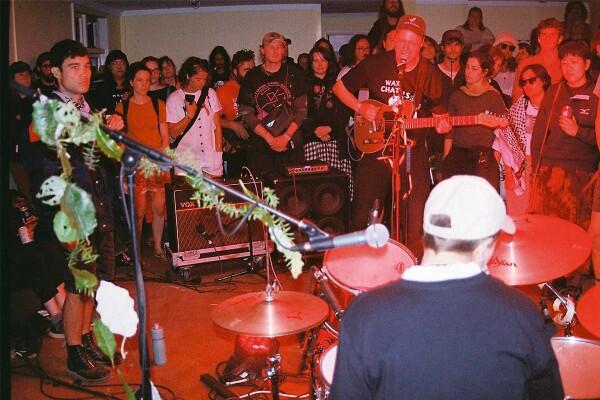
Local Produce: HŌHĀ
HŌHĀ is an Ōtepoti noise duo composed of drummer Madison Kelly (they/them) and guitarist Liam Clune (he/him). The band formed in early 2021, with the two friends coming together for jam sessions before eventually becoming a band playing gigs, most recently at Camp A Low Hum.
-
Columns
 Issue 6 05/04/2024
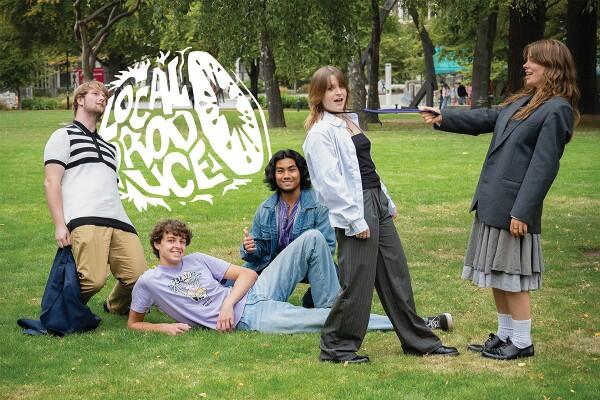
Local Produce: Purple Dog
Starting off the year with a slew of Pint Night performances at U-Bar, Purple Dog have now established themselves as a prominent Ōtepoti band. As they gear up to release a second single, Critic Te Ārohi caught up with the band to ask about their origin story, new music, and upcoming shows.
-
Columns
 Issue 5 23/03/2024
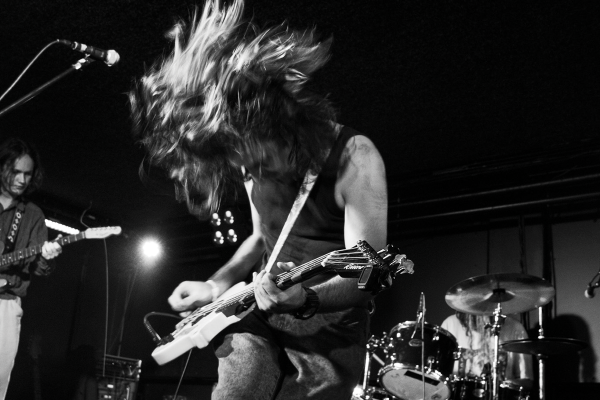
Local Produce: Give Up
Give Up is the newest Ōtepoti shit-head post-punk band. They came to prominence last year after making the Bring the Noise finals, which was only their second gig. Now, after opening for Beet-wix and snagging a pint night slot, they’re rolling with the motion of the ocean and are keen to get their name out more. Critic Te Ārohi caught up with the band at a house party to discuss origins, influences, and future projects.
-
Columns
 Issue 4 17/03/2024
Local Produce: Rosie Roaché
Rosie Roaché is a talented visual artist with a show coming to Dunedin Fringe. After the success of last year's candid photography exhibition ‘Flâneur’, Rosie is back with an innovative personal project involving Pasifika culture. ‘Brown Skin Girls’ is a showcase of portraits that come to life – heartfelt photos of Rosie’s Pacific muses performing cultural dances and songs, portrayed alongside their real-life counterparts in live performance. Critic Te Ārohi sat down with Rosie to talk about the Fringe show.
-
Columns
 Issue 3 10/03/2024
Local Produce: Tama Alexander
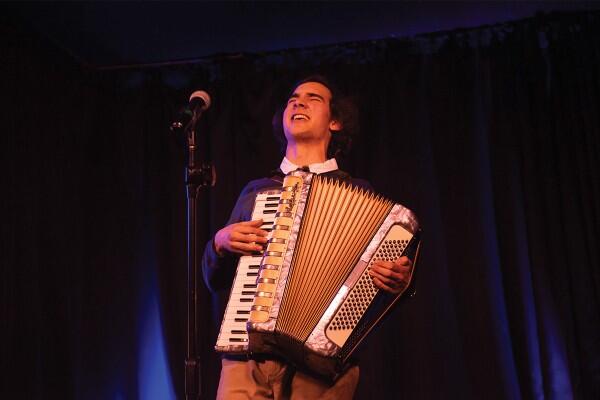
Tama Alexander is a prominent voice in the comedy scene who uses his student experiences to entertain both locally and nationally, combining cutting sardonic humour with musical theatricality. The 2023 Dunedin Fringe Festival saw Tama’s debut solo show ‘Fresher’, which detailed his humorous escapades as a first-year at Otago and reached critical acclaim. This year he returns to Fringe with a highly anticipated follow-up show, ‘Breatha’. Critic Te Ārohi caught up with the stand-up legend to talk about his previous Fringe experience, comedic influences, and the new show.
-
Columns
 Issue 2 02/03/2024
Local Produce: VELVET the label.
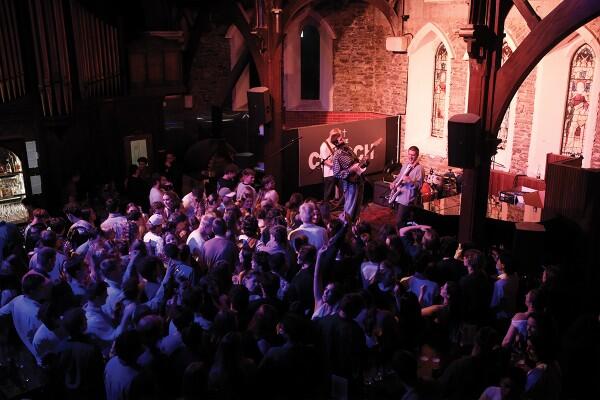
Max Came is the frontman of indie rock band Hot Sauce Club, and has recently created VELVET the label., alongside Will Georgeson of Pool House and Max Hackshaw of Frank on Tap. VELVET exists to promote artists around New Zealand and the world, currently made up of the three bands but looking to eventually expand. Critic Te Ārohi caught up with Max to talk about the future of their new project.
-
Columns
 Issue 26 08/10/2023
Local Produce: - Fool of Stars
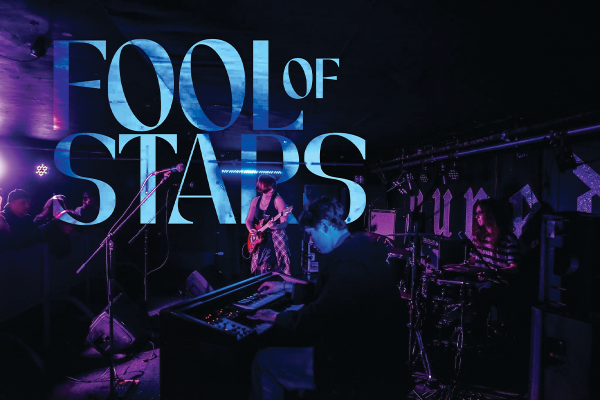
Formed in 2020, Fool of Stars started out as a high school dream pop band. The current line up, Olive Ward (guitar/vocals), Max White (drums), and Jacob Smith (organ), came together to enter Bring the Noise in 2022. Following a warm reception from friends and strangers, they decided to record their debut album, set to be released in early December. Critic Te Ārohi caught up with Olive and Max to talk about the band and their upcoming album, The Everything Under Your Feet.
-
Columns
 Issue 26 08/10/2023
Local Produce - No Danger
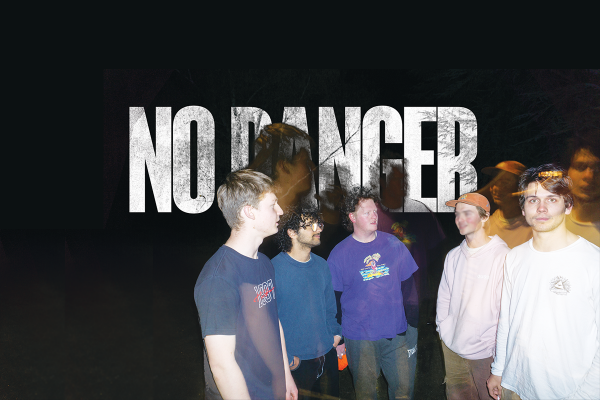
Get your hard hats and your high-vis vests on. For a hazard-free gig, you can count on No Danger: an eclectic six-piece band that play sets with covers ranging from Black Sabbath to the Spice Girls, alongside their own originals, one of which they’re planning to officially release soon. Critic Te Ārohi caught up with the band to talk OSHA. “What’s not dangerous?” says Blake, of their signature stage look. The band are known for donning high-vis at their Pint Night performances, which they did for their first gig at U-Bar, as a joke on No Danger. “I think we all decided it was lame. Then did one gig without it and everyone was annoyed,” says Robbie. No Danger are Lucas (bass), Blake (vocals), Will (guitar), Alex (keys/harmonica/melodica), Robbie (drums), and Hamish (trumpet). Will, Alex, Robbie, Hamish, and Luke met in their first-year hall, while Blake and Will went to high school together. Many of the group first started playing music together for fun at their hall. “We were always thinking throughout the whole of second-year, we gotta get a band together,” says Alex. Come last May, in their third year, Will surprised the guys by signing them up to open for the Audio Visual Dropkicks after chatting with Kaia of the band. “I essentially just lied to her,” Will recalls of the situation. “Like, ‘Yeah, we can open for you guys. Sure, why not?’ And I hadn't even messaged these guys.” They had just over a month to prepare for the gig after this revelation, and it was about three weeks before the gig that Blake joined the band. “We take well-known songs, then change them up. Make them a bit weird,” says Robbie of their approach to covers. Alex recalls when they played a gig at Rewind, the venue owner doubted their setlist, this time containing some Michael Bublé and DnB: “He said looking at our setlist beforehand, ‘This is not gonna work, there's no way this fits together.’ But afterwards, he was like, ‘Yeah, it just does.’” No Danger’s originals are also as varied in range as their covers. Punk, funk, ska, window shopping songs, and some “politically charged lyrics” are all on the table for the group. “We’re all quite different people, so there’s a lot of different influences,” says Alex. They’ve also got an upcoming single in the works, ‘Roll On By’. Will, who led the songwriting on this track, had two concepts in mind during the process. “My main main intention was to try and make a parody of a surf rock song. Or make a surf rock song, but it's the old-timey classical kind of surf rock song.” You can catch No Danger at the final Pint Night of the year, October 11 at U-Bar, playing alongside DownsideUp, Black Sale House, and Evo. Keep up with No Danger on socials (@no_danger_dunedin). And to No Danger, Critic has been wondering: do you cover ‘The Safety Dance?’
-
Columns
 Issue 25 01/10/2023
Local Produce: Exhuming our history
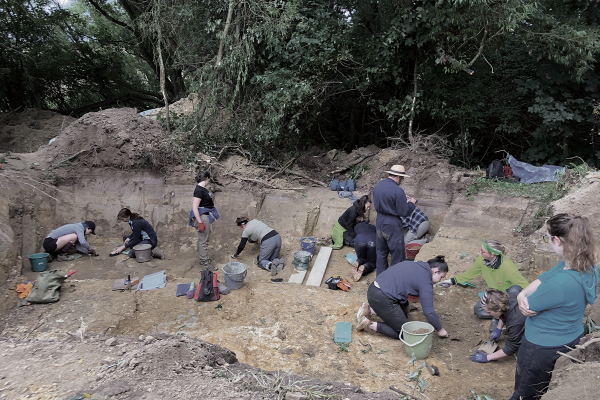
The Southern Cemeteries Archaeology Project is a colonial bioarchaeology research project. It’s run by a multidisciplinary team of researchers led by the Department of Anatomy at the University of Otago. In the first research-driven work done into colonial New Zealand, their goal is to shed light on the day-to-day lives of early settlers to New Zealand. It was sparked in 2016 by the Tokomairiro Project 60 (TP60) group, a genealogy group based in Milton – a small town half an hour’s drive south of Dunedin that grew during the goldrush of the 1860s – who were interested in learning more about their ancestors in the local cemetery. Professor Haillie Buckley, co-director of the project, tells Critic Te Ārohi that their goals were to “help characterise the lifestyles of these early settlers and goldminers by examining the biological tissues left behind and in particular to give a voice back to those who were lost in history - usually the marginalised, including women and children.” Dr Charlotte King, one of the researchers on the team, says, “The project ultimately is looking to discover lost and unmarked graves from the colonial period in New Zealand – especially the gold rush in Otago – to identify the people who lie within them, or at the very least to tell their stories to their descendant communities.” One of the biggest things about their findings is the diversity in the goldfields. Like most, Charlotte’s initial impression of Otago was of Scottish heritage. However, she excitedly tells us how analysis of chemical isotopes from settlers’ remains shows that “people are from all over the place”. Chinese settlers, for instance, often go unacknowledged in our picture of Otago past despite being “a really important part of the gold fields,” says Charlotte. “There are people from really far afield, actually… We have one person who comes from somewhere tropical.” This picture of diversity in the colonial period of Aotearoa New Zealand to Charlotte is “a really important thing for New Zealanders to know about,” especially in the context of the supposedly “modern” multicultural melting pot. “That’s not actually new, you know?” she says. “And people worry about the dilution of New Zealand culture and immigration. But it was always like that from the colonial period onwards. There have been people coming here from all over the place.” The diversity of our ancestry in Aotearoa is something the researchers are able to explicitly show with their data. “Ships records are really good for understanding broad trends,” says Charlotte, however they are still woefully incomplete. Charlotte describes the buried individuals as cold cases: “Like, really cold cases.” The process of identifying them, then, is like detective work for the researchers. Through the analysis of remains like bones, hair, teeth, nails, and artefacts found in the graves, the team can figure out where settlers came from, what their diet was like, and different stressors they endured. In a lot of cases, Charlotte says that this is the limit to what they can understand from the remains. However, in certain cases, they are able to use the scientific data in conjunction with historical records to give individuals back their names. “So, for one individual, we found that he had massive trauma [on his bones],” says Charlotte. “He’d been in a really serious accident around time of death, and we were able to match that back to death records and find accounts of the death of one person, Joe Hogan, who died in a rockfall while mining.” From the coroner’s report, they were able to match the injuries seen in his skeleton to the injuries that were recorded at time of death to identify him. “And so, for him, he would never have been identified without that kind of forensic analysis. Now we’re able to mark his grave.” For Charlotte, it’s stories like Joe’s that make the research worthwhile. Current records “don’t actually talk much about the everyday people,” she says. There’s a huge range of experience in the people they’ve seen: some people had tumultuous childhoods they moved to New Zealand to escape from, while the biochemistry of others have revealed the day-to-day stresses that were experienced on the goldfields. “To me that’s the theory of what we do – it adds flesh to those stories and talks about the people who most of us are descended from,” she says.“We’re not descended from the fancy people who wrote the records. We are descended from the everyday grassroots people who had tough lives in most cases and just made out a living in New Zealand. I find that really valuable because I can relate to those people a lot more.” The idea of digging up graves hasn’t been received well among all, however. Their initial proposal to dig up unmarked graves in 2015 was denied by the Central Otago District Council (CODC) who expressed concerns that the exhumations would be disrespectful. Charlotte says that any opposition to their research has always been respected since everything they do is in consultation with the community: “And so there might be portions of the community that would really like the project to work in their area, but if there are people who say ‘no’, we don’t work there.” She wants to be clear about one thing, though: “It’s not grave robbing… We are not doing it without a reason for it.” In fact, the process of exhumation to reburial aims to give more respect to the people buried there. “If you know that there’s a person in a grave and don’t know who that person is, then how do you give that person respect and mark them appropriately?” poses Charlotte. For the communities involved, it’s about trying to identify those people and reconstruct who they are so that, when they are eventually reburied with the proper funeral rites according to the identity of the person, their graves can be marked and honoured. “We achieved what we set out to do and located the graves of nearly 70 people whose burial places were lost,” says Haillie.
-
Columns
 Issue 24 24/09/2023
Ōtepoti Music Compilation | Local Produce
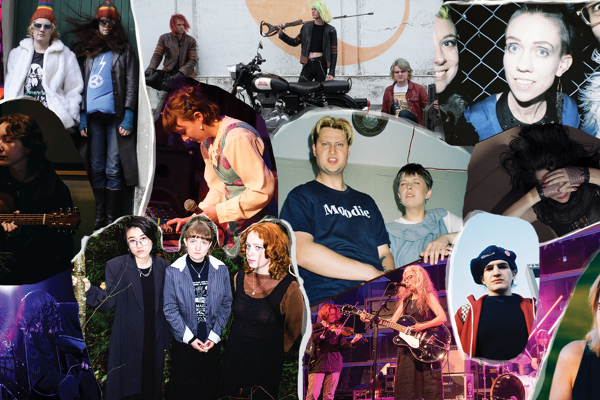
As the end of the year draws close, it’s the perfect time to sum up Ōtepoti’s musical releases – and the Ōtepoti Music Compilation (ŌMC) is doing just that. Critic Te Ārohi caught up with organiser Alex Huber, about the upcoming project. ŌMC brings together sixteen wāhine and gender-diverse led artists from Ōtepoti. The musicians span a range of genres, from emerging to established, capturing a musical snapshot of the current Ōtepoti music scene. In what is essentially (and literally) a mixtape, you can find the compilation digitally on Bandcamp, and physically as a cassette. Alex Huber is a long-time member of the Ōtepoti music scene. They cite an attic gig as the first Dunedin gig they attended, while they were still in high school. Two years ago, after living overseas, Alex returned and started playing in the four-piece band, Hystera. Alex not only plays gigs, but also plans gigs and is one half of Syrup Bois, a YouTube channel that film and record live performances by local bands in the comfort of the founders’ homes. The idea for ŌMC came to Alex at one of their Hystera gigs while in conversation with Chris Wilson, another local musician and supporter of the scene. In 2021, Chris put together the New Dunedin Music Compilation, featuring a whopping 29 musicians from the DIY scene. Last May, Alex began the task of putting together a current compilation entirely of wāhine, non-binary and trans- musicians performing in Ōtepoti. The ŌMC is a celebration of the current gender diversity of the music scene here. “There’s so many really awesome female and gender-diverse acts in Dunedin at the moment,” shares Alex. “Over the last couple of years, it’s snowballed. It’s really awesome to see.” Alex’s goal in bringing wāhine and gender-diverse musicians to the forefront is to ensure the Ōtepoti music scene is inclusive of everyone. The ŌMC also confronts the entrenched issue of music scenes usually being cis-male dominated spaces. Although ŌMC is proof there is a stellar range of diverse performers operating here, issues still proliferate. In Ōtepoti, this can be touring acts or large events overlooking women and gender-diverse musicians, to women and gender-diverse individuals not feeling as comfortable as men in men-dominated music spaces. Putting together the ŌMC has been a community effort. The costs to cover mastering, artwork and producing the cassettes were crowdfunded. Alex describes the show of support as amazing. “I think people are just really behind it because there’s not a lot in the Dunedin music scene that’s specifically geared towards this group of people.” Emily Wheatcroft-Snape is mastering the compilation, continuing the kaupapa of the project – supporting wāhine in the music industry. Jess Covell, Ōtepoti’s Boosted mentor, was also integral in aiding Alex with the crowdfunding process and supporting the project. All profits from the purchasing of the compilation will go directly back to the contributing artists. The cassette release coincides with the DIY spirit of the scene as well as nostalgia for Alex, who grew up on cassettes. “I wanted it to be an aesthetically pleasing object as well as a lovely sounding object.” Alex is also making a zine to release alongside it, featuring lyrics, artwork and poetry by the musicians involved. The ŌMC celebrates its release with a double launch party on Saturday 11 November. There will be an all-ages gig at Yours, followed by an R18 gig at The Crown, featuring performances from a number of the acts involved in the compilation. Keep up with the release on Instagram: @otepotimusiccompilation.
-
Columns
 Issue 23 18/09/2023
Local Produce: DownsideUp
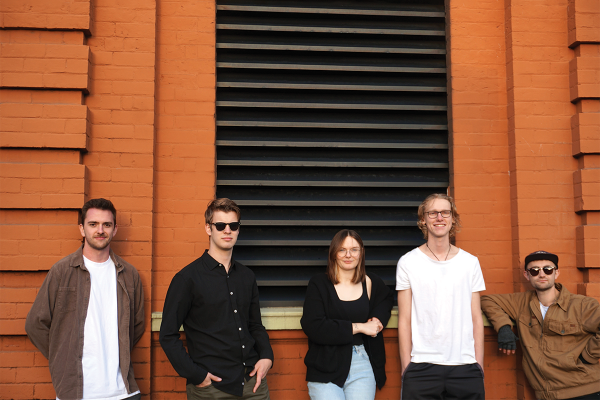
DownsideUp are Josh Botting (keys), Erik Dekker (drums), Hamish Phillips (guitar), Lalu Hartmann (bass) and Nathan Calver (vocals). Critic Te Ārohi caught up with the band to talk about what's on for them ‘til the end of the year. DownsideUp formed in 2021 and have entered their third year playing together. It was a first-year music paper that sparked the band: Hamish, Erik and Josh, met in class and were the first to come together, with their early jams quickly consolidating them into a band. Over the next year, two new additions joined the band: Lalu, who went to high school with Hamish and Nathan, with whom they shared mutual friends. Of the five members, four of them studied music at Otago Uni with Lalu being the outlier, having studied business. Everyone in the band has different influences, from Vulfpeck to 1950s rock and roll. Bringing their individual tastes together as DownsideUp, you can expect a high-energy set that will make you want to groove, drawing from the genres of funk, pop and dance. Their most recently released track ‘Dance’ is inspired by the dance hits of the mid to late 2000s, with Hamish describing it as a bit of an homage to that era. DownsideUp’s take an easygoing approach to music-making and use a jam process in working and refining their songs. This can either be from the very inception of a song while jamming, or from what an individual member might bring to rehearsal. “When it comes to writing music, we tend to take an approach that focuses more on the groove of the song, rather than lyrical content,” shares Eric. “For example, in the first song that we put out… it's called ‘Funk Jazz Supreme’. Some of the lyrics say, ‘Would you like some fries with that?’ It doesn't mean anything, it’s just fun.” For now, the band is directing their time towards performing more live music. They are passionate about ensuring the vitality of Ōtepoti’s live music scene and this way they cannot only support it through contributing, but also get their name even more out there. With a limited number of music venues, it’s now more important than ever to be an active member of the music community, says Lalu. Simply coming to gigs is a huge help in helping local musicians. “Not just specifically our gigs but to any gigs that you see around Dunedin, even to bands that you haven’t heard of before. Maybe you’ll find a new one that you like.” You have two more chances to catch DownsideUp for a boogie before the end of sem. They’re playing a cosy wee gig on Friday, September 29 at Inchbar. Then they’re playing the final pint night of the year on Wednesday, October 11 at U-Bar. Their two singles, ‘Dance’ and ‘Funk Jazz Supreme’ are up on streaming sites and you can keep up with them on socials @downsideupnz.


