Competition
26 articles found. Displaying page 2 of 3.
-
News
 Issue 20 25/08/2024
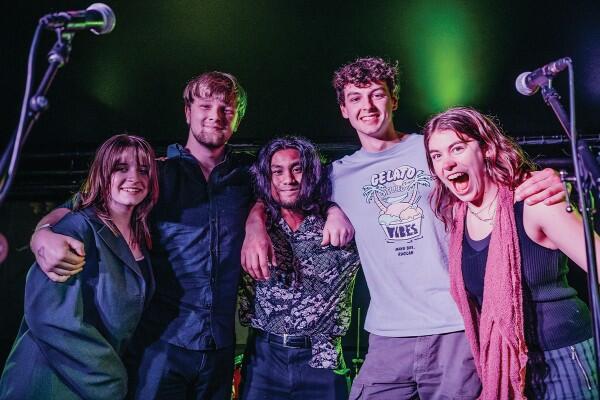
Purple Dog Crowned Bring the Noise Winners
The Bring the Noise finals were held at U-Bar on Friday, 16 August. Six bands competed but only one came out on top. The winners were the indie rock band Purple Dog who have seen a surge in popularity this year, playing multiple Pint Nights, featuring in a Critic article (the highest praise) and releasing two singles. Yeah, dog.
-
News
 Issue 20 25/08/2024
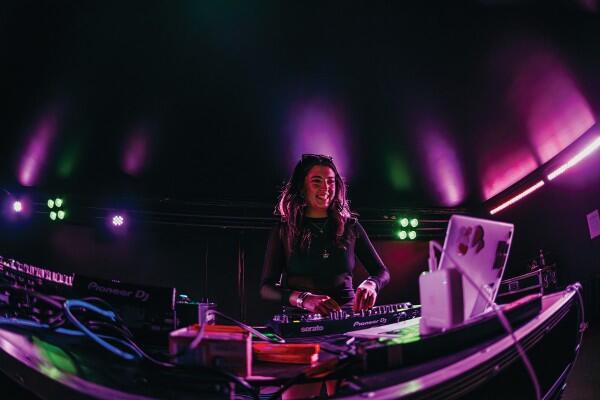
DJ Comp Shows Shift in Electronic Music Scene
Last week, OUSA hosted its annual Future DJ competition at U-Bar. The comp platformed some of Dunedin's future DJ stars, welcoming electronic music punters and every breatha who loves drum and bass. But with only one of the top three DJs playing DnB, it seems there’s been a shift in the local electronic music scene.
-
Columns
 Issue 19 17/08/2024
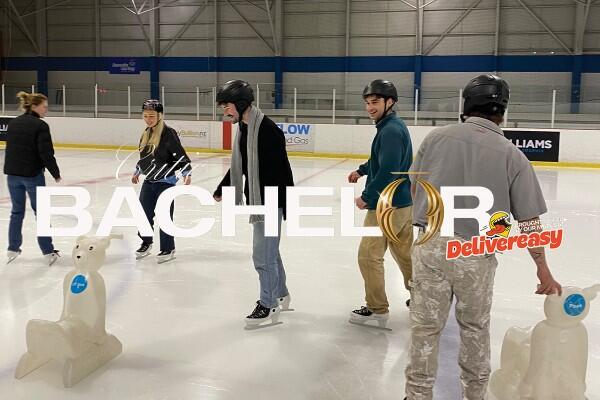
Critic Bachelor: Ice Skating Group Date
This week on the Critic Bachelor, the next batch of singles in the second round have been sentenced to another freezing group date. But will romance warm their cold little hearts? Read on to find out!
-
Columns
 Issue 18 10/08/2024
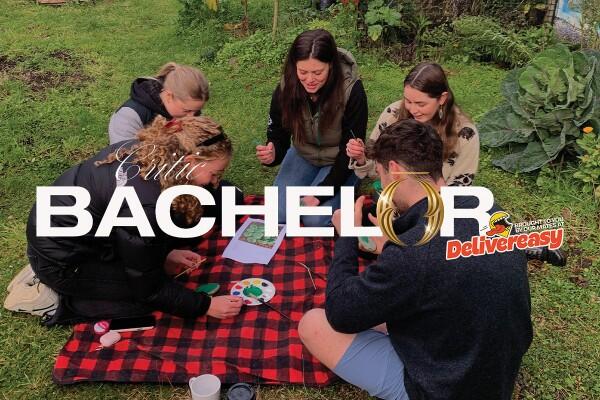
Critic Bachelor: Group Date - Peace Garden
It’s 9am on a Friday when four of the remaining eight singles – Gabi, Lily, Olivia, and Jessica – are cruelly dragged out into the cold, ready to get their hands dirty in the Kia Ora/Peace Garden with some gardening and rock-painting.
-
News
 Issue 17 04/08/2024
Otago Skiers Win Big at Canterbury Campus Comp
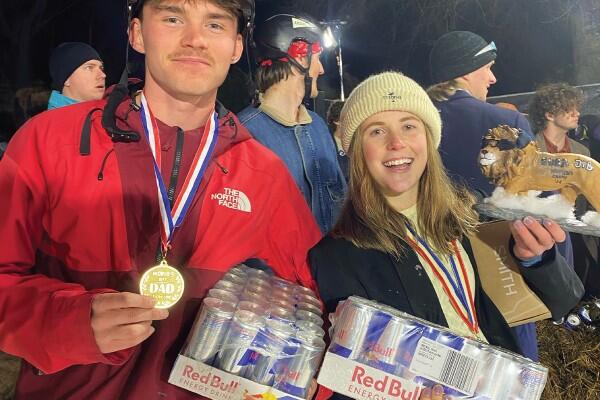
The Otago Uni Snow Sports Club (OUSSC) “brought the energy” at the annual CUBA JIB in Christchurch on Wednesday, July 24th. The Red Bull-sponsored Re-Ori event is a ski and snowboarding competition run by the Canterbury Uni Boardriders Association, held right on campus. They welcomed around 50 competitors this year to dazzle the thousand-strong crowd, performing tricks off a jump constructed from imported snow and scaffolding. Otago competitors Jess Moffett and Peter Barclay took out first and second respectively for the female and male ski categories.
-
Columns
 Issue 17 04/08/2024
Critic Bachelor: First Group Date
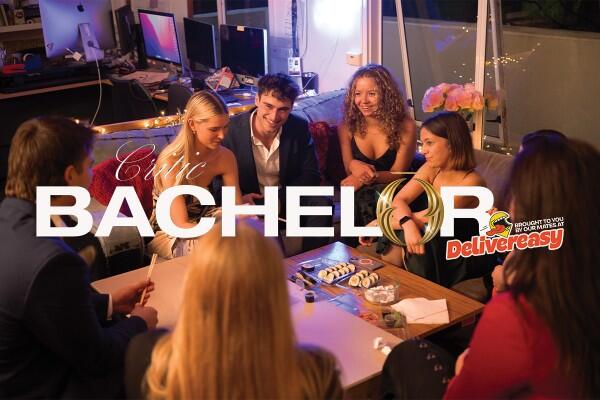
Initial Impressions It’s 6pm on the 26th of July when Joel approaches the Critic Te Ārohi office for the first group date. His eyes flick around nervously, adjusting his tie and shifting his weight from foot to foot. Navy blazer, pristine white shirt, coordinated trousers. He’s got nothing to worry about.
-
Columns
 Issue 16 28/07/2024
Critic Bachelor: Meet the Singles
Meet the ten sexy singles who will be vying for Joel’s affections in the upcoming series of the Critic Bachelor! We tasked the finalists with a cheeky Insta stalk for a first impression of the man of the hour (which they probably had already).
-
Columns
 Issue 14 13/07/2024
Introducing your Critic Bachelor: Joel Tebbs
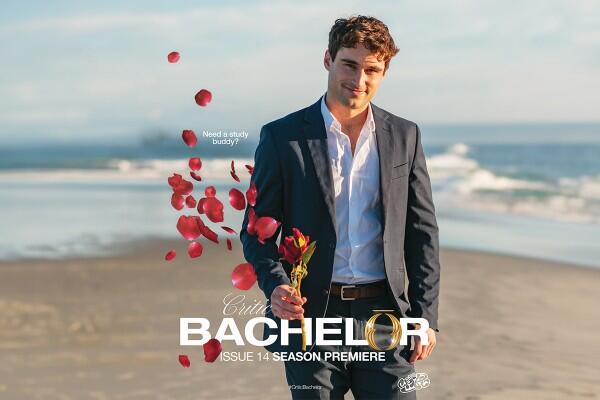
Age: 21 (turning 22 soon!)
-
Features
 Issue 19 13/08/2023
LIT COMP
General Feedback: Yeah, okay, wow. Lots of trauma out there. It felt like about 90% of the entries were either about love or trauma, and I get it: those come with intense emotions, and intense emotions are a great inspiration for writing. The tricky thing about writing about your personal life, especially the bad parts, is that it’s high-risk high-reward. If you can pull off an emotionally-driven poem or story about a personal trauma, power to you; it will be incredibly successful, and that’s entirely because it will be relatable. But it’s extremely difficult to do. If you can’t nail it, you’re faced with two options: either the reader recognises that they can’t relate to what you’re saying, so they disengage, which isn’t ideal. Or, they don’t recognise that they can’t relate to what you’re saying, so they subject themselves to what becomes essentially a trauma dump. All of these experiences are some of the most formative moments in people’s lives, and putting them on paper is an incredibly vulnerable experience that really, really isn’t easy to do. But the catharsis of that process does not necessitate that it will be recognised for what it is by the reader. That’s why poetry especially is one of the hardest things to do well in terms of writing. I really appreciate people that are willing to take on that sort of vulnerability – just remember that, while it may be of incredible importance to you, it will be observed alongside a swathe of other pieces, each of which holds some immutably important piece of its own author’s soul. After a while all that importance becomes overwhelming, and readers just start looking for the fun ones. Fiction Winner: Fallen From Above By Teo De Rezende McGuinness Another helicopter settled down on the newly-cleared landing strip. Dr Robert Marlo stepped out onto land. It was raining. It had been for the past three years. A man with broad shoulders and a broader smile approached him. Robert grinned, “Sam.” They shook hands as Dr Samuel Becker lifted his umbrella to cover them both. “Good to see you, Robert. You saw our new pet?” “From the chopper. It’s hard to miss.” “That’s nothing compared to seeing it up close. C’mon.” They set off up the road. The skeletons of buildings and cars were vague suggestions in the mist. Far ahead, impossibly imposing, was something larger. “Some of the parasitic specimens were delivered to my university.” Robert said, “We found… human tissues in their stomachs.” Samuel’s permanent smile wavered. “They left the host and went rampant after the impact.” “They didn’t last long, though. Earth is too hot for them,” he quickly added. “I hope you’re right. How’s the specimen itself faring down here?” “Surprisingly well, given it’s bleeding a new Nile. That and the survivors have been taking bites out of it.” “We’re allowing that? While it’s still alive?” “How would we stop them? It’s too big to cordon off. Besides, it’s not half bad.” “Yeah?” “Like chewy salmon.” The mist had lessened somewhat, though the rain was heavy as ever. Robert could make out the shape of the specimen: a head, a tail, and six limbs, splayed over the landscape. “Its spine was shattered from the impact. We’ve set up by the immobilised back half.” Samuel led Robert up to the beast’s towering side. A row of patchwork tents of the beast's skin and canvas held laboratories and dormitories. A great beaked head rose from the horizon to meet the clouds and gave a mournful groan. “That happens sometimes. Makes it hard to sleep.” Samuel chuckled. A responding bellow, like thunder, descended from above the clouds. “That… doesn’t.” “It’s probably a juvenile.” Samuel said, “We have to assume there’s something coming for it. We can’t let another crash happen.” They were at a council. Scientists and security officers stood around the table. “We can’t rely on it bleeding out, and its skull is too thick to break.” Robert spoke, “You said it has a spine, right? That means it must have a meningeal sac.” “What are you saying?” “You have explosives, right? I could go under the bone, and plant them there. I’m a neuroanatomist; I can navigate it.” “Can we risk it?” Another bellow churned the clouds. Samuel conceded, “Point taken.” The drilling was slow-going; blood clotted within the drill’s mechanisms. The operators had to stop often and wait for the thrashing to die down, before again tearing into the beast’s back. After metres of digging, the blood was accompanied by a clearer, less viscous substance. Samuel helped Robert into a diving suit from the outpost’s stockpile as miners extracted the drill. “Good luck,” he said, clapping Robert on the back. The winch lowered Robert into the depths. Blood smeared red against the window of his suit as he entered the meningeal sac. The darkness was thick, Robert’s helmet-mounted flashlight penetrated only a metre into the cloudy fluid. Robert pulled himself, hand over hand, along the surface of the sky-scraper of a spinal cord. The mountainous gyri of the brain emerged from the blackness. Robert could feel the fierce heat of cognition through the suit. He planted the charges and activated the winch cable. It whirred into life, pulling him back to the lesion. The beast’s shaking sent great buffets through the fluid, beating him against the sac’s sides. He emerged from the wound. Sam yanked off Robert’s helmet and ushered him into a waiting helicopter, precariously balanced on the beast’s back. From the air, they triggered the explosives. A shudder ran across the creature’s entire body. Finally, its head collapsed to the ground, quaking the earth. (Feedback) And we have a winner! Almost purely because this is the only one that isn’t about love or trauma. Congrats. You worked within your means and, most importantly, I’d take monsters over melancholia any day - and so would 99% of readers. I will say, though, before I go further: this was very close. I Can’t Speak was better-written, but this story fit more stuff into the word count and I just like monsters. It’s fun to depart from real life while reading a fiction, and that’s exactly what this does. It’s fun. It is the only piece I had fun reading. I will say, though, that I Can’t Speak was an excellent idea for a piece with a wonderful twist at the end. I initially missed the twist because I was so overloaded with trauma dumping from the other categories that I could barely make it to the end, but I’m glad I did. A very strong second. Non-fiction winner Inheritance Ella Ruddle Humans are desperate to tell stories. Desperate to misremember and fragment a time gone by. To reincarnate the past by way of narration; and preserve it. We collectively avoid eye contact with uncleared dishes, in fear of missing a dinner table tale. Stories shoot across generations, illuminated by candlelight, told to the soundtrack of U2. Or Van Morrison if Dad was on the aux. Like pairing meat and wine at a fancy restaurant stories are paired with wine, too. Drinking wine that wasn’t $8 that truly brings out the flavours of a story. Top-shelf treatment when the family is home. Stories are brought down from the top shelf, too. Dad was always the narrator. I think it was something about him being Irish or maybe because he knew how to finesse a story. Or maybe it was both. When he starts a tale I think “I have heard this before” but that was another version at another time. This iteration has new bits, tacked on. Perhaps this time he remembered more details, perhaps it was for dramatic effect; a bit like Chinese whispers. This one was about my granddad. A man who I knew only by pictures, and stories. It was about how he once spent two years building a mirror dinghy, on the third story of my dad’s family home. Interruptions meddle with the storytelling but add to the hilarity. Someone chimed in “I never saw him as a sailor” followed far too quickly by “I think he had a little bar up there.” I remember hoping that he did. Dad was certain it was a Sunday, the day of the dinghy’s inaugural launch. The family piled into the Ford Escort en route to Dromineer to check the conditions. A dodgy gap selection is made and there is a collision. They were lucky, with only a few healable injuries but the mirror dinghy was worse off and sold the following year. The reason my dad never became a famous sailor, my uncle said. We all laugh and you can feel the mood lift. I had heard that story several times before, but it didn’t matter. It wasn’t really about the story anymore. It was about seeing the reactions of new victims. It was about my aunty correcting the liberties her brother took in the retelling. It was about how my dad struggles to remember the year I was born but can remember the exact model of the car they drove to Dromineer in. It was about how this story ushered another one. How you could feel the laughter not just hear it. The real gift was telling the story and not leaving it unheard. That feeling of connection and sharing something intangible. Of not being there but feeling like you were. Being an inch closer to someone you never got to meet; a family heirloom. Inheritance that can’t be cashed in. Makes me think maybe I do know my grandad, just a different version. A version pieced together by stories around the dinner table, illuminated by candlelight. Told to Joni Mitchell, or Norah Jones if I was on the aux. We are the stories we tell ourselves, yes, but we are also the stories we tell others. These stories are part of a bigger project; keeping people alive. I think it is why the only requirement I had when searching for flats was a dinner table. I didn’t know why at the time but I do now; It’s where stories are shared. Passed down; Inherited. (Feedback) This is well-written and it’s sweet and I’m sure it’s a cultural touchstone sort of thing, but when someone puts a callout for non-fiction, personal essays ain’t gonna cut it. There were only two entries, to be fair, but there was not a single piece of genuine non-fiction in this category. I came away having learned a grand total of zero things. Non-fiction can be personal, it can be intimate, but it can’t be about your life. That’s why biography and non-fiction are different shelves at the bookstore. I guess I should’ve specified, so that’s very much on me. That being said, this is not a bad piece; it’s actually a solid personal essay. But it’s still a personal essay. I’d love for you to have used your knack for vivid descriptions and highly-relatable intimate moments to teach me about something tangible in this world. I liked the idea of feeling laughter without hearing it. I really liked your ending with the dinner table statement, that was very strong - but it should’ve been a strong opener to a piece about something truly non-fiction: how dinner tables work, or their history, or about how flat dinners in Dunedin impact culture, or something else, anything else, beyond the utterly-biographical sphere of personal musings. I really liked it – I could feel myself in that car – but these two entries read like poetry that had been stretched and folded into something called “non-fiction”. I know the word count is tough, but trust me - I could’ve learned a lot about something in 650 words. Poetry Winner Fin Wong A day in the park Flat “I hope it doesn’t snow.” “We had a leak last winter.” “The stain on the wall seems to be growing.” “I thought they fixed that.” Pond “I think I stepped in duck shit.” “Those shoes are disgusting anyways.” “Did you hear the ducks are free?” “You can’t take the ducks.” Roses “I wonder how much it costs.” “They’re pretty ugly in the winter.” “That’s ironic coming from you.” “I’m not seasonal.” Terrace “This looks much better in the sun.” “I’ll miss this the most.” “I’ve always hated how loud the fountain is.” “It ruins it a bit.” Bush “We should’ve worn boots.” “I keep sliding on this hill.” “These pants were just washed.” “Fresh air is stupid.” Bench “Are you coming out tonight?" “Not sure, can’t afford alcohol.” “You’ll know people, it’ll be fun.” “I’d rather go buy food.” Cemetery “I can hear the bass from here.” “Imagine the skeletons just shaking to the beat.” “Did you hear about the couple who were doing it in the bush?” “Really? People are weird.” Playground “I forget normal families exist.” “Please fall off that.” “Could you imagine having kids right now?” “I barely manage.” Flat (again) “I swear it’s warmer outside.” “I hope that’s not duck shit on the carpet.” “That was quite a nice walk.” “Yeah, I enjoyed that.” Feedback: Yesssss okay I really loved this piece. As I’ve said elsewhere, poetry submissions tend to be dominated by intense personal experiences, all of which sort of end up competing to be the most important, the most insightful, the most vulnerable, etc. It gets a bit overwhelming. Poetry offers you a slice of someone’s life, and sometimes the most intense flavours aren’t what you want out of that slice. This poem showed me an extremely intimate window into someone’s daily life – with the bonus points of a recognisable setting – without dragging me through some sort of trauma along the way. I deeply enjoyed this poem and it’s easily my favourite of the lot. Makes me want to take a walk with friends, if I had any. Poetry runner-up woman-sac zoo (or: what's in your purse? a bridal shower game playing card)* Evelyn Zelmer i own mascara. (or conserve me as a woman. so see me via arcane means. via aracne’s numerous irises. so see i am a weaver.) i own scissors. (so i am curious. or i remain a voracious maw. never a creaser.) i own six or seven coins. (minor mini monies. i.e. screw me. so) i own a can o xanax. (or i own a souvenir. or a maraca. so i own a music or an issue or so i scare mom.) i own a •. (so an aura arouses ursa. so i wince as an omen. so i can ooze ovarian cancer. so i care in concurrence or care a mouse’s ass. so i so we consume in a commune. or) i own a menses-eraser. (so i am a mere woman-mirror. or so i am cain. a canine swarm. vicarious wiener-user. someone’s assassin.) i own a razor. (so i mar me. so i raze. so i remain convex in areas unseen. no wax so no sore.) i own a z-name. (so sessions commence. occur. cease. someone unsummons me via omission. so i remain a winner.) i own a cervix. (so sex carves a cavern. summa cum semen sewer. so i am concave. or so i crave cocoa. or i rise avec ease. or so even in me is a renaissance.) i own no swimwear. (mom: i swam in our sea. come care. come coo. come rescue. i scream come save me.) i own sin. (mamaw: i mimic our memories as an excuse. we amaze me. i rue our sameness.) i own seers. (woe is me. i see our son is runnin a race unwon. icarus’s insane ascension. never was crazier news on our screen.) i own american mores. (across a cairn. a ruin. a rune. virus immune. so our savior is as our savior was. amen.) i own no woman no man no someone. ( cause no someone owns me.) i own us on our own ( cause we are messianic: mom. mamaw: we can sun our sin on some ore. miss anna: i assure u: our sacs are on our insurance evermore so we can ram in we can cram) in our sacs we annex receive secure our acne cream. our rosacea serum. some services. a cow. some cum-aroma acorns. some za. summer sunscreen. some rare cancer. a coors can. a source. a sumerian summa. some ex-man’s crown. some career. a scone. ( cause our cases on our arms on our own: we own.) *This poem is a prisoner's constraint, so it is written without any letters which descend below the line (q, y, p, g, j) or ascend above the line (t, d, f, h, k, l, b). Feedback: Another close race for second. It came down to this and In My Father’s Language, which I thought was going to stay on top. In the end, though, while My Father’s Language did what the winning poem did (a slice of life), woman-sac zoo just would not leave my mind. For days. I could not stop thinking about what the hell this poem was on about. I still don’t really know, but I think I love it.
-
Features
 Issue 1 26/02/2023
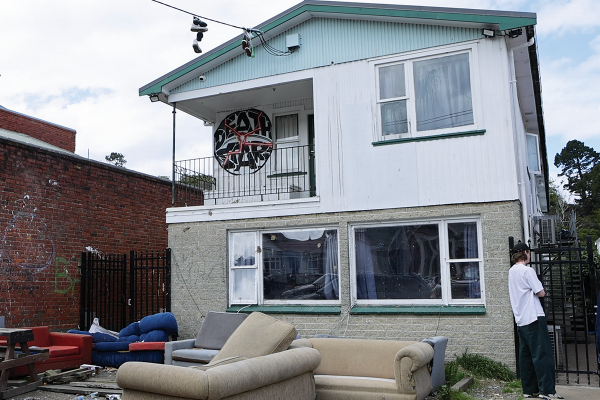
Best and Worst Flats 2022
Last year, Critic invited students to submit their pads or paddocks to win a free feed from Delivereasy. We went ‘round and toured the best and the worst of the lot, risking both our lungs and our livers to set things straight. Based exclusively on the flats that chose to enter, here are Dunedin’s 2022 Best and Worst Flat Awards.
-
Culture
 Issue 10 08/05/2022
Critic Poetry Comp
Winner: taurus knows libra By Vega McHaffie i would plead that when he saw me he wouldn’t realise; my soul was an idea scrawled across real estate agent pads floating amongst reminders to get oat milk, to vacuum car seats after the beach, to water forgotten succulents. it was not a sonata for the sage of the moon written in moleskin not even post-LSD prose written in men’s notes apps. my existence rather bleeds of complimentary pen ink, the bubbling of black coffee in boys’ stomachs. but, then again; he’d never think to plead that i didn’t search for the seesawing of your eyebrows on his face for i still wait for the glue to wash away from your blushing skin, and for the water, fresh, to detach my regret for not learning what i was never taught, for forgetting the feeling that never touched the futile cotton weave of my intestines.
-
Features
 Issue 8 24/04/2022
The Great Critic Te Arohi Flat Garden Competition
Most of Dunedin is a concrete and shattered-glass wasteland. The only crops that grow are a large quantity of substandard housing, liquor stores and fast food restaurants. However, there are a few green spaces that, against all odds, have managed to produce life from Dunedin’s inebriated fields. Oases of greenery abound in patches of barren dirt. In recognition of this miracle, Critic launched a flat garden competition to honour those who have green enough thumbs to grow plants at their flat.


