
Nicole Muriel
Writer
Articles by Nicole Muriel
2 articles found. Displaying page 1 of 1.
-
Culture
 Issue 10 07/05/2012
The Most Fun You Can Have Dying
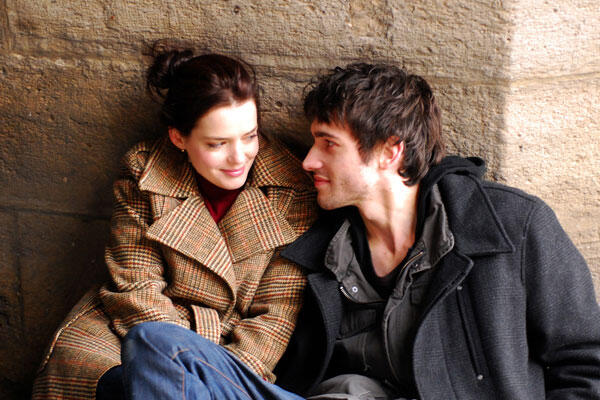
Michael (Matt Whelan) is around about your age. Like you, probably, he’d been reasonably assuming that he was at the start of his life. Now he’s got terminal cancer. Michael’s only option is an expensive treatment that raises his chance of survival to a dismal 10%, and his town manages to raise the money. But before attending the celebratory ceremony, Michael is told he must get in a wheelchair. “You don’t look … sick enough.” This bleak-but-ridiculous humour continues in Michael’s frequent check-ups. “Jellybeans?” the doctor offers after a particularly gritty prediction. The rare occasions you laugh in this film, you’ll laugh a lot. Eventually Michael, reeling from an ongoing bender that began after his diagnosis, casts his weakening morality to the wind. He steals his treatment money and secretly hightails it to Europe, leaving his loved ones in the dark. Abroad, he adopts an increasingly wild lifestyle. One night, he is beaten unconscious in an alleyway and awakes to the sight of the appealingly accented Sylvie (Roxane Mesquida), whose madcap behaviour attracts him. They grow closer, but as they do, they uncover several angsty wounds, and not just Michael’s. Whelan’s edgy ennui is an about-turn from the ungainly dork he played in his last major film. I’d almost simperingly call him a star in the making. As events worsen onscreen, you’ll be unable to turn away. However, you might feel you’re sadistically watching a spectacular car-crash of a life, rather than going along with Michael for the ride. Dying is a very difficult topic to convey with sincerity and depth, and sometimes the film just seems to be ticking boxes: Despair, angst, more despair, check, check, check. But Marcon hits all her targets very gracefully, and this is a local film you can proudly take your American and British friends to see. 4 / 5
-
Culture
 Issue 4 18/03/2012
Extremely Loud and Incredibly Close
If you tend to tear up in films about serious-faced, tormented kids struggling against adversity, you’ll probably be all-out sobbing before the end of this film. Its hero, Oskar (Thomas Horn) is spikily adorable with his Asperger-esque interactions and philosophical musings. Oskar is keeping a terrible secret: his father (Tom Hanks) was killed on 9/11, but Oskar alone has heard his six final phone messages on their answering machine. He has hidden the machine from his mother (Sandra Bullock), and is now lost in a sea of grief and terrible anxiety. His panic attacks have numerous triggers, including loud noises and people that come too close. He finds himself unable to communicate his feelings to his mother. Instead, Oskar begins a mammoth quest which involves knocking on 417 strangers’ doors and asking them about a key his father owned. He meets an old, mute man lodging with his grandmother, and finds his silence comforting, so takes him along. The film obsesses over the last moments of Oskar’s father’s death. It is drawn-out and often hard to watch. Oskar’s dad’s last written message – “don’t stop looking” – seems like a bittersweet answer to the questions of human existence; while the world can be at times unbearably cruel, humans have the ability to plough on, and keep looking for whatever they are searching for. While this film raises a lot of questions, including “Can a child really overcome such terrible grief?” and “Why are Tom Hanks and a surgically-enhanced Sandra Bullock playing Oskar’s parents?” it doesn’t ever properly answer them, instead settling for a comforting “finding-closure” ending. Perhaps, though, this does sum up how people deal with grief – by trying to move on as best they can, and enjoying life again. But you might leave feeling not so much emotionally moved as disoriented.


