
Harlan Jones
Contributor
Articles by Harlan Jones
3 articles found. Displaying page 1 of 1.
-
Culture
 Issue 13 24/05/2015
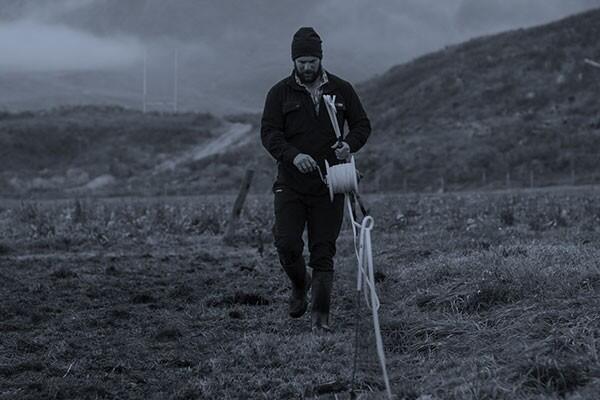
The Ground We Won
Rating 5/5
-
Culture
 Issue 5 22/03/2015
The Salt of the Earth
Rating: 4/5 “People are the Salt of the Earth” Sebastião Salgado informs us — hardly a surprising conclusion from a successful social photographer. The observation establishes the impetus for the documentary, which quickly moves from being a biopic about Salgado into a wider meditation on human nature. The documentary posits that society and political institutions are the causes of human suffering and that, in the state of nature, humankind is pure and peaceful. The film largely follows a traditional linear structure, mapping Salgado’s discourse on people onto developments in his own life. There are, however, a few bizarre deviations, particularly in early parts of the documentary, focusing on the impact of Salgado’s absence and how his work affects his son, who is also one of the documentary makers. I found the film’s apparent disinterest in this subject particularly disappointing as it would have at least given the documentary more objectivity, which it clearly lacked. This was an issue that was especially highlighted at the conclusion of the film, which became a personal appeal from Salgado, the father, to avert climate change and protect nature. The subjective nature of the film, however, is partially redeemed, or at least justified, by an early disclaimer from Salgado — and if photography is someone refracting his vision of the world through glass, then the documentary is Salgado refracting his worldview through film and the filmmakers. It is precisely this subjective element, though, that makes the film a success. Salgado’s talent is striking, and having him explain the psychology of each photo leaves the audience with a sense of overwhelming beauty, even amid the mind-shattering horror of the world it depicts. The sense of calm that comes with the knowledge that all people, regardless of geographic or cultural division, are united and equally a part of nature ultimately makes this documentary worth viewing.
-
CultureIssue 3 08/03/2015
House of Cards, Season 3 (Episode 1)
A s a passionate subscriber to Netflix’s reboot of House of Cards, I found myself eagerly anticipating the first episode of the new season. When the latest chapter was finally released on 27 February, a titanic struggle ensued between my desire to return to the exploits of Machiavellian anti-hero, Francis Underwood, and the pressing need to stay on top of my Contract Law readings. Needless to say, House of Cards emerged — through an unconstitutional amount of political manoeuvring — the victorious party. Weakness appears to be a prevalent theme in the series. For a long time now, we have watched Kevin Spacey and Robin Wright meticulously manipulate the weaknesses of those around them in order to achieve their own ambitions. Power, in the show, appears to be measured by the characters’ ability to separate themselves from their own humanity. “Chapter 27” encapsulates the show’s preoccupation with this theme, potentially as a harbinger for an eventual fall from grace for the show’s protagonists. Francis is now the president of the United States; Clare, by extension, is the first lady. We find Francis barely clinging to his place in the Oval Office, shouldering an appalling approval rating and with an uncertain election just around the corner. Francis’s character arc for the season is encapsulated by an early declaration, “I will not be a placeholder president!” It seems as though the writers are treading water, refusing to allow Francis’s character to existentially plateau upon achieving his goals and drift into long-winded introspection. The result feels strained and, disappointingly, it seems that little has changed even though our hero has reached near-omnipotent heights. Interestingly, the focus of the first episode is on Douglas Stamper, Francis’s aide, who was widely assumed dead at the conclusion of the last season. The first episode effectively documents Doug’s return to health, his dedication to Francis and his eventual return to drug abuse on finding his faith in Francis misplaced. I am wary that Season Three lacks the spectacle and shock value of Season Two, but, thus far, there have been no serious disappointments other than an apparent move away from the subtle imagery of early episodes, as characterised by a less-than-insightful opening to the season involving urination at a cemetery. With twelve chapters remaining, I am pleased to say that I have no doubt as to whom I’ll be voting for come 2016.


