
Kirsty Gordge
Contributor
Articles by Kirsty Gordge
7 articles found. Displaying page 1 of 1.
-
Features
 Issue 9 24/04/2016
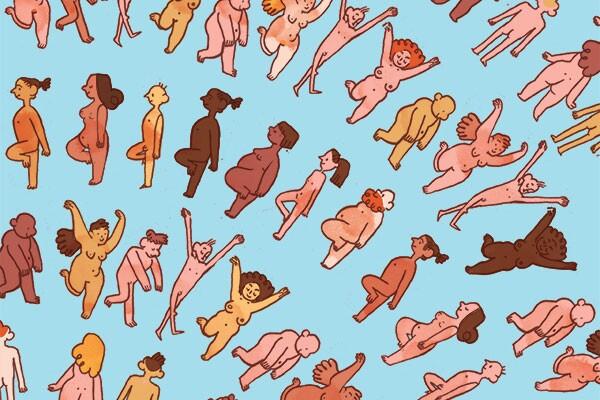
Nudity & Rudity
After spending some time in a nude sauna in Finland, Kirsty Gordge explores public nudity in New Zealand, asking the big question: Why don’t Kiwis get naked more often?
-
Culture
 Issue 23 13/09/2015
We Are Your Friends
Max Joseph’s music drama, We Are Your Friends, successfully captures the struggles of four young adults who have opted out of student loans and, instead, are attempting the get-rich-quick route.
-
Culture
 Issue 20 16/08/2015
Theatre: The Hound of the Baskervilles
Rating: 4/5
-
Features
 Issue 21 16/08/2015
Do You See Me?
When Julie Woods went partially blind in 1984, she was an 18-year-old student at the University of Otago. Her vision declined in a matter of months after she was diagnosed with Starghadtz disease. Starghadtz disease is the most common form of juvenile macular degeneration and affects approximately 1 in 10,000 people. Her loss of sight rapidly progressed as the photoreceptor cells in her retina began to degenerate because of a gene mutation. At the point of her diagnosis, she was offered little support, and she failed half of her first-year papers.
-
Features
 Issue 11 03/05/2015
My Vegan Week
Kirsty Gordge undergoes a vegan lifestyle for a week to learn the whys and hows of veganism. The three main enlightenments are: It is not a diet; it is a lifestyle. It is not just about food; it is about animal testing. And if you do it properly, it won’t restrict your life to lettuce and carrots.
-
Features
 Issue 5 22/03/2015
Drop Outs: An Educated Decision
Students drop out of universities across the country and throughout the world. Do they lack money or motivation, is it the cold weather, or is the student life just too hard? Or do some students simply not see the point anymore? Data released by the Tertiary Education Commission shows more than one in five New Zealand students drop out of university in their first year. In 2010, the national retention rate for first year university students was 81 per cent; in 2011 it was 79 per cent; in 2012 it was 82 per cent; and in 2013 it was 84 per cent. The retention rate in New Zealand is pretty stable even if it isn’t excellent. The latest research from the Ministry of Education shows that in 2012 of the full-time domestic students who started study in 2011, Asian students had the highest first-year retention rate: 89 per cent were still enrolled in 2012, or had completed a qualification. This compares to 84 per cent of European students, and 74 per cent and 79 per cent for Māori and Pasifika respectively. Of the same students who started study in 2011, 84 per cent of women and 80 per cent of men were still studying in 2012, or had completed a qualification. Overseas, England’s University of Bolton had the worst drop-out rate in the UK last year with 21.4 per cent of students reportedly quitting after their first year. It is estimated that 45 per cent of undergraduates in England fail to complete their degrees. The total figure of university drop-outs in Britain has risen 13 per cent in one year. Imogen Jenkins, a BSC (Hons) Medical Science student at the University of Leeds in England, said the majority of people in her high school enrolled in university to continue their education. The shortest degree is three years and, before 2011, the average fee was £3,375 per year (roughly $7,000 NZD). After 2011, some fees increased to £9,000 a year ($18,100 NZD). Jenkins believes this contributes to the increase in the drop-out rate: she believes the fees are not worth it if students are not enjoying the course. The drop-out rate in the Netherlands is also fairly high. A majority (84 per cent) of the university’s students are first-year students because few reach beyond their first year. Agriculture seems to have the highest drop-out rate, followed by education. Students 19 and older are twice as likely to drop out as students under 19. In Finland, university is free. And there are almost zero dropouts. The government pays for your degree and gives you the equivalent of the student allowance (weekly payments you don’t have to pay back). The only reason you might need to get a loan is to upgrade your apartment or to go travelling. Lotta Moisala studies at the University of Helsinki and is working towards a Masters in Psychology. It will take her five and a half years to complete her degree, which will likely get her a job straight out of university as the competition isn’t huge and “the future looks bright” in her discipline. So what’s the catch with Finland? Free education? Free living costs? No debt? Well … you have to be a genius to get in. Moisala applied to her course along with 1800 other students and was one of only 55 to get in. This worked out as three per cent of applicants. The number of dropouts is minimal; likely a result of students working their butts off to get in and not wanting to throw it away after one year. In America, the top retention rate is 99 per cent, which is the rate at Columbia University, the University of Chicago, and Yale University as surveyed by U.S. News and World Report. Seven other universities follow closely behind with 98 per cent, and another 16 have 97 per cent retention rates. However, nationally, as many as one in three students don’t return for “sophomore year” (second year) for reasons including academic struggles, family issues, financial strain and loneliness in colleges. Someone who did make it to sophomore year is Isabel Lanaux, a student from the University of Southern California in New Orleans currently on exchange at the University of Otago. She said most students who make it to the first semester of their third year go on exchange, as college is “one of the only opportunities for this extended type of travel,” and Emma Howey from Wellesley College in Seattle agrees with her, saying it was just time to get away. Lanaux chose Otago because of our great outdoors, and thinks that the domestic fees here are less expensive than in the US. At Lanaux’s high school, almost all of Year 13s went on to university, and she expects that this figure is a lot lower in New Zealand. At Howey’s school, about half of the graduates continued to tertiary level. The typical degree in the States is four years, and even if you have a scholarship the cost could still be up to USD$100,000 (NZ$132,000)! The chances of getting a job straight after graduation are pretty high if you know the right people. Howey doesn’t know anyone who has dropped out at home, and Lanaux only knows a couple of people who have failed after one and a half to two years. The norm in this situation is to return home and attend a community college. The University of Auckland and the University of Otago have the lowest first-year drop-out rates in New Zealand. But in 2012, 14 per cent of Otago students still dropped out. So why do students in New Zealand drop out of their degrees? Student health services provide cheap counselling services to help students cope with the unique situation that is university. Being straight out of school, dealing with the additional workload and intense social scene, and often suffering some form of homesickness can place extra stress on anyone. There is also the matter of no individual attention, which many will be used to at home. Residential assistants are there to help with this transformation, but it’s certainly not the same as some one-on-one family time. Seeing as New Zealand usually weighs heavy in the alcohol consumption basket, research into the possibility of alcohol causing drop-outs seemed necessary. Professor Doug Sellman, Director of the National Addiction Centre, shared his thoughts: “We are likely to be comparable to universities in other Western countries, with the most important drug problem by far being alcohol.” Interestingly, he comments on the apparently overlooked issue of how long alcohol actually stays in our bloodstreams: it can be there up to 72 hours later. So after a big night on Saturday, your Sunday, Monday and Tuesday are “down the toilet with your vomit.” Sellman reminds us of the yin and yang of recreational drug use — what goes up must come down, and if you make these big Saturday nights a routine for the year, then “more than half the time is devoted to alcohol intoxication and subsequent detoxification.” He also said that “a web-based survey of 2,500 undergraduates in New Zealand (not a random sample) was conducted in New Zealand in 2009 showing that nearly 40 per cent had binged alcohol in the past week.” He claims that “[New Zealand’s] relaxed attitude towards alcohol will continue to have an enormous and unnecessary amount of harm occurring including the tragedy and waste associated with alcohol-induced university drop-out.” While this is all very likely (we all know people who should party less), alcohol doesn’t have to be the big ugly reason every time. Other students choose to change their type of degree. Rhoda Miller, a first-year Health Science (FYHS) student of 2013, dropped out of her course after one semester because she did not enjoy it and, as a result, wasn’t achieving the grades she wanted. Dropping out of FYHS is not uncommon. She states that at least 50 per cent of the infamous “Health Scis” at her hall dropped out of their courses and changed to a different degree by the second semester. Students often change to entirely different courses, possibly at entirely different tertiary institutes. Brody Leathem is a former Otago student who left his degree behind in 2013. When asked about his reasons, he said the word “drop-out” is an interesting term. He expands on this: “If I run a bath and it gets cold after a while, I really begin to wonder what I’m sitting there for! Is it worth finishing everything you start?” Undergoing a Law and Arts degree was leaving the bathwater cold for Leathem. He left after three and a half years, $28,000 in debt, which he calls “an expensive decision-making process.” However, university was always intended to open Leathem’s eyes to what he wants to do and who he wants to be, and the “pseudo-adulthood” environment meant he met like-minded people. Leathem said he felt “more and more stifled by the institution of education” and that “the cost of conformity was a means to some storied end” like job security, career prospects and competitive employment, which are not “paramount values” for him. His leaving university was more to do with the fact that he didn’t believe it was what he wanted to do at that particular time. He is not alone in this, as he knows two other people who also didn’t see uni as an important life step and left their degrees unfinished after two years of study. Leathem would absolutely consider another degree in later life if it turns out he needs one to succeed in a particular venture. He now resides in Mount Maunganui and is looking for employment there. At least he’s enjoying the great weather. Evidently, dropping out doesn’t have to be a bad thing. Neither does changing your course. It may be expensive, but that’s why we love the interest-free loan. The help and support are there if you are struggling. The choice of courses is there if you are bored. And if you really don’t want to be on your course, or struggle to see where it may take you in life, why not make a change?
-
Features
 Issue 2 01/03/2015
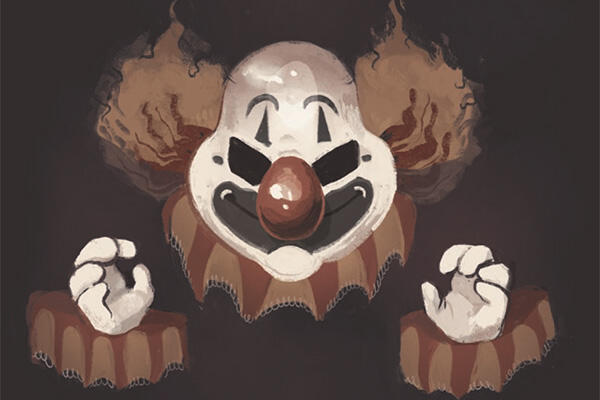
Don't be Afraid
“If it’s a huge whitetail, I’ll get a ringing in my ear and freeze,” said Katelyn Hill, asked about her arachnophobia. Heard that one before? What about coulrophobia? There’s a good chance you have a minor form of it – a fear of clowns. Napoleon Bonaparte had ailurophobia, a fear of cats. Hitler, Mussolini and Julius Caesar also feared cats. Sigmund Freud had a fear of weapons, which was said to be a sign of retarded sexual and emotional maturity. Richard Nixon, the thirty-fourth president of the United States, had an excessive fear of hospitals, believing that if he ever went in, he would never come out. You can find endless numbers of famous people who are phobic of something, which inevitably increases the popularity of the particular fears. There are some bizarre-sounding phobias on the master list. Have you ever heard of alliumphobia — a fear of garlic? Chromophobia — fear of colours? Thaasophobia — fear of sitting? Hedonophobia — fear of feeling pleasure? Papyrophobia — fear of paper? It quickly becomes apparent that these could have been made up by quick-thinking people in desperate situations. A non-phobic person losing an argument could go into a fit in order to stop listening and later claim he has allodoxaphobia, a fear of opinions. Your mum might claim to have ataxophobia, a fear of disorder or untidiness when she tells you to vacuum your room. You could tell your lecturer that you can’t spend $80 on a textbook because you have bibliophobia, a fear of books. Then again, anything can be neatly explained away by the top dog polyphobia — fear of many things. For those with phobias, it usually means to have a chronic or irrational fear of something. 11 per cent of people will experience a phobia at some point in their lifetime. There are two main categories of phobia; social and specific. Social phobia is directly associated with Social Anxiety disorder (SAD) and the people suffering experience extreme fear and discomfort in social situations of any kind. People suffering from this phobia also tend to be very self-conscious and a lot of the fear stems from stress about possible humiliation and scrutiny from other people. This is the most common type of anxiety, and is normally developed after puberty. On the other hand, specific phobia is the unreasonable fear of a specific object or situation and is related directly to the object or situation itself. By unreasonable, we mean that the fear the person feels is unjustified – ie. Looking at a clown will not actually hurt you. When people are placed in situations where they have to directly face their phobia, they may experience a feeling of losing control, panic and even fainting. Specific phobias will often develop at a much younger age than social phobia and are generally what we are referring to when we’re scared of something. Senior Lecturer Dr Dione Healey from the University of Otago’s Clinical Psychology Department described the DSM (Diagnostic and Statistical Manual of Mental Disorders) criteria that clinical psychologists and psychiatrists use to make a diagnosis for this particular form of anxiety. There are five key criteria: Marked and out-of-proportion fear within an environmental or situational context to the presence or anticipation of a specific object or situation Exposure to the phobic stimulus provokes an immediate anxiety response, which may take the form of a situationally bound or situationally predisposed panic attack The person recognises that the fear is out of proportion The phobic situation(s) is avoided or else is endured with intense anxiety or distress The avoidance, anxious anticipation or distress in the feared situation(s) interferes significantly with the person’s normal routine, occupational (or academic) functioning, or social activities or relationships, or there is marked distress about having the phobia The DSM criteria also state that the symptoms for all ages must last for at least six months. Healey confirmed that people can have phobias about absolutely anything, and a friend of hers even has a severe mayonnaise phobia. 21-year-old Katelyn Hill knows that the fear of spiders is called arachnophobia, although it’s not a label she puts on herself. She says her “phobia” has gotten worse as she’s grown older, because now she’s too old to call for mum to come and get them, and now she lives in a cold Dunedin flat, she seems them more often. Despite the anxiety, she says it has not really limited her life in a way that other phobias could. How do we know Katelyn has a phobia instead of just a fear? She said that she gets a ringing in her right ear whenever she sees a spider, and if no one gets rid of it for her she will wonder where it is for hours. This fits in with the “immediate anxiety response” in the DSM criteria, as well as having “marked distress”. She knows she is not alone, and has never felt the need to be officially diagnosed by a professional — It’s probably not too hard to notice when you and your eight-legged friend don’t get along. 55-year-old Sandra Gordge has acrophobia, a fear of heights. She didn’t realise it had this label and believes that it developed when she fell down the stairs as a toddler, needing stitches above one eye. Since then, she has avoided heights. Sandra avoids theme-park rides, ferris wheels and cable cars, as expected, but she also struggles on stairs and escalators, having to hold on to the handrail and take her time unless there’s a lift she can use. Otherwise, she endures the flight of stairs with “intense anxiety and stress”. She feels the limitations of her “phobia” as she can’t experience everything and has missed out on climbing Sacre Coeur in Paris and the Mayan ruins in Guatemala when travelling. Sandra believes she is getting better at managing her fear as she is more aware of it and has become more confident with facing her fear over time. Searching for a characteristic that further matched the DSM “out-of-proportion fear” specification, Sandra noted, “I can be on stairs walking normally and suddenly be overtaken by fear and then find it difficult to actually move. I have to concentrate really hard just to complete them, particularly if there is no handrail.” She doesn’t believe she is alone and thinks that everyone must have a phobia of something, and refers to a friend of hers who she knows is scared of butterflies. Allana Cato, a 20-year-old with a fear of injections, believes she was born with her phobia. Her dad is also squeamish around needles so she thinks it must run in the family. Although she was not aware that her fear of needles and injections is called trypanophobia, she is aware of how much it limits her life in small ways — not being able to give blood frustrates her, and getting a blood test or injection is a much bigger deal than it needs to be. She is embarrassed to make a scene with “tears and thrashing” when the nurse tries to hold her arm, “which isn’t fun for anyone.” A strong fear of veins goes hand in hand with her fear of needles and injections, and she has always avoided anything to do with veins: even just talking about them makes her feel weak. She says that at a recent blood test, she applied numbing cream to prevent the trauma but was still sweating, crying and shaking at the ordeal, even though “it didn’t hurt that much.” 81-year-old Julie Grenfell described her claustrobia, or fear of being trapped in small spaces. Once, she found herself trapped in a top bunk “virtually a shelf approximately 40cm from the ceiling” in a crowded mountain hut, experiencing “what I began to realise was a level of anxiety increasing to panic.” She doesn’t believe her phobia has grown over time, as she learned quickly to avoid small spaces that may give her the same ‘trapped’ sensation — avoiding the phobic situation as the DSM criteria notes. She believes that the term phobia is “a somewhat loosely used label” that has perhaps become slang for any form of fear. When one doesn’t have a phobia, the story is quite different. Ben Butt, who doesn’t describe a particular phobia, believes “all people are born with fear but it takes certain experiences in one’s life to turn that fear into crippling terror.” He sympathises with people “to an extent”, explaining that it’s understandable to have a “deep fear of spiders or snakes or tall heights” but that phobias such as “a fear of flowers or fear of bathing seem like they’ve been made for the special snowflake generation.” He also said that he lacks sympathy for those people with phobias who don’t get treated, as this impedes “both their own lives and those of their loved ones.” He thinks that having over 500 documented phobias is excessive but does believe that a phobia can be more than “just a fear” and can end up controlling your life and restrict daily activity, which “could lead to an even more introverted and withdrawn individual.” “I would say that a large majority of people with phobias have too much time on their hands and WebMD saved to their favourites bar.” Fear is a natural human response to sensing danger, and is one of the basic human emotions and functions like an instinct. However, intense fear of a specific thing is often a learned behavior. In 1919, psychologist John B. Watson did a completely unethical experiment on a young boy to show how fear is learned and is actually conditioned through our experiences. This is known as classical conditioning. The boy, called ‘Little Albert’ was shown many animals, none of which he feared. However, for the experiment, every time Albert was exposed to the rat, Watson made a loud sound by striking a steel bar with a hammer, which obviously scared the boy. After several repetitions, the child was then conditioned to be afraid of the very sight of the rat. He had been conditioned to be afraid of the rat. This demonstrates how exposure to a traumatic experience triggers the fear or phobia in childhood, which can follow you for the rest of your life. Self-diagnosis is more common than going to a doctor about a fear or phobia, as it would rarely occur to someone that professional help should be sought for, what is sometimes, a very common feeling. Doctors can give medication to patients if they feel it is necessary, but there are alternative cures to phobias that can work, depending on the person. An exposure treatment called flooding works by immersing the person in the fear long enough for the fear to fade away. Counter-conditioning or systematic desensitisation trains phobic people to relax in the tense situation instead of feeling scared. In another method, modelling is used, where phobic people observe non-phobic people in their feared environment. Mildly phobic people tend to avoid the situations that make them anxious, and this is enough for them to cope. There are also hundreds of self-help tips, telling phobic people to face their fears, to challenge their own negative reactions and to relax in the tense situation. Individuals may have enough discipline or self-belief to achieve this on their own, but help can be worth it. Hypnosis can be an effective treatment for a lot of people by accessing the underlying cause of the phobia and neutralising a person’s negative response. In hypnosis, the brainwaves slow down and the subconscious mind is engaged: it is a focused state of relaxation. New associations can be formed when positive thoughts are introduced, meaning that a person can develop a different, healthier response to the phobia trigger. The best way to check whether you have a proper phobia is to use the DSM criteria; from this you can also see how badly it is affecting your life and decide whether or not you want to do something about it. Doctors can talk through your symptoms and determine whether your fear is serious enough to be a phobia, and then offer you appropriate solutions. Healey specifically recommends cognitive behaviour therapy as first-line treatment. However, if you have a phobia strong enough to meet the DSM criteria, you probably already know about it by now. Unless you are scientiapantophobic — scared of knowing.


