
Bridie Boyd
Deputy News Editor 2015
Articles by Bridie Boyd
27 articles found. Displaying page 3 of 3.
-
News
 Issue 3 08/03/2015
Leaking Dunedin Hospital Helps Fish
T his February, the Southern District Health Board (DHB) was issued with a BECA (an engineering consultancy group) report concerning the state of Dunedin Hospital, in particular the Clinical Services Building. The report outlined that the building would need to be replaced within ten years and that it would cost around $50 million to keep it running for that length of time. This is, however, contrary to a 2012 Rider Levett Bucknall report, which stated that the Clinical Services Building had the ability be “re-lifed”. This process would mean the building could last up to another 25 years. According to Southern DHB Executive Director of Finance Peter Beirne, the two reports were prepared from a “different perspective and for different purposes … The RLB report was a high-level cost estimate of what it would cost (only from a costing perspective) to relife for a further 25 years, comparing the intrinsic value this would add to the building.” However, “[The BECA report] was more in-depth and looked at the issues with the facility and the practicality of relifing, including whether the building would be able to be reconfigured for modern clinical services.” The $50 million figure will be in addition to the $72 million needed for the Ward Block. Beirne wanted to make it clear to the public that there was nothing out of the ordinary in the report and that “There are no ramifications in the BECA report that required immediate attention of the Board.” However, this opinion is not shared by all. The BECA report was originally acquired by Labour MP David Clark under the Official Information Act. In an earlier statement, Clark suggested that the financial burden could be eased if construction wer e started sooner. “It is disappointing that the government has been so slow to commit to rebuilding the hospital. The level of secrecy surrounding the timetable for committing to a rebuild, the nature of the buildings, likely cost and so on is probably best explained by a government defensive about its lack of progress. If the government does ever make a concrete commitment, you can bet it will be screaming the news from the hill-tops,” said Clark. He added, “The failing IT systems and leaking operating theatres that attracted negative publicity last year follow years of deficits, government concern, and oversight boards and so on. The fact that the buildings need replacing, the fact that Dunedin has a world-class medical school and the fact that the South needs a full tertiary hospital — are hardly new.” Jonathan Coleman, National Minister for Health, disagreed. “The government is committed to the re-development of Dunedin hospital. Work needs to be completed on the DHB’s future configuration of services plan before the business case for the hospital can be finalised. It’s important to get the right configuration of services that meet the community’s needs. There’s no point in building a new hospital until there’s clarification on what services it will house,” said Coleman. Last week, Coleman made a visit to the hospital, where he reiterated the National government’s strong commitment to national healthcare. Coleman reminded the public that in the last six years, the government has invested $500 million into the health system. He went on to say that the Southern DHB alone has received $175 million, along with 75 new doctors and 150 nurses. Coleman insisted there will be more in the health budget for the South and there is no planned downgrade. While the government claims to be taking healthcare seriously, the same level of commitment is not apparent with the hospital repairs and rebuild. The time wasted before construction can begin is a burden for everyone, from staff and medical students to the patients who have to cope with a less-than-satisfactory place of care. However, according to Beirne, “The Board agreed to limit expenditure on the Clinical Services Building to safety and service provision issues and prioritise a business case for replacement. Any repairs will be planned to avoid any disruption to the public.” Beirne said that, ideally, construction would be organised to avoid peak winter capacity times, thus limiting a negative public impact. Meanwhile, last November the New Zealand Herald reported that the hospital had spent $129,000 on a fish tank for the Children’s Ward. According to Southern DHB Clinical Leader Children’s Health Dr David Barker, “The aquarium was funded using donated funds, the majority of which came from a separate fund set up a number of years ago specifically for education/distraction for children (known as a custodial fund).” He said the rest of the funds for the tank came “from donations which were given specifically towards the tank and were allocated as requested.” Barker said, “It may be difficult for some to perceive the importance of non-clinical care, but this is considered to be an essential part of holistic modern paediatrics.” For example, “play specialists are an integral part of our team and health practitioners rely on their input for distraction therapy to facilitate procedures and treatments.” However, the fish tank story has caused controversy. According to Clark, “If the buildings were modern and [the] government was properly funding healthcare in the South, the DHB would probably not be so cash-strapped and would not be receiving so much scrutiny.” He said the fish tank was “not a good look” when “operating theatres are leaking, when staff-rosters go unfilled, and when people can’t get the operations they need to make them productive members of society.” Barry Taylor, the University’s Dean of Medicine, agreed that the hospital was in poor shape and that the Medical School supports the community and DHB concerns that “[The hospital] is no longer up to national hospital standards … The Dunedin School of Medicine is committed to working with the DHB on a collaborative basis to plan service models for the future and to resolve any issues that may arise from the services plan … The ongoing ability for us to advocate for health workforce training and development and excellence in research is paramount, and we are doing this,” said Taylor. He said the main issue for the Medical School “has always been the ability to see patients for learning purposes, and to have facilities for research.” The problem is “not lack of space, so much as the quality of the space.” Regarding possible upgrades, he said, “The impact of construction, and where some learning facilities might need to be relocated, has not yet been properly quantified as there has not yet been a final decision on the hospital’s future.” Taylor added, “The level of discomfort, such as noise, to staff and students that may be a result of the construction of new facilities is usually able to be tolerated for the future good.” Overall, the “sentiment [of an upgraded hospital] will be echoed throughout Dunedin, a city that lacks a quality public hospital and whose hope is that the rebuild would begin soon.”
-
Culture
 Issue 1 22/02/2015
Outside Mullingar
Rating: 3/5 Outside Mullingar has too many faults to be more than average. The plot is classically Irish, with rain, farms, endless tea and family feuds in abundance. The First Act deals with death, family inheritance and lost love in an emotionally battering rollercoaster. Anthony Reilly is a hardworking farmer and the son of Tony, who owns the farm. After a neighbour passes on, his grieving widow and daughter are invited back to the Reillys’ place for a cup of tea. A verbal bomb is dropped when Tony announces that when he passes, he won’t be leaving the farm to Anthony, causing a rowdy quarrel between all parties. The Second Act deals solely with the relationship tribulations of Rosemary Muldoon (Lara MacGregor) and Anthony Reilly (Phil Vaughn), and it is truly a piece of theatrical beauty. The most irritating flaw is that there is no consistency in the time that the play is supposed to be set in, which is confusing for the audience. At first, the piece seems set in the past, but “pizza boxes” are mentioned in the dialogue. People fetch coal and wood for a fire but then discuss the Olympics being on “telly”. In the First Act, the clothes seem older, with the women in skirts and shawls and the men in corduroys and shirts. Then in the Second Act, the men and women have modern clothes, but this Act is set only three years later. If it is a scripted attempt to show that the story is applicable in any era, then it would be better left unsaid. The actors are professionals, and it shows, but they are let down by the play itself. The scenes are a little dragged out in the First Act but still seem to lack explanations for the audience. The Second Act is considerably better. Not only are the scenes punchier, the banter is better — and in Dunedin, that’s always a gift. Lara MacGregor’s performance in the Second Act is superb. The set is a delightful, timeless kitchen in a quaint Irish farmhouse, and Irish folk tunes play softly in the background at frequent intervals during the play. It was the black Irish humour that kept me going through this play though; the witty one-liners boosted the otherwise flawed dialogue.
-
News
 Issue 1 22/02/2015
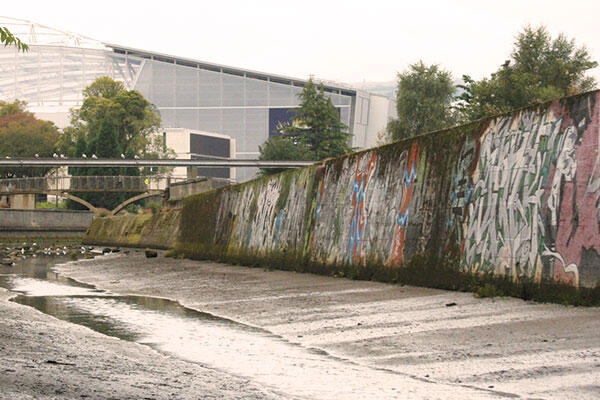
Fears deepen as drought drags on
O n January 30 2015, the Otago Regional Council asked the government to officially recognise the devastating dry spell as a recorded drought, after the longest dry spell since 2004. Except for the Clutha River, most tributaries and rivers still have dangerously low levels, with no sign of rain to abate the situation. According to Peter Bodeker, Chief Executive of the Otago Regional Council, high levels of rainfall in the near future would still not be enough to regenerate the vegetation in the region. The severity of the drought means that even winter crops will face extreme difficulty. The effects are set to be felt in the region until spring, at the earliest. Farmers, particularly those involved in dairy and crops, are struggling. Irrigation from most rivers has been stopped and, as a result, most farms no longer have stock on the fields. High numbers of animals are also being sold. Backpackers passing through the region described the impact of the drought as disastrous. The travellers reported that farmers throughout Southland and Otago are still wishing for more rain; recent showers in the area had simply not been enough to rehydrate the land. Not only is the drought killing crops through lack of water, the intense sun is also damaging some crops directly. Charlotte Crawford-Sharpe, an apple thinner, said that workers had been asked to cut off any apples that had been burned by the hot sun. Luckily for students, not all farming industries are suffering. The dry weather has not harmed crops linked to the brewing industry. Concerns that the drought could later cause a supply shortage of beer are unnecessary. Chris Snow, a spokesperson for Speights, said, “From a Speights’ point of view, with our malt grown in Canterbury and our hops in Nelson, very few of the ingredients we use come from the Otago region so we are confident that there will still be plenty of Speights for Kiwis to enjoy over the coming months.” An employee for McDuff Breweries in Dunedin said that they also had no concerns, as their barley crops are grown up in Canterbury. The Dunedin City Council currently takes domestic water from Deep Stream, which has low but not minimum water levels. While the DCC has alternative measures in place for such events, the city could still face shortages if the drought were to continue. Bodeker suggests that Dunedin residents continue to help their rural counterparts through common sense, minimising shower lengths and not heavily watering lawns or washing vehicles.


