
Emma Lodes
Contributor
Articles by Emma Lodes
9 articles found. Displaying page 1 of 1.
-
Columns
 Issue 12 17/05/2015
Science, Bitches | Issue 12
The Franz Joseph and Fox glaciers are must-sees on a road trip of the South Island. They’re each about 12 kilometres long and unique in that their icy tongues descend through lush rainforest, blue-white enigmas in a green realm. Although Franz Josef Glacier exhibits a natural cycle of advance and retreat, it has undergone an unusually hasty retreat since 2008, attributed by most to global warming.
-
Columns
 Issue 10 03/05/2015
Science, Bitches | Issue 10
On Saturday 25 April 2015, a massive, 7.8-magnitude earthquake hit Nepal, the worst Nepal has seen in 80 years. At the time of Critic going to print, the death toll had passed 5,000, but continues to climb; time will tell what the full extent of the damage is. Kathmandu Valley is densely populated at about 2.5 million and, due to poor infrastructure, has been absolutely devastated by the quake.
-
Columns
 Issue 8 19/04/2015
Science, Bitches | Issue 8
It’s easy to blow off global warming, especially when we hardly notice it. The most dramatic and rapid effects of climate change are felt more by polar bears than humans — far, far away from human inhabitation in the permanently frosted-over soils of the Arctic.
-
Columns
 Issue 6 29/03/2015
Science, Bitches | Issue 6
Sixty-six million years ago — as the Cretaceous period transitioned into the Paleogene — a massive asteroid hit the earth, and three-quarters of all animal and plant species went extinct in a geologic blink of an eye. In the wake of all the destruction lay evolutionary opportunity: ecologic niches waiting to be filled. In a short period, mammals radiated out from a small, simple family into the diverse and extensive group of animals we’re familiar with today, producing groups like horses, primates and whales. When Darwin sailed to South America, he uncovered the bones of an ancient and mysterious group of hoofed mammals - South American native ungulates (SANUs). He was perplexed about the animals’ evolutionary history, calling them the “strangest animals ever discovered.” In a recent study, researchers finally pinned down SANU ancestry and found that SANUs came to be after the Cretaceous-Paleogene mass extinction. SANUs are now completely extinct, with no living relatives to give us clues to their origin. Some believed that they should be grouped with mammals coming from the ancient northern supercontinent, Laurasia, along with horses and cattle. Others thought they belonged with Afrotheria, or mammals hailing from ancient Africa, along with elephants, aardvarks and sea cows. Because the ancient DNA has degenerated over time, it hasn’t been useful. The only known way to test these historical relationships has been through comparing SANU bones with other species, but those tests have also been inconclusive. So biologists developed a better method — applying proteomic analysis (study of the proteins) to screen bone samples. Essentially, they examined bone protein from extinct mammals and compared it to molecular data from living mammals to narrow down the SANU family tree. They took collagen protein from bone specimens and compared it to an array of modern mammals, including those from the Afrotheria and Laurasiatheria groups. The research nearly definitively places two SANU groups — Litopterna and Notoungulata — with Perissodactyls: odd-hoofed mammals like horses, zebras, donkeys, etc, nullifying theories that the group should be part of Afrotheria. But — because they couldn’t test the SANU species that have been extinct for a long time — they can’t make any final calls, essentially the group is “more like” Perissodactyla than it is like any other placental mammals until they have further evidence. Completely fleshing out the tree of life will take a few more steps in technological advancement and more digging, but nearly solving Darwin’s centuries-old ungulate mystery is a long stride among baby steps.
-
Columns
 Issue 4 15/03/2015
Science, Bitches | Issue 4
F our and a half billion years ago, a star exploded and a cloud of dust spewed into the universe. As it collapsed, the cloud began to spin, and particles began to clump together into planets and moons. Hotter planets fell into the centre of the disk and, at the very centre, our sun was born. Small, icy planets like Pluto sat on the rim of the great spinning disk. One of those small, icy planets is the dwarf planet Ceres. A week ago, on 6 March, NASA’s Dawn spacecraft entered orbit around Ceres, a relic from our solar system’s explosive beginnings. At 1000 kilometres across, Ceres is one of the largest planetary bodies in our solar system that hasn’t yet been explored, and is the first dwarf planet explored by a spacecraft. Since Ceres was born with the birth of the galaxy, it’s considered a “protoplanet”. Like studying a fossil, investigating Ceres’ composition and processes is like looking through a portal to the dawn of time to get a glimpse of how the universe operated at its very birth. Better yet, Ceres likely harbours water, and may even host microbial life. Planetary scientists at NASA’s Jet Propulsion Laboratory (JPL) are nearly certain that they will find water in the form of a briny sea of ice when they land on Ceres. The idea came when planetary scientists spotted “unusually bright spots” on a 92 kilometre-wide crater in Ceres’ northern hemisphere. They believe the bright spots come from light reflected off frozen water. As in Columbus’ days, when ships sailed the oceans for years in hope of discovering new lands, planetary exploration requires long journeys. Ceres was spotted from Earth in 1801, but it isn’t until now that a spacecraft is nearing the dwarf planet, 4.9 billion kilometres away from earth. In fact, the Dawn spacecraft took off in September 2007 and has been roaming the universe for seven years — before it took off for Ceres, it visited Vesta, the second-largest rock in the asteroid belt. Like Mars, Vesta turned out to harbour watery minerals — most likely, they came from a smaller, water-rich asteroid that crashed into Vesta and left mineral residue in its crust. The plan on Ceres is to analyse minerals and conduct planetary geology, similar tasks to those conducted on Mars or Vesta. Dawn will lower down onto the planet’s surface over the next few months and will stay for 16 months, with a planned departure on 16 June to fly home. Hopefully, Dawn will bring back some clues into our solar system’s beginnings, and maybe even a further clue in the ongoing quest to discover extraterrestrial life.
-
News
 Issue 3 08/03/2015
Otago Staff Receive Teaching Awards
On Monday 2 March, four University of Otago teachers received awards for teaching excellence. The awards went to Dr. Roslyn Kemp, Dr. Rachel Zajac, Associate Professor Christine Jasoni and Associate Professor Jacinta Ruru. Along with a certificate to recognise their efforts, they each received $7,500 to go towards teaching and materials. Associate Professor Christine Jasoni, a Senior Lecturer in the Department of Anatomy, said she is “both delighted and humbled” to receive the award. “It is an indication that I am on the right track with my teaching, antd that is always good to hear.” “My favourite part of teaching is enthusing and engaging students with things that they either thought were too hard for them or that they had never thought about before,” Jasoni said. “This is exciting to me because it means that I can have a positive impact on the lives of young people, and that means a lot to me.” Associate Professor Jacinta Ruru is a Senior Lecturer of Law, focusing on indigenous people’s rights to land and resources internationally. Ruru also received the Kaupapa Māori award. “I feel so honoured and humbled to receive this award,” she said in a media release. “There are so many amazing Māori teachers at Otago; it’s great to have this recognition for what we do in supporting students, particularly Māori students, to succeed at Otago.” Dr. Rachel Zajac, a Senior Lecturer in Psychology, said “I put my heart and soul into designing and delivering my lecture material, and so it’s fantastic to have that recognised by the university,” Zajac said. “I was an Otago undergraduate, and my career was shaped by some fabulous lecturers who really sparked my interest,” she added. “I want to pass that interest on to my students.” Dr. Roslyn Kemp is a Senior Lecturer in the Department of Microbiology and Immunology. On top of this, she also conducts research with graduate students. Kemp said, “Cell immunology is a horribly complicated subject, and it’s not a black and white thing. Students all understand different bits differently, and you have to change your teaching constantly depending on how they understand the material. What’s awesome is when they put it all together, and that is very rewarding.” “You have a class filled with all sorts of people and personalities, so you get a lot of feedback from different students and it’s all really interesting,” said Kemp.
-
Columns
 Issue 2 01/03/2015
A Broad View | Issue 2
I t’s night, the stars are out and a bonfire is burning wildly in the middle of the road. Green shards of glass from smashed bottles are strewn about the flames. I peer closer at the fire, fearing what could be burning in there. Then I see … a ratty old couch. On the street corner, the campus security officer is watching the event with an amused expression. Students running around with beer in their hand. Students running around wasted, barefoot, on the sharp glass shards of beer bottles they’ve just dropped from balconies. Does the officer see what’s happening? At my home school in the US, the officer would be after every one of those kids with a list of 200 convictions, hunting for an excuse to stop a good time. Here, he just seems to want to ensure that everyone’s okay and having fun. Sunday night, I approached an officer for directions to a friend’s flat. He was standing in the street in the midst of couch-burning riot. “I’m looking for 378 Leith Street,” I offered, tentatively. “Oh, I heard there’s a great party there!” he replied. And then — “I’ll walk you over! How do you like Dunedin so far? Hope you’re having fun.” If a campus security officer saw you with a can of beer in your hand in the US, you would be written up, called in for a conduct meeting, forced to attend Alcoholics Anonymous meetings and required to write essays detailing your progress with alcohol abuse. These extreme sanctions often lead to serious binge drinking and multiple transports to hospital during big parties. I’m not sure how much of an issue alcoholism is at the University of Otago, but a policy of drinking in the open and semi-supervised seems much healthier than the situation in the US. Students aren’t forced to take six shots in six minutes hiding in their dorm room before they head out onto the street. Campus safety officers genuinely seem to want to help you stay safe, instead of looking for any excuse to bust your ass. I’m enjoying a break from the uptight campus culture I’m used to at home, and may just get too used to this freedom. Thanks for the burning welcome, Dunedin. emmabilgerlodes.wordpress.com
-
News
 Issue 2 01/03/2015
DCC Considers Liquor Ban Extension
A View Street residence known as “Backpackers” has come under scrutiny from the Dunedin police and neighbouring houses, as the behaviour of its inhabitants is seen to have crossed the line. Urinating on the street, wrecking household items, blasting music and smashing bottles and windows have allegedly become regular actions of the flat’s inhabitants, causing the Dunedin City Council to consider taking extreme action. The DCC is considering extending the central city liquor ban to View Street. The idea was originally suggested by Cr Benson-Pope after the DCC received numerous complaints from the flat’s neighbours. According to Dave Cull, Mayor of Dunedin, the flat has been a recurring problem over the last few years. “It’s a house with 19 people, but I don’t think there are only 19 people involved in the gatherings … there are hundreds spilling out onto the street.” According to Cull, neighbours have approached the DCC with complaints including “disorder, damage, noise, drunkenness, obscenities, you name it.” General Manager Services and Development Simon Pickford confirmed that at a recent party, a student jumped out of an upper-storey window onto a Noise Control Officer as the officer was leaving the flat. The officer “suffered minor head, neck and shoulder injuries, but these could have been much worse,” Pickett said. “It was an extremely dangerous situation. The council will not jump into initiating a liquor ban but will conduct a consultation to gather multiple options for action. According to Cull, other options include police action and noise abatement notices. In a noise abatement notice, continued disturbance from the flat in question can constitute a crime. Pickford said he believes that a noise abatement notice, which would mean continued disturbance from the flat would constitute a crime, could be just as effective as a liquor ban. “The police have requested [liquor bans] in the past — particularly around large events — and they have worked well,” said Pickford. “However, bylaws of any sort are generally the last resort as they restrict people’s rights and freedoms, so it’s not something that’s done lightly.” Pickford explained that in order to create a bylaw extending an alcohol ban, substantial evidence that alcohol has contributed to a high level of crime or disorder is needed. “Ultimately … our preference is to encourage more responsible behaviour without the need for infringement fines and bans,” he said. “In the case of View Street we invited the tenants along to a meeting with council staff, Armourguard Noise Control contractors and police. This was a very positive meeting which hopefully will avoid the need for a regulation approach.” However, the police favour an extension of the liquor ban, according to Pickford. Cull believes action should be taken immediately. “We would like it to kick off as soon as possible, and come back to council as soon as [we can],” Cull said. “We are not talking about minor disturbance. We would like to see that there are solutions sooner rather than later.” The DCC will discuss the options and decide how to proceed at its next meeting.
-
News
 Issue 1 22/02/2015
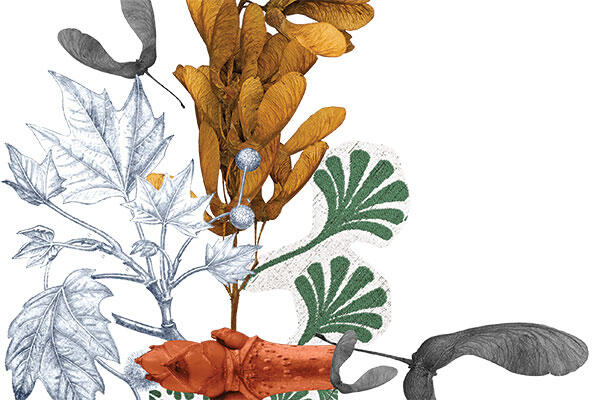
Dunedin Sick of Mores
S ycamore trees have become a topic of conflict in recent weeks, with the Dunedin City Council and the Chalmers Community Board arguing that they’re choking out native plants, hogging sunlight and stamping out undergrowth bush. According to Lisa Wheeler, DCC Parks Manager, the city is “being inundated with [sycamore] seedlings … They are actually starting to reach maturity enough to create their own seedlings, so it’s becoming a problem.” She said, “[Dunedin] has a number of sycamore trees and [they] germinate quickly, so we have new seedlings coming through anywhere the wind blows.” According to Wheeler, the issue with sycamores is “the impact they have on the environment and just how fast they spread.” Due to their height and fast growing rate, sycamores tend to block natural light very easily,” argued Wheeler. “They’ve got a big root system as well,” she added, “so they affect the underground and the bush environment that [the DCC is] trying to regenerate.” Wildscreen’s online initiative, Arkive, notes that a sycamore tree can live to be 500 years old and can produce over 10,000 seedlings a year, which can be dispersed kilometres away with high winds. Wheeler and the Dunedin City Council have begun encouraging residents to cut and poison sycamores on their property: “We are trying to see if we can do anything and, if so, what those controls will be,” said Wheeler. “We’re looking at it from a city perspective,” she said. “The community board and [Dunedin residents] are becoming more conscious [of] the nuisance the sycamores are creating.” Sycamore seedlings can be pulled out, but once the trees grow to a larger size they must be covered with a weed-control paste to kill the roots. The Dunedin City Council currently has contracts that include the removal of noxious weeds, but a limited budget constrains their ability to remove full-sized trees. “We want to identify the best control method for different size trees in different locations, and then make a plan for people to remove the sycamores from their own property,” said Wheeler. The DCC will be working closely with the Chalmers Community Board, beginning with a mapping activity in West Harbour to locate individual trees. They plan to test methods for controlling the sycamore trees in that area and then expand successful methods throughout the city. The council will also be recruiting volunteers to help remove trees on public land.


