
Alex Campbell-Hunt
Contributor
Articles by Alex Campbell-Hunt
33 articles found. Displaying page 3 of 3.
-
Culture
 Issue 13 24/05/2015
Run Lola Run
Classic
-
Culture
 Issue 12 17/05/2015
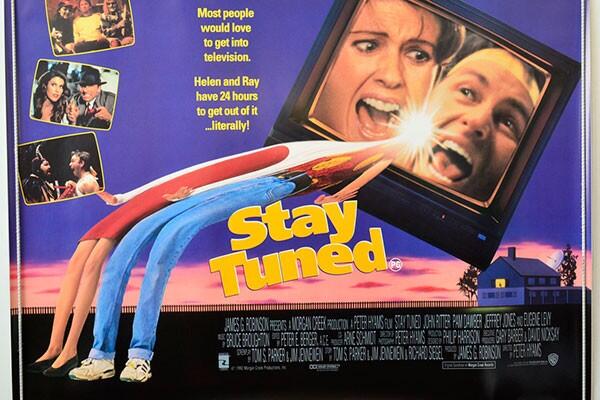
Stay Tuned
Cult
-
Culture
 Issue 11 10/05/2015
Ordinary People
Classic
-
Culture
 Issue 8 19/04/2015
Flight of the Navigator
Classic
-
Culture
 Issue 24 21/09/2014
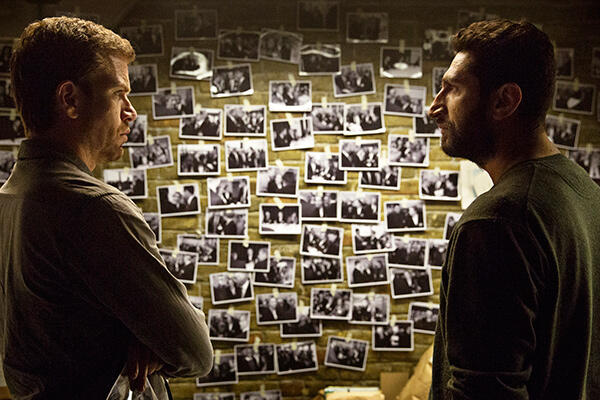
The Keeper of Lost Causes (Kvinden I Buret)
Rating: B Scandinavian cinema has a tendency to be kind of grim and morbid, and the recent wave of crime-dramas is no exception. After watching this movie, or The Bridge or the Millennium trilogy, one might be left with two strong impressions of Scandinavia: that it’s completely grey and colourless; and that it’s full of bizarre and extravagant violence. Having been there, I can happily say that both are untrue; or at least I never once had my eardrums forcibly ruptured or my teeth removed with pliers. This film’s ill-fated victim is not so lucky. (By the way, this isn’t a movie for the faint of heart). Danish Police Detective Carl Mørck is assigned to the Cold Cases department of his station after being injured in the field. He looks into the disappearance of politician Merete Lynggard years earlier, and suspects that it was not the suicide everyone assumed. The film’s setup is involving, but relies on a lot of crime-drama clichés. The detective protagonist is world-weary and pessimistic (á la John Rebus, Jack Bauer etc); he’s saddled with an optimistic sidekick who he is initially annoyed by, but eventually learns from; the victim is a young, attractive and seemingly angelic woman with a back-story that might connect her to the killer; and there are even some ball-busting senior officers thrown in for good measure. This genre could really do with some mixing up. From this setup, the film did surprise me by becoming more dark and twisted than I expected, but the conclusion is very formulaic. I thought the film’s cinematography was its most impressive feature. The way each shot is framed and set up, the colour scheme, the use of claustrophobic grey environments is all very striking and effective (again, Denmark is an extremely nice place in real life, so it’s impressive how well they are able to transform it for the camera). As for the story, I couldn’t help but make comparisons to The Bridge, which was similar but a lot more original and resonant. The Keeper of Lost Causes held my attention well enough, but overall it felt more like an elongated episode of a TV show than a movie.
-
Culture
 Issue 22 07/09/2014
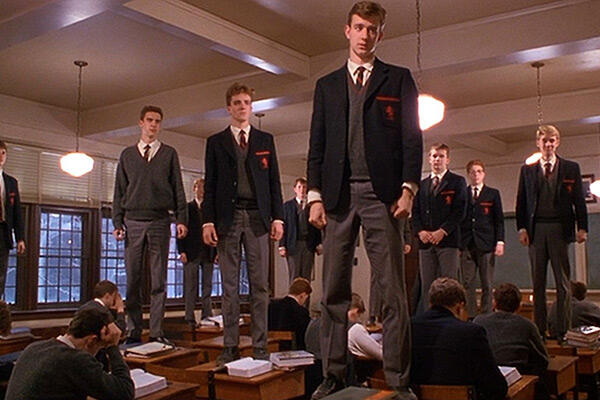
Dead Poets Society
The film that earned Robin Williams his second Oscar nomination and showed the world that he was actually a pretty damn good dramatic actor as well as a talented comedian. Williams plays John Keating, an eccentric and inspirational English teacher at an elite boys prep school in the 50s, whose quirky teaching methods were based on those of real-life teacher Samuel Pickering. The real Pickering was valued by the schools he taught at but, of course, in the movie version the character clashes with his stuffy superiors who will have none of that balderdash and tomfoolery in their institution. When I watched Dead Poets with some friends last week somebody said, “So this is basically Patch Adams in a school instead of a hospital?” That hadn’t occurred to me before but, yeah, it kind of is. But it’s much better than Patch Adams, I promise. The movie really captures the oppressive and stifling nature of 1950s boarding schools, complete with the impersonal lesson delivery and the corporal punishment. We see how Keating would be a ray of light in that environment; he treats his students as fellow human beings. As well as making the subject more engaging, he also helps them to develop some self-confidence. The character will remind you of that one really awesome teacher you had in high school. Possibly the movie undermines some of this by going all Patch Adams on us, as Keating’s unorthodox lessons gradually have less and less to do with English and he thus seems kind of bad at his job, such as when he teaches them how to walk in a non-conformist manner and stand on their desks, because that’ll show The System, or whatever. Here we start to side with the stuffy headmaster. The film also follows several of his students and what they do with their newfound enthusiasm. One decides to go after a girl who has no interest in him, leading to some of the most awkward courtship scenes in the history of cinema. The other student subplots are more effective, and there are very good performances from young Ethan Hawke and Robert Sean Leonard (AKA Wilson from House), who hold their own alongside Williams. All in all, this is a powerful movie that definitely warrants a recommendation. Be warned though: as with Good Will Hunting, it was already a potent tearjerker even when its star was still with us, and it’s doubly so now with the passing of the Captain.
-
Culture
 Issue 21 31/08/2014
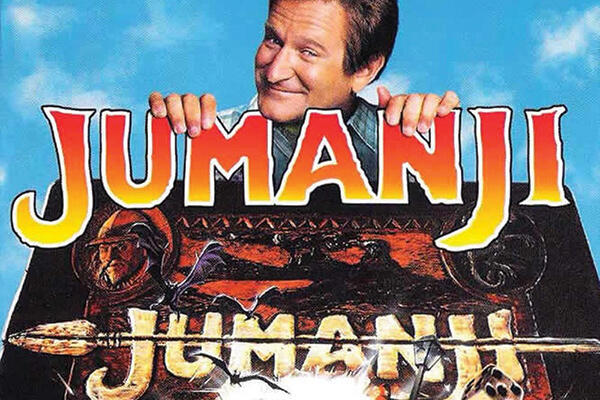
Jumanji
Classic Film A nostalgic 90s’ classic, which I’m sure many of us have been revisiting in the weeks since Robin William’s death. The film is about a magical board game named Jumanji, which conjures deadly jungle-related things with each roll of the dice. There are killer mosquitoes, lions, carnivorous plants, etc., and the only way to get rid of them is by finishing the game. Four characters (played by Robin Williams, Bonnie Hunt, Kirsten Dunst and Bradley Pierce) wind up playing Jumanji, and must attempt to complete it while escaping the terrors it throws at them. As an adult, I can no longer pretend Jumanji is the flawless masterpiece I once thought it was; the first 15 minutes feel like a Goosebumps episode, the ending raises all sorts of logistical questions, and the “face your fears” message is a bit too simplistic for a movie that features so much danger that one would be well-advised to run away from. Also, the villain is played by the same actor who plays the protagonist’s father, with no in-story explanation, bringing with it a Freudian WTF factor that probably doesn’t belong in a kid’s movie. However, the things that are still awesome about Jumanji outweigh any faults. The characters are well fleshed-out and entertaining to watch; Williams and Hunt are both just as adept at drama as they are at comedy, and they strike the perfect balance. There’s some real suspense as well, and the special effects are generally pretty amazing. And I think a big part of why I loved this movie so much as a kid was that the action sequences are taken just as seriously as those in movies for adults. They are just as imaginative, well-constructed, suspenseful, and entertaining. Jumanji drew some criticism for being too scary for young children, which is understandable. But there’s a lot of heart and comedy that balances the scares, and for kids who aren’t old enough for Kill Bill, it offers a level of action and excitement that most other family films don’t.
-
Culture
 Issue 18 03/08/2014
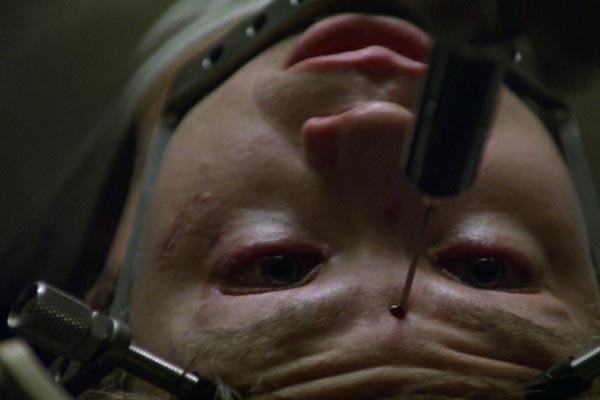
Jacob's Ladder
Cult Film To call Jacob’s Ladder a horror movie would be selling it short. It doesn’t only rely on frightening images, it also gets inside your head. Tim Robbins plays Jacob Singer, a soldier who returns from Vietnam and begins to experience terrifying demonic visions. His girlfriend (Elizabeth Peña) believes he is suffering from post-traumatic stress, but Jacob starts to suspect that he died in Vietnam and is now in hell. The grimy concrete jungle that is New York City (subtext alert) suddenly adopts an even more sinister presence. Jacob starts to move between different realities, and his world becomes unnerving in subtle ways. Like him, we are unsure of what is real. Some of what we see may only be the projection of his mind. This was Robbins’ first leading role, and he’s an ideal casting choice, because he just seems like a regular guy. If the film had cast a brooding, swaggering type of actor with movie-star gravi- tas, it would give the audience some distance. As it is, we are kept all the more invested when it’s a relatable character being inexplicably sucked into a maelstrom of hellish insanity. This is one of those films that keeps the viewer strongly drawn in on both an intellectual and an emotional level. For some viewers, the film’s WTF factor might crowd out everything else, but there’s plenty of subtext in there. It’s a film about life and death; it is also full of biblical allusions. But what I found to be the most engaging thread of the movie was its exploration of what happens when your own mind turns on you. It’s established that Jacob is abnormally intelligent, and his mind may have been kicked into overdrive by an external agent. Some reviewers have noted that the film might be an allegory for schizophrenia; I believe it could be an allegory for mental illness in general. Beyond the tangible experiences like hallucinations, the film captures the feeling of becoming afraid of one’s own mind; not knowing what is real or what to trust. Definitely requires multiple viewings.
-
Culture
 Issue 17 27/07/2014
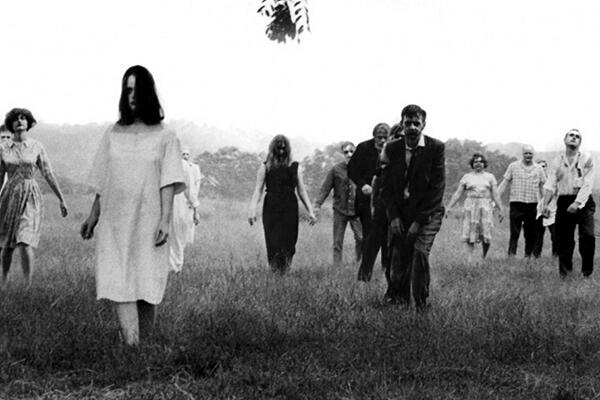
Night of the Living Dead
Classic Film The mother of all zombie movies and, in my view, the most effective and terrifying, with the possible exception of 28 Days Later; NOTLD did a lot with a small budget, few special effects, few locations and a small cast. The grainy, shaky home-footage look gives it an immediacy that makes it all the more frightening, much like The Texas Chainsaw Massacre and later films like The Blair Witch Project. You feel like you’re right there with the protagonists. The zombies themselves are less elaborately made up than their counterparts in future films, but somehow scarier. Some of this comes down to good directing and storytelling. The first zombie appears minutes into the film with no prior setup, as our protagonists are visiting a graveyard. It is just a hazy figure in the distance, and all we can make out is a strange walk. The protagonists are at first amused, but become decidedly less so when it catches up with them, and the film then hits the ground running. The rest of the story takes place in a single location: an abandoned house in which a small group of survivors take refuge. We find out what has been going on in the rest of the world as the protagonists do, through chillingly realistic televised news bulletins. The film drew some criticism for its characterisation of the female lead, Barbra: she runs the gamut of being completely hysterical to being completely catatonic, all the while fairly useless and non-functioning. Meanwhile the male lead remains calm, resourceful and proactive. Sadly the same observation can be made of many films. In support of Barbra, I found her to be by far the easiest character to identify with. If a zombie outbreak was to happen in real life, I’m sure many of us would be completely overcome with panic, even if we’d like to picture ourselves becoming action heroes. Barbra’s reaction seems the most human one, and it hammers home the film’s realism. Ultimately the film is a haunting chiller that is still pretty damn terrifying today, thanks in no small part to said realism. I can only imagine how scary it must have been to audiences back in 1968.


