
Mandy Te
Contributor
Articles by Mandy Te
34 articles found. Displaying page 3 of 3.
-
Features
 Issue 1 22/02/2015
The social justice warriors
Mandy Te has had first-hand experience of the difficulties social minority groups can face in the western world. Although these are sometimes difficult to navigate, she believes there's an opportunity for us as human beings to use the internet to grow our acceptance and understanding of one another. As someone who was born and raised in New Zealand, the question that follows “where are you from?” really bothers me: “No, I mean but where are you really from?” Of course, you can tell when a person is genuinely interested and you can tell when they’re not but, then again, you don’t hear people asking where Caucasian people are really from. These little things, these everyday things that I try not to let get to me are something many minority racial groups face in New Zealand and in many other countries. Social justice is about advocating for the equality and acceptance of all people no matter what they look like, where they come from and who they’re attracted to. Social justice itself is not a term that can be narrowed down to one specific meaning. For example, Urban Dictionary describes social justice as “promoting tolerance, freedom, and equality for all people regardless of race, sex, orientation, national origin, handicap, etc ... except for white, straight, cisgendered males. Fuck those guys, they’re overprivileged no matter what.” This one definition of social justice is enough to offend most of Dunedin’s population so, as you can tell, it’s also a sensitive topic to discuss. Perhaps this is why online activism, especially regarding issues of race and privilege, is a method of choice for new, young activists. With our lives so entrenched in technology, typing a post online ensures that no one will interrupt you mid-explanation, you have time to thoughtfully plan and write out replies, and while there still may be some yelling, sentences typed with caps lock permanently on will save you a trip to the audiologist. Access to the Internet has allowed people – and particularly young people – to discuss and understand the social issues that occur in our day-to-day lives, as well as dispel popular ideas or stereotypes about groups of people, religions, and countries. With such a disparity of wealth, power, and social equality, young people have taken to blogging platforms like Tumblr to tackle these issues. I was given the opportunity to talk to popular Tumblr blogger and social activist, Jenny Park, on her perception of what social justice is and why she is an online social activist. Park believes that many social justice bloggers simply write about their personal experiences and in fact, this is how she first started addressing issues concerning race and gender. Park defines social justice as “dismantling oppressive systems in our society that exist to uplift people that fit certain expectations while holding down those that don’t. It’s about looking at issues critically from a broader scope of systematic oppression rather than personal, individual choices and intent. It is about seeking to undo the status quo that so many people accept without question and speaking out over normalized oppression.” Put more simply, “it’s about being a good person, not just a decent one.” Many social justice bloggers like Park struggled to know whether they were being over-sensitive or whether others felt the same way: “At the time, I was not able to articulate why they made me upset. I majored in history at university, and taking courses that actually discussed race theory and feminist discourse gave me the words to understand and process my own experiences.” For many people, writing and reading about social justice online helps them find their feet, and there’s a comfort to knowing that these uneasy feelings you have when it comes to race and gender are shared. The ability to express and tackle these types of social issues is also tied to media representation and media coverage; in many cases, it’s the lack of media representation and media coverage that adds to this uneasiness and strange sense of isolation. When the Charlie Hebdo shooting occurred on 7 January 2015, media outlets chose to cover the issue extensively. The shooting at the paper’s offices in Paris was considered a violation of free speech, and demonstrations took place all around the world. “Je suis Charlie” became a worldwide slogan, with celebrities like George Clooney showing their support at the 2015 Golden Globes. All the while, from 3 to 7 January 2015, Boko Haram, a militant Islamist group, had destroyed at least 16 towns. The media coverage of this issue and of the massacre in Baga was limited to a few media outlets, although the death toll and the number of people missing is said to have exceeded 2000 people. The point of comparing these two events that happened almost simultaneously is not to say that the Charlie Hebdo shooting should be dismissed or that the severity of the Baga massacre is necessarily worse and therefore deserves more attention (although there is no doubt that the Baga massacre and the Boko Haram attacks within Nigeria, Chad and Niger should be given more coverage) but to show why everyday people are challenging the news and media representation in the hopes that social justice can take place. With the Ferguson protests in 2014, which were spurred on by the shooting of Michael Brown, the racial prejudice within news was also something that outraged social activists. As one media outlet pointed out, Michael Brown was described in the New York Times as a teenager who “dabbled in drugs and alcohol … [and produced] lyrics that were by turns contemplative and vulgar …” It is unclear what the point of these comments was when describing the shooting of an unarmed 18-year-old. Media ownership plays a major role in this problem of representation and lack of widespread coverage. Six companies own the majority of American media, and in 2012 it was recorded that 232 media executives were in charge of all the information being fed to not only the American population but to people internationally. One main criticism of media ownership is that news outlets lack diversity and thus minority groups are not accurately covered or represented; less than seven per cent of TV and radio licenses are held by women, while racial minority groups in the US hold just over seven per cent of radio licenses and three per cent of TV licenses. Unhappy with the disparity in media coverage and media representation, online activists now take to social media to challenge how groups are perceived within mainstream media and to spread awareness of the issues pertaining to social justice. Twitter’s part in the Arab Spring displayed the positive influence that social media could have on political and social change. Social justice blogs spread news and information that cannot be found within mainstream culture (or are often found days later). However, the Internet is a dangerous place. There’s a reason why your parents told you not to talk to strangers on the street and, now, not to talk to strangers online. The ability to send anonymous questions and messages on Tumblr allows people to hide behind a screen. Instead of spreading positivity, most questions, messages and even replies are abrasive, invasive, offensive and aggressive because it’s a lot easier to type what you think than it is to say something rude to someone’s face. A major issue that some people have when it comes to social justice blogs is that they are safe spaces for racial minority groups and racial minority groups only. People from majority groups are often dismissed when they ask questions or reply to posts made by social justice blogs. However, where does this aggression really come from? One social justice blog, angryasiangirlsunited.tumblr.com specifically tells their majority-group followers that they are “free to reblog submissions and posts unless the OP (original poster) tags it as ‘do not reblog’, but keep your comments/observations/theories to yourself. Understand that there are so many spaces that cater to the experiences and opinions of white people. These are spaces where we are often spoken over or spoken for by white people and we don’t need that happening here.” When these requests are constantly ignored and social justice bloggers start retaliating, the term Social Justice Warrior (SJW) is used. As well as interviewing Jenny Park, I also interviewed a Scarfie, Fedora-wearing Redditor, who said he sees SJWs as people who come in two categories. The first group consists of people who are passionate and strong-minded when it comes to issues under the social justice umbrella. The second group, on the other hand, is the group he has nothing nice to say about: “They are all people on the Internet, who are basically all Americans, and a guy I know in Wellington. I don’t think you should talk to people as if you’re on a moral crusade; they come across as ignorant and arrogant and I really dislike the ‘us versus them’ worldview of the second group.” Senior Lecturer in Sociology, Marcelle Dawson, who specialises in social movements and popular protests, views SJWs similarly to Internet trolls: “Sharing one’s opinion is not the same as being a committed activist … it would seem that their contribution to any kind of debate is more about seeking attention by being rude and aggressive, and less about understanding an issue and forming an educated opinion.” As a social justice blogger, Park considers SJWs to simply be “someone who fights for equality. Isn’t that something we should all aspire to be? I’m supposed to be offended that you called me someone who strives to better society?” One question that must be asked, though, is whether online activism is an acceptable method of protest. While we have social justice bloggers and SJWs actively taking part online, do these people fight for equality offline? We saw what happened with Kony — there were over 80 million YouTube views of a video that aimed to make Joseph Kony, militant leader of the Lord’s Resistance Army in Uganda, a public enemy. He became infamous for abducting children and forcing them to become brutal soldiers. The aim was to create enough demand to make international governments take Kony down. People believed in the cause, watched the video and put up some posters but did not attend rallies and protests or donate. Whenever Kony is brought up in a discussion, the issue of slacktivism is now addressed. People complain that the Kony issue was oversimplified and that those who produced the video weren’t actually helping the cause. While it is true that volunteering inside the war zone and sharing viral videos are two very different things, it’s probably unfair to stretch this to calling people “slacktivists”. The alternative is doing nothing. So, could all these people blogging about racism and sexism meet the same result? Marcelle Dawson believes that there is no “best” method of protest: “Different causes and different political climates will require different strategies.” According to Tumblr’s Director of Outreach, Tumblr users aged 18–34 are more likely to attend protests and educate their friends and family on politics and current events. Park, who has seen numerous social protests take place online — in particular, the Ferguson protests — believes that Internet activism is underestimated by people: “I see a lot of people throwing around the word ‘slacktivism’ in reference to activists online and I think that’s incredibly demeaning and does a disservice to the message that can be spread through the Internet as a platform … Internet activism/posting can also support ‘real life’ activism. During the Ferguson protests, donations and legal advice were mobilised through the Internet. Hashtags like #blacklivesmatter created solidarity amongst the movement.” Ultimately, each case works on an individual basis. No doubt, there will be people who are activists both online and offline, but there will also be people who talk the talk but don’t walk the walk. So, if mainstream media representation and the disparity of media coverage doesn’t change and if online activism through social justice blogs, while informative but also exclusive, is problematic, how are we meant to achieve social justice? While I have benefited from the safe spaces of social justice blogs, better communication is needed between the owners of these blogs and those who follow them. The conversation needs to be opened for everyone to participate so that people can gain a better understanding of the issues at hand and so that all of us can work together to dismantle the power imbalances within society, especially when it comes wealth, class, racism and sexism. I’ve had enough of people telling me the reason I do well at things is just because I’m Asian. Rather than have my successes invalidated — “Asians are naturally smart” — I’d like to think I have worked hard. But I get that people don’t necessarily understand the implications of what they say. In fact, it may even be viewed as a compliment. That’s why if we open the conversation, we can collectively come together and make an effort to elicit change; we can encourage one another to educate ourselves more, and maybe by taking small steps like these, they can eventually become bigger ones.
-
Culture
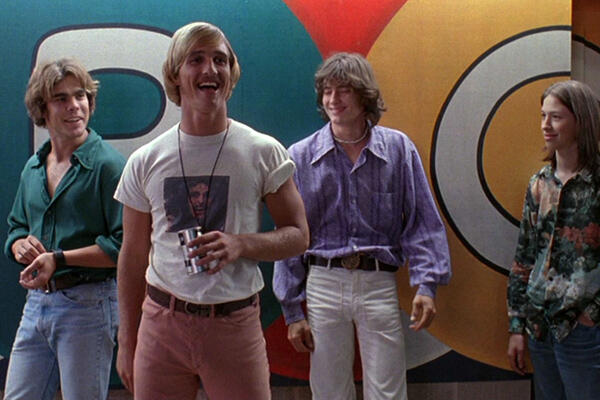 Issue 27 12/10/2014
Dazed and Confused
Classic Film Despite those hours in Central, i still haven’t finished my assignments. I haven’t prepared for my exams and, now that I’m home, my Internet isn’t working. Naturally, I’m devastated. To distract myself from my first world problems, I’m currently reflecting on a more peaceful time – as in, four hours ago. The sun was setting and I was sitting on one of those comfy red chairs watching the cult classic Dazed and Confused. Take me back. Set in 1976, Dazed and Confused is an incredibly nostalgic film, even for me and I wasn’t even born then. It’s the last day of high school, which means that next year’s group of seniors or, in our case, year 13 students, are on the prowl to initiate the incoming freshmen. Girls are forced to lie on the floor while who-knows-what is thrown on them, and the senior boys even indulge in a few car chases just so they can hit the butts of 14-year-old boys. Hazing at its finest. However, amongst all of the initiating, weed smoking, and beer drinking, some interesting topics are addressed. Neo-McCarthyism is brought up when Randall “Pink” Floyd (Jason London) is forced to sign a sheet for football that states he will not drink or do drugs, and Feminism is discussed in the girl’s toilets during an in-depth analysis of Gilligan’s Island. Whenever I listen to Bob Dylan’s “Hurricane,” my mind drifts off to a seedy David Wooderson (Matthew McConaughey) leading the pack through a very cool-looking recreation centre. Though I can’t help but listen to the alarm bells going off in my head. Firstly, whose parents would ever let their 14-year-old daughter go to a party full of intoxicated 17-year-olds? Secondly, why isn’t anyone suspicious of Wooderson? Isn’t he, like, 30 and hanging out with teenagers? And thirdly, how does a 14-year-old kid not get ID’d when buying beer? Aside from all of those concerns, Dazed and Confused deserves praise for not fulfilling the teen movie trope of love triangles and cliques. Its originality is endearing. I would definitely recommend watching it.
-
Culture
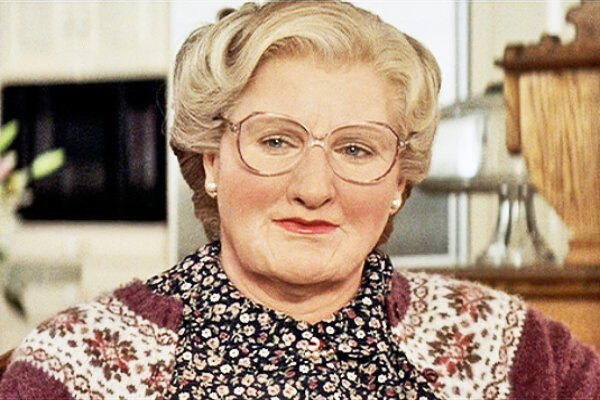 Issue 25 28/09/2014
Mrs. Doubtfire
Classic Film Through the eyes of young me, Mrs Doubtfire was a hilarious film that made me cry with laughter. However, through the eyes of “adult” me, Mrs Doubtfire is actually a pretty heart-breaking film that just made me cry. Blame it on the cold, harsh realities that my sheltered, suburban life has given me. Mrs Doubtfire tells the story of cool dad, Daniel Hillard (Robin Williams), who abruptly quits his job and proceeds to throw a birthday party for his son, Chris (Matthew Lawrence) despite his bad report card. When Daniel’s humourless wife, Miranda (Sally Field), returns to a house full of barnyard animals, she angrily demands a divorce. Miranda is given custody of the children while Daniel can only see them on Saturdays. In order to spend more time with his kids, and with the help of his Hollywood make-up artist brother, Frank (Harvey Fierstein), Daniel pretends to be an elderly Scottish lady named Euphegenia Doubtfire, and he looks the part. Once the body suit and mask are on, all you see is Mrs Doubtfire. Mrs Doubtfire is hired by Miranda to look after her children, and he learns a thing or two along the way. As Mrs Doubtfire, Daniel cooks, cleans, and even gains a newfound perspective - one that allows him to see his past behaviour and his current situation in a serious and mature light. However, there are plenty of happy, light-hearted moments too; Daniel eventually lands himself a fulfilling job and gets to spend more time with his kids, as their Dad. I think what I found so upsetting about this film was that I was essentially watching a man’s desperate attempt to be with his children. However, Mrs Doubtfire is a comedy for a reason. The jokes that once went over my head were finally given their overdue laughter, and Williams’ impersonation of a hot dog is cinematic gold and undoubtedly the reason Mrs Doubtfire won two Golden Globe Awards! I highly recommend Mrs Doubtfire and it’ll always be one of those Saturday evening television films that I camp in the living room for.
-
Culture
 Issue 24 21/09/2014
Good Morning, Vietnam
Classic Film First on my road of escapism (the post-mid-semester-blues haven’t left) was Good Morning, Vietnam. Settling in the lounge, a place incredibly similar to a bus stop, I was instantly met with approval for watching such “a good, classic film.” Good Morning, Vietnam is set during the Vietnam War and begins with Adrian Cronauer’s (Robin Williams) arrival to Saigon. Adrian is an airman second class and a popular radio DJ for the armed forces. In true Robin Williams-style, Adrian Cronauer is full of wit, has little regard for the rules, and is a man willing to risk his life to get to know a girl. Sounds romantic, but it’s actually a little creepy. Earlier in the film, Adrian is seen fawning over Vietnamese girls and becomes enamoured with Trinh (Chintara Sukapatana). What follows is a near-death experience and Adrian bribing his way to becoming Trinh’s English teacher. At work, Adrian plays rock and roll music and his zany approach to radio broadcasting peaks the interest of his fellow DJs, who find him hilarious. However, his two superiors, and Sergeant Major Phillip Dickerson (J.T Walsh) in particular, are unimpressed. Although Good Morning, Vietnam is a war-comedy, and I did find myself laughing a lot, the near death experience of Adrian’s friend Eddie Garlick (Forest Whitaker) was probably the scene that resonated with me the most. When talking to Adrian about the experience, Garlick says, “my whole life passed before my eyes … and it wasn’t even interesting to me.” This moment gives us a break from the comedy and patriotism by showing us a real sense of honesty. Honesty that becomes more prevalent throughout the film. Good Morning, Vietnam doesn’t glorify the armed forces; instead it reveals them for what they are: self-censoring and somewhat unsatisfying. At times, the ignorance over anything non-American became a bit overbearing, but Robin Williams’ performance was spectacular - no doubt as to why he was awarded a Golden Globe.
-
Features
 Issue 24 21/09/2014
From flat out to flatmate
Despite Knox College’s desperate attempts at securing third year residents for 2015, all 80 second-year returners have felt that two years is long enough. It’s time to move on from residential advisers banning an open vessel of V (the constant fear of wondering if a security guard will reprimand us for “laughing too loud” is far too harrowing for our young selves, too). Although the administration has decided to get rid of the traditions that separate Knox from all the other halls, I have ultimately enjoyed my time there and have formed friendships with a wonderful bunch of people. However, it is only now that I have realised the problem with staying at a residential hall for two years. We become attuned with how to live in a hall rather than how to live on our own. The routine and rules of a hall become our safety net. We don’t fret over bills because there’s only one we have to pay (subject to change depending on punishments and thus, how many New World vouchers you are forced to overload the OUSA foodbank with). We don’t clean our own sheets because it’s all done for us; we don’t worry about being too cold because we can recklessly leave our heaters on for several hours with no repercussions; and we don’t have to prepare our own meals. Our lives are probably easier than it was when we lived at home with our parents. The prospect of flatting and flat hunting excites us. It’s something new to look forward to and a rite of passage for most university students. As I reflect on my emotions prior to flat hunting, I realise that I was looking forward to the freedom of living in a flat and having a place to call my own. I didn’t actually acknowledge the process of finding a flat or comprehend that it can be quite a tiring task. Sifting through realty websites, visiting houses, writing up applications, paying for bonds and bills – these things weren’t on the forefront of my mind until the story of flat hunting came to life. Chapter one: The talk (the non-sex one.) In residential halls, talk spreads like wildfire. Mainly this talk is of meaningless hook-ups and the Scarfie antics people get up to, but there is a time when the talk turns to the topic of flatting. When the first flat group is formed, the match is lit and the rat race begins. For me, the flatting frenzy took place in May. Yes, that early. This frenzy occurred amongst people who had no desire for the infamous streets of Castle, Leith and Hyde. Breakfast, lunch and dinner chat consisted of who was flatting with whom and how “Queen Street will be Knox but on one whole street!” Once again, the idea of living at a makeshift hall just couldn’t be shaken off. Hall life seems ingrained in our minds, no matter how different the living arrangements are. The desire to incorporate our safety net continues to take place, even in 2015. I do have to admit though, I’m really looking forward to living close to my friends. What I don’t like is the lack of development it gives us if we remain in this state of mind. Generally, you don’t live in a house with two hundred people nor do you have one bathroom with five showers and three toilets in it. Generally. While living in a hall gives you many experiences to meet new people, it can also confine you. Chapter two: The fear sinks in. It took me a long time to actually jump on the flat group bandwagon. I hadn’t thought too much about the people I wanted to live with and I had made little effort to tell people that I would be interested in flatting with them. Organising a flat group in May just seemed irrelevant to me. I don’t even plan what I eat for lunch (hall perks) so planning my flat was clearly not on my agenda. Despite my laid-back (more like lazy) attitude, I’m a worrier. Even when I’m not worried, people think I’m worried and when I’m actually worrying, they think I’m about to have a nervous breakdown. From a psychological point of view, my tendency to worry probably first occurred when I was 7. I put tinfoil in the microwave and set my prawn-fried rice on fire. However, primary school had trained me well and I managed to save the day. Unfortunately, I couldn’t eat the prawn-fried rice. It was soaked in water and I had to opt for toast instead. RIP prawn-fried rice. Ever since then, I’ve always been a little on edge. As the number of flat groups increased, the faster my heart began to palpitate. It would have been rude of me to include myself in a group. And, although there were people who had asked me, I was so hesitant in May to give them a set-in-stone answer that I had been replaced with someone who was definite and eager to immediately find a flat. I became scared, which I really didn’t need to be. And when the fear hit me, I scrambled to piece together a group, just for the false sense of security of having one. Now that I look back on it, I wish I had paid more attention to my laptop’s desktop background. After all, it has been my background for most of the year. The picture is one of Ezra Koenig’s wise tweets about going to the gym. He states: “exercise makes me sweaty, fuks up my hair and makes my face blotchy & red. the idea that it will improve my well-being is...absurd [sic].” As an English and Communication Studies major, I feel like there’s great depth to what he has to say and it must be analysed. To me, Koenig’s theory (yes, theory) suggests that we sweat (literally and figuratively) over the small, insignificant details in life that, by the end of it all, we wonder if labouring over it was worth the outcome. I didn’t initially imagine Koenig’s tweet to be applicable to my flat hunting experience, but his theory? Definitely applicable, and if something makes you sweaty, fuks up your hair, makes your face blotchy and red…it’s not worth it. Chapter three: The scramble. Feeling the pressure of being “homeless,” I found myself running around like a headless chicken pecking at other strays in the hopes that we could form some kind of group. I remember telling two friends about the people I was flatting with and having them laugh at how mismatched we were: a hippie living with a Bible lover? Interesting. In my eyes, it would make for a good modern rendition of Romeo and Juliet. Like the part where almost everyone dies because during the flat hunting process, every member at one point or another wanted to kill each other. (All contemplations of this were done with the eyes; I saw it myself! Until I died, of course.) When people ask my old group why we didn’t work out, they always give the politically correct answer of “oh, we all just wanted different things.” While this is partially true, the reality was this: the people in my group were stingy, over critical and obsessed with quirky rather than practical. And when the flat hunt began, Murphy’s Law began to take place. Chapter four: The beginning of the end. I didn’t realise how much effort and time flat hunting takes. When everyone finally begins their search for flats, the novelty of the hunt quickly begins to wear off and reality sinks in. The start of semester two saw an increase in distressed conversations, glum faces, stories of “we didn’t get our flat.” For many flat groups, the best way to keep up to date with their flat hunt is by creating a Facebook group. Incorrectly naming the Facebook group, “fun in the sun flatties!” and sifting through what felt like thousands of flats, I could feel myself getting exhausted from merely copy and pasting links. Early on, you can see who makes an effort by how often they comment and how many links they post. Though I was certainly caught off guard when the time came to go and visit these flats. One five-seat car with a group of six people is a recipe for discomfort and squats. It only took two journeys before two of us decided to call it quits. What seemed like a fun adventure quickly turned sour as conversations became heated. The people who had the least to offer or say over Facebook appeared to be the most critical and overnight; they had become Dunedin flat connoisseurs. Other members of the group became so aggressively insistent over particular flats for their price rather than their quality while others were unhelpful through their passivity. There never seemed to be a unanimous decision or love for one flat and when it came time to send in applications I found myself applying for a flat I was not impressed with. Yes, it ticked off quirky and cheap and, as students, I know that our wallets aren’t exactly filled to the brim with cash. However, it’s all too often that cheaper flats in Dunedin come with complimentary illnesses. A flat with character is always exciting and all the rage but if the house is leaky, mouldy or damp (which the one we looked at was) that’s not raging with me; I felt as though it was time for me to reassess my flatting situation. OUSA gives great tips on how to stop Aunty Mildew from moving in, but before that even happens I feel as though the best thing would be to try to avoid these types of flats completely – unless you’ve got time for Asthma, longer lasting colds and Bronchitis, of course. I know this is an old joke, so please forgive me, but I can tell you that Sweet Brown definitely doesn’t have time for that! When R, the most reasonable and sane member of the group, decided that it wasn’t worth applying for a house with people she wasn’t particularly close to, it raised a lot of questions for me. If we’re fighting now, what will it be like living with this group of people? Am I willing to apply and pay for a flat I know I won’t be happy in? After tossing and turning, I finally decided that it would be best if I left the group. Chapter five: The aftermath. When I let the group know that I wouldn’t be flatting with them anymore, everything felt better. Sure, I was back to being “homeless” but, at the same time, I finally took notice of something that I should have thought more about really early on. Dunedin is always going to have an abundance of flats and there are always going to be people looking for flatmates. Facebook groups such as Dunedin Flatmates Wanted have people posting everyday looking for someone to fill a bedroom or join their flat group. While the prospect of flatting with strangers can be unnerving, it’s also an opportunity to form new friendships and for you to get out of your hall bubble – one that most of your current friends are in. The day after I left my flat group, I began to look for alternatives. While I initially thought it would be odd of me to invite myself into a group, I decided to uncharacteristically take a risk and text someone I had met once. I had heard from a mutual friend that she was looking for flatmates and having visited the flat below hers, I knew that it was in a nice location and was mould free. By the afternoon, I had miraculously found a place to live in and, while my first experience took an agonising two weeks, my new flat hunt only took 7 hours. Was it fate? Was I meant to endure a bad flat hunting experience before I had a good one? Was the fault in my stars no longer in my stars? Was John Green wrong? Was Shakespeare right? These were the strange questions that circled in my mind. The answer? Koenig’s theory. It was when I didn’t sweat the little things that my flatting situation cohesively came together. Ezra Koenig doesn’t need exercise to be devastatingly handsome and healthy; and I didn’t need to fret as much as I did over who and where I would be flatting with in 2015. Chapter six: Food for thought. The following week I met my future flatmates and I’m looking forward to what 2015 brings. I also brought over food, which might have been the reason our first official meeting went well. As I reflected on my rollercoaster ride of a flat hunt and how I landed myself in a flat with strangers, I couldn’t help but think that maybe it’s sometimes better not to flat with your friends. My departure from the first flat group resulted in the disintegration of a few friendships, as the experience made me realise that the basis of our friendship was based on living circumstances. We all lived in the same hall and that was it. As people and potential flatmates, we’re just not compatible and, while it is a shame, it’s something that simply happened. Flat hunting not only teaches you a lot about yourself, it teaches you a lot about others. While some friends can easily live with one another, I think that to keep other friendships intact, you need to consider if you can honestly live with them. Your flaws and their flaws cannot be overlooked, especially when it’s within the same walls for an entire year.
-
Culture
 Issue 21 31/08/2014
Where'd You Go, Bernadette
Before Maria Semple was a novelist, she was a screenwriter for Arrested Development and Saturday Night Live. With the Arrested Development aspect in mind, there is no doubt that Semple can write great, satirical pieces. Her latest novel, Where’d You Go, Bernadette, is no different. In this novel, Semple draws from her own personal, and very much first world, problems of living in Seattle. Semple experienced the pain of not having a personal assistant and also felt that all 634,535 inhabitants of Seattle hated her. These anxieties are channelled through the novel’s missing person: Bernadette Branch (née Fox). A friend inadvertently recommended this book to me. Well, it popped up on my Goodreads feed and I couldn’t help but pry into my friend’s literary life. I just like to know what other people are reading. I’m also just a very nosy person in general. However, after reading the blurb, I found myself wanting to know more about the novel. I was also quite taken with the front cover. There’s an air of captivating mystery about it that makes me genuinely want to know the answer to Bernadette’s whereabouts. The illustration on the front cover consists of bold, solid colours. Despite its simplicity, the portrait of Bernadette immediately caught my eye. In some ways its simplicity is ironic because the story itself has a lot of twists and unexpected elements. For some reason though, eye rolling always ensues around books that are categorised as “chick lit” and Where’d You Go, Bernadette certainly gives off that chick lit vibe. However, this novel does not deserve eye rolling of any kind. As the winner of the 2013 ALA Alex Prize award and a nominee for the 2013 Women’s Prize for Fiction, Where’d You Go, Bernadette shouldn’t be pigeonholed by first impressions. I didn’t expect myself to enjoy this book as much as I did, but the fact that I finished it within two days proves otherwise. From the very first page, the reader becomes well acquainted with the Branch family and the people who, unfortunately for Bernadette, surround them. The novel is made up of letters, e-mails, magazine articles, and police reports. Bee Branch, Bernadette’s daughter, briefly narrates in between these documents. Semple’s unique, epistolary style was a rollercoaster ride into inner workings of the Fox/Branch family and we enter at a time where their lives are beginning to fall apart. The unravelling of their hint of quirky, upper class lives is spurred when the family start preparing for their trip to Antarctica. This sets off a chain of events that take a major toll on Bernadette. She becomes completely dependent on Manjula Kapoor, her assistant from India (whom she has never met), and eventually detaches herself from the outside world. Bernadette and her absence fuel the events of the novel and the outcomes ultimately change everyone’s lives. From the Branch family to their neighbours to Bernadette’s psychologist, no one remains unscathed. I definitely had my moments of eyebrow furrowing. Firstly, Bee is actually short for Balakrishna. Bernadette named her daughter after Krishna, the eighth incarnation of the god Vishnu because Bee was born with a heart condition that gave her skin a blue tinge. Maybe I’m being too sensitive but that just doesn’t sit quite right with me. Secondly, there were things Bernadette wrote to Manjula that made me cringe. A bindi is not just “a red dot,” thank you very much, Ms Semple! Despite those moments though, Where’d You Go, Bernadette is an engaging, adventurous book and one I highly recommend.
-
Culture
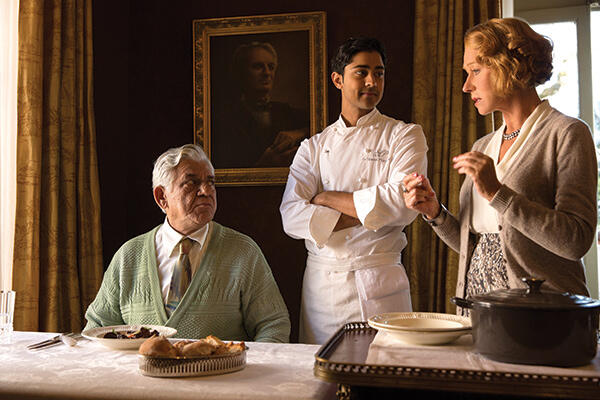 Issue 21 31/08/2014
The Hundred-Foot Journey
When I procrastinate, I try to do it with class. As in, I’ll be my foodie self and watch seven episodes of Kitchen Nightmares. To me, “foodie” just means you’re addicted to food porn. The Hundred-Foot Journey is not just a feel-good film; it’s a feel-good opportunity to satisfy those foodie needs. The Hundred-Foot Journey focuses on the Kadam family and, in particular, Hassan (Manish Dayal). Following the fire that killed Hassan’s mother and destroyed their restaurant in India, the Kadam family relocate to France. The journey is cut short when Papa Kadam’s (Om Puri) car breaks down. Reassuring the family that “brakes break for a reason”, they eventually settle down in a French village and even open up their own restaurant. However, 100 feet away from ‘Maison Mumbai’ is a Michelin one-star restaurant run by the strict Madame Mallory (Helen Mirren). The interaction between Madame Mallory and Papa is initially one of hostility. Insults are thrown and there are many attempts at sabotage. However, their humorous war later adds a deeper element to the film: the issue of racism. The seriousness of this topic adds a dash of reality and I felt it enhanced the cookie-cutter plotline. The film has a central focus on the development of Hassan, who is a promising future chef. With the lessons learnt from his mother, the cookbooks left in his new home, and advice from sous-chef Marguerite (Charlotte Le Bon), Hassan soon becomes an acclaimed chef and pushes the boundaries of the culinary world. He even gets a taste of romance (pun completely intended) – it’s predictable but nice. However, the film’s unravelling of the generic, happy ending dragged on. At one point, I became more interested in the cinema’s curtains. Fortunately, the close-ups of elegant dishes and long shots of the village redeemed the ending. Overall, The Hundred-Foot Journey was a heart-warming film to watch and it’s definitely a good fix for the foodies.
-
Culture
 Issue 20 18/08/2014
Ferris Bueller's Day Off
Classic Film I once asked my family if I could skip school and stay at home; unfortunately, they said no. Ferris Bueller’s Day Off always makes me wonder if my hypothetical day off would have been as cool as his. Probably not. I mean, I asked if I could stay at home. Sooo not “choice” of me. Ferris Bueller (Matthew Broderick) decides that it’s too beautiful of a Chicago day to be spent taking a test on European Socialism. He manages to convince his parents, as well as the whole town, that he’s ill, despite the disbelief of his sister and the Dean of Students, Edward Rooney. Ferris then forces his best friend, Cameron Frye (Alan Ruck), to help get his girlfriend, Sloane Peterson (Mia Sara), out of class. Cameron hesitantly agrees and impersonates Sloane’s father, informing Rooney that her grandmother has died. Plot twist: she’s been alive this whole time! What ensues will make you laugh and feel as though you’re in Chicago with the trio as they eat pancreas, visit an art museum, and sing on a parade float. Did I also mention that they drive around in a 1961 Ferrari 250 GT California Spyder convertible? In some ways, the moral of the film is, if you’re going to skip school, do it with style. Don’t fall into the trap of, you know, suggesting to your family that you should skip school and stay at home all day. While some reviewers panned the film for being too self-indulgent and disliked the protagonist’s “rebel without a cause” personality, this film is a classic. It’s a fountain of unforgettable, impressive quotes, and the parade float scene remains etched in time. Matthew Broderick perfectly describes the film as a “lightning flash of your life” and I personally think this film should be appreciated for what it is: a moment of youthful freedom shared with your very best friends. As Ferris Bueller says, “life moves pretty fast; if you don’t stop and look around once in a while, you could miss it,” and that is valuable advice we should all remember.
-
Culture
Issue 15 13/07/2014
How Should a Person Be?
In 2012, critics praised Sheila Heti’s second novel, How Should a Person Be? The New York Times named it their most notable book of 2012 and magazines such as The New Republic (who once published the works of Virginia Woolf) and the New York Observer placed this novel on their “Best Books of 2012” lists. As well as this, How Should a Person Be? was longlisted for the Women’s Prize for Fiction. To have a novel longlisted for such a prize, a prize once won by Chimamanda Ngozi Adichie, is frankly an insult to Chimamanda Ngozi Adichie. It’s also an insult to Virginia Woolf that magazines she wrote for would enjoy such a terrible novel. In no way does Heti’s novel measure up to the recognition it has received. A part of me wonders why I even put myself through the agony of reading the entire novel. I know the answer though; I hate not finishing a book. My stubbornness led to a week’s worth of misery and a day spent in my favourite place, the library, was a day shamefully wasted. How Should a Person Be? contains 306 pages and each page is pretentious torture. The novel’s blurb describes the story as “a postmodern self-help book” and “an autobiography of the mind.” If I had the same thoughts as the protagonist, who is also the author, and if I, as a reader, willingly chose this book to help me during my quarter-life crisis, I would probably stab myself with a fork. The novel is told from Sheila’s point of view as she begins to go through a period of self-doubt and deals with big, pseudo-intellectual questions concerning morality, art and, of course, how should a person be. Unable to write a play and in search for inspiration, Sheila begins to record her conversations with friend and fellow artist, Margaux, who is based on Margaux Williamson. Margaux never appears to lack creativity and embarks on projects with a seemingly swift ease. However, Sheila’s desire to tackle the question of how a person should be and to rid herself of writer’s block by recording Margaux, eventually causes a rift in their friendship. Alongside this, Sheila enters into a relationship with a man named Israel. This results in several explicit sexual scenes that I wasn’t prepared for. The grand moment of realisation for the protagonist occurs during one of their sexual escapades and that was when I had my own realisation, or in this case, a confirmation: this book is not for me. However, I can’t completely discredit the book. There were some nice one-liners and the occasional paragraph that had me thinking that maybe this book isn’t so bad. I even found myself enjoying some of the things Sheila had come to learn about herself, others and the world around her. However, one-liners and a paragraph or two can’t carry a book to success and I can’t bring myself to write about how great the book is with those sparse but wonderful sentences in mind. While it isn’t the worst book to ever be published, I believe it comes pretty close, despite those moments of redemption. Sheila Heti’s novel, How Should a Person Be? is a true indication that one person’s opinion of a book can be very different to our own. However, I should also point out that even though I wasn’t a fan of this novel, there are people out there who would probably really enjoy it. In particular, I would recommend this to fans of HBO’s Girls as the characters share similar elements and have similar issues to those in How Should a Person Be?
-
Culture
 Issue 11 11/05/2014
American Skin
In 1998, Don De Grazia released his critically acclaimed debut novel American Skin. It is described as an American classic and a powerful coming of age novel. The thesis-turned- popular-book process was like a recipe. All De Grazia had was a dash of luck, a cup of talent and 75 dollars to make this delicious book (I’m a bibliophile, I can’t help it). After receiving several rejections, Don De Grazia spent his last seventy-five dollars to make one more submission and the recipe finally paid off. If I’m being completely honest, I had no idea this book existed until a few months ago. It’s also something I wouldn’t normally pick off the shelf, either. The title screams American Nationalism and the cover features an illustration of a skinhead. In my opinion, skinheads are an acquired taste and a taste that has yet to evolve for myself, but I was pleasantly surprised. American Skin threw me into a world of bomber jackets, Dr Martens and bald gang members sticking it to the man, but I also became enthralled in a story that is so much more than that. It’s not everyday that you find yourself in a multi-racial skinhead group. Then again, it’s not everyday that you find a gang of multi-racial skinheads. However, in American Skin, this is exactly the case. Set in the late 1980s, 17-year-old Alex Verdi’s life is turned upside down when he discovers the police going through his school locker. Alex then finds out that his parents have been arrested for selling marijuana, his sister has been taken into state care and the police want him for questioning. Unable to return to his family’s farmhouse in Illinois, Alex flees to Chicago where he encounters the local club scene, the skinheads that inhabit this area and the issues that come with the skinhead lifestyle. Taken under the wing of Tim Penn, the leader of the anti-Nazi skinhead group, Alex Verdi becomes immersed in his new “radical” lifestyle. He shaves his head, falls in love with a skinhead girl named Marie and begins fighting a white supremacist group called the “Swazis.” As everyone is well aware, a town night in Dunedin is nothing without a fist pump, sometimes to the gut and sometimes in the air. The same can be said for Alex as one brawl results in major consequences for himself and Tim. The two of them are forced to join the army and, once discharged, Alex decides to leave his skinhead life for something better while Tim becomes a drug dealer. Alex travels to Evanston, in the hopes of going to university, but his plan goes awry. Although things don’t work out as expected, Alex’s journey uncovers some family secrets and personal revelations are made. American Skin is a first-person fictional memoir. Alex often seems to be reliving his past experiences with Tim Penn and his gang of skinheads rather than reflecting upon it. Despite this, though, there’s an obvious maturity that Alex seems to have gained when he is able to distance himself from the memories. De Grazia’s straightforward writing style and the quick pace of this novel made me feel as though I was embarking on this journey with him. Sure, if I was him I probably would have gone down to the police station and turned myself in but, hey, that’s why no one has written a novel about me. The different life that Alex Verdi leads is why this book is interesting. As the reader, you’re put in experiences and moments that are uncharacteristic of you, but that’s what makes American Skin a great story and worth the read.


