
Olivier Jutel
Contributor
Articles by Olivier Jutel
2 articles found. Displaying page 1 of 1.
-
News
 Issue 19 10/08/2014
The latest assault on Palestine (a primer)
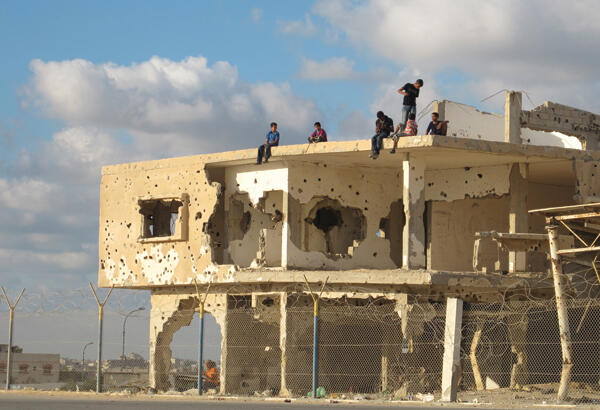
At university we are taught to be dispassionate analysts of world events, but in the face of the massacre in Gaza, academic detachment is hard to achieve. As the host of Radio One politics show The Revolution Will Not be Televised, I recently had the pleasure of interviewing Peace and Conflict Studies PhD student, Israeli peace activist Danny Fridburg. Fridburg was blunt about the vengeful public mood in Israel – a recent Tel Aviv University poll found that 95 per cent of Israeli Jews support “Operation Protective Edge.” Right-wing extremism, anti-Arab sentiment and a brutal police state has taken root in Israel. This public mood drives the belligerence of the Zionist state, which has killed over 1850 Palestinians since 7 July. After this interview my show, which is hosted by two American Jews, was attacked as anti-Semitic and we were compared to Hitler; apparently he was the ultimate self-hating Jew. So where to begin in trying to explain the current crisis and understand how attitudes like that of our aforementioned troll find any oxygen in popular discourse? Since 1967 the West Bank, Gaza and East Jerusalem, which are recognised by the United Nations as Palestinian territories that should be an independent state, have been occupied by Israel. Israeli settlements have sprung up on the West Bank. To protect the about 400,000 settlers, Palestinians are subjected to apartheid-like conditions with Kafkaesque regulations, roadblocks, checkpoints, separation walls, arbitrary mass arrests, daily humiliations and the expropriation of vital water resources. While Palestinians have long known occupation and dislocation (six million refugees live in the Palestinian diaspora), Israel has thrived, buoyed by a massive defence industry and around three billion dollars of American military aid per annum. The peace process?The 1990s was a time of cautious, if ill-placed, optimism where a just solution to the decades-old conflict looked possible. Palestinians rose up in the first Intifada, deploying civil disobedience, work stoppages and general strikes to force international recognition for their cause. In 1993 the Oslo Peace Accords were signed. They gave the Palestinian Authority (PA), led by Yasser Arafat (now succeeded by Mahmoud Abbas) and the Fatah party the right to collect taxes in a semi-autonomous statelet. The “doves” of the Israeli Labour Party almost managed to embrace the international consensus on a Palestinian state. However the 2,000 Israeli elections marked the end of Labour and, with it, popular support for the peace movement, as Israel entered its current hard right-wing trajectory. In the absence of a peace deal the Oslo Accords amounted to little more than deputising the PA to carry out the occupation on Israel’s behalf and an inevitable culture of corruption developed within the PA. Israel was now under the leadership of Ariel Sharon, a man found personally responsible by his own government for the massacre of Palestinian refugees during the 1982 invasion of Lebanon. Hamas and GazaThe PA emerged from this failure disgraced, in the eyes of many Palestinians, as it accommodated the occupation and became marked by a culture of graft and brutality. In recent weeks when protests against Israel broke out in the West Bank it was the PA that violently supressed them. It was from this failure that Hamas emerged, an Islamic political party comprised of both a military wing and a civilian infrastructure, providing schools and hospitals for a people in desperate need. Hamas are not every Western liberal's cup of tea, but neither are they Iranian stooges or the equivalent of ISIS, as claimed by American and Israeli apologists. It is true that Hamas attack Israeli civilians, something any decent person considers an act of terrorism. However, the real obscenity is that the same moral revulsion is not adjudged when the state of Israel kills civilians at a far greater rate. The absence of the historical context in Western media accounts, coupled with an atmosphere of latent Islamophobia, allows a simple insidious narrative to fester, i.e., Palestinians = Terrorists, Israel = Western Liberals. One need only look at historical examples of national liberation movements, even Israel’s own, to understand Hamas’ actions, even if one does not condone them. While many journalists are quick to point out that Hamas’ charter calls for the destruction of Israel, few if any will report the fact that the political leadership has repeatedly stated that Hamas would recognise Israel’s borders upon their withdrawal from Palestine. Hamas’ centrality to Palestinian politics, and the situation in Gaza, dates to the 2006 Palestinian elections where Hamas emerged as surprise winners. Israel, backed by the US, instantly moved to freeze Palestinian tax revenue, declared Gaza an “enemy entity” and imposed the current blockade of Gaza, turning the territory into what Noam Chomsky calls the world’s largest open air prison. The blockade, also maintained by Egypt, has effectively closed the territory to the outside world. The Israeli navy ensures that no Palestinian fishing vessels can venture more than three miles offshore and, in 2010, 10 activists who were part of a peace flotilla attempting to break the naval blockade were murdered by Israel. Gazans have been denied medical supplies and building materials such as steel and concrete. The Israeli military have devised precise caloric calculations and imposed food import restrictions designed to provide a level of subsistence barely avoiding mass starvation. In this context of widespread human degradation Palestinian militant groups like Islamic Jihad have resorted to firing crude rockets, ones that do not even have a payload, in order to pop the bubble encapsulating Israeli society. In response Israel has launched several brutal invasions and massacres. In December 2008 Israel initiated Operation Cast Lead, an offensive that lasted three weeks and killed 1,417 Palestinians and 13 Israelis (four from friendly fire). At various times throughout the blockade, the ratio of Gazan to Israeli casualties has been anywhere between 50–100 Palestinians (80 per cent or more of whom are civilians) to one Israeli. This brings us to the current offensive, Operation Protective Edge. Operation Protective EdgeIsrael’s latest obscenity has to be placed in the context of the June 2014 agreement between Hamas and Fatah to form a unity government seeking to achieve international recognition for Palestinian independence. Angered by the international community’s initial receptiveness to the unity deal, and determined to undermine Palestinian aspirations, the extreme right-wing Israeli government led by Benjamin Netanyahu looked for any excuse to divide Palestinians. Their cover came when three teenage Israeli settlers were murdered in an undeniably heinous act in June. The Israelis admit that Hamas was not responsible for this act; what they also knew, from an emergency call made by the victims, is that the three teenagers were murdered upon capture. Despite this, the Israeli “Defence” Forces (IDF) proceeded to rampage through the West Bank over the course of the following week, arresting over 500 Palestinians, razing houses and killing six Palestinians. Rinad Tamimi, an Otago student who is from Hebron, told me on my program on 18 July, that Israeli settlers forced her parents from their home at gunpoint at night, in search of the victims that the Israeli government knew to be dead. As a consequence of this provocation, Hamas rockets began to rain down on Southern Israel, forcing Israelis into their bomb shelters. At a personal level I do not condone the launching of rockets on Israel, however there remains the question of “What do you expect an occupied and violently repressed people to do?” Even more pressing moral questions include: how anyone can tolerate the indiscriminate killing of Palestinians that we are now witnessing; why the wretched Israeli justifications are being parroted in our own media; and whether we have an obligation to regard Israel as the apartheid state that is? In this operation we’ve witnessed a new blatant disregard for international humanitarian law and shocking levels of Western hypocrisy and disinterest. The “liberal” New York Times has drunk the Israeli kosher-Wine that a deep-seated anti-Semitism drives the Boycott, Sanction and Divestment movement. ABC News has displayed images of Gaza ruination and claimed that they showed an “Israeli family” trying to put their lives together. Barack Obama called the capture of an Israeli soldier inside Gaza “barbaric” and “outrageous” while having little criticism to offer of the Israelis. Israel’s repeated bombing of UN schools is disgraceful and an obscenity, however it is made even more grotesque by Israel and its allies’ attempts to blame the shelling on errant Hamas rockets. The Israeli rhetoric of Hamas holding the civil population hostage is truly revolting as it seeks to justify the IDF shooting the hostage between the eyes. Sadly this rhetoric is particularly effective amongst Islamophobes and those that have embraced a “War on Terror” view of the world (i.e. the US and many in NZ). “Friends” of IsraelI could go on about the particular atrocities that have occurred but I’d like to return to my troll and explain where fanatical supporters of Israel get their chutzpah. Not every supporter of Israel is Jewish. In fact the most strident support for Israel in America is in the evangelical Christian community. We’ve seen some of these Colin Craig-types at counter protests to Palestinian solidarity actions across New Zealand in recent weeks. This community believes in Israel more than American Jews do, with a recent Pew poll finding that 82 per cent of American Christians believe that God gave Israel to the Jews, as opposed to just 40 per cent of American Jews. This is quite a conundrum. Jewish identity is not so much about religion but a particular culture and historical experience. Aside from a not insignificant orthodox community, us Jews are not very end-timey. The importance of Israel to evangel- icals, as a Jewish state occupying the entirety of Palestine, is that it fulfils a condition necessary for the rapture and the return of Jesus Christ. The problem is Jesus is getting very angry with the non-believers who are all going straight to hell if they do not accept him as lord. So basically the “friends” of Israel are driven by a religious apocalypticism that is fundamentally anti-Semitic, as Israel will be turned into a gas chamber that will be ignited by Jesus. This religious fanaticism goes a long way in buttressing America’s military interests in the region. Israel has been a key asset for American imperial ambitions having smashed Arab armies and Arab independence. While there are many secular Jewish Zionists who believe in the importance of Israel as a Jewish state, the costs of sustaining Israel as it exists is supporting apartheid and cozying up to a retrograde anti-Semitic politics. No doubt this article has had to leave out many important events and characters by virtue of the constraints of time, space and your attention. But it is important that we find a space in campus politics to discuss one of the longest running outrages in world politics, voice our disgust at the appalling violence of Israel against Palestinians and begin the conversation about how to effectively boycott the Israeli state. If you want your social media threads to be free of horrifying images of barbequed babies, than this issue is going to require a bit more time and effort than merely crafting a clever hashtag (although I will admit to using #StopKillingChilderninGaza and #JewsforPalestine). “Dunedin for Justice in Palestine” has formed on campus and would be a good place to start. You can troll me at @OJutel.
-
Culture
 Issue 9 27/04/2014
Interview: Boots Riley
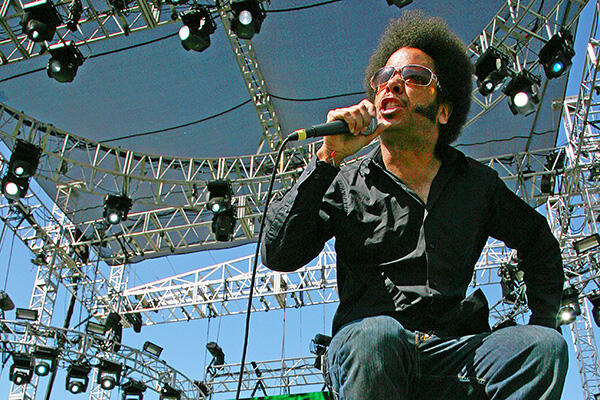
On 16 and 17 April, political activist and rapper Boots Riley visited Dunedin to give a public lecture and acoustic performance. Radio One’s Olivier Jutel caught up with Riley for a post-lecture, pre-gig discussion. Kia ora, good morning Boots! Kia ora, what’s happening? Hey. Listen – it’s Thursday, we’re here, we did this, man! Yeah, man, you guys have really rolled out the works and I feel the love here. Everyone seems to want to be engaged with the world and I see why people come here and stay. Well, I wasn’t fishing for compliments, but I’ll take them! But, listen, and this is kinda what everyone wants to know when somebody international comes over and checks us out – and I know you’ve only been in the country for more-or-less 48 hours – but what have you made of New Zealand and your experience here, and how is talking at this University different from others? I mean, obviously there was some stuff going on the campus at Western Michigan a few weeks back … I mean, you do a lot of public lectures, you engage with a lot of people, what was last night like for you? Honestly, there are a lot of things that are very similar all over the world. On Friday night, no matter where you are in the world, at about six o’clock, people start calling their friends up asking what’s going on tonight. That’s happening all over the world, no matter what continent you’re on. All over the world, around the first of the month, people start worrying about bills and money. That’s a truism. And all over the world, people are thinking about ways in which their life, their world, could be different. And I’d like to say that things are so different here – the way people walk, or the way people phrase questions – I’m sure there’s differences, but the truth is that the students and faculty here, like all over the world, wanna figure out how they can be part of making a different system, and changing the way the world works, and that’s what I’m seeing all over the world. I’m seeing people trying and those ideas growing, and the amount of folks that came last night was … I didn’t even know that people knew who I was out here, so the fact that there were, like, four overflow rooms … Amazing. No one since Bill McKibben … that was the only other time that anyone kinda flirted with 400 at an open lecture, so that was something right there. And I’d like to say even that, just on that thing with Bill McKibben, climate change, without going back over what I said last night, but that’s an example of why labour needs to be part of any radical change, you know. You had scientists that came out a few months ago at a climate change conference in London and said, “wait a minute, none of these measures are going to work. The only thing that’s going to work is if we shut everything down right now. And demand these drastic changes, if we shut industries down.” Now, it can happen that those scientists’ statements fell on curious and confused ears, because radicals have not been organising labour for so long that they would never be able to do that right now. So the changes that even need to be made for climate justice are so drastic that it’s going to take people being able to control industries as opposed to asking and simply slightly pressuring industries to do it. Well, that’s the thing with, I guess, the formulation of politics for a group like [Bill McKibben’s] 350 – somehow we’ve got this objective number, 350 – people just need to realise, leaders will understand the pressure, they will understand in kind of a rational way that if you exceed this number … And so it’s kind of not really something that conceives of changing our world or our politics so that we can address these problems, and so there’s no real formula for it. Somehow, just the truth is enough. Yeah, and we see the truth gets exposed all the time, like, most of us understand that the way the system works is not just. We understand the idea that the rich are getting richer and the poor are getting poorer. We understand the idea that there is just one per cent on top that is just leeching off the 99 per cent. The question is, can we dedicate part of our day, a big part of our day, a big part of our life, to something that we think won’t be able to change it? So it’s about a winning strategy, and that winning strategy for anyone is going to be based on what their power is. And for those of us that are in the 99 per cent, our power rests in the fact that we create profit, that we create wealth. And also just understanding where we are, where our organising is powerful, and obviously the great thing about last night, a public event, many people from across the different shades of the left were there, were unified and good vibes between folks that possibly hadn’t felt good vibes between one another for a very long time. That very notion of public-ness, and that was something where Occupy was so important, was just getting out of clicktivism and actually being somewhere in the city space, you know, because democracy is nothing if not being there in the central city space. Public-ness is incredibly important. Dude, you were so generous with your time and I had to pull people off you because people want to just rap with you into the wee hours of the morning, man! How do you find the strength to come all the way across the earth – and I’ve seen your schedule for the next two months, you’re in Sweden, you’re in Spain, you’re in Hungary, all this kind of stuff. How do you find the strength to still be giving and contribute to people, strangers and all that? Well, actually, you know, flying over here is pretty simple. Nowadays they have airplanes and you just sit down and they do all the work for you. They get you all the way here, so it doesn’t really take a lot of energy to do this. On the other hand, I think about it like this. You know, either way we’re producing for ourselves or producing for someone else and it’s not like it would be easier … Sometimes I think it would be easier if I just got a nine to five job and then just came home and watch TV and go to sleep … And you’ve got kids, man! Yeah, you know. The truth is not easier. Most people are not having that kind of life anymore. Most people are then having to take on another job, or working longer hours, and have that combined with a sense of powerlessness, because they’re spending all their time trying to pay the bills. So I happened to put myself into a position because of the art that I do that affords me people’s ears, and so I feel very grateful that I have this opportunity to talk to people. I’d rather be tired from doing this than from simply going to work for someone all day and feeling powerless. And you’re right here with us bright and early, and some of those heads that took us out last night – the academic heads, man – they’re sleeping in this morning, let me tell you that! You’re putting in the hard work. Hey, listen, tonight, acoustic set. People got a taste, obviously, of what that’s going to be like, but how does that roll out? There’s energy in the way that I write the songs. The acoustic set focuses more on the lyrics but it still has some of the music and the rhythm and the oomph that we have. It’s definitely not the same, it’s a different animal completely from when The Coup is here. When The Coup is here, it’s a punk funk explosion, it’s like Sly and the Family Stone mixed with The Clash, without the cocaine. But this is powerful in a whole other way and it’s kind of like a punk thing. It ends up feeling, having that energy of a punk show, of hip-hop with passion and emotion. But it also allows people to listen to the lyrics. A lot of times, even if my music is played in a club or we do a show, people are just thriving off the energy and you don’t really catch so many of the lyrics, and that’s just how it is. And probably if you’re in the club, you’ve been drinking and then you go home and listen to the lyrics later on or read the lyrics. But I think that this setup is more primed for people to feel something at the same time as being able to hear what I’m doing with the lyrics. And so that’s a good introduction and it’s a party. And with the lecture yesterday, people are primed, man. It’s gonna be good, but I still want this Coup show! I still want the whole set up! Yeah yeah yeah, it’s a different thing! People still leave the acoustic set thinking “I didn’t know something like that could happen just with an acoustic guitar.” Because we don’t, you know, it’s not some sit-down Crosby, Stills and Nash sort of thing, it’s still up in your face. But what happens if 2015 is your big year, you get the big Hollywood movie contract, you still gonna make your way down to Australasia? Oh, yeah, the thing about that is after having worked so long and being in debt so much, even if I strike it rich, all that money is spoken for. So I’m still gonna be husslin’ to pay the rent. And I just gotta give a plug to our homies in Melbourne – you’re going from Dunedin to Melbourne for Marxism 2014; what is the importance of that to you, that particular conference? I go to places and speak to people who are looking to change the world. The Marxism conference, of course, is going to be full of a lot of people who agree with me on many things. A lot of what I talked about last night is relevant to people who already agree with me on those things; I’m not just explaining how capitalism works. But what I say is appropriate for preaching to the choir. Because I might be preaching to the choir, but I’m telling them that we need to take it up another octave. So I think most of the music that goes out with The Coup, because it does reach a lot of people, falls on the ears of folks that aren’t involved in something. But what I do is I frame what I’m saying with that in mind. That there are people that agree with me on certain main issues, and then there are people who don’t. So Marxism conference … So, I call myself a communist. I don’t usually stick to saying I’m a Marxist, not because I’m afraid of that – people call me a Marxist and I’m fine with that – but Marx himself said he’s not a Marxist. What that was alluding to was the idea that sometimes people get caught in text, and radicals do that a lot, too, where you find yourself looking to the future by quoting something almost as if it’s scripture and using that in your argument. And so I think there are new ways of doing things. I think that we have to look to history and we have to learn from history, but we’re going to find new ways to do it. I mean, every revolution disproves a certain part of the previous theory. The Russian revolution disproves some of the way Marx said that it would happen. The Chinese revolution disproves some of the way it was thought it was going to happen beforehand. We’re refining. And we’re moving forward and we make mistakes and we keep going. Fail again, fail better Yeah, exactly. Or I get knocked down, but I get up again.


