
Sydney Lehman
Contributor
Articles by Sydney Lehman
10 articles found. Displaying page 1 of 1.
-
Culture
 Issue 24 21/09/2014
Interview: Rima Te Wiata
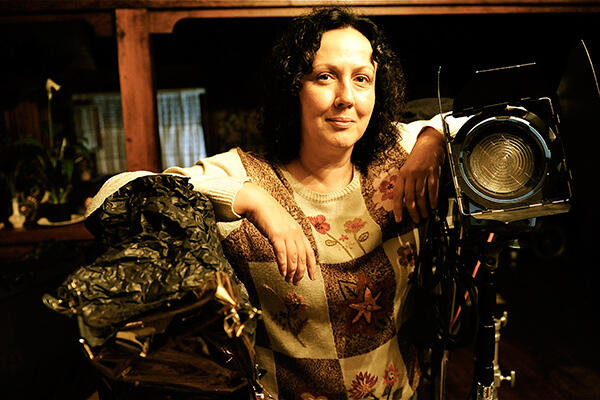
Rima: I’m just sitting in a park in Wellington; it’s very nice, it’s very sunny. Critic: Oh wonderful! So, yeah, one of our reviewer’s here at Critic for our film section finished their review saying that Housebound was “International funny,” not just “Kiwi funny.” I guess in terms of the style of comedy, I know that you have done English things, I recently saw you in Jumpy at the Fortune Theatre, as well as The Little Shop of Horrors and plenty of other things; how did you find the style of comedy? Rima: I agree that it has turned into an internationally recognised group of characters but it is specifically Kiwi. That’s what’s been the major surprise and relief for all of us that these characters have translated into an international context, which is fantastic when they were so specific to our Kiwi world. Critic: Yes! I know that there were some production setbacks early on, were you guys feeling a bit nervous in the making of the film? Rima: Um, to start with we were, [but] not so much nervous [it was just that] we didn’t really know what we were doing. It took a while to sort of grab on to what best we actually had to work with; we didn’t really know, it just sort of evolved and we just started to get a grip on who the people were– (to a passerby in Wellington:) “Oh, sorry, I’m just in an interview.” Sorry, someone just stopped me in the park; that’s just the downfall of having interviews in a park – people will actually come up [to you]. (To the passerby:) “Thank you, thank you.” Sorry, what were you asking again? Critic: Just sort of how you felt about the film while it was in process. Rima: Yes, so we didn’t really know what it was until we started shooting it. Gerard knew he wanted a mix of genres and he wanted to try a number of different things to achieve that mix and so we tried it a bunch of different ways and so, as an actor, I didn’t really know what dynamic I’d end up with over all. I didn’t know that in this scene that I’d be crying or I might be doing this, I didn’t know how that was going to end up in the end because we’ve tried it all these different ways so I didn’t know what I’d end up with and in a way that takes quite a lot of trust. You don’t get an idea of what it’s going to turn out like in the final product. You have to surrender your own context and go with a variety of experiments, that’s how he works. You still stick to the script but you tried it all at different volumes and moods. Critic: So you had the ability to really explore creatively with Gerard and you had time to try different things? Rima: Yes, we did. He had a lot of ideas that he wanted to explore and he’s also really meticulous. Say you had a turn to do what you wanted to do, he’d really start honing in on exactly what it is he likes. And sometimes that can be, like you can feel a bit stifled, having to do it over rather than just have another go. So you’ve got to be incredibly focused. It’s not just all having a ball. Critic: I guess I wonder in terms of the creative freedom in your performance. BadassDigest describes you as being a total scene-stealer, in a really positive way! And you’re performance is so nuanced, so I guess I was wondering in comparison to doing, like, you know, recent theatre work like Jumpy, what do you find more satisfying? Rima: Um, well, the control that an actor has in theatre with a two-hour piece and a lead role is completely different to a movie. For a start you rehearsed the whole thing, you’ve discussed it, you’ve made the decisions before you perform it in front of other people, but with a film it’s not like that. You don’t have that sort of rehearsal period. You can rehearse things in terms of blocking but you don’t actually know what you’ll be doing until you’ve started shooting and you will still be trying it a number of different ways – some of the scenes are still being written that you’re going to approach later and, of course, once you hit a location you start to get an entirely different feel for what’s going on. So, yeah, it’s just a completely different thing and, uh, yeah, just the whole thing of it taking so long, because it took us three years on and off to finish it, and just the length of time and having to return to things sometimes after months and try to grasp on to the mood you had last time two years later, you know? Critic: Absolutely. So your co-star Morgana O’Reilly was meant to be, or in the text is, a teenager but obviously O’Reilly isn’t a teenager. How did you guys deal with that as a casting decision or how did that change the dynamic for you? Rima: Sorry, pardon? Critic: I guess I just wonder how it changed the way you interacted with O’Reilly just because she’s supposed to be very young but she’s not; was that something that you guys felt was able to be an in-context joke or did you play it as is? Rima: No, no, I mean, if the character’s meant to be, you know, just a teenager, you know you just believe it, that’s what you do. It would be the same, you know, if I was a hundred years old in it – she’d have to believe that and so would I, it’s just whatever you get told really. And then that’s your job, you’ve just got to imagine it and make other people believe it. (She laughs.) Critic: Fantastic! And so I know that the official US release date for Housebound is coming up next month, are you excited or nervous, how do you feel about it? Rima: I’m absolutely thrilled that the US has embraced this film. Thrilled for Gerard because I know that he’s going to get a lot of work out of this and he deserves it, he worked so hard. We all did, everybody did. But it’s his baby at the end of the day and it’s so great that he’s had this feedback. The fact that it’s been embraced by the US is fantastic; they really understand it and like the quirky off-kilter thing that he’s offered. Critic: That’s wonderful. And I know that it’s also set down to play in the Spectre Fest, [and Housebound] is that sort of horror film that celebrates the horror genre and, leading up to Halloween, Hollywood loves that, but [Housebound] is also a real mix of genres – do feel that [Housebound] is an appropriate kind of film for something like [Spectre Fest]? Rima: Yes, I do. I think [the mix of genres] has removed it from just being a goofy kind of spoof sort of horror and it’s not that, and it’s also not one of those horrors that you’re going to be terrified of for the next ten years – you know, about getting in the shower or whatever. It’s in between those two sorts of things, and its funny but it’s not self-consciously funny, if you know what I mean. In that sense it’s dramatic and the characters are quite eccentric in a very ordinary New Zealand small town way. I think that’s what people around the world seem to have locked onto – that there are people like that in every community no matter where you are – and I’m just so thrilled that it’s been recognised that there are people like that everywhere even though we were honing in on something so specific. Critic: Are you quite excited about the way that the New Zealand Film Industry has been producing things in the last few years? Rima: It’s fantastic that there’s been so many lately! It’s absolutely ridiculous. That is fantastic. The downfall of that is that the funding gets spread among a lot of people, so the risk of it falling any lower than the funding you get now is going to be that people aren’t going to be able to afford to do it. Like, everyone was doing another job: I was acting in a play at night for the last part of the shooting – you have to earn a living as well. You know, I mean, we were getting paid but not masses of money or anything, and with the bouts of shooting where it went over several years, you have to make sure that everybody’s free to do the next round of shooting and some people would be in plays and other television programs that they had to do, you know, [so they could] get the money in order to be able to afford to complete the movie. That’s the logistical nightmare that can occur if funding fell any lower in order to make a variety of New Zealand films, to make sure that everybody gets that creative opportunity, and there’s such a wide range of creative endeavours, but the down side is that you might not be able to afford to do it professionally.
-
Culture
 Issue 23 14/09/2014
Magic in the Moonlight
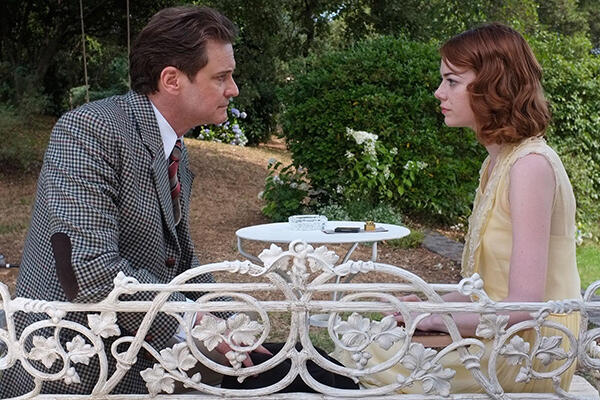
Rating: B- The joy of Woody Allen films is that you always know more or less what you’re in for. Magic in the Moonlight is quintessential Allen at its most predictable. Luckily, Colin Firth is much easier to watch than old Woody, so this film has commendable eye candy, as well as talent. Emma Stone is a wonderful character study, reminiscent of an amalgamation of Annie Hall, Hattie from Sweet and Lowdown (another Allen flick, well worth the watch, not least of all because the jazz score is perfect, and because Sean Penn is a hilarious faux guitar player) and all the other dumb, beautiful women characters that Allen seems unsurpassably skilled at writing. All his women are beautiful, naive to the point to stupidity and ravenously hungry ... literally. Allen loves a thin woman that gorges herself. I can’t help but wonder what bulimic stole his heart once upon a time. But I digress. Magic in the Moonlight is visually stunning, reminiscent of the grandeur of Baz Luhrmann’s Gatsby but less ostentatious. Set in the south of France in the 1930s, Sophie Baker (Stone) is an enthralling clairvoyant who has captivated a young millionaire and his family, and Stanley (Firth) is summoned by his old friend to debunk the young enchantress for the fake that she is, only things don’t go according to plan. What is interesting about this film is the return to the stock characters Allen is renowned for writing. It’s the archetypes from Sleeper, but instead of being in the not-too-distant future, they’re in the past. With more recent films, like Vicky Christina Barcelona and Blue Jasmine we saw a newer side of Allen, and to his creation of character, especially his women, but I guess old habits die hard. The well-versed theme of love against all reason is paraded out yet again; and maybe this is something to do with the fact that Allen married his stepdaughter. Best not to think about that for too long. Basically, if you like Woody Allen films, this is one of them!
-
Culture
 Issue 22 07/09/2014
Lucy
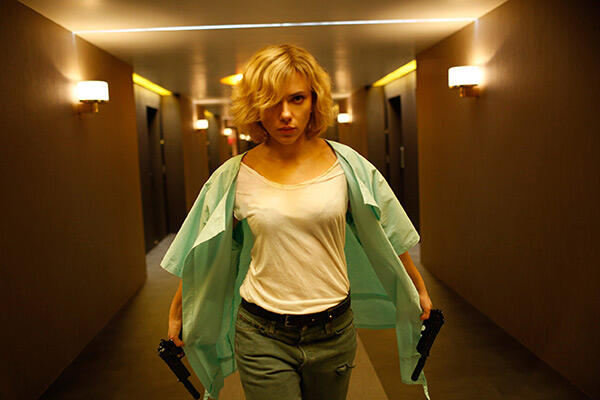
Rating: A - Luc Besson had been directing and writing powerhouse female protagonists since 1990’s La Femme Nikita. Lucy is evidence of 24 years of experience. His French sensibilities with cinema make for an engaging experience. Lucy is a fairly typical student put into the wrong place at the wrong time and then, BAM, she becomes the most intelligent person to ever have lived. As a result of ingesting a large dose of a new drug, she is able to access more of her brain than any person ever has before, and thus gains what are effectively superpowers, because science. We know so because Morgan Freeman tells us in a series of cutaway shots. He plays a leading contemporary neuroscientist lecturing at an unnamed university. Let’s face it: Otago probably couldn’t afford him. My personal brand of feminism was really enthralled by this character. Scarlett Johansson is a phenomenally beautiful woman and yet her character is not based on this, it’s inconsequential, like, you know, real life. ScarJo, as per usual, is a strong, fascinating and totally believable character, even while playing someone that could have walked out of a trashy comic book. There were some excellent uses of film techniques familiar to the action genre, which I think is what makes this film exceptional. It is an action movie, with elements of sci-fi. Yet its take on the genre, in particular the treatment of women and race, was deftly navigated. The “science” felt pretty weak at times and there were some plot hole issues as problematic as Transcendence. More depth into things might have made the overall experience a little more satisfying. But, that said, it’s a short, sharp, sweet flick. Coming in at just under an hour and a half, I think it did exactly what it was meant to. Really, I thought it was just great. I left feeling like a super hero. The ending puts the power into the hands of the viewer, so if you’re willing to invest in this one, you’ll come out feeling like genius.
-
Culture
 Issue 20 18/08/2014
The Dark Horse
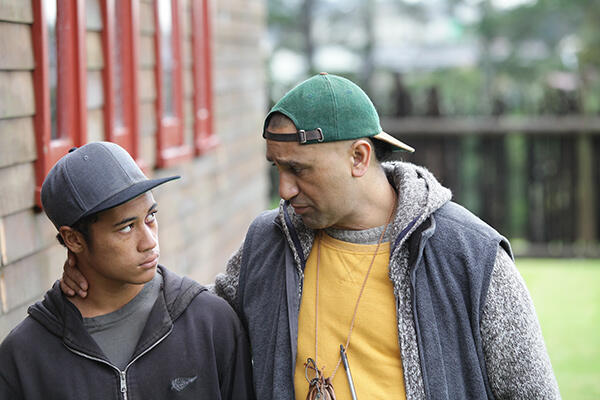
Rating: A+ The Dark Horse echoes the conversation around Maori urbanisation started by Once Were Warriors and, in my opinion, supersedes it. Set in Gisborne, The Dark Horse tells the based-on-life story of Genesis Potini, who is a one-time chess champion. Released from institutionalised care for severe bi-polar disorder, he is forced to move in with his gang-member brother. In a move to restore normalcy to his own life, he joins a chess club for kids. Many aspects of the plot are clichéd, but it’s the cliché that opens a new and more honest vantage point on this type of story, a classic “overcoming of adversity for a shot at the championship.” Genesis teaches disadvantaged youth, leading them on to a tournament in The Big City, complete with montage scenes of them growing as a group. But the reality of the situation is powerfully banal: the tournament is in a dank community hall, their team is scrutinised by a white-gaze based on their class and ethnicity, and Genesis’s recovery is slow. No one’s surprised, It’s the way of things – Gisborne not Hollywood. The central theme is the potency of culture. Characters of Maori decent who are completely disengaged with their heritage have replaced their culture with one of violence, aggression, bitterness and rage. The Dark Horse pulls focus onto the innocence of youth, and most poignantly, the brutal way in which gang culture rips this from the lives of the children it touches. This film engages in an astute exploration of mental health. There is an intimacy in the cinematic realisation of Genesis’ lapses in connection with reality. The audience is an intimate witness to his suffering and attempts at recovery. The sense being that this is a directly proportional portrayal, neither downplayed nor sensationalised. James Napier Robertson has worked in New Zealand media as an actor since the early 2000s. In 2009 he wrote and directed his first feature length film, I’m Not Harry Jenson. With his only other directing and writing credit being a short film, The Dark Horse is astonishing.
-
Culture
 Issue 19 10/08/2014
Begin Again
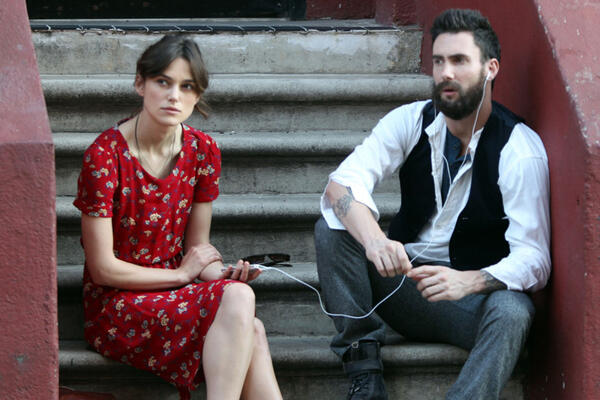
Rating: B- Begin Again, a modern music film in which the music felt terribly dated, and scored by The New Radicals, who haven’t released an album since 1999. I don’t understand this bizarre choice in musicians for the score of a film about the current music industry. The whole thing felt really dated, actually. Maybe it was set in the ‘00s and they just forgot to add the tag line? It didn’t stop me from enjoying the plaid, linen pants or crop tops, though. And these days, I guess it’s hardly indistinguishable. It turns out Adam Levine (from Maroon5) is a great actor, or a terrible actor who is accidentally perfect for the role he played, which was probably just his real self with varying degrees of beard. “Beard” was a motif of the film: the more beard that a character acquired, the more reprehensible his behaviour. Mos Def, (Yasiin Bey, his preferred name) had a beard so amusing that it made him hard to take seriously. That is a criticism for the art department, but also one that can be applied more generally to the director’s treatment of all cast members of colour. It was a little offensive, the bass player complete with afro pick and cheesy grin, the big comedic drummer, neither of whom actually spoke except to beat box. That said, Cee Lo Green’s part, which again was pretty much himself – does that make him crazy? – was pretty entertaining. I haven’t seen Once, which was arguably John Carney’s fame baby, but according to a friend who has, this is really just the American version of that, but with Mark Ruffalo. I love Mark Ruffalo. He’s not wildly handsome, and he is always cast as the same character in everything, but gosh darn it the man is charming, in that half down-and-out-dead-beat kind of way of his. I cried in moments of this film, and I felt silly for crying because it’s a silly film, but I guess it’s also pretty honest and quite touching.
-
Culture
 Issue 15 13/07/2014
What We Do in the Shadows
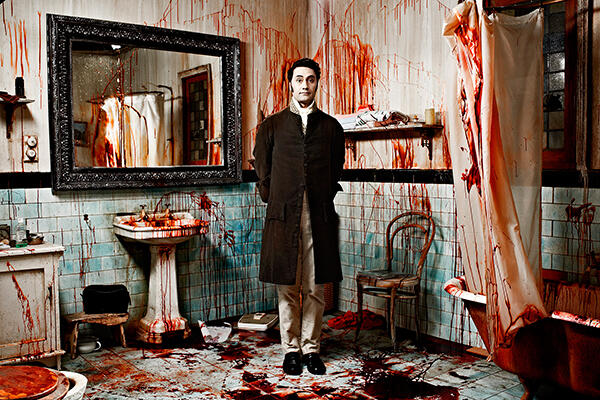
Rating: A It did my heart good to see that Nosferatu hadn’t lost his touch. Vampires have become a staple offering of Hollywood flicks in recent years. I haven’t cared much for the ones that sparkle, the ones that are super-cool and drink blood like they’re shooting heroine, nor for the run-of-the-mill sexy vamp thriller. Luckily, Jemaine Clement and Taika Waititi have seen the tried and tired genre to its logical and hilarious conclusion. Anything that comes after it will (I know, I’m sorry) suck. What We Do in the Shadows follows the lives of four flatmates in a mock-u-mentary style exposé on the secret lives of vampires. Our primary contact is with Viago (Taika Waititi), who is an 18th-Century dandy and the pedantic-but-loving control freak of the flat. Jemaine Clement plays super-sexy Vladislav (I don’t know how to feel about it either), who was known in the Dark Ages as “The Poker.” Deacon (stand-up comedian Jonathan Brugh) is the young rebel, and, of course, Petyr (Ben Fransham), the 8,000-year-old terror in the basement. As it turns out, Petyr is the vampire in almost every early art work that features vampy apparitions. That’s one of the things that these Kiwi directors did to make this film so fantastic: working images of their cast into a wide array of classical art, giving the whole film an air of seamless credibility. The montages are hilarious and convincing. Their use of budget was exceptional; the concepts were wildly entertaining and original, while still managing to poke fun at the genre tropes; and the whole affair is indulgently Kiwi. I laughed hard, and so did everyone else. Bloody good time.
-
Culture
 Issue 12 18/05/2014
Transcendence
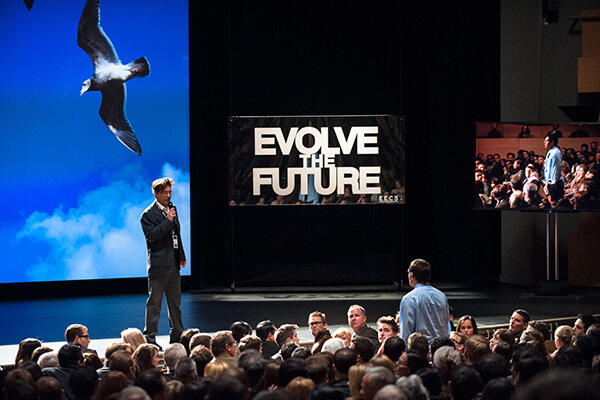
Rating: B Transcendence raises a lot of questions. Why was no one prosecuted for the excessive law breaking? How did the terrorists and the FBI become buddies? Why am I so bothered by the slow-mo shot of water droplets falling off a sunflower? Johnny Depp is the smartest computer geek in the world and everyone is in love with him; his wife helps him put his cuff links on, his friends laugh at his quirky facial expressions … You know, super cutesy things like that. Life is pretty swell for old Johnny, until he admits that he is building a supercomputer infinitely more intelligent than the combined minds of every person ever, which gets him shot. In the interest of avoiding spoilers I won’t say too much more on the plot, except that about a third of the way through the film you will know who to cast if you’re ever doing a Hell Raiser re-make. Seriously, I laughed out loud, and inappropriately, when they showed Mr Depp, head bald and covered in pins (I think they were actually electrodes but the similarity was delightful). My inappropriate laughter became frequent, much to the dismay of my fellow cinemagoers, but I couldn’t help it. The problem with this film is that it has a lot of lofty aspirations and wants to touch on them very seriously. But the execution lacks gravity; a lot of the dialogue isn’t believable, the special effects (which are actually pretty cool) are used too often, and the parameters of the film’s universe continually extend and change. The suspension of my disbelief eventually gave way and I just ended up going along for the ride and a giggle. This film, in spite of its issues, is a really entertaining watch. There are some great moments: Morgan Freeman does some voice-overs; things rebuild themselves using Nanotechnology; and did I mention that there’s a scene where Jonny Depp does a Hell Raiser impersonation? Classic.
-
Culture
 Issue 11 11/05/2014
Half a Yellow Sun
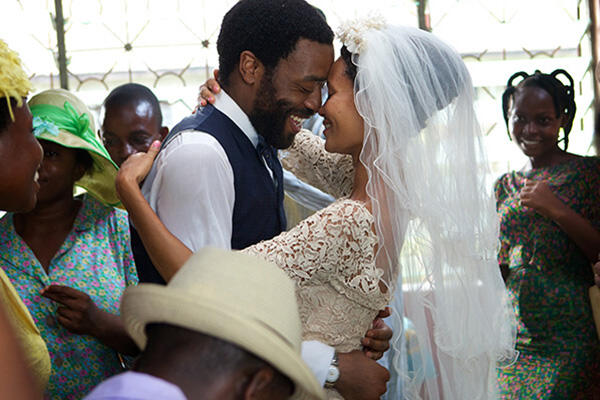
Rating: A I do not know what war means. I say this with as much education on the subject as the average person. I understand it in theory, but emotionally – the reality of being prepared to flee for my life at a moment’s notice, an air raid bomb about to go off next to me, losing my friends, neighbours, the strangers who live on my street – that is as far from my comprehension as East is from West. How lucky I am. This film is incredible. There is no attempt by the director to shock me into understanding what the grotesque brutalities of war look like, which from my experience only results in an eventual desensitisation as you gape at the limb dangling by a sinew from some poor soldier’s socket. Instead, Half A Yellow Sun opens the looking glass into the lives of people, relatable people, living through the 1960s civil war that ravaged Nigeria. The characters are privileged, educated and wealthy. Their lives are “western”: they have English accents, drive English cars and wear mod clothes. The first half of the film is about their stories, their romances and betrayals, families and careers. The plot follows the romance of Ollana, played by Thandie Newton (The Pursuit of Happyness) and Odenigbo (Chiwetel Ejiofor, Twelve Years a Slave), Ollanna’s twin sister Kainene, and her lover Richard. Only once you have come to understand these characters as complete people are you really able to feel the gravity of the situations that they face in the horror of war. I have never seen a film achieve this so well. To say that this film affected me would not do it justice. Half A Yellow Sun not only addresses the seriousness of human relationships but also puts into proper perspective love, trust and family, with war, horror and atrocity. “There are some things that are so unforgivable that they make other things easily forgivable.”
-
Culture
 Issue 10 04/05/2014
The Lego Movie
Rating: B+ LEGO: “a construction toy consisting of interlocking plastic building blocks.” Riveting. But seriously, within the parameters of what is and is not possible to do with LEGO, Phil Lord and Christopher Miller created what was actually a very delightful film. These two appear to be a Hollywood alliance. Co-directing Cloudy With a Chance of Meatballs, the new 21 Jump Street and their sequels, with one accord: “We really wanted it to be a really emotionally compelling and very cinematic movie. We also wanted it to be a silly cartoon at the same time.” – Miller. Silly - now there’s a word to describe the stellar voice acting performances of this exceptional cast. Morgan Freeman, Will Farrell and Will Arnett, Liam Neeson and Shaquille O’Neal – I think these big name blockbuster boys speak for themselves. Also, they speak for LEGO. Really, this is an hour and a half of advertising. But at least it’s big budget. The whole thing is like 1984, but for nine-year-olds. The LEGO universe is controlled by President Business (Will Farrell), who ensures that everyone completes their daily tasks by following the set instructions; you see where they’re going with this? The LEGO movie tells the story of the most average of all “Average Joes” – Emmett, the construction worker, who becomes our unlikely hero as he learns the importance of thinking for oneself, the value of creativity, believing in yourself … well, you get the idea. It’s a kids’ movie, really, but what makes it so satisfying is the level of self-consciousness. The film is constantly self-referential, from what become inside jokes to reminding viewers that everything is LEGO. The themes are a little trite, but there is a beauty in the nostalgia of LEGO and, visually, it’s a treat. I recommend this movie. It’s not trying to be highbrow cinema. But it is clever, it’s creative, and it’s been realised astutely. So go, be entertained, delighted and dazzled for an hour and a half. Oh, the things you can do with LEGO. Available from all purveyors of quality toys.
-
Culture
 Issue 9 27/04/2014
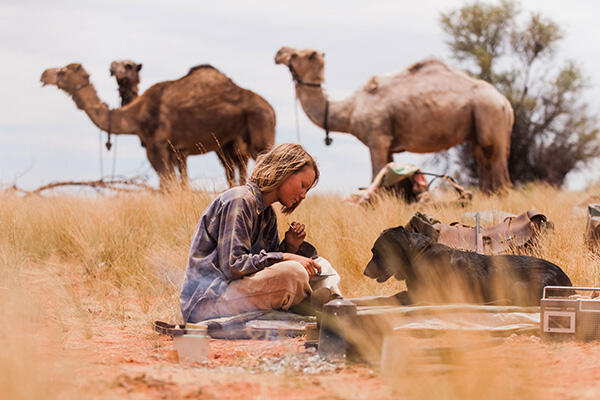
Tracks
Rating: A Tracks is one of the most powerful films I have seen. The cinematography is breathtakingly beautiful, as is the expansive and dangerous Australian desert. Normally, I don’t love journey films; or films about endless and repetitive landscapes such as deserts, oceans and space. I find them tedious and repetitive. John Curran must be one of the few directors who knows this about his audiences because although Tracks is, for all intents and purposes, the story of a really long walk, it was so much more than that. Mia Wasikowska (you may know her as Alice in Wonderland) is an Australian born actress who carries the film with grace. She is portraying the true story of a woman, Robyn Davidson, who in 1977 trekked with four camels and a faithful dog from Alice Springs to the west coast of Australia, a distance of over 2,700 kilometres. Within the film, as well as in real life, Robyn’s journey was documented at several stages through photographs taken by Rick Smolan, played superbly by Adam Driver. As the credits role you are shown the real photographs of that colossal journey, and it is then that you really understand just how well this film was wrought. From casting to costumes to sound track, I think that Curran achieved something stellar. With relatively minimal directing credits, five features and one short, I did not know what to expect from Curran. I can now confidently say that he has my utmost trust and respect. This film was beautifully realised, nominated for Best Film at the London film festival, a Golden Lion at the Venice film festival and Achievement in Cinematography at the Asia Pacific Screen Awards. There is a delicate quality to the balance of honesty and sentiment in Tracks. This film asks, what do we really need? The answer is explored through triumph and tragedy, isolation and companionship, determination and self-discovery. If you can sympathise with the need to be alone sometimes, the difficulties of trusting people, the desire to finish something. If you’re human, you will find this film inspiring.


