
Chelsea Boyle
Contributor
Articles by Chelsea Boyle
3 articles found. Displaying page 1 of 1.
-
Culture
Issue 24 21/09/2014
Unaccustomed Earth
Jhumpa Lahiri’s second collection of short stories, Unaccustomed Earth, is another stunning contribution from the Pulitzer Prize-winning author. The fictional collection includes eight short stories, divided into two parts. The narrative works as a unified whole yet simultaneously each story commands its own space within the collection, each as unique and detailed as a fingerprint. The collection follows the children of Bengali immigrants as they embark on new journeys in modern day America. It explores the many ways in which these characters sense their “otherness” growing up alongside their American counterparts. Many of these characters endeavour to remain dutiful to the expectations of their families. Yet they also possess a hunger to daringly strike out on their own, freed of such influence. This tumultuous tension troubles these characters throughout. Perhaps one of the most captivating features of this novel is Lahiri’s haunting ability to unabashedly elucidate the anxieties, selfishness and bias of the individual. She unflinchingly deals with the uncomfortable, artfully catching the reader in the stream of conscious narrative. The beautiful, flowing prose is captivating and Lahiri proves herself to be an author with a fastidious eye for detail as she refuses to reduce the complexities of everyday life. Her diction remains unclouded and succinct, each word evidently chosen with great care, as she relies on the visceral to avoid becoming verbose. The relationships presented in the collection are incredibly compelling because of an intensity of depth, largely created because she does not shy away from difficult issues. The painful effects of alcoholism, death, estrangement and infidelity all appear in the collection. Lahiri’s ability to create an imagined world as complex and dynamic as our own is astounding. In the title story, “Unaccustomed Earth,” we met Ruma who is anxiously awaiting the arrival of her father. Ruma has recently settled into a new home with her partner Adam and their small child Akash. It quickly becomes apparent Ruma is struggling to understand her relationship with her father after the death of her mother. She is pained by the absence of her mother and understands that it is altering the way she perceives those around her. To quote Lahiri, “There were times Ruma felt closer to her mother in death than she had in life, an intimacy born simply of thinking of her so often, of missing her. But she knew that this was an illusion, a mirage, and that the distance between them was now infinite, unyielding.” Again Lahiri delicately captures intense, multifarious emotions as Ruma reflects upon her father’s new relationship with her son. “[A]s she stood by the door she realized that for the first time in his life her father had fallen in love … But she stopped herself, returning upstairs, briefly envious of her own son.”
-
Culture
Issue 16 20/07/2014
The Name of the Wind
The Name of the Wind by Patrick Rothfuss is the first novel of a trilogy known as “The Kingkiller Chronicle.” This debut fantasy novel has quickly garnered critical praise for its style and creativity. A unique prologue foreshadows an original take on the hero’s journey. It features beautiful, flowing prose that creates an uneasy and eerie silence to heighten our anticipation that, like the calm before a storm, something wicked this way comes. When we first meet the main protagonist, Kote, he appears to be nothing more than a lowly and weary innkeeper, seemingly disenchanted with life itself. Downcast, his silence is described as the “patient, cut-flower sound of a man waiting to die.” Yet as a strange and sinister evil begins to advance, Kote finds himself directly in its path. When he rescues a travelling scribe, named Chronicler, from certain death, it is revealed that Kote is none other than Kvothe, a figure of insurmountable legend. As an unmatched swordsman, gifted musician and brilliant actor, Kvothe’s reputation has swelled to monstrous proportions, leaving everyone uncertain of the truth. As Kvothe retells his story to Chronicler, he promises to truthfully account for the strangest feats he has been attributed with. At this point the novel slips into the first-person narrative, with brilliant warmth and humour, as the story of his youth begins to unfold. “I have stolen princesses back from sleeping barrow kings. I burned down the town of Treborn. I have spent the night with Felurian and left with both my sanity and my life. I was expelled from the university at a younger age than most people are allowed in. I tread paths by moonlight that others fear to speak of during the day. I have talked to Gods, loved women and written songs that make the minstrels weep. My name is Kvothe. You may have heard of me.” Central to this novel is the motif of storytelling. Importantly Kvothe is retelling the harrowing events that lead to an adolescence struggling to evade poverty and fuelled an all-consuming obsession with the mysterious figures known as the Chandrian. In a wider sense, storytelling permeates the novel in folksongs, olden mythology and children’s stories, which frequently resurface in different settings, hinting at the origins of the Chandrian. Kvothe himself advocates the importance of folklore, “You’d be surprised at the sort of things hidden away in children’s songs.” The clever structure contrasting the magnificent deeds of the young Kvothe and his current situation as an innkeeper builds a powerful suspense. As his personal trials are revealed, the reader becomes increasingly anxious that Kvothe in the present day may not be able to rally his spirits in time to vanquish the oncoming evil. Furthermore the occasional intrusion of the third-person narrative develops a richer exposition than can be achieved in first-person narrative alone. This exposition is integral to the thorough world-building in this novel, proving once again that this dual-narrative artfully contributes to what makes this novel so compelling. The Name of the Wind skilfully pokes fun at tropes that the fantasy genre has worn threadbare, and breathes fresh life into the genre. This novel has everything: strange creatures; awe-inspiring magic; tremendous action; and compelling characters complete with bothersome rivals. It is an outstanding fantasy novel and is likely to delight readers that are fans of J.R.R Tolkien, J.K. Rowling and George R. R. Martin. The only constructive disclaimer I can add is that at times this novel can be something of a slow read. However, the action that is slow to surface is well worth the wait and it is more shocking because it is withheld for so long. This first instalment leaves many questions unanswered, undoubtedly leaving the reader wanting more, as Rothfuss proves to be a master of suspense.
-
Culture
 Issue 9 27/04/2014
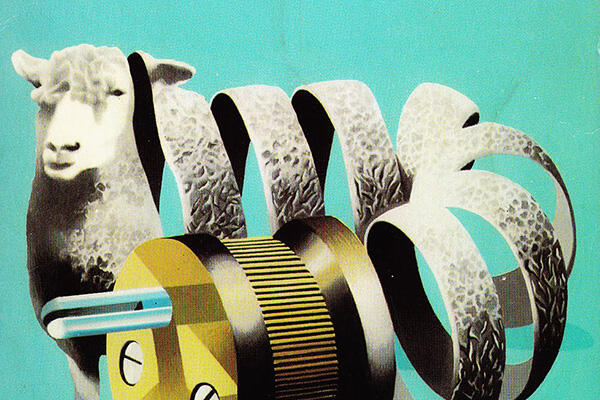
Do androids dream of electric sheep?
Philip K. Dick depicts a desolate and battered San Francisco in his post-apocalyptic science fiction novel, Do Androids Dream of Electric Sheep? Earth, post-World War Terminus, has been swathed in radioactive dust causing the eventual death of many species we have today. Most people have been evacuated from Earth, but a few undesirables remain interspersed amongst androids, which are indistinguishable from their human counterparts. Despondency is rife among the scarce human populace because of their morbidly depressing surroundings. Luckily, for the humans of his novel, happiness is a click away thanks to the presence of mood organs, which allow you to experience any sensation you desire. For instance, you can dial an “888,” which prompts the desire to watch TV no matter what’s on. (Surely, this setting is somewhat redundant due to the lack of activities offered on earth after nuclear disaster?) A restless, irresolute bounty hunter named Rick Deckard drives the plot as he seeks to “retire” androids; “retire” being a thin euphemism that could easily be substituted with “destroy” or “kill.” Rick’s greatest ambition is to own a real animal, which is the ultimate status symbol. He cares for an electric pet sheep that he pretends, for the sake of his own dignity, is alive. After years as a bounty hunter, Rick Deckard begins to be plagued by an internal philosophical crisis. Due to the brutality of his job, Rick begins to reconsider whether empathy should be extended to androids. This novel cleverly forces us to question what is real and what is a carefully constructed artificial illusion. A classic instance of this bewilderment occurs when Deckard is accused of being an android. I would say “spoiler alert,” but I feel this was a fairly predictable progression of the story as Rick enters the novel as a highly pragmatic and somewhat selfish individual. Running parallel to the story of Rick are the mishaps of John Isidore, a human whose IQ is too low to meet the requirements necessary to emigrate to a different colony. John, lonely and ostracised by many, attempts to give his life meaning by working a solid job (I am sure many post grads can relate to this humble aspiration). John works for a company that fixes electrical animals under the guise of a veterinary service so that owners, like Rick, can fool their neighbours into believing they own real live stock. Sadly, it is not always smooth sailing for John as he unwittingly allows a real cat to die, mistakenly believing it can be rewired later. This foreshadows much of the distress John suffers later. The way John is mistreated and manipulated by other characters forces the readers to consider how second-class citizens are created and wronged in everyday society. His story is particularly poignant and stirring because his compassion for all living things outshines that of the other characters. The narrative style of this novel is clear, bold and easy to follow once you have accepted the jargon that’s inextricable from Philip K Dick’s futuristic vision of Earth. The premise of this story is interesting and there are a few quirks that generate a surreal quality. Personally, I was hoping for a more action packed story (perhaps the sporadic inclusion of a rabid zombie would have created the urgency I craved?) However, I must say, if you enjoy science fiction and contemporary American fiction, Philip K. Dick is an author you cannot go past.


