
Lydia Adams
Contributor
Articles by Lydia Adams
9 articles found. Displaying page 1 of 1.
-
Features
 Issue 20 09/08/2015
Compassion in Action
The next time you’re lying in bed at night trying to get some sleep, take a moment and listen to your body. You’ll hear the digestive gurgles, breath coming in and out of your chest, and perhaps the faint beating of your heart. Your body is amazing. Every little cell that makes up your form — approximately 37.2 trillion of them — is unique to you, and each little one helps keep you alive.
-
Features
 Issue 13 17/05/2015
Beyond the Binary
With recent headlines hailing Bruce Jenner's interview as an "Ellen" moment for the trans* community, we take this opportunity to educate and explore the world of sexuality and gender.
-
Features
 Issue 11 03/05/2015
Adult, I Am (Not)
“Help! I need an adult!” I cry upon discovering that my lamp is still not turning on, even though I’ve replaced the bulb and tried it out on five different power points. No, you don’t need an adult, my self-affirming internal monologue says, you are an adult.
-
Features
 Issue 6 29/03/2015
Fence-Jumpers and First Years: You Can't Hyde
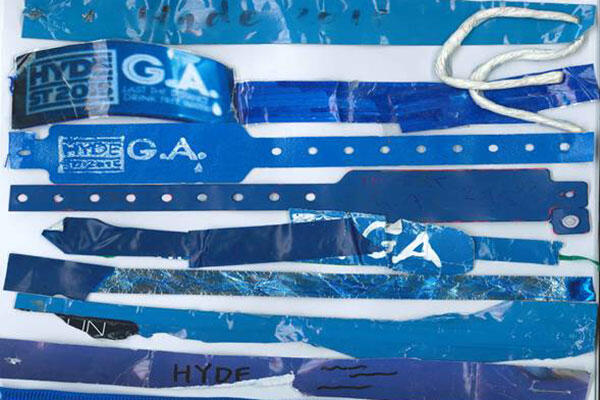
Saturday 21 March saw this year’s annual Hyde Street Party. With 4000 attendees, there were 15 arrests made. Offenders were detained mainly for disorderly and offensive behaviour, although there was one arsehole who shoulder-barged a St John ambulance on Albany Street in an incident that left a paramedic covered in broken glass. If 3988 party-goers can abstain from law-breaking and troublemaking for the day, one would hope the other 15 feel bad about their behaviour. Of the 15, 10 were students. This being the third year OUSA has taken the reins in making Hyde Street a more controlled event, and despite the negative media coverage, public opinion seems to be swaying in favour of the new rules and regulations. Temah Bunyan, a first-time attendee of the event, felt that the Hyde Street Party has always been and will continue to be a solidified part of Dunedin culture. She thought that the rules implemented were working well, saying, “No glass, limited numbers, time restrictions; it’s still heaps of fun. Drinking under controlled circumstances is good, it won’t get shut down.” One of the biggest issues surrounding number regulation in the past has been the frequency of people jumping the fences of corresponding Clyde and Leith Street properties to gain access to Hyde. This year security staff were patrolling these streets continuously throughout the day, and several properties had secondary fences put up in their backyards to prevent fence-jumpers making it onto the street. There seemed to be a surge in fence-jumping attempts following the 2pm cut-off and implementation of the one-way door policy, but security staff were on the ball and few made it through to the event. In the past, roof-caving and damage to property have been directly attributed to the actions of out-of-towners and/or first years. Many blame the out-of-towners for the irresponsible behaviours, stating that they have no respect or sense of responsibility surrounding the reputation of Otago’s students. First years, before their attendance was prohibited, were also blamed for reckless actions such as the “Dunedin appeal” and the “IDGAF” attitude. Kendall Garrud, a Hyde Street veteran and all-round Scarfie lass was among the first group of freshers to be barred from the event, and in retrospect she feels this was a wise decision. “There’s a naivety, a misplaced sense of entitlement to be way too rowdy that a lot of Otago’s freshers seem to have. I had it, and I probably would have f**ked up if I got into Hyde during my first year.” With the annual street party comes the annual backlash from news outlets who brand the event as “dangerous”. It would be hard to find the source of this negativity on the day, however, as police officers and security staff all generally seemed to be in good spirits, with most holding the same attitude as Police Officer Dan, who noted that “helping out, keeping [the students] safe, it’s our job.” Sam, another police officer stationed near the front gates, agreed that the backlash was uncalled for, saying, “Hyde Street is just like the Rugby Sevens in Wellington, except in that case it’s a bunch of grown adults doing just the same thing.” TV3’s news bulletin, which was released immediately following last Saturday’s shenanigans, not only reused footage from previous years but highlighted irrelevant material. For example, it noted that “the emphasis on speed seems to have dropped.” Critic is confused as we always thought the emphasis was always on alcohol. One News found that Inspector Mel Aitken of Dunedin’s police is confident the event can be improved in future to make Hyde Street a “safe and enjoyable social occasion for all students.” A jolly group of sailors had a few suggestions for future improvements: “More recycling bins, everywhere, just put them everywhere,” said Michael. Another student, Josh, added that “The free water roaming is great, keep that up.” Much appreciation goes out for the efforts of OUSA, St John, Dunedin police, Are You OK?, Red Frog and all other staff and volunteers on the day — special mention to everyone walking around with the “Free Water” flags as you may have prevented many a Hyde Hangover
-
Features
 Issue 3 08/03/2015
Halls - The Practical Jokes Edition
Otago University’s students have a bad reputation. A walk through the residential halls’ more chequered histories stands to remind our fresh-faced first years that we’re not all depraved — but even those that are won’t bite (much). Gazing up at the Himalayan mountain range that is the hill leading up to Aquinas, staring down the maze-like corridors of Cumberland, looking down at your future campus from the windows of UniCol; you’ve made it. With your parents traipsing up the steps behind you brandishing suitcases and boxes, move-in day seems like a breeze. Perhaps you’ve met some of your floormates and fellow college inhabitants; maybe you’ve made some potential friends. There are several different sorts of people you will encounter during your time at university, and it all starts off with that first year at a hall. The microclimate of a residential college provides a complete array of individuals, including the fresh-faced first year. To all those who aren’t in their first year of university or currently residing in a residential college, this feature has not forgotten you. Although the taunting and egg brandishing may indicate the opposite, we were all first years once. From the colourful calamity that is CityCol to the hill-dwelling Carrington, our halls are well and truly alive with the sound of first years. Among this latest hoard of undergraduates, you will find many a character. The typical BCom student may be, above all else, down to party; geographers and geologists will be passionate (probably about the environment), rowdy and down-to-earth (haha dirt joke!); your BA residents will likely have Fridays off and thus far more time to not do any work; surveyors are predominantly male, and should definitely be studying more than they are; Health Scis are very important — but not actually — so don’t let the constant “Barry, you need to promise me if I get less than an 86 per cent average this semester to chop off my left hand” get you down. Aside from degree-based diagnostics, you’ll encounter the Food Snatcher — never tell them where you keep your treats; the Serial Sleeper-Inner — leave them be; the Ghost — do they even go here?; the Joker — they sometimes need to be reminded to chill; Poisoned Ivy — always hung-over; the Riddler — only ever speaks in CELS- or HUBS-related terminology; the Farmer — from Southland, should remember to wear shoes; then Grumpy, Happy, Dopey, Dreamy and all the others finding their place in the world. Otago University is often painted in a negative light, with certain antics such as the burning of furniture and trashing of streets creating a bad reputation for our Scarfies. Cam Higgins, a former residential assistant (RA) from Aquinas College, said, “The reputation for bad behaviour is caused by a very small number of students … the real Scarfie culture is a tight-knit community where everyone is super laid back and genuine.” National broadcasts of student events turned sour have certainly portrayed the university as a haven for trouble-makers in the past (see the Hyde Street Annual Keg Party), but as Higgins went on to say, “You find badly behaved students at every [university] in the country, but Dunedin is the only student city.” Where AUT or Victoria University students may cause mayhem, there’s probably more newsworthy action happening in other parts of the cities so “the [antics] go ignored.” Concerns over student behaviour prompted the university to introduce a Code of Conduct (CoC) in 2007. The CoC, which all students must abide by, aims to promote a sense of community and mutual respect throughout the university. Breaking the CoC will end in disciplinary action. The introduction of the CoC was accompanied by the establishment of the Campus Watch security force — to keep tabs on crime and anti-social behaviour on campus and in the nearby student neighbourhoods. Life in a residential college can be daunting at first, especially if you’re more reserved and on the shy side of sociability. To those who sit in their room in fear of the antics of those around them, regardless of what characters surround you, there are sure to be those that will pull some outrageous antics. Halls have quite the reputation for some world-class pranks as students attempt to stretch the boundaries. Although we tried to contact multiple heads of colleges for tales, it is not policy for them to speak to any media about anything college-related. Such a shame — they probably have some wonderful stories that could even top the following tales. Even if practical jokes seem imminent, it’s doubtful that this year’s residents will match what happened at UniCol in 2009 — it was a devilishly genius prank that was played on the last resident to turn 18. While friends took their victim out on the town for the first time, another group of students moved the entire contents of his eighth-floor room to an empty room on the ground floor. He was returned to the hall in a bit of a state and put to bed in his new room. After a short period of sleep, fellow residents burst into his room, woke him up and promptly “threw” him out the window. He screamed in terror for “nearly a minute” before noticing that he wasn’t actually falling eight stories to his death. In another flying story, Rory Davis of Hayward 2010 said that “surfing down the stairs on mattresses is fun, and not even frowned upon.” Two RAs even joined in on the excitement. If you’re worried about clashing opinions between would-be new friends, things probably won’t get nearly as bad as they did back in the 70s, when resident Donald Elley “jammed” (poured a jar of jam between the bed sheets) an older student’s bed after he was subject to “initiation rites” such as drinking bizarre concoctions. Another resolution was achieved between feuding residents of Carrington College in 2012: Josh Robinson told of a nasty wave of sexism that washed over the hall mid-semester. From “make me a sandwich” remarks at breakfast to inferiority-suggestive insults, the female residents ultimately silenced the derogatory behaviour by breaking into the rooms of perpetrators and writing “MAKE YOUR OWN DAMN SANDWICH” on their mirrors with lipstick. Not the greatest leap forward for feminism. In line with residents lacking a sense of maturity, it’s reasonable to be wary of what some of them may end up doing with their genitals. In 2011 one Mr Holding reported of a serial “danger-beater” lingering in CityCol’s computer lab. He was nicknamed Manbaby by his fellow residents and frequently pleasured himself using the hall’s computers. If he were intruded upon, he would immediately act “normal” and like he was getting away with it. Unfortunately, disturbed onlookers witnessed his deviant behaviour through an adjacent window. We’ve discussed fellow students, but what about those that once were people? Ghosts. Although there have been “sightings” in the past, there have yet to be any actual physically harmful ghost attacks. Note the following: A former RA tells us that in 2011 a few Arana Health Sci students supposedly filed for compassionate consideration following a series of ghostly encounters in the elevator post-CELS191 test. The residents in question suffered distractions at the hand of their invisible lift operator when the “being” whispered to those riding. Scumby Cumby has always been known for its wild and whacky residents, but in 2012 things got a little spooky. The supposed ghost of an “unfit mother” nicknamed the “Grey Lady” was first seen by two Health Scis returning from a night at the library. The haunting culminated in several residents performing a séance, and although no actual verbal responses were heard, the group told of “strange noises” and “bumping” occurring on the night. One thing that parents are more likely to be concerned about than students is the sexual awakening of first years fresh off the leash (leash meaning their parents’ houses). Both Selwyn and Studholme played host to their own sexy scandals in 2013 and 2014 when senior RAs in both halls began sexual relations with first-year residents. The Selwynite was told to either end the relationship or leave the college, so he left and love lingered on. The administration team at Studholme, on the other hand, did not find out about the erogenous affair and thus took no formal action to stop it. The policies surrounding RA–student relationships are not so clear when inspecting the CoC or your hall’s own “Residential Responsibilities”, and although RAs are encouraged to build relationships with each resident, it is generally known that anything beyond friendly is unacceptable. Cases of inappropriate relationships often depend upon another resident’s reporting of them, and the RA will always face a harsher punishment than the resident, for it is their responsibility to guide and maintain appropriate friendships. (NB: almost every residential college at Otago University has had RA–resident relationships occur in the past, and it remains one of the many regulations and rules that admin frustratingly can’t keep track of very easily). Regardless of whether or not your college-mates end up doing-the-do in a scandalous fashion, nothing will be quite as embarrassing as what happened in 2013 to a St Margaret’s girl: a female resident was feared missing by her friends and minders for around 24 hours. After this time, one of the RAs decided to investigate her room for clues, and in doing so stumbled across the missing fresher. The girl had been engaged in sexual activities with a male acquaintance for the entirety of her “disappearance”. If you have a history of sleepwalking, sleep talking, sleep dancing or another sleeping-related condition, it might be worth placing a few obstacles in your path to the doorway in order to prevent escaping your room. Selwyn may be one of Otago’s more “premiere” residential colleges, but it has a very strange history of bizarre behaviour among its residents. In 2011 a female resident who was apparently sleepwalking her way to the bathroom intruded on a fellow female resident during her sleep. Except, she wasn’t in the bathroom, and the poor girl’s office chair was not the toilet. Oops. Also, the windows only open so far for a reason. Please don’t climb out of them. No matter how marvelous the planned escapade is, it’s not worth it. An outrageous operation was undertaken by a group of UniCol lads; following a 30-man lock-in, complete with smuggled-in kegs, a hoard of hearty thrill-seekers proceeded to scale the building’s North Tower and climb into the Master’s office to retrieve a confiscated funnel. Astonishingly, no one was caught during the mission, and no one was injured. This operation was only successful because no one was hurt and no member of staff could find out who the culprits were — they were lucky. It’s true that you could “do what you want, just don’t get caught”, but really it just isn’t worth the risk. Injury is one thing, but if caught breaking either the CoC or your own hall’s regulations, instant fines, suspension (is the tiniest thrill of adrenaline really worth spending a week at Arana?), embarrassing disciplinary actions and dismissal are what await you. Nobody likes the Fun Police, and Critic will never try to do anything more than tell you tales of when people got caught by them. Make new friends, have new experiences, enjoy yourself in this new and exciting environment. In all honesty, unless you set out to specifically break these rules, you probably won’t even need to remember them. We support regular practical jokes in halls; just don’t be that one moron who gets the whole hall put on an alcohol ban because you decide to be a first-class asshole. With RAs, Campus Watch, deans, headmasters and the university itself watching your back, you really don’t need to worry about the little things associated with inter-resident socialisation. Maybe you’re one of the bros; that’s great! Perhaps you’re more into knuckling-down and getting your notes finished; that’s also great! You aren’t going to get along with everyone in your hall, and some of them will probably pull some stupid stunts, but make sure you enjoy your time away at university and let your hair down a bit. The flipside of all the despicable behaviour is, obviously, the hilarity and immense support fresh-faced first years will find among fellow college residents. Each one of them is going through the same transition period, and a lot of them are a bit nervous. Friends will be found, and together you may perform some of your own “outrageous” activities (maybe not drunken building-scaling, but wearing a funky hat can sometimes be a wild thing to do). An Aquinas resident in 2013, Tommy, was notorious for his ginger afro-esque hairdo. During the last few weeks of second semester, Tommy finally got a haircut on the sly. That evening he presented himself to the dining hall, and all students present broke out into a round of applause. A similar incident occurred in 2012 at Hayward when a friend took a male resident who was well overdue for a trim to get the chop-treatment. Upon his return to the college, the boy’s hallway was lined with fellow residents all eager to see the transformation and touch his newly tousled tresses. Where else but in a residential college would people be so supportive of a hairstyle change? Some call it a sub-sector of Stockholm syndrome, but others call it “friendship”. The antics will continue in 2015, and let’s hope this year’s freshers bring us some good stories for the history books.
-
Features
 Issue 1 22/02/2015
The kids are alright
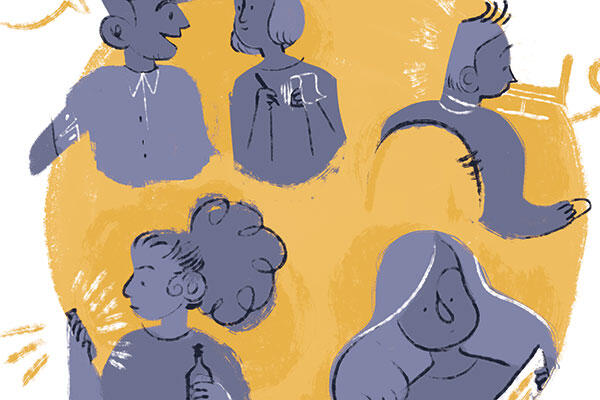
Midway through last year, one of the world’s oldest and boldest student media publications was closed down. London Student had been in print since the early 1920s and until recently had been representing over 120,000 students as one of the largest university newspapers in Europe. London Student’s demise came from the strong arm of the University of London Union, which refused the newspaper a £54,000 (approximately NZD 110,000) budget booster that was needed to continue production beyond the year. The decision caused uproar among not only the national student population but the general public as well. Journalism and the face of mainstream media are changing — that much is obvious — yet student media and their importance in regard to larger and more nationally recognisable news agencies is a discussion best served heated. In a world where the mainstream media are evolving, publishing houses of small local or regional papers are in trouble. Where agencies like CNN or the BBC are the powerhouses of global broadcasting, smaller companies often find themselves experiencing considerable financial pressure. Student media outlets have an advantage here: they are, for the most part, free — and due to different funding structures, they don’t suffer the same monetary stresses that other local publications might. While student publications all over the world are being squeezed until the pips squeak by their unions, one of the biggest arguments that can be made for student media lies in their merit as training grounds for aspiring journalists. The opportunities provided to would-be reporters are invaluable and need to be recognised. Whether you’re into columns, news, features, cartoons or reviews, as a budding newsperson you have the chance to experiment with different types of writing. Getting involved with your university’s media outfit is a brilliant way to build both your skills and your network. Everyone has to start somewhere, and if journalism is something that interests you, then there is no better place than on-campus media. London Student had in recent years been a focal point of student movement against governmental fees and cuts, as well as a major campaigning voice for workers’ rights. Despite the paper being a well-loved and central part of student culture in London, the move to reduce funding is seen by many as the culmination of a long internal process of undermining student representation within the university itself. Could it be that the business-minded board members at the University of London saw the investment in a publication that was ultimately given to students for “free” as too great a risk? Or was it more than that? A media resource created by students, for students, will always be easier to relate to and hold more sway over a university’s population than any sort of passive production mandated by the institution itself. Perhaps therein lies the actual risk — a battle for populace persuasion. While discussing the difference between student and mainstream media, Paul Rutherford, a Dunedin local and self-described avid newspaper reader, posed an interesting question. At 57 years of age, Paul has seen and read many a newspaper and magazine in his time, yet he wonders, “Could student publications be the only truly independent form of journalism?” He presented the idea in relation to the fact that for-profit news agencies have to keep the interests of their main stakeholders in mind when writing and presenting material. As such, whether or not we can feel safe in the guarantee our media are unbiased is a perfectly valid question. Although student media outlets have significantly less national impact than other broadcasting organisations, they still play an important role on a local scale. National, publically funded broadcasting institutions, such as the BBC, have relatively good reputations compared to other, more privatised news outlets, (cough, cough, FOX News Channel). Student media certainly aren’t the only unbiased voices to reach the public, but they are among a small population. Of course, no forum that allows the youth of today behind its publishing wheel is safe from the non-politically-correct and sometimes controversial material that may be printed. Each of New Zealand’s main tertiary institutes has a corresponding student magazine, and each of these magazines has a chequered history. Auckland University’s Craccum published a feature on date rape in 2002 that immediately came under fire from both police and social workers, who described the piece as a “how-to” for drug rapists. In 2007, Victoria University’s Salient published an article titled, “Top Five Species To Be Wary Of”, which listed Chinese as number three. The feature caused huge protests from the university’s Chinese student body, as well as the Chinese Embassy. The editor of Waikato University’s Nexus was forced to make a public apology in 2009 after printing jokes about incest, abortion and sex with infants. His apology was sincere. Also in 2009, Canterbury University’s Canta sent an issue to print containing an article that declared people with mental illnesses unfit to have their own children. Even our very own Critic has found itself at the centre of controversy; in 2006 the Office of Film and Literature Classification banned possession or distribution of a particular issue of Critic, which, like our Craccum cousin, contained a “how-to” guide on drug rape. With all this in mind, we must not forget that even global media conglomerates falter in their reporting. All too often we hear about another Fox News interview gone horribly awry, CNN becoming more and more infamous for race baiting, or a BBC broadcast that probably shouldn’t have gone to air as it contained controversial content such as an interviewee discussing joining ISIS and referring to combat as “actually quite fun”. Josie Adams, a veteran of the student magazine scene in New Zealand, feels that student publications are a very important aspect of media and reporting in general as they provide a voice to a younger generation that is often accused of being far too impassive. “The youth must keep the aged authorities constantly afraid of rebellion,” she said firmly. “It is the only way to protect our interests.” Josie is adamant in her belief in the importance of student media, asking how everyone on campus is expected to retain the ability to converse with strangers in lecture theatres and laboratories if they can’t relate to one another on a banter-specific level. One way that student journalists (and their publications) have an edge over their older, far more mainstream counterparts is that they have the attention of their classmates. Students are unlikely to read a story that vaguely relates to the younger generation simply because it appears in the local newspaper, but with students writing for the students, there’s an advantage. They are allowed to turn to each other with facts and information that relate to their own experiences at university and in life as young adults. Young reporters have the chance to one-up the older generation, providing front-row seats to the most significant and buzz-worthy stories in their various communities. Infrequently will you see John Campbell waltzing down Hyde Street dressed as a pink crayon in order to get the inside scoop on the annual keg party. Rarely would you notice Hilary Barry perched in Central Library waiting for her informant to relay the juicy details of the latest Cumberland College spooky scandal. Student media, on the other hand, can ask their staff to undertake these assignments with ease. It’s the perfect disguise. Not only can they blend in, but they also have a vast network of people they know throughout different halls, departments, ages and education levels. Through Critic’s affiliation with the OUSA Executive, all decisions and statements made during meetings can be broadcast back to students. Relationships like this between student media and their universities and unions are of vital importance because board members can and will be held accountable for their actions in regard to the wider student community. Without student media reporting on university politics, students wouldn’t have the slightest clue about what rulings were being made up top that could negatively or positively impact on their own academic livelihoods. Media in all shapes and sizes are ever-present in our daily lives as students. Websites and social media are used by most of our generation every single day. We consume so quickly that sometimes it seems like we’re on autopilot, scrolling through news and information so fast that we forget to truly engage. Because of this, others often view our generation as out of touch and impassive towards the key issues of today. As students ourselves we know this to be untrue, and where passivity may be assumed, only a fellow student voice can rebuff these claims. Thus, it becomes crucial that we maintain our own voice in the media. “I think it’s vital; I think it’s an important voice at the university,” said Dr Geoff Stahl, a Senior Lecturer in Media Studies and compelling advocate for freedom of the press. Having spent several years involved in community radio himself, Stahl has an expert understanding of the struggle young reporters go through in finding their voice and personal political consciousness. He describes the phenomenon as “a kind of laboratory” within which student journalists will often happen upon quite provocative and political material. That awareness and understanding allows students, both writers and readers, to better grasp the idea of media being a civilising voice — part of a larger engagement with the public. “Student media can contribute to the conversations that the university wants to cultivate and facilitate,” he said. And asking questions of union policies and general university governance is at the heart of what Stahl deems one of the biggest roles student media play: “to be provocative, to be the critical voice of the university.” Often the other media that you find on university campuses have little to do with student engagement. They are often celebratory and passive in terms of how they choose to represent the university. In many respects, they’re advocates for the institution. Student media again hold an important role here, as passivity is tossed aside in favour of provocation. A student publication may well act as a university advocate, but not in an all-affirming manner, more in a playful and critical one. This is an attractive attribute to potential students as the material they’re reading is honest and relatable — a fellow voice of youth culture. Adrienne Rampton is a Child and Youth Services Library Specialist who has been working in communications for well over 15 years. “My son,” she began, “is 15 years old and he wants to be a journalist.” Having had experience in the field, Adrienne felt that perhaps her youngest child would appreciate her expertise in advising him to get involved with his high school’s magazine committee. She soon found out that she was, in fact, mistaken. “Apparently it’s not very cool, but you know what else isn’t very cool? Being turned down for job after job because you have zero experience.” She’s not wrong. Like any additional contributions you make to your university community, if you have even the smallest amount of practical experience over another person standing next to you, the job is yours. Too often do students hear of the terror that awaits them beyond graduation: you’ve voluntarily placed yourself in a mountain of debt, you have a bit of paper that says you know something about something in particular, but you’ve never professionally worked a day in your life. It’s the experience of actual work and real-world reactions to your work that will make the impact. Students, lecturers and media professionals alike hold student journalism in high regard. It makes sense as a significant proportion of our national and international reporters started out working for a student publication. What the media of the future will look like is anybody’s guess, but you can rest assured that students will be a part of whatever it is.
-
Features
 Issue 18 03/08/2014
Cyber-chondria
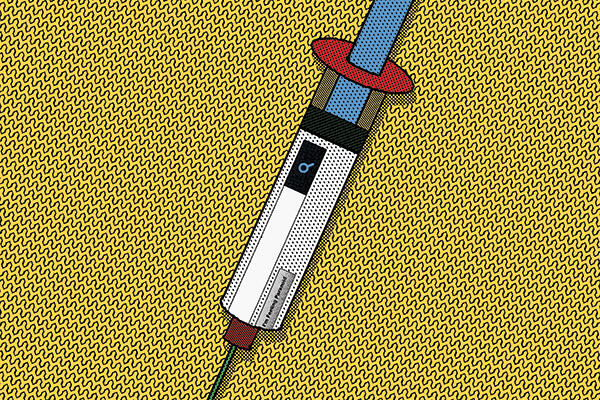
Imagine yourself sitting on a cold, metallic, fold-up chair. One of the chair legs is off-balance and the air in the room you’re sitting in is crisp. There are other people in this room, eight of them, to be precise. All eight are perched uncomfortably on chairs that are equally as cold and metallic as your own. Everyone, you included, is seated in a circle. Everyone, you included, wear matching white robes – except for one. You squint to read this man’s nametag: ‘Hello, my name is Dr. Saneti,’ it reads. Dr. Saneti is wearing black trousers and a blue jumper. He stands up and clears his throat. “Alright everyone,” he starts, “you’re all here for the same reason.” You nervously scan the people seated around you. They look completely normal. You start to panic, and think that maybe there’s been some sort of mistake because clearly there’s nothing wrong with you, unless you’ve been diagnosed with some sort of hideous brain-degrading disease and … Dr. Saneti interrupts your train of thought with another cough. Has he got the flu? “I would like you to please raise your hand if you have ever used Google, a similar search engine, or the website known as WebMD, to conduct a self-diagnosis of your health.” For those who aren’t aware, the medical condition hypochondriasis, more commonly called hypochondria, occurs when a person exhibits significant distress over an imagined illness. A large cohort of exaggerated, and often insignificant, symptoms usually accompany this distress. Most people have likely had their own experiences with a sore throat they assumed was tonsillitis, or a rash they feared could be the onset of leprosy, but these concerns are soon ignored and seen as a harmless, quirky, character trait. For hypochondriacs, however, this cute neuroticism quickly becomes a dangerous obsession. There are many people, sceptics you could say, who claim that hypochondriacs are merely pretending to be ill in order to gain attention. “That’s nonsense,” said Dr. Blake, a physician at Dunedin Hospital who was kind enough to spare ten minutes for an interview, “The thing about patients with hypochondria is that they are genuinely feeling serious distress over whatever they’re talking about.” He went on to describe that the main issue physicians have to express to their patients is that normal, completely healthy people have symptoms. “To a regular, level-headed individual, a headache could mean dehydration, or exhaustion, but to a hypochondriac, the same headache could only mean a brain tumour.” In today’s society, in the Age of the Internet, becoming a hypochondriac is far easier than it once was. The condition, in combination with access to online information sources, has even garnered its own snazzy nickname – cyberchondria. Dr. Brian Fallon of Columbia University, a psychiatrist and leading researcher on hypochondria has said that cyberchondriacs are, “… hypochondriacs who have a strong, obsessive compulsive focus to their symptoms.” How many times have you “genuinely thought” that you were dying after a night out on the town? How many conversations have you had with your flatmates discussing that “seriously weird” bump on your head that you’re damn sure has something to do with a blood clot or possible concussion? Have you ever found an odd-looking rash on your ribcage and feared the onset of a pigmentation-changing skin disease? If any of these situations sound even slightly familiar to you, then without a doubt you took your medical concerns to the most infamous of information sources: Dr. Google. During a survey of 20 seemingly regular and level-headed individuals seated in Union Hall, 17 of them described how searching for basic medical information on the Internet had led to further investigation of a far more serious condition. This was an interesting discovery, as none of the 20 surveyed individuals defined themselves as having extreme health concerns, yet almost all of them had displayed cyberchondriac-like behaviour. One student spoke of a time when she had Googled how to calm an upset stomach, and ended up halfway convinced that she had pancreatic cancer. Fortunately, she didn’t. Believe it or not, (you can try this yourself), one of the first suggestions that appears when typing “cyberchondria” into Google is, in fact, “cyberchondria symptoms.” Fitting. “I’ve been a hypochondriac going on cyberchondriac for pretty much the entirety of my pathetically healthy life,” began Annie, a 25-year-old from Auckland. “When I was eight I discovered my auntie’s medical encyclopaedia. That’s where it all began, I think.” She discussed how the Internet is without a doubt, a hypochondriac’s best nightmare. “When I was 14 I had my first run-in with multiple sclerosis, but that turned out to be nothing more than a slight numbness caused by sleeping on my arm weirdly.” After a few minutes of light-hearted banter, things suddenly turned serious, “Honestly though, I’m dead certain that I’m experiencing an early onset of menopause. Not even joking. I’ve been having serious hot flushes and WebMD has this whole list of other symptoms and I mean ... like I don’t think I want kids, so that’s okay but, yeah.” Annie seemed at peace with her apparent condition. Are you going to get yourself checked out by a doctor? “No,” she said, “I’ve wasted so much time and money on medical tests that turned out to be unnecessary in the past, so I think I’ll just tackle this one on my own.” From examining some of Dr. Fallon’s research on hypo/cyberchondria, it becomes evident that hypochondriacs are not necessarily all too careful about where they get their information. In the Age of the Internet, access to vast and unregulated medical information is just a few mouse-clicks away. Dr. Google will always have the answers. “For hypochondriacs, the Internet has absolutely changed things for the worse,” says Dr. Fallon. According to Annie, there are few things in life she finds more enticing than new symptoms. “There’s nothing quite like watching a Grey’s Anatomy episode and finding out that the weird twitch I’ve been experiencing in my knee could be a sign that one of my vital organs is about to expire.” To most people, TV shows and stories told by your hairdresser about her sister’s best friend’s niece belong in the realm of fiction, but to hypochondriacs, such information is deemed somewhat reliable. After tracking down another known hypochondriac, the stories he told me were eerily similar to those told by Annie. Thomas, a 22-year-old from Christchurch, discussed with enthusiasm the time when he was convinced that he was suffering from two terminal illnesses at the same time. “I’d had this horrible pain in my belly region for a few days, and all signs pointed to stomach cancer. I have a family history of cancer, so it was pretty scary. A few days after that, I developed a funny little twitch in my elbow that was dead-on with motor neuron disease.” He makes it clear that although he can laugh about it now, the few weeks he felt this way were absolutely terrifying. “I was told by my doctor that if researching my symptoms is just going to make me upset, I should just try not to do it.” Excellent advice, mystery doctor from Christchurch. Have you ever worried about an illness that you really just couldn’t possibly have? Thomas looked down, “Yeah, well, it’s a bit embarrassing, but there was this one time I had a fever and I was hot and cold and hot and all the symptoms matched up but … I would say that I thought about it for a lot longer than any male in his 20s ever should.” The elusive “it,” Thomas referred to was, of course, menopause. The arrival of the Internet has completely revolutionised the collection and distribution of healthcare-related information. This has changed the traditional doctor-patient relationship significantly. Traditionally speaking, it has always been that the doctor is the one who has all the knowledge regarding a patient’s diagnosis and subsequent treatment, but in this information-rich era, patients seek to inform themselves. Where there are some physicians who dislike this pattern due to the often-incorrect and unreliable information that patients ingest, there are others who have found that smarter patients are better patients. Groups of medical professionals of the latter kind find more often than not that patients who use the Internet to research their health before coming to consultations ask more informed questions, and are more likely to comply with recommended treatments. Hypochondria and cyberchondria are both dangerous and distress-causing conditions, but the penultimate of imagined and delusional diseases is Morgellons. Morgellons is a condition wherein sufferers are under the paranoid belief that their bodies are infested with disease-causing agents such as insects, parasites, or fibres under their skin, when in reality no such things are present. Morgellons patients tend to self-diagnose using information available on the Internet, particularly forums and threads filled with the opinions and experiences of other sufferers. Although there is undeniable proof that people with Morgellons are not suffering from an infestation of disease-causing agents, they do exhibit a number of skin-related symptoms such as biting and stinging sensations, or rashes and sores from patients’ own scratching and rubbing habits. It is a controversial disease, treated with extreme caution by professional psychiatrists, psychologists, and even the mainstream media. One of the strangest things about Morgellons is that it seems very few people can read about or hear about the disease without feeling itchy themselves, which certainly tells you something about people and their apparent need to always assume the worst. It was at a time when people were already starting to show a lot more interest in public health matters when the Internet first appeared. As general and scientific education increased worldwide, so did public interest in health issues. All around the globe, televised debates on topics involving public health concerns, magazines devoted to fitness and general well-being along with “doctor” columns in newspapers became the norm. If we were to go back 50 years ago, it was generally considered taboo to discuss personal health problems with anyone besides your doctor, but those beliefs began to fade away quickly with the arrival of the Internet. For most regular, level-headed people, the Internet and its endless troves of information is seen more as a helpful hint than an unquestionable truth when it comes to understanding medical conditions. But for hypochondriacs, seeking information online can lead to serious anxiety. With the power of the Internet, nearly anything can be purchased online: your groceries; your clothes; and even your prescription medication – no prescription necessary. The sale of medication online raises many concerns around product safety and control. When a person goes to a consultation with their physician and is prescribed a medication, they will be informed of any potential side effects and dangers associated with taking each specific treatment. The same does not occur over the Internet. People can purchase the most dangerous of mind-altering drugs and not be aware of the damage they may cause. For severe hypochondriacs who feel as though a physician will not take their concerns seriously, online acquirement can often be seen as their only option. This behaviour will more often than not do far more harm than it will good. So, you’ve gone out to dinner with friends, gorged yourself on a huge meal, and now you’re experiencing terrible cramping pains in your chest. You ask Dr. Google what he thinks and the first thing that springs to his mind is a heart attack. You check WebMD and there are other symptoms of heart attacks that match your own. Anxiety is building; you have so much to live for, you’re so young and now it’s all over and … no. You’re not having a heart attack, you’re experiencing the phenomenon known as cyberchondria. Stop it. In the Age of the Internet, it comes as no surprise that the World Wide Web will continue to play a large role in the distribution of health problems. Hypochondriacs and cyberchondriacs alike will always demand more and more information about all manner of medical conditions, and where physicians don’t have the answers, Dr. Google does. However, as the mysterious doctor from Christchurch told Thomas when he nearly died from a double-disease fiasco, if researching your illnesses and ailments is just going to make you upset – don’t do it. There you are, sitting on that now-slightly-warmer metallic fold-up chair, looking up at Dr. Saneti. He looks around the circle kindly, and raises his own hand. “I once caught a splinter under my fingernail, and Dr. Google told me I would contract a fungal disease. But let me tell you all now, I didn’t.” You look down at your hands, and thinking back to high school when you told your mother that you’d most definitely contracted bacterial meningitis, you raised your hand. “Well done,” says Dr. Saneti, “Everything will be okay.”
-
Features
 Issue 12 18/05/2014
The perplexity of sin
We've all heard of the big, bad Seven Deadly Sins, but where did they originate? Lydia Adams has a glance at their history, religious parallels, and possible modern-day alternatives. As I sat there at my dimly-lit desk, thinking of all the possible things I could have done in my life to deserve such an unstable Internet connection, it suddenly hit me – I loved sloths too much. Slothfulness is meant to be one of the big, bad Seven Deadly Sins, yet I held a torch for their physical embodiment. I had fallen into the trap that is human wickedness. Damn. I closed a few unnecessary browser tabs and tried turning my Internet off then on again. It worked. Salvation was mine! I self-high-fived and continued my Parks and Recreation marathon, but in the back of my mind I began to think, how can sloth be a sin when sloths are so gosh darn adorable? Who created this list of man’s “worst” vices and what was their purpose in making such a list? Much research ensued. Almost every person in the western world has heard of the “Seven Deadly Sins.” During a survey of people who would talk to me while walking through the link, it was found that everyone had heard of the big bad sins, but only eight out of 18 people could name them all. That’s approximately 40 per cent of our total student body. I then walked around the University’s campus and asked 20 other students what they thought of sloths. I’ll tell you right now that not one of them had a nasty thing to say. “Sloths are adorable,” said one lady, after listening to my haiku that goes; How can sloths be bad? They light up my life and yours, Sloths are happiness. Although many people struggle to name all seven of the deadly sins, the general idea is well understood; lust, gluttony, greed, envy, pride, wrath, and sloth, are humanity’s most atrocious immoralities. Apparently. Hundreds of years ago, it was decided that man’s evil desires should be highlighted, and possible avoidance strategies should be taught to church-going crowds for the rest of time. Contrary to popular belief, the Bible does not contain a list of seven sins that are worse than all the others. The modern list of wickedness was in fact adapted from the works of fourth-Century monk Evagrius Ponticus who wrote of eight evil thoughts: Γαστριμαργία (gluttony); Πορνεία (fornication); Φιλαργυρία (greed); Ὑπερηφανία (hubris); Λύπη (envy); Ὀργή (wrath); Κενοδοξία (boasting); and Ἀκηδία (apathy). In AD 590, Pope Gregory I revised Evagrius’ list into what is now commonly known as the Seven Deadly Sins. The Catholic Church also created a list of Seven Heavenly Virtues, to counter the Seven Deadly Sins. These virtues were identified as chastity, temperance, charity, diligence, patience, kindness, and humility. Church-going audiences were taught that practicing these virtues would protect them against the temptation and allure of the Seven Deadly Sins. Which might sound like one of those teachings old-time Protestants got angry about. You know, “If you do this, salvation is yours!” But I for one ain’t gonna get too mad at encouraging patience and kindness in opposition to wrath and envy. In 2008, the Vatican introduced seven “new” sins that were supposedly running far more rampant than the previous bunch. These “new” sins were: environmental pollution; genetic manipulation; financial gluttony; inflicting poverty; drug trafficking/consumption; human experiments; and social injustice. Much more modernised, I suppose, and I’m glad to see that sloths have been removed from the equation. Being named after one of man’s wicked vices wasn’t exactly the greatest of starts for our fantastic furry friends. Though to our daily, student lives, the new sins don’t seem to have much relevance – other than, maybe, shining a light on our vicious littering and inadequate recycling habits. Maybe we as students can point the finger at our government for inflicting poverty on us (oh, the sweet taste of self-righteousness) but mostly it seems like the Vatican has science and wealth in its sights. Way to ruin all the fun, you guys! These “new” versions of the Seven Deadly Sins really didn’t take, though. I can only assume the Vatican at that time had a bad publicist. You know what I think is a deadly sin? Airport delays; cancelling and transferring between flights, spending eight hours in transit when it should’ve only taken four. And rudeness to service staff. To those assholes at restaurants that sit there treating the wait staff like crap because in your minds you’re Joffrey fkkn Baratheon and the staff are lowly peasants who live only to cater to your every whim: you suck. Another deadly sin? Cat-calling. Just stop it. Plastic bags, you too. Hawaii has recently outlawed the commercial use of plastic bags. You go, Hawaii! Crocs. Bad haircuts. Treating Facebook like a diary, when you could purchase a perfectly good notebook that won’t laugh or chat back when you’ve had the worst day ever getting the wrong Starbucks order and misplacing your Karen Walker sunglasses. Hash-tagging and saying, “YOLO,” or “LOL,” in real life. Not cool. When Evagrius the monk sat down to note the evil thoughts and concerns he felt humanity was responsible for, he wrote eight of them. Pope Gregory I took Evagrius’ ideas and narrowed the list to seven. Seven seems a strange number to encompass all of the sinful temptations our world presents. A bit low, perhaps? There are so many terrible things people do that could be considered “deadly sins,” but we know that. You’d have to be living under a dome of steel-enforced rock to not notice how nasty humans can often be. Even the finest of optimists among us know that people are inherently not super nice, so then what? Do we announce to the masses that there are seven major things that they’re all doing wrong and hope that fixing just a few will make the world a better place? Nonsense. When someone leaves a napkin they’ve dropped on the ground instead of moving it to a trashcan, they know they’re littering; knowing that doesn’t change the fact that they’re still going to leave it there. Encouraging the world’s human population to adhere to the Seven Heavenly Virtues wouldn’t go down very well, either. Chastity? The most effective form of birth control, sure, but no matter how often churches and religious fanatics talk up abstinence it will never be a thing. Stop trying to make celibacy happen, it’s not going to happen! Better to educate on all forms of birth control than keep people in the dark. The idea of listing our vices and temptations is not an idea that solely belongs to Catholicism. In fact, many religions all over the globe have had similar ideas. In Hindu theology, Arishadvarga are the six passions of human mind and desire: kama (lust); krodha (anger); lobh (greed); moha (delusional attachment); mada (pride); and matsarya (envy). Sikhism hold the same principles, except they are known as the Five Evils and do not include matsarya (envy). It is believed within both the Arishadvarga and the Five Evils that lust and anger are the two vices that lead to most types of difficult experiences in each of our lives. In Buddhism, kleshas are mental states that supposedly cloud the mind and manifest themselves into unpleasant behaviour. Kleshas include a multitude of emotions, such as fear, depression, anxiety, jealousy and anger. In modern Buddhist traditions, there are three kleshas that have been identified as the root of all other “mind poisons,” and they are ignorance, attachment, and aversion. These are frequently referred to as the Three Poisons. As my research into the origin and history of the Seven Deadly Sins continued, I found myself beginning to wonder, what would the modern versions of the classic Seven be? Aside from the Vatican’s perspective, there are other human behaviours that could easily be seen as far more destructive and widespread than the likes of human experimentation. For example: Ignorance: Buddhism has it right in stating that ignorance is a source of hate, anger, fear and, often, downright rudeness. A single person’s opinion is not the only existing opinion. Despite what you may have heard throughout your life about a personal opinion not being right or wrong – that it’s merely a perspective – that is total and utter poppycock. Opinions can absolutely be wrong. Being ignorant is to be in a state of unawareness and to act with a lack of knowledge. Religious enthusiasts and all those who encourage the persecution of people with different lifestyle choices to their own are unquestionably ignorant. How dare someone prefer to live a life that is separate to yours? The cheek of it all! Ignorance often leads to unsavoury behaviour, which is not pleasant for anyone involved. Get educated, be open-minded, be happy! Oppression: Sexism, racism, homophobia … the list goes on when it comes to people pushing their beliefs onto everyone else. Stop it. History has proven that you’re the bad guy, so get on the good guy bandwagon and try to not be such a dick sometimes. One act of oppression that isn’t talked about all too often is the harassment of mothers who breastfeed in public spaces. Far too many times have I overheard the tittering and tut-tutting of disapproving individuals in the park or at a café. Are you serious? Babies need to be fed! You were, and how would you feel if your mother had been spoken about in such a way? Shame on you, silly person. “Change your oppressive ways, you’ll have friends for days,” said everyone ever. Passivism: It’s all well and fair to not want to start a fight, or not get involved when something happens that you don’t agree with. Sometimes that just isn’t good enough. You know how every now and then when you and the boys are hitting the clubs on a Saturday night, and one of your bros might start groping a very clearly intoxicated girl? You should stop him. Pull him aside and say, “Bro, she’s too drunk.” It’s that easy, but people have just stopped caring. Where are all the good old-fashioned protests for which universities used to be renowned? When did we, as students, stop caring about the bigger picture? Last year only around 25 per cent of our student body voted in the OUSA presidential election, and that was considered unusually high. Come on! No one is that apathetic that they can’t be bothered signing a quick petition or spending five minutes speaking with a friend who has been feeling down. Caring more about life and doing something that might make a real-life difference in the real world is in no way a bad thing. Egocentrism: We’ve all heard the saying, “the world doesn’t revolve around you,” and for the most part, people get it. Sometimes, though, there are those others who just … don’t. For example, packing up your things before a lecturer or demonstrator has finished is so disrespectful. You may have coffee plans with Ruby in 10 minutes but gosh darn it you will sit there and be quiet. Not only is the zipping-up of your backpack loud and disruptive but aren’t you there to learn from the person speaking? Their knowledge is power! Learn from them, be successful; be cool, stay in school. Bullying: Almost every single person on this planet has at least a slight understanding of bullying. Many of us have experienced this tragedy of human mentality. Bullying is awful, dreadful behaviour. Purposely making another person feel sad or physically unsafe is a terrible thing to do! Bullies confuse me, because it seems like a genuinely alien state of mind to want another human being or animal to feel inferior and lesser than they really are. Does this need to be further elaborated? Simply put, can u fkkn not? Thnx. Lying for selfish purposes: Humans really hit the jackpot on selfishness when they figured out that they didn’t have to be honest all the time. If a friend needs help relocating to a new flat and you’re suddenly cough cough “sick,” you are a slightly selfish friend. Lying to make people feel better isn’t always the best option either. Telling your friend that “everything will be fine,” when you have no idea of knowing whether or not that’s true is alright most of the time, but if your friend has had the week from hell occasionally they just need someone to sit there and say, “Hey, that sucks, I’m sorry you’re having a crappy week.” I was on holiday with one of my closest friends once, when he suddenly started having a sniffly-sneezy hayfever fit. I didn’t have any antihistamines with me, but I did have a bunch of vitamin E pills. I gave him one of those and told him it was an antihistamine. He stopped sneezing after a short period of time. High-five, placebo effect! Conversely, gossiping and spreading rumours that make you seem like a better person than someone else really is not very nice. You can make perfectly fantastic friends without lying to them. So there we have six new sins. Not seven, because although there are many more bad habits of human nature that could be discussed, if I continued I may never stop. To quote one of history’s great philosophers, Jay-Z, “I got 99 problems, but a lack of cynicism ain’t one.” Those may not be his exact words but they’re close enough. The moral of this story on immorality is that the planet is fine, but the people are a bit shit. Although, if you’re reading this, then congratulations on being alive! If that isn’t something worth smiling about, then I don’t know what is.
-
Features
 Issue 6 30/03/2014
The Real Flatmates of Dunedin
When I asked students from around New Zealand what the first thing is that sprang into their mind when I said “Otago University,” the answers I received were all fairly similar. Most of their reactions were something along the lines of, “Ya’ll a bunch of Scarfies,” “Bad drinking culture,” and, “Prockta pls.” All except one responded this way; Sam Hunt spoke of the “warm atmosphere,” and camaraderie present among the University’s “quiet and studious students.” What a joke, Sam. This clichéd idea of a cold, strange city filled with excessive alcoholism and street parties has been around for decades. Why? Because there is a little truth to our dear university’s reputation: a little, but not necessarily a lot. With the latest generation of Scarfies being described by their predecessors as “weak,” and “not nearly as ruthless,” as they themselves once were, it certainly seems like times might be a’changing for the students of Dunedin. So, without further ado, let’s take a look at the Real Flatmates of Dunedin – as I know them. The Thyme Fiasco08:32AM: Gigi was on her way to University for the day. She always enjoyed the brisk morning walk; especially when a strapping young man accompanied her. Spoiler alert: a strapping young man always accompanied her. Gigi had an awful lot of attractive male friends, and sometimes the way people got all up in her business about it irritated her. “Can’t a girl just have a lot of guy friends? Perfectly platonic male acquaintances?” She’d asked herself these questions numerous times, and the answer was always “yes.” 12:41PM: Charlotte was lying on her bed, stretching toward her slightly ajar balcony door. She’d been blowing air in the general direction of the door for two minutes now, in an effort to make it swing out further. She was making no progress. April moonwalked into her bedroom, thus initiating the first silent dance party of the day. 03:46PM: Cara had been sitting in her room for over an hour, trying to wrap her head around this week’s psychology concepts. She reached for her backpack and started to absentmindedly dig for her USB stick. As her hand fumbled through the darkness it struck something small and plastic. “Oh yeah!” Cara got up and ran downstairs with the small plastic zip lock bag in hand. “Hey, guys!” 03:47PM: April, Charlotte, Stacey, Gigi and Ken were laughing in the kitchen when Cara burst through the door, looking far more excited than any student should after hours of studying. “Guys, I found this last night on my way home!” She was holding what appeared to be a small bag of weed. “Uhh, Cara, is that weed?” Stacey asked tentatively. “No, at first I thought it was but then I smelled it and I think it’s some sort of spice like thyme or something!” Everyone started to giggle. “Are you sure? Give it here.” Charlotte opened the bag and sniffed. She immediately burst out laughing. “Cara, that’s weed.” 10:17PM: Jasmine, Alice, Charlotte, April and Ken were hanging out in the lounge at the girls’ flat. Alice was expressing her exhaustion after a hard day of microbiology study. Charlotte silently congratulated herself for not taking anything quite so difficult, April examined her cutlery and Jasmine decided to make some curly-fries. Just as this momentous decision was made, Steph arrived home from gymming it up at Unipol. Jasmine considered her curly decision. She stuck with it. “No regrets,” she told herself, “no regrets.”  Life, Death and Pizza12:09PM: Steph and Alice were making lunch and discussing the mundane activities Steph had been subjected to on her latest zoology trip. “It was awful, not even a little bit exciting. There weren’t any cute animals to stare at. No muffins, either. I’ll need to go get one later.” Alice made minimal noise in response to her flatmate’s spiel on muffins and muffin cards – it was Steph’s favourite thing to talk about these days. “And oh my gosh, Alice; did I tell you that fucking Dan stole one of my muffin stamps? I’m so angry.” 04:53PM: “I DON’T HAVE A BOYFRIEND!” Stacey ran to the kitchen at the sound of Gigi’s cry. “Oh really? Then why did he buy you a pizza, huh? A whole pizza? Just for you?” Ken and Rupert had cornered Gigi by the kitchen table. “What’s going on here?!” Stacey stood still in the doorway, mouth aghast at the situation. “Gigi has a boyfriend. He just bought her a pizza.” Rupert had put on sunglasses, as had Ken, in what Stacey could only assume was an effort to look like police officers. Gigi let out an exasperated sigh, “I told you guys, we were just walking home and he said he was going to get Domino’s, I said I’d see him later, unless he bought me a pizza. He did. That’s all!” Ken turned swiftly to Rupert, “I feel like we’re not being aggressive enough with this interrogation. Let’s go strategise.” As the boys ran out of the room, Stacey gave Gigi a gentle pat on the back. She told her to ignore the boys and enjoy having such generous friends. She then grabbed a piece of pizza and flew out of the room. 10:00PM: Hannah had been thinking about the Miss Otago pageant all day. She wasn’t worried about walking in heels like she had been years earlier, instead she had been ruffled by her coach giving her the news that dark colours were off-limits for both swimsuits and ball gowns. Off-limits?! Black was Hannah’s colour! Life was really difficult sometimes. At least she could wear red. This thought comforted her as she finished her late night workout. The Tortoise and the Bitch07:21AM: Cara and Rupert had gotten up bright and early to go running together. Cara had planned to go up Signal Hill, a route that she found particularly satisfying. She quickly realised, however, that Rupert wasn’t the greatest of running buddies. As she made her way steadily up the road, Rupert danced about just ahead of her, the perfect picture of non-red-faced pride. “Ugh,” She thought to herself, “Proper athletes make me sick.” 01:15PM: “One of the greatest things about going to the same university as your sister,” Charlotte said, “is that you have someone there who you feel comfortable sharing everything with.” She and Hannah had met for lunch at Governor’s, and Charlotte was currently trying to express a matter that had been troubling her. “Now with that being said, why won’t you let me come watch your pageant? I want to support you!” Hannah knew this had been coming, she almost regretted ever telling anyone that she’d been asked to participate. “You can support me! Just ... from a distance? I don’t know, Charlotte, it’s embarrassing!” Hannah wasn’t lying, she did find the whole thing a bit embarrassing, but there was also a whole “not wanting to do badly and disappoint anyone” factor that she didn’t quite want to admit just yet. “Hannah, we’ve grown up together, what could you possibly do that would be embarrassing for me to see?” “Oh, I could start having sex with ...” Charlotte quickly made a loud, incomprehensible sound. “Okay, well, there may be some things.” 04:33PM: Ken was upstairs in his flat, listening to his favourite song from Elmo’s Dance Party, “Where’s My Cookie?” He was damn sure that he was the only one home, so he blasted the tune from his speakers and danced around gleefully. 04:36PM: Rupert was downstairs at his flat. “Yep,” he thought to himself, “Ken definitely doesn’t think anyone else is home.” Death of Dinner Conversation10:58AM: Stacey was in the middle of sending a grumpy text message to Julian. He hadn’t come to class for the third day in a row, and she didn’t like being left all alone. It wasn’t that there weren’t other people for her to socialise with; it was just that she kind of hated them all. Julian was fun, entertaining, and always up for a good gossip session – what more could a bored girl ask for? She hit “send” on her message and left for brunch. 02:55PM: Jasmine was in a world of mental mayhem. She had come to the realisation that she had a crush. Ordinarily, this wouldn’t cause her quite so much distress, but ordinarily she didn’t have a crush on two people at the same time. Not only that, but the two people in question, Luke and Gary, were also best friends. “Great. I have no options, and then I have too many options. Thanks, Obama.” 06:23PM: It was dinnertime at Ken’s flat. Cara, Ken and Gigi were having an ordinary conversation about lecturers when Stacey and Rupert’s roars of laughter interrupted them. “Imagine, though, what would it actually be like? A bit squishy, aye, aye?” The two collapsed into fits of giggles. “Sorry, what are you talking about?” Gigi posed the question hesitantly, because every time she intruded in Rupert and Stacey’s conversations, they were discussing something she really just didn’t want to know about. “We’re discussing airplane sex!” Stacey tittered. Gigi got up from the table. Again, something she really didn’t feel like discussing over dinner. 11:41PM: Charlotte was finding it hard to sleep. Her new eye mask hadn’t been stitched with a thin enough thread, so it had been too hot and she’d thrown it across the room in anguish. Her journey to slumber was troubled, as she was still stinging from an earlier encounter with Marie’s flatmate; the bitch had forgotten Charlotte’s name. Regardless of whether or not Charlotte had remembered her name, (which she hadn’t), Charlotte was far too important to be referred to as “Marie’s friend,” and nothing more. How hurtful. Getting Jiggy With It08:32AM: “Five, four, three,” Charlotte’s eyes flashed open. “Two, one. Thunderbirds are go.” Her heart raced as she reached to answer her phone. Who the hell was calling her this early? “Hello?” It was Pam; she’d been vomiting all night and had called in desperation for advice. Charlotte’s heart went out to her dear friend, but she felt somewhat groggy and had no good advice to offer besides, “Maybe you should go to the hospital.” What a way to start the day. 01:21PM: Julian and Hannah had met up for lunch at Modaks, and they were in the middle of a discussion about their recent friendship woes. Julian was feeling bad for abandoning Stacey in class, “She keeps texting me to ask if I’ve dropped out!” Hannah was finding it hard to offer any worthwhile counsel, as she herself was troubled by the distance that had formed between her and Charlotte. “She hasn’t sent me a Snapchat in two days. Something’s wrong.” The two friends slowly drank their milkshakes, enjoying the momentary emotional relief they provided. 04:25PM: Stacey had been looking forward to this day all week. Today was the day her attractive male friend David was coming to visit. He’d be staying with her all weekend, and Stacey just knew that if she were feeling frisky, the opportunity to pounce would surely occur. General friskiness was a concrete part of Stacey’s day-to-day personality, so the chances were quite high that she would partake in the hanky-panky this weekend. 05:33PM: Ken and Rupert were downstairs in their flat, making bets about Stacey’s prospective canoodling this weekend. Stacey was still at university, and since the walls of their flat weren’t exactly thick, this was a prime opportunity to gossip. Both men were well aware of the allure David exuded, and both men were comfortable enough with their sexuality to openly discuss it. “He is quite sexy, though.” “No doubt.” You Need Me, and I Need You11:07AM: Jasmine walked into her flat to hear the tail end of a conversation between Steph and Alice – Steph was on about the muffins again. Luke never went on about muffins for far too long. Luke was so perfect. She’d made up her mind about her crushes on Luke and Gary; or rather, her mind had been helped in making a decision. Jasmine had found out that Gary was already taken, so Luke was the one. She’d known it all along. 01:12PM: The Facebook event was created: everyone would be partying it up at Ken and Stacey’s flat that night. 08:55PM: Almost everyone at the party had issues they needed to address. Almost everyone had also decided that a little liquid courage could help them all in addressing these issues. 08:57PM: “Julian you need to come back to class, I can’t handle being alone anymore.” Stacey had pulled Julian aside to give him a piece of her mind. “I know, Stacey; I will. I just lacked a little motivation this week, that’s all!” “Okay, cool.” The two friends hugged it out. 09:00PM: Hannah marched over to Charlotte, and drew her into a forceful embrace. “You’re my sister and I love you, and I’m not letting you go until you be my friend again.” Charlotte remembered back to when the two were children, and all their arguments Hannah had settled using similar tactics. “Can I please come watch you? I won’t shout anything embarrassing unless you want me to.” Hannah considered this. She considered how instead of shouting at her, Charlotte could totally put off her opponents by shouting at them. “Alright! You can come!” 09:22PM: Stacey was feeling frisky. She scouted David amongst the crowd. 09:42PM: David came downstairs. He was wearing a different outfit. He hoped that no one would notice, but everyone did. 10:03PM: April and Alice had been working through their “liquid courage” plan for near on two hours, and Steph had just walked in from visiting another flat. “Steph! We need to talk to you!” Steph turned toward Alice and hurried over to them in the kitchen. “What’s up?” April knew what she needed to say. “We don’t care about the muffins, Steph. You need to stop talking about muffin cards from Night & Day. You fucking like muffins – and good for you – but stop with the talking? Alright, good chat – cool.” Alice was relieved, and she noted that she couldn’t have put it better herself. “Ha, okay guys.” Steph laughed and disappeared into the lounge. “Alice, that worked, right?” “Yeah, totally.” I Can Still Taste the Poison09:12AM: April was not feeling well. April was feeling far from anything even near well. She was so unwell that she thought wellness was merely a thing of the past and that this was it, this was her end. Her thoughts were affirmed as her insides contorted and once again she heaved over the toilet bowl. 09:13AM: “Why did I have to land the bedroom next to the goddamn bathroom?” Charlotte buried her head under the mountain of pillows surrounding her. “Why?” 12:05PM: Stacey threw a plate at the wall, and watched as it shattered into pieces. David had left early this morning and not spoken to her at all. Her anger dissipated as the plate broke in front of her. Gigi ran out to her side and started picking up the pieces – both physical and emotional. 09:29PM: The Real Flatmates of Dunedin were asleep. No matter what happened, they all stuck together. That’s what being a flatmate was all about, really, putting up with other people’s crap because, at the end of the day, they help pay the bills. And sometimes they’re good friends, too. I guess there’s that.


