
Nick Ainge-Roy
Contributor
Articles by Nick Ainge-Roy
5 articles found. Displaying page 1 of 1.
-
Culture
 Issue 18 06/08/2017
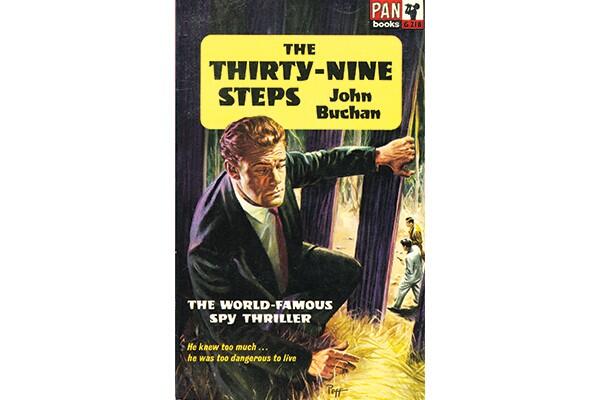
The Thirty-Nine Steps
Written at the start of the First World War while John Buchan was bedridden by illness, The Thirty-Nine Steps is a classic of the crime fiction genre. It stars Richard Hannay as the archetypal action hero. Returning from Africa after several years working as a mining engineer, Hannay intends on transitioning into a quiet and respectable society life. However, his dream is unexpectedly interrupted one night with the arrival of a man who claims to be dead. The man, Scudder, has just faked his own death in order to escape the agents of a spy ring known as the Black Stone, who intend to assassinate the Greek premier, Constantine Karolides, during his visit to London. What follows is a classic game of cat and mouse, a captivating chase that traverses the Scottish moors and sees Hannay employing disguise and deception to evade his enemies as he seeks desperately to reveal their plot before it is too late.
-
Culture
 Issue 2 01/03/2015
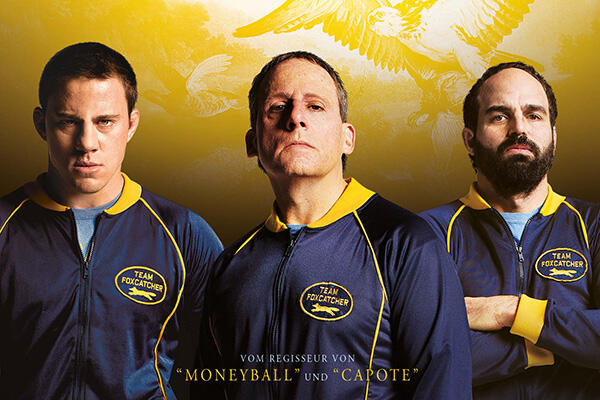
Foxcatcher
Rating: 4/5 Foxcatcher tells the true story of Olympic wrestlers, Mark Schulz (Channing Tatum) and David Schulz (Mark Ruffalo), and their unsettling benefactor John DuPont (Steve Carrell) as they attempt to repeat their gold medal win from the 1984 Los Angeles Olympics at the 1988 Seoul Olympics. The film quickly reveals to the audience that Mark appears to be living his life in his older brother’s shadow, a feeling that is exacerbated when he learns that Dave has been offered a coaching position at USA Wrestling. Mark views himself as Dave’s equal but struggles to best his brother in wrestling and in his personal life. Their fortunes change though, when Mark receives an invitation to join the wrestling team of John E. du Pont, a member of the wealthiest family in the United States, a zealous American patriot, and a wrestling fan who dreams of giving the national team the respect he feels it deserves. Channing Tatum, an actor often typecast as an attractive egghead, brings complexity to the role of Mark Schulz, which allows the audience to experience the protagonist’s frustration. Not only does he witness his brother exceeding him both professionally and personally, the strains that develop between Mark and du Pont also play a major part in his frustration, as he comes to truly know the egotistical and seemingly infantile man. Steve Carrell’s disturbing performance as du Pont has been lauded by critics and rightfully so - this is Carrell as we have never seen him before. He’s stern, quiet, and strange in a way that is genuinely unsettling; Carrell as du Pont has an almost perverse sense of megalomania as his character’s obsession with Mark, Dave, and the Olympic gold drives them and the audience away from a character who initially appears as a benevolent patriot but quickly morphs into something much darker; this transformation is highlighted by the director’s subtle exploration of the relationship between du Pont and his mother, and an examination of the dangers of money and hubris. Overall, Foxcatcher is dark, exploratory and troubling; it’s something that would not have been possible without stellar performances from Tatum, Carrell, and Ruffalo and understated yet effective direction from Miller.
-
Features
 Issue 1 22/02/2015
The social pokédex
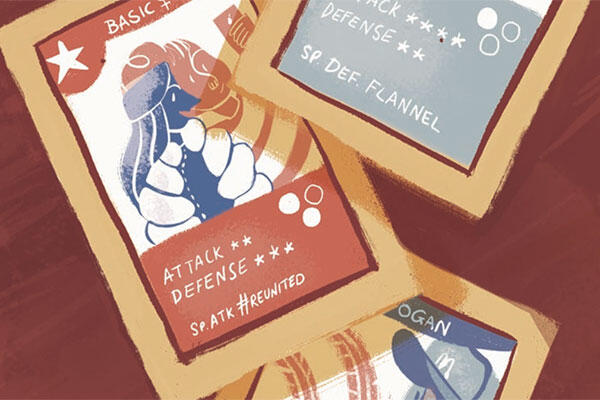
Nick Ainge-Roy, a judgmental soul with a kind heart, has been navigating the realms of the University of Otago for less than a year. But as a Dunners local, he’s familiar with the characters you’re likely to encounter in your new home and here presents you with a cynical insight into the characters of Dunedin. While I, along with most people, try to live my life in as accepting a manner as possible, abiding by such timeless and tiresome maxims as “Don’t judge a book by its cover” and “Know me before you judge me”, it is an oft-overlooked fact that through our daily goings-on we pass judgment on others constantly, be it conscious or not. It may not be inherently negative, but every time you pass someone you’re also making inferences, formulating opinions and making judgments about them. Entering university is akin to entering an arena of judgment because despite what people tell you, everybody here is judgmental as fuck. So, to aid the wide-eyed fresher in their judgments I have constructed the Social Pokédex. In this Pokédex you will find all the information needed to successfully identify those flies you will most commonly find in the social web of university and thus avoid being ensnared in the same traps. When conducting a social dig, it is best to start from the top, with the most obvious and arguably offensive layer of the hierarchy: the basic bitches and bros. The basic bitch has received a fair amount of coverage in the media of late, but I find that while most descriptions of the BB are apt, they do not paint a complete picture. The New Zealand basic bitch is first and foremost hot, and while the levels of hotness across basic bitches may vary, they are generally considered attractive. The second most discernible characteristic of the BB is their tendency to move in packs: a gaggle of striped tops, puffer vests and exercise pants, merrily screeching their way down the hall, laughing just a little too loudly at something that probably wasn’t all that funny to begin with — the perfect picture of platonic pleasantness. That is, until you separate them from one another and their fangs emerge from their hiding place of pretty smiles and hashtags, ones that are generally along the lines of #reunited or #missedyou, despite the fact they see each other six days a week. Although the basic bitch may seem innocent and endearing, the real danger lies in the vapidity of her thoughts, as little else seems to fill their minds and mouths other than drinking, recounting tales of their drinking and studying a BCom. The faithful companion to the basic bitch is, of course, the basic bro. Essentially interchangeable with the basic bitch, the only differences between the two are superficial, as the basic bro’s dress code consists of chinos/joggers, Chucks and a black t-shirt with a blue shirt over the top. Combined with a vacant look in the eyes, a love for rugby (and any rugby-related “banter” including, but not limited to, court sessions) and a study of Commerce, the basic bro complements the basic bitch with a guffaw to her giggle, and both are joined by their love for visiting the same string of bars every Saturday night and standing steadfastly by the belief that flat initiation was the most fun they have ever had. In second year the basic bro evolves into the Scarfie lad, a creature usually found out the front of a Castle Street flat dressed in a flannel, sweatpants and thick woollen socks, Double Brown in hand and drum ’n’ bass — it mustn’t be more complex than a snare and a kick at 140bpm — blaring from the open door behind him. The New Zealand social scene is possibly unique in its division, one that I would consider almost unrivalled elsewhere in the world, with the exception of our crass Australian cousins. This division is embodied through the bogan, the antithesis of the basic bitch or bro — as a disclaimer, I would like to point out that although the bogan is not usually found on campus they are frequently encountered within its locale and throughout Dunedin. Whereas the basic bitch/bro expresses a desire to document almost every movement on Facebook, the bogan seems to possess an ineptitude with modern technology that would rival that of our parents or grandparents. If you listen hard enough, you can occasionally hear a bogan muttering, “How do you use this bloody thing?” as they hopelessly try to upload a photo to Facebook before admitting defeat, firing up the WRX and dropping the clutch to go rip some skids or run some mainies. For those of you unfamiliar with these terms, ripping skids is the process of driving in circles in an empty carpark or similar venue, preferably until a tyre bursts or the turbo is thrashed so fucking hard it blows. In contrast, “mainies” is the rather sedate act of driving up and down the main street of a town while chain-smoking rollies and indulging in a box of Billy Mavs (at this point, the author would like to pay his respects to bogan culture by acknowledging the demise of the 10% Billy Mav and the 8% Diesel). Alongside their passion for burning rubber, tobacco and proverbial bridges, the New Zealand bogan has a fascination with one of those relics of the 90s that, like Biggie or the Backstreet Boys, is rarely seen or heard: the chin strap and the soul patch. Other iconic features such as Metal Mulisha or Monster Energy hats can be used to identify a bogan, but none is as reliable as the presence of the chinstrap/soul patch combo, one that climbs skyward towards thickly gelled and spiked hair, mirroring the sneer a bogan will often display as he leans back in his car seat, arm extended, before dropping the living hell out of his clutch and peeling the fuck out of there. Now that we have cleared away the offensive topsoil, we can examine the minnows of the university social clime. Because of the lack of basic-ness and bogan-ism, it is often difficult for a novice to differentiate and divide those who are not in the upper echelon into separate groups. But for the cynical, scornful and judgmental eye — such as that possessed by yours truly — it is easy work. The largest of the sub-groups is undoubtedly the international students. Out of all the people you meet at university, the internationals are probably the least troublesome for the sole reason that you hardly ever see them outside class. The international’s university career will consist of innumerable hours spent in lectures, followed by a few more studying in the library. Coupled with their studious nature, they may have a poor grasp of English, making the international student a hugely inoffensive and often likeable character due to the hilarious soundbites that are produced when the rudiments of the greatest language on earth are still being learned. Derisive comments aside, the international student is possibly the best type of student because they represent what we all should aspire to be: hard-working, polite and determined to do something that actually benefits society rather than ourselves (looking at you, basic bitches and bros). I also wish to avoid saying anything truly offensive towards international students because a) I know that if I were to go to their country and study, I would be even more of a hermit than them due to my fear of mispronouncing something, and b) because while nobody really gives a shit if you make jokes about your own race, it is frowned upon (and let’s be honest, bad) to talk shit about somebody else’s. We now come to another of our university “cave-dwellers” — that is, people who are usually pasty, odd-looking and socially struggling. I am referring to the counterpart of the international student, the domestic student who takes uni just a little too seriously. While I avoided talking badly of internationals, I have no such qualms about doing so of the domestic students for a number of reasons. Firstly, they’re not from another country, so that makes it okay. Secondly, their mastery of the English language and academia always seems to make them come across as just a little smug: “Oh, you only got a B? That’s not too bad I suppose.” Fuck you and your 86 per cent average. The too-serious domestic student will, unsurprisingly, sit towards the front of the lecture theatre, be the first to answer any questions — out of what I am going to instantly assume is a smug desire to flaunt their wealth of knowledge on the topic — and will often carry with them some chunky text on politics or gender equality, a sign that they want to be treated as an adult with a genuine regard for worldly issues and not as what they actually are, a kid who six months ago was stressing out over their English NCEA Level 3 Unfamiliar Text paper. Do they actually expect me to believe that they spend their free time between classes sitting in the gardens adjacent to Quad, sunlight streaming onto the pages and refracting radical insight such as “Treat everyone equally” into their spectacularly large cranium? Fuck out of here, man, go back to your flat and bitch about how boring your lecture was like the rest of us. This accessory represents the sad impression that they are still under, the impression that the university of today is the university of yesteryear, a birthing ground for the leaders and thinkers of tomorrow, a place where all are welcomed, original ideas are nourished and intellectual conversation abounds. The sad reality is that university has morphed from a prestigious higher calling for those with a genuine desire for self-fulfillment and education to a paper mill churning out degrees to anyone with enough patience to stick around for three years without completely failing. The too-serious domestic is an ode to a bygone age and, although I approve of such outdated ideals, my real problem with these specimens lies, as you may have guessed, in their title: this type of student simply takes university too seriously. Now I’m not saying that there isn’t more to life than getting fucked up; I’m merely saying that there is more to university than studying. Uni is one of the best opportunities you will ever have to meet people you genuinely like, and not just because you have to see them six hours a day, and to squander that opportunity seems a little bit foolish. Admittedly you (Mr/Ms Serious) will leave university with far better marks than I, which may lead you to a far better job and thus more success, money, happiness, etc. But while you might be in a high-flying job with an ear-to-ear grin about how well you’ve done in life, I’ll be sitting in squalor, resentful of your forethought and hard work but nonetheless content in the knowledge that I had a great time and, more importantly, made some pretty good friends. At this stage many readers might be feeling incensed (especially if you happen to number in any of the groups outlined above) at my inadequate acknowledgment of any of the numerous other groups that will be encountered throughout one’s time at university. The reality is that there are just too fucking many and most of them — despite my bullshit about possessing a discerning eye — are too difficult to compartmentalise, leading me to prey on the easy targets, the majority. However, I will attempt to redress my selective shit-talking by providing a quick summary of some of the slightly less well-known but frequently encountered characters this university has to offer. Members of NORML can be found sitting on the grass outside OUSA most afternoons, usually around 4.20pm. They’re an unassuming bunch and, if memory serves correctly, most don’t even have dreadlocks, which makes them a bit easier for the average middle-class white student to tolerate. Mature-age students really shouldn’t be that hard to spot, although be cautious as they may often be mistaken for the lecturer and any attempt to discuss the course with them will result not in helpful guidance as you had hoped but in a tedious conversation covering every aspect of the course as they try to wring every precious minute of interaction out of you that they can. It is also worth noting that the mature-age student is often the same person as the too-serious domestic student, after the mid-life crisis. Alongside these characters are the usual “Freaks and Geeks” that can be found in any institution, but their numbers are neither large enough, nor are they annoying enough to warrant inclusion in this Pokédex so I shall leave it up to you to identify them. Having almost reached my editorially prescribed word limit, I must now bring this piece to a close. Before my arrival at Otago, I had fallen victim to the familiar uncertainties that plague many freshers and former freshers: What am I going to study? Is it going to take me anywhere? Should I do something I enjoy or something that will get me a job? To ease my worrying, my older brother told me the following: Uni is one of the only times in your life when you will be truly free of the constraints of a job, family or similar authority figures, so have fun. Do not stress about what you want to do, you’ll know in good time — better to wait and do something you love now than do something you’ll regret for the rest of your life. It’s good to work hard, but don’t let it take over your life; there are other, better things besides work. It is this message — along with my various observations and warnings — that I ultimately wish the reader to absorb. Work hard, play harder and, please, whatever you do, don’t be basic.
-
Culture
 Issue 5 23/03/2014
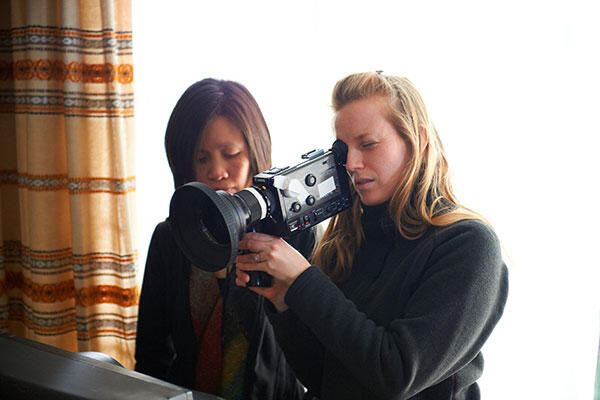
Stories We Tell
Rating: C+ Stories We Tell is a documentary directed by Sarah Polley that chronicles the relationship of her parents, Michael and Diane Polley, with special attention paid to an extramarital affair of her mother’s that resulted in Sarah’s illegitimate birth. While technically a documentary, Stories We Tell is littered with recreations of Michael and Diane’s life together (all shot on Super 8 cameras so as to give the impression of home videos) and voiceovers of Michael Polley reading from his memoir. While the Super 8 segments were wonderfully shot and tricked me into thinking they were genuine home-movies, Michael Polley’s narration felt uncomfortable. Being one of the subjects of the film, it was odd to hear him speak in first-person about events that had just been documented moments before and drew me out of my immersion in the film. This was exacerbated by the inclusion of shots of Michael recording his dialogue in the studio whilst receiving direction from Sarah, the director. At just under two hours, Stories We Tell is rather long for a documentary and makes me think that Sarah Polley had done a Peter Jackson and gotten too attached to the project, leaving her unable to bring it to a suitable conclusion. I spent the last 20 minutes of the film wishing it would end, and there were several instances when the story had reached an apex and the screen would fade to black … only for Polley to follow a story that ultimately detracted from the film as a whole. Much of the final 20 minutes focuses on Sarah’s own involvement in the story; her reaction upon meeting her biological father and her efforts to turn her story into the documentary. Unfortunately it disrupts the flow of the film and causes the audience to once again feel jolted out of the narrative. There were countless scenes of Sarah setting up lights, or reading out emails from her biological father, which would have been better suited to “behind the scenes” footage, rather than the closing minutes of a documentary. Stories We Tell is an emotionally gripping documentary exploring the secrets behind every family through the experiences of one. However, it is let down by awkward and unnecessary sequences that left the film stylistically uncertain; was it gonzo or was it journalism? Stories We Tell is certainly moving but nothing you will regret not seeing.
-
Culture
 Issue 4 16/03/2014
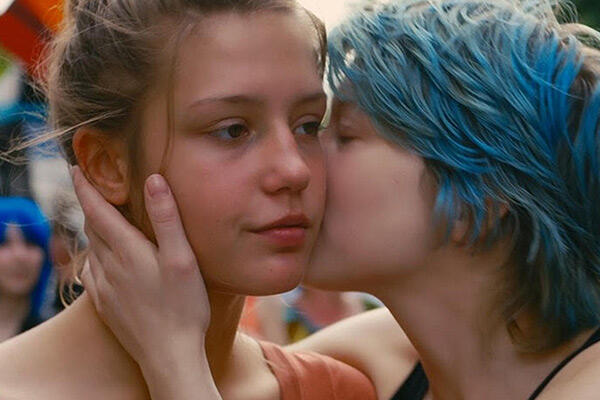
Blue Is the Warmest Colour
Grade: A+ Blue Is the Warmest Colour, directed by Abdellatif Kechiche, has been praised by some as the best movie of 2013, as well as unanimously winning the Palme d’Or at Cannes and being nominated for a BAFTA and Golden Globe. After watching the film myself, it was easy to see why. (Warning: Unless you want complete lack of eye contact, followed by several years of awkwardness, do not watch this film with your parents). Blue Is the Warmest Colour follows Adèle (Adele Exarchopolous), a quiet and reticent high-school student with a passion for English and French literature, as she discovers her sexuality and enters into a relationship with Emma (Lea Seydoux), an art student several years her senior. Exarchopolous is cast excellently in the role of Adèle and plays the part with perfection, shifting effortlessly from an introverted teen struggling to accept her sexuality in the face of her peers, to a fiery young woman who is head-over-heels in love. Seydoux is also a natural fit for her role, as she embodies a mysterious allure and has such powerful onscreen chemistry with Exarchopolous that you could mistake their romance as also happening off-screen. Despite limited screen time, the supporting actors all do a wonderful job judging, accepting or flirting with Adèle depending on their role, and help form some of the best scenes in the film. In one particular scene Emma meets Adèle’s parents, whose disapproval of her artistic and free-spirited personality is obvious through the veneer of their social niceties, forming an almost palpable tension. In Blue Is the Warmest Colour, Kechiche combines a brilliantly written script with subtle yet captivating cinematography and two exceptional performances from Exarchopolous and Seydoux. This film will intrigue, appal and engross the audience from the very first scene. In what has been a strong year for cinema, Blue Is the Warmest Colour is a film that demands attention amongst its peers and could certainly claim to be the best film of 2013.


