
Brandon Johnstone
Contributor
Articles by Brandon Johnstone
18 articles found. Displaying page 2 of 2.
-
Culture
 Issue 10 03/05/2015
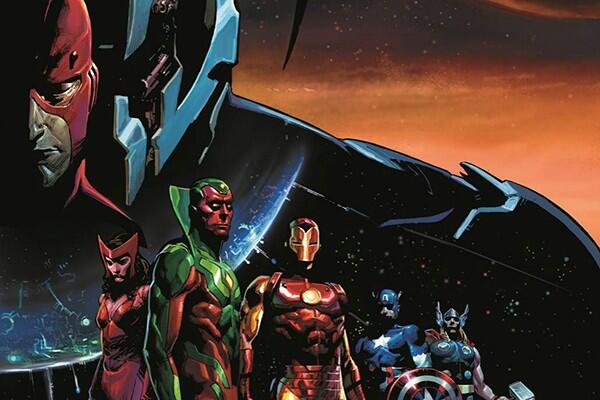
Avengers: Rage of Ultron
Avengers: Rage of Ultron, written by Rick Remender and with art by Jerome Opeña, is Marvel Comics’ latest original graphic novel, this time about a logical, learning robot/AI (artificial intelligence) that just wants to kill everything alive. Long-time Marvel readers will know this AI, Ultron, as an iconic villain created by founding Avenger, Hank Pym (the original Ant-Man). This isn’t just coincidental timing: it’s cross-promotion for Marvel’s latest film: Age of Ultron.
-
Culture
 Issue 7 12/04/2015
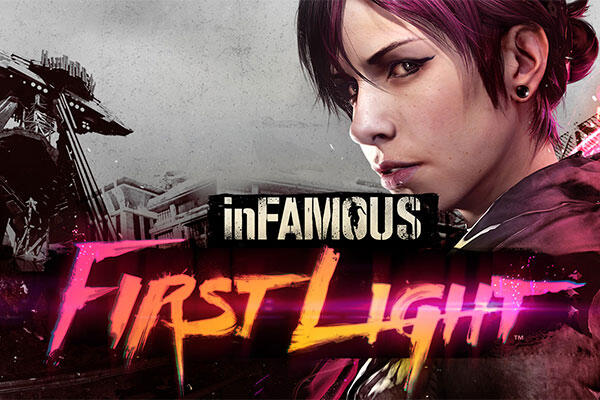
InFamous: First Light
Rating: 2/5 InFamous: First Light is presented in an odd format. A tie-in to the larger title, InFamous: Second Son, and available for download and use without the player having to own the primary title, it’s not quite its own game yet it’s more than just a piece of downloadable content (DLC). This is a release style that seems to be slowly building traction, and it makes sense on a number of levels. Players can dip their toes into the game’s universe and mechanics without having to shell out for a larger game’s price tag, and the developer can use the tie-in as a playable advertisement. However, for this model — or even standard DLC — to work effectively, the new content needs to bring something fresh to either draw players back to their world or introduce newcomers to it. Unfortunately, here InFamous: First Light falls flat on its face. The main draw of this title is to delve deeper into the past of “conduit” Abigail “Fetch” Walker, one of the protagonist’s super-powered allies in InFamous: Second Son. As it turns out, before we met Fetch — broken, paranoid and unstable — in Second Son, she was a hell of a lot less interesting. Half of Fetch’s cinematic screen time is spent blithering on or throwing a hissy fit over how incredible her brother is and how she’ll freak out if he isn’t around to cuddle her. Sure, she’s a recovering drug addict who loves her brother, but it’s pretty sad to see such a live wire reduced to a whinging mess. This dependency on her brother is a blatant ploy to invoke the player’s emotions when their life is in danger at a later point, but it’s a little too obvious and obnoxious to inspire these feelings naturally. Luckily, the actual gameplay is still good fun. Fetch’s neon powers (sprinting in light form, firing off lasers and whatnot) feel great to control; zipping around the city never feels like a chore, and her powerset has more depth than any set from Second Son. For those who do own Second Son, that game’s Delsin and all his powers are usable in First Light’s arena battles, which is an extremely cool touch. Those who have played previous instalments in the InFamous franchise will notice that the combat and control system in First Light/Second Son is similar, but improved upon in most places. If you have not played any previous instalments, have no fear: the plot threads from those games have been more or less abandoned, with new stories built from the ground up. You may feel a little disoriented if you’re jumping straight into First Light, but it weaves its own story without leaning too much on the wider context of the factions and politics that exist in that world. In Second Son itself, however, you’re good to go: the story will teach you everything you need to know. If First Light pops up for free (as it did for Playstation Plus subscribers) or on the cheap somewhere, it’s worth grabbing to experience zippy combat with beautiful visuals, but keep in mind that this title is essentially a very watered-down version of a much greater game that has more diverse powers, a better story and infinitely more interesting characters.
-
Culture
 Issue 4 15/03/2015
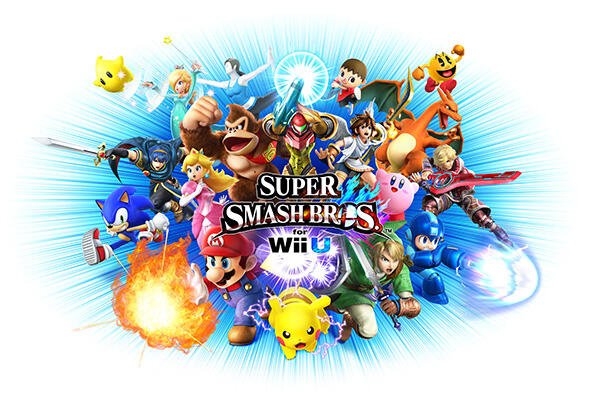
Super Smash Bros for Wii U
Nintendo’s Super Smash Bros franchise is probably the most well-known, well-loved fighting video game in existence. Originally, the idea behind the fighter was to use generic brawler characters, but thankfully Sakurai (the bright spark who designed the game) decided to throw Nintendo’s mascots into the mix and see what happened. Link, Pikachu and Mario could beat the hell out of each other, and the franchise grew insanely popular. Put simply, Smash has you take control of a character from Nintendo’s pantheon and utilise that character’s unique skills to beat up your friends (or opposing artificial intelligence (AI)) until you can smash them out of the park. Super Smash Bros for Wii U (yes, that’s literally the game’s name) is the fourth instalment of the Smash franchise and boasts an impressive 51 characters to choose from, even some non-Nintendo gems such as Mega Man, Pacman and Sonic. Almost every character, with the exception of one or two clone characters, owns a unique fighting style and move-set. We’re talking around seven or eight distinct techniques each, as well as their own speed, weight and strength. Alongside a mind-boggling plethora of weapons, this creates a more varied, unpredictable and often downright chaotic environment than any previous instalment in the series. You can ramp up that chaos by engaging in up-to-eight-player battles with any combination of human and AI. This might not be for everyone: you’re in for a constant onslaught of beatings and fighting for your life, but there’s a beauty in that insanity. A huge plus for battling friends in the new Smash is that you can hook up almost any controller you want. We’re talking Wii remotes, the Wii U gamepad, pro controllers, Gamecube-style controllers, even a 3DS console. The only main drawback to this is that you’re stuck in that one room: no online eight-player battles. Which seems crazy; eight-player Smash madness and online play feel like a match made in heaven. Super Smash Bros has a history of intentionally neglecting its competitive play community, as creator Sakurai pushed very hard for his vision of a no-worries party game, but finally we see an instalment that truly embraces this side of its fan-base. Once again, the ability to switch items on and off (in any combination) is still available to us, but now we can convert any given stage into a flat, no-interruptions, competitive-style battlefield. This play style is carried over to online matches, which are separated into just-for-fun casual battles and ranked, competitive matches. Smash’s accessibility has always been a strength over other fighting games on the market, but now you can truly tailor the game to any play-style and skill level, and even ramp up the difficulty in solo play for increased rewards. Super Smash Bros for Wii U still offers its classic solo “campaign” but with some large tweaks over old game modes. They’re still fun and they’re mostly cosmetic changes, with the notable exception of Smash Tour mode. This is a watered-down Mario Party boardgame-style romp, but it feels like one of the weakest areas of the game. While interesting in concept, in practice you end up running around a hugely uninteresting game board and occasionally engaging in short, stunted battles. It may come down to personal opinion here, but the 3DS version of the game has a much more engaging game mode called Smash Run, where you run around powering up, fighting monsters before battling friends or AI. But what really sets this game apart from previous entries in the series is the pure polish on every aspect of battle. Character movements feel more intuitive and snappy than both Super Smash Bros Brawl and the widely praised controls of Super Smash Bros Melee. The colours are brighter and the character models are smoother, everything looks gorgeous and easily stands up to anything on competing, more powerful consoles. Hell, Mega Man even runs and jumps the same way he does in his own game. It’s downright beautiful. Super Smash Bros for Wii U outdoes its predecessors in every feasible way; it’ll leave you craving more every time you put down the controller.
-
Features
 Issue 4 15/03/2015
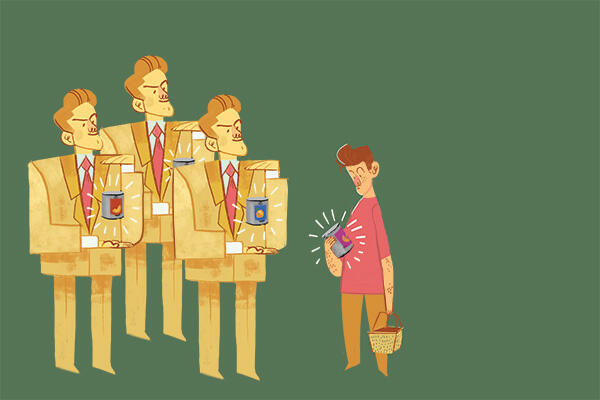
Manipulative Marketing
Coca-Cola, Google, Apple, Samsung, YouTube, Amazon, Starbucks, McDonald’s, Facebook, Nike, Cadbury, Mars. These names don’t come to you easily for no reason. When you think of a product, there’s normally one brand that will immediately come to mind first. These corporations, who are at the top of their game, haven’t done this by any accident. Marketing and advertising are a massive part of our everyday experience. While not all marketing is intended to encourage you to spend (e.g. anti-drinking ads), it is designed to influence your decisions and thinking. The majority of advertising aims to get people to do one thing: consume. Marketers are given a product or service, and they have to make it desirable to their potential consumers. There’s a need and this particular product needs to fill that need. It is no secret that supermarkets are carefully designed to maximise the amount of time, and therefore money, that a customer spends wandering the aisles. You would be lucky to see a clock near the front door of any supermarket. Beyond the sense of timelessness, the customer is often carefully guided through a barrage of cheap products, usually loss leaders or products approaching expiry (we’re looking at you, “Aisle of Value”), before having to trek to the furthest depths of the store to find meat, milk, bread and other high-turnover necessities. The obvious reasoning here is that this exposes a customer to as many products as possible as they journey through the store, resulting in more impulse purchases and thus more money for the supermarket. Not that it ends there. Next time you’re in a supermarket, try to note the products that you’re selecting and why. Most of the time, customers make snap decisions without thinking about it, grabbing products that are at eye level or have the “on special” tickets. Those products at eye level are what the supermarket wants you to buy. They’re either the high-margin, money-making items (sometimes even brands that the supermarket owns) or they’re placed there because the supermarket has been given a nice pile of cash to put them there. And those “specials” are obviously helping customers buy smart and shop for the bargains, right? Essentially this is true, customers are getting something for less than they would otherwise. But here’s the kicker: research has shown that customers as a whole will buy more of that “special” item even if the price is increased. Now that might not be standard practice, but if a store wants something gone, they can mark it down by two cents, slap a big red sticker on it and they’re away laughing. Digging deeper into what’s actually on those shelves reveals that consumers have a depressingly small choice in who that dollar goes to. Take good old Kiwi Wattie’s for example (owned by Pennsylvanian Heinz). A customer might see a Wattie’s can of peaches and think $1.99 for a can of peaches is expensive and instead, pick up the 89¢ can of Oak peaches. Wattie’s owns that cheaper Oak brand, and so that ticks up another sale for Oak, therefore Wattie’s, therefore Heinz. The same is true for Eta, Weight Watchers, Golden Circle and countless other brands under Heinz’ far-reaching umbrella. And it isn’t only true for Heinz either. I’ve been judged for taking my liquor shopping to Liquorland rather than Henry’s because of the perceived quality of each store, when in reality they’re both owned by Foodstuffs (as are PAKn’SAVE, New World and Four Square). Using the previous example, if a small business decides to join the high-octane business of peach-selling, then that business will have to go up against the peach juggernauts. Now Heinz sees this new competitor and is faced with a decision. They could mind their own business, they could lower the price of Wattie’s peaches to a point where the new business cannot compete, or they could do the same with Oak peaches. Of course they would choose to lower Oak’s price, because this way Oak retains its image as the affordable option, while Wattie’s still looks like the pricier but higher-quality option. Heavily lowering the price of Wattie’s peaches would cause them to appear cheap and nasty. They could even lower Oak peaches to a point where they’re losing money, just to push the poor new business out of existence, while bathing in income from other brands. So a very small handful of companies owns a huge amount of what the consumer dollar can be spent on. This is often referred to as “illusion of choice” and, not surprisingly, extends far beyond the humble food industry of New Zealand. Thirty years ago, there were still huge corporations, of course, but a larger number of these were independent from one another, without this insane web of parents and subsidiaries. Take Disney’s recent actions for example. Their recent acquisitions have been hugely publicised, and most people are aware that Disney has bought out Pixar Animation Studios, Lucasfilm, Marvel Entertainment, et cetera ad nauseam. Sure, building an airport-to-resort railroad is pretty impressive, but Disney built a city. It designed and built a city in Florida called Celebration because it’s Disney and they’ll do whatever they damn well please. Over the last few decades, this extreme merger and acquisition growth process has been occurring across nearly every industry, with all the big players vying for power. Disney is not alone. A mere six — six — media goliaths control a whopping 90% of the media market in the US. CNN, HBO, Time and Warner Bros for example are all owned by Time Warner. And this doesn’t exist in a vacuum. The vast majority of our media is also dictated by the media giants. Illusion of choice: we think we have this vast smorgasbord of food stores, of movies, of god damn peaches to choose from, but really we’re only choosing from six or seven power players, plus this struggling pile of tiny, niche competitors. Sure, that’s a somewhat simplified version, but it’s close to the scary reality. Despite all of this, these huge corporations are filling a need. They are giving consumers something that, for the most part, they’ve made it very clear they want. It’s easy to see how these businesses grew so rapidly and potently: they make people happy, so people pay them the dollars. But then how is it possible to justify the billion-dollar industries built on making people suffer? How are tobacco companies still so profitable, given increasing education around the detrimental effects of smoking, not to mention political hurdles thrown at them from every angle? The answer is somewhere between marketing and lawyers. Before the health issues surrounding smoking were well known, tobacco companies advertised more or less like any other industry, by flooding the available media with their message of why their product was the best. For the most part, this consisted of showing the audience some rugged bastard, maybe a cowboy in the desert or a petrolhead doing manly things with a manly car. “Do you want to be masculine? Better ignite some tobacco then, you wuss!” But once people caught on that smoking was killing them as much as calming them, most first-world countries put laws in place to stop mainstream advertising. Naturally the industry fought back as strongly as it legally could. However, it eventually gave in and poured money into other ventures, such as heavy sports sponsorship to stay true to the masculine image, or facilitating brand communities by hosting events for fans. Anything they can do, they have done. Where it gets scary is when the line between law and marketing is blurred. Arguably, the only reason that the tobacco industry is still a powerhouse today is because of the sheer amount of funding these corporations put into fighting anti-smoking legislation. These companies are going to legal war with countries, and sometimes winning. A person may think that the government shouldn’t be in control of what people consume, and that’s fine. But surely it’s objectively wrong for a company to legally overpower small, third-world nations in order to flood that nation’s market with its cigarettes. Highly regarded entrepreneur and Dragon’s Den investor, Duncan Bannatyne, took it upon himself to investigate the activities of British American Tobacco and how it is actively targeting young people in Africa. He was, as we should all be, disgusted at what can only be described as money-hungry evil oozing from these organisations. These corporations are out to make a buck for their shareholders, consequences be damned. But they’re not just faceless companies — these are businesses that exist because they are full of individual people. Somewhere there is a board full of old wrinkly gits getting their rocks off to the idea of becoming richer by influencing impoverished schoolkids to get addicted to tobacco, and that’s just terrifying. Subliminal messaging is where producers flash images of food or drink up on the screen for less than a second during an ad or a movie, making you subconsciously desire that object. It rests on the assumption that the message will pass below normal perception and be taken in unconsciously. The majority of research will tell you that it is not particularly powerful, even if it might slightly influence your decisions. Because there’s so much research into subliminal messaging, the technology has vastly developed since the phrase was originally coined in the ’50s. It’s even used in the army as training to help soldiers recognise foreign ships and aircraft. Mostly, subliminal messaging in this form is illegal, and most corporations won’t even bother trying to use it — it’d be a public-relations disaster. But that doesn’t mean they don’t have other methods of subliminal messaging up their sleeves. The logo design of a company and the colours they choose can have a large impact on how that company is perceived by customers. The logo of a company can say a lot about it if they have a clever designer. Take Amazon, for example. The underline beneath the word “Amazon” acts as an arrow pointing from a to z, meaning they’ve got everything. The arrow also looks like a satisfied smile. This kind of subtle design is not something most people will be actively aware of, but the message is there, reinforcing the ideas the company wants to promote. If someone wants to present their business as urgent, then they might make a large portion of their logo red. On the flipside, purple is a soothing and spiritual colour that promotes luxury and royalty. Amazon’s smile/arrow is yellow, a colour associated with optimism, friendliness and creativity. Companies use subtle marketing techniques to influence you; even though it doesn’t seem like much, it can still make you choose one company or product over another. We’ve all seen the bullshit “miracle cures” and damage caused by products that have been sold to us with supposedly no flaws. But it’s also clear that marketing is a fundamental aspect of business, and human life in general. It’s even a sizeable chunk of many students’ education at Otago, so there’s something more to it than just big business exploiting the little guy for profit, right? David Bishop, one of Otago’s own Marketing Professional Practice Fellows, is a past employee of some of New Zealand’s largest food manufacturers and, as such, he knows his way around corporate marketing. Bishop points out that on one hand, consumers are lucky that legislation such as the Commerce Act prevents large businesses like Foodstuffs and Progressive from colluding and essentially forming a simulated monopoly by deciding, “Hey? If we both charge them an arm and a leg for a can of beans, those bean lovers have no other options!” On the other, much more positive hand, Bishop offers his own definition of marketing: “Finding out what people want and getting it to them at a profit to yourself.” And that, in and of itself, is a positive thing. Marketing professionals will research a market and find out where a product gap is: you want that thing, so we’ll make that thing for you! Consumers are happy because their life is full of little comforts, whatever they may be, businesspeople are happy because they have a nice revenue stream with which to buy comforts of their own, and on a grander scale these interactions keep the wheels of our economies churning. It’s another matter entirely what trouble creating those extra wants may be causing..
-
Culture
Issue 19 10/08/2014
Guardians of the Galaxy: Legacy
Guardians of the Galaxy: Legacy is the first volume of the 2008 comics reboot of the ragtag space-team. The writers, Dan Abnett and Andy Lanning, or “DnA” as they are known collaboratively, have been writing comics since the mid-80s and have a solid legacy as a team. Together they have worked extensively on Marvel’s “cosmic” (outer-space) line of comics, as well as non-Marvel comics such as Superman/Batman and 2,000 AD (AKA “the people who made Judge Dredd”). Unfortunately for us fans, the two creators have had a lovers’ quarrel or something recently and have gone their separate ways, but are still individually creating fantastic content nonetheless. The basic idea behind this book is that Peter Quill a.k.a. Star-Lord has watched his cosmic home get ripped almost completely apart, and so he sets out to establish a proactive butt-kicking team to keep his galaxy safe from whatever might threaten it. However, through dialogue hints and precognitive aliens (because what’s a space comic without future-sight?) we know that the team members all accepted their roles suspiciously quickly, and one of them is a traitor ... Paul Pelletier’s artwork within this book feels like a punch line of its own, while still retaining its scare factor when it needs to. However, it is Rick Magyar’s inking which makes it hard not to keep turning the page. The vibrancy of the bright colours in most scenes makes you feel like you’re having fun despite, you know, the galactic apocalypse. The black pen comes out strong and heavy in the action scenes to give the blows some oomph, but it always feels exciting. So the book looks great, but if I’m forced to give one reason I fell in love with it, it’s the dialogue. The characters joke and jab, weave in and out of personal interactions and just generally bounce off of each other with a lot of grace and joy. Even the badasses like Drax aren’t presented as purely being a grim, dark, brooding, “I am the night” -type character. Keeping this alive may be James Gunn’s biggest challenge in moving these characters to the big screen, but I have high hopes. Yet another thing that I really love about this book is the range of characterisation in its women – beating back the stereotypical comic book “fighting fuck-toy” treatment. Phyla-Vell, codenamed Quasar, is strong and powerful yet feminine, emotional and impressively non-sexualised. Gamora (the green alien chick in the film), on the other hand, is sexualised, but she owns it – she’s given plenty of oppor- tunities to be more than a sexy green space babe. Whether the other characters are speak- ing about her ability as an assassin, or she is endangering herself to save her team (and the galaxy, of course), Gamora is more than big- boobs-stab-things – she’s definitely the subject of her own story. If you want to check out the Guardians’ adventures (and I suggest you do, if you like fun and happiness) there are a couple of things you’ll need to watch out for. If you’re new to comics you’ll need to take your time. There are a lot of new concepts thrown at you quickly, including time-travel and alternate universes. I recommend having Wikipedia ready if you want all the trivia. Also, the second half of the book (or last three issues, depending on how you read it) are part of a Marvel crossover event. The writers handle this deftly, but you might find yourself wondering “what is a Skrull, and why are they killing people?!” And lastly: you’ll fall in love with these characters, and not all of them will make it to the big screen. You’ve been warned.
-
Culture
 Issue 4 16/03/2014
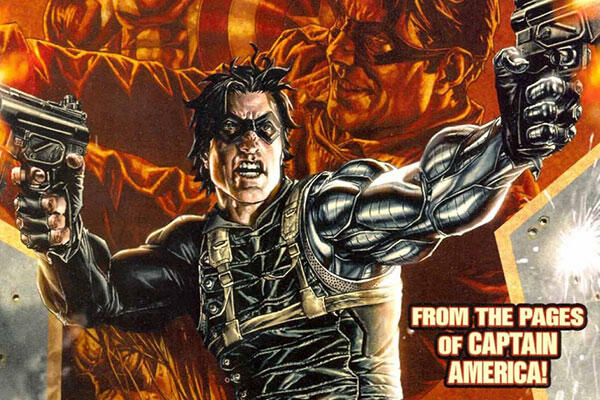
Captain America: Winter Soldier
Ed Brubaker’s first two comic book-arcs of Captain America tell the story of the Winter Soldier, a Soviet assassin and super-spy tied to Steve Rogers’ past. Published in 2006, this book was the subject of much controversy, as it became clear within a few issues that there was a very real possibility of Bucky, Captain America’s iconic sidekick, being brought back from the dead. That’s over fifty years of meaningful, sacrificial death, which would break the golden comic book adage “only Bucky and Uncle Ben stay dead.” Sullying the memory of the American boy hero would have earned Brubaker a great deal of fan boy-hate ... if this weren’t such an expertly crafted story in nearly every way. It breaks free of the “cape comic” status quo by telling a consistently gripping tale of espionage, mystery (murder mystery, even), responsibility and friendship. The initial threat to Captain America is Cap’s archenemy, the Nazi Red Skull. In an attempt to create a weapon of mass destruction (a “cosmic cube” or Tesseract, as you might know it from the Avengers), he must kill thousands of innocents. This sounds straightforward enough, but Brubaker creates a real aura of menace about the Skull, and with artist Steve Epting they make him scary and downright creepier than the villain has been in years. When intelligence informs Cap that the mythic Winter Soldier from the Cold War assassinated the Red Skull, he goes looking for the assassin. Captain America finds him, and sees a young man who appears to be a slightly older version of James “Bucky” Barnes, his World War II sidekick. Cap is understandably distraught and believes that somebody is playing mind games with him. Brubaker’s ability to tell both a personal and epic story at the same time is what makes it so engrossing and entertaining. Captain America fights to protect innocents against acts of terrorism, while his alter ego Steve Rogers struggles against his burden as an icon of freedom and the idea of Bucky as a murderer. This America-centric story seems enough to make us in the rest of the world turn away in indifference, but Steve turning his back on his government and fighting for more moral reasons instead gives everyone something to root for. As his partner Sharon Carter suggests, Captain America is at his best when he fights for what’s right, not for what he’s told. He’s a man of freedom and morals, he’s susceptible to sadness and rage, but he’s a human and this is a story of humanity and self-identity above all else. Although the narrative steals the show, the art is absolutely gorgeous. A guest artist will crop up here and there, but most of the credit goes to Steve Epting. He manages to give the book an ominous dark feel, while never feeling monotonous or depressing. His style is grounded in a gritty realism that lends itself well to the human narrative style and gives the action sequences a fierce, fluid energy, and dramatic lighting in more sombre scenes. This book is extremely accessible, and clearly written to be easily consumed by those new to comics, and not bogged down by lore. It offers a solid introduction to the Marvel world, especially for those wanting to learn more about where the film Winter Soldier (which is coming out in theatres on 3 April) came from and who those characters are. And for those who fell in love with this story as hard and fast as I did, Brubaker went on to write another whopping 7 years of Captain America stories for Marvel, which never stop being entertaining and refreshingly thoughtful.


