Peter McCall
Contributor
Articles by Peter McCall
8 articles found. Displaying page 1 of 1.
-
Culture
 Issue 14 06/07/2014
Alex G - DSU
Rating: B+ Though DSU is Alex Giannascoli’s first album to be released on Brooklyn-based label Orchid Tapes, it’s the sixth to be uploaded to the 21-year-old’s Bandcamp page (where you can get it for free!). I first heard Alex G’s music through a girl I used to follow on tumblr who would post clips, recordings or photos of him almost every day. From what I can tell, neither her behaviour nor my method of discovery were out of the ordinary, as Giannascoli’s music continues to spread through a small-but-growing die-hard internet fanbase. His latest LP is arguably his most cohesive and well produced, though it is definitely worth going through that five album back catalogue to find gems like “Change” (from Trick) or “Dust” (Winner). In the past I’ve described Alex G to friends as “a poppy Elliott Smith” and while this remains somewhat applicable, DSU sees Giannascoli moving away from the simple layered vocal and guitar tracks that drew the comparison and moving towards his own distinct style. Whether it’s interesting instrumental choices, like the flutes on standout track “Harvey” or pitch-shifted vocals (“Rejoyce”), Alex creates a diversity in sound that was often missing from his earlier releases. However, the Smith influence can still be heard in his whispery, layered vocal delivery and instinctual ear for melody. Giannascoli’s sound is heavily indebted to ‘90s indie, with echoes of Modest Mouse (see “Serpent is Lord”) and Built to Spill. The strength of this album lies mostly in the music, with not a lot of really affecting lyrical content; often Alex’s words seem to exist purely as a means of carrying the melody. This is a shame because he’s proven with previous releases just how well he can write (see “Be Kind” or “Break” – both unreleased tracks worth finding on YouTube). Regardless, this record sees Alex G finding his voice, producing eleven good tracks, and two great ones.
-
Culture
 Issue 8 13/04/2014
Tweens - Tweens
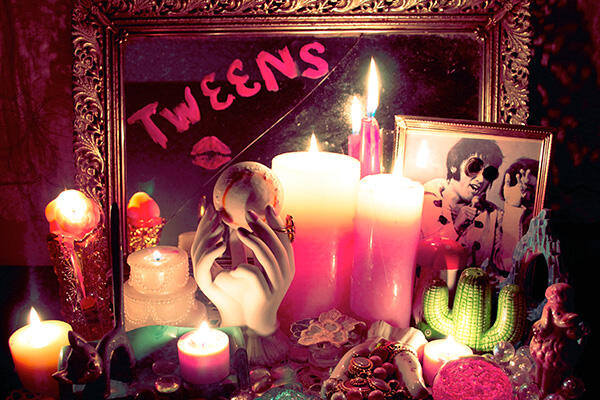
Rating: B- Although the Cincinnati noise-pop trio are not actually about to enrol in their first year of high school, the name isn’t entirely inappropriate. They’re bratty, they’re full of energy, they’re bored. These guys don’t deliver a lot of thoughtful wordplay or wise life lessons; instead Bridget Battle will tell you, in true tween style, what she wants and when she wants it at the top of her voice. It would be easy to lump Tweens in with the lo-fi pop trend that happened a few years ago (Wavves, Dum Dum Girls) and dismiss them as latecomers. But Tweens don’t seem to quite fit that mould, drawing more from bands like Be Your Own Pet, Yeah Yeah Yeahs and even Blondie. The album starts fast with “Bored in this City.” Battle cries that her town “is eating her alive” in an infectious blown-out chorus worthy of Perfect Hair Forever. From there it is a sprint to the finish, with few stops for Battle, or the listener, to catch their breath. By the time slow-burning “Want U” comes around at track 10, the wavey echoes of guitar are a sweet relief from the aggressive playing that dominates the album. Battle is reminiscent of Bethany Cosentino as she worries about thinking “way too much” and uses straightforward cliché lyrics like “all I know is I want you.” “Star Shudder” ramps things up one last time, borrowing heavily from Nirvana’s “Stay Away.” While the songs on this album aren’t bad at all, Tweens sounds more like a band you’d want to play in (or at least see live) rather than play through a pair of speakers. With relatively basic song writing and playing, these songs rely on the energy and grit that comes with live performance. It’s hard to imagine this album sticking around to make a lasting impression. Kim Deal likes them though, so that’s cool.
-
Culture
 Issue 7 06/04/2014
Mac Demarco - Salad Days
Near the end of 2012, i purchased Mac DeMarco’s second LP, 2, on the back of hearing “Ode to Viceroy” – a sweet love song for his favourite brand of low-cost cigarettes. It was refreshing, genuinely funny and somehow beautifully sincere – I hadn’t heard anything quite like it. However, neither me, nor the artist himself could have predicted his projectile rise to indie-stardom that immediately followed. Indie-kids everywhere fell in love with not just the music, but the man himself. What followed for Mac was a gruelling one-and-a-half-year tour that took him and his band all over the world – including sets at Primavera Sound, two Pitchfork festivals and even a few stadium shows opening for Phoenix. His third full-length, Salad Days, sees him coming to grips with growing up, losing his anonymity, trying to stay chill, and how it’s all affecting his relationship with his sweet Kiki. Based on the opening few tracks, you’d be forgiven for thinking this record was stylistically an extension of 2. A number of songs, including the title-track, stick to the upbeat twangy guitar lines and funky bass combo that’s become Mac’s signature sound. Make no mistake, there’s plenty of bouncy twang-jams on Salad Days, but the use of a synthesiser, most notably on the creepy/sexy track “Chamber of Reflection,” adds a dynamic that separates this album musically from its predecessor. The song writing on this record is more focused and meaningful than on either of his previous releases. He manages to maintain the simplicity of songs like “My Kind of Woman” but ties them to solid emotional ideas, each of them different – all killer, no filler. Little spoken adlibs add a bit of classic DeMarco levity to some of the darker tracks. He ends “Goodbye Weekend” simply with “ah! gigi bungsu!” (“wisdom teeth” in Indonesian). At the end of instrumental closer, “Jonny’s Odyssey,” he thanks us for joining him and assures us we’ll see him again soon. The pleasure is all ours, Mac. You’d be hard-pressed to find another current indie act that matches Mac DeMarco’s sincerity and straightforwardness (especially on a heavily concentrated hype-band label like Captured Tracks). What allows his music to flourish in such a typically ironic scene is his acute sense of the difference between seriousness and solemnity. The silliness and lack of melodrama doesn’t detract from the genuineness of what he’s singing; it just makes it a bit more real. Salad Days is the sound of a guy completely at ease with himself – yeah he’s got some issues, but y’know, that’s life, man. What’s the point of getting all worked up? – “take it slow, Brother.”
-
Culture
 Issue 6 30/03/2014
Cloud Nothings - Here and Nowhere Else
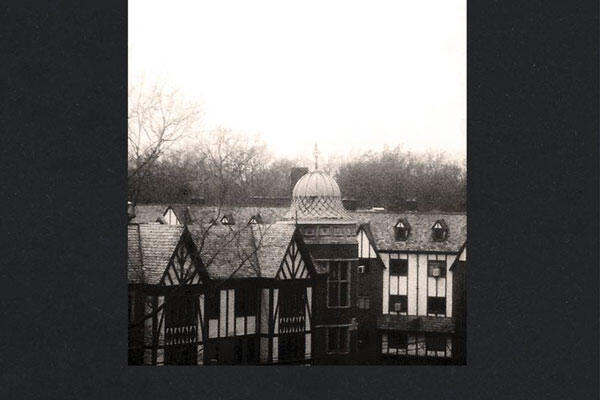
Rating: B+ On Cloud nothing’s latest Lp, frontman Dylan Baldi is learning to “focus on what [he] can do [himself].” One thing he can clearly do is write a bunch of powerful, catchy, guitar-driven songs. Once claiming that he approaches guitar more like piano, Baldi’s playing is complex without being distracting, and tends to avoid the unimaginative power chord progressions so associated with pop-punk. The album was recorded in a small Hoboken studio, the production simple and stripped back, allowing them to stay true to their live sound. With only eight tracks, this record is fast and it’s loud and it’s full of fist-pumping energy. The opening track, “Now Hear In,” begins simply with Baldi’s distinctive rolling guitar strumming before slowly building to a sing-along chorus that makes as good use of space as it does noise. Many of the tracks stick to this loose formula, but the innovation of the guitar playing and drumming stops the songs from becoming rehashed versions of each other. Baldi especially has the ability to write guitar lines that make you forget he’s the only one playing. Baldi’s vocal delivery is not dissimilar to David Monks of Tokyo Police Club; nasal, growly and full of angst. Baldi pushes his voice to its limit on this record, to greatest effect when howling “you don’t really seem to care” in the epic final chorus of “No Thoughts.” The lyrics throughout the album are pretty straightforward, making them all the more easy to shout along to. It’s impossible not to belt out the grappling hook of a chorus in “I’m Not Part of Me” – “I’m not, I’m not you! You’re a part of me!” While most of these songs are great individually, the lack of variety in both song style and production make this album hard to digest in one go. It would have been nice to hear Baldi using a few different guitar tones to add some distinction between the tracks and give them some individual character – “Pattern Walks” stands out as an exception, especially the last minute and a half that contains a rare bit of reverb and a noticeable lack of fuzz. If you like guitars, poppy hooks and heartfelt screaming you should listen to Here and Nowhere Else.
-
Culture
 Issue 5 23/03/2014
The War On Drugs - Lost in the Dream
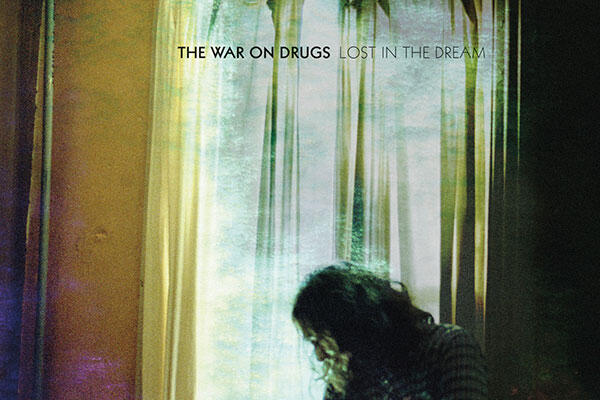
“It always gets so hard to see right before the moon,” sings Adam Granduciel, songwriter for The War on Drugs, halfway through their latest LP. It’s a new take on the old cliché, “it’s always darkest before the dawn,” but one that reflects more accurately the 35-year-old’s true longing. Granduciel isn’t waiting for the harsh light of day; he’s yearning for the quiet of night. Returning home from touring 2011’s Slave Ambient, he found himself disconnected from the community he had left behind. Lost in the Dream is a lyrically dark, but ultimately uplifting album that shows him dealing with isolation and figuring out where to go next. Like ex-bandmate Kurt Vile, The War on Drugs produce songs that consistently exceed the three-minute length that one expects from most modern bands. At nearly nine minutes, the opening track, “Under the Pressure,” drives forward with Dylan-esque vocals; the beat almost Krautrockian in that it feels like it could just go on forever. Sooner than you think, you reach lead-single “Red Eyes,” perhaps the most heavily Springsteen-influenced track. It’s life affirming stadium rock with darker undertones that melt away any potentially cheesy edges. Lyrically, throughout this LP, Granduciel is focused on the pressures of day, the peace of night and wondering whether, in his finest hour, he “can be more than just a fool.” His songs reflect the dark situation he’s found himself in but at no point does he sound defeated. The only possible problem with this album is that at about 60 minutes, and with such a distinct sound, it can start to feel a bit same-sy. However, this is only a drawback if listened to outside of its ideal context. This is very much a slow-burning record that captures the timelessness of night – the perfect soundtrack for a long contemplative drive. In a situation where you might get “lost in the dream or just the silence of a moment,” you can’t help but wish Lost in the Dream would never end.
-
Culture
 Issue 4 16/03/2014
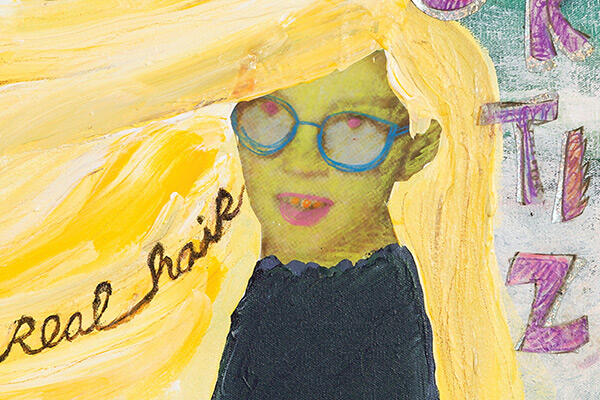
Speedy Ortiz - Real Hair
Grade: A- On Real Hair, the follow-up EP to their excellent 2013 LP Major Arcana, Speedy Ortiz once again prove that they’re not just rehashing ‘90s indie rock, but taking all the irony, angular guitar lines and fuzz that characterised that decade, and making it their own. Yes, they sound like Pavement, Slint and Dinosaur Jr, but they’re more than just a faded copy of what was. Rather than making you wish you were in ‘92 hearing Slanted and Enchanted for the first time, Speedy Ortiz make you glad to be around in 2014 and show that there’s still plenty of room to innovate in indie rock. Speedy opens this EP with their most poppy and immediate track to date. They’re a band that usually makes you work for the hooks and melody buried within layers of grunt and dissonance, but on “American Horror” it’s just infectious guitars, big choruses, and the classic quiet-loud dynamic perfected by Pixies 25 years ago and utilised by pretty much every indie rock band since. However, the angularity returns on “Oxygal,” with both the lead guitar line and front-woman Sadie Dupuis’ wiry voice bouncing around, matching up occasionally and ultimately harmonising beautifully in the chorus as she wistfully asks for a camera-shy fleeting lover to be in a picture with her; to prove it was real. The Pavement influence shines through on “Everything’s Bigger,” with an intro that wouldn’t be out of place on Crooked Rain, Crooked Rain and borrowing a little melody from possibly the most Speedy Ortiz-esque Pavement track, “Platform Blues.” The closing song, “Shine Theory,” serves a similar purpose to “No Below” on their last album, showing that Speedy can do beautiful and heartfelt just as well as heavy and biting. It’s the slowest and gentlest track on the record, with touches of acoustic guitar in the intro and a sweet melody that helps to blunt Dupuis’ naturally sharp tongue. For all they owe to the indie rock canon, Speedy Ortiz have managed to craft a sound that is undeniably their own. There are few guitar bands around today that can claim that – Parquet Courts are another exception. What separates Speedy from their blander contemporaries is the level of personality Dupuis puts into her songs and an apparent refusal to become a caricature of her influences. More reinvention than revival, this band is doing to ‘90s indie rock what Tame Impala have done to ‘60s psychedelia, bringing it into the present on their own terms and creating music that could only exist today.
-
Culture
 Issue 3 09/03/2014
Real Estate - Atlas
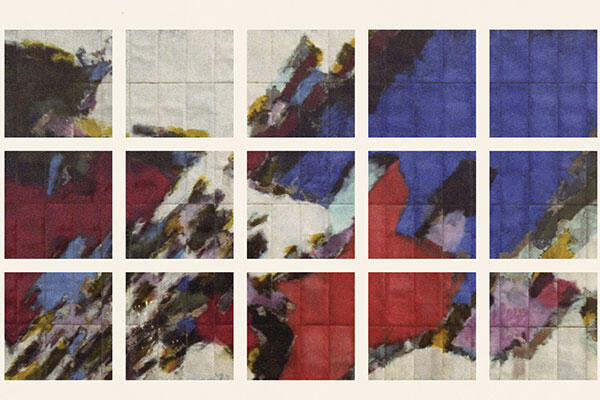
Grade: A- Atlas is Real Estate’s first record in three years, the follow up to 2011’s Days. Having enjoyed the last album’s dreamy, guitar-noodley, nostalgia-inducing vibes, I was looking forward to hearing the new one. But whereas Days was lazing-on-a-sunny-afternoon, Atlas is late-night-Sunday-after-a-long-week. It seems that somehow Real Estate have managed to become even more chilled out. So much so that on my first listen, expecting the hooks and poppiness of 2011 singles “It’s Real” and “Easy,” I was left underwhelmed, sketching comments like “Martin Courtney’s voice gets annoying” and “like listening to Kurt Vile’s most boring song for 30 minutes.” It wasn’t until I put the record on alone in my room approaching midnight that I began to appreciate the level of relaxation these guys are operating at. The opening track, “Had to Hear” is the longest on the album, at close to five minutes. It sets the tone musically and lyrically, with crystal clear guitars that bounce along and weave together seamlessly under Courtney’s unmistakable drawl, as he yearns to be somewhere, or be with someone, else. The two incredibly catchy singles, “Talking Backwards” and “Crime” are the most upbeat tracks and are perfectly spaced to liven things up whenever Atlas is at risk of becoming dull. As with Days, they’ve included an instrumental tune, possibly just to remind the listener what a talented guitarist Martin Courtney is. “April’s Song” wanders whimsically, Courtney’s rhythmic picking patterns serving as a base for Mondanile’s simple and beautiful warbling lead lines. Real Estate have completely eradicated any form of grit on this LP, the production velvety-smooth, with choruses that wash over you, waves of sound that rise and fall but never break. With the gentleness of Belle and Sebastian and the deliberate, measured pace and delivery of Kurt Vile, Atlas is a step in a soothing direction. So if you, like Courtney, are tossing and turning all night from crippling anxiety, put this record on and get lost in some blissful guitar-pop.
-
Culture
 Issue 2 02/03/2014
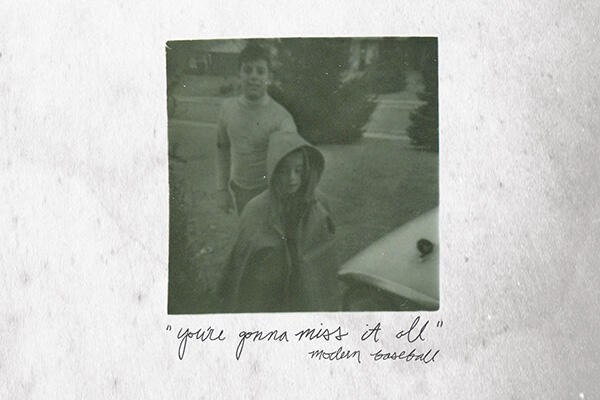
Modern Baseball - You're Gonna Miss It All
Grade: B + If this record had come out seven years ago, it would’ve been a solid fixture in my CD collection; wedged right between A Lesson in Crime and From Under the Cork Tree. With the angst of emo’s old generation like Sunny Day Real Estate and Built to Spill, and the pop-punk energy of Blink-182, Modern Baseball are part of the current emo-revival fuelled by dudes who grew up listening to the first wave. Just like some of the 90s-revival bands that have put out decent albums in the last few years (Yuck, Pains of Being Pure at Heart), Modern Baseball won’t give you anything radically new on “You’re Gonna Miss It All,” but what they do give is pretty radical, anyway. “Your Graduation” is an everything’s-fucked-I’ll-show-you-all-one-day banger that takes you on a fifth form heartbreak nostalgia trip, while “The Old Gospel Choir” begins as a Modest Mouse track and ends in an ultra groovy breakdown, dropping sass along the way like: “Sharp as a tack but in the sense that you’re not smart, just a prick.” “Two Good Things” could be the cheesiest “Why?” song you’ve never heard. However, it’s the most sombre, self-deprecating track on the album that I found myself going back to. “Timmy Bowers” is a slow moving acoustic ditty about “living more like a piece of shit without you” that bounces along in the middle of swirling ambience and reverb. Two-thirds of the way through the LP, it’s a nice break from the intensity of the relatively heavy first seven tracks. The amount of angst exerted on this record is one of its greatest strengths, but also the thing that makes it hard to really connect with as a (somewhat) grown-up person. When, finally, you’re able to identify why he/she just wouldn’t notice you, and how it actually was fair because you were kind of an asshole back then, it’s easy to feel pretty silly about the whole thing. Listening to “You’re Gonna Miss It All” was like getting a beer with an old friend from high school: you remember what you loved about them, but also why you’ve moved on. It’s still good to catch up, though.