Hadleigh Tiddy
Contributor
Articles by Hadleigh Tiddy
4 articles found. Displaying page 1 of 1.
-
Features
 Issue 8 13/04/2014
Turning off the enlightenment
Exploring the three main obstacles on the search for enlightenment, Hadleigh Tiddy ventures back through his experiences of a meditation-fuelled spiritual quest. At some point in my first year of University, during a particularly bleak mid-winter-hide-under-the-covers-for-two-days binge, I was linked to a video on YouTube that would change the course of my life. The clip, entitled “Alan Watts: Music and Life,” was only two minutes long, and was made up of a short animation by the South Park guys that was accompanied with a voice-over by a guy called Alan Watts. The two didn’t go together at all – Watts has a deep and soothingly English voice, while the animations only reminded me of that episode where Mr Mackey scissors all the lesbians. Nevertheless, watching that video under the sheets felt like I’d suddenly stepped out of a moving car: I had the peculiar sensation that life was moving along and I was standing still. I quickly went about making my way through 20 other Watts videos, and over the next few years followed many threads that came of him. I had embarked on my spiritual quest. My questing, over the next couple of years, was quite a standard one. I began to meditate, at first by myself in my bedroom, and later in a group. I started experimenting with some pretty heavy psychedelics and stopped drinking. I took a class at university called Mysticism: Spiritual Maps and Reality, and, in second year, tore through about 50 different books that could all be grouped under New Age (yes, I tried The Secret, and no, it didn’t work out). I started eating organic, local foods; I bought a juicer; I became one of those yoga guys; and, during the course of this quest, I become very interested in the possibilities of “enlightenment.” Enlightenment. Nirvana. Awakening. Attainment. The word, to me, brought about the image of some kind of Mr Miyagi character, small and very Japanese, sitting on a stool in a low-lit room with incense, smiling peacefully. Somewhere, in the distance, a triangle dings, and the man opens his eyes knowingly: he has become enlightened. I started reading more about it; I discovered that this kind of awakening has actually been the primary goal for Buddhists since the original Buddha reached it some 2,500 years ago. The experience frequently gets described as a complete dissolution of ego, a loss of attachments to everything, and the elimination of suffering – for the Buddhist, life is suffering and that suffering comes from our attachments to the world. If we can release all of our attachments and desires, we’ll be free. Admittedly, this does sound pretty good if you’re at all familiar with suffering. Becoming enlightened is not an easy thing to do. For the Buddha, it took about 10,000 lives worth of reincarnations, which he spent tirelessly perfecting his virtues. When he was finally born as Siddhartha Gautama, it took six years of self-mortification, and then a meditation that lasted 49 days without break. For many, it requires a complete isolation from society – legend has it that the monk Bodhidharma, patriarch of Chinese Ch’an Buddhism, spent nine years sitting in a cave, facing a wall, completely silent. When he decided to get up and leave, his legs were so atrophied that they fell off. In a more modern context, the Thai Forest tradition requires its monks to spend their nights meditating in the Thai forest, amongst tigers, snakes, and spiders. Many have been eaten. Even if you’re good at enduring physical pain, you still have to get around some other serious obstacles – obstacles that, in my view, make the whole matter not even worth your time. These obstacles are: 1. Enlightenment is ineffable 2. Enlightenment is illogical 3. You are already enlightened Listen. 1. Enlightenment is ineffableIf we can consider the entire group of “enlightenment texts” – from Buddhist to Ayurvedic to New Age – as some kind of pan-religious genre, then one of the biggest and most clichéd tropes in it is the assertion that enlightenment is ineffable, or impossible to describe. “The dharma (meaning teachings or discourses),” goes the old Buddhist proverb, “is like a finger pointing at the moon.” The moon, in this expression, is like truth or illumination, and the fingers are like the words used to direct us there (meta, right?). If we spend all of our time with our heads down, focusing only on the words that we hear and tell ourselves, we will never look up and be able to see the big, real thing in the sky, which is quite different from any kind of description of it. Words fall short of reality – “big,” “round,” and “butter-coloured” can conjure up things like the moon, but they will never compare to the experience of actually seeing it. Likewise, any description of enlightenment will be bound to fall short of what it really is, because we need to take the big step of looking for ourselves. These words – so the argument goes – will not take you there. You need to look for yourself. It gets even worse – not only can enlightenment not be described, it can’t even be imagined! The Zen school, in particular, constantly reiterates that enlightenment is not a “concept” which we can ever hope to comprehend. Instead, enlightenment is an experience. In Shinryu Suzuki’s classic treatise Zen Mind, Beginners Mind, the famed founder of the San Francisco Zen Centre explains that “There is no need to intellectualise about what our pure original nature is, because it is beyond our understanding. And there is no need to appreciate it, because it is beyond our appreciation. So just to sit, without any idea of gain, and with the purest intention, to remain as quiet as our original nature – this is our practice.” Or, the more you understand enlightenment, the less enlightened you are. Of course, all of these claims lead to another, deeper paradox – the paradox that words like ineffable and incomprehensible are, in fact, tools we use to describe and understand what enlightenment is. Saying that something is impossible to understand is a method of understanding it – this whole section, by trying to outline how awakening is beyond the realm of description and conceptualisation is, indeed, a description and a conceptualisation of it. Suzuki’s warning against intellectualising is itself an intellectualisation, his wordlessness hopelessly wordy. As the reasoning doubles back on itself, we find ourselves in some kind of theological straightjacket where nothing we can say or do will make any sense. This is a problem that the sages deal with in the only way they can: Silence. 2. Enlightenment is illogicalOne of the quirkiest traits within the enlightenment genre is the sheer bizarreness of how some of the traditions address the experience (given the supposed ineffability of it all). The Zen tradition is the best for this – one collection of writings, Zen Flesh Zen Bones, contains some of the oddest spiritual tales you might hope to encounter. Here are some of my favourites: “Everything is best” When Banzan was walking through a market he overheard a conversation between a butcher and his customer. “Give me the best piece of meat you have,” said the customer. “Everything in my shop is the best,” replied the butcher. “You cannot find any piece of meat here that is not the best.” At these words Banzan became enlightened. “Gutei’s finger” Gutei raised his finger whenever he was asked a question about Zen. A boy attendant began to imitate him in this way. When anyone asked the boy would raise his finger. Gutei heard about the boy’s mischief. He seized him and cut off his finger. The boy cried and ran away. Gutei called and stopped him. When the boy turned his head to Gutei, Gutei raised up his own finger. In that instant the boy was enlightened. These stories originally came from a book called the Shaseki-shu, and were written in Japan in the late thirteenth century. There are hundreds like them: other stories include dead cats, snakehead soup, and a certain enlightened tub-maker. For the student of Zen, these stories demonstrate another very important lesson about enlightenment – that enlightenment is illogical. According to doctrine, our rational and judgmental minds are what are keeping us from becoming enlightened and, for the enlightened sage, the mind has been silenced completely. By silencing his mind, he removes the impediments of subjectivity that keep him from seeing things how they really are. Enlightenment is something that actively defies our powers of reason and logic; in order to see into the truth, those powers must be suspended. We cannot think our way there. This isn’t exactly “pre-rational,” but “trans-rational” (as Ken Wilber puts it) – a mode of experience that transcends our usual way of perceiving and processing the world. It is beyond thinking. The story of Banzan and the butcher demonstrates this aptly. The butcher’s claim that causes Banzan to become enlightened is that “everything in my shop is best. You cannot find any piece of meat in here that is not the best.” On the surface, this is just a generic sales pitch for his meat – but on a deeper level, it’s seeking to short-circuit our rational frameworks of “good meat” and “bad meat.” By losing those categories, Banzan was able to see clearly the True Nature of things, freed from his own subjective and very biased lens. This is quite a radical action, considering how value-laden our lives usually are: bad apples, good weather, bad sex, good haircut. Judging things as good or bad is so integral to our lives that it seems strange to even point it out. Nevertheless, this is what Banzan comes to see: the butcher reveals to him an experience outside of the ordinary, subjective, and relative mode – a place where things are free from categorical judgment. And it’s at this moment that he becomes enlightened. For a university student such as myself, steeped in a culture of rationality and reason, this is utterly baffling. How am I supposed to not make any judgments about things? Aren’t categories a good thing? Otherwise, how are we supposed to make any discernment about the things we want or don’t want, between things good and bad? Isn’t the “enlightenment experience” itself a category, just like all of the other “useless” categories? The sage’s answers to these are just as vexing as the questions themselves: Silence. 3. You are already enlightenedWhen Buddhism spread from India to China in the second century C.E., a very peculiar text called the Nirvana Sutra appeared. This text was peculiar because it was the first text we know of to describe what Mahayana Buddhists call “Buddha-nature,” which is the notion that every sentient being has within itself an intrinsic enlightenment, waiting to come out. Instead of attaining some extra-special state through years of intense meditation and willpower, we simply have to sit down and let the nature of our enlightenment come through. In fact, any kind of effort towards reaching enlightenment is antithetical to the project – efforts in any direction are getting away from “what is.” The real role of teachers and gurus, under this line of thinking, is not to take you anywhere new, but to return you to yourself. If you’re anything like me then this news will probably strike you as incredibly dubious. I’m pretty confident that I’m unenlightened, and many people I know will back me up on that. If it’s really the case that everyone is intrinsically enlightened, then why does everybody seem so hurt, frightened, and lonely? The Nirvana Sutra has a beautiful story for explaining this, which begins with a man who had a very hard pearl between his eyes. One day, while wrestling, the pearl was pushed into the man’s skin without his noticing. When a boil started to develop, he called the doctor, and the doctor quickly recognised what had happened. The strong man didn’t believe the doctor, but when the doctor showed a bright mirror up to his face, the pearl appeared! The man was greatly surprised, and “a thought of wonder arose in his mind.” In just the same way, our “pearls” of enlightenment reside within, obscured by external boils and pus. To see it, all we need is a bright enough mirror. Sri Ramana Maharshi, one of the great Indian gurus of the 20th Century, said it even more elegantly: “Realisation is nothing to be gained anew ... Realisation consists of getting rid of the false idea that one is not realised.” Our only problem is that we can’t see it: it’s buried down deep, but being born into a shit world and having to go through many shitty experiences has meant that the expression of it gets obscured. Giving up on achieving enlightenment, and simply being OK with how we are, is an intrinsic step on the path to enlightenment: the path is no path at all. Just like the iconic Zen circle, my quest had taken me right back to where I had began, before I had learned anything of the matter. To be truly awake, we need to forget any kind of goals to set, or places to be, or lessons to learn, or people to meet, or concepts to understand. The only way we can do this without making that a goal itself is this: Silence.
-
Features
 Issue 2 02/03/2014
Brothel
What I remember specifically about the first time I went there – not the first actual time but, like, the preliminary meet-and-greet type thing – was the lemon. Sliced, floating pale in a cool glass of water. The glass it was in was crystal and heavy and felt moneyed, somehow, cylindrical and bottom-heavy, with a clear diaphanous base that was very thick, about a third of the total volume of the glass. Not something you’d find at a typical student flat. Not anything in my cupboards, anyway. The older one had brought it over to me and set it down on this minimalist jet-black coaster, asking if Everything Was OK and if I Felt OK. Of course, I didn’t spend much time pondering that question, but the heavy glass of cool water with the lemon was the most luxurious little thing I’d had in about five months of scrimping, and as well as that, I was wearing these great heels I’d borrowed from a friend, so it was Yeah, Fine Thanks. Olives later, too, big fat ones, juicy and bigger than your fists. The younger one was running late, and while we waited, I thought back to the last few weeks that had led up to this. Frigid winter in the flat, no thermals. Dahl for four nights running. The acrid taste of instant coffee with one McDonald’s sachet of sugar. Shop windows. This weird insistence on telling Mum that No, I Don’t Need Help Thanks. The worries about what I should wear, whether I was attractive enough, what we would talk about. Seeing as it was the very first time I’d gone there, I didn’t have much to worry about in terms of people finding out or anything. That came later. I told my boyfriend I had study to do and headed off in the direction of Uni, doubling back after a couple of blocks. The place was actually across the road from the shithole I was living in, so close that I could look down and across the road into our kitchen window and actually see the empty fruitbowl on the bench. Sometimes I’d imagine what he was doing at that point, where he thought I was. The first thing I remember about Sue was her swooping in all rushed and flustered and clutching those big olives. I’ve Just Found These, she said, Are You Hungry? And my tongue became wet. She was a spectacular woman – very tall, an ex-supermodel in flats and a black silk Dior blouse with perfect complexion and soft angel hair tied roughly back. She was heavy, too – she told me later how she’d been modeling all through her teens and twenties and had apparently lasted the whole era on a single packet of menthols. Now, she had told me, she wanted to eat. And eat she did. Flans, parfait, tiramisu. Figs and blue cheese on crackers with Foie Gras from France. And so here was this beautiful lady, gorgeous, of clear-complexion, tall, and now with some meat to her. Weighted. Luxurious. And bringing me olives. I don’t really remember much of what we talked about, although I do remember her specifically saying she’d buy me a new dress before I started, just right off the bat for free. And every time I came in I could have a couple of glasses of wine, too, with whomever it was. She showed me the wine cabinet with a panoply of Chards and Savs and Forts and Rosés, which I could use (in moderation, of course). She told me they were important for what in the field is called an authentic GFE, or Girlfriend Experience, which is what most of them were after. I didn’t mind, or it at least wasn’t a major point of the conversation. Getting paid to wear new dresses and drink wine was good enough for me. Eventually we finished up the conversation and I got up to leave, in my excitement nearly tipping over that nice full glass of water in front of me. I felt great – left pretty quickly down the stairs and out the door, giddy, better than OK. Oh, the things to come.
-
Features
 Issue 2 02/03/2014
The Transfiguration
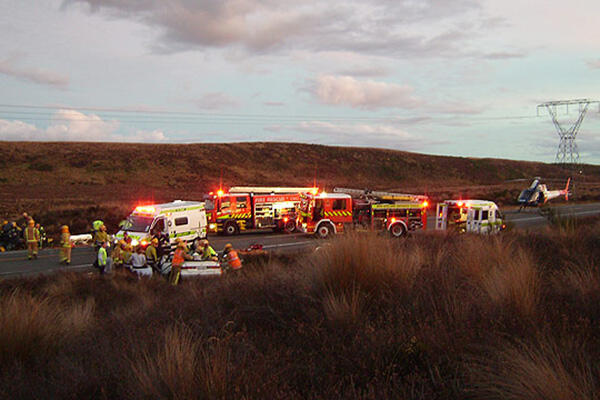
Now you’re dead. Lying facedown on the gravel somewhere along the Desert Road at four o’clock in the afternoon, skies overcast, your car wrapped around a power pole, your neck twisted too far backwards, your eyes still open. No one has come yet. You were driving alone. It happened so quickly– Now your soul slips out softly. It leaves through your pores: these soft, tiny, little crenellations that you always thought of as boundaries but now, you realise, were gateways; openings to the infinite space around you. Your breath stops. Your mind, so charged and animal in those final, screeching moments, gets slower and slower, with gaps of silence punctuating your thoughts until, at last, a gap so long that nothing follows after it. This is the silence of heaven. Within it comes a feeling of being poured out, or of draining – you think of tepid water in a bathtub, noiselessly sinking out through the plughole at the bottom. Do you remember what it felt like getting born? It’s painful, yes, but stay with the feeling: watch it fill like a parachute, heating up and rising and expanding outward, all limits and borders and boundaries evaporating into this pure, boundless space and a vast, quivering energy. An expulsion, erumpent: up and out, overtaking and engulfing you. Circumambient. You pause for a moment and look back down. The road. The car. The body, always so loyal and now so empty. It shall, in time, nourish the earth and worms and birds and plants and men. You give it to them with your blessings, and leave. Now you come up. Slow, at first, and then quicker, gaining speed and expanding with every moment. You shoot though the clouds and burst out through the atmosphere – look around! Watch planets spin about like vinyl records, unfathomable beauties, their moons looping and circling in erratic fervor: Io, Europo, Ganemeyde, Callisto. Soar out beyond them, into the bristling stars and constellations, and listen to canus major howl in welcoming. Orion welcomes you! The Pleiades welcome you! Taurus, Gemini, Scorpio – and all of the bright supernovae, bursting out through death in their explosionary, technicolour brisance, welcome you! You celebrate with them as they transfigure – now hydrogen, now gold, now lead, now polonium, now radon. Watch the billion suns, the trillion galaxies, all spinning around you in every direction, expanding, lusting – do you see it yet? These are you, my child, you in stelliform lightwaves, you, heaving in cosmic splendour, you of the infinite void! This was always the truth, wasn’t it? It was like this all along, you in everything, knowing it deeply but always forgetting it. How on earth did you forget it? Look back now, back down to the earth in all its crazy splendour and recognise: this, also, was you. You, the driver, the car, and the road. You the family, you the people, you the earth! Can you see yourself? There you are – there, and there, and there, and there – my god, look! Now you’re Christ, Mohammed, Krishna, Gautama, Theresa; now Whitman, Emerson, Ginsberg, and Thoreau; you, all who knew it, and you, all who didn’t know! You, the beloved little girl safe in Daddy’s arms. You, the fearsome soldier, laying mines down on enemy camps in the dead of night. You, the hungry peasant and you, the rich landowner! You, now in the room on the fifth floor of the hospital ward, looking down into your own eyes and recognising it for a flash, a glimmer of it. You, the mountain and the clouds and the rivers and the rain! You, the writer! You, the reader! You, great rhythm of life! …and now, soul, let go. Disenthrall. Melt away. Don’t be afraid – this is what you always were, before all of that dreaming, you at your most infinite and most fertile. This is heaven: total oblivion, sweet and dreamless and beckoning. Come.
-
Features
 Issue 2 02/03/2014
Ross
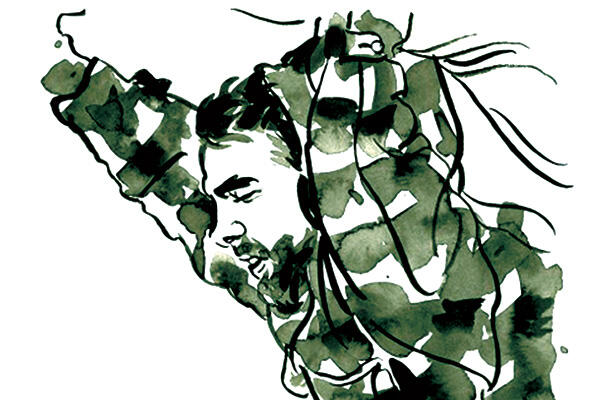
Up through the swerving Brooklyn hill and over the crest past the dozy corner shops and winding all the way down through Happy Valley road; down past the gorse and toitoi, speckled sedge, chickweed, kawakawa, nasturtium, wild fennel, wild mint, borage, and flax; all the way down to the sea, behind the double cream house on the right, there he works: slender, svelte, lithe, limber, lissome, crouched. Pumping air into the back wheel of an upturned bicycle with the northwest sun to warm him. His back is straight and his hips are sunk deep and his head is poised weightless above his neck and shoulders. Posturally enlightened. His clothes, draped on him in soft mural tones, speak in verse: the socks from a neighbor, the sweater made of unwashed wool from the Nelson Markets, shorts from the Otaki op-shop. Six feet tall, sixty-three kilos. Hungry. Restless. Tuis and seagulls overhead cry paeans of praise. Exalted. Twenty-one years old and still a boy, looking up at you through the spokes. Features that hark back to the English New Forest: warm green eyes, gentle beard, tousled mouse-brown hair, nose off-kilter from a bike accident when he was younger. Soft hair. Honey skin that keeps a steady tone on every part of his body. He greets you by name. You’ve known him now for nearly three years. Ross at the Sunshine Flat, eyes fixed on the flames in the brazier and talking about shamans, Vision Quests, ayahuasca, dreams, rivers, and communes. Ross on Holloway road, another party, crying in the kitchen. Ross at his parents’ house, taking the weight of an expired relationship on his back. Surrender to the sky your heart of anger. Ross and Rosie returning from the silent retreat, afraid to talk. Ross and Louise on the slackline of their love. Ross and you cross-legged on pillows on the floor of his bedroom, returning time and again to the breath. Ross a few wines down, lecturing you on the virtues of connectedness and community and ecology and organics and holistic lifestyles. Ross telling you he has dropped out of university. Ross, crying again, this time knee-deep in a stagnant black pond in a forest in the Takaka hills with midgies and mosquitos buzzing all around, a summer sky so blue it looked almost golden, and the pond so black and still and stagnant and holy that his presence in it was nearly sinful. Ross, your brother, born again right there in that black pond. Return to the breath. He’ll tell you all about these ideas of his and you will nod, listening closely, with the words floating like dandelions around you and you will nod again, and close your eyes, and mimic his mmm’s. Sit out on the step by the backdoor in the sun, cup of tea in hand, and talk softly about the Cosmos as the very ground beneath you quakes and shudders. The wise sage, the prankster, the dharma-bum, the neo-taoist psychedelic eco-poet, flashes of wisdom and insight ringing like a Tibetan singing bowl through your skull; but: let it go… and return to the breath. A child of the earth and everything beneath it. Dirt on his hands and in his ears and under his nails, worms in his hair, waist deep in compost, clothed in leaves and humus and foliage. Vocation: gardener, organic farmer. Who else would get excited over finding big piles of horseshit a few kilometers from his house? “But think about the nutrients!” And so sincere. But: let it go… and return to the breath. Not a perfect friendship by any stretch – a soul that close to yours stirs up rivalry, competition, fear. An inevitable tangling. And in the centre of the tangle, a girl. And in the centre of the girl, a paradox. There was never a confrontation, only something much gentler and awful – a loss of trust, a quiet distancing, a removal of presence and light. Both too proud to put any words to it until that day in black pond in the deep summer heat. A year ago now. And: let it go. Return to the breath. Come back to the hills and the house beside the sea, around the back, in front of the bike. Smile. Breath. Realise that you love him, and tell him so immediately.