
Imogen Davis
Contributor
Articles by Imogen Davis
3 articles found. Displaying page 1 of 1.
-
Culture
Issue 20 18/08/2014
Burial Rites
I am a wide reader, and will read just about anything; I have even been known to read the phone book in those moments of bibliographic desperation. Hannah Kent’s debut novel Burial Rites, however, finally stumped me. I have had no motivation to read this book. Zip. Nada. Zilcharooney. On paper Burial Rites should have become a new favourite: it’s historical fiction, it is set in Iceland, it has weird names that any linguist should appreciate. Despite its paper credentials this book just never hooked me. Set in the freezing farmland of 1800s Iceland the plot retells a real historical event from a black sheep’s point of view. The murderer Anges Magusdottir was the last prisoner in Iceland to be executed for their crime, and the novel is Kent’s attempt to fill a historical story with fictional empathy for Anges. I am not saying that the real Anges should have/shouldn’t have died, but it is very difficult to get a reader to remain engaged when the moment they open the book they know the protagonist is going to die. Everything about this book was so predictable. Every moment and interaction was exactly as I expected. Yes we know from the outset that Anges is to die but that doesn’t mean that the story leading up to the point has to be all spelled out. As I started reading I began to set up a bingo game of clichéd predictable moments and soon found my card full. There’s the gruff, lewd guard and company, the thwarted love interest with a curious desire to suck Anges’ fingers. Oh and how could we forget the inquisitive child who befriends the wretched woman. Kent’s novel followed convention so closely that there was no room left for the reader’s imagination. In many historical fiction novels, the authors try to draw the reader in with the nitty gritty of life in that time. Sometimes this works and the reader gains a new appreciation for the historical background, but in Kent’s case it all felt clichéd. From the descriptions of landscape, of sex, of farm life, nothing seemed original. All the characters felt like stock characters without their own individuality. The setting as well did not leave me with a sense of having lived in Iceland with the characters. I have never been to Iceland in real life. Perhaps people there really are leftover cast members from Les Miserables and maybe the scenery doesn’t leave you with any great memories; I seriously doubt it. Human experiences are hardly ever so blankly gratuitous. Fiction has the power to delve into aspects of humanity that we normally gloss over. Kent’s book, however, only explores its characters on a purely superficial level. There never seems to be any development in the layers of the story. The whole book is focused on the execution while pretending to be distracted by the day-to-day moments that comprise the bulk of the book. In spite of all my issues with this book, the author has won an award and other people have enjoyed it too. As an example of historical fiction it is accurate in detail but lacking in the execution (pun totally intentional). I think that Kent has tried to please the reality of the history too much and neglected the reality of the fictional world in doing so. Overall it is not an engaging read but not a difficult read either. Big words, small chapters, yet I still could hardly drag myself to the finish. At best it is a procrastination read, the sort of book that only becomes readable when there’s a test in the morning.
-
Culture
 Issue 6 30/03/2014
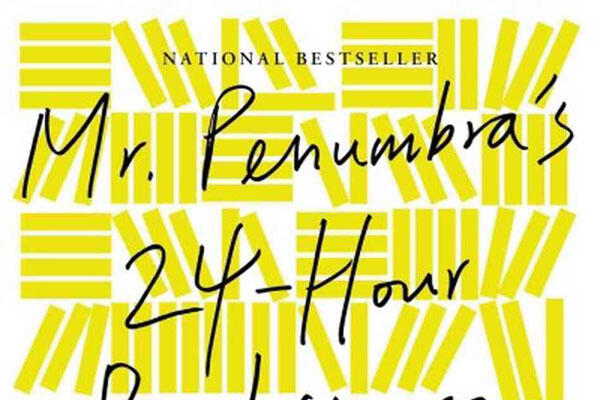
Mr Penumbra's 24 Hour Book Store
Mr. Penumbra’s 24-hour Bookstore is the debut novel of American author Robin Sloan. Originally written as a short story on his blog, he soon expanded and developed the story into a novel. Sloan is a writer for today; a self-styled media inventor, his book is a gripping mystery set between discourse on the relationship between technology and traditional print media. Think The Da Vinci Code but for bibliophiles and programmers – complete with a crazy cult. Sloan’s book is an extension of his own ideas surrounding the competing worlds of the Internet monoliths, such as Google, and the small bookstore owner, like Mr. Penumbra. The eponymous bookstore conjures up sensations of walking into Scribes, the English student’s haven. The door creaks and tinkles and the owner peers over a stack of books to welcome you. It is no different for our main man Clay. He’s been let go from his design job at New Bagel and is on the hunt for any work that might be going. This leads him unexpectedly to Mr. Penumbra’s 24-hour Bookstore. Taller than it is wide, and sulking on the seedy side of town, the bookstore leads Clay further into a mystery that isn’t going to be solved in a hurry. Just like a good wine takes time to mature, Sloan never hurried his mystery. While I was hanging out for the ending, Sloan wove a tale that never rushed towards its destination, yet still maintained momentum. The novel’s pacing was the distinguishing factor in this literary adventure. The world that Google inhabited was fast paced, and as a reader I had an unnerving sensation of being surrounded by bright reds, yellows, and greens. The scenes with old Mr. Penumbra were slower and imbued with a sense of shadow and time. Mr. Penumbra’s name is not accidental and his life and person remain very much in the shadows of the story. The mysterious book-cult the book shop supports is one that has been built upon the passing of time, and the passing on of knowledge, whereas the Googlers’ mentality towards knowledge is expressed very different. Clay acts as a link between the old world of books and time, and the new world of faster-than-fast Internet and instantaneous knowledge. While every good English student has debated the merit of reading too much of the author into their characters, I could not separate Robin Sloan from his protagonist. On his website Sloan discusses the meeting of the old and the new forms of knowledge sharing and Clay’s adventures through book-land and silicon valley, lead him to ask himself many of the same questions. As our world becomes increasingly technical it was refreshing to read a book that celebrates the bibliophile culture, yet was also not afraid to explore the toys of the future. While this book is a work of fiction, Sloan brings many pertinent debates to the fiction reading public. Libraries and bookstores have long contested these topics but the average book reader often uses the medium closest to hand. Be that a free Kindle book, an illegal download, or a hard copy book itself. By addressing a growing arena of debate, Sloan demonstrates his innovative mastery. He has brought the debate to the consumer, in a form that is both approachable and entertaining. Robin Sloan is this decade’s author to watch out for: either online or in your local bookstore. In a time where we are still learning the parameters of the electronic age, Sloan’s writing is topical and riveting. I couldn’t put this book down!
-
Culture
 Issue 1 23/02/2014
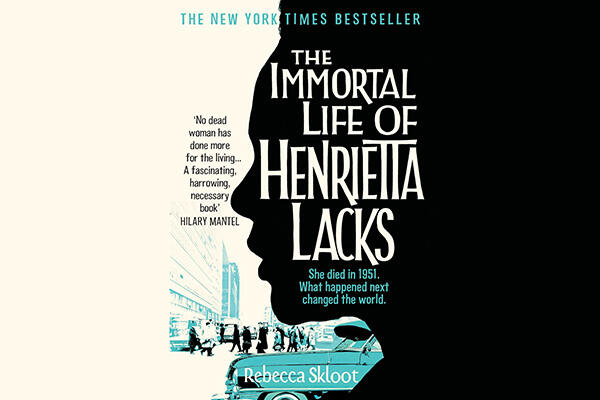
The Immortal Life of Henrietta Lacks
The Immortal Life of Henrietta Lacks is a pertinent, well-constructed slice of the creative non-fiction genre. Written by Rebecca Skloot in 2010, the book takes its readers back to 1951 when a 29-year-old African American housewife and mother died from ovarian cancer. Her death led to an instance of medical-science history. The doctors who treated her at Johns Hopkins University, which is still known for its medical research, were known to use unusual cases for research, without the consent of the patients concerned. Henrietta’s particularly aggressive cancer had caught a doctor’s eye and, subsequently, tissue was collected from a biopsy and kept for further testing. This testing led to the discovery of HeLa cells. For the science students, these cells may not be an unfamiliar topic but for the otherwise uninitiated, HeLa cells are continuously reproducing cancer cells that have been used in medical science labs since 1951. They were initially cultured in biologist George Gey’s lab, which he then passed on to some of his colleagues, establishing Henrietta’s fame. Since then, HeLa cells have been shared between researchers, passing Henrietta’s legacy on through time. Henrietta Lacks gave the world these remarkable cells, and Skloot’s book documents the history of her gift to science, but it also details the effects that the use of the cells had on her family. Today her family is poverty-stricken. Many are uneducated and have genital defects due to family inbreeding. While their matriarch’s cells have become famous, their lives have become shadows in the face of medical progress. They did not know about the HeLa cells and were deeply disturbed to discover their use and, in their opinion, abuse. The interviews in the book have been left in the voice of the speaker, so dialect and personal language quirks give the reader a sense of speaking directly to Henrietta’s remaining family. Skloot wanted to capture the “real people” in Henrietta’s family. This is what cements the book as a jewel in the creative non-fiction crown. The narrative style makes for an easy, yet informative, read. I would recommend this book to both arts and science students. With its anthropological focus on the Lacks family, the text crosses the bridge between the two disciplines with ease. While on one level it is a purely interesting read, this book also poses ethical questions that encourage the reader to see past the science and to consider the human side of our medical discoveries. Skloot asks readers to not only consider Henrietta’s past but all the other unsung contributors to medical knowledge, too. There is a great amount of creative non-fiction around today, and The Immortal Life of Henrietta Lacks is a great example of it; both as an engrossing read to curl up with, but also as an introduction to medical research. The book presents the scientific elements in a non-threatening, exciting way. It is sure to appeal to all readers of an enquiring mind.


