Lindsey Horne
Contributor
Articles by Lindsey Horne
3 articles found. Displaying page 1 of 1.
-
Features
 Issue 21 01/09/2013
Me and My Genome
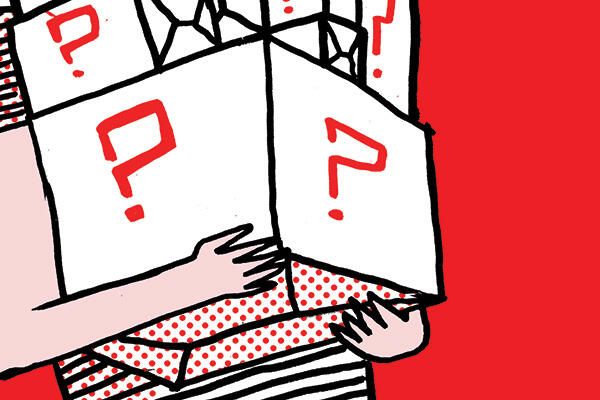
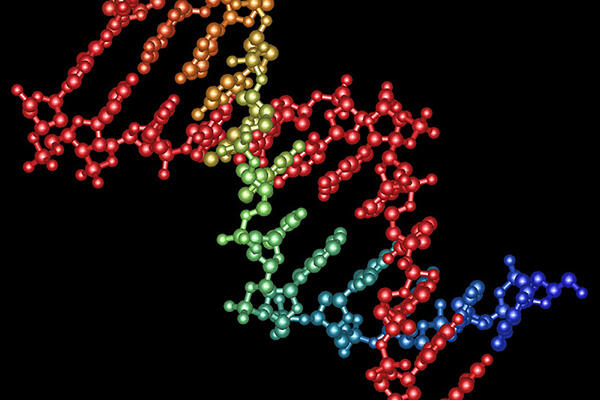
Genomics offers incredible new possibilities in preventive medicine, and it is now possible to have one's genome sequenced for under $100. But how much do we really want to know about ourselves, and is this information safe? Remember a time before mobile phones? My mum used to stand on the porch and do one of those finger-in-your-mouth whistles to get me to come home for dinner instead of texting me. What about life before the Internet? Everyone had an Encyclopedia Britannica stacked next to their Monopoly set or, if they were really lucky, had the Britannica CD-ROM. Looking back, it’s hard to imagine how people coped. But just think: what could we be missing out on ourselves? In the future, will people will scoff at us and wonder how on earth we managed? With the rise of medical genetics, this is increasingly a question on people’s lips. For those of you who wagged fifth-form bio or have come no closer to genetic science than watching Gattaca, here’s a quick run-down: Each one of you has a unique genetic makeup, because you each have slightly different DNA. DNA is essentially a chemical instruction manual: different sections of DNA code for specific genes, which themselves code for the collection of proteins that together make us who and what we are. Still lost? Think of it like a book: the various DNA nucleotides are the different letters of the alphabet. Depending on the order of the letters, you can create hundreds of thousands of words (or genes), each with their own specific meaning. Stringing these words together in the correct order gives you functional sentences (or proteins), and will ultimately allow you to produce an entire book (or individual organism). The consequences are obvious: if you know what words are involved in writing a particular book, and the order in which they need to go, then you can know what the book should be about – and how to edit it – before it is printed. Researchers cottoned on to how powerful genetics could be a while back, and the field has grown exponentially ever since. The Human Genome Project, an international initiative aimed at sequencing and mapping the genes that make up human beings, was completed in 2003. At the time, the project took 19 years and $2.3 billion to complete. Now, anyone can get their genome sequenced in six weeks for under US $100 – all you have to do is spit in a vial and send it off to the lab. Such phenomenal advances in our understanding of human genetics have triggered what has been deemed a “medical revolution,” and “the biggest disruption since the internet and mobile phones.” So what’s all the fuss about? Personalised medicineI’m not trying to be overly critical of modern society, but why are we at uni? Aside from the luxurious housing, balmy weather and range of flavours that $3 lunch has to offer, the majority of us are here because we’re more likely to get a decent job if we can wave a university qualification in future employers’ faces. In other words, we’re ensuring our future finances. But what if you could ensure your future health in a similar way? By “ensure,” I don’t just mean avoiding Fatty Lane and going to pump class twice a semester. I mean knowing that you are likely to get heart disease, a particular kind of cancer, or a rare disorder that leads to early-onset blindness, and nipping it in the bud before it causes anything more that momentary concern. Genetic sequencing is all about making medicine preventative rather than reactive. It builds on the age-old maxim that prevention is better than (attempted) cure. If I’m going to use an example, I may as well use one that you’re going to pay attention to: Angelina Jolie’s boobs. Jolie’s mother died of breast cancer at age 56, and so the disease was firmly on the star’s radar. Through genetic testing, Jolie discovered that she carried a gene (BRCA-1) that is known to increase an individual’s risk of breast cancer. In her case, the risk was 87 per cent higher than for an average female. Consequently, she opted for a “preventive double mastectomy” – in other words, she had both of her breasts surgically removed. Her risk of breast cancer has now dropped below five per cent, and the Jolie-Pitt kiddies will have their yummy mummy around for years to come. Genetic sequencing now allows doctors and genetic counsellors to screen for numerous types of cancer, various heart conditions and Type II diabetes, and the list keeps on growing. Determining the genetic underpinnings of rare disorders has to be one of the greatest advances in modern investigative medicine. Clinicians are essentially becoming CSI agents who can get to the bottom of previously unsolvable cases. Children with rare conditions are born every day, and before the advent of genetic testing clinicians were more likely to nail a “Babe of the Day” than nail the underlying cause. Take Nick Volker of Milwaukee, for example. At just 17 months, his parents noticed that he had a high fever and a wound that refused to heal. Doctors eventually realised that Nick was suffering from a condition that caused small fistulas (or holes) to form in his intestines, through which faeces were leaking into his colon. Nick underwent hundreds of surgical procedures before his colon was finally removed, and by the time he was four years old had used up his entire $2 million health insurance. (Apparently there is a price on life after all.) Like spading on someone in Surfin Slices at 4am, doctors made one last desperate attempt. They sequenced Nick’s genome hoping to find a cause. (Remember, this was eight years ago, so not only were we living in a world of Simple Plan and My Chemical Romance, we were living in a world in which whole genome sequencing was the new kid on the block.) Miraculously, they found a genetic mutation that was to blame for the defective protein in his bowel, and Nick was able to receive a cord blood transplant. He’s now on the mend, and has incidentally become the first person in history to be saved by whole-genome sequencing. This is what all the fuss is about: personalised preventive medicine. It’s hardly surprising. Not only is it reducing the need for risky procedures, it’s going to save us millions. Imagine if Nick had been sequenced when he was born. Imagine not needing to perform all those surgical procedures. And imagine not having to spend that $2 million. No wonder the UK wants to go on a sequencing frenzy! In December 2012, Prime Minister David Cameron announced a £100 million (NZ$198 million) project aimed at fully sequencing the genomes of 100,000 Britons. Genetic sequencing on this scale will lead to better treatment plans, better drugs and better overall healthcare. It’s also David Cameron’s way of asserting that genetic sequencing is the UK’s “thing.” Thailand has mushy shakes, New Zealand is 100% Pure exports dodgy milk powder, and the UK can sequence the shit out of anyone (literally, in Nick Volker’s case). Historically, the Netherlands has been the top dog in the sequencing field, but other countries are increasingly jumping on the bandwagon and it’s spreading faster than “hotdog legs” on Tumblr. Nor is the pressure exerted in a purely top-down manner. While governments are fast appreciating the potential of genomic medicine, many regular citizens are crying out for it too. And some geeky-yet-sassy entrepreneur in Silicon Valley has heard their pleas. Sequencing for everyone!Direct-to-consumer genome sequencing has been bought to the public by Anne Wojcicki, the wife of none other than Google co-founder Sergey Brin. (Since we’re talking genetics, just stop and think for a moment about how smart Brin and Wojcicki’s kids are going to be. Bags that genetic combo!) 23andMe is a personal genomics company that offers “rapid genetic testing” for only US$99. It couldn’t be simpler: you send them some spit, and six weeks later they send you a summary of your genetic make-up. Logging in to your 23andMe account allows you to view information about both your ancestry and your general health. The company is the largest DNA-based ancestry service in the world, and has a “Relative Tracker” feature that helps to reconnect you to your long-lost relatives. A number of celebrities have signed up, so you can also check whether you are distantly related to Bono. This sort of thing fascinates me, and 23andMe can teach you some pretty cool stuff about yourself. So I switched my go-to procrastination site from staggeringbeauty.com (it’s a goodie, trust me) to any site that had information on 23andMe. Essentially, this involved watching a bunch of Americans spitting into test tubes on YouTube and then listening to them explain how “Oh my God – I’m one per cent Native American. That must, like, totally explain my olive skin!” It’s sort of like a weird dream: it’s cool for the person involved, but incredibly lame for anyone having to feign interest in it. Despite this, I was still keen to give it a go. After all, it would be great if I could justify my increasingly ginger hair by saying that I’m Irish. Discovering information about your health, however, is not such a light-hearted experience. Behind the marketing campaigns (dominated by more stock photos than you can throw a stick at and corny lines like “the journey to knowing who you are starts with learning where you came from”) is the chance that you may discover something scary. Sure, it may be fun to find out whether or not your gluten intolerance is legit, but it’s not necessarily easy to deal with the knowledge that you have a reasonable chance of suffering from a degenerative disorder or that you are a carrier for Cystic Fibrosis. How much do you want to know?As much as I’d like to have a set Five Year Life Plan, I can also see real value in living life in the YOLO-style for a while and enjoying my youth. Finding out that I’m going to get Huntington’s disease (a genetic neurodegenerative disorder that usually presents in your late 30s) would put a real damper on my life. Before sending off my spit for analysis, therefore, I asked myself carefully how much I really wanted to know. It turns out that 23andMe “locks” information on a number of health risks until you accept another set of Terms and Conditions. If you don’t want to know your chances of getting these particular diseases, you can choose to camp out a little longer in the “ignorance is bliss” field. However, the only information that is “locked” in this way is that related to three conditions: late-onset Alzheimer’s, breast cancer and Parkinson’s. Your risk of Huntington’s, prostate cancer and heart disease, on the other hand, will be sitting there waiting for you, never to be unseen again. I felt a bit uncomfortable about this, and went into investigative mode. My aim was to get to the bottom of this “rapid genetic testing” idea, and perhaps utilise some of those critical thinking skills we were promised as part of our degrees. We’re dealing with information about people’s health, so one of the first things I looked into was insurance. At this stage, there is no legal requirement to pass on genetic information to your health insurance provider. Did I just hear you all say “phew”? Not so fast … you are legally required to provide this information to your life insurance provider. They’ll tell you, of course, that they take other things into account – your family history, for example, and your profession – but let’s be honest: your genetic information is the best predictor of what’s in store for you in the future. Long-term-care insurance and disability insurance can also request your results, making it harder to apply for these types of insurance as well. Doctors in the US have already reported high-risk patients who are too afraid to undergo genetic testing for this reason. With the current uproar surrounding the GCSB, I could hardly avoid looking into the privacy issues related to genetic testing and data access. Turns out it’s easier to identify someone through their genome than originally thought. Yaniv Erlich and his team at the Whitehead Institute for Biomedical Research in Cambridge, Massachusetts, managed to pinpoint the identities of individuals in a public database using their own algorithm. Their findings were published in Nature earlier this year, with authors warning that this is “a serious loophole” in the system. Putting your trust in private companies such as 23andMe is something to think twice about: a report released in January of this year revealed that over 50,000 different companies – including Domino’s Pizza and the US Postal Service – sold their employees’ history information to Equifax, one of the largest credit agencies in America. Equifax in turn sells the information to interested third-parties. That is not something to take lightly. Finally, there’s the issue of legitimacy. While genes do play a significant role in determining who you are and what may happen to you, the importance of environmental factors should not be summarily dismissed. Genetic risk factors are often not the be all and end all. Nor should you accept without question the legitimacy of the genetic analysis these companies provide. Many scientists doubt the reliability of the methods employed by direct-to-consumer companies like 23andMe, and some have even go so far as to claim that the results are only marginally more accurate than those provided by the average daily horoscope. Revolution or false dawn?Whether you think that this is a medical revolution that will forever change the future of medicine, or a another wannabe sci-fi effort from people who got a little too excited by Gattaca, it’s happening regardless. The science is changing so rapidly that the ethical and legal circles are only just managing to keep up. As young adults in a constantly-evolving world, it is important that we begin to consider these sorts of issues before they become the norm. In many ways, this is already happening – more and more women are opting for non-invasive pre-natal testing (in which their unborn babies are screened for genetic defects in utero), and more and more people are signing up to participate in nationwide sequencing initiatives and mass studies. So take some time to consider how much you really want to know about yourself. As for me and my genome, I’m gonna put off the test for now. I reckon I want to enjoy a few more years of ignorant bliss and conserve an aura of mystery around the ending to my own personal story. Ask me again in a decade, however, and chances are I will have given in and opted for a plot spoiler.
-
News
 Issue 20 18/08/2013
SOGOS Go Sci-Fi
It turns out SoGoS fund more than just keg parties. The International Centre for Society, Governance & Science (SoGoS) funded a roundtable discussion on Genomics in Queenstown earlier this month. The Director of SoGoS (and no doubt the mastermind behind the title) is none other than University of Otago Dean of Law Mark Henaghan, who was joined by Assoc. Professor Colin Gavaghan, also of the Law Faculty. The roundtable provided both an overview of prenatal testing and issues raised by new technologies. The new technologies discussed included non-invasive prenatal testing, which allows parents to screen the genome of their unborn child using a simple blood test taken from the mother at just eight weeks into pregnancy. This prompted ethical discussions regarding how much parents want to –and should – know about their child before birth, and just how long it will be until our world turns into Gattaca. The roundtable preceded the 37th annual meeting of the Human Genetics Society of Australasia. Also held in Queenstown, the meeting brought together New Zealand and Australia’s finest geneticists to discuss issues more complex than John Mayer’s dating history. Euthanasia was the first order of the day. Professor Aad Tibben of the Netherlands opened the conference with a presentation on “end of life options” for those with Huntington’s disease. Physician-assisted suicide is legal in the Netherlands, and while it remains illegal here, Councillor Maryan Street presented her bill to legalise euthanasia in New Zealand. The End of Life Choice Bill aims to protect those involved in assisting the suicide of people with terminal illness likely to cause death within 12 months, or of people with an irreversible physical or mental condition that renders their life unbearable (by their own assessment). The bill is currently waiting to be drawn from the ballot for further deliberation. Before heading off on their booze-cruise around Lake Wakitipu, the attendees heard from a range of speakers, including those who addressed direct-to-consumer testing services such as 23andMe that offer people the chance to have their genome sequenced for relatively low prices. These services allow people to access information regarding their risk tendencies for conditions such as prostate cancer, Huntington’s disease and Alzheimer’s. With 2013 being the 10th anniversary of the completion of the Human Genome Project, Angelina Jolie’s recent double mastectomy, and the UK’s announcement to sequence 100,000 UK citizens in the next five years, these discussions around the future of genomics could not have come at a better time.
-
Features
 Issue 18 04/08/2013
The Shit Show Chateau: From P-lab to Penthouse
Rank flats and ranker landlords bring us students together. These flats give us something to talk about even in the most awkward of lab pairings and unite us in a general disdain toward the dreaded landlord (scum level equal to Dennis from Jurassic Park). But while we league together in our bitch-fests, a few of us wanted to see if we could turn all of that on its head. So six of us banded together to get the grossest, rankest, dirtiest, smelliest, coldest (and all the other “-est”s) flat in Dunedin and get our landlord on side to do it up. Our goal: we meet our landlord halfway (they front up the money, we front up the labour) to get the place insulated and energy efficient. And boy did we find the worst flat. Literally. Voted the worst flat by former OUSA president Logan Edgar and Mayor Dave Cull last year, the ShitShow Chateau ticked all of the boxes: no insulation, no form of heating, more holes than Lucky Seven, dicks erected on every wall and a solid level of general grottiness. (PS – did I mention we’re living in it?) So we began the DIY process. We did everything from draught-proofing to hacking down vines, and from clearing gutters to sifting dirt for glass and spraying for mould. It hasn’t been without its holdups, however. Opening up a wall to insulate we found that one entire side of the house is rotten right through, giving the term “indoor-outdoor flow” a whole new level of meaning. Oh, and it has no foundations. With one room now out of action, we’re having a sleepover round robin and putting pressure on our landlord to make renovations snappy. We’re the first to admit that we may have had our beer goggles on when we saw the place and thought it would all be finished and toasty warm by the time winter came around … ha, ha. It’s still far from a warm, healthy flat. But in saying that, we have convinced our landlord to make more than a few thousand dollars’ worth of improvements to the place and have learnt some things along the way: From cunt to caring: How to get your landlord eating out of your hand-Frame issues as long-term investments rather than reactionary quick fixes. Brownie points for making them think it was all their idea in the first place. -50 to 60 per cent of your heat is lost through your ceiling and floor, so insulation is gonna slash your heating bill big time. This insulation costs your landlord a one-time payment of roughly $2,500, and when they’re raking in upwards of $20,000 from annual rent, $2,500 no longer seems that much. This includes the 30 per cent government subsidy (a 60 per cent subsidy is available with community services card), and the Dunedin City Council currently runs a targeted rates scheme to pay it off over 10 years. Use this as bargaining power with your landlord and don’t let them convince you otherwise. -The Department of Building and Housing has templates where you just fill in the form and send it to your landlord to get your issue sorted within 14 days. Easy as pie. Go to dbh.govt.nz/pub-sorting-out-problems#map4 -If your landlord’s a Grade A wanker, you can always take them to the Housing Tribunal (or just threaten to). You get can up to $2,000 in compensation if they’ve been douchebags. Get amongst: what you can doLook around you. Is your flat shit? It doesn’t have to be. -Draughts are major culprits. Draught-proof your house to make sure that whatever heat you have stays inside. Walk around with an incense stick to see where the holes are. Use newspaper if you’re poor, otherwise get gap filler. -Water heating is also a biggie – you or your landlord can insulate your hot water cylinder, and this will save you a heap. -DON’T DRY YOUR CLOTHES INSIDE. The stats around heating dry air vs. wet air are insane and one load of washing can put upwards of 5L of moisture in your room. Whack the clotheshorse outside. So all together now – don’t dry your clothes inside!