
Jack Montgomerie
News Intern
Articles by Jack Montgomerie
30 articles found. Displaying page 2 of 3.
-
News
 Issue 18 04/08/2013
Protestors Fight The Pows
Hundreds of protestors gathered in the Octagon on Saturday 27 July to demonstrate against proposed new legislation that would allow the Government Communications Security Bureau (GCSB) to collect private data from New Zealanders. The demonstration was held in conjunction with other protests throughout the country, just days after a packed public meeting in Auckland saw Dr. Rodney Harrison QC, New Zealander of the Year Dame Anne Salmond, Megaupload founder Kim Dotcom and Tech Liberty spokesman Thomas Beagle argue that the Government Communications Security Bureau and Related Legislation Amendment Bill represented an undue invasion of privacy and civil liberties and should not be passed into law. The Dunedin protest was attended and addressed by a number of local opposition MPs and city councillors. Following a long and ponderous speech by organiser Kieran Trass, Mayor Dave Cull told the crowd that the bill should be rejected. “We value civil liberties and privacy as much as our material security,” Cull said. “That is the essence of a democratic society. That balance is so easily turned over into a police state and a surveillance society. Government is reacting to the wrongdoing of one of its agencies by legalising that wrongdoing.” Cull’s observation that former United Future leader Peter Dunne’s vote would decide the future of the bill drew cries of “shame” from the crowd. A statement from Associate Professor of Information Science Hank Wolfe was read at the rally. Wolfe countered government claims that the new spying powers were needed “to look after New Zealand and protect New Zealanders’ safety,” and asked, “who exactly is the enemy that poses a serious enough threat to warrant such oppressive legislation? I am not aware of any rational justification for extinguishing the human right to privacy of every New Zealand citizen.” Dr. Wolfe later explained to Critic that the metadata that the GCSB would be empowered to collect could reveal everything about individuals’ electronic transactions, except their actual content. He believed that those parliamentarians voting for the bill were “bad people” who should be punished by voters at the next election. Labour MP David Parker was at the demonstration, and told Critic that “there is no reason to give excessive rights of surveillance to the state.” Parker also expressed concern that New Zealand’s international intelligence-sharing agreements meant that other governments and private contractors would receive any metadata collected. Otago students were also among those present. Chris Marshall, who carried a “Say no to Aoteamurica” banner, told Critic: “I’m concerned that it’s being rushed through, and there hasn’t been enough discussion of it. It strikes me as odd that the government needs another surveillance branch to do this.” Otago law student and American emigré Beau Murrah said he was wary of New Zealand following his home country’s path towards increased surveillance of its citizens in the pursuit of national security. Protests in Auckland, Hamilton, Wellington, Nelson and Christchurch also criticised the bill as an erosion of civil liberties, with speakers urging the government to reconsider its actions and citizens to continue their protests and lobbying of MPs. The bill has been returned to Parliament by the intelligence and security select committee, where it passed a second reading by a narrow 61-59 vote on Thursday. It will now enter the committee stage. This follows soon after Key’s justification for the bill on More FM’s Si and Gary Show Thursday morning, during which he was asked to explain why the Green Party’s opposition to the bill was mistaken, and ended up claiming that there were al-Qaeda-trained operatives in New Zealand. “Okay, so in the case of the Grains, they’re oppose, they just oppose, they do not believe in SIS and GCSB and their people are people like John Minto, and a bunch of other travellers and with the graste respeck, they’re oppose to thosots of pows, they don’t believe the state should have any pows,” Key explained. “Thut’s a luvely wurl to live in, but, um, azadatellya, in the rill worl in New Zillid, there are people, who are in, who have been train for al-Qaeda cams, who upperay owda New Zillid, who are in contact with people overseas, who have gone off to Yemen and other countries to train. I’m sorry, but the rill worl.” Labour leader David Shearer responded by pointing out that “if John Key has serious and credible information about security threats involving al-Qaeda it seems remarkable that he would choose to make it public on breakfast radio.” Dunne and ACT’s John Banks, along with National Party MPs, are supporting the bill. Dunne has agreed to support the legislation after negotiating a deal with the government whereby the legislation would be reviewed after five years, and the government would have to report the number of spying warrants and authorisations issued.
-
News
 Issue 17 28/07/2013
Interview: Hilary Calvert
Local businesswoman, landlord and former ACT MP Hilary Calvert recently confirmed her candidacy for the Dunedin mayoralty and City Council. She spoke to Critic’s Jack Montgomerie about student flats, obelisks, and her plans to rein in council spending. Critic: You are running for mayor. Hilary Calvert: Yes I am. How did that come about? I was sort of hoping that some different people would stand for the Council and mayoralty, but I didn’t see anyone putting their hand up. Different how? We do seem to have people who are quite good at spending our money, but nobody who seems to have a good handle on looking after it. For example, the Council owned companies, DCHL – there’s some understanding that they’re separate and being looked after on our behalf because they’re fully-owned companies. But there’s a hundred million dollars, right in the middle of the Council, the endowment fund, that nobody seems to care about at all … It’s got some land that’s described as being used by Delta [a Council-owned company] – now does that mean it isn’t part of the Delta stuff? It doesn’t even look like it has any rates on it. There’s sort of odd stuff and nobody seems to care much. Why do you think council representatives have ignored problems such as this? I’m sort of a bit bemused that the rest of the Councillors aren’t concerned at that general level. A lot of people get on Council because they want to do stuff, create obelisks either to themselves or someone else … and I guess, partly my point of difference is, I’m not wanting to build an obelisk. Who are the obelisk builders? Well sometimes they’re not totally obelisks, it might be that they’re building cycle-tracks or other things, but the same sort of people are on the committees that give out money and do the nice, warm, fluffy things. I think there is room on there for people who look after the income and what we’ve got … It’s understandable to have environmental people who are concerned about looking after the planet and other things, and who don’t have strong financial nous. Are you talking about Jinty MacTavish? Well Jinty has got a strong environmental base and … she’s probably one of the most hard-working on Council, if not the most hard-working. I don’t think she’s got a strong financial focus, and all of her hard work falls into insignificance when we haven’t got any money … you need to have someone sitting on the other end of the seesaw, if you like. We don’t currently think of it as if it’s ratepayers’ money. The University students could, on their own, choose Council: they’ve got enough clout, there are enough students, and they’re all ratepayers, one way or another. I think there’s somewhat of a missed opportunity to some extent because students aren’t using that influence. One of my concerns is that people try to “buy” students, and I don’t think they’re so stupid as what people think. I mean all this stuff about student flats and them all being made wonderful and the quality going up. I don’t think there are any students out there who think that somehow, somebody’s going to be able to limit what they pay – it’s just a daft idea. Aaron Hawkins has suggested that regulation could be used to prevent the cost of flat improvements falling on tenants. What do you make of that? That just sounds completely bizarre. Unworkable, just bizarre. You can’t make regulations saying “you will sell bread and this will be how it is.” I was at varsity when people had toilets down the garden and no carpet on the floors … now I own some student flats, and students don’t want to live somewhere that doesn’t have a dishwasher and a heat pump. They cost a lot more, and they’ve changed a lot. Leave them to it, it sorts itself out. Would you be opposed to a liquor ban in North Dunedin? If what we want to encourage is more students to come down here, I don’t think making North Dunedin alcohol-free is a winner. But OUSA just seems to be playing prefects, cosying up to the headmistress. You think that Harlene Hayne has played headmistress? Yes I do, but that’s not my business. You were a solicitor for Stop the Stadium. What should be done with it now that it’s built? I think it is like the other assets Dunedin city owns. It’s another facility that we should be making the most out of. You’ve promoted the ideas of Affordable City, which argues for spending on the basics. What are “the basics”? There’s an official list of things that you would just automatically know: clean water in, dirty water out, infrastructural things, and libraries, for example. Are cycle-ways infrastructure? I don’t know that they are under that specifically, but I think they would come under roads. Cycle-ways are interesting and what I’d like is a lot more information about who is actually using them and what they actually want. I think there’s a temptation for people who think they know what other people want to talk to each other and not talk to users. What are your thoughts on offshore oil drilling and the energy plan currently before the Council? I think we should get our energy as cheaply as possible to do what Dunedin city does … we’re not obliged to start meddling in “are we going to create our own electricity” or tell the rest of New Zealand how we want electricity delivered to us. I think that if the government decides to allow oil drilling to happen, as fair-minded people then we’d be accepting of people working on oil rigs living in our territory. As regards any possible harm, if we have the poo, then we may as well have the puppy.
-
News
 Issue 17 28/07/2013
Foreign Workers Flock to Christchurch Rebuild
As the Christchurch rebuild draws workers from around the world, the city’s demographics as well as its buildings look set to change. Since the February 2011 earthquake brought destruction to Christchurch and subsequent demolitions further denuded the city of buildings, construction companies have sought skilled tradespeople wherever they can find them to help rebuild the city. Increasingly, that means looking overseas. Figures released by Statistics New Zealand show a net inflow of international migrants to the Canterbury region since the second half of 2012. In the last six months, four thousand people have moved to the region, an average of 25 people per day. Many of Christchurch’s new residents are now coming from overseas. While some visas require employers to search for Kiwi workers before recruiting from overseas, other workers may come to the city on working holiday visas to take up jobs in the reconstruction effort. Of these, Canterbury Employers’ Chamber of Commerce settlement support coordinator Lana Hart says Filipino workers recently outstripped British and Irish workers as the city’s number one source of new migrant labour. Last week, New Zealand construction company Arrow International signed a deal with the China State Construction Engineering Corporation (CSCEC). The CSCEC will supply steel and workers for major building projects on which Arrow may bid, such as Christchurch’s new stadium. Immigration Minister Michael Woodhouse says that “there is no doubt in my mind that the rebuild is going to require a significant number of migrant labourers,” and predicts that as many as 17,000 of the 35,000 workers needed in the rebuild may come from overseas. Christchurch currently has a workforce of 20,000. Woodhouse believes the city will become “a pretty cosmopolitan place probably for the next 15 years.” Rex Gibson of the Christchurch Migrant Centre has been involved in welcoming over 400 migrant workers from 12 different countries so far. He says foreign workers can do relatively well in Christchurch. Their focus on living cheaply and saving money to take home was particularly advantageous, especially when it came to accommodation. “We’ve been able to accommodate them a bit like a Castle Street flat – you can put six people in a house, whereas if they were tradespeople from New Zealand, for six people we’d have to find six houses, and that’s just not available in Christchurch at the moment.” In some cases, larger employers had refurbished old forestry lodges to house their employees and hired cooks from the workers’ country of origin to provide a taste of home. Filipino workers have also been particularly eager to work on the rebuild. Some ten percent of the Philippines’ population lives overseas, and their remittances contribute 13.5% of that country’s GDP. Leigh’s Construction reported that 400 workers applied in Manila for the 20 vacancies it advertised there. Gibson said the reason for that was clear: “you’re looking at the money being worth at least six times that much back home.” Filipino builder Abel Oaferina told TVNZ that New Zealand wages were a welcome change from the $2 per hour he received at home. For most workers, the experience of coming to Christchurch has been overwhelmingly positive. Patrick O’Connor, Director of the Pasifika Education and Employment Training Organisation (PEETO) in Christchurch told Critic that “they’re loving it. New Zealanders are pretty hospitable and a lot of employers are taking it upon themselves to facilitate smooth integration.” Community groups have benefited from the presence of foreign workers. Churches have seen their pews replenished, sports teams have gained new members and choirs are being filled with new singers. However, moving to work in Christchurch’s construction projects has not been problem-free for everyone. Some Filipino migrants have revealed that immigration agencies have charged them exorbitant fees, with some workers’ families having to lend large sums of money to cover their costs. O’Connor said he had heard of some workers taking out loans from their families to cover visa application costs and agents’ fees. PEETO encouraged workers to join unions to protect their employment rights. Cultural misunderstandings have also caused problems for some workers. Gibson told Critic that some migrant workers “don’t actually confront their supervisor because in their culture you show respect ahead of all other things.” One supervisor had cut Internet access to the workers’ accommodation at 9pm to ensure that they were up early for work, despite time zone differences which made late nights the optimal time to Skype their families. While this incident was easily resolved by the Migrants’ Centre, such problems could become more numerous as the world’s workers come to Christchurch. Mayoral candidate and Labour MP Lianne Dalziel also worries that foreign workers may be exploited by their employers. She told Critic that she was concerned about foreign workers being “ripped off” by their bosses in the absence of government oversight. “Their wages will be undercut and it won’t be seen by the Department of Labour.” Labour’s immigration spokesperson Darien Fenton has also warned that the Government’s recent crackdown on employers of seasonal migrant workers will be pointless unless the government increases the number of labour inspectors from the 35 currently employed by the Ministry for Business, Innovation and Employment. Some have suggested that immigration and labour laws should not be enforced while Christchurch remains a construction site. Former Reserve Bank governor and former ACT Party leader Don Brash has responded to reports of illegal immigrants working in Christchurch by calling on the government to issue such workers with visas. “If the government were more concerned about speeding up the rebuild, instead of hunting people who are helping with that rebuild, they’d be doing the citizens of Christchurch a great favour,” Brash remarked. Patrick O’Connor slammed such suggestions. He told Critic “there are refugees and migrants who can’t gain work, so if they see illegal migrants coming here, the implications for race relations are not very positive.” The issue of representation for non-resident workers may also arise in coming years. Dalziel admitted that “this rebuild isn’t going to happen in two years.” When quizzed by Critic on the possibility of thousands of migrants having no voting rights for Christchurch City Council and General Elections, Dalziel said no changes to representation were possible under the law. However, Dalziel said she was committed to “active engagement” of “community organisations already at work,” such as the Philippine Society, and had already met with “a number of … ethnic groups” in preparation for her mayoral run. As Christchurch becomes one of the world’s largest building sites, migrants look set to become an important part of the Garden City. How this new wave of migration will affect the city’s future remains unclear.
-
News
 Issue 16 21/07/2013
Otago Teaching Is Shit, Says Otago Teacher
Associate Professor Gordon Sanderson, recent recipient of the Prime Minister’s $30,000 Supreme Tertiary Teaching Excellence Award, has slammed the University of Otago’s approach to teaching. After accepting the award, the Dunedin School of Medicine Ophthalmology professor told lecturers who want to advance their careers not to waste their time teaching. “The University is not very enthusiastic about teaching,” Sanderson said. “They are much more interested in research and they reward their staff for good research. That to me is wrong, but that’s the current environment.” The Otago Daily Times also reported last week that a few months prior to Sanderson receiving an internal Otago teaching award, given to only three lecturers by Vice-Chancellor Professor Harlene Hayne, he had been sent a letter from her informing him that he was not to receive a standard biennial pay rise. “I am going to frame [the letters] side by side,” he told the reporter. Moreover, he believed that “the quality of teaching is suffering” as a result of the Performance Based Research Funding (PBRF) model, which favours research over lecturing. The PBRF scheme rewards tertiary institutes on the basis of research, replacing the previous EFTS (equivalent full-time student or “bums on seats”) funding scheme. 60 per cent of the fund is based on the quality of research, 25 per cent on the completion of degrees, and 15 per cent on the external research income of any single tertiary institute. The lecturers’ union has backed Sanderson’s comments. Associate Professor Brent Lovelock, a Tourism lecturer and co-president of the Tertiary Education Union’s Otago branch, said that the Union has “observed a reduction in non-research staff in some departments in order to appoint more research-active staff. This national refocus on PBRF has led to many excellent teachers being lost. “We believe that lecturers who challenge their students, or those who teach harder compulsory papers, or those who are adopting innovative ways of teaching, must also be recognised and rewarded through a fair system.” OUSA President Francisco Hernandez told Critic that the balance between teaching and research needed to be restored. Hernandez believes that “the TEC [Tertiary Education Commission], which is controlled by the Government, has skewed the funding towards research.” However, not all University staff are toeing the union line. Associate Professor Michael Winikoff of the Information Sciences department told Critic that “Gordon’s advice is not good advice. The promotion policy is very clear that none of teaching, research or service are more important.” He said the Otago Daily Times’ reportage of Sanderson’s statements “sparked a considerable amount of discussion on an email list” and that “many academics disagreed with the claim that teaching was undervalued at Otago.” Tertiary Education Minister Steven Joyce also denied that government funding privileged research activities. In a written statement, he told Critic that “more than 80 per cent of total funding is allocated to teaching and learning. In 2013, the University of Otago was allocated $55 million PBRF funding, and $215 million SAC [Student Achievement Component] funding.” The University of Otago has refused to comment on the controversy.
-
News
 Issue 16 21/07/2013
Hernandez Considering Council Bid
OUSA President Francisco Hernandez has dropped several strong hints that he is lining up a run for the Dunedin City Council (DCC) in November’s local body elections, although nothing has been confirmed. The Otago Daily Times reported last Tuesday that others had asked Hernandez to consider running. Speaking to Critic, Hernandez confirmed that he had been approached to run, but would not reveal who had approached him. He is also understood to be interested in running for president of NZUSA. At an OUSA Executive meeting on Tuesday evening, Hernandez declared that he would play no further strategic role in OUSA’s upcoming campaign to register students for the local body elections. Although he did not confirm his candidacy, he claimed that the speculation had given rise to a “potential conflict of interest.” Should Hernandez ultimately decide to run, he will have indirectly benefitted from the OUSA campaign given that students would likely form the bulk of his voter base. Hernandez refused to confirm or deny any prospective bid, telling Critic, “I’m not ruling it out, but I’m not ruling it in. I’m not even ruling it. My focus right now is on the students.” However, he believes the DCC could benefit from his presence. “I could use my skills as a University Councillor, and as a three-term Executive member,” Hernandez said. “What the DCC needs is someone who can make not that many resources go a long way, and I think I’d be able to do that.” He also claimed that the DCC could use more student voices. “That’s one of the key things. I mean, the city is about 20 per cent [students], but there are no Councillors who are currently students.” Hernandez also confirmed rumours that he has been taking part in paid Zentech drug trials. As Hernandez earns a presidential salary of $30,000 and is known to be highly frugal, one reason for his earning extra money on the side could be to compile a campaign kitty that is free of any OUSA funds. He would not be drawn on whether this was the case, telling Critic that “the reason I’m doing the Zentech trials is that I believe in the cause of advancing science.” However, he also dismissed any suggestion that he would be participating in the trials pro bono. Hernandez believes that he has achieved all he can in his current role, and is keen for a new challenge. “At the end of the day, it’s about making a difference. Realistically, I’ve made all the difference I can make in OUSA student politics … I think when you’re a student politician, you come to the end of your shelf life after about three years.” Radio One breakfast host Aaron Hawkins and Students for Environmental Action co-president Letisha Nicholas have already declared their candidacies for the mayoralty and central ward respectively.
-
News
 Issue 15 14/07/2013
Trans-Pacific Partnership
The 18th round of negotiations for a 12-country trade agreement in the Pacific Rim has just begun in Malaysia, but potential provisions relating to copyright laws have caused concern among Internet groups. In 2005, the P4 trade agreement was signed and ratified by New Zealand, Brunei, Chile and Singapore. Since 2008, efforts have been made by other countries, notably the USA, to join an expanded version of the agreement, known as the Trans-Pacific Partnership (TPP). Secret negotiations currently underway now include a total of 12 countries, with Japan, Mexico and Canada the latest countries to join the talks. Parties to the negotiations aim to reach an agreement by October. Earlier criticisms of the deal focused on how the agreement might prevent or deter signatory governments from passing regulations that adversely affect multinational companies operating in their country. Auckland University Law Professor and trade agreement critic Jane Kelsey says she fears the TPP will be “a new rulebook for the 21st century that locks in and extends the failed neoliberal model.” Kelsey has previously expressed concern that New Zealand’s state-owned enterprises, drug-buying policy and accident compensation scheme could be compromised by the deal because despite their altruistic aims, they are detrimental to businesses in those sectors. The Council of Trade Unions fears that because such an agreement could lead to future government regulations being challenged and overturned in international tribunals, thus “impos[ing] policies that New Zealand voters have repeatedly voted down and would oppose if they had a choice.” New Zealand Trade Minister Tim Groser admits that any agreement would involve concession of sovereign rights, but says that removing “excess sovereignty” which allowed the construction of trade barriers by governments was “the point of international law.” The government’s decision would be determined by whether these concessions were consideed worthwhile. New Zealand’s Ministry for Foreign Affairs and Trade (MFAT) is enthusiastic about the deal, and suggests that the benefits of trade agreement with the current parties could be worth $2.9 billion annually to New Zealand by 2025. However, MFAT says that “TPP’s greatest potential … is as a pathfinder for wider regional economic integration.” It hopes that “a greater degree of coherence in the regulations that govern global supply chains would streamline international trade.” It is this aspect of the deal which has some worried, particularly with regard to copyright law. Critics of the TPP in a number of countries are also wary of the secrecy in which negotiations have been conducted. In June, US Senator Elizabeth Warren argued that documents relating to the negotiations should be made public, arguing that “… if members of the public do not have reasonable access to the terms of the agreement under negotiation, then they are unable to offer real input into the process.” In New Zealand, the Green Party has criticised the negotiations, and the Mana movement has pledged to withdraw from any negotiations. In 2010 and 2011, draft chapters of the agreement dealing with intellectual property were leaked to the public. Technology commentator Peter Griffin believes that the documents show U.S. negotiators trying to prevent Technological Prevention Mechanisms (TPMs) from being circumvented. Common TPMs include region codes on DVDs and restrictions on which networks a cellphone may use. “At the moment,” Griffin says, “it’s not illegal to circumvent these so long as we’re not trying to infringe on someone’s copyright. There is some scope in the document that we’ve seen … that the copyright holder will have the power to really enforce these TPMs and that if you do try and circumvent then you could be up for legal action.” The Royal New Zealand Foundation for the Blind has also voiced its disquiet over such possible provisions, which it fears could prevent it from reproducing books in Braille. TradeMe, which enjoys revenue from parallel importers of copyrighted material, also fears the consequences for itself and its consumers if such transactions were made illegal. Perhaps the most contentious aspect of the leaked US draft is a provision allowing copyright holders to “prohibit all reproductions of their works … in any manner or form, permanent or temporary (including temporary storage in electronic form).” Lobby group InternetNZ has denounced this provision, arguing that “the Internet works by making temporary copies or ‘transient reproductions’ of data in order to transmit it from point A to point B.” Griffin has suggested that such provisions raise the spectre of “tollbooths across the internet,” as copyright holders charge for every copy of their work. A coalition of groups opposed to changes to copyright law has formed the group A Fair Deal to try and influence the government to resist joining any trade deal which includes them. It is precisely these provisions that caused a wave of protests in the US and Europe when their legislatures tired to enact the Stop Online Piracy Act (SOPA) and the Anti-Counterfeit Treaty Act (ACTA) in 2011 and 2012. Offline and online protests were staged by Internet users and companies, with Google and Wikipedia both staging “blackout” protests on their sites to denounce the secret negotiations. Opposition in New Zealand took the form a of a declaration in 2010 by Internet groups and concerns raised by Labour’s Clare Curran and then-United Future leader Peter Dunne. The Library and Information Association of New Zealand also attacked ACTA, arguing that its copyright provisions undermined the dissemination and sharing of information, which it believes is one of the fundamental purposes of copyright law. Whether similar provisions will form part of any TPP agreement remains unknowable for the time-being. Without any further leaks, the public is unlikely to know the content of the TPP until it is agreed, although American TPP activist group Public Knowledge believes that entertainment industry lobby groups the Motion Picture Association of America and the Recording Industry Association of America have strongly influenced the U.S. government’s proposals. Given that the U.S. government represents the largest economy in any potential agreement, its position is likely to be influential. Leaked doucments outlining the New Zealand government’s proposed copyright chapter suggest a looser, less prescriptive approach towards copyright enforcement on its part, along with an emphasis on the protection of cultural and genetic resources of indigenous peoples. Prime Minister John Key has previously ruled out signing New Zealand up to any agreement that deny New Zealand dairy products access to heavily protected North American markets or that compromise New Zealand’s single-buyer drug agency Pharmac. Whether copyright issues become another bottom line remains to be seen.
-
Columns
 Issue 15 14/07/2013
ODT Watch | Issue 15
Emile and Dave were feeling chatty this week, apparently hoping the page would get their readers talking. The horoscope section had this to say: Nice try, Harlene. If you’re going to abbrev’, use the odd ‘postrophe. In our political system, this woman’s vote is worth as much as yours – as is the reporter who thought her views merited a half-page article.
-
News
 Issue 15 14/07/2013
Campus Produces Two Council Hopefuls
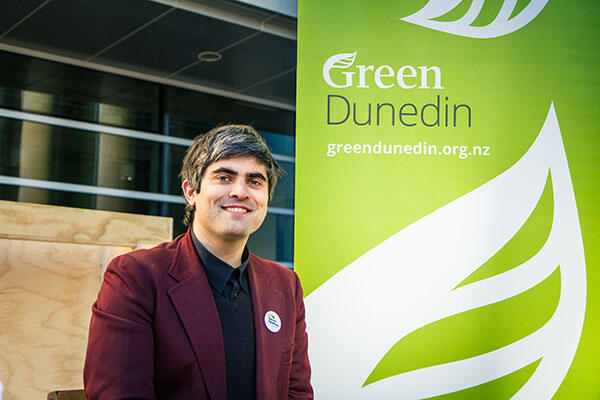
Students looking for representation on the Dunedin City Council in October’s general election are spoiled for choice this year, with two candidates already courting the student vote. Aaron Hawkins, who came fourth in the 2010 mayoral election with three per cent of the first preference votes, is standing again, this time for the Green Party. The Radio One breakfast presenter has lived in Dunedin since 2002, and describes himself as “passionately interested” in local body politics. Hawkins, who has previously compared the council to a country club, said he offered “new blood and new ideas,” and says green jobs, green housing and green transport are what the city needs. The Green candidate aims to increase the number of “jobs which are sustainable in the long term,” by increasing small-scale renewable energy production in the city. “The DCC currently runs a scheme called Warm Dunedin. I’d like to see that expanded to businesses to invest in more efficient energy systems that will save them money in the long term.” Hawkins also said that he would fight to keep 77 workers employed in the loss-making construction wing of council-owned company Delta, claiming that “the real concern … is the lack of governance that allowed it to be in the position that it is in.” Asked about the Green Party’s plans to implement a WOF-style licensing system for housing, Hawkins said “we certainly need to be doing what we can at a local level to improve the quality of our housing stock.” He did not believe that students should be allowed to live in colder, damper flats for lower rent, saying that rental properties should meet certain standards just as cafés were required to have health certificates. Hawkins said “I don’t think it’s inevitable” that rent would rise if increases in house quality were enforced, and insisted that if they did, policy mechanisms could be created to prevent tenants being hit in the pocket. The green transport offered by his campaign slogan “could” include buses, trams or trains, but would certainly include improved cycle lanes to increase the percentage of trips taken by bike. However, Hawkins was critical of the DCC’s Quiet Streets programme – in which speed limits are lowered to encourage cycling in South Dunedin – saying “I worry that we are investing in expensive window-dressing.” Hawkins said that a DCC under his mayoralty would be “a more proactive council that goes out and seeks opinion – I mean, when was the last time you saw a DCC presence on campus?” Hawkins was not deterred by low student turnout, saying “we can’t make people vote, but we can give them something worth voting for.” Co-President of Students for Environmental Action Letisha Nicholas announced her candidacy for the council on Friday. Nicholas, a postgraduate Geography student, is standing with Mayor Dave Cull’s Greater Dunedin team after being encouraged by friends. She believed the skills she had learned around strategic environmental planning would be particularly useful in the role. “I really feel like young people should be involved in decision-making, especially because we’re the ones that have to live through the decisions … There are councils in the North Island which are an average of 70 years old making 30-year plans.” Nicholas is a flatmate of “The Shit-show Chateau,” a housing renovation project, and says that improving student housing should be a priority for the council. However, she was unsure how this goal might be achieved. Reducing council debt and keeping rates increases low was also high on her agenda. Nicholas said she could not imagine the two priorities conflicting, but would defer to public submissions rather than her personal preferences if they did. As an environmentalist, Nicholas said “climate change is a big issue,” but believed that the council could not confront the issue alone. She opposed oil drilling off Dunedin’s coast and believed that renewable energy could provide jobs for local people, but said she would not support new hydro dams. Nicholas also favoured the current council’s efforts to retain graduates in Dunedin. Nicholas believed that she could help the council to make “considered decisions … using science and best practice.” For now, her campaign efforts would comprise a student enrolment drive. “Students make up a huge percentage of the potential vote and only 50 per cent have registered to vote.”
-
News
 Issue 14 07/07/2013
Students on the Streets in Turkish Turmoil
What began as a protest against the construction of a shopping centre has turned into the largest public demonstration seen in Turkey in recent years. Students have been at the forefront of the protests, which erupted in Istanbul, Ankara and many smaller cities and towns. “Innocents have been right in harm’s way,” said Sam Blood, an activist from the student-led Generation Zero climate change movement. Blood, who was visiting Istanbul for a conference, claimed that he has “witnessed old women and children in the midst of teargas.” At least seven people have been killed, over four thousand arrested, and over seven thousand injured in the protests. On 30 May, protestors opposed to plans by the ruling Justice and Development Party (AKP) to build a shopping mall on Istanbul’s historic Gezi Park were ejected from the park by police armed with pepper spray and batons. The demonstrators were arrested and their tents were burned. Turks were quick to return to the park in Taksim Square to protest police tactics. Yeşim Tokgöz, 22, a law student at the University of Istanbul, was one of the first to retake Gezi Park, where protestors chanted “against fascism, we stand shoulder to shoulder.” Tokgöz, who underwent surgery after being hit by an exploding tear gas canister, told Critic that “the police were actually trying to cause injuries.” Water cannons, baton charges, rubber bullets and large amounts of tear gas were used against the largely peaceful protestors. Prime Minister Recep Tayyip Erdoğan soon addressed the protestors on television, and called for their dispersal. Instead, hundreds of thousands of Turkish people protested against the government’s repression. The police responded with further violent tactics. In recent days, people have returned en masse to Taksim Square to protest against the treatment of protestors in Lice, a district in Kurdish-majority Eastern Turkey, where people were killed while opposing the construction of a new police station. The protests initially received little coverage by local media. CNN Turkey incurred the ire of protestors by broadcasting a documentary on penguins while tens of thousands marched through Istanbul and the capital, Ankara. Instead, news of the events in Istanbul was spread around the country through Turks using Twitter and Facebook to upload text, photos and videos of the events. Even in the relatively conservative town of Konya, demonstrators gathered, chanting “everywhere is Taksim, everywhere is resistance.” Erdoğan has condemned the reports for provoking protests, and called social media a “menace to society.” Students in the western city of Izmir spoke to Critic on condition of anonymity. A number of their fellow protestors had been arrested in the city for inciting a riot and arson at the city’s AKP offices through social media. The students claimed that police had chased them through alleyways and beaten them severely. Others had only escaped by hiding in the houses and cafés of sympathetic residents. As police violence has increased, young people have increasingly found themselves amongst the tens of thousands of protestors. Gözde*, a student at Istanbul University, told Critic she had been prevented from going to the protests due to university exams, but was moved to action “after the police brutally attacked the peaceful protestors.” In the square, medical students and doctors worked together to treat demonstrators who had been injured by police, while law students such as Gözde issued a joint declaration condemning police brutality and challenging the legality of the government’s Gezi construction plan. Others played music, built barricades across narrow streets and donated books and food. “If it weren’t for the taste of tear gas,” Gözde said, “it would have been like going to a summer music festival.” Blood recalled seeing his youth hostel receptionist leaving for Taksim Square as police sought once again to remove protestors. “You’re not going out there, are you?” Blood asked. “If I die, I die,” replied the receptionist, donning a Guy Fawkes mask as he left. Universities have been disrupted by the events, with several postponing their examinations. For Tokgöz and Gözde, however, exams continued as planned. Gözde attributes this to Istanbul University’s pro-government Vice-Chancellor. At Bogazici University, 204 academic staff signed an open letter calling for a halt to “irrational violence” and the government’s redevelopment plans. Some have since been the subject of police investigation, including those who allowed their students to skip class to attend the protests. While Gözde believed that the majority of students are in favour of the demonstrations, students have been present on both sides of the confrontation. Blood and others to whom Critic spoke claimed to have seen “armed thugs,” believed to belong to the AKP youth wing, carrying sticks, bars and knives with which to attack any protestors who escaped the police onslaught. Some students were also present at a rally staged by the AKP, which attracted tens of thousands of Erdoğan’s supporters. Despite the protests, Tokgöz describes modern Turkish youth as an “apoliticised generation … students talk with their friends and go, that’s what I see.” A survey conducted by Istanbul’s Bilgi University found that demonstrators were disproportionately young, and 70% of those surveyed reported no political affiliation. Nonetheless, the overarching conflict has been one of a young, secular opposition against the Islamist AKP government. Damla*, a 22-year-old student at Yilmiz Technical University, told Critic that demonstrators outside the Prime Minister’s office in the Besiktas district of Istanbul had chanted “we are the soldiers of Mustafa Kemal,” in reference to the Turkish Republic’s secularist founder, and that Turkish flags bearing Kemal’s image were seen in many protests. “The government is against the Turkish Republic,” Damla claimed, and suggested that the AKP sought to alter Turkey’s secular, democratic constitution. Gözde was more circumspect about the protests’ republican dimension. “Of course, everyone is fed up by the government trying to regulate everyday life, like telling women to have three kids, or trying to restrict abortion or alcohol sales,” she said, referring to a recent law which prevented liquor being sold after 10pm. “On the other hand, there are very religious people out on the streets protesting as well; we do not raise our voice just because there is a religious party ruling the country. We are protesting because the government does not respect the people who believe in different religions, because of the corruption and manipulation, and because of our freedoms.” The future of the upheaval in Turkey remains unclear. Some protestors have taken to standing motionless in public places, after one man who stayed still for hours after police tried to search his bag. Although a one-day strike was organised by the Confederation of Public Sector Unions (KESK) in response to what it called the government’s “hostility towards democracy,” the protests have sustained themselves with little organisation. A few ad hoc organisations have formed in the course of the protests, such as the Turkish Youth Assembly (TGB) and Kollektifler (The Collective), and local assemblies have been held in local parks and squares. Erdoğan has suggested that the protests had been provoked by what he called “the interest rate lobby.”
-
News
 Issue 13 26/05/2013
Budget provokes outrage and apathy among students
An OUSA-run forum on the Government’s budget resulted in yawns for many on Monday. Speakers from the youth wings of most parliamentary parties were generally ambivalent, although Finance Minister Bill English’s latest effort attracted criticism from even the Government’s most ardent supporters. The Government’s supporters were quick but lukewarm in their defence of the budget. Act On Campus spokesman and failed parliamentary candidate Guy McCallum thought that the Government’s subsidy toward house insulation had been “incredible” for reducing poverty, and Young National member Todd Dickens claimed the budget provided for “the betterment of the people,” and a “strong nation.” He praised the end of student allowances for postgrad students as “just one of those quite fair cuts,” but abandoned the party line in response to an audience question on changes to student allowance cuts for solo mothers, confessing that “what Paula Bennett has done … I can’t stand up here and say that I support that, because I don’t support that.” Young Greens’ George Lellow and Nyssa Payne-Harker argued that the budget should have reduced New Zealand’s current account deficit, and that a capital gains tax should be levied. Labour’s Curtis Omelvena also offered detailed criticism of the budget, complaining that the Government should have found a way to reduce power prices. Speaking for Te Roopu Maori, Gianna Leoni thought that changes to tertiary education could unequally impact Maori students. Mana Party speaker Andrew Tait was the most critical of all, saying that the “charlatans” in government were transferring millions of dollars to a “cockroach capitalist class.” Tait believed that a “working class exodus” to Australia had been the only thing preventing serious economic difficulties, and that “if Australia goes into recession, we’re fucked.”
-
News
 Issue 13 26/05/2013
The Cook is cooked
The Captain Cook Tavern’s long history looks set to come to a close, with the pub’s lease expiring un-renewed on 29 June. James Arnott is one of the owners of Cook Brothers Bars, which has operated the pub for nine years, along with other establishments in the Octagon, Queenstown, Christchurch and Auckland. He told Critic that neither his company nor Dominion Breweries, which holds the main lease on the property, were interested in continuing the lease. Arnott said that revenue at the Cook had fallen 40 per cent in the last five years, which he attributed to a “massive change in student culture.” Students drank less frequently, and were more likely to drink at home when they did. Meanwhile, the high rent on the large property had not reduced, and “major renovations” were required to keep the ageing building up to standard. General Manager Matt Barakauskas said that the pub’s staff faced unemployment due to the closure, but that efforts were being made to secure them employment elsewhere. Arnott said he was “completely unsure” as to whether the building’s owners, Orari Street Property, would find a new tenant. Orari Street Property’s director Noel Kennedy had previously claimed his company would fight to ensure the pub remained in operation. However, the current building was “stuffed” and it was doubtful that any kind of pub was currently viable. The wiring was so antiquated that fuses had to be made to order when they blew. In recent days, roofing contractors have been observed working on the pub. If the Cook closes, it will bring to an end 153 years of operation. The establishment began in 1860, although the present building was constructed in 1874 after the original “aged wooden structure” was demolished. According to an article published in the Otago Daily Times on 8 June 1909, the pub “had always one or two permanent boarders” well into the twentieth century, and at least two people died while living in the then-named “Captain Cook Hotel.” The Cook has had a long reputation of brushing the edge of liquor licensing laws. Around the turn of the twentieth century, The Cook’s publicans were fined on multiple occasions for secretly selling bottled beer on days when the pub was supposed to be shut, and patrons who had been forbidden to buy alcohol were often hauled before the courts for having sly pints at the Hotel. In more recent years, the wildly popular “Cook-a-thon” party held at the end of lectures earned the owners a warning from the Liquor Licensing Authority for encouraging excessive drinking. As the University expanded in the 1970s, students formed an increasing percentage of the patrons. However, licensing laws that allowed the sale of liquor in supermarkets led canny students to pre-load as a “more cost effective option,” according to Arnott. He also believed, “with a small bit of confidence,” that the increasing use of other recreational drugs among students meant that patrons came to the club tripping, and interested only in drinking water. Whatever the reasons for its demise, the Captain Cook’s taps look set to run dry before next semester.
-
News
 Issue 12 19/05/2013
Daft punks ignore Daft Punk suggestion
OUSA has met a suggestion that it underwrite a Daft Punk gig with a mix of excitement, caution and derision. Radio One station manager Sean Norling’s spontaneous idea was emailed to Daft Punk’s agent Richard de la Font on Sunday evening. Norling, who has so far received an auto-reply from de la Font, speculates that with a potential booking fee of $1 million, a sell-out show at Dunedin’s Forsyth Barr stadium would still rake in a tidy profit. He hopes that a combination of OUSA and Dunedin City Council events funds could be used to pay for the gig. OUSA’s quasi-autonomous events office, however, were less than enthusiastic. When questioned by Critic about the proposal, the events team described it as “a non-event,” and “nothing to do with us.” A source close to the office said, “I’m pretty sure it’s a joke.” OUSA President Francisco Hernandez was surprised by the suggestion, exclaiming “the what?” Nonetheless, Hernandez claimed to “love the Daft Punk,” and thought that a proposal seeking to lure the French house duo to Dunedin could be presented to the OUSA Executive at its next meeting. He refused to comment further until Executive members had discussed it. Daft Punk, which formed in 1993, comprises Thomas Bangalter and Guy-Manuel de Homem-Christo. The duo’s highly-anticipated fourth album, Random Access Memories, is released Tuesday 21 May.


