
Lyle Skipsey
Contributor
Articles by Lyle Skipsey
7 articles found. Displaying page 1 of 1.
-
Culture
 Issue 26 06/10/2013
Rush
Rating: 4/5 Rush, starring Chris Hemsworth and Daniel Bruhl, chronicles the intense rivalry between drivers James Hunt and Niki Lauda. The film covers the early stages of the rivalry, but is mainly focused on the 1976 Formula One World Championship. Far more than just a story about sport, screenwriter Peter Morgan (of Frost/Nixon fame) has crafted a clever character study that explores the different ways of coping with pressure and approaching death. The dedicated, strict Lauda (Bruhl) starts off as the villain, but while he initially appears serious and boring, his is the best character arc of the film. His deep desire to win creates a sound basis from which Morgan is able to deconstruct his character. Bruhl gives the most outstanding performance of the movie, displaying just the right balance between an emotionless workaholic and a man who realises that there is more to life than racing. It is no surprise that the major plot turn in the movie signals its change from a so-so thrill fest to an emotionally relevant biopic. Much of this success is down to Bruhl and Morgan’s dedication to representing Lauda truthfully. Hemsworth’s Hunt, on the other hand, is nothing more than a racing playboy who is more interested in proving a point than achieving any kind of greatness. Unfortunately, his character is nowhere near as well-written as Lauda’s. Even so, the film’s value lies in watching the two main actors battle with each other, and is reminiscent of Morgan’s previous work on Frost/Nixon, even if Rush is not as brilliantly composed. The racing scenes are electric and lend the film a thrilling immediacy that will have even the most anti-petrol-head feeling that rush. Each close call between life and death is jarring to the perfect degree. Above all, Rush’s greatest achievement is bringing a human side to what seems to be an incredibly technical home for the adrenaline junky. Whether the movie will have the same effect away from the big screen remains to be seen, but that shouldn’t stop you from giving it a go.
-
Culture
 Issue 19 11/08/2013
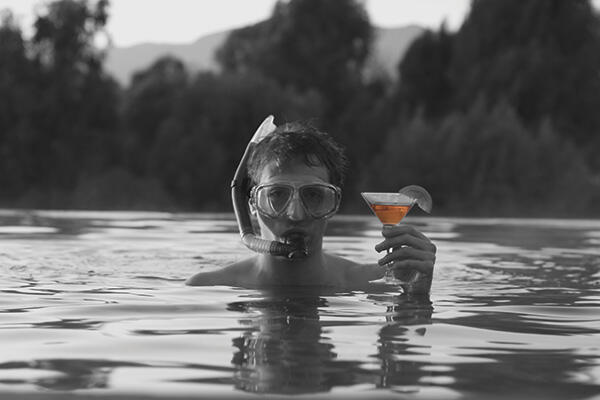
Much Ado About Nothing
The Regent Theatre - Octagon Thursday 22 August 8.30pm Friday 23 August 11am The Guardian has called it “the first great contemporary Shakespeare since Baz Luhrmann’s Romeo + Juliet.” Now Joss Whedon’s take on the Bard’s Much Ado About Nothing is coming to the New Zealand Film Festival. The movie premiered at the 2012 Toronto International Film Festival, which is fast becoming a big player in the industry after Oscar-winning Silver Linings Playbook premiered there. Much Ado About Nothing has gone on to win the Audience Award at this year’s Belfast Film Festival. Whedon has built up an iconic basket of television work and was the man behind the phenomenon that was 2012’s The Avengers. His next move at adapting Shakespeare looks to be another stirring success. The plot chronicles two different loves, with the central story that of Claudio and Hero – said to be so besotted with each other that they are rendered speechless. The main story is supplemented by the tale of Benedick and Beatrice, whose “merry war” provides a much wittier, wiser take on love and is what makes the play so memorable. There is love, laughter and trickery, along with a character named Don Jon. Who could resist? The story, apart from expanding the role of Ursula and switching Comrade’s gender, is kept close to the original. The movie has been shot in black and white and takes extensive advantage of natural lighting to make it feel “very found.” This seems to have paid off, with IndieWire critic Christopher Schobert remarking that “the result is an utter joy” and that it is “Whedon’s most emotionally resonant and fully realised film to date.” This promises to be one of the hits of the festival. Go check it out: the original artistic genius combines with one from the twenty-first century one to bring you Much Ado About Nothing.
-
Culture
 Issue 18 04/08/2013
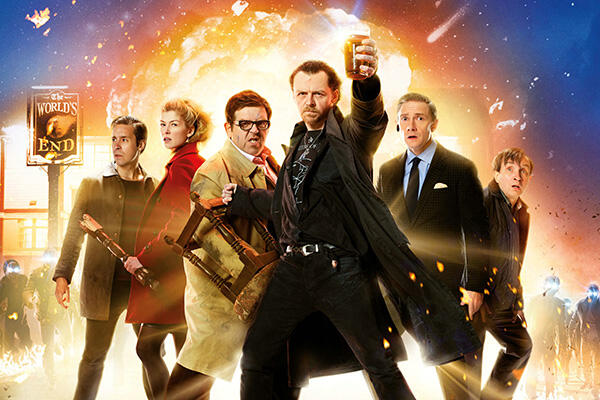
The World’s End
Rating: 4/5 I feel there should be a disclaimer up front: when I left the movie last night I fully expected to give it a rather mediocre score. However, having slept on it, maybe I judged too soon. The World’s End is the third instalment in the “not a trilogy” Cornetto trilogy that includes 2004’s Shaun of the Dead and 2007’s Hot Fuzz. Simon Pegg and Nick Frost team up once again as Gary and Andrew, who, along with Peter, Oliver and Stephen, are high school mates who have since drifted apart. At Gary’s wish they return to the town where they grew up to finally complete the infamous Golden Mile pub-crawl they attempted at the end of high school. Cue the odd people in the town who don’t recognise the protagonists, and all the usual sci-fi shenanigans from earlier films. The movie is hilarious until about two-thirds of the way in, and then starts to get a bit mushy. At the time this annoyed me: I emerged from the movie feeling that the outstanding comedic writing was hacked at by the forced attempt to portray a message. Looking back on it, however, this does not detract from what was an excellent British comedy. Pierce Brosnan is outstanding as the protagonists’ former teacher, Mr Shepherd, and Rosamund Pike brings her sultry Bond Girl demeanour from Die Another Day and Johnny English to provide the romantic interest. Yet both are outshone by Martin Freeman’s star performance as stuck-up estate agent, Oliver. Freeman, who is great in everything he does, provides the refined British male that balances out Pegg’s useless yobbo quite perfectly. Overall, the great dialogue combined with a mostly brilliant storyline means The World’s End stands as a fitting companion to Frost and Pegg’s other endeavours. If you liked their previous efforts you’ll be satisfied, and if you like British comedy you’ll be laughing the whole way through. If the end of the world is to come, I’d wager most of us would like see it off at The World’s End.
-
Culture
 Issue 13 26/05/2013
Invisible Ink? The Bastard Child of the Movie Biz
If the modern day film industry mimics Shakespeare’s King Lear then the screenwriter is Edmund, the unloved bastard child, underappreciated but still vital to the plot. As Sunset Boulevard’s Joe Gillis said, “audiences don’t know somebody sits down and writes a picture. They think the actors make it up as they go along.” As a writer, it grinds my gears how little the art of screenwriting is appreciated in the movie-making business. While every actor from Daniel Day-Lewis to Vin Diesel gets swooned over, you probably couldn’t tell me who wrote last year’s biggest blockbuster, The Avengers (Joss Whedon). Sure, I don’t know every movie’s scripter, but I know who wrote my favourites and I have favourite writers, traits that put me in the company of very few moviegoers. Though they may be part of probably the most lucrative business around, screenwriters really are the black sheep of the movie family dynasty. A glance at the Writers Guild of America’s statistics found that, on average, a working writer makes between $40,000 and $110,000 per year. To put that into perspective, a director would earn $10,000 to $15,000 a week – that’s right, a week – on a similarly budgeted film. Meanwhile, an actor or actress would probably earn 10 times that. It’s just ludicrous (incidentally Ludacris probably made more for his “acting” than Paul Haggis did for writing Crash). Writers don’t get much awards love, either – “Best Screenplay” tends to get handed out as some sort of consolation prize. You half-expect the recipient to receive their award and then shuffle off into the night so the “real” stars can carry on their party. It’s unbelievable that no writer has won more than three Oscars. Even Quentin Tarentino, arguably the greatest screenplay writer of our time, has only won twice. Why has there been such a lack of recognition, you ask? Well, long before Day-Lewis was Lincoln or Meryl Streep was Sophie, someone spent months, nay years, writing their movies. When you think, “wow, that movie was heartbreaking or funny or weird,” the actors wouldn’t have been any of those things if some poor schmuck hadn’t slaved away at a typewriter (I told you I was nostalgic) to give the glorified puppeteers something to say. Writers need some love, too, but they don’t get it. They slave away on draft after draft, in the full knowledge that they are looked upon as the bums of Hollywood. So next time you see a writer, give them a hug. Let them know that you appreciate all that they do. At the very least, tell them you know Olympus Has Fallen wasn’t their fault and buy them a cup of coffee. They’ll like that.
-
Culture
 Issue 11 12/05/2013
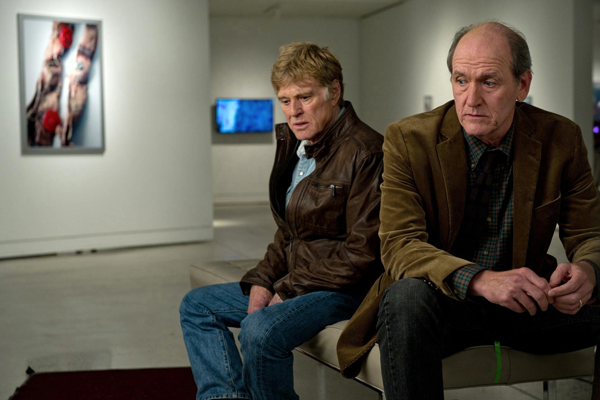
The Company You Keep
Rating: 3/5 The Company You Keep, directed by Robert Redford, was based on a novel of the same name, and a novel it should have stayed. The story revolves around Jim Grant (Redford) a former Weather Underground militant, who becomes a wanted fugitive after his identity is exposed by a journalist (Shia LaBeouf) who is reporting on another Weather Underground member’s (Susan Sarandon) confession to being part of a bank robbery gone wrong decades earlier. The setup had potential, but the film failed to ever really get going. In the spirit of fairness, I was willing to suspend disbelief that the 70-year-old Redford could have a young daughter, but the effort it took to do so almost instantly spoiled the movie. The experienced cast do an okay job of portraying people whose youthful convictions have withered with age, but any chance The Company You Keep had of being an adequate thriller is diluted by a pathetic and largely predictable ending. Stanley Tucci is the standout, along with LeBeouf, as the editor of an Albany newspaper struggling to pay its bills. Equally, Julie Christie’s short stint as a fiery anti-establishmentarian bucks the trend of the older actors turning to grey blobs. Yet none of these performances is enough to free this film from the shackles of its mediocrity, and only served to remind me how easily talented people get dragged down with rubbish writing. Nothing was more indicative of this than Brendan Gleeson’s part as a retired detective. The screenplay, written by Lem Dobbs, suffers from the symptoms of most book-to-movie adaptations. It lacks character development, nuance and a satisfactory ending. I felt like I didn’t care for a single character, apart from LeBeouf’s, purely because there was no time to get to know what makes them tick. If anti-Vietnam War activism is your thing, my advice is to go read the book.
-
Culture
 Issue 7 14/04/2013
Trance
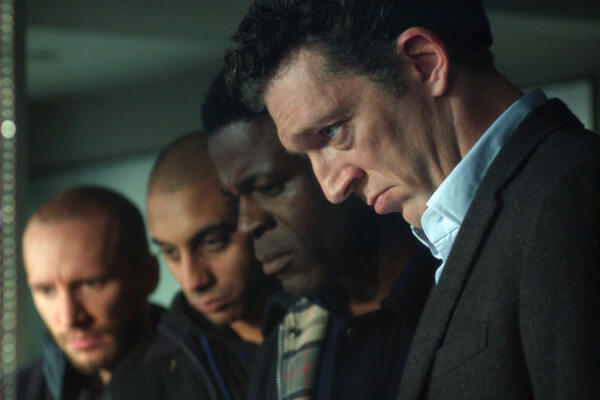
Danny Boyle’s latest movie is a mind-bender. Starring James McAvoy, Rosario Dawson, and Vincent Cassel, the movie follows an art heist gone wrong. Simon (McAvoy) is an auctioneer of fine art. He is charged with selling the rarest of paintings to the world’s wealthiest people. When an attempt to steal the latest masterpiece takes place during an auction, Simon does what he’s supposed to: he follows the plan set out for just such an event. But it goes horribly wrong when he is confronted by Franck (Cassel), who steals the painting off Simon, thus paving the way for the movie’s events. McAvoy does a good job as the conflicted main character. Dawson ably supports him as hypnotherapist Elizabeth, but Franck is the standout character. Cassel is malevolent as the gangster/art thief. It seems he only plays maniacs, and he does so expertly – from Black Swan to Derailed, he scares me every time I see him onscreen. However, the performers are no match for the true stars of this movie, the stars you never see – writers Joe Ahearne and John Hodge. The two have come up with a great script. Unlike most thrillers, this story has no holes, and left me mesmerised throughout. Boyle does a good job of directing, but Trance isn’t his best film. For what it is, though, it is very good. It will make your brain hurt, and you will scratch your head for a few hours after. Just don’t expect to undergo some kind of out of body experience or major shift in world-view. Rating: 3.5/5
-
Culture
 Issue 4 17/03/2013
The Master
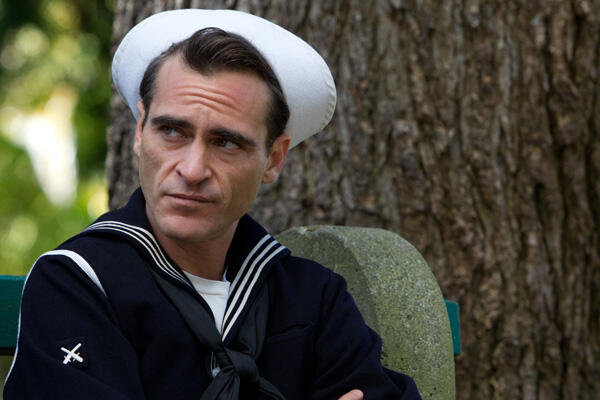
I don’t know what possessed Joaquin Phoenix to take his weird break from acting/artistic endeavour but it’s great to have him back. His tortured performance as Freddie Quell, a sex-obsessed, alcoholic army vet returning to the real world in Paul Thomas Anderson’s The Master is the best of an extremely strong year for male performances. Phoenix has made his name playing characters laced with darkness, from Gladiator to Walk the Line (for which he should have won an Oscar). Once again, dare I say it, he should have beaten Daniel Day Lewis to the Best Actor gong. The movie has received some flak for attacking Scientology, and it certainly explores the effects a new religion can have on those who have lost their way. However, The Master is much more than that. It is an outstanding study of the human condition, and the first scenes are so expertly constructed that you immediately understand who Freddie Quell is. Anderson invites you on a journey with Freddie as we unravel the darkness of humanity in the most eccentric manner. Phillip Seymour Hoffman is outstanding as “master,” the leader of a new-age religion, and Amy Adams as his wife gives another one of her gold standard performances. I don’t know where Adams rose from a few years ago but I have yet to see her in a poor role. The three leads are supplemented by a talented supporting cast, who give the nuanced performances that Anderson’s script sets up for them. The movie is not for a casual night out, it can only be described as pure art. Nor is it something you would see with grandma, as Anderson is liberal with the use of nudity. There is no discernible plot but somehow it just doesn’t matter. Anderson has delivered again and if we allow ourselves to get caught up in the journey with that great cast we could all learn something about ourselves and about the power of personality. 4/5


