
Tim Lindsay
Contributor
Articles by Tim Lindsay
12 articles found. Displaying page 1 of 1.
-
News
Issue 12 17/05/2015
Opinion: New Zealand Becoming a Republic
Over the last few weeks, we have seen the birth of a royal baby, Prince Harry visiting our shores and a formal process to decide whether to change New Zealand’s flag. In light of these events, it may be worth considering the state of New Zealand’s constitution and whether we are making a slow march towards a republic or whether we will continue as a constitutional monarchy.
-
Culture
 Issue 26 05/10/2014
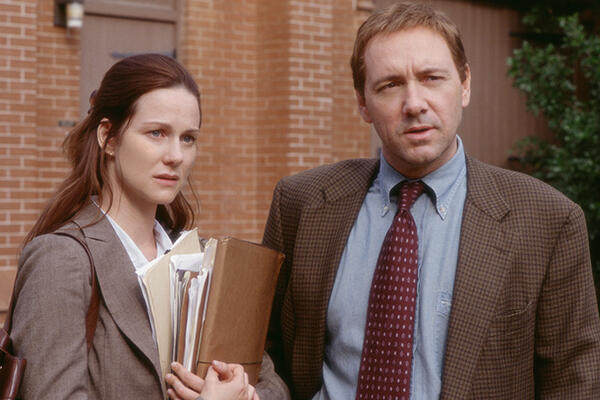
The Life of David Gale
Cult Film Given Sir Alan Parker’s high directorial pedigree (Mississippi Burning, Bugsy Malone, Pink Floyd – The Wall, among many others), a collaboration with Kevin Spacey (Gale) and Kate Winslet (Bitsey Bloom) is a mouth-watering proposition. However, this was a film universally panned by critics. Why am I writing a review of it then? I’m not entirely sure, but there’s just something about this one. David Gale is a professor of philosophy opposed to the death penalty and a brilliant scholar who cannot defeat the Texan Governor who “hates killing so much he will kill to stop it.” He then finds himself falsely accused of rape, subsequently acquitted, but then ends up on death row for the disturbing and brutal murder of a terminal leukaemia sufferer, who is also a good friend and fellow anti-death penalty activist. Pretty intense stuff. While it’s clear that the justice system is convinced of his guilt, the journalist Bitsey Bloom refuses to accept it. The story now revolves around her reconstruction of events through Gale’s flashbacks, and grizzly investigations into the death. Somehow the film ends up taking two hours, but it has a semi-morbidly fascinating air. Unfortunately the audience is left in the dark most of the time, in an attempt to set the film up for a gripping finish. Winslet and Spacey, to their credit, are very convincing in their roles and carry the film through its more uninspiring moments. It’s easy to be drawn in by its frequent twists and turns and heavy subject matter. However, its immense directorial and casting potential is ruined by a plot that takes too many turns and distastefully flashes words like ‘innocent’ and ‘rape’ across the screen in an attempt to be more dramatic. But if you want to know how it all ends, give it a watch.
-
Culture
 Issue 23 14/09/2014
The Inbetweeners 2
Rating: B+ “You better bring your wellies, because you’ll be knee-deep in clunge.” This seminal quote from Jay Cartwright (James Buckley) in the previous film typifies the Inbetweeners: horny, foul-mouthed, and desperately unaware of their social status. Reunited in Australia with the pretentious Will McKenzie (Simon Bird), romantically-clueless Simon Cooper (Joe Thomas), and totally clueless Neil Sutherland (Blake Harrison), the four boys continue their quest for banter and sexual enlightenment. Despite claiming that he “never thinks about” his former girlfriend Jane (Lydia Rose Bewley), Jay is on a gap year, hoping he can find Jane and rekindle their relationship. Will and Simon are discontented with university life and journey with Neil (who has nothing else to do) to see if Jay’s life in Australia is as decadent as he boasts. Those familiar with the TV series or the previous movie will be very excited for more cheap laughs and gross antics. Unfortunately, this film lacks sufficient character exposition (especially of new and female characters) and seems to trade on viewer’s familiarity with already-established jokes and relationships. Nevertheless, the dynamic between the four lads is as hilarious as ever and there is plenty of physical comedy leaving Will and the others with egg (or something much worse) on their faces. Regular fans of The Inbetweeners may find this film to be a little unoriginal, but it makes appreciable attempts to deviate from the standard formula. It has plenty of cringe, banter and the usual shenanigans, but sadly not enough story or character development for it to be essential viewing. Be prepared for quotable lines, cheap laughs, and a very unflattering portrayal of Australians. According to the cast and crew, this is the last hurrah for the Inbetweeners, and they have been sent off in style.
-
Culture
 Issue 7 06/04/2014
The Wicker Man (1973)
Cult Film We all know that remakes can be diabolical, and the second The Wicker Man, from 2003, was exactly that. It features the best of the worst Nicolas Cage, including some downright terrible acting and strutting his swag in a bear suit. However, the original film is of a much higher calibre, and appeals to movie buffs and casuals alike. Based on the novel Ritual by David Pinner (1967), Sergeant Neil Howie (Edward Woodward) is sent to a remote Scottish island to investigate the disappearance of a young girl. He encounters a pagan community that enjoys naked dancing around the maypole, sex in fields and harvesting orchards rather … fruitlessly. Sergeant Howie meets the Lord Summerisle (Christopher Lee) who sports a not-to-be-missed wonderful tweed jacket, turtleneck and bob haircut combination. Howie, a devout Christian, expresses his concerns at the lack of Christian morality on the island and quickly realises that all is not well. The search for the missing girl continues with our faithful Sergeant uncovering more and more disturbing scenes. This film is an excellent exploration of the occult and conflicts of faith. The islanders believe in a plethora of different gods and rely on their blessing for a good harvest. Howie is exasperated by their efforts to grow fruit on an unsuitably craggy island yet they religiously continue. The atmosphere is quaint and at odds with the ominous undertones rumbling away, and the respective strong faiths of each party lead them to do things they would rather not. Overall, The Wicker Man is a classic in all senses of the word. It manages to disturb yet keep the audience engaged in the twists and turns that challenge them to not ignore what is right in front of their noses. A strong performance from the cast and a curious soundtrack makes it a must-watch if you enjoy horror films without splatter or generous amounts of CGI. And there is always the remake that was so bad that the original film’s crew disown it.
-
Culture
 Issue 2 02/03/2014
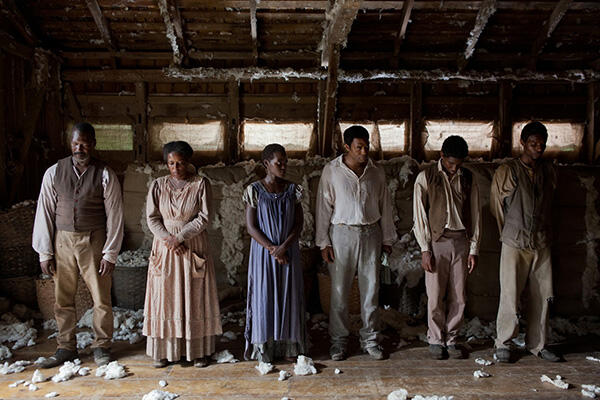
12 Years A Slave
Grade: A+ “I don’t want to survive. I want to live.” While 12 Years a Slave is expertly (and beautifully) set in 1840s America, it is not a very comfortable film to watch. Steve McQueen’s (Shame and Hunger) film has garnered a raft of Oscar nominations and accolades, a testament to its calibre and power. It is a bloody and brutal narrative of Solomon Northup’s (Chiwetel Ejiofor) kidnapping and condemnation into slavery. His treatment by subsequent “Masters” Ford and Edwin Epps (Benedict Cumberbatch and Michael Fassbender, respectively) are case studies of slavery in the American South. The human spirit is relentlessly examined through moments of brutality and sheer desperation, and it makes for some testing viewing. Fassbender, in particular, produces a compelling portrayal of a slow descent into terrifying madness caused by having absolute power over of his “property.” However, his portrayal is only of many dark, soul-crushing aspects of this film that create the feeling of hopelessness and systematic oppression that a slave had to endure, especially on cotton plantations. Behind the patriarchal domination lies the equally influential Mistress Epps (Sarah Paulson), who plays the part of the jealous wife to perfection. In this setting, her actions and reactions determine the fate of their slaves, however terrible they may be. A typically emotive soundtrack from Hans Zimmer and a sincere (and crucial) cameo from Brad Pitt round-off an immensely powerful and moving picture. It successfully projects the great repugnancy of slavery and a society divided according to race. You may think that these scenes are unthinkable, but you will think again after viewing this realistically shocking tale. “A great ill hangs over this nation, and the Day of Reckoning is yet to come.”
-
Culture
 Issue 19 11/08/2013
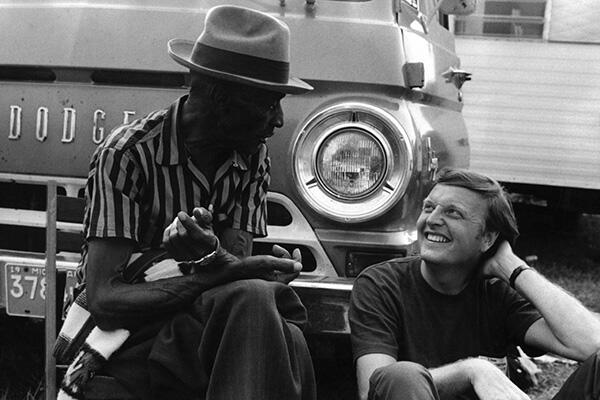
This Ain’t No Mouse Music
This Ain’t No Mouse Music is a documentary film that chronicles the career of legendary American song producer Chris Strachwitz. It takes the viewer on an auditory journey through the heartland of traditional American music and showcases some mighty fine artists and their songs along the way. But what is mouse music? In the words of director Maureen Gosling, “the opposite of mouse music is easier to talk about – I don’t like to condemn different types of music. Mouse music is music that is not from the heart, not authentic, not overproduced ... perhaps the best description is music that is not polished.” It is easy to think of examples of songs that are mouse music – and anybody with a kernel of interest in the authenticity of different types of music will catch on straight away. Chris Strachwitz has had a very interesting life. In 1945, Soviet anti-capitalist persecution forced the Strachwitzs to flee their native Poland, away from their castle, aristocracy and a life they would never regain. Chris was fortunate enough to travel to the US, and was immediately enchanted by the music he heard on the radio every day. As for many migrants to the US, American culture and the “American Dream” provided both inspiration and the motivation to do something special. For Chris, that something special turned into Arhoolie Records and the pursuit of the musical heart of America. According to Strachwitz, he never wanted a “studio.” The real music was to be found on the road, hidden away and untouched by artificial influences. Aptly, this film features Chris on the job, travelling from place to place, as well as anecdotes from his rich history of recording folk music. Director Gosling reminisced that travelling on the road with Strachwitz was sometimes difficult. Accustomed to being on the production side of things instead of in front of a camera, he would try to produce the film himself. We can see, however, that Strachwitz is an almost untapped resource when it comes to the history of 20th-century American music. Without his efforts, an immense quantity of music would never have made it to the ears of the general public. As well as recording artists hidden in the depths of America, Strachwitz also collects old records and stores them by the truckload. He sees this process as “liberating” the music rather than simply collecting it. This goes hand in hand with his philosophy of putting folk music into the hands of the public. Everybody knows that blues music is deep, soulful and a powerful expression of emotion. But this film portrays its origins and development, and how easily it could have been missed. One of the early scenes is simply a cotton plant blowing in the wind while the song is about how the singer wears out his hands. This Ain’t No Mouse Music is moving, entertaining and heartwarming all at the same time. We have Chris Strachwitz and his Arhoolie Records to thank for the immense cultural impact that blues music has had on the world. In this age of careful market manipulation by giant record companies and almost instant delivery of music to our laptops, smartphones and iPods, we need to take time to appreciate that it wasn’t always like this. Folk music emerged and developed through a very organic process and only existed to entertain a subculture or to express the sighs and cries of the soul. The music industry has changed dramatically since Chris Strachwitz started Arhoolie Records, but the job he does is still invaluable. One of the final thoughts in the film is that “Chris’s actions make a pluralistic society possible and … negate the emphasis on one culture, one language, one politics, one leader, one stupidity that is ruining America.”
-
Culture
 Issue 17 28/07/2013
MOTHRAs
The MOTHRAs were a way to celebrate Scarfie filmmaking, and usually featured a wide variety of submissions ranging from wacky and weird to funny but sincere. It was sort of like the Oscars, except it was probably much less grand. The Mothra is a fictional Japanese monster. It sometimes aligns itself with Godzilla, but the two are usually entangled in combat due to their fluctuating hatred of human beings and each another. According to its Wikipedia entry, the Mothra would attack by shooting silk at its enemies and using its mandibles at close quarters. It had a habit of biting its opponents’ tails, although such a tactic is “rarely effective and, predictably, is usually self-defeating.” Predictable, indeed. So why are you reading this poor attempt at chronicling the life and times of a Japanese super-monster? If you are into Japanese sci-fi, there are about 16 films that feature the Mothra. One Mothra-themed film in particular killed a director’s career, and served as the inspiration for OUSA’s student film competition, perhaps setting the tone for pioneering Otago filmmakers. MOTHRA entries had to be no longer than seven minutes and have at least one OUSA member taking part in the “team.” Racism, homophobia and sexism were banned, and anything else that common sense would suggest. Competitors could borrow filming equipment from OUSA, so there were very few barriers to entry. In recent years, the most active competitors were groups from Student Life (but there were no Passion of the Christ films made, don’t worry). In the 2011 MOTHRAs, about 40 different films were nominated in 26 prize categories. These included the usual film festival prizes, but also more niche awards such as Best Death, Best Turkey and Best Credits. The awards ceremony was held at the Otago Museum, and the films were screened over a number of days at The Church Cinema on Dundas Street. However, all this fanfare seemed to weigh the competition down in its later years. A source close to the MOTHRAs’ organisers believes that the rising cost of processing the footage, staging the awards and screening the films coincided with a decline in the number of entries. The attractiveness of other competitions such as 48HOURS also led to the MOTHRAs being dominated by entries designed for these more constrained formats, and therefore perhaps of a lower quality. The YouTube channel “Mothras” (youtube.com/user/Mothras) features the pick of the MOTHRAs from 2010. They are worth a watch, especially the music video (and winner of Best MOTHRA) “Daisychain” for the band Knives at Noon. Described as “100 per cent Dunedin,” it went on to feature on Juice TV and C4. It’s a great song and the video is a nice montage of Dunedin flats and streets. Also check out “Scott and Mark Go to the Park.” It’s kind of like Tim and Eric but on steroids, and the closest you will get to a Scarfie romcom – of sorts. Also worthy of mention is “Do You Wanna Go Out With Me?”, a musical set in the romantic North East Valley. It is accessible via the 48HOURS website, as it was runner-up in the Otago and NZ sections in 2011. However, the film is also symptomatic of an issue that plagued the MOTHRAs – many of the people involved with the film apparently did not know that it had been entered in the MOTHRAs, nor that it won Best Film. The MOTHRAs’ awkward timing meant the competition was often overshadowed by 48HOURS. The MOTHRAs were a cultural phenomenon that gave Dunedin student filmmakers, actors, directors and musicians a platform to have their work publicised and appreciated. If OUSA Education Officer Jordan Taylor’s comeback bid is successful, I am sure the abundance of comedic and filmmaking talent at this university will make it worthwhile. However, it should perhaps be staged earlier in the year than 48HOURS to avoid being swallowed up by its larger counterpart. So be prepared in case the silk strings and poisonous scales of the Mothra reappear, because it will be an interesting time.
-
Culture
 Issue 15 14/07/2013
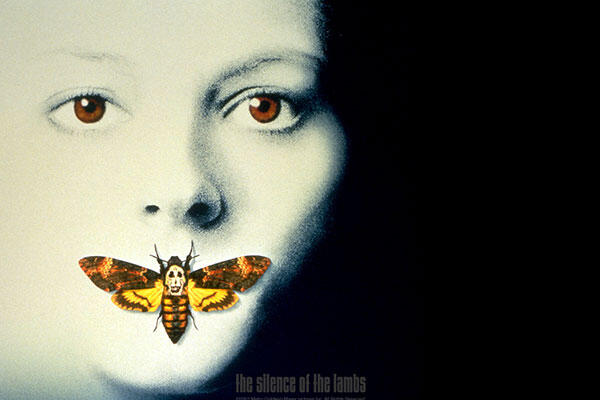
The Silence of the Lambs
Read the title to yourself a couple of times. It is freaking creepy. It sends shivers down your spine then back up to your head to remain for days. When you watch this film, you do not see the face of evil. You enter its mind. The Silence of the Lambs won five Oscars in 1991: Best Actor and Actress in a leading role (Foster and Hopkins), Best Director (Demme), Best Adapted Screenplay and, of course, Best Picture. That alone should provide testament to the calibre of this film. And it took Hopkins only 16 minutes of screen time as Hannibal Lector to become one of the biggest icons in popular culture. He’s probably the greatest film villain of all time – he’s a cannibal with class who bites faces. He still manages to terrify people even when locked up in maximum-security prisons. But his relationship with FBI agent Clarice Starling (Foster) is crucial – they must hunt down Buffalo Bill (Levine), the notorious serial killer who skins his victims. Hopkins once said in an interview that we are “obsessed with the dark side of life.” Each character is trapped in a world of oppression that takes them to very dark places: Starling has endless battles against misogyny and sexism, Buffalo Bill lives in a society that cannot tolerate different sexual identities, and Lector thrives in a world that cannot come to grips with a person so insane and yet so intelligent. In short, you may find disturbing sympathy for both of the film’s villains. Perhaps we’re unfortunate these days because we are oversaturated with dramas and thrillers based on the insane or the criminal mind (such as, well, Criminal Minds). In my opinion, however, these shows and films are floating firmly in the wake of The Silence of the Lambs. So watch this film and see how it influenced modern horror films. It’ll freak you out, but it’s worth it. And let Hannibal Lector into your head. See what happens.
-
Culture
 Issue 15 14/07/2013
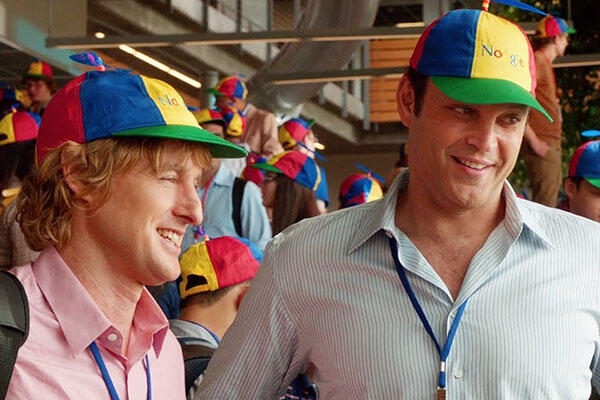
The Internship
Rating: 2/5 Start of the U.S. summer? Check. An assorted cast of misfits with the odds stacked against them? Check. A worrying lack of originality in the plot? Check. Welcome to The Internship, your regular Hollywood light comedy. The film seems to benefit from director Shawn Levy’s magic ability to make commercially successful films, and Vince Vaughn and Owen Wilson team up to repeat their antics from Wedding Crashers – except this time they’re crashing Google as laid-off salesmen who have been offered internships. While their skills are mocked as obsolescent, they quickly set about proving their value to the company. The two mature gents get teamed up with other social outcasts and have to compete against a swarm of highly-educated young people for the Holy Grail – a job offer. Google is the best place to work ever, if you agree with the somewhat sanctimonious preaching of the Google higher-ups. The commercial overtone of endorsing Google is unavoidable, but overpowering. Like a ten-dollar bottle of wine, you don’t taste the “spicy oak with a sweet finish,” you just get your mouth bleached with alcohol. However, the Google headquarters provides a nice backdrop to the movie. We are treated to a game of Quidditch (although not even Google has figured out how to make the brooms fly), and the fun vibe that employees probably exhibit is easily picked up. There are plenty of romantic sub-plots, such as Owen Wilson chasing the glamorous yet apparently unavailable executive (Rose Byrne). They even have a drunken night out and venture to a strip club for “team bonding,” hoping it will change their fortunes. After a variety of team challenges, the usual English d-bag antagonist (Max Minghella) hurting their feeling, and surmounting obstacles put in front of them, we see a resolution of sorts. But it’s predictable. Everything is all too predictable. So all in all, The Internship is your standard Hollywood comedy. It’ll make you laugh but you know what will happen by the end … just like that ten-dollar bottle of wine.
-
Culture
 Issue 13 26/05/2013
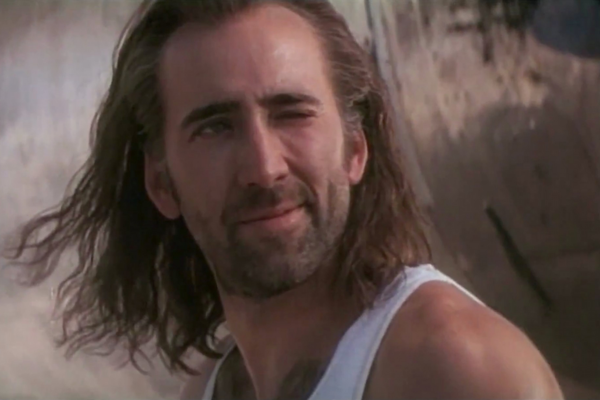
Con Air (1997)
By the time Nicolas Cage (Cameron Poe) utters the moving line “I’m going to show you God does exist” and takes a bullet without flinching, Con Air has teleported us right back to the grand (but cheesy) days of the 1990s. Watching the archetypal Hollywood action thriller of its day is quite a nostalgic experience. It made me miss the years when people were optimistic and didn’t realise bankers were wankers. Cage is probably the most ridiculed leading man in Hollywood. Unsurprisingly, he has starred in 35 films since Con Air, with another seven due to come out in the next couple of years. He’s almost addicted to making films, hence the proliferation this side of the millennium. Taking nothing away from his quirky redneck character, the rest of the main cast is what really makes Con Air tick. John Malkovich plays Cyrus (“The Virus”) who takes over a prison transport plane carrying the country’s most notorious criminals and Cage, who’s just got parole and wants to see his “baby dawta.” A bunch of thugs taking over a plane doesn’t go down well, so the long arm of the law reaches out in the form of John Cusack and Colm Meaney. While wearing the classic 90s wide-cut suits and squabbling like a married couple, the two somehow have to get the plane back. The story revolves around this premise quite nicely and introduces a myriad of entertaining yet squeamish supporting characters, all with histories that the audience is let in on – look out for Garland Greene. Steve Buscemi produces an amazing performance as an untreatable psycho who seems like going off at any time but never does, adding a huge element of suspense to the piece. The film isn’t lacking in action sequences, with plenty of punch-ups, stick-ups and shoot-ups. You’ll see some aerial combat and plenty of shots fired. And Cyrus masterminds all of it, somehow creating order out of the anarchy of these newly liberated prisoners. Overall, Con Air is about one man (or god) overcoming the world’s most dangerous brutes to reunite himself with his family. For some 90s melancholy, corny dialogue and well-timed actions scenes, look no further.
-
Culture
 Issue 5 24/03/2013
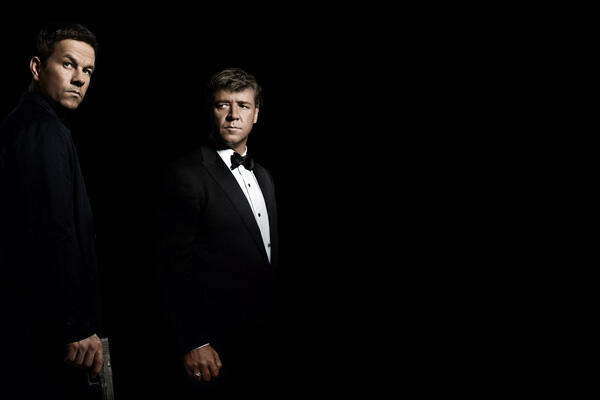
Broken City
Having recently seen Russell Crowe’s sensitive side in Les Miserables, my inner Crowe-Bro yearned for the gladiatorial, UFO-spotting, phone-throwing Russell that we have all come to love over the last 10 years. Crowe teams up with Mark Wahlberg in a gritty political thriller that disappointingly falls short of its lofty goals despite one or two good individual performances. Allen Hughes, known for his work on The Book of Eli, ambitiously attempts to capture the corruption and the plight of the urban poor in the Big Smoke of New York City. The setting provides an excellent backdrop, and some great cinematography captures the film’s grittiness. However, the downside is that the viewer has to endure a plethora of Noo Yok accents; some, like Mayor Nicolas Hostetler’s (Crowe), are a little too authentic to the point of unnatural. To Crowe’s credit though, he plays the role of jealous lover/seasoned politician/money-hungry maniac well. He enlists the help of disgraced former cop Billy Taggart (Mark Wahlberg), who escaped a murder charge on a technicality, to stalk his wife Cathleen (Catherine Zeta-Jones) whom he believes is unfaithful. Mark Wahlberg delivers his usual superb performance as Mark Wahlberg, carrying it off with the precision of a veteran typecast actor. His violent outbursts in an otherwise slow-moving piece seem odd. And it really is slow. About as slow as the annual Slug-Snail one-metre sprint – it just takes far too long to cover not much. By the time Taggart uncovers a greater conspiracy reeking of the corruption that doesn’t surprise anyone in big-city career politics, the film has introduced subplots that are cruelly left undeveloped and supporting actors worthy of more screentime – but has satisfied any bloodlust in the audience with Wahlberg smashing some heads. The film doesn’t really keep the viewers up to speed with the many plot twists, a hallmark of films that just try too hard. Overall, it was easy to expect more from Broken City – a talented cast with a controversial premise – but with the exception of the omnipotent Mayor, the film fails to tick many boxes. Rating: 1/5
-
Culture
 Issue 3 10/03/2013
I Give It A Year
I Give it a Year is a pleasant deviation from your run of the mill rom-com. Dan Mazer, known for his production and writing roles in Ali G Indahouse, Borat, Brüno, and The Dictator superbly balances cringe-worthy humour with more subtle hilarity and raises serious questions about love, married life and shotgun weddings. Mazer turns his directorial attention to a young couple vexed by temptations and compromised affections during their first year of marriage. Nat (Rose Byrne) and Chloe (Anna Faris) combine to form a complementary and elegant duo, with feelings crossed for the slick Guy (Simon Baker) and clumsy Josh (Rafe Spall). The film excels at making the viewer grow close to each character and sympathise with their respective plights in the battlefield of love. Baker expertly captures the essence of “hunk” and hints at the clever satire underlying the film, juxtaposed with Spall playing the overgrown little boy who suddenly found himself married and in a world of higher expectations. Faris provides the voice of objectivity that adds to the absurdities while showing a very human side to the synergised romances. The supporting cast members are both entertaining and obnoxious – much to the chagrin of the leads. Minnie Driver plays the role of cynical sister-in-law to perfection, leading to some of the film’s best moments. Any attempts to make a serious commentary on modern married life are quickly lost amongst the clichés and Borat-esque gags. However, the traditional rom-com is not the place for overtly cynical social commentary, although Stephen Merchant is a perfectly awkward counterpoint for the main characters’ trials and tribulations. From a sexually deviant best man/mate (Merchant) to epiphanies in the pouring rain to a guide on how not to have a threesome, I Give it a Year has enough laddish humour and patented (yet predictable) rom-com moments to entertain most audiences and provide a refreshing take on the genre. 3/5


