
Jonny Mahon-Heap
Contributor
Articles by Jonny Mahon-Heap
12 articles found. Displaying page 1 of 1.
-
Culture
 Issue 23 15/09/2013
Frances Ha
Rating: 3.5/5 An endearing and fresh take on the messy lives of twenty-somethings, Frances Ha is equal parts Woody Allen and Lena Dunham, taking a neurotic central character and using her to charming effect. A star-making performance from Greta Gerwig in the title role ensures that Frances never delves into the manic pixie dream girl stereotype, and we are instead offered a proper character study of this flawed and fascinating figure. As a contemporary dancer struggling to make ends meet in Manhattan, Frances experiences trials and tribulations that wouldn’t seem out of place in a Girls episode. However, the many funny moments, Gerwig’s seamless performance and the black-and-white cinematography that illuminates unseen aspects of New York elevate the film’s TV-appropriate subject matter into something far greater. In navigating Frances’ nomadic experiences as she moves from one cheap apartment to another, Baumbach’s film depicts twenty-something friendships in a fashion that rings true and is oddly rare on the big screen – or anywhere for that matter. The pithy, sarcastic exchanges between Frances and her best friend are handled naturally, as is her surprise at discovering how insincere friendships can be at that age. Similarly, Frances Ha adopts a realistic approach towards the poverty of young adult life, and is careful neither to glamorise nor romanticise the experience. Instead, it conveys how limiting it can be for our heroine. For a film to explore how issues of class and wealth seep into our relationships from this young age is refreshing. Nonetheless, the film provides something of a litmus test for the viewers in terms of tolerance for neurotic characters: during one of Frances’ especially cringe monologues, the couple behind me walked out of the film. Frances is muddled and frustrating, but ultimately sympathetic – and while the film is at times excruciatingly awkward to watch, therein lies part of its success. Although the film isn’t aggressively quirky, certain scenes err on this side, and Baumbach’s attempts at catering to his hipster audience are transparent. Frances’ habit of dancing to catch her bus, or playfighting with her friends in the park, come across not as the actions of an emotionally stunted 27-year-old, but rather of someone who is intellectually damaged. While Frances Ha is unlikely to appeal to those who find the average Girls episode beyond their realm of comprehension, for the target audience it’s a charming, funny and intelligent effort.
-
Culture
 Issue 21 01/09/2013
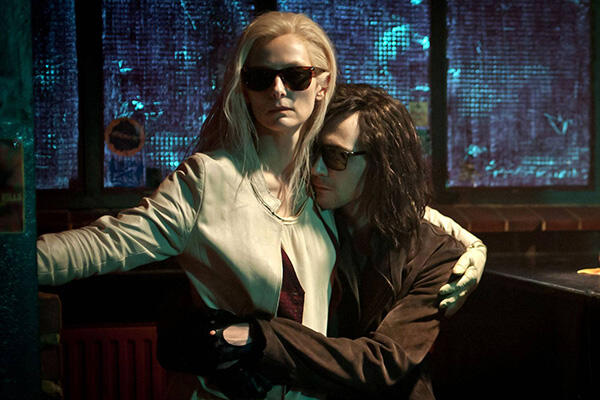
Only Lovers Left Alive
Rating: 3/5 Only Lovers Left Alive is a slim and idiosyncratic film that has received more of a mixed bag of reviews than the Film Festival itself. A darkly funny take on the tired vampire genre, it documents the centuries-old romance between vampires Adam (Tom Hiddleston) and Eve (Tilda Swinton) as they question their place within the chaos of the twenty-first century. Adam has appropriately chosen Detroit as his home at the end of the world; Swinton, the chaos of Tangiers. The film envisages the vampires as a pair of ageing rockers, for whom sucking blood is “so fifteenth century,” and is perhaps the first vampire film for hipsters. While this tag is accurate, however, it shouldn’t be completely offputting. The film’s joy comes not just from the gloomily witty dialogue, but from Jarmusch’s patient (read: slow) direction, which treats its central figures more like art projects than film stars. With an opening scene that contains more romance and intrigue than all the Twilight films combined, the film is framed almost entirely at midnight. My favourite sequences involved Adam and Eve cruising the abandoned Detroit streets. The film is a celebration of art and the artist, with extended takes focussing on Moroccan street musicians, the grungy aesthetic of Adam’s music and the couple’s games of chess, often followed by their ritual toasting of blood champagne. While all this is entertaining, the film is neither as insightful nor weighty as it attempts to be. Indeed, its literary references annoy more than amuse (Eve’s passport reads “Daisy Buchanan,” for instance, and Adam is referred to as Dr Faust). It’s almost as though Jarmusch has targeted it at students: the hipster appreciation for Swinton, for this genre and for the European setting all reek of him trying to win favour with the audience, rather than having good reason to include them in the film. Indeed, Only Lovers Left Alive walks the fine tightrope between being aggressively quirky and entertainingly weird. By the end, I had succumbed to all the film’s charms, especially its pseudo-intellectual banter and the entrancing performances by Swinton and Hiddleston. These two elevate the film beyond its sweet, vaguely comedic origins, bringing real chemistry and romance to the proceedings. Neither as wise nor as funny as it would like to be, Only Lovers Left Alive is nonetheless a pleasantly ambitious entry into the vampire genre, breathing life into this well-worn breed.
-
Culture
 Issue 20 18/08/2013
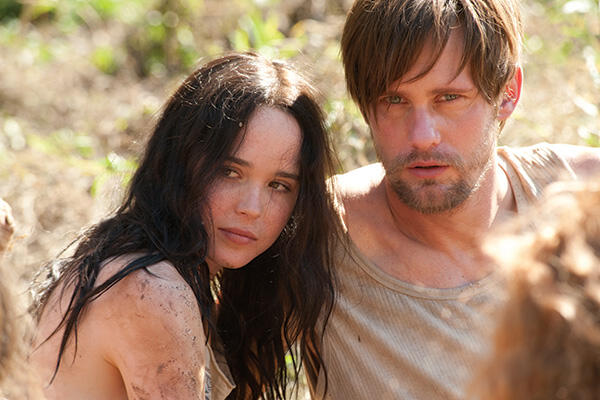
The East
Rating: 4/5 A rare environmental-political thriller, The East represents one of the bigger-budgeted and more purely enjoyable options from the 2013 film festival. It’s a curious combination of The Departed meets Martha Marcy May Marlene, and combines the best talent from American indie cinema (Patricia Clarkson and Ellen Page) in an effective thriller that is just as unrealistic as it is inspiring. Investigating the thin line between activism and terrorism, the film is an idealistic take on corporate America and a social revolution against its wrongdoings. The titular group is a ragtag assembly of outsiders, each with a personal vendetta that prompts them to target corporate honchos who have committed gross violations of ethical and environmental codes in search of bigger profits. Through social media (which they use as skillfully as the Kony2012 activists, only, you know, genuinely), they expose their motives and gain mass popularity. Brit Marling plays Jane, an impossibly classy and intelligent former FBI worker, now taking orders from a private intelligence firm. Her clients demand she expose the group as the “terrorists” they are. In order to do so, she must first infiltrate a group of radical environmentalists who can lead her to the hierarchy of the East. Having done so, she discovers a group of zealous, but seemingly passive, intellectuals. They are not the extremist cult she, or the audience, expects – their more eccentric rituals extend only to bathing one another and feeding one another dinner before being fed themselves. Naturally, despite their eye-for-an-eye policies at first repelling her, she finds herself drawn to the charisma and heady idealism of the group, in both a personal and professional capacity. We realise that for each member, the missions do not have a political so much as an emotive agenda. Indeed, there is only one scene allocated to an ethical discussion of what they are about to do – the rest of the time they act out of mere self-righteousness, which Jane at first loathes but is ultimately seduced by. One is thankful that the film doesn’t spell out each character’s motives and internal dilemma. Instead, the director treats his audience as being intelligent enough to not only navigate the film’s twists, but also impose their own moral compass on Marling’s central blank canvas of a character. Indeed, The East is not arrogant enough to posit any suggestions to the threats posed by corporate America, other than to condemn violence as part of the solution. To reveal anymore would spoil the surprises of the third act, but as Jane’s ethical position fluctuates, so too does the audience’s, and this is undoubtedly a film to incite much post-credits debate. Whenever I assumed to know where the film was going, it would take a different route and a different ethical dilemma would arise. Under different direction, this constant pirouetting might be tiresome, but here the audience is enjoyably kept on their toes. Similarities abound between the cultish aspect of this film and the director’s first effort (last year’s The Sound of My Voice), in which Marling also took the lead role. Marling’s grounded presence carries the film through some of its less believable elements, and the audience is willing to follow her charismatic and credible persona through all the third-act twists and plot contrivances. She is that rare actor who conveys entire thought processes with mere looks. Supposedly the writing duo of Marling and director Zal Batmanglij spent a summer pursuing the anarchist lifestyle, dumpster-diving, living off the land and hitching rides across the North-East in an attempt to enhance the veracity of the script. Though aspects of the film are somewhat difficult to swallow (e.g. their innate ability to disappear after each act of terrorism, despite not using disguises or pseudonyms), its tone is never preachy or sanctimonious. In a way, it is a wish-fulfilment fantasy for the 99 per cent that Hollywood would typically avoid – corporate hogs receiving their comeuppance in increasingly inventive fashions that eschew our conventions of morality and bring bigger questions into the fray. This is a confident and mature second feature from this duo, and raises the stakes for their third effort.
-
Culture
 Issue 19 11/08/2013
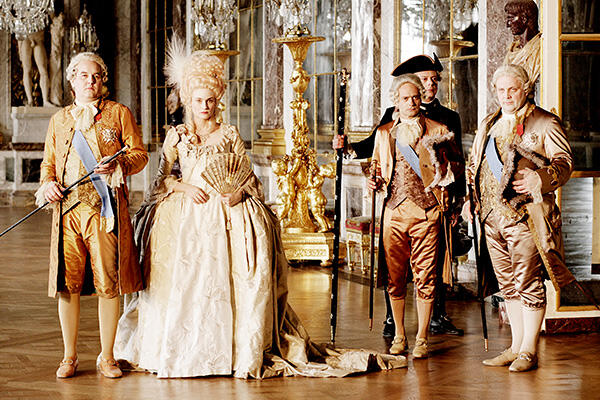
Farewell, My Queen
Rating: 4/5 1789. The people are rebelling. Versailles is about to fall. Marie Antoinette, wilfully blind to the chaos around her, spends her days perusing the 18th-century equivalents of Vogue and chasing her chambermaids. Proving there is life in the period drama still, Farewell, My Queen is a refreshingly modern take on the tired genre, dominated by performances from European A-listers Lea Seydoux (Mission Impossible) and Diane Kruger (Inglourious Basterds). Sidonie (Seydoux) plays the Queen’s official reader, a commoner with the rare privilege of participating in her love-life and luxuries. As gossip swirls around the monarchy’s decline (and threats of Antoinette’s inevitable beheading), Sidonie finds herself increasingly drawn to Antoinette, with her sense of duty and obedience crossing into something far more romantic. Their quasi-romance takes place almost exclusively within the confines of the castle, giving it a sense of claustrophobia as well as tragedy. This interpretation is no doubt racier than your usual 18th-century retread, but it’s also far from the “lesbian costume drama” some publicity has made it out to be. Instead, its creeping pace makes it an almost anthropological take on the monarchy’s dying days. We are thrust directly into the action with minimal detail, and the film’s main shortcoming comes from this ambitious attempt to blend romance, history and reality into one. But while the drama takes extreme liberties with the true events, Seydoux’s and Kruger’s performances are so convincing that little else matters. They convey their status, depth and emotions through urgent whispers and glances, elevating the story from its soap-opera origins into something far more significant.
-
Culture
 Issue 17 28/07/2013
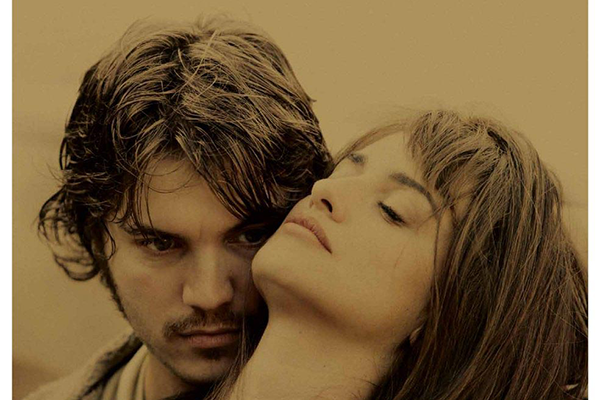
Twice Born
Rating: 2/5 The trope of love blossoming amid war is as old as cinema itself, with many of these films achieving classic status (Casablanca, Atonement, The English Patient – to name a few). Plenty more, however, have struggled to depict romance against the backdrop of conflict without lapsing into melodrama and ham-fisted clichés (think Pearl Harbour and Cold Mountain). Unfortunately, Twice Born falls into the latter category – it is a scattershot mess of genres, attempting to be a historical narrative, fertility drama and erotic romance all in one, with wildly mixed results. Unnecessarily told via flashback, Jemma (Penelope Cruz) narrates the origins of her romance with Emile Hirsch’s American photographer – an underwritten part – as they combat infertility, infidelity and poverty amid the chaos of the Bosnian War and attacks in Sarajevo circa 1992. The war element of the film doesn’t emerge until the second half (it could have used some judicious editing and is at least half an hour too long), as the first half consists mainly of Hirsch/Cruz’s attempts to elicit some chemistry (which never really emerges). Perhaps realising the film has lingered too long on their courtship, it then attempts to cram as many obstacles as possible into the second half. Consequently, the tone veers wildly from the established romance to a commentary on the ethics of adoption, as Cruz’s son investigates his origins in present-day Italy. On paper, the talents of the principal cast and the depiction of a conflict that has hitherto received little coverage in cinema is very alluring. In reality, this is a messy, convoluted affair, whose only reason for existence is the talented performance of Cruz, who helped get the project off the ground. Unfortunately the film itself, like the conflict that spawned it, is a sad waste.
-
Culture
 Issue 11 12/05/2013
Maori Boy Genius
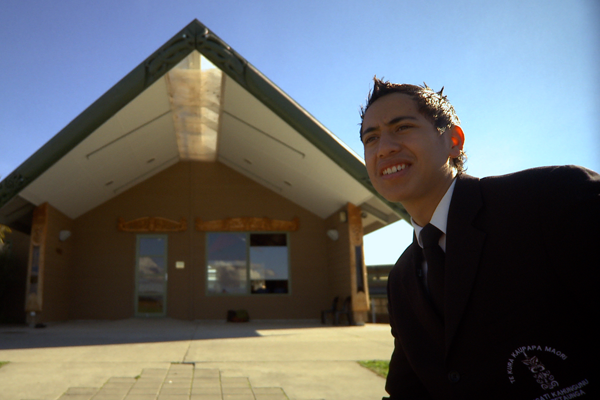
Rating: 3/5 Documentaries often struggle to find the delicate balance between good storytelling and mere exploitation – a challenge made all the more difficult when the subject-matter revolves around children. Such is the difficulty faced by Maori Boy Genius, a competent, intelligent examination of Ngaa Rauuira, the titular 18-year-old boy wonder, who finds his path to wisdom marred by politics, poverty and puberty. Brettkelly’s conscientious approach to Ngaa Rauuira, as she naturally tracks his rise from completing his first degree at age 13, to enrolling at Yale at 15, means the film never venerates or worships its subject (despite the title implying otherwise). Instead, it is the “supporting cast” that proves more worrisome – parents willing to max out credit cards for $45,000 in school fees, an iwi with a political agenda – with many seeming eager to simply exploit his talents. Brettkelly sheds light on the ambitions not only of the prodigal son, but of his elders and impoverished community. The weight of expectation on this boy’s shoulders is palpable (thrust upon him since the significant appearance of a “double rainbow” at his birth), and it is testament to Ngaa Rauuira’s considerable charisma and maturity that he carries the film without ever coming across as precocious or pretentious. Indeed, at the risk of sounding woefully PC, it’s refreshing to see a New Zealand film approaching a Maori subject without any agenda. Whether it’s the heavy-handedness of Once Were Warriors, or the satire of Boy, subtlety has never been our strong suit when depicting indigenous issues on the big screen, but Brettkelly’s natural documentary style lets the story tell itself. The film’s title is evidently something of a hyperbole – the director herself confesses that the term “genius” is something of a misnomer. But in terms of what Ngaa Rauuira could, or will, represent to his community, it is entirely accurate. And it’s Brettkelly’s examination of these heavy expectations, whether held by his iwi, his friends, or the film’s audience itself, which makes the film worthwhile.
-
Culture
 Issue 11 12/05/2013
Pietra Brettkelly
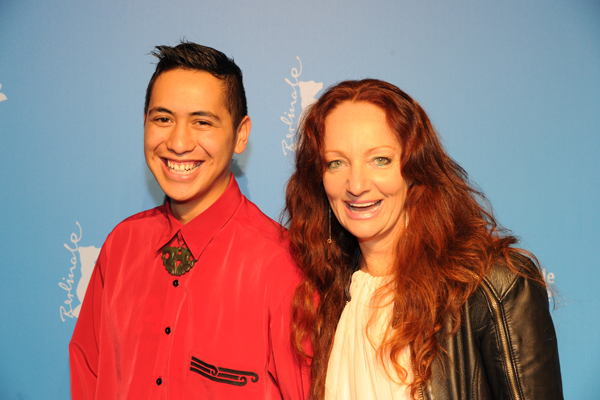
Maori Boy Genius examines a year in the life of 16-year-old Maori boy wonder, Ngā Raūira Pumanawawhiti, an adolescent, Yale student and future Prime Minister. The film’s director, Pietra Brettkelly, discusses Ngā Raūira’s life pathway, the gamble of documentary filmmaking, and the racial politics in his story. How did you discover this unique story? I wanted to follow up on this story my friend found about Ngā Raūira in the local Hawkes Bay newspaper, and knew there was something interesting about this boy. We flew down to Hawkes Bay to initially meet him and his dad … I met this remarkable, confident, very charismatic young man, and wanted to make sure that he wanted all these things. He had fabulous pressure on him from his iwi and his hapu and his whanau, but he had to want this education and this pathway as well, because I’m not really interested in doing a film on helicopter parenting, with parents living through their children. I wanted to do a story on a young man finding himself and his political voice – and Ngā Raūira did want this, did want all these things. Why do you think this story is such an important one to be told? Because he breaks through some of the worst statistics in the world. When young Maori men leave school, over 50% have no qualification at all. They make up over 40% of our prison population. There are high incidences of suicides. It’s a terrible realm of statistics, and for him to break through all them is extraordinary in itself. … That’s why it’s done so well internationally, I think – because it resonates on so many levels. It resonates for many people – not just indigenous people, not just Maori – it resonates for anyone who is trying to go beyond what the statistics tell them they could achieve, whether it’s gender, ability, culture, race, geography. Has the process of getting the film from television to cinema been a difficult one? Absolutely, because I’ve had to fund it all myself as a feature film. I went to Denmark to do the edit; I work-shopped it overseas and really made it into an international film. It was released at the Berlin Film Festival last year, and to be selected for that festival, which is one of the top five in the world, is a huge acknowledgement. Documentaries require a delicate balance between letting the story tell itself, and giving the film structure – what are the challenges involved in this? The main challenges are having confidence that a story will evolve. With documentary, it’s kind of a wing and a prayer really, and the prayer is that something will happen, because we can’t just make it happen. So the more that I’ve been in the industry and been making films (which has been for 16 years now) I know I can trust my gut. I can read the situation and understand the person and what is surrounding them and that something is going to happen. … Thankfully, I haven’t made a documentary that hasn’t had some kind of beginning, middle and end – that would just be a disaster. Depiction of Maori culture in our cinema has evolved over the years, from the heavy-handedness of Once Were Warriors to the lighter touch of Boy – how do you think it has changed? What do you think, if anything, needed to change? I think there’s been a bigger picture happen, in that Maori are telling their own stories and they are also a much bigger part of our industry. And that’s been the combination of a bunch of things – the film commission making a considered effort to have more Maori filmmakers and Maori stories … Also Maori Television has, of course, given a presence to Maori media and broadcasters and filmmakers. But having said that, I’ve come up against some degree of challenge that I shouldn’t be telling this story, that a Pakeha person shouldn’t be telling this story. But you know, there’s always that debate as well. I just think that hopefully New Zealanders, all of us, are becoming more aware of the complexities of our own society, and want to see and hear and be educated more about all of these issues that make up our country. The film is entitled Maori Boy Genius: Volume One – what do you envisage for the second half of this film? Your website references the 7Up documentary series, do you think that is an approach you would be interested in taking with Ngā Raūira? I don’t know, really. I think the reason why I called it Volume One was just to hint at the fact that this is just the start and there is so much more to come. Whether I document it or not, I’m not sure. We’re still in contact a lot and now that I’m travelling the country, he’s trying to come to some screenings and he’s terribly supportive of the film, but I think I should leave him alone for a little while.
-
Culture
 Issue 11 12/05/2013
American Psycho (2000)
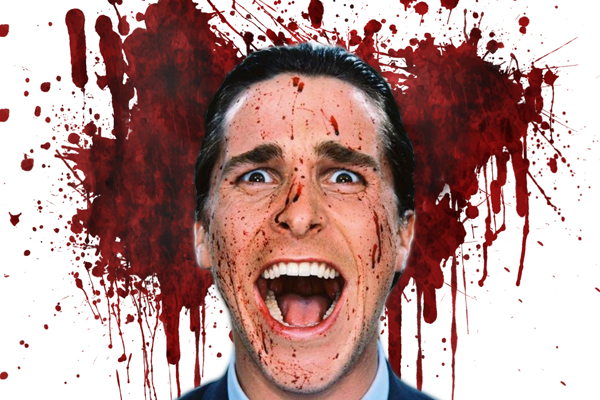
The story behind American Psycho’s adaptation from page to screen is almost as troubled and manic as the titular character. Based on Bret Easton Ellis’ seminal work on the moral and materialist woes of 1980s Wall Street America, the work was initially labelled “misogynistic garbage” and “snuff” by the New York Times. Publishing mammoth Simon & Schuster reneged on their obligation to print the book due to its controversial, uncompromising subject matter. When Ellis finally found a home for the novel, he received numerous death threats from rampant feminists on its release (oh the irony). Mary Harron’s 2000 adaptation, enhancing the satirical elements of the novel, is that rare page-to-film adaptation, succeeding where the novel failed. Its female director summarily dismissed the misogyny claims as erroneous, and employed an A-list cast to portray the hedonism of Reagan’s America. Patrick Bateman is the consummate Wall Street yuppie, whose vacuous daily routine consists of grooming clients, interns and himself. His only interests are restaurants, his figure, and, in an assertion that falls on his insipid colleague’s deaf ears, “dissecting girls.” Bale, in a part that he claims was inspired by Tom Cruise, is simultaneously hilarious and horrifying, sinister and pathetic. He is perfectly cast as someone whose good looks cross into being just plain creepy; and age-appropriate, given the majority of serial killers are statistically white males in their 30s. Bale’s manic intensity in American Psycho is so perfect that the film ultimately launched his career, when most thought it would have ended it. Despite the sadistic violence, Harron’s comedic tone is as consistent as Bateman’s unhinged smile, the laughs increasing with the body count. The easy combination of comedy and horror is probably best exemplified by his Huey Lewis monologue, delivered to an oblivious corporate victim, axe-in-hand (it has over half a million views on YouTube). Upon release, American censors found not Bateman’s graphic mutilation of women to be offensive, but rather the sex scenes – only by cutting 18 seconds of the latter did the film achieve an R16 rating. This decision in itself is more misogynistic than any of the film’s content. If all this merely makes American Psycho sound like a pretentious horror film, then a viewing should dismiss such concerns. As that rare success, a “horror-comedy,” it explores the dangers of rampant vanity and competitiveness within the corporate environment. The late Roger Ebert encapsulated this best: “Most men are not chain-saw killers; they only act that way while doing business. ... Their sexual insecurity is manifested as business card envy.” Ultimately, though, the film is not about understanding Bateman or drawing comparisons between 80s materialism and sadistic violence. Rather, one enjoys the performance while also revolting at the spectacle.
-
Culture
 Issue 8 21/04/2013
Performance
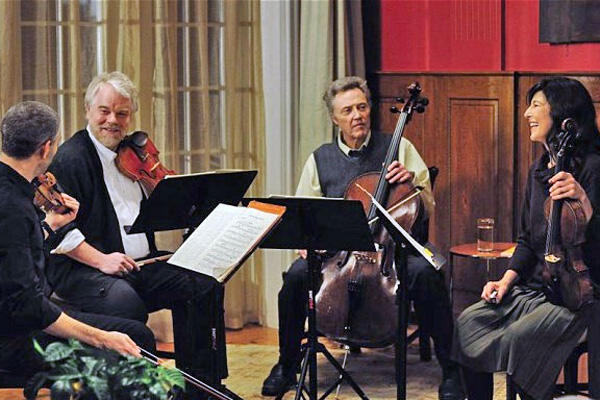
Like Lex’s pseudo-political banter or a Unicol girl’s acquisition of the fresher five, it’s a certainty that Oscar winners will undo much of their good work with subsequent awful films. While Performance (released elsewhere as A Late Quartet) never reaches the murky depths of a Halle Berry/Catwoman scenario, it is nonetheless a muddled, uninspiring, and ultimately dull effort from an exceedingly talented cast, including Christopher Walken, Philip Seymour Hoffman, and Catherine Keener. The film opens with Walken, cellist and leader of a two decade-old string quartet group, telling his three colleagues and friends (including Keener and Hoffman as a husband-and-wife duo) that his early onset Parkinson’s may signal the inevitable disbanding of the group. This acts as a catalyst for simmering tensions, romance, and competitiveness to resurface between the four, with dramatic yet sadly predictable results. The dynamics of the group are interesting enough, as are the impassioned speeches about the relevance of classicism, but they are drowned out by the tepid love affairs and multiple storylines. Not enough time is given to the separate plot strands, which become so disparate that the film resembles Crash more than an analysis of the lives of four friends. Walken, despite putting in his finest performance in some time, is especially wasted in the potentially rich role of a man whose lifestyle and livelihood are threatened by illness. The film struggles to juggle its weighty themes of mortality, infidelity, and fame, and feels like a bad cliché of an indie film. It ends up with more melodrama than an average Days of Our Lives episode, each plot contrivance signposted miles in advance and noticeable to anyone who’s seen a film before. For a film that has so much to say (i.e. so many metaphors to ram home) about the passion and romance of the quartet’s music and muses, it fails to inspire either, and even the sporadic use of the Beethoven soundtrack fails to inject much life into the proceedings. This is the sort of film festival-goers like to fawn over without any specific reason other than “awards-worthy” material and a handful of Oscar winners. Rating: 2/5
-
Culture
 Issue 5 24/03/2013
Liberal Arts
Hollywood doesn’t tend to capture the “university experience” (for lack of a less cringeworthy term) with much accuracy or success. Mostly consisting of American Pie-esque comedies or 90s trash like The Skulls, the genre doesn’t quite work. Liberal Arts (the stateside term for a BA) succeeds where many have failed, and is in equal measures charming, witty and insightful. The film opens with Jessie (Josh Radnor), an English graduate stuck in the tedium of an admissions position, receiving an offer from his favourite lecturer (Richard Jenkins) to speak at his retirement dinner. Jessie, an articulate, well-read, but stunted 35-year-old, seizes the opportunity to visit his alma mater and understand where he let himself go. There he meets 19-year-old Zibby (Elisabeth Olsen), and the two bond over a fervent, mutual love of literature and their similar levels of maturity. From there the film mostly consists of their witty exchanges, which is a joy to watch played out. Despite the film’s limited box office success, it will likely go down as the film that proved Olsen’s acting chops. She steals the film and, as with any good romantic comedy, the audience falls for her just as swiftly as Jessie does. Likewise, Richard Jenkins and Alison Janney have a huge amount of fun as Jessie’s cynical old professors. Janney’s Romantic Lit professor delivers a speech on the pretentiousness of English students that is both incisive and upsettingly true. While the script’s playful banter might invite comparisons with Woody Allen or the Before Sunrise movies, the film’s depth lies in its cynical depiction of age and disillusionment. Radnor assesses the meaning of being young, middle-aged and retired with equal insight. It’s a rare accomplishment that the film manages to be mature without ever being navel-gazing or conceited. Jessie has a rose-tinted viewpoint of his college days, which the film simultaneously mocks and celebrates. The film’s treatment of “liberal” education, reading, and employment will hit home for anyone studying a BA. Radnor abandons the neurotic tone of an Allen film and has instead adopted his own intellectual brand of humour, which bodes very well for his future efforts. Rating: 4/5
-
Culture
 Issue 3 10/03/2013
Oz the Great and Powerful (3D)
To say that the resurgence of fairytales within recent blockbusters has yielded mixed results would be an understatement. From the commercially successful but creatively bankrupt (Alice in Wonderland, Snow White and the Huntsman), to those bankrupt both commercially and creatively (Little Red Riding Hood, Mirror Mirror), Hollywood doesn’t seem to know how to treat this material. Along comes their genius decision to reboot the 1930s Technicolor classic The Wizard of Oz, with a cast so charming that I would happily watch them read from the Otago Daily Times. Unfortunately, Oz the Great and Powerful is about as much fun as watching someone else play a videogame. The decision to make a prequel to a beloved classic is a risky one, and one need look no further than Star Wars to recognise its limited chances of success. Unfortunately, Oz doesn’t even have the camp appeal of those films, and mires itself in half-baked storytelling, simplistic characters and by-the-numbers twists (at one point, a character exclaims “that was so predictable,” and the audience cannot help but agree). From its black-and-white opening intended to reflect the original, Oz follows the title character played by James Franco, a thoroughly unlikeable and preening illusionist, who escapes trouble at his carnival amidst a whirlwind. Upon his arrival in Oz he is greeted by a kindly witch (Mila Kunis) who, together with her sister (Rachel Weisz), believes he is the prophesied Oz who will deliver their kingdom from the wicked witch. Excusing the laziness of script and performance under the excuse of “it’s only a family film” is erroneous, as the original falls under that same genre and yet yields more surprise on a third viewing than this effort manages at all. You can see the $200 million budget in every perfectly-rendered 3D frame – it’s just a pity it’s not in the service of a better story. 2/5
-
Culture
 Issue 3 10/03/2013
Amour
Director Michael Haneke is comfortable with depicting horror. Whether capturing a home invasion in Funny Games, or pre-World War 2 atrocities in The White Ribbon, his slowly built tension and pace creates very creepy, yet successful films – Amour won the Palme d’Or and the New York Times film of 2012. Amour, which chronicles in painstaking detail the decline of 80-something couple Georges and Anne after she undergoes a stroke, is probably his best horror film yet. This was recognised by the Oscars this year, with nominations for Best Actress and Best Film, and a win in the Best Foreign Film category. The film takes place almost entirely within the confines of the couple’s Parisian apartment. As the film opens, Haneke shows their comfort and ease with each other through mundane routines, with a lingering sense of dread hanging over the proceedings. After an unsuccessful operation, Anne’s condition deteriorates, and Georges tends to her every need. Haneke bares all – Anne’s muddled conversations, attempts at suicide, refusal to accept treatment – in unflinching detail. The few moments of lightness in the film come from Georges’ enjoyment of music (they were both music teachers) and his humoured approach to his wife’s disability (“It’s all terribly exciting,” he quips to his estranged daughter). While it’s refreshing to see a romance between two seniors done with such realism, the seemingly endless scenes of Anne’s treatment may prove too much for some. Those who have endured this sort of experience with a loved one are advised to stay away, as are those offended by senior nudity. Likewise, Haneke’s clinical approach to the film – we are not offered any flashbacks, and few scenes of actual closeness between the couple – may be too cold for some viewers. Ultimately, brutal though Amour may be, the realism created by the veteran French actors, and the depiction of old age’s indignities is very powerful. Given the subject matter, it’s appropriate how scary Amour is. 4/5


